
I keep seeing the same silhouette everywhere lately. Structured bobs, heavy lobs, clean lines with one soft movement. The 90s minimalism is back, but it brought better color this time.
Twenty-three looks, from a polished Italian bob to a choppy wolf cut, and everything in between. Low-upkeep bobs, layered shags, blunt collarbone cuts — there’s a trendy haircuts for women range here for fine hair, thick hair, curls, and straight strands. The butterfly cut and the shag-lite are worth a second look.
I once asked for a French bob and walked out with something closer to a mullet. So I test these cuts by how they survive my air-dry routine and my second-day head. Here’s what actually works.
The Polished French Bob
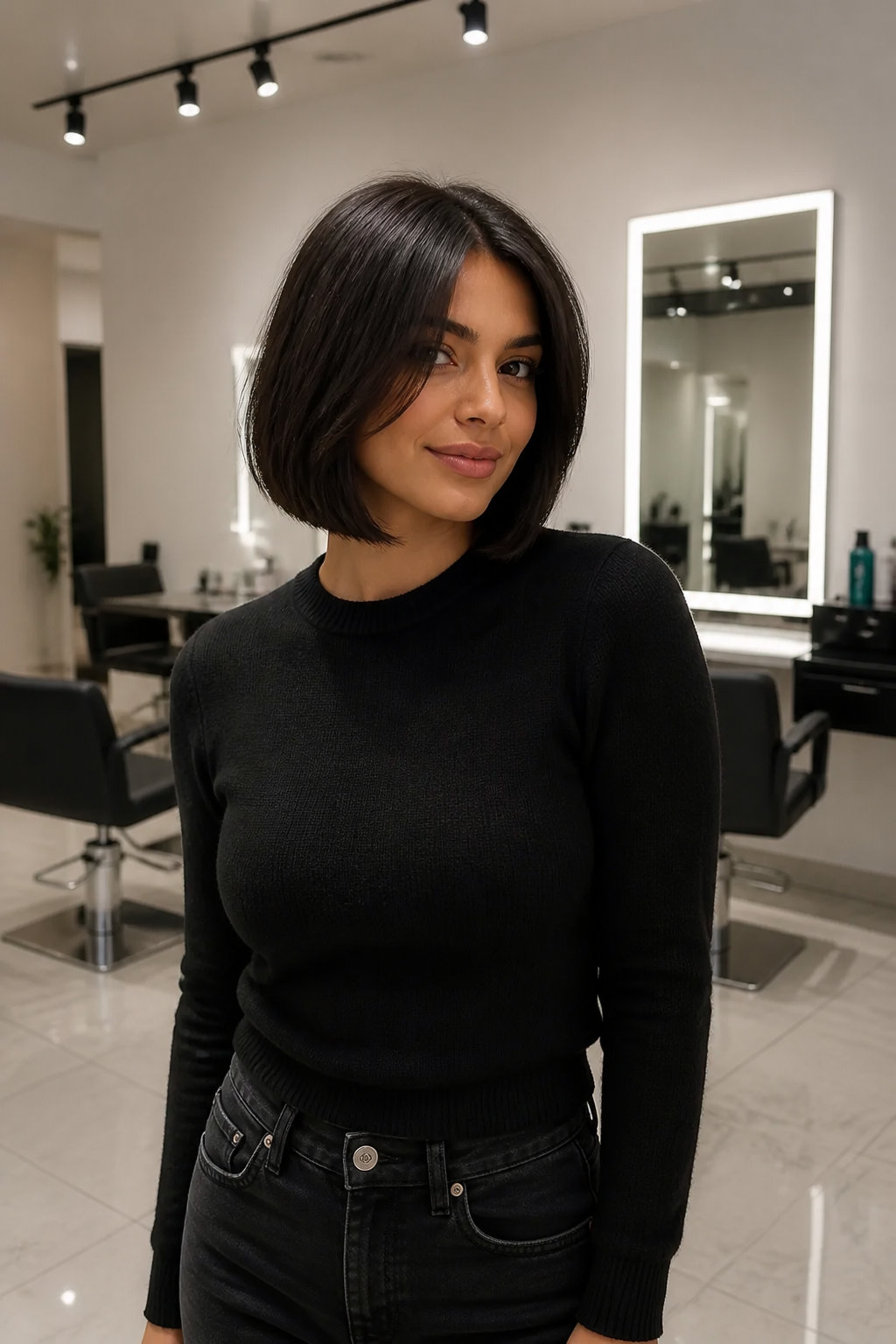
The classic french bob is a study in restraint: blunt at the jaw, no layers, just one clean line. That single-depth brunette at level four makes the perimeter look like glass. There is no internal layering here, and that is the whole point. It forces your eye to the shape, not the texture.
You sit still for a round brush and a shine spray, about eight minutes. Air-dry works only if your hair is already straight and you add smoothing cream. My waves? I would need to blow-dry. Every four weeks you trim or the line softens into a sad peanut. It is not low-maintenance, it is targeted-maintenance. But when it lands, it is the cleanest bob in the room.
The Glossy Italian Lob
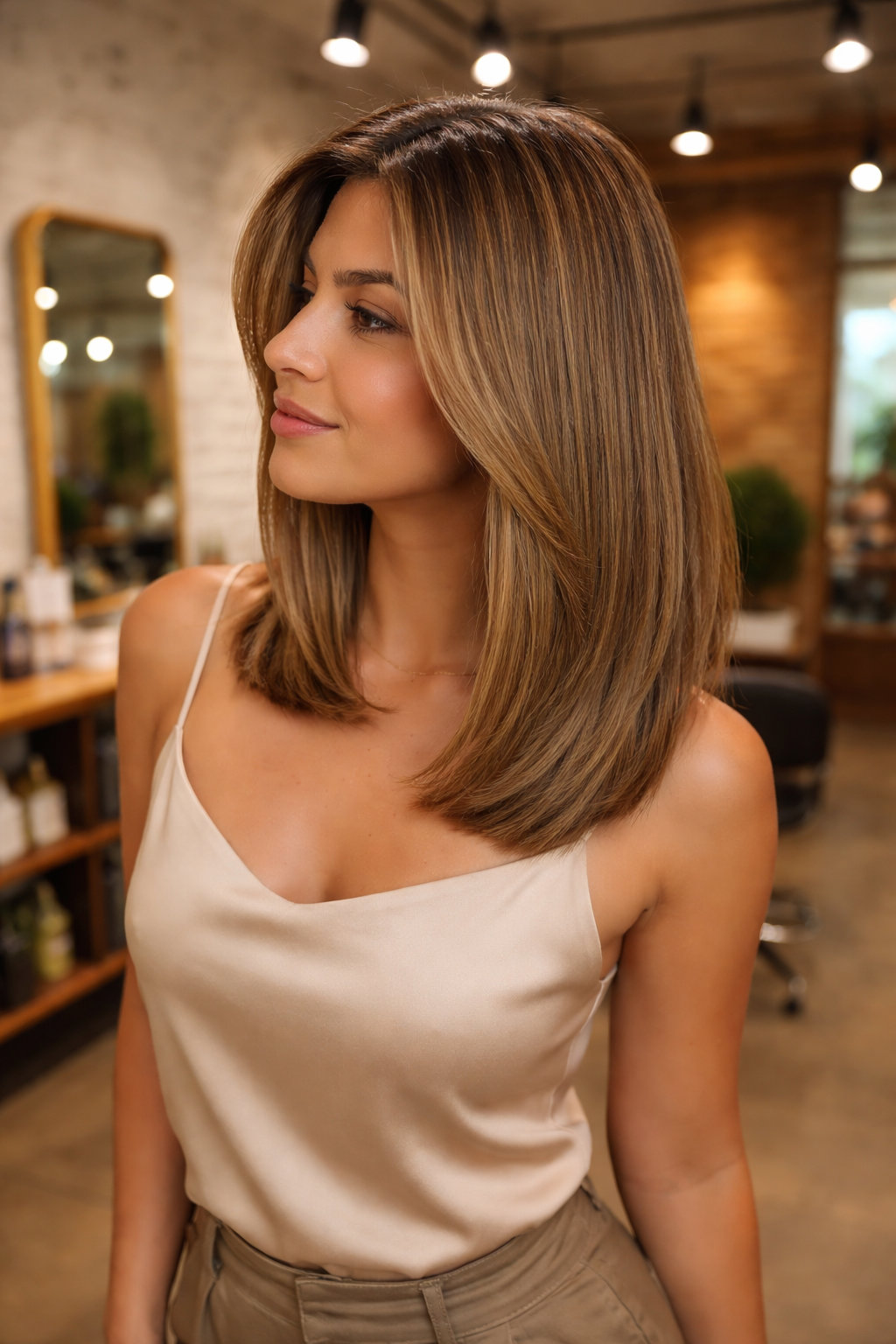
A blunt lob haircut is the smarter cousin of the bob: longer, more versatile, still sharp. Here the perimeter is razor-cut, which gives a clean edge that swings instead of chipping. The honey blonde highlights at level seven add depth without breaking the line, warm and glossy in the light.
Blow-drying takes ten minutes with a large round brush; a gloss serum finishes it. Air-dry works if you diffuse. I have done both. The real trick is the toning: every six weeks or that honey turns brassy. It is a lob that asks for effort but rewards with polish. Yes, it is worth the ten minutes.
The Face-Framing Butterfly Cut
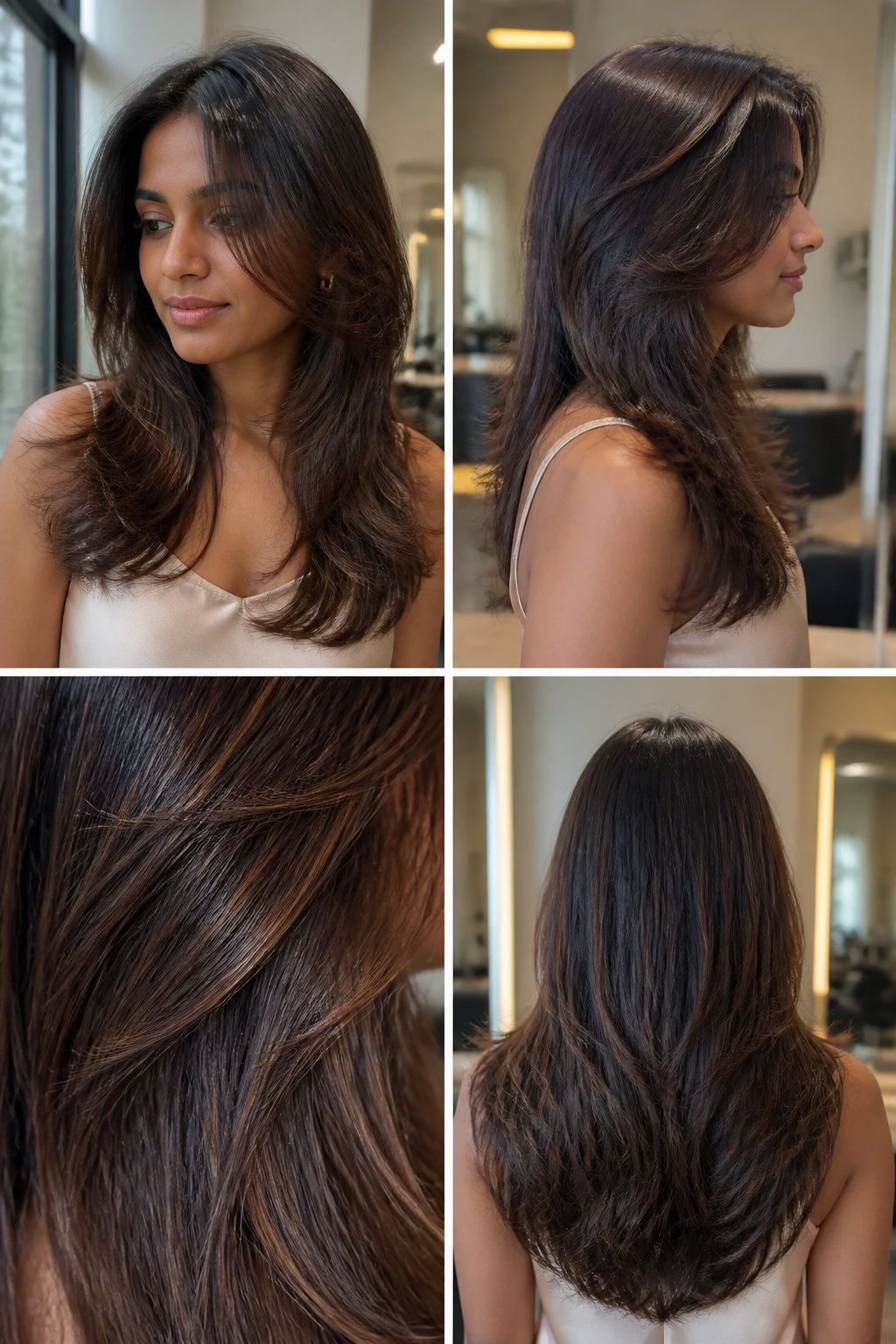
The butterfly cut layers are named for the shorter, airy pieces that float around your face like wings. This version is deep chocolate brown with warm undertones, and the face-framing pieces are subtly lighter to catch light. Zendaya wears a variation: I have saved screenshots.
Blow-dry those layers away from your face with a large round barrel, about fifteen minutes. Air-dry with mousse and diffuser works if you have wave. The cut hides grow-out because the face-framing pieces stay soft and blend. It is long hair that does not feel heavy. I was skeptical: butterfly cuts can land piecey. This one lands in the right place.
The Modern Shag With Curtain Bangs
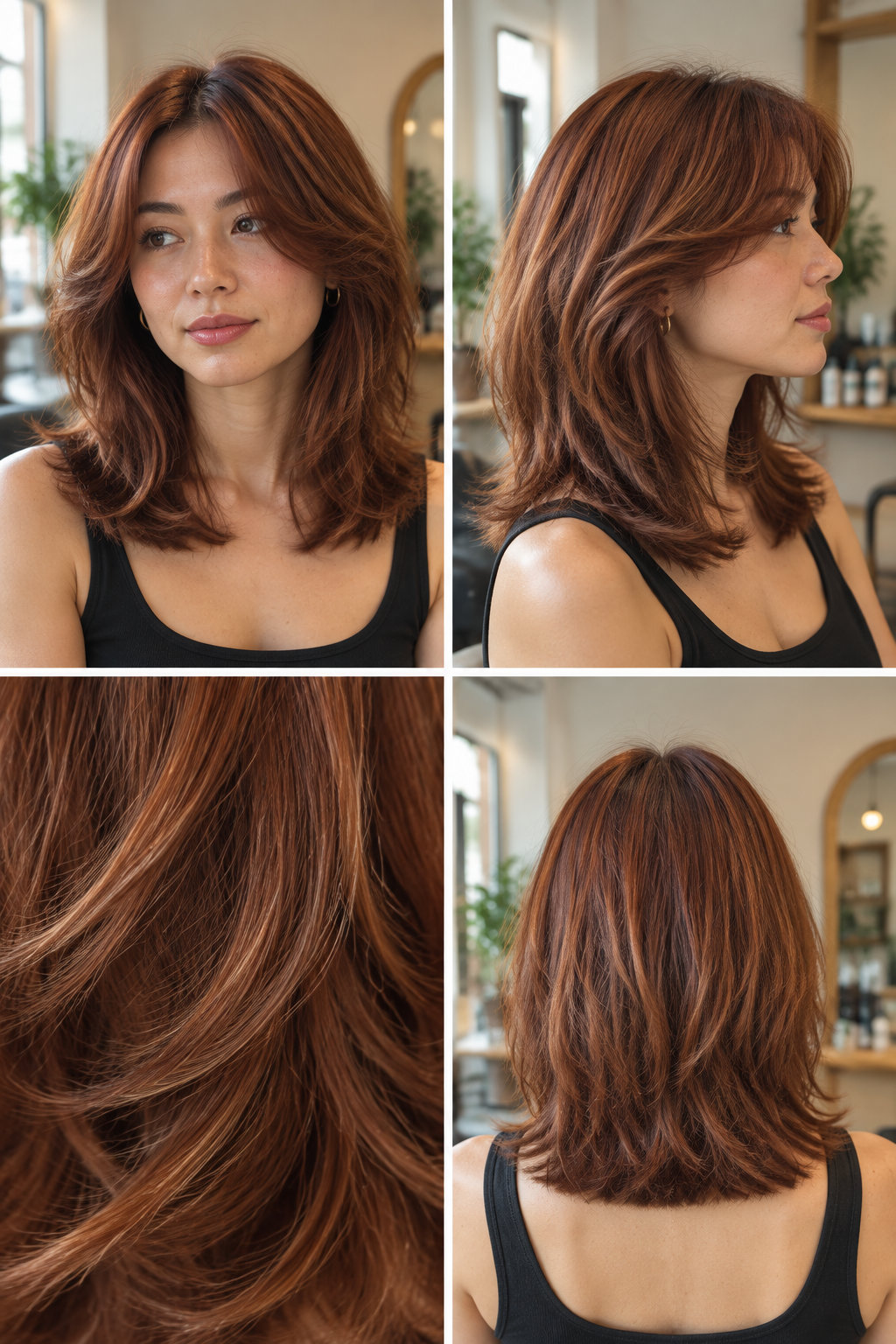
The shag with curtain bangs is all about choppy layers starting at the crown and bangs that sweep to the sides. In the alleyway’s dramatic side lighting, the rich auburn with copper undertone makes the texture pop. Florence Pugh rocks this cut, and it’s the ultimate cool-girl look. It suits round and heart faces because the bangs break up the width, and the layers add volume.
Upkeep: the choppy layers grow out gracefully, but the bangs need trims every four weeks. Styling is easy: sea salt spray, scrunch, air-dry or diffuse. Takes ten minutes. The honest truth: if you have straight fine hair, the shag can look limp; you need texture spray. The bangs are a commitment. For wavy to curly hair, it’s surprisingly low-fuss. Air-dry with sea salt spray for the best texture.
The Sharp Blunt Cut Collarbone Lob
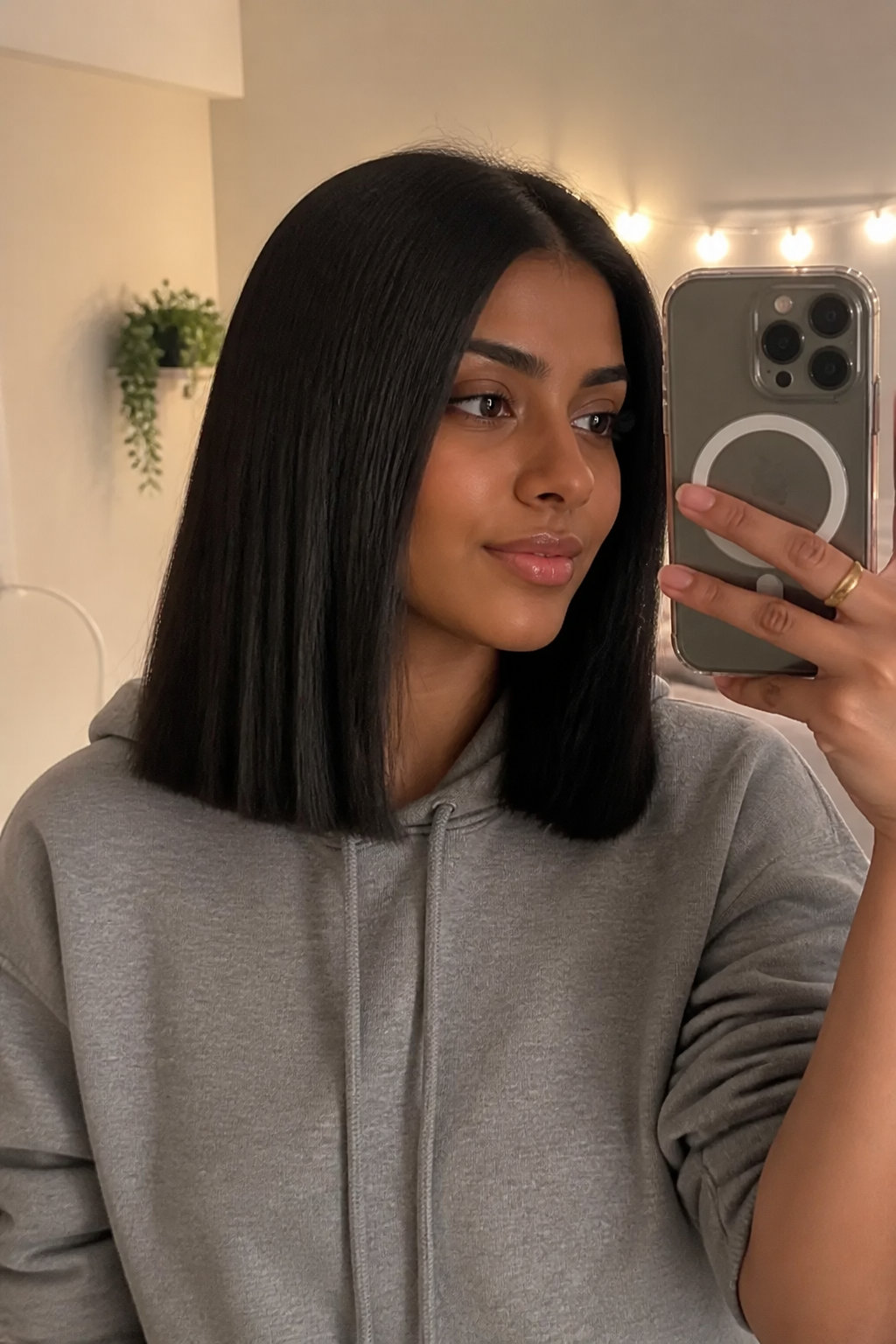
The sharp blunt lob is collarbone length with a one-length perimeter and zero layers, and jet black at level 2 is what turns a line into an event. Solid dark color has nowhere to hide. Every wobble in the cut shows. That is exactly why it reads so sharp.
The internet calls this one easy. It is a blow-dry habit, not a haircut. Round brush, tension, flat ends, ten to fifteen minutes, plus a flat iron for the collarbone flyaways that announce themselves first. Smoothing serum does the heavy lifting; sprays do nothing for a line this clean. Fine and medium hair hold the shape, coarse hair fights it. Salon, no exceptions, because a blunt perimeter has no graceful grow-out. The horizontal edge adds width at the jaw, which long faces wear better than round ones.
The Textured Chin Bob
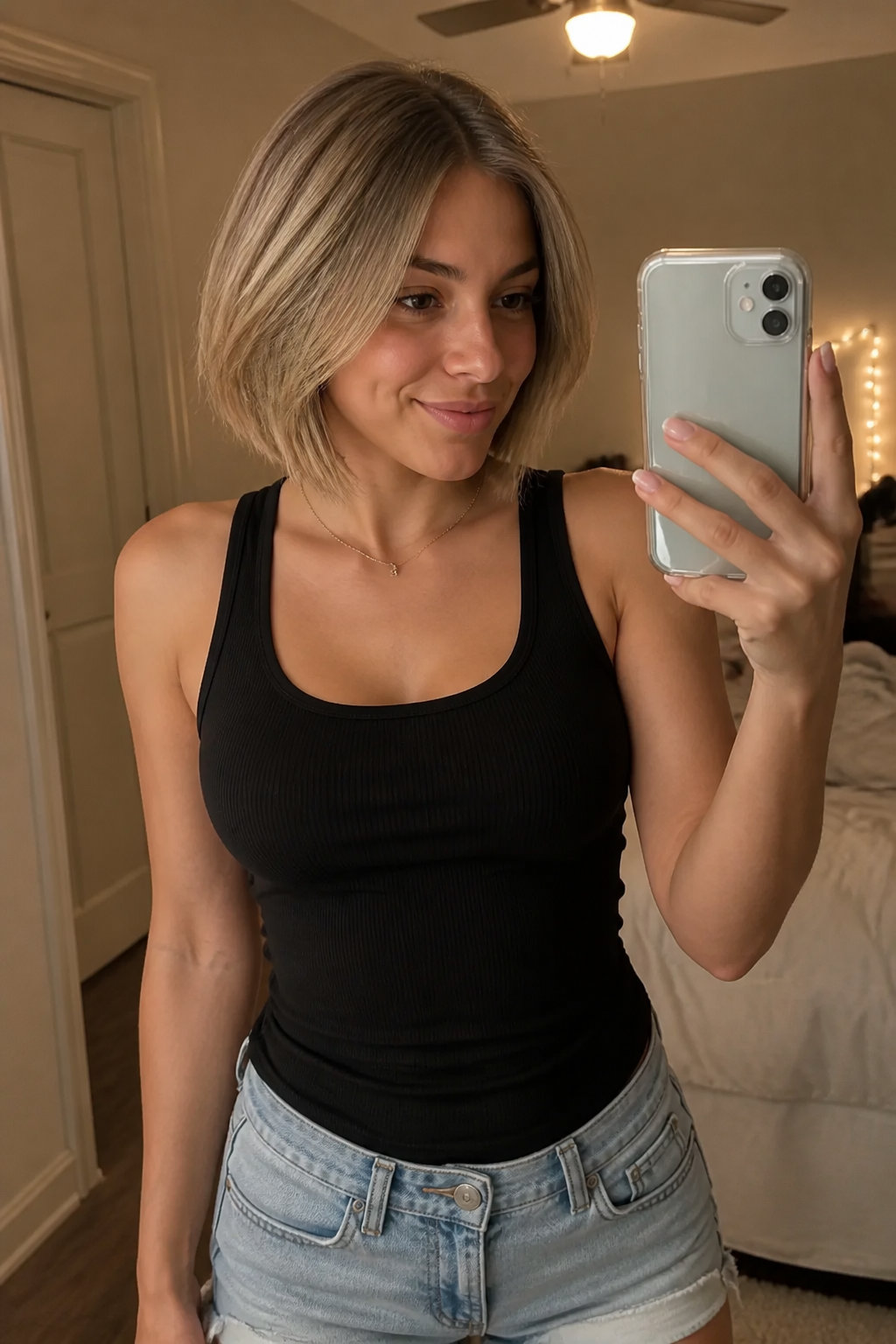
A textured chin bob sits at the jaw with point-cut ends and sandy level 8 color, and it needs no highlights because the cut carries the dimension. Five minutes: texturizing spray on damp hair, a finger tousle, and it air-dries into shape. I did not expect to like something this soft. Fine hair gets more from a diffuser.
The Angled Modern Mullet
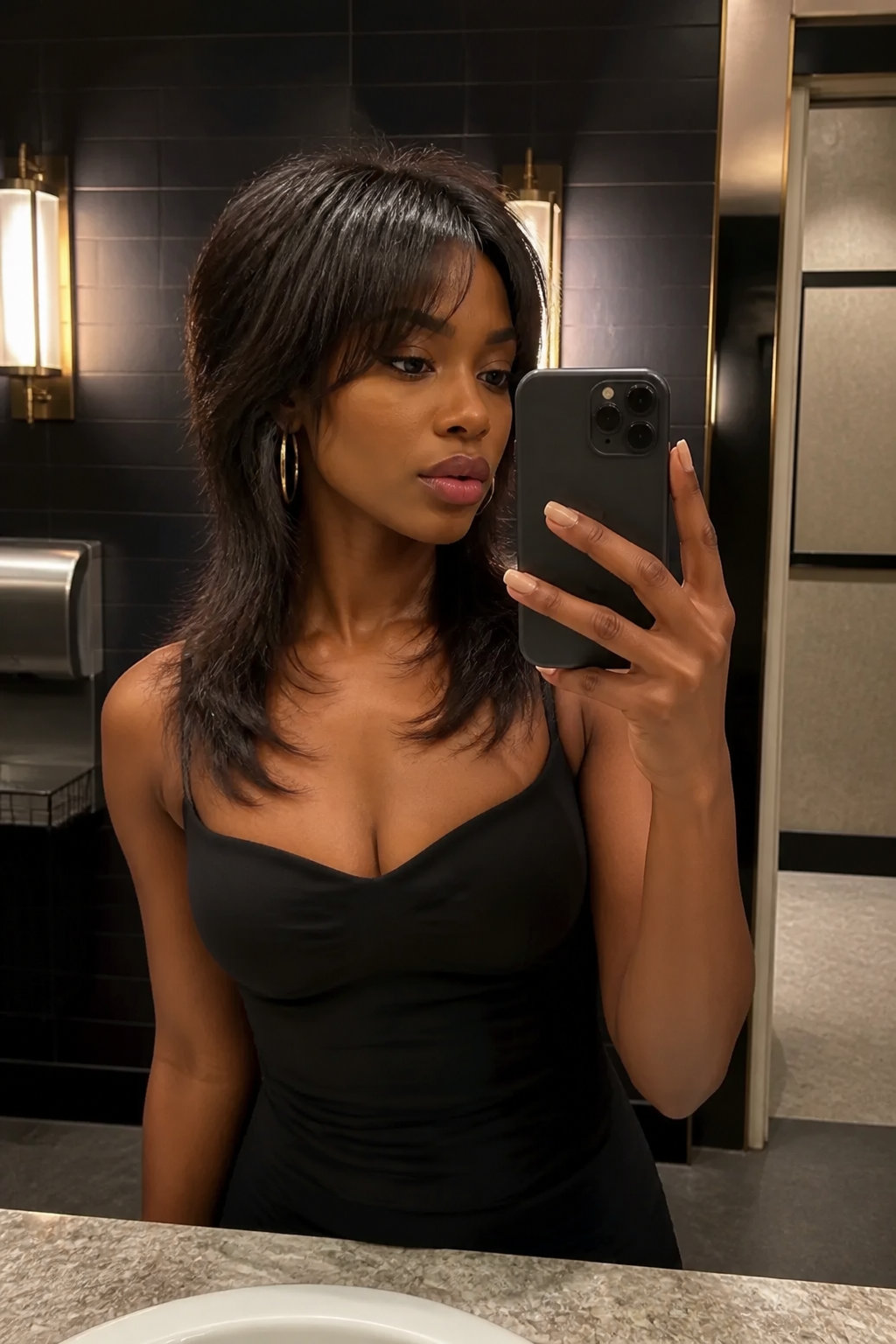
Everyone wrote the mullet off. The modern mullet cut is short through the crown, angled at the sides, and long at the nape, with disconnected layers that never blend into one smooth silhouette. Deep cool brown earns its place here: it hides where the lengths jump and makes the contrast look deliberate. This is not the mullet you remember from old photos. It is a shape built on purpose.
Styling takes a texturizing paste through damp hair and a diffuser to separate the nape pieces, ten to twelve minutes, and that nape is what collapses first when you skip it. Salon work only, because a disconnected line placed by hand goes wrong fast in a bathroom mirror. Grow-out is the real cost. Getting from a mullet to anything else: an ugly stretch with no clever fix.
The Voluminous Butterfly Cut
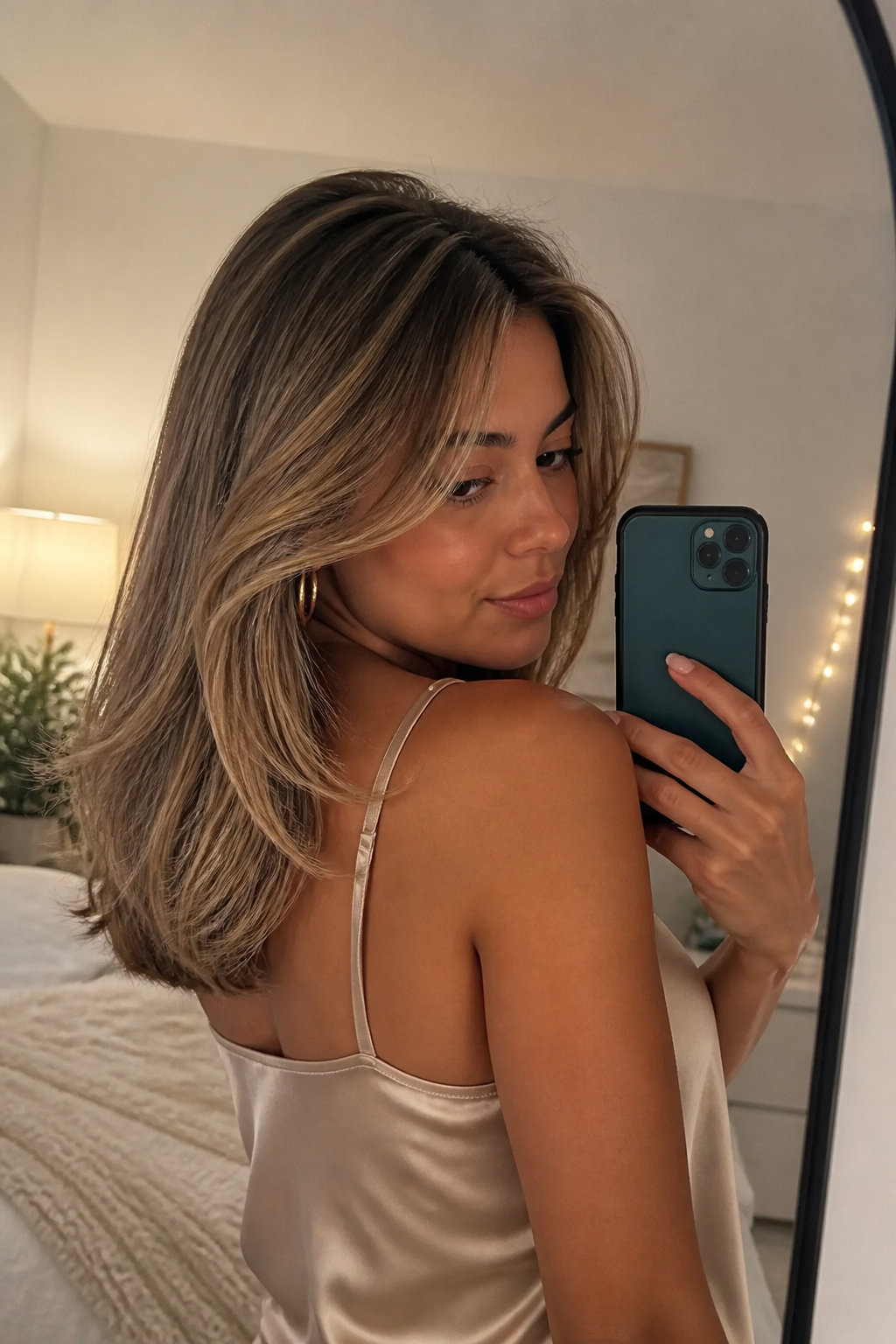
The architecture behind butterfly cut volume is simple: long layers that start high with shorter face-framing pieces laid over them, which reads as thickness even on hair that does not have any. Dimensional level 8 blonde with warm undertones makes each layer catch light separately, because the shape only works when you can see where the layers sit.
The cost is a blow-dry. Roots lifted first. Layers directed the way they were cut. Fifteen to twenty minutes, then volumizing spray at the root and flexible hold to keep the crown. Skip the brush and this flattens into a plain long cut with extra steps. Medium density carries it best. Fine hair needs a smaller brush and more lift. Salon cut, moderate difficulty, and the face-framing pieces thin out at the jaw once they grow past it.
The Deep Side-Parted Bob
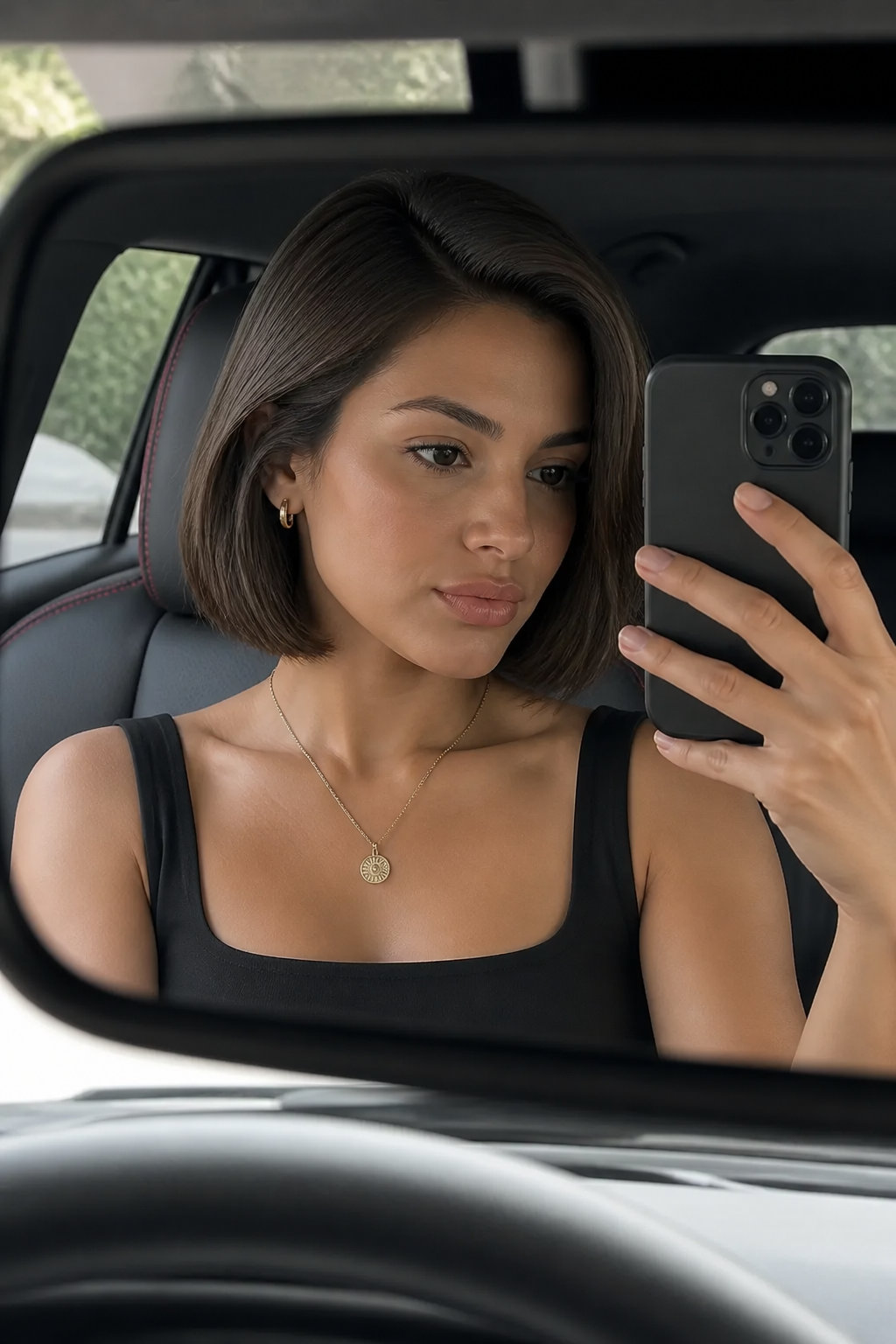
A deep side part bob is a chin-length cut with the part parked far off center. Volume stacks on the heavy side, the other side goes flat and tucked behind the ear, and that asymmetry is what keeps a plain bob from reading like the default. The diagonal part breaks the width at the cheekbones, which is why round and square faces win with it. Long faces should part closer to center.
Ten minutes of styling: set the part while the hair is damp, blow-dry away from it with a round brush, then texturizing spray or dry shampoo at the roots for lift. That lift dies by afternoon. A part this deep shows regrowth fast, so keep your trims tight. Salon books it, home styles it, and the blow-dryer decides. The part is the whole haircut.
The Feathered 70s Layers
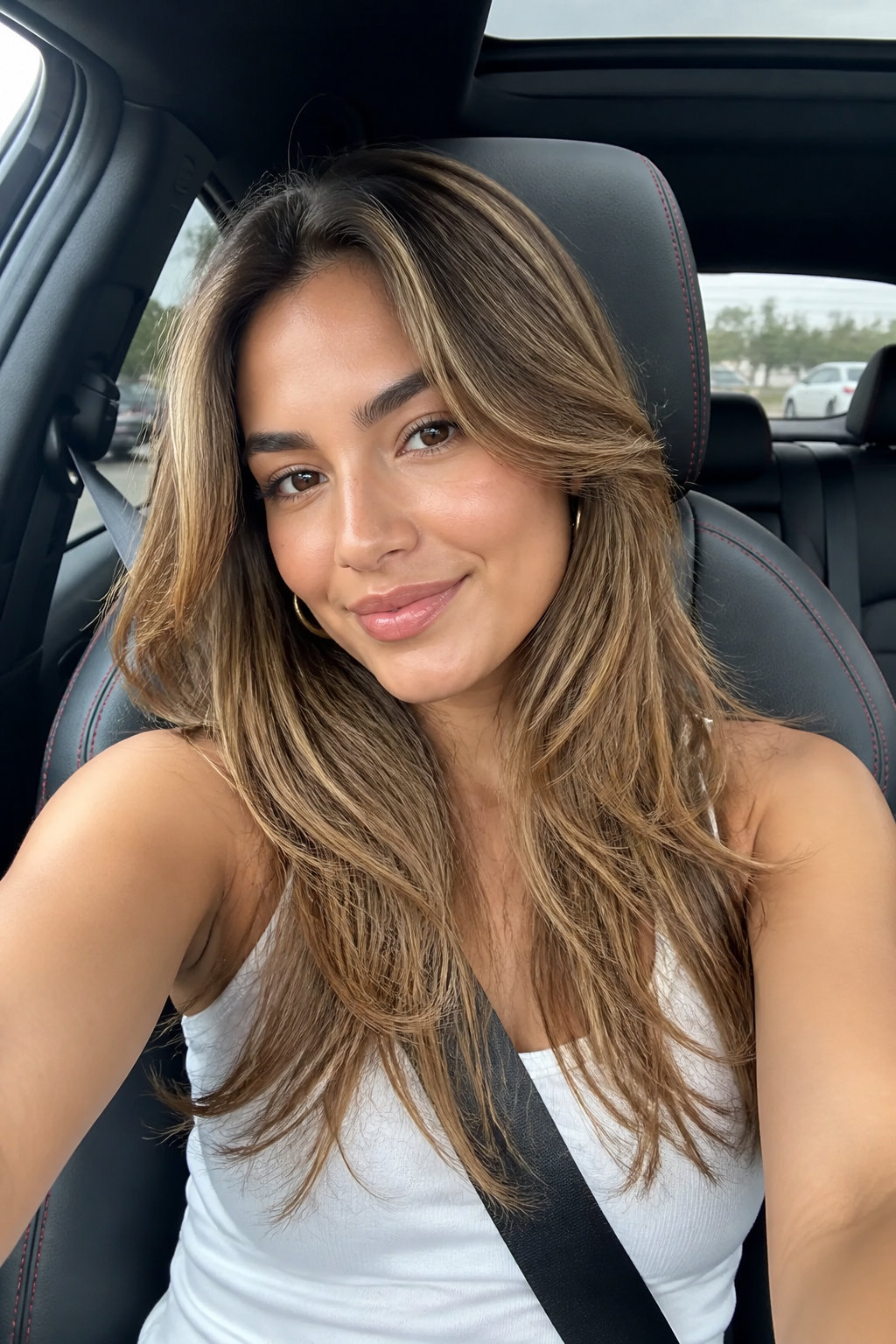
Point-cut ends that flick outward are the trick, because feathered layers long hair only works when the line stays soft from jaw to tip. A warm golden blonde at a level nine, with sun-kissed highlights, is what makes that light texture visible. Darker roots swallow it. Fine and medium hair wears the cut best; coarse textures get the same shape, only heavier. Retro, not costumey.
Fifteen minutes with a large round brush, blowing each layer away from the face, then mousse or texturizing spray for the undone finish. Skip the brush and they droop. This is a salon cut, full stop, because blunt shears will not give you the flick. Say it plainly: “Point-cut the ends and keep the weight off the perimeter.”
The Graduated Bob
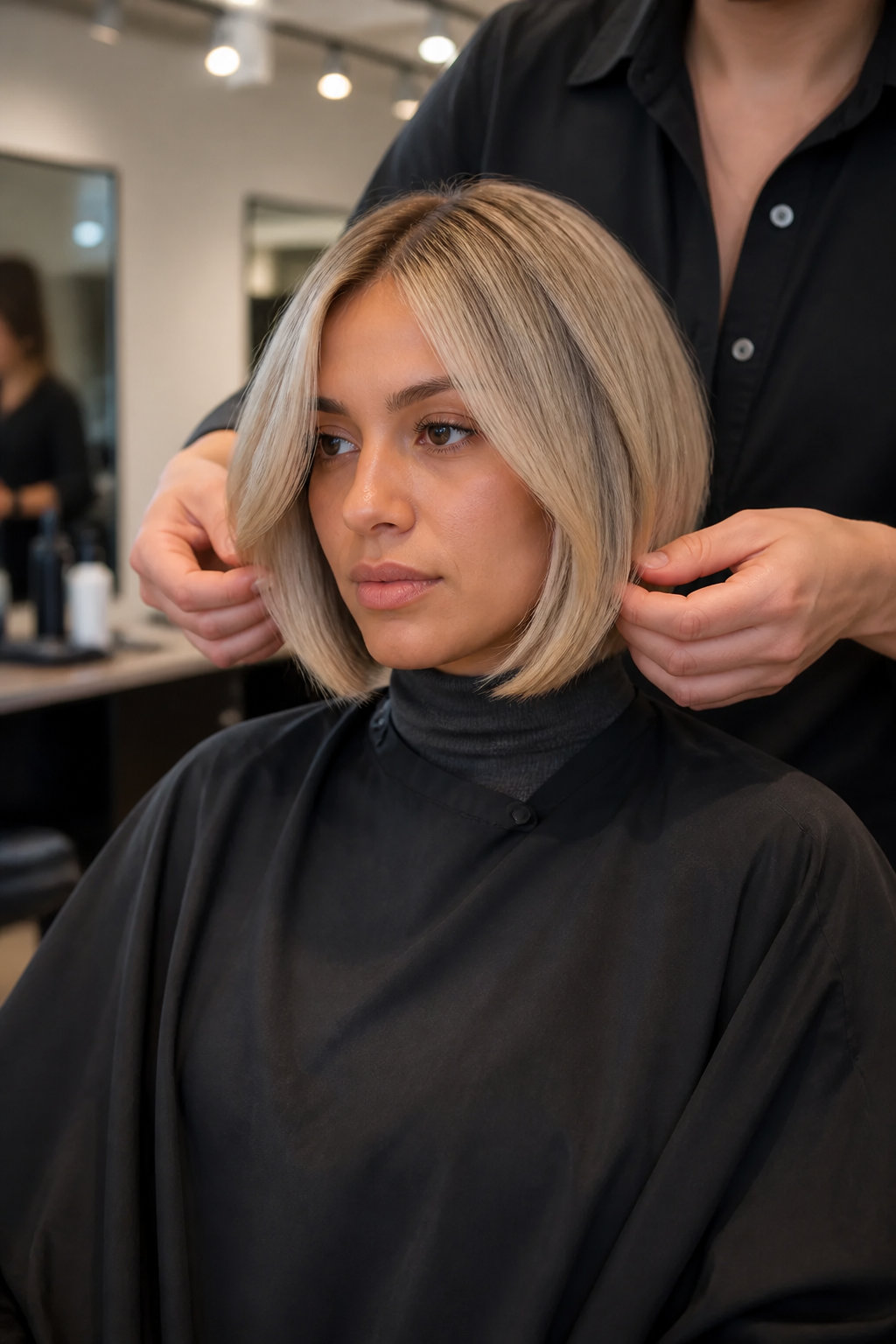
Graduated means the length stacks at the back and drops toward the jaw, so the angled perimeter sits longer in front than behind. Front does the talking. That angle is the entire point of a graduated bob haircut: it tips the eye forward and gives a structured shape some motion. Ash blonde with a subtle root shadow pairs well, since the cool tone reads sharp against the diagonal and the shadow blurs the regrowth line.
Ten minutes of blow-drying, front sections directed forward and slightly outward to push the angle, then a smoothing serum. A round brush does the work; air-dry and the back goes puffy while the front stays flat. In the photo the stylist is checking both ends at once, which tells you how much the line matters. Book it, and trim it on time.
The Wavy Lob With Hidden Layers
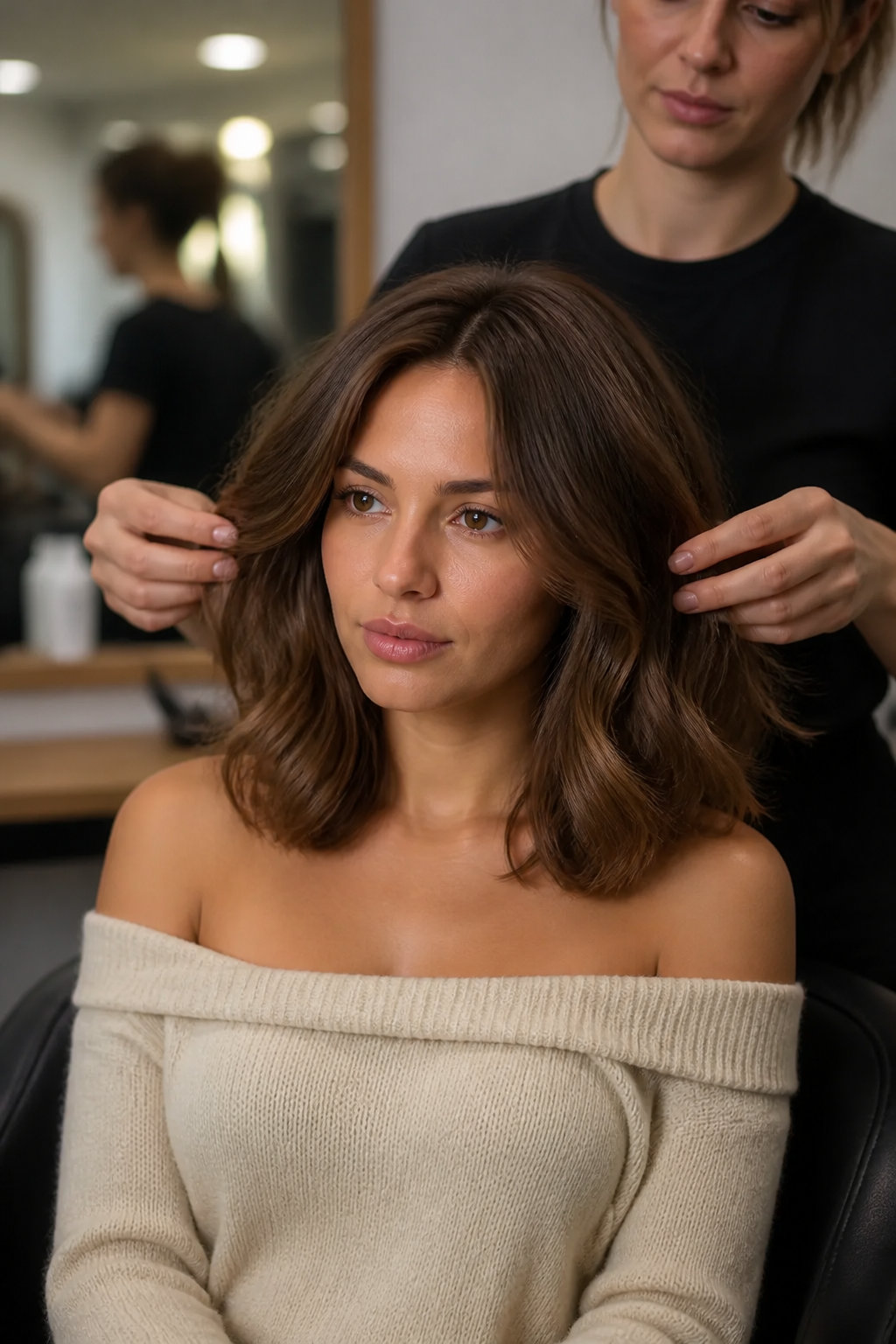
Shoulder length outside, layered underneath: that is the wavy lob hidden layers move, and those internal layers lift the shape without chopping up the surface. Warm medium brown at a level six, with a faint auburn undertone, gives the color depth without one visible highlight. Waves make it work. On straight hair the same cut mostly sits there, because hidden layers need movement to show up at all.
Seven minutes, tops: sea salt spray or volumizing mousse on damp hair, scrunch, then air-dry or diffuse. Both salon and home handle this one, since there is no hard line to maintain and the grow-out is forgiving. The real problem is day two, when the crown flattens and the ends keep their wave, so refresh with water and a light scrunch.
The Micro Fringe Cut
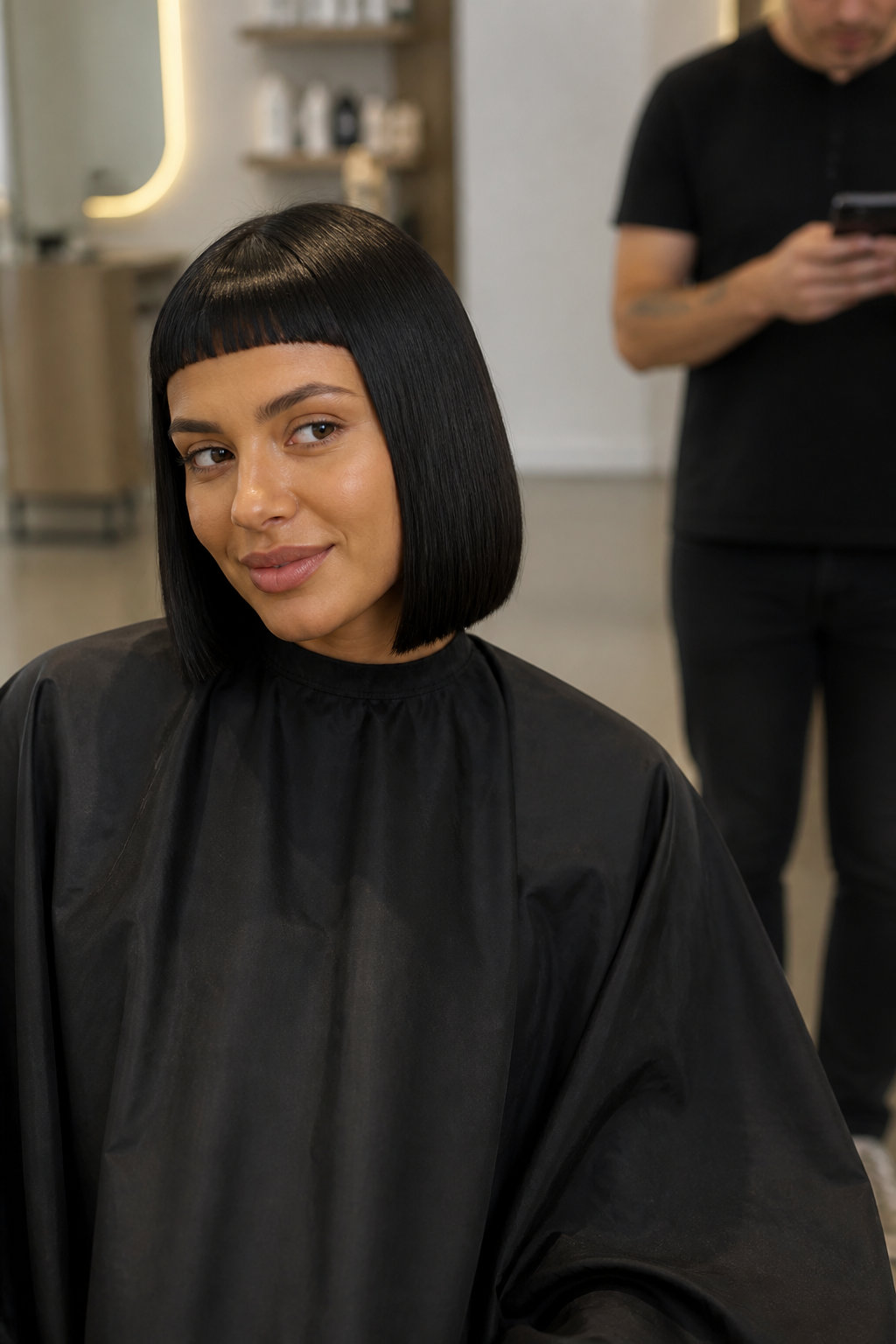
Straight and severe: a micro fringe haircut sits above the brows in one hard line, and it only reads as deliberate when the rest of the shape is just as strict. Here it tops a blunt bob that stops at the jaw, jet black, nothing softened. Cowlicks at the hairline will fight it.
Then the upkeep shows up. The fringe gets washed and blown dry on its own, five minutes with a small brush, five more to keep the bob flat. Skip it if you air-dry, because a crushed fringe has nowhere to hide. Salon only: one crooked millimeter and you are growing out for months. The hard edge suits a square jaw and a long face, since it cuts width across the top. Still not sold on the micro fringe. Jury is out.
The Textured Pixie Crop
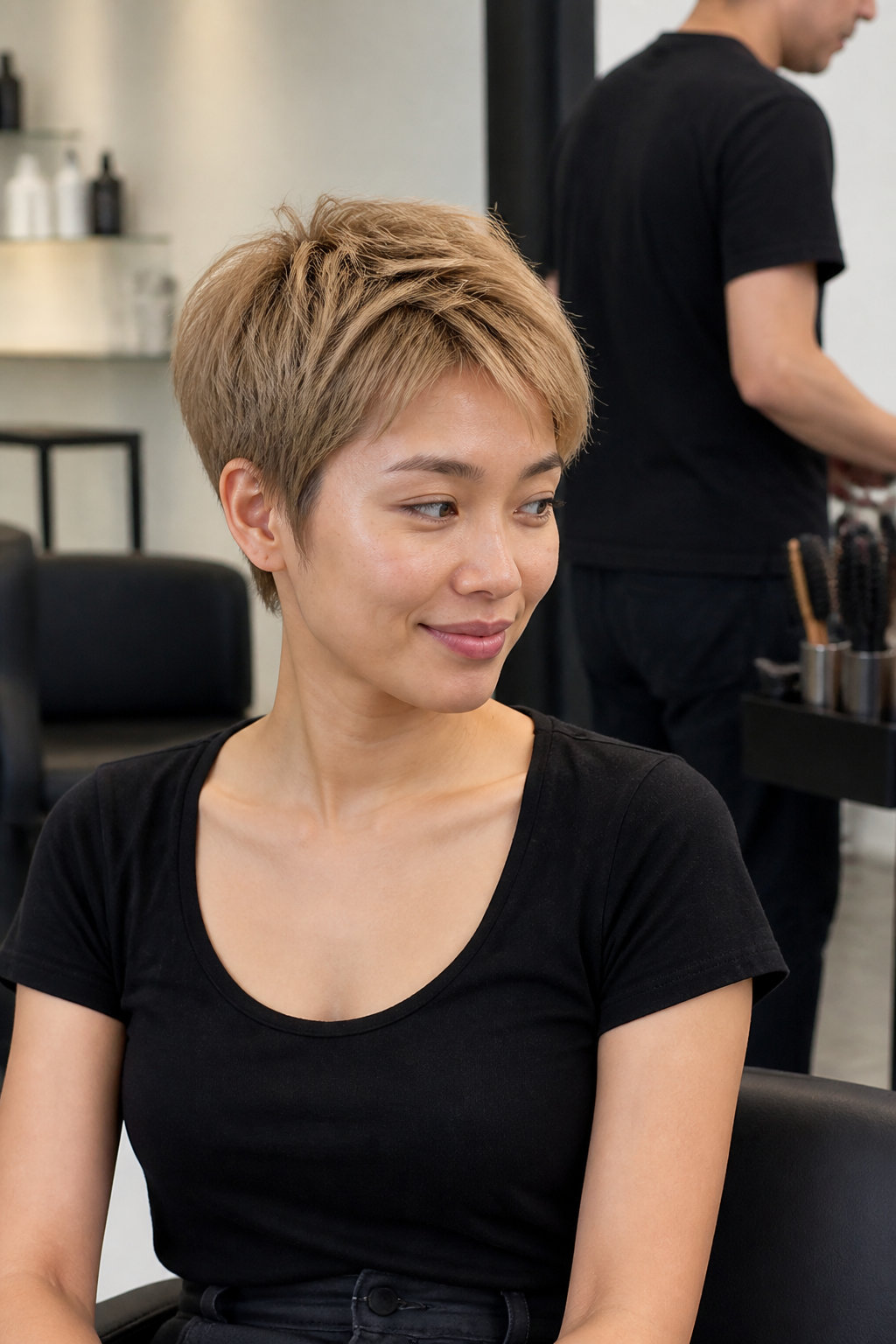
Short at the sides and piecey on top: a textured pixie crop keeps its length up top, just long enough to push into place. The top is where it lives. That piecey section is the whole point, and it needs choppy layers point-cut so ends separate instead of clumping. Warm honey blonde at a level eight is what keeps it bright rather than flat.
Three to five minutes with texturizing paste on dry hair, piece by piece, and you are finished. No round brush most mornings. The nape does more for this cut than the top, which surprised me. Salon only, medium upkeep, and the shape goes soft before the color does. Say “point-cut top, tapered nape.”
The Easy Air-Dry Shag
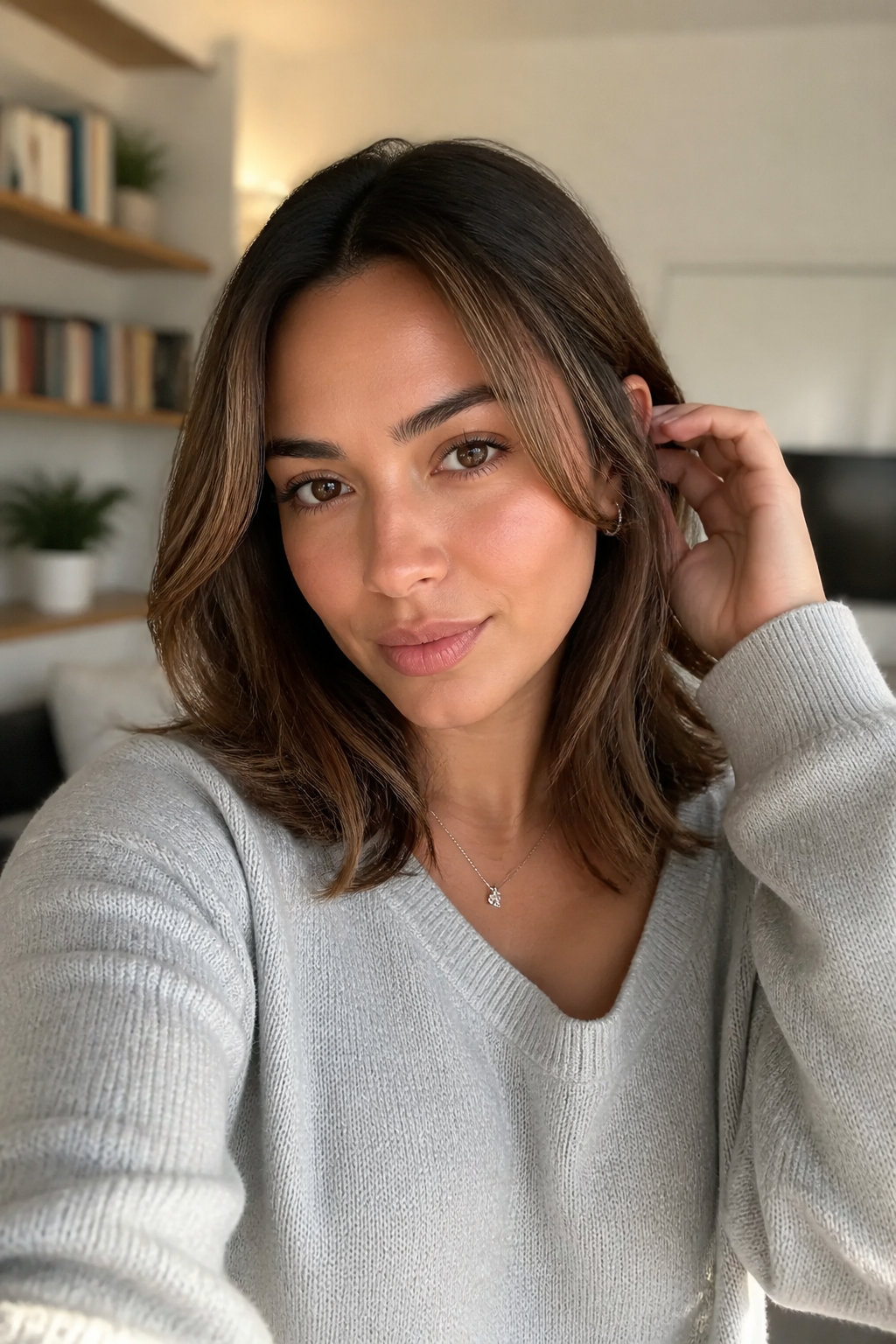
The routine is texturizing cream or sea salt spray on damp hair, scrunch, walk away, five minutes total. Was not planning to recommend the shag. Then I saw it air-dried. Salon shapes it first, then home is fine, because blended layers hide grow-out while a hard line shows every millimeter. Humidity is the catch: frizz reads as part of the plan, which is the only reason this survives August.
The Curly Cut With Face-Framing — Close-Up Take
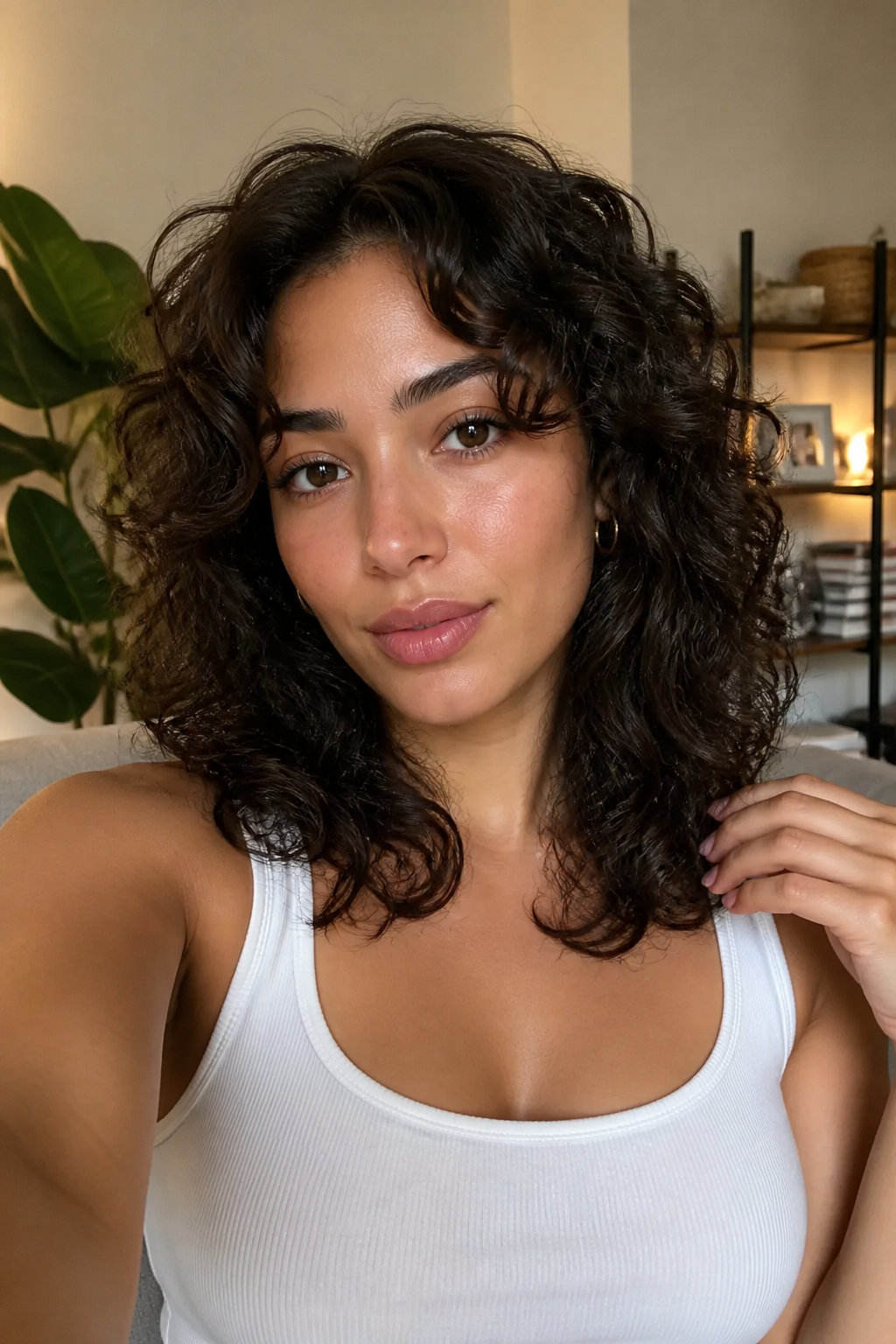
Rich dark brown, curls left to do what they do, and a curly cut face framing that puts the visible work at the front. Those chin-length spirals spring into place rather than hang flat, so the curl pattern looks defined. Coils and waves both work. The sectioning has to match your coil size or the pieces read as strays.
Fifteen to twenty minutes, section by section, curl cream on wet hair, scrunch, then air-dry or a diffuser on low. Salon only and advanced, because curls get cut dry and a wet line bounces up shorter than planned. They call it low-maintenance. My calendar disagrees. The front pieces soften a square jaw and break up a long forehead. Say “face-framing pieces cut to spring up, weight left in the back.”
The Blunt Cut Asymmetrical Bob
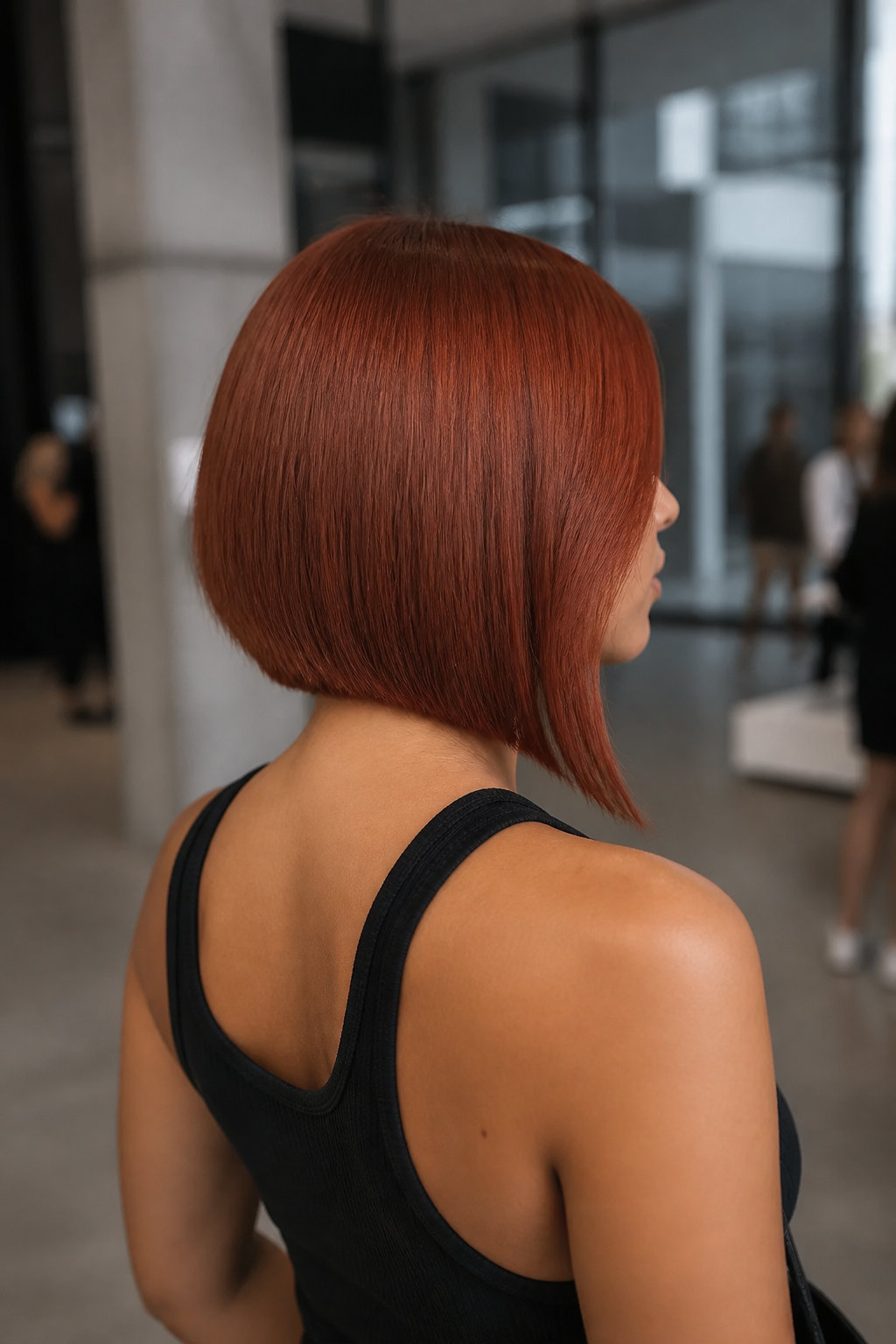
Split lighting in a gallery only makes this cut more dramatic. One side sits at the jaw, the other drops past it — that’s the asymmetrical bob blunt in its purest form. The blunt perimeter is non-negotiable here, no texturizing, no softness. It carves a sharp line that opens up the neck and draws the eye diagonally across the face. A round or heart shape benefits most; the offset angles balance width.
Here’s the part no reel shows. Every single strand has to cooperate. My cowlicks would stage a protest. You need a flat iron and a steady hand every morning, and trims every four weeks without exception. This is an advanced cut for a reason, and it’s strictly a salon job. I stared at the mirrored wall during my consultation and the stylist said, ‘You sure? This one doesn’t forgive.’ She was right. Book it only if you’re ready for the commitment.
The 90s Brow-Skimming Bangs
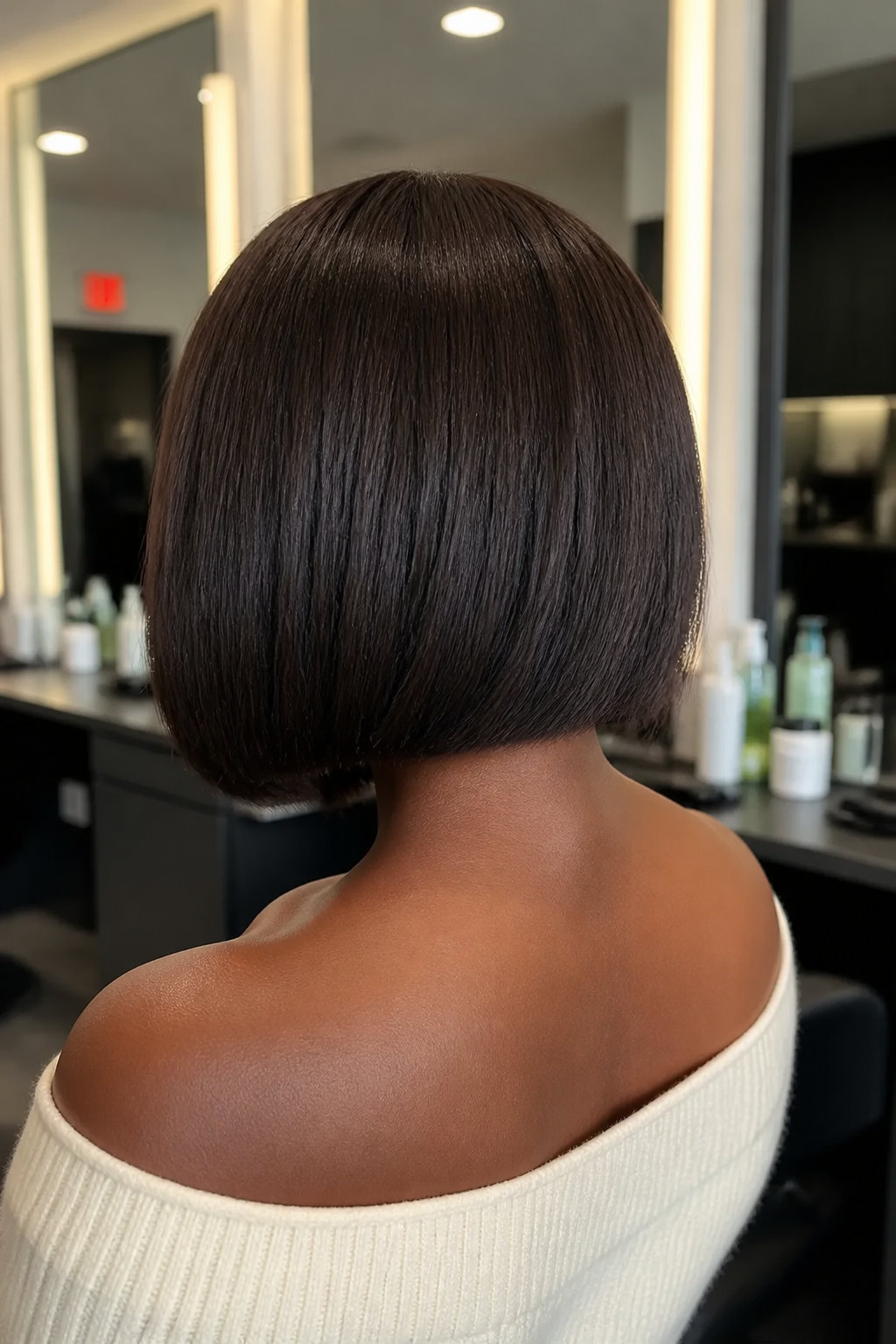
Overcast city light, a quiet street corner, and a fringe that just grazes the eyebrows. The 90s brow skimming bangs are back, and they’re not trying to be cute or wispy. They sit with a deliberate curve — that inward curve that frames the face without hiding it. Works best on oval and heart shapes, pulling attention straight to the eyes. On straight or slightly wavy hair, the sweep is instant.
I was not planning to recommend these. Then I saw them air-dried on a friend’s second-day hair, and they still held their shape. That’s rare. Upkeep is medium: a quick round-brush blow-dry each morning, maybe five minutes. The cut itself requires a salon visit — one wrong snip and you’re in micro fringe territory. Trims every six to eight weeks keep the brow-grazing length from turning into a curtain. For a low-effort nostalgia hit, this one delivers.
The Blunt Cut Collarbone Bob — Close-Up Take
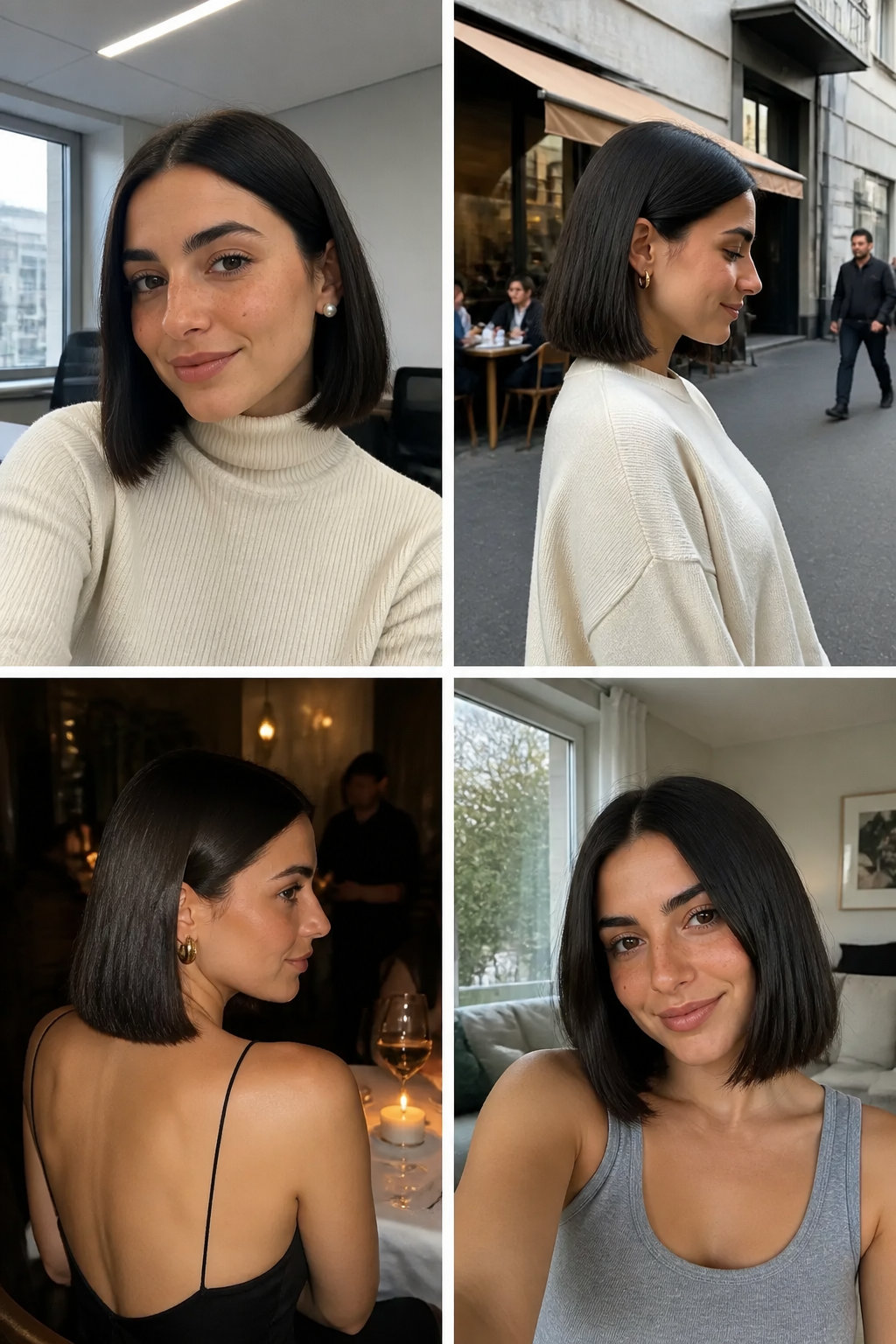
Clean corporate light, a sharp silhouette, and a perimeter so exact it could cut paper. The blunt collarbone bob is the one-length haircut that refuses to soften. It falls right at the collarbone, a weight line that sits like a ruler. This is Hailey Bieber’s signature for a reason — it elongates the neck and works on oval, square, and heart faces. Straight hair is the canvas here; any wave fights the line.
I did not expect a cut this simple to be this high maintenance. Every morning is a blow-dry with a round brush, followed by a flat iron to seal the ends. Smoothing serum is essential, no shortcuts. Salon-only, advanced difficulty, and you are looking at trims every three to four weeks. Miss one, and the collarbone length drifts into that awkward-between zone. It’s sharp, and it demands sharpness back. If you want texture or air-dry ease, skip this.
The Long Layered With Face-Framing
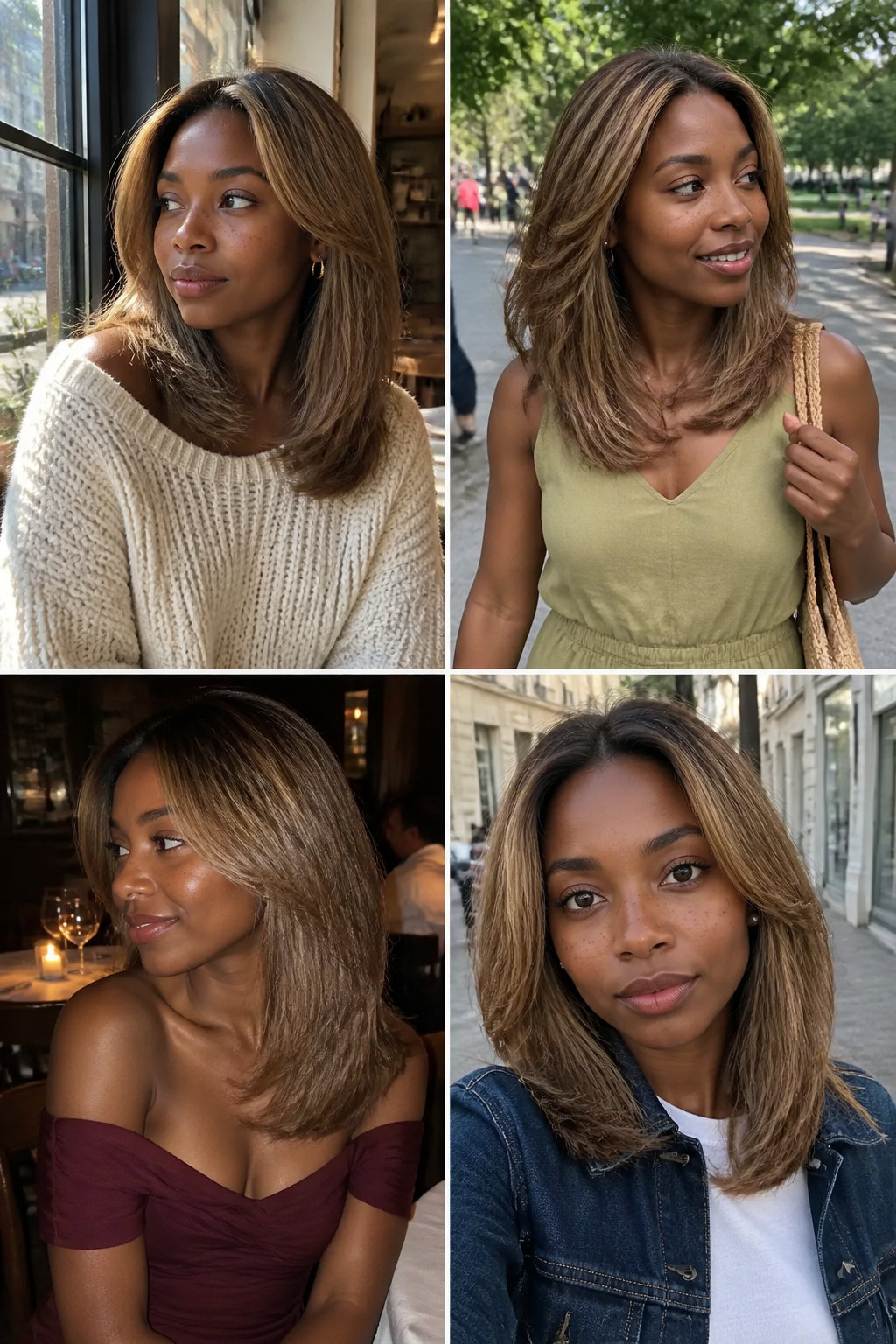
Golden hour in an open field, backlight catching every tendril. This is long hair that moves instead of hanging. The long layers face framing start higher than you’d expect — those higher layers begin around the cheekbones, sweeping forward to soften a strong jaw or round cheeks. They keep the length but take out the weight. Works on wavy, straight, and even curly textures with minor adjustments.
I resisted this one. I thought long layers were just old news. Then I saw how it air-dries — the front pieces fall forward naturally, no effort. Upkeep is medium: a round brush on the face-framing sections, texturizing spray for grit, ten minutes total. The grow-out is forgiving because the layers blend gradually. Salon cut recommended, but you could maintain the face-framing between visits. This is the update long hair needed.
The Sleek Chin-Length Bob
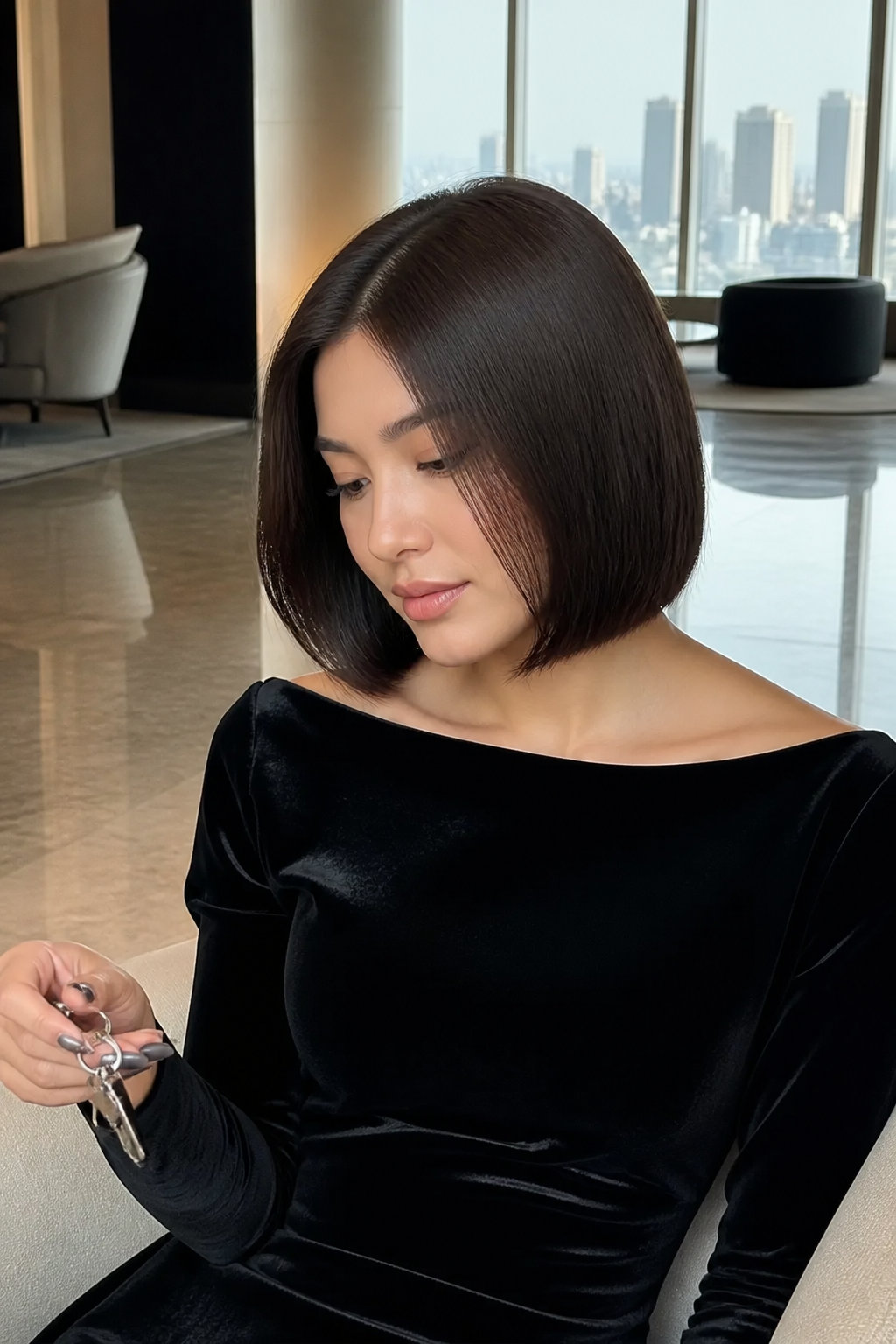
The sleek chin length bob lives on one line: a blunt perimeter cut level at the jaw, with no internal layers to break it up. Deep brown, mirror shine, no visible ends. Ten minutes with a round brush and a flat iron. Skip it if your hair bends at the jaw, because a hard line follows every cowlick.
The Choppy Wolf Cut
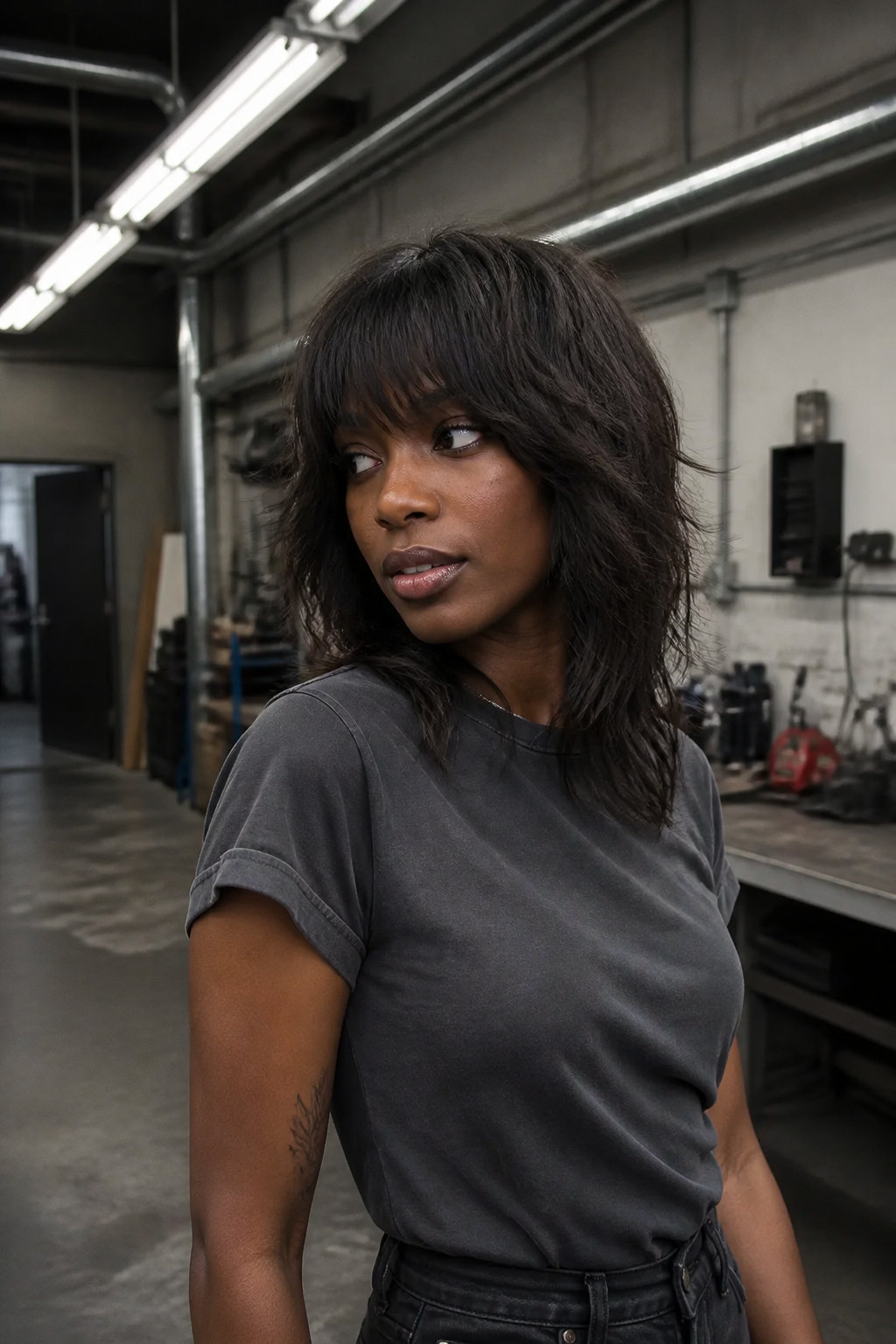
A choppy wolf cut is short at the crown, long through the sides, and held together by heavy layers that do the pointing for you. The perimeter stays soft, so the shape moves when you turn your head. Cut it on dark brown and the light catches every uneven edge, which is the entire point. Ask for the bangs deep and slightly overgrown; a tidy fringe kills this cut.
Difficulty is advanced, so I would not hand this to anyone still learning scissor-over-comb. Upkeep is medium because the shape is meant to look grown out, though the crown wants a trim every eight to ten weeks or it flattens into a bowl. Styling takes ten minutes: texturizing paste on dry hair, scrunch, then a volumizing spray at the roots. Spray first, then scrunch. Paste and spray together just make grit.
The Modern Pixie with Side-Swept Bangs
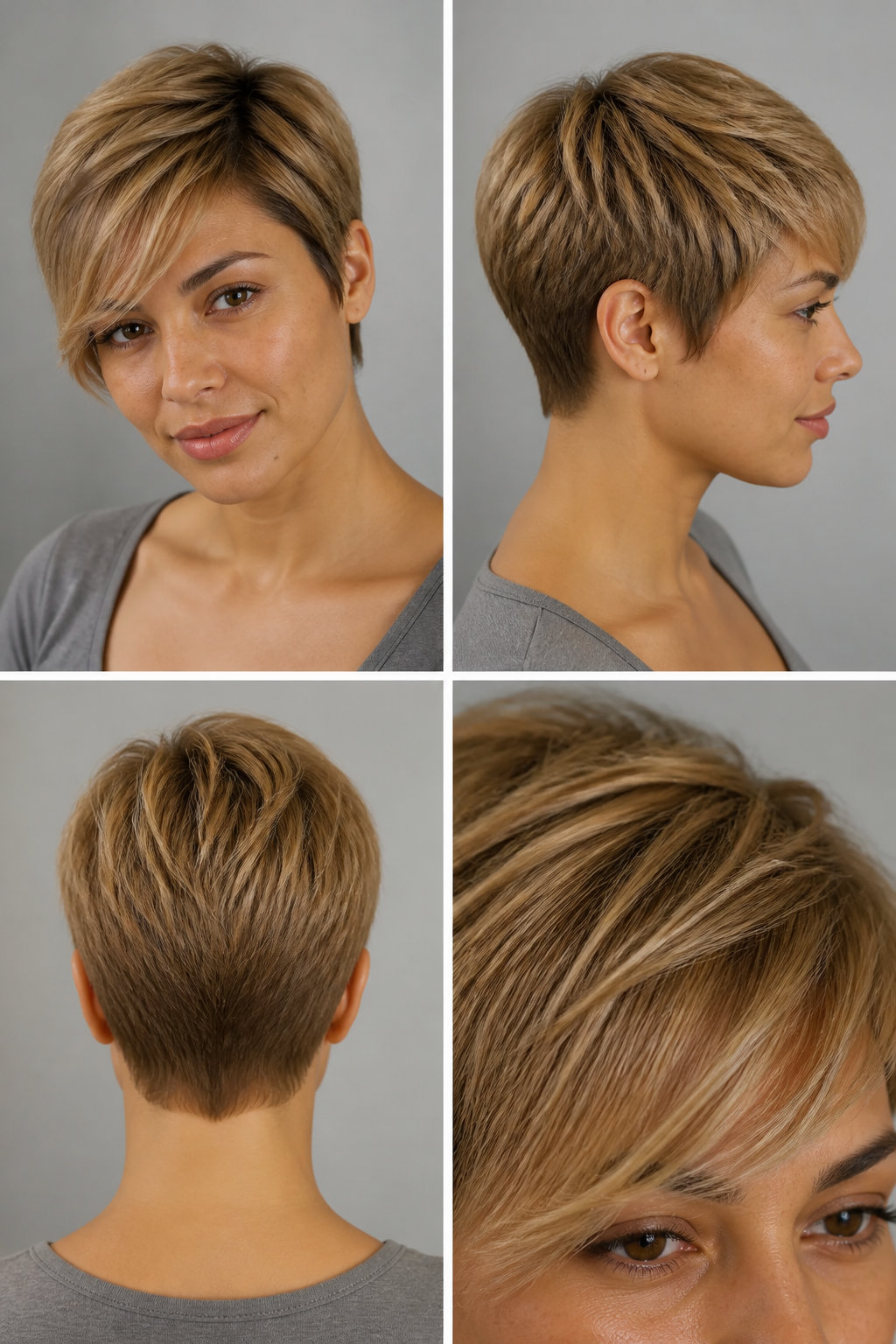
Pixie side swept bangs take a crop that usually reads severe and tilt it soft. The nape and over the ears stay short, the top keeps enough layers to move, and the longer bangs sweep across the forehead in one piece. Golden blonde, deeper at the roots and brighter through the top, so the layers separate on their own. The sweep keeps this from reading like a bowl at the back.
Five minutes, which is the number that sells me. Work a light pomade through damp bangs, sweep them to one side with your fingers, then tousle the rest. No brush, no dryer, once you know the direction. Trim every four to six weeks is non-negotiable; a pixie does not grow out, it grows wider. Ask for weight kept in the top layers, since point-cutting thin hair leaves nothing to sweep.
Final Thoughts
Looking at all twenty-three together, what struck me is how many of them are designed to air-dry well. The shag, the butterfly cut, the Italian lob — they all build movement into the cut itself, no round brush required. That’s the kind of trend I can get behind.
As for me, I’m booking the glossy Italian lob next. It has structure, it has shine, and my roots will look intentional for at least three weeks.