Balayage is the hand-painted color technique that gives you that sun-kissed, grown-out-with-intent look without a harsh regrowth line. In 2027, the trend leans into richer, warmer tones like caramel and copper, often paired with soft face-framing layers or curtain bangs for a more lived-in finish.
This collection of 32 balayage ideas covers the spectrum from subtle, low-maintenance blends to high-contrast blondes, on hair from collarbone to mid-back. Whether your hair is fine and needs dimension without weight, or thick and can handle lightened lengths, there is a placement and tone here for you. One struggle it solves: a visible grow-out line that arrives too fast.
Dark Blonde Balayage With Face-Framing Layers
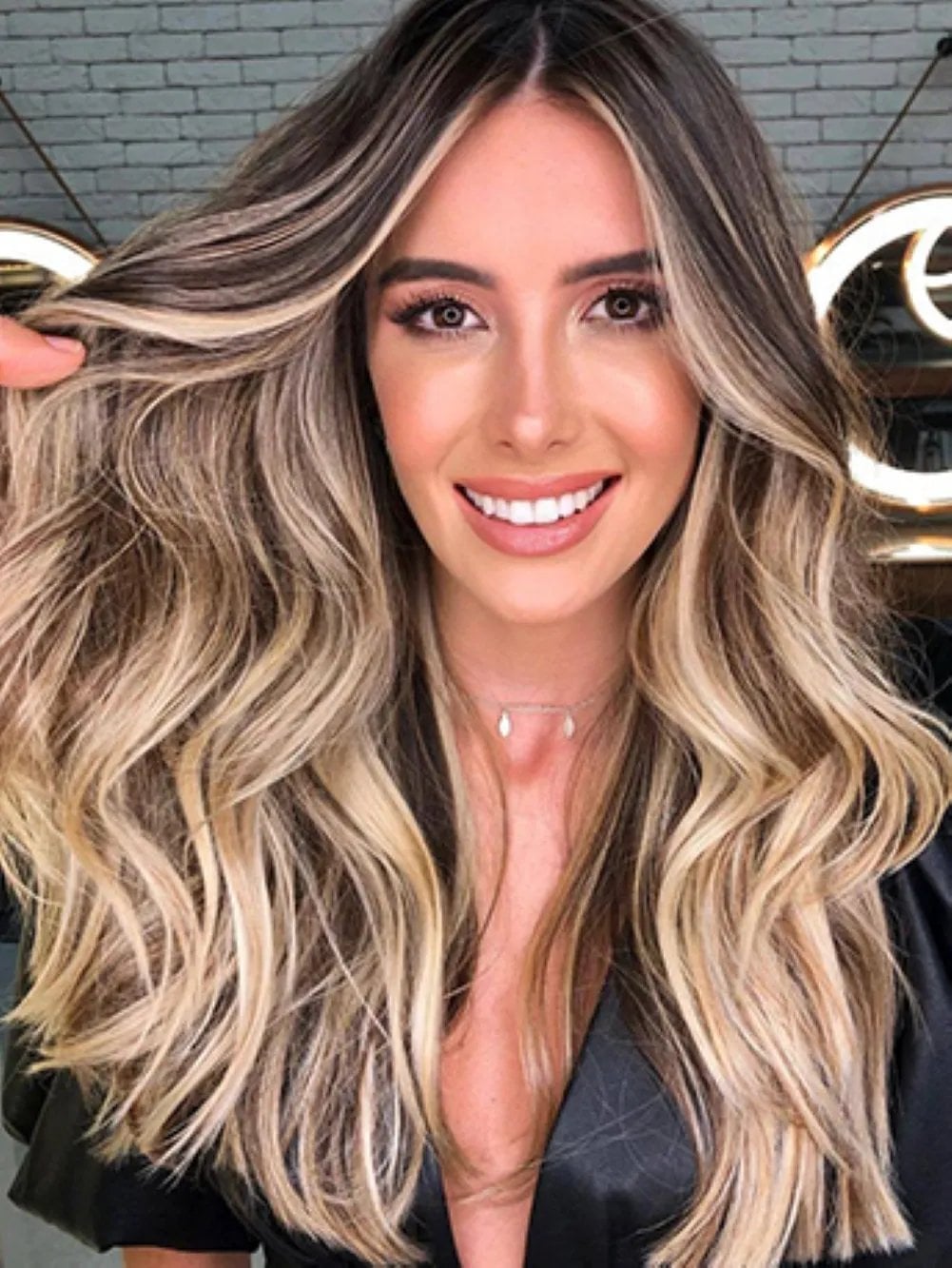
This is the balayage that earns its keep: a dark blonde base with lighter blonde highlights that land exactly where the light would hit, not in uniform stripes. The mid-back length and thick, wavy texture give the color room to breathe, while face-framing layers and curtain bangs pull it all forward. It softens round and heart face shapes without trying. Ask your colorist for: dark blonde balayage with lighter blonde highlights, curtain bangs.
Blow-dry the fringe first with a round brush to set the shape, then wave the rest with a large-barrel iron. The curtain bangs need a trim every six to eight weeks to stay out of your eyes. The balayage itself grows out gently, so you can push the next appointment to ten or twelve weeks without a harsh root line showing up.
Dark Brown With Blonde Balayage Highlights
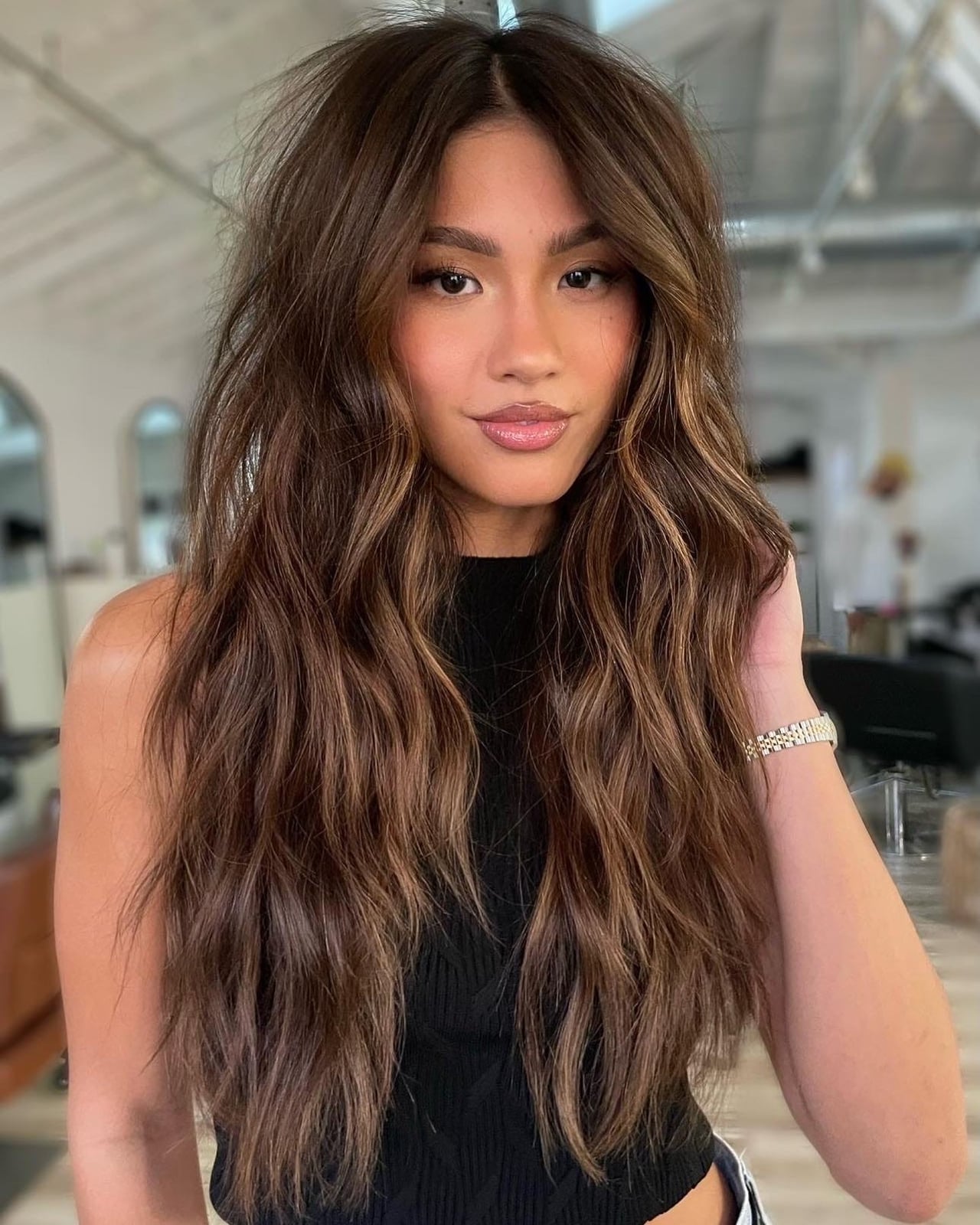
A dark brown base with blonde balayage hits differently than the same technique on a lighter base. Here the contrast is sharper, the dimension more deliberate. On a brunette canvas, those blonde pieces read as lifted and expensive rather than just light. The thick, wavy texture and mid-back length carry the transition from mid-length to ends, with curtain bangs softening the whole thing. Ask your colorist for: dark brown base with blonde balayage, curtain bangs.
If your natural base is closer to medium brown, expect a subtler shift. The same formula on dark brown delivers the drama; on a lighter base, it reads as a gentle sun-stroke. Know which camp you are in before you sit down.
Brunette Balayage With Caramel and Copper Tones
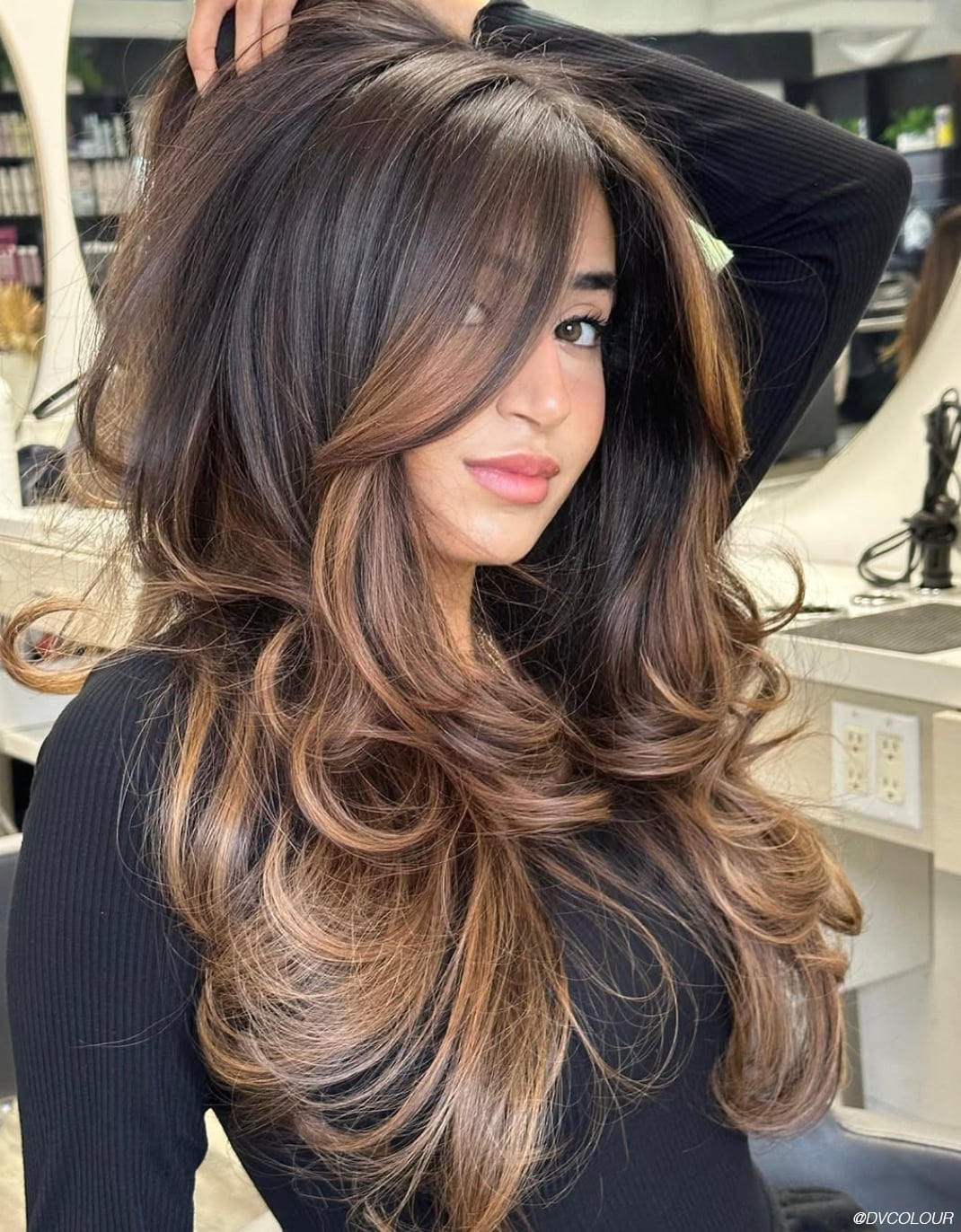
The design here relies on two warm tones layered over a brunette base rather than a single lift. Caramel and copper hit at different depths, which keeps voluminous curls from looking like one solid color. The mid-back length and thick texture let both tones travel through the waves without getting muddy. Ask your colorist for: brunette balayage with caramel and copper tones, curtain bangs. This one belongs at an evening event or a holiday dinner, where the warm tones catch the light and do the work for you.
Dark Blonde With Bright Blonde Balayage
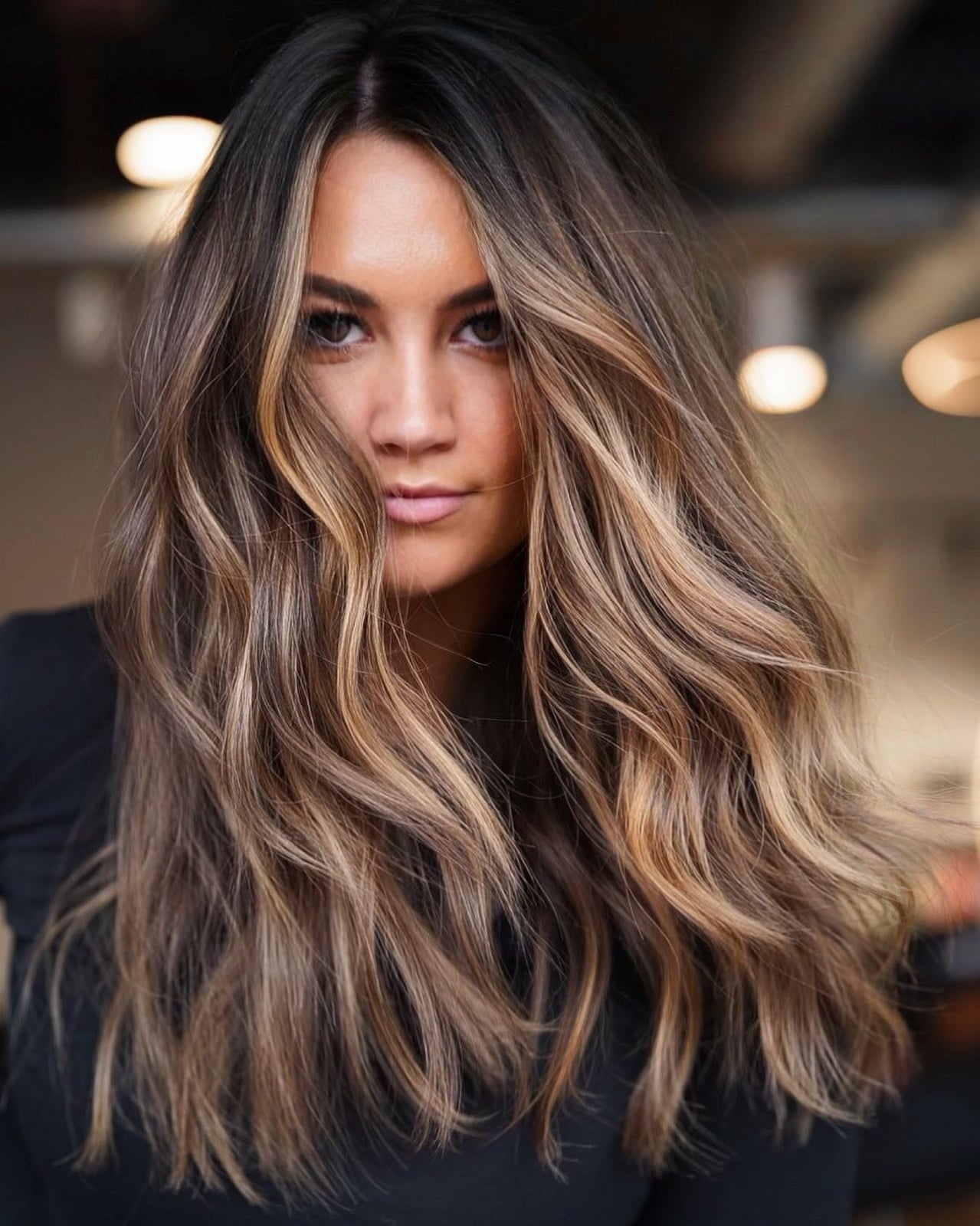
How do you get a balayage that is high contrast without going to a dark brown base? Ask your colorist for a dark blonde base with bright blonde balayage, mid-back length, loose waves. The dark blonde root anchors the color, while the bright blonde pieces are painted through the mid-lengths and ends for noticeable dimension. A middle part keeps the face-framing sections balanced, and the thick, wavy texture helps the lighter strands stand out naturally.
This approach works best on thick hair where the bright blonde does not overwhelm the base. The dark blonde foundation means the grow-out is softer than a dark brown root, so you can stretch salon visits to ten weeks without a harsh line. Use a sea salt spray on damp waves for texture that lets the balayage layers separate and show. The result is a dimensional color that looks lifted, not bleached.
Dark Brown With Subtle Blonde Balayage, Mid-Back
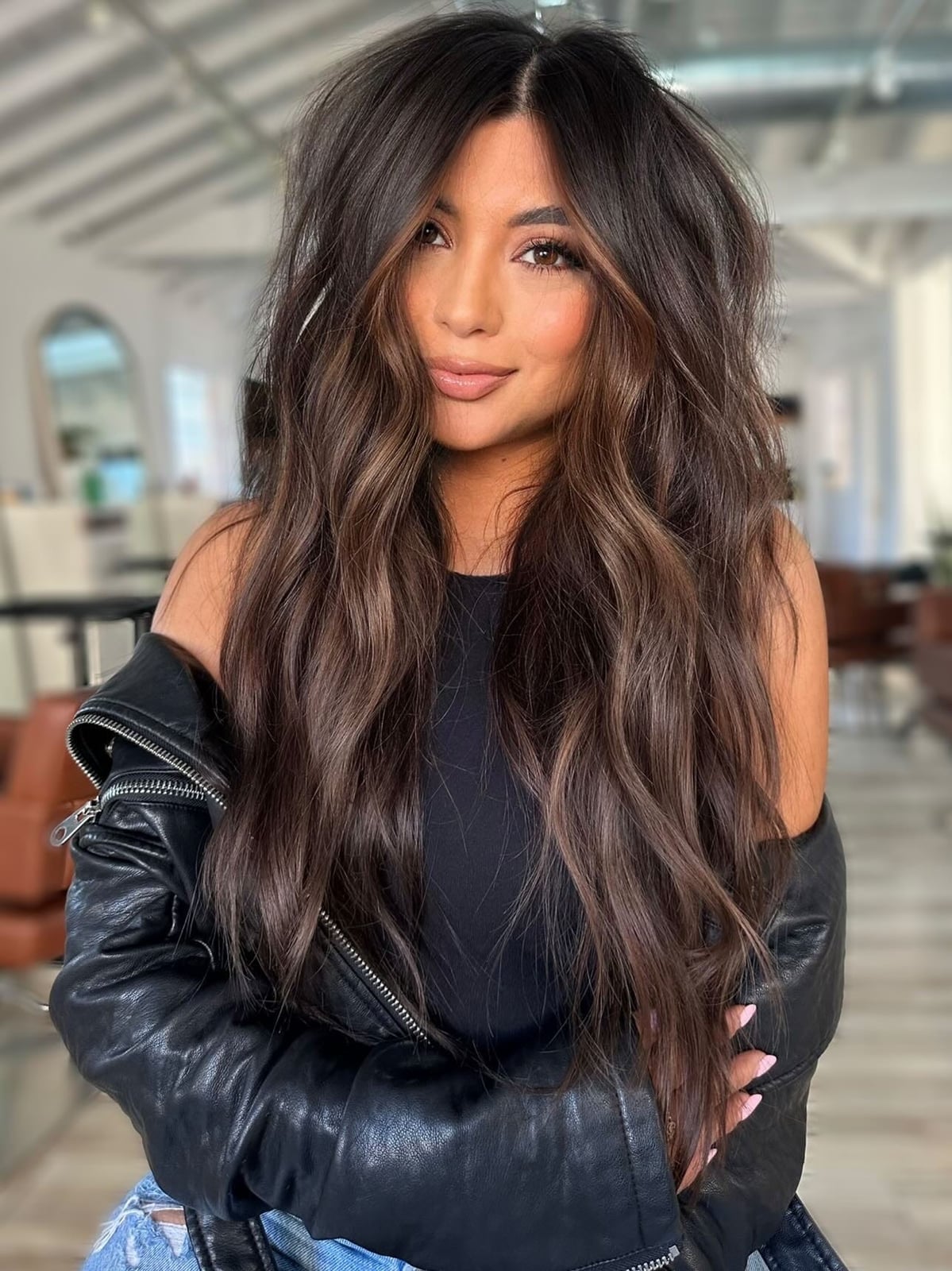
The design here relies on a dark brown base with subtle blonde balayage, applied so the lighter pieces weave through the waves without announcing themselves. The mid-back length and thick, wavy texture let the color travel gradually from root to end, which means the grow-out is forgiving and the dimension looks natural even when you skip a trim. A middle parting balances the face-framing pieces, keeping the overall effect soft rather than dramatic.
This is the balayage for anyone who wants color that works on its own schedule. The subtle blonde highlights are painted sparingly, so there is no harsh regrowth line to chase. Plan for a trim every eight to ten weeks to maintain the shape of the layers, and use a smoothing serum on damp hair for a polished finish that shows the tonal variation without frizz. It is a low-commitment color that still delivers noticeable depth.
Blonde Balayage With Curtain Bangs
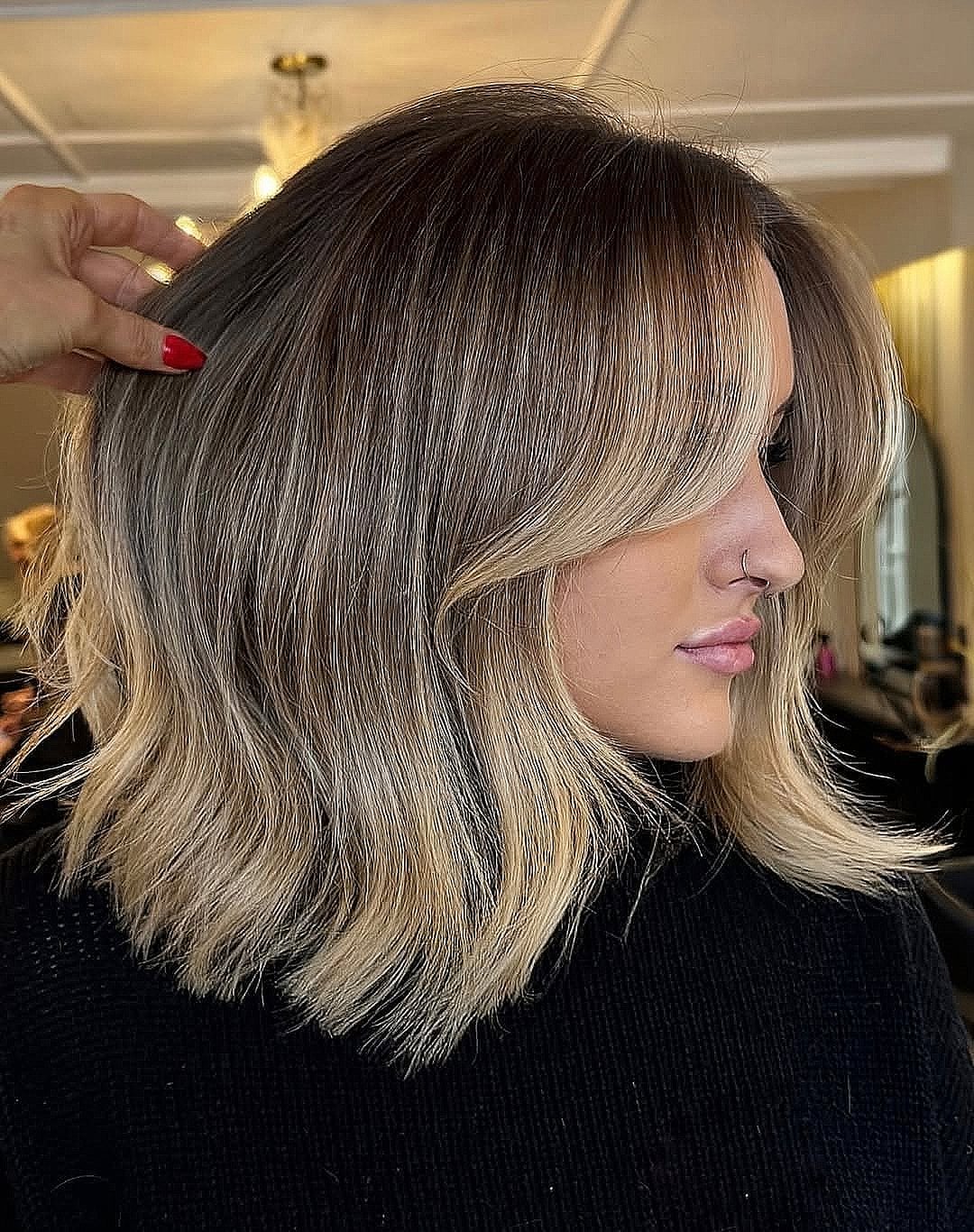
The collarbone length and curtain bangs make this a seasonal shift worth considering. The blonde balayage is painted through the ends, leaving the roots slightly darker for a sunkissed effect. The wavy blowout and middle part let the face-framing layers soften the jawline, while the curtain bangs add movement without requiring constant trimming. This is a look for spring or summer, when lighter color and shorter lengths feel right. The bright blonde highlights catch the sun, and the curtain bangs keep the style from feeling heavy. It is a low-commitment way to go lighter without a full color overhaul.
Dark Brown Base With Blonde Balayage Blend
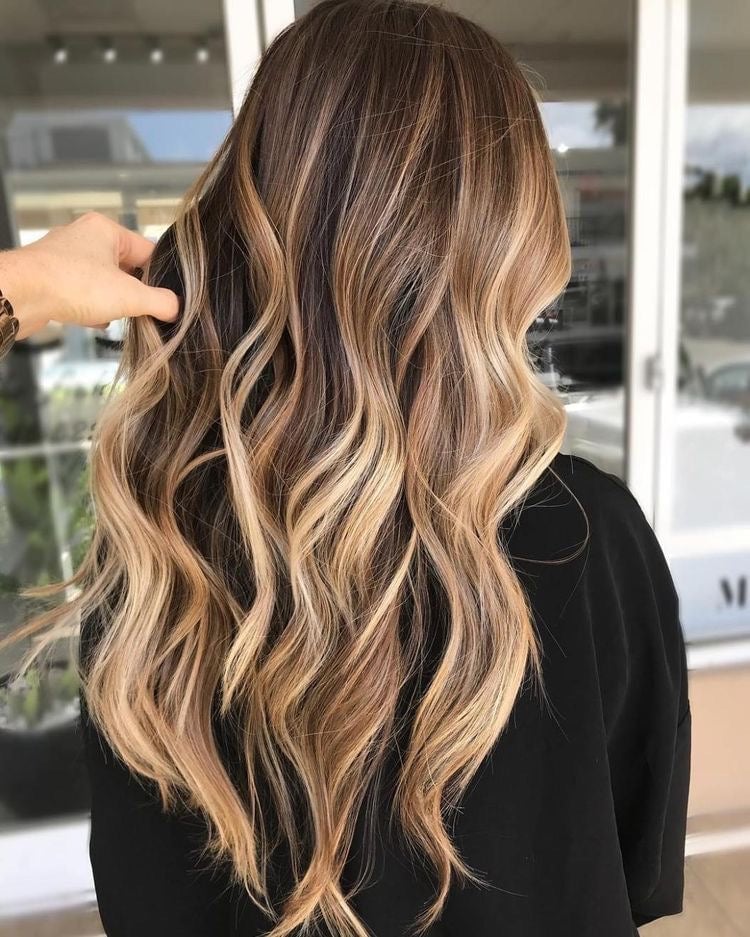
The balayage technique here is straightforward: the colorist paints blonde strokes onto a dark brown base using soft, blended strokes that start below the root and taper through the mid-lengths. The back view shows how the color is distributed evenly, with the lighter pieces concentrated around the face and the darker sections left intact for depth. The mid-back length and thick, wavy texture give the blend room to breathe, so the transition looks natural.
This technique adds dimension without a hard line of demarcation. The soft strokes mean the color grows out gradually, so you can go eight to ten weeks between appointments. The middle part keeps the face-framing pieces balanced, and the loose waves let the blonde shift in brightness from different angles. A shine serum on damp hair enhances the gloss without weighing down the waves.
Rich Brown With Warm Blonde Balayage
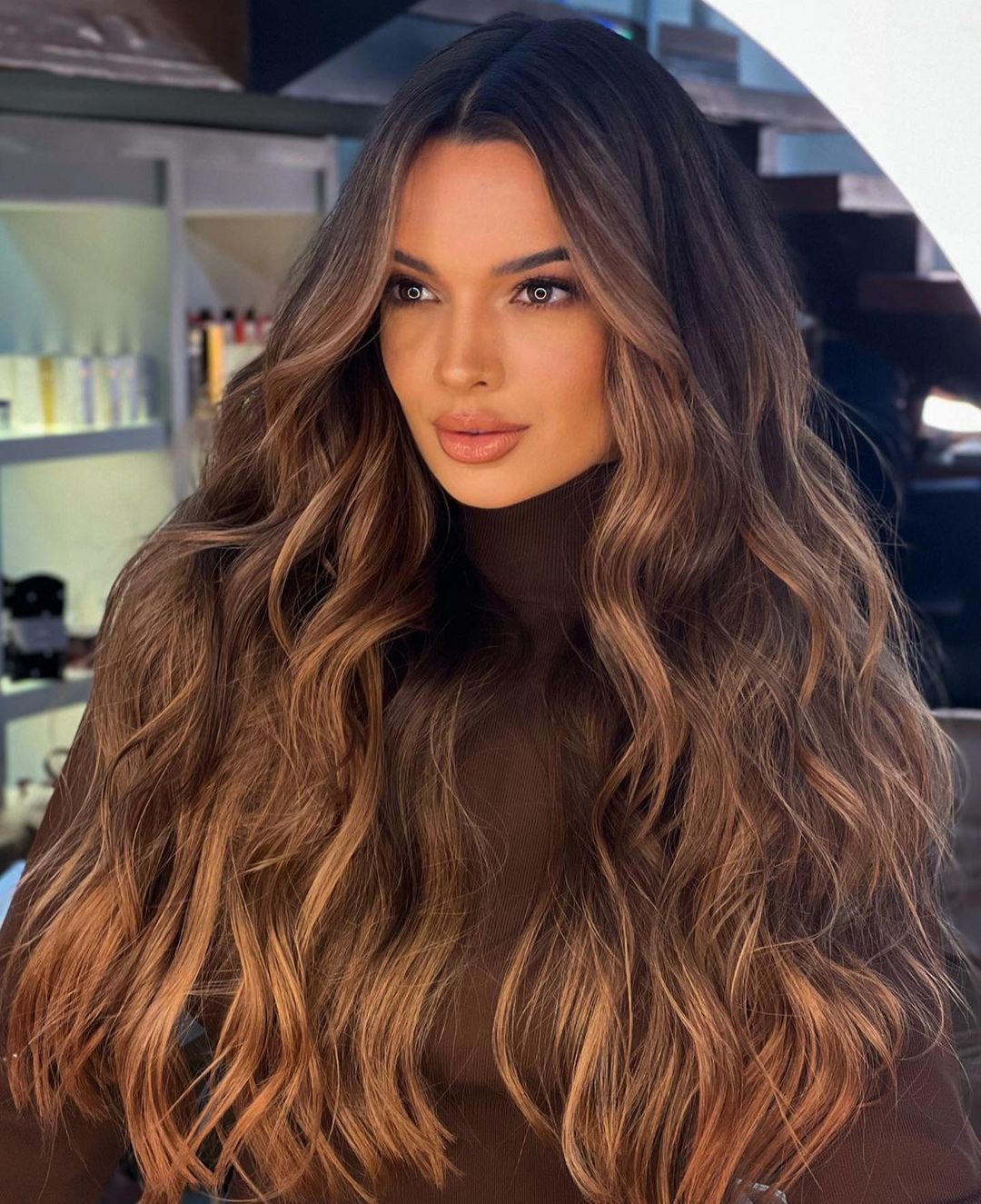
Who does a rich brown base with warm blonde balayage actually suit? The warm blonde tones add brightness without washing out the base, so it works on medium to thick hair that can hold a voluminous blowout. The mid-back length and long layers give the color room to travel, while the middle part balances the face-framing sections. This color looks sun-kissed and lived-in from day one.
If your hair is fine or low density, the warm blonde balayage can still work, but keep the lighter pieces closer to the ends to avoid weighing down the roots. A volumizing mousse at the roots during styling creates the blowout effect shown here, and a trim every eight to ten weeks maintains the shape of the layers. The warm tones stay vibrant with a color-depositing conditioner used every few washes.
Dark Brown To Golden Blonde Balayage, Face-Framing Pieces
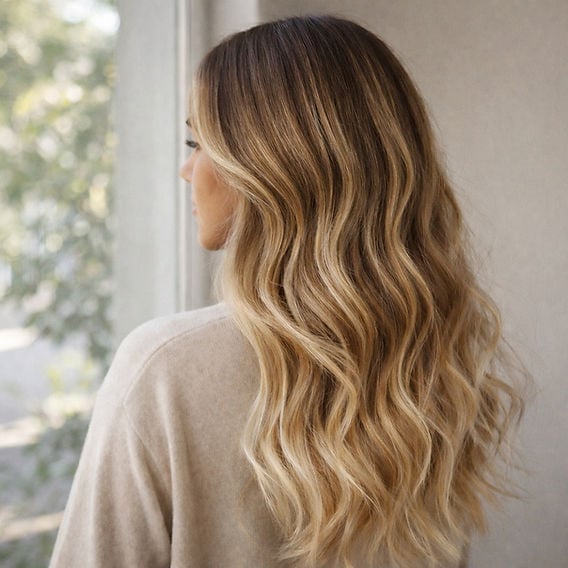
Those face-framing pieces are painted brighter for a reason: they pull attention upward and keep the golden blonde from feeling flat on the ends. The dark brown roots stay deep, so the grow-out is forgiving, but golden blonde has a habit of turning brassy around week six. A purple shampoo used once a week keeps the tone from veering into orange territory. Ask your colorist for: dark brown to golden blonde balayage, face-framing pieces. This suits medium density, wavy hair of mid-back length. A texturizing spray on the ends gives the waves definition, and a trim every eight to ten weeks keeps the shape fresh.
Caramel Bronde Balayage
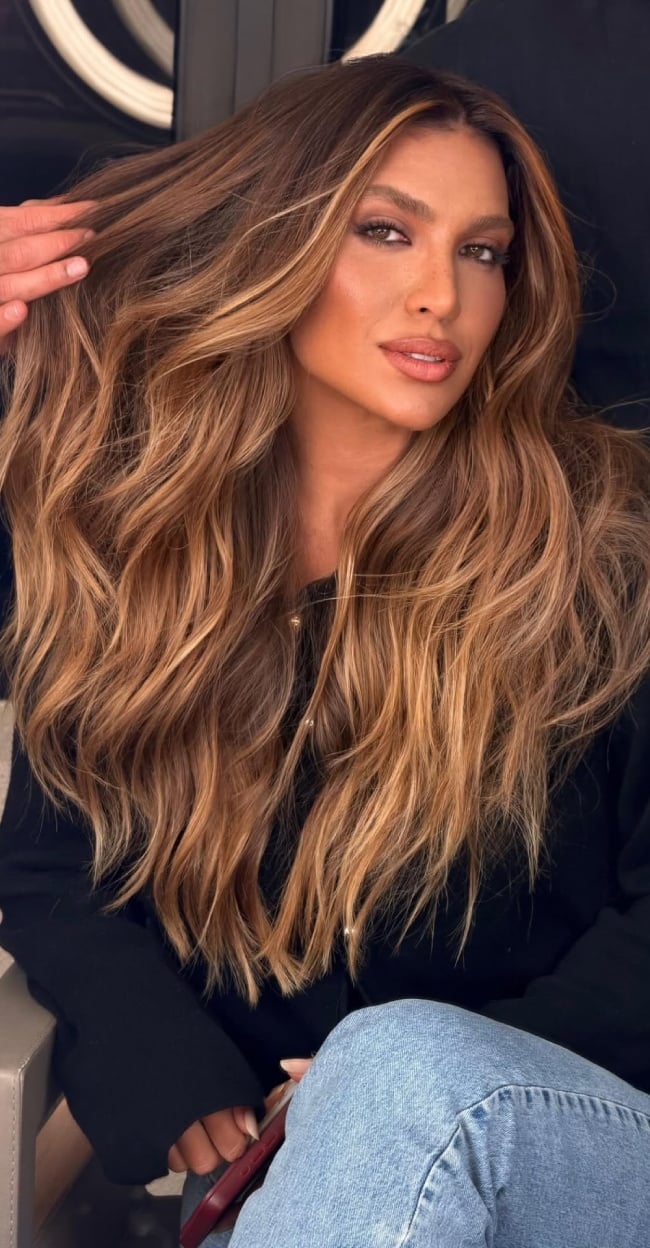
Caramel bronde balayage is exactly what it sounds like: a bronde base with warm caramel tones painted through the ends for a sun-kissed effect. The colorist paints the caramel in soft, sweeping strokes, so the blend looks natural. The thick, wavy texture at mid-back length lets the warmth travel through each wave without getting lost. Ask your colorist for: caramel bronde balayage. A middle part and no bangs keep the focus on the dimension, and a conditioner maintains the softness.
This is a salon-only process. Achieving a seamless caramel bronde balayage at home is not realistic, because the balayage technique requires freehand painting and a trained eye for placement. The colorist lifts the caramel tones to different depths, which creates the subtle gradation. A trim every eight to ten weeks keeps the ends healthy and the color looking fresh.
Dark Brown With Caramel Balayage Dimension
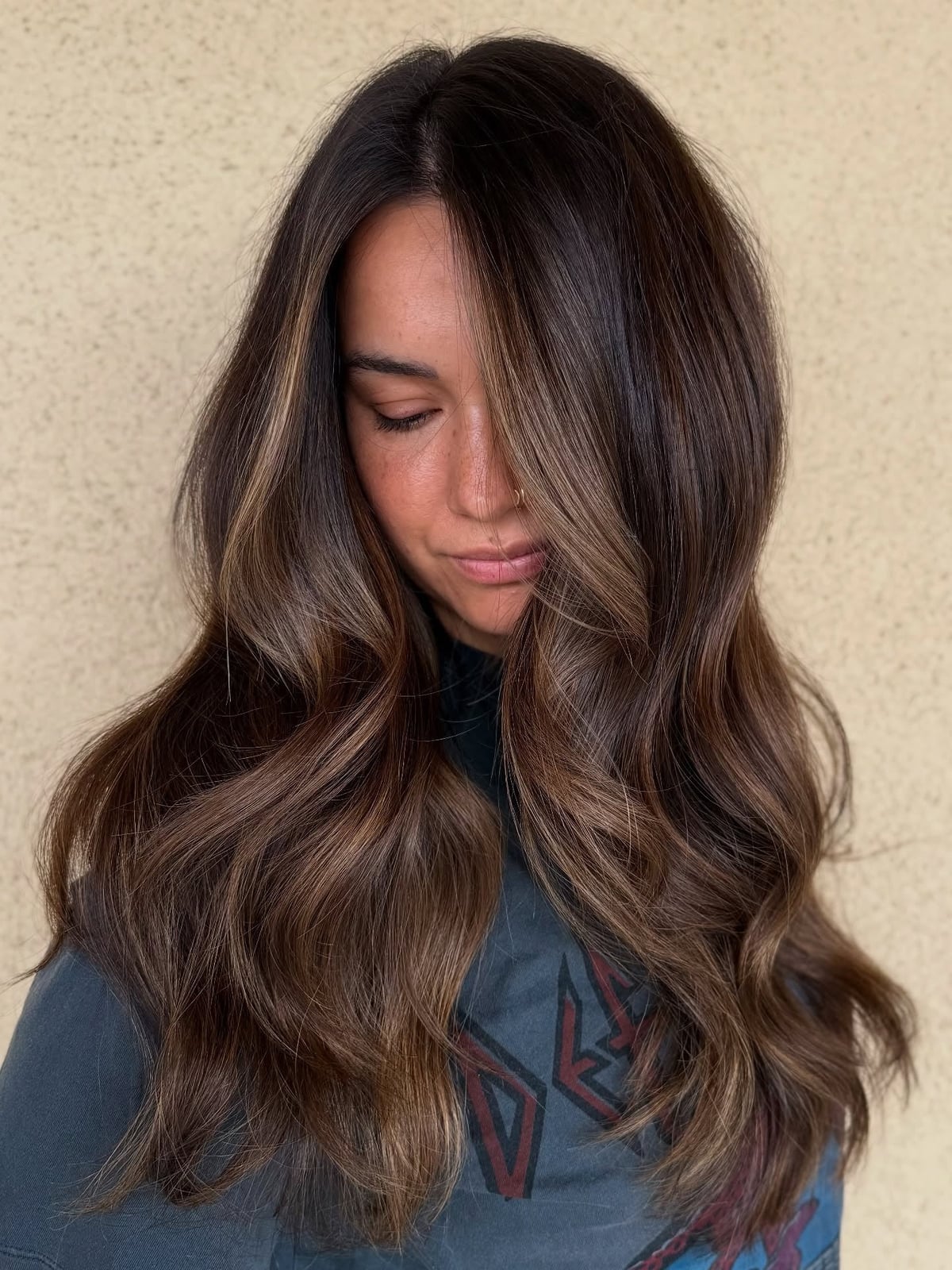
Caramel balayage on a dark brown base is the rare color that looks like a lot of work and actually requires very little. The dimensional effect comes from painting caramel pieces through the mid-lengths and ends, leaving the roots dark, so the grow-out is forgiving and the color stays interesting for months. Thick, wavy hair at mid-back length shows off the blend best, and a middle part helps elongate a round face.
Ask your colorist for: dark brown with caramel balayage. To keep the caramel from turning brassy, use a color-safe shampoo and rinse with cool water. A trim every eight to ten weeks keeps the ends healthy and the waves bouncy.
Collarbone Waves With Caramel Balayage
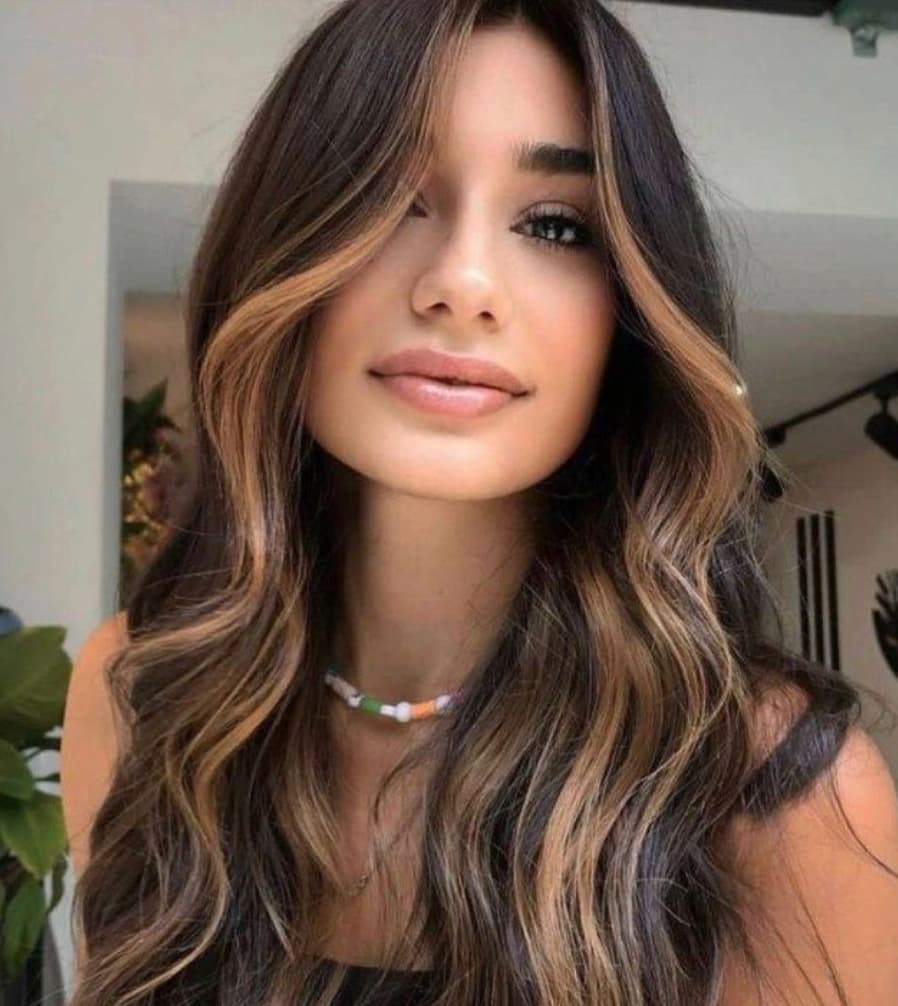
How do you get caramel highlights that actually frame your face instead of just sitting there? Ask your colorist for: collarbone length dark brown with caramel balayage, curtain bangs. The face-framing pieces are painted brighter near the front, so they catch the light when you turn your head, while the curtain bangs soften square and oval faces. On thick, wavy hair, the caramel blends seamlessly into the dark brown base, and the collarbone length keeps the style easy to maintain. A trim every six to eight weeks keeps the bangs from turning into a curtain you have to part yourself.
Medium Brown With Caramel Blonde Balayage
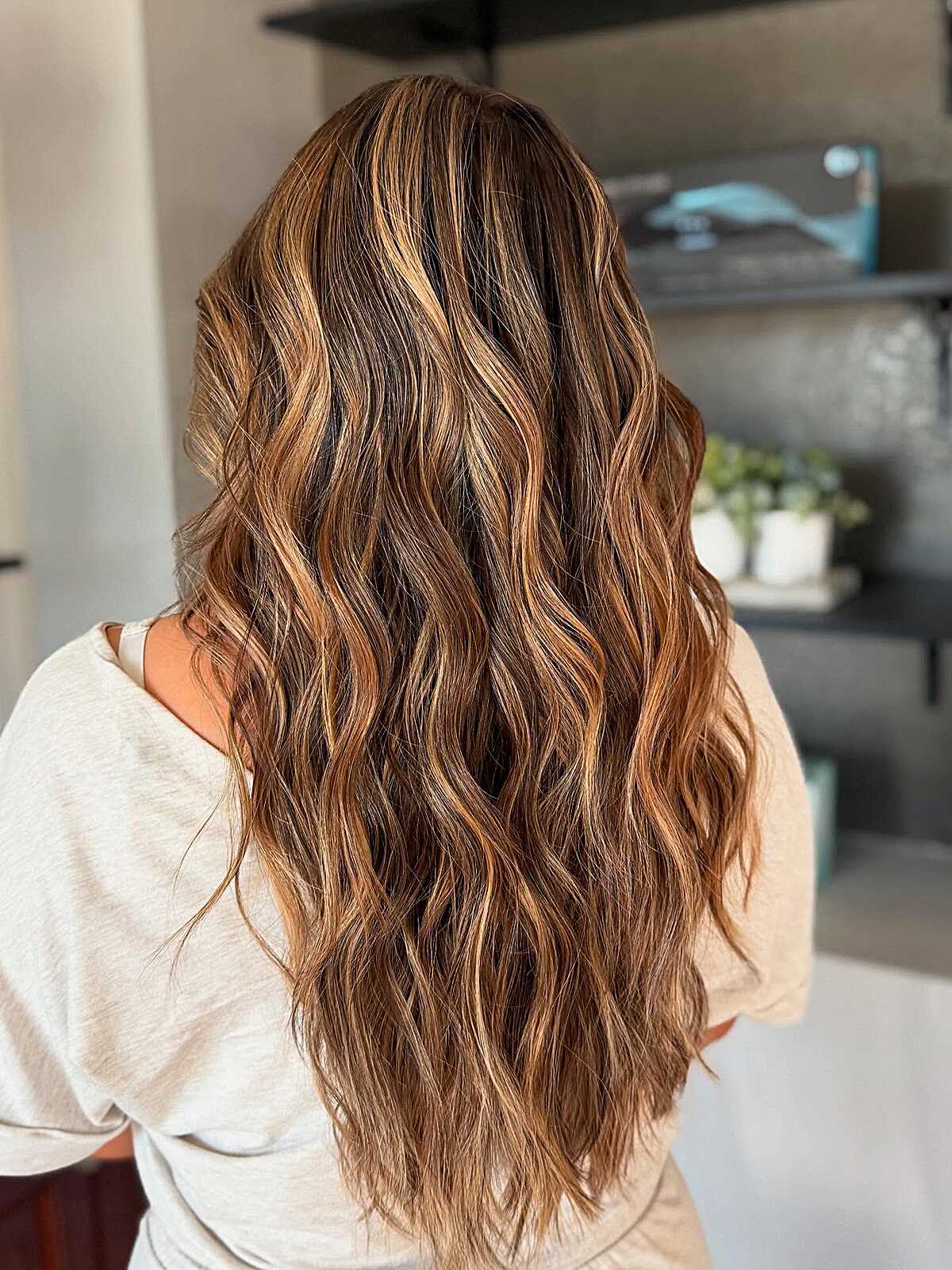
If a uniform color application feels flat, this medium brown with caramel and blonde balayage adds dimension without the upkeep of full highlights. The caramel blonde is painted through the mid-lengths and ends, leaving the roots medium brown, so the color grows out naturally and you can stretch salon visits. Thick, wavy hair at mid-back length shows off the sun-kissed effect, and the loose waves keep the blend looking soft rather than striped. A heat protectant before styling keeps the waves glossy, and a trim every eight to ten weeks keeps the ends from splitting.
Dark Brown To Blonde High Contrast Balayage
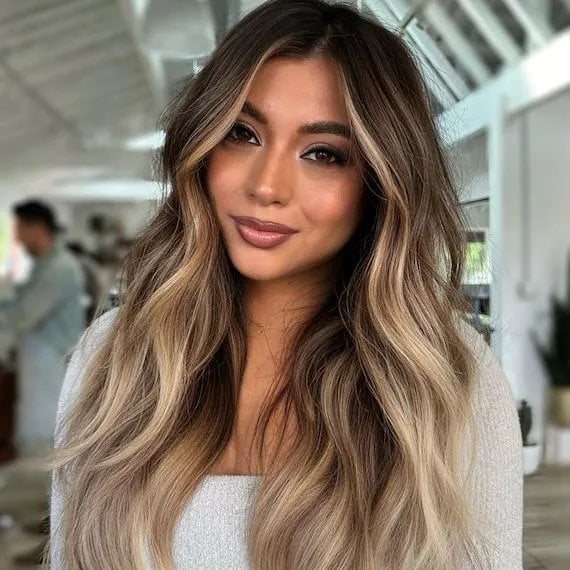
The technique here is precise: the colorist paints bright blonde from the mid-lengths down, keeping the roots dark brown for a high contrast balayage that reads as intentional. The face-framing pieces are painted brighter, so they draw the eye forward, and the middle part balances the drama. This works best on thick, wavy hair at mid-back length, where the transition has room to show. The blonde ends need a purple shampoo once a week to stay cool, and a trim every ten to twelve weeks keeps the ends healthy.
Mid-Back Beige Blonde Balayage Wet Look
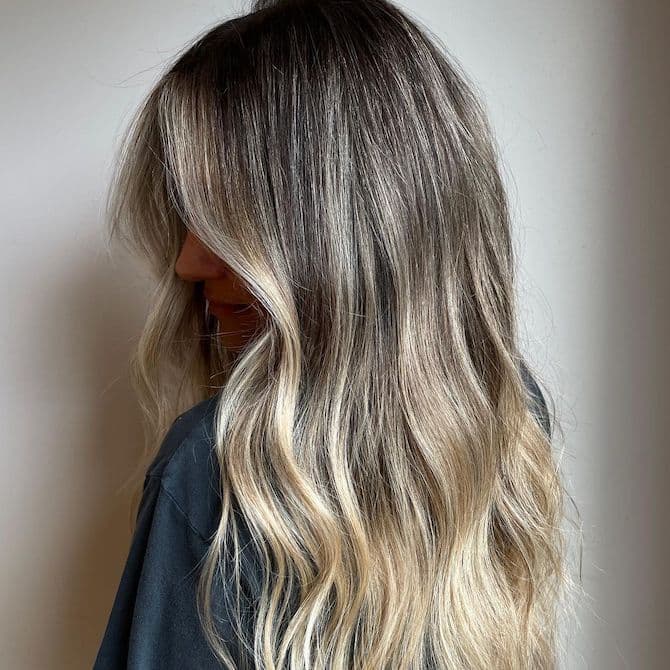
The wet look is a styling choice, not a color change: beige blonde balayage on mid-back length hair, slicked back with a middle part and long layers. The seamless beige tones keep the color soft, while the wet finish adds editorial polish. This suits medium density, wavy hair that can hold a sleek shape without frizzing. Ask your colorist for: mid-back length beige blonde balayage, wet look styling. To get the finish, apply a gel or pomade to damp hair and comb it back. It’s a look for a fashion event or a night out, not a Tuesday at the office.
Shoulder Length Caramel Balayage With Curtain Bangs

Who actually benefits from a shoulder-length caramel balayage with curtain bangs? Anyone with medium density, wavy hair who wants soft face-framing without committing to a full fringe. The curtain bangs sweep to the sides, which softens square and oval faces, and the caramel balayage on a medium brown base adds warmth without a harsh line of demarcation. The shoulder length keeps the weight manageable, so the waves hold their shape. Ask your colorist for: shoulder length medium brown with caramel balayage, curtain bangs. A volumizing spray at the roots gives the crown lift, and a trim every six to eight weeks keeps the bangs from turning into a nuisance.
Collarbone Balayage With Dark Blonde Tones
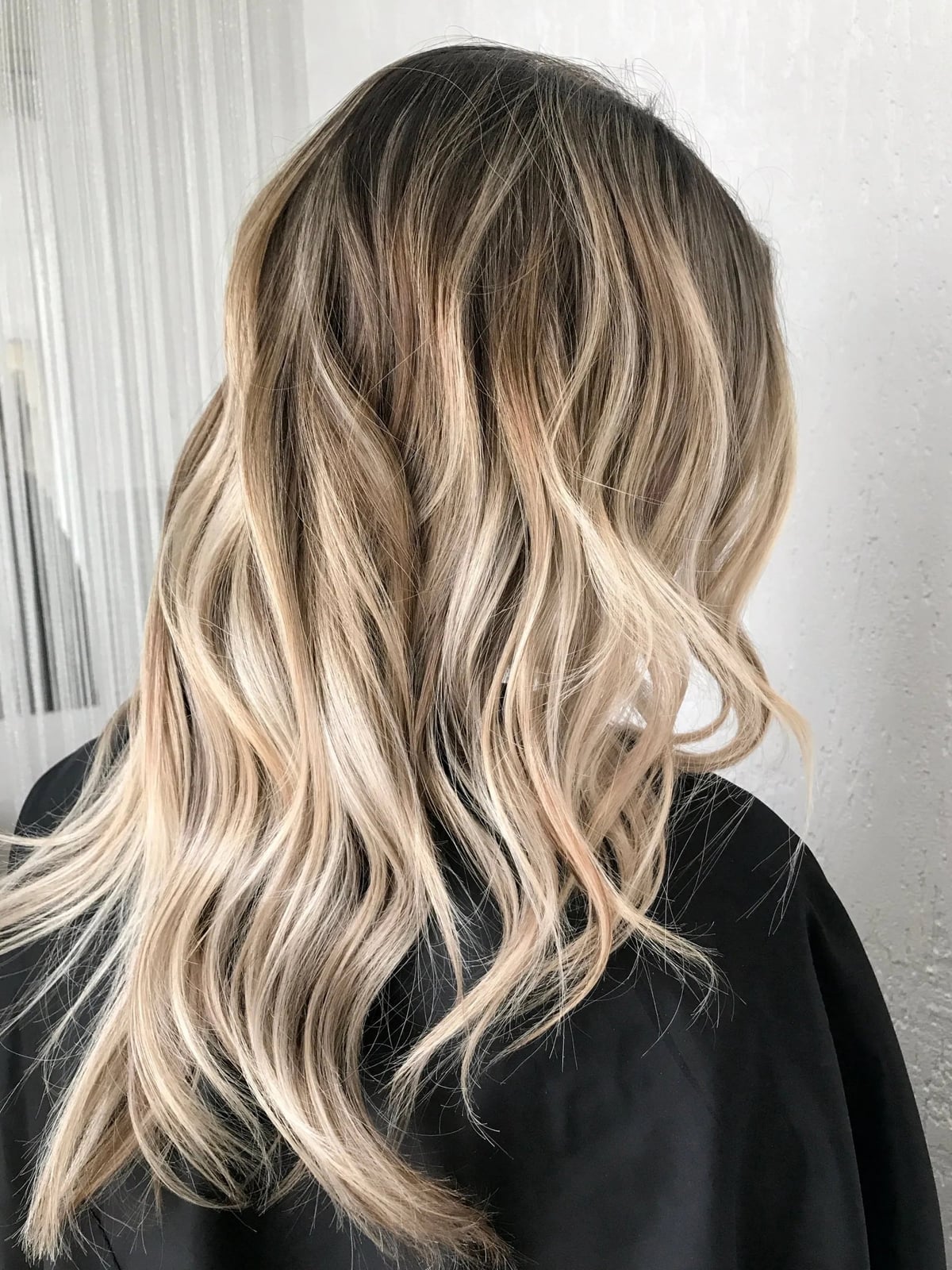
The collarbone length is a practical sweet spot: long enough to show off the dark blonde balayage on a medium brown base, short enough that the color grows out without looking unkempt. The dark blonde tones are painted through the mid-lengths and ends, leaving the roots medium brown, so the line of demarcation is soft. Thick, wavy texture helps the color appear dimensional. Ask your colorist for: collarbone length medium brown with dark blonde balayage. The waves get beachy definition from a texturizing spray, and a trim every six to eight weeks keeps the ends from splitting. The grow-out is about eight weeks before the roots need attention, which is standard for a lived-in color.
Mid-Back Dark Blonde With Lighter Balayage
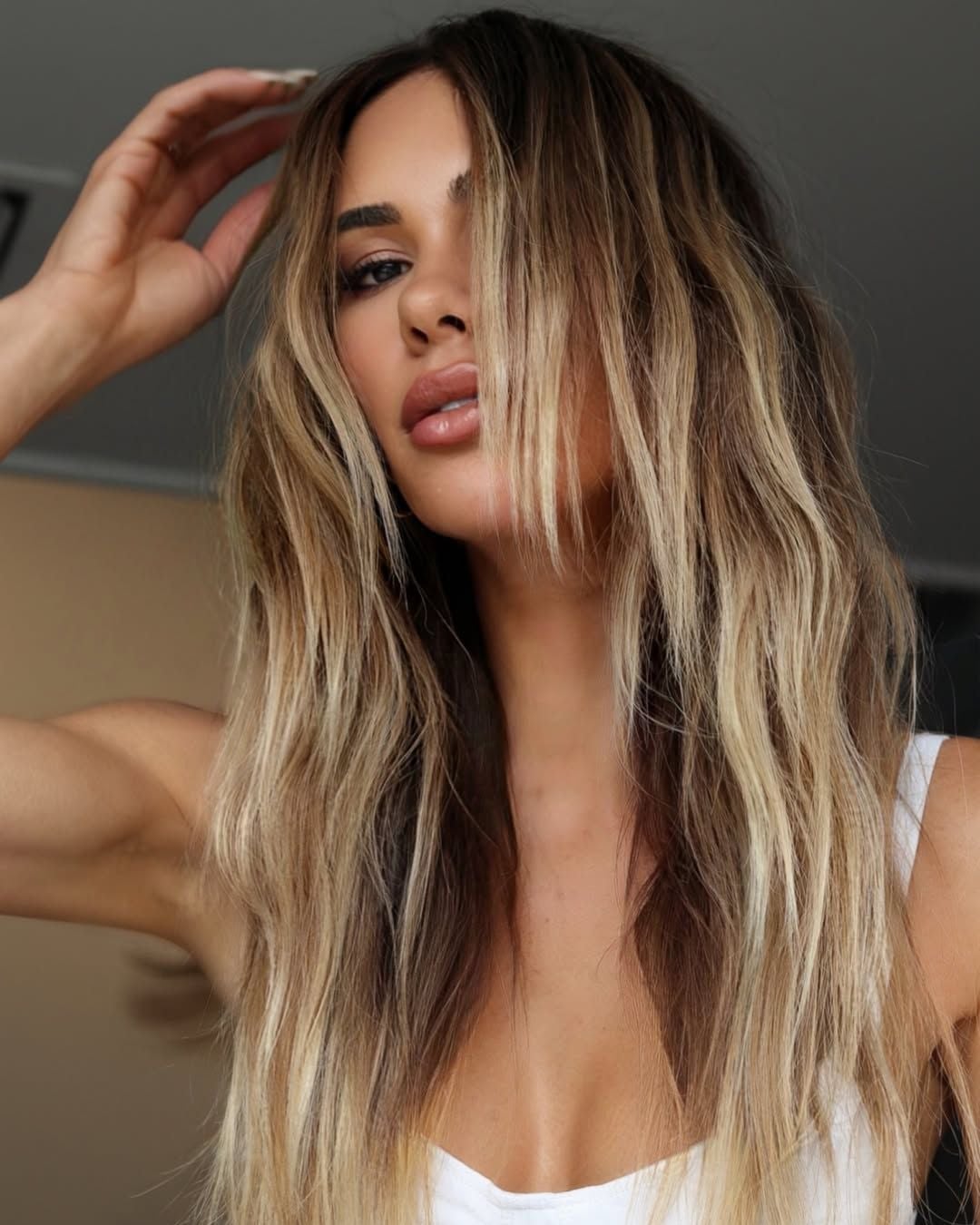
How do you ask for a balayage that looks like you spent a week at the beach without actually going anywhere? The exact words matter. Ask your colorist for: mid-back dark blonde base with lighter blonde balayage, curtain bangs. The lighter blonde highlights should be painted through the mid-lengths and ends, concentrated around the face-framing layers and curtain bangs, so the lightest pieces sit where the sun would naturally hit. The dark blonde base keeps the overall tone grounded, while the lighter pieces add dimension without high contrast. Thick, wavy texture at mid-back length gives the color room to travel.
Bring a reference photo that shows the exact placement: highlights that start a few inches from the root and get brighter toward the ends, with curtain bangs that are painted slightly lighter at the tips. A wavy blowout with a middle part shows off the dimension best. A smoothing balm tames flyaways, and a trim every eight to ten weeks maintains the shape.
Dark Brown With Sunkissed Copper Balayage
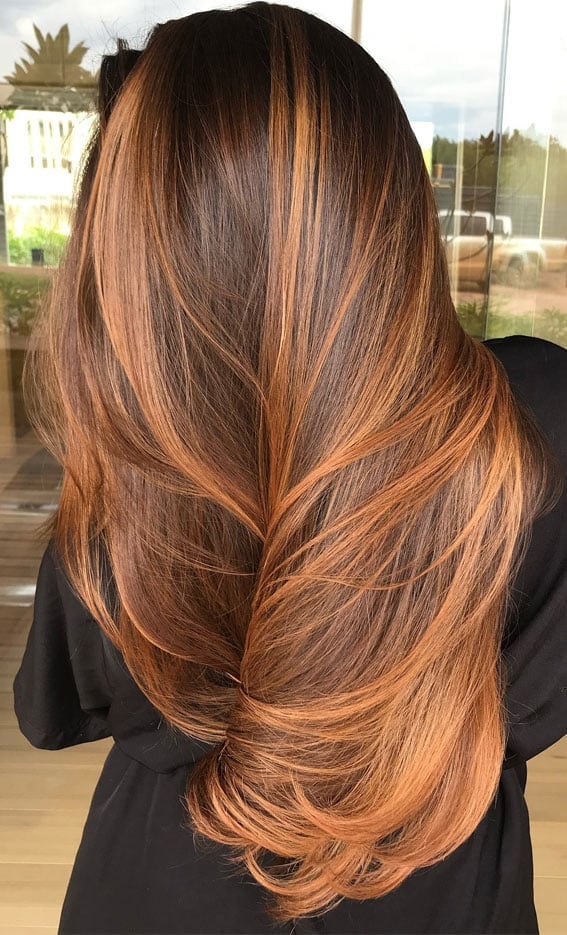
A dark brown base with sunkissed copper balayage is the color equivalent of a warm-weather wardrobe: it just works better when the temperature rises. The copper is painted through the ends of thick, wavy mid-back length hair, leaving the roots dark for a transition that grows out naturally. The middle part lets the copper fall symmetrically, which keeps the dimension balanced. This suits thick, wavy hair that can handle the lift without turning brassy, and the length gives the copper room to travel.
Ask your colorist for: dark brown base with sunkissed copper balayage. The warm tones hit differently in natural light, so this is a color that actually looks better outside than under a salon lamp. A color-depositing conditioner every few washes keeps the copper from fading into a flat orange, and a trim every eight to ten weeks keeps the ends healthy enough to hold the tone. It is a fall color that works into spring, provided you are not expecting it to be subtle.
Collarbone Dark Brown With Subtle Blonde Balayage
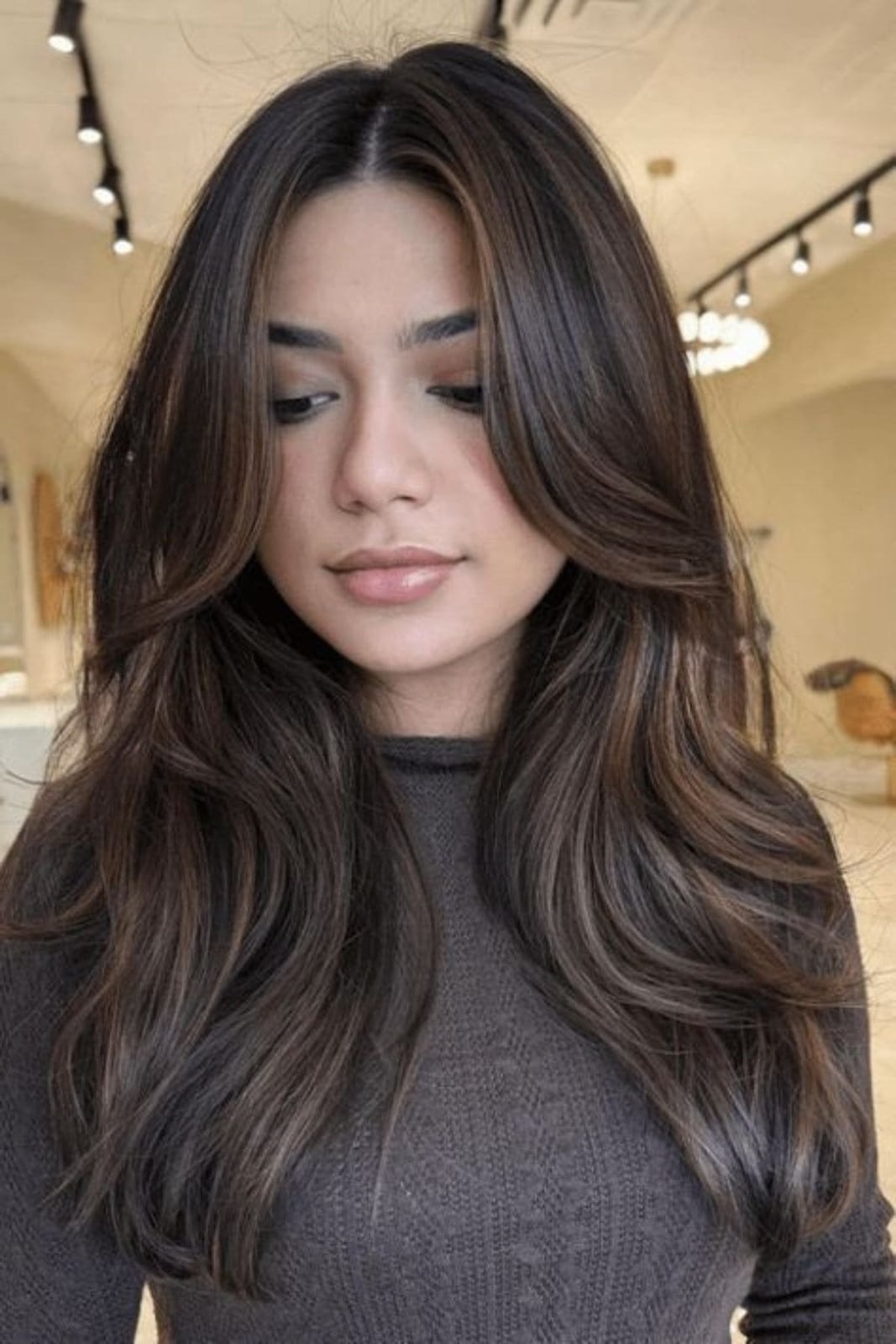
Collarbone length dark brown with subtle blonde balayage is the color you get when you want dimension without the commitment of a full highlight appointment every six weeks. The blonde is painted sparingly through the mid-lengths and ends of wavy, medium density hair, so the effect is more of a soft lift than a statement. The middle part and loose blowout keep the look natural, almost as if the sun did the work. The trade-off is that subtle highlights can read as barely there on darker bases, especially if you are used to more contrast. This suits anyone who wants a low-key color that does not announce itself from across the room. Ask your colorist for: collarbone dark brown with subtle blonde balayage. A root-lifting spray adds volume, and a trim every six to eight weeks keeps the shape fresh.
Mid-Back Dark Brown With Subtle Caramel Balayage, Showcasing A Glossy
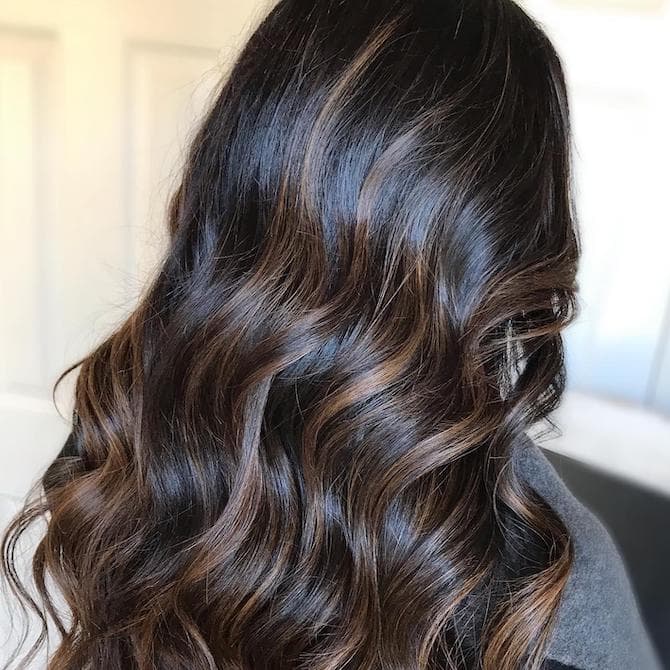
A bold caramel balayage announces itself; a subtle one waits to be noticed. This version weaves caramel highlights through a dark brown base on thick, wavy mid-back length hair, creating dimension that only reads in motion or direct light. The mostly straight styling with soft waves at the ends keeps the focus on the glossy finish rather than the color placement itself. The middle part and layers let the caramel fall naturally, so the effect is more organic than a painted-on stripe. This suits thick, wavy hair that can carry the subtlety without the highlights getting lost in the density. Ask your colorist for: dark brown base with subtle caramel balayage. A flat iron to smooth the ends and a trim every eight to ten weeks keep the glossy texture intact.
Mid-Back Dark Brown With Blended Blonde Balayage, Air Dried
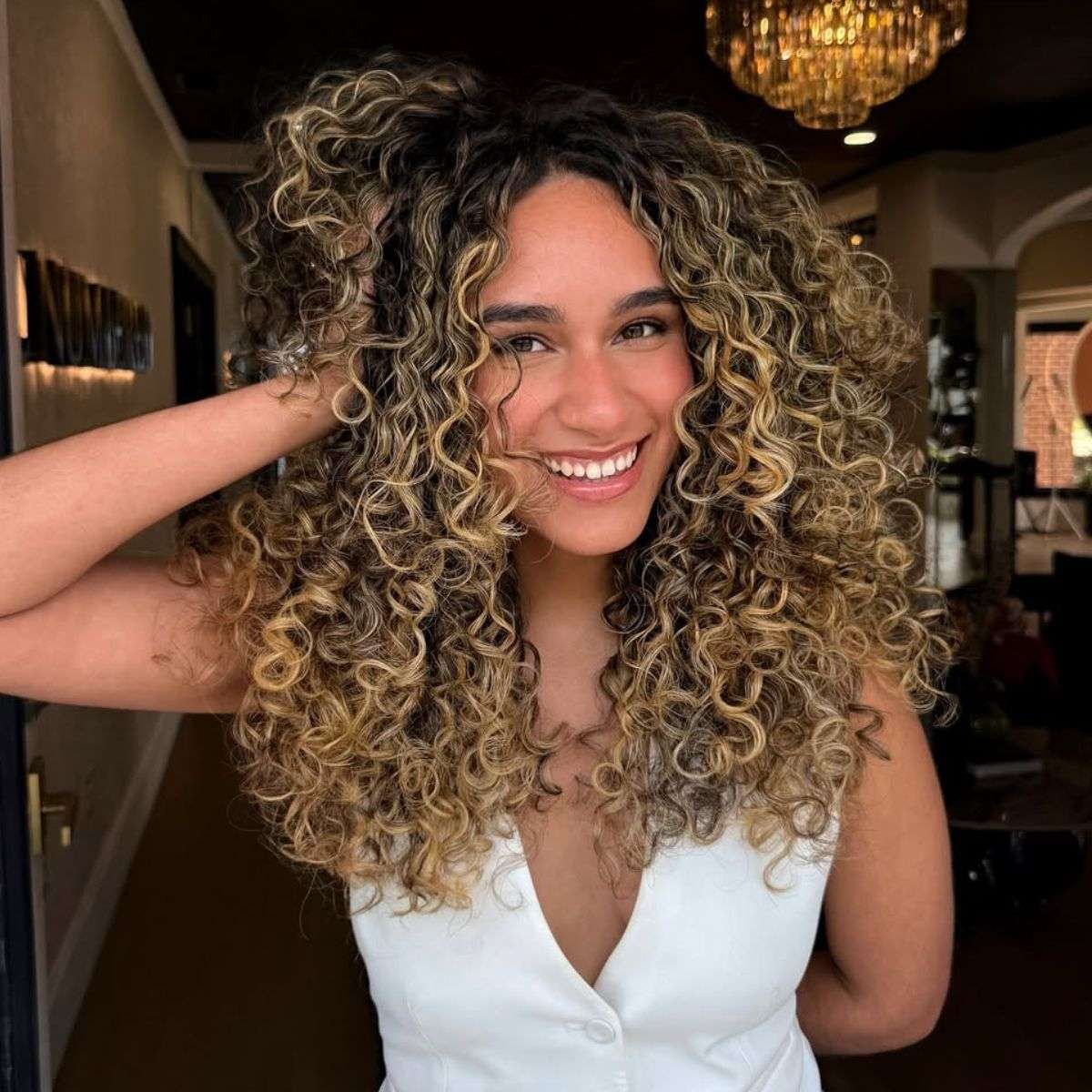
The air-dried finish is the point here. A dark brown base with blended blonde balayage on thick, wavy mid-back length hair is styled with loose, natural waves that let the color land where it falls. The blonde is concentrated on the ends, with face-framing pieces that brighten the front without looking painted on. The middle part and layers keep the shape soft, so the balayage blends naturally with the texture. This suits thick, wavy hair that air-dries into shape without much intervention. Ask your colorist for: dark brown base with blended blonde balayage. Scrunching a curl cream into damp hair defines the waves, and a trim every eight to ten weeks prevents the ends from looking stringy.
Collarbone Gray To Silver-White Balayage
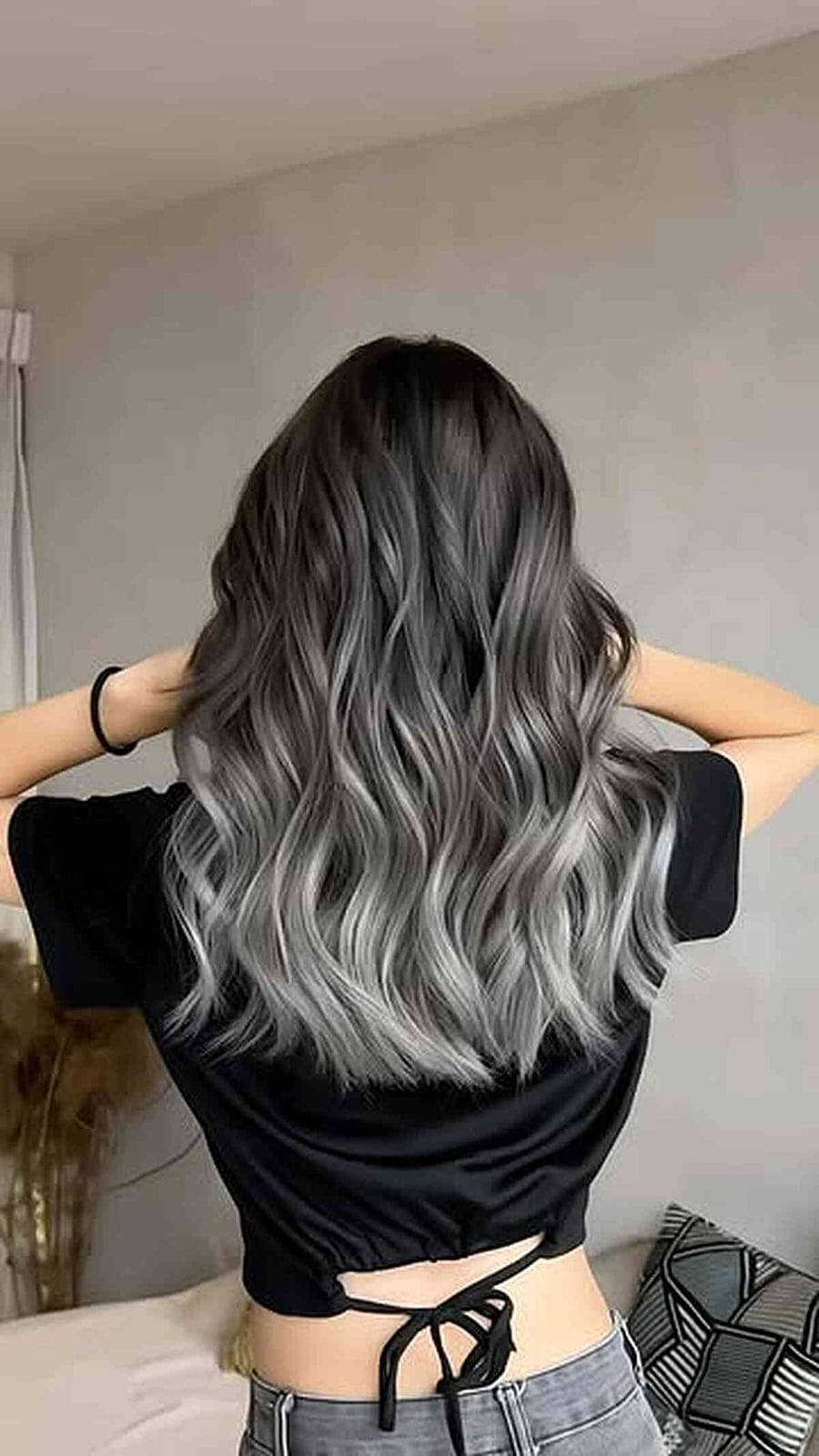
This is a gradient, not a solid color. A dark gray base transitions into bright silver-white balayage through the ends of collarbone length hair, creating a fade that requires precision to avoid a muddy middle. The long layers and loose waves help the silver-white catch the light, while the dark gray roots anchor the look so it does not read as fully bleached. The middle part keeps the gradient symmetrical. This suits medium density, wavy hair that is already light enough to lift to silver-white without excessive damage. Ask your colorist for: collarbone length dark gray to silver-white balayage. A purple shampoo every few washes keeps the silver from turning brassy, and a trim every six to eight weeks maintains the shape.
Collarbone Ash Blonde Balayage With Side Part
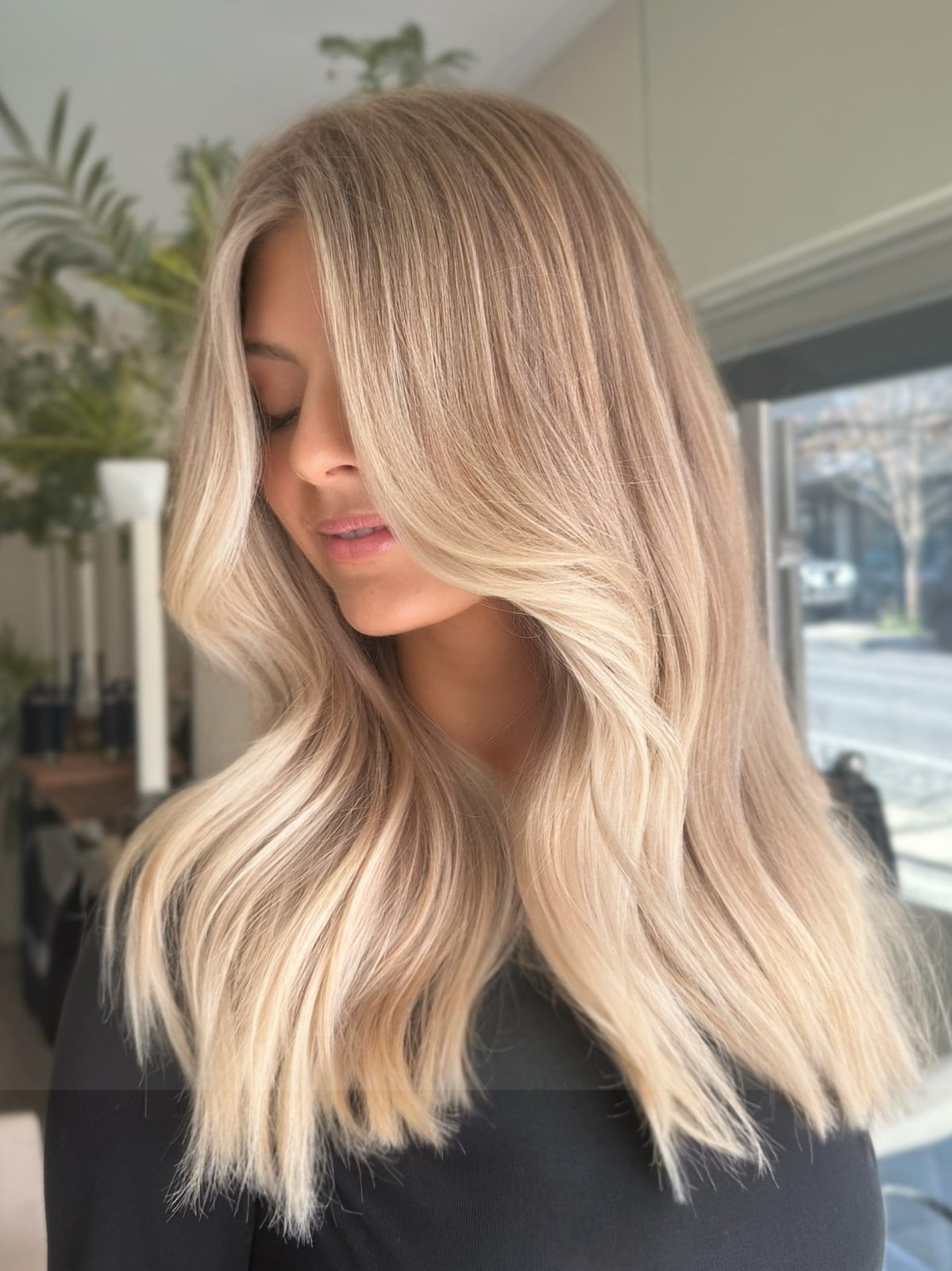
Ash blonde balayage on a light brown base hits different when the side part does the heavy lifting. The deeper base keeps the ash tone from washing out, while the side sweep directs the lighter pieces forward, creating volume at the crown and framing the face asymmetrically. This works best for thick, wavy hair at collarbone length, where the texture catches the blended tones rather than swallowing them. A side part adds lift for fine hair, and the ash tone balances warm undertones without tipping into brass. Ask your colorist for: collarbone length light brown with ash blonde balayage, side part. A volumizing spray at the roots keeps the shape from falling flat between trims every six to eight weeks.
Mid-Back Light Brown With Beige Bronde Balayage
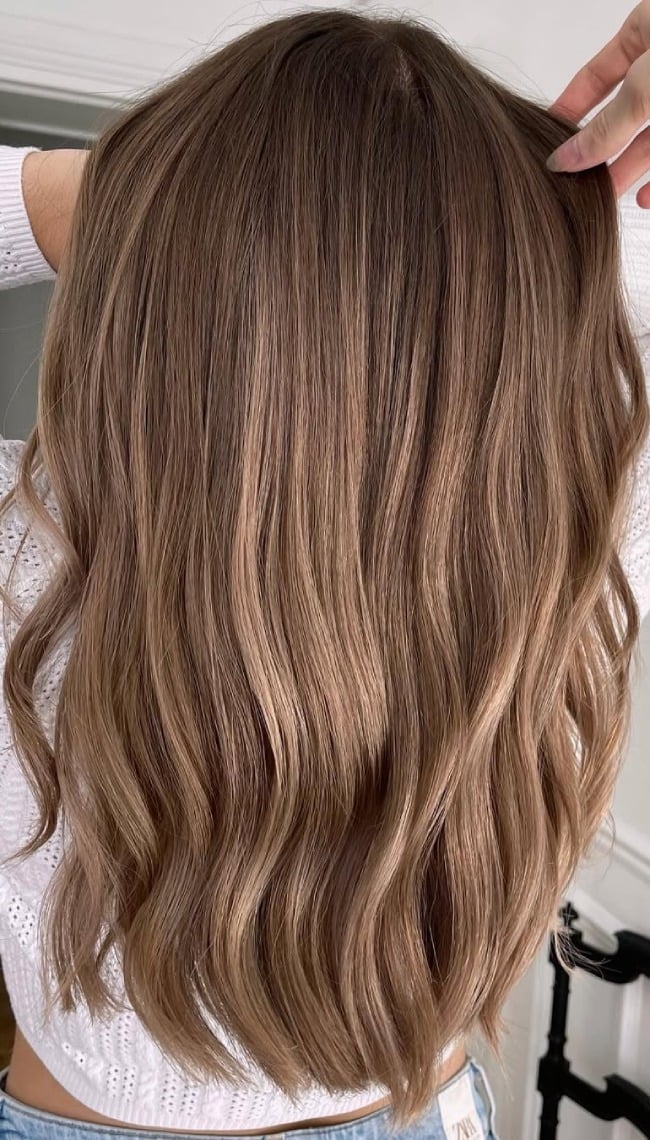
Beige bronde balayage on a light brown base is the color equivalent of a neutral handbag: it goes with everything and nobody notices the effort. The beige tones land between blonde and brown, creating a soft, glossy dimension that reads as natural rather than painted. On mid-back length hair with soft, long waves, the color travels through the lengths without a harsh line, so the roots grow out slowly and gracefully.
The middle part keeps the distribution even, which matters for medium density hair that can look flat if the lighter pieces cluster on one side. Ask your colorist for: light brown base with beige bronde balayage. A shine serum on damp hair enhances the gloss, and a trim every eight to ten weeks prevents the ends from feeling dry. The color fades gradually, so a toning visit every ten to twelve weeks keeps the beige from turning brassy.
Mid-Back Dark Blonde With Honey Balayage, Face-Framing Layers
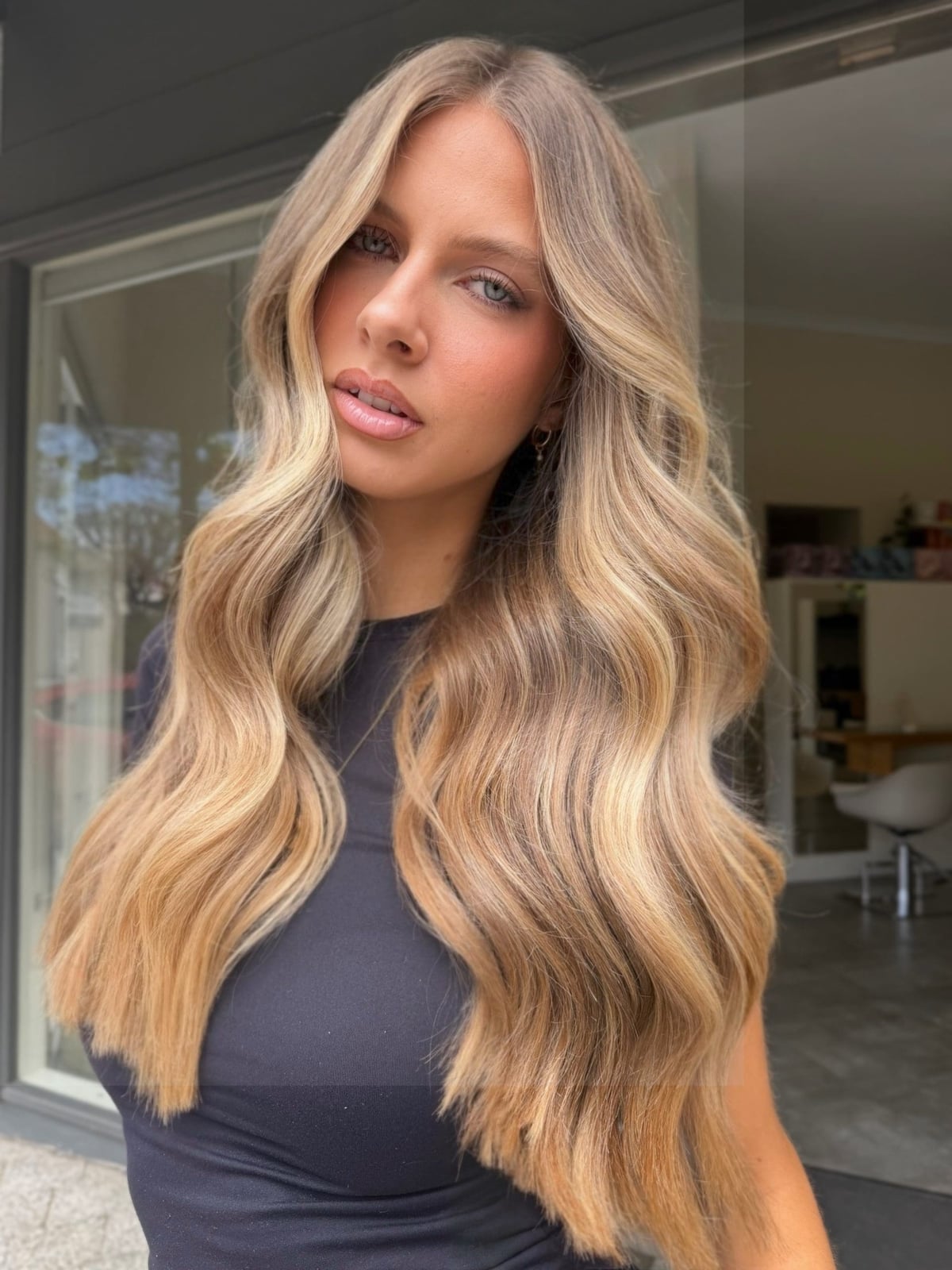
How do you get honey blonde balayage that actually looks like honey and not just yellow? Start with a dark blonde base and ask for face-framing layers that let the lighter pieces sit exactly where the light hits. The honey tone here is warm but not brassy, painted through the mid-lengths and ends while the roots stay dark blonde for a lived-in effect that doesn’t need monthly touch-ups. Thick, wavy hair at mid-back length carries the dimension well, with the face-framing layers drawing the lighter pieces forward to brighten the front without bleaching the whole head.
Ask your colorist for: dark blonde base with honey blonde balayage, face-framing layers. The middle part balances the distribution, so the lighter pieces fall evenly on both sides. A wide-tooth comb on damp hair keeps the waves from separating too much, and a trim every eight to ten weeks maintains the shape. The honey tone is low-maintenance: a purple shampoo once a week keeps it from warming up too fast.
Collarbone Dark Brown With Caramel Balayage, Curtain Bangs
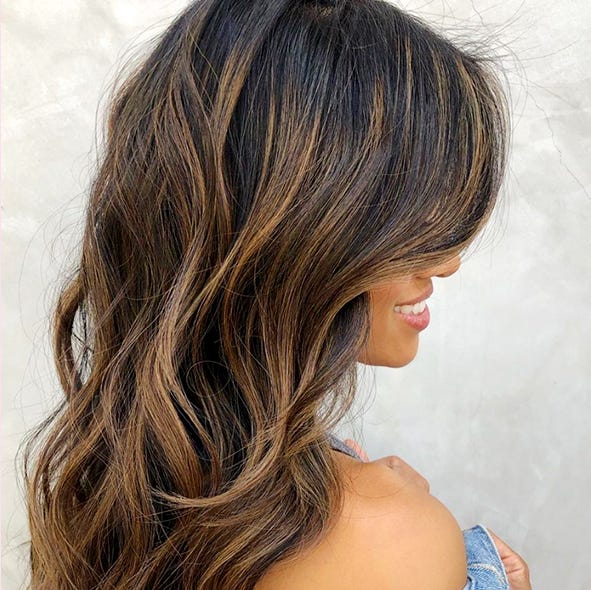
Caramel balayage on a dark brown base adds a warm glow and a pop of color, making it a natural fit for autumn when brown can be interesting. The curtain bangs frame the face without committing to a full fringe, and the side part lets the caramel pieces fall forward. On collarbone length, thick, wavy hair, the caramel looks dimensional because the dark roots keep the contrast grounded. Ask your colorist for: collarbone dark brown with caramel balayage, curtain bangs, side part. A texturizing paste on the fringe keeps the pieces defined, and a trim every six to eight weeks keeps the bangs from grazing your eyes. The caramel tone holds up well through winter, needing a toning visit every ten to twelve weeks to stay warm.
Mid-Back Dark Brown With Blonde Balayage, Close-Up Take
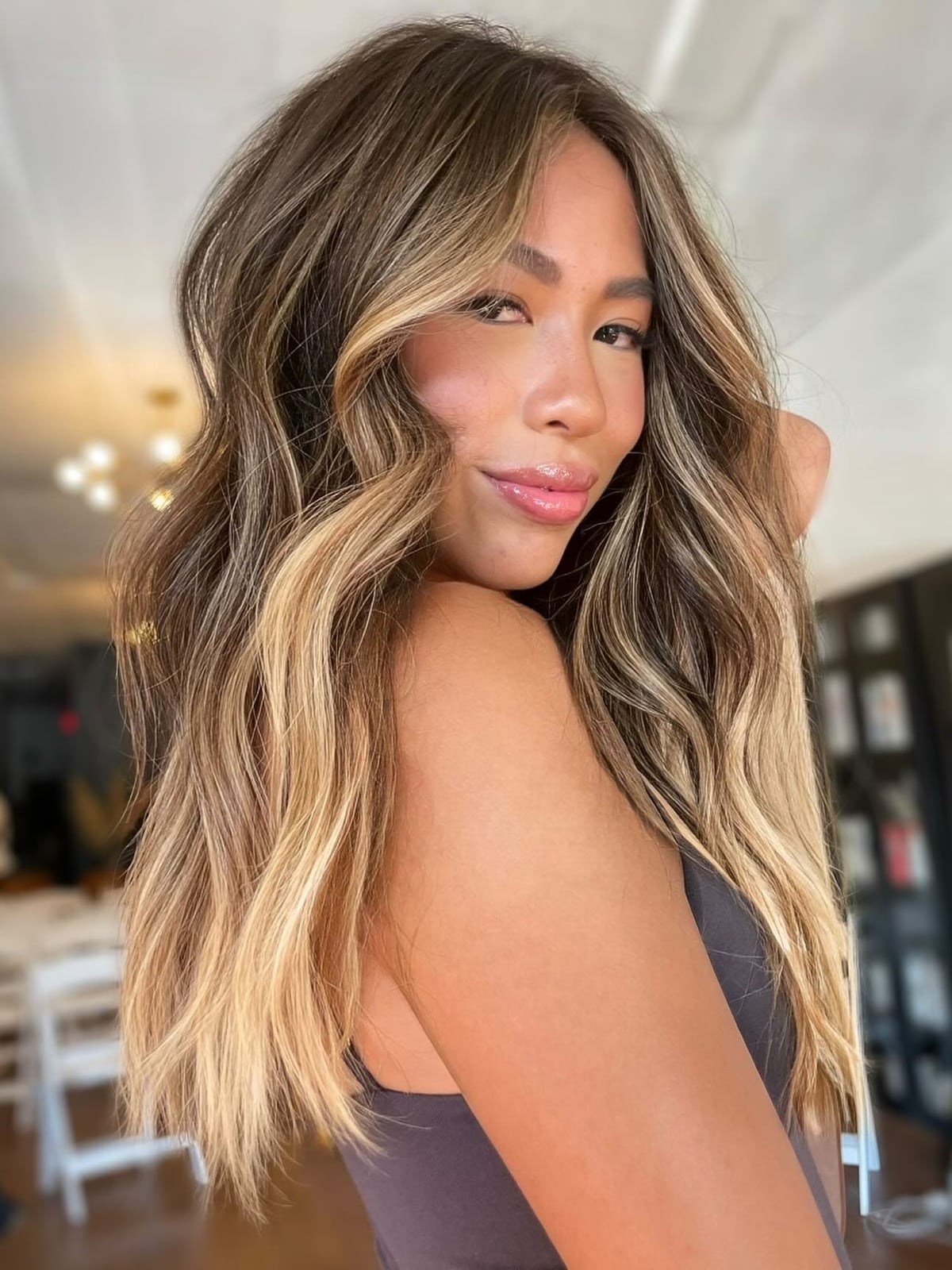
Blonde balayage on a dark brown base is the standard, but this version earns its spot by how the lighter pieces start mid-length and intensify toward the ends, creating a gradient that looks deliberate rather than grown out. The curtain bangs and face-framing layers pull the lighter pieces forward, so the contrast hits the front without bleaching the entire top section. Compared to a more uniform balayage that lifts evenly from the roots, this placement keeps the dark base prominent at the crown, which suits thick, wavy hair at mid-back length that needs root depth to avoid looking over-processed.
The middle part keeps the distribution symmetrical, and the loose waves soften the transition between dark brown and blonde. Ask your colorist for: dark brown base with blonde balayage, face-framing layers, curtain bangs. A smoothing cream on damp hair controls frizz without weighing down the waves, and a trim every eight to ten weeks keeps the ends healthy. The blonde pieces will need a purple shampoo every other wash to stay cool, but the dark roots mean you can stretch toning visits to twelve weeks.
Mid-Back Ash Blonde Balayage Sleek Look
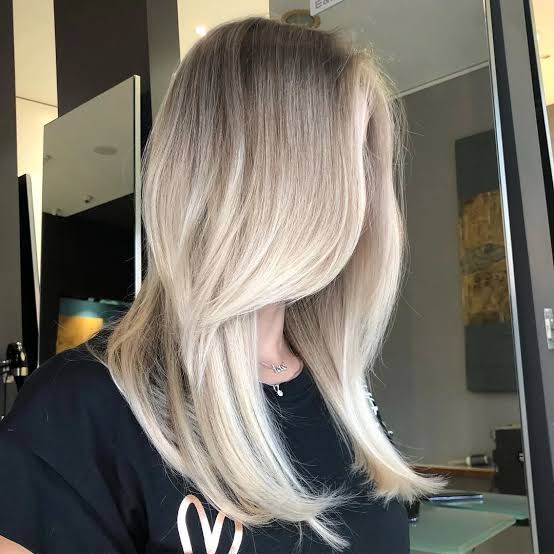
Ash blonde balayage on fine, straight hair requires a specific skill: the colorist must paint the lighter pieces close enough to the root to read as dimensional, not grown out. On a mid-back length cut with long layers and face-framing pieces, the ash tone stays cool and matte, which is the point. The downside is that fine, straight texture shows every bit of brassiness, so a purple shampoo every two washes is not optional. Ask your colorist for: mid-back length ash blonde balayage, long layers, face-framing pieces.
A flat iron is the fastest way to style it, and a trim every eight to ten weeks keeps the ends from looking stringy. It is a salon-only color, and the grow-out is clean only if the base shade is a match.
Mid-Back Dark Brown With Face-Framing Caramel
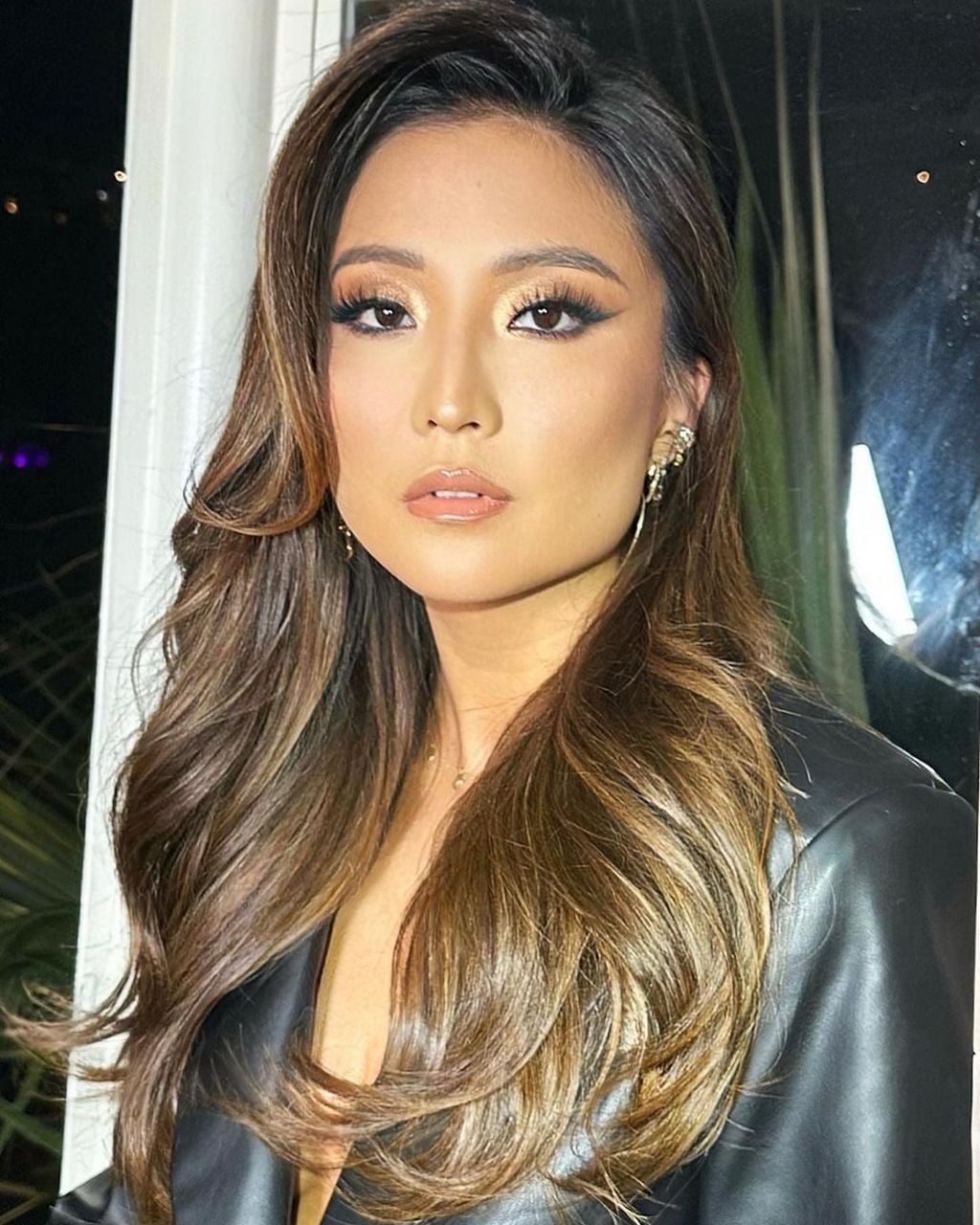
The caramel balayage lands heaviest around the front pieces, so the face-framing layers pull the warmth forward without the head going brassy. On a dark brown base with thick, wavy texture and curtain bangs, the caramel placement frames the face. Ask your colorist for: dark brown base with face-framing caramel balayage, curtain bangs. This color needs a trained eye to hit the front sections exactly, and the blowout with loose waves is the everyday finish.
Chin Length Angled Bob With Caramel Balayage
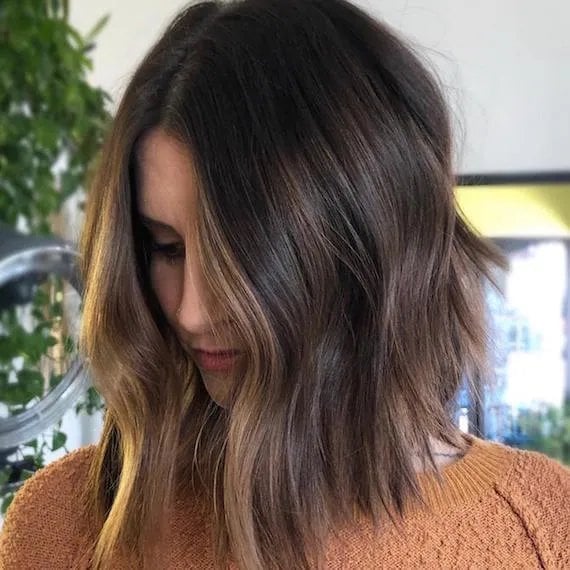
A chin length angled bob with caramel balayage works best on medium density, wavy hair that has enough texture to hold the shape without product. The dark brown roots blend into caramel ends, and the middle part keeps the angle visible on both sides. Ask your colorist for: chin length angled bob with dark brown to caramel balayage. The wavy styling adds movement, but the cut is precise enough that a straight blowout works too. It suits oval and square faces, though anyone with very fine hair may find the angle falls flat.
Collarbone Honey Blonde Balayage With Side Bangs
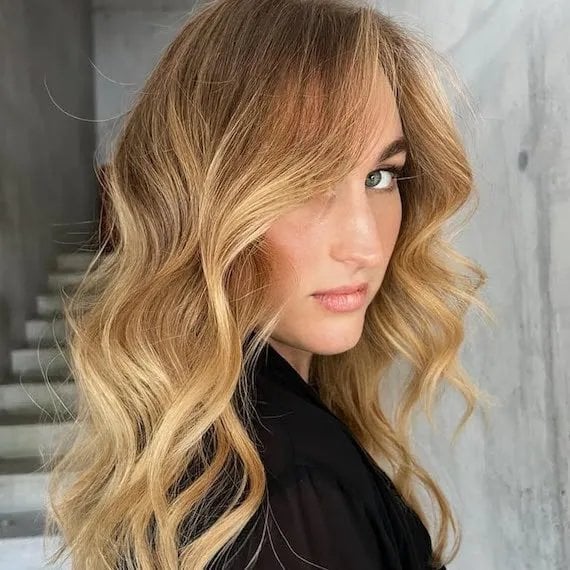
The technique here is a warm honey blonde balayage painted from the mid-lengths down, leaving the darker base at the roots so the dimension reads as natural. On collarbone length hair with soft layers and side-swept bangs, the honey tone catches light differently on each wave. Ask your colorist for: collarbone length honey blonde balayage, side-swept bangs. The colorist paints the bangs slightly lighter near the ends to keep them from looking heavy, and the wavy texture does the rest. A trim every six to eight weeks keeps the bangs in line.
Final Thoughts
For a low-maintenance grow-out, ask for balayage that starts mid-length or lower, blended seamlessly into your natural base. If you prefer more visible dimension, opt for face-framing highlights or a higher placement.
- Toning every 6-8 weeks to maintain desired reflect.
- Deep conditioning treatments weekly for color-treated hair.
- Use color-safe shampoo and conditioner.
- Limit heat styling to preserve color vibrancy.
Balayage offers endless possibilities for custom color.