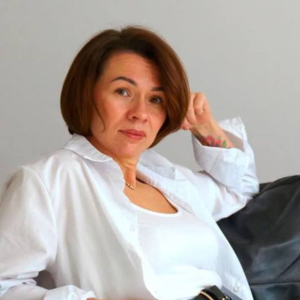
Balayage is a freehand color technique that paints lighter pieces onto the surface of your hair for a sun-kissed, grown-out glow. The current take on long hair skips the uniform stripe in favor of soft, face-framing layers and lived-in color that moves with you.
This collection of Balayage on Long Hair ideas gives you 35 ways to add dimension, from low-maintenance blends to high-contrast statements. Whether your hair is fine and needs a lift or thick and wants movement, there’s a version here for you. If you’ve struggled with a visible grow-out line or a fringe that won’t sit, these options address both with strategic placement and cut.
Warm Brown Base With Golden Blonde Balayage
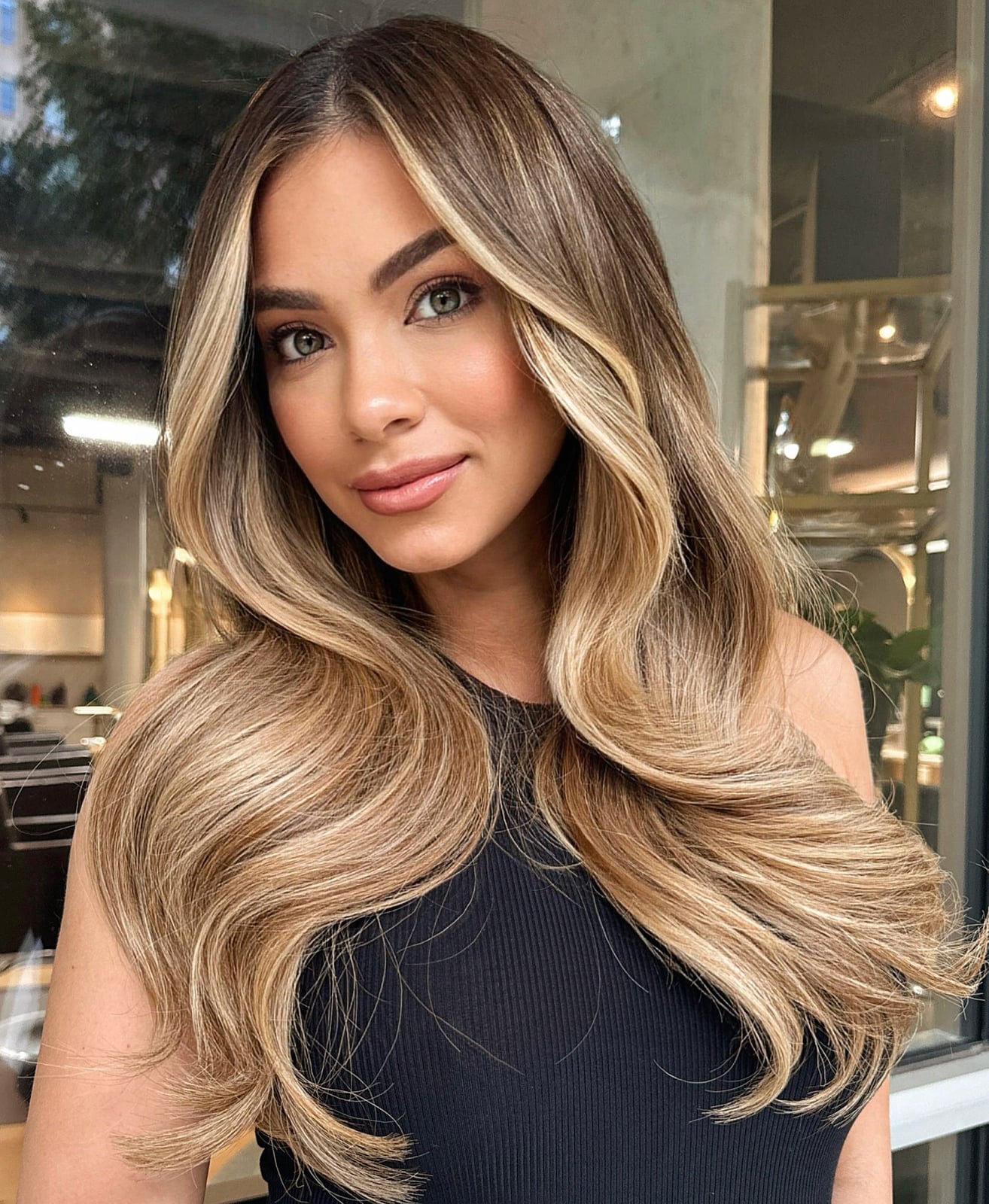
The warm brown base is doing the groundwork here, letting the golden blonde balayage read as a glow rather than a stripe. The blend starts darker at the roots and transitions gradually toward the mid-back ends, so the color moves with the hair instead of sitting on top of it. Thick, wavy texture gives the balayage room to show its dimension, and the face-framing pieces pull the light forward. Ask your colorist for: warm brown base with golden blonde balayage, face-framing pieces. A texturizing spray on dry waves adds definition without disturbing the blend. With layers cut through the length, a trim every eight to ten weeks keeps the ends healthy.
Dark Blonde Balayage With Curtain Bangs
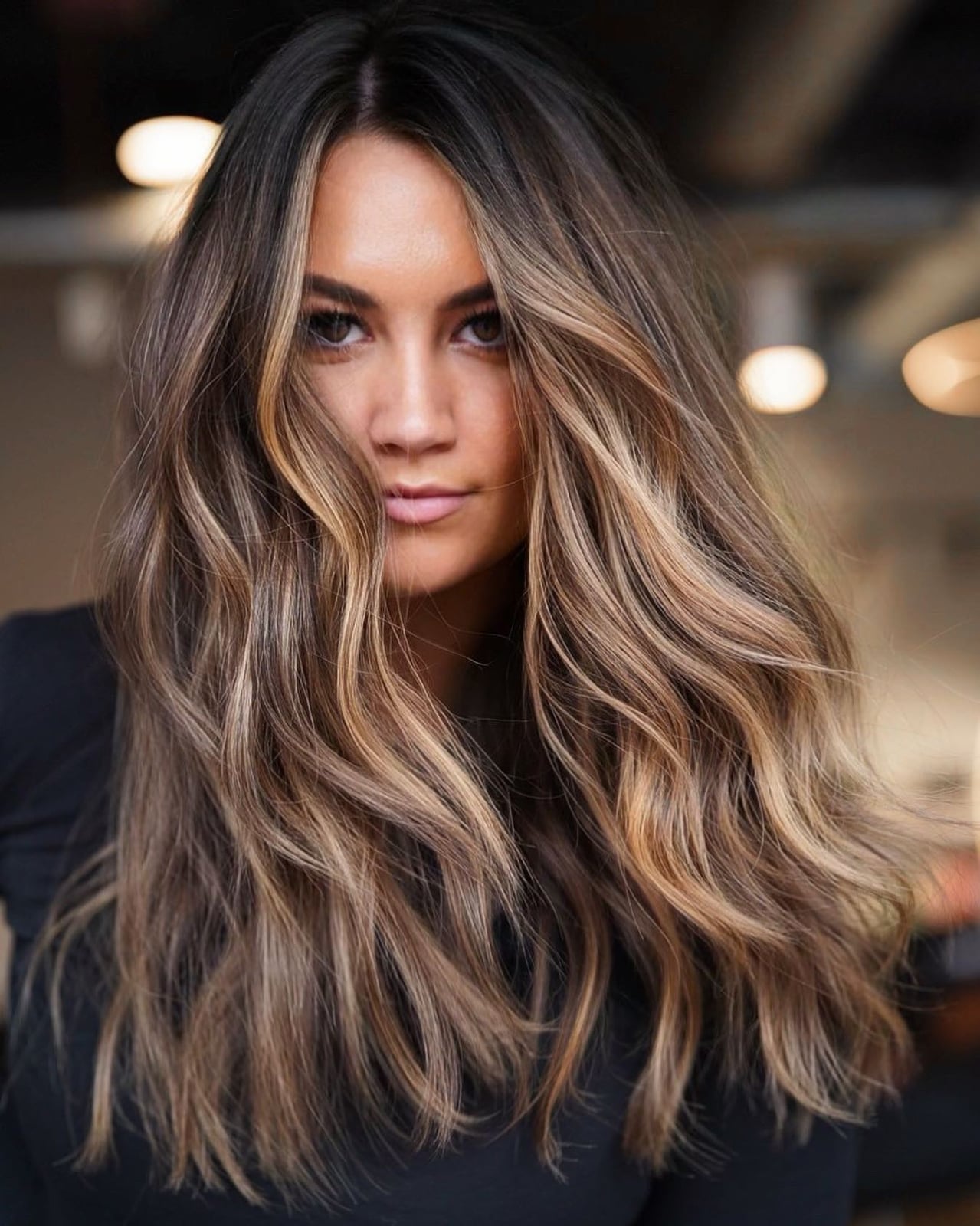
Wondering if curtain bangs will actually work on your thick, wavy hair? They do, provided the rest of the cut is built to support them. Here the dark blonde base carries lighter blonde balayage highlights through the mid-back length, and the curtain bangs soften the transition from the side part into the waves. The bangs suit oval, round, and heart-shaped faces, and they give thick hair movement without committing to a heavy fringe. Ask your stylist for: dark blonde balayage, lighter blonde highlights, curtain bangs. Blow-dry the bangs with a round brush to encourage their natural bounce. The balayage will need a toning appointment every six to eight weeks to keep the lighter pieces bright.
Warm Blonde Balayage With Soft Waves
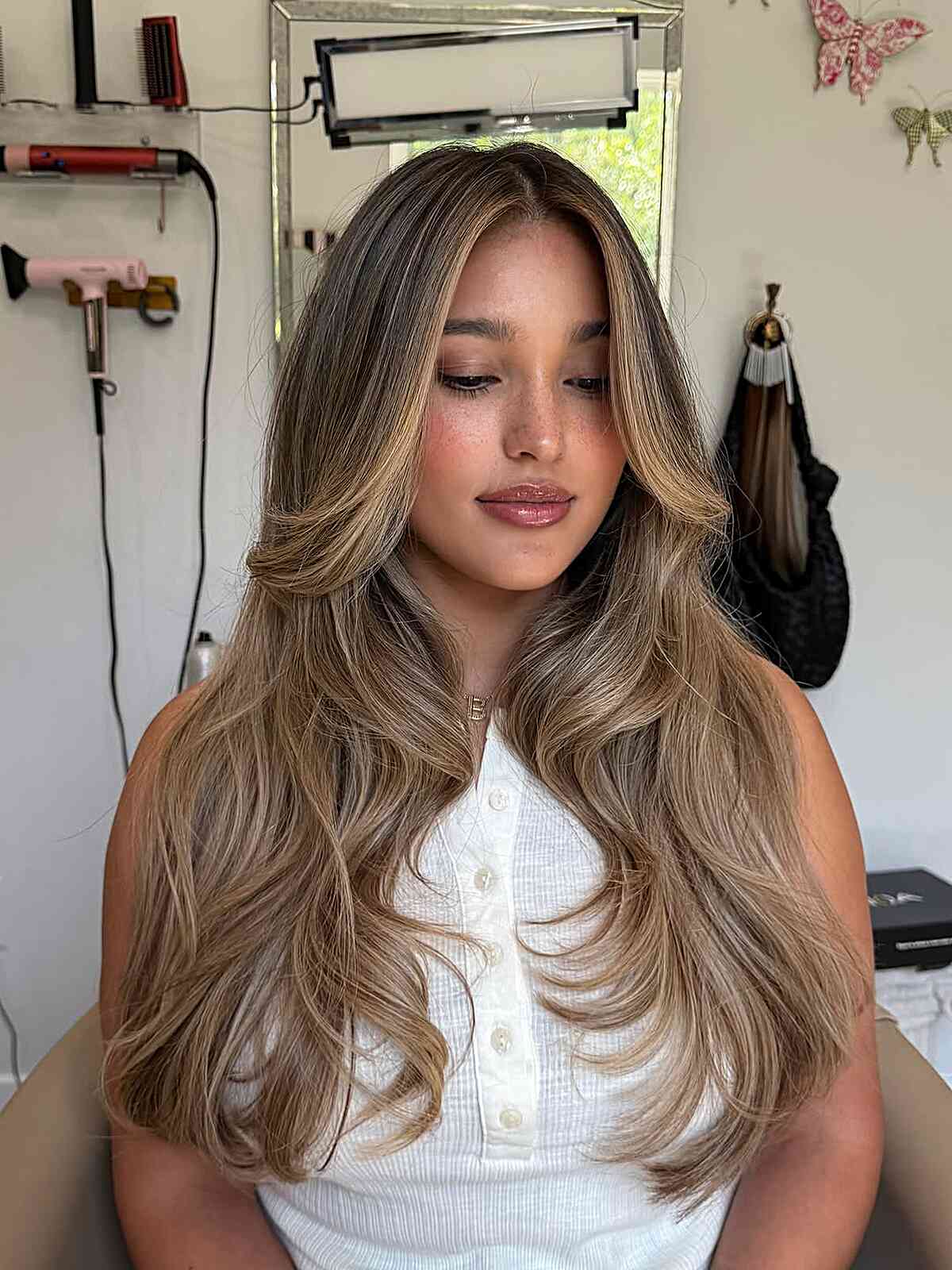
The design relies on a seamless gradient: the warm blonde balayage starts low enough that the roots stay natural, then deepens into soft waves at the mid-back ends. The middle parting and face-framing curtain bangs are the two details that make the color read as deliberate. Ask your colorist for: warm blonde balayage, soft waves, curtain bangs. Specify that you want the lightest pieces concentrated around the face and through the ends, not scattered evenly. A leave-in conditioner keeps the waves soft and glossy, and the long layers need a trim every ten weeks to maintain their shape.
Ash Blonde Balayage With Voluminous Blowout
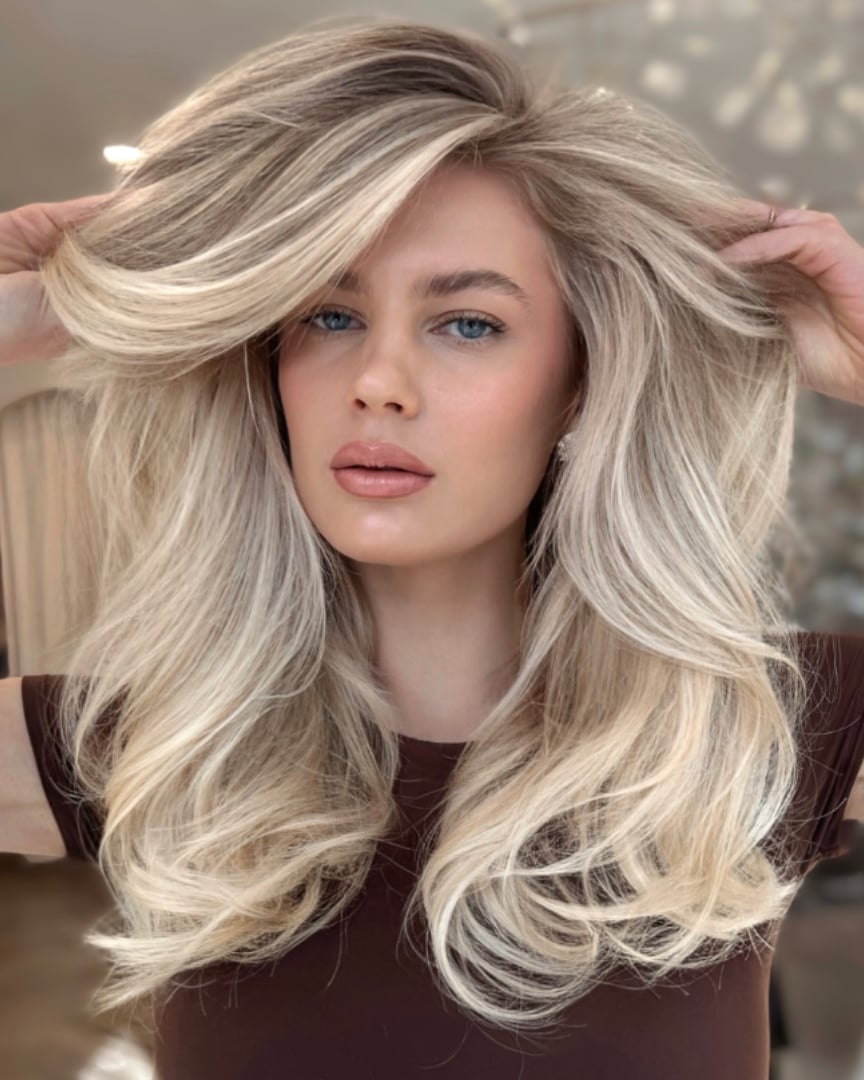
This is not the ash blonde balayage you see on poker-straight hair; it is built for a voluminous blowout on fine, wavy texture. The shoulder-length cut with curtain bangs gives the hair body at the roots, but fine strands will fight the volume by the end of the day. The payoff is a soft, seamless blend of lighter ash tones through the ends, and the drawback is that it needs a restart: you will be reaching for the round brush again after every wash. Ask your colorist for: ash blonde balayage, shoulder length, voluminous blowout, curtain bangs. Tone every six to eight weeks to keep the ash from turning brassy.
Dark Blonde Base With Face-Framing Layers
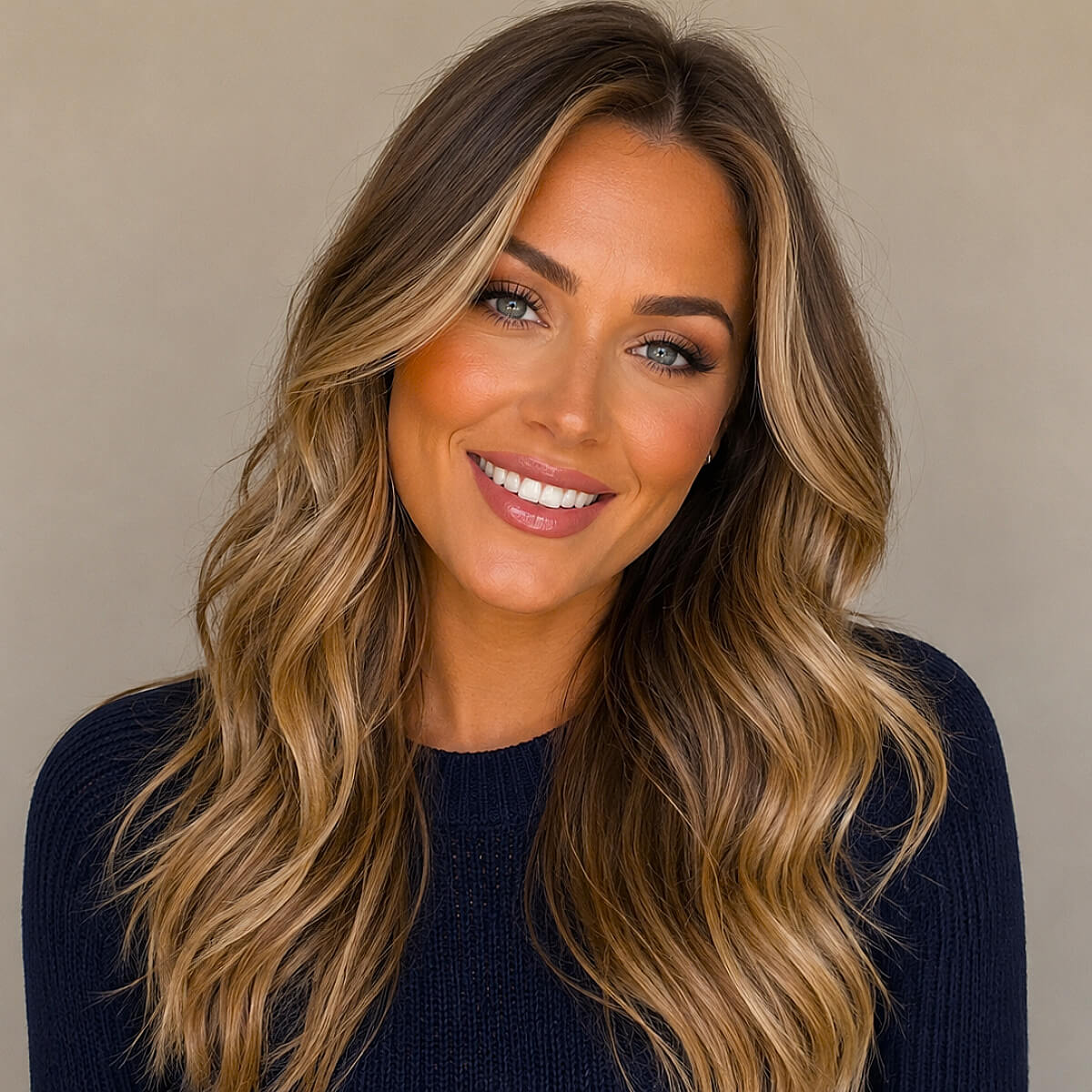
The face-framing layers here are the quiet workhorse of the cut. On thick, wavy hair, they lighten the weight around the jaw and let the dark blonde balayage peek through at the ends, while on finer textures they add the illusion of density without sacrificing length. The mid-back length keeps the overall shape grounded, and the curtain bangs tie the framing into the rest of the cut. Ask your stylist for: dark blonde base, lighter blonde balayage, face-framing layers, curtain bangs. A smoothing serum tames frizz and enhances the gloss; trim the layers every ten to twelve weeks so the framing does not grow out into a shapeless curtain.
Side Parted Dark Blonde Balayage Waves
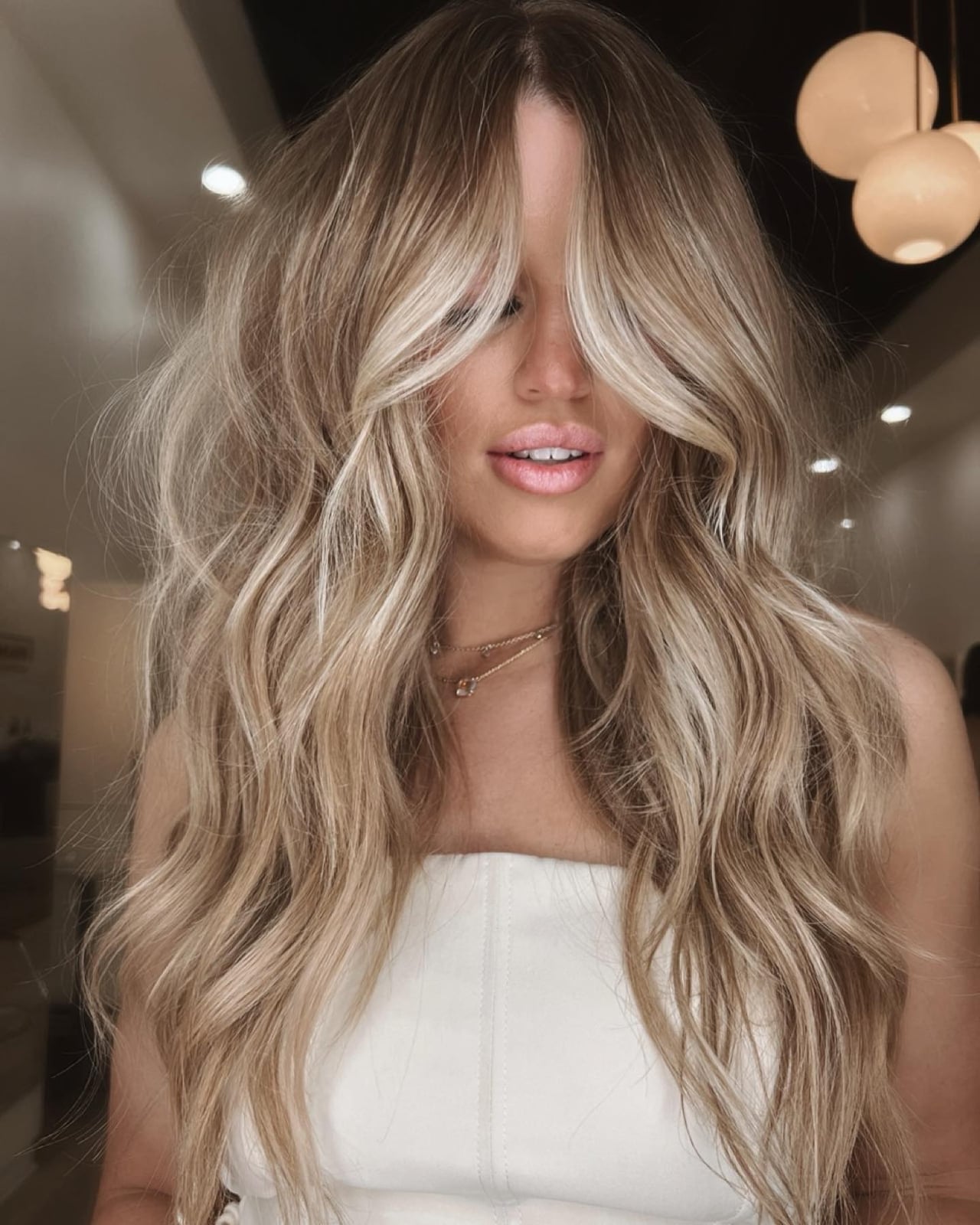
A side part does more for a balayage than you might expect. It changes which strands reflect light first. With a dark blonde base and lighter blonde highlights woven through mid-back length, the asymmetry makes the color appear more dimensional than a center part would. Thick, wavy texture holds the shape, so the curtain bangs sweep to one side without falling flat. Ask your stylist for: dark blonde balayage, side parting, loose waves, curtain bangs. A sea salt spray keeps the lived-in wave pattern going through a weekend brunch or a casual Tuesday, and a toning appointment every six to eight weeks prevents the lighter pieces from turning brassy.
Mid-Back Wavy Balayage With Face-Framing
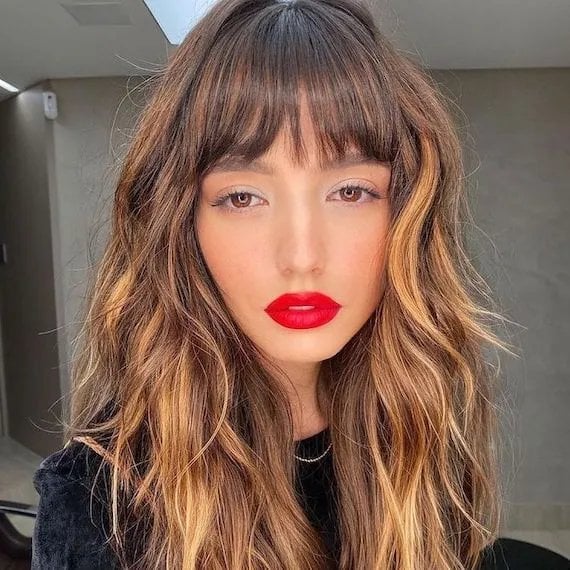
The design relies on a dark blonde base with lighter blonde balayage that starts below the ear, so the roots stay low-maintenance for the first ten weeks. Face-framing layers and curtain bangs pull the lightness forward, which softens the jawline without shortening the overall length. The trade-off: medium density wavy hair can look stringy if the layers are overdone, so the cut needs precise long layers that keep the body in the mid-back length. Ask your stylist for: dark blonde balayage, face-framing layers, curtain bangs, wavy blowout. A heat protectant is non-negotiable before the blow-dryer, and a trim every ten to twelve weeks keeps the ends from splitting.
Caramel Bronde Balayage With Soft Waves
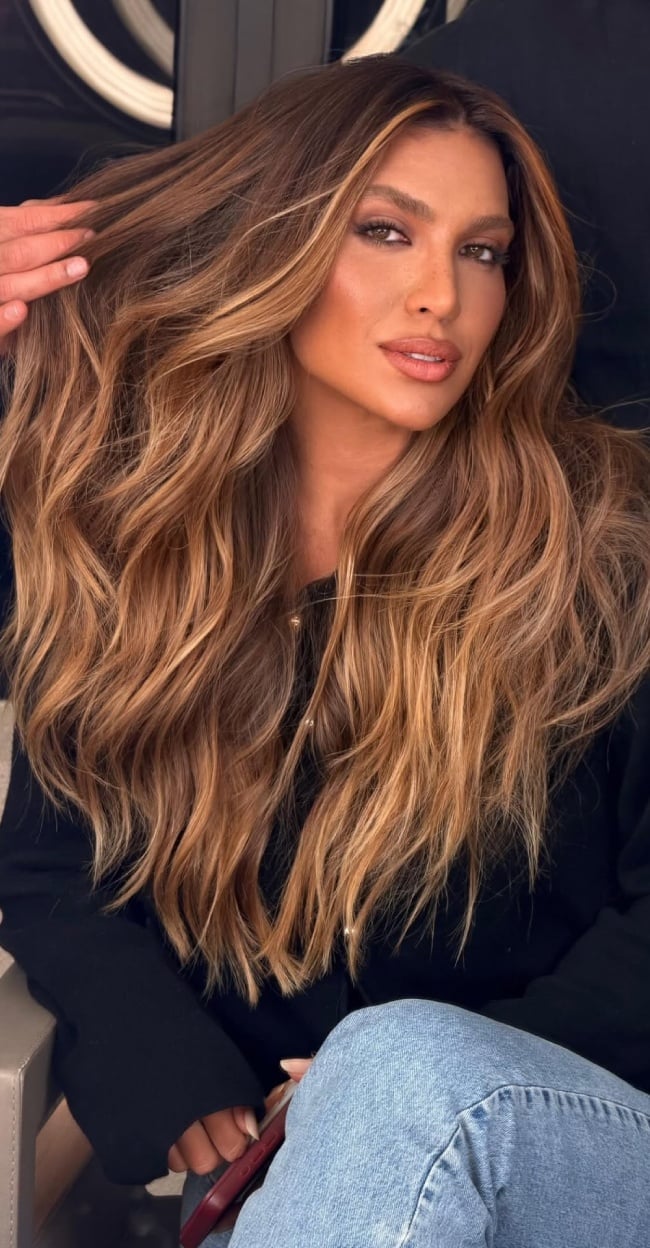
Is there a balayage that actually works on thick, wavy hair without looking heavy? Caramel bronde on a long length. The warm blend of brown and blonde lands somewhere between honey and toffee, so it adds dimension without a harsh line. The face-framing pieces and middle parting open up the front, which suits round faces by elongating the silhouette. Thick texture is an advantage here: the soft waves hold their shape for two days with just a refresher. Ask your colorist for: caramel bronde balayage, face-framing pieces, soft waves. A texturizing paste on the mid-lengths defines the wave pattern, and a toning appointment every eight to ten weeks keeps the caramel from drifting too warm.
Gray Base With Subtle Blonde Balayage
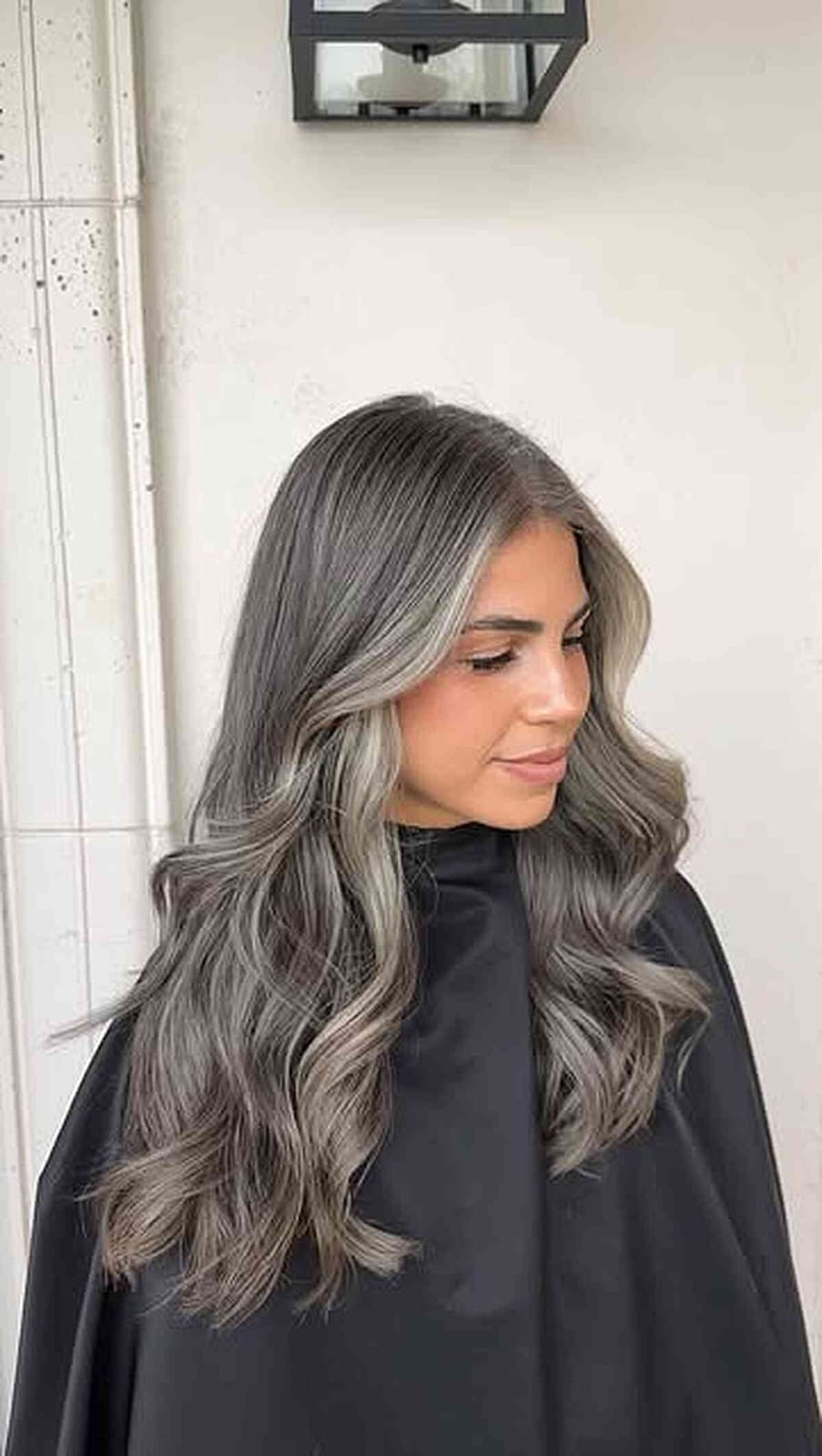
This is not a gray that washes you out. It is a cool, almost metallic base with subtle blonde balayage running through the mid-back length, so the contrast reads as deliberate rather than faded. Achieving that exact ash tone is a salon-only process: the base has to be pre-lightened to a pale level before the gray pigment is applied, and the blonde pieces need a separate toner. Thick, wavy hair takes the color well because the texture scatters light, softening the shift from gray to blonde. Ask your colorist for: gray base, subtle blonde balayage, curtain bangs. A purple shampoo used once a week maintains the cool tone between appointments.
Dark Brown With Face-Framing Blonde Balayage
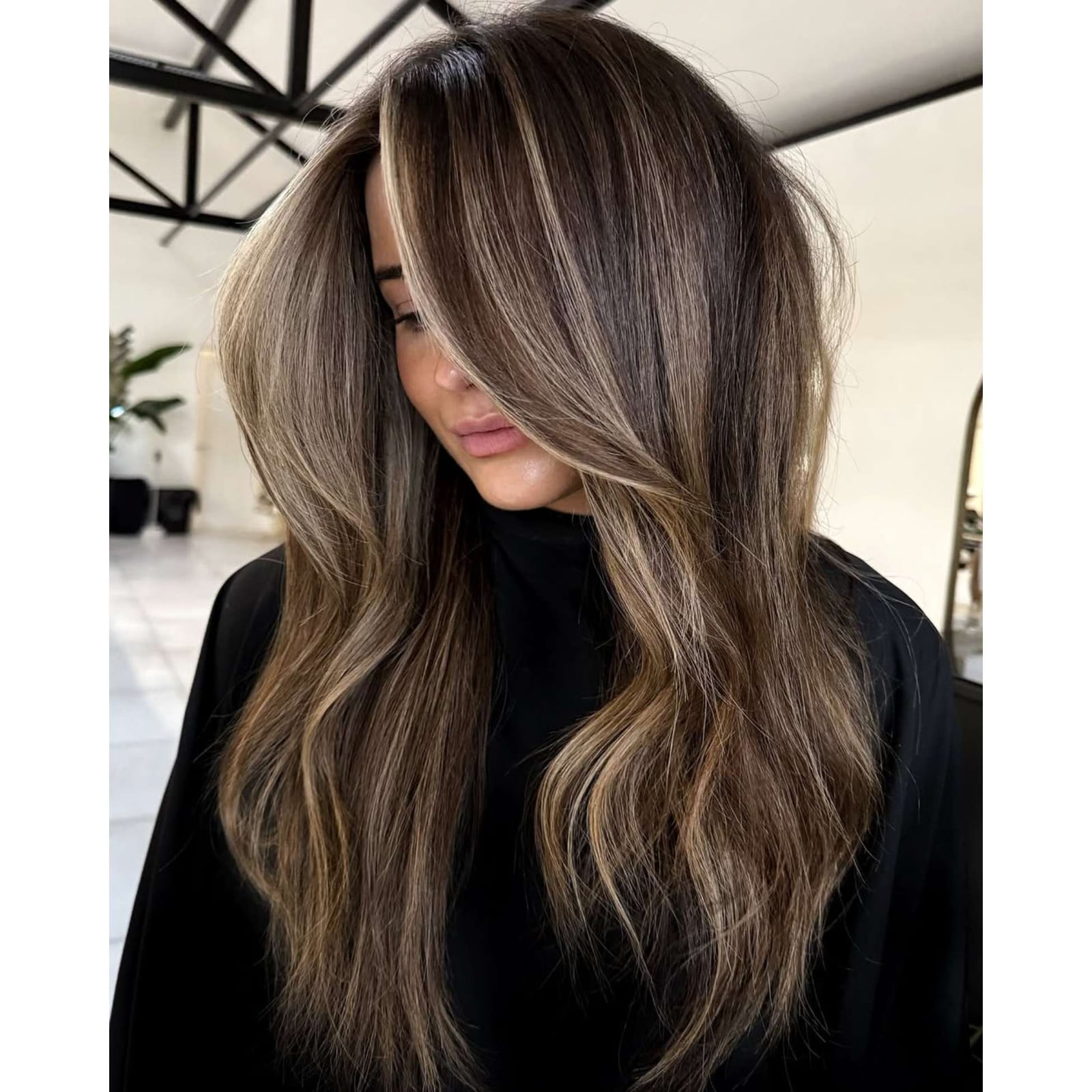
What makes this work is the placement: the blonde balayage is concentrated around the face, forming curtain bangs that brighten the front without lifting the entire head. The shoulder-length dark brown base stays untouched, so grow-out is barely noticeable. Thick, wavy texture gives the voluminous blowout something to grip, and the middle parting keeps the face-framing pieces symmetrical. Ask your colorist for: dark brown base, blonde balayage, curtain bangs, face-framing highlights. A root-lifting spray at the crown adds height, and a toning appointment every six to eight weeks keeps the blonde from yellowing against the dark base.
Dark Brown Ash Blonde Balayage With Money Piece
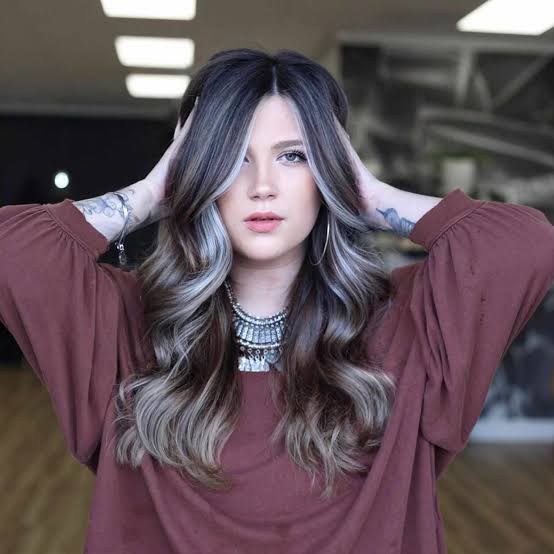
A money piece means the lightest strands hit the face before anywhere else, which is exactly the point here. On a collarbone-length cut with curtain bangs and long layers, the ash blonde sections around the front frame cheekbones while the dark brown base stays deep in back. The drawback: that money piece shows every hint of warmth, so it needs a toning appointment every six to eight weeks to prevent brassiness. Ask your colorist for: dark brown base, ash blonde balayage, money piece, curtain bangs. The rest of the hair can breathe between salon visits, but those front pieces are the divas of this situation.
Warm Brown To Blonde Balayage With Side Part
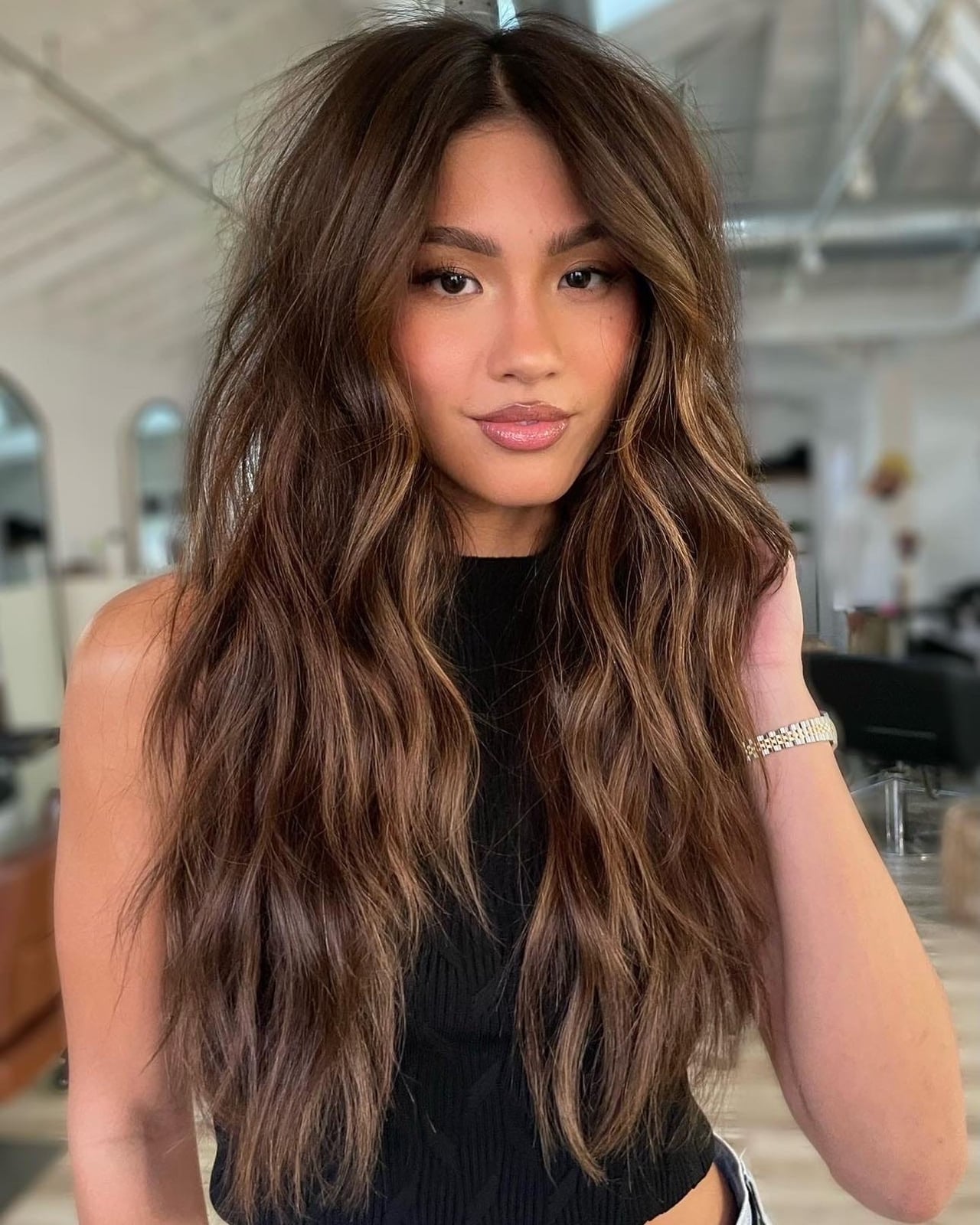
Does a warm balayage actually grow out gracefully, or is that just something stylists say? On mid-back length hair with long layers and no bangs, the answer is yes, because the lighter pieces start lower down and the warm brown root never creates a harsh line. The side parting adds instant volume at the crown, which is useful for anyone with fine hair who wants the illusion of thickness without a full blowout.
The texture here is wavy and thick, so the dimension has room to show across each wave. A trim every ten to twelve weeks keeps the ends healthy, and flipping the parting to the opposite side for a day gives the roots a lift that lasts. Ask your stylist for: warm brown to blonde balayage, side parting, loose waves. The grow-out is the selling point.
Brunette With Blonde Balayage And Side Part
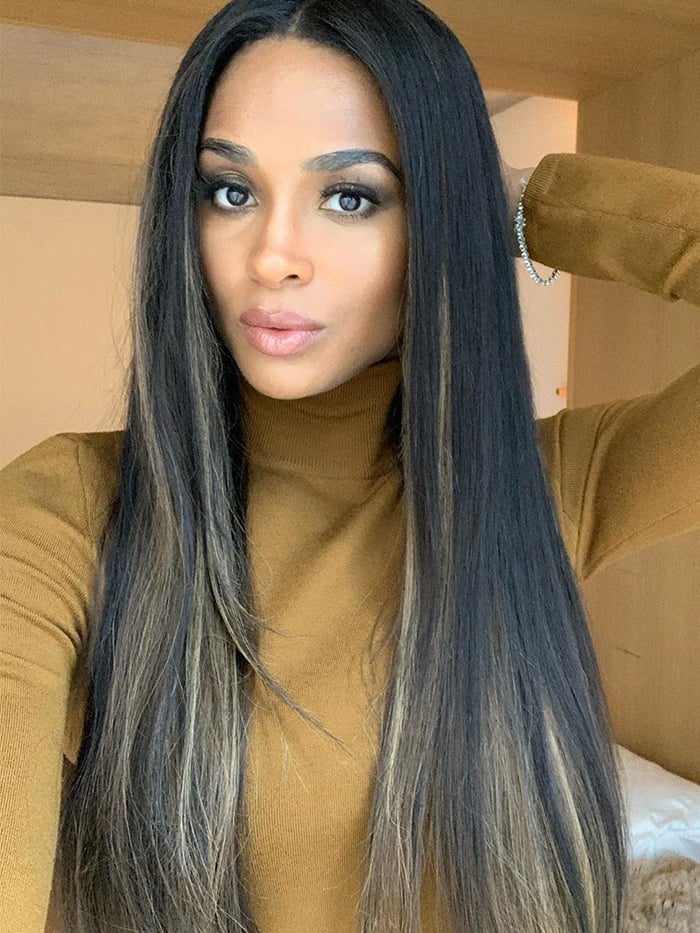
On shoulder-length hair, balayage hits differently than it does on longer lengths. The blonde highlights here sit closer together because there is less hair to spread them across, which means more contrast per inch and a bolder result. The brunette base keeps it from reading as all-over blonde, so the dimension stays visible even when the waves settle. A side parting and thick wavy texture give this cut a full, rounded silhouette that can feel heavier on straighter texture. Ask your colorist for: brunette base, blonde balayage, side parting, wavy blowout. The payoff is a color that reads as expensive without requiring a full head of highlights.
Honey Brown Balayage With Natural Waves
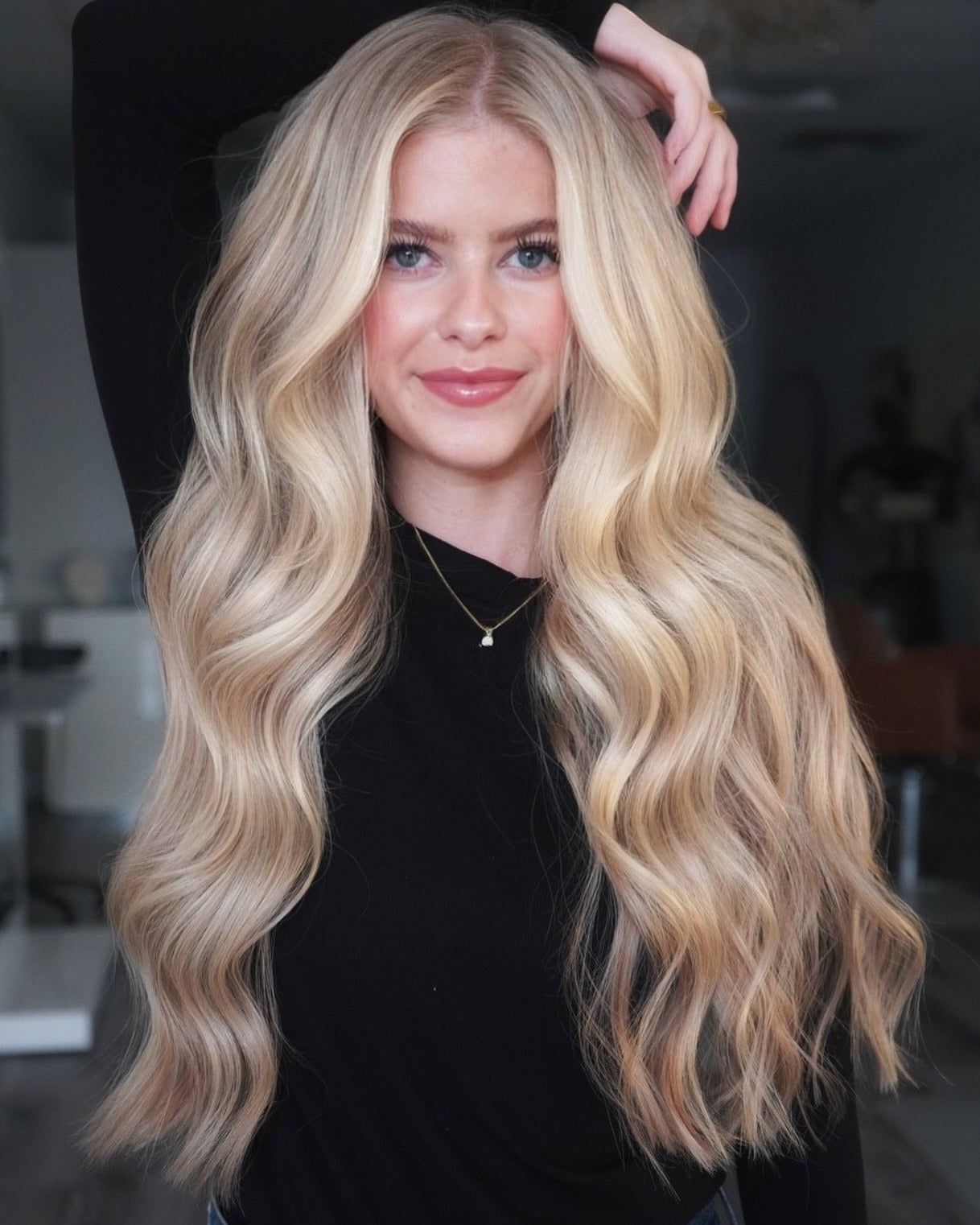
Honey brown balayage on thick, wavy hair is the combination that does most of the work for you. The warmth in the shade catches natural light without needing a gloss, and the waves break up the color so each section looks intentionally diffused. A middle parting elongates round faces, while the long layers remove weight so the texture does not turn triangular. This is a good fit for anyone who air-dries more often than they heat-style, because the honey tones blend into the base instead of sitting on top of it. Ask your colorist for: honey brown balayage, natural waves, middle parting. The whole point is that it looks like the sun did the work, not a foil.
Ash Blonde Balayage With Loose Waves, Mid-Back
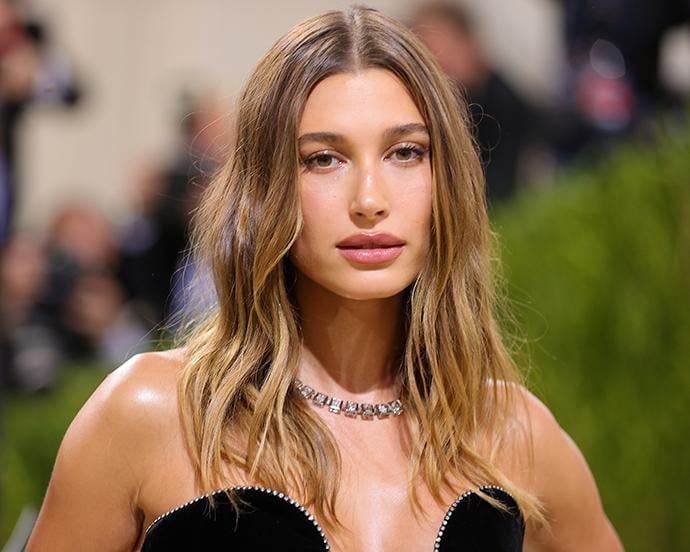
How do you ask for ash blonde balayage on a blonde base without ending up with something that looks striped or brassy? You specify the placement and the tone. The color here is painted in soft sections that start below the roots and melt into the mid-back length, so the dimension looks natural. The middle parting and loose waves on medium density wavy hair let the lighter pieces show at different angles, giving this balayage its subtle depth. Ask your colorist for: ash blonde balayage, middle parting, loose waves. A texturizing spray on the lengths enhances the lived-in feel, and a toner appointment every six to eight weeks keeps the ash from warming up.
Dark Brown With Subtle Blonde Balayage
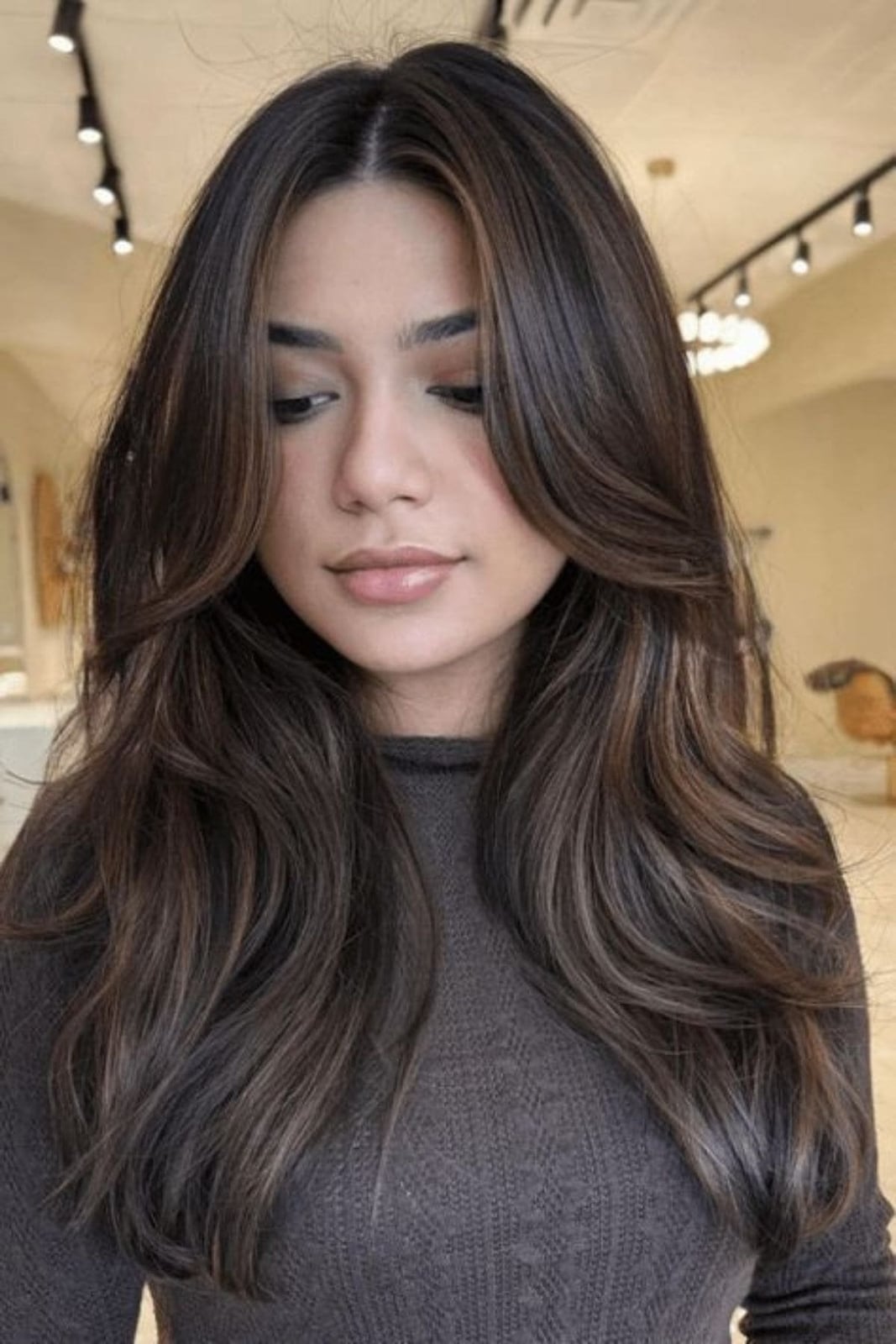
On thick, wavy mid back hair with curtain bangs, the subtle placement keeps the dimension believable. Ask your colorist for: dark brown base, subtle blonde balayage, curtain bangs. The wavy texture and the curtain bangs soften angular faces, and the color grows out without a harsh line. Keep the waves polished with a smoothing serum, and plan a trim every 10 to 12 weeks to keep the layers and bangs in shape.
Ash Blonde Balayage On Light Brown Base
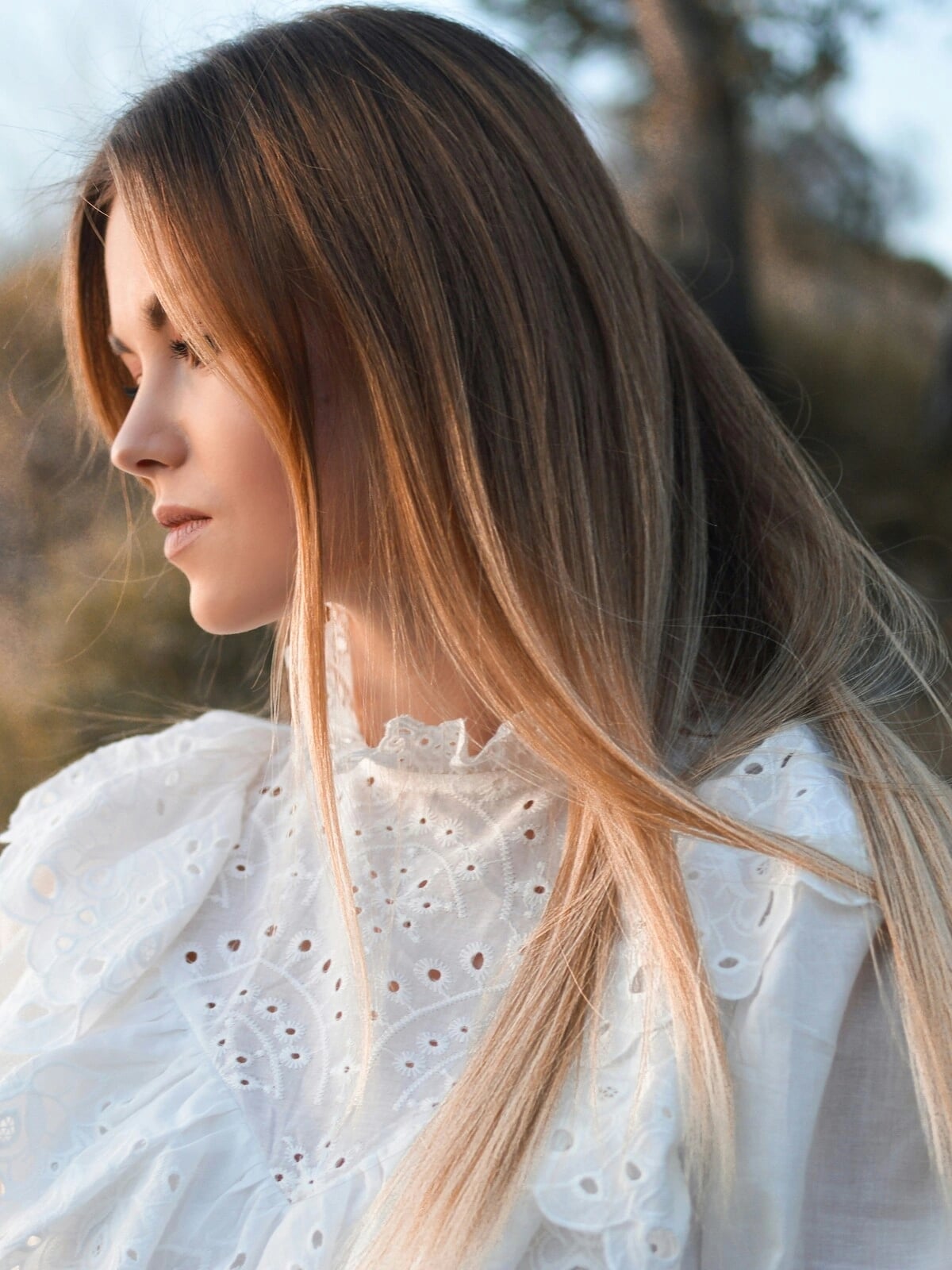
Set this against a warmer blonde, and the difference is immediate: ash blonde balayage on a light brown base reads cooler and more muted, which suits fine, wavy hair that tends to look flat with too much brightness. The mid-back length and curtain bangs soften a round face, while the long layers give the fine texture some movement without weighing it down. Ask your colorist for: ash blonde balayage on light brown base, curtain bangs. Upkeep is the main consideration: ash tones fade faster than warm ones, and on fine hair, the waves can fall limp by afternoon. A texturizing spray on dry hair adds grip, and a toning appointment every 6 to 8 weeks keeps the ash from turning brassy.
Ash Brown To Blonde Balayage Layers
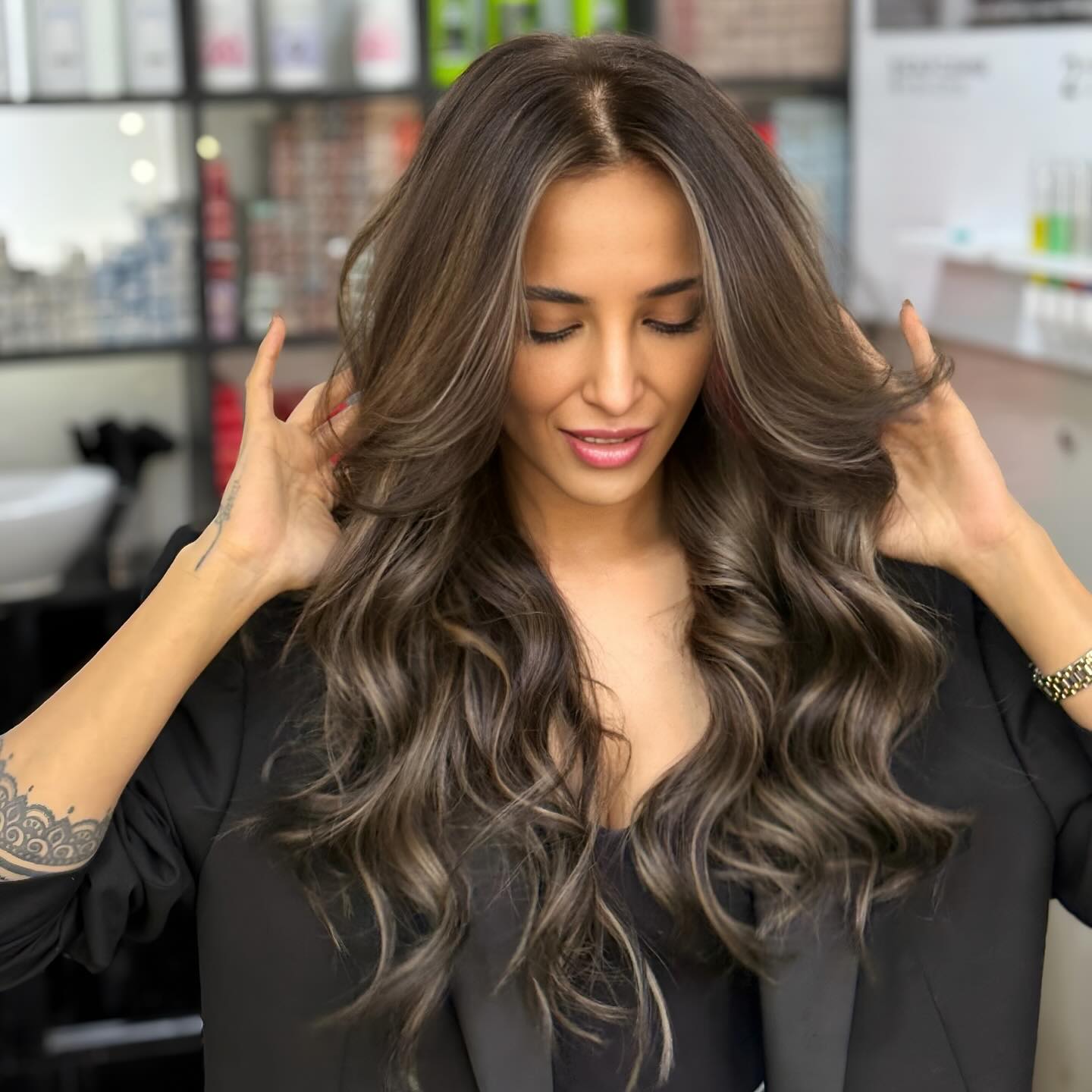
How long does a soft transition like this actually take in the chair? Longer than you think, because the ash brown base has to melt into blonde without a visible line, and that is not a two-step process. The balayage on mid-back wavy hair starts at the mid-lengths and builds toward the ends, with face-framing layers that catch the light and soften a square jaw. This is a salon-only job; trying to recreate the gradient at home usually ends in a patchy result that needs fixing. Ask your colorist for: ash brown to blonde balayage, face-framing layers. Budget for the initial session plus a trim every 10 to 12 weeks to keep the layers from losing their shape.
Ash Blonde Balayage On Dark Blonde Base
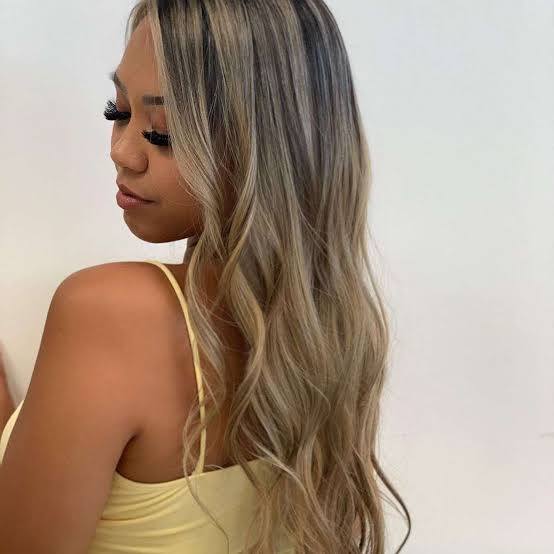
From the side, ash blonde balayage on a dark blonde base shows its true architecture: the color lightens gradually from the roots down, so the mid-back length reads as one seamless sweep rather than a set of stripes. The middle parting and loose waves give medium density hair a fuller silhouette, and the ash tone keeps the blonde from tipping into gold. Ask your colorist for: ash blonde balayage on dark blonde base, middle parting, loose waves. This suits oval faces best, since the central part and the even fall of the waves balance the proportions. A silver shampoo once a week keeps the ash clean, and a toning appointment every 6 to 8 weeks handles the warm shift that dark blonde bases tend to throw.
Honey Blonde Balayage With Face-Framing
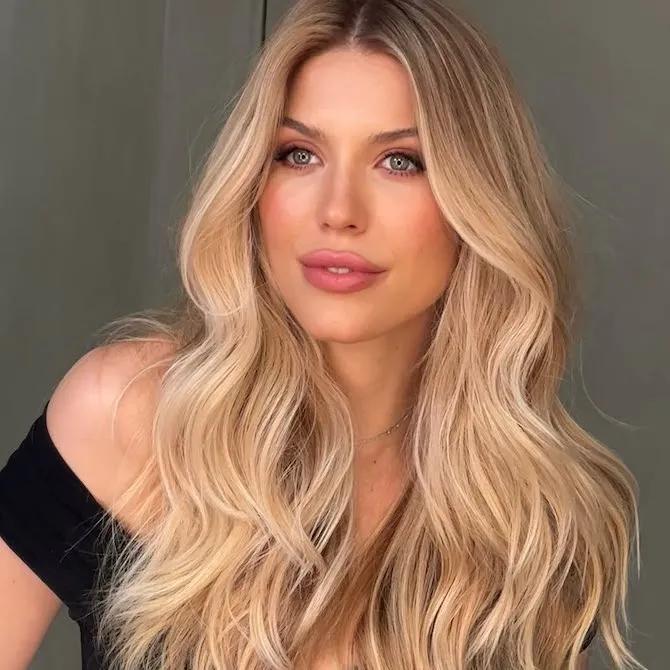
The bright honey blonde balayage sits on a blonde base that is already light, so the effect is luminous without being brassy. On thick, wavy mid-back hair, the face-framing pieces are the focal point: they pull the light toward the face and soften a round shape, while the long layers keep the weight moving. Ask your colorist for: bright honey blonde balayage, face-framing pieces. This look needs a little maintenance to stay glossy. A shine serum on the waves keeps the highlights visible, and a trim every 10 to 12 weeks prevents the face-framing pieces from losing their shape. The middle parting keeps everything symmetrical, which helps the color feel balanced.
Ash Brown Balayage With Wavy Blowout
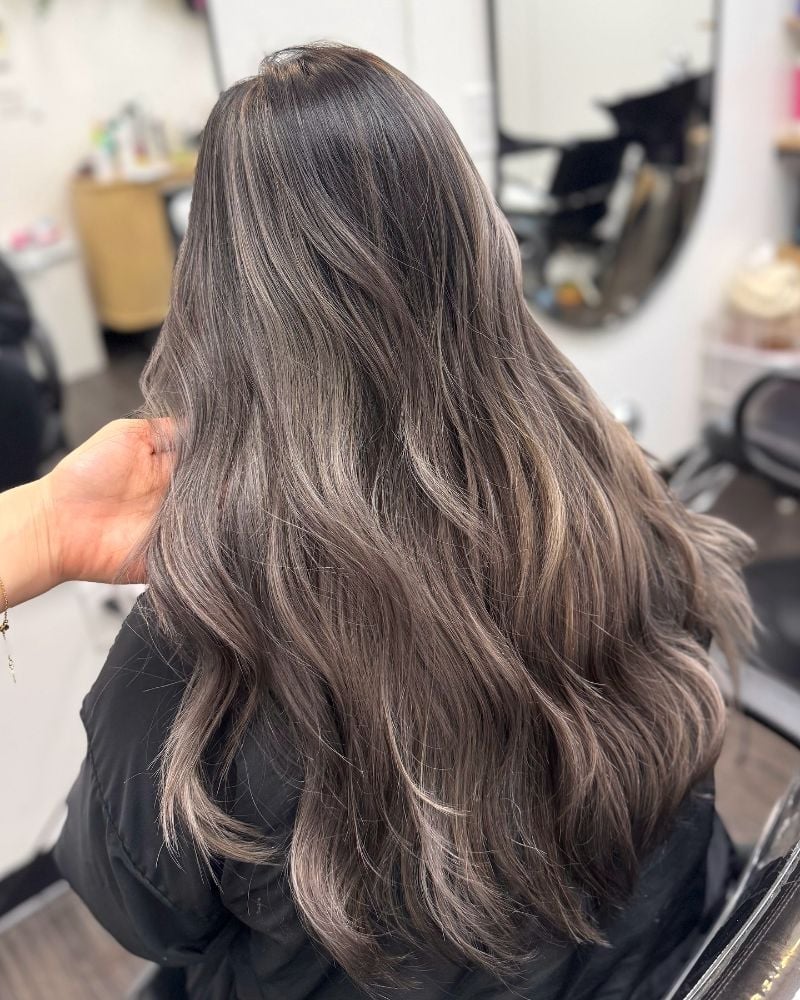
Ever tried to explain what you want to a stylist without sounding like you are ordering a latte? For this one, start with the obvious: mid-back length thick hair needs layers to keep the shape from becoming a triangle. The ash brown balayage here is painted in soft swoops with thin ribbons, so the lighter pieces catch the wave bends. Ask your colorist for: ash brown balayage, wavy blowout, middle parting. The long layers work together to elongate a round face, while the wavy blowout adds volume at the sides for longer face shapes.
Dark Brown Caramel Blonde Balayage, Mid-Back
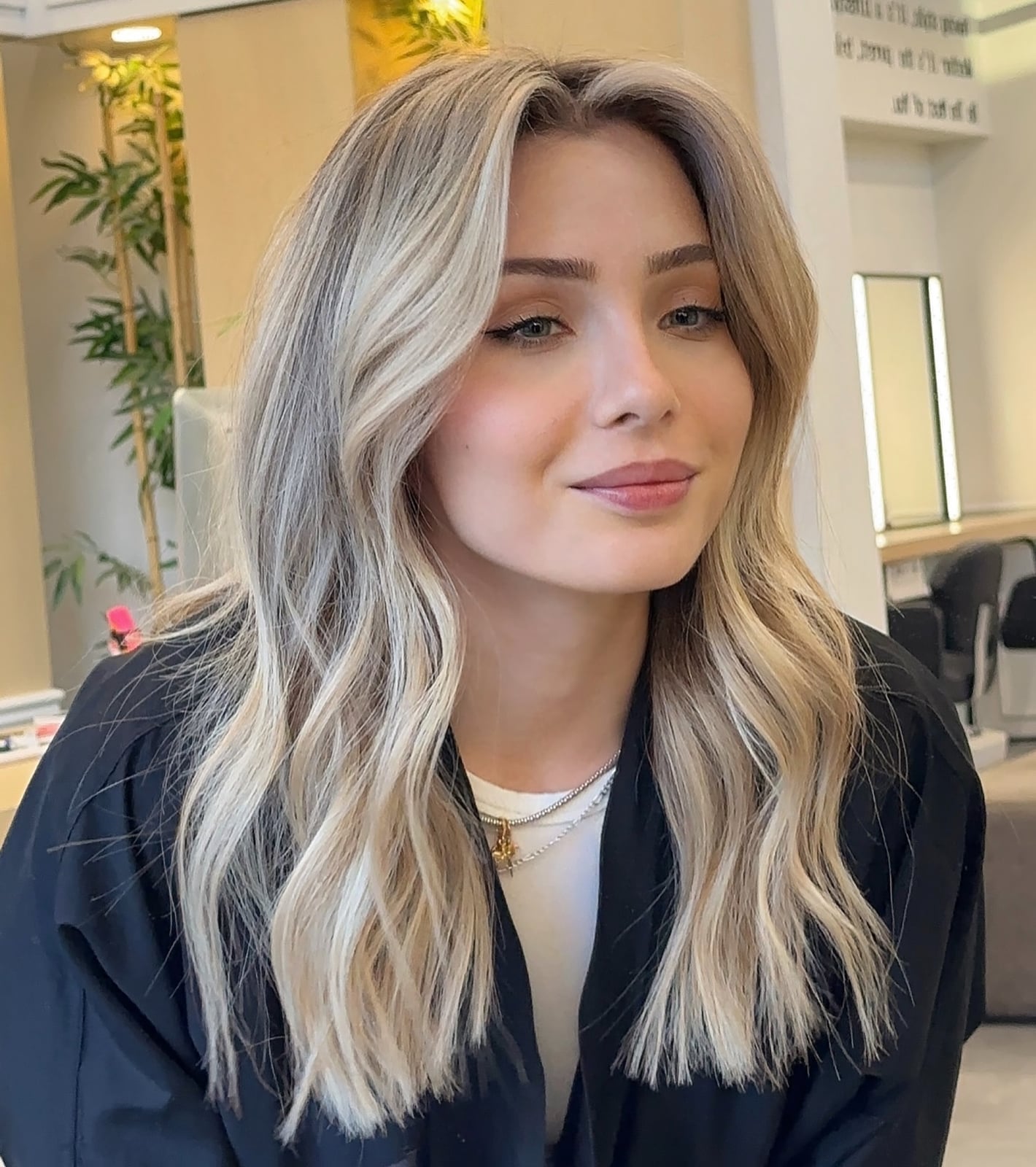
The design here is built on contrast, not subtlety. A dark brown base sits dark at the crown, then caramel and blonde balayage sections are painted in from mid-shaft to the ends of mid-back length hair. The loose, air-dried waves let the lighter tones sit on the surface rather than burying them in tight curls. Long layers keep the shape from feeling heavy, which matters when you have thick hair. The honest downside: that rich contrast demands a toning appointment every eight weeks, or the caramel shifts warmer than you planned.
Dark Brown To Blonde Balayage Back View
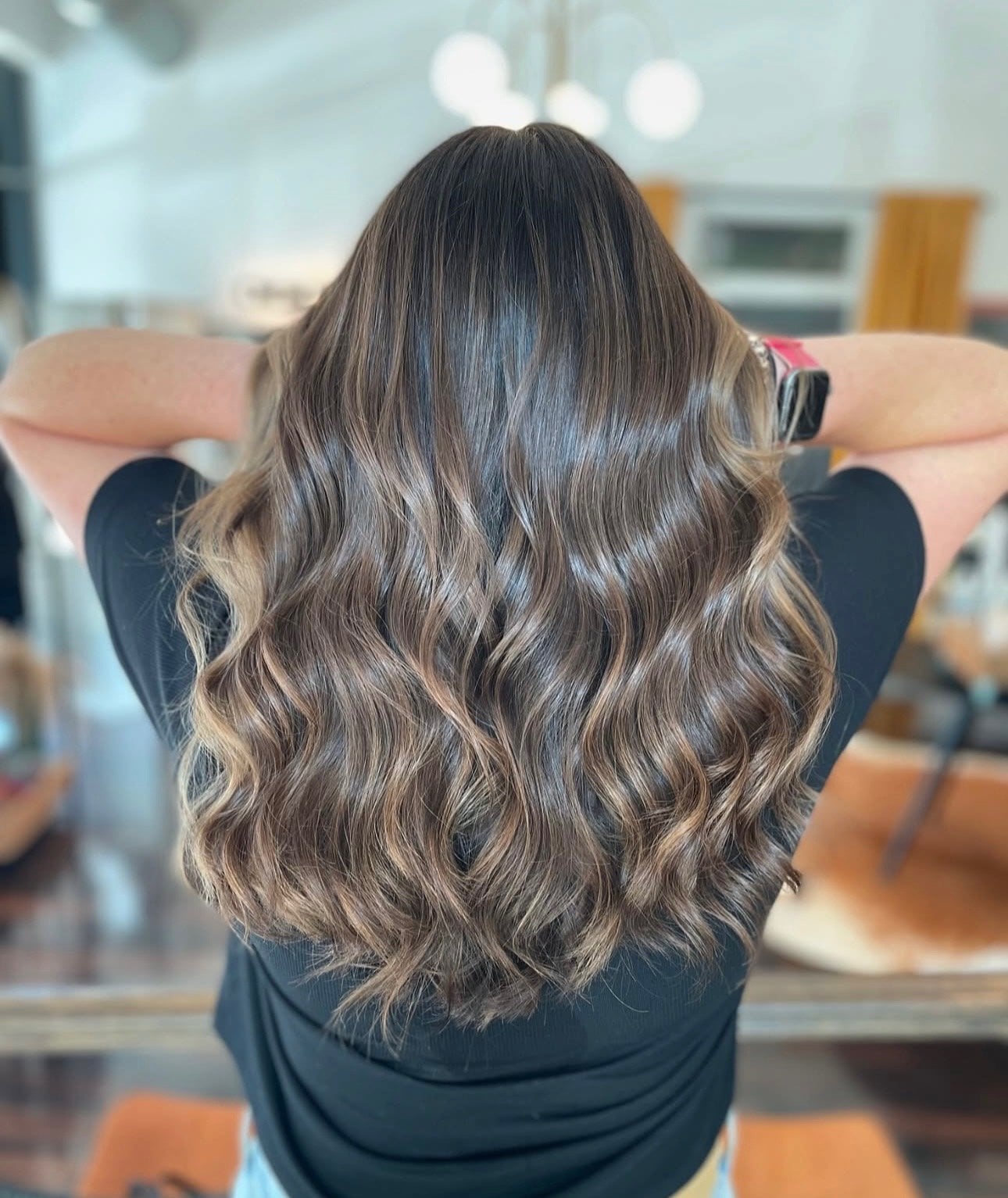
From the back, the transition does the work. The dark brown roots sit close to the scalp, then the blonde takes over in the bottom half of mid-back length hair, creating a gradient that is smooth without being stripey. Loose waves and a middle parting let the color breathe, and the thick texture keeps the lighter pieces from looking sparse.
As it grows out, the dark root section moves down slowly because the balayage was painted low to begin with. You can stretch trims to ten or twelve weeks, and the blonde ends will fade a bit cooler over time. A shine spray on dry waves helps the transition look glossy rather than grown-out.
Dark Blonde Balayage With Curtain Bangs Side Part
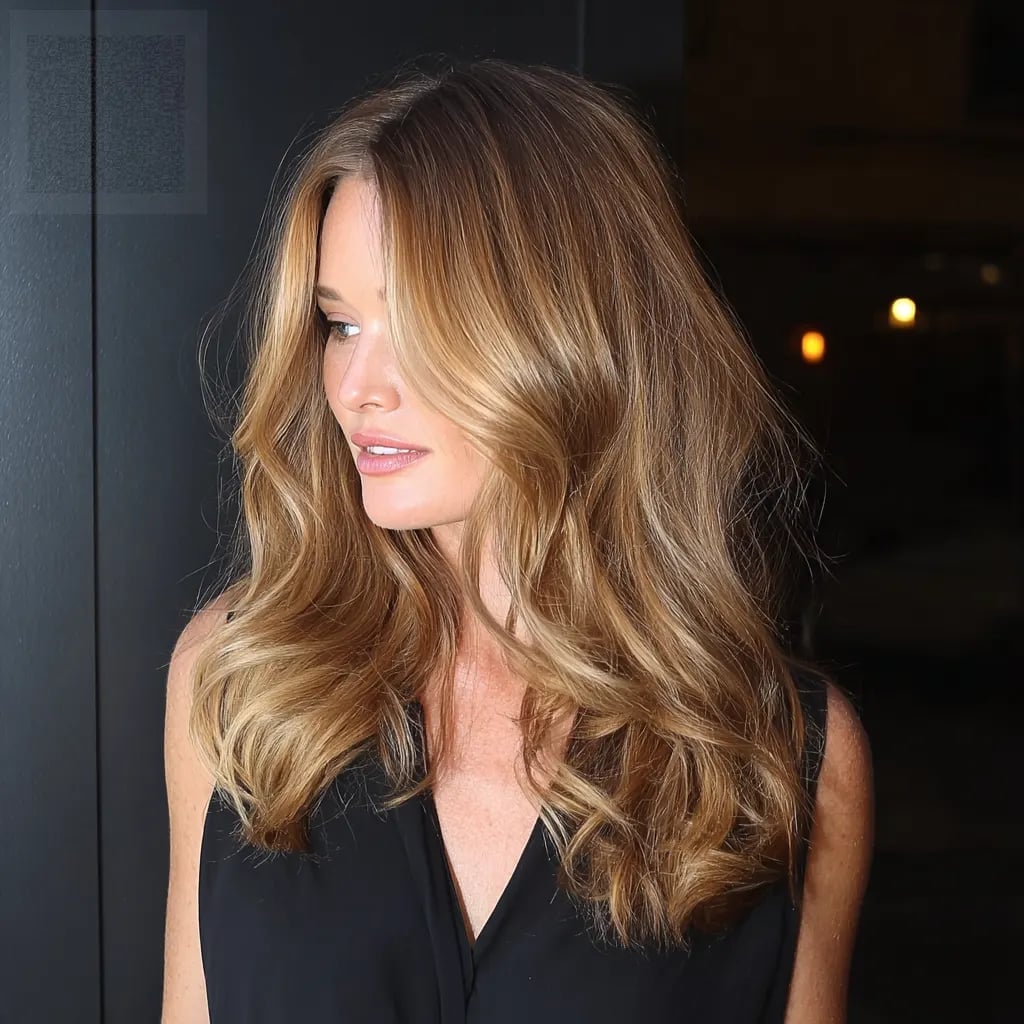
Why is this one a salon-only job? Because curtain bangs on mid-back length hair need the right balance between the bangs and the long layers, and the dark blonde balayage on a light brown base has to hit the bangs at the right angle. The side parting adds volume on top, and the loose waves keep the overall shape soft rather than severe. Ask your stylist for: dark blonde balayage on light brown base, curtain bangs, side parting. A DIY attempt at the bangs usually ends in a fringe that is too short to sweep, so leave the shears to someone who does this for a living.
Medium Brown Honey Blonde Balayage Back View
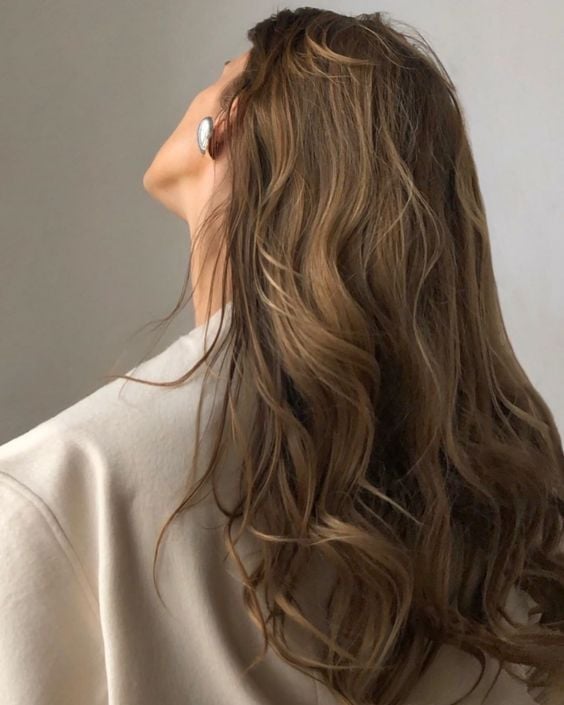
The back view shows a different story than the front. Here, the medium brown base is the anchor, and the honey blonde balayage sits in wider sections that catch the light from behind. The side parting and loose waves add movement, so the color does not look flat from any angle. Thick, wavy hair starting at mid-back length is the ideal candidate for this placement. Compare it to the front view: the lighter pieces feel more concentrated at the back, which means the front stays darker and more natural. Ask your colorist for: medium brown base, honey blonde balayage, loose waves, side parting.
Warm Brown To Blonde Balayage Side Part, Close-Up Take
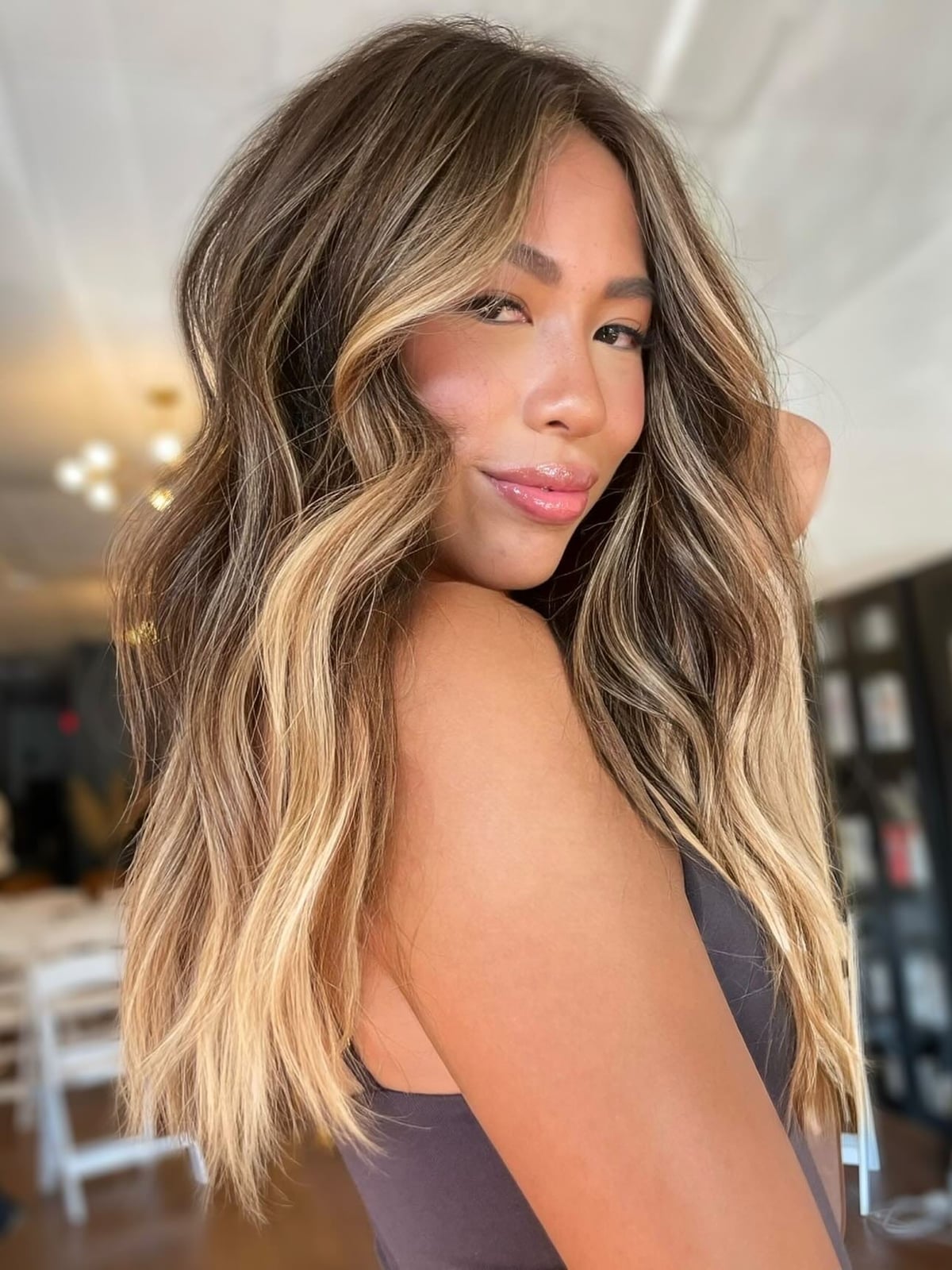
A side parting on thick, wavy hair at mid-back length gives the warm brown to blonde balayage room to show its full dimension. This combination works best for those with dense, wavy texture who want the color to read as depth rather than streaks. Ask your colorist for: warm brown to blonde balayage, side parting. Flip your parting to the opposite side for instant volume without heat.
Trim every 10-12 weeks to keep the ends healthy and the long layers moving. The side part directs the lighter pieces forward, so the balayage lands where the light hits first. No bangs here. The parting does the face-framing work instead.
Ash Blonde Balayage On Dark Brown Base, Wavy
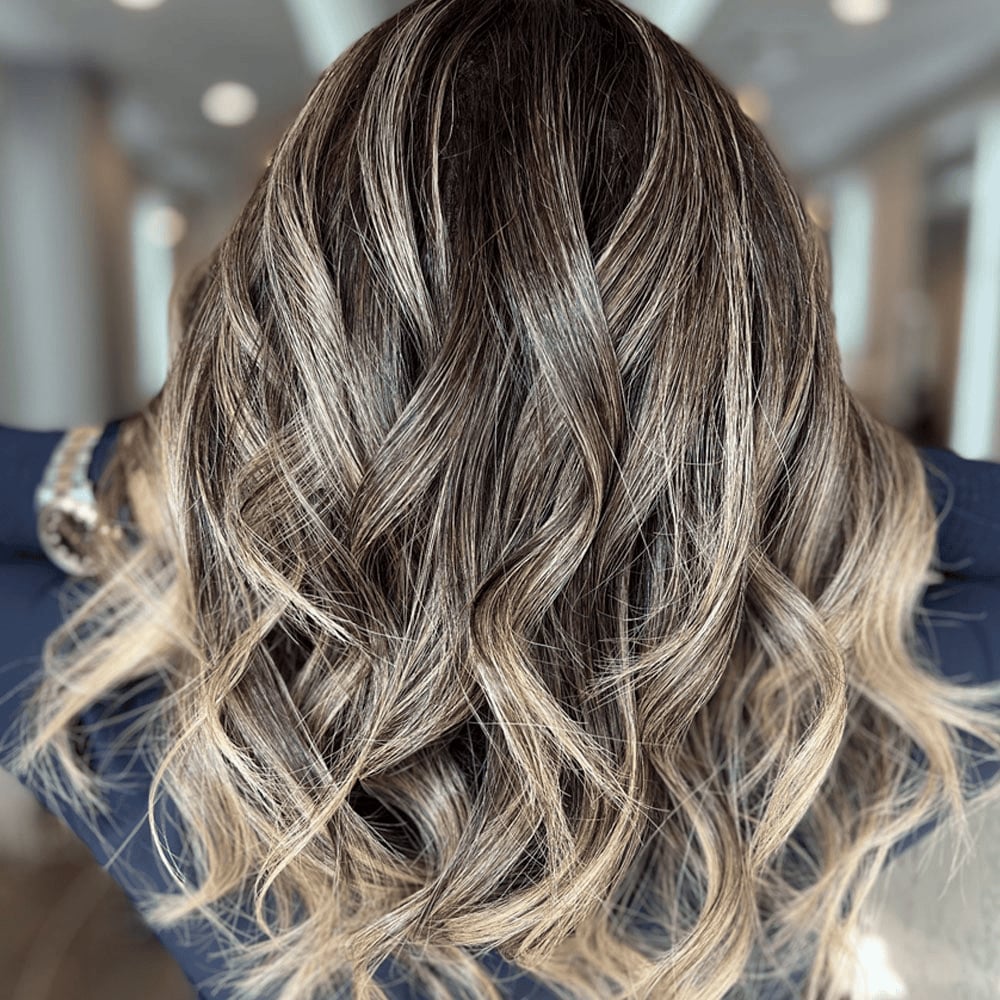
How do you get ash blonde balayage on a dark brown base without it turning muddy? The trick is a seamless blend from the root to the lighter ends. This mid-back length look uses long layers and loose curls to soften the transition, with a middle parting that lets both tones read clearly. Ask your colorist for: ash blonde balayage on dark brown base, loose curls. The ash tones sit cooler than a beige blonde, so the contrast against the brown base stays crisp rather than warm.
Dark Brown To Blonde Balayage With Face-Framing, Close-Up Take
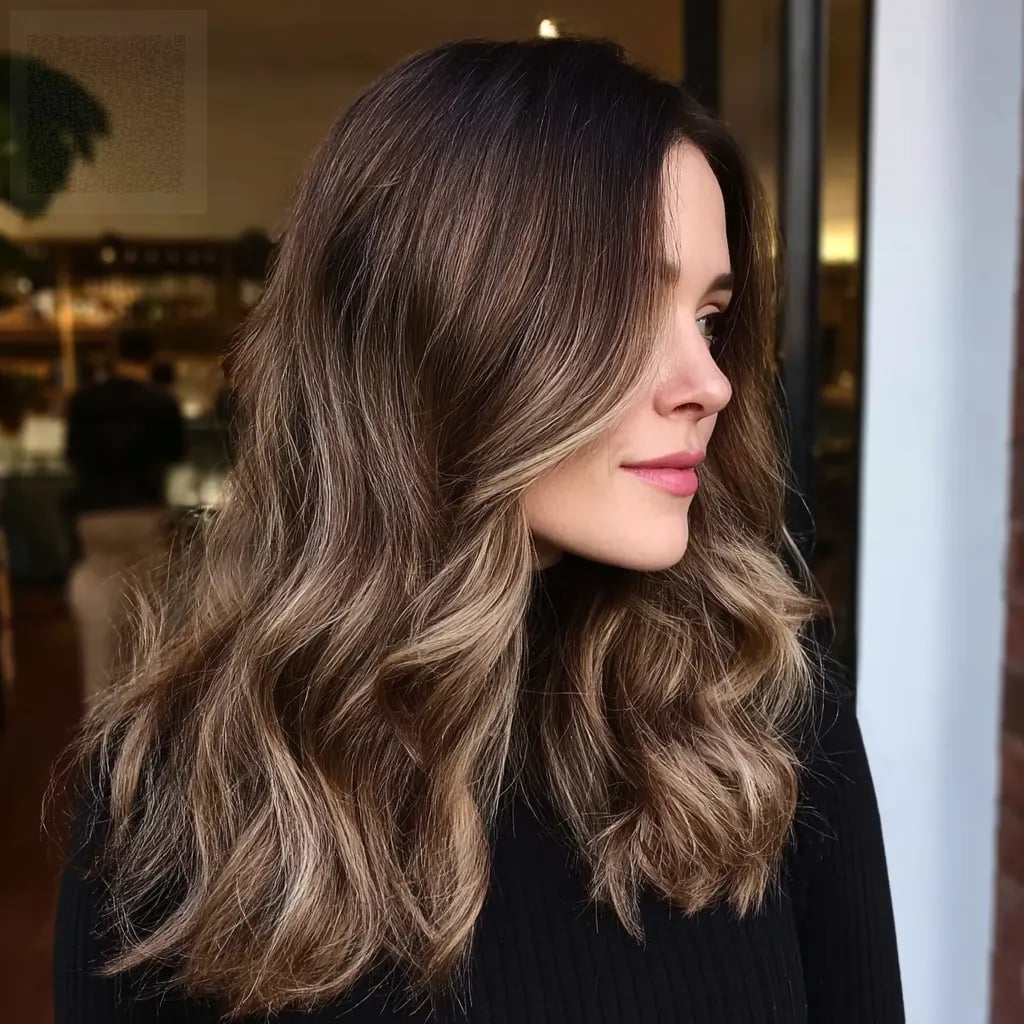
The dark brown to blonde balayage here uses face-framing layers and curtain bangs to bring the lighter tone forward. On thick, wavy hair at mid-back length, the lightest pieces are placed around the face for a dimensional look. These face-framing layers grow out faster than the rest, so expect to trim them a week or two sooner than your main length. Ask your stylist for: dark brown to blonde balayage, face-framing layers, curtain bangs.
Ash Blonde Highlights In Half-Up Braid
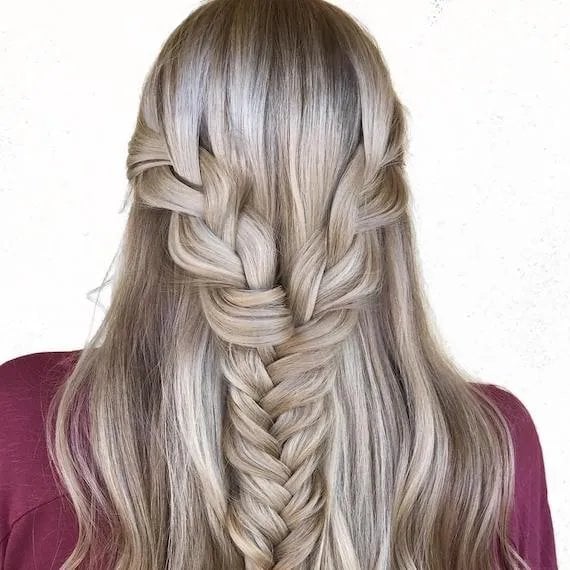
Fine to medium density straight hair at mid-back length benefits from a half-up braided style that adds visual weight. The ash blonde and lighter blonde highlights create subtle dimension along the braid, so the color doesn’t disappear into a single flat tone. Ask your colorist for: ash blonde highlights, half-up braided style. Use a texturizing spray before braiding for grip on finer strands. Tone every 6-8 weeks to keep the ash from warming up.
A central parting keeps the braid centered and the highlights distributed evenly on both sides. No bangs means the braid reads as the focal point without competing pieces around the face.
Dark Brown To Ash Blonde Balayage Waves
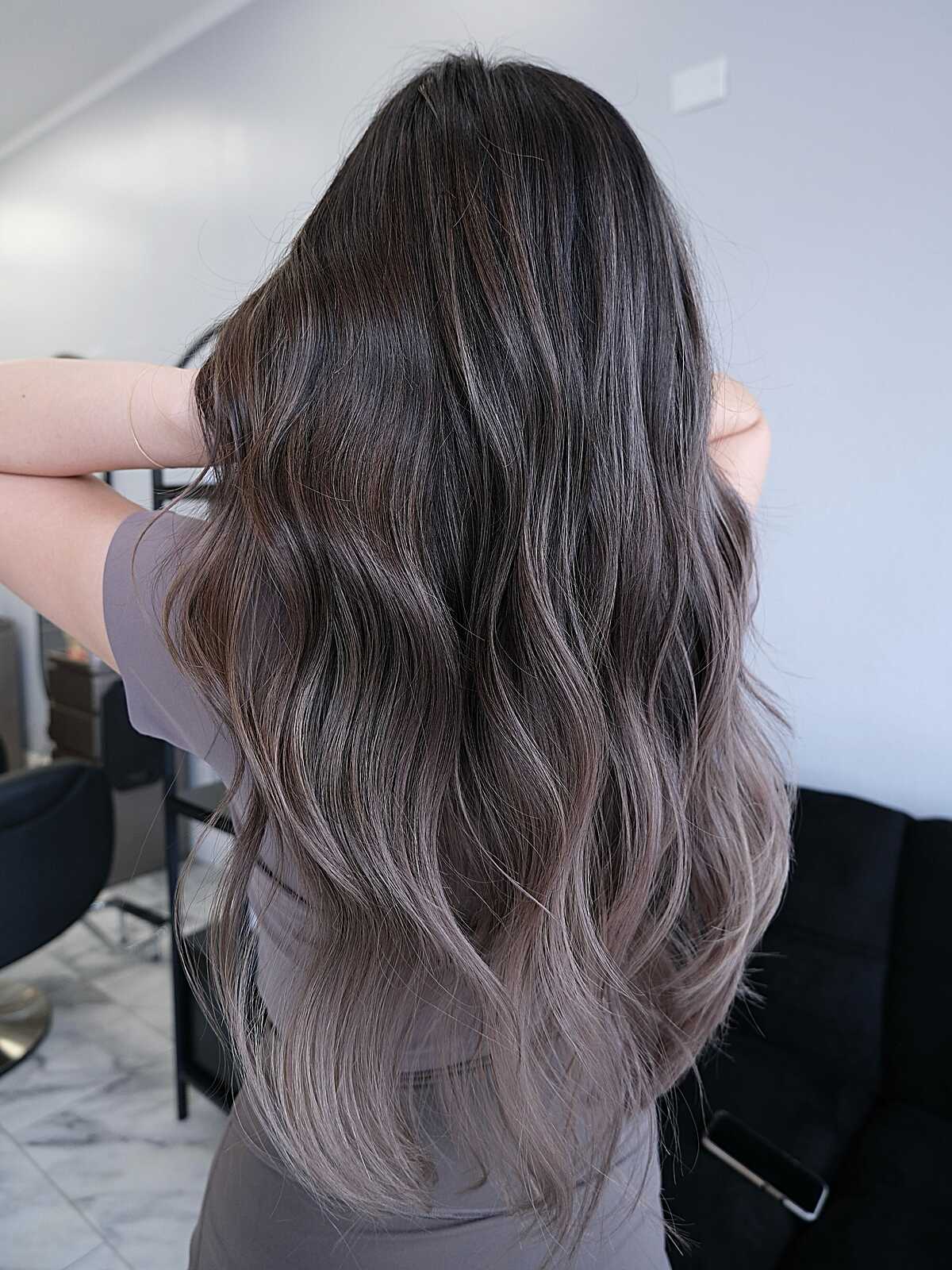
Wondering if you can get a seamless dark brown to ash blonde balayage at home? The short answer is no. This mid-back length look relies on a salon technique that weaves the ash blonde ends through thick, wavy hair without a hard grow-out line. A middle parting and loose waves show off the color shift from root to tip. Ask your colorist for: dark brown to ash blonde balayage, loose waves, middle parting. The ash tones at the ends need a cool-toned shampoo to stay silvery rather than brassy.
Bronde Balayage With Honey Caramel Tones
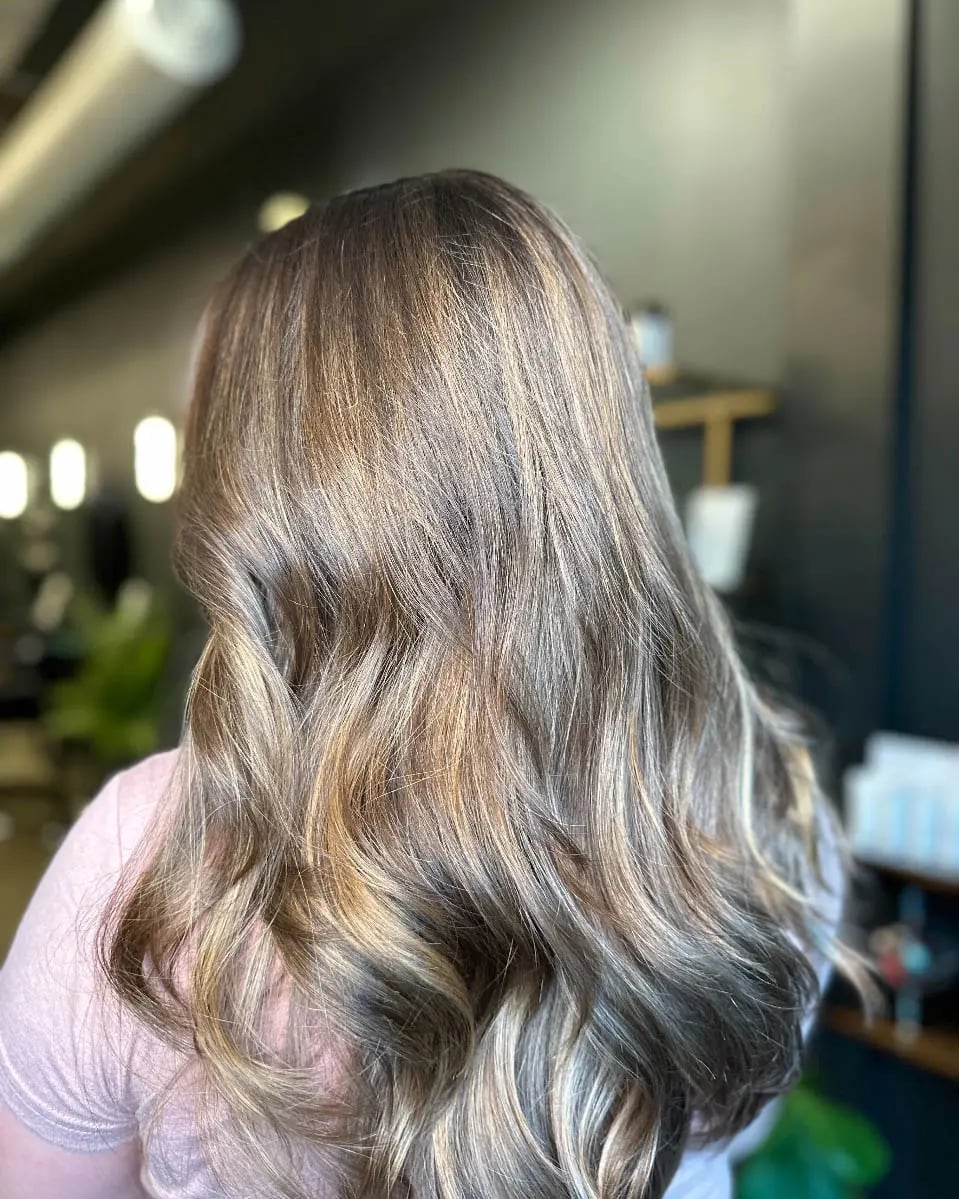
Luminous honey and caramel tones give this bronde balayage a warmth that a single-tone version simply lacks. The two shades work together so the color shifts as the waves move, which makes the mid-back length feel richer. It suits medium-density wavy hair that can carry the soft, sweeping movement without falling flat. Ask your colorist for: bronde balayage with honey and caramel tones, soft waves. A middle parting keeps the face open and works well with an oval shape. A shine spray helps the multi-dimensional color catch the light, and a trim every 10 to 12 weeks keeps the ends looking tidy.
Cola Tone Balayage With Layered Blowout
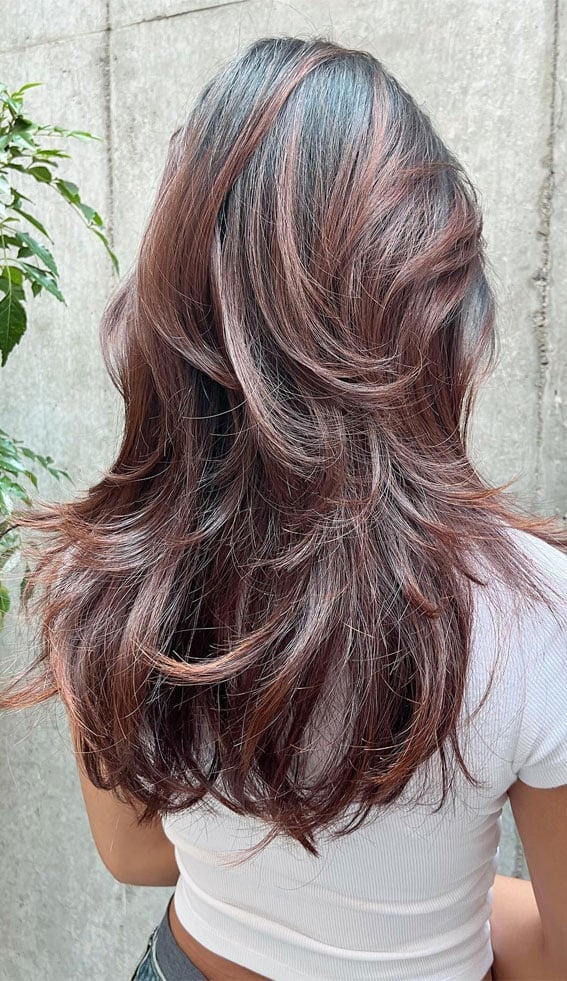
A cola tone balayage is the rare color that flatters thick, wavy hair without washing it out. The gradient effect adds depth to the mid-back length, and the layered blowout keeps the volume from turning into a shapeless mass. This genuinely suits thick, wavy textures that can handle a bouncy finish; fine hair might find the layering too heavy. Ask your colorist for: cola tone balayage, layered blowout, middle parting. The middle parting suits oval faces and lets the color show evenly on both sides. Use a round brush to smooth and lift the roots while you blow dry, which gives the waves a polished base. A trim every 10 to 12 weeks maintains the shape and keeps the layers from growing out unevenly.
Dark Brown To Chestnut Balayage Waves
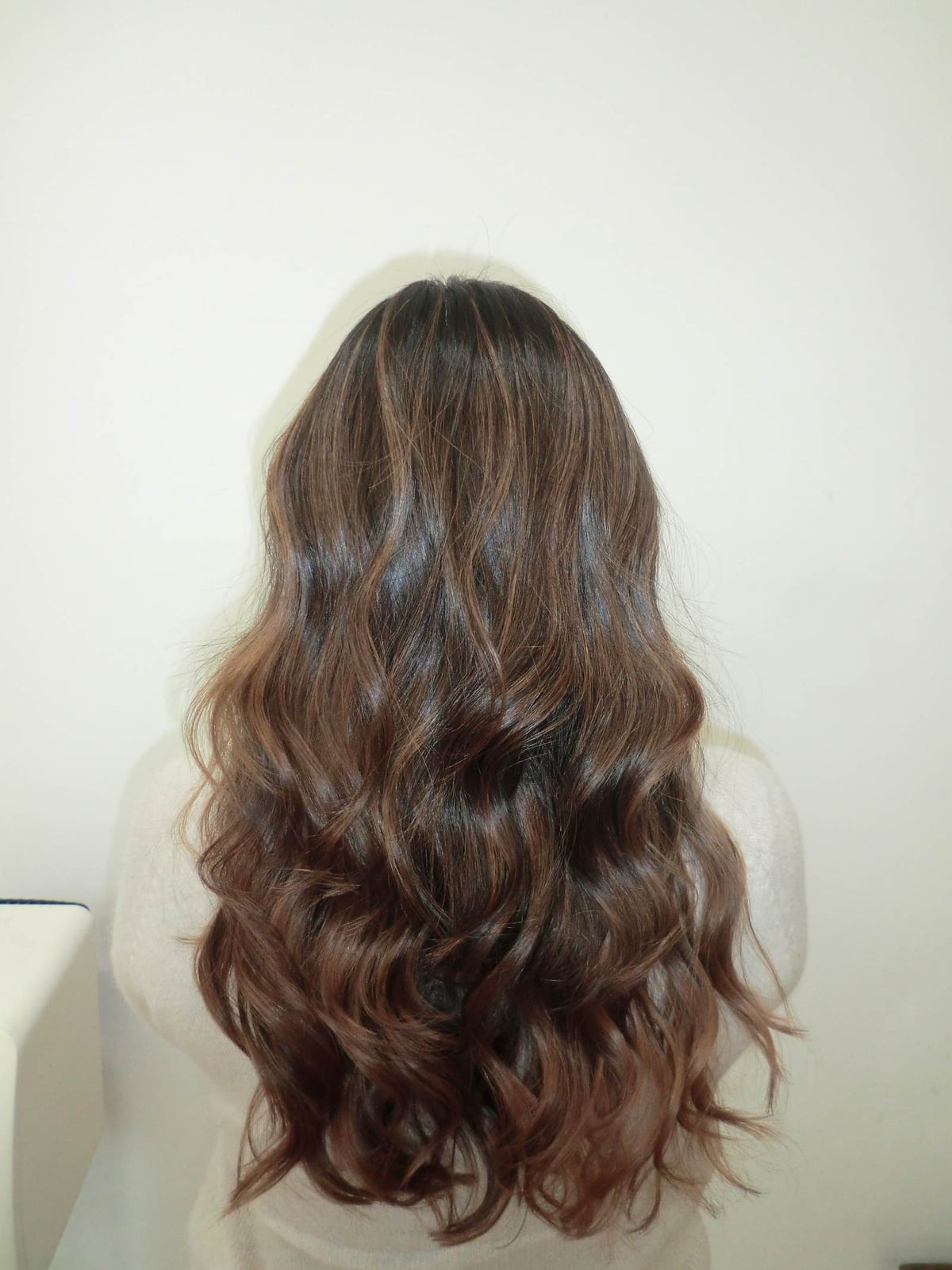
How do you ask for a subtle color change that still looks grown-out? You ask for a dark brown to chestnut balayage, where the transition is gradual enough to look natural but clear enough to notice. The loose waves on this mid-back length let the chestnut shade appear at different points, so the color seems to move with the hair. It suits thick, wavy textures that hold a bend easily, and the middle parting frames the face. Ask your colorist for: dark brown to chestnut balayage, loose waves, middle parting. A leave-in conditioner keeps the length soft and shiny, and a trim every 10 to 12 weeks keeps the ends in check.
Dark Brown To Ash Blonde High Contrast
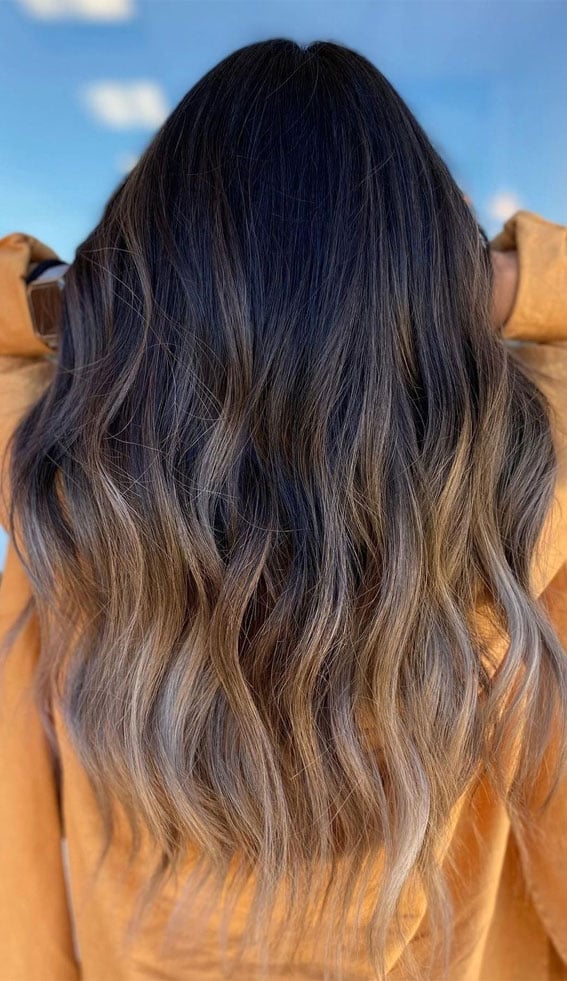
A high contrast balayage from dark brown to ash blonde is a bold statement, but the mistake people make is letting the transition line sit too high. The key is to keep the lighter shade concentrated on the ends, which is exactly what this mid-back length does, with soft, loose waves that blend the two tones. The real drawback is upkeep: ash blonde demands a toning appointment every 8 to 10 weeks, or the cool tone shifts brassy. It suits thick, wavy hair that can carry the weight of the color change, and the bold look is best for those ready to commit. Ask your colorist for: dark brown to ash blonde high contrast balayage, soft waves. A color-depositing conditioner between appointments keeps the ash from fading.
Caramel Balayage With Tousled Curtain Bangs
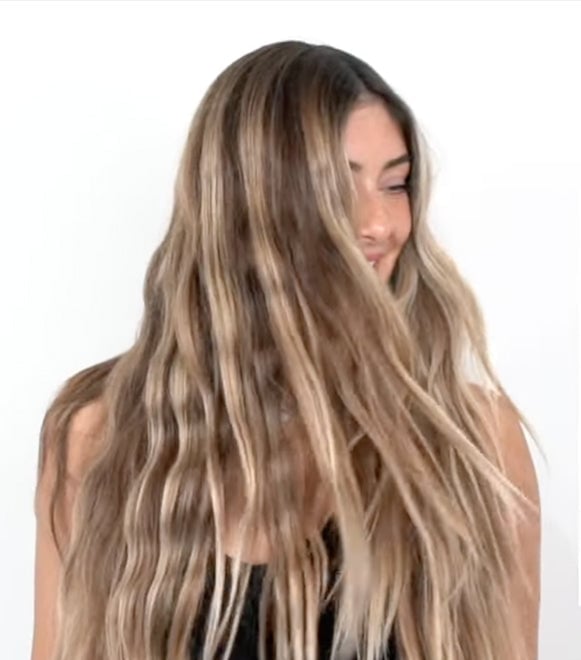
Curtain bangs on a caramel balayage are a practical choice because they frame the face without demanding constant styling. The tousled loose waves on this mid-back length give the hair a lived-in texture, and the caramel highlights on the light brown base add warmth that flatters the movement. It suits medium-density wavy hair, and the curtain bangs soften angular faces while the middle parting keeps things balanced. Ask your stylist for: caramel balayage, tousled loose waves, curtain bangs. A texturizing paste on the ends gives the waves a piecey finish that holds through the day. The bangs will need a trim every 4 to 6 weeks to keep their shape, and a toner appointment every 8 to 10 weeks keeps the caramel from dulling.
Final Thoughts
For a softer grow-out, ask for blended balayage with fewer, more diffused highlights. For a bolder statement, request stronger contrast and face-framing pieces.
- Schedule balayage touch-ups every 8-12 weeks.
- Use color-safe shampoo and conditioner.
- Deep condition weekly to combat dryness.
- Minimize heat styling to protect color.
Balayage on long hair offers a beautiful spectrum of color possibilities.