Balayage is a freehand color technique that paints lighter pieces onto the surface of the hair, creating a softer, more natural transition than traditional foil highlights. The current shift is toward lived-in color with warm blonde tones, which means your grow-out line stays forgiving for months, not weeks.
This collection brings you 22 ways to wear Balayage on Medium Hair, from low-maintenance caramel blends to bolder face-framing ribbons. Whether your hair is fine and falls flat or thick and needs shaping, there is a cut and color combo here that works. You will also find the exact words to ask your stylist for, so you leave the chair with the look you actually wanted.
Collarbone Lob With Caramel Balayage
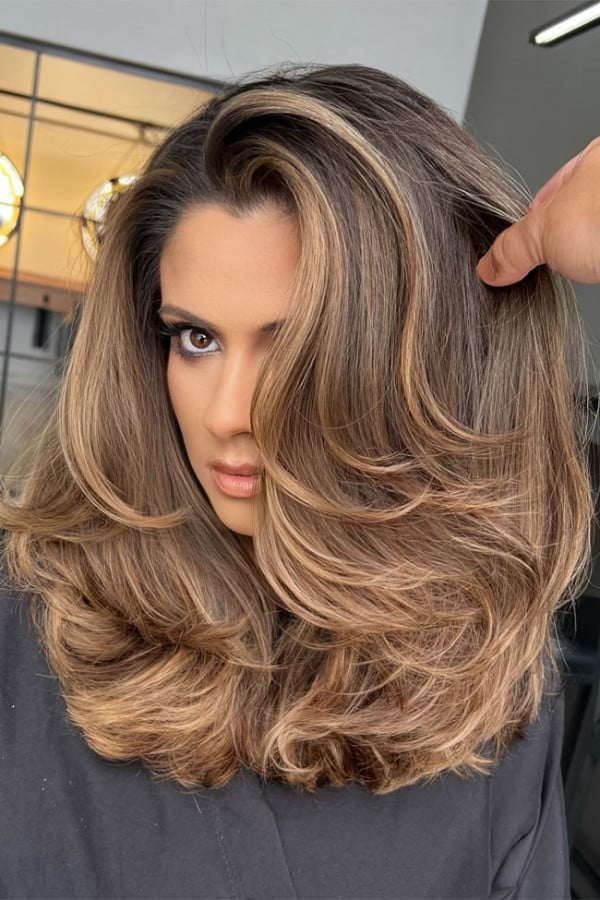
A collarbone lob with medium layers and a side part is a study in controlled bounce. The caramel balayage on a dark blonde base does the heavy lifting, giving thick, wavy hair a dimensional payoff that a single-process color can’t match. This length lands in the sweet spot: short enough to feel modern, long enough to pull into a low ponytail. Medium layers keep the shape from turning into a triangle, while the side part adds volume at the crown, which suits round and oval faces well. Ask your stylist for a collarbone lob with medium layers, dark blonde base with caramel balayage. It’s a salon cut, so expect to book a trim every eight weeks to keep the bounce honest.
Medium Brown Lob With Warm Blonde Balayage And Curtain Bangs

Wondering how to ask for those soft, lived-in waves without sounding like you’re ordering a coffee? Start with the cut. A collarbone lob with curtain bangs gives you the face-framing softness that a blunt line can’t. On a medium brown base, warm blonde balayage works its way down from the mid-lengths, so your roots stay low-maintenance while the ends catch the light. Ask your stylist for a collarbone lob, curtain bangs, medium brown with warm blonde balayage. The curtain bangs soften square and oval faces, and a middle part keeps the whole thing balanced. Specify the balayage transition: you want it to start lower, near the cheekbones, not at the root.
Medium Blonde Lob With Lighter Blonde Balayage
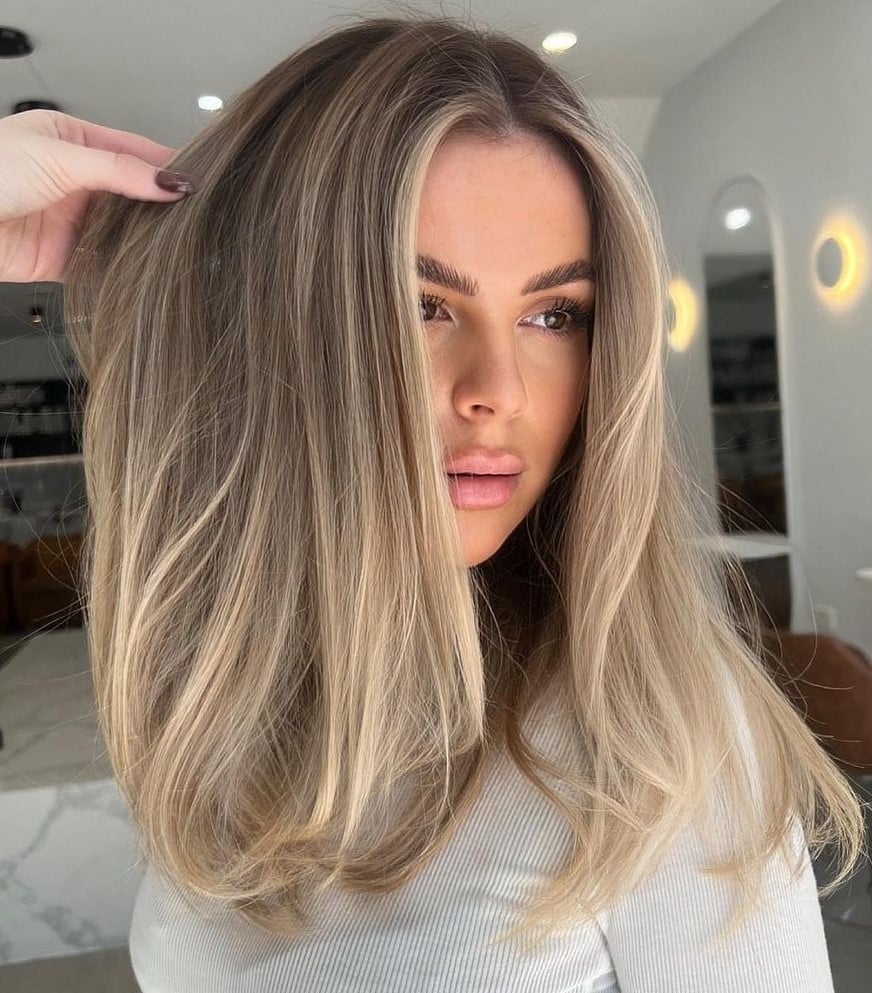
The technique here is finely woven balayage, where the lighter blonde is painted on in thin sections, not chunky streaks. On a medium blonde base, this brightens the face-framing layers and ends while leaving the root area untouched. This creates a dimensional lob. Ask your colorist for a collarbone lob, medium blonde with lighter blonde balayage, face-framing layers. It suits fine to medium density hair that can hold a loose wave. Use a texturizing spray on dry hair to keep the movement, and plan a toning appointment every eight to ten weeks to stop the lighter pieces from going brassy.
Medium Brown Lob With Warm Blonde Balayage And Curtain, Close-Up Take
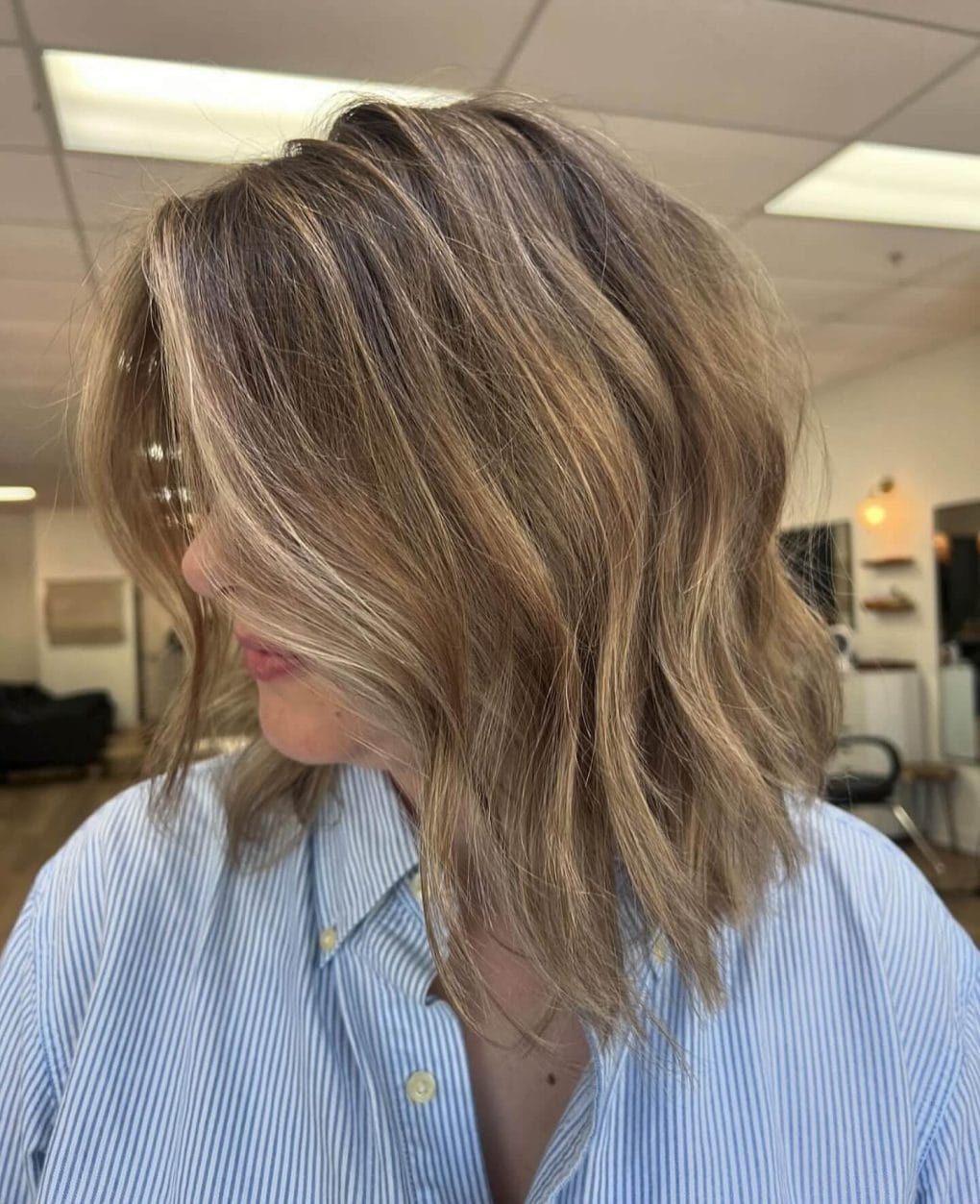
When a stylist says the face-framing layers are the standout, they mean the cut is doing the work, not just the color. This collarbone lob pairs subtle layers with curtain bangs, so the warm blonde balayage lands right where it’s seen: around your cheeks. It’s a flattering setup for round and heart-shaped faces, since the curtain shape pulls the eye outward. The trade-off is upkeep. Those face-framing pieces and bangs need a trim every four to six weeks, and the balayage, while lower-maintenance than highlights, still wants a gloss or toner around the eight-week mark to keep the warmth from muddying. Ask your stylist for a collarbone lob, curtain bangs, medium brown with warm blonde balayage, and be ready to own a diffuser for the wavy blowout.
Blunt Bob With Ash Blonde Balayage And Curtain Bangs
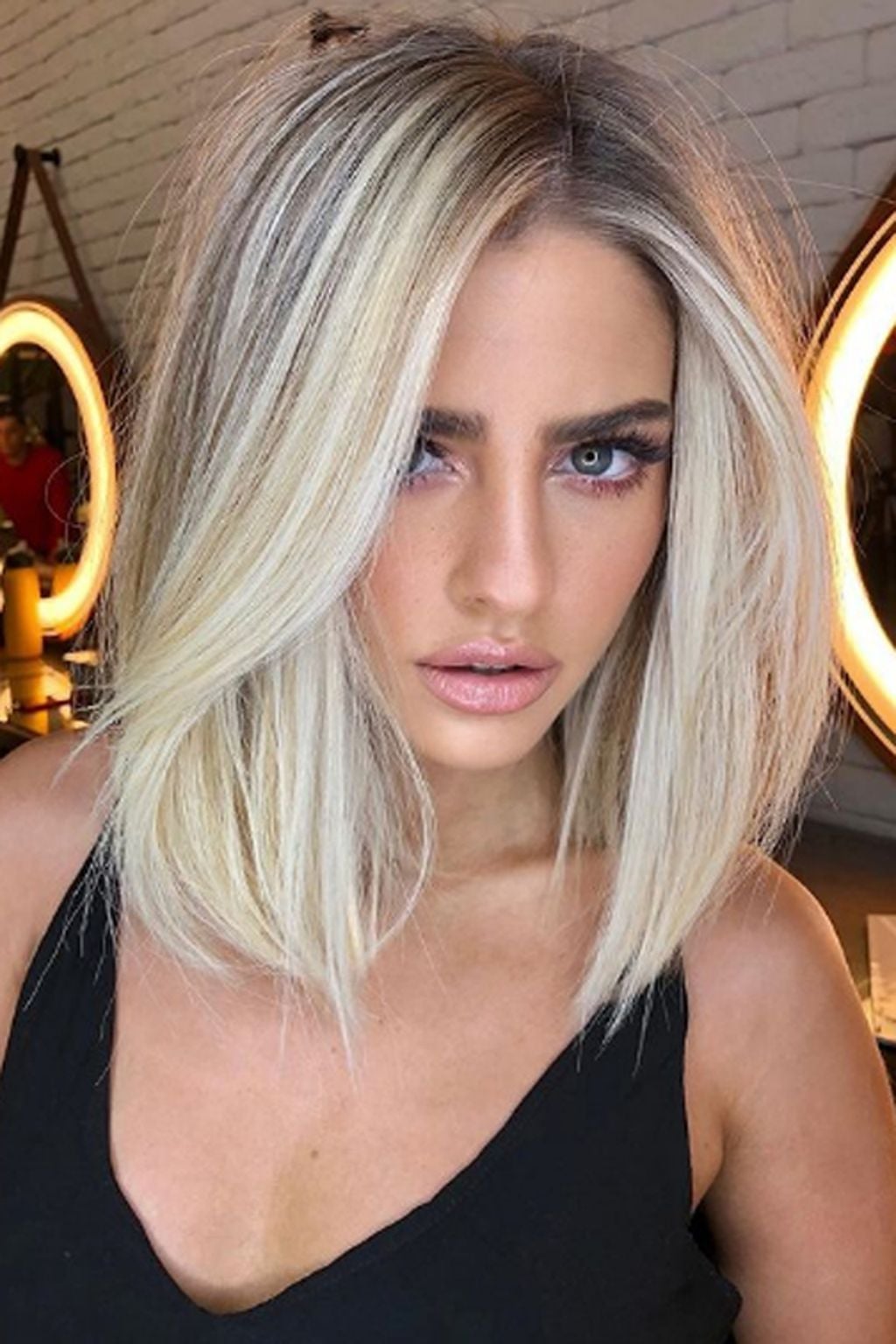
Set this blunt bob against a layered lob and the difference is immediate: the blunt line gives fine, straight hair a solid, dense edge, while layers would thin it out. The ash blonde balayage, with lighter face-framing highlights, adds dimension without breaking the clean silhouette. Ask your colorist for a collarbone blunt bob, curtain bangs, ash blonde balayage with face-framing highlights. This is a salon job, not a DIY. Ash tones are finicky to mix at home, and the blunt baseline needs a professional hand to stay sharp. If you’re after a low-maintenance grow-out, the balayage helps, but the bob itself will still want a trim every six to eight weeks.
Cascading Layers With Ash Blonde Highlights
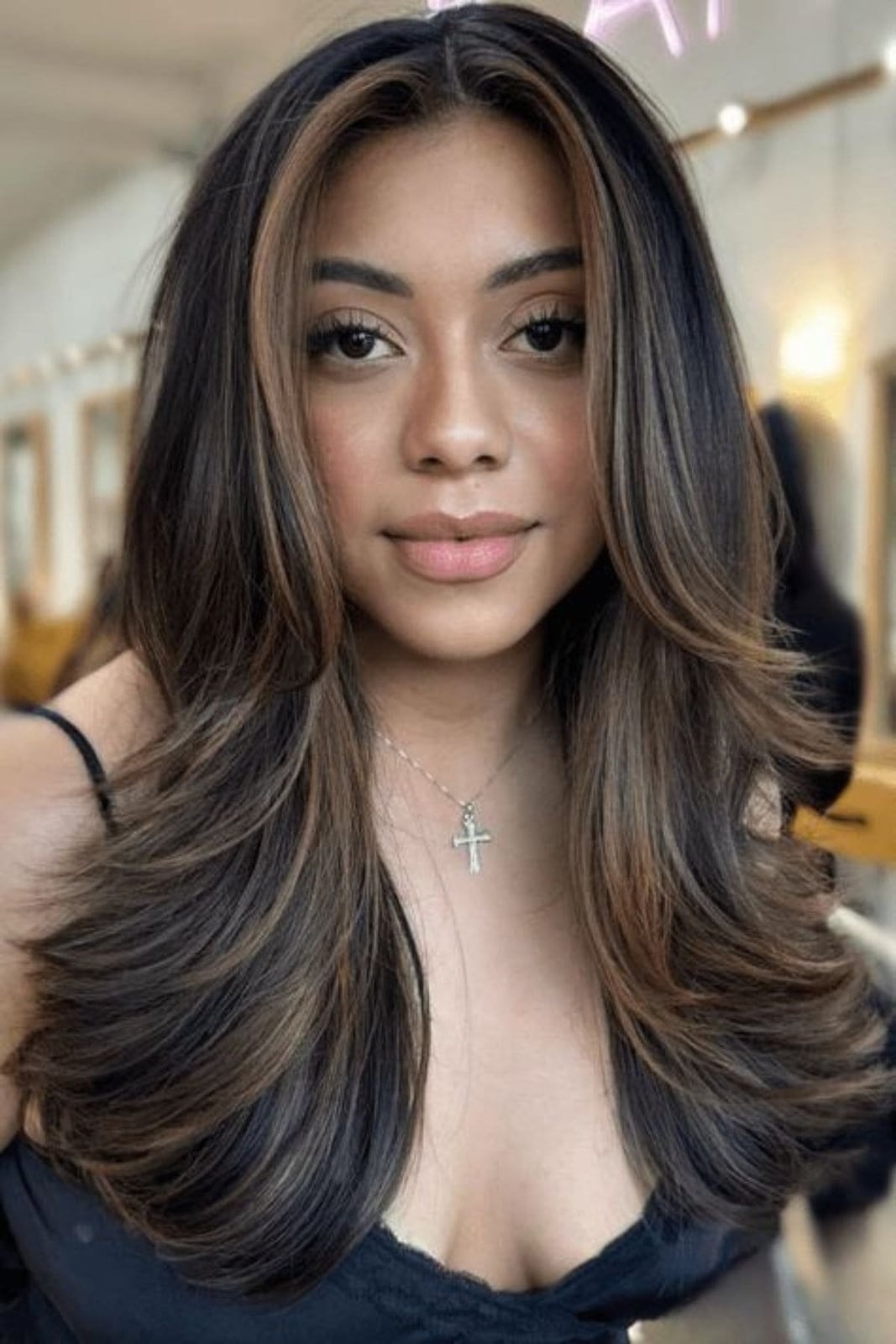
The trick here is the contrast: a dark chestnut base with ash blonde highlights that read as deliberate, not accidental. The cascading cut drops into soft waves, with a middle parting that elongates round faces. Medium density wavy hair benefits from that graduated shape. It prevents the layers from looking sparse or disconnected. Ask your stylist for: medium length cascading cut, dark chestnut with ash blonde highlights. A sea salt spray scrunched into damp hair gives these waves their weightless finish. Plan a trim every eight to ten weeks to keep the layer pattern recognizable.
Cascading Layers With Ash Blonde Highlights, Close-Up Take
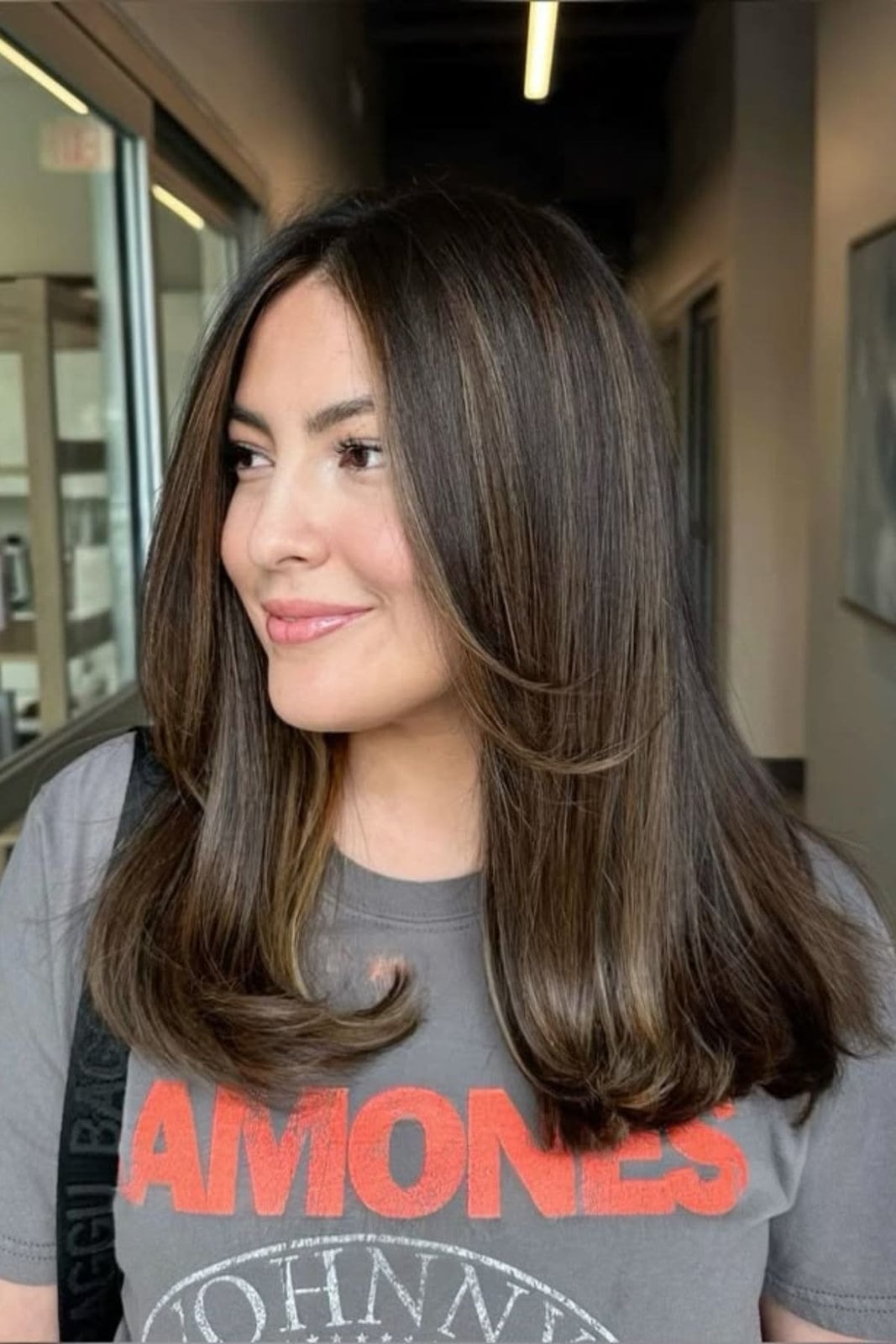
This one relies on the wavy texture doing the work. The cascading layers hit the shoulder, and the middle parting lets both sides mirror each other. Medium density hair keeps the ash blonde highlights from disappearing into the dark chestnut base, thin hair would swallow them, thick hair would hide the contrast. Ask your stylist for: medium length cascading cut, dark chestnut with ash blonde highlights. The waves are set with a texturizing spray, no heat required beyond a diffuser. A trim every eight to ten weeks preserves the graduated shape.
Cascading Layers With Ash Blonde Highlights, Office-Safe Version
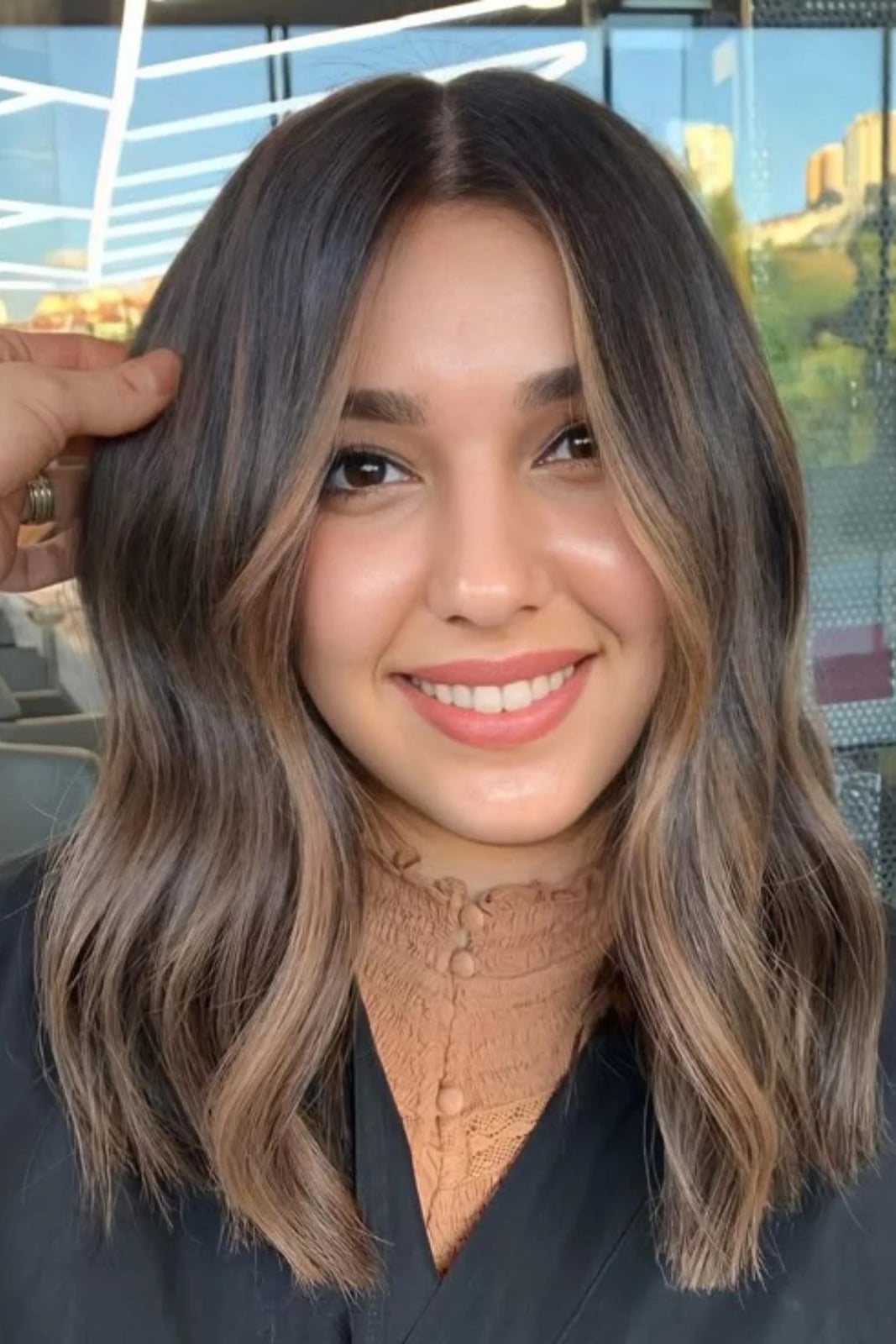
This version works for year round wear. The dark chestnut base keeps the overall tone grounded, while the ash blonde highlights add dimension. In summer, the contrast catches sunlight naturally; come winter, it prevents the color from reading flat under fluorescent office lights. The cascading layers land just past the shoulders and suit round and oval face shapes alike. Ask your stylist for: medium length cascading cut, dark chestnut with ash blonde highlights. The soft waves hold up through a workday without needing a refresh. A trim every eight to ten weeks and a toning treatment every six to eight weeks will keep the ash tone clean.
Layered Collarbone Hair With Warm Blonde Balayage
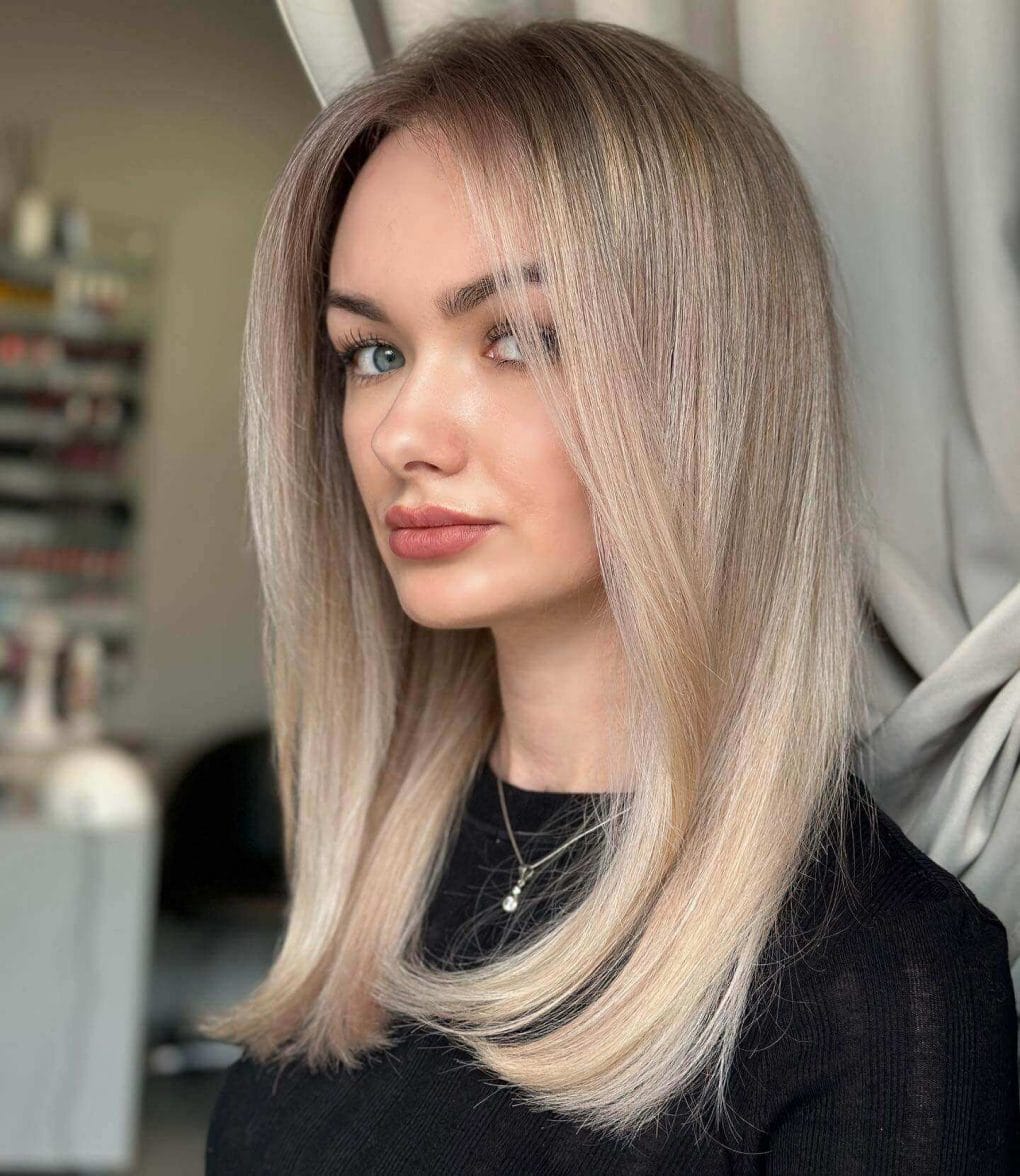
Who actually wears this cut well? Thick wavy hair starting at collarbone length. The layers reduce bulk without removing density, and the warm blonde balayage with lighter blonde highlights stops the color from looking solid or heavy. The middle part and a smooth blowout keep the shape clean. Ask your stylist for: collarbone length layered hair, warm blonde balayage. Fine hair would find the layers too weighty, and very curly hair would struggle with the collarbone line. A toning session every six to eight weeks keeps the warm blonde from drifting too yellow.
Blunt Collarbone Cut With Caramel Highlights
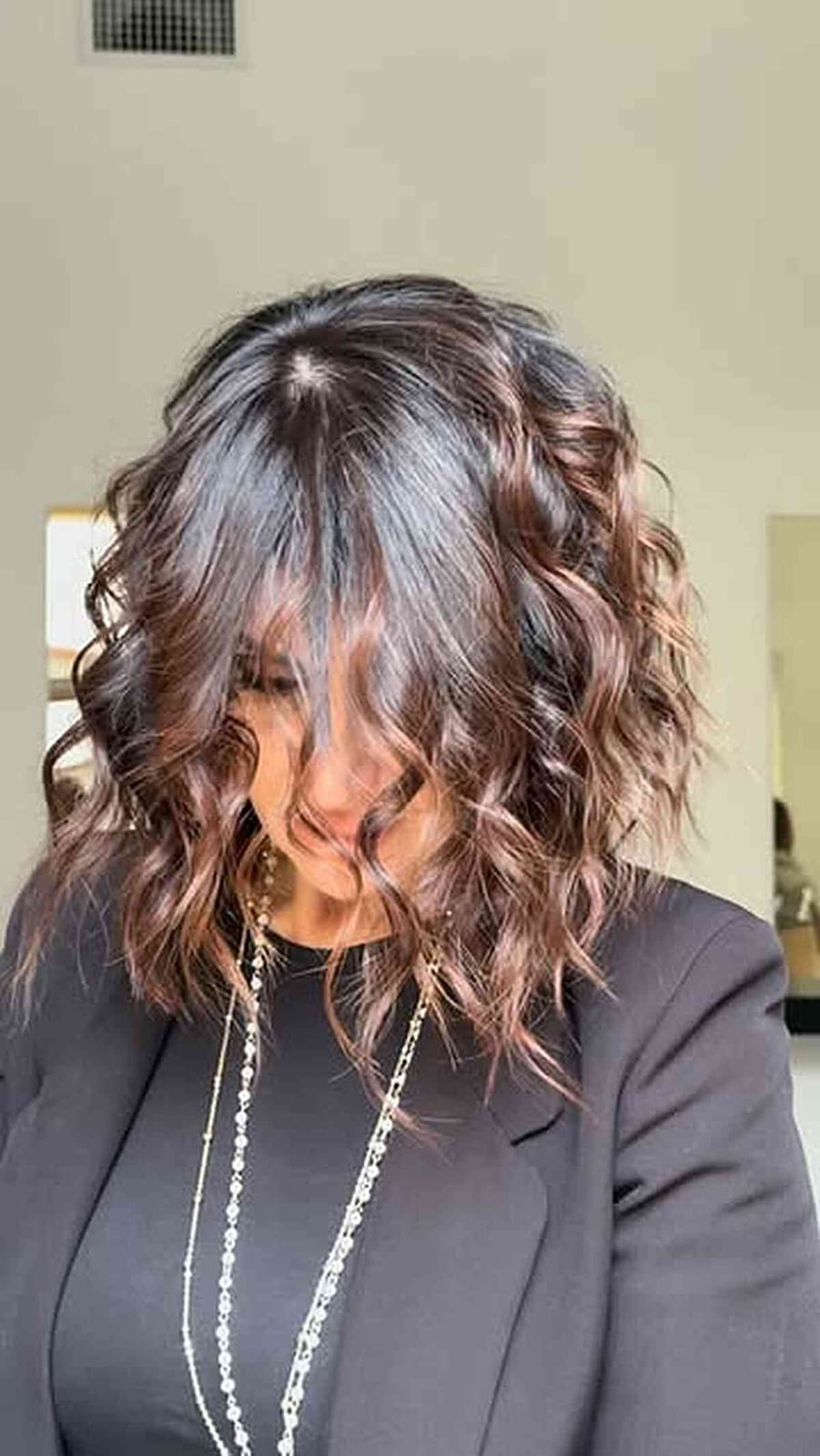
The blunt line at the collarbone looks precise, but there is a catch: any split or unevenness shows immediately. Medium brown hair with caramel highlights needs that clean baseline to read as polished rather than grown out. Straight medium density hair holds the tucked-under ends best. Ask your stylist for: collarbone blunt cut, medium brown with caramel highlights. A flat iron and a heat protectant give the required sleek finish. Trim the blunt baseline every six to eight weeks, skipping a trim turns a deliberate line into a frayed one.
Collarbone Bob With Warm Blonde Balayage And Face-Framing Highlights
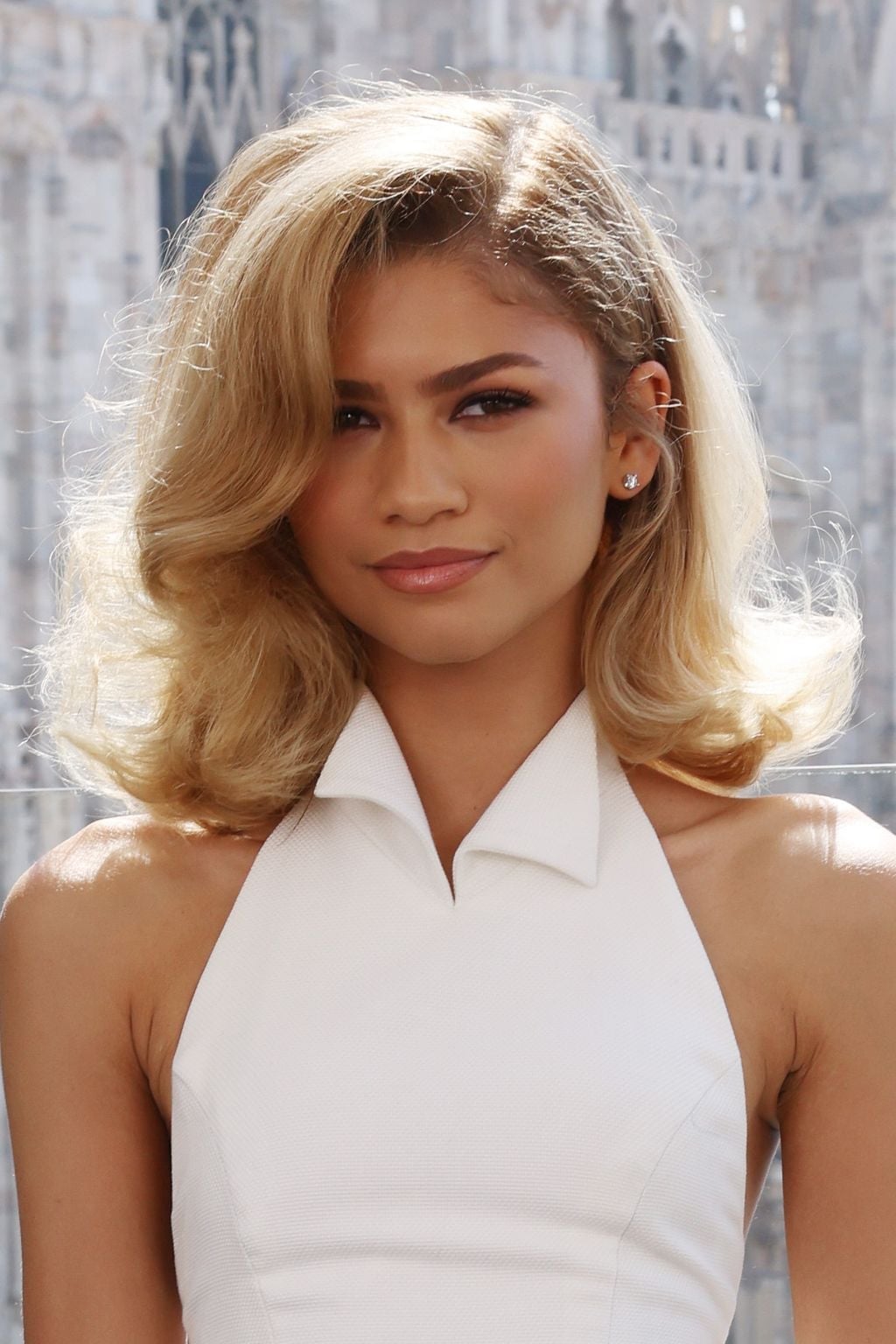
The side part is the quiet hero here, letting the face-framing highlights do their job without competing with a center line. On a collarbone bob with straight, fine texture, the warm blonde balayage concentrates its brightness around the face, which draws the eye upward and adds the illusion of density where fine hair often needs it.
This cut suits fine straight hair that starts at the collarbone, since the blunt-ish shape keeps ends looking full. Ask your stylist for a collarbone bob, side part, warm blonde balayage with face-framing highlights. Style it with a round brush for a smooth blowout, and refresh the face-framing pieces with a gloss every four to six weeks to keep them from going brassy.
Back View Of A Lob With Blonde Balayage Gradient
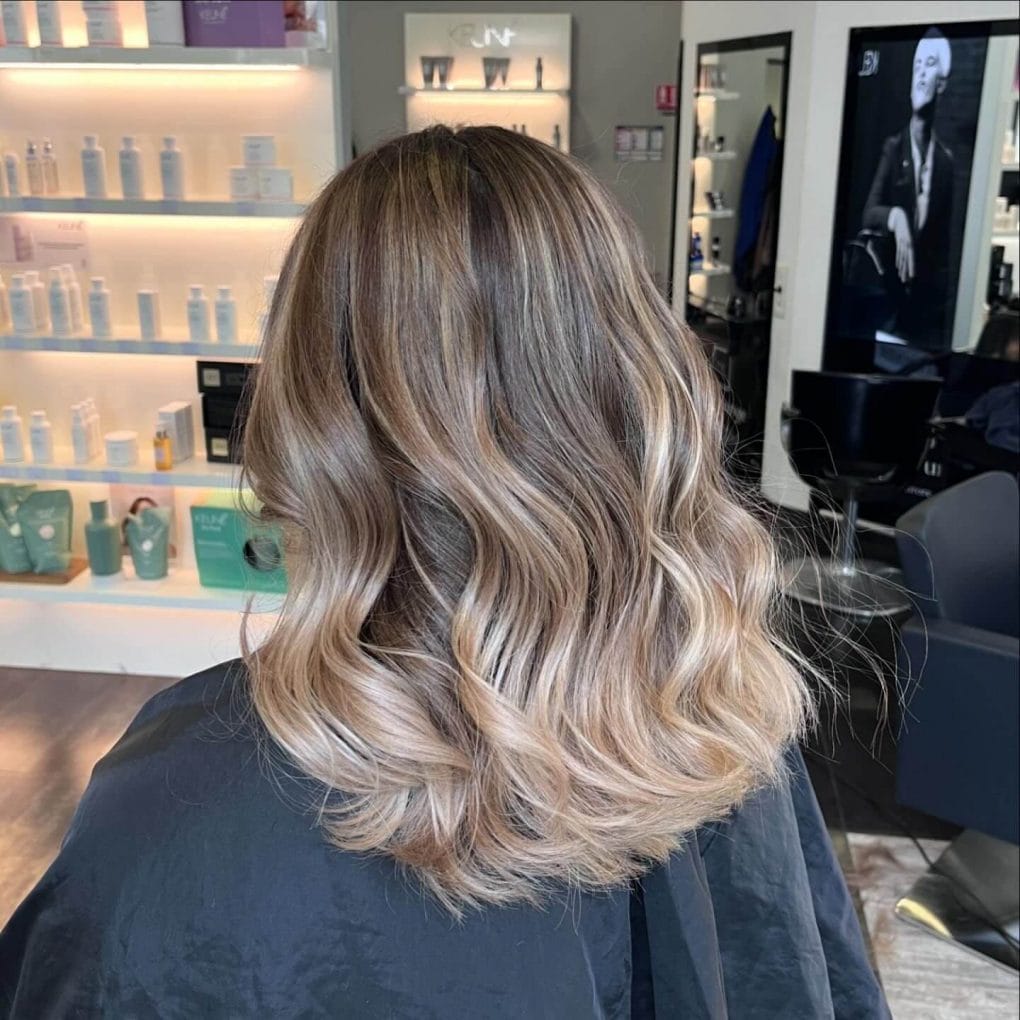
From the back, the balayage gradient on this dark brown lob reads as a smooth fade from root to tip, with the blonde concentrated at the ends and soft waves showing off the transition. The middle part keeps the distribution even, so the color builds gradually rather than in chunks. This technique suits medium density wavy hair of collarbone length, where the movement helps blend the darker base into the lighter tips. Ask your colorist for a collarbone lob, dark brown with a blonde balayage gradient. A texturizing spray enhances the waves, and the baseline needs a trim every eight to ten weeks to keep the ends from looking see-through.
Back View Bob With Subtle Caramel Balayage
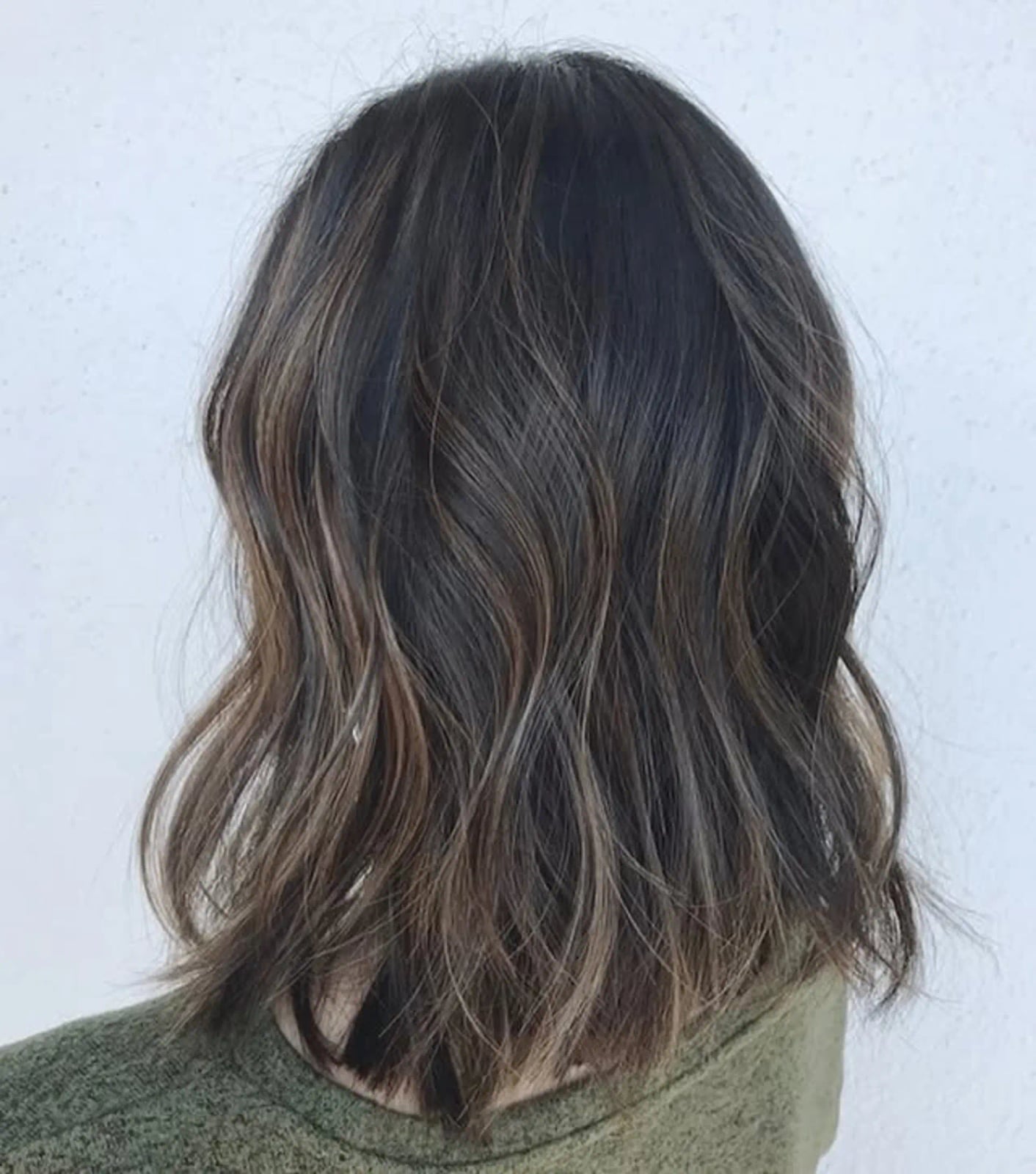
A middle parting splits this collarbone bob evenly, and the subtle caramel balayage on a dark brown base shows up as a gentle lift toward the ends. The loose waves give the color somewhere to land, so the transition stays blended from every angle. This bob wears well day to day because the subtle caramel grows out softly, meaning the roots don’t announce themselves for weeks. Ask your colorist for a collarbone bob, dark brown with subtle caramel balayage. The waves stay soft with styling products, and the baseline needs a trim every six to eight weeks to hold the shape.
Chin Length Bob With Side-Swept Bangs And Ash Blonde Balayage
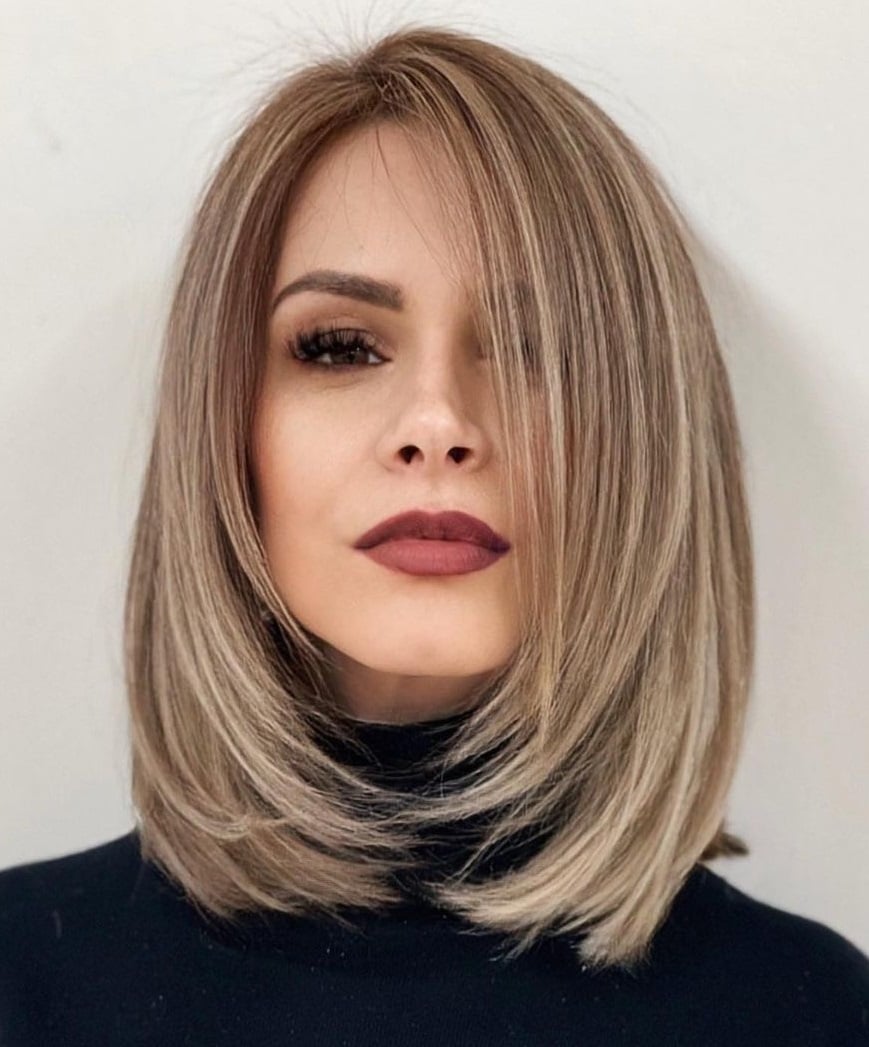
Wondering how to ask for that chin-length bob with side-swept bangs without ending up with something too harsh? Start with the shape: a chin-length bob, side-swept bangs, and ash blonde balayage with lighter blonde highlights. The side-swept bangs soften angular faces, and the fine, straight texture here takes well to a smooth blowout. Ask your stylist for a chin length bob, side-swept bangs, ash blonde balayage. Use a small round brush to shape the bangs, and plan a trim every six to eight weeks to keep the bob from drifting past the chin.
Layered Shoulder Length With Golden Highlights
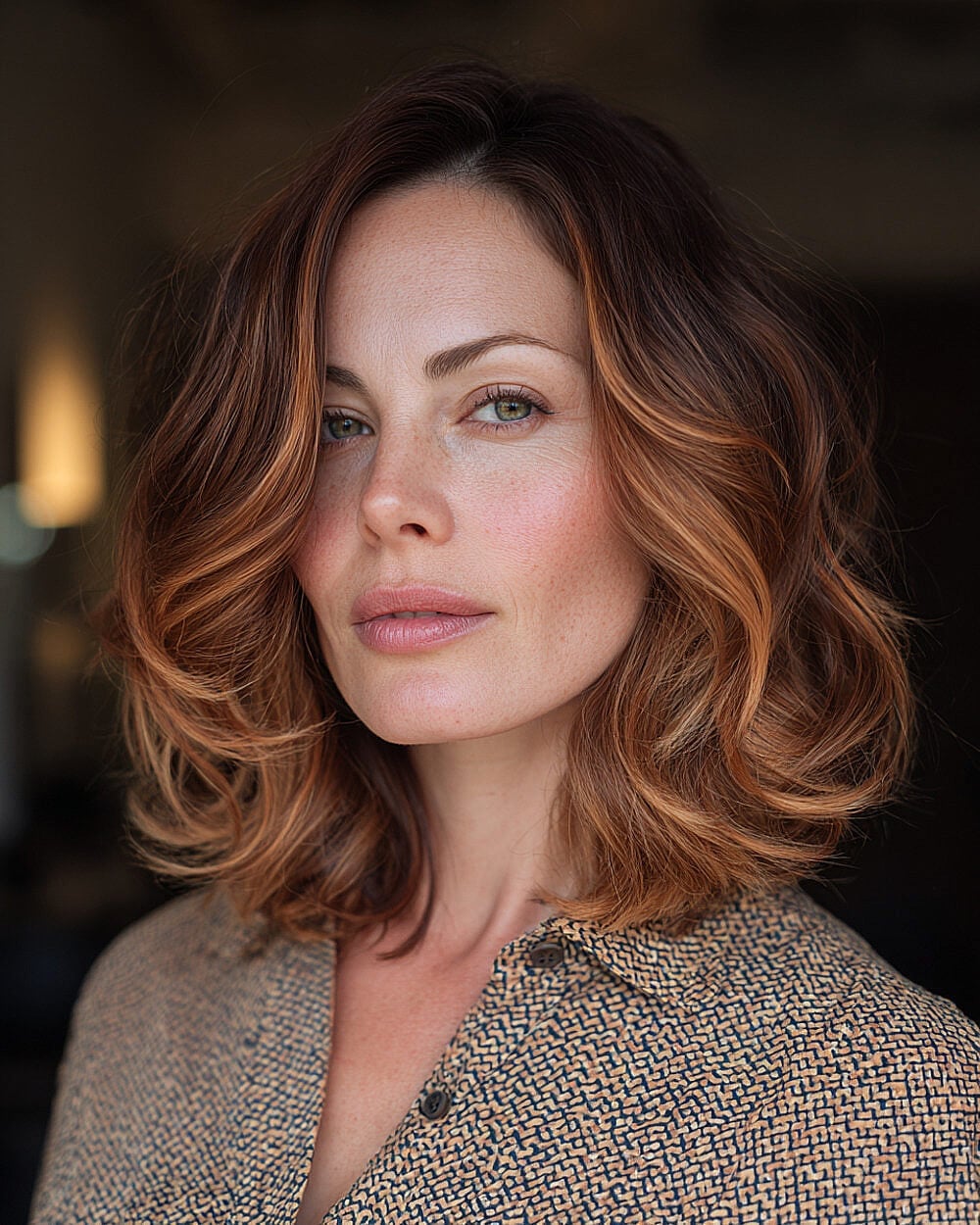
The layers here cut weight from medium density wavy hair so the loose waves have room to move instead of sitting flat. On a shoulder-length cut with a brown base, the golden highlights add warm dimension, and the side part lets them fall forward naturally. This design suits wavy hair of medium density, where the layers add movement without sacrificing length. Ask your colorist for medium length layered hair, brown with golden highlights. A curl cream helps define the waves, and a trim every eight to ten weeks keeps the layers from growing out of shape.
Dark Blonde Lob With Golden Balayage And Layers
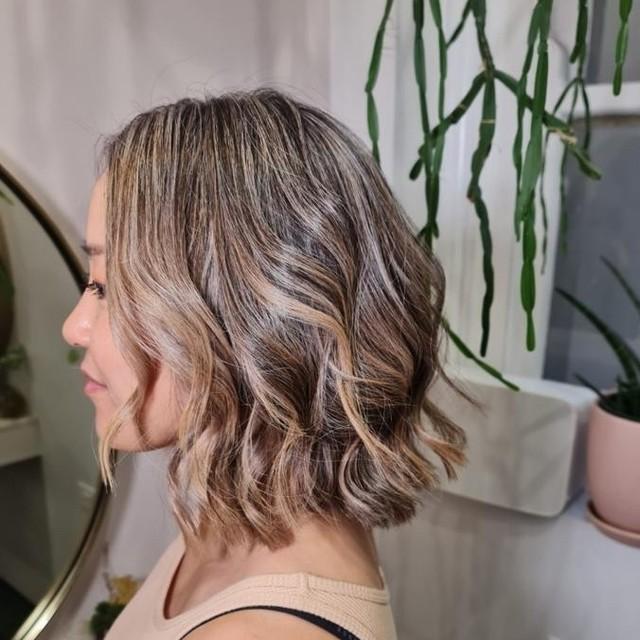
Is there a way to add warmth without looking like you tried too hard? A dark blonde lob with golden balayage and layers adds warmth and movement. The collarbone length suits medium density wavy hair best, since the layers build shape without sacrificing weight. Ask your stylist for: collarbone lob, dark blonde with golden balayage, layers. The golden pieces add brightness without competing with the base, so the grow out looks natural. A texturizing spray finishes the waves and keeps the shape from falling flat by midday.
Bronde Balayage Lob With Curtain Bangs And Textured Waves
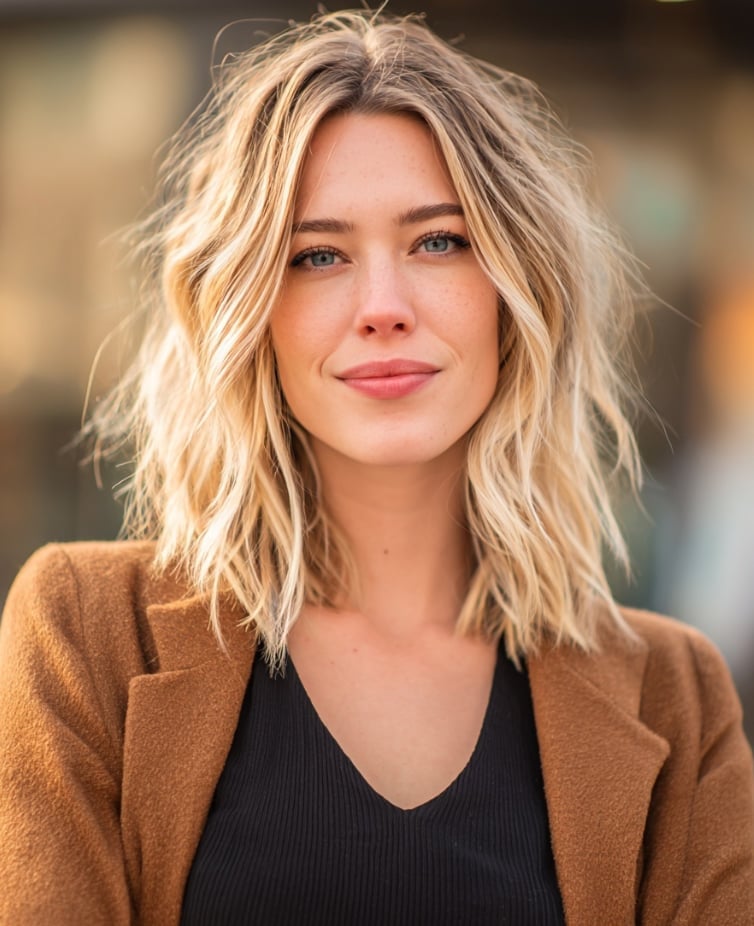
The clever thing about a bronde balayage lob with curtain bangs is that it looks styled even when it is not. Textured waves do the work, while the curtain bangs frame the face without demanding a round brush every morning. Medium density wavy hair at collarbone length is the sweet spot, because the waves hold the shape and the bangs blend into the layers naturally.
Ask your stylist for: collarbone lob, curtain bangs, bronde balayage. Air drying with a sea salt spray gives the texture its lived-in finish, and the bangs need a trim every four to six weeks to stay out of your eyes. The balayage grows out softly, so toning appointments land around every eight weeks.
Layered Hair With Honey Highlights And Face-Framing Bangs
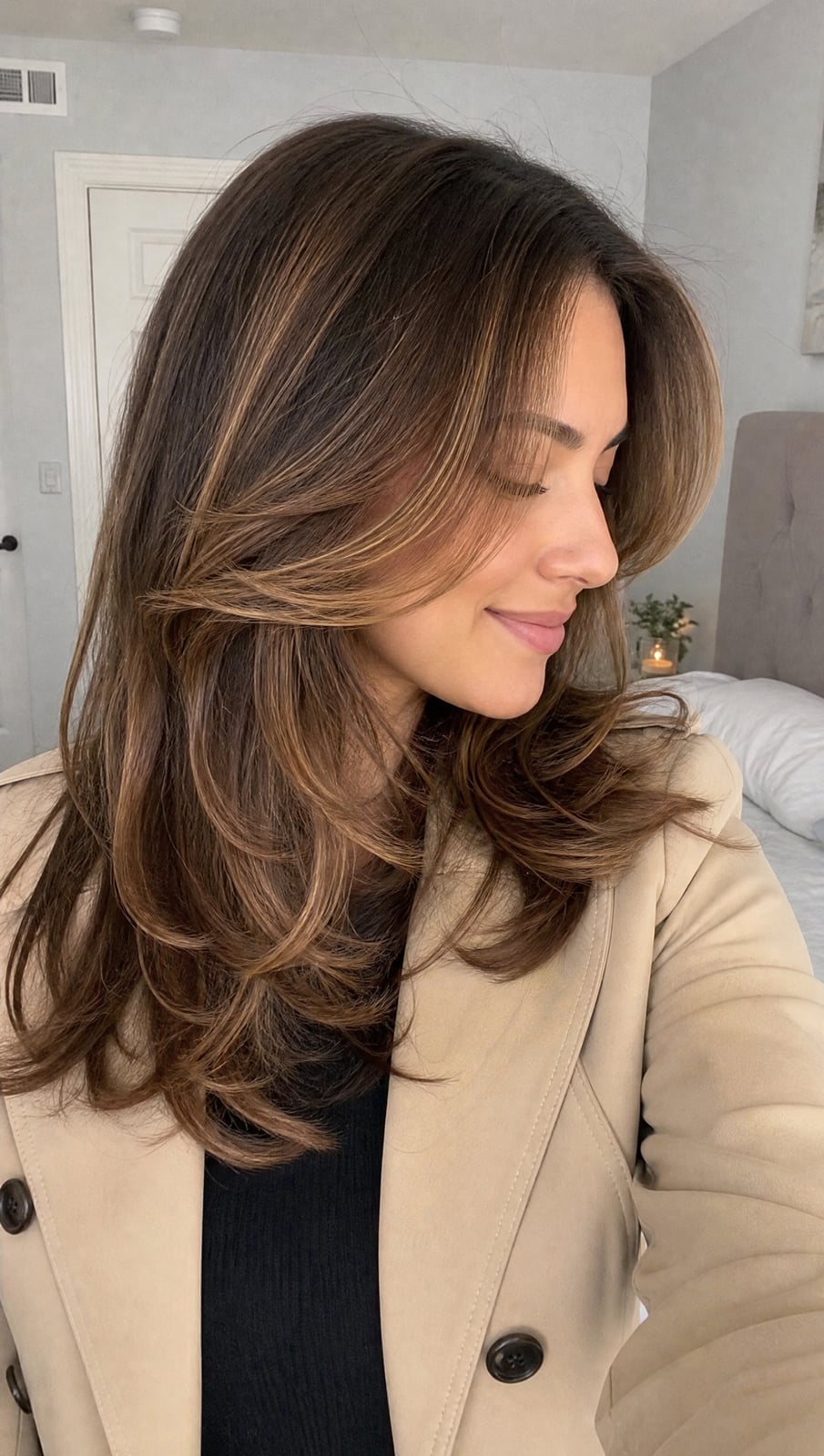
The blowout here pushes volume at the roots and lets the honey highlights shine through the layers. The side parting and face-framing bangs add softness around the jaw without a full fringe. Medium density straight hair at collarbone length holds the shape well, and the curtain bangs blend into the layers for a seamless finish. Ask your stylist for: medium length layers, face-framing bangs, dark brown with honey highlights. To get close at home, use a volumizing spray at the roots while blow-drying, then wrap the bangs around a round brush briefly. The salon cut is the key, though, so skip the DIY scissors.
Textured Dark Brown Lob With Ash Blonde Balayage
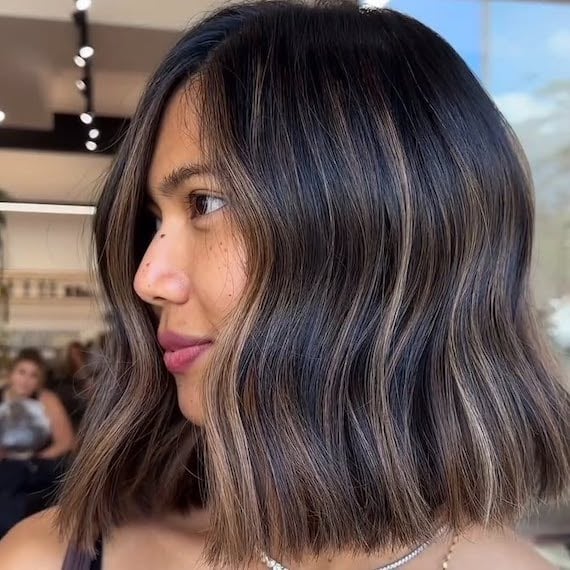
A textured dark brown lob with ash blonde balayage is a high-contrast design that demands a certain level of commitment. The side parting and loose waves show off the fine strands of ash blonde against the dark base, but the payoff is the upkeep. Ash tones fade faster than warm ones, and the contrast means regrowth shows sooner rather than later. Medium density wavy hair at collarbone length handles the texture well, but anyone who avoids regular toning appointments should pass. Ask your stylist for: collarbone lob, dark brown with ash blonde balayage, textured waves. A texturizing paste on dry hair adds definition, but the honest trade-off is a salon visit every six to eight weeks to keep the ash from turning muddy.
Dark Brown Lob With Caramel Balayage And Loose Waves
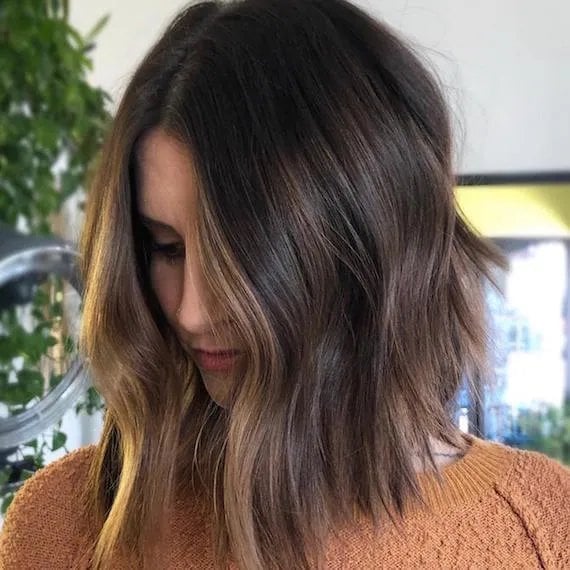
Why does a dark brown lob with caramel balayage look so natural? The trick is the placement. The caramel is concentrated toward the ends with a middle parting, so the dark roots stay rich while the lighter pieces create a soft transition. Medium density wavy hair at collarbone length gives the loose waves enough weight to hold the shape without looking piecey.
Ask your stylist for: collarbone lob, dark brown with caramel balayage towards the ends. The contrast between dark roots and lighter ends gives a deliberate finish, and the grow-out is forgiving enough that a trim every eight to ten weeks keeps the baseline clean. A wave-defining cream on damp hair is all it takes to recreate the texture at home.
Brunette Lob With Subtle Balayage Highlights
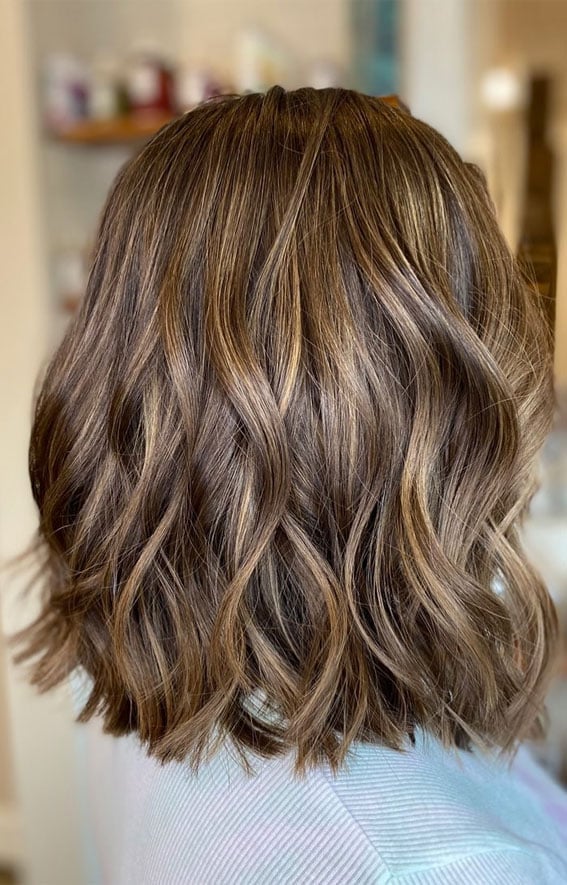
The design here uses fine babylights, so the brunette base stays dominant and the balayage appears as a soft sheen, not a separate layer. It suits medium-density wavy hair at collarbone length, where the subtle lift can catch the wave bends without creating a stripe. Ask your colorist for: collarbone lob, brunette with subtle balayage. Loose waves let the dimensional effect show from multiple angles, which is the point of keeping the contrast low. No bangs means the color work stays uninterrupted from root to tip, a solid choice for anyone who wants a natural enhancement.
Mid-Back Length With Copper and Blonde Balayage
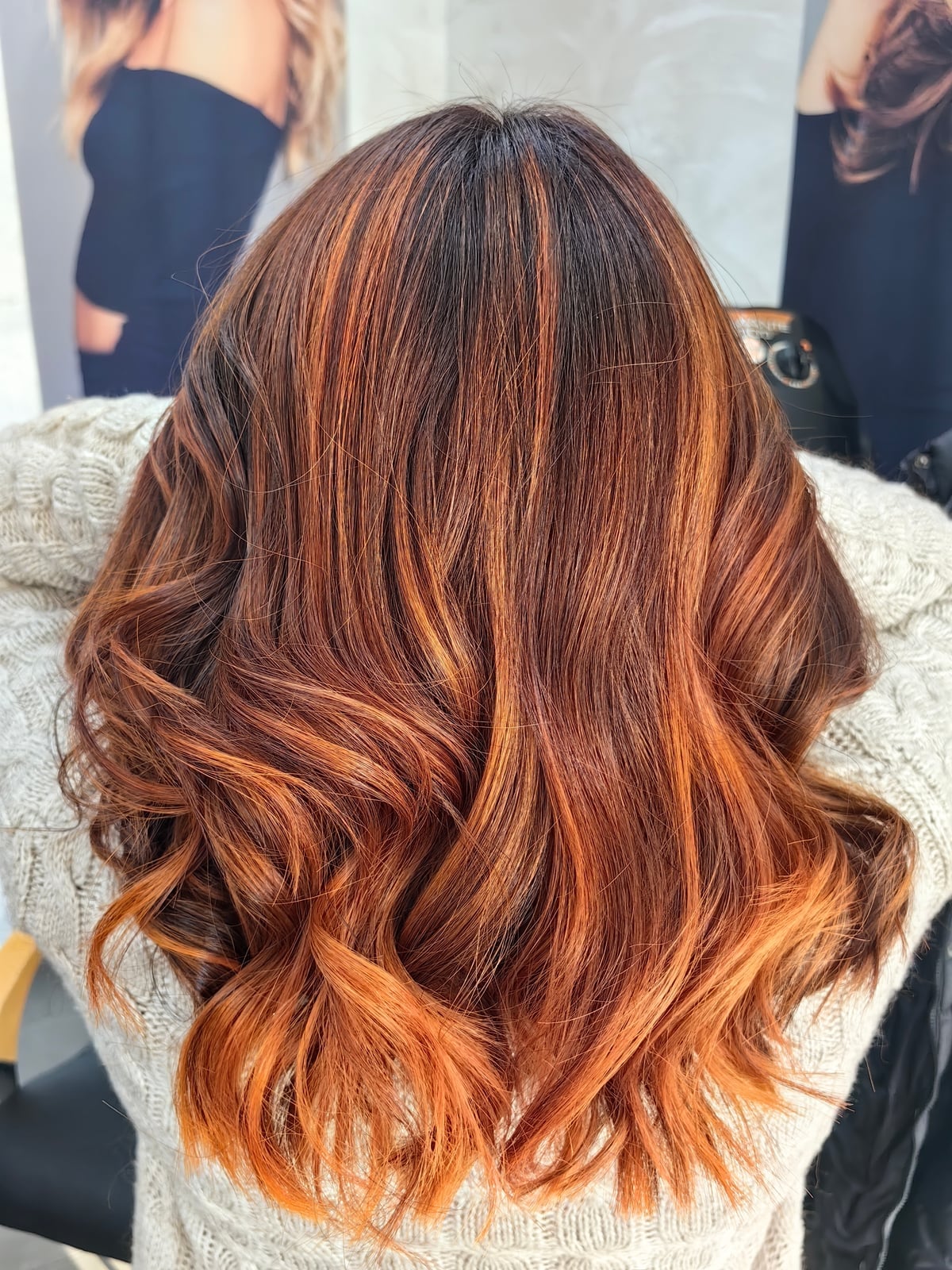
The color transition here goes from a warm brunette root into a copper mid-length that shifts to a lighter blonde at the ends, creating a gradient that looks natural rather than painted on. Thick wavy hair at mid-back length gives the long layers enough weight to hold a defined wave pattern without going flat. Ask your colorist for: mid-back length with long layers, copper and blonde balayage.
This is a statement color placement for festival season or a fall occasion, where the copper picks up warm light and the blonde keeps it from going too dark. The back view emphasizes the even distribution of the blend from crown to ends. No bangs keeps the focus on the color blend itself, which is the reason for choosing this length.
Final Thoughts
When you are choosing between these ideas, let your hair texture and your maintenance tolerance decide. Fine hair takes finely woven balayage that blends without obvious bands; thicker hair can carry bolder ribbons of color. If you want the longest time between salon visits, skip heavy face-framing highlights and keep the color all-over and soft.
- Trim split ends every 8-10 weeks to maintain the shape.
- Use a color-safe shampoo and conditioner to preserve vibrancy.
- Deep condition weekly to combat dryness.
- Limit heat styling to prevent fading and damage.
Balayage on medium hair offers endless possibilities for personalized color.