
Curly bangs are having a moment, and not the kind you have to fight into submission. The latest cuts lean into soft face-framing layers and curtain bangs that move with your natural texture, not against it.
This collection of Bangs for Curly Hair brings you 33 ways to wear the trend, from low-maintenance wispy fringes to bold full bangs that make a statement. Whether your curls are fine or thick, loose or tight, there’s a style here that solves the perennial problem: a fringe that actually sits right and looks like you meant it.
Thick Curly Chin Length Bob With Full Bangs
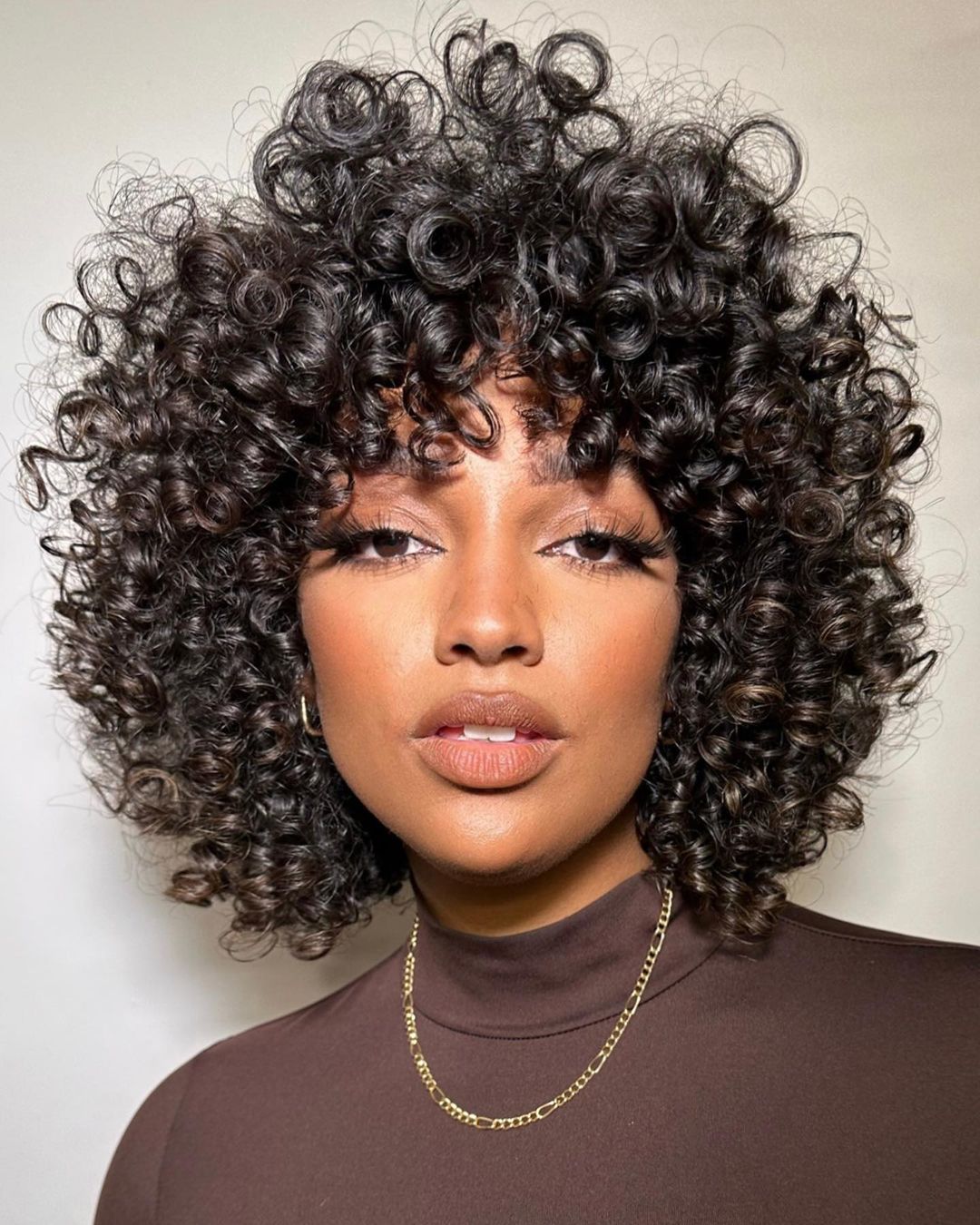
This bob works best on thick curly hair that already has the volume to hold a chin-length line without falling flat. The full bangs hit just above the brows, so they need enough density to stay curved rather than separate into wisps. Ask your stylist for: chin length bob with full curly bangs. The defined curls and dark brown base give the cut a glossy finish that needs little coaxing. A middle parting keeps the shape symmetrical, and air drying is the most reliable way to preserve the curl pattern. A bob this precise needs a trim every six to eight weeks, or the silhouette starts to look more rounded than intended.
Voluminous Blonde Short Shag With Curly Bangs
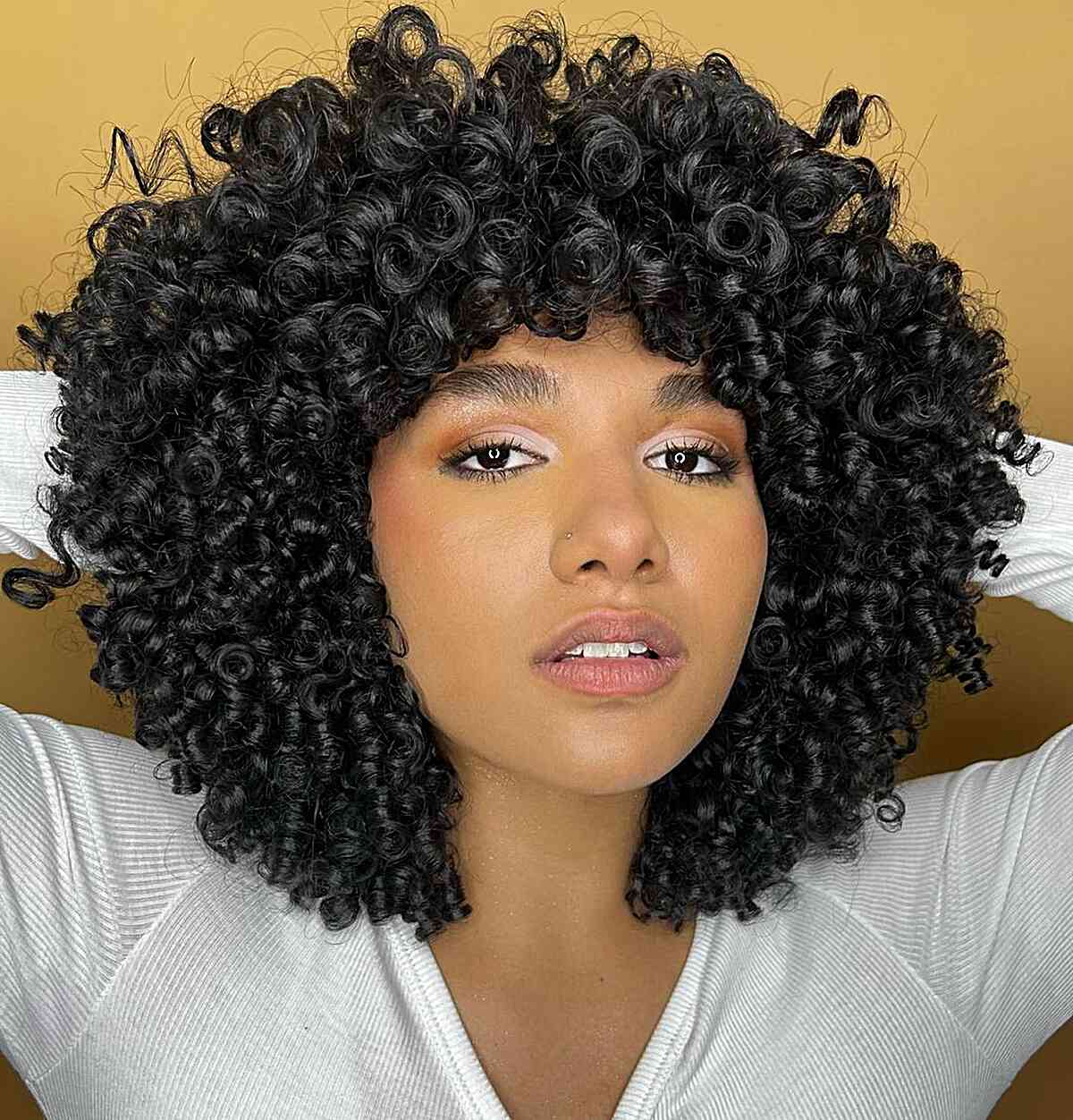
The shag cut is built around internal layers that remove weight from the interior, so the curls spring up rather than hang down. On a short shag at ear length, those layers create a rounded silhouette that works with the natural texture instead of fighting it. The curly bangs are cut shorter than the rest so they frame the face without blending into the side lengths. Ask your stylist for: short shag with voluminous curly bangs. The blonde base catches light differently on each curl, which adds dimension without needing toner. A sea salt spray helps the texture read as separate curls rather than one dense block.
Collarbone Shag With Full Curly Bangs

How do you explain to a stylist that you want full curly bangs without ending up with something that looks chopped off? Start with the length. The bangs need to hit below the brows when dry, because curly hair shrinks up by at least half an inch once it settles. Ask your stylist for: collarbone shag with full curly bangs. The shag layers throughout the rest of the hair keep the shape from getting too heavy at the bottom, which is the main risk with thick dark brown curls at this length. A middle part lets the bangs fall evenly, and the natural air-dried finish preserves the curl pattern without heat. The key details to mention: the bangs should be cut dry, and the layers should start at the jaw.
Fine Curly Pixie With Textured Bangs

A pixie cut on fine curly hair is a shorter maintenance cycle than most people expect, not a lower one. The side view shows the shape best: the textured bangs sweep across the forehead while the back stays close to the nape, creating contrast that gives fine hair the illusion of density. Ask your stylist for: short curly pixie with textured bangs. The drawback is that fine curls lose definition faster than thick ones, so the cut needs a trim every four to six weeks to keep the bangs from looking wispy. A small amount of pomade on the ends helps the texture read as deliberate rather than unruly.
Black Chin Length Bob With Defined Curly Bangs
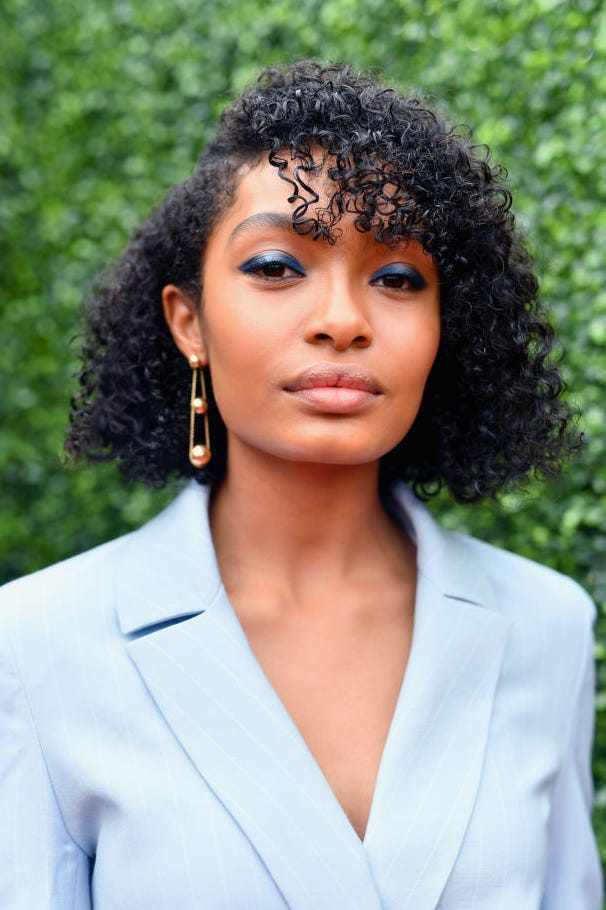
The definition is the point: each curl holds its shape clearly, which gives the cut a polished feel compared to a looser curl pattern. The black base makes the curl formation more visible because there is no color variation to distract the eye. Ask your stylist for: chin length bob with defined curly bangs. The middle parting and front framing mean the bangs are the focal point, so they need to be cut with precision. A curl enhancer on damp hair sets the definition before air drying, and the bob holds its line for about six to eight weeks before the ends start to feel uneven.
Short Shag Dark Brown With Defined Curls
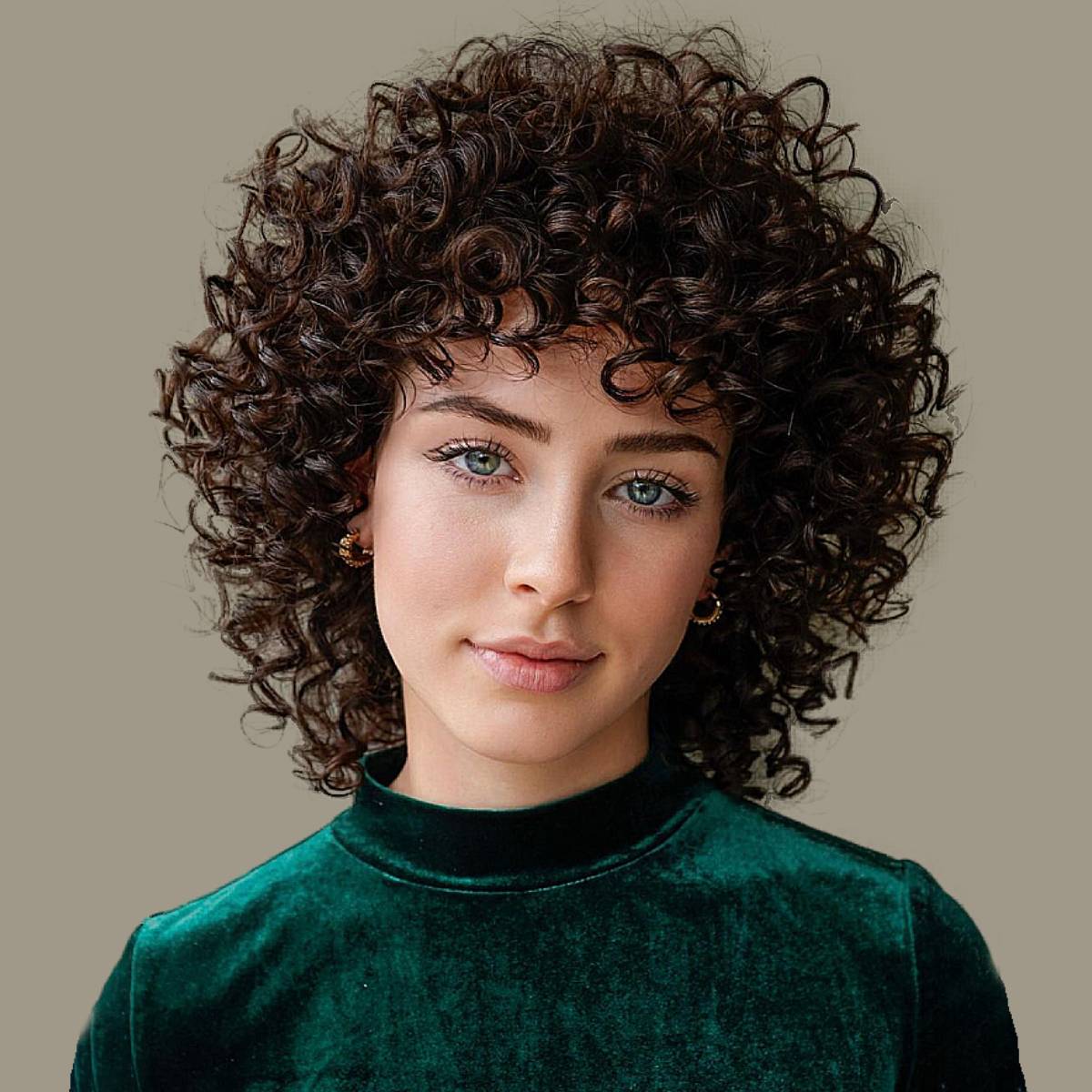
The geometry of a short shag works overtime on dense curls: each layer lifts the next, so the shape holds without a diffuser. Ask your stylist for: short shag with defined curly bangs. Thick, ear-length curly hair benefits most from the cut, since the internal layers prevent the bulk from turning into a triangle. A curl cream scrunched into damp hair is enough to keep the definition intact, and the bangs stay out of your eyes about as long as you let them. Plan on a trim every six weeks to keep the shag’s silhouette sharp and the bangs from drooping into your peripheral vision.
Thick Black Curly Hair With Collarbone Layers
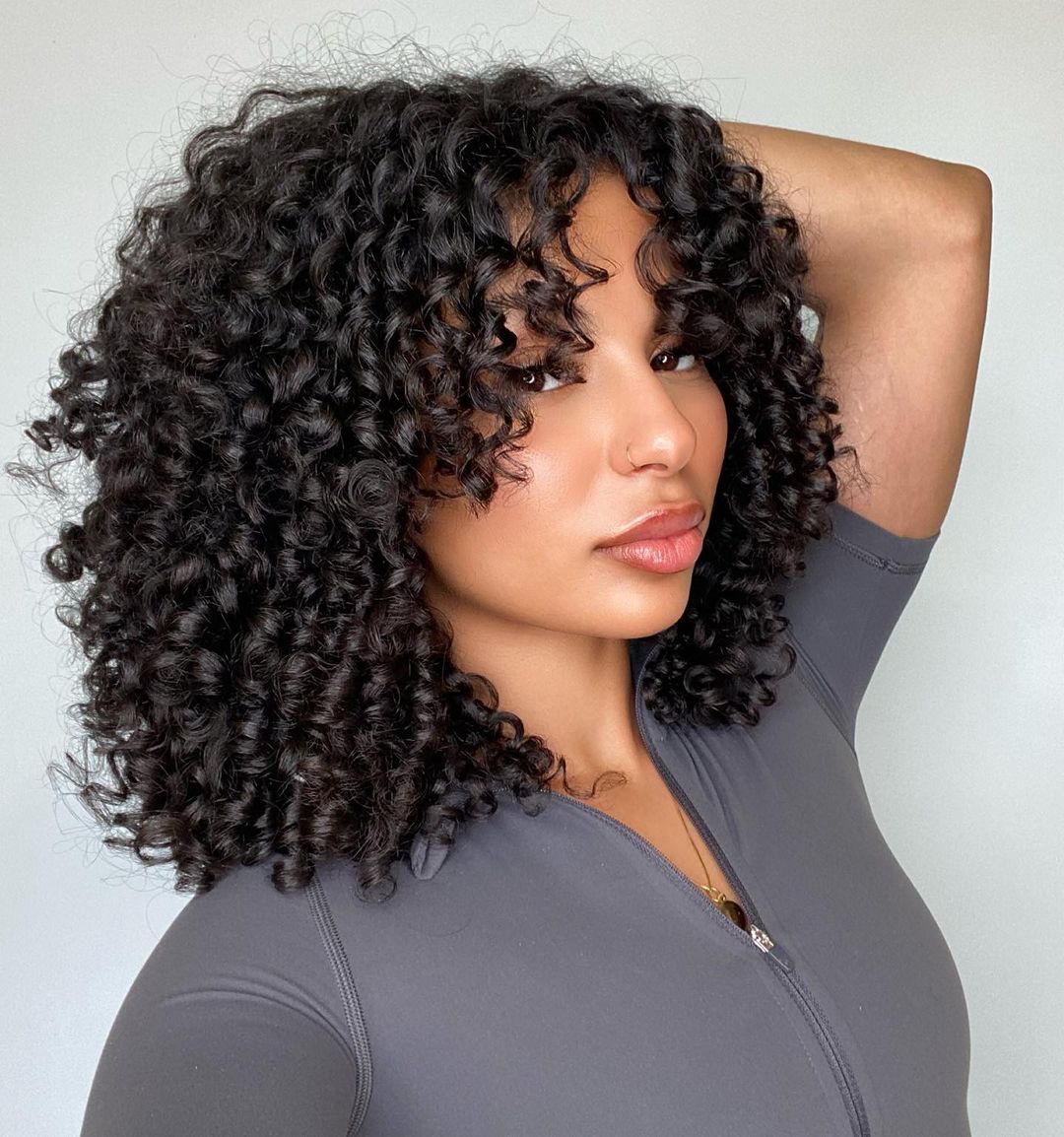
A collarbone-length cut on thick, black curly hair needs internal layering to distribute volume, not remove it. The technique here uses longer layers through the sides and shorter ones at the crown, so the mass of the hair sits evenly instead of pooling at the ends. Ask your stylist for: collarbone length layered cut with curly bangs. The bangs are cut while dry and curly, which means they land at the right spot once the coil springs back. Subtle lighter tones add depth between the curls without color contrast. The middle part lets the layers fall symmetrically, which prevents one side from curling tighter than the other.
A round brush is not required here. The curls do the shaping on their own, provided the layers are graduated correctly. A leave-in conditioner applied to wet hair will encourage the curl pattern to form evenly from root to tip. The collarbone length keeps the hair from weighing itself down, so the volume stays high without a lift product. Trimming the layers every eight weeks maintains the shape without sacrificing the density that makes this texture work.
Collarbone Dark Brown Curly Hair With Soft Curtain Bangs
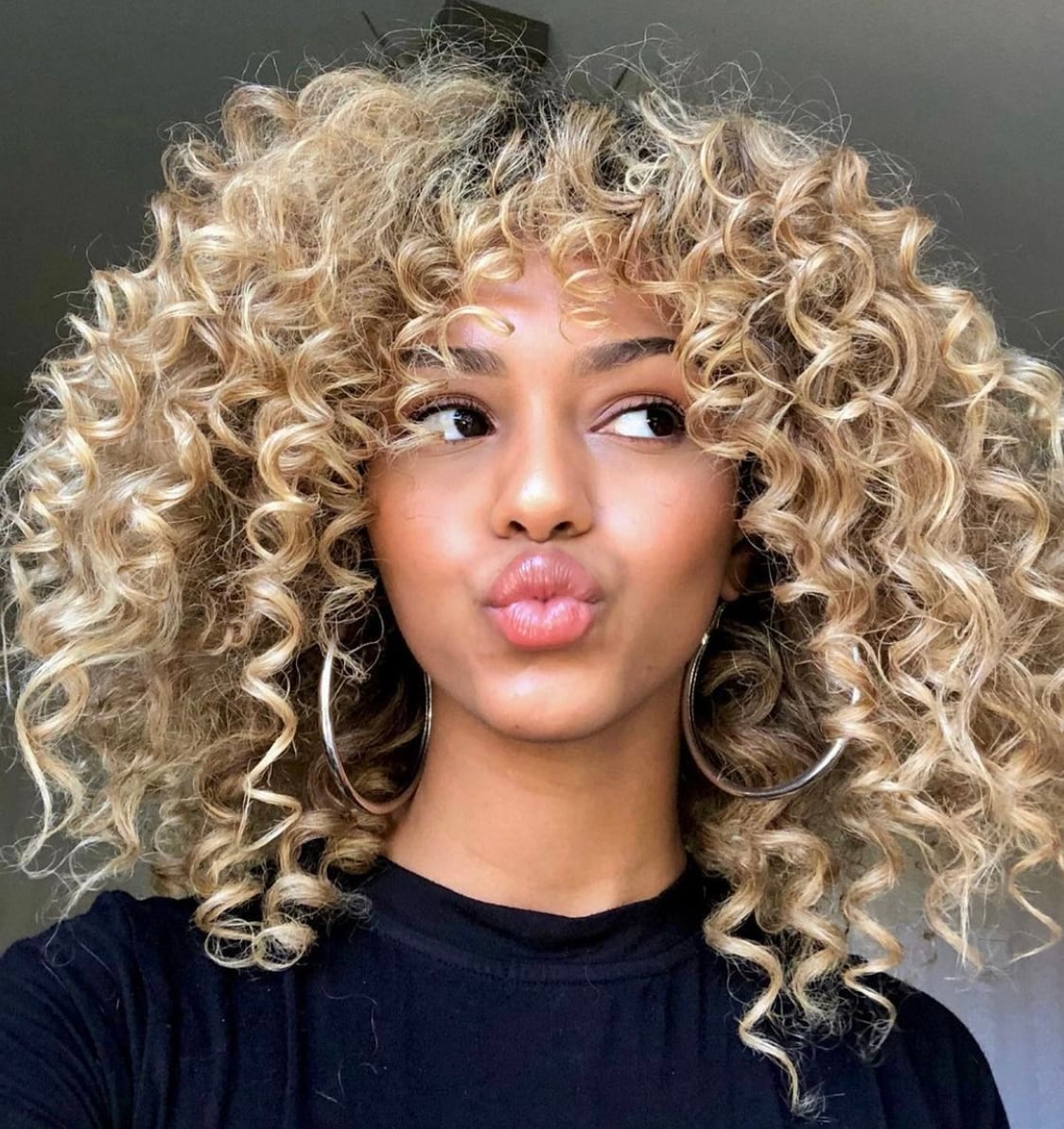
Can thick, curly hair do curtain bangs without looking like a helmet? It can, if the cut is built on layers and the bangs are cut dry. The curtain bangs here are soft, meaning they feather away from the center rather than landing as a solid block, so they frame the face without covering it. Ask your stylist for: collarbone length curly cut with soft curtain bangs. This style works well for thick curl patterns because the layers remove weight from the sides, allowing the bangs to blend naturally into the rest of the hair rather than sitting as a separate piece.
The middle part is not negotiable for this shape: it lets the curtain bangs fall evenly on both sides and keeps the volume distributed. A square or heart-shaped face benefits from the soft width the bangs create around the temples, while a long face gains the horizontal line that breaks up vertical length. The collarbone endpoint hits at a point where the curls have enough weight to drape rather than bounce upward. A diffuser on low heat will set the curtain shape without flattening the root volume.
Collarbone Curly Hair With Wispy Curtain Bangs
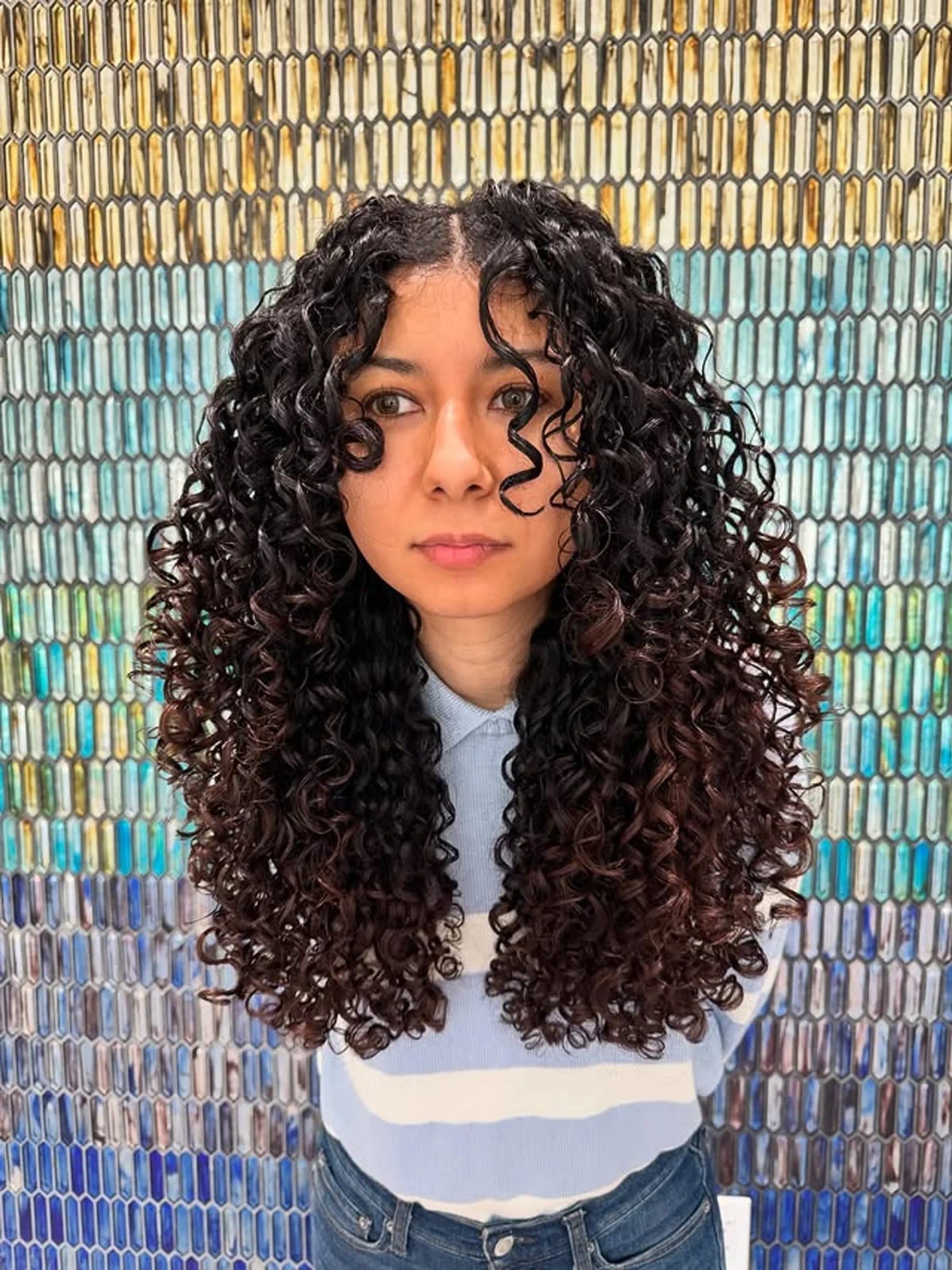
Wispy curtain bangs on curly hair are a precision gamble: too thick and they become a solid fringe, too thin and they disappear into the rest of the curl. The ringlets here are defined, which means the bangs were cut while dry and curl by curl, not as one blunt line. Ask your stylist for: collarbone length layered curly cut with wispy curtain bangs. The subtle red undertones in the dark brown base add warmth without a full color change. This is a salon-only project. A stylist needs to see the curl pattern spring back before deciding where each piece of the bang lands. The layers throughout the collarbone length prevent the wispy sections from looking sparse.
Collarbone Shag With Short Choppy Bangs

Short, choppy bangs on a collarbone shag are a counterintuitive pair: the bangs stop above the eyebrows while the hair reaches the collarbone, creating a disconnect that only works if the layers in between bridge the gap. The shag’s internal graduation does exactly that, tapering from short at the crown to longer at the ends so the chop feels intentional. Ask your stylist for: collarbone shag with short choppy curly bangs. Thick curly hair at collarbone length has enough weight to keep the shag’s shape from collapsing into a bob, and the short bangs add an edge that a softer fringe would not provide.
The wear reality of this cut is that the bangs need attention. They will curl up shorter than they were cut, so a trim every four weeks is necessary to keep them from becoming a micro-fringe. The shag itself can go about ten weeks between trims, since the layered grow-out is part of the look. A matte paste worked through dry hair will separate the choppy pieces and reduce the puffiness that air-dried curls sometimes develop at the ends.
Chin Length Layered Bob With Caramel Highlights
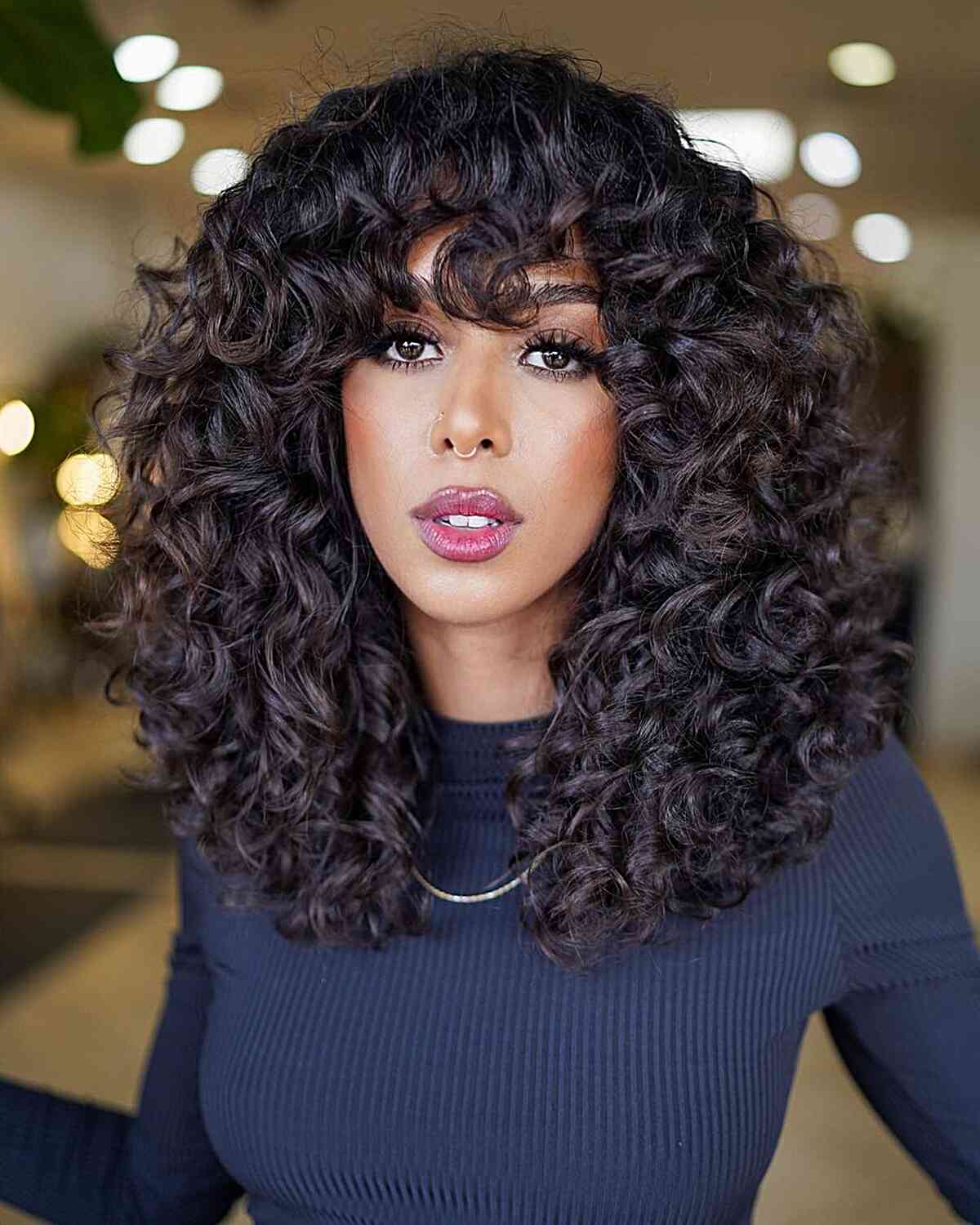
The chin length layered bob with caramel highlights sits between a blunt bob and a curly shag, and the difference matters. On thick, dark brown curls, full bangs need to be cut a little longer than you think, because curly hair springs up as it dries, and what looked chin grazing in the chair can end up above your eyebrows by morning. Ask your stylist for: chin length layered bob with full curly bangs and caramel highlights. The caramel pieces break up the dark base, and the defined curls give the bob its shape. A middle parting frames a round face by drawing the eye downward. Trim every six to eight weeks to keep the bangs from losing their shape.
Shoulder Length Shag With Choppy Bangs

The shoulder length shag with choppy bangs is designed to look like you woke up and ran a hand through it, but that tousled finish takes daily effort. Medium density curls hold the choppy layers well, and the subtle highlights add depth without overpowering the cut. Ask your stylist for: shoulder length shag with choppy bangs. The bangs blend into the textured layers, so the whole cut moves as one piece. The drawback: on days you skip styling, it looks less lived-in and more just unkempt. A texturizing spray on the ends helps, and a trim every six to eight weeks keeps the choppy edges from growing out into a shapeless mop.
Shoulder Length Shag With Voluminous Curtain Bangs
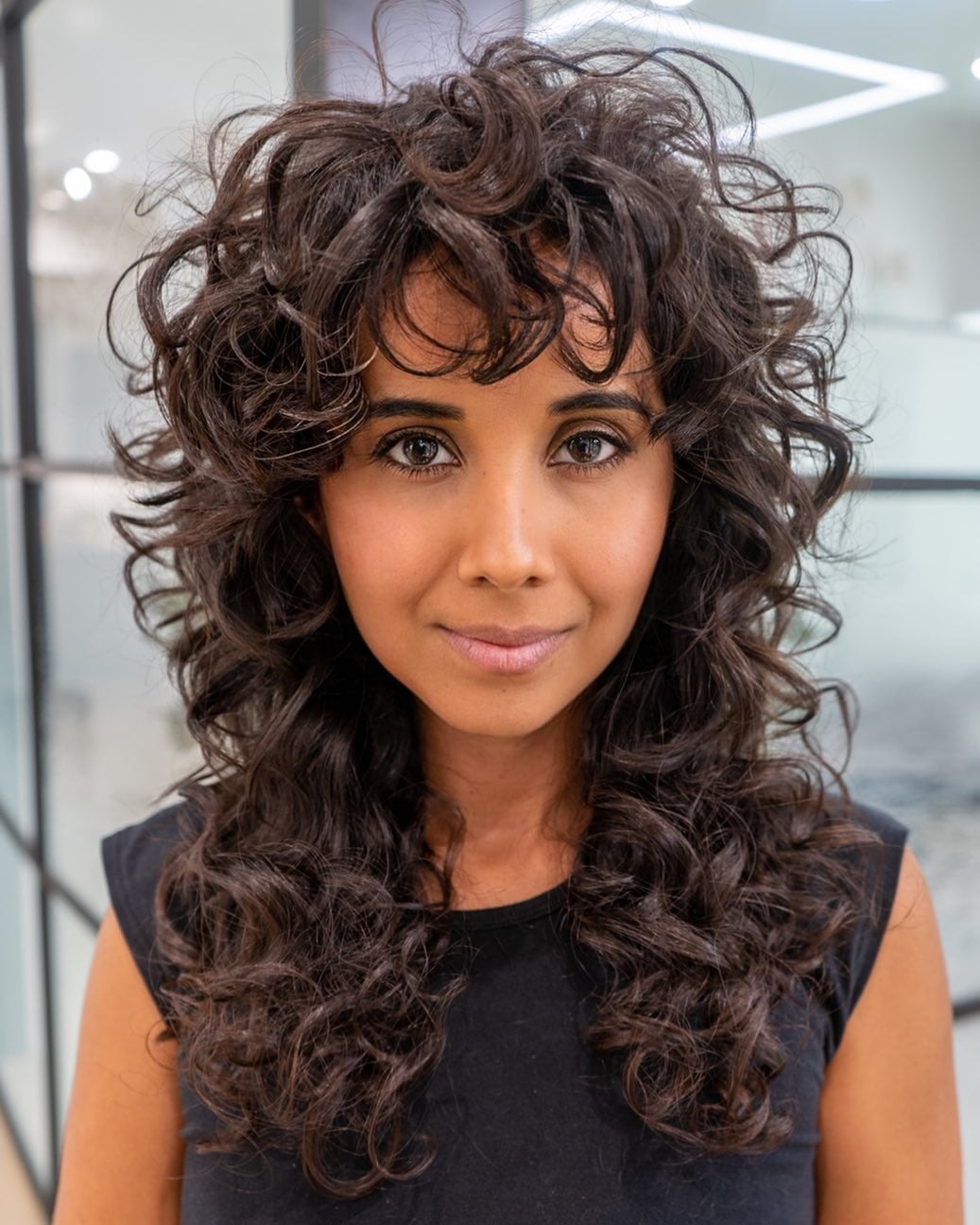
This is the curly shag for people who want volume without the commitment of a full fringe. The shoulder length cut with thick, air dried curls gives the voluminous curtain bangs something to anchor to, and they soften a long face by adding width at the cheeks.
Ask your stylist for: shoulder length shag with voluminous curtain bangs. The bangs are cut to sweep to the sides, so they frame rather than cover, which suits thicker textures that would otherwise turn a full fringe into a solid curtain of frizz. A diffuser on the bangs encourages the curl to form instead of falling flat. Trim every six to eight weeks, and expect the bangs to need a little extra attention in humid weather.
Collarbone Reddish-Brown Curly Hair With Defined Bangs
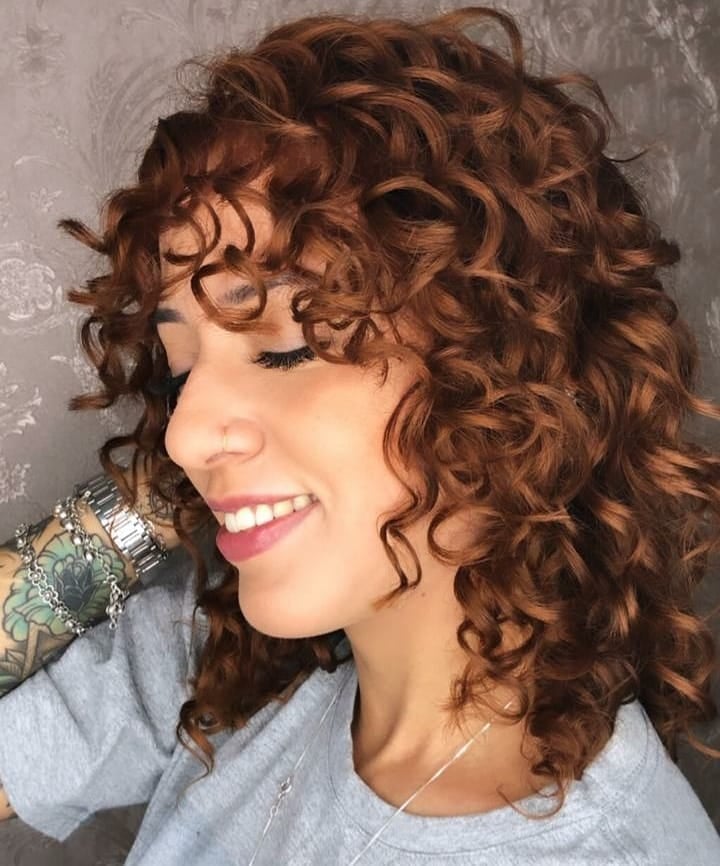
Wondering if a vibrant reddish-brown is too much for everyday? This collarbone length cut proves it works, especially when the defined curly bangs are cut to follow the same shape as the hair. The layered sides give the medium density curls room to move, and the glossy finish makes the color look deliberate.
Ask your colorist for: collarbone length layered cut with full curly bangs in reddish-brown. The side parting adds a little asymmetry, which suits most face shapes. This cut works for autumn gatherings, where the warm tone picks up light. A color-depositing conditioner keeps the reddish-brown from fading to copper, and a trim every eight weeks maintains the shape.
Fiery Red Shag With Collarbone Curly Bangs

The fiery red shag is the louder cousin of the reddish-brown layered cut, and the difference is in the commitment. Thick, curly hair at collarbone length carries the vibrant color well, and the curly bangs fall around the face with a middle parting that keeps the look balanced rather than overwhelming.
Ask your colorist for: fiery red shag with curly bangs. The shag layers give the thick texture some shape, so the volume goes outward instead of just down. If you want the drama of red but not the upkeep, a darker auburn achieves a similar effect with less regrowth contrast. Color-safe products preserve the hue, and a trim every six to eight weeks keeps the bangs from grazing your chin and losing their curl.
Mid-Back Light Brown Curly Hair With Full Bangs
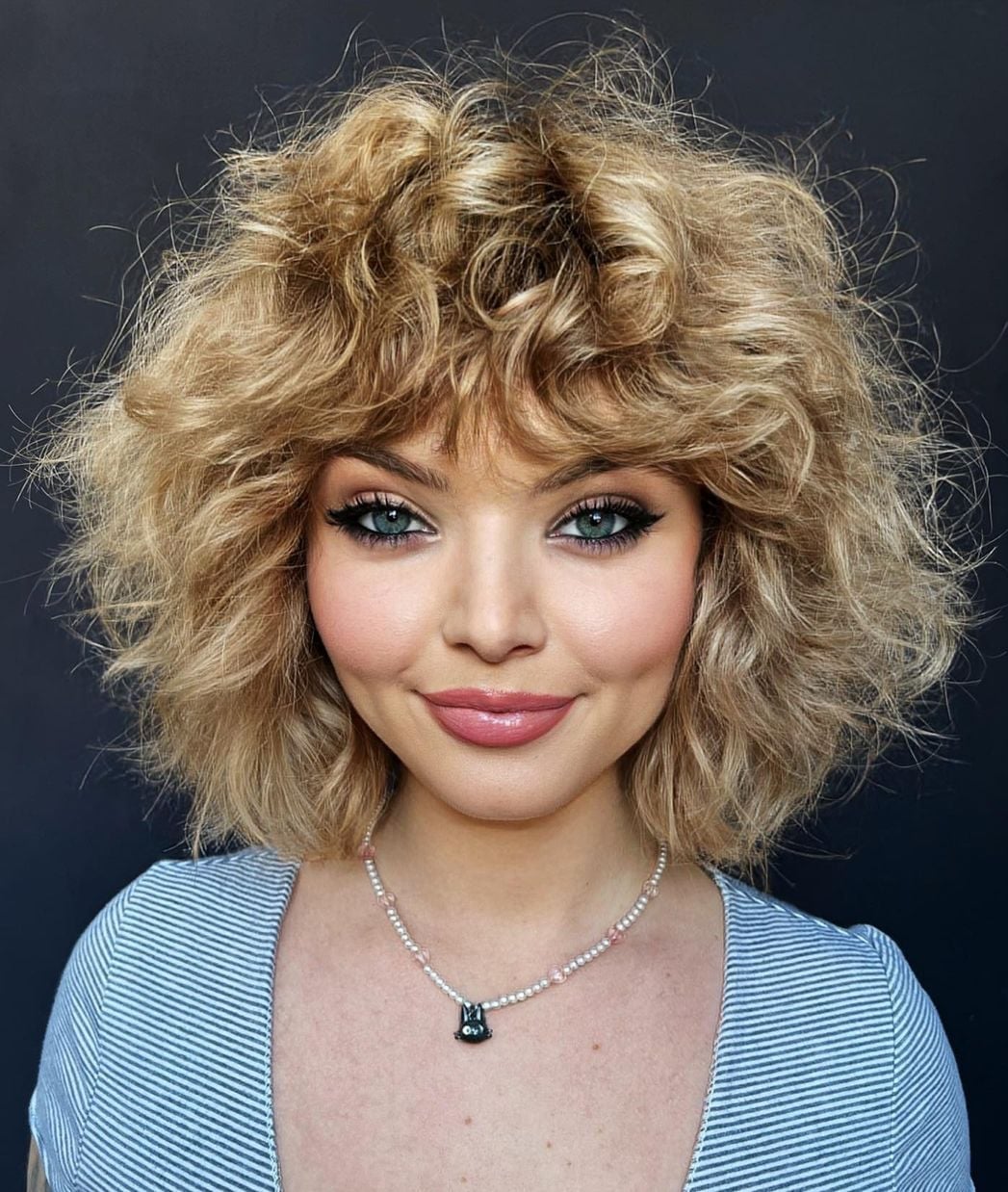
When your curls are this dense and long, the cut needs to carry the weight without turning into a triangle. The full fringe breaks up the length and gives the eye a place to land, while the layers underneath keep the mid-back shape from feeling heavy. Ask your stylist for: mid-back length layered cut with full curly bangs. This works best on thick, curly hair that already has some natural volume, and the air-dried styling here means you can skip the heat most days. A leave-in conditioner will help manage the density, and a trim every ten to twelve weeks keeps the ends from dragging the curls down.
Shoulder Length Honey Blonde Curly Hair With Full Bangs
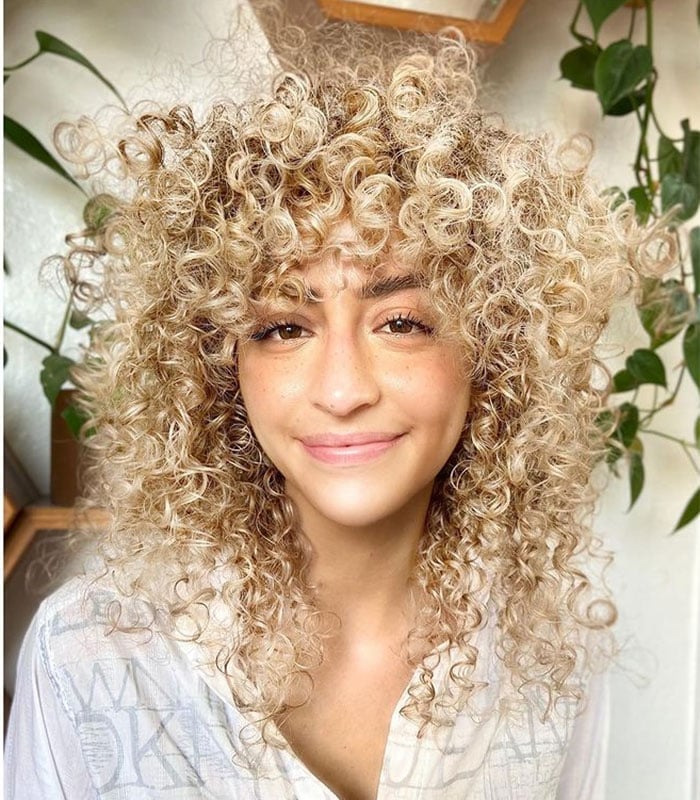
A full head of curly bangs is a commitment, but on a shoulder-length cut with thick, honey blonde waves, it pays off. The bangs hit right at the eyebrows and the layers fall to the shoulders, so the whole shape reads as one cohesive, bouncy unit. Humid weather is the real test: curls tighten, bangs shrink, and suddenly you are squinting through a fringe that used to be above your lashes. Plan for a bang trim every four to six weeks and use a color-protecting shampoo to keep the honey blonde from turning brassy. Ask your stylist for: shoulder length layered cut with full curly bangs in honey blonde.
Shoulder Length Dark Brown Curly Hair With Full Fringe
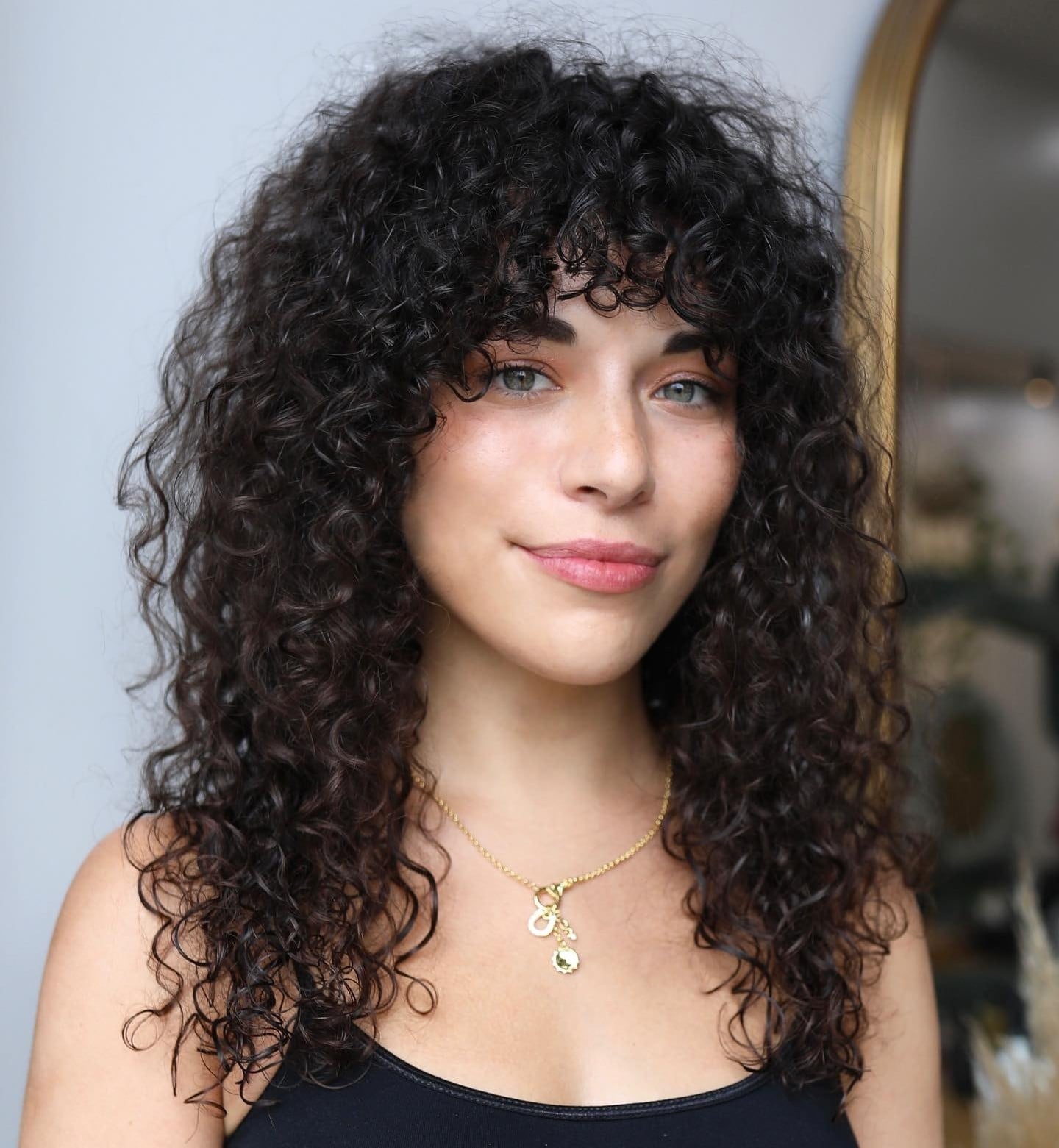
The trick to a full fringe on thick, dark curls is cutting long layers underneath it. Those layers absorb the weight of the dense texture so the bangs can sit forward without being pulled flat. The result is a shoulder-length shape where the fringe holds its curl and the back keeps a soft, rounded line. Ask your stylist for: shoulder length layered cut with full curly bangs. This is a classic everyday cut that suits anyone with enough density to support the volume, and the middle parting keeps the balance even. A smoothing serum on the ends and a trim every eight weeks will keep the shape intact.
Shoulder Length Dark Brown Hair With Curly Bangs
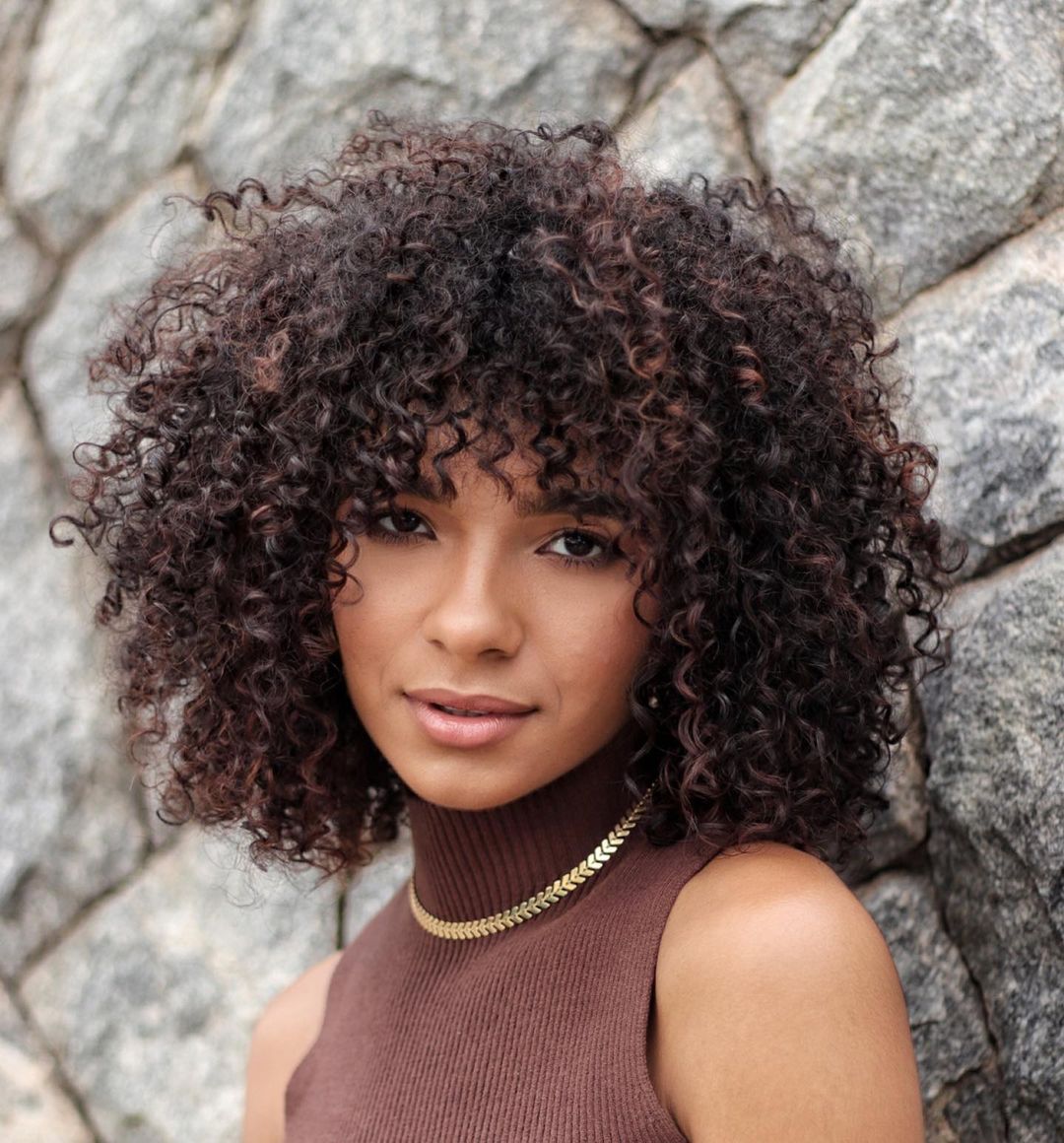
Full curly bangs at shoulder length work best for thick, curly hair that can handle extra fringe around the forehead. The dark brown base with subtle highlights adds depth, so the bangs stand out without looking heavy. A middle part helps the curls frame the face evenly. If your hair is fine or you prefer low maintenance, this style may feel like a lot of fringe. But for thick textures that hold a curl well, it is a strong everyday option. Ask your stylist for: shoulder length layered cut with full curly bangs. A curl-defining spray will keep the bounce, and a trim every six to eight weeks keeps the bangs from drooping.
Shoulder Length Medium Brown Curly Hair With Blowout
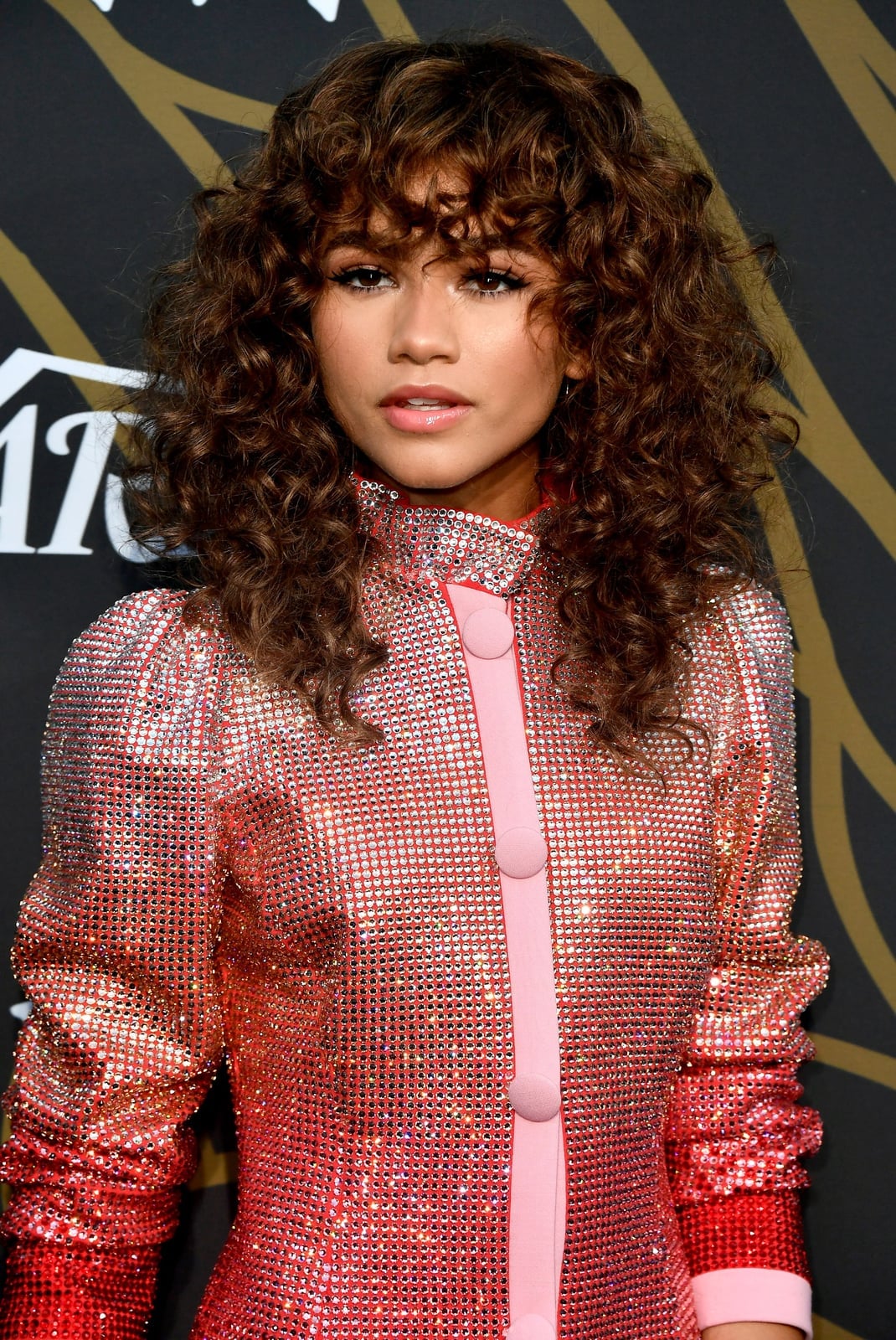
A blowout on curly hair is a different beast than a DIY diffusing session. The stylist works in small sections, stretching each curl with a round brush and directing the bangs forward so they land in a soft, voluminous curve. At home, you are more likely to end up with frizz at the roots and a fringe that springs straight up. This shoulder-length cut with layers and medium brown highlights is built for that polished, glossy finish, so it is worth booking the salon chair for the blowout alone. Ask your stylist for: shoulder length layered cut with curly bangs and a blowout. Use a heat protectant spray before any hot tool, and plan a trim every eight weeks to keep the shape sharp.
Shoulder Length Black Curly Hair With Curtain Bangs
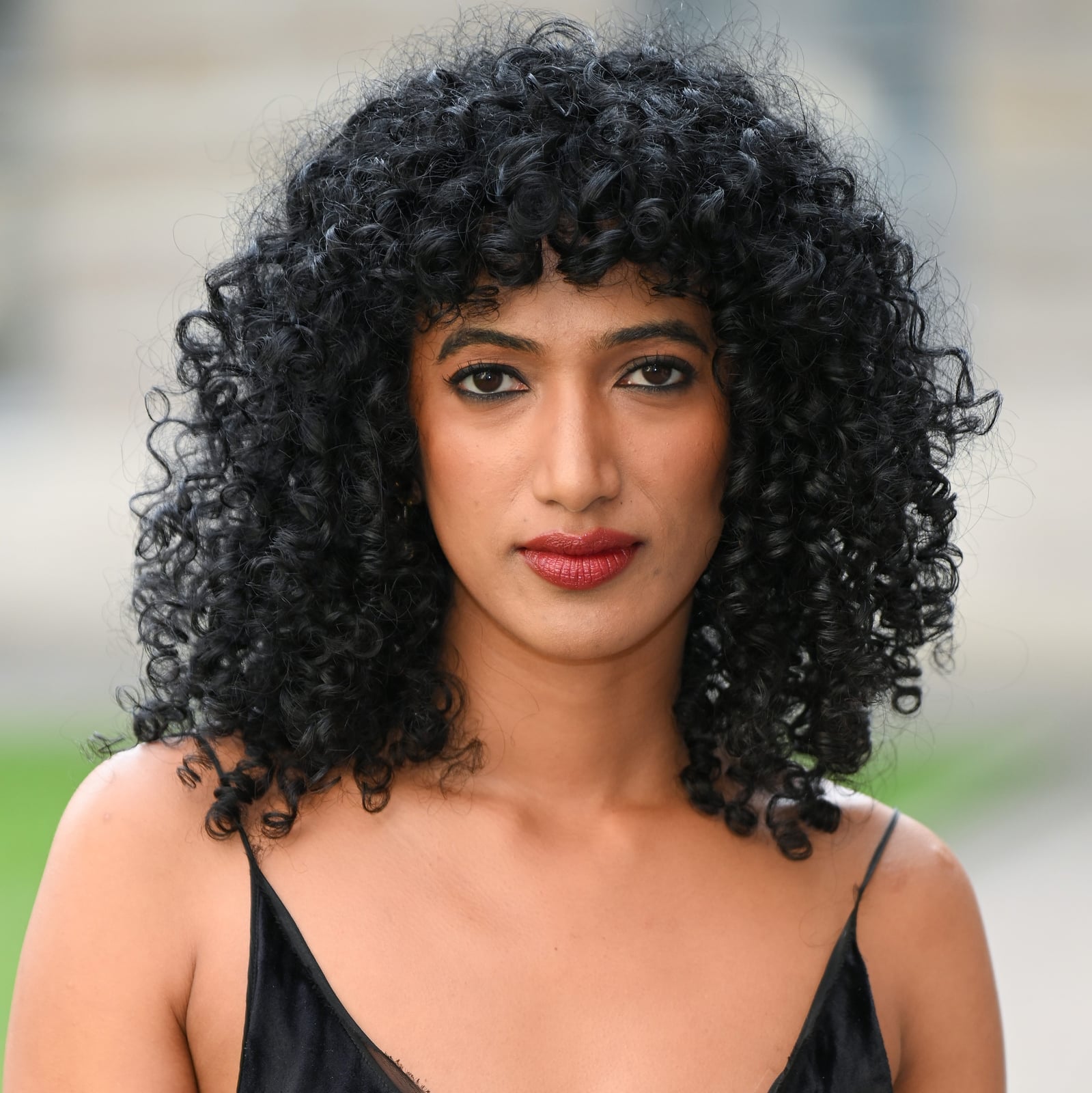
Curtain bangs on thick, curly black hair offer a softer alternative to a full fringe, but they demand a bit of patience. The middle parting lets the curls fall naturally, yet keeping those bangs defined means regular styling, not just air-drying and hoping for the best. Ask your stylist for: shoulder length layered cut with curtain bangs. Expect to spend extra time coaxing the bangs into place each morning, and a trim every six to eight weeks is non-negotiable to maintain the shape.
Shoulder Length Black Curly Hair With Face Framing Bangs
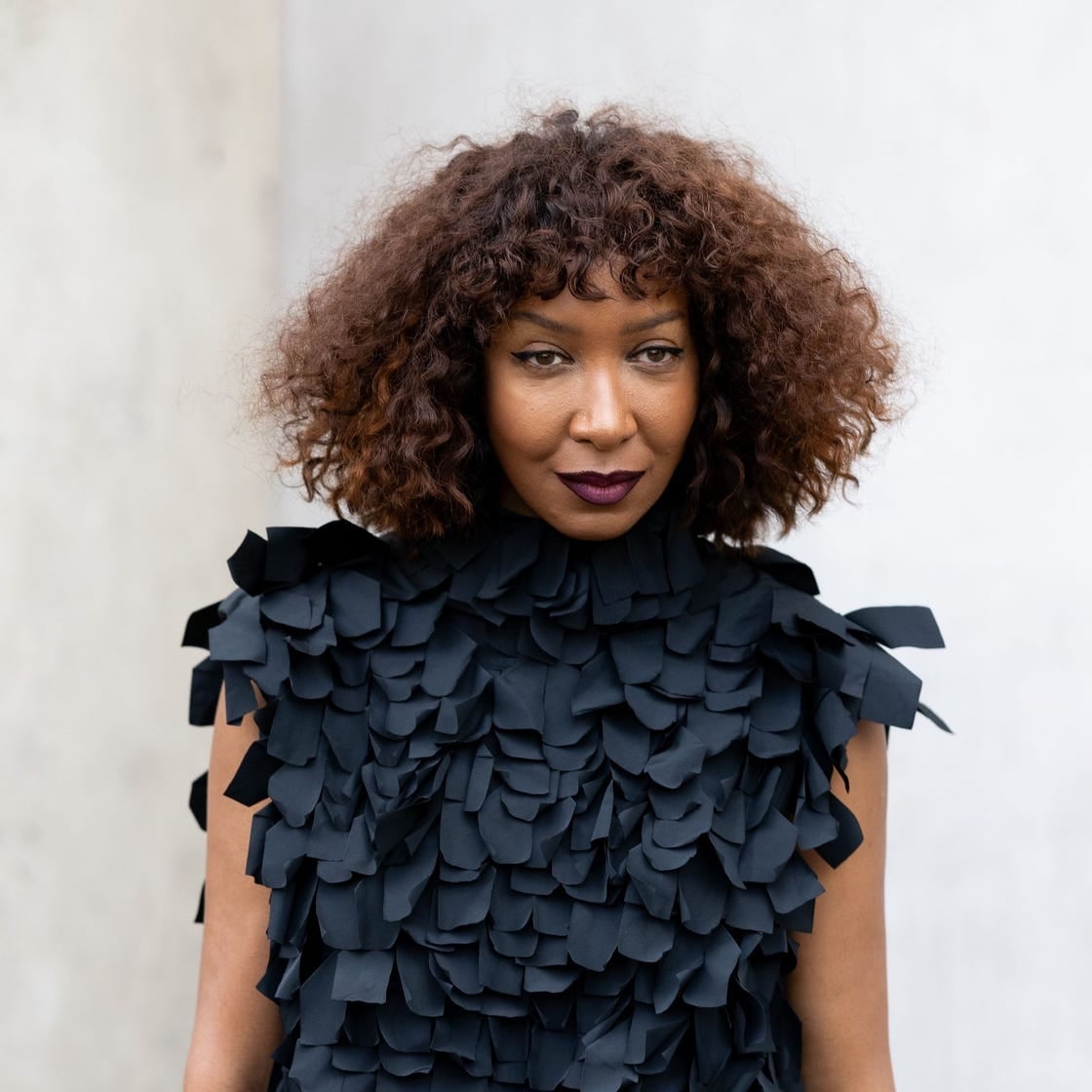
Face-framing curtain bangs on a shoulder-length cut work with the hair’s natural air-dried texture, not against it. The layers are cut so the bangs blend into the curls, creating a continuous frame from the crown down. Ask your stylist for: shoulder length layered cut with face framing bangs. Let the bangs air dry with a little product for separation, and plan on a trim every six to eight weeks to keep the shape honest.
Shoulder Length Medium Brown Curly Hair With Curtain Bangs, Layers

This cut is a masterclass in blending, where soft curtain bangs melt into the layers without a visible seam. On medium-density curly hair, the stylist cuts the bangs while the hair is dry, so they fall exactly where they should when the curl pattern springs up. Ask your stylist for: shoulder length layered cut with soft curtain bangs. A leave-in conditioner enhances the curl definition, and bangs need a trim every six to eight weeks to keep the softness.
Shoulder Length Wavy Blonde With Curtain Bangs
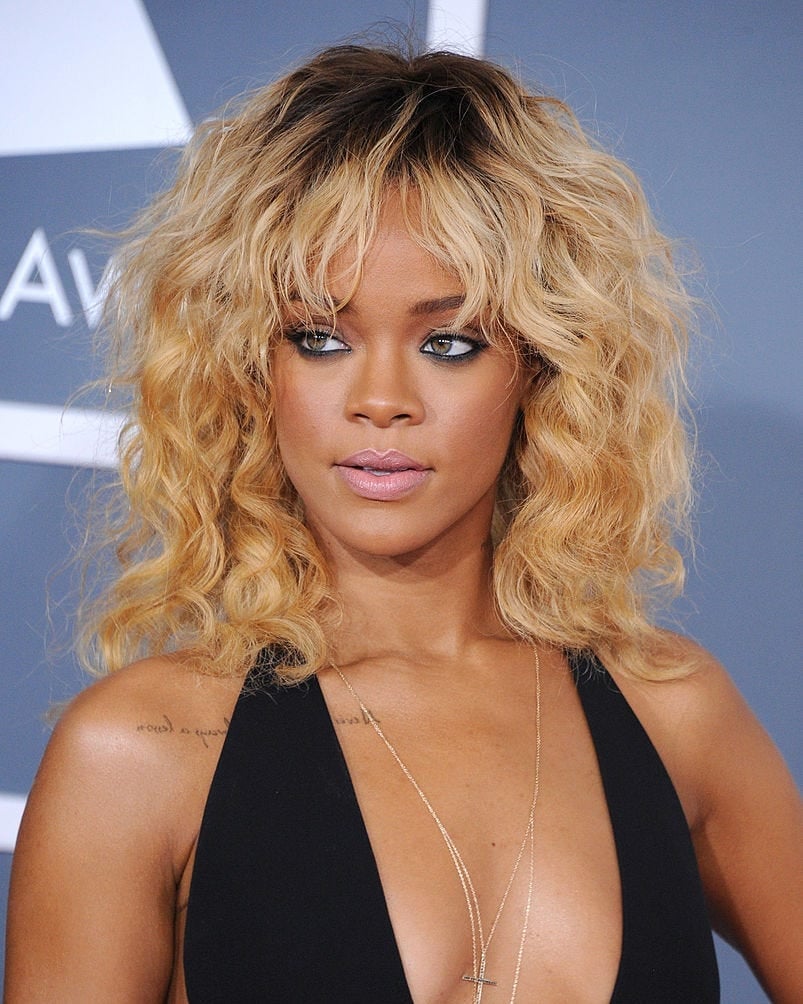
Is this blonde wavy style with curtain bangs worth the upkeep? Only if you are ready for the color maintenance. The dark roots and highlights create depth, but the blonde needs a toning appointment every four to six weeks to stay bright. Ask your colorist for: shoulder length layered cut with curtain bangs and a blowout. The voluminous blowout is the secret to the retro feel, so a round brush and a heat protectant are your friends.
Long Shaggy Blonde With Voluminous Curtain Bangs
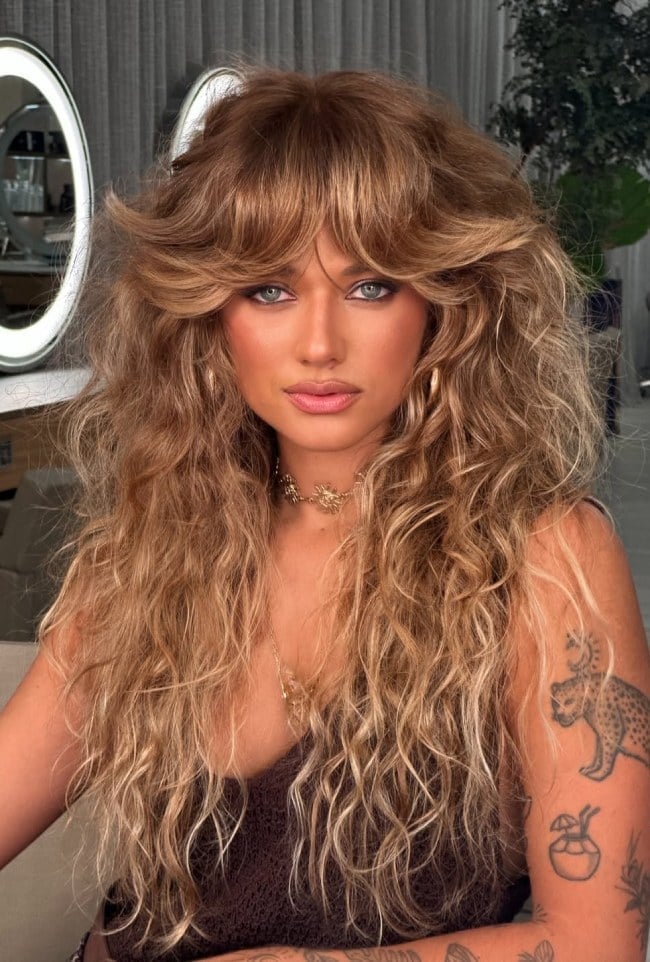
The mistake most people make with voluminous curtain bangs on long shaggy hair is trying to recreate the look with a flat iron and some hope. The bangs are cut to sweep to the sides, and the volume comes from the dense, wavy-curly texture, not from a quick curl. Ask your stylist for: long shaggy cut with voluminous curtain bangs. This is a salon-leaning style, so skip the DIY and book a professional who can cut the layers to move with your curl pattern.
At home, a texturizing spray gives the lived-in effect, but the initial shape is all in the cut. Plan on a trim every ten to twelve weeks to keep the shag from turning into a shapeless mass.
Mid-Back Curly Hair With Full Fringe
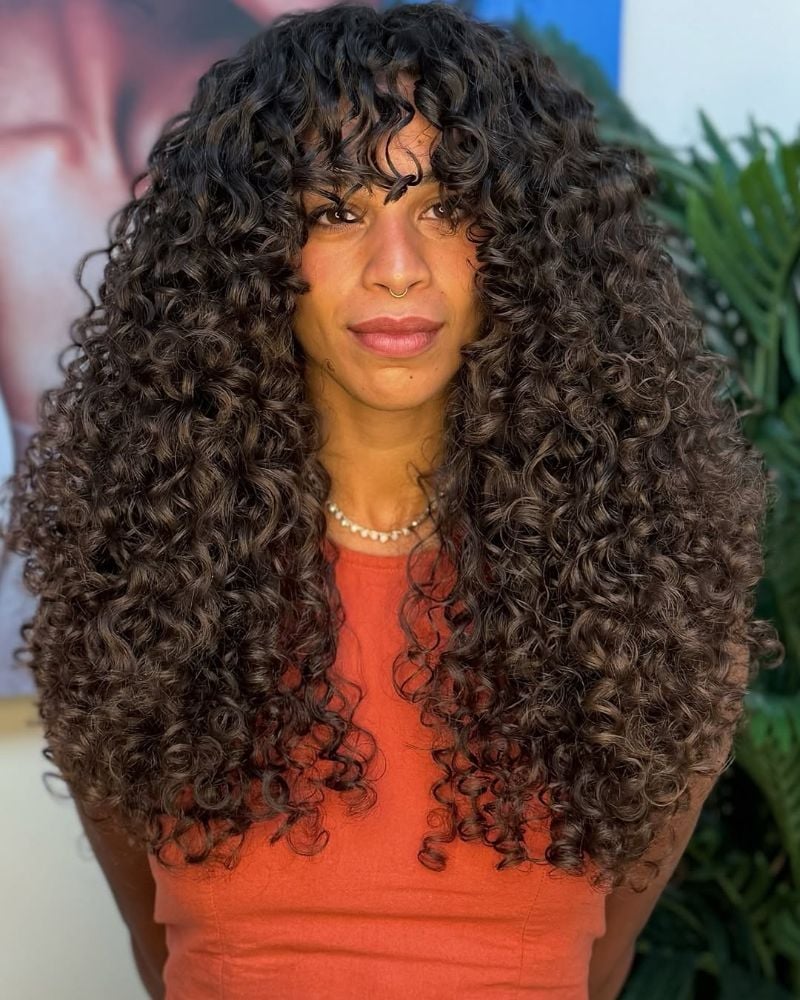
A full fringe on long, thick curly hair is a commitment. It creates a face-framing curtain of defined ringlets that balances the weight of all that length. The middle parting keeps the fringe from looking like a solid helmet, letting each curl find its own line down the forehead. This cut works best on hair with real density, since the fringe needs enough bulk to hold its shape against the heavier mid-back length behind it.
Ask your stylist for: mid-back length cut with a full curly fringe. The layers are cut long so the curls stack without losing their spring. Daily reality means a leave-in conditioner to keep the fringe from frizzing into a single puff, and a trim every ten to twelve weeks to stop the curls from dragging the fringe into your eyes. The subtle lighter pieces add depth so the fringe looks like part of the whole, not a separate curtain.
Mid-Back Curly Hair With Wispy Fringe, Dark Brown
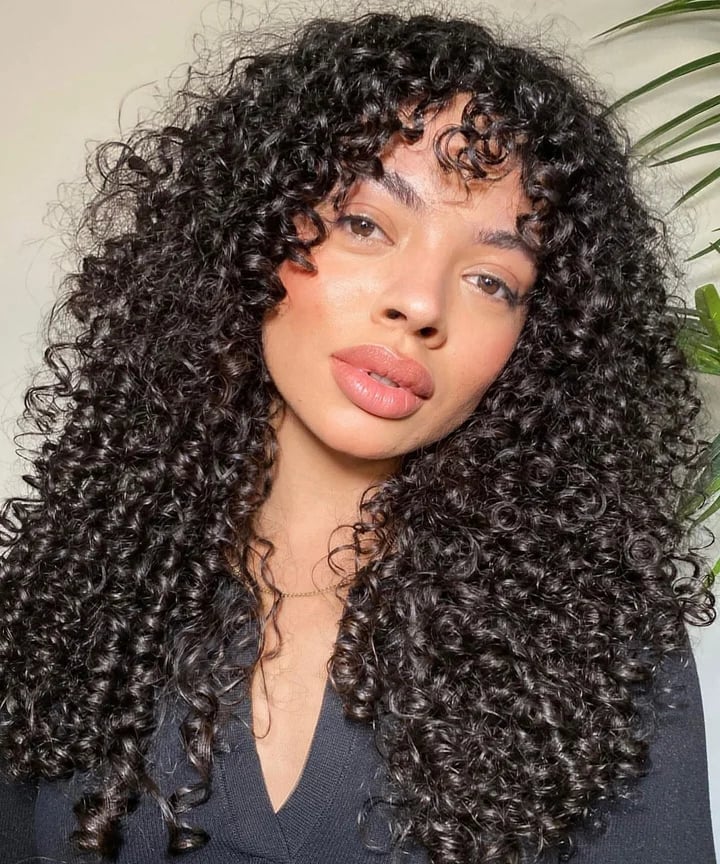
Next to a full fringe, a wispy one on thick curly hair is the lighter-footed cousin: it softens the face without demanding the same daily upkeep. But here is the honest part: getting truly wispy bangs on dense curls takes significant thinning, and that thinning is exactly what invites frizz if the styling routine slips. The payoff is a fringe that moves with the curls instead of sitting on top of them. Ask your stylist for: mid-back length layered cut with a wispy fringe. The long layers keep the mid-back length from looking heavy while the fringe stays airy. This one is for anyone who wants the fringe idea without the full commitment, provided you can keep up with a texturizing paste and a trim every eight to ten weeks.
Mid-Back Curly Hair With Voluminous Bangs
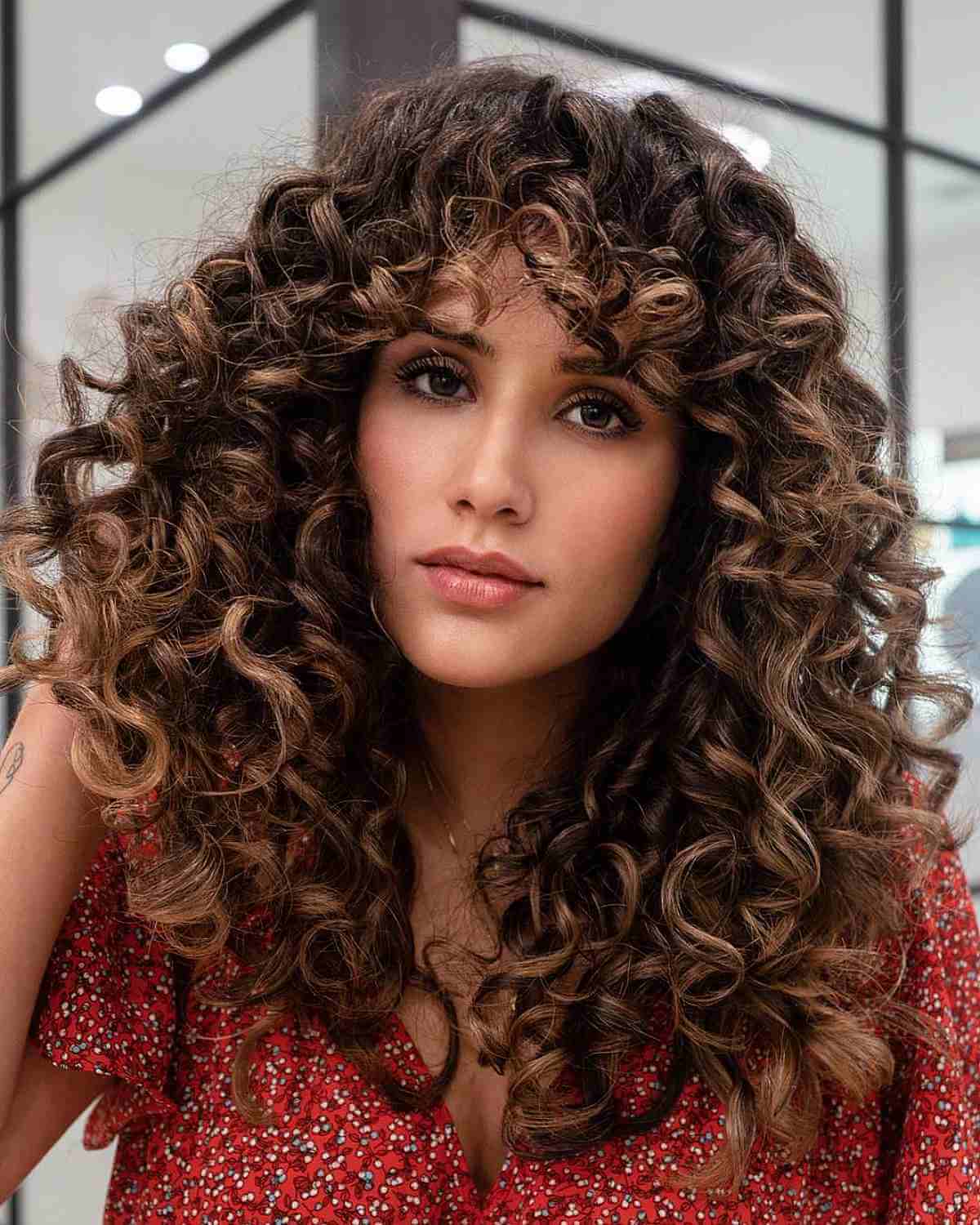
Voluminous curly bangs on mid-back length hair are built, not born. The technique starts with layers cut on an angle so the bangs have a curved base, which gives the curls room to spring forward instead of lying flat. The rest of the hair is cut in long, blended layers that carry the volume down to the mid-back, avoiding the pyramid effect that thick curly hair can fall into. A middle parting lets the bangs frame both sides of the face evenly.
Ask your stylist for: mid-back length layered cut with voluminous curly bangs. The dark brown base with subtle balayage keeps the bangs from blending into one flat block, giving each curl its own depth. This cut is a salon job, since the layering has to be precise for the bangs to hold their shape. A curl enhancer on the bangs keeps the definition, and a trim every ten to twelve weeks maintains the volume.
Mid-Back Curly Hair With Face-Framing Bangs
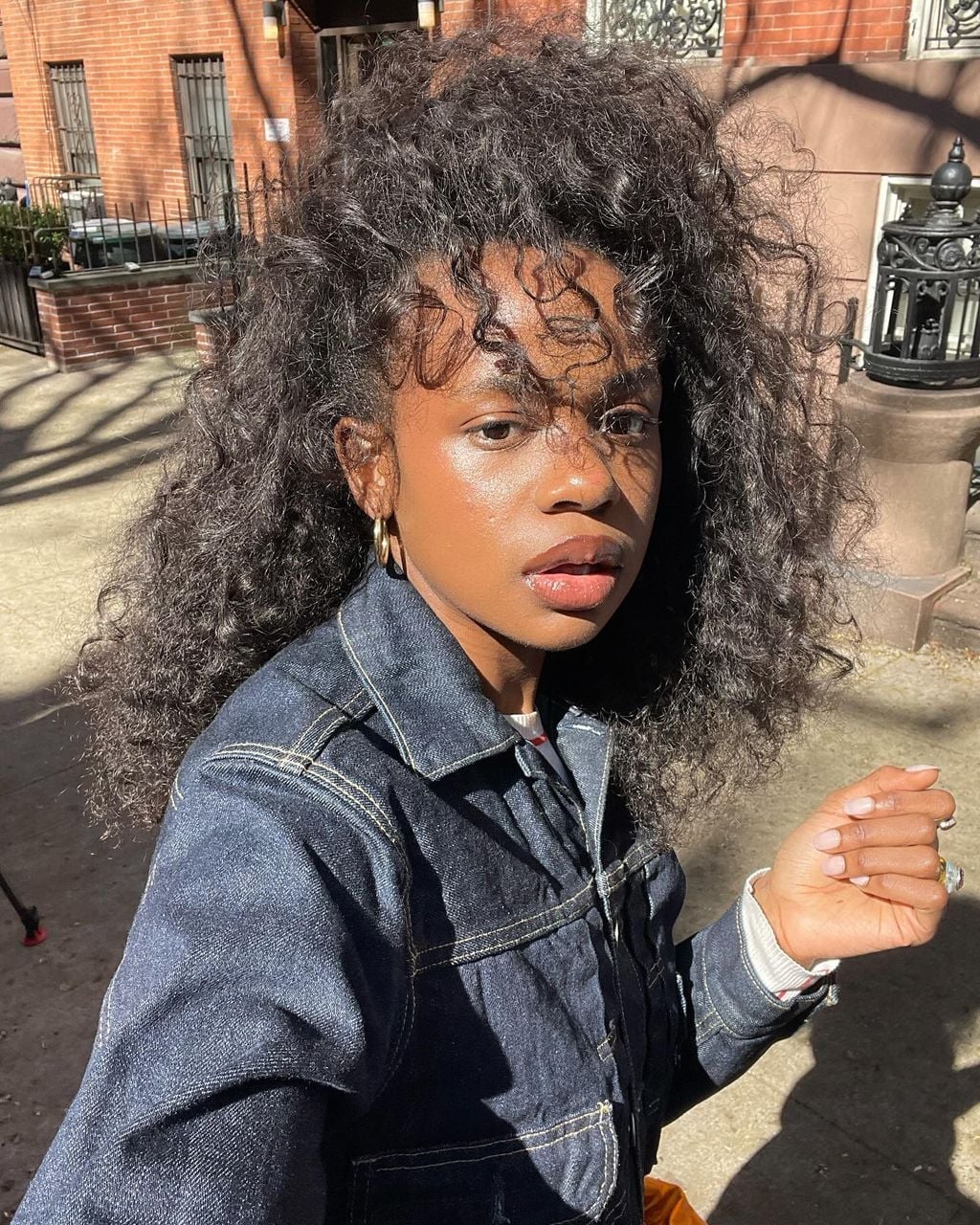
Side-parted face-framing bangs on thick curly hair do something a centered fringe cannot: they draw the eye along the cheekbone and jaw line, which suits round and square face shapes by adding vertical interest. The side part also lets the bangs blend into the mid-back length so the transition from fringe to layers feels seamless. The curls are cut to fall forward, framing the face without hiding it, and the air-dried texture keeps the whole thing looking natural.
Ask your stylist for: mid-back length layered cut with face-framing bangs and side part. The layers are longer in back and shorter toward the front, which gives the bangs their gentle arc. This cut looks soft and deliberate, but it needs a texturizing spray to keep the side part from slipping and a trim every ten to twelve weeks to hold the framing line.
Mid-Back Reddish Brown Curly Hair With Wispy Bangs

Wondering what to do with mid-back curly hair when spring rolls around? A reddish brown base with wispy bangs is the answer that brightens the whole silhouette without a full color commitment. The wispy fringe is cut into the layers so it feathers around the face, catching the light differently than solid bangs would. The medium density means the curls hold definition without overwhelming the wispy effect, and the air-dried finish keeps it looking like you woke up this way, which is the point.
Ask your stylist for: mid-back length layered cut with wispy bangs. The reddish brown shade adds warmth that suits the season, and the wispy ends mean the fringe needs less daily fuss than a full one. A curl-defining serum keeps the shape, and a trim every ten to twelve weeks keeps the wispy ends from turning ragged.
Mid-Back Black Curly Hair With Voluminous Curls
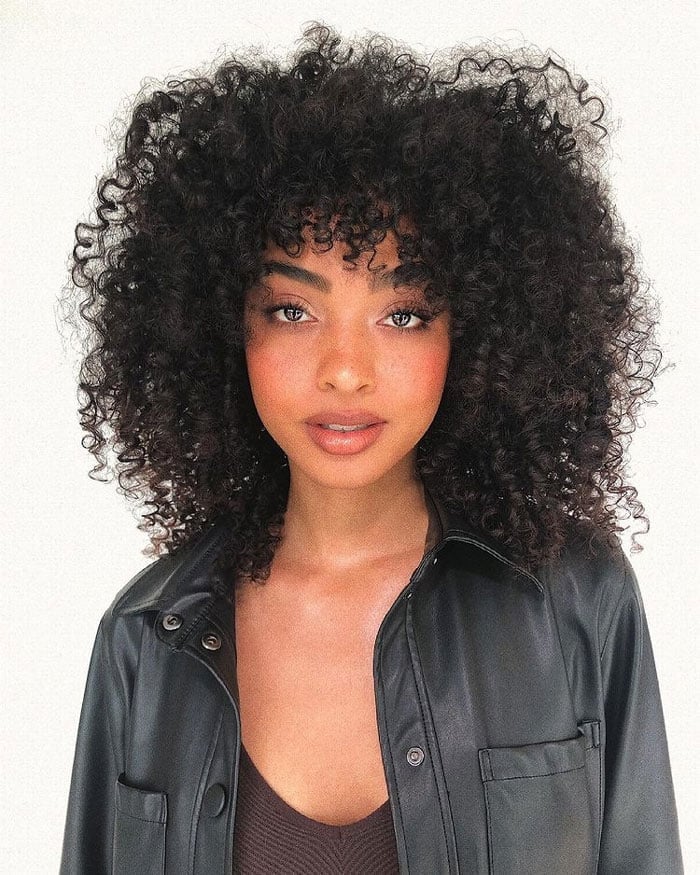
This cut relies on sheer density: the layers are cut to release the curl, so a mid-back length of very thick black hair becomes a wall of volume before it even hits a diffuser. The curly bangs sit forward from a middle parting, which keeps the mass from reading as one heavy block. It suits those with genuinely thick hair that tends to expand; on medium-density hair, the same cut would look more like a suggestion than a statement.
Ask your stylist for: mid-back length layered cut with voluminous curly bangs. Very thick curls need a curl-defining cream to keep the shape balanced, and the length means a trim every ten to twelve weeks to keep the layers honest.
Collarbone Curly Hair With Auburn Highlights
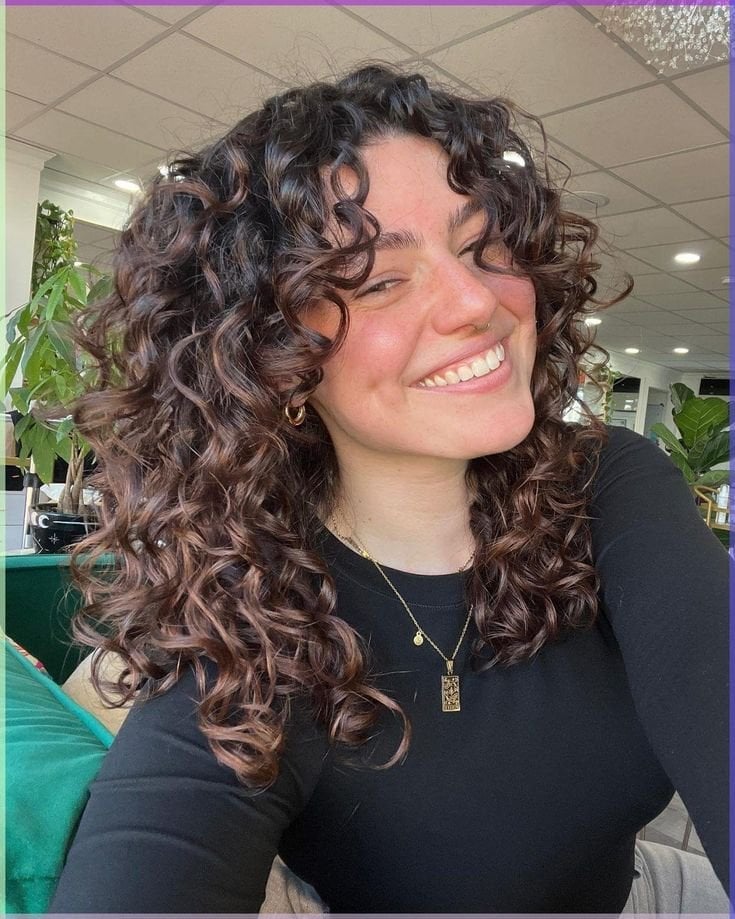
This is a warm, dimensional take on the classic curly bob, and the details matter more than the overall shape. The collarbone length lets the layers stack without losing movement, while the side parting guides the defined curly bangs to frame the face softly instead of sitting flat. On thick curly hair, the subtle auburn highlights catch the light between the curls, so the color shifts as the hair moves.
Ask your stylist for: collarbone length layered cut with defined curly bangs and auburn highlights. To get the same effect, be specific: request the highlights be woven through the interior layers, not just the surface, and ask for the bangs to be cut dry so they land exactly where your curl pattern wants them.
Shoulder Blonde Curly Hair With Curtain Bangs
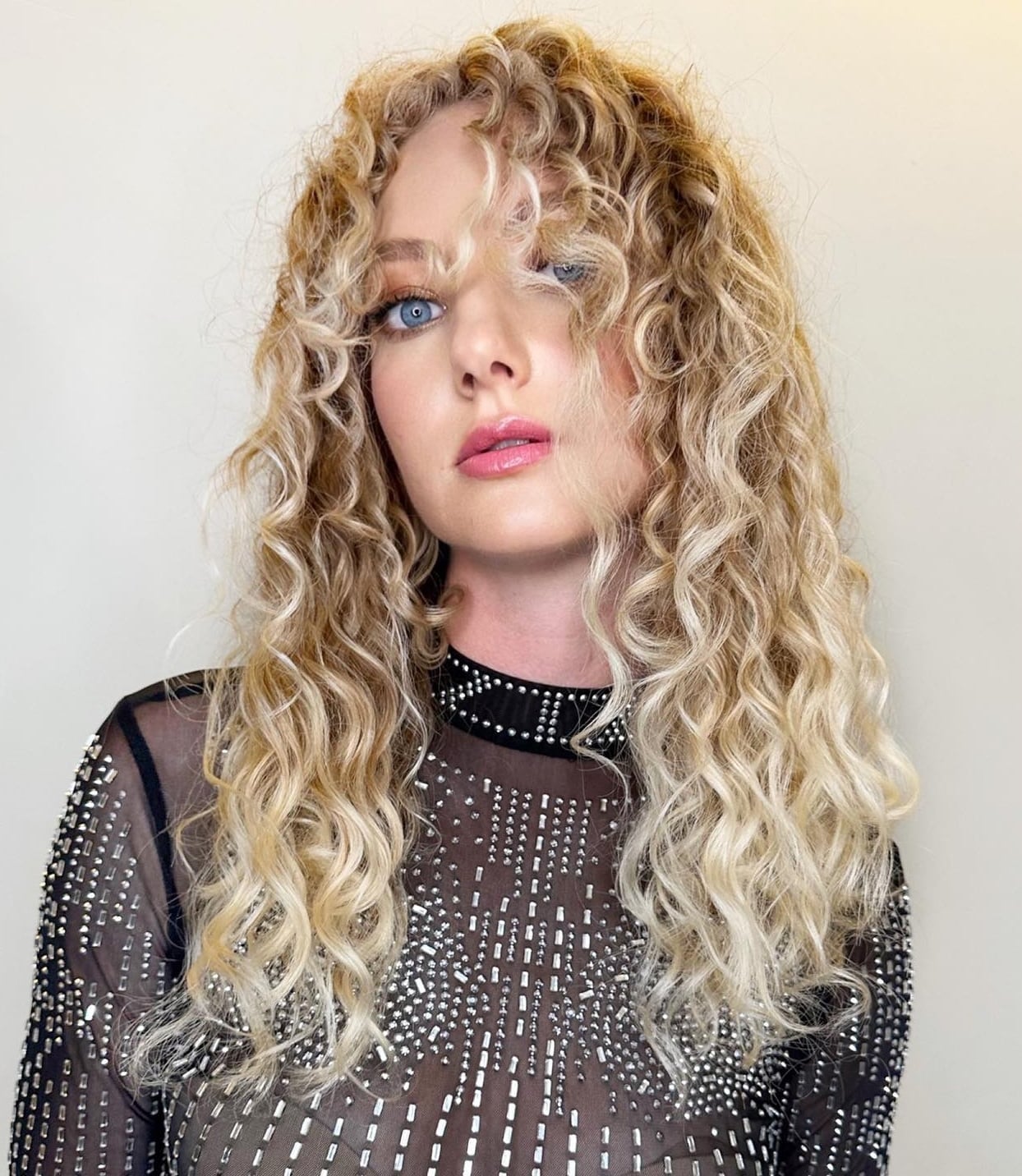
Here is the reality of curtain bangs on medium-density curly hair: the soft, face-framing pieces look perfect right after styling, but they will separate into defined ringlets within hours unless you give them a hand. The shoulder length keeps the weight from pulling the curl straight, and the long layers let the blonde with darker roots read as dimensional rather than flat. Ask your stylist for: shoulder length layered cut with soft curtain bangs and root shadow. The drawback is that medium-density curls need a bit of product to keep those bangs from splitting into two distinct spirals, so budget for a curl cream and a quick refresh on day two.
Final Thoughts
For fine or sparse curls, ask for wispy or soft curtain bangs that blend into your layers so they don’t overwhelm your face. For thick, dense curls, full or choppy bangs give structure and definition, so don’t be afraid to commit.
- Trim bangs every 4-6 weeks to keep them out of your eyes.
- Use a curl-defining cream or mousse on damp bangs for hold.
- Air-dry bangs when you can; use a diffuser on low if you must.
- Refresh between washes with dry shampoo or a spritz of water.
Embrace your natural texture with the perfect bangs.