Every month brings another woman to the chair next to mine, asking for dark roots and a bright front. The trend is the reverse of everything we did ten years ago. I think brown with blonde accents is the smartest move I have seen in years.
Across 20 ideas, this guide to Blonde to Brunette Hair covers collarbone waves and mid-back layers, ash tones and honey ones. Some need two visits, a few you can manage at home with a good toner. Most suit fine, straight hair like mine.
I write this from year three of my own grow-out. My roots showed at week five, my hair goes flat by 4 pm. These are the ideas that survive a real week.
Dark Brown With Bold Blonde Money Piece
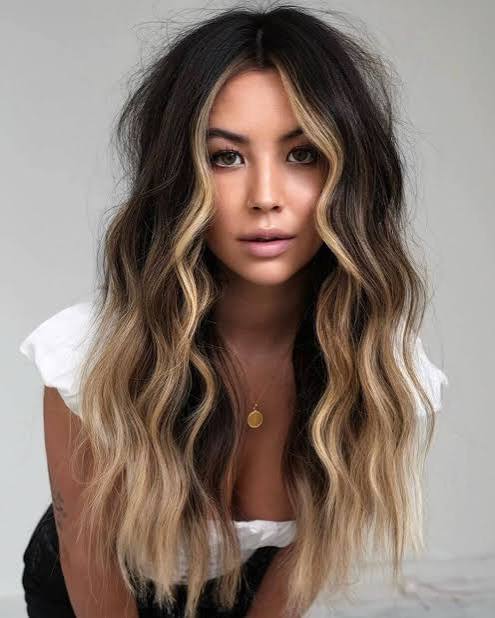
That money piece is not subtle. It’s the first thing you see: two thick blonde sections framing the face against a deep dark brown base, placed via a partial highlight technique with a warm golden tone. This works best on oval or heart faces where the contrast opens up the centre rather than widening it. On my fine hair I would worry about the blonde feeling sparse, but on this thick wavy texture it lands as deliberate, not accidental. The loose waves help the light catch both shades, and the blunt bangs ground the whole thing so it does not read as two separate colours fighting. The middle part is your friend here: it keeps both sides even.
Brunette Base With Honey Blonde Face-Framing
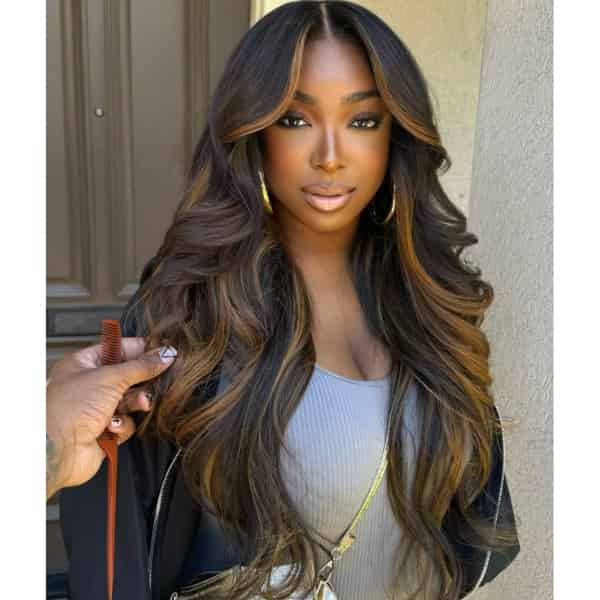
Ever notice how some brunette with honey blonde highlights look like an afterthought? This is not that. The face-framing pieces are painted close to the root, then the colour is pulled through the mid-lengths and ends using a balayage technique. The tone is warm and soft, honey rather than yellow, which sits well on medium to warm skin undertones. The upkeep is manageable: a root blend every eight to ten weeks, a toner twice that often if the brass creeps in.
Those long layers and curtain bangs are part of the equation. Without them, the honey blonde would just sit there. With them, the colour moves when you move. A voluminous blowout shows it best — the lighter pieces catch the light each time the hair swings. For straight, fine hair, add a little texture spray at the roots so the shape does not fall flat by afternoon.
Dark Brown With Bright Blonde Highlights
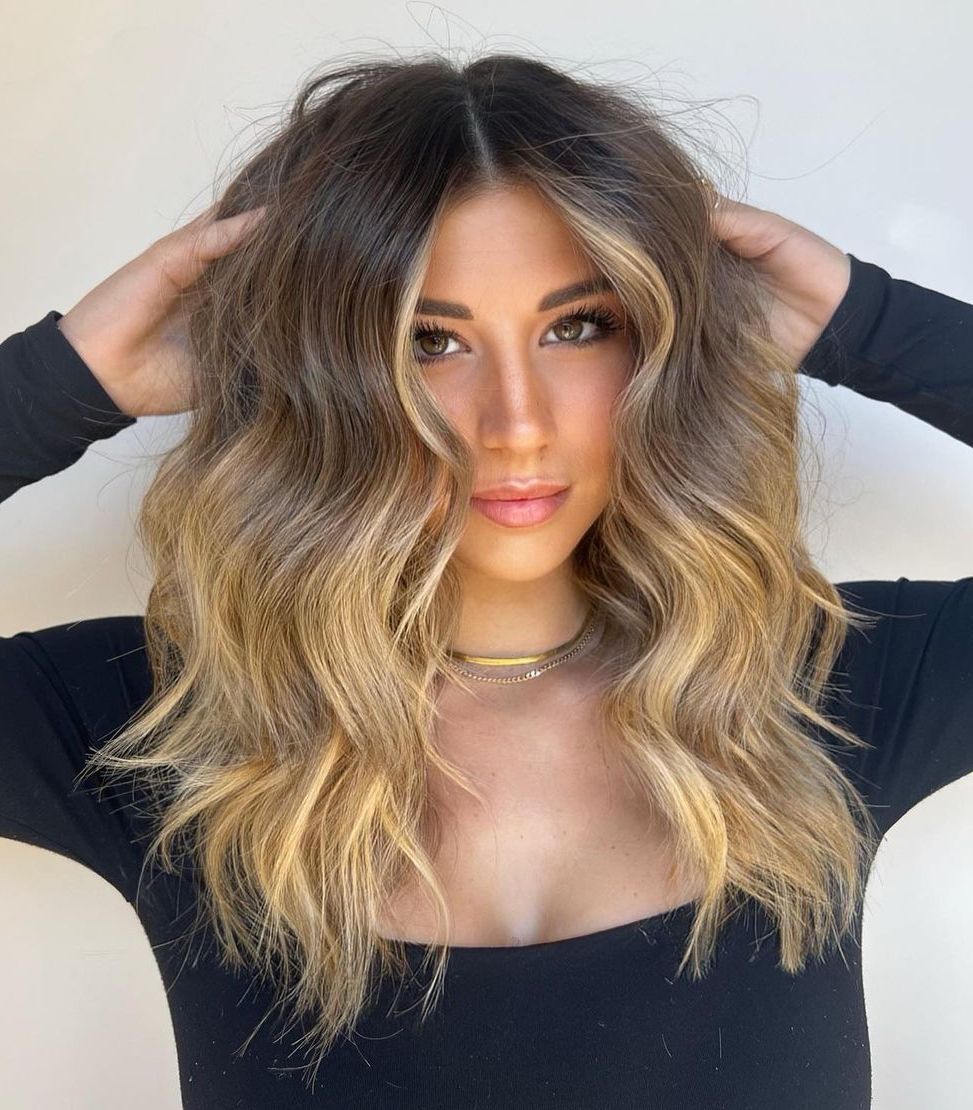
Full blonde transformation is a project. This is the shorter route. The dark brown base stays dominant, with prominent blonde highlights woven through the top layer and around the face, using a foiling technique that lifts to a cool bright beige tone. The result reads as contrast, not coverage. Where a full blonde wash can feel one-note on thick wavy hair, these highlights carve out shape. The loose waves help: the darker sections recede slightly, the blonde steps forward. A middle part keeps both sides reading as intentional, not like the highlights ran out halfway through. If you like the idea of blonde but do not want to sit through six hours of global lightener, this is the version you book.
Brunette With Scattered Blonde Highlights
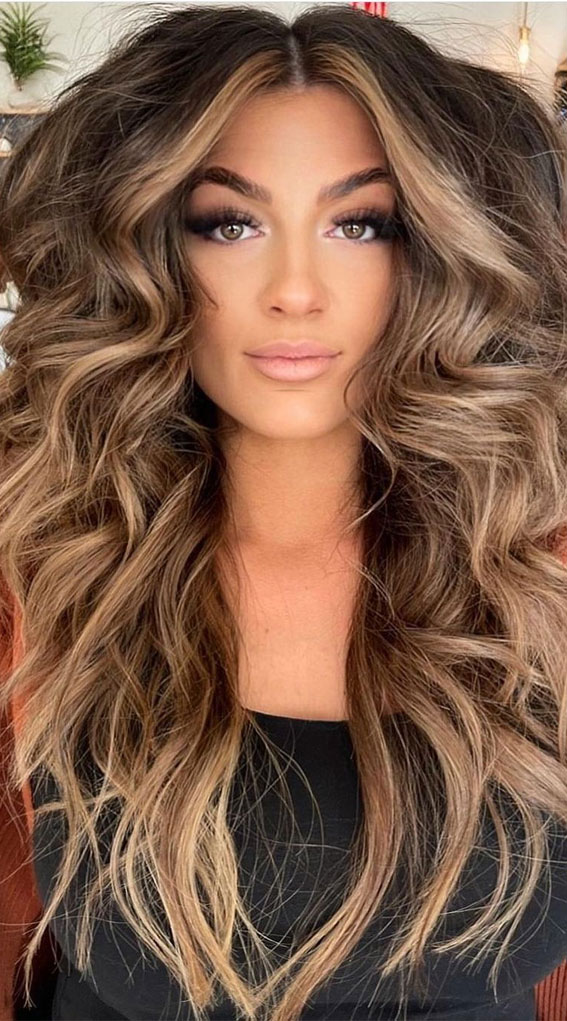
I will admit it: I am lazy about root touch-ups. That is why this structure works for me. The brunette base is the main event, and the brunette blonde highlights land randomly throughout, no symmetry, no stripe. The colour technique is a freehand balayage with a warm neutral tone that does not lean ashy or brassy. Because the placement is scattered rather than uniform, grow-out is invisible. At week ten I still did not need a root blend. The long layers and loose waves disguise the line further, and on thick wavy hair the dimension holds without daily effort. For fine hair I would add a few more pieces near the crown, otherwise the dark base swallows the lighter sections entirely by day three.
Textured Shag With Blonde Highlights
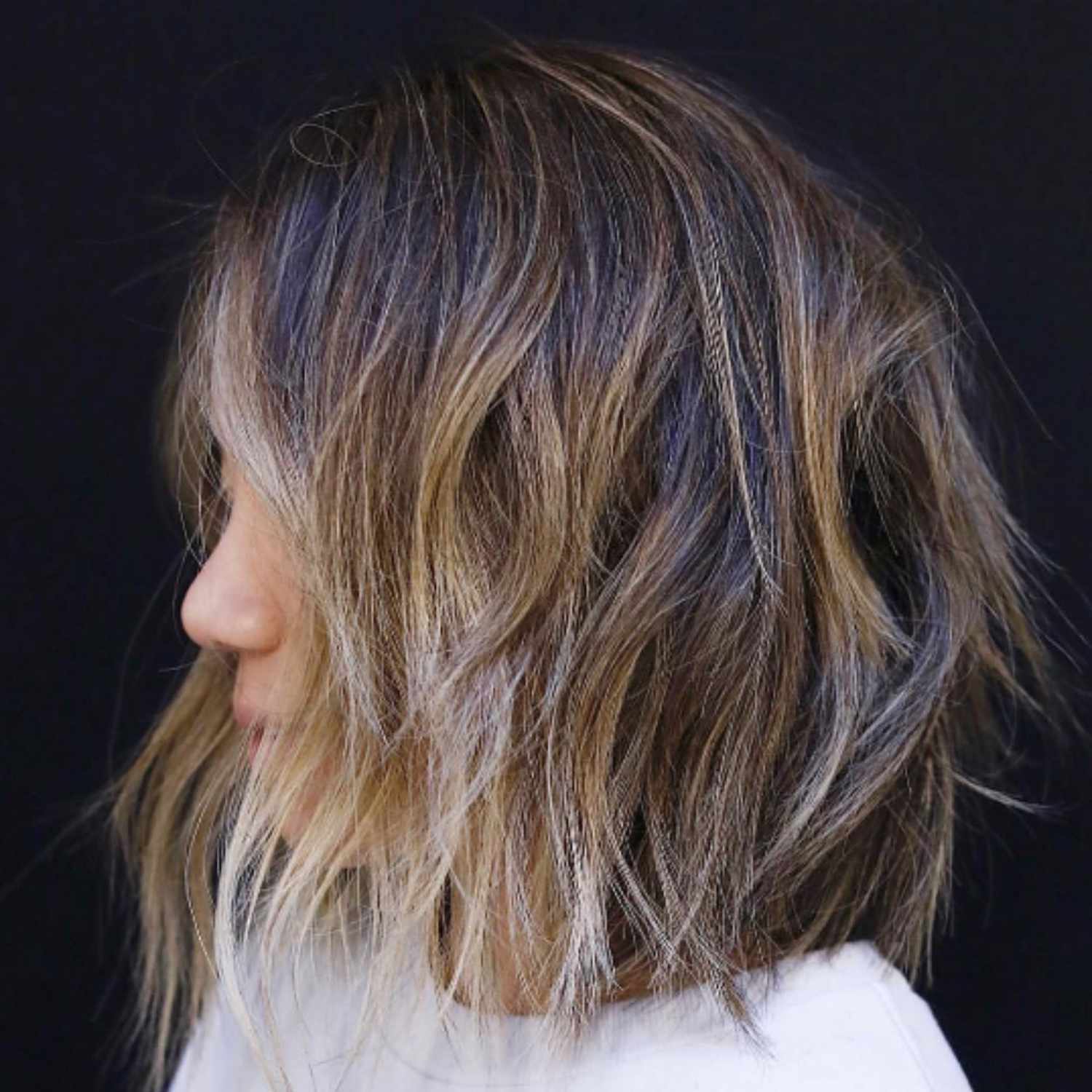
Summer hair that does not ask for a round brush. The shag haircut blonde highlights pair a brunette base with bright woven pieces, placed via a sliced highlight technique in a cool beige tone that reads fresh, not beachy. The chin-length shag with air-dried texture does the lifting: the choppy layers expose the blonde at different depths, so the colour does the work while the hair dries. A middle part keeps the shape open. On thick wavy hair this is barely a styling commitment. On straight fine hair you might need a dry texturiser to get the same separation. A trim every eight weeks keeps the layers hitting right, otherwise the hemline goes soft and the colour loses its structure.
Collarbone Wavy With Subtle Balayage
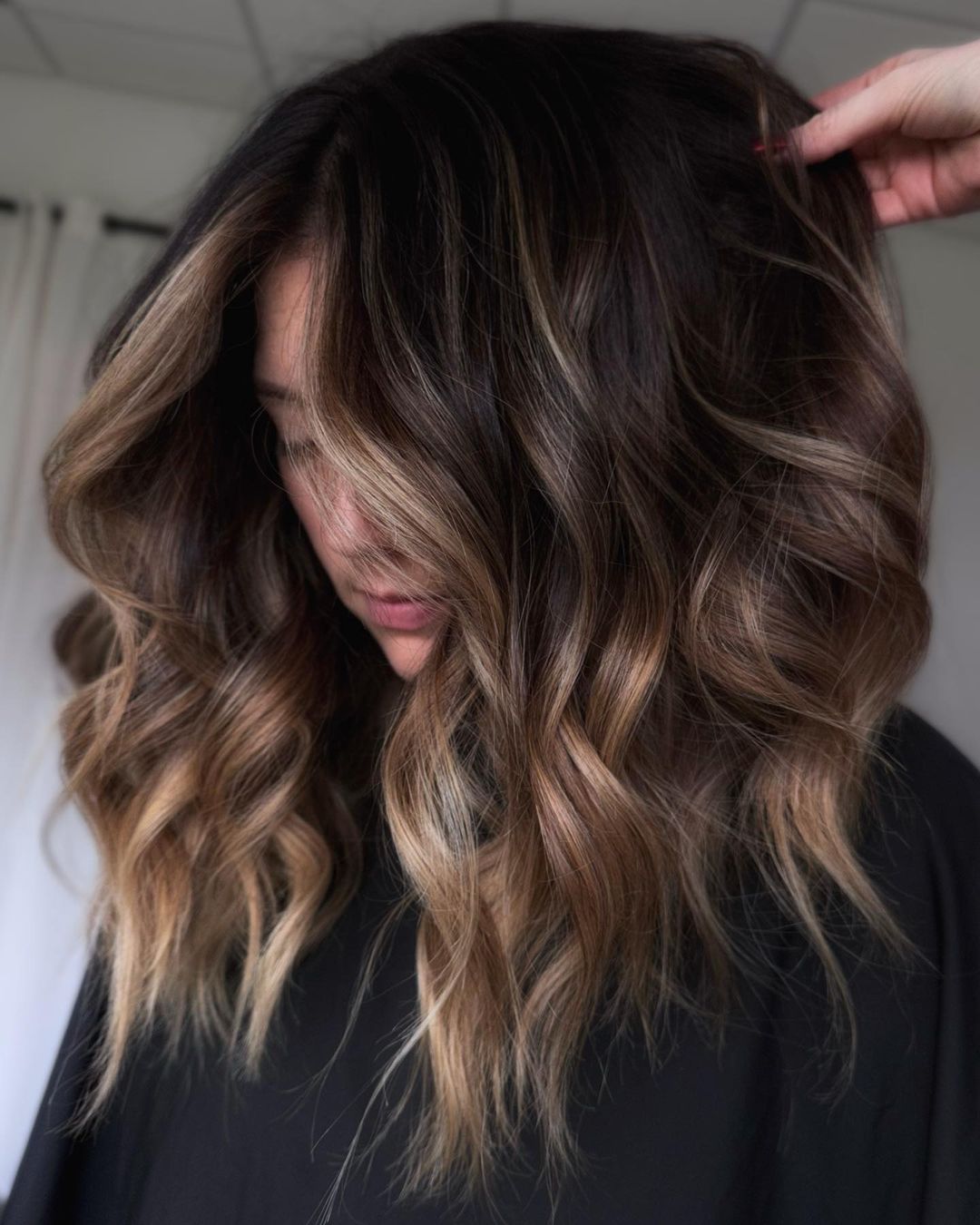
Who should book this collarbone balayage subtle? Someone with medium density and a natural wave pattern. The subtle blonde balayage lifts the dark brown base without a visible line, so the grow-out is kind. A middle part widens a round face, but the layers here are soft enough to not fight it. This is a salon job, not a kit from the drugstore. The technique relies on hand-painted sections, not foils, which is why the tone stays warm and blended. If your hair is fine and straight, you’ll need texture spray to hold the wave.
Collarbone With Ash Blonde Root Shadow
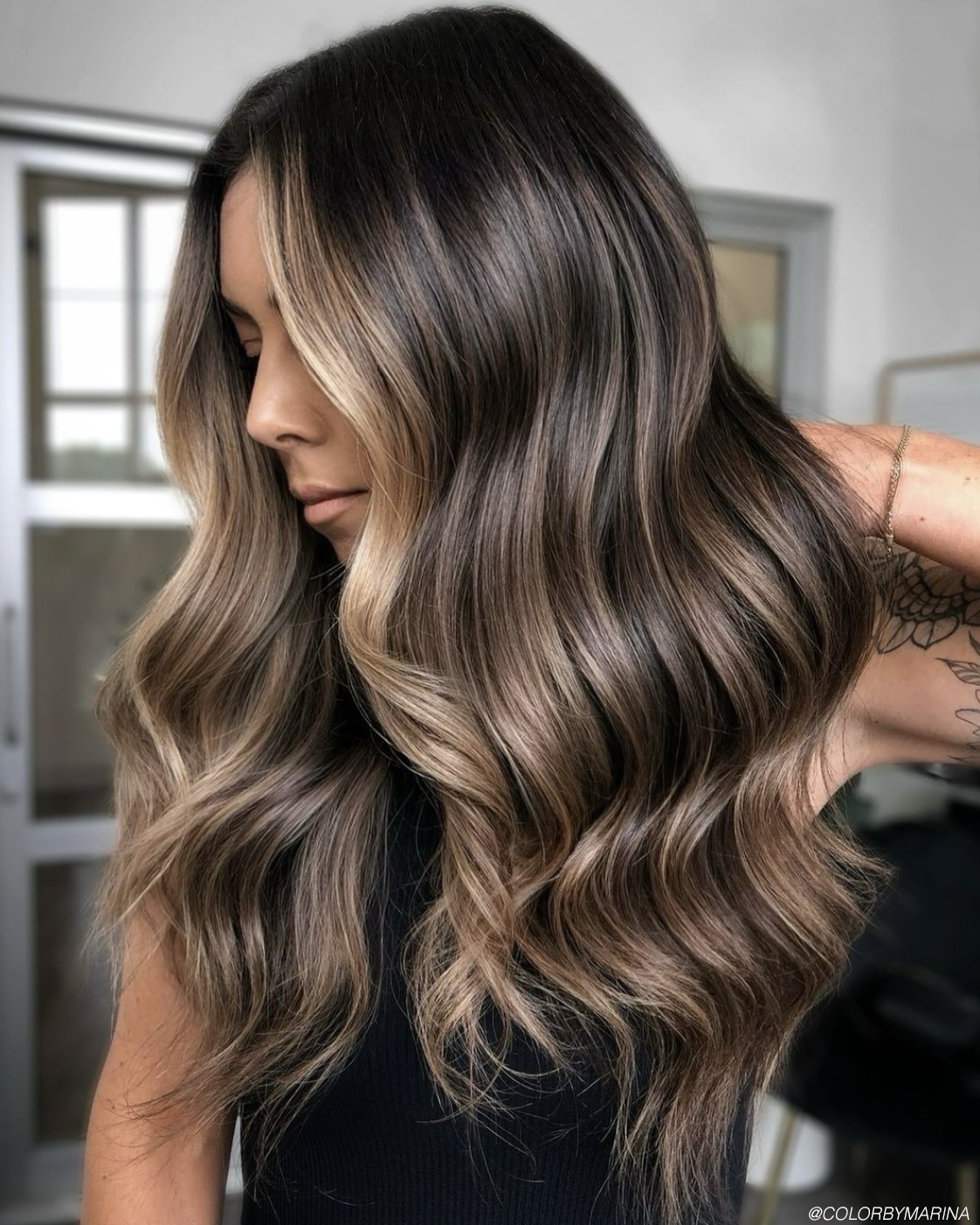
I’ll admit, I was skeptical about the root shadow trend. Then I saw how seamlessly a dark brown base blends into ash blonde highlights at collarbone length. The root shadow effect is not a cheat, it is a strategy: that soft transition buys you six calm weeks before you need to sit down again. On my wavy, medium-density hair, the grow-out line is invisible until week seven. A side part and a wavy blowout keep the dimension alive. The ash tone stays cool if you use a purple shampoo once a week. This is the closest I have come to a low-maintenance blonde.
Collarbone Layers With Pearl Blonde Balayage
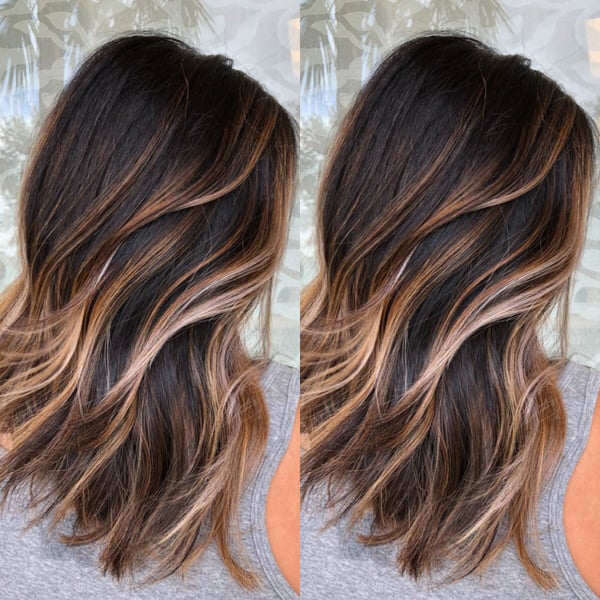
Spring hits and you want something lighter but not yellow. Pearl blonde balayage on a dark brown base is the answer. At collarbone length, the pearl blonde money piece frames the face without shouting. The tone is cool, almost iridescent, and it works best with soft waves on thick hair. I wore this through April and May, and the pearl blonde balayage held its brightness for eight weeks before needing a toner. The middle part lets the highlights peek through the layers. It is not a full commitment to blonde, just a seasonal refresh that does not demand root touch-ups every three weeks.
Shoulder Ash Blonde With Darker Balayage
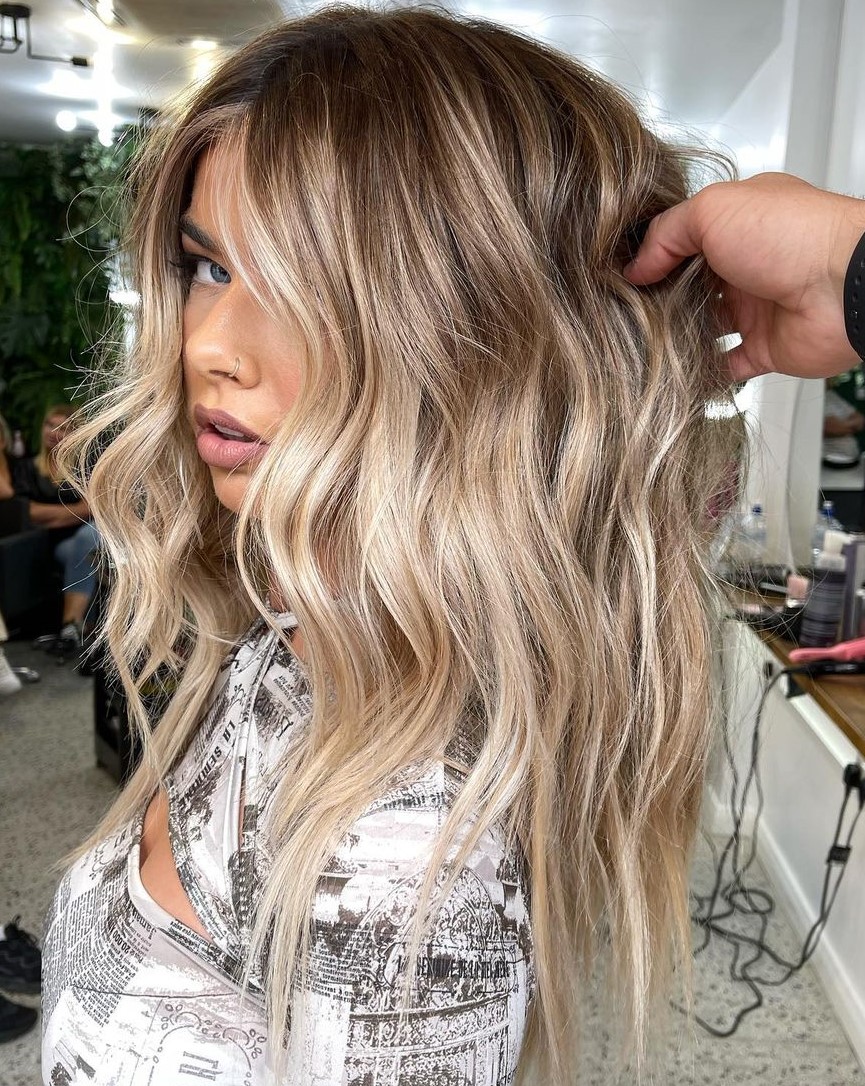
Thinking about going ash blonde? The honest downside: ash tones can pull muddy if your base is warm. An ash blonde darker balayage on shoulder-length layers with face-framing bangs works best on cool skin. The darker blonde balayage starts at the roots and fades into the ash base, which softens the grow-out. But brassiness will show by week five if you skip a purple shampoo. On thick, wavy hair, loose waves break up the colour and hide any uneven fading. If your natural level is above a 6, skip this one. The contrast is too stark.
Mid-Back With Natural Dark Brown and Blonde Blend
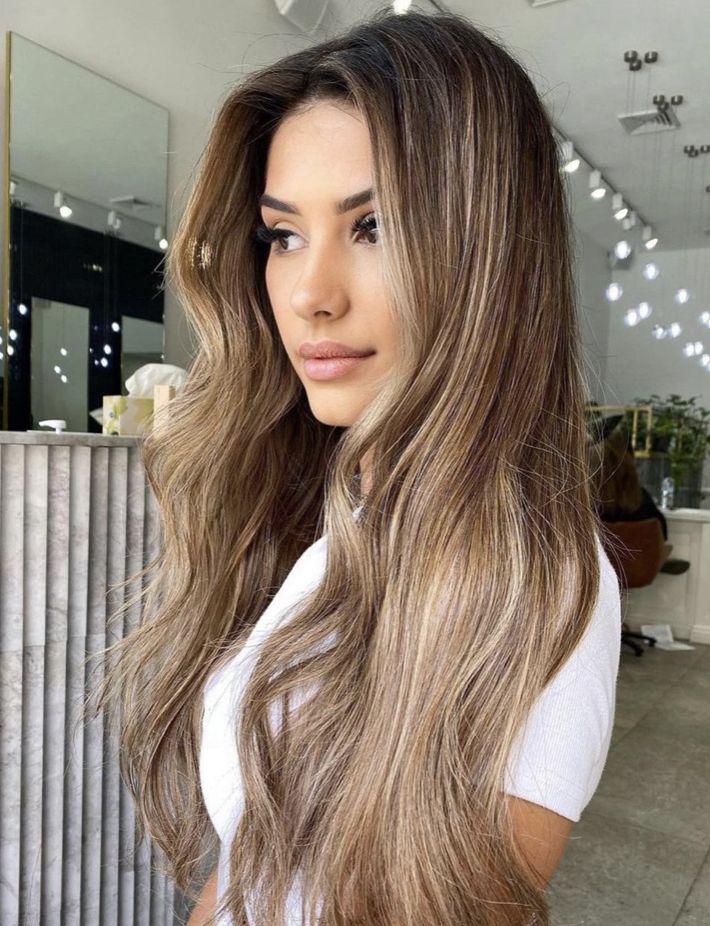
This is the grow-out you want. The natural dark brown blonde blend means the line between your natural and the highlights stays blurred for months. The technique is a soft natural-looking transition, not a stripe. Mid-back length with wavy, thick texture gives the colour room to breathe. I have worn this: by week ten, it still looks like I meant to let it fade. The waves help, too. They break up any potential demarcation.
The upkeep is almost nothing. No purple shampoo, no emergency toner appointment. A trim every ten weeks keeps the ends from splitting. The grow-out is the selling point. With this blend, your roots grow in the same colour family. No harsh line, no panic at week six. The transition means you can stretch salon visits to twelve weeks easy. I have done it. The mid-back length with thick texture hides any unevenness. Just keep the ends healthy and you are set.
Mid-Back With Honey Blonde Balayage
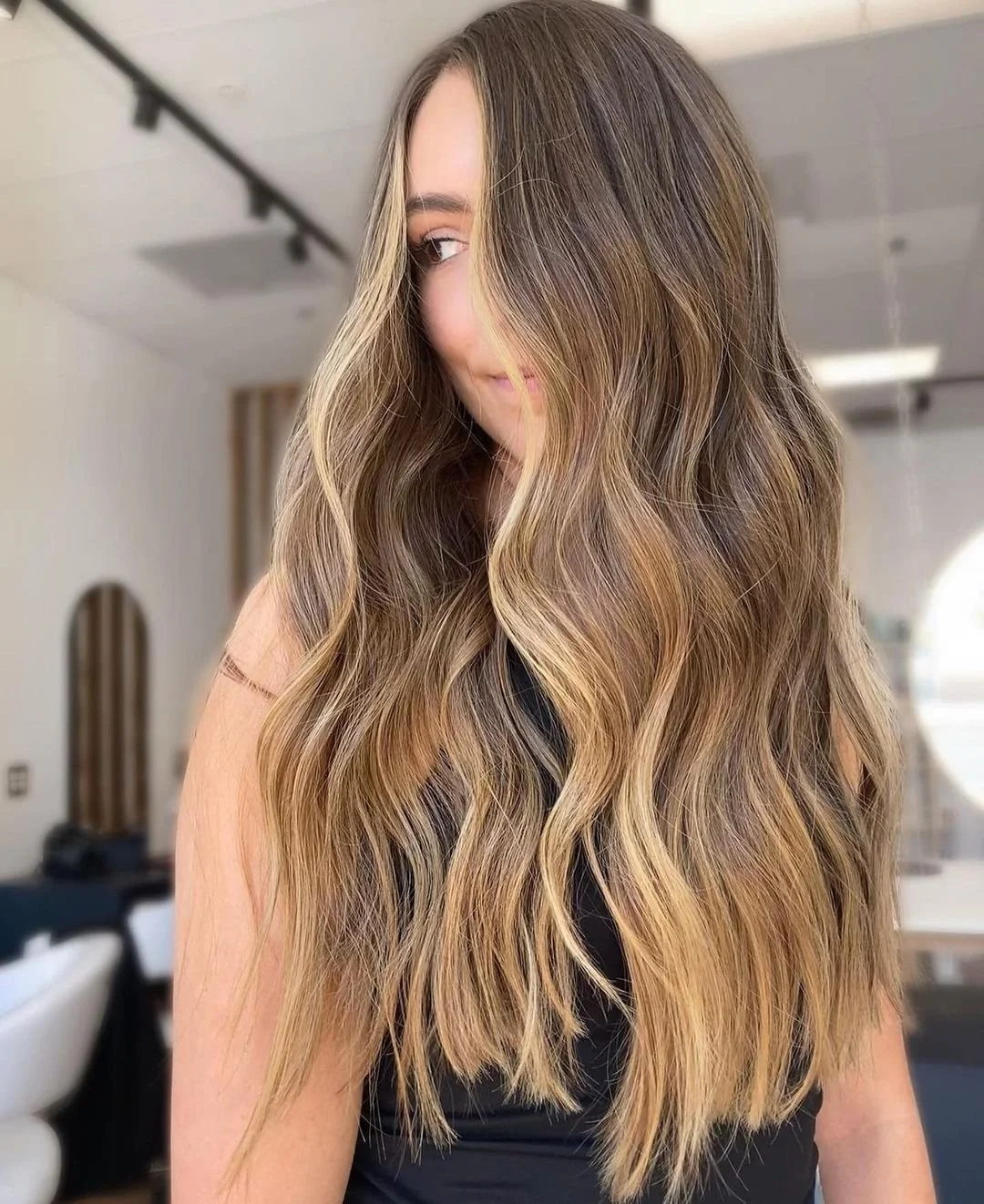
Ever wonder why some balayage looks like it grew that way? The medium brown honey blonde base is the key. The honey blonde balayage is painted on freehand, starting lower than the root. The technique relies on a seamless blend of blonde into brown, no hard lines. Mid-back length with wavy, thick texture lets the colour graduate naturally. Side-swept bangs catch the light at the front.
The stylist uses a sweeping motion, not foils. They keep the saturation heavier at the ends and lighter near the crown. That is what makes the honey blonde balayage read as dimensional rather than striped. The warm tone of the honey against the medium brown creates a sunlit effect. I have had this done: the chair time is worth it for the way it moves.
No Bangs Mid-Back Layers With Blonde Balayage Highlights
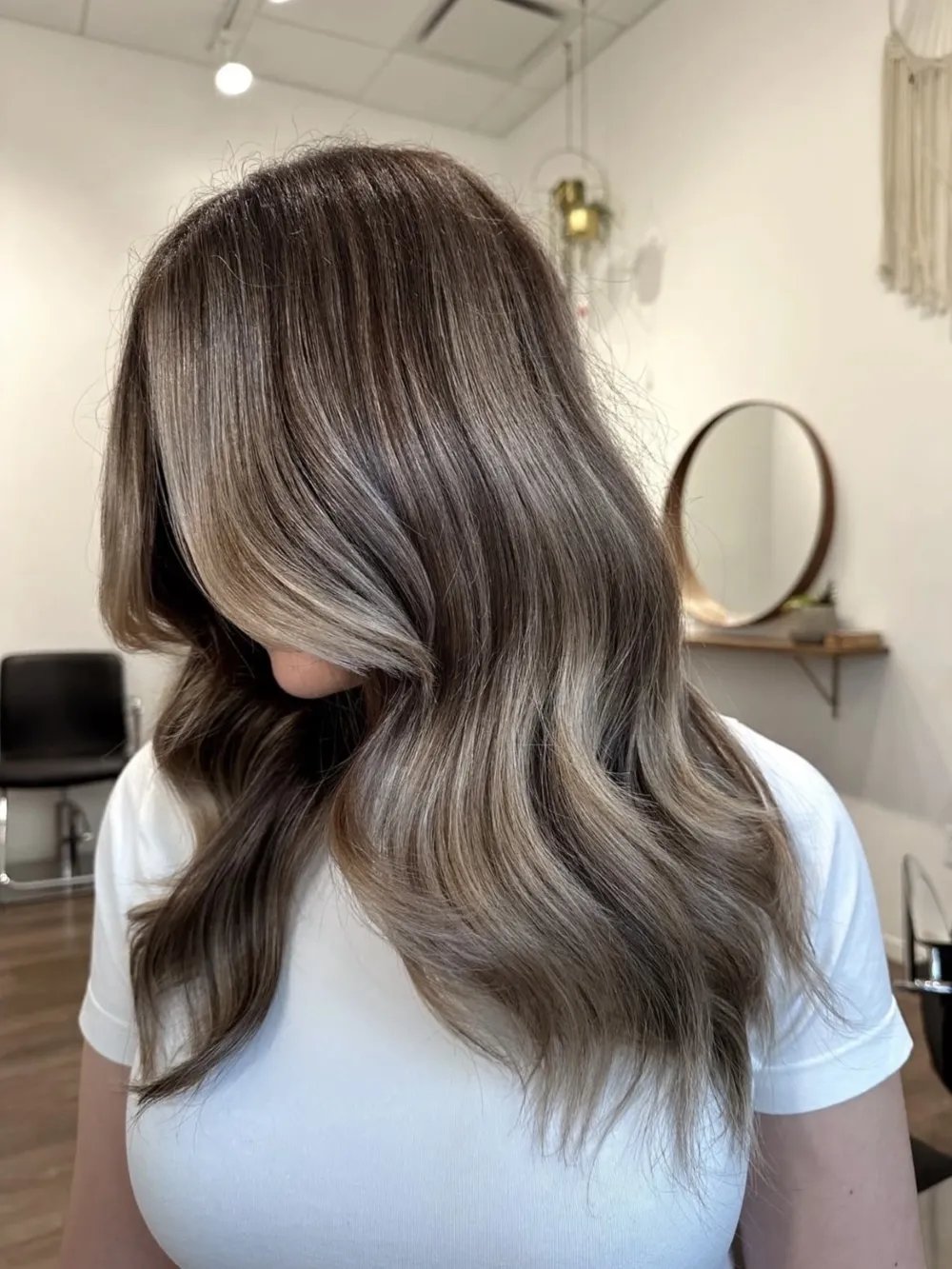
I will admit: I used to think balayage was just expensive highlights. But the dark brown blonde balayage here is different. The blonde balayage highlights are painted on, not foiled, so the blend from dark brown to blonde is gradual. No harsh regrowth line. Traditional highlights give you a stripe at week three. This gives you a soft transition that lasts months. The mid-back layers with wavy, thick texture make the colour look like it grew in the sun. This is a salon job, not a bathroom mirror project.
Back View Close Crop Mid-Back Dark Brown With Blonde Balayage
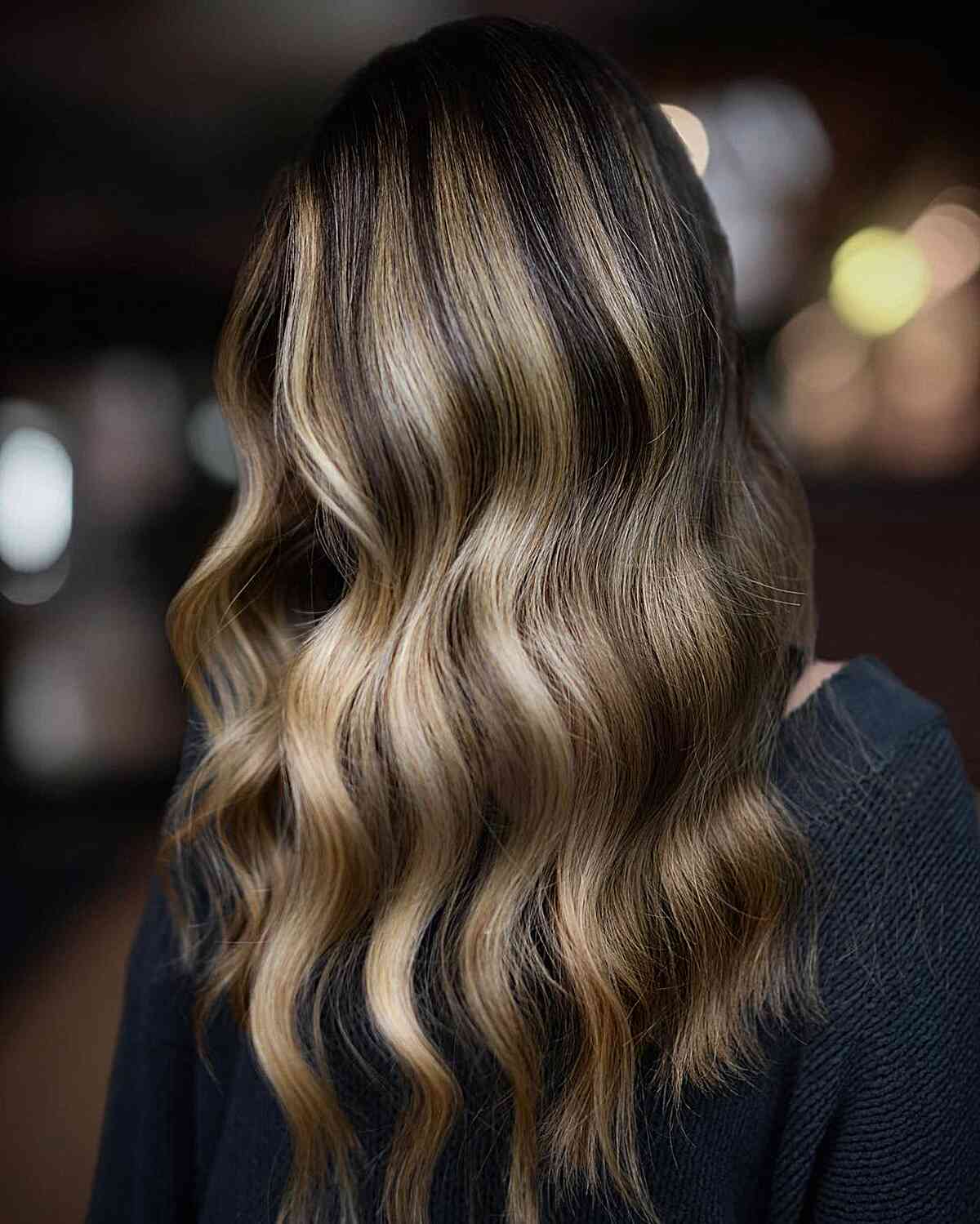
October is the month you stop fighting your roots. A dark brown base with blonde balayage highlights turns the contrast into something deliberate, not apologetic.
The deep brunette anchors the colour while warm blonde tones catch the low autumn light. Wavy, thick texture gives the balayage room to stretch, and mid-back length lets the gradient travel without hitting a hard line. This is the kind of colour that makes sense when the sun sits lower and the air gets dry. The contrast between dark base and blonde highlights reads as a choice, not a grow-out. That dark brown blonde balayage placement means the light pieces sit where they belong without a visible root line. The dark base stays cool and grounded, the blonde stays warm and lifted. It’s a high-contrast look that doesn’t demand daily styling. The thick texture keeps the shape from falling flat. You get the depth of winter and the warmth of fall in every strand. This is the palette that works when the leaves turn and the light shifts. It makes you look deliberate without being fussy.
Layers Mid-Back Dark Brown With Blonde Balayage Gradient
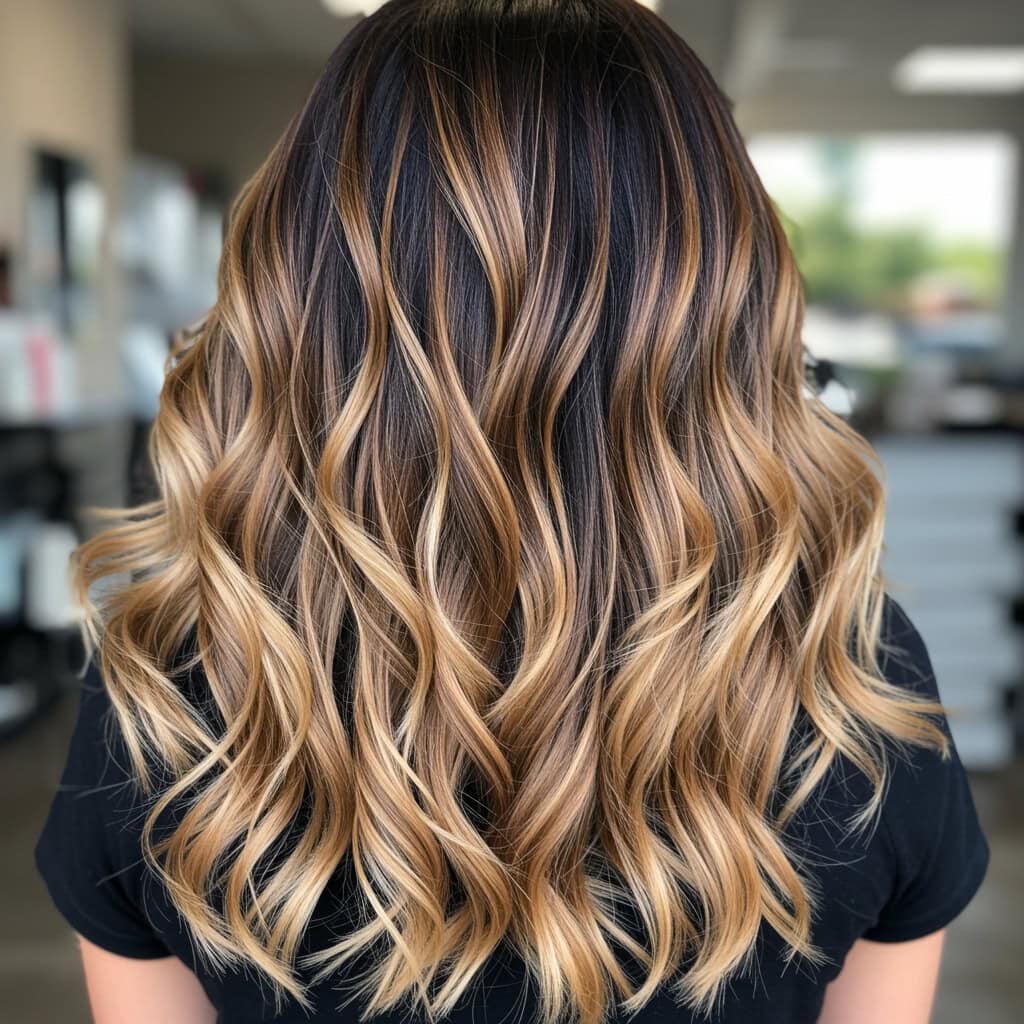
My first reaction: the transition from dark roots to blonde ends is so smooth it looks like it was painted.
The dark brown base shifts gradually into blonde balayage highlights. That dark brown blonde gradient is what makes the colour feel intentional. The technique is balayage, no foils, painted freehand. Wavy, thick texture helps blend the contrast. Mid-back length gives the gradient room to travel. To replicate this at home, start with loose, uneven waves. Use a wide barrel, wrap sections away from the face, then break them up with your fingers. The waves should be soft, not uniform. This allows the light pieces to catch the light at different levels. Tight curls will make the transition look harsh. Keep the texture airy. Finish with a texture spray for grip. The best results come on second-day hair. Protect from heat before curling. The goal is movement, not definition. When the light hits, the gradient reveals itself naturally.
Mid-Back Ombre From Dark Brunette to Blonde
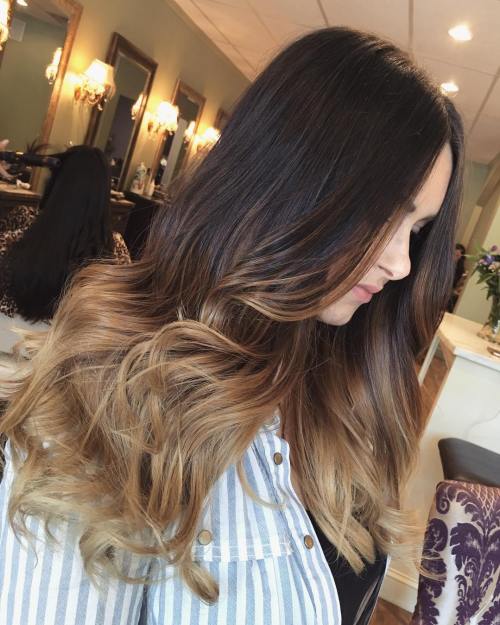
Ever wonder how a dark brunette to blonde ombre keeps that dramatic ombre transition looking deliberate instead of like you forgot to dye your hair? The trick is where the color shifts. It starts low, below the chin, so the dark base stays rich and the blonde ends read as a choice. The stylist paints the lightener on in sections, blending it upward in soft strokes so there’s no hard line. On thick, wavy hair the contrast softens further. A middle part shows off the gradient. Expect trims every eight weeks to keep the ends healthy, and a toner touch-up every ten to twelve weeks to stop the blonde from going brassy.
Dark Brown Base Fading Into Blonde Ombre Mid-Back Dark Brown to Blonde Ombre
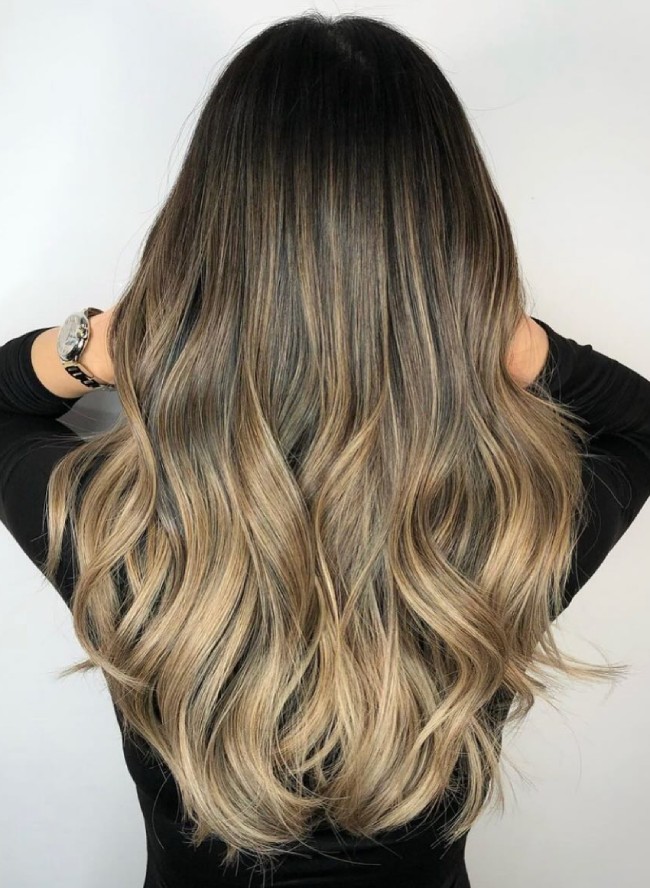
This dark brown blonde ombre is the smooth ombre transition that makes the abrupt version look like a dare. The fade starts higher, around the ears, and melts into blonde so gradually you can’t pinpoint where brown ends and light begins. It’s a salon skill, not a bathroom-mirror job. The stylist layers the lightener in fine, feathered strokes, then glosses over the whole thing to blur any edges. On wavy, thick hair the gradient catches the light and looks almost painted. Try the same idea with a hard line and you get a stripe, not a blend. This one needs a steady hand and a good eye.
Mid-Back Ombre From Dark Brown to Blonde — Wavy Hair Viewed From The Back
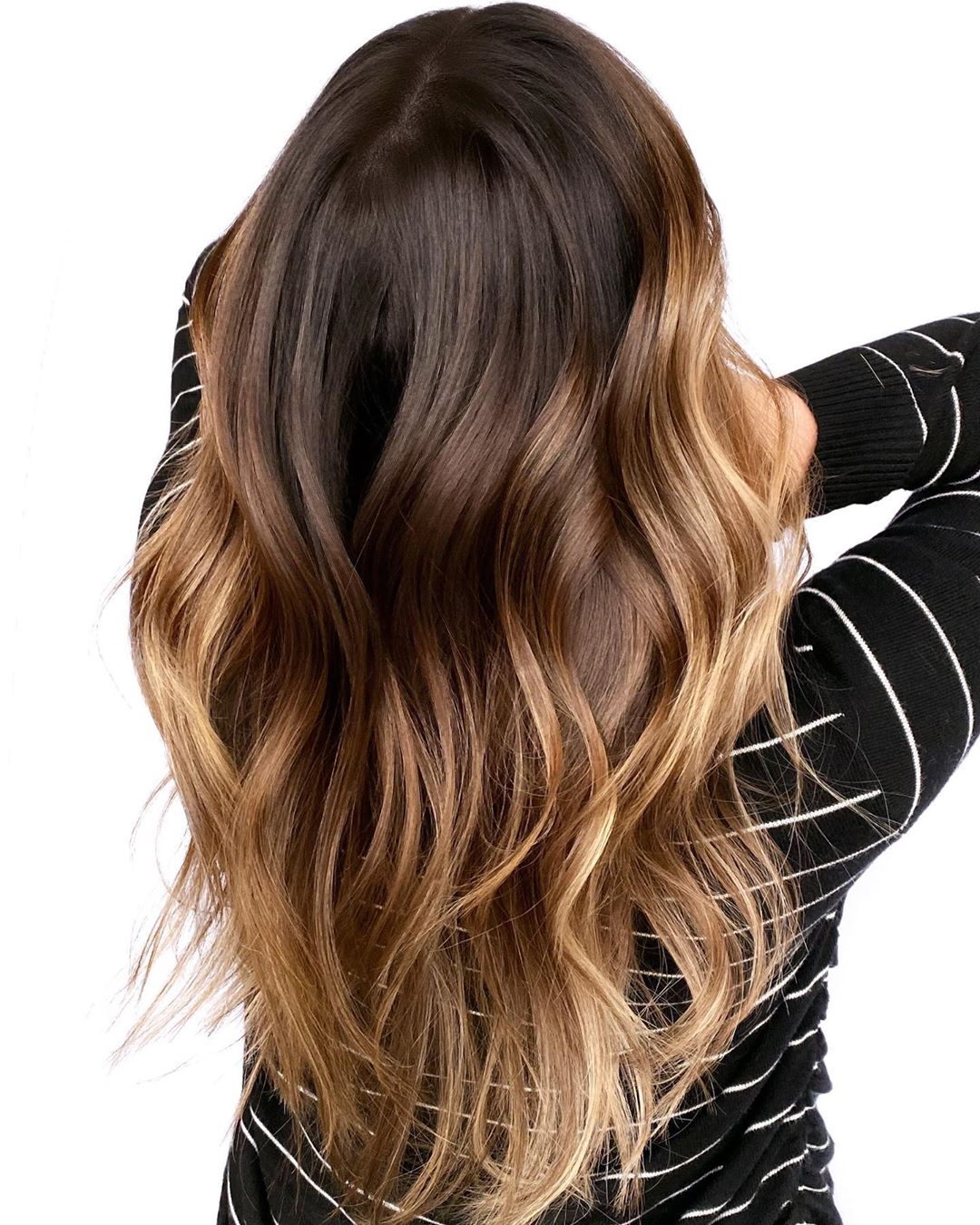
I keep coming back to this one because it’s the fastest way to fake a full head of highlights without the upkeep. The base is a deep, almost black brown that reads expensive, and the money piece is a thick, bright blonde that frames the face like a spotlight. It’s a foil technique, so the blonde sits on top of the hair, not blended all the way through, which means your roots can grow out for a month before anyone notices. On my fine, straight hair, the contrast actually gives the illusion of density, which I did not expect. The length lands just past the collarbone, and the texture is smooth with a slight bend, nothing that requires more than a quick pass with a round brush. You need trims every eight weeks to keep the ends from looking scraggly, but the colour itself is the low-maintenance kind of dramatic. Book the consultation first, because that blonde needs a stylist who understands how to place it so it doesn’t look like a stripe.
Mid-Back Dark Blonde to Brunette Ombre — Creating A Dramatic Ombré Effect
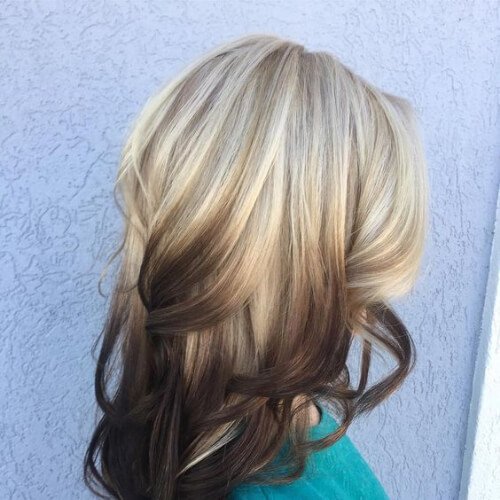
This is the shade I’d pick if I wanted to go brunette but wasn’t ready to say goodbye to blonde entirely. The base is a warm, milk chocolate brown, and the face-framing pieces are a honey blonde that’s painted on with a balayage technique, so there’s no harsh line where it starts. It’s a tonal thing: the honey warms up the brown without turning it brassy, which is a trick I’ve only seen done well when the stylist uses a gloss after. The length is mid-back, and the texture is naturally wavy, which helps the face-framing blend into the rest of the hair instead of looking like a separate strip. I was surprised by how well it held up through a sweaty week, the colour faded evenly rather than going patchy. It’s not a low-commitment look, you’ll be back for a toner every ten weeks or so, but it’s the best grow-out I’ve tried because the dark root just melts into the lighter pieces. Ask for a soft root shadow and no visible line, and you’ll get six calm weeks before you even think about a touch-up.
Long Layers Mid-Back Honey Blonde Ombre
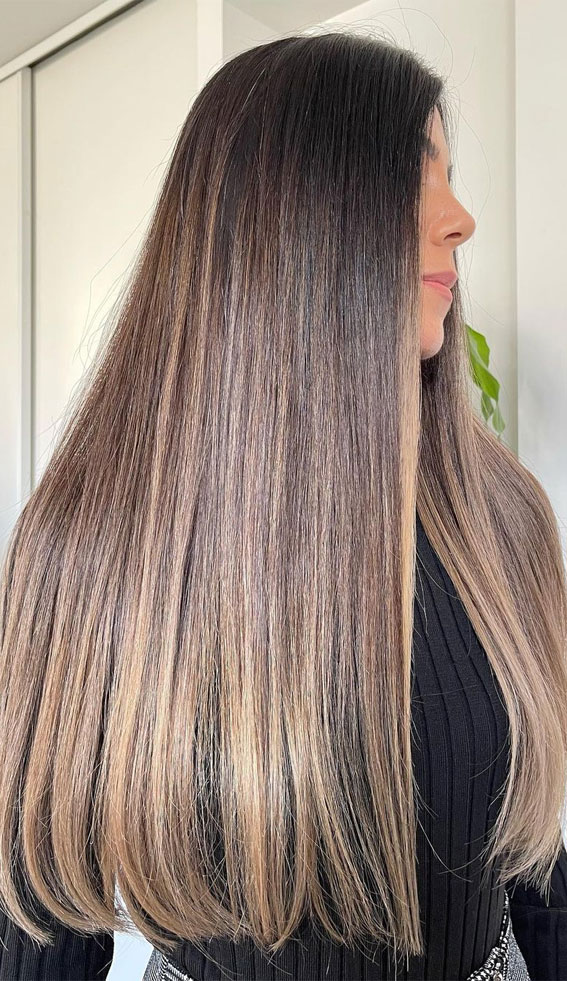
When did brown start looking this expensive? This collarbone cut is the quiet workhorse of the group, and the ash blonde root shadow is why. The base is a cool, mushroom brown, and the ends are a muted ash blonde that’s been smudged at the roots, so there’s no harsh grow-out line, just a soft, lived-in gradient. It’s a shadow root technique, which means the darker colour is concentrated at the scalp and melts into the lighter ends, and it completely changes how often you need to see your colourist. The texture is straight and fine, which is exactly what this cut needs, the blunt-ish ends make the hair look thicker than it is, and the length sits right at the collarbone so it doesn’t weigh the style down. I was genuinely surprised by how much I liked it, because ash tones can go flat fast, but this one stays cool without looking grey. You’ll need a trim every six to eight weeks or the ends will start to split, and the colour needs a purple shampoo once a week to keep the brass away. It’s not a dramatic change, but it’s the kind of brown that makes people think you were born with it.
Shoulder Curls With Caramel Blonde Highlights
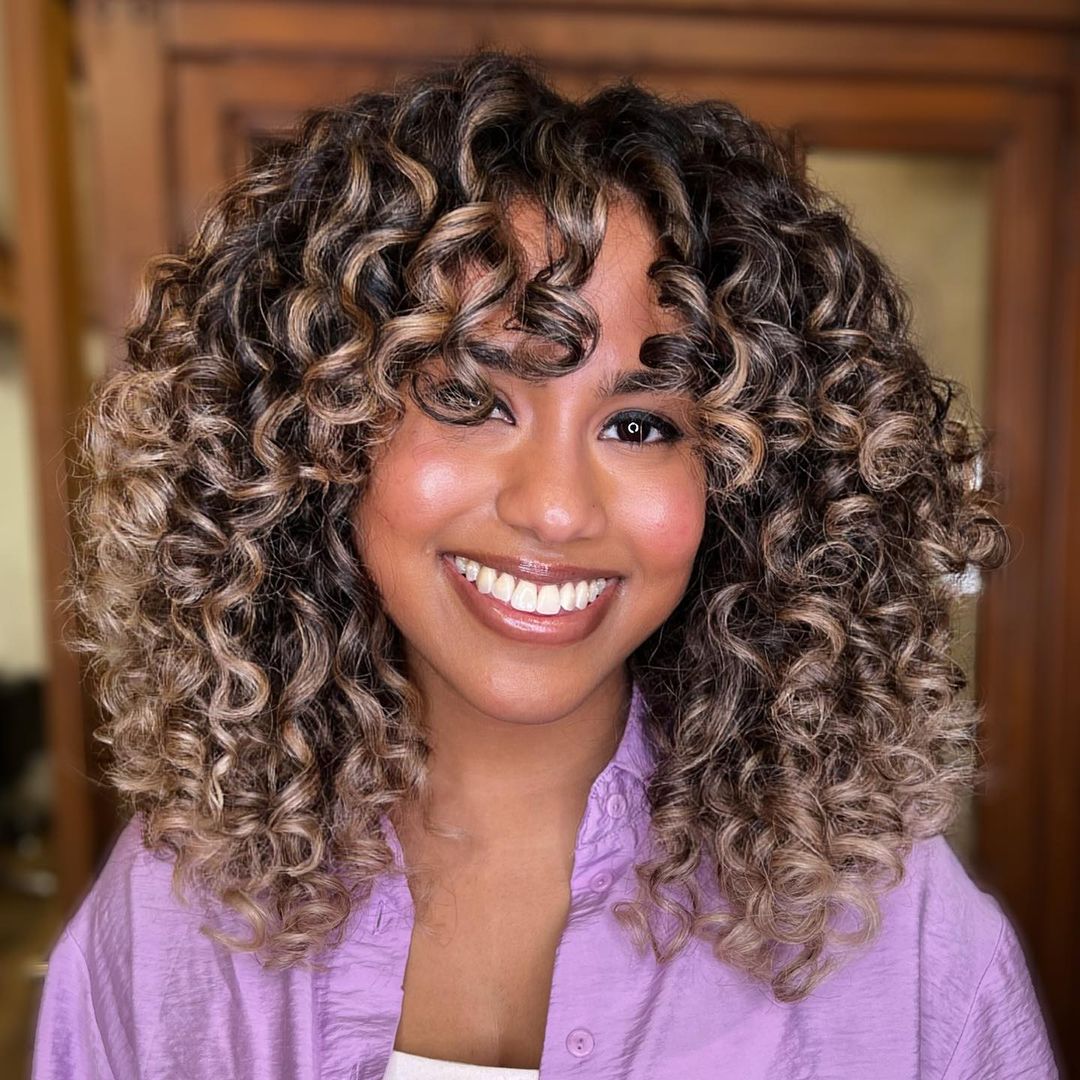
What makes shoulder length curls caramel blonde pop so hard? It’s the placement. The stylist weaves the caramel blonde highlights through the top and around the face, keeping the underlayer dark for depth. On curly, thick hair the color wraps around each coil, so the tone shifts as you move. The dark brown base grounds it, the caramel warms it, and the blonde catches the light. Full bangs pull the whole thing forward. Wear it defined with a curl cream and a diffuser. Trims every six to eight weeks keep the shape bouncy, and the highlights need a touch-up every ten to twelve weeks to stay bright.
Final Thoughts
Weeks later, I still see women asking for dark roots and a bright front. The more of these I write, the more I notice brown carrying the shape and blonde carrying the light.
- Book a root shadow every eight weeks
- Tone at week six, not week ten
- Trim the baseline every three months
- Deep condition once a week
I am booking the caramel balayage next. Brown with blonde kept to the middle, that is the version I can live with.