A blowout is just a blow-dry with ambition: round brush, directed airflow, and the kind of volume that makes you reconsider your relationship with your flat iron. Right now, that means soft face-framing layers and curtain bangs that move, not sit still, plus a lived-in color that doesn’t demand a root touch-up every three weeks.
This collection of 27 Blowout Hairstyles covers the range from chin-length bobs to mid-back waves, for fine strands that fall flat by lunch and thick manes that need taming. You will find a blowout that holds, a fringe that behaves, and a shade that stays glossy longer than your last one did.
Collarbone Layered Blowout With Curtain Bangs

A side part and curtain bangs transform a collarbone-length layered cut into a shape with movement. The dark brown base with subtle highlights adds depth, and the straight, thick texture holds the blowout shape with minimal effort. Ask your stylist for: collarbone layered blowout with curtain bangs, side part. The face-framing layers soften the length and create a deliberate shape rather than a blunt line. Curtain bangs tend to suit round and heart faces best, and a round brush aimed forward during drying is what gives them that curved finish.
Mid-Back Long Layered Blowout With Curtain Bangs
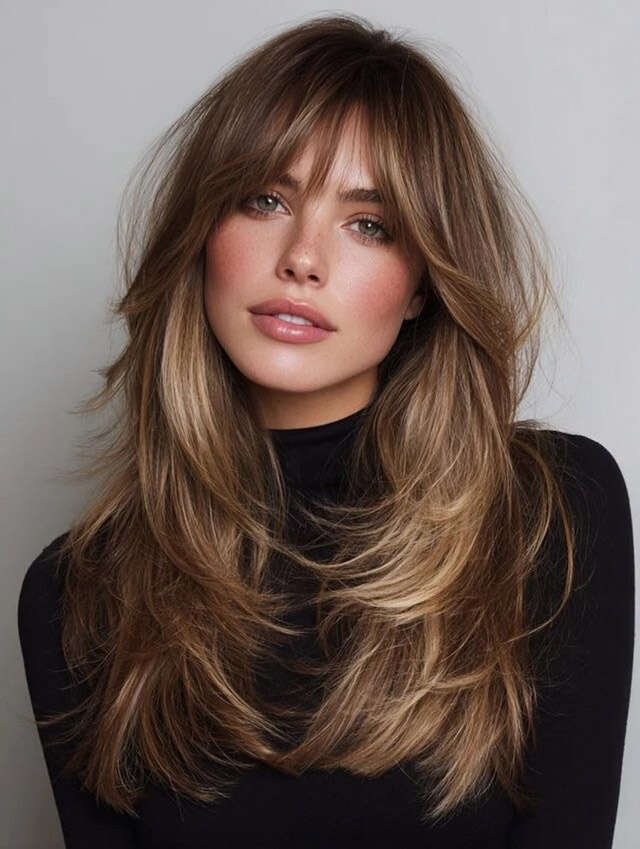
Can thick, wavy hair actually hold a blowout past lunch? It can, if the layers are long enough to remove weight without losing shape. This mid-back version uses a dark blonde balayage with lighter pieces woven through, so the waves read as dimensional rather than flat. Ask your stylist for: mid-back long layered blowout, soft curtain bangs.
The middle part keeps the volume balanced on both sides, and the curtain bangs frame without committing to a full fringe. A volumizing mousse at the roots before drying helps the lift last, and trims every eight to ten weeks prevent the layers from turning into a shapeless curtain. Most face shapes get along with curtain bangs, which is convenient.
Fine Honey Blonde Blowout With Face-Framing Layers

Fine, straight hair tends to lie flat the second it dries, so a blowout on this texture requires a few deliberate steps. The honey blonde base with lighter highlights adds visual dimension, and the soft face-framing layers prevent the length from dragging the whole thing down. Ask your colorist for: mid-back fine hair blowout, soft face-framing layers, honey blonde.
Start with a heat protectant, then dry the roots in the opposite direction of the part. A dry texture spray on the ends adds enough grit to keep the shape from collapsing, but fine hair loses curl memory faster than thick hair, so plan on refreshing with a curling iron the next day. Trims every six weeks keep the layers defined.
Platinum Blonde Blowout With Voluminous Waves
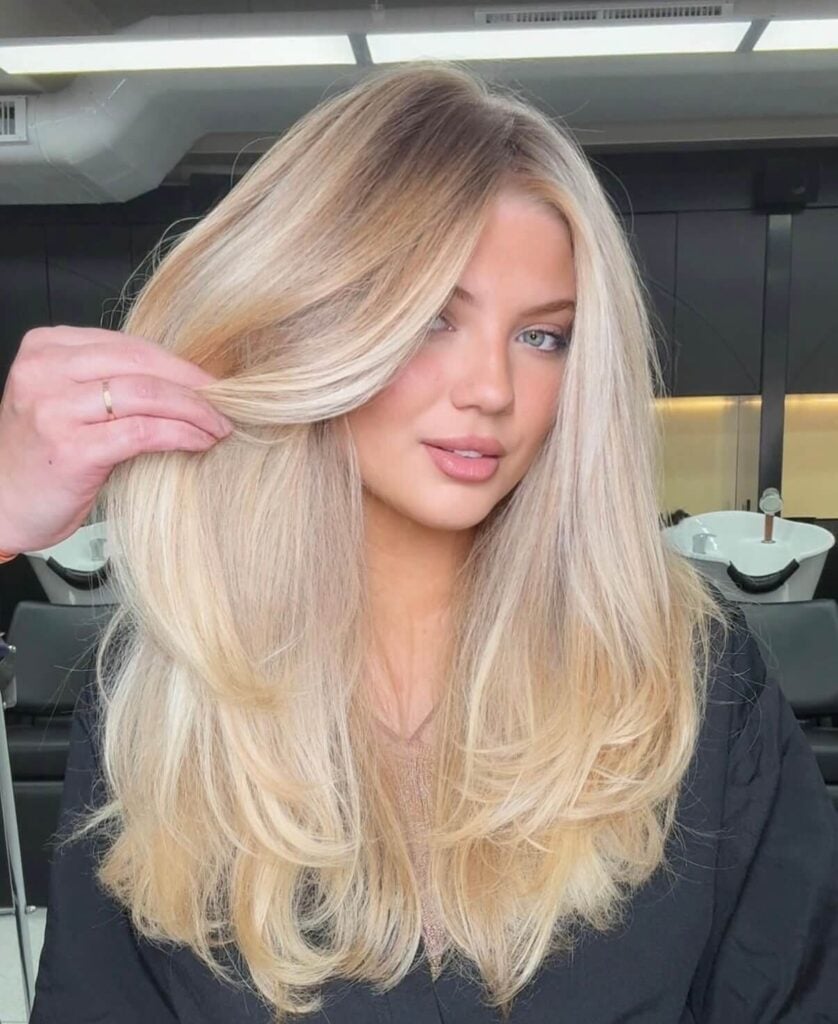
A solid platinum shade can look flat on thick, wavy hair, which is why the root shadow here matters as much as the waves. The darker regrowth zone adds depth at the scalp, so the volume looks built in. Ask your colorist for: mid-back platinum blonde blowout, voluminous waves, curtain bangs.
The large soft waves are created with a big barrel after the blow-dry, and the curtain bangs keep the front from feeling too heavy. This style suits a night out: the shine and the lift both photograph well, and the platinum catches warm light without washing out. Toning every four to six weeks is required to prevent brassiness.
Dark Brown Blowout With Voluminous Layers No Bangs
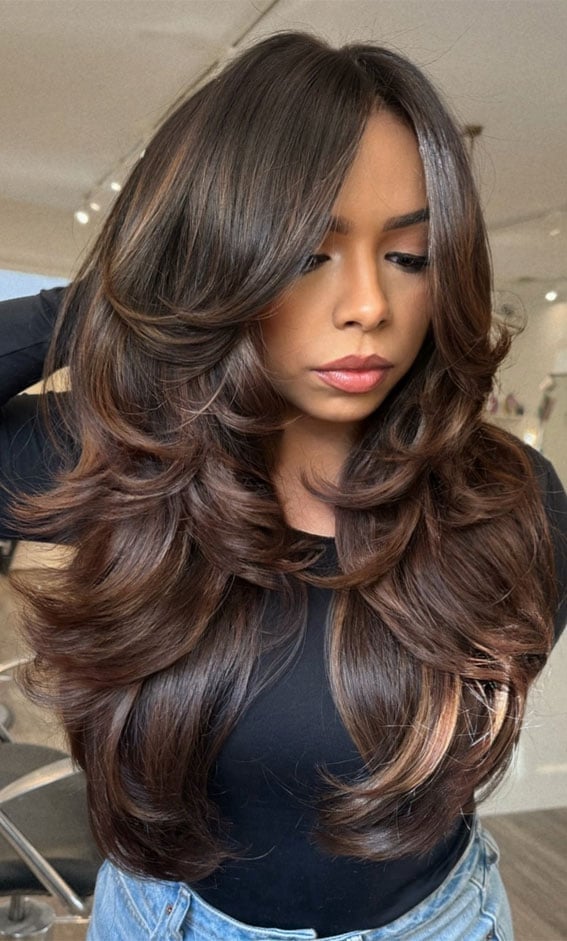
No bangs means the eye goes straight to the volume, and this mid-back cut delivers it through long layers that start below the shoulder. The dark brown base with subtle highlights keeps the depth while preventing the hair from reading as a single dark block. Ask your stylist for: mid-back dark brown blowout, voluminous layers, no bangs.
The soft, large waves are the result of a round brush and a medium heat setting, not a curling iron, which means the shape holds longer on thick, wavy texture. A smoothing serum applied before drying controls the frizz that dark hair tends to show in humidity. Trims every eight weeks keep the layers from tangling at the ends.
Collarbone Wavy Blowout With Shine
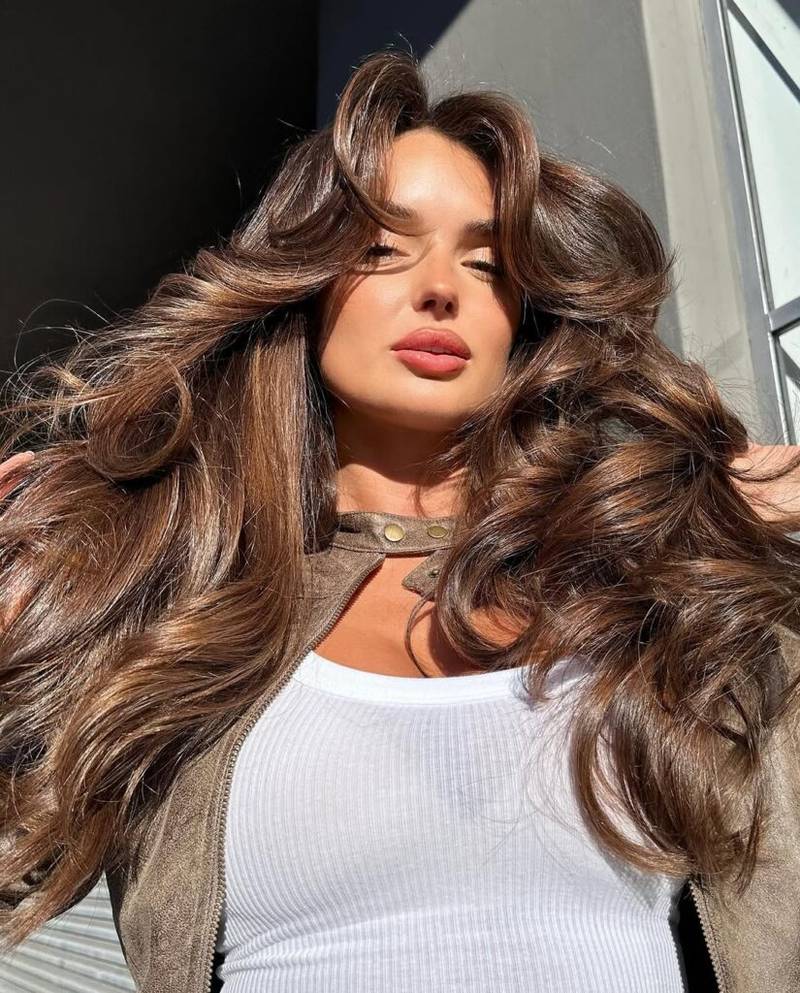
To get a blowout that looks both voluminous and glossy without losing its shape by lunch, this collarbone-length style relies on the blow-dryer technique more than the cut. Ask your stylist for: collarbone thick wavy blowout, volume and shine. A boar bristle brush is your main tool here: it smooths the cuticle while lifting at the roots for that rounded shape. The brown base with subtle highlights adds depth so the shine looks dimensional, not flat. This is a salon-level finish, so budget about 45 minutes with a round brush and a heat protectant.
Shoulder Length Smooth Blowout
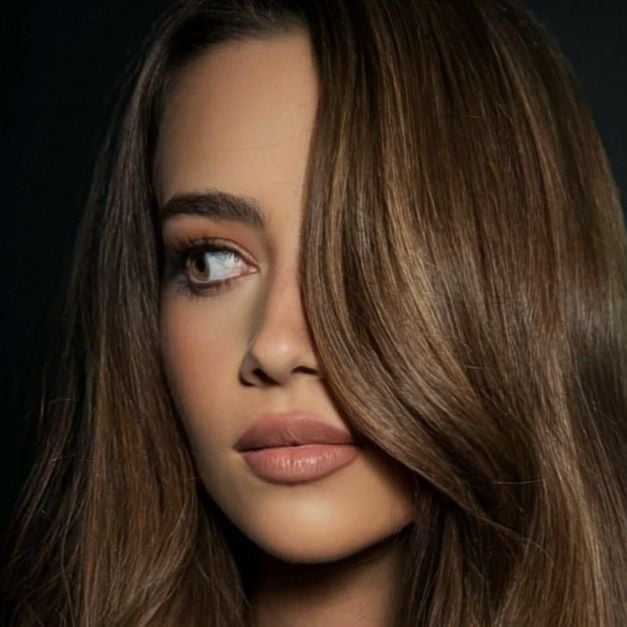
A smooth blowout on shoulder-length hair holds best when the layers are long enough to avoid a mushroom effect. This dark brown style, with its thick wavy texture and glossy finish, works because the long layers remove bulk without sacrificing weight.
Ask your stylist for: shoulder length smooth blowout, glossy finish. The middle part keeps the shape symmetrical, and the side profile shows how the shine catches from every angle. To maintain that polished look, finish with a shine serum or spray after blow-drying. A trim every six to eight weeks keeps the ends from fraying, which is what dulls the gloss first.
Collarbone Wavy Blowout With Balayage
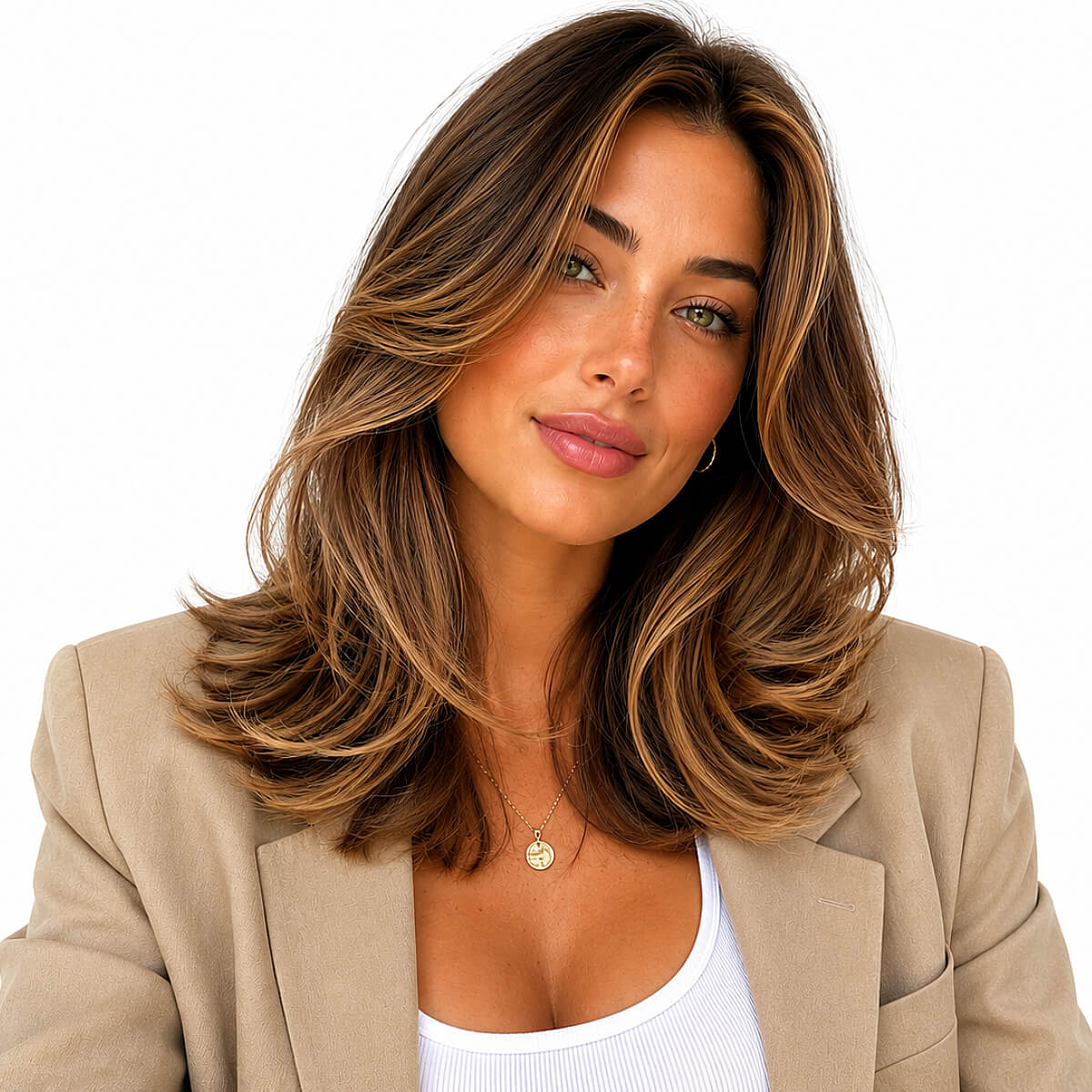
The genius of this collarbone blowout is how the dark blonde balayage reads like sunlight hitting the waves, not a deliberate highlight pattern. Thick wavy hair takes to this treatment well: the balayage lands on the ends, leaving the root area dark so the grow-out is gentle.
Ask your stylist for: collarbone wavy blowout with curtain bangs, dark blonde balayage. This style suits warmer weather because the lighter pieces reflect light, making the hair look airier than a solid dark shade would. A texturizing spray spritzed on dry waves keeps the shape from going too tidy. The curtain bangs frame the face without a full fringe, which is a practical move for humid days.
Shoulder Ash Blonde Blowout With Waves
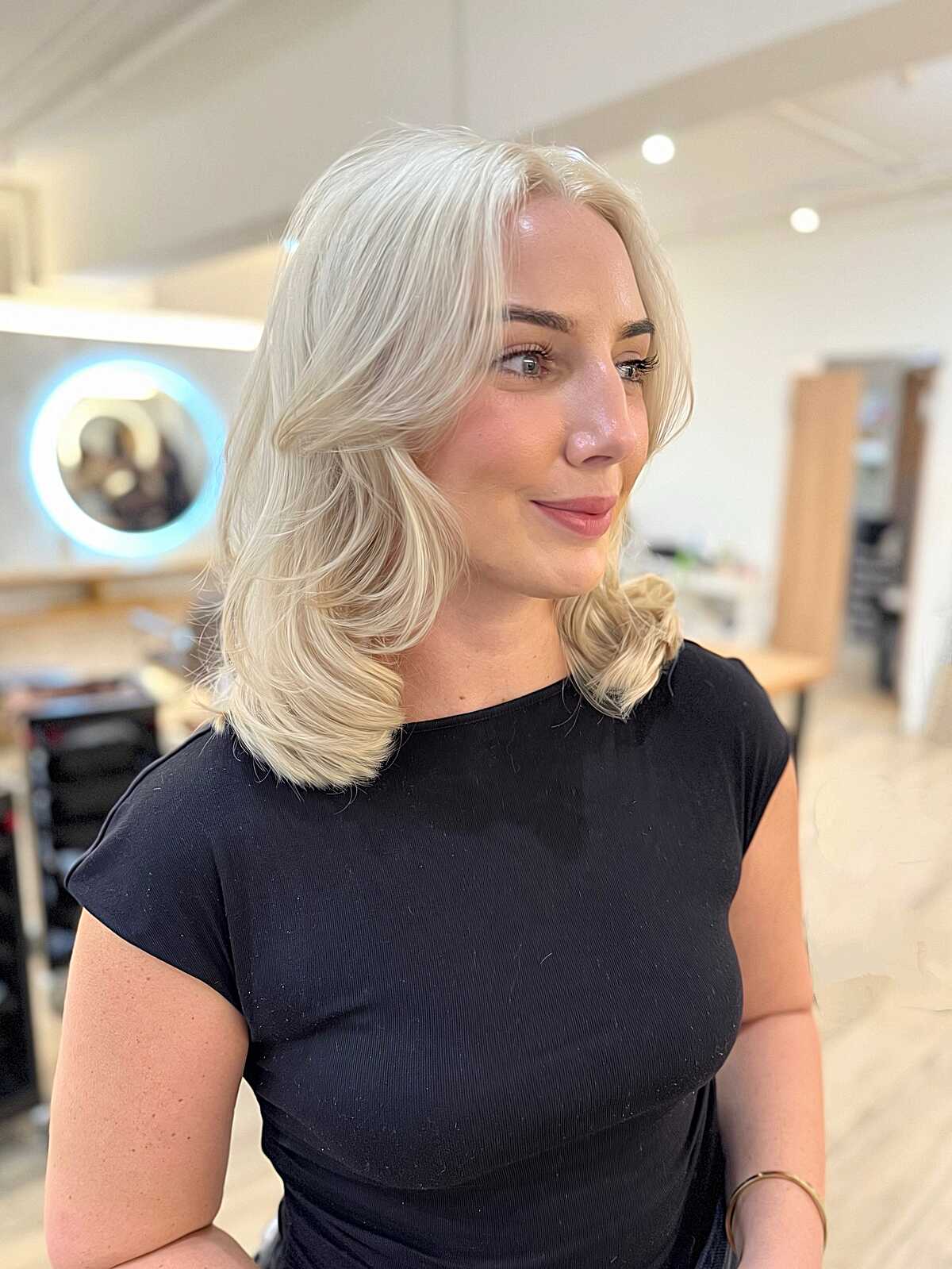
The ash blonde tone cools down the overall look so the gentle waves feel modern. Medium-density wavy hair at collarbone length benefits from the soft layers and curtain bangs, which add movement without thinning the ends. Ask your stylist for: shoulder length ash blonde blowout, soft layers, curtain bangs. The side view reveals how the face-framing pieces soften the perimeter, making the shape feel deliberate. A sea salt spray applied to damp hair before blow-drying gives the waves grip without crunch. Toning every four to six weeks keeps the ash from shifting toward yellow, which is the main risk with this shade.
Mid-Back Dark Brown Blowout With Blonde Highlights
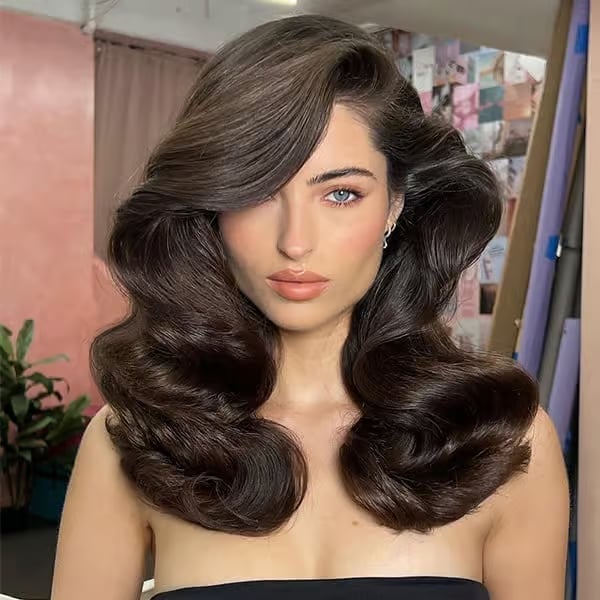
Who actually benefits from a mid-back blowout with blonde highlights? Thick, wavy hair, for starters: the length needs weight to hold the wave pattern, and the highlights prevent the dark brown from looking too heavy. The blonde pieces are spaced enough to add brightness without turning into a stripe effect.
Ask your stylist for: mid-back dark brown blowout with blonde highlights, volume and shine. This style holds its shape for a full day because the long layers distribute the volume evenly from root to tip. A smoothing cream applied before blow-drying controls the thickness and seals the cuticle for shine. A trim every eight weeks keeps the ends healthy enough to hold the wave. The middle part keeps the volume symmetrical, which matters at this length.
Shoulder Length Black Blowout With Waves
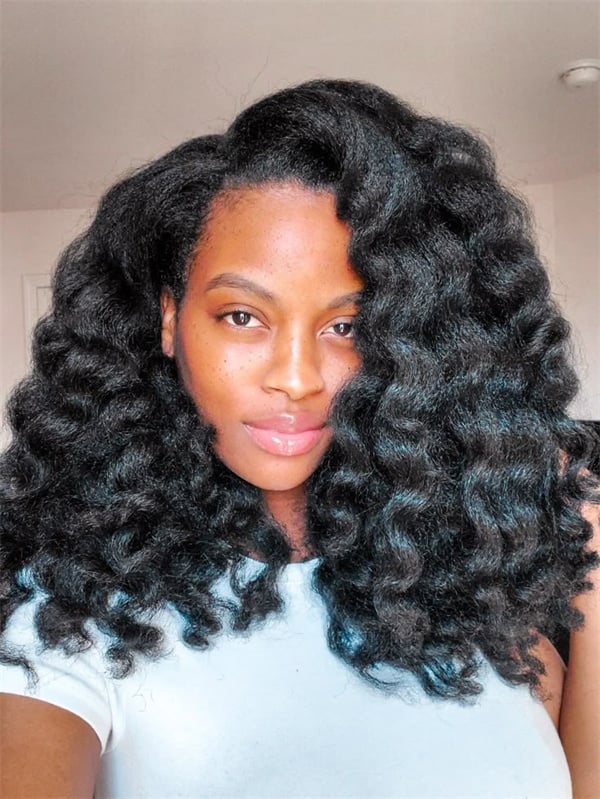
A side part does the heavy lifting here, creating that lifted crown without backcombing. Ask your stylist for: shoulder length black blowout, voluminous waves, side part. The drawback is that this look is technically a two-tool job, the blow-dryer for the initial shape and a curling iron to lock in the waves, so it leans salon-leaning if you want it to hold past dinner. A trim every six weeks keeps the ends from going flat.
Chin Length Shaggy Copper Blowout
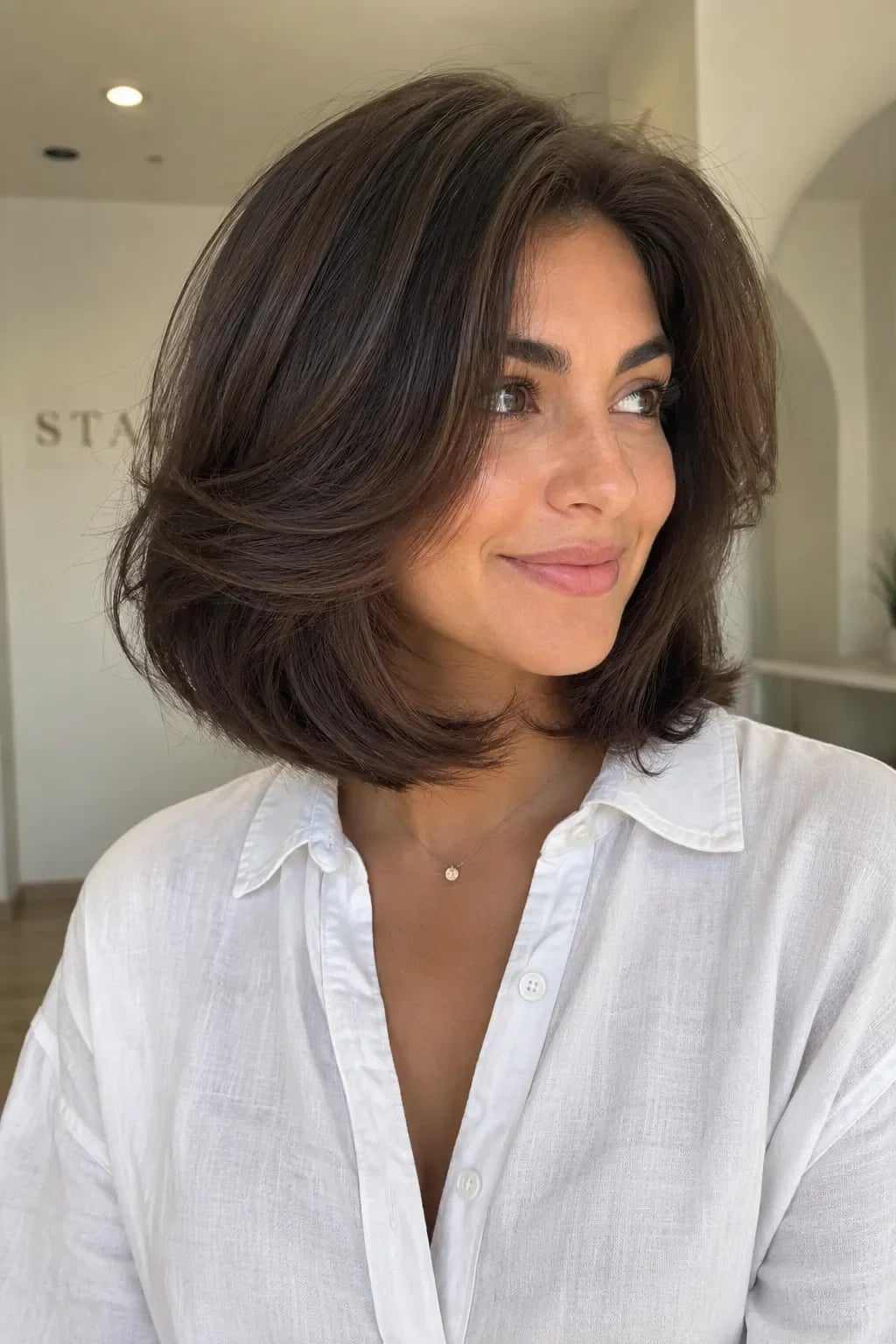
The shaggy cut does the work here, not the styling. That chin length copper base with choppy bangs creates a deliberately undone texture, even though a blowout sets the wave pattern. The lighter highlights add depth to the layers in a way a single process copper cannot. Ask your stylist for: chin length shaggy blowout, choppy bangs, copper color. Thick, wavy hair is a good starting point. A side part pushes the volume to one side, and a trim every four to six weeks keeps the choppy ends from looking ragged.
Mid-Back Blonde Blowout With Waves
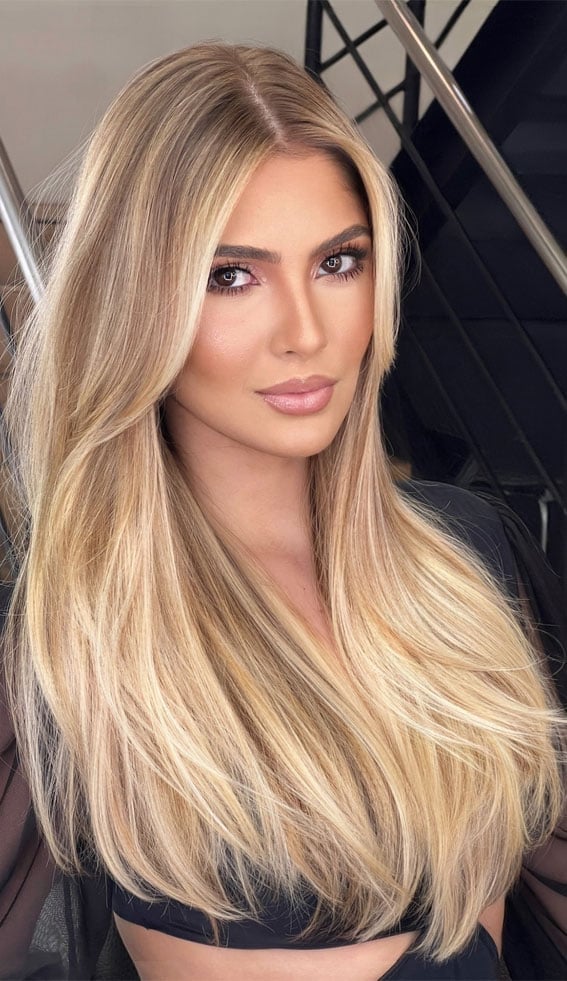
A bright blonde mid-back blowout with waves has a different energy than its darker counterpart. The lighter shade reflects more light, so every wave looks like a separate, glossy ribbon instead of a single block of volume. That middle part keeps it from veering into pageant territory. Ask your colorist for: mid-back blonde blowout, voluminous waves, subtle highlights. Thick, wavy hair holds the shape best, and the layers keep the length from dragging the roots flat. This is a work-appropriate look that crosses into evening with a spritz of shine spray. A trim every eight weeks keeps the ends healthy enough to bounce.
Mid-Back Black Blowout With Volume
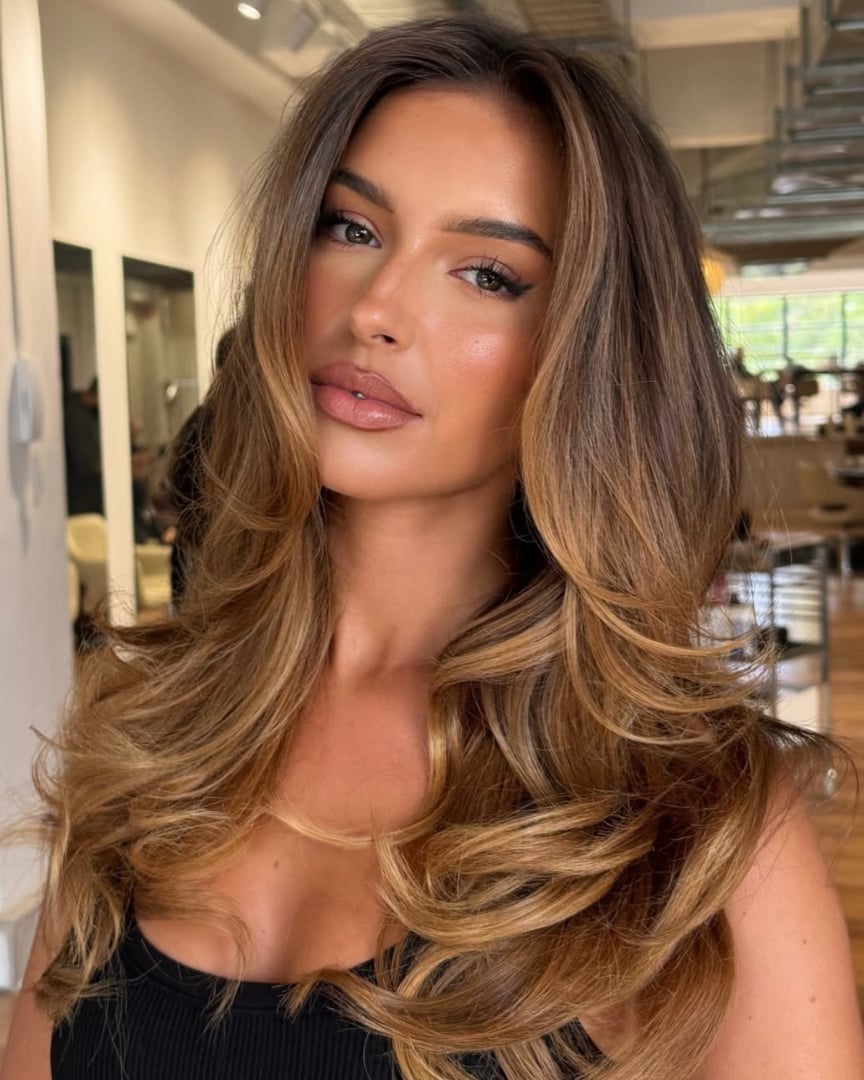
How do you ask for volume that looks structural rather than accidental? Start with the cut: long layers that stack weight at the crown, not the ends. Black hair at mid-back length can read heavy without the right shaping, so the soft waves here are carved with a large round brush, not a curling iron. Ask your stylist for: mid-back black blowout, significant volume, soft waves. A volumizing spray at the roots, dried upside down, gives the lift; a glossing serum seals the cuticle for that mirror finish. This is a salon-level technique, the blow-dryer angle alone takes practice, but the hold lasts through a full day. Trim every eight weeks.
Chin Length Shaggy Copper Blowout, Choppy Bangs

The choppy bangs here are the anchor of the whole shape. On a chin-length shaggy cut in rich copper with lighter highlights, they break up the face line and keep the volume from sitting too round. The blowout sets the wave, but the cut provides the texture. Ask your stylist for: chin length shaggy blowout, choppy bangs, copper color. Thick, wavy hair carries the shaggy layers without losing density, and the side parting adds a little asymmetry to balance the blunt bangs. A trim every four to six weeks is non-negotiable, choppy bangs grow out fast and lose their precision.
Mid-Back Dark Brown Blowout With Layers
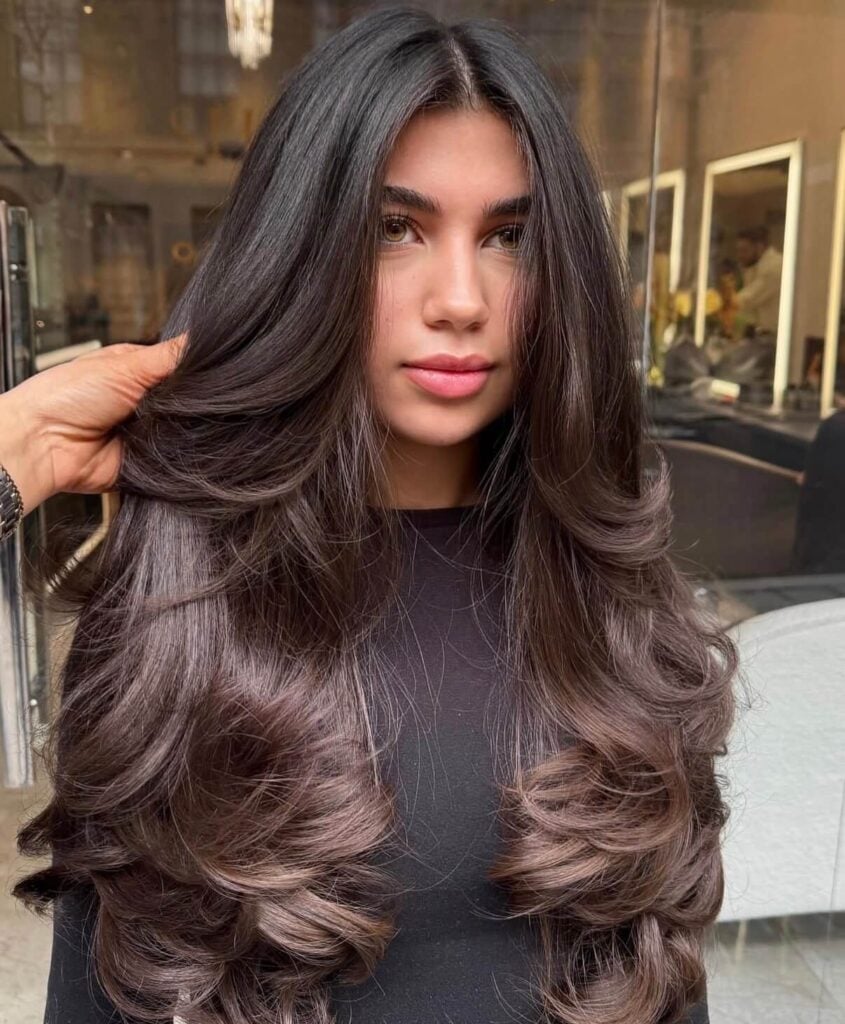
The grow-out of long layers on a mid-back dark brown blowout is remarkably forgiving, but only if the layers are placed correctly. Thick, wavy hair benefits from layers that start a few inches below the collarbone, adding movement without sacrificing the length. The subtle highlights against the dark base give the waves some visual depth, so the shape holds its volume even on day two. Ask your stylist for: mid-back dark brown blowout, soft large waves. A smoothing serum applied before drying controls any frizz, and a trim every eight weeks keeps the layers from looking stringy. The middle part works best for this one, letting the volume fall evenly on both sides.
Collarbone Layered Blowout With Flipped Ends
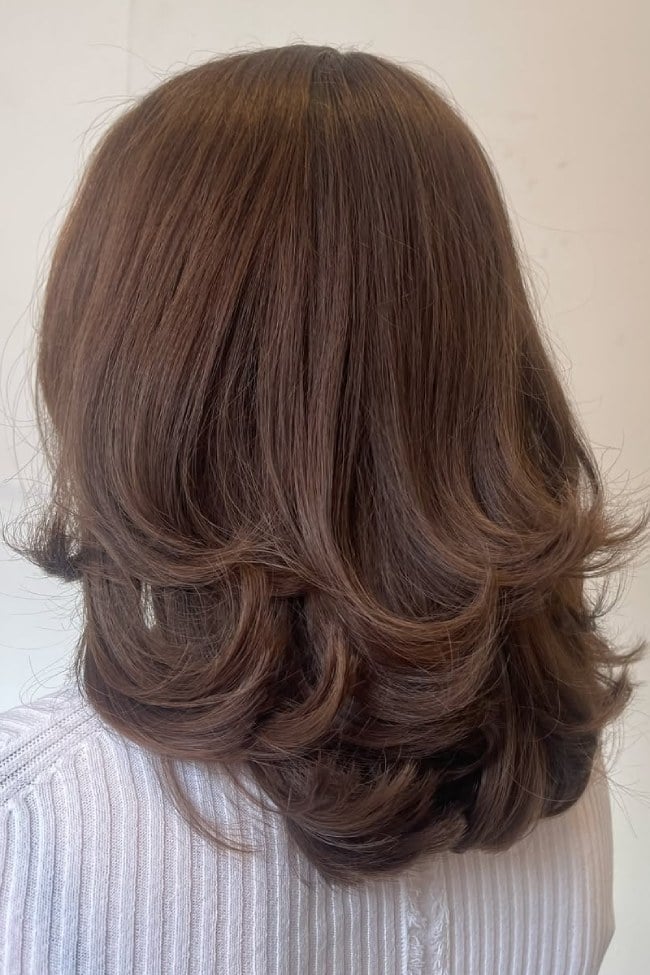
The flipped ends on this collarbone layered blowout are a deliberate design choice that works best when the hair is thick and wavy. The outward flick adds a lightness that suits the transitional months between seasons, when you want something less structured than a full curl set but more polished than air-dried waves. Ask your stylist for: collarbone layered blowout, outward flipped ends. A round brush is the tool here, directing the ends as you dry each section. The medium brown base keeps the look grounded, while the volume at the crown prevents the flip from reading as top-heavy.
Mid-Back Black Blowout With Face-Framing Pieces
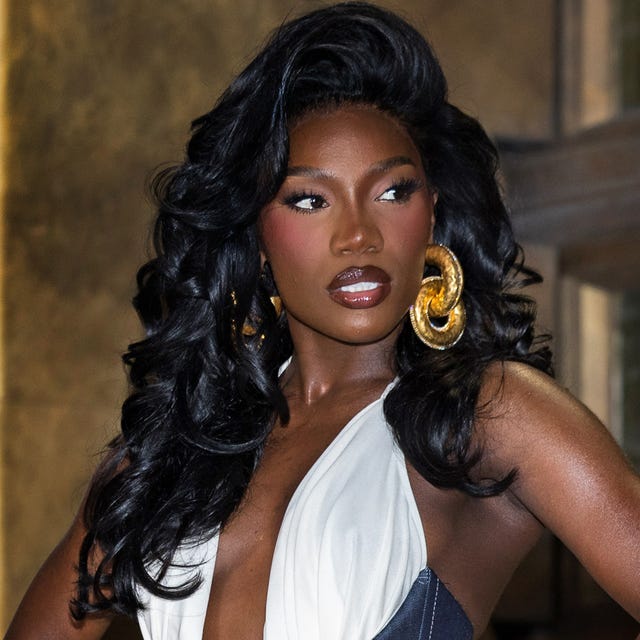
A side part and soft face-framing pieces are what keep this mid-back black blowout from feeling heavy. The thick, wavy texture is ideal for a high-gloss finish, and the layers around the face draw attention to the jawline without requiring a full fringe. The volume starts at the roots and carries through to the ends, giving the hair a buoyancy that black hair can sometimes lack when it is too smooth. Ask your stylist for: mid-back black blowout, face-framing pieces, side part. A large round brush is essential for shaping those front sections, and a trim every eight weeks maintains the clean line. The side part also helps the blowout hold its shape longer, since the hair falls in one consistent direction.
Mid-Back Bubble Blowout With Straight Texture
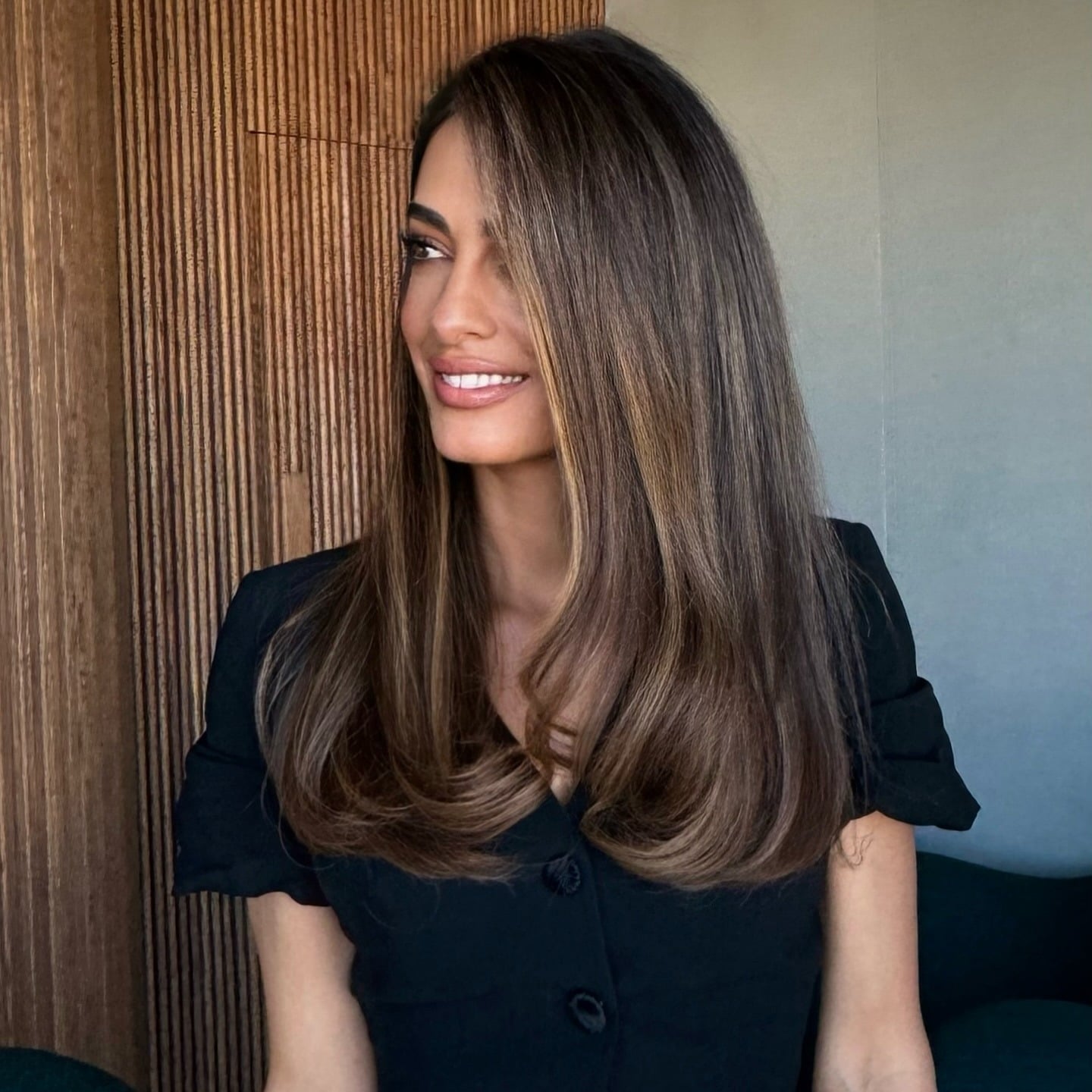
The bubble blowout technique relies on tension and a round brush to create those rounded ends, and it works best on straight, thick hair that can hold a smooth shape. The long layers on this mid-back length are cut to support the bubble effect, with the ends curling under in a soft C-shape. The dark brown base with subtle highlights adds depth, so the bubble ends have a glossy finish without looking blunt. Ask your stylist for: mid-back bubble blowout, straight texture. The styling steps are straightforward: dry the roots for lift, then wrap each section around a medium round brush, pulling downward to create the rounded finish. The one real drawback is that the bubble shape loses definition in humidity, so a heat protectant with humidity resistance is essential.
Collarbone Blonde Blowout With Feathered Layers

Can wavy, medium-density hair carry a feathered blowout without looking flat? Yes, if the layers start high enough. The collarbone blonde blowout with long feathered layers and curtain bangs works because the lighter highlights add an illusion of texture, and the wavy texture provides natural grip for the volume to hold. The curtain bangs soften the transition from the crown to the collarbone, so the whole shape reads as cohesive rather than choppy. Ask your stylist for: collarbone blonde blowout, long feathered layers, curtain bangs. A texturizing spray applied to the mid-lengths enhances the feathered effect, and a trim every six weeks keeps the layers from losing their airy shape. The middle part is the right choice here, allowing the bangs to fall evenly on both sides.
Mid-Back Brunette Blowout With Tousled Waves

Those curtain bangs are doing exactly what curtain bangs do: softening the face while the mid-back length keeps its shape. The tousled waves here are a move away from a perfect spiral curl, and that is the point. A blowout this relaxed works best on medium, wavy hair that already has some bend to it; straight hair would need a texturizing product to fake the movement. Ask your stylist for: mid-back brunette blowout, soft tousled waves, curtain bangs. After blow-drying, scrunch the hair with a finishing cream to break up any uniform wave pattern. A trim every eight weeks keeps the layers from turning into a shapeless mass.
Chin Length Ash Blonde Bob Blowout
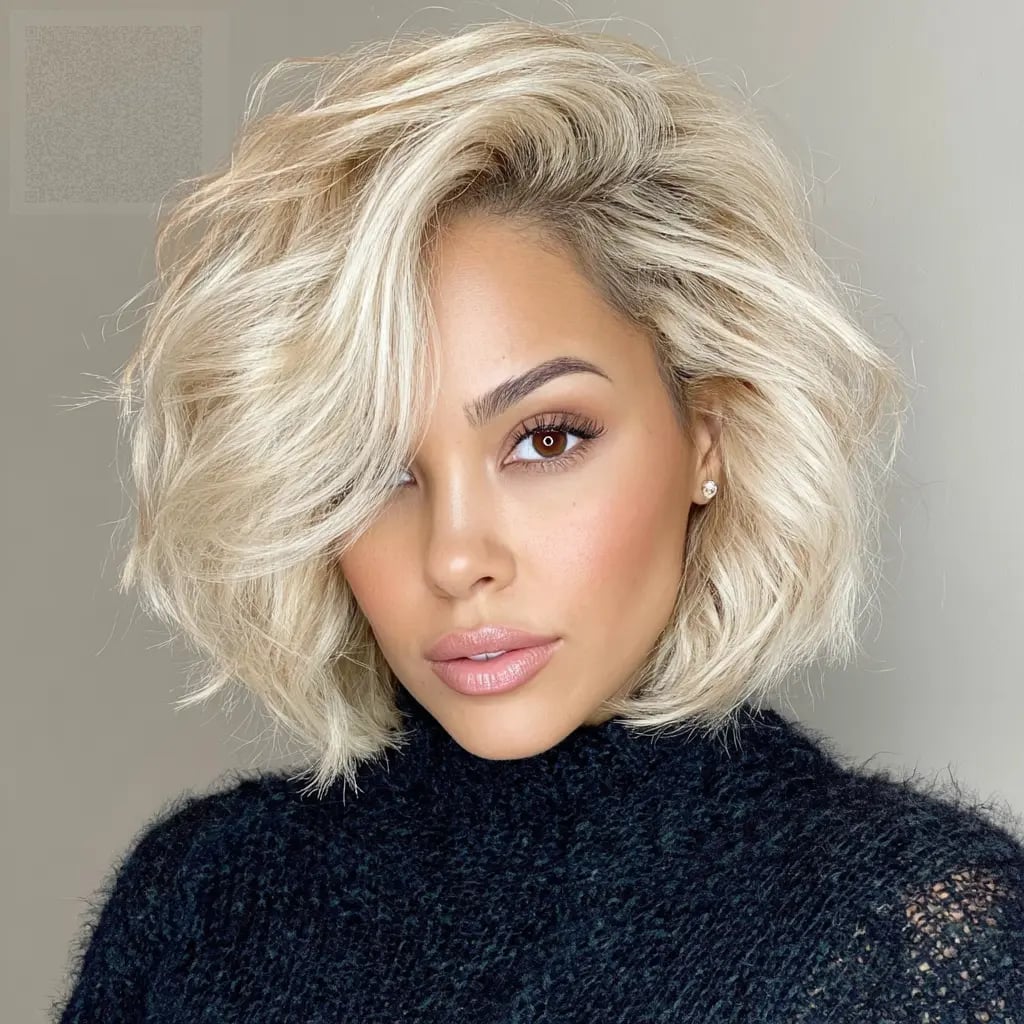
This ash blonde version is for the days when you want the volume without the length. Thick, wavy hair at chin length holds the shape best; fine hair would need a root volumizer to get the same lift. Ask your stylist for: chin length ash blonde bob blowout, face-framing layers. Blow-dry the roots upward with a round brush, and book a trim every four to six weeks to keep the bob crisp. It works for an office day or a dinner out.
Collarbone 90s Inspired Blowout With Side Bangs
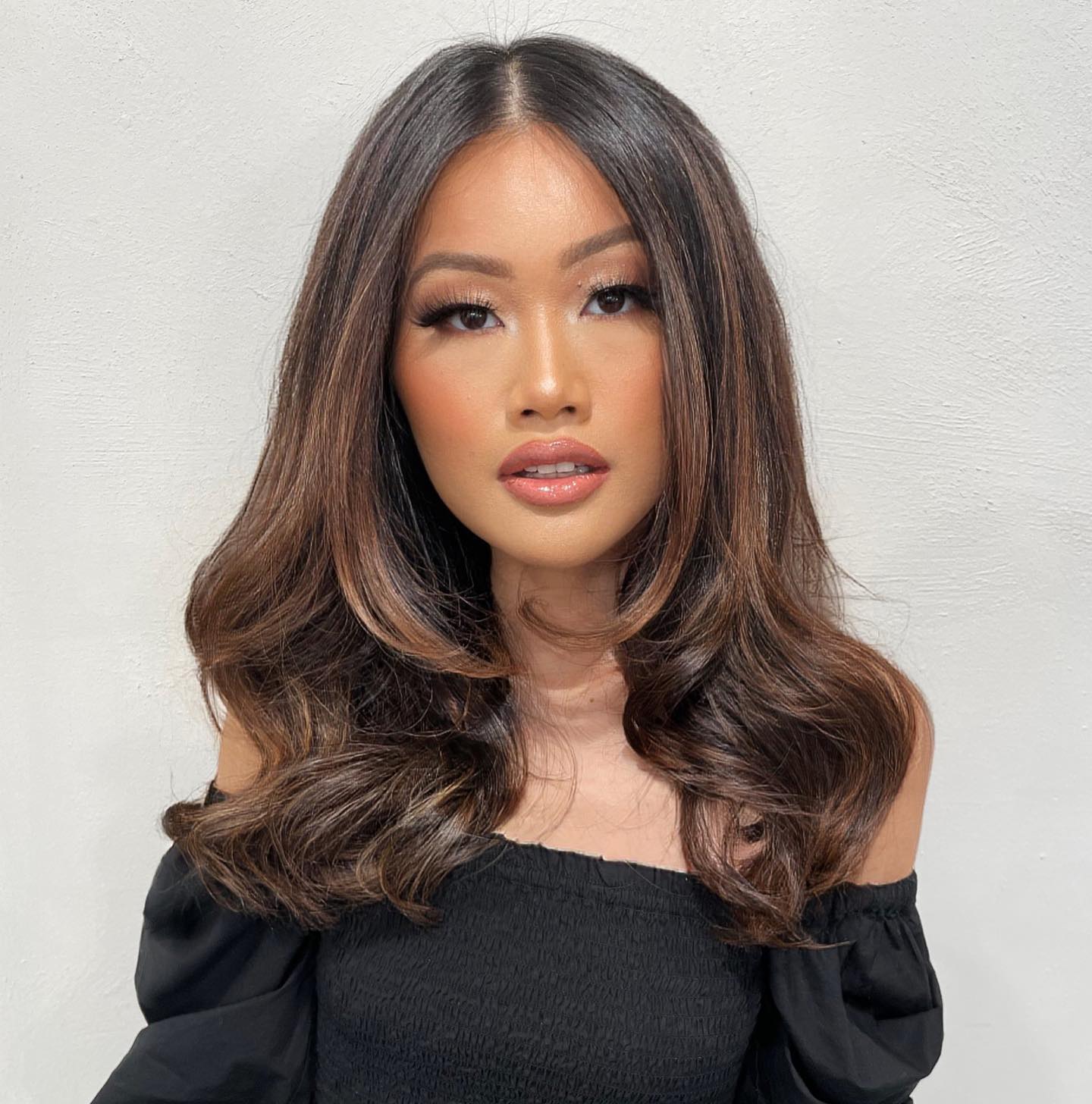
To achieve that specific 1990s volume, start with the side part and the side-swept bangs. This collarbone-length cut with long layers is the foundation; the blowout does the rest. Medium density, wavy hair takes the volume best, and the balayage highlights add dimension so the waves do not look like one solid block. Ask your stylist for: collarbone 90s inspired blowout, side-swept bangs. This is a salon job, not a DIY project, because the velcro roller set and large round brush technique require a steady hand. A trim every six weeks maintains the shape.
Mid-Back Dark Brown Blowout With Cascading Waves
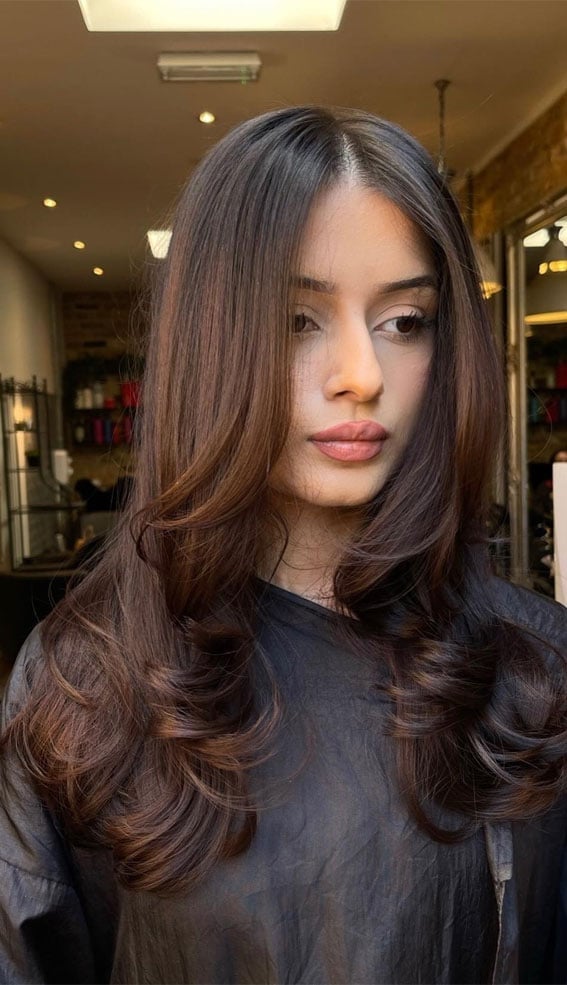
The common mistake with cascading waves on mid-back length hair is expecting them to hold without any product help. They will not. This dark brown blowout with subtle balayage relies on thick, wavy texture and a large round brush to create the wave pattern that flows from one section into the next. No bangs here: the face-framing layers do the work of softening the front. Ask your stylist for: mid-back dark brown blowout, cascading waves, subtle balayage. Apply a smoothing serum before blow-drying to control flyaways and encourage the cascade. A trim every eight weeks keeps the layers moving in the right direction.
Chin Length Dark Brown Bob Blowout, Close-Up Take
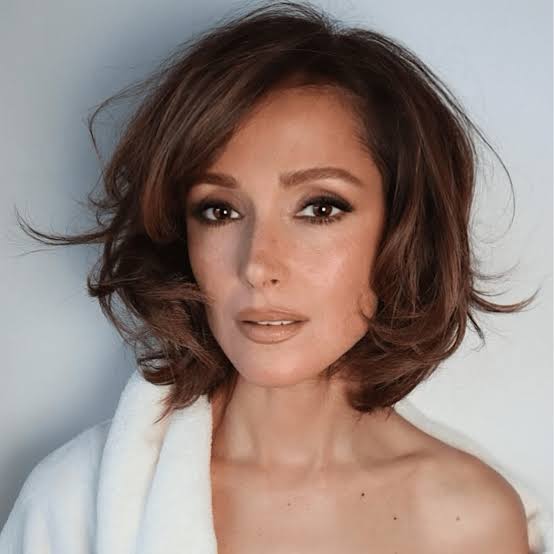
The daily styling on a chin-length dark brown bob blowout is where the volume either happens or does not. Thick, wavy hair takes to the soft waves and side-swept bangs best, because the natural texture provides the lift a round brush can then shape. Ask your stylist for: chin length dark brown bob blowout, soft waves, side-swept bangs. A round brush and a blow-dryer with a concentrator nozzle are the tools you need every wash day. The glossy finish lasts about two days before the waves relax, and a trim every four to six weeks keeps the bob from rounding out.
Chin Length Blunt Bob Blowout With Volume

A chin-length blunt bob with subtle layers gets its polish from volume concentrated at the ends, not the crown. This cut suits fine, straight hair by using the blunt line to create the illusion of thickness. Ask your stylist for a chin length blunt bob blowout with volume at the ends. A round brush flicking the ends outward during drying builds that shape, and a trim every four to six weeks keeps the line sharp enough to hold it. The middle parting and dark brown color keep the look clean enough for any season.
Collarbone Natural Brown Blowout With Waves

This collarbone blowout works because it leans on what the hair already has. The side part and soft waves add volume without fighting medium-density, wavy texture. Ask your stylist for a collarbone natural brown blowout with soft waves and a side part. A texturizing spray after blow-drying helps the waves hold their shape rather than falling flat. The drawback: the natural brown base shows every bit of fading, so a gloss treatment every six to eight weeks keeps the finish from looking dull. The glossy result is a low-effort polish that does not require a full set of hot tools every morning.
Final Thoughts
Fine hair needs volume at the roots and a lightweight texture spray; thick hair needs a larger brush and a heat protectant that controls frizz. Either way, let the hair cool completely before you touch it. That sets the shape.
- Allow hair to cool completely before styling to set the volume.
- Use a heat protectant spray before any blow-drying.
- Refresh styled hair with a dry shampoo at the roots.
- Schedule trims every 6-10 weeks to maintain shape and prevent split ends.
Master the blowout for salon-worthy hair anytime.

