Braids have a way of making hair look intentional without demanding a daily redo. Right now, the trend is shifting away from uniform, tight braids toward softer finishes, looser textures, and face-framing details like wispy ends or curtain bangs that actually move.
This collection of 24 Braided Hairstyles covers the full spectrum: quick weekend-friendly styles you can do at the sink, and salon-level installations that hold for weeks. Whether your hair is fine and needs volume, thick and needs control, or you are simply tired of a visible grow-out line that shows by week two, there is a braid strategy here that buys you time and looks better doing it.
Braided Bob With Gold Cuffs
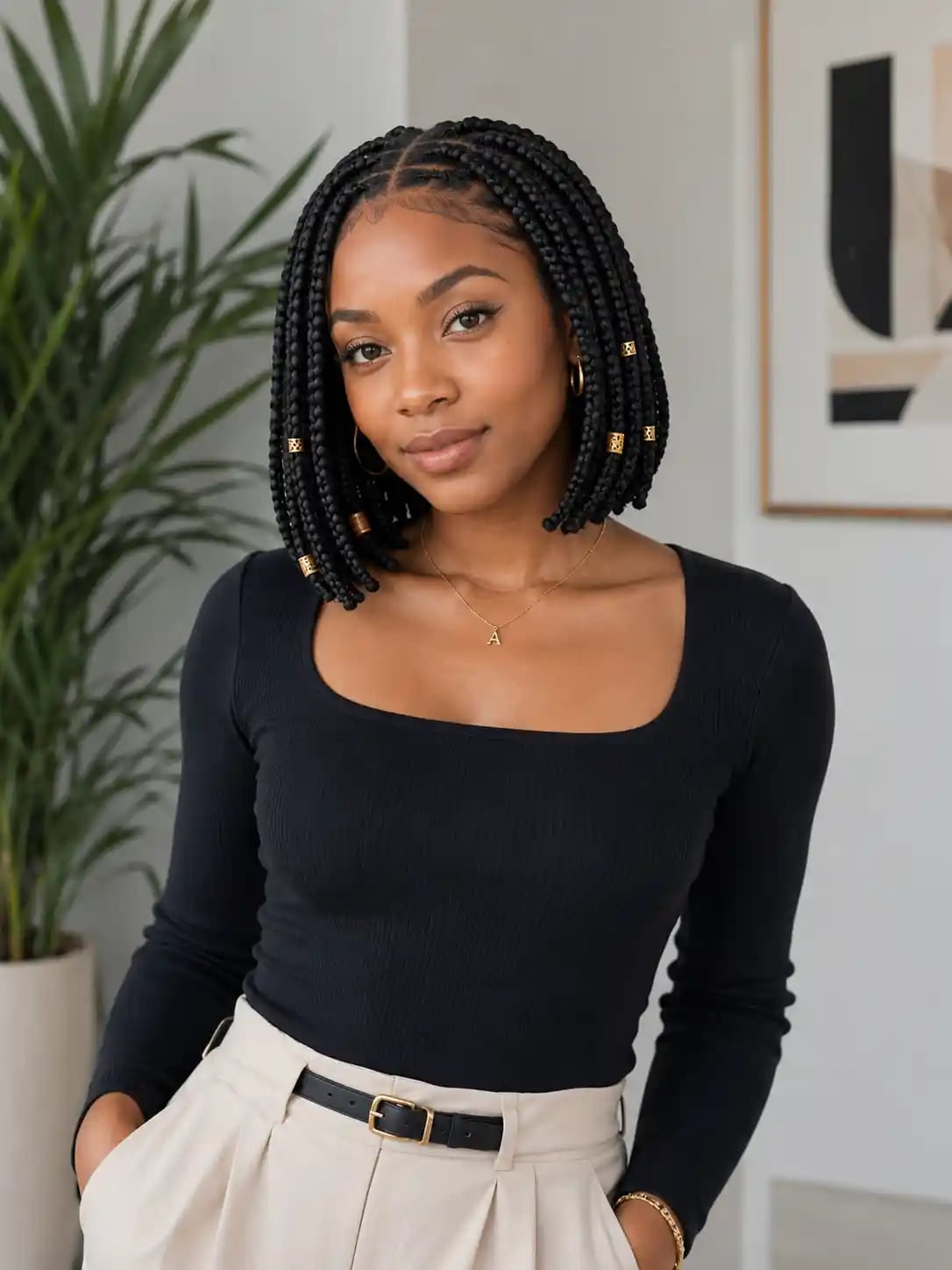
The gold cuffs are placed along each braid at deliberate intervals, turning a chin-length bob into a piece of jewelry. Thick, straight hair holds the small, tight braids best, and the middle parting keeps the whole thing symmetrical. Ask your stylist for: chin-length braided bob with gold cuffs. A light hairspray will tame flyaways and maintain that sleek finish, and you will want a trim every six to eight weeks to keep the baseline sharp.
Chin Length Box Braids With Brown Highlights
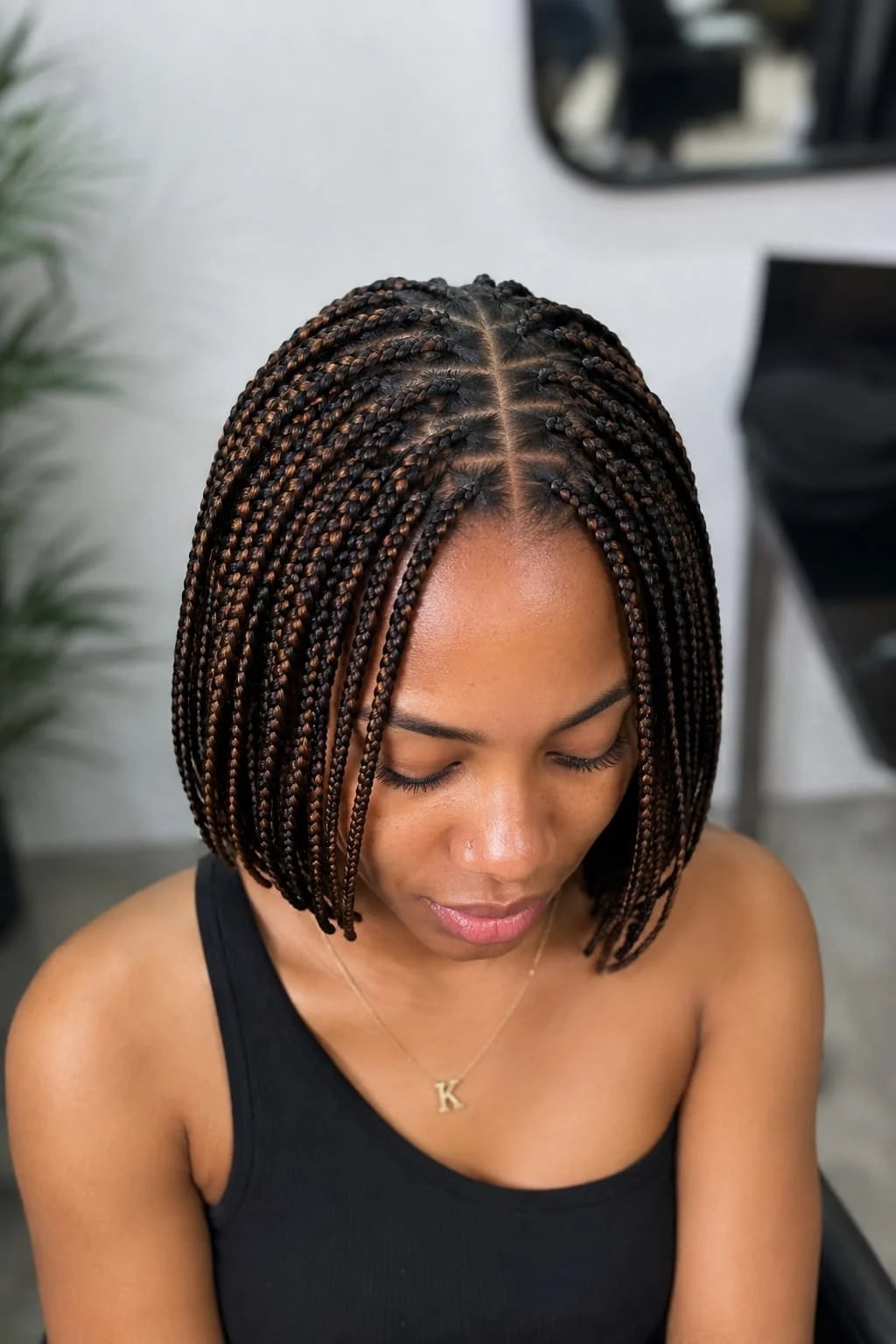
Solid black box braids at chin length read as graphic and bold, but the version with subtle brown highlights is a different animal entirely. Those warm streaks add softness and dimension to the style. The uniform, straight fall and middle parting work well to elongate round faces. Ask your stylist for: chin length box braids with subtle brown highlights. A braiding spray keeps everything neat, and you will trim every six to eight weeks.
Black Bob With Braids and Curly Ends
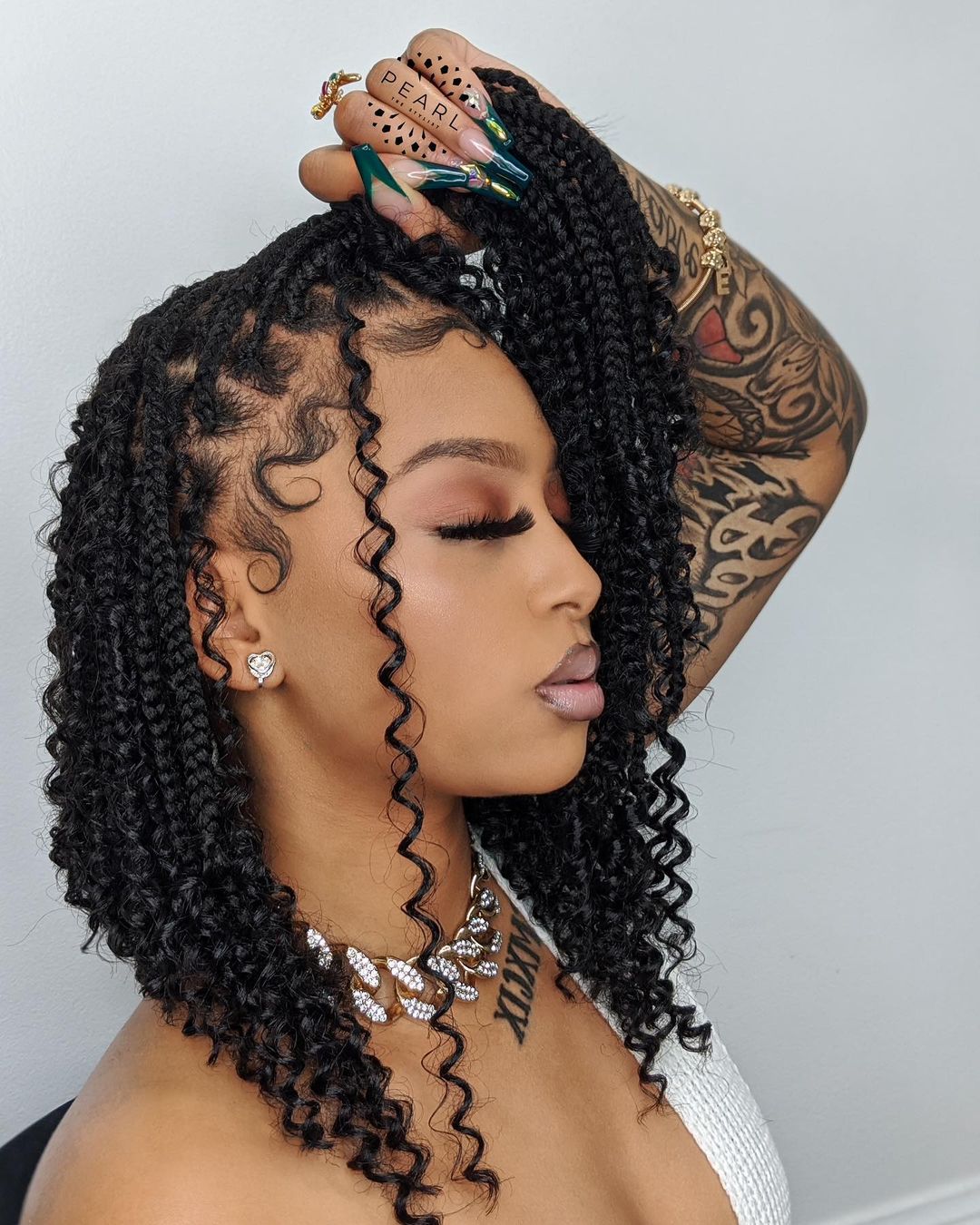
Wondering if a braided bob can actually move? This one does, because the tightly braided sections release into loose, defined curly ends that swing rather than sit. The side-swept bangs and wispy tendrils are doing the heavy lifting for square faces, softening the jawline without any extra effort. Ask your stylist for: bob with braids and curly ends, side-swept bangs. A curl-defining cream on the ends enhances the texture, and a trim every six to eight weeks keeps the shape honest.
Shoulder Length Braided Bob
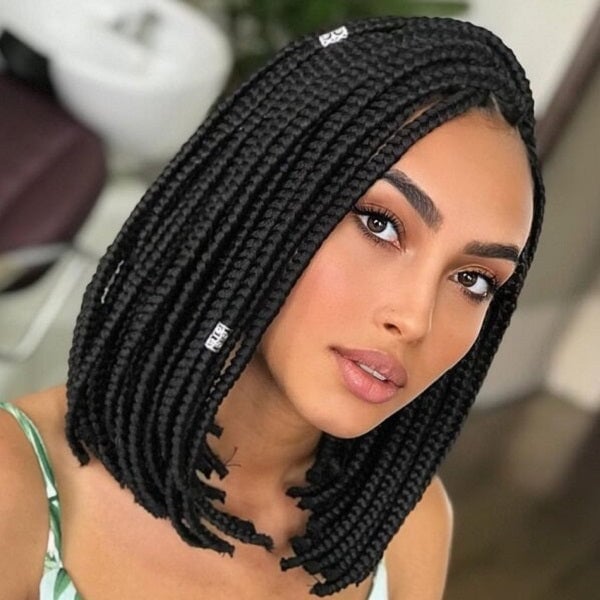
Shoulder length is the sweet spot for a braided bob that actually feels like a bob. The braids fall to the shoulders and stop, creating a clean, blunt silhouette that does not require the constant tucking of a shorter version. The middle parting and straight black braids keep it sharp, and small decorative clips add a touch of interest without overcomplicating things. Ask your stylist for: shoulder length braided bob. Moisturize with a light spray to prevent dryness, and plan for a trim every six to eight weeks to maintain the line.
Lob With Loose Waves and Braided Headband
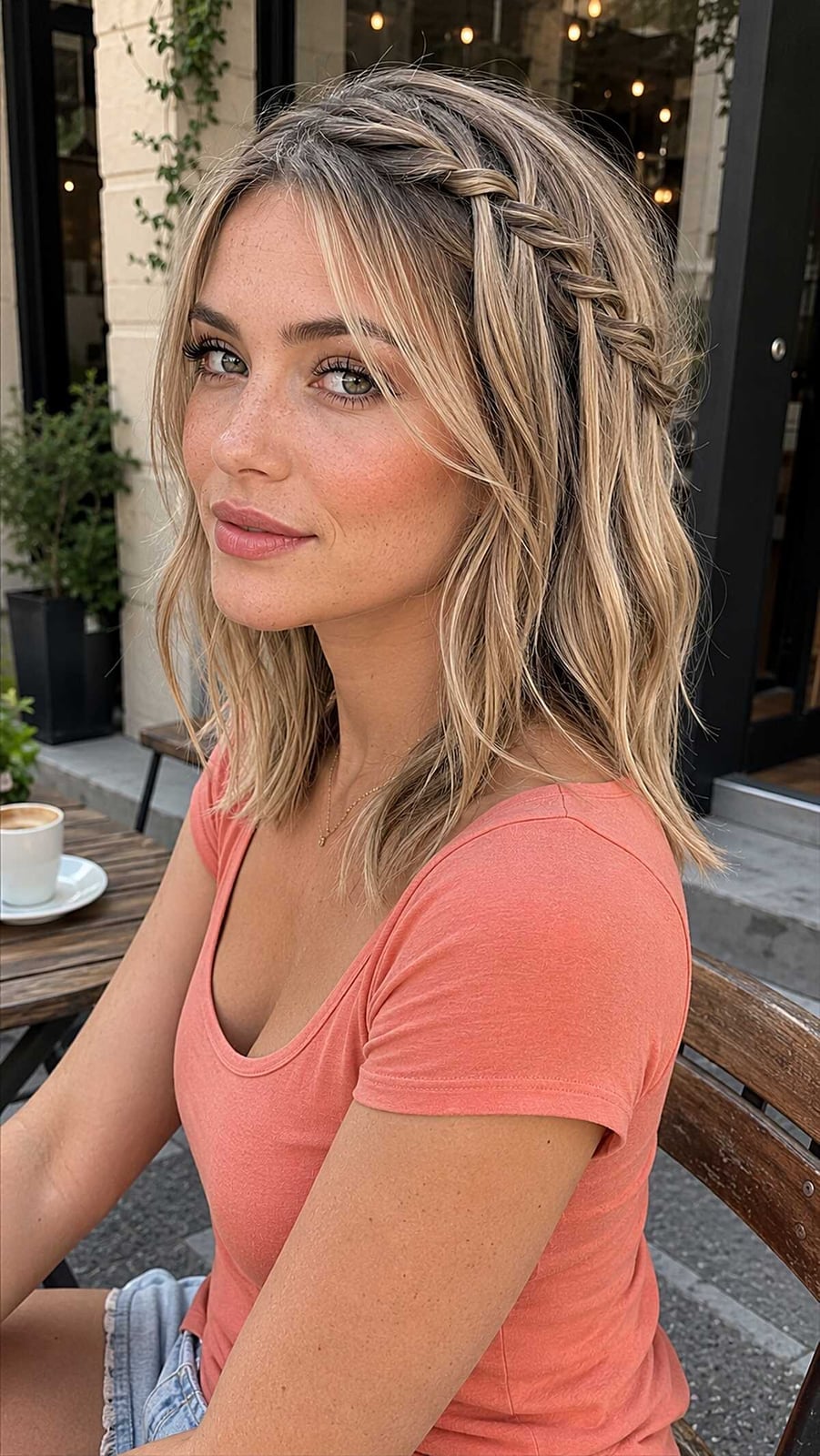
The braided headband here is not a separate accessory; it is a thin section of hair woven from the front and pinned at the back, which means it stays put all day. Fine, wavy hair at collarbone length works well because the loose waves have enough movement to balance the structured band. The blonde balayage adds soft contrast. Ask your stylist for: collarbone lob with curtain bangs and braided headband. This one you can do yourself: twist the headband braid tightly before pinning, and trim the lob every six to eight weeks.
Black Lob With Braids and Loose Curls
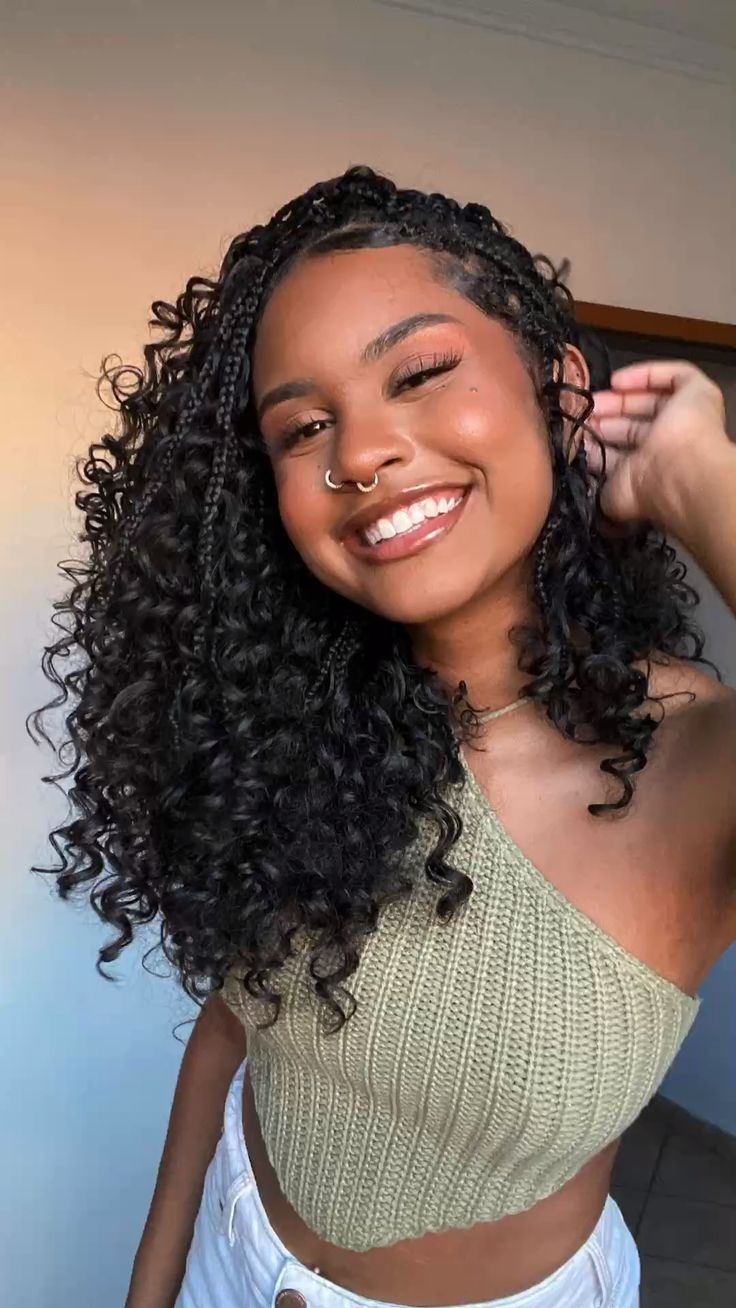
The trick to this collarbone lob is keeping the loose curls from going rogue. A side parting and braids that transition into voluminous curls give you texture that looks deliberate, but without a curl cream for definition the ends can frizz quickly. Ask your stylist for a collarbone lob with braids and loose curls. The downside: the curls need refreshing every day or they lose their shape. A trim every six to eight weeks keeps the baseline clean and the style sharp.
Collarbone Box Braids With Wavy Ends
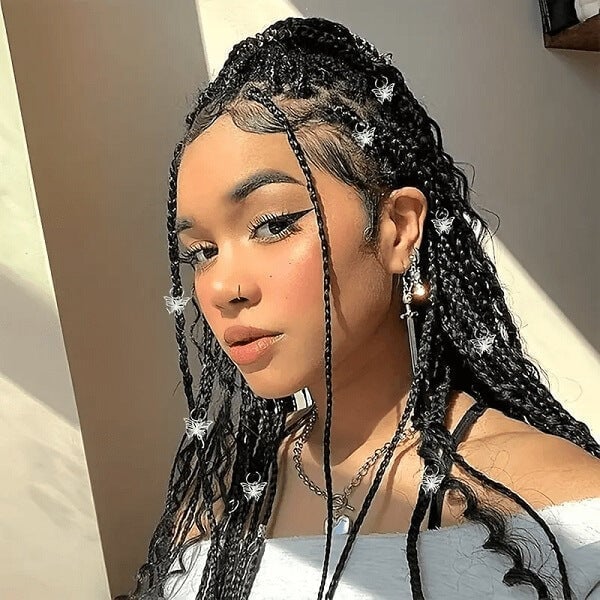
Small box braids create a clean, symmetrical base, and the design focus is at the ends. The braids stop at the collarbone, where loose wavy ends add movement, and small decorative charms woven into the braids are the standout feature. Ask your stylist for collarbone box braids with wavy ends and charms. The technique requires a steady hand: each charm is threaded onto a braid during installation, so expect the process to take longer than standard box braids. Thick hair starting at collarbone length provides the density for the charms to sit neatly without slipping.
Shoulder Length Box Braids With Wavy Texture
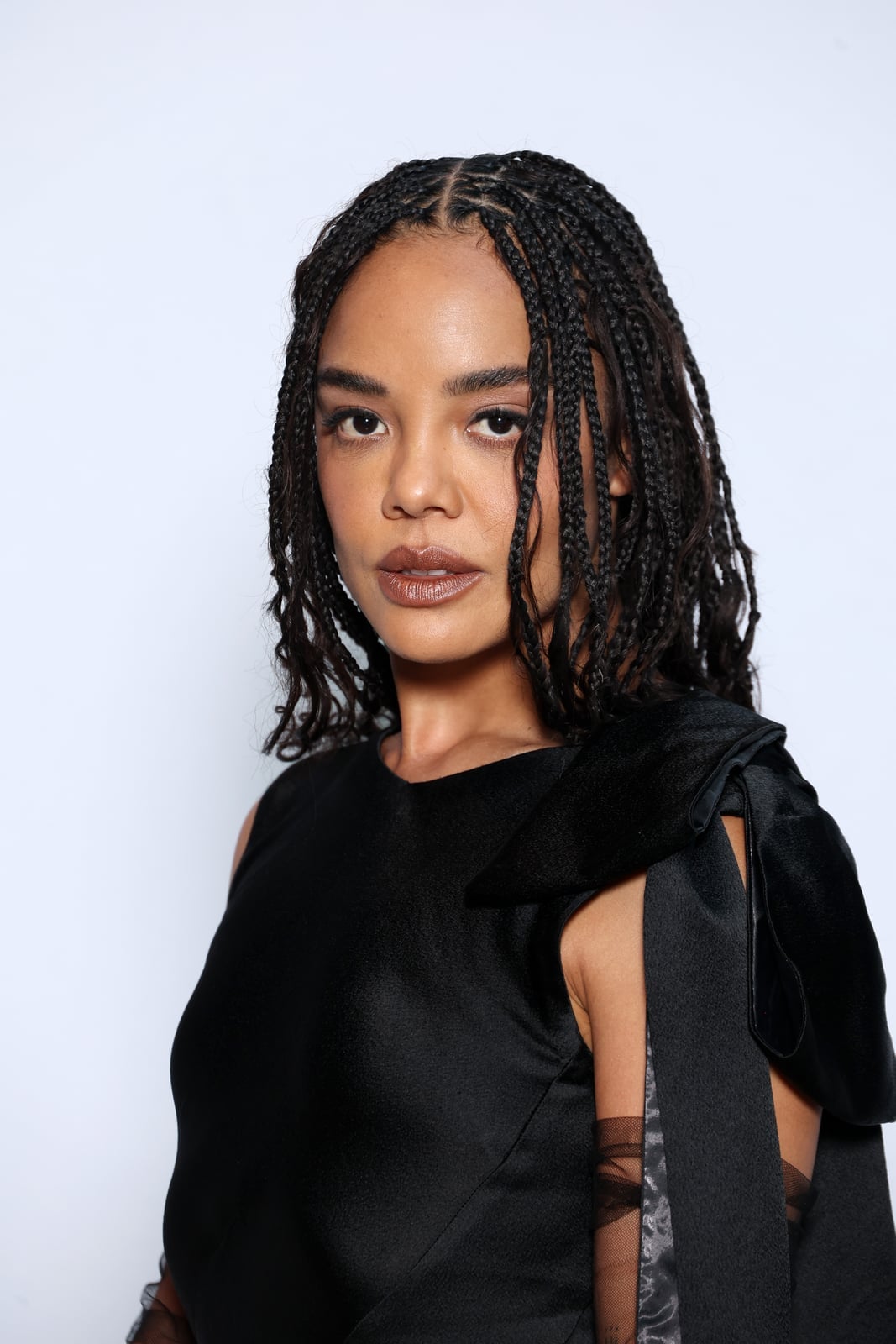
This is a shoulder-length box braid style that earns its impact from the wavy ends. The thick braids part cleanly down the middle, framing the face evenly, and the waves at the ends give the whole shape a softer finish than a blunt braid line would. Ask your stylist for shoulder length box braids with wavy ends. The texture here is the point: the waves are uniform and deliberate, not a casual curl. Thick hair starting at shoulder length carries the braids well, and the middle part elongates round faces. A light oil on the ends keeps the waves defined between trims.
Shoulder Length Cornrows With Loose Curls
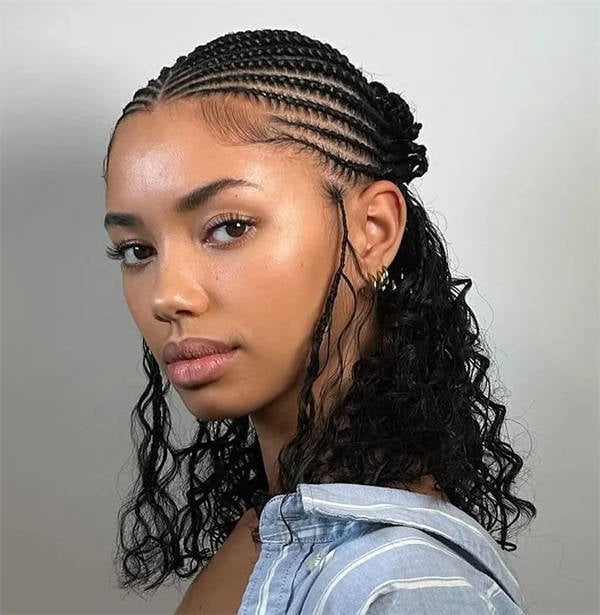
Who should try this combination of scalp cornrows and loose shoulder-length curls? Anyone with thick, coily hair who wants the protection of a braided top without sacrificing volume below. The middle parting and intricate cornrow pattern keep the scalp tidy, while the dark curly ends fall freely, creating contrast. Ask your stylist for shoulder length cornrows with loose curly ends. Oval and heart faces get the most balanced framing from this side view. A curl cream on the ends daily prevents the curls from drying out between salon visits.
Collarbone Flat Twists Into a Bun
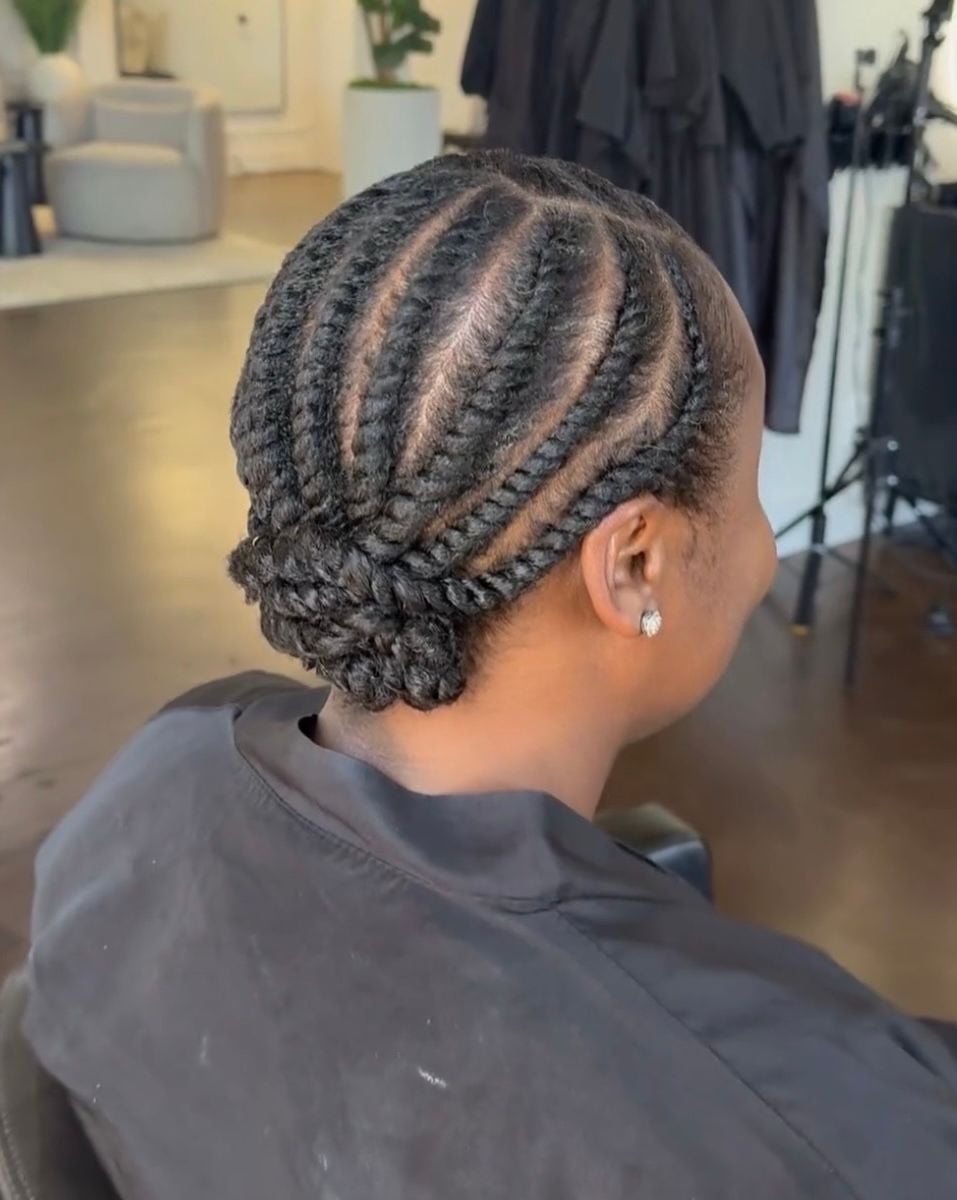
Flat twists that curve from the front hairline into a neat bun at the nape hold for about two to three weeks before the edges need reworking. The middle parting keeps the twists symmetrical, and the coily texture grips the twist pattern well, so the style stays crisp longer than on looser textures. Ask your stylist for collarbone flat twists into a bun. Overnight protection with a satin scarf prevents the bun from flattening. The twist ends sit at collarbone length before being gathered, so the overall silhouette is compact and tidy. A trim every six to eight weeks keeps the ends healthy enough to hold the twist.
Blonde Micro Braids Into a High Bun
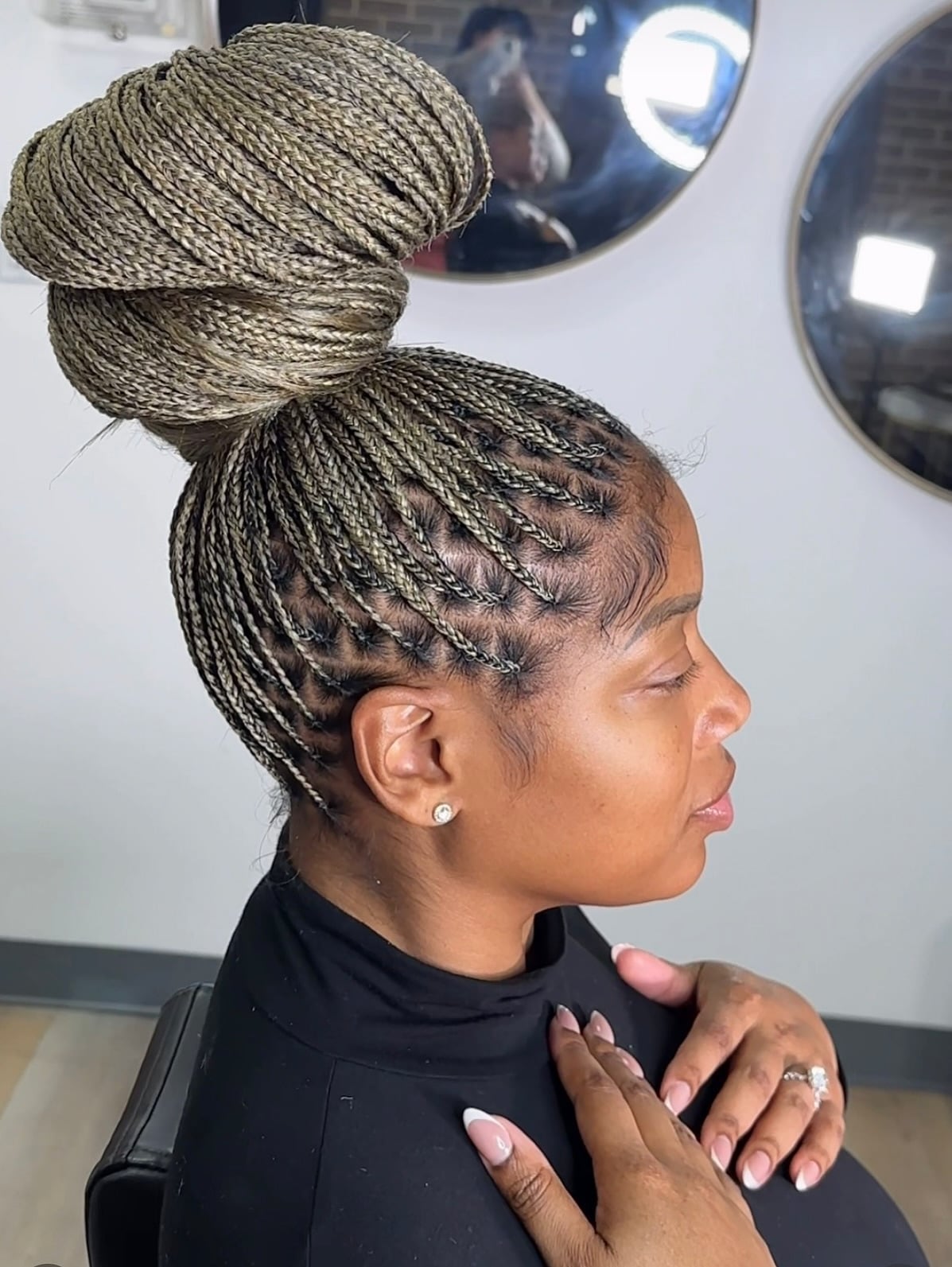
The blonde base with darker roots adds depth against the fine, straight texture. Ask your stylist for: micro braids into a high bun, blonde with dark roots. This is a salon-only commitment: the scalp pattern alone takes two to three hours, and the bun keeps the braids from tangling during sleep or workouts. The hold is excellent for formal events, and the style lasts a solid week with a lightweight serum on the parting to control flyaways.
Sleek Braided Updo
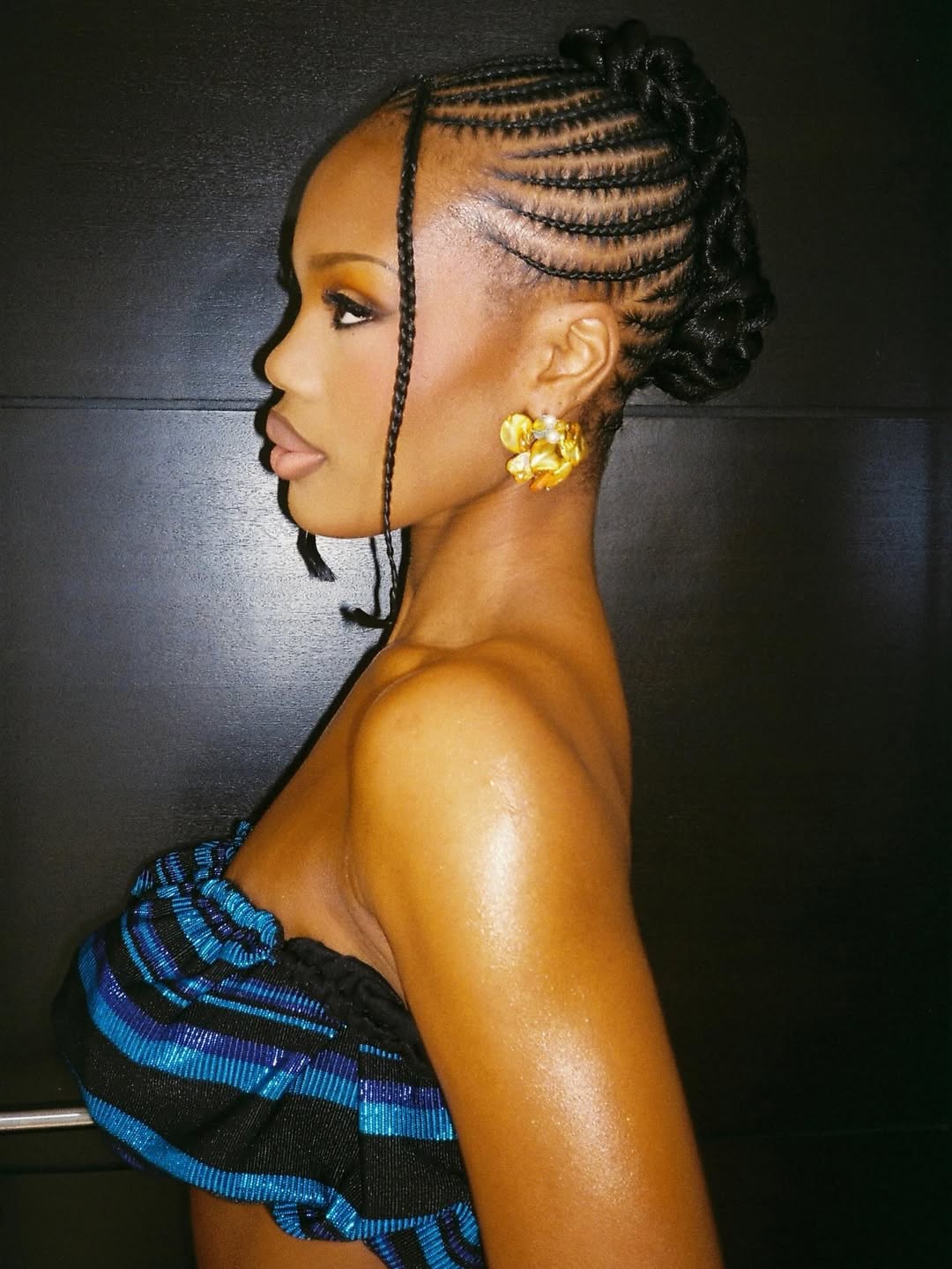
The mistake people make with a sleek braided updo is asking for tight braids without considering the scalp. Shoulder-length thick hair swept back into intricate scalp braids looks polished for a formal event, but overly tight tension causes breakage at the hairline. Ask your stylist for: shoulder length sleek braided updo. The real drawback is that you cannot adjust the tightness after it is done, so speak up during the first few rows if the pull feels uncomfortable. A well-executed updo holds for a full evening without slipping, and the sleek finish works best on black hair with a natural gloss.
Brown Braided Ponytail With Crown Detail
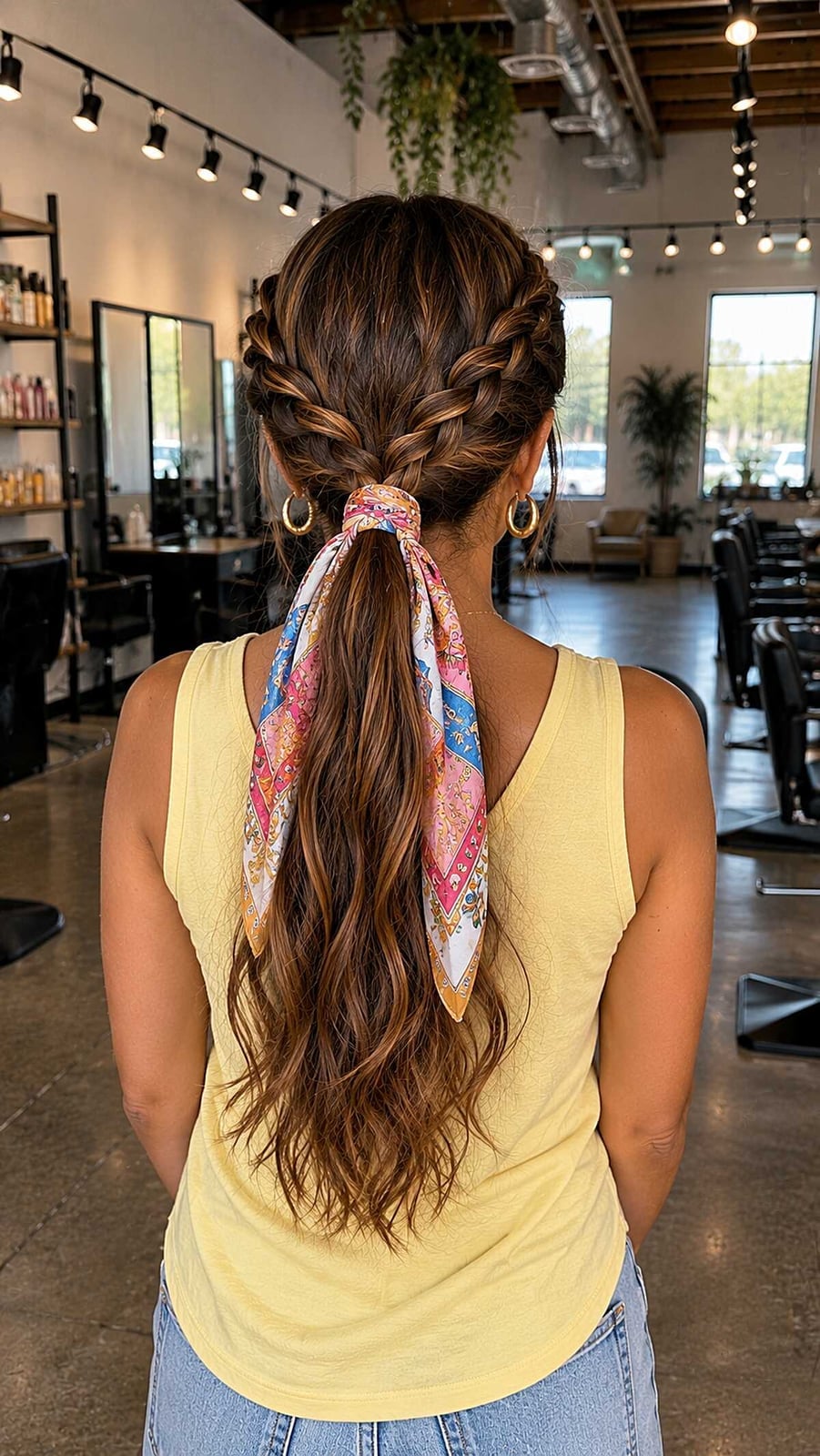
A braided ponytail is straightforward, but the crown detail here is what separates it from a casual weekend look. Two thick braids start at the temples and meet at the back, forming a crown-like structure that transitions into a single ponytail at mid-back length. The scarf wrapped around the base secures the style and adds contrast against wavy brown hair with subtle highlights. Ask your stylist for: mid-back braided ponytail with crown braids and scarf. This is built for a festival or outdoor event: the crown braids keep hair off the neck, and the scarf can be swapped out to match the occasion. Thick wavy hair holds the crown shape best, and the style stays intact through a full day of movement.
Black Cornrows to Mid-Back Box Braids
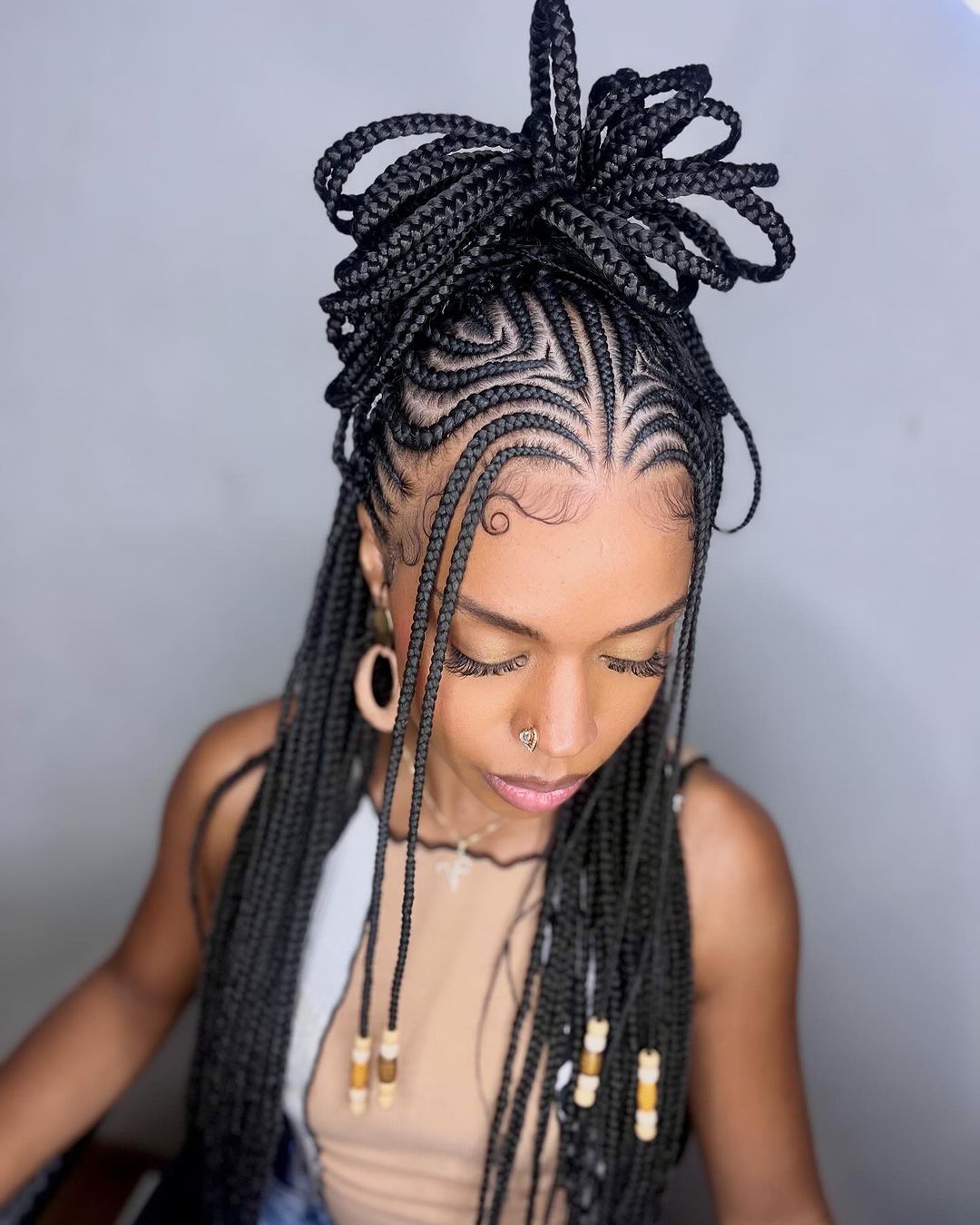
A full head of cornrows is a classic, but the transition into box braids at mid-back length gives you the best of both techniques: the geometric scalp pattern of cornrows and the thicker, more relaxed weight of box braids below. The baby hairs left loose around the face soften the look, a choice that suits round or square face shapes. Ask your stylist for: cornrows to mid-back box braids with geometric patterns. The cornrow section stays neat for about three weeks, while the box braids below hold their shape for up to eight weeks before the ends need trimming. Straight braided sections at the top contrast with the curly ends, creating visual texture without extra styling.
Black Cornrows to Loose Mid-Back Braids, Transitioning Into Long
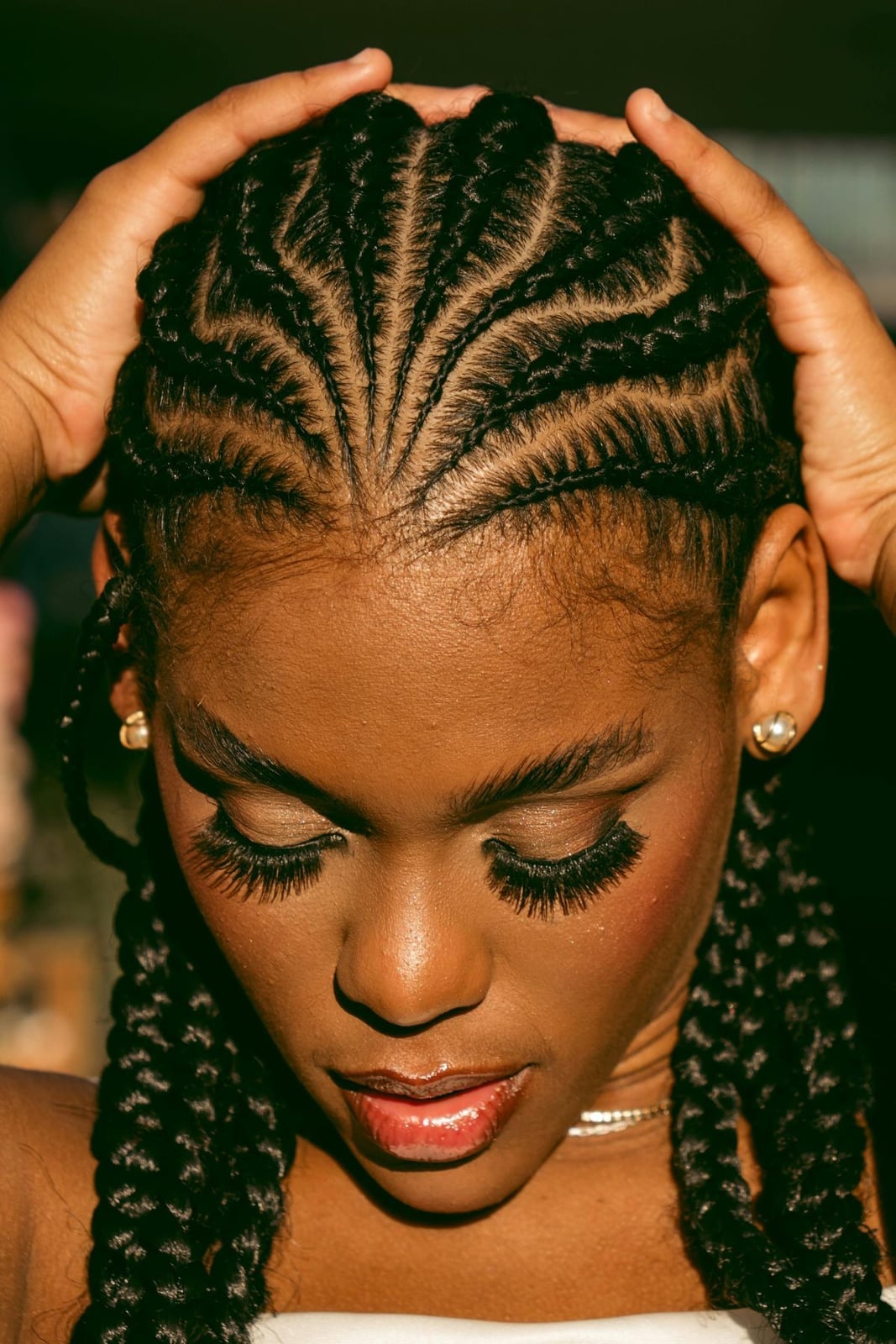
This is a cornrow style that does not commit to a single texture. Intricate scalp braids start at the middle parting and run toward the temples, then release into loose, flowing braids that fall past the shoulders. The glossy black finish makes the transition between tight scalp work and relaxed extensions look like one continuous design. Ask your stylist for: cornrows to loose mid-back braids. The loose braids move more naturally than a uniform box braid set, which makes this a good everyday option for thick hair that needs a low-manipulation style. A braid sheen spray every few days keeps the gloss, and the scalp sections require a touch-up every three to four weeks.
Black Lemonade Braids With Curly Ends, Mid-Back
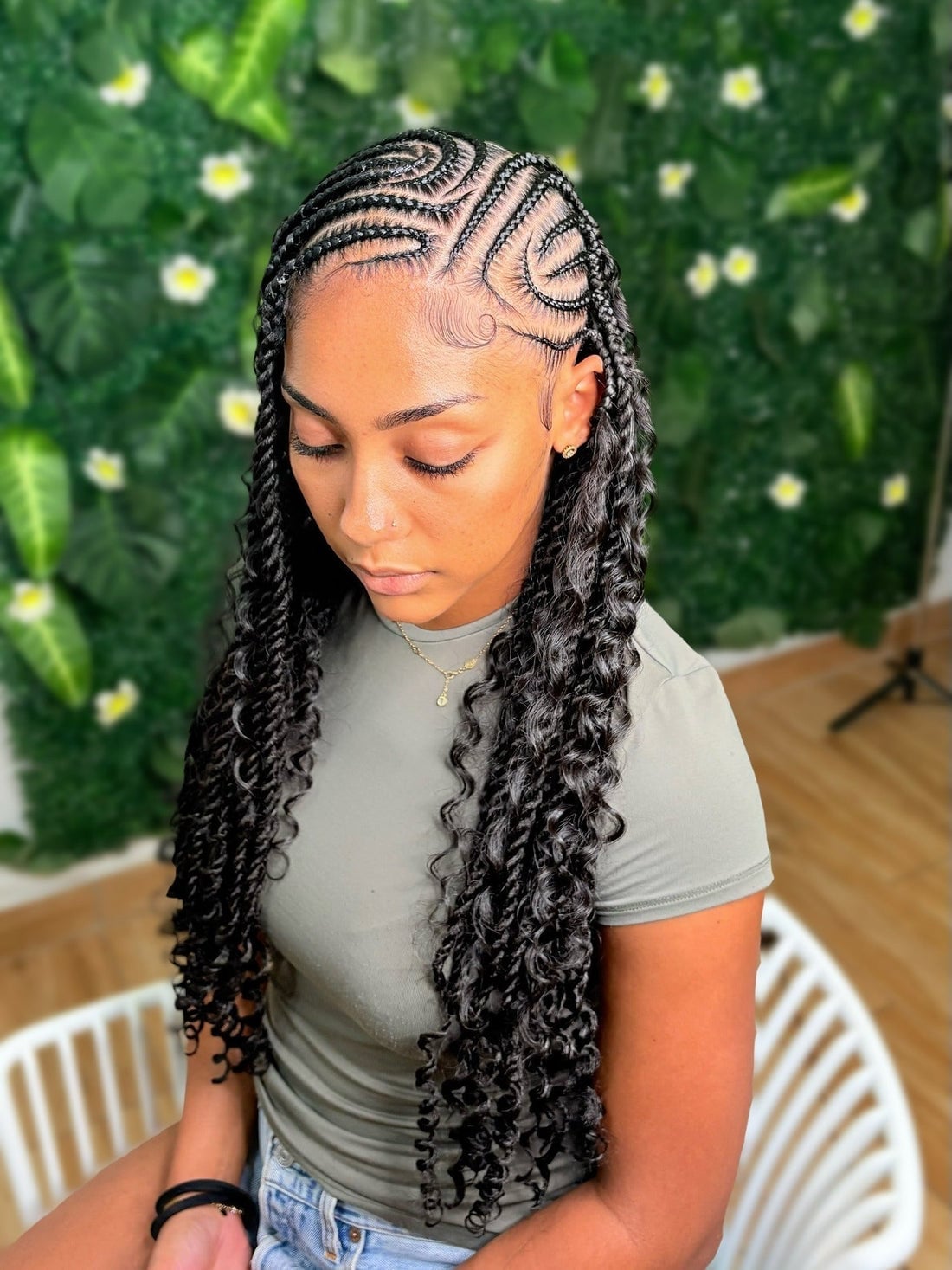
Can a side part make a braided style more interesting? With lemonade braids, the answer is yes. These are done with a deep side part that sweeps the braids diagonally across the head, all the way to mid-back, where they end in full, defined curls. The black shade is glossy and solid, no highlights to distract from the pattern. Thick hair that already reaches mid-back is the starting point here, and the side-swept angle softens round and square face shapes better than a middle part would. Ask your stylist for: lemonade braids to mid-back with curly ends. This is a salon-only project, so book a few hours and plan to sit still.
The daily wear is simpler than it looks. A curl-defining cream on the ends keeps the shape readable, and a satin scarf at night prevents frizz. The baseline needs a trim every eight to twelve weeks, but the braids themselves hold their structure for a solid month. The side part will show scalp if your hair is fine, so thick density is required to keep the pattern looking full.
Black Cornrows to Wavy Mid-Back Extensions
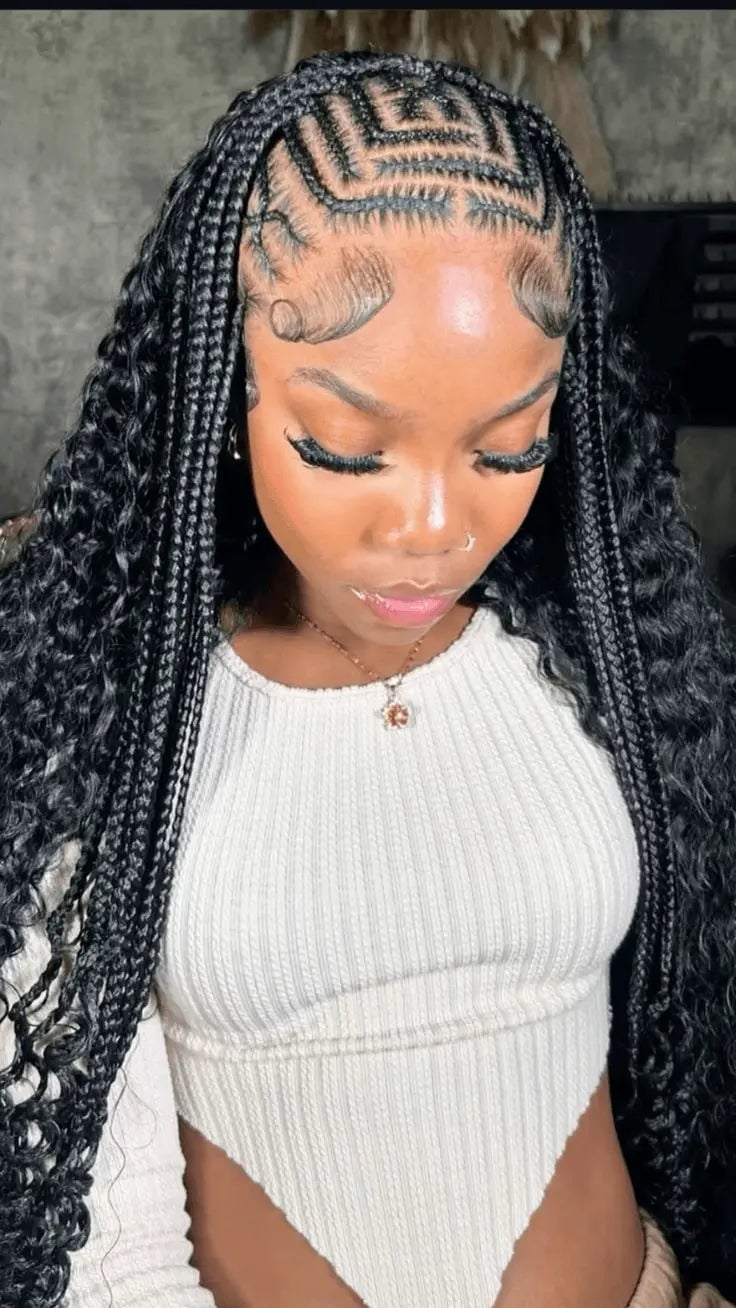
Geometric cornrows on the scalp do more than look precise; they create a foundation for extensions that add serious length. The cornrows are set in a clean pattern close to the head, then transition into loose, wavy extensions that fall to mid-back. The natural black base gets subtle dark brown and blonde highlights woven through, so the waves show dimension without looking chunky. Thick hair starting at mid-back length handles the extensions best, and the middle part keeps the geometry symmetrical. Ask your stylist for: geometric cornrows to wavy mid-back extensions.
Upkeep centers on the extension integrity. A heat protectant on the wavy ends prevents heat damage when you restyle, and the scalp cornrows need re-braiding every three to four weeks as new growth appears. The extensions themselves can last two to three installations if you keep them moisturized and avoid sleeping on them wet. This look requires a salon visit, but the payoff is a full week of hold between touch-ups.
Bohemian Braids With Black and Blonde Curls
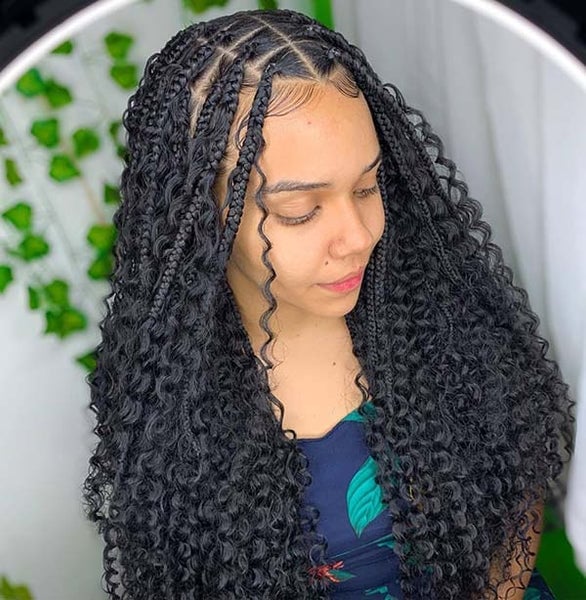
The balance of bohemian braids and loose curls is a careful ratio. Here, black and blonde strands are braided through the length to mid-back, with sections left out to form loose, wavy curls that add volume and texture. The middle part keeps the face open, and the mix of tones means no single color dominates. Thick hair starting at mid-back gives the stylist enough material to work with, and the style suits all face shapes because the curls soften the perimeter. Ask your stylist for: mid-back bohemian braids with loose curls. This technique requires a salon visit; the braiding and curl blending take several hours. Applying a texturizing spray to the loose sections after styling helps the waves hold their shape without going stiff.
Dark Brown to Blonde Braids With Curly Ends
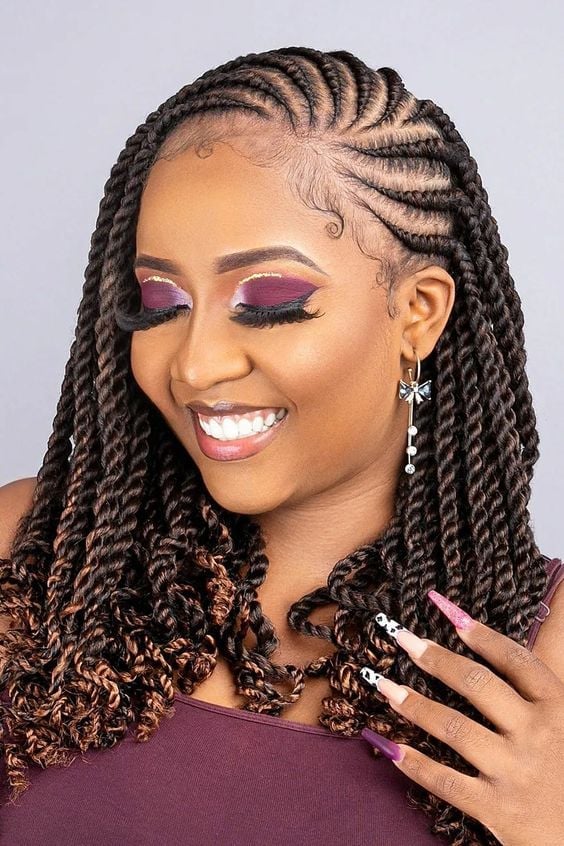
A two-tone braid is only as good as the transition line. The common mistake is letting the dark-to-blonde shift happen too high, creating a harsh stripe. Here, the dark brown base graduates into blonde over the last third of the length, so the color change reads as a fade rather than a chop. The braids are twisted all the way to mid-back, and the ends are left loose and curly, which hides any unevenness in the color placement. Thick hair starting at mid-back is ideal; the middle part keeps the two sides even. Ask your stylist for: mid-back twisted braids, dark brown to blonde with curly ends.
The real drawback is the blonde ends. They require a purple shampoo every two weeks to stay cool-toned, and the curls on the ends lose definition faster than the braided sections. A curl cream reactivates the shape, but you will need a toning appointment about every six weeks to keep the blonde from going brassy. The braids themselves hold well for a month, so the color is the higher-maintenance partner here.
Black Knotless Braids Flowing Mid-Back
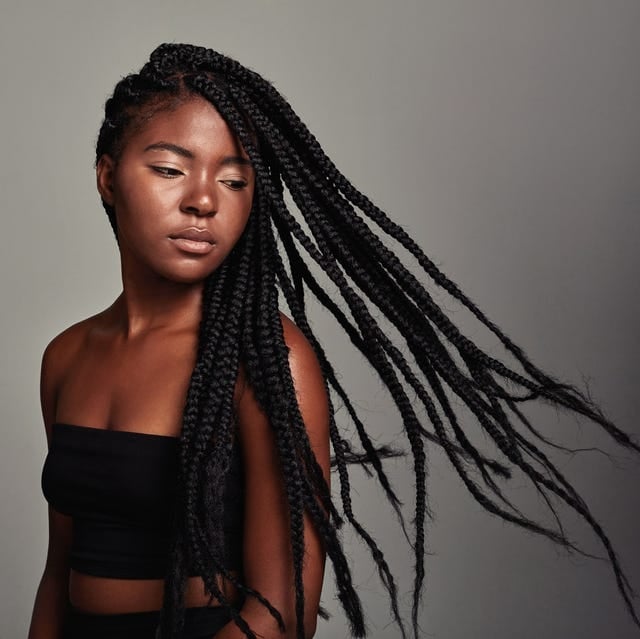
Knotless braids remove the bulk at the root that traditional box braids have, so the hair lies flat against the scalp and moves more naturally. These are done in black, parted down the middle, and fall straight to mid-back with no added texture or curl. The technique feeds new hair into each braid gradually, which means less tension at the follicles and a smoother overall line. Thick hair starting at mid-back works best because the braids need enough density to look full. Ask your stylist for: mid-back knotless braids. The flowing movement comes from the lack of knots, not from any product. A lightweight oil on the ends keeps the shine even, and the braids hold their clean appearance for about eight to twelve weeks before the new growth needs attention. The middle part stays sharp with minimal effort, which is the point.
Black Cornrows to Loose Braids With Beads
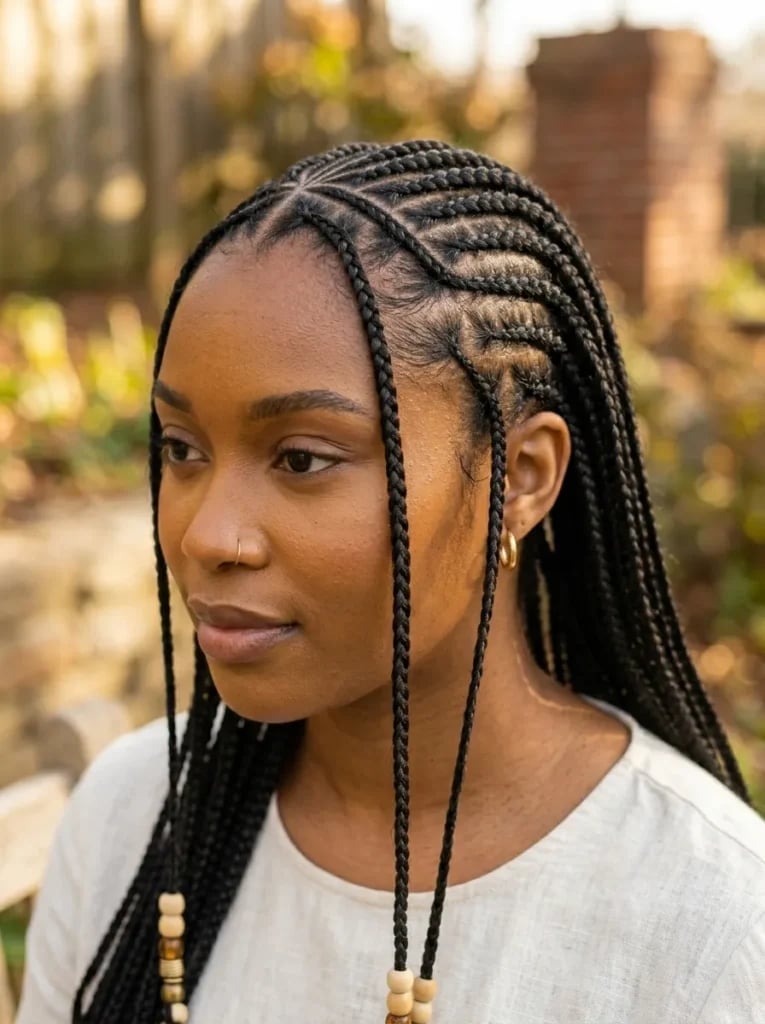
Cornrows at the front are practical, but letting them loosen into mid-back braids is where this style earns its festival credentials. It is a deliberate contrast to a full cornrow look, which can feel too uniform for a weekend outing. The middle parting keeps everything symmetrical, and the small wooden beads scattered through some braids add a tactile, bohemian touch. Thick hair starting at mid-back length works best here. Ask your stylist for: cornrows to mid-back loose braids with wooden beads. Ensure the beads are secured properly at installation; re-braid the scalp sections every three to four weeks to keep the front tidy.
Mid-Back Half-Up Half-Down With Braids
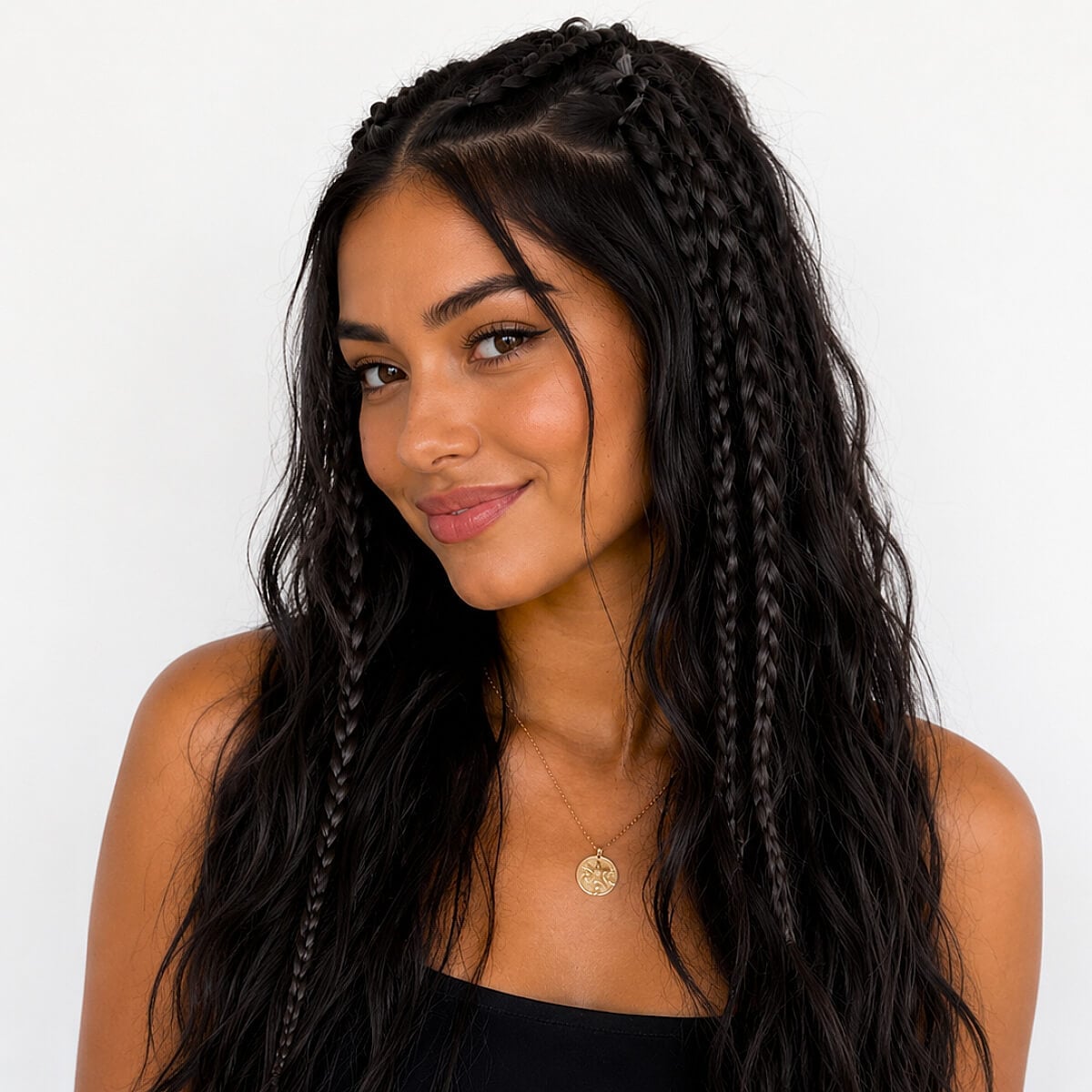
This half-up, half-down style earns its keep through texture contrast. The thick, wavy mid-back hair is pulled into a loose top section, while several thin braids are woven through the remaining waves below. The result is a relaxed look that does not sacrifice structure.
Thick, wavy hair at mid-back length gives the braids the volume they need to blend naturally. Ask your stylist for: mid-back half-up half-down with integrated braids. A texturizing spray helps define the waves without weighing them down. Re-braid the integrated strands every two weeks to keep them from unraveling into the surrounding hair.
Mid-Back Box Braids With Wispy Bangs
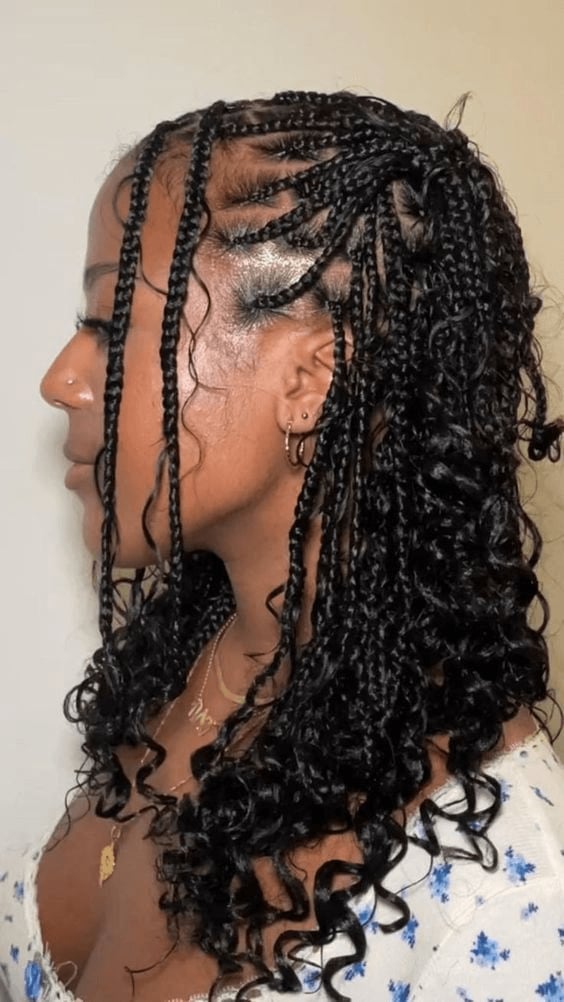
Wondering if box braids with bangs are a good idea? The answer depends on your face shape and how much forehead you want to show. These mid-back box braids are parted to the side, with wispy bangs that skim the brows and soft, curly ends that break up the braided texture. The wispy bangs soften square and round face shapes, while the side parting adds asymmetry that suits longer faces. Thick hair at mid-back length is the baseline here. Ask your stylist for: mid-back box braids with wispy bangs and curly ends. Apply a light serum to the bangs and ends to keep them defined. Trim the baseline every eight to twelve weeks to maintain the shape.
Blonde High Ponytail With Scalp Braids
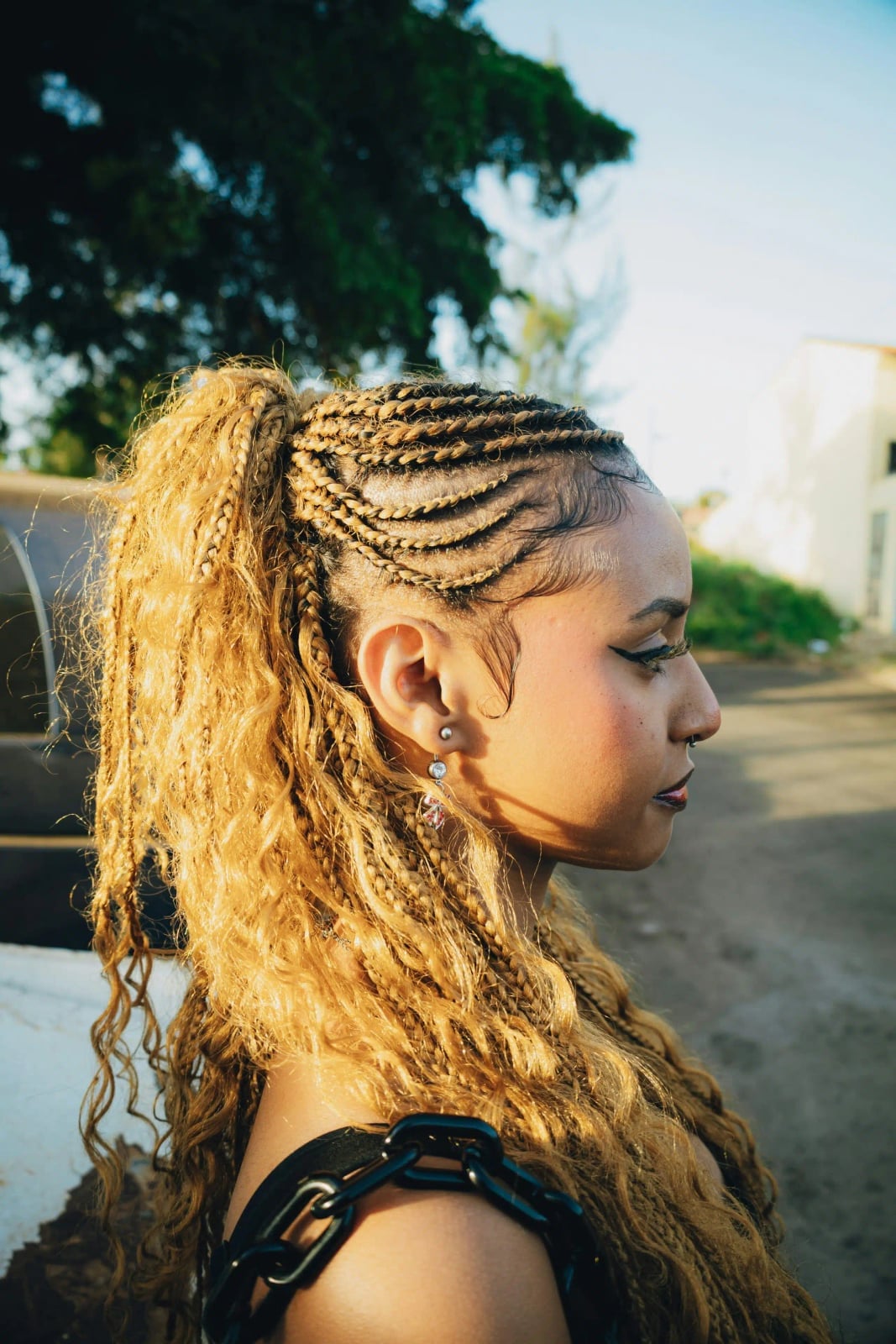
A high ponytail with detailed cornrow braids along the scalp is a statement, but its wearability depends on the base. This mid-back length blonde style keeps the braids intricate and close to the scalp, while the loose, curly ends are thick and full. The baby hairs are styled to frame the face, which softens round and square face shapes. Thick, curly hair at mid-back length is the ideal starting point. Ask your stylist for: mid-back blonde high ponytail with cornrow braids. Use a strong-hold hairspray on the ponytail base to keep the weight from pulling. Re-braid the scalp sections every three to four weeks to maintain the pattern.
Final Thoughts
For fine or thinning hair, opt for styles like micro braids or styles with added extensions for volume, and consider subtle embellishments over heavy ones. For thick or coarse hair, embrace the structure of cornrows or box braids, which offer excellent control and definition.
- Trim box braids and cornrows every 8-12 weeks to maintain shape and manage frizz.
- Refresh braided styles with a light-hold spray or serum to combat dryness.
- When styling braids, use a satin scarf or bonnet to protect them at night.
- For styles with extensions, ensure the base braids are kept clean to prevent scalp irritation.
Braids offer endless possibilities for style and protection.

