Brunette hair is a broad spectrum, and the best shades this season lean into warmth and dimension rather than flat, single-tone color. The shift is toward lived-in techniques that let a natural base peek through, with softer transitions and a glossy finish that works with your texture, not against it.
This collection of 27 Brunette Hair Colors covers the range from low-upkeep uniform shades to high-contrast balayage, across short bobs, mid-back lengths, and loose curls. If you have fine hair that needs visual weight or a visible grow-out line you want to stretch, there is a combination here that buys you time between appointments.
Warm Chocolate Brown With Subtle Highlights
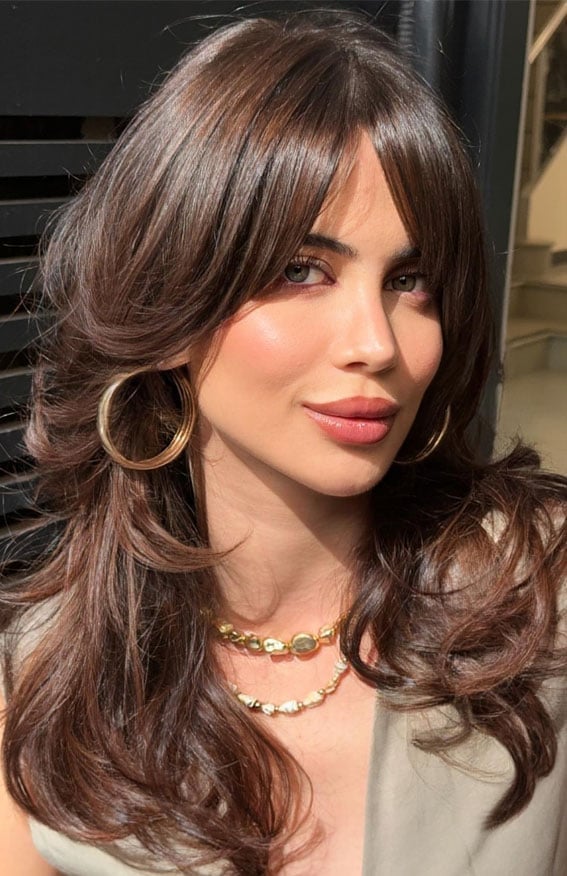
The curtain bangs sweep softly around the face while the hair falls in thick, wavy layers past the collarbone. A warm chocolate brown base grounds the look, and subtle lighter brown highlights add dimension without turning brassy. The effect mimics a sun-kissed finish. A middle part keeps the face open, and the gloss finish ties the whole thing together. Ask your colorist for: warm chocolate brown with soft highlights, collarbone length, curtain bangs. Thick, wavy hair starting at collarbone length takes this best, and the curtain bangs suit most face shapes. Use a smoothing product on the ends to maintain shine, and plan to trim the bangs every four to six weeks.
Rich Medium Brown Mid-Back Length
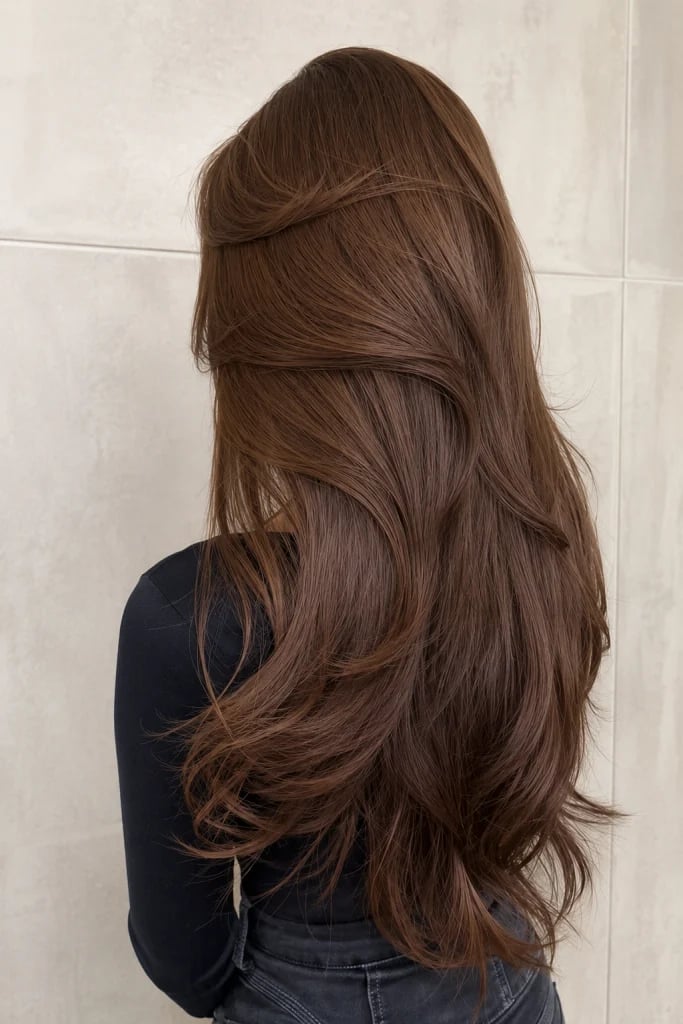
If you want a color that looks healthy without trying to be anything else, this uniform rich medium brown is the one. It’s a solid, no-fuss shade that lets the long layers and loose waves do the talking, falling to the mid-back with a middle part. This rich medium brown gives a natural shade but better, with no dimension to maintain and no root line to chase. Ask your colorist for: uniform rich medium brown, mid-back length, long layers. Thick, wavy hair works well here, because the density gives the waves body and the color depth. A weekly deep conditioning treatment will keep the shine from fading, and a trim every eight to ten weeks keeps the ends from splitting.
Warm Brunette With Bronzed Chestnut Balayage
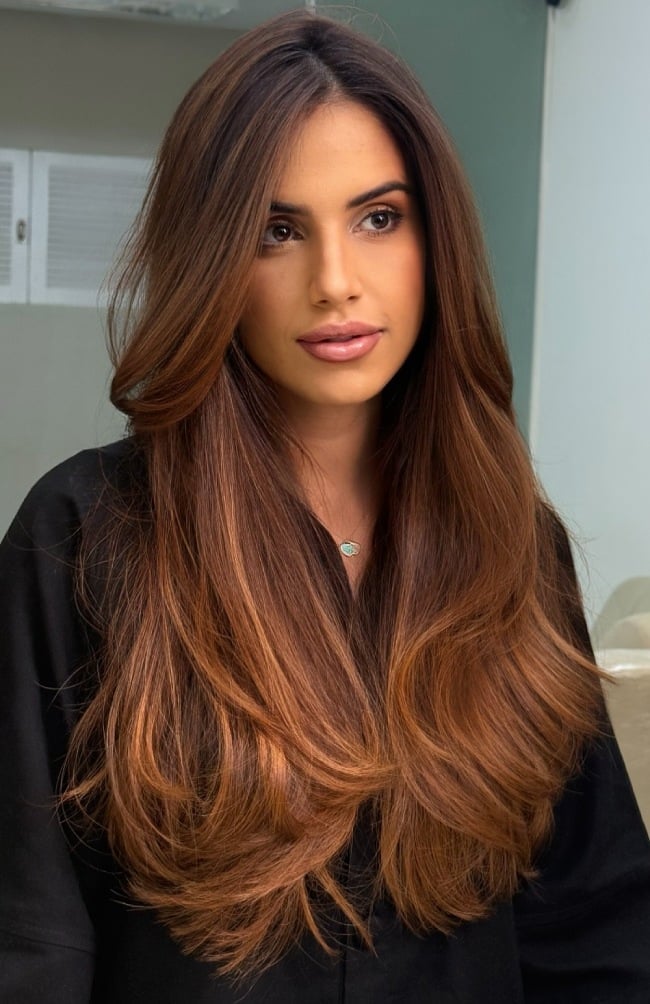
The balayage here starts low, letting the warm brunette base stay rich at the roots while the bronzed chestnut tones weave through the mid-lengths and ends. That placement is what gives the color its depth, because the lighter pieces are painted on by hand rather than foiled from the scalp, so the grow-out line never shows. The result is a warm, dimensional brown that still reads as brunette, just with more interest. Ask your colorist for: warm brunette with bronzed chestnut balayage, mid-back length. This suits thick, wavy hair that reaches mid-back, especially if you want warmth without going full copper. A color-depositing conditioner in a chestnut shade will refresh the tone between salon visits, which usually need to happen every ten to twelve weeks.
Medium Brown With Face-Framing Blonde Highlights
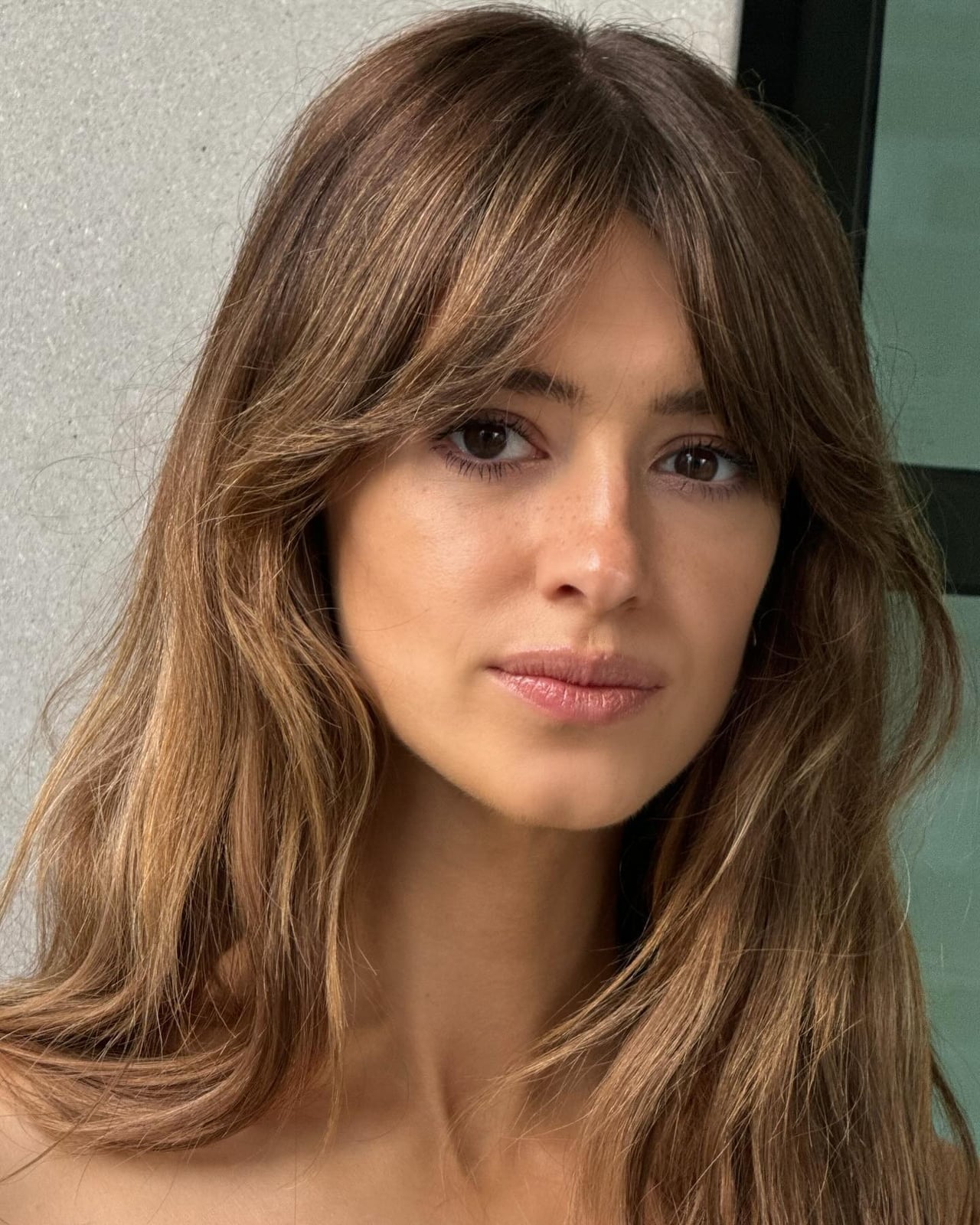
Compared to a solid medium brown, this version brightens the face without committing to all-over blonde. The wispy bangs and side part let the blonde highlights sit right where they matter, around the face, while the rest of the hair stays a deeper medium brown. It’s a softer contrast than chunky streaks, more of a lived-in glow that moves with the loose waves down to the mid-back. Ask your colorist for: medium brown with face-framing blonde highlights, wispy bangs, side part. Thick, wavy hair takes this well, and the face-framing placement works for those who want to soften angular features. Style the bangs with a texturizing spray for a soft bend, and trim them every six to eight weeks to keep them wispy.
Chocolate Brown With Lighter Brown Balayage
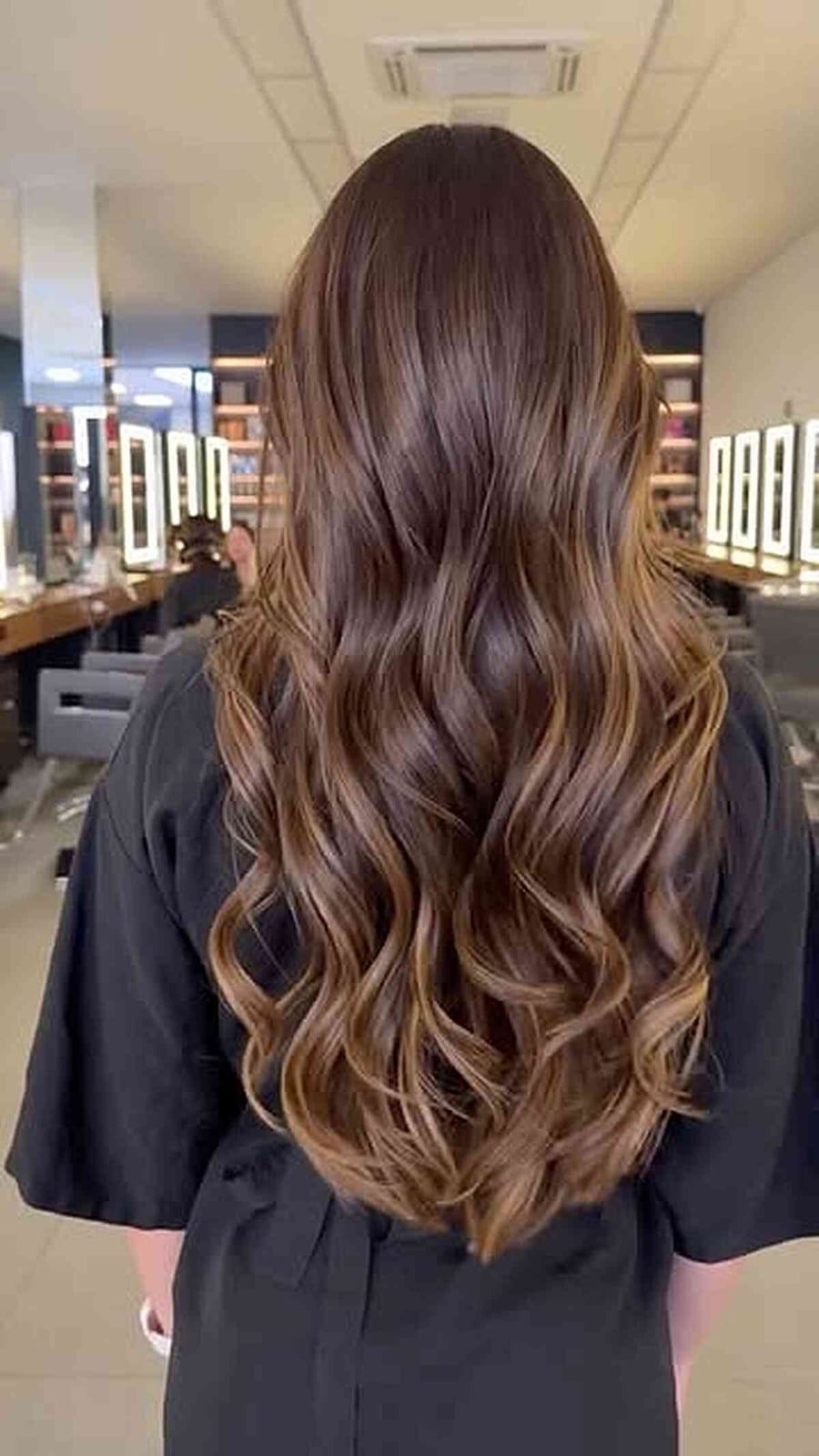
Seen from the back, this is a study in how subtle dimension beats flat color every time. The chocolate brown base is deep enough to ground the look, while the lighter brown balayage is painted through the mid-lengths and ends in a way that mimics natural sun fade. The loose waves catch the lighter pieces and make the whole thing shift as you move, which is the point of balayage done right. Ask your colorist for: chocolate brown with lighter brown balayage, mid-back length. This works best on thick, wavy hair that reaches mid-back, where the layers give the balayage room to show. A shine spray on the finished waves will emphasize the dimensional effect, and the color itself holds up for about three months before the grow-out starts to feel heavy.
Dark Brown With Honey Blonde Highlights
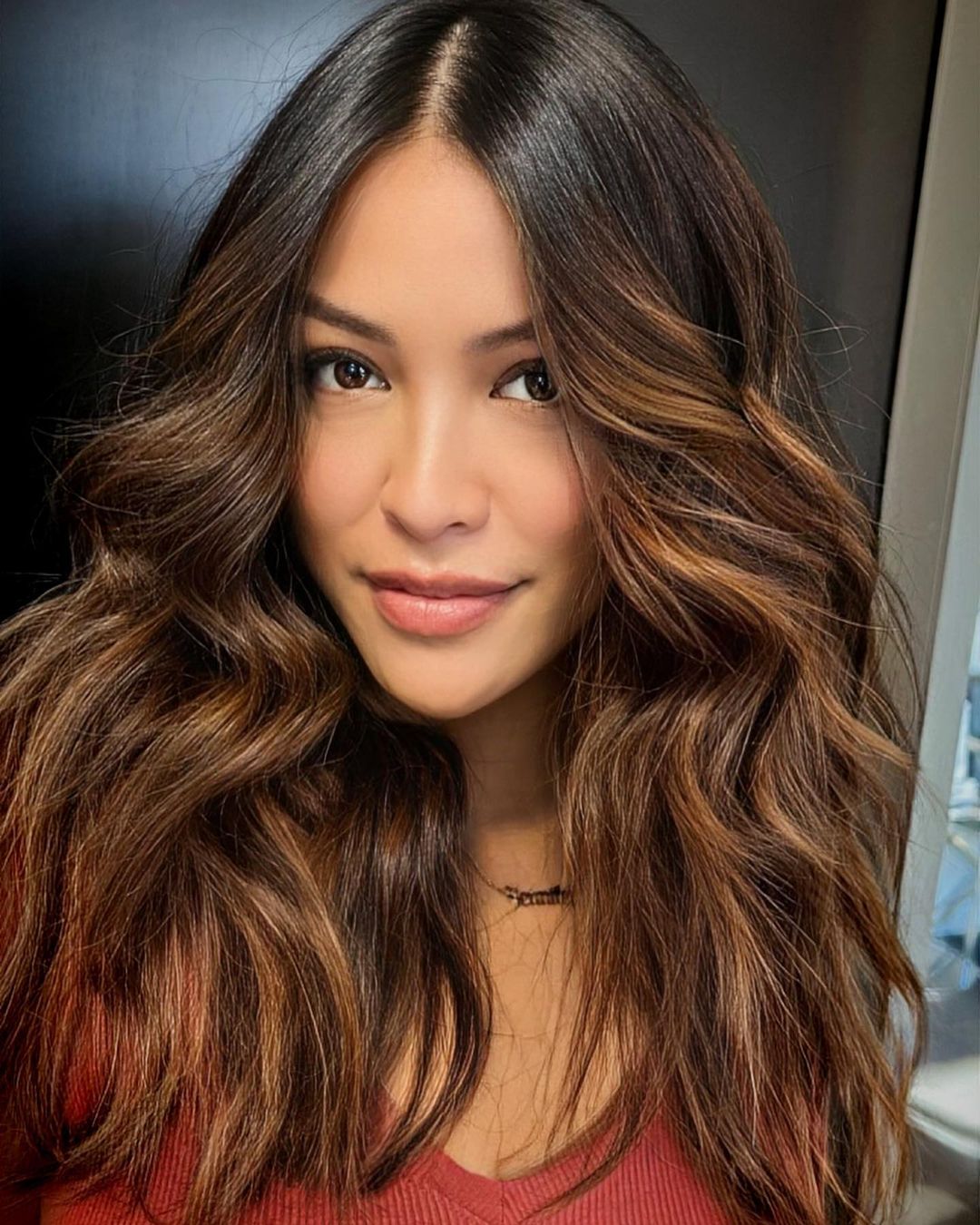
A dark brown base with honey blonde highlights works best when the lighter pieces are woven through the ends rather than painted on from the root, which keeps the grow-out line softer and the contrast intentional. This mid-back length with layers and a middle part lets the honey tones look dimensional, not stripey.
Thick, wavy hair helps blend the two shades naturally. Ask your colorist for: dark brown base with honey blonde highlights, mid-back length. This is a salon process, not a box-dye situation, and it usually takes about three hours. A purple shampoo used once a week will keep the honey tones from turning brassy.
Dark Brown With Blonde Balayage Blend
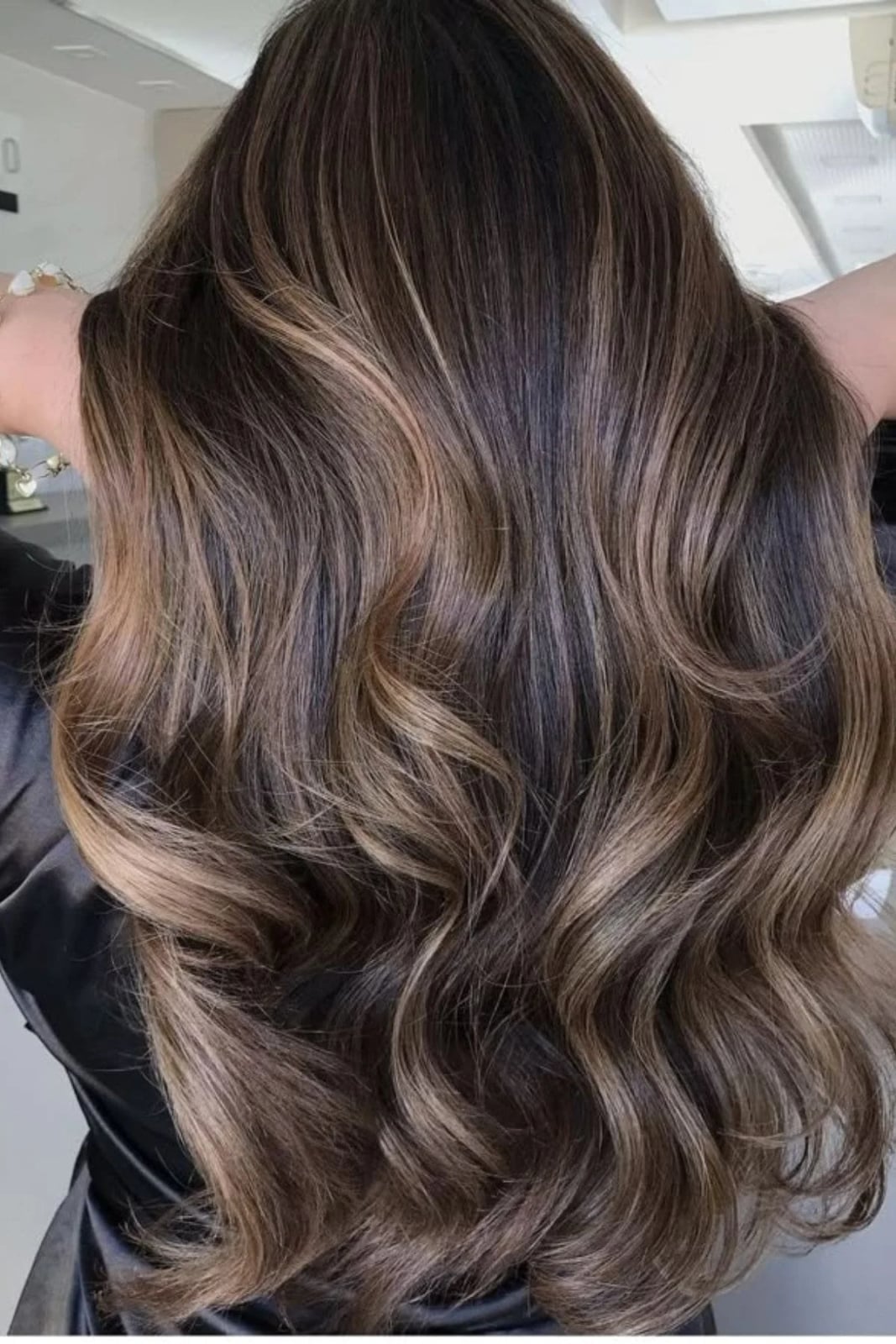
The most common mistake with blonde balayage on a dark brown base is asking for too much lift near the scalp, which creates a hard line when the roots grow in. A soft balayage blend keeps the lighter pieces concentrated on the ends, so the transition looks lived-in from the start. The mid-back length and wavy texture here help the blonde feel like it moves with the hair instead of sitting on top of it.
The one real drawback with this look is brassiness. Blonde pigment on a dark base tends to pull warm after a few washes, and the lighter pieces can look yellow instead of soft. A toner applied every six to eight weeks solves that. Ask your colorist for: dark brown with a soft blonde balayage blend. A texturizing spray on the waves helps the balayage blend into one seamless color story.
Deep Chocolate Brown With Caramel Balayage
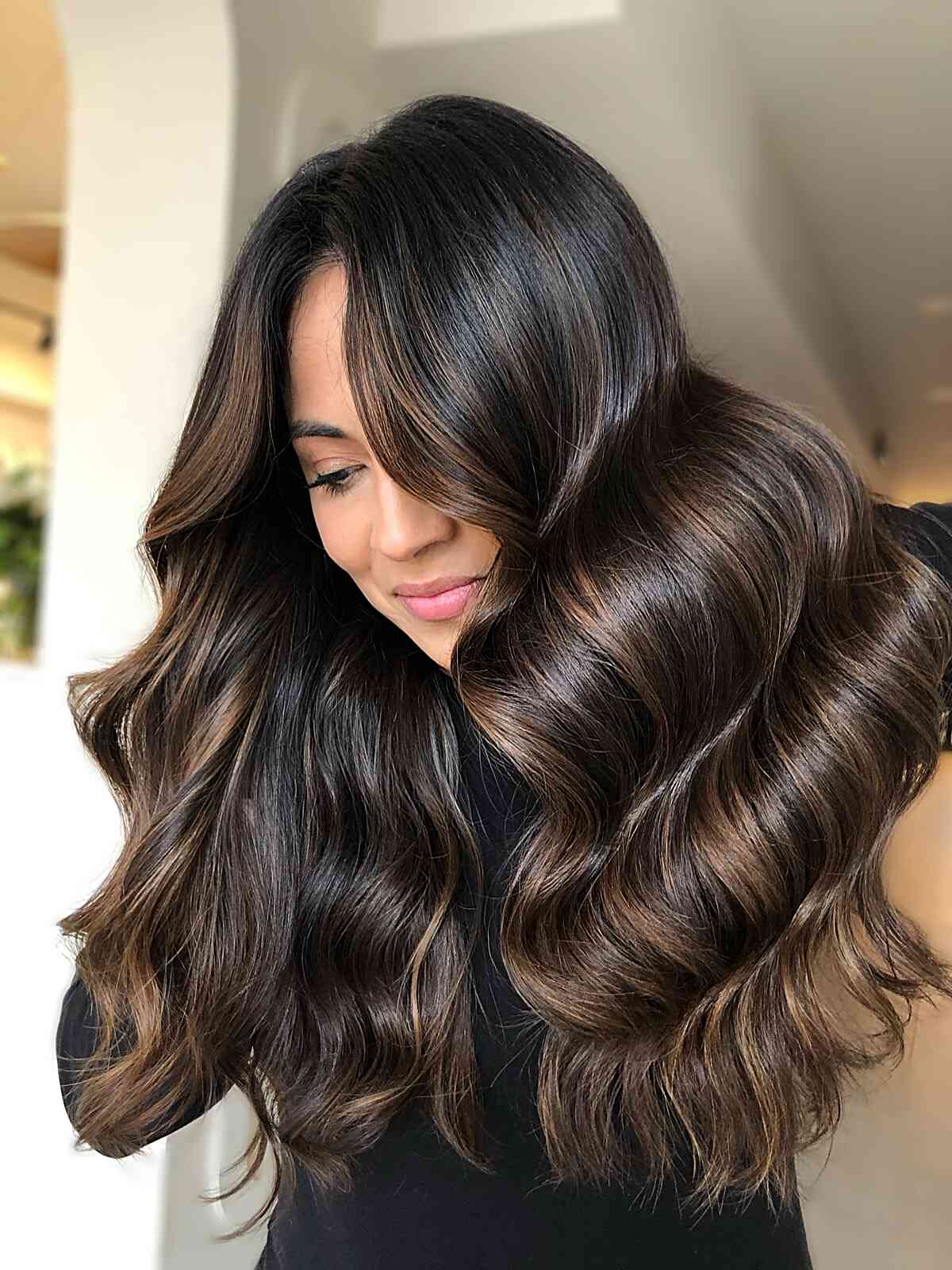
What makes this design work is the contrast between the depth of the chocolate base and the warmth of the caramel balayage. The chocolate brown provides a rich, almost opaque backdrop, while the caramel pieces are woven through the ends. The mid-back length and loose waves let the caramel sit in the curves of the hair, creating a glossy, dimensional effect.
The thick wavy texture are key to this look because they allow the caramel to peek through symmetrically on both sides. Ask your colorist for: deep chocolate brown with caramel balayage. This is a salon technique, not something to attempt at home, and it takes about three hours. A color-safe conditioner keeps the caramel tones from looking dull between appointments.
Espresso Brunette With Ash Highlights
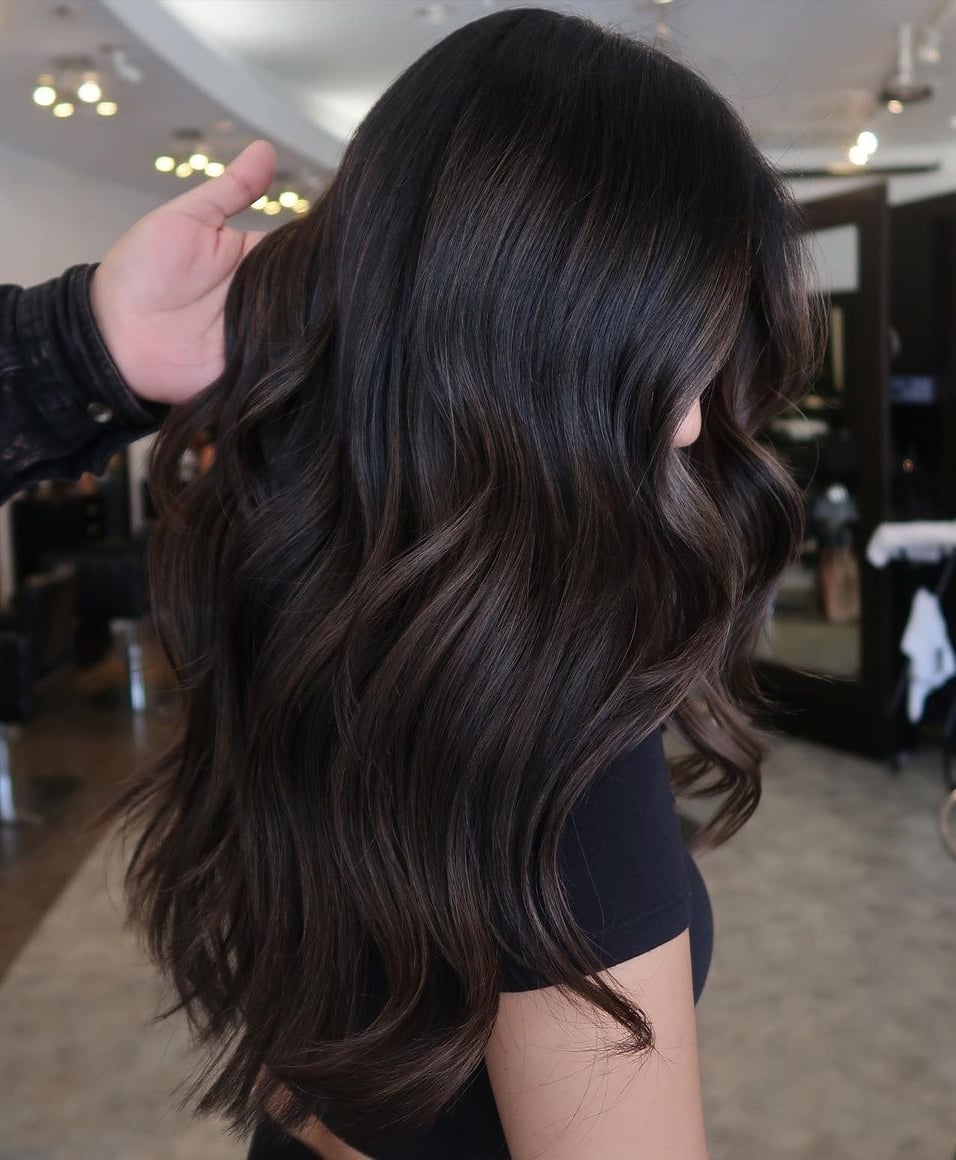
Ash highlights on a deep espresso base fade faster than warmer tones do, which means this look requires a toning appointment every six to eight weeks. The payoff is a cool, sophisticated dimension that a flat brown cannot deliver. The long layers and loose waves here let the ash pieces sit subtly throughout the hair rather than clustering at the ends, which keeps the fade from looking patchy.
Thick, wavy hair at mid-back length is the starting point for this look because the texture helps the ash highlights read as soft rather than harsh. Ask your colorist for: deep espresso brunette with subtle ash highlights. A toner is non-negotiable with this color, as the ash tone will shift toward beige without regular maintenance. The side view shows how the light catches the deeper base, making the ash pieces feel like a whisper rather than a statement.
Dark Brown Curly With Subtle Copper Highlights
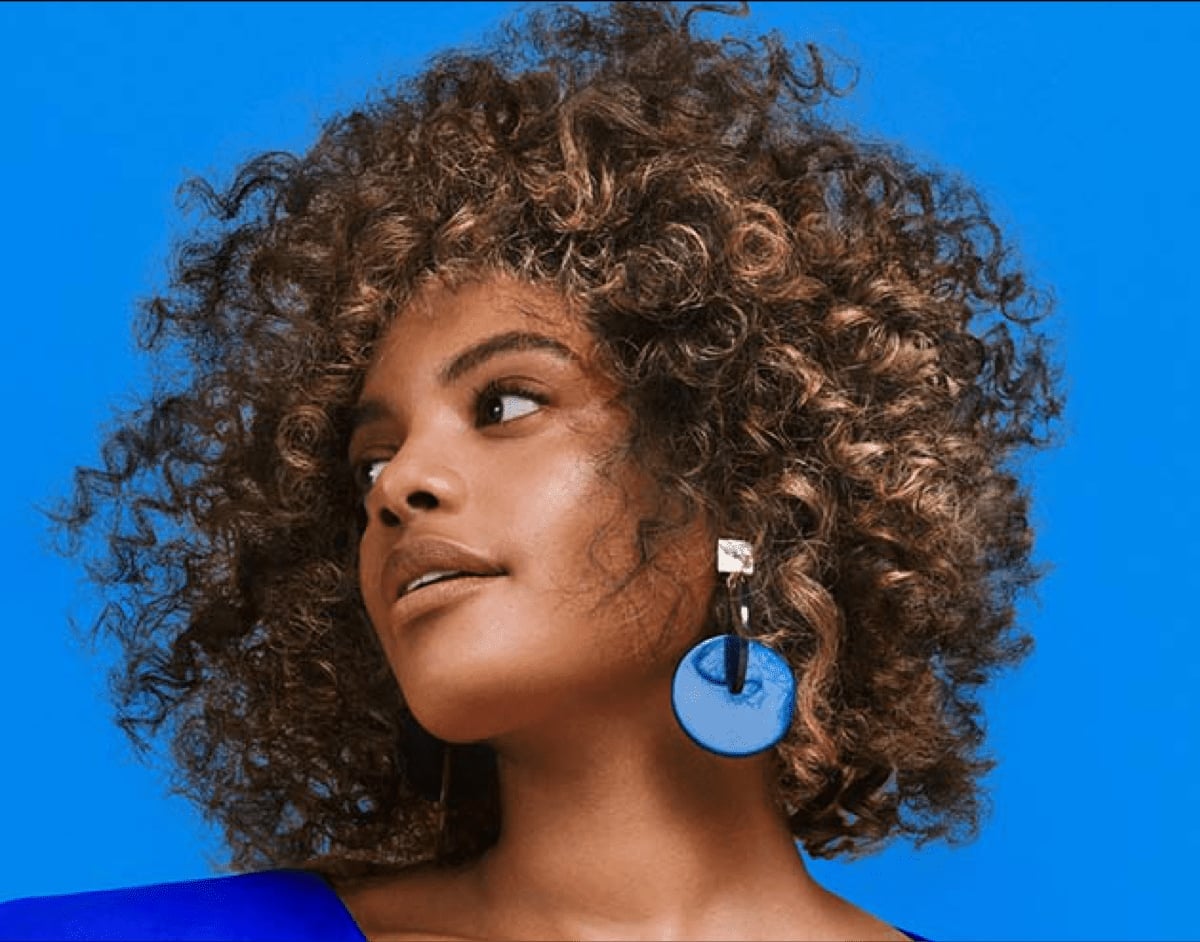
This look suits thick, curly hair starting at collarbone length that wants a touch of warmth without committing to a full color change. The subtle copper highlights catch light at the crown and ends of the curls, which adds dimension without flattening the curl pattern. The layers here are crucial: they prevent the copper from settling in one spot and let the color move with the hair’s natural S-shape.
Ask your colorist for: dark brown with subtle copper highlights, collarbone length, natural curly texture. This is a DIY-friendly refresh if you use a semi-permanent copper gloss at home, but the initial highlight placement is better done in a salon. The middle part and air-dried finish keep the look low-maintenance, so you can wash and go without worrying about the color sitting wrong.
Rose Brown With Lighter Rose And Blonde Tones
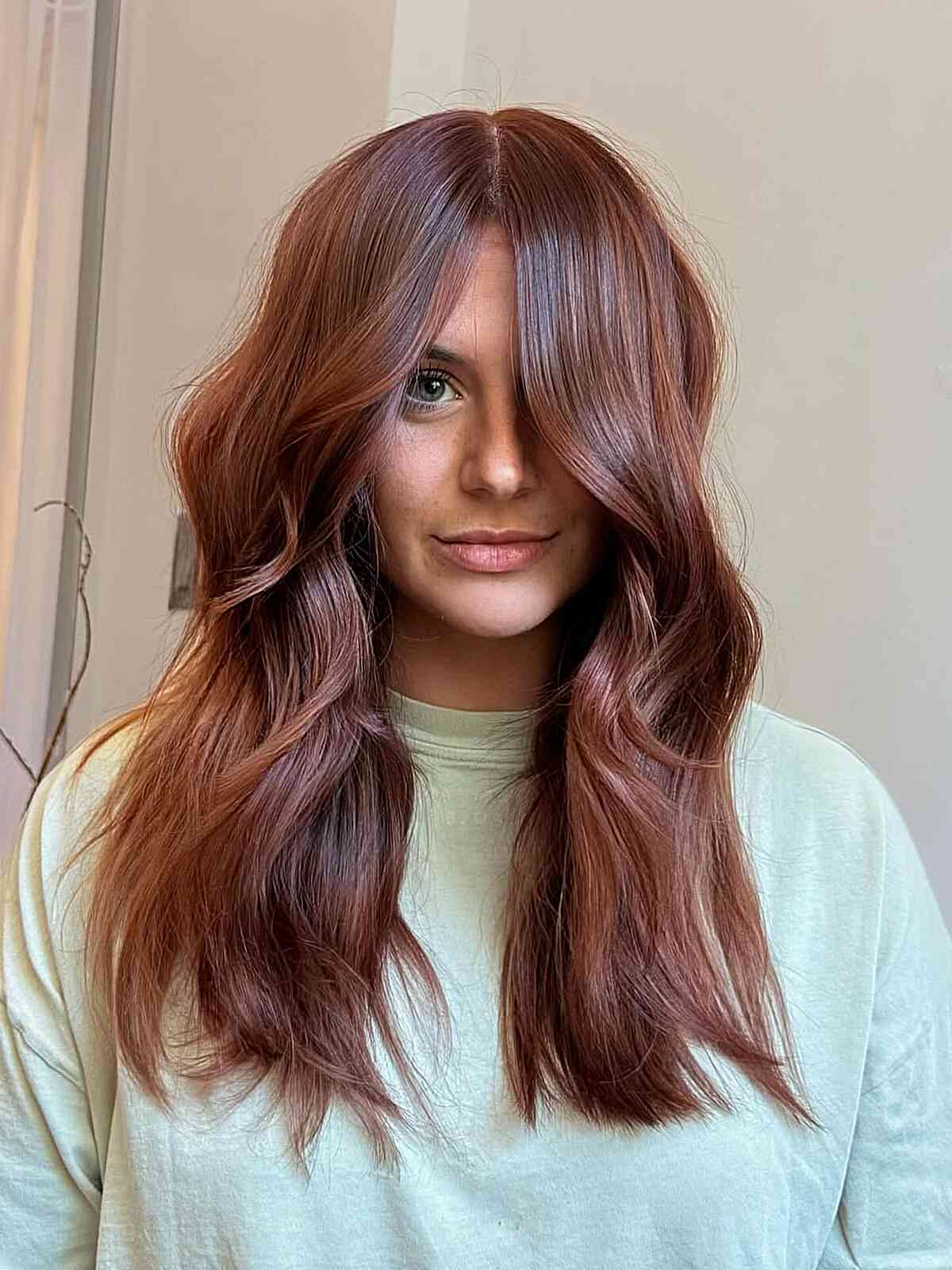
The design hinges on placement: lighter rose and blonde tones are concentrated around the face and through the mid-lengths, while the deeper rose brown base stays prominent at the roots and underneath. This keeps the color from reading as a solid pastel while still delivering that pinkish glow. Thick, wavy hair at mid-back length with curtain bangs handles the blend well because the layers give the colorist room to paint sections without creating a harsh line.
Ask your colorist for: rose brown with subtle lighter rose and blonde tones, curtain bangs. The application is a salon-only process, requiring a pre-lightener before the rose shades are layered on. Styling it is straightforward: a round brush blowout on the bangs and a large-barrel curling iron for the rest, then run your fingers through to soften the waves. A color-depositing conditioner used once a week will keep the rose undertones from fading into a brassy beige.
Dark Brown With Subtle Caramel Highlights
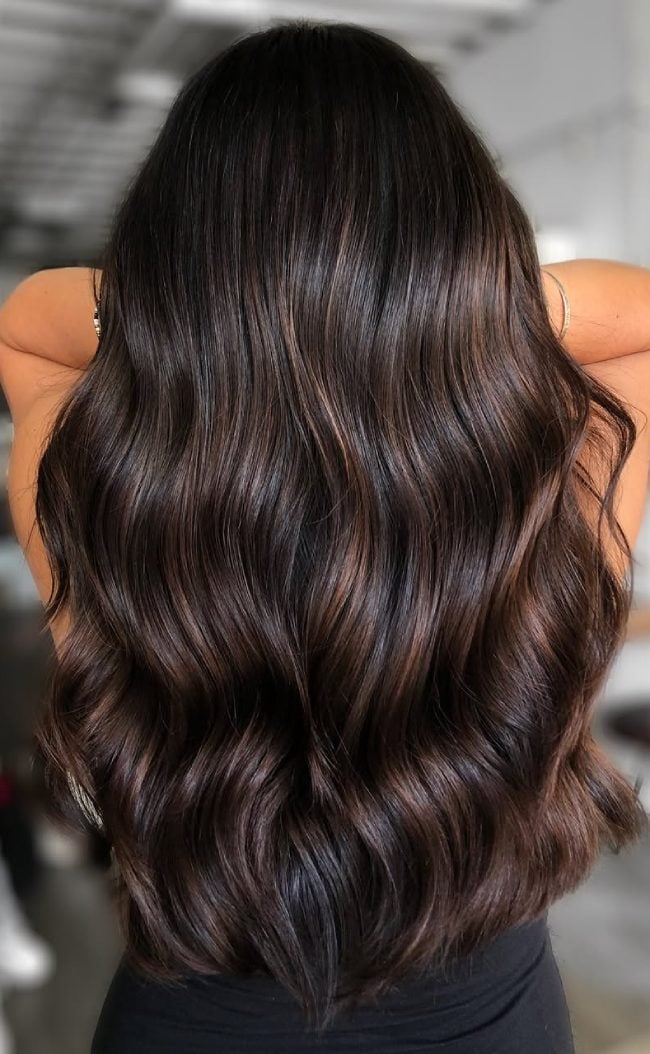
The richness comes from the base being a true dark brown, almost black in the deepest sections, while the caramel highlights are fine and spaced irregularly. They never clump into streaks, so the overall effect is a glossy, layered warmth rather than a stripey contrast. This works best on thick, wavy hair that reaches mid-back, where the waves can catch the lighter pieces at different angles.
Ask your colorist for: dark brown with subtle caramel highlights, mid-back length. The colorist will paint the caramel tones through a foil or freehand technique depending on your texture, then tone them to a soft, warm beige. A weekly hair mask will keep the dark base from looking dull and the highlights from drying out. Between salon visits, use a sulfate-free shampoo to protect the caramel tones from turning brassy.
Brunette Base With Caramel Balayage
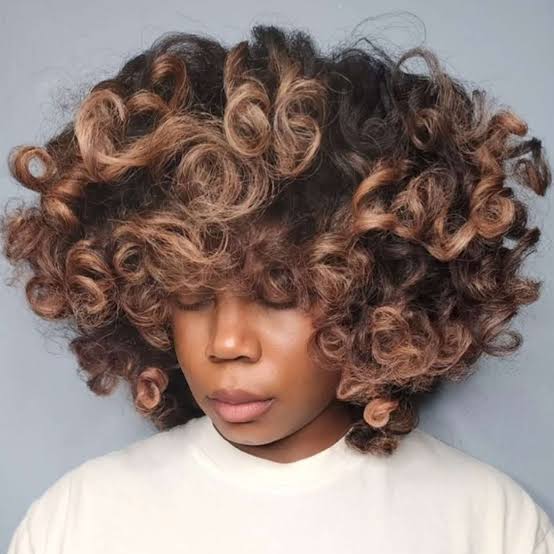
To get a balayage that is warm but not orange, ask for a caramel tone instead of a honey or gold one. Caramel sits between a warm brown and a light beige, so it lifts the base without overwhelming it. This back view shows the colorist painted the caramel from the mid-lengths to the ends on thick, wavy hair at mid-back length, leaving the roots untouched for a natural grow-out. Long layers help the balayage blend seamlessly.
Ask your colorist for: brunette with caramel balayage, mid-back length. This is a salon technique, balayage requires a colorist to hand-paint the lightener, so do not attempt it at home. This is a low-maintenance look that needs a toning appointment every 10 to 12 weeks to refresh the caramel warmth as the color fades.
Cinnamon Brown Lob With Soft Waves
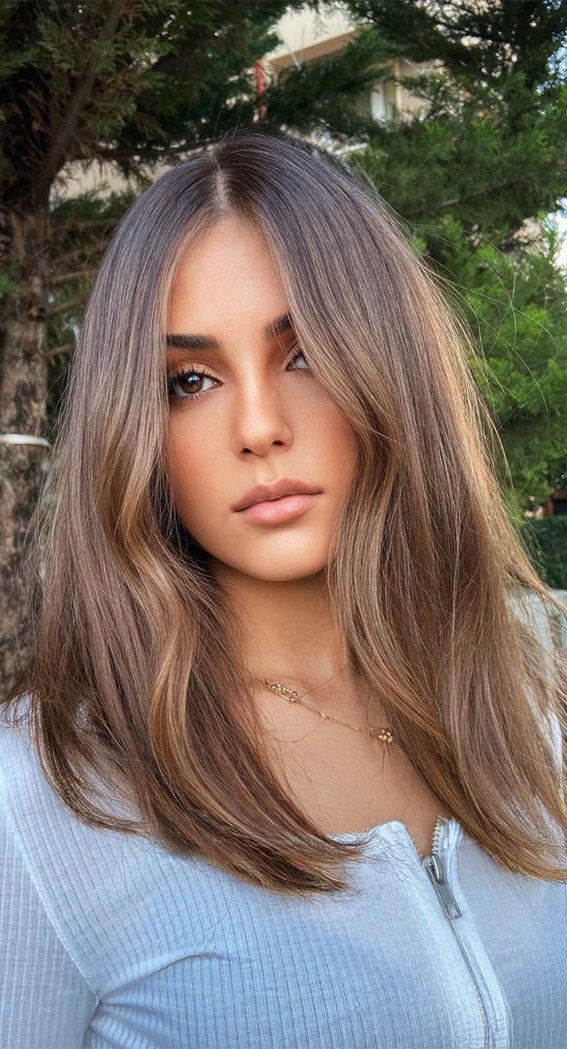
A solid cinnamon brown lob can read flat, but the subtle highlights here change the game. They are fine, lighter cinnamon pieces woven through the top section, giving the collarbone cut a lift without a second color. Medium density wavy hair at collarbone length is the ideal candidate, the lob hits just above the shoulder, so the waves have enough weight to hold shape without flipping out.
Ask your stylist for: cinnamon brown lob, subtle highlights, soft waves. Compared to a one-dimensional brown lob, this version keeps the cut from looking blunt and the color from looking monotone. It is a salon dye job, but the upkeep is manageable: a trim every 6 to 8 weeks to maintain the lob shape, and a gloss treatment every 8 weeks to keep the cinnamon tone shiny.
Honey Brunette Balayage Blowout
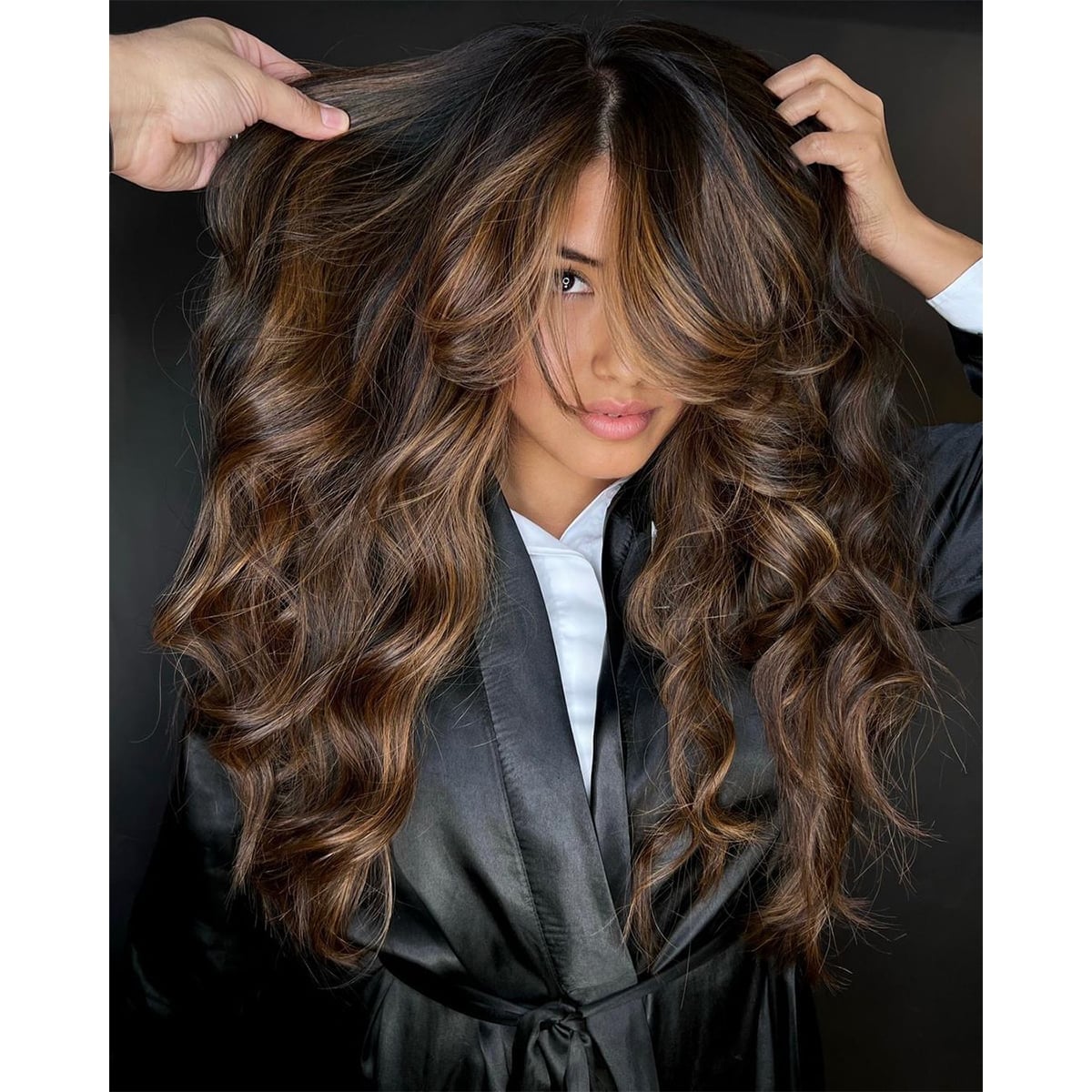
The design works because the honey balayage is placed high. It starts at the cheekbones through the face-framing layers, then diffuses into the mid-back length. This creates a sun-kissed halo effect around the face without an obvious root line. Thick, wavy hair with curtain bangs and a middle part is the natural fit; the waves break up the color transitions so they read as soft rather than striped.
Ask your colorist for: honey brunette balayage, face-framing layers, curtain bangs. The stylist will blow-dry the hair with a round brush to maximize volume at the crown, then use a large curling iron to shape the waves away from the face. The balayage itself requires a salon visit every 10 to 12 weeks for a refresh, but the grow-out is subtle enough to stretch to 14 weeks if needed.
Dark Brown With Lighter Brown Highlights
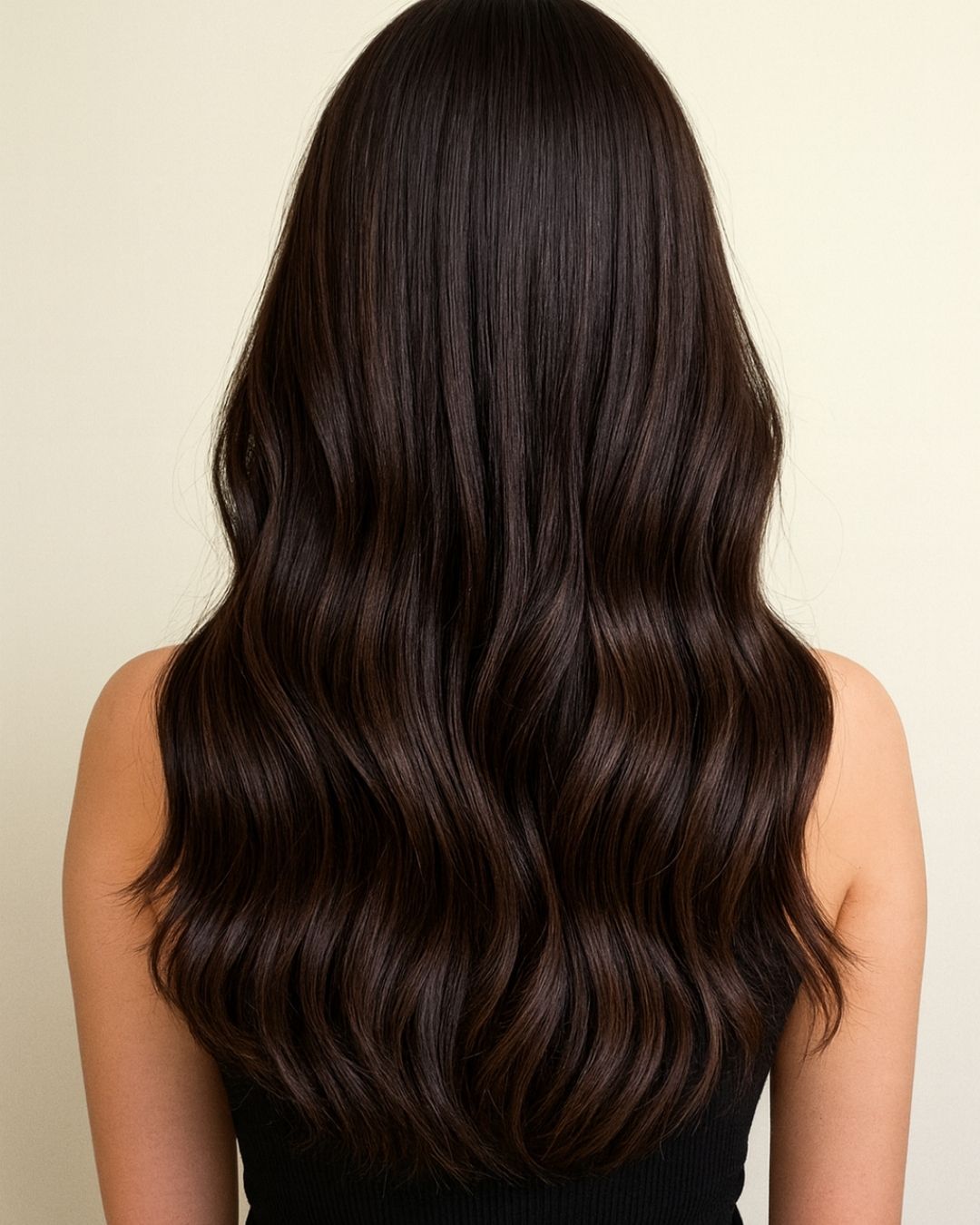
Face-framing layers with curtain bangs are a reliable way to add movement to dark brown hair. The subtle lighter brown highlights here stay soft against the base, so the grow out looks like a natural progression. This design works best on thick, wavy hair that reaches mid-back length, because the layers need density to blend well.
Ask your colorist for: dark brown with subtle lighter brown highlights, curtain bangs. The middle part keeps the face-framing pieces symmetrical as they grow. A trim every eight weeks preserves the shape, and a heat protectant before your blowout keeps the gloss on the subtle highlights from looking brassy.
Medium Brown With Dimensional Balayage
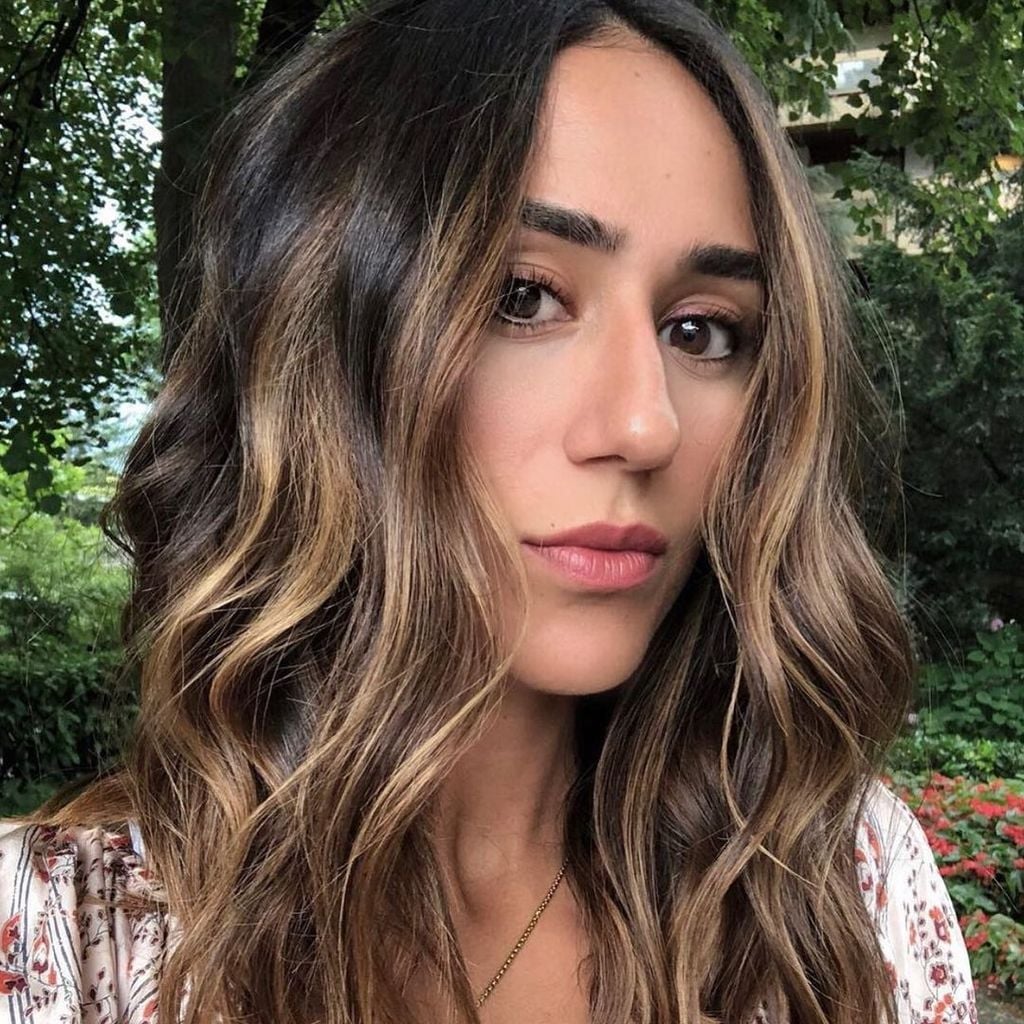
A medium brown dimensional balayage works well for anyone who wants depth without a flat, single-toned result. The lighter brown highlights are painted in a sweeping motion, so the color moves with the wave rather than sitting in blocks. This approach is particularly effective on thick, wavy hair of mid-back length, because the texture catches the lighter pieces naturally.
Ask your colorist for: medium brown with lighter brown highlights and balayage, side part. The side part helps the lighter sections fall forward instead of disappearing into the length. If your hair is finer, keep the balayage closer to the ends to avoid too much contrast at the roots.
Dark Brown With Ash Blonde Violet Balayage Lob
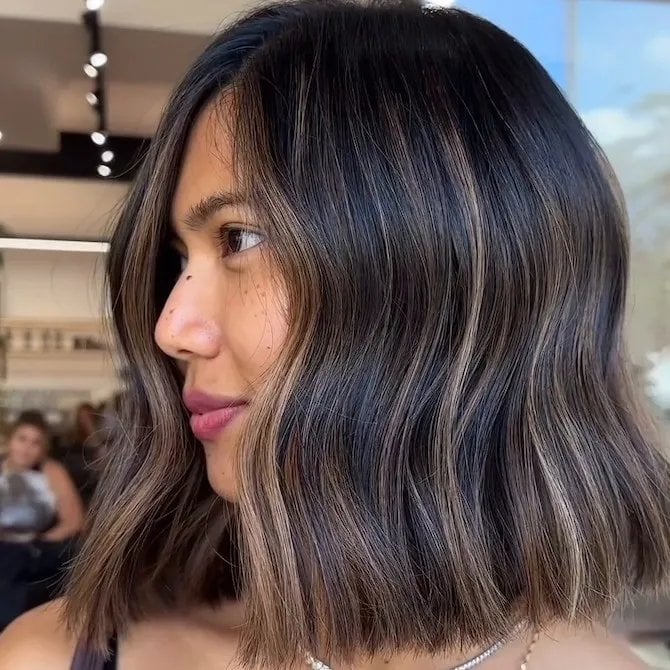
A collarbone-length lob with a dark brown base gets a cool shift from ash blonde and subtle violet balayage. The violet tones are blended low, so they read as a quiet reflection rather than a stripe. This technique requires a side part to let the lighter pieces fall across the surface instead of stacking on one side. A color-safe shampoo is non-negotiable here, as the ash and violet tones fade fast without it. Ask your colorist for: dark brown with ash blonde and subtle violet balayage, collarbone length.
Shoulder Length With Copper Balayage
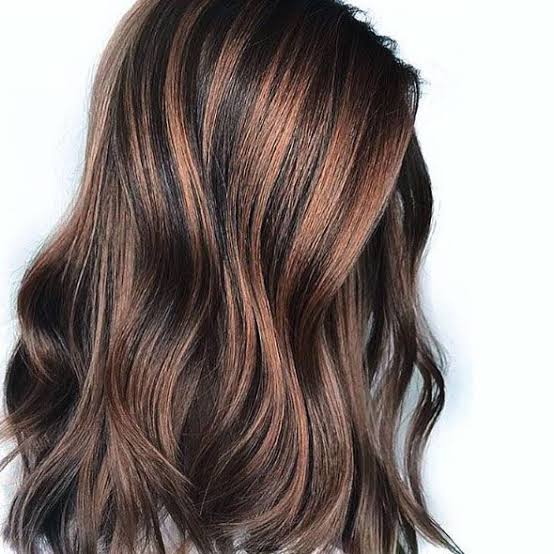
Copper balayage on a medium brown base adds warmth without turning the whole head orange. The lighter pieces are concentrated on the surface layers, so the color shows as a soft glow, not a full commitment to red. This cut suits thick, wavy hair at collarbone length, because the copper needs enough hair to spread through the wave. Ask your colorist for: medium brown with vibrant copper balayage, shoulder length. The side part helps the copper catch light on one side, giving the color more movement than a center part would.
Dark Brunette With Honey Balayage Transition
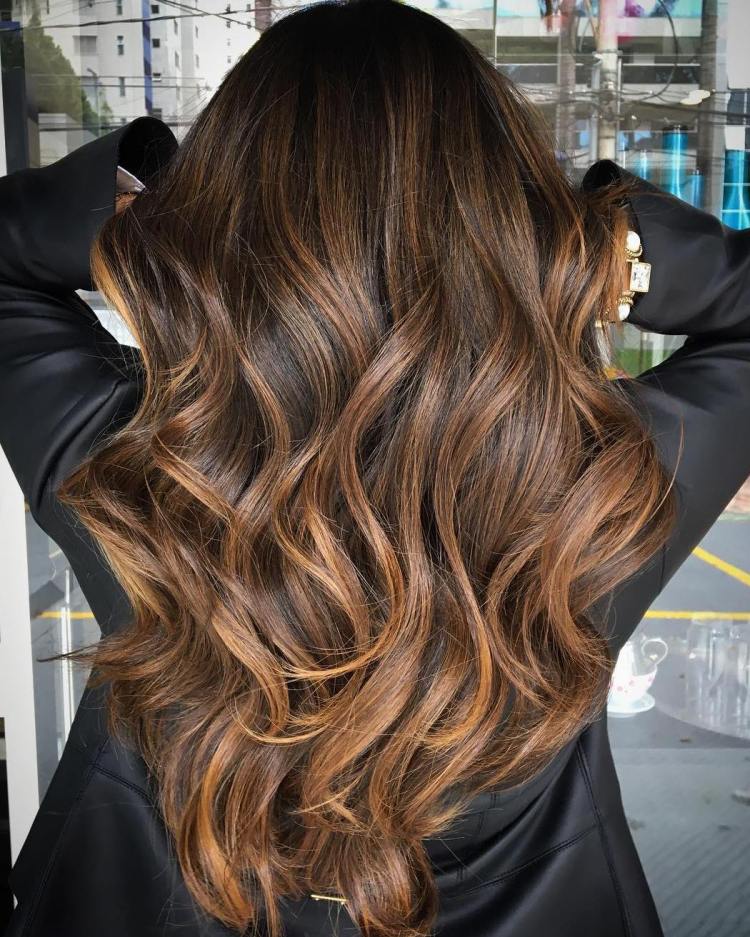
How do you get a seamless transition from dark brunette to honey without a harsh line? The answer is balayage painted from the mid-lengths down, with the lightest pieces concentrated near the ends. This back view shows the honey fading up into the dark base, which means the grow-out is softer than traditional highlights. For this reason, this is a salon-only job, not a DIY project. Ask your colorist for: dark brunette with honey balayage transition, mid-back length. A leave-in conditioner on the ends will keep the lighter sections from drying out between toning appointments.
Dark Brown With Subtle Caramel Face-Framing Layers
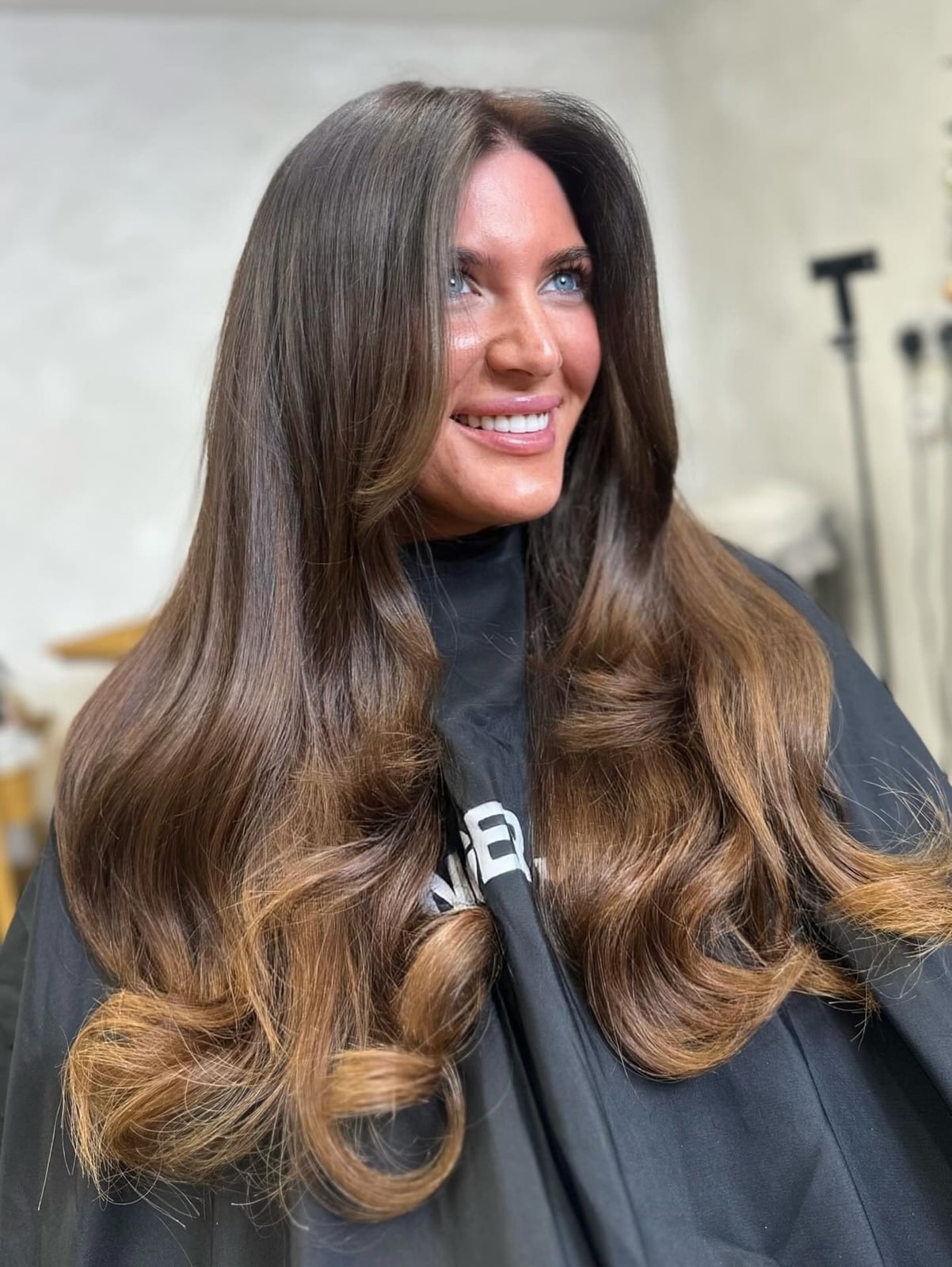
The mistake with face-framing layers is letting the caramel run past the jaw, where it reads as grown-out brassy streaks instead of a deliberate accent. On this mid-back length with a middle part, the lighter brown stays close to the face, so it warms the hair without taking over the dark brown base. Thick, wavy texture carries the color well, and the layers soften a square jaw better than a blunt cut ever will.
Ask your colorist for: dark brown with subtle caramel highlights in face-framing layers. Keep the contrast low, a few shades lighter than your base, and the grow-out stays believable for six to eight weeks. Blow-dry the front sections forward with a round brush so the caramel sits where it was painted. The real drawback: skip the toning appointments and those layers turn orange around week seven.
Deep Espresso Brown With Cool Undertones
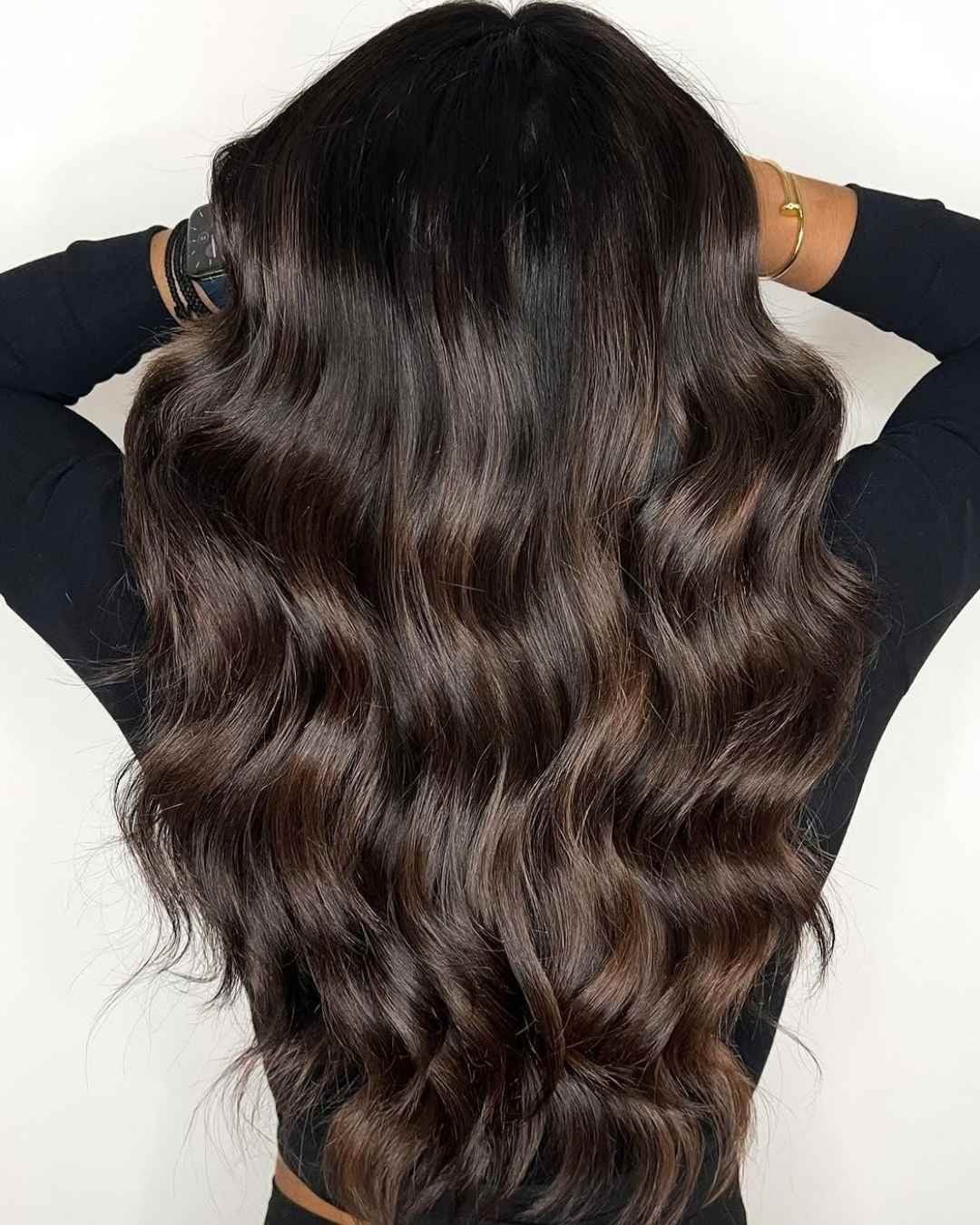
The back view tells the real story here: a deep espresso brown that reads as one solid, glossy block of color, no lighter pieces to break it up. The subtle cool undertones keep it from going flat or muddy, which is the usual fate of very dark shades on thick, wavy hair. This is a single-process color, not a highlight job, so the uniformity is the point. It suits anyone with medium to thick texture who wants a low-maintenance brunette that still looks polished for work or evenings out.
Ask your colorist for: deep espresso brown with subtle cool undertones. The tone matters more than the depth, so ask for a blue-based formula rather than a green one. Keep it glossy with a color-safe shampoo, and expect to refresh the tone every four to six weeks if you want the cool cast to stay put.
Dark Brown Collarbone Lob With Caramel Highlights
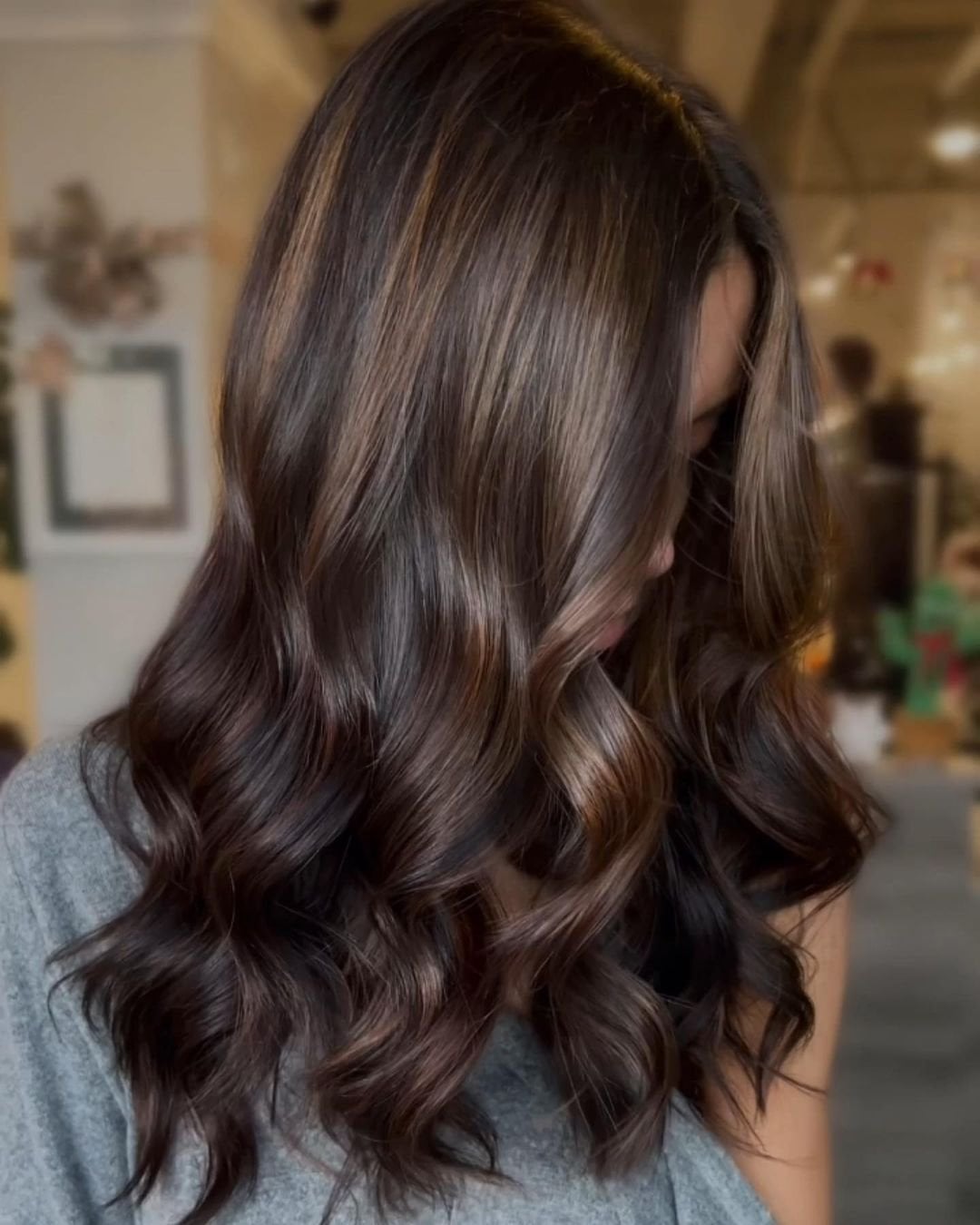
The collarbone lob is the rare cut that shows off dimensional color without demanding constant styling, and the caramel highlights here do the work. On a rich dark brown base with a side part, the lighter pieces land where the waves bend, so the lob gains depth every time it moves. Thick, wavy texture holds the shape well, and the length sits at that sweet spot between bob and long hair.
Ask your colorist for: dark brown with caramel highlights, collarbone length lob, side part. The highlights will soften and blend into the base as they grow out, which is exactly what you want from a lived-in color. A texturizing spray on the mid-lengths keeps the waves defined, and the lob needs a trim every six to eight weeks to stop the ends from looking straggly.
Medium Brown Balayage With Curtain Bangs
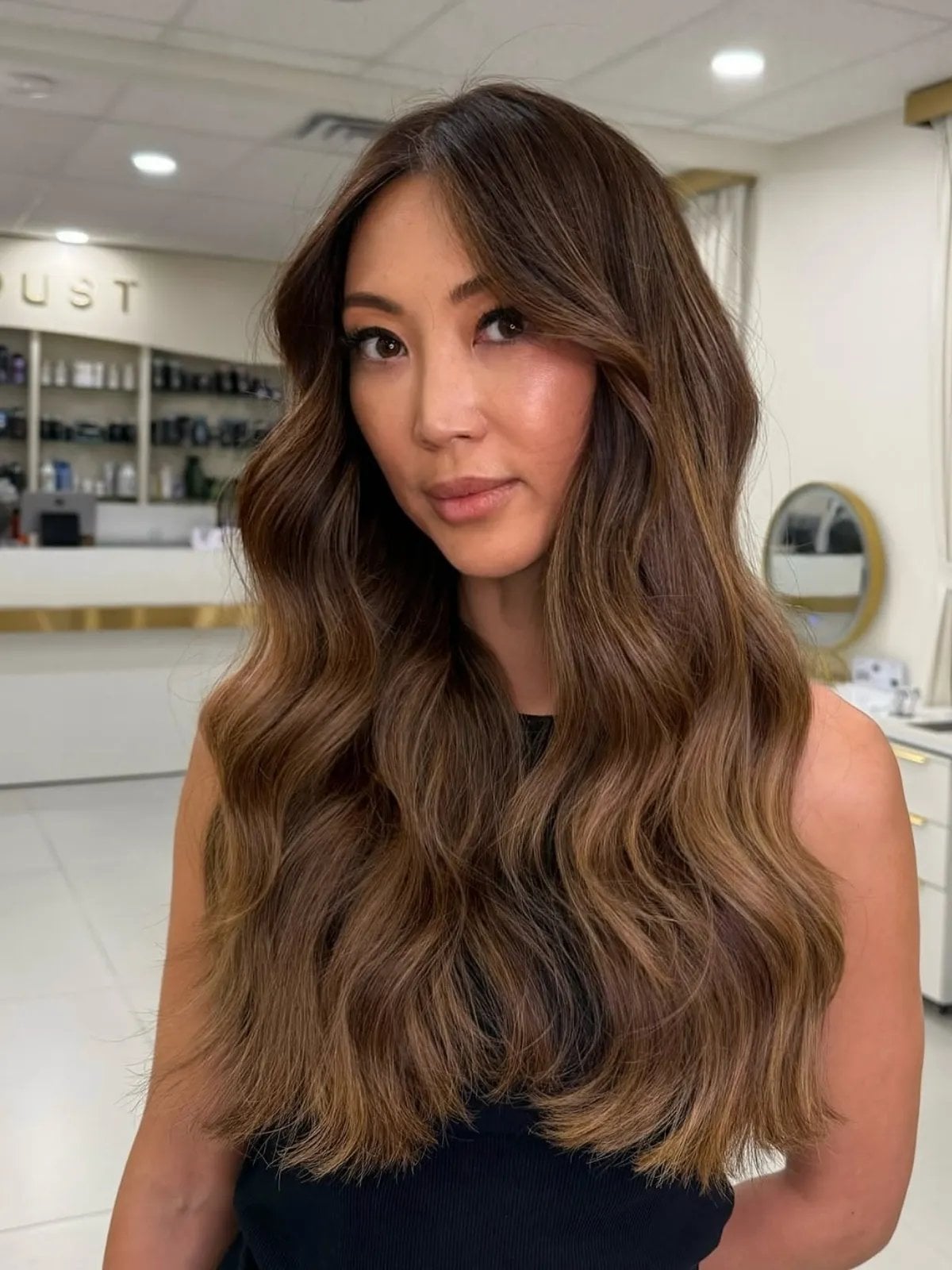
Medium brown balayage with curtain bangs is the most forgiving combo for finer hair. The lighter brown tones painted through the mid-lengths and ends create the illusion of density, while the curtain bangs frame the face without committing to a full fringe. On a collarbone length with long layers and a side part, the wavy texture gives the balayage a lived-in feel that doesn’t need a perfect blowout. It suits round and heart-shaped faces, since the bangs break up the width at the forehead.
Ask your colorist for: medium brown with balayage highlights, curtain bangs, collarbone length. The bangs need a trim every four to six weeks, and the balayage itself can stretch to four months between appointments.
Sleek Dark Brown With Ash Blonde Highlights
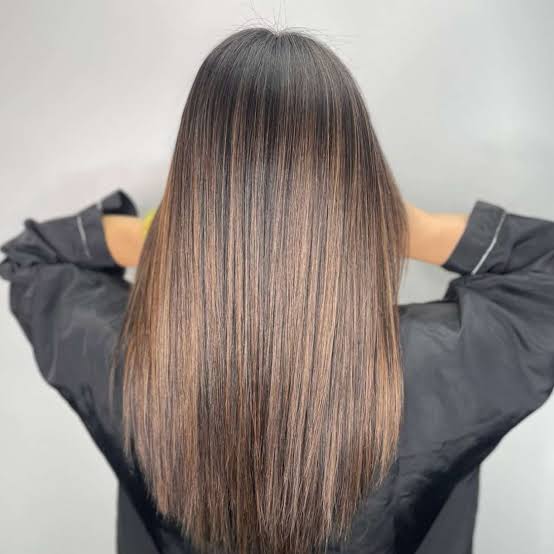
The design here is all about the vertical line: ash blonde highlights run straight down the mid-back length, and the dark brown base holds them in place. On thick, straight hair, the contrast is sharp and deliberate, which is why the sleek styling matters. The highlights are painted in fine, vertical sections, so they catch light along the full length.
Ask your colorist for: dark brown with ash blonde highlights, straight, mid-back length. To keep the sleek finish, start with a heat protectant, then flat iron in small sections from root to tip. The ash tone keeps brassiness at bay, but only if you book a toning appointment every six to eight weeks. Trim the ends every eight to ten weeks to preserve the clean line.
Shoulder Length Medium Brown With Subtle Highlights
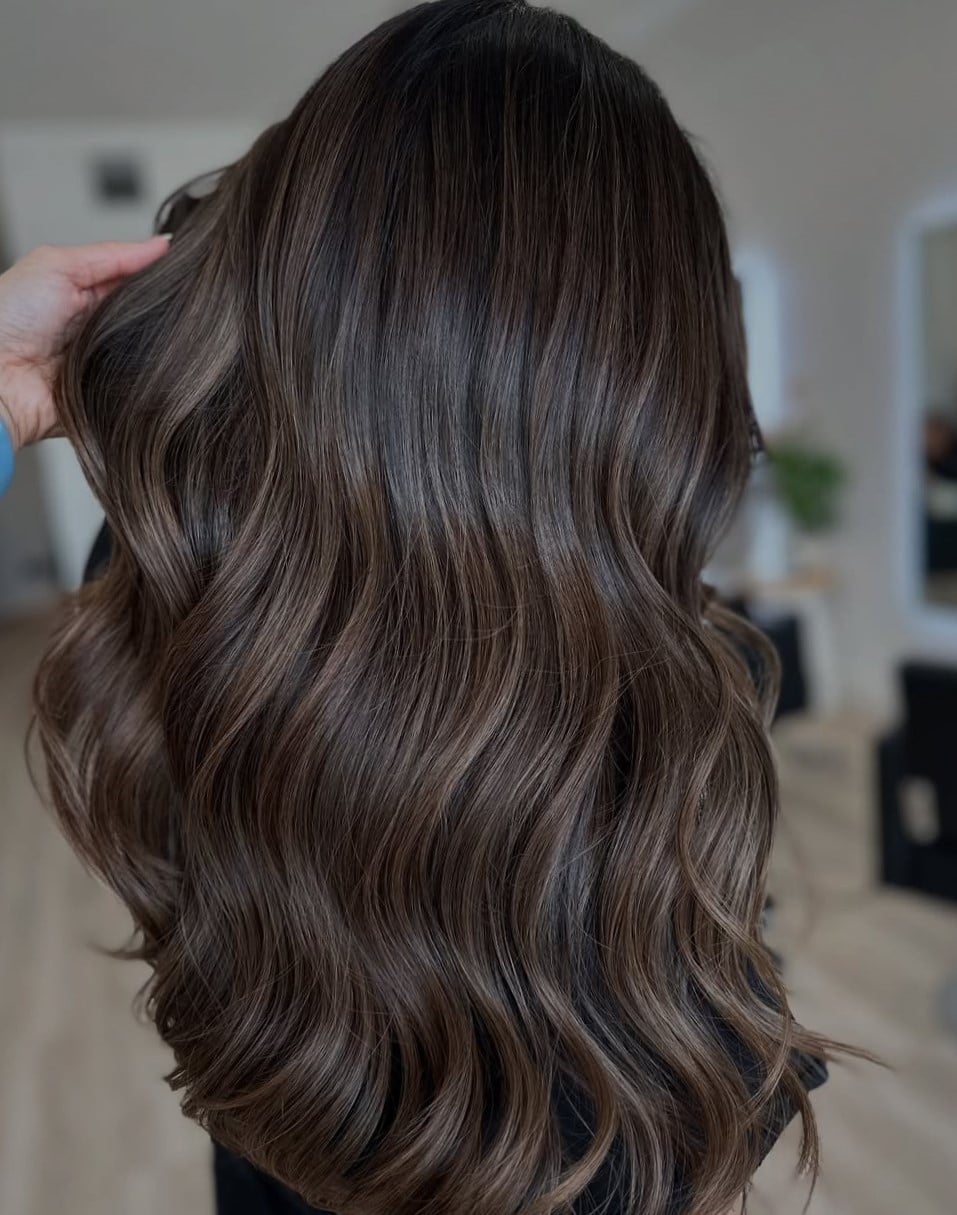
A collarbone length with a side part and soft waves suits a busy morning. The medium brown base gets its depth from subtle, lighter brown highlights that land mostly around the surface, so the dimension looks natural without stripes. This shade works well on thick, wavy hair, where highlights add movement without needing a full head of foils. What you want is a shade that stays close to your natural level but lifts just enough to create movement. Ask your colorist for: medium brown with subtle lighter brown highlights, shoulder length. A trim every six to eight weeks keeps the ends from looking straggly, and a light-hold hairspray preserves the wave pattern without stiffness.
Dark Chocolate Brown With Auburn Highlights
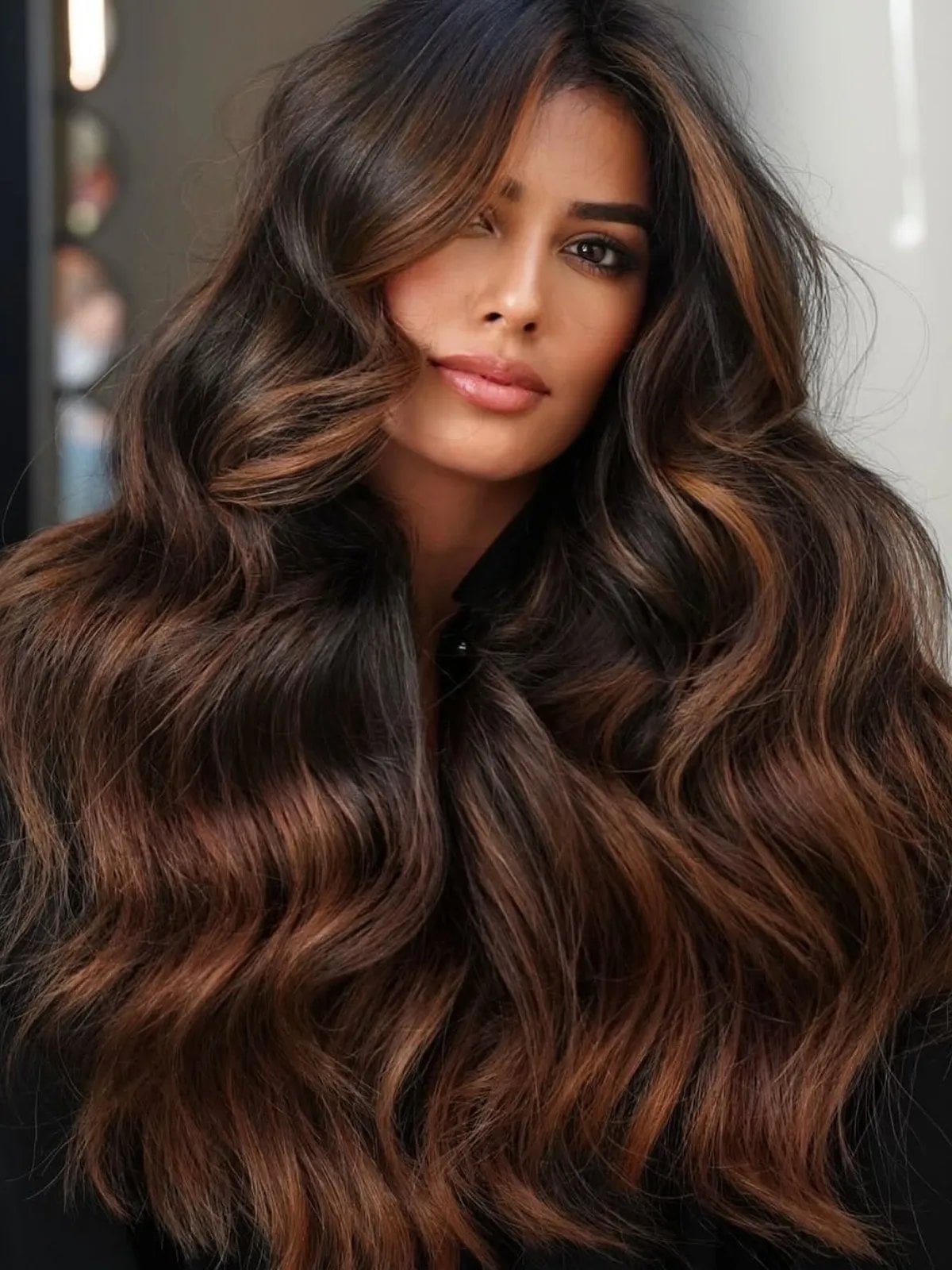
How do you get warmth into a dark base without going full copper? The answer is subtle auburn highlights woven through a dark chocolate brown. This combo keeps the overall depth rich while the auburn pieces add a soft glow, especially around the face. The mid-back length with long layers and a middle part lets the highlights travel through the wave pattern rather than stacking at the ends. This is a salon job, not a DIY project, because the auburn needs to be placed carefully against the dark base to avoid looking brassy. Ask your colorist for: dark chocolate brown with subtle auburn highlights, face-framing layers. A color-safe shampoo helps the red tones hold their warmth between appointments, which should land around every eight to ten weeks for a refresh.
Final Thoughts
If your priority is stretching time between salon visits, stick with a single base shade and subtle blended highlights that grow out softly. For maximum dimension, book a custom balayage that places lighter pieces where your hair naturally falls. Either way, brunette remains a canvas that rewards a little planning.
- Maintain color vibrancy with sulfate-free shampoos and conditioners designed for color-treated hair.
- Tone highlights every 6-8 weeks to prevent brassiness and maintain desired undertones.
- Use a heat protectant spray before styling to shield hair from damage.
- Deep condition hair weekly to keep color-treated strands hydrated and glossy.
Brunette is a versatile canvas for sophisticated color.