
Chestnut red hair sits at the intersection of brown and red, offering the warmth of copper without going full ginger. The shift toward lived-in color means you can let the roots grow a little without panicking about the line of demarcation.
These 26 real examples of Chestnut Red Hair move from collarbone bobs to mid-back lengths, glossed or subtle, layered or blunt. The collection solves the problem of finding a red that stays wearable past the first wash. For fine hair that lacks body or a visible grow-out line that kills the illusion, there is a version here that behaves.
Collarbone Length Wavy Bob With Subtle Highlights
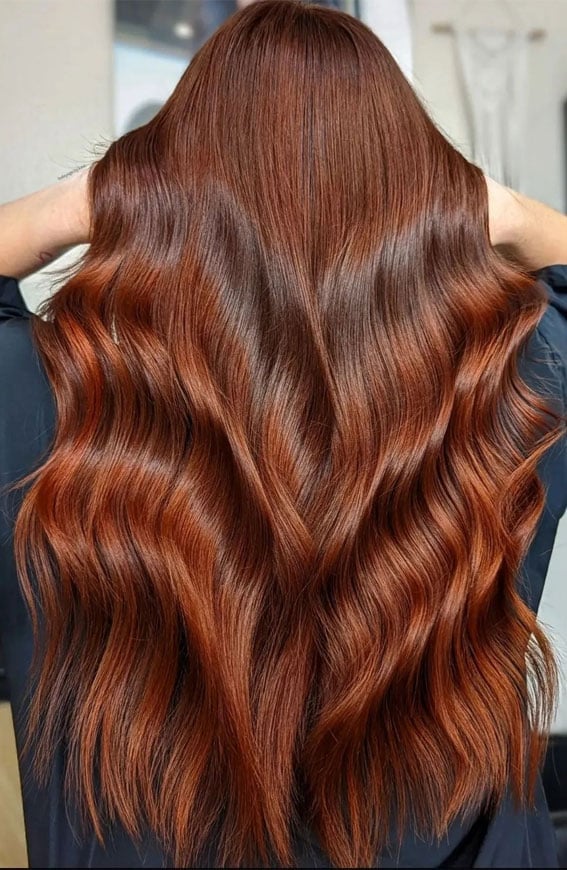
Thick, wavy hair gets a dimension boost from a chestnut red base with blended highlights. The collarbone length lands in a sweet spot: long enough to tuck, short enough to feel weightless. This bob works best on medium to thick wavy textures starting at the collarbone, and the soft waves naturally soften round and oval face shapes. Ask your colorist for: collarbone wavy bob with blended highlights. A large barrel curling iron creates the wave pattern, and a trim every eight weeks keeps the bob from losing its shape.
Shoulder Length Layers With Copper Undertones
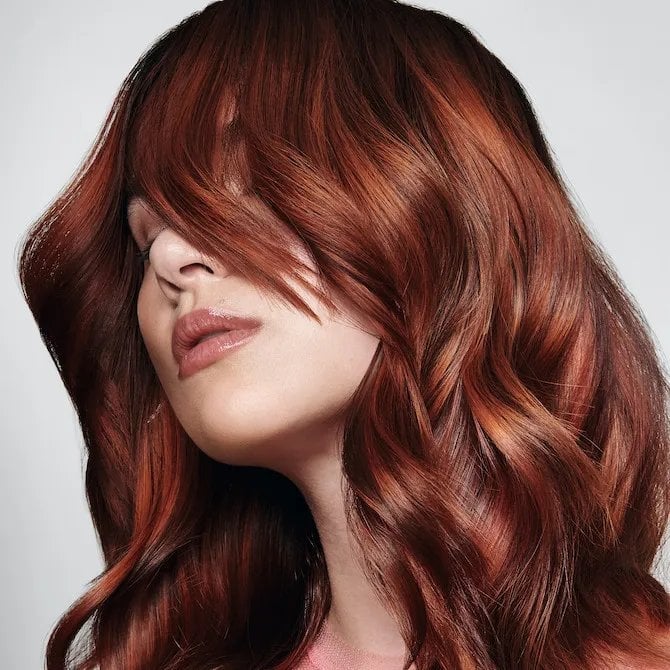
This is not a true copper red, it is chestnut red with copper undertones, a distinction that matters when you sit in the chair. The copper appears as a warm glow in the layers rather than an all-over statement, which makes it more wearable for those who want red without the maintenance of a full copper. Shoulder-length hair with soft layers and a side part suits medium-density wavy textures, and the layers around the face soften square and diamond shapes. Ask your colorist for: shoulder length layers with copper undertones. A toning gloss every six weeks preserves the copper warmth between appointments.
Collarbone Waves With Rose Brown Hue
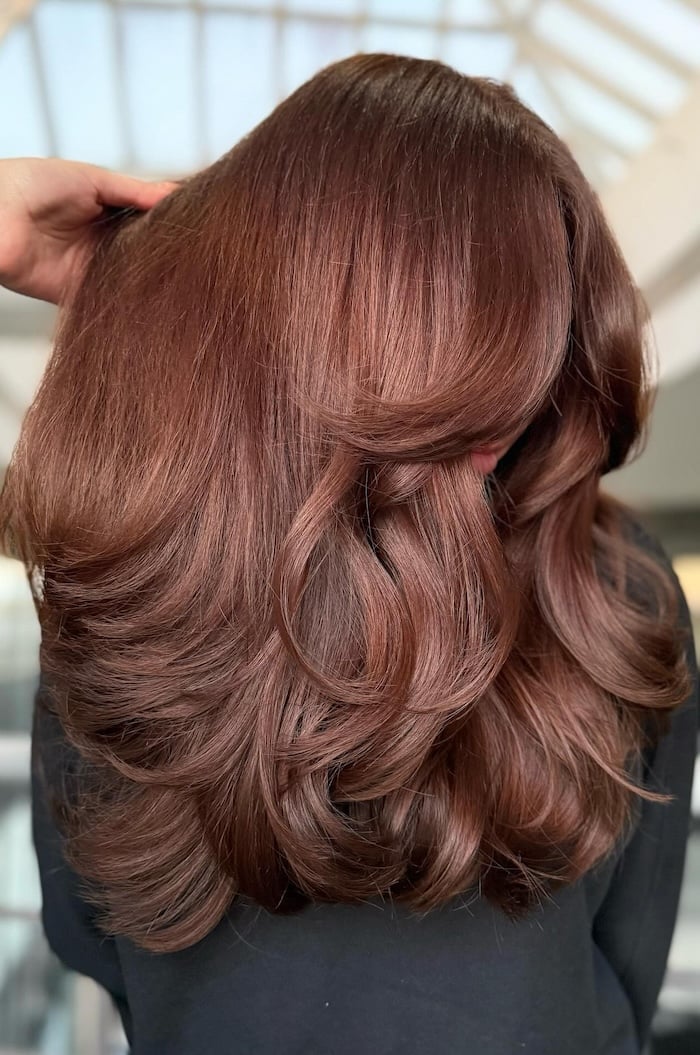
A chestnut rose brown hue reads as brown in low light and pinkish in direct sun, a two-in-one effect that keeps the color interesting without looking costume-y. The voluminous blowout and soft waves rely on thick hair with natural body; fine hair would need additional styling to hold the shape. The middle part works well on round faces by creating the illusion of length. Ask your colorist for: collarbone waves, warm chestnut rose brown. The blowout is achieved with a large round brush, and the baseline needs a trim every six to eight weeks to keep the collarbone length precise.
Collarbone Lob With Face-Framing Red Undertones
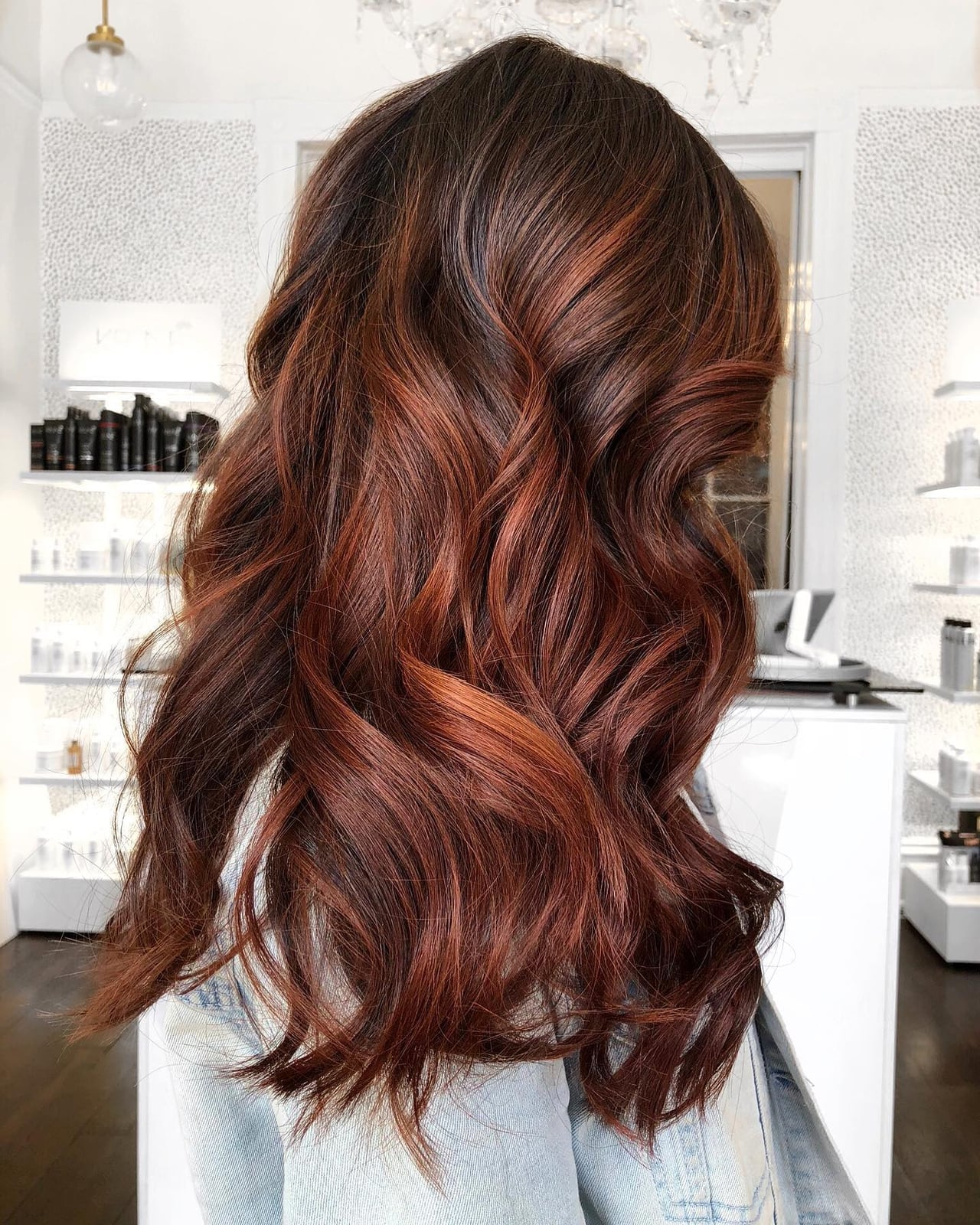
To get face-framing pieces that show a red tone without the whole head turning orange, start with a chestnut brown base and concentrate red undertones in the front sections. The lob length keeps weight off the shoulders, while the face-framing layers start at the jaw and blend into the cut. Medium-density wavy hair holds the shape of the layers well. Ask your colorist for: collarbone lob with face-framing red undertones. The face-framing pieces soften square jawlines, and the red undertones are maintained with a gloss treatment every four to six weeks.
Lob With Face Framing Layers And Red Tones
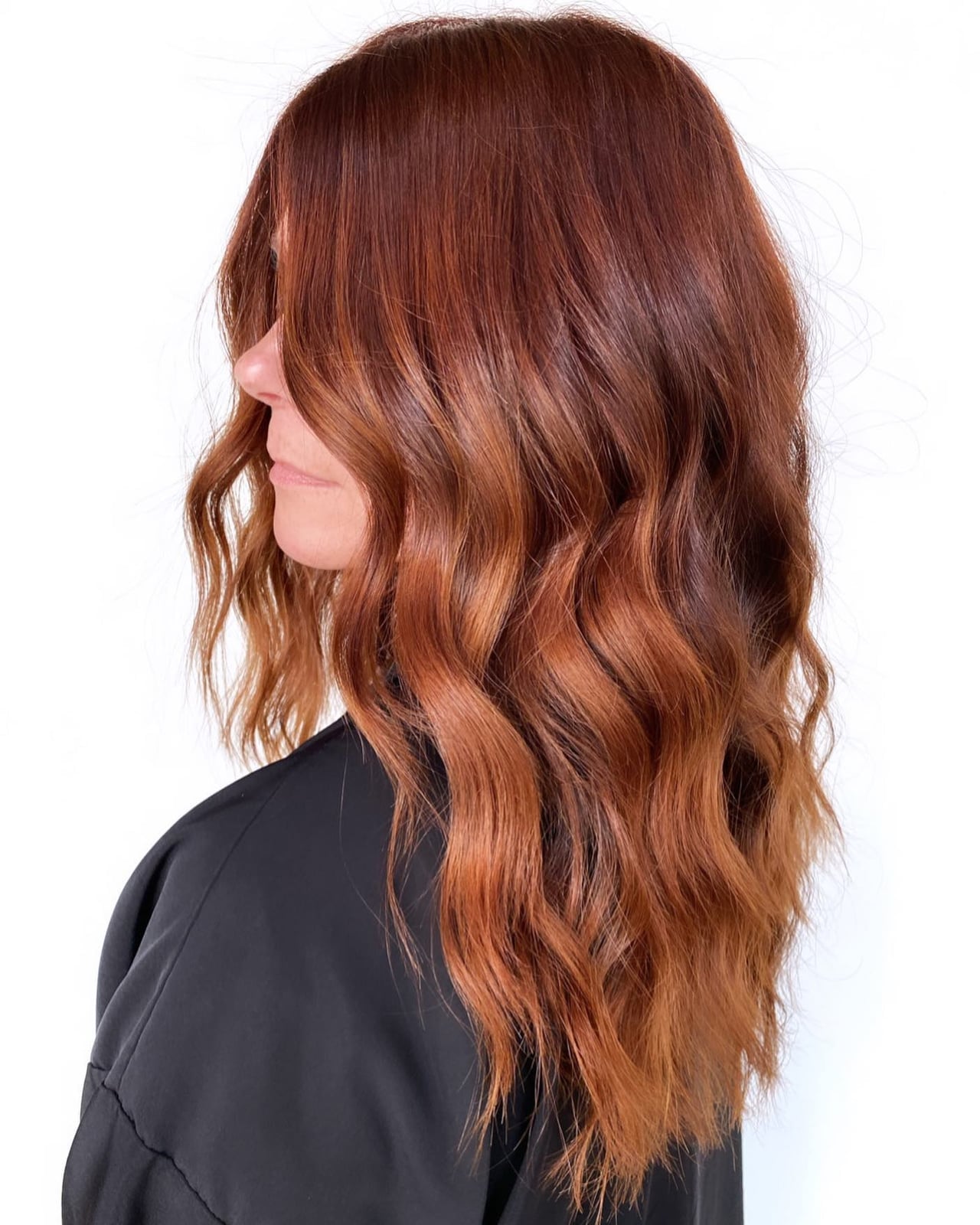
The common mistake with red undertones on a lob is taking the color all the way to the ends, which fades fast and leaves a brassy mess. Here the red is concentrated in the face-framing layers and the mid-lengths, while the base stays a warm chestnut brown. This approach means the red fades more gracefully and the grow-out is less obvious. The lob with soft layers suits medium-density wavy hair at collarbone length, and the face-framing pieces soften square and heart-shaped faces. Ask your colorist for: lob with face framing layers and red undertones. A texturizing spray adds definition to the loose waves, and a trim every six to eight weeks keeps the lob shape clean.
Collarbone Layers With Vibrant Chestnut Red
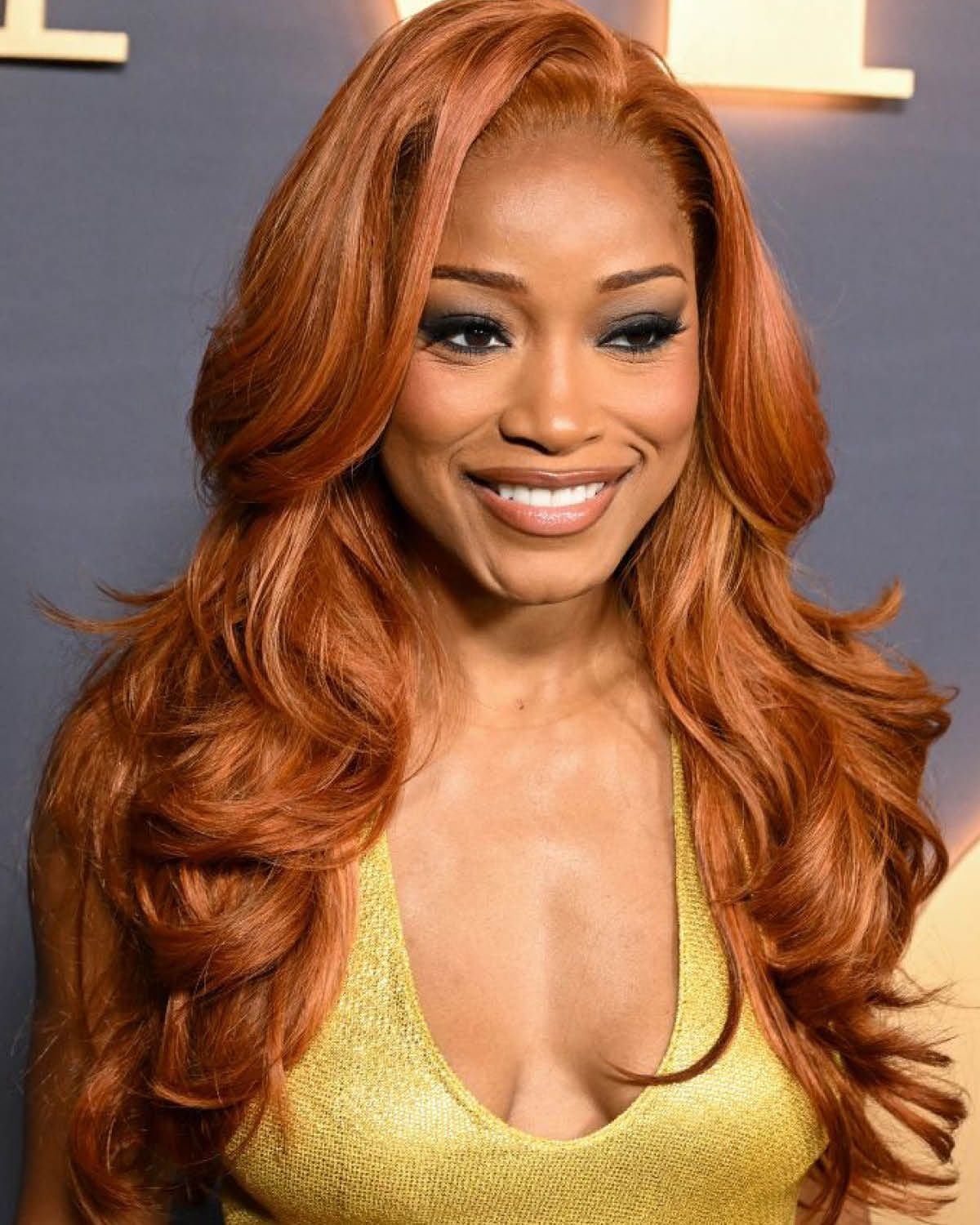
Soft layers and curtain bangs give collarbone-length hair movement without losing its shape, and a vibrant chestnut red with subtle lighter highlights adds the depth that makes the color read as rich rather than flat. This is the shade that lands hardest in autumn, when the warm undertones echo the season without competing with it. It works on medium-density wavy hair, and the curtain bangs soften round faces without demanding constant styling. Ask your colorist for: collarbone layers, vibrant chestnut red with highlights. A toning gloss every four to six weeks keeps the color from shifting too warm.
Collarbone Waves With Chestnut Ginger
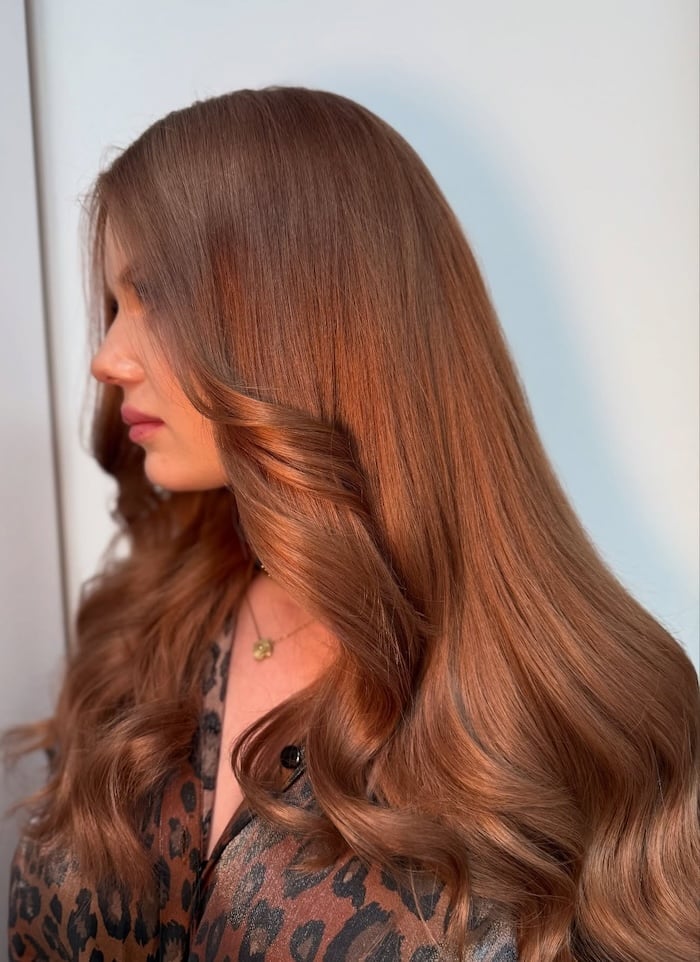
A glossy chestnut ginger shade on collarbone-length waves creates a deliberate look. The curtain bangs and middle parting frame the face, but the real work is in the voluminous blowout that gives thick hair a shape it can hold for the day.
Thick wavy hair carries this best, because the density keeps the ginger from reading as sheer. Ask your colorist for: collarbone waves, soft curtain bangs, chestnut ginger. Blow-dry the curtain bangs with a round brush to keep them sweeping outward. A trim every six to eight weeks stops the layers from becoming a single block.
Collarbone Chestnut Red With Side Swept Bangs
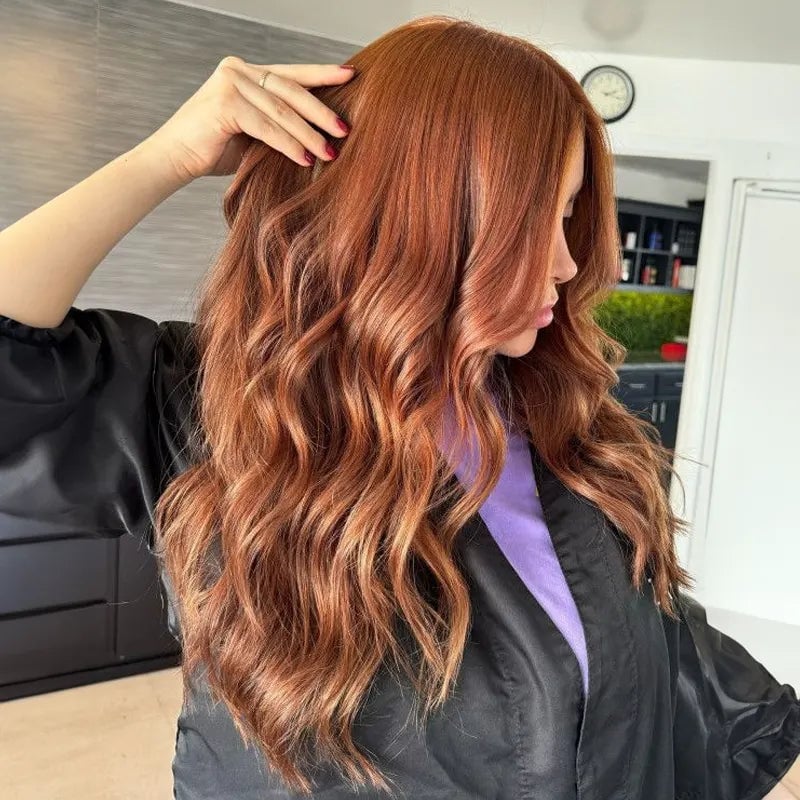
Side-swept bangs on collarbone-length chestnut red hair create a diagonal line that balances longer faces by breaking up the vertical length. The smooth blowout keeps the chestnut red glossy and the layers soft, so the style avoids a severe look. Medium-density wavy hair holds the shape well, and the side parting adds asymmetry without extra effort. Ask your colorist for: collarbone chestnut red with side swept bangs. This cut suits oval and heart-shaped faces best, since the side sweep adds width where it is needed and skips the forehead coverage that can shorten a face.
Shoulder Length Copper Red With Soft Layers, Collarbone
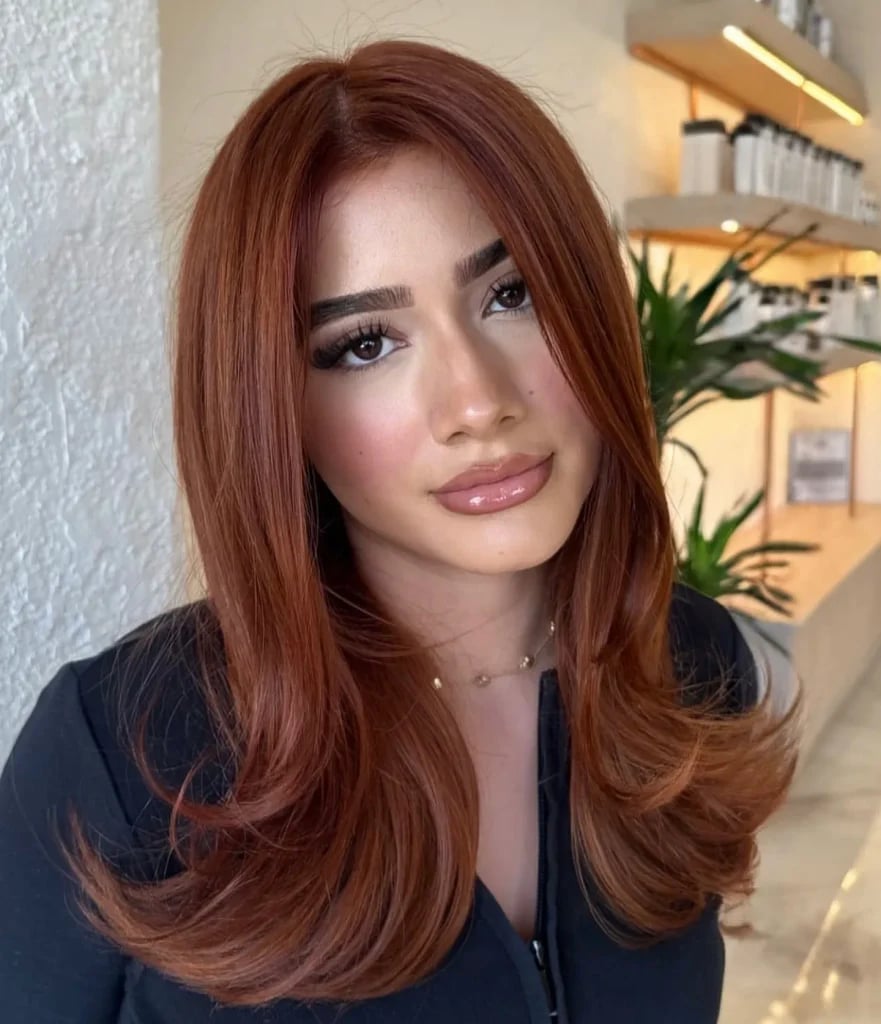
Rich copper red is not the same as auburn or true red; it sits brighter and more orange, making it a warm alternative to burgundy. Shoulder-length hair with soft layers and a middle-part blowout gives the color a canvas that moves, so the copper appears at different angles. Medium-density wavy hair at shoulder length carries this well, and the layers soften square and angular faces by adding movement around the jaw. Ask your colorist for: shoulder length copper red with soft layers. A toning gloss every six weeks keeps the copper from dulling into a muddy brown.
Shoulder Length Rose Brown With Curtain Bangs
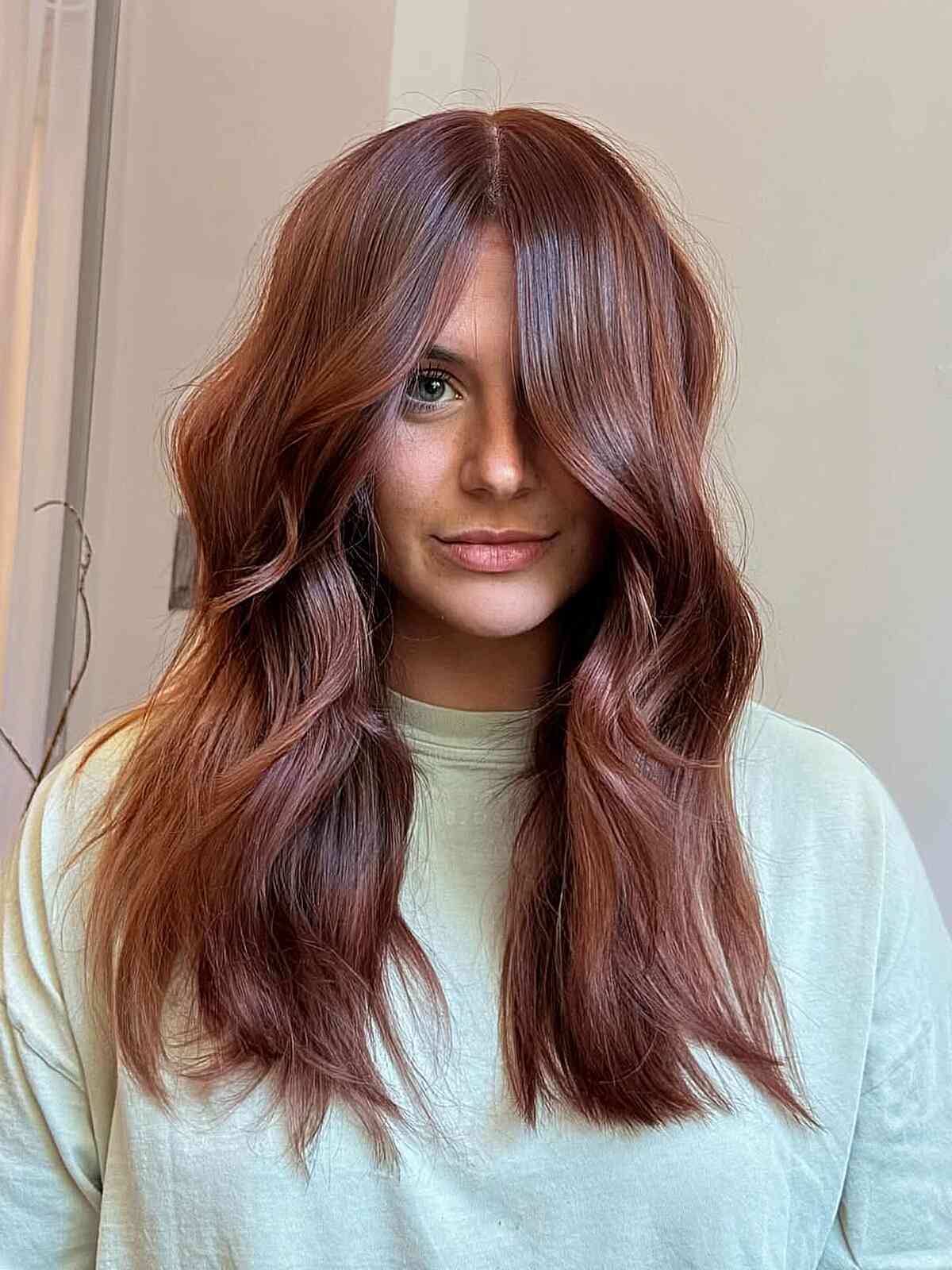
Rose brown lives somewhere between pink and beige, with enough red undertone to keep it warm without tipping into copper. On shoulder-length hair with face-framing layers and curtain bangs, the color reads as soft rather than loud, which is the point. The middle parting lets the curtains sweep around the cheekbones, creating a frame that complements round and oval faces without requiring a full cut. Medium-density wavy hair at shoulder length holds the shape without frizz. Ask your colorist for: shoulder length rose brown with curtain bangs. The curtain bangs need a trim every four to six weeks to keep the shape soft and avoid them turning into a solid fringe.
Collarbone Wavy Blowout With Lighter Red Tones
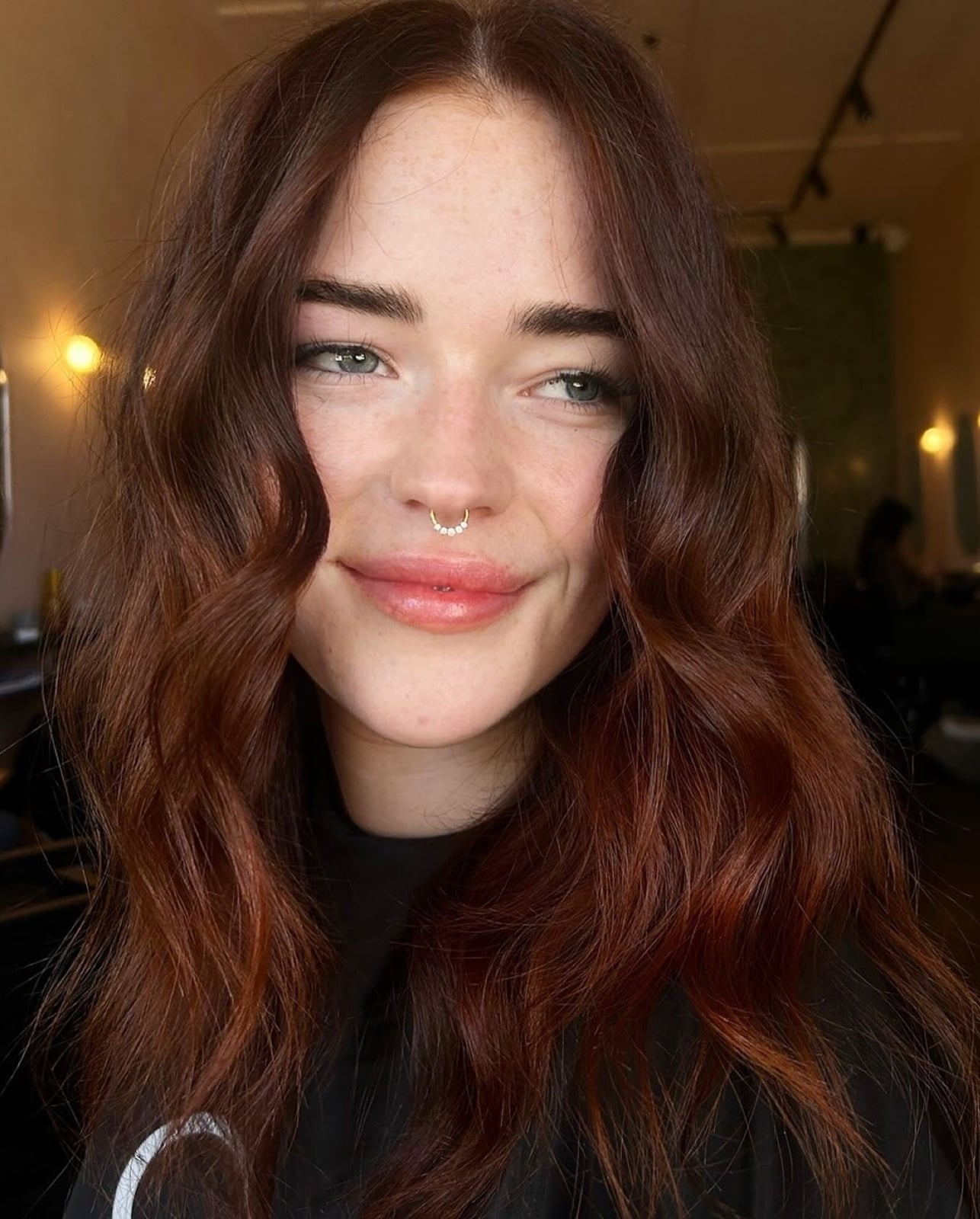
Wondering how to get that lived-in richness without going full copper? This collarbone-length blowout uses a chestnut red base with subtle lighter red tones woven through, mostly landing toward the ends. Ask your colorist for: collarbone wavy blowout with lighter red tones. The middle part and soft waves keep it current, and the slight lift at the roots stops medium-density hair from falling flat. A trim every six to eight weeks keeps the shape sharp, but the real win is how the lighter pieces catch the light without screaming for attention.
Collarbone Long Layers With Copper Tones
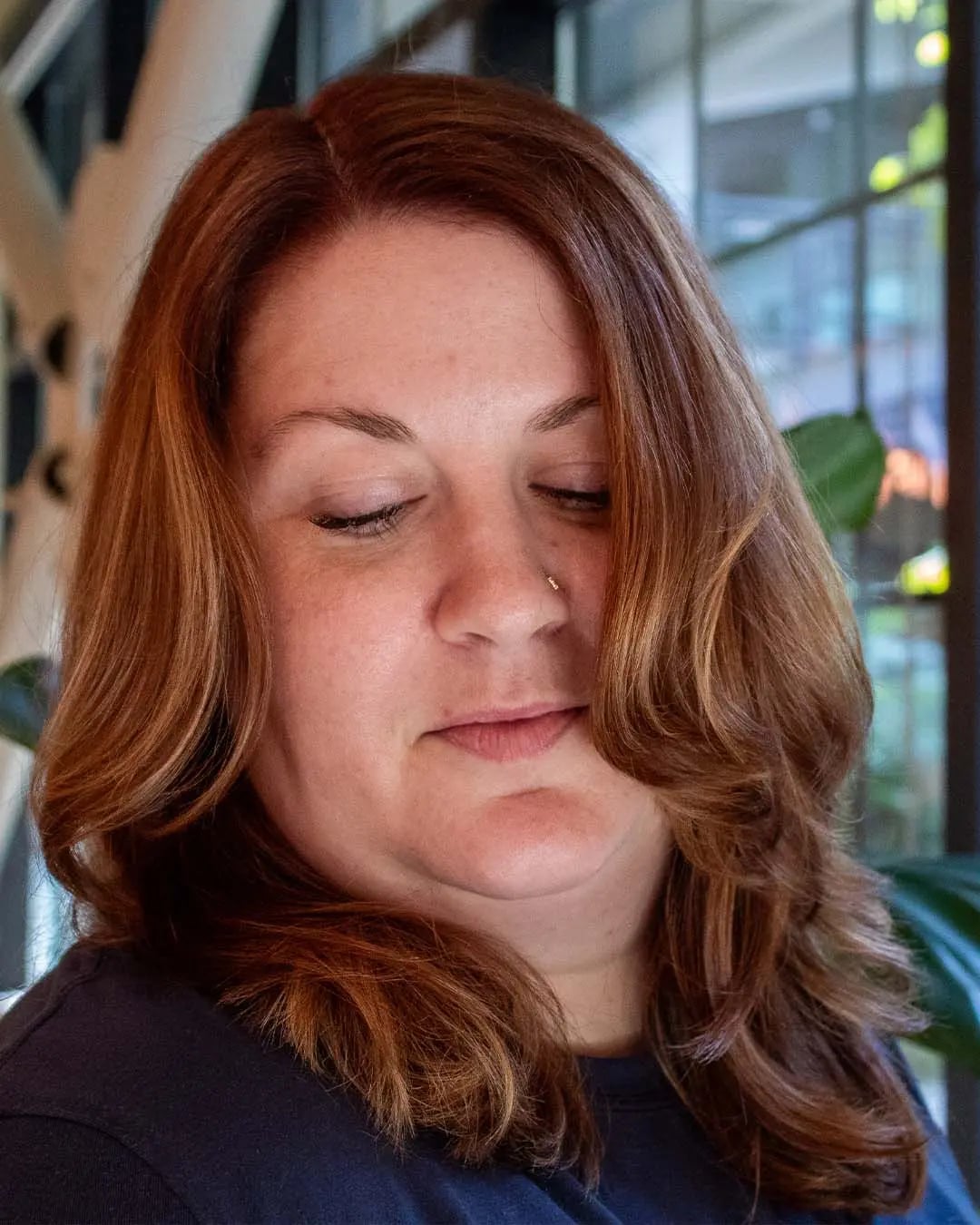
The clever part of this medium chestnut red is the copper undertone that surfaces when the light hits the waves. Long layers through collarbone-length hair let the warmth breathe without sacrificing fullness, which is rare for medium-density wavy textures. Ask your colorist for: collarbone long layers, medium chestnut red with copper tones. A gloss treatment every six weeks keeps the copper from reading as brassy, and air-drying with a curl cream preserves the soft wave pattern with zero heat damage.
Chin Length Bob With Red-Brown Tone
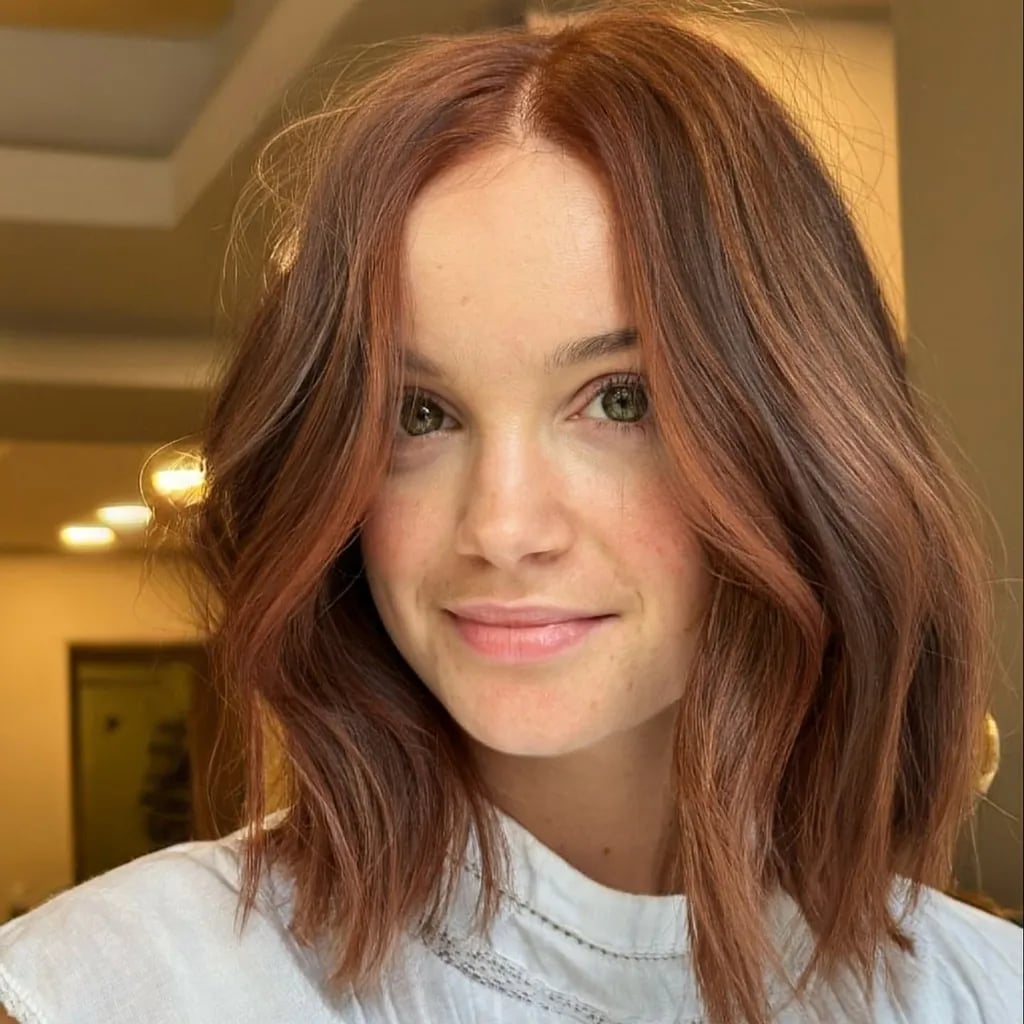
A chin-length bob in a natural red-brown tone is one of those cuts that works because it doesn’t try too hard. The subtle lighter strands add dimension without needing a full highlight schedule, and the loose waves keep the shape from looking too severe. Ask your colorist for: chin length bob, natural red-brown tone. A bob this short needs a salon trim every six to eight weeks, but the color itself grows out gracefully since the base is close to a natural brown. It’s a solid choice for anyone who wants red without the constant upkeep of a vivid shade.
Shoulder Length Warm Chestnut Red Layers
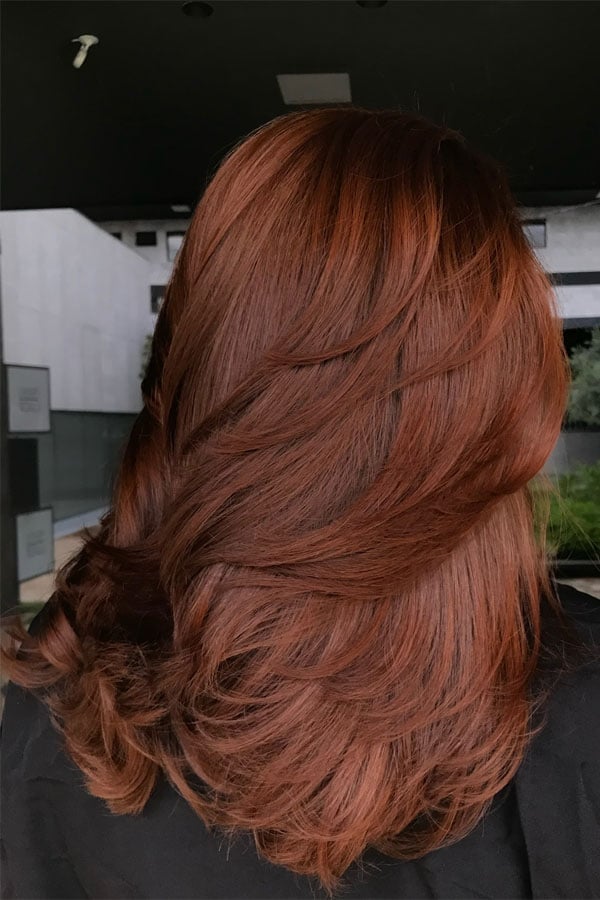
Is there a shade that says autumn better than warm chestnut red? This shoulder-length cut layers soft waves into thick hair, letting the rich color show from every angle. Ask your colorist for: shoulder length warm chestnut red with soft layers. The back view here reveals how the layered cut keeps thick hair from feeling heavy, and the glossy finish makes the warmth look intentional. A toning gloss every six weeks keeps the red from drifting orange, and the shoulder length means it works for both the office and weekend errands.
Mid-Back Long Layers With Auburn Highlights
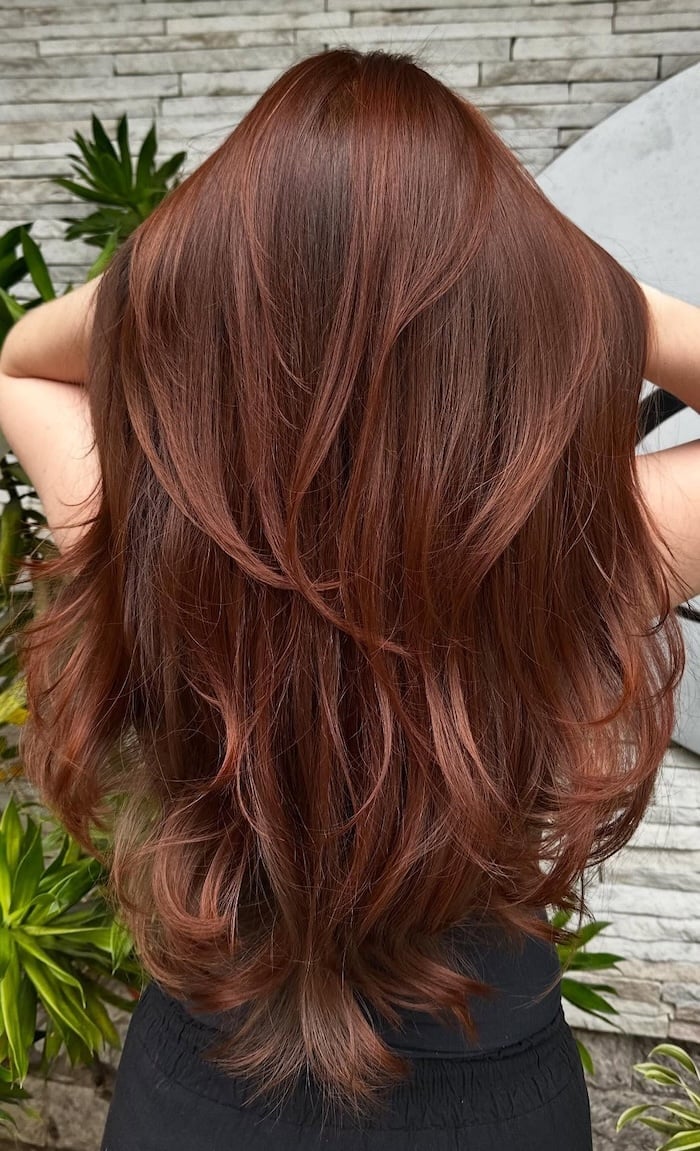
Long hair and color can be a tricky combo, but this mid-back length finds the balance. The deep chestnut red base gets its dimension from subtle auburn highlights that run through the long layers, creating a multi-tonal effect without any single strand shouting. Ask your colorist for: mid-back long layers with auburn highlights. Thick wavy textures need the long layers to prevent the weight from flattening the shape, and the highlights add movement even when the hair is down. The auburn pieces sit just a shade lighter than the base, so the grow-out phase stays low-maintenance and the color only gets richer over time.
Mid-Back Layers With Copper Undertones
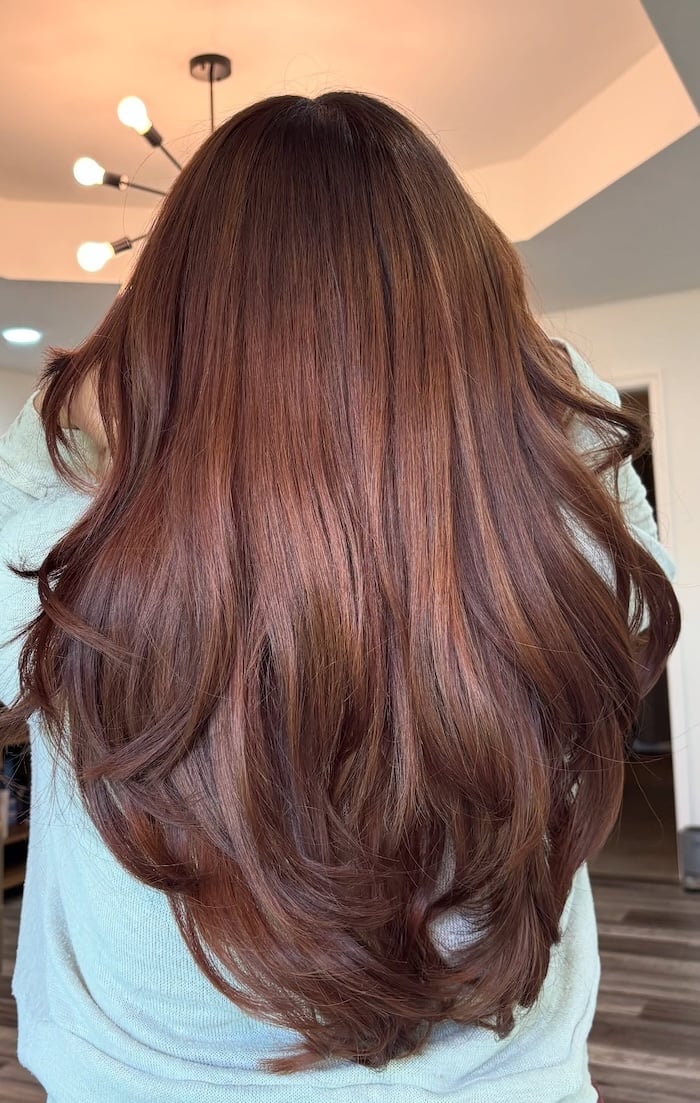
Layers earn their keep on thick, wavy hair by removing weight so the mid-back length moves instead of sitting like a curtain. The chestnut red base here carries subtle copper undertones that surface when the light catches the waves, which is exactly what you want if your hair tends to read as one flat block of color. A back view shows the payoff: the layers stack from the nape down, giving the hair a rounded shape that swings as you walk.
Ask your colorist for: mid-back layers with copper undertones. This suits thick, wavy hair that reaches mid-back, and the layers give the texture somewhere to go. Keep the copper from fading by using a color-safe shampoo and booking a toning gloss every six weeks. A heat protectant before you wave the sections keeps the gloss intact and the ends from drying out.
Mid-Back Long Layers With Red Undertones, Wavy
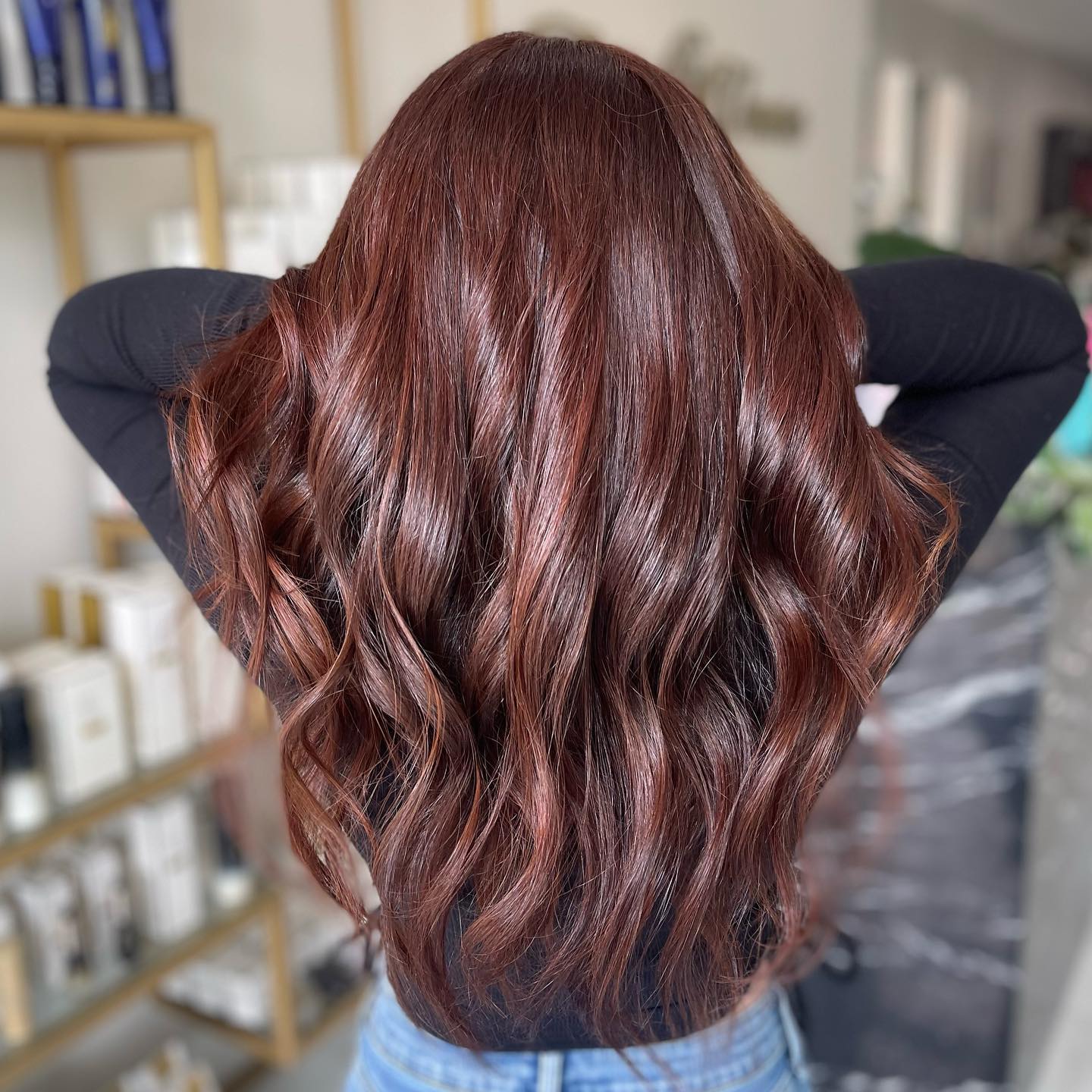
A middle part and long layers do something useful for thick, wavy hair: they stop the weight from pulling the waves straight at the root. Here the base is a warm chestnut brown with noticeable red undertones, so the color looks richer than a plain brown but softer than a true red. The blowout with soft waves gives the mid-back length a rounded silhouette that flatters round and oval faces alike.
Ask your colorist for: mid-back long layers with red undertones. It suits thick, wavy hair that reaches mid-back, and the long layers keep the movement from turning into a triangle shape at the bottom. A volumizing spray at the roots lifts the crown so the part doesn’t fall flat by midday. Trim every eight to ten weeks to keep the layers from looking straggly as they grow.
Mid-Back Wavy Blowout With Blended Highlights
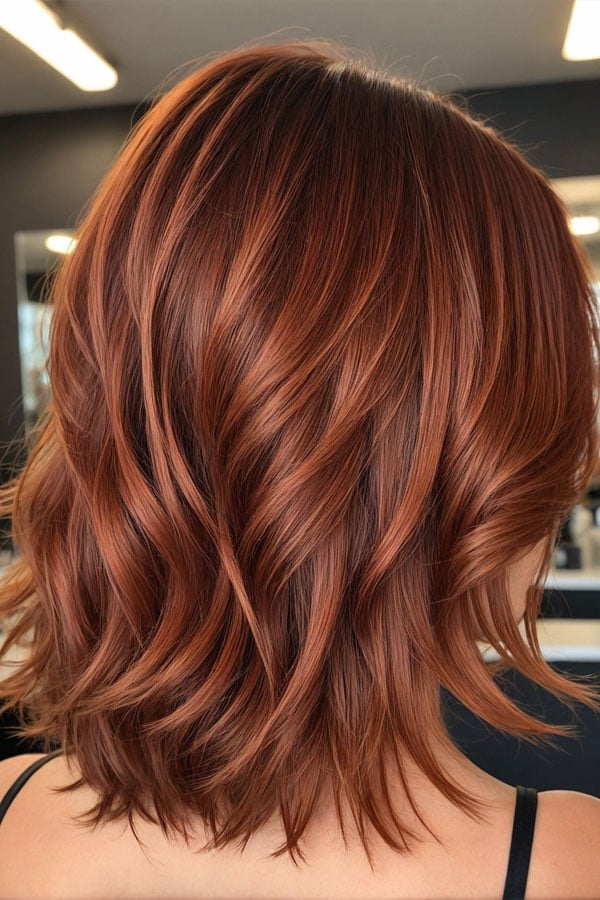
The usual misstep with chestnut red and highlights is letting the lighter pieces sit in chunky stripes that fight the base. The fix is blending: here the highlights are woven through the chestnut red so the color shows dimension instead of contrast. On thick, wavy hair at mid-back, the loose waves catch the lighter strands and turn the whole thing into movement.
Ask your colorist for: mid-back wavy blowout with blended highlights. This works on thick, wavy hair that reaches mid-back, and the blend keeps the grow-out from looking harsh. A smoothing serum on the mid-lengths and ends tames the frizz without killing the wave. Expect to refresh the highlights every eight to ten weeks to keep the blend seamless.
Mid-Back Blowout With Subtle Highlights
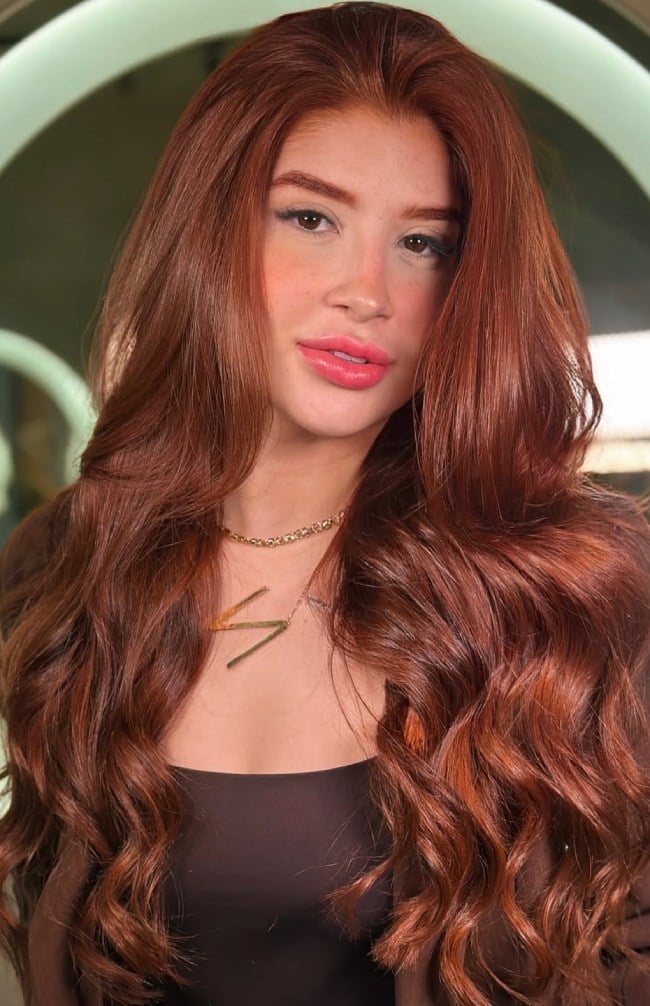
If you are deciding between a single-process chestnut red and a highlighted version, consider how much dimension you want. A single-process color is flat and even, which works if you prefer a solid, saturated look. The subtle lighter highlights here do the opposite: they add depth and a touch of brightness that makes the chestnut red look less uniform and more expensive.
Ask your colorist for: mid-back blowout with subtle highlights. It suits thick, wavy hair at mid-back, and the subtle placement keeps the color from looking striped. The voluminous blowout adds shape at the roots, so the hair doesn’t hang limp. Trim every eight to ten weeks, and use a purple shampoo once a week to keep the highlights from turning brassy.
Mid-Back Loose Waves With Auburn Hue
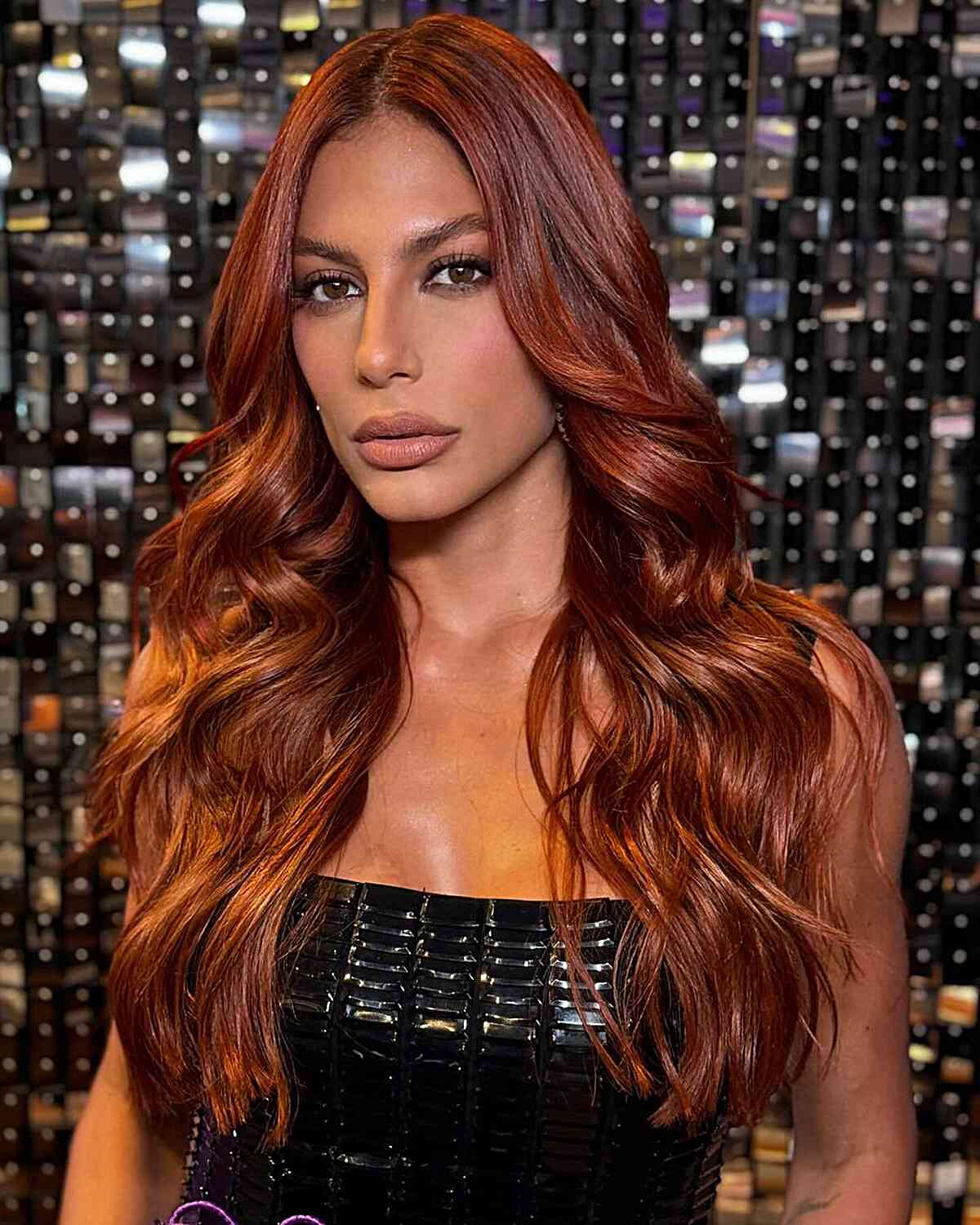
The rich auburn red here gets its glow from warm undertones layered into the base, not from a single flat dye. On medium-density wavy hair at mid-back, the loose waves show the color’s depth, especially around the subtle layers that add movement. The middle part keeps the weight centered, so the waves fall evenly on both sides.
Ask your colorist for: mid-back loose waves, rich auburn red. It suits medium-density wavy hair that reaches mid-back; the layers give the waves room to bounce without looking thin. A texturizing spray on the lengths defines the wave pattern and stops it from going fuzzy. Book a toning gloss every six weeks to keep the warm undertones from washing out to a dull brown.
Mid-Back Red-Brown With Subtle Highlights, Wavy
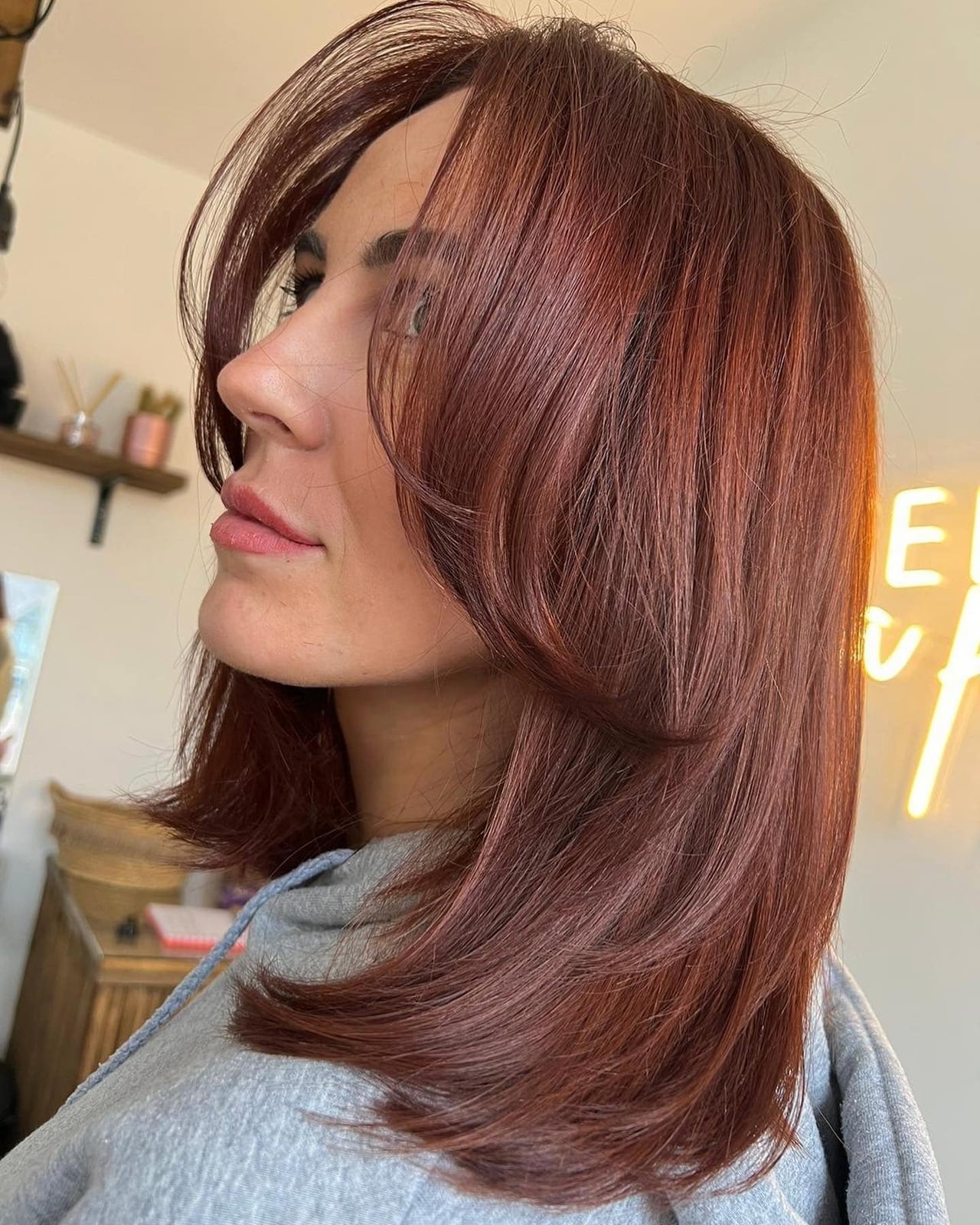
A red-brown base with subtle lighter highlights is the rare shade that works as well in spring as it does in autumn, since the warm depth carries the cooler months while the lighter pieces catch the softer light. The mid-back length and loose waves give it a relaxed shape that suits medium-density hair, and the middle parting keeps it simple. Ask your colorist for: mid-back red-brown with subtle highlights. A smoothing serum on the lengths keeps the shine up, and a trim every eight to ten weeks preserves the ends.
Mid-Back Voluminous Blowout In Deep Chestnut Red
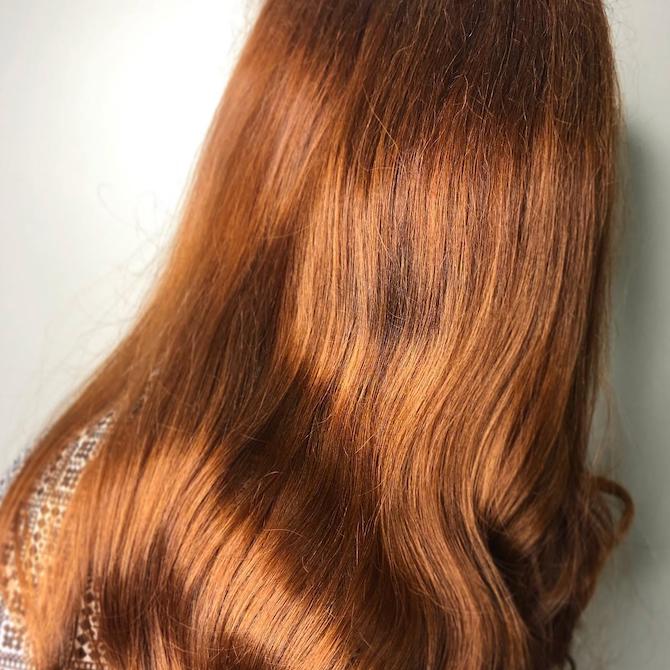
Deep chestnut red on thick, wavy hair holds its richness best when the color is built with a single-process base and a gloss, because the dense texture drinks up pigment and keeps it from fading fast. The voluminous blowout is the practical part: a round brush at the roots lifts the crown, and the mid-back length gives the weight somewhere to go. Ask your colorist for: deep chestnut red with a gloss finish. A root-lifting spray before drying adds lift that lasts the day, and a trim every eight to ten weeks keeps the layers moving.
On wash days, a color-safe shampoo and cool water help the red stay put, and a weekly mask keeps the wave pattern defined. The upkeep is moderate, mostly because the tone needs refreshing every six weeks to keep that deep, glossy quality from turning brassy.
Mid-Back Loose Waves Deep Chestnut Red
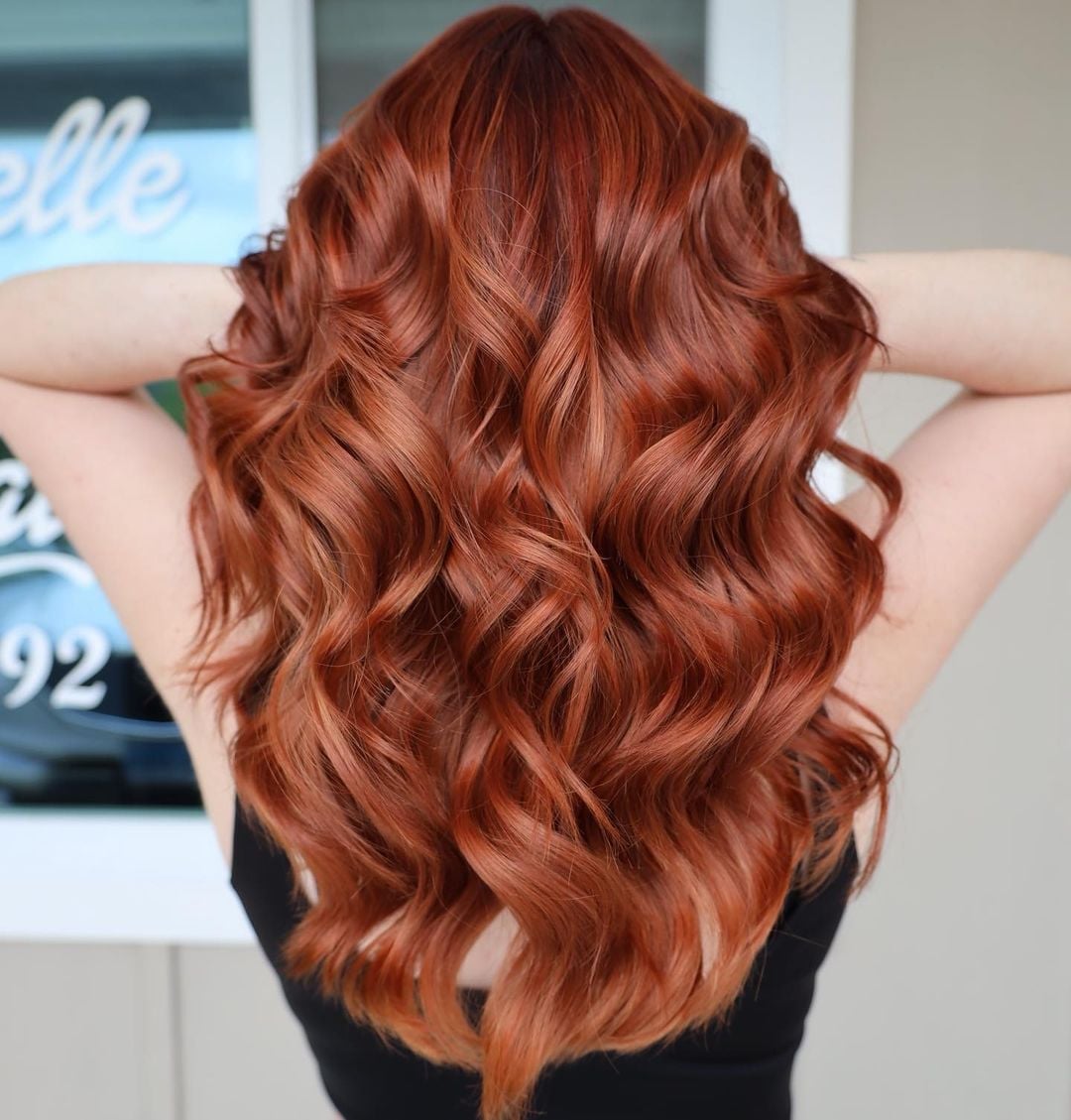
What makes this copper red work is the chestnut undertone: it keeps the shade wearable for anyone who finds pure copper too loud, while the long layers give the waves room to move. The mid-back length suits thick hair that can handle the weight, and the defined waves add shape without extra styling effort. Ask your colorist for: rich copper red with chestnut undertones. Damp hair air-dried will coax out the natural wave, and a trim every eight to ten weeks prevents the ends from splitting.
The glossiness comes from a finishing oil smoothed on the ends, which also helps the color appear dimensional.
Mid-Back Long Layers Copper Red, Chestnut Cinnamon
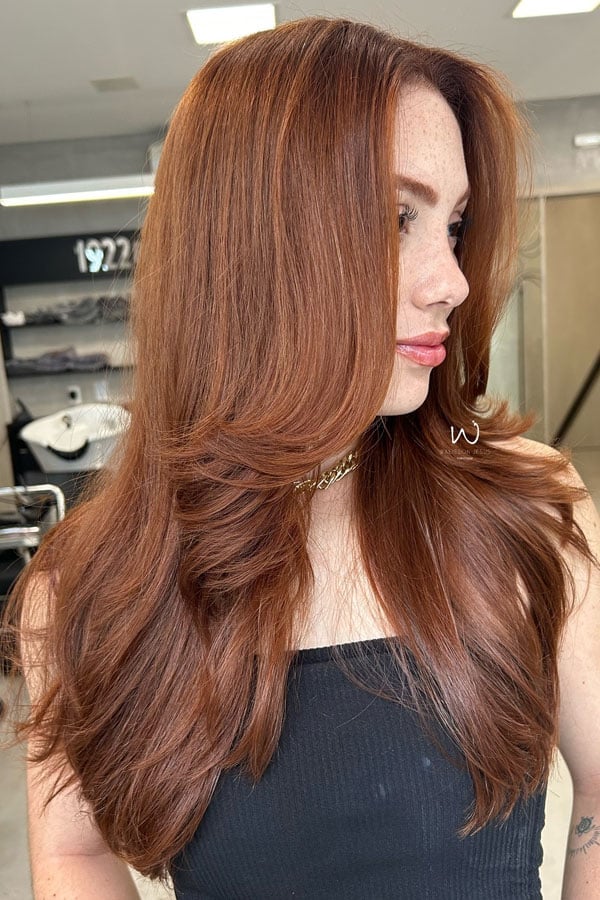
Wondering how to get that chestnut cinnamon shade without it turning orange? The trick is asking for a warm brown base with a copper gloss, not a straight copper dye. The curtain bangs frame the face and blend into the long layers, making the mid-back length feel softer and more intentional. Ask your colorist for: chestnut cinnamon with a copper gloss, and mention you want the tone rich but not fiery. A blowout with soft waves shows off the movement, and a toning gloss every six weeks keeps the cinnamon note from shifting.
Mid-Back Loose Waves Vibrant Chestnut Red, Wavy
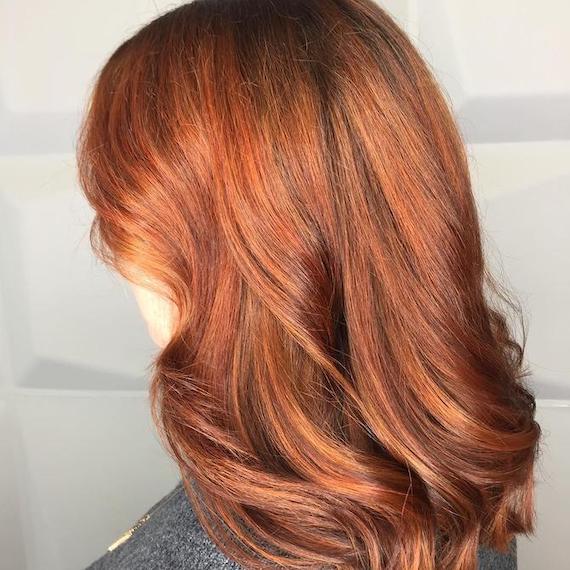
Vibrant chestnut red with copper undertones is a shade that demands attention, and it delivers, but the trade-off is upkeep: red pigments fade faster than browns, so expect to refresh the tone every four to six weeks if you want that richness to last. The mid-back length and loose waves give the color room to show its dimension, and the side parting adds a bit of asymmetry that suits most face shapes. Ask your colorist for: vibrant chestnut red with copper undertones. A color-depositing conditioner once a week helps stretch the time between glosses, and a trim every eight to ten weeks keeps the waves from looking straggly.
The intensity is the point here, so if you prefer a subtler red, this one might be more than you bargained for.
Mid-Back Blowout With Chestnut Cinnamon
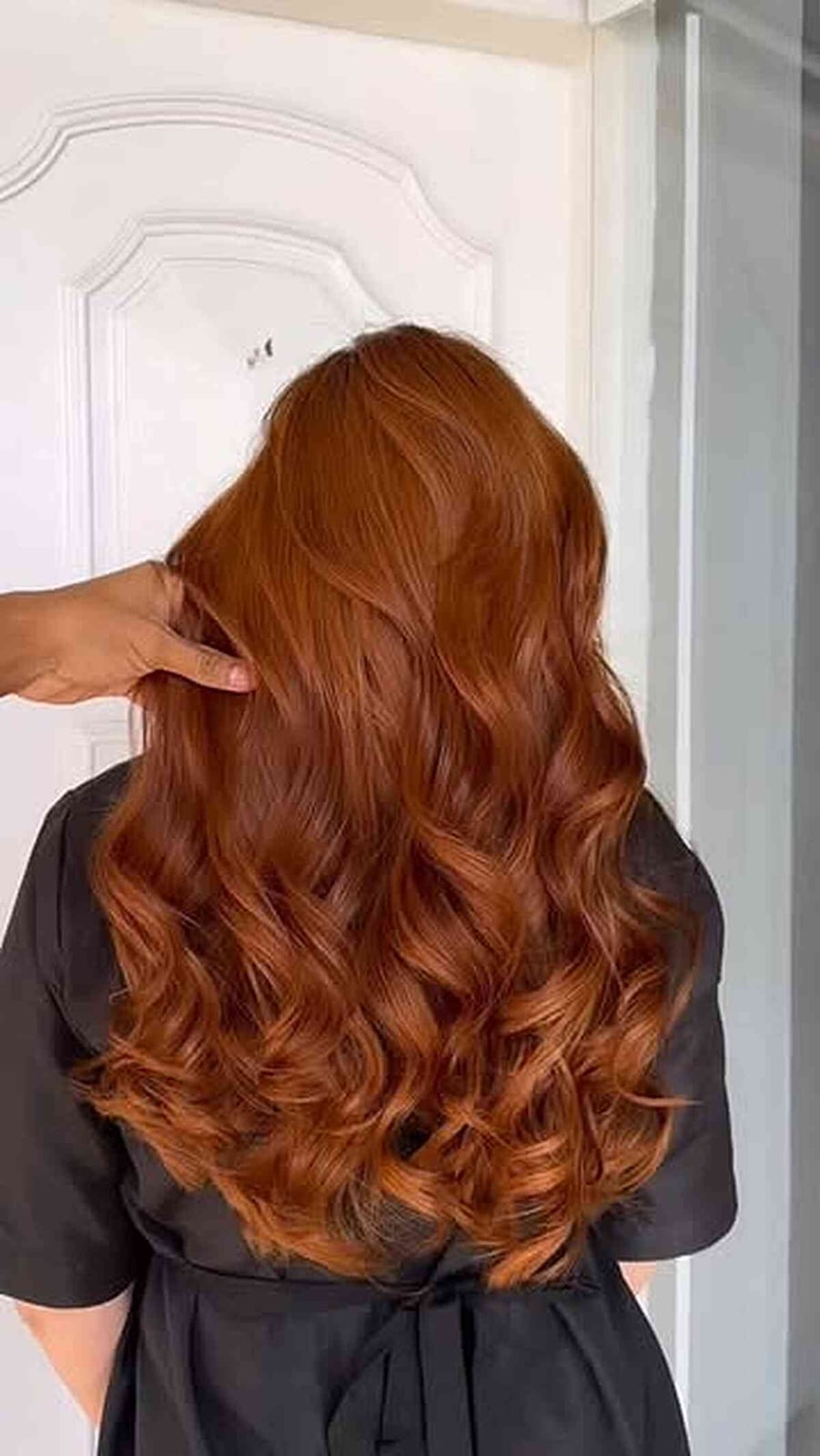
A vibrant copper red hue like this one does not happen by accident. The mid-back length is built on long layers that let the chestnut cinnamon tone show its warmth, and the blowout adds volume at the crown while keeping the ends smooth. This is a color that needs a professional hand: the balance between warm copper and brown is narrow, and a box dye tends to pull too orange or too flat.
Ask your colorist for: mid-back blowout, long layers, chestnut cinnamon. It suits thick wavy hair that already reaches the mid-back. Curtain bangs would work here too, but the back view of this cut relies on even layering through the length. A trim every eight to ten weeks keeps the ends healthy, and a heat protectant is required for the round-brush blowout. This is a salon project.
Final Thoughts
Choosing between a low-maintenance chestnut red and a more saturated version comes down to how often you want to sit for a toner. For a natural look that stretches to eight weeks between appointments, stick with auburn undertones and skip the bold highlights. If you prefer a deeper, glossier finish, lean into the richer end of the spectrum and plan for a glaze every six weeks.
- Maintain color vibrancy with sulfate-free shampoos and conditioners designed for colored hair.
- Use a color-depositing conditioner or gloss every 4-6 weeks to refresh tones.
- Protect hair from heat styling with a thermal protectant spray.
- Trim split ends every 8-10 weeks to keep layers and overall shape looking fresh.
Embrace the warmth and depth of chestnut red.