Dip dye hair is the color equivalent of dipping a paintbrush into a contrasting pot, one clean line, one shift in tone, and suddenly your base shade has a second act. The current take favors softer transitions over stark lines, especially on bobs and lobs that let the color fall exactly where the hair ends.
This collection of 28 ideas covers the spectrum from a weekend-friendly refresh to a full-salon commitment. Whether your hair is fine or thick, pin-straight or curly, there is a dip here that solves the problem of a color commitment that feels too permanent. One photo, one dip, one way to try it.
Blunt Bob With Vibrant Pink Dip Dye
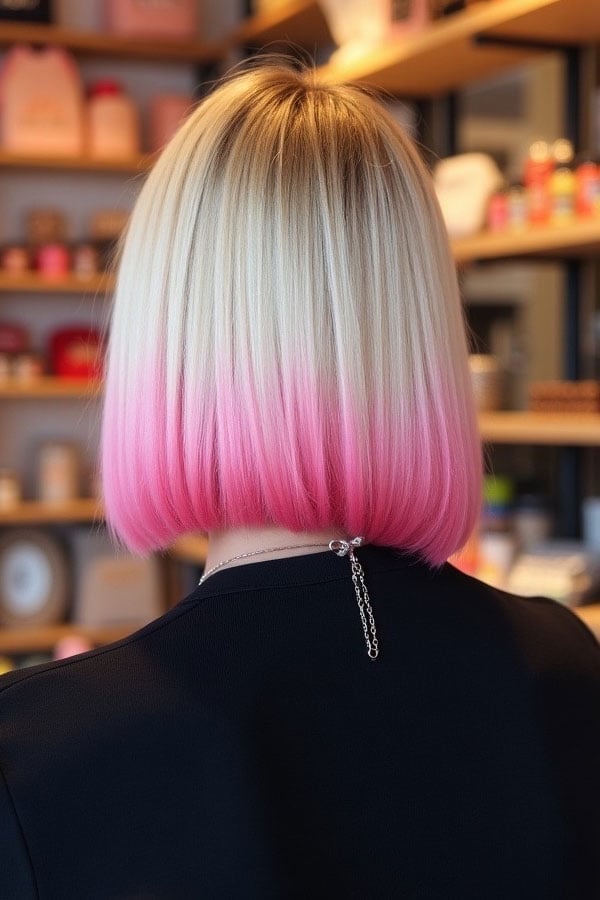
This collarbone-length blunt bob pairs a light blonde base with vibrant pink ends, a combination that works hardest on fine, straight hair. The sharp line of the cut gives the color transition a clean edge, so the pink reads as a deliberate choice rather than a fading accident. Fine textures hold the blunt shape well without extra weight, and the middle parting keeps the contrast visible from the back. Ask your colorist for: blunt bob with pink dip dye ends. Suits oval and square face shapes best, and starting at collarbone length gives you room to play without committing to a drastic chop. A heat protectant before straightening keeps the ends smooth, and a trim every six to eight weeks preserves that precise line.
Platinum Bob With Black Dip Dye
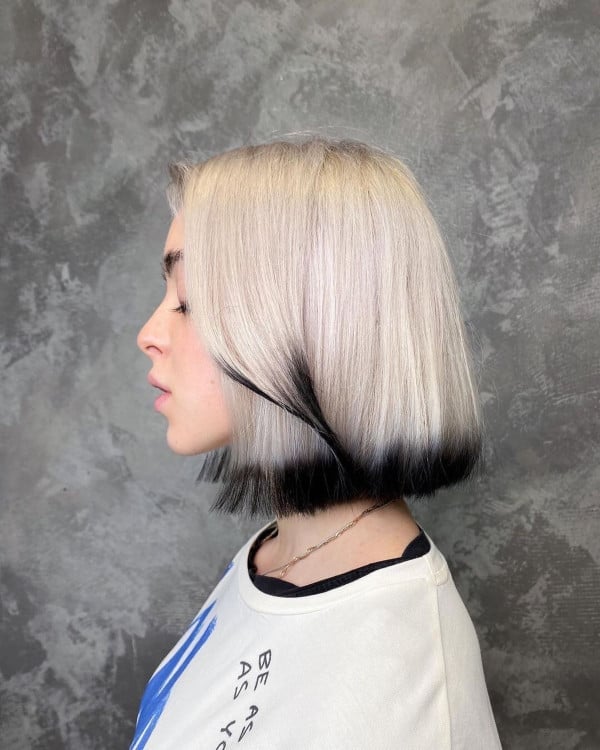
Where a gradient melt softens the shift, this chin-length bob keeps platinum and black in separate camps, which is exactly the point. The side parting and sleek straight styling make the contrast feel graphic, almost architectural. Fine, straight hair carries the sharpness best, and the chin length suits round and oval faces by adding definition at the jaw. Ask your colorist for: chin length bob, platinum with black dip dye. A flat iron gives the sleek finish this look demands, and the blunt line needs a trim about every six weeks to stay crisp. It is not a subtle choice, but it is a precise one.
Chin Length Blunt Bob With Blue Dip Dye
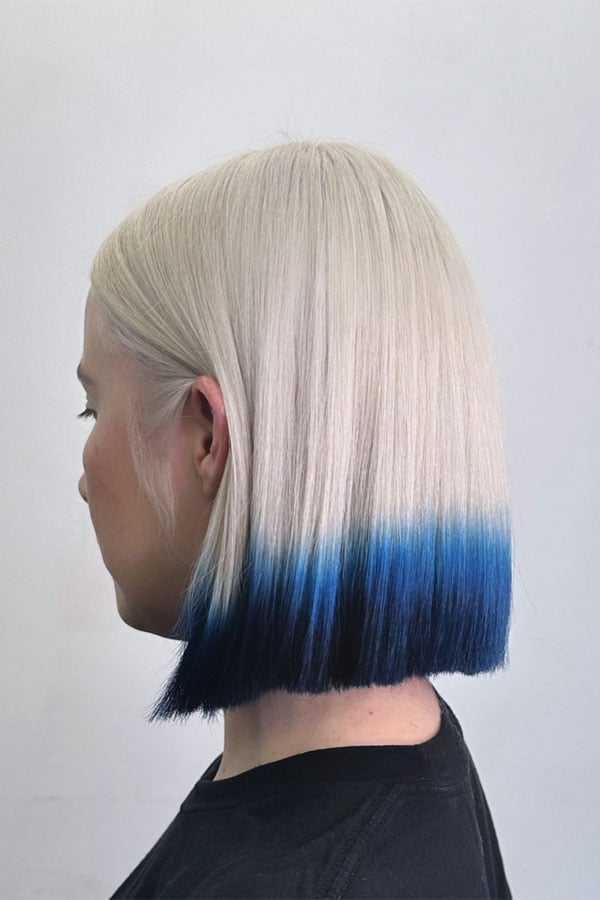
The precision here is the whole story: a platinum blonde blunt bob ending at the chin, with the last few inches dipped in a deep, vibrant blue that stops on a clean line. Getting that sharp transition requires the colorist to place the dye carefully, not just paint it on. Poker-straight styling shows off the geometry, and the blunt baseline gives the blue a defined edge to land on. Ask your colorist for: chin length blunt bob, platinum with blue dip dye. Fine, straight hair suits this cut, and heart or oval faces benefit from the chin-length frame. A flat iron keeps the line sleek, and trimming the blunt ends every six weeks maintains the shape.
Angled Bob With Teal Dip Dye Bangs
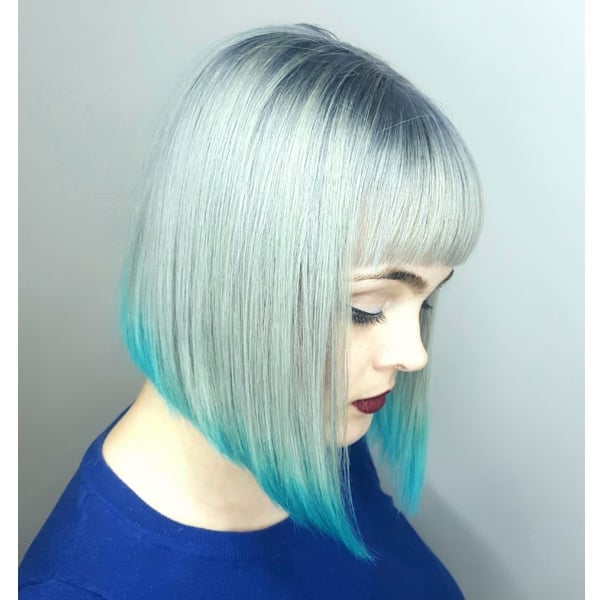
How do you ask for teal dip dye on blunt bangs without getting a mess? Start with the cut: an angled bob that hits around the chin, with blunt bangs that sit straight across. Then specify the color placement, asking for the ash blonde base to stay cool and the ends, including the bangs, to be dipped in bright teal. The straight, fine texture helps the color sit flat and even, and the blunt bangs make the teal a feature rather than an afterthought. Ask your colorist for: angled bob, ash blonde with teal dip dye bangs. This suits oval and long faces by adding width at the jaw. Tone the ash blonde base every six weeks to keep it from warming up.
Platinum Bob With Cobalt Blue Dip Dye
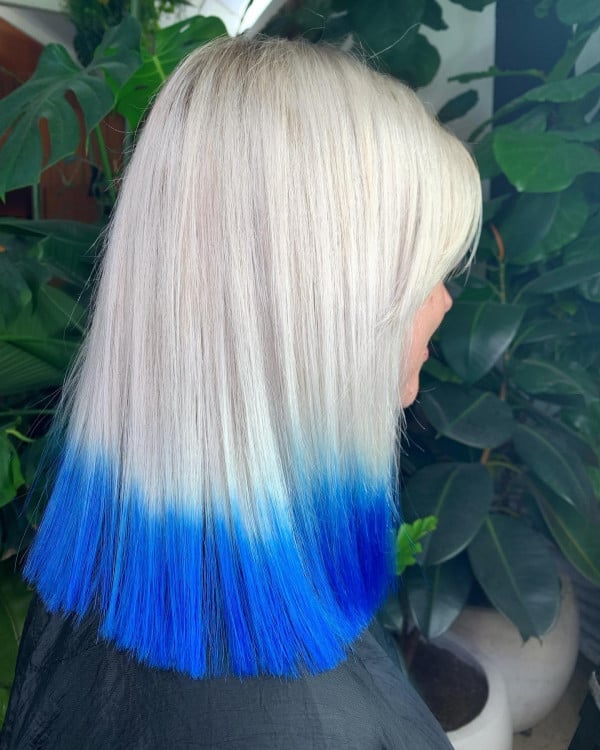
This collarbone blunt bob pairs platinum blonde with a cobalt blue dip dye on the ends, a combination that looks sharp for about two weeks and then starts negotiating with you. The platinum base demands toning to stay cool, and the blue needs a color-safe shampoo to keep from fading to a weak green. On the plus side, the blunt bangs and straight, fine texture make the whole thing read as polished, not costumed. Ask your colorist for: collarbone blunt bob, platinum with cobalt blue dip dye. It suits oval and heart faces, and the collarbone length keeps the bold ends from overwhelming the look. The real drawback is the upkeep, which means a toner every four to six weeks and trims every six to eight to preserve the blunt line.
Angled Bob With Black Dip Dye
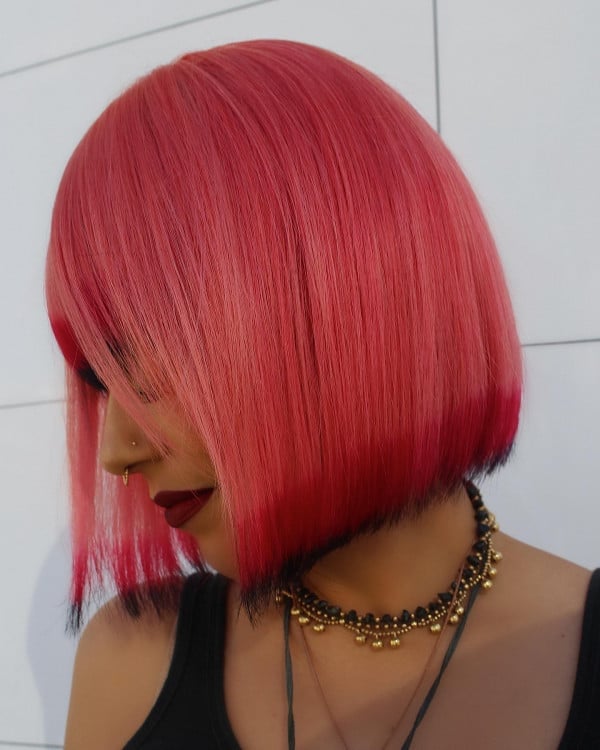
This cut works best on medium-density straight hair, so the angled bob keeps its clean lines and the black dip dye at the tips looks deliberate. The berry-toned base gives the ends something to contrast against. Ask your stylist for an angled bob with side-swept bangs and a berry tone topped with black dip dye. Oval and square faces get the most out of the forward angle and the dark lower weight. Style the side-swept bangs with a blow dryer and round brush, then book a trim every six weeks to keep the shape sharp.
Dark Gray Bob With White Dip Dye
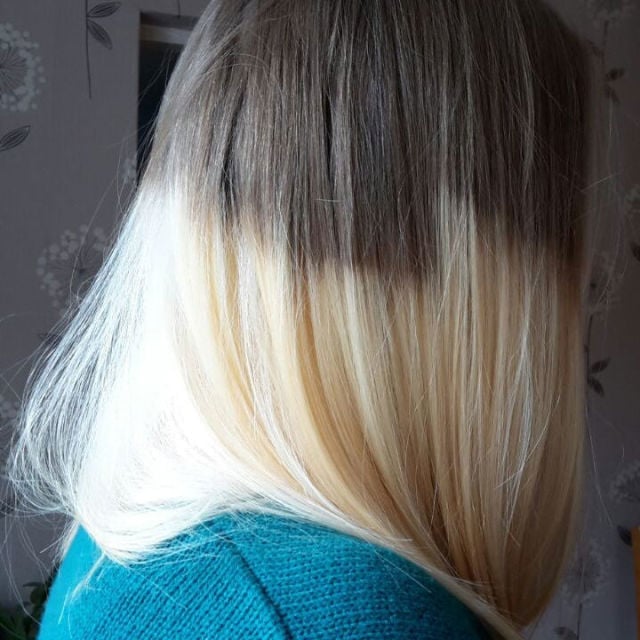
The design relies on a hard line between dark gray roots and bright white ends, which works because the bob is blunt and the texture is fine. No layers to muddy the transition. Ask your colorist for a chin-length blunt bob with dark gray roots and a white dip dye. Oval and heart faces suit the straight, middle-parted shape. Air drying preserves the natural texture, and a toning appointment every four weeks keeps the white side from turning yellow.
Smoky Gray Bob With Orange Dip Dye
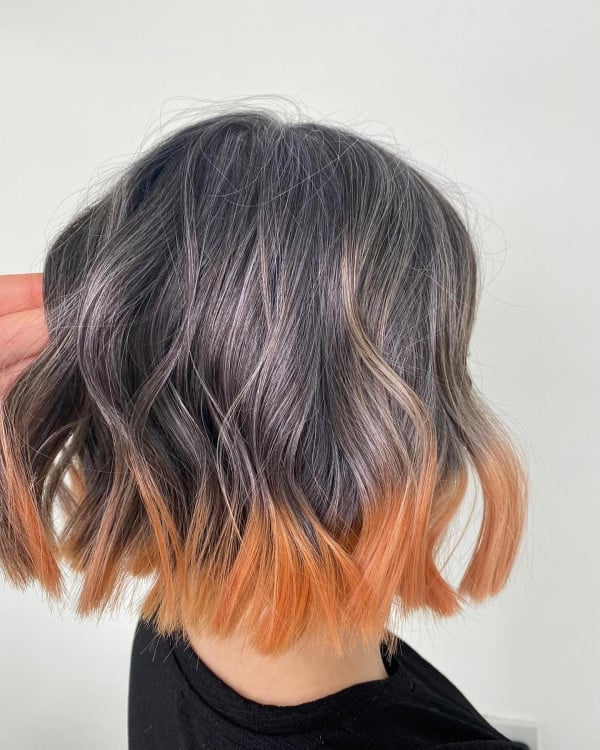
It looks like a sunset that forgot to fade. The smoky gray base grounds the peachy-orange dip dye, keeping the combo from reading as a Halloween decoration in September. Soft waves give the two tones room to catch light separately. This lands best in late summer or early fall, when the palette matches a warm evening but the gray feels transitional. Ask your colorist for a chin-length bob with a smoky gray base and a peachy-orange dip dye on the ends. Fine wavy texture at chin length suits oval and round faces. Toning the gray base every four weeks and using a texturizing spray on the waves keeps things from looking flat by lunch.
Blonde Lob With Pink Dip Dye Bangs
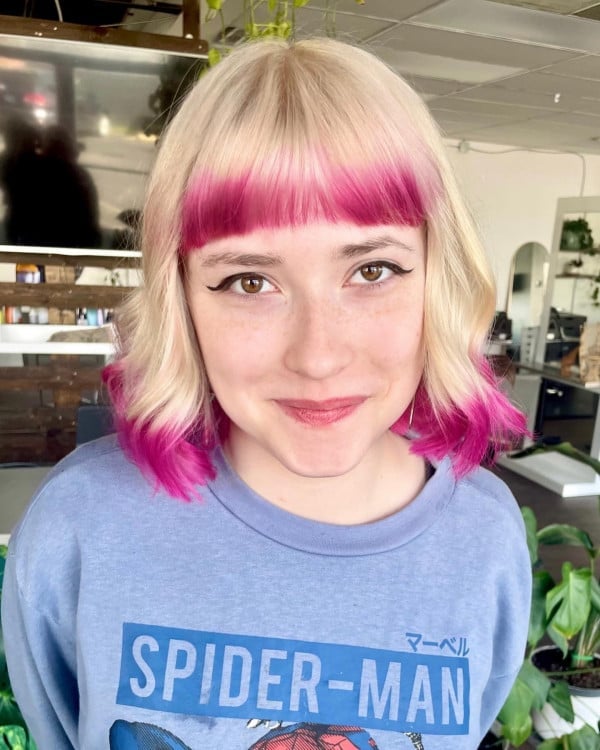
A collarbone lob with a blunt fringe and a blonde base gets bubblegum pink dip dye on both the fringe and the lower half. That matching top and bottom pink creates a graphic detail. Oval and square faces handle the blunt fringe well. Medium wavy texture at collarbone length gives the shape enough body to hold the pink as a graphic detail.
Collarbone Lob With Subtle Pink Dip Dye
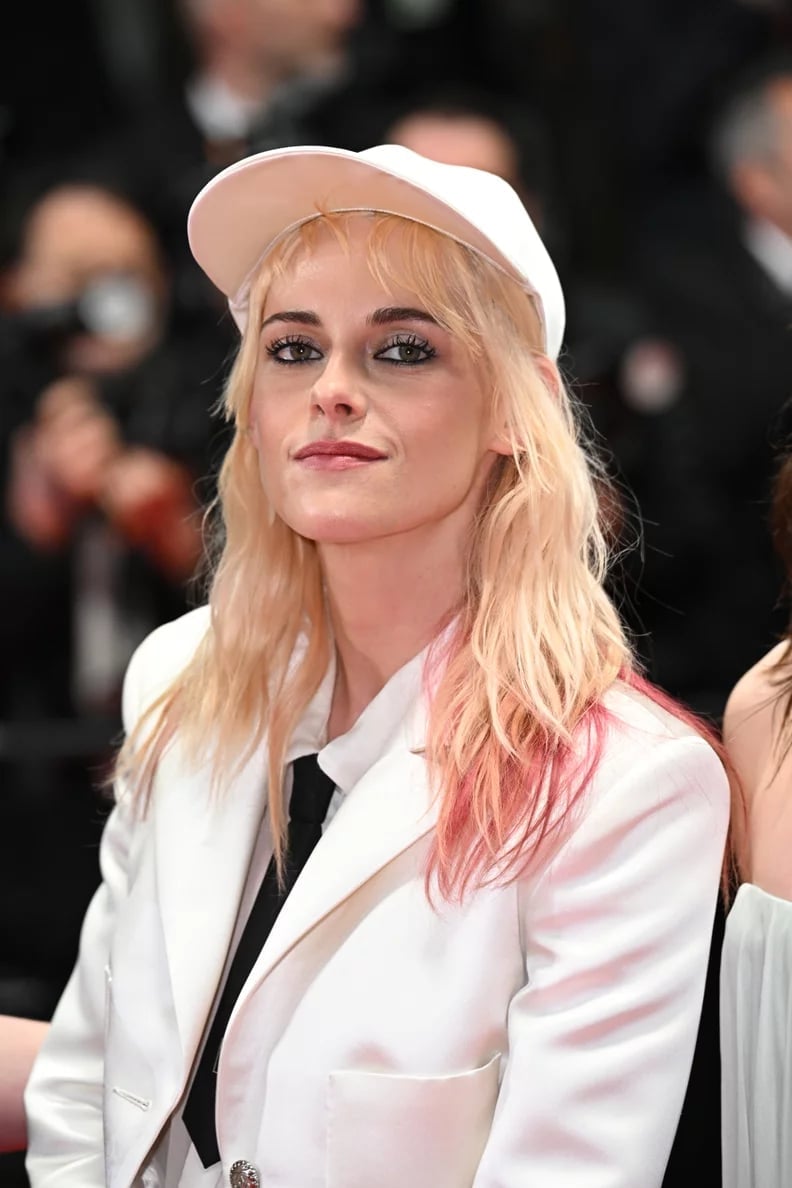
The pink shows up only at the last few inches, so the grow-out is gentle. No harsh line where color meets blonde, just a soft fade that lets you stretch the time between salon visits. Ask your colorist for a collarbone lob with a platinum blonde base and a subtle pink dip dye on the ends. Fine wavy texture and wispy bangs suit oval and heart faces. Use a texturizing spray to define the waves, and trim the ends every eight weeks to keep the pink looking fresh as it fades.
Blonde Bob With Bright Pink Dip Dye Ends
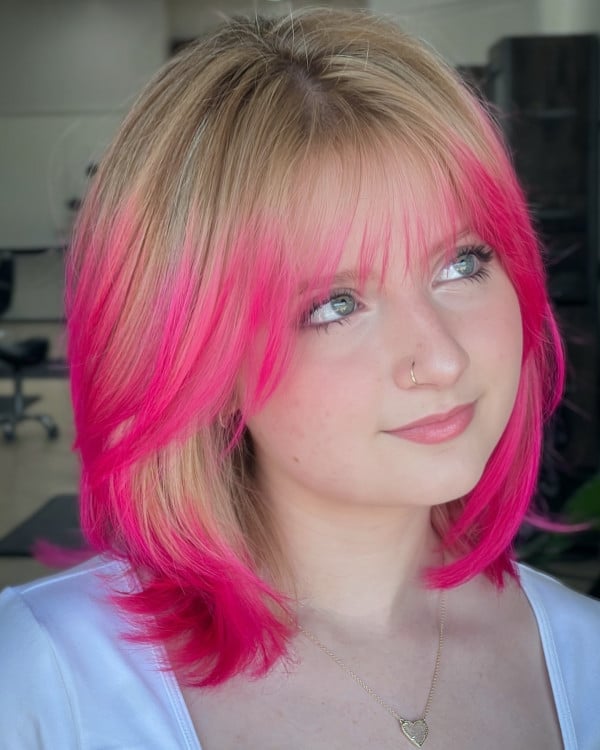
Compared with a soft pastel dip, this bright pink version is the difference between a whisper and a shout. The blonde base lets the hot pink ends look like a deliberate choice, and the blunt bob with face-framing layers and curtain bangs keeps the whole thing polished. Fine hair works well here because the vivid color adds visual weight to the ends without needing extra body.
Ask your colorist for: blunt bob, blonde with bright pink dip dye. This is a salon job if you want the color to stay vibrant and the transition to look clean; at-home kits tend to land unevenly on blonde and fade patchy. A round brush blowout keeps the smooth shape, and a trim every six weeks keeps the blunt line sharp.
Brown Hair With Pink And Purple Dip Dye
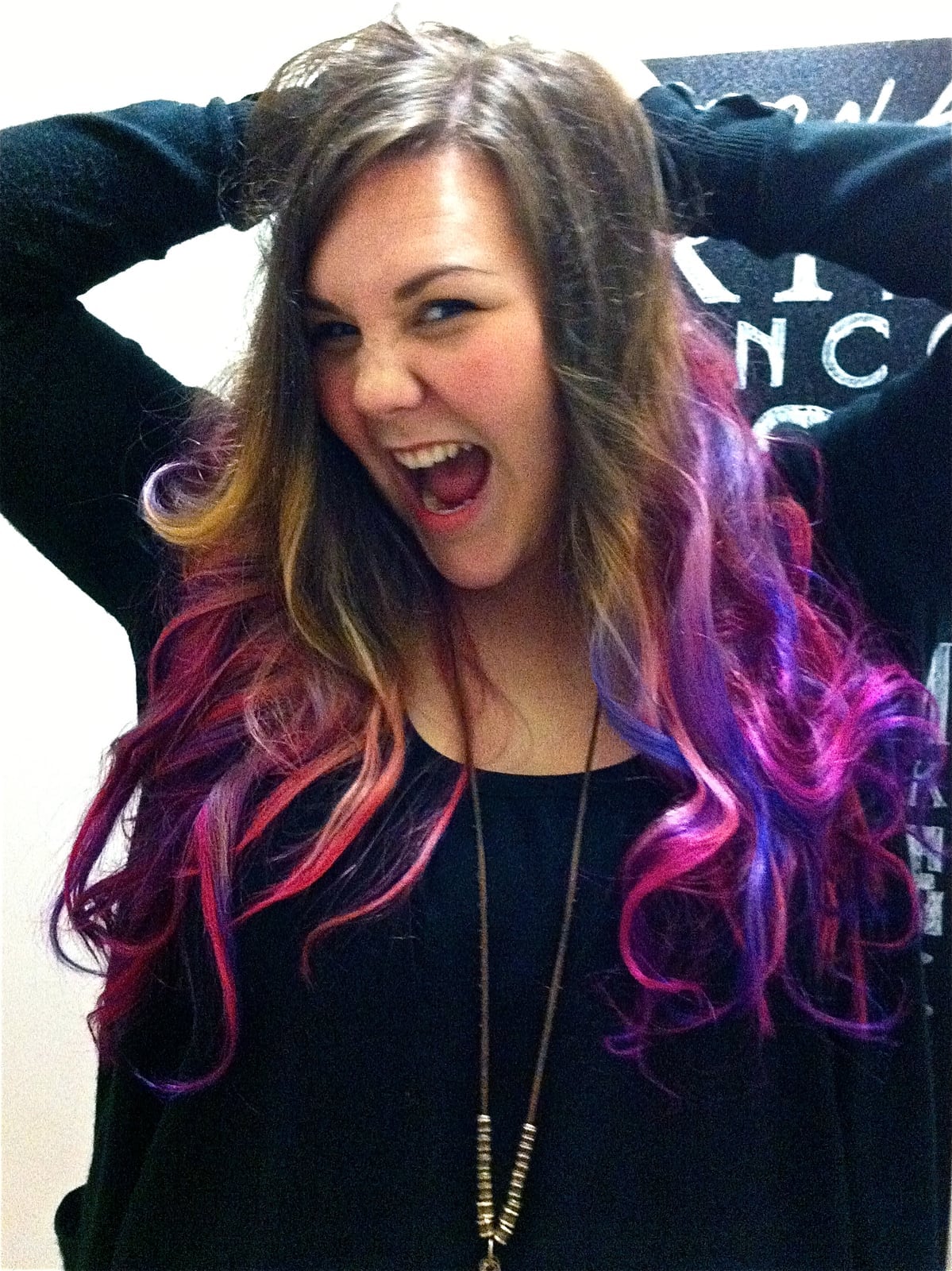
This one genuinely flatters medium-density wavy hair because the two-tone ends add movement and depth without weighing down the roots. The brown base keeps it wearable, while the pink and purple tips give it a playful edge. Curtain bangs frame the face softly, and the loose waves let the color transition show off its gradient. A collarbone length with layers means the color lands where it can catch the eye. Ask your colorist for: collarbone brown hair, pink and purple dip dye, curtain bangs. If your hair is very fine, the extra color can make the ends feel heavier, so consider a gloss instead of a full saturation. The shade works for oval and heart faces, and the upkeep is a monthly refresh to keep the pink and purple from turning muddy.
Wavy Brown Hair With Hot Pink Dip Dye
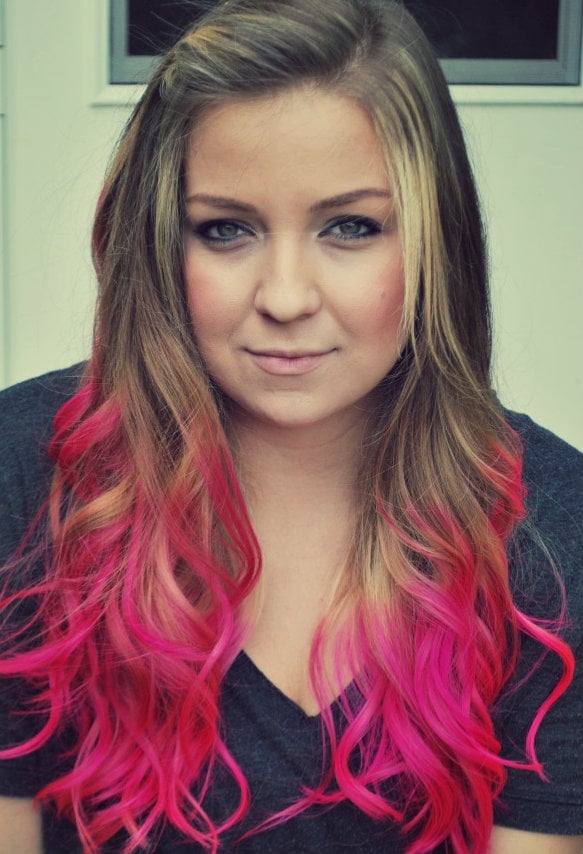
The design here is a study in contrast: a warm brown base that grounds the look and a hot pink dip that refuses to be ignored. The technique involves pre-lightening the ends to a pale yellow before applying the pink, so the color stays bright instead of pulling orange. On medium-density wavy hair at collarbone length, the loose waves let the pink peek through in sections. A middle part keeps it symmetrical and easy to style. Ask your colorist for: collarbone brown hair, hot pink dip dye. The transition line should sit a few inches above the ends so it looks deliberate, not like a grow-out. Use a heat protectant before curling and expect to refresh the pink every four to six weeks to prevent fading to coral.
Dark Brown Hair With Purple Dip Dye
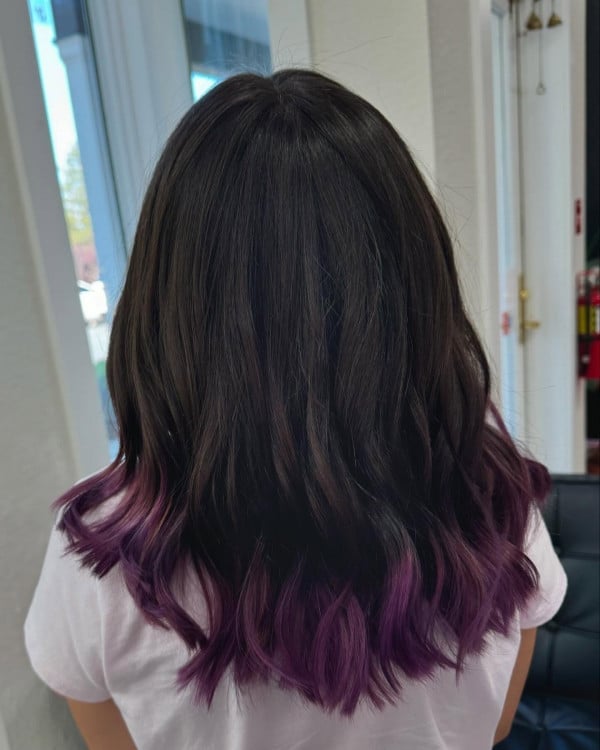
Purple tips on dark brown are a low-maintenance way to add a bold accent without committing to a full color change. The dark base means the purple appears as a rich, jewel-toned pop instead of a pastel wash, and the wavy texture helps the transition blend naturally. Because the roots stay untouched, the grow-out is forgiving: you can go eight to ten weeks between touch-ups before the line starts to look obvious. Ask your colorist for: collarbone dark brown hair with purple dip dye. The back view is where this color shines, so ask for the color to be applied thickly through the ends and feathered upward slightly. A purple shampoo once a week keeps the tone from turning brassy, and a sea salt spray adds texture without disturbing the color.
Collarbone Layers Blue To Purple Dip Dye
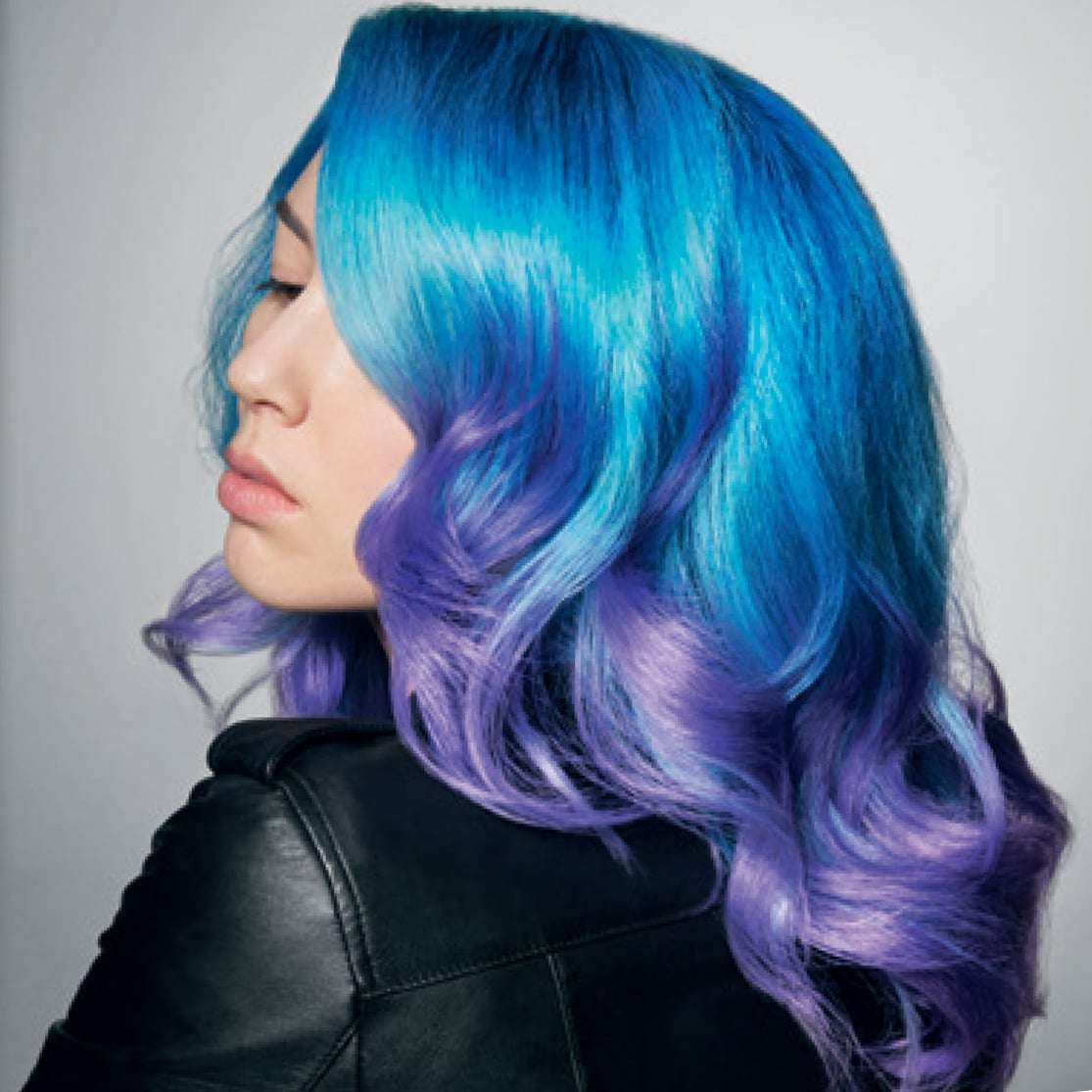
A blue to purple gradient is the kind of color that feels made for festival season or a beach vacation, where the vibrancy matches the setting. The collarbone length with layers gives the gradient room to breathe, moving from a vivid blue at the roots to a rich purple at the ends. On medium-density wavy hair with a side part, the colors catch the light differently as the hair moves, so the effect changes with every turn of the head. Ask your colorist for: collarbone layers, blue to purple dip dye. This is a salon-only color because the blend needs a steady hand to avoid a hard line. A curling wand helps the gradient show its full range, and a monthly tone keeps the blue from fading to green and the purple from going gray.
Brown Hair With Purple And Blue Dip Dye
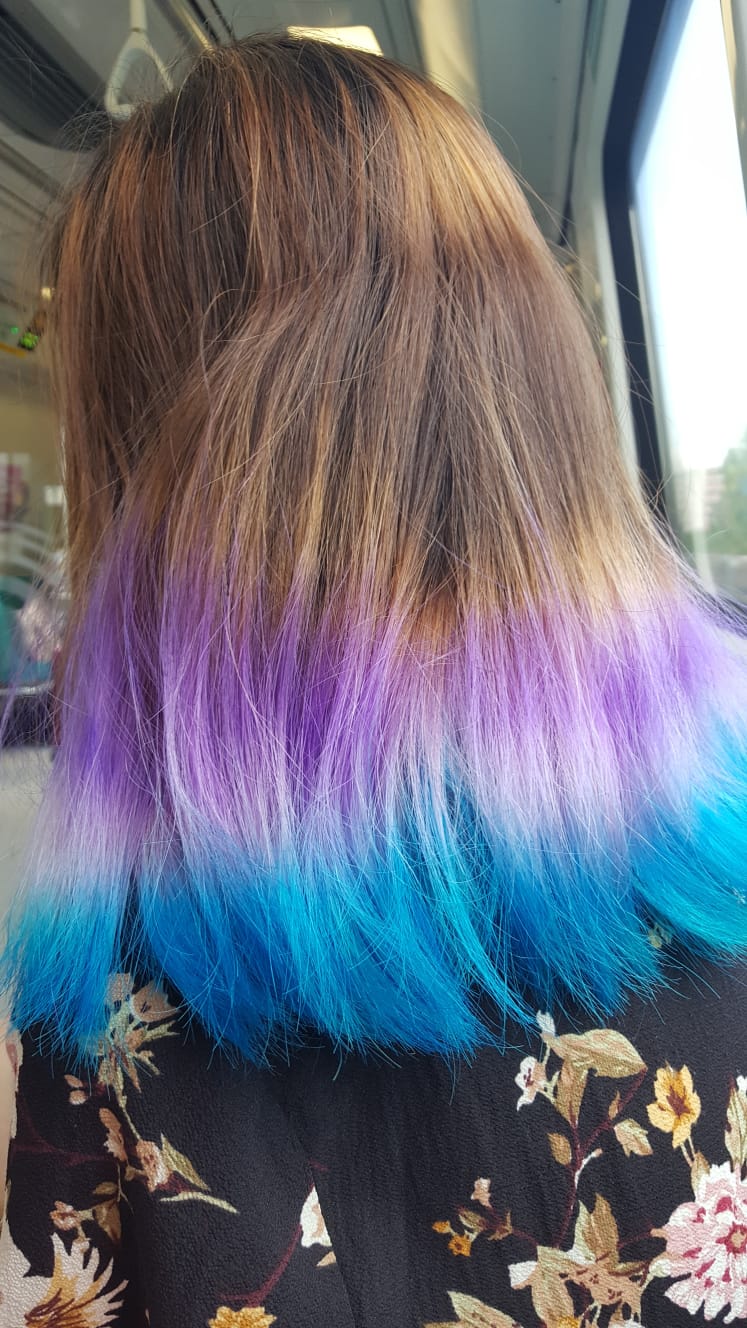
Can you have two dip-dye colors on the same ends without it looking like a tie-dye accident? Yes, when the transition is this clear. The brown base runs to collarbone length in loose layers, then shifts into a vibrant purple segment that bleeds into bright blue at the very tips. The air-dried wavy texture keeps the gradient soft and blended. Fine hair benefits from the layers. They add movement without weight. Ask your colorist for: collarbone layers, brown with purple and blue dip dye.
Blonde Ponytail With Purple And Blue Dip Dye
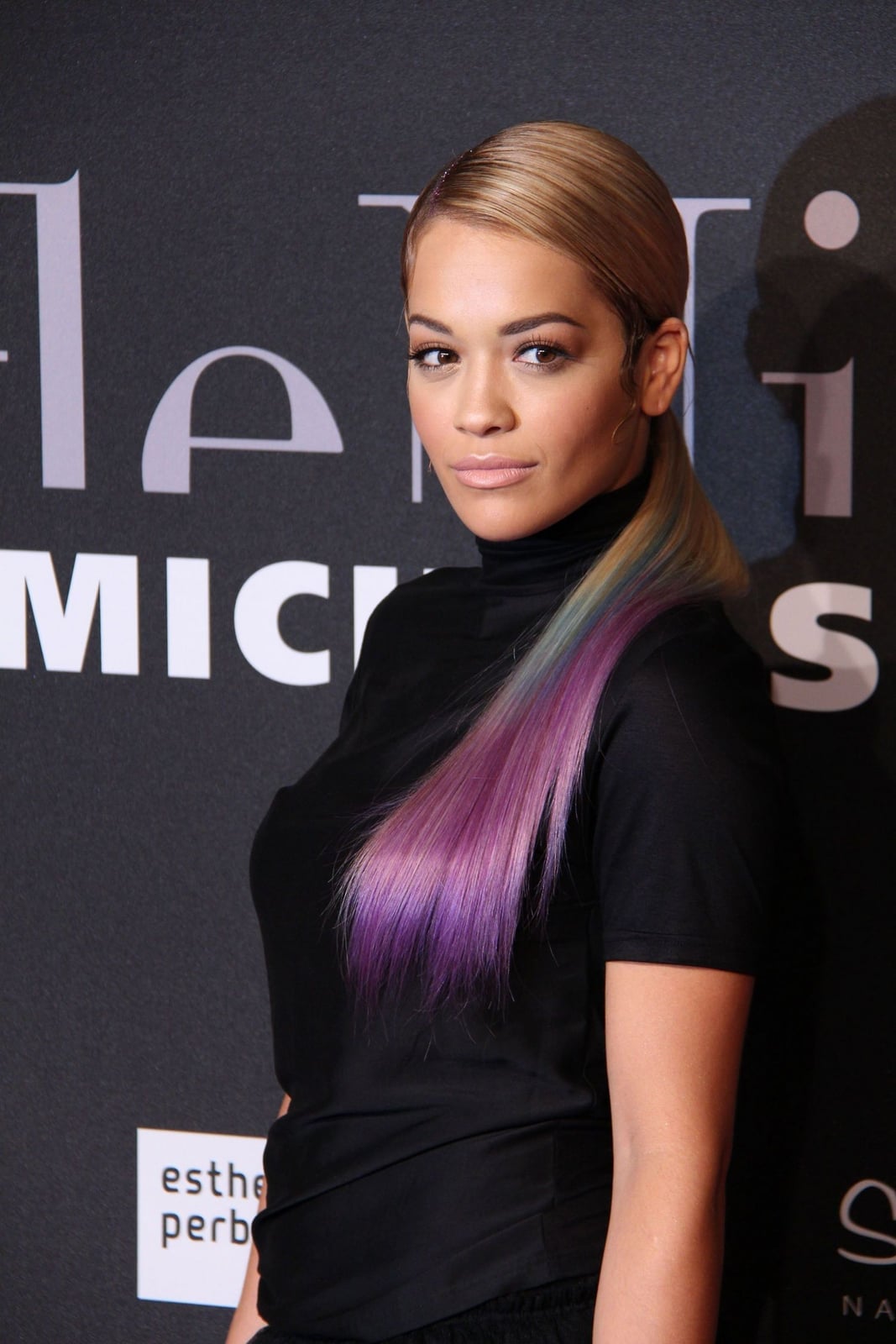
The design is simple: a blonde base with purple and blue dip-dyed ends, pulled into a sleek side ponytail. Fine, straight texture makes the ponytail look polished, and the collarbone length keeps it from dragging. This is a salon-only project. The blonde needs pre-lightening before the purple and blue can stick, and that process alone takes a few hours. The real drawback is color bleed. Purple and blue are notorious for migrating into the blonde above the dip line, especially on fine hair that absorbs pigment fast. A root shadow or a clear barrier between the base and the color helps, but expect a toning visit every three weeks to keep the line sharp. Ask your colorist for: collarbone blonde ponytail with purple and blue dip dye.
Long Layered Hair With Turquoise Dip Dye
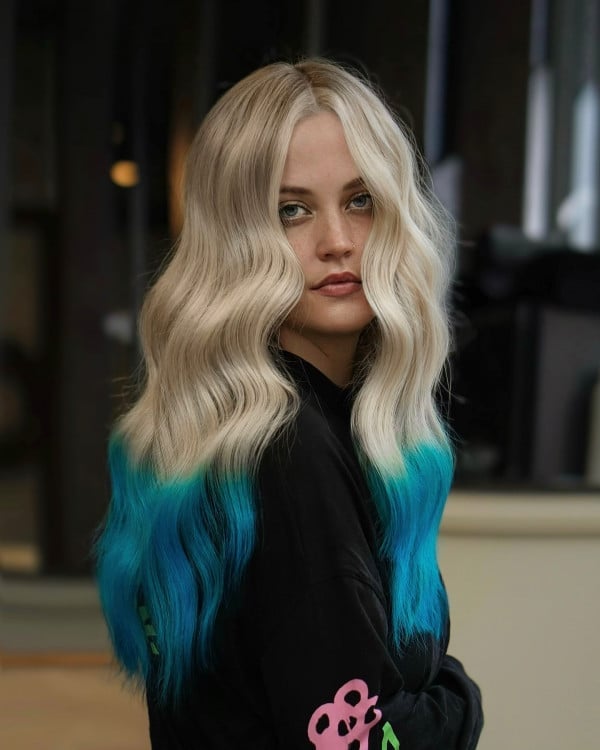
This one works best if you have the density to carry long layers and a wavy texture that gives the turquoise ends something to bounce off. The light blonde base meets a vibrant turquoise dip dye at the mid-back length, with curtain bangs softening the front. Thick, wavy hair handles the weight of long layers without collapsing, fine hair would look stringy here. The middle parting and curtain bangs balance a longer face, while the layers add shape to a round one. Ask your colorist for: long layered hair, light blonde with turquoise dip dye. A diffuser on low heat encourages the natural wave pattern and keeps the turquoise from looking flat.
Stacked Bob With Turquoise Dip Dye
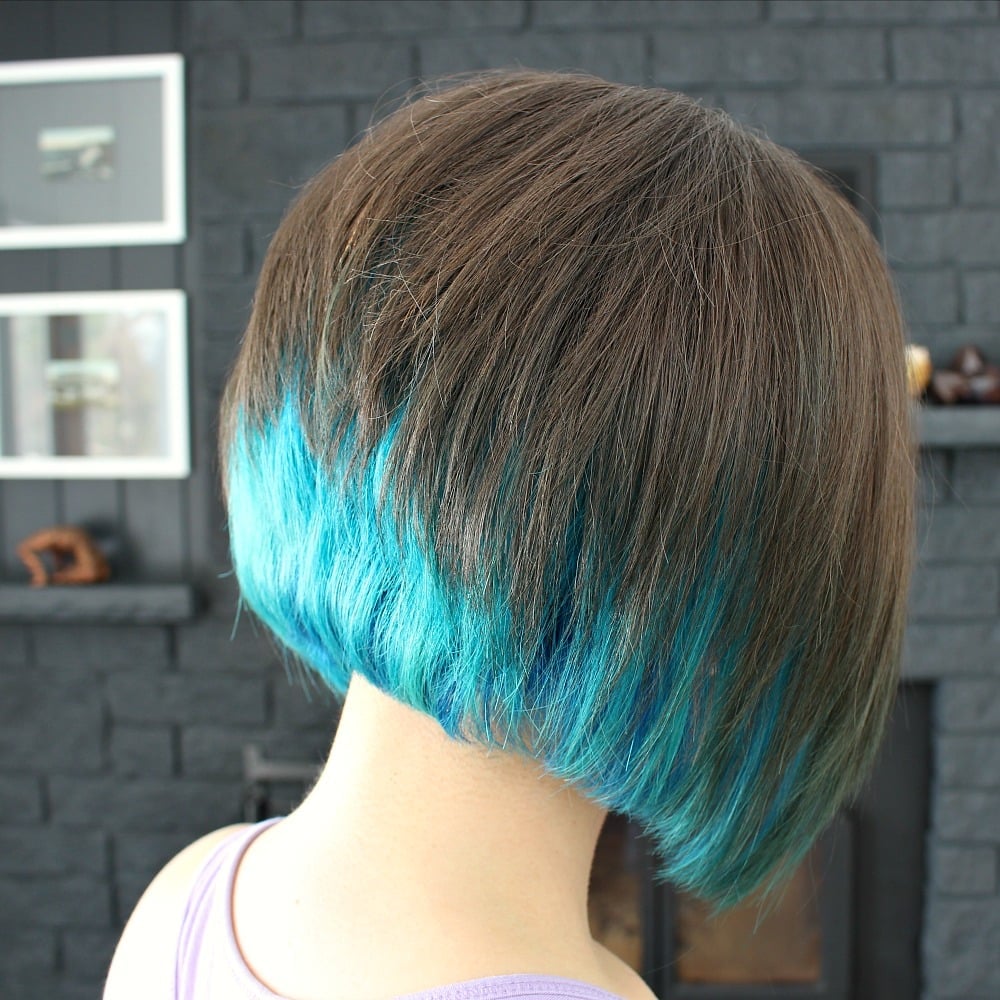
A stacked bob on a dark chestnut base with turquoise dip dye reads differently than the same color on a blonde lob. The contrast is sharper, dark brown against bright turquoise, so the dip feels bolder, not blended. Thick, straight hair holds the stacked shape well; fine hair might not have the density to support the shorter layers in back. The chin length hits just below the jaw, which suits oval and square faces. Ask your stylist for: stacked bob, dark brown with turquoise dip dye. The stacked layers need a trim every six weeks to keep the silhouette clean.
Mid-Back Hair With Emerald Green Dip Dye
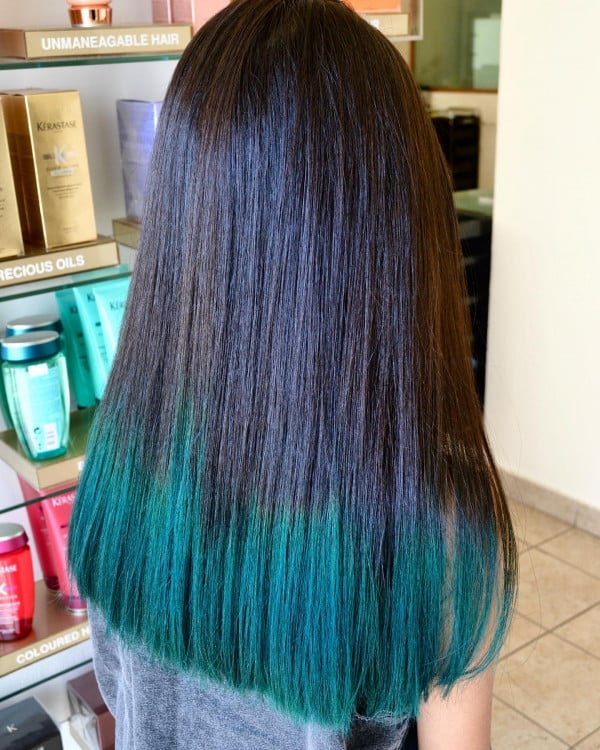
The technique here relies on a clean separation between the dark base and the vivid emerald green ends. Medium density straight hair at mid-back length provides a smooth canvas, no texture to interrupt the color line. The middle parting and sleek styling emphasize the contrast rather than hiding it. This is not a subtle look. The emerald green stays vibrant for about four weeks before it starts pulling blue-green, so a monthly toning appointment keeps the color true. Ask your colorist for: mid-back hair, dark base with emerald green dip dye.
Shoulder Length Brown With Turquoise Dip Dye
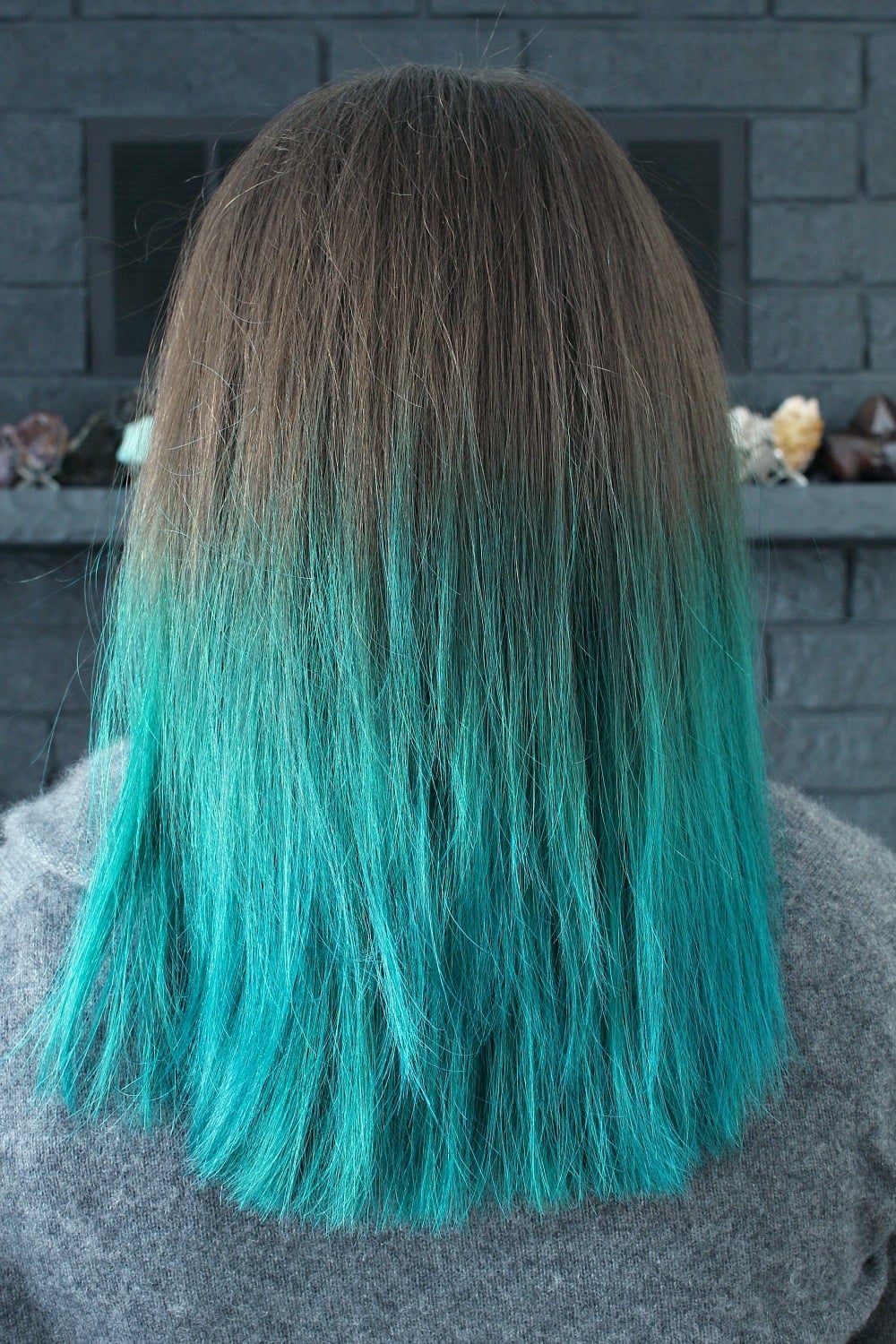
A straight cut at the shoulders with a middle parting keeps the focus on the color. The natural brown base shifts into a vivid turquoise dip dye that hits the ends with no blending in between. This works best on medium density hair starting at shoulder length, and the clean line suits oval and square faces well. Ask your colorist for: shoulder length brown hair with turquoise dip dye. That bright turquoise will fade faster than you expect, so plan on refreshing the tone every four to six weeks. Air drying preserves the natural texture, and a trim every eight weeks keeps the straight edge from looking ragged.
Shoulder Length Blonde With Pink Dip Dye
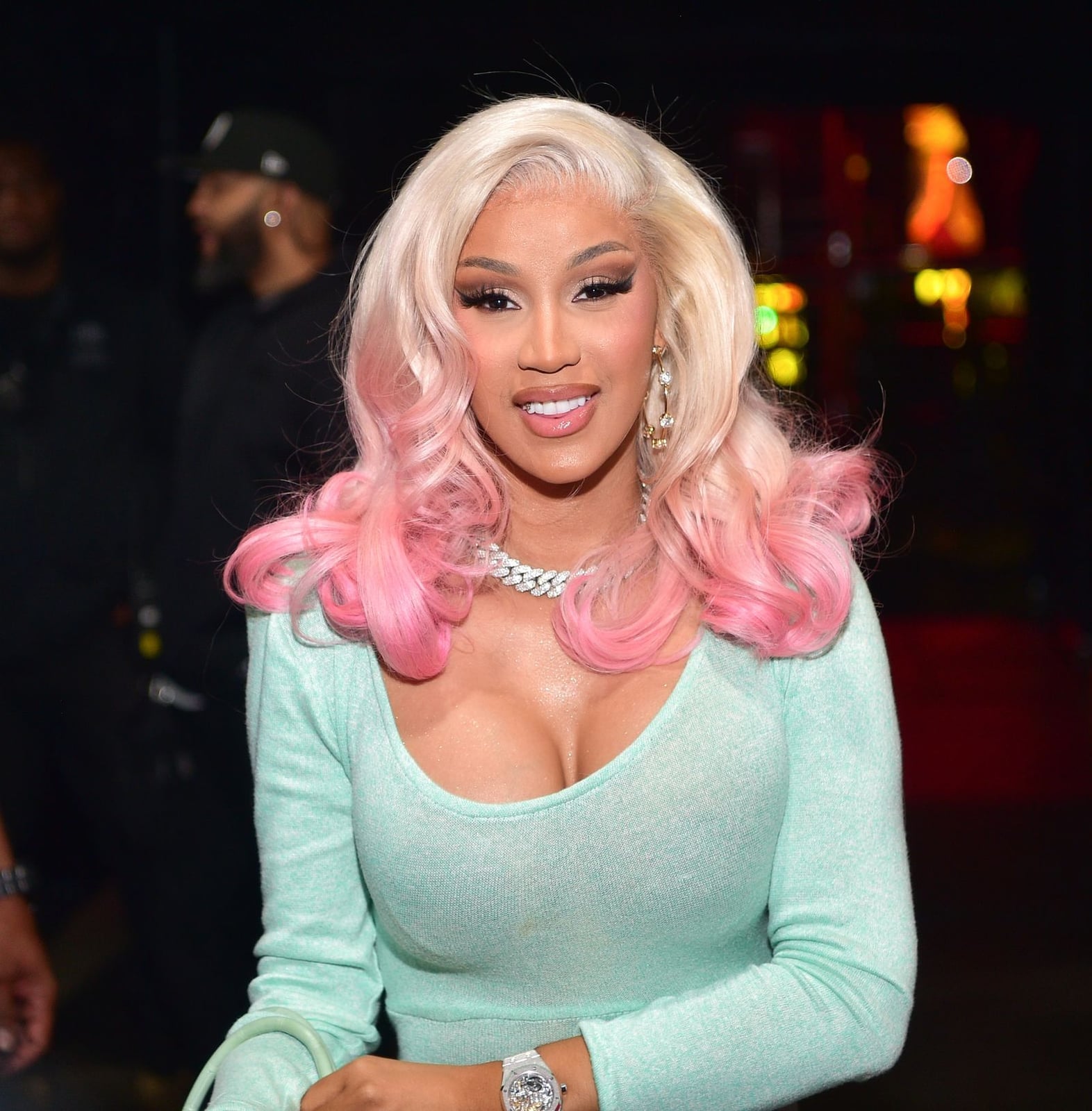
Soft pink on the ends of a blonde base lands somewhere between playful and romantic. The loose waves and side parting keep it from reading as costume. Layers give the color a natural fade point. This pink dip dye works for spring weddings, garden parties, or any event where you want color without commitment. Ask your colorist for: shoulder length blonde hair with pink dip dye. A glossy finish makes the pink look polished, so a monthly gloss treatment helps. The waves are easy to recreate with a curling wand, and thick texture holds them well.
Blue Curly Hair With Red Dip Dye
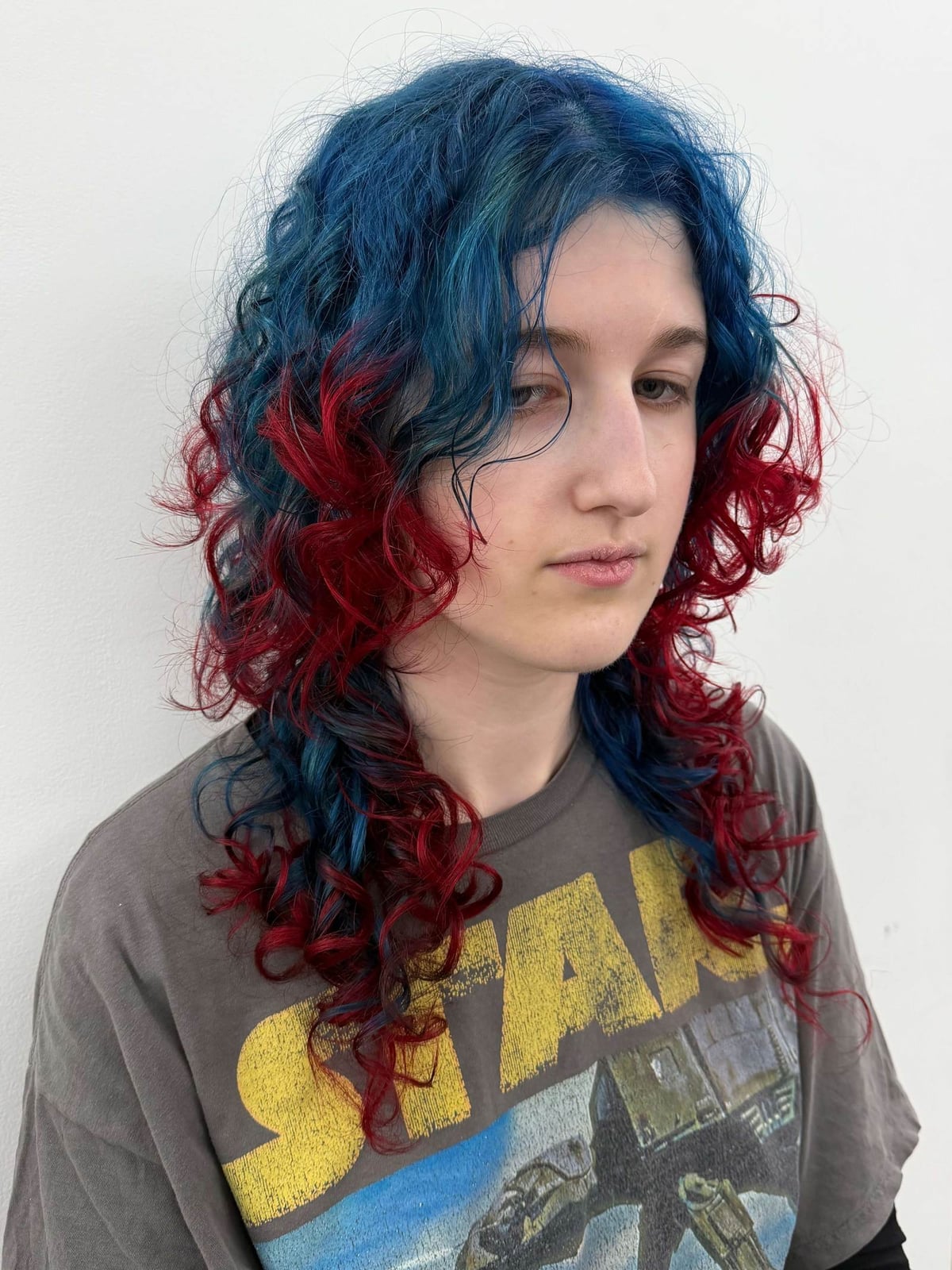
How do you get red dip dye on blue curly hair without it looking muddy? The key is a clear separation between the two colors. This shoulder-length style keeps the blue base at the roots and lets the vibrant red start below the ears, with no gradual transition. The middle parting and natural air-dried texture let both colors read clearly, and the thick curl pattern adds dimension. Ask your colorist for: shoulder length blue curly hair with red dip dye. A side view shows the contrast best, so make sure your stylist sections the hair vertically during application. Curly hair needs a curl-defining cream after washing to keep the shape, and a purple shampoo on the blue section prevents brassiness.
Chestnut Hair With Purple Dip Dye
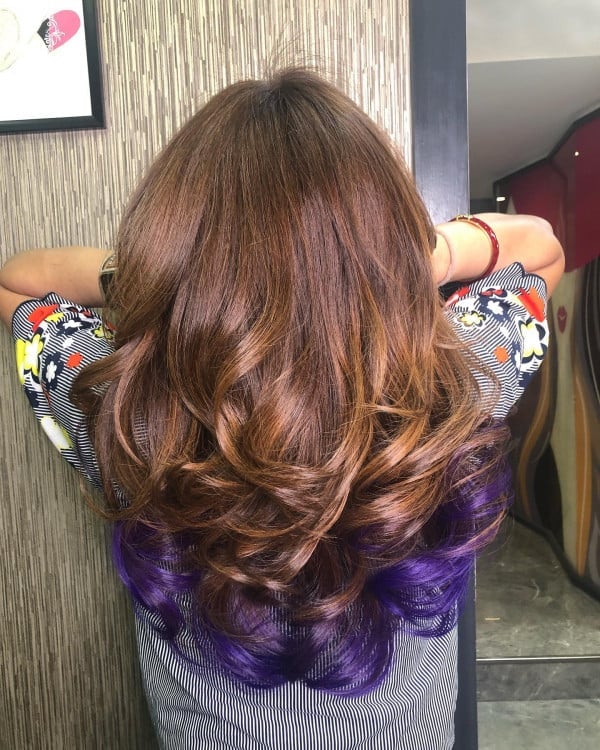
The glossy finish helps both colors catch the light, but here is the trade-off: purple on brown needs a pre-lighten step, and that means damage at the ends. The purple also fades faster on the darker base, sometimes looking more magenta than violet after three weeks. Ask your colorist for: long layered chestnut hair with purple dip dye. This look genuinely flatters thick, wavy hair that starts at mid-back, and the layers keep the color from sitting in one heavy block. Skip this if you hate frequent toning appointments or if your hair is already color-treated and fragile. A monthly color-depositing conditioner helps between salon visits.
Dark Brown Hair With Vibrant Purple Dip Dye, Mid-Back
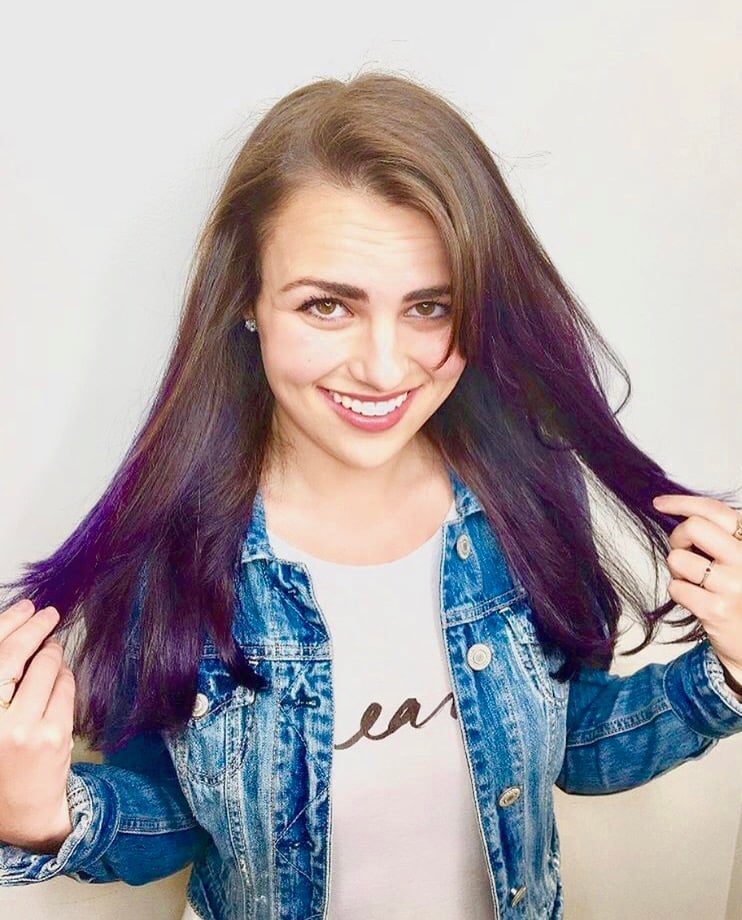
This one works best for medium density, straight hair that can show the color change without competing texture. Long layers and a middle parting frame the face, while the dark brown base lets the vibrant purple dip dye feel like a deliberate pop. Ask your colorist for: mid-back dark brown hair with vibrant purple dip dye. The air-dried styling keeps it low maintenance day to day, though the mid-back length means about three hours in the chair for the initial application. A trim every eight weeks keeps the ends healthy and the color line clean. Oval and heart-shaped faces benefit from the vertical line the parting creates.
Dark Base With Vibrant Purple Dip Dye
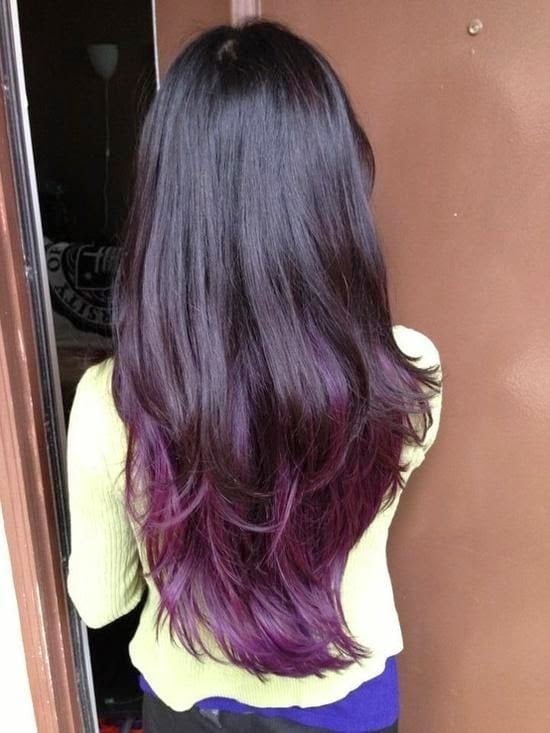
On thick, wavy hair at mid-back length, the shift from a nearly-black root to a vibrant deep purple end is clean enough to be deliberate but soft enough to look organic. The loose waves let the color land at different heights, so the dip never looks like a single flat stripe. Ask your colorist for: mid-back dark hair with vibrant purple dip dye. Thick textures hold the saturation well, and the waves keep the transition from feeling too harsh.
A texturizing spray adds definition without weighing the wave down. The purple requires a toning appointment every four to six weeks to prevent it from veering toward brown. That middle part is your friend here. It splits the color evenly and lets the dip dye appear planned, not accidental.
Dark Brown Hair With Hot Pink Dip Dye, Mid-Back
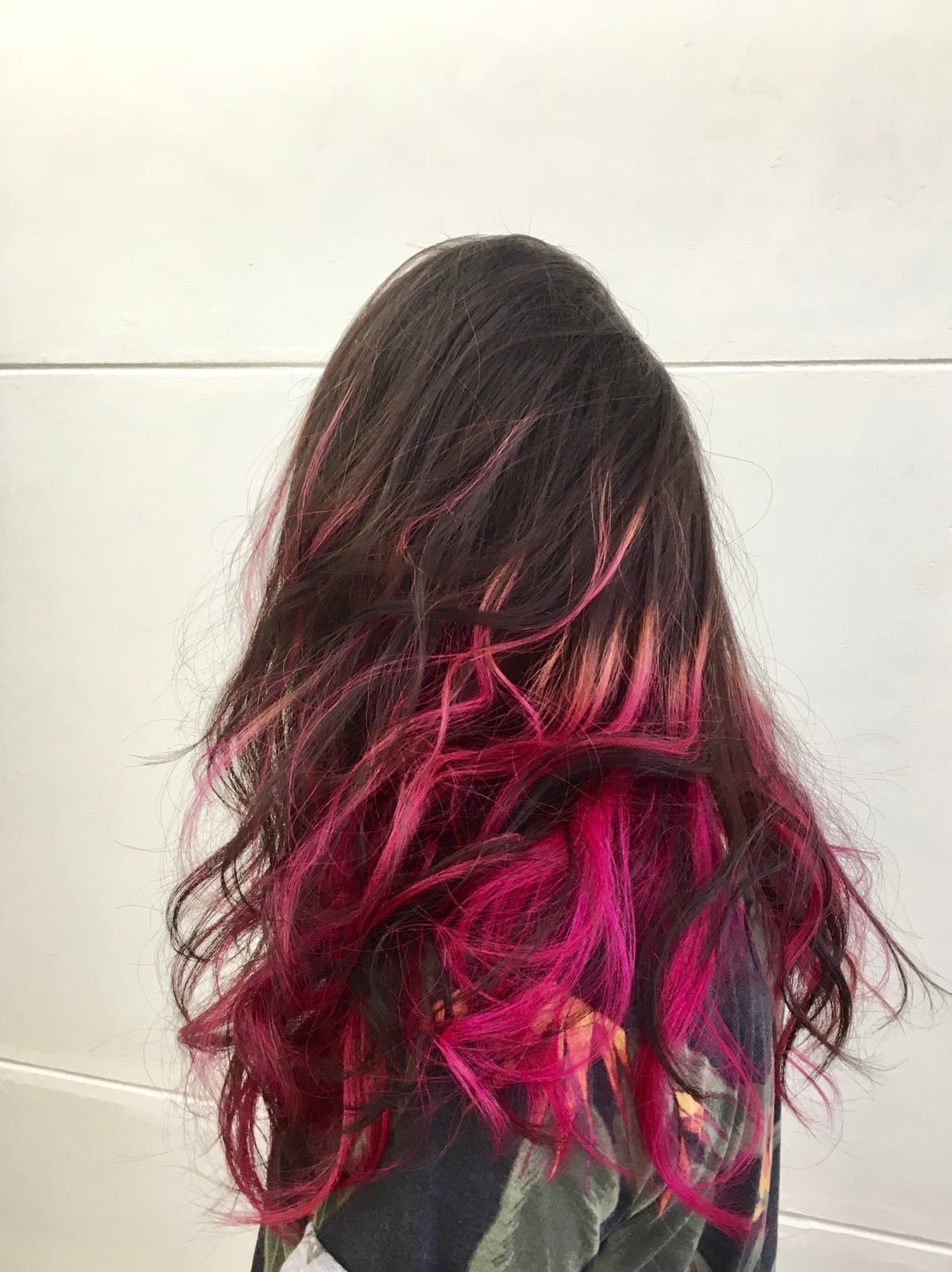
Hot pink on a dark brown base is a high-contrast move, and the payoff depends on how you handle the fade. This mid-back length is styled in loose waves, which break up the color block and give the pink some movement. Ask your colorist for: mid-back dark brown hair with hot pink dip dye. Thick, wavy texture helps the pigment grab evenly, but pink is notorious for shifting toward coral after a few washes.
A purple shampoo is not going to fix it. You need a color-depositing conditioner in the same shade, used every other wash, to keep the hot pink hot. A curling iron set on low heat will re-form those waves without cooking the color. Plan a refresh at the salon every five weeks to prevent the dip from looking like an accident.
Light Blonde With Purple Dip Dye
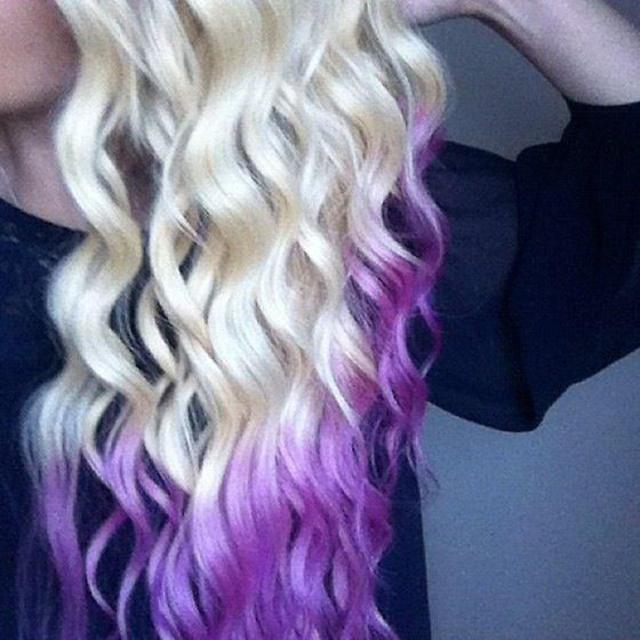
Light blonde is the easiest canvas for a vivid dip dye, so the real question is trusting a salon application to keep the saturation even and avoid a muddy line where the purple meets the blonde. Ask your colorist for: long layered light blonde hair with purple dip dye. The wavy texture on this mid-back length diffuses the color, so the purple appears airy and not heavy. A side part adds asymmetry, which keeps the dip from looking like a solid block. A salon does it in one clean pass and includes the gloss that makes the purple last, while a DIY version can take two hours and still end up patchy.
Final Thoughts
Dip dye works best when you respect your starting point. Fine hair needs a soft blend and lighter tones to keep the ends from looking heavy; thick hair can carry a sharper contrast and deeper saturation. Match the technique to your texture, not the other way around.
- Trim the dip-dyed ends every 6-8 weeks to maintain the sharpness of the color.
- Use color-depositing conditioners to refresh vibrant tones between salon visits.
- Wash with cool water and sulfate-free shampoos to prevent color fading.
- Apply heat protectant before styling to preserve color integrity.
Embrace the fun and creativity of dip dye.