
Every October, my colorist starts booking more chairs for coppers and deeper browns. The reds come out of hiding, the blondes cool down. I saw it this year too: the same warm shift, but with more dimension than last season.
This roundup of Fall to Winter Hair Colors has 25 looks: icy blondes, deep reds, warm coppers, subtle caramel blends. They range from high-maintenance blondes to low-upkeep browns. Something works for fine hair, thick curls, and anyone who doesn’t want a stark root line.
I have been wrong about red before. My first attempt turned orange by the second wash. So I paid close attention to the toning and the real grow-out timelines here.
Icy Blue Lob With Silver Highlights
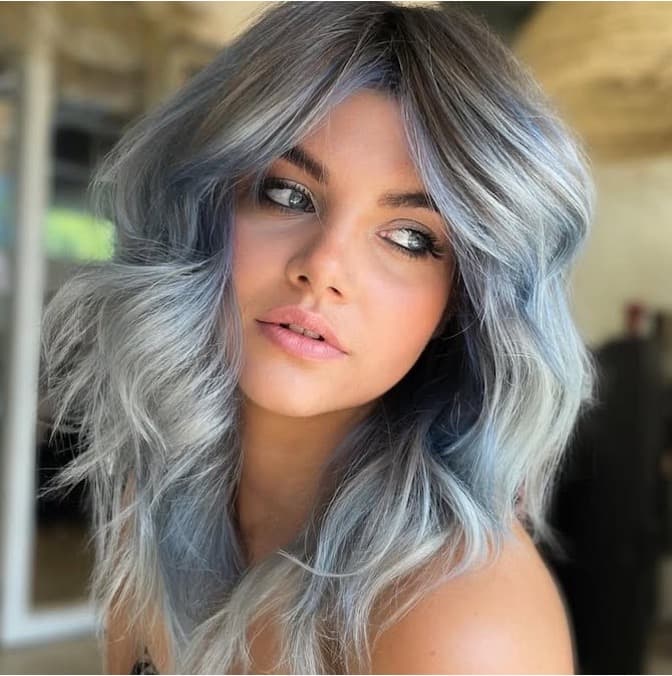
Icy blue hair color is not a neutral. It is a commitment to cool. The silver highlights cut through the blue like winter light, and together they only work on cooler skin tones. The lob hits collarbone, the curtain bangs soften the forehead, and the loose waves keep the whole thing from reading as a costume. Medium density wavy hair holds the shape without falling flat. This is a salon-only colour, and it asks for a middle part to show the contrast properly.
Warm Copper Red Curls
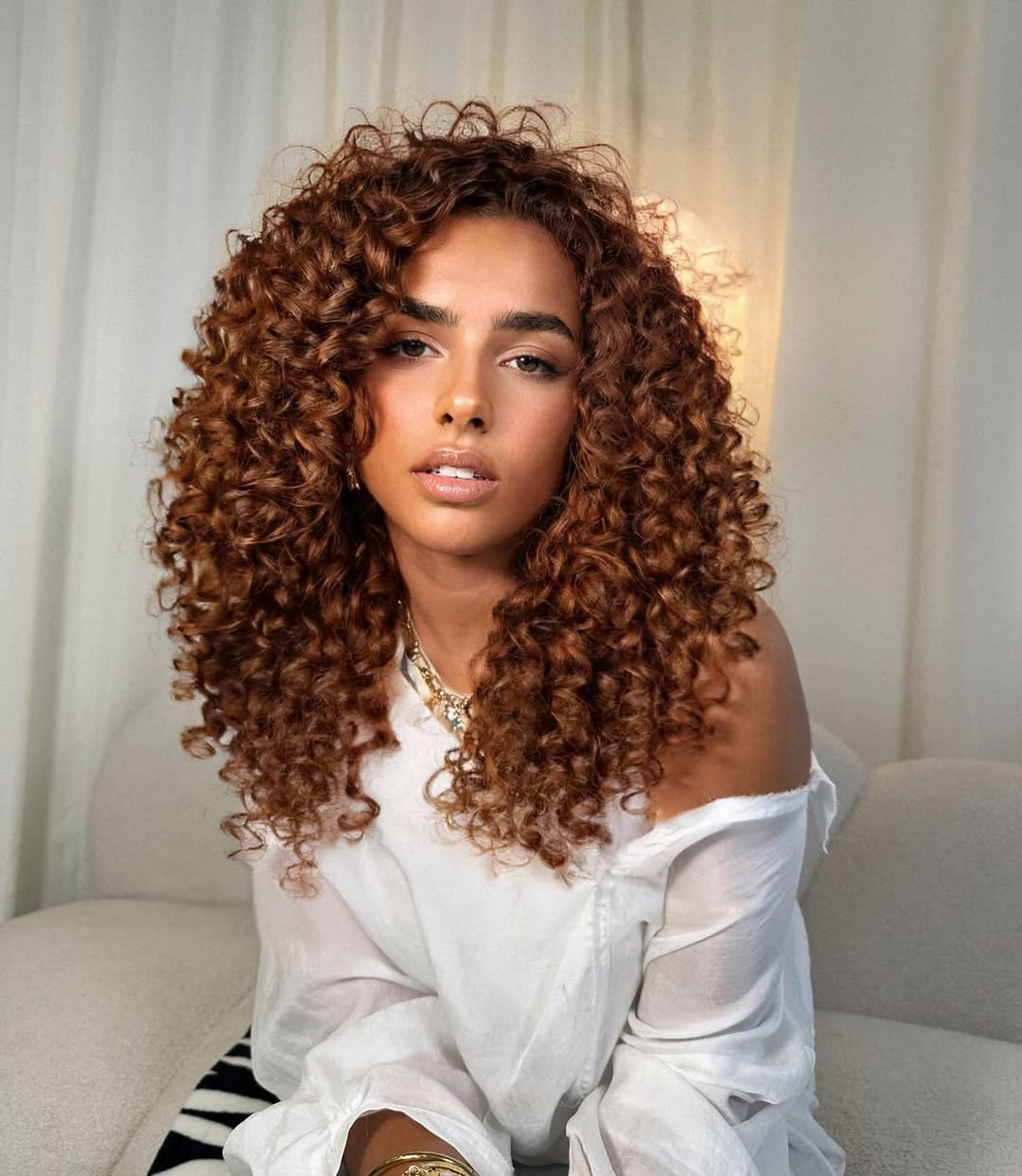
This color makes me want to pull out the wool sweaters. Warm copper red hair is the definition of a transitional shade, rich enough for November, bright enough for January gray. The defined curls give it movement, and the shoulder length keeps it from tangling under a scarf. Thick curly texture holds the pigment well, and the middle part lets the color hit evenly. The long layers add shape without losing volume. This is a color that announces itself, but in a way that feels natural, like the last leaves before the frost.
Sleek Mid-Back Deep Red
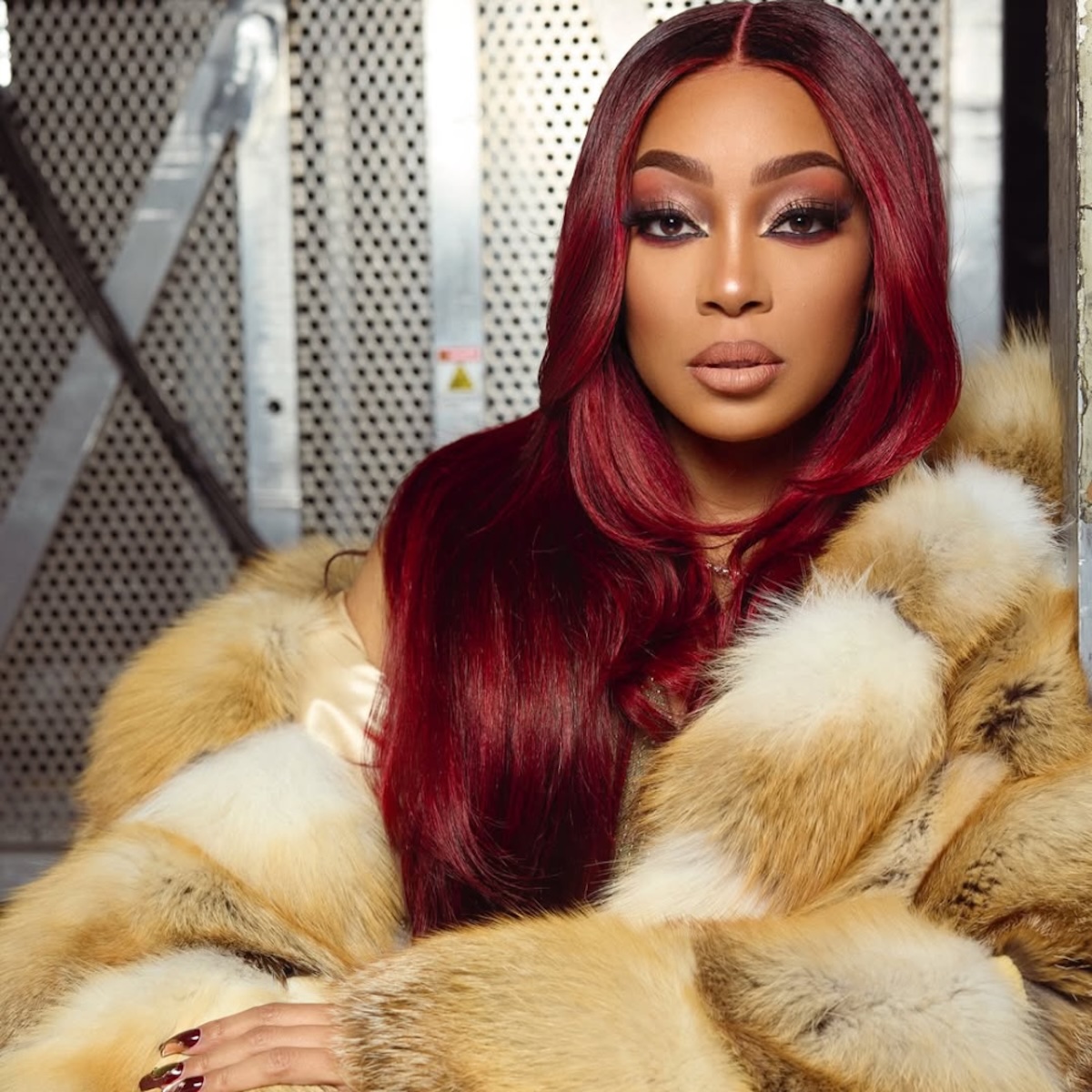
Deep red hair color is a verdict in itself: you are not here for subtlety. The cool-toned shade is applied as a single process, root to tip, for maximum saturation. The mid-back length gives it drama, and the sleek straight finish makes the color look almost liquid. Thick straight texture reflects light evenly, so the red reads as one solid block. The middle part keeps it symmetrical.
The reality is that deep red fades faster than you expect. Within two weeks, the vibrancy dulls, and by week four, you are looking at a brownish tint. Color-safe shampoo and cool water slow the process, but a gloss every six weeks is the only way to keep it singing. In winter, dry indoor heat speeds up fading, so a deep conditioning mask once a week helps. The sleek styling means you need a flat iron and a heat protectant, and the mid-back length takes time to dry. It is a commitment, but the first week makes it worth it.
Textured Shag With Caramel Balayage
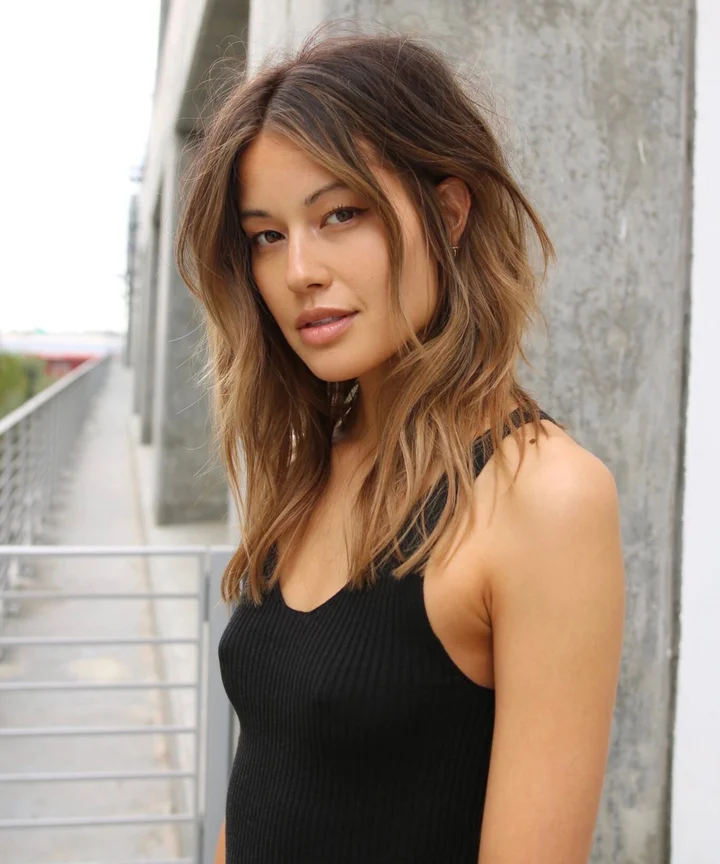
Ever wonder how a balayage actually works? Caramel balayage on dark brown starts with a dark brown base, then the stylist hand-paints caramel pieces freehand, concentrating them around the face and ends. The result is a warm tone that lifts the dark base without a harsh line. The textured shag cut with curtain bangs frames the face, and the shoulder length keeps it wearable. Fine wavy texture benefits from the air-dried finish. Ask your stylist for a hand-painted balayage that starts below the ears, a dark brown base that stays deep at the roots, and a caramel tone that warms up around the face.
Rich Auburn With Copper Tones
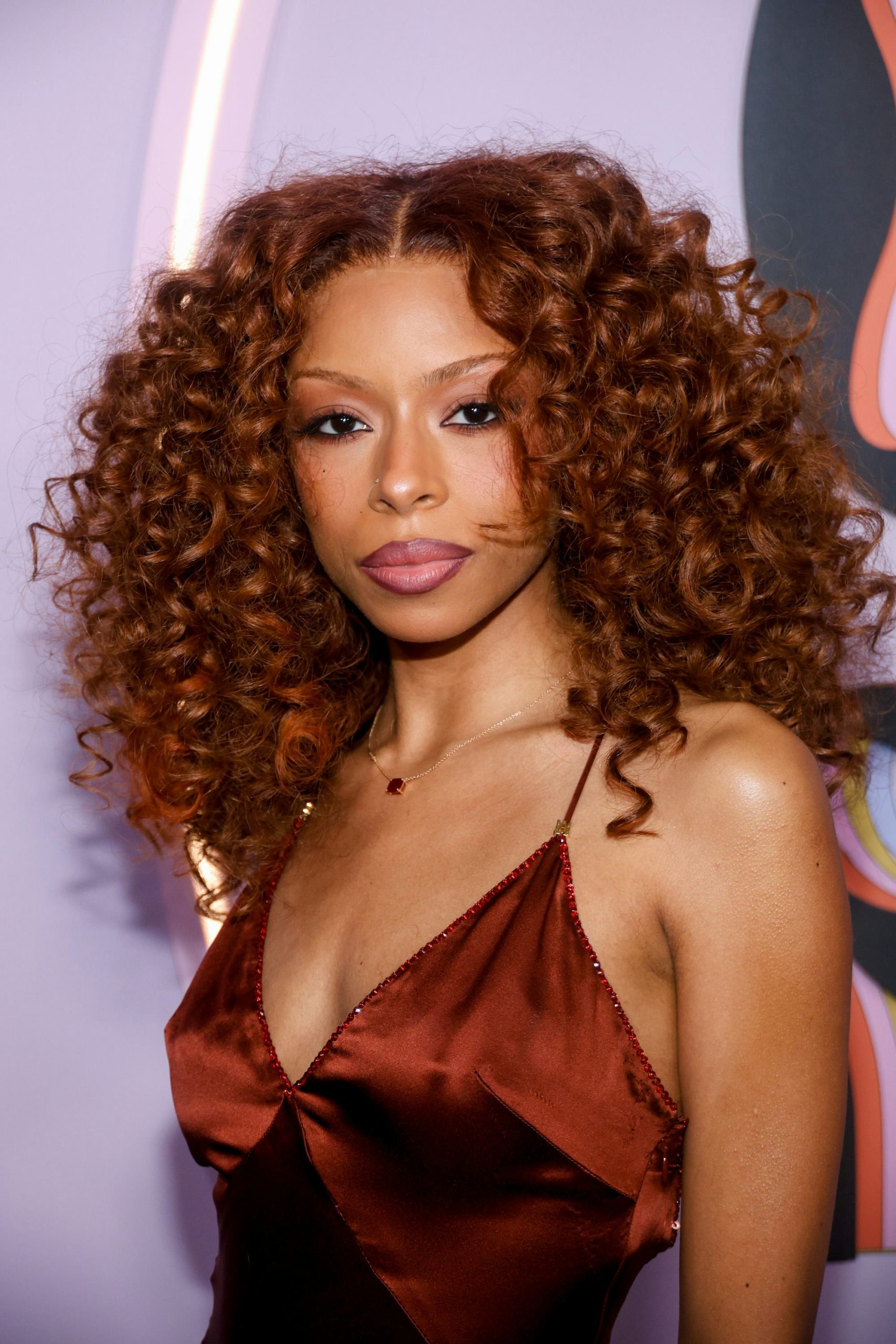
Rich auburn hair is what you get when a vibrant red settles down for winter. The single-process color carries copper undertones, but they are subtle, not screaming. Compared to a fire-engine red, this is the version that works with a gray coat and a scarf. The shoulder length and defined curls give it shape, and thick curly texture holds the color evenly. The middle part lets the auburn read as one cohesive shade.
Ash Blonde With Beige Highlights
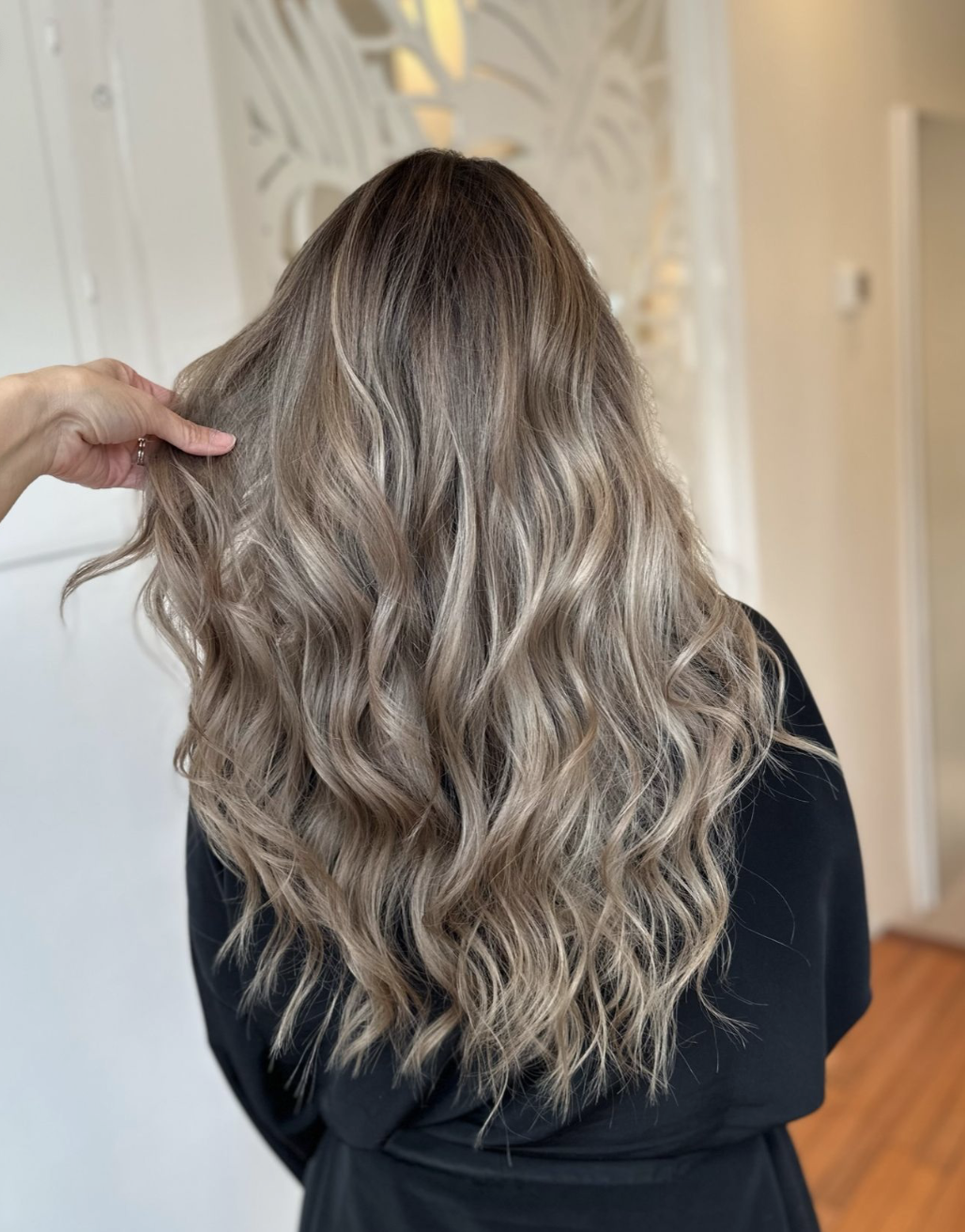
I’ll admit it: my first attempt at ash blonde with beige highlights turned into a brassy nightmare by week three. But this version, with its cool ash base and subtle beige ribbons, stays frosty when you treat it right. The mid-back length and thick, wavy texture give the color room to breathe.
The trick is a purple shampoo once a week and a toner every six weeks. Without that, the cool blonde warms up fast. And thick hair means you’ll use more product than you expect. But if you want a shade that actually reads silver-grey in winter light, book the salon session and commit to the toner schedule.
Shag With Wispy Bangs in Copper Red
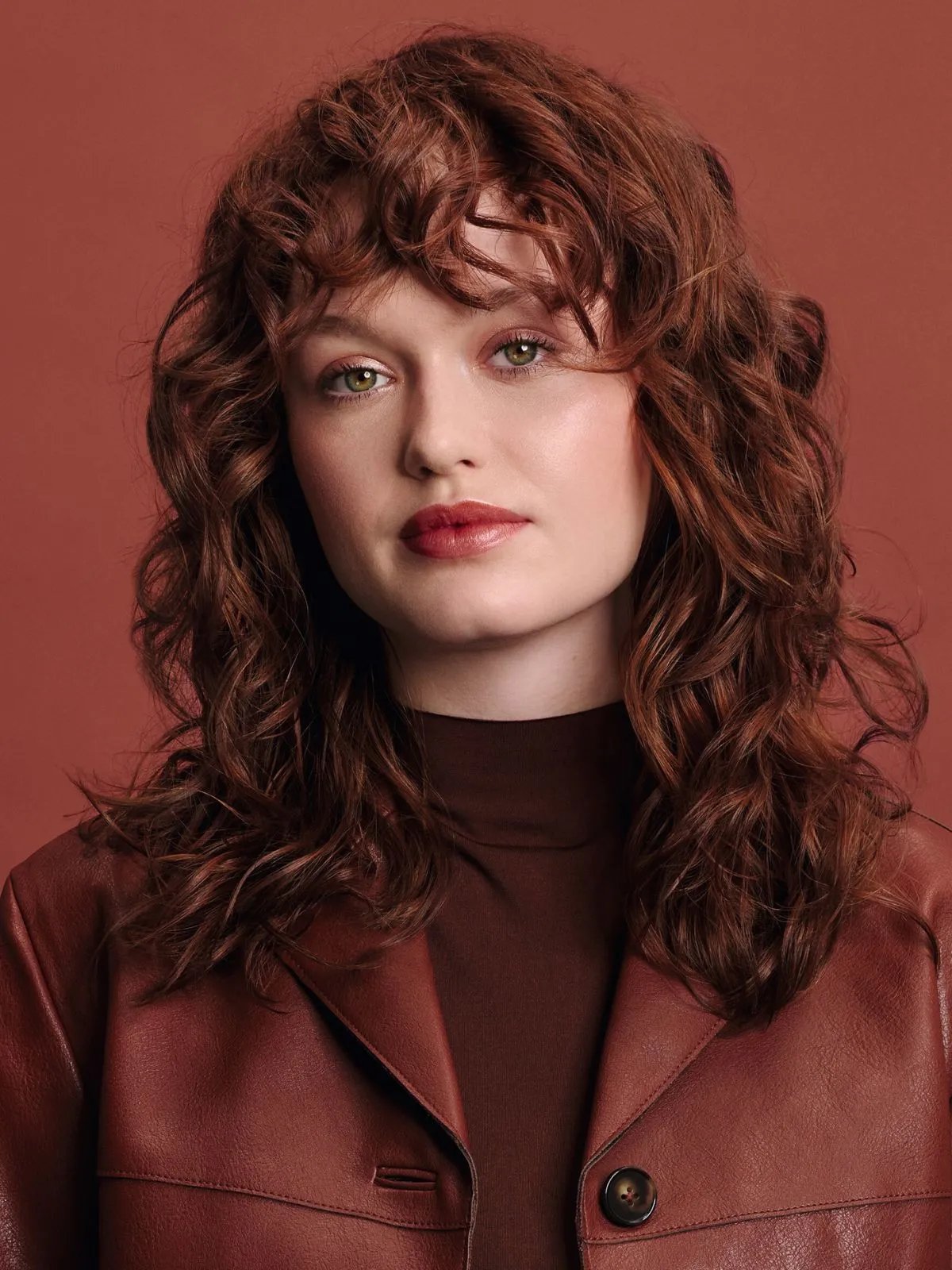
Does this copper red shag with bangs actually flatter most faces? Not really, but if your skin runs warm and your hair has natural wave, it’s a winner. The collarbone length keeps it from overwhelming fine features, and the wispy bangs add softness without the commitment of a full fringe. Medium density hair grabs the color without fading too fast, and the warm copper tone glows against golden undertones. If you’re cool-toned or have very fine, limp hair, this shade will wash you out and fall flat by noon.
Brown Base With Bold Highlights
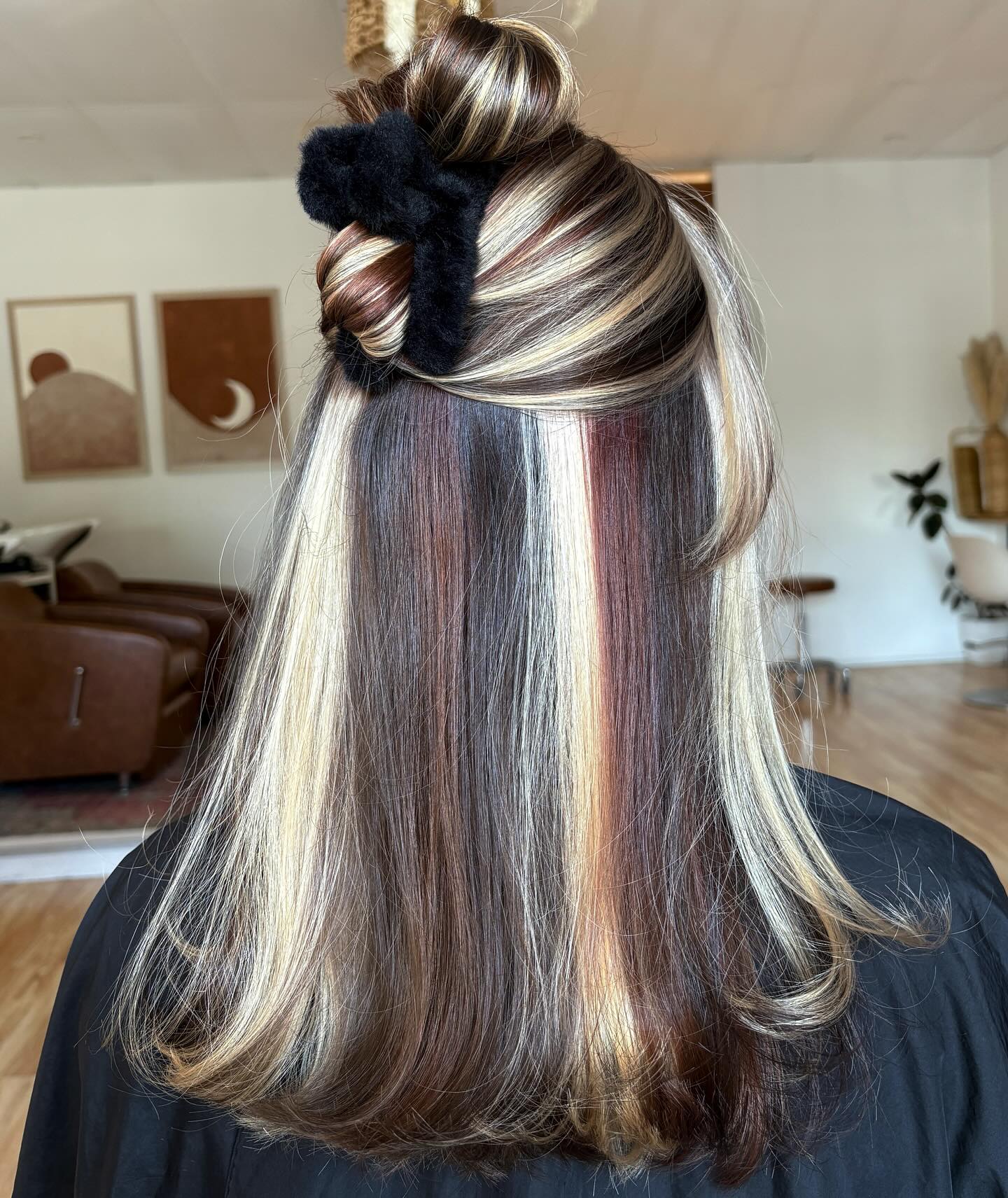
The half-up knot with a furry scrunchie says ‘I’m festive but I didn’t try too hard.’ The rich brown base anchors the bold highlights on brown hair, while the blonde, auburn, and white streaks add dimension that catches every winter party light.
Across a real week, these multi-colored highlights shift depending on how you style them. Worn straight, the streaks read graphic and intentional. Tossed in a top knot, they peek through like hidden color. This is the color for December events: holiday parties, family dinners, New Year’s Eve. The straight, thick texture holds the half-up style all night without sliding.
Split Dye: Platinum Blonde and Fiery Orange
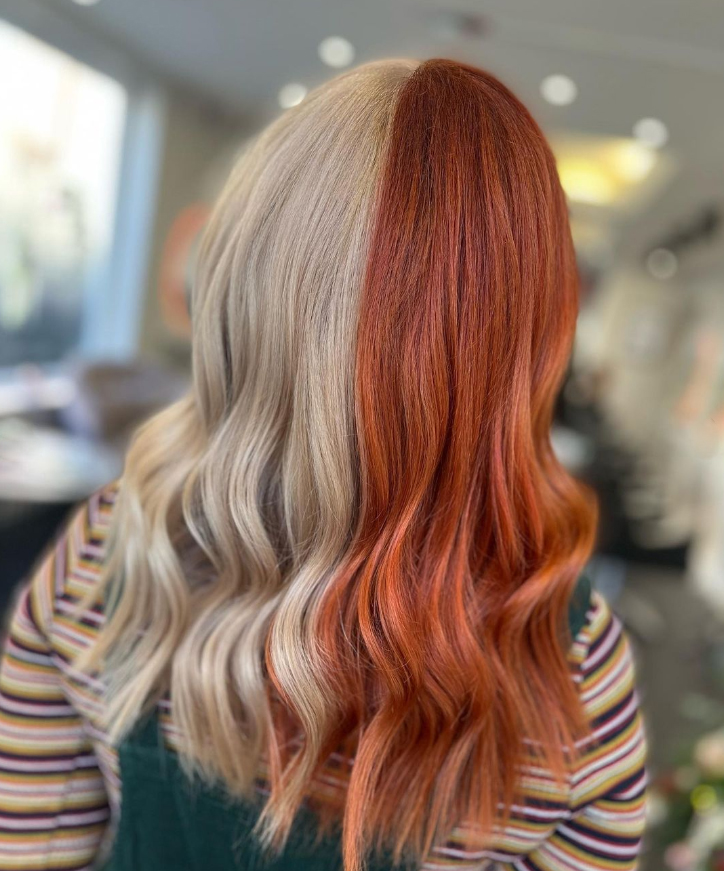
The first time I saw this split dye hair color, I thought it was a joke. Platinum blonde on one side, fiery orange on the other, and a clean middle part that dares you to look away. But somehow the wavy mid-back length softens the contrast, and the loose waves blend the two tones without turning it into a Halloween costume. This lands in winter because it’s the one season where you can go this bold without sweating off the color by lunch.
Copper Base With Blonde Balayage
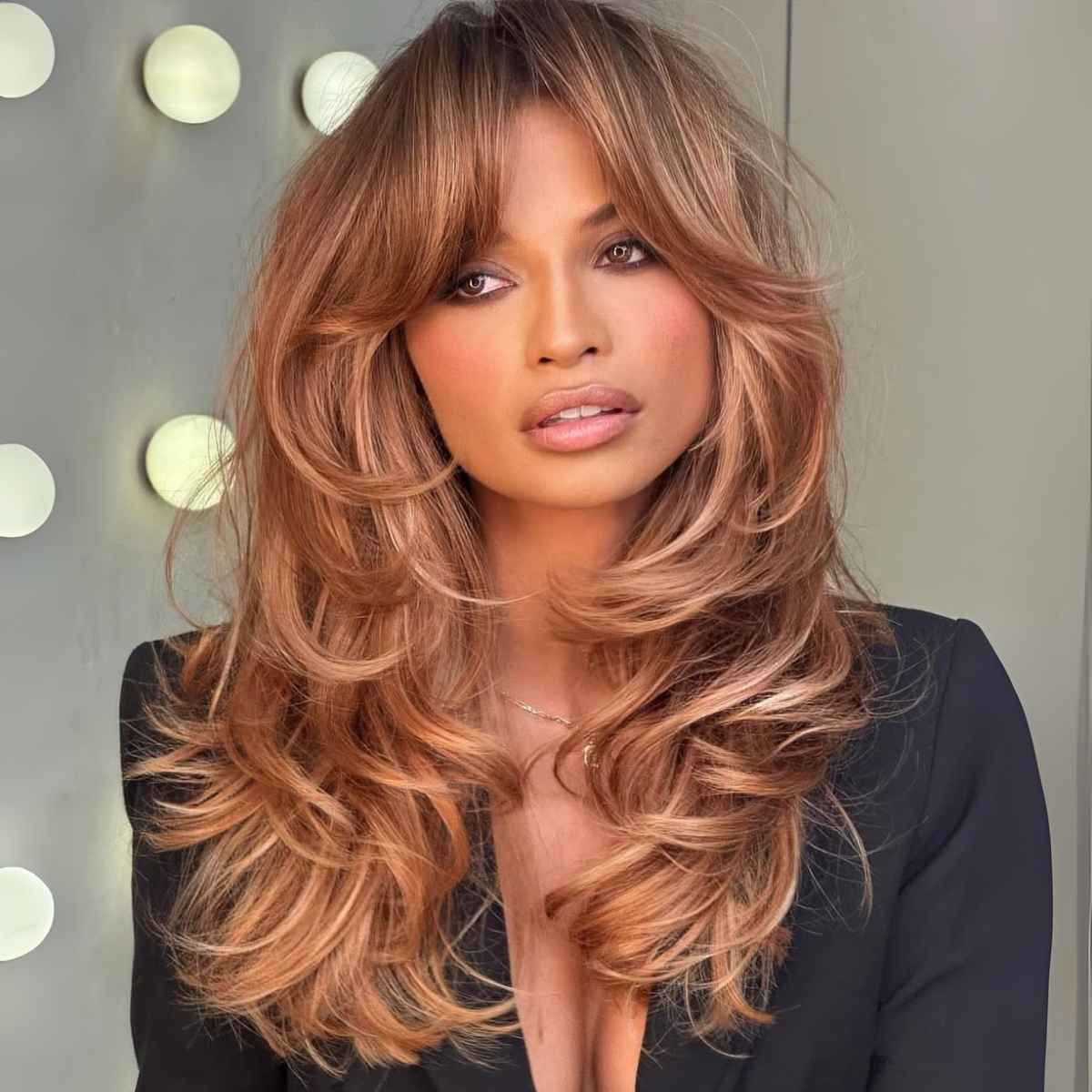
This copper blonde balayage actually earns the name ‘lived-in.’ The warm copper base blends into blonde at the mid-back length, and the curtain bangs frame the face without demanding daily styling.
Technically, the stylist paints the blonde sections freehand, keeping them concentrated around the front and ends for that sun-kissed effect. For styling, the steps are simple: blow-dry the thick wavy hair with a round brush for volume, then use a large barrel curling iron to create loose curls, and finish with a texture spray for hold. The result is a multi-dimensional look that moves from warm to bright as the light hits it.
Dark Brown Lob With Caramel Highlights
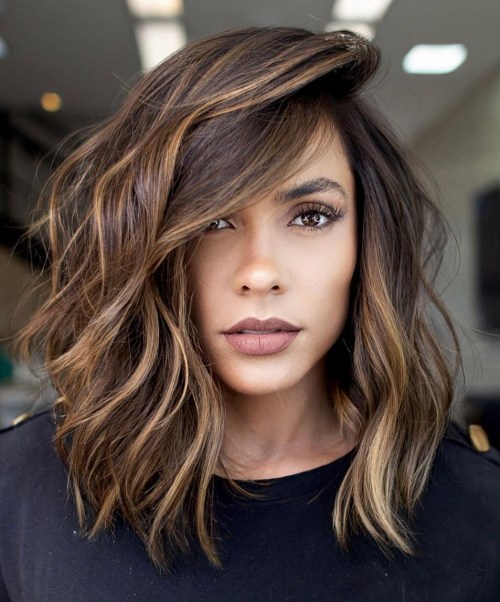
I will admit: I am a skeptic of caramel highlights on dark brown. Warm caramel on a cool base can look accidental, like you forgot you had roots. But this lob pulls it off by keeping the caramel fine and woven through the middle, not slapped on the ends. The collarbone length and wavy blowout help the warmth read as dimensional, not brassy. Here is the real talk: those highlights need upkeep. The dark brown base makes every grow-out visible around week five. A salon trip every eight weeks, minimum. You can try toning at home, but the shift is subtle. Expect a noticeable line by the two-month mark.
Deep Lustrous Reddish-Brown
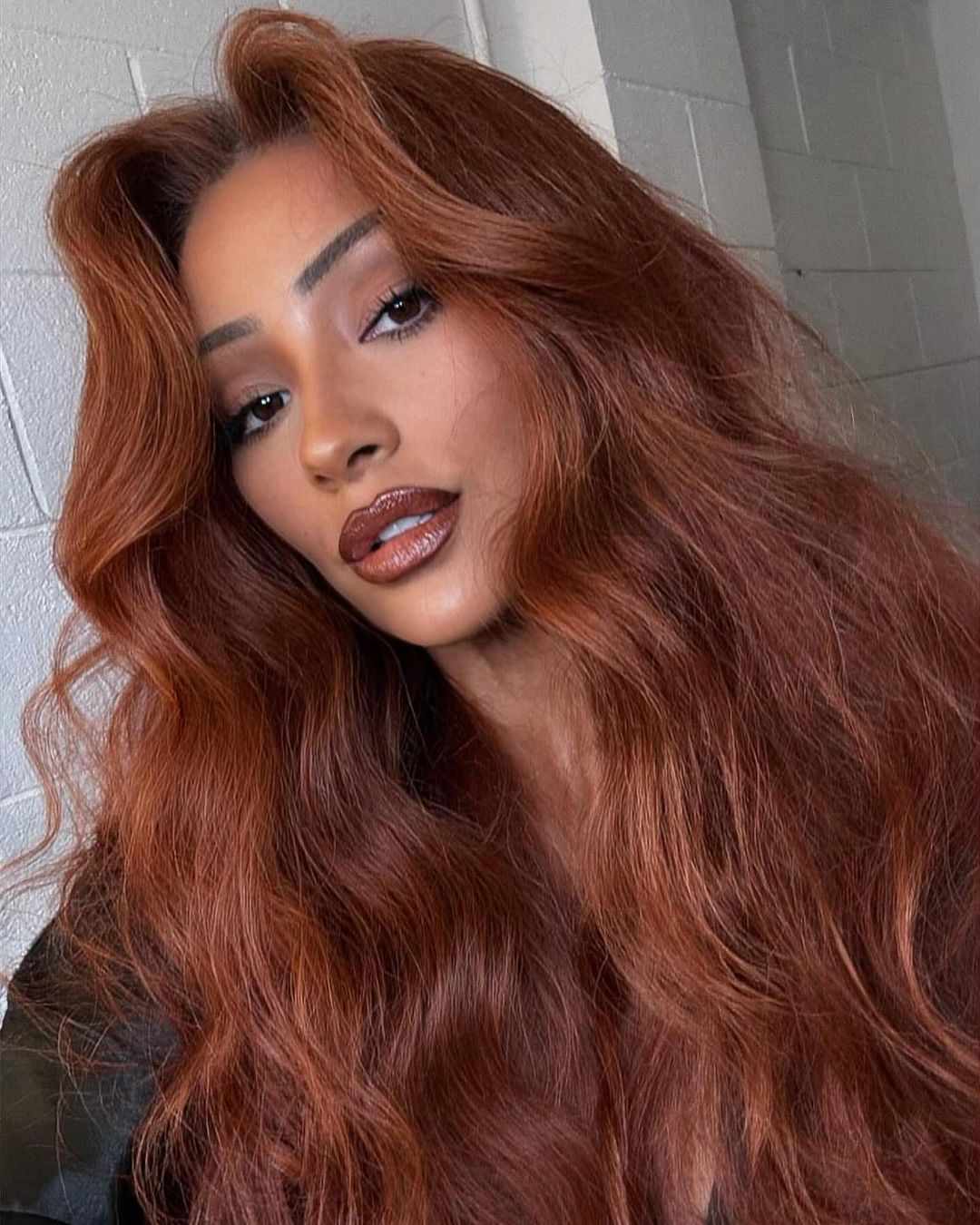
The difference between a good deep reddish-brown hair and a great one is the lustrous shade, the one that catches light without being shiny in a fake way. This mid-back length with long layers and loose waves does exactly that. The thickness of the hair helps, scattering light rather than swallowing it. It flatters fair skin with pink undertones, olive skin, neutral skin.
Skip it if your hair is porous or damaged, it will drink the colour and turn flat. The shine is the whole point, and shine requires healthy cuticles, not a gloss. It also suits anyone who wants a winter colour that is not brown but is not red either. My advice: let this shade do the heavy lifting. Keep the cut simple, keep the waves loose, keep the serum light.
Cool Beige Blonde
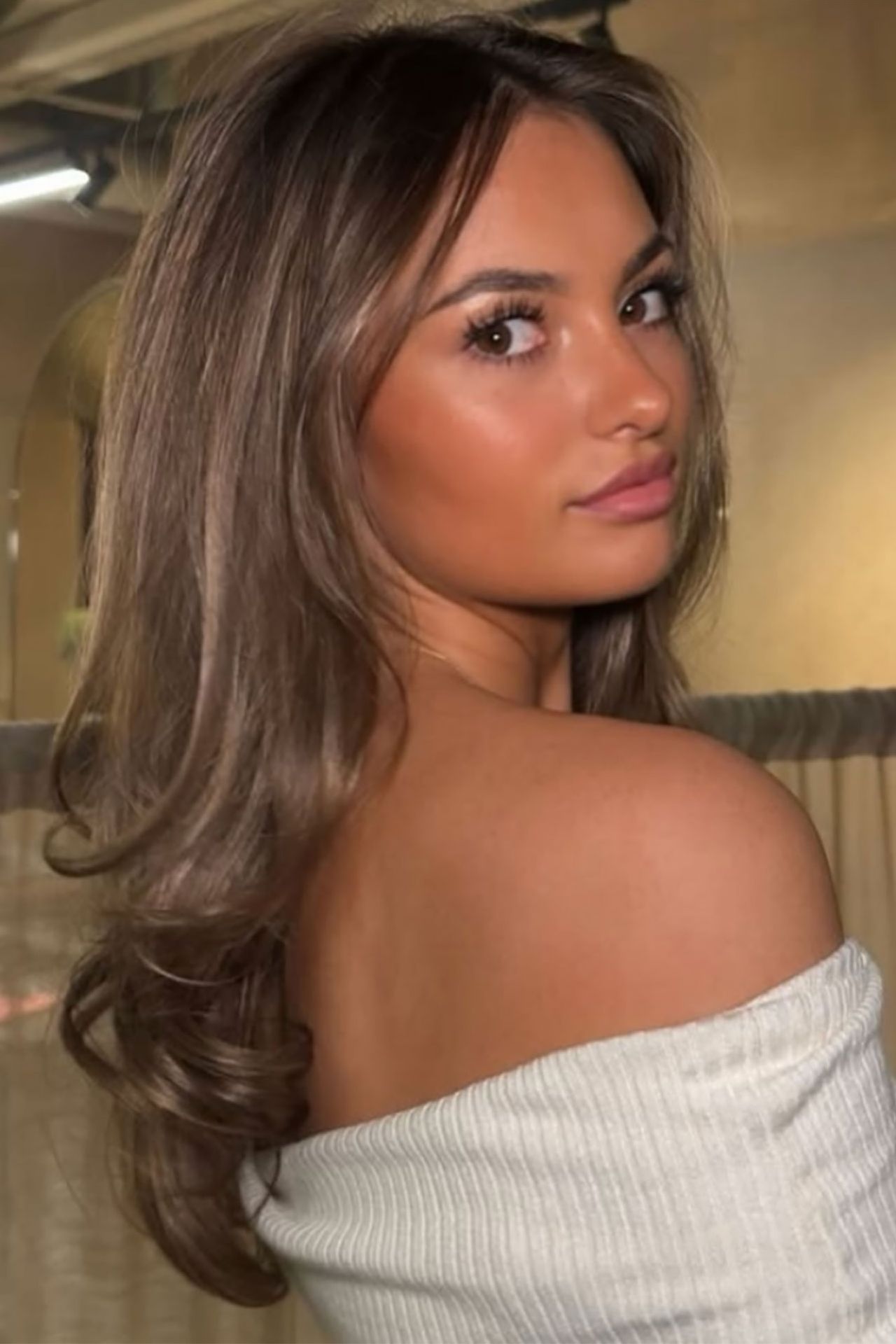
Do you want a cool beige blonde hair that stays cool, or one that looks great for a week and then demands your full attention? Because a sophisticated blonde like this is a relationship. The beige tone is warm enough to not read ash, but cool enough to lift away brass. On this mid-back length with long layers and loose waves, it looks soft, almost dusty. The reality of a week: by day three the ends start pulling warmer, the mid-lengths stay cool, and you reach for a purple shampoo. By day five, the tone is a gamble. Loose waves help hide the uneven fade, but the grow-out line is sharp against a dark root. It is not a set-and-forget colour. It is a bi-weekly commitment to toner and patience.
Dark Brown With Blonde Money Piece
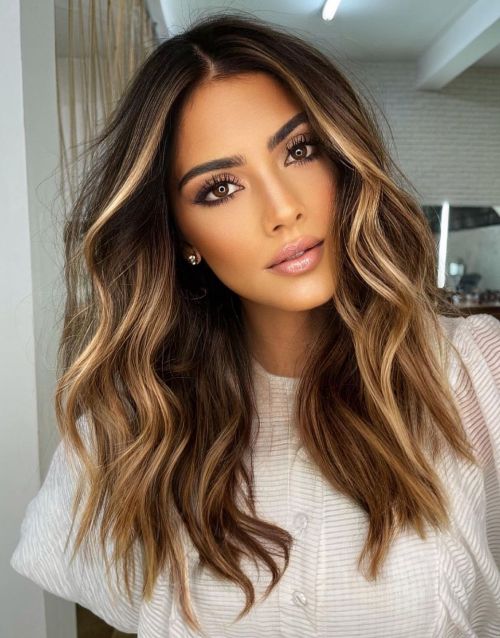
It is early winter, the light is grey, and your dark hair is disappearing into your coat. Enter the blonde money piece on dark brown. Two chunky lighter sections around the face, this dark brown lob with a middle part and loose waves, and suddenly the whole look has a frame. The blonde reads bright, almost icy against the brown base. It is the fastest way to add lightness without committing to full highlights. It grows out better than you expect, the face-framing fades into a lived-in peek, not a hard band. But the contrast is stark at first. Ask your stylist to keep the money piece soft, not platinum, so it blends for a few weeks longer.
Deep Burgundy Red
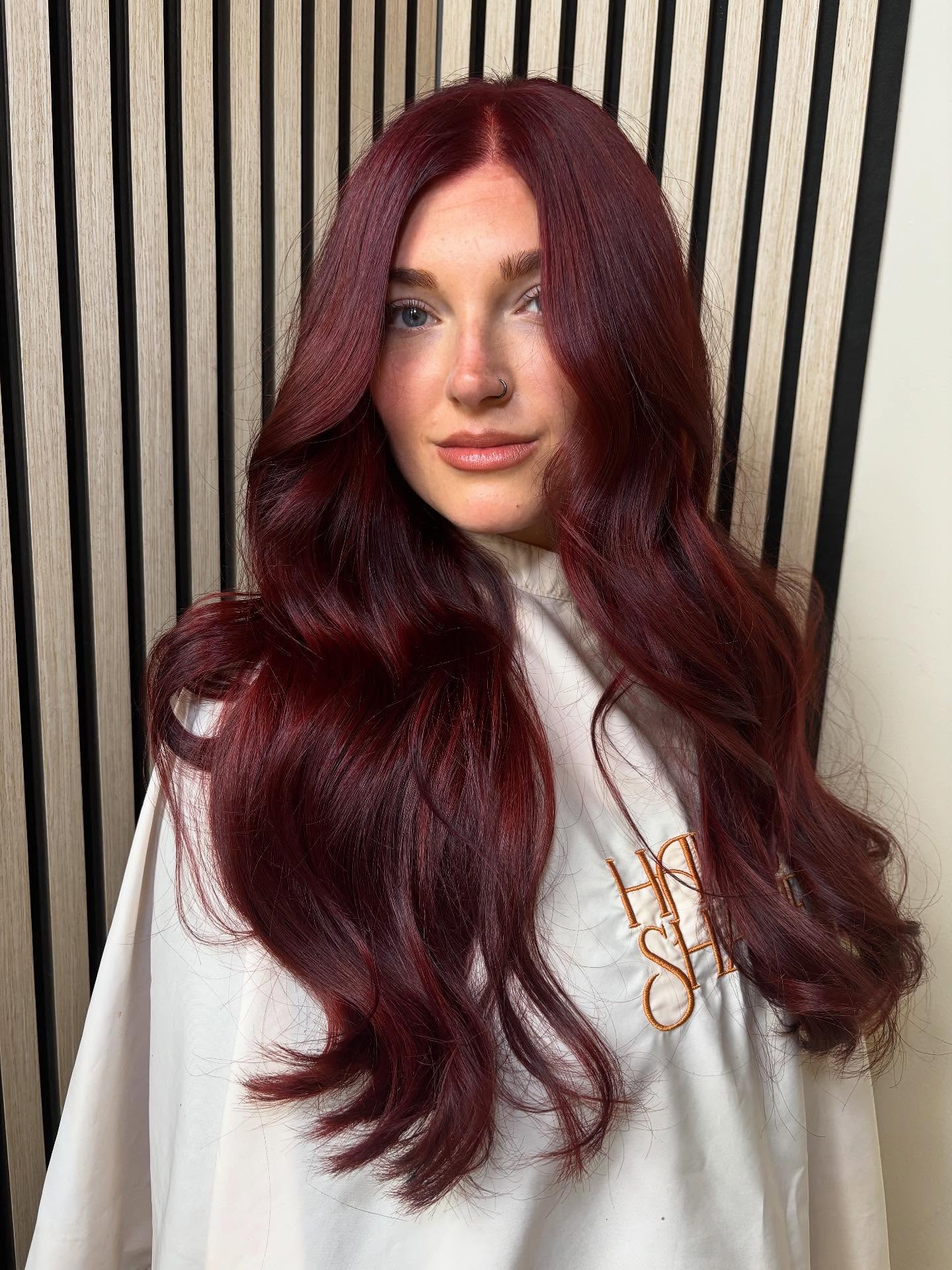
Here is the verdict on deep burgundy red hair: it is the colour that looks expensive in the bottle and even better in the bowl, but the application is the difference between a rich burgundy shade and a bruised one. This mid-back length with long layers and loose waves is the perfect canvas because the waves catch the light at different angles, showing the depth. The technique is a single-process colour applied from root to tip, no highlights, no balayage, just saturation. That depth comes from a cool red base, not a warm one. Warm reads cherry; cool reads burgundy. I have seen it go wrong when the base is too warm, the result is orange, not wine.
Upkeep is the part nobody says: it fades fast. Every wash pulls a little red. By week three, the ends are a shade lighter. Use colour-safe shampoo and skip the hot water. A gloss at the salon every six weeks keeps it from turning rusty. This is not a DIY job, a single-process colour on thick mid-back hair needs an professional hand to avoid banding. Book the appointment, bring a photo, and commit to the toning schedule.
Vibrant Rich Auburn Blowout
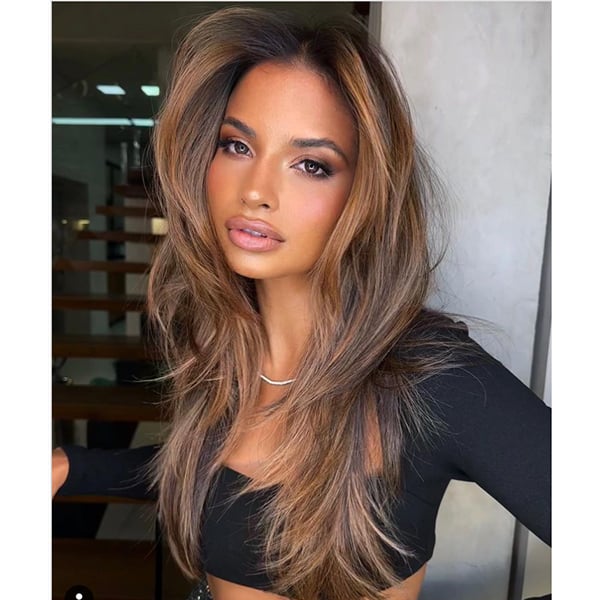
This is not your cousin’s muted auburn. The vibrant auburn tone here is bold, almost aggressive, and it works for winter because it refuses to fade into the grey. The rich auburn blowout adds volume to the thick, wavy texture, and the long layers keep the mid-back length from feeling heavy. I saw this and thought, finally, a colour that doesn’t apologize. The vibrant auburn is a full commitment: the tone is bright, the layers are cut to hold the wave, and the texture is thick enough to carry the volume without deflating by noon. Compared to a softer auburn that leans brown, this one stays in the red zone. The mid-back length gives it room to move, and the blowout styling means you’ll need a round brush and patience, but the result is worth it. It’s the difference between a whisper and a shout.
Dark Brown With Warm Blonde Balayage
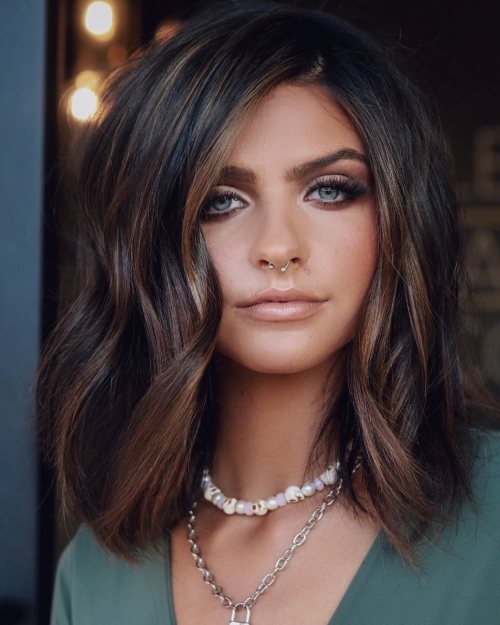
Thinking of trying this at home? The warm blonde balayage on dark brown is tempting, but placement is everything. The dark brown base is forgiving, but the balayage needs painting, not foiling. A steady hand and a friend might get close, but salon expertise is safer. The collarbone lob with layers shows off the dimension, and the loose waves help blend any unevenness. It’s a gamble, but the payoff is warm, dimensional colour that grows out naturally.
Deep Burgundy or Wine Red
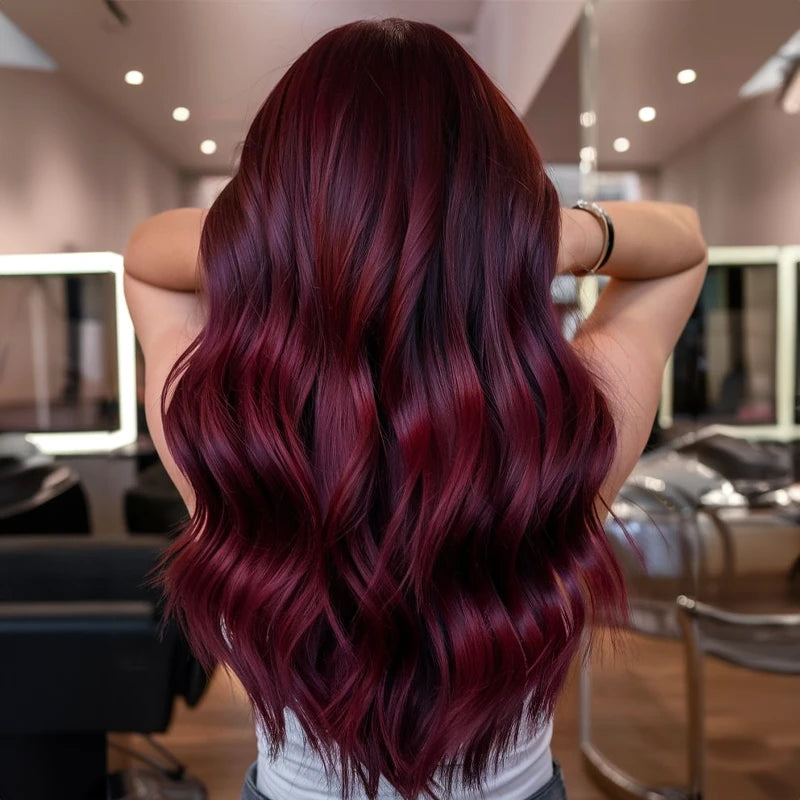
I’ll say it: deep burgundy hair is a workhorse. The wine red hue stays rich for a solid three weeks before it starts to fade to a softer berry, and that’s still a good look. The thick, wavy texture holds the colour well, and the mid-back length with long layers gives it movement. Week one is deep and dramatic. Week two, still vibrant. Week three, it softens but doesn’t look washed out.
The upkeep is real: you’ll need to wash with cool water and use a colour-depositing conditioner every other wash to keep the tone from turning muddy. The back view shows the full depth, but the front layers catch the light and show the dimension. It’s not a low-maintenance colour, but it rewards the effort.
Warm Brown With Caramel Highlights
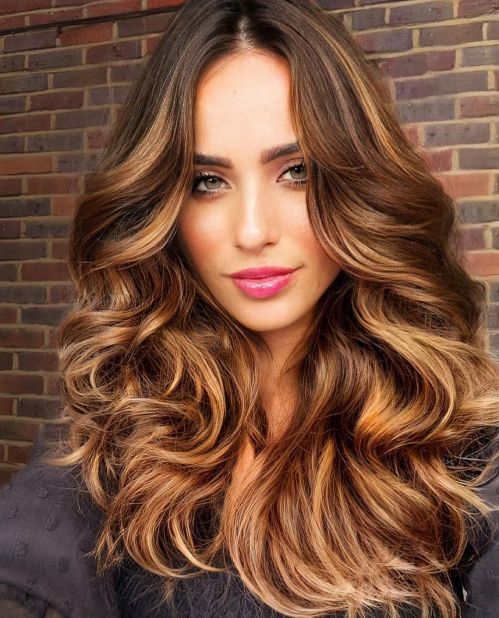
If your veins look green, this is your colour. The caramel honey blonde highlights sit on a warm brown base, and together they read like sunlight on a good day. The collarbone lob with layers lets the highlights peek through, and the wavy texture catches the light. It flatters warm skin tones, but if you’re cool-toned, the warmth can clash. The highlights are placed to brighten without going brassy, and the medium density texture carries the dimension well. It’s a safe bet for anyone who wants warmth without going full copper.
Mid-Back Dark Brown With Honey Blonde Balayage
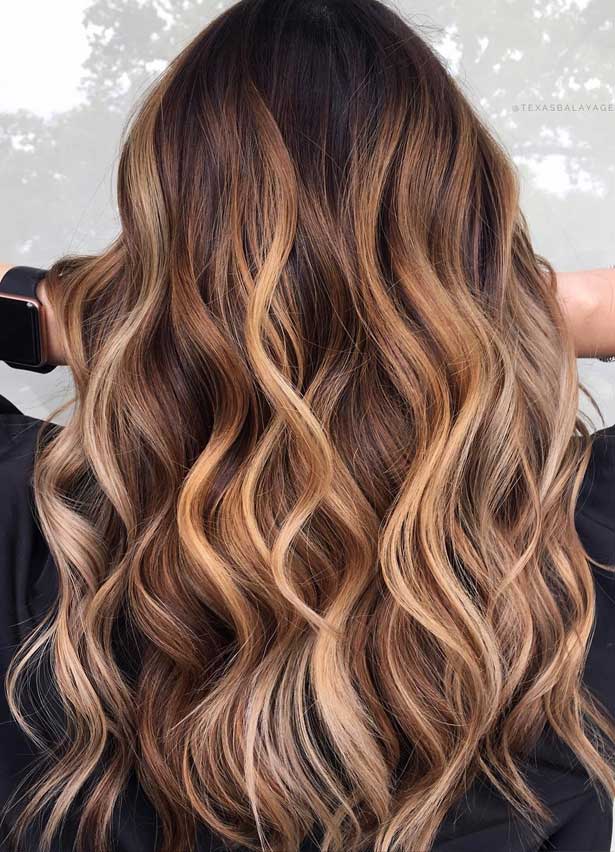
I didn’t expect to love this for winter, but I do. The honey blonde balayage on dark brown brings warmth to the season without screaming for attention. The dark brown base grounds it, and the balayage lifts the ends, creating a soft gradient that feels like a winter sunset. The mid-back length with layers gives it movement, and the thick, wavy texture holds the colour well.
It works because it’s not too bright. The honey tone is muted enough to feel seasonal, but visible enough to catch the low winter light. The back view shows the full sweep of the balayage, and the loose waves add dimension. It’s a versatile colour that transitions from work to holiday parties without a second thought.
Deep Rich Burgundy
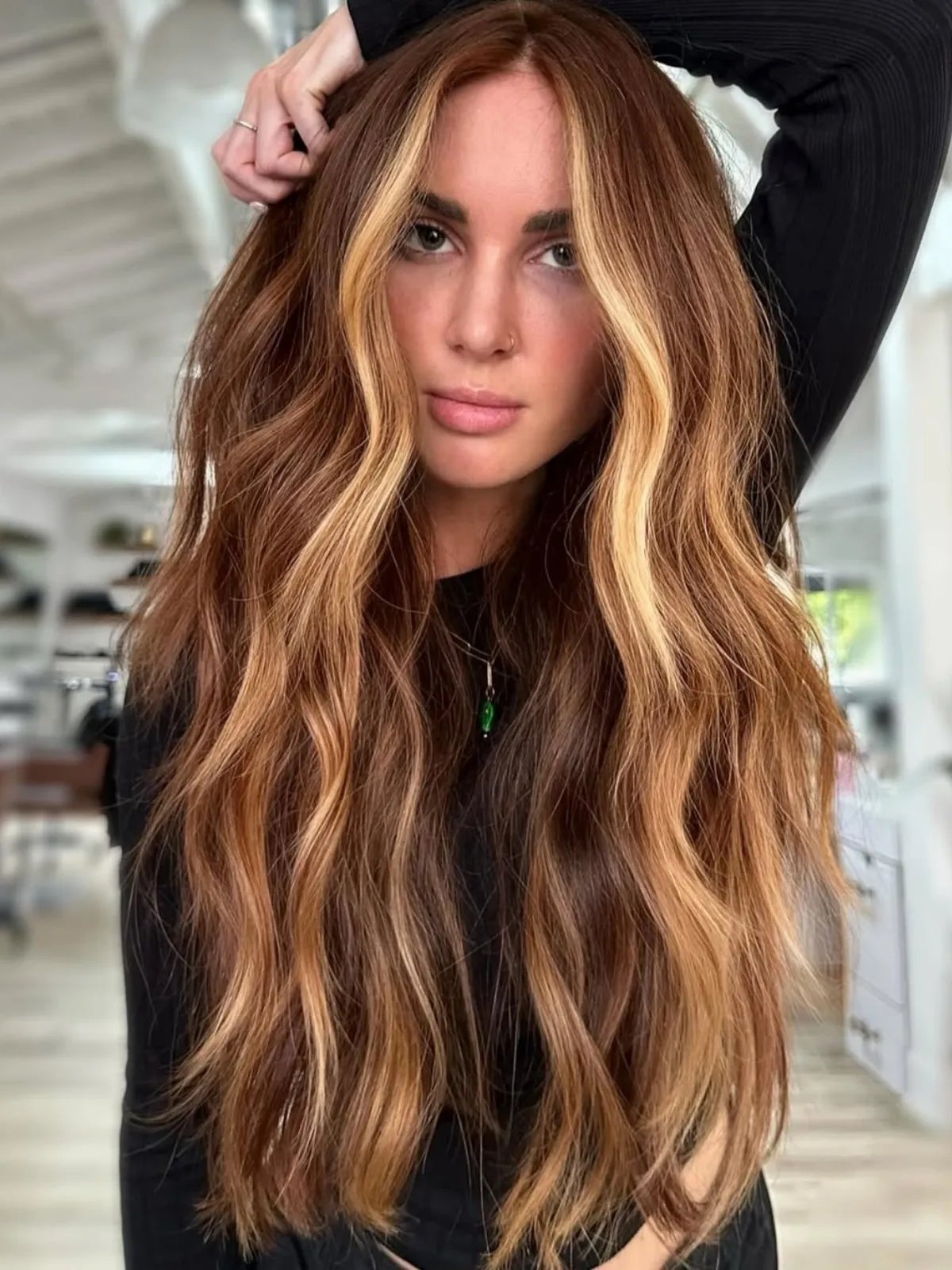
How do you get a colour this deep without it turning flat? The answer is layering. A deep rich burgundy hair shade is built in two passes: a dark violet-red base, then a translucent burgundy gloss over the top. The tone stays cool enough to read as wine, not cherry. On mid-back length with long layers and thick, wavy texture, the light hits the gloss differently on every wave. That is the trick. A single-process burgundy sits flat. A layered colour with a gloss overlay catches the light and keeps the depth. Ask your stylist for a demi-permanent gloss on top of a permanent base. It is the difference between a solid colour and one that looks wet.
Dark Chocolate Brown With Copper
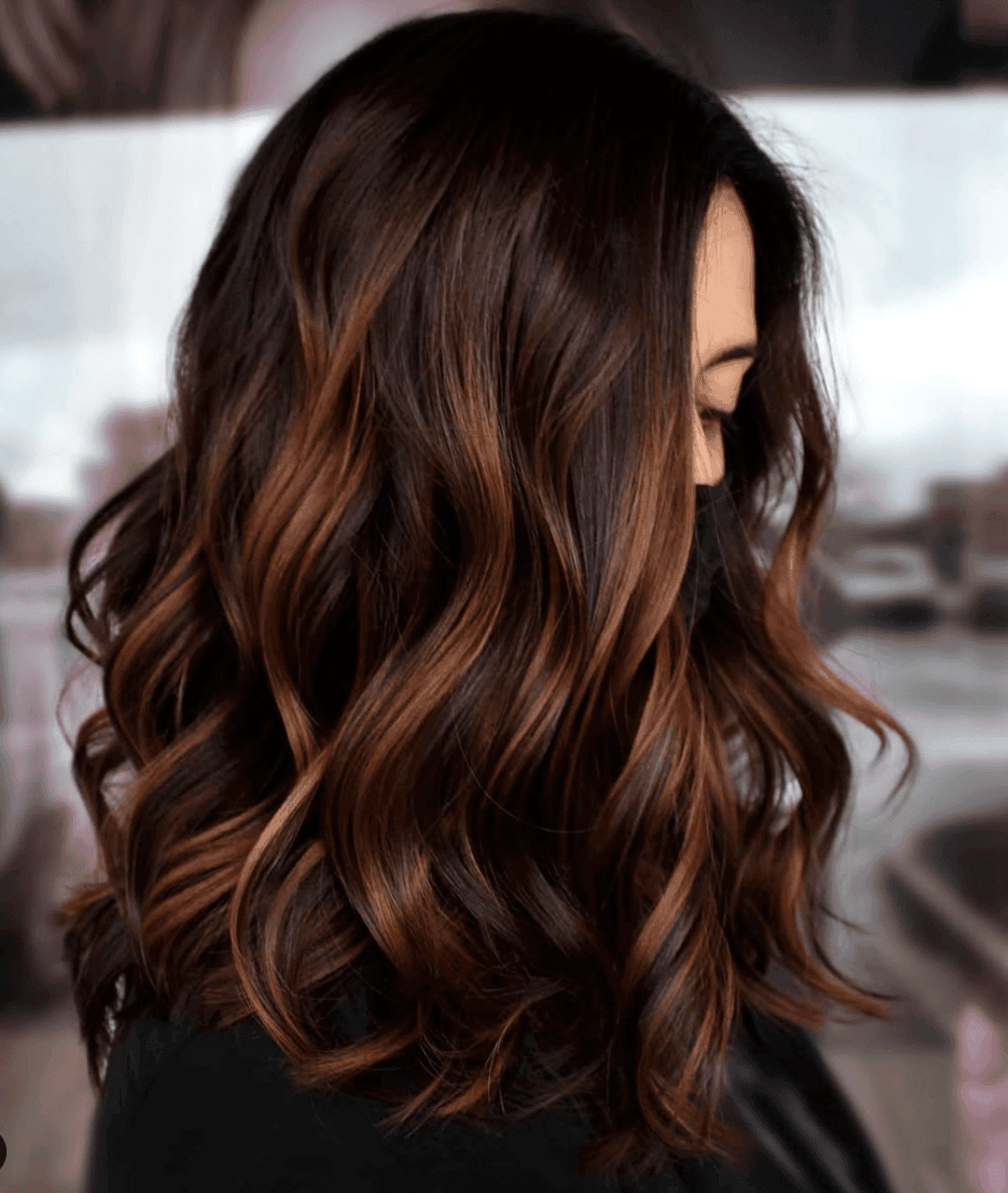
I will confess: I was sceptical of dark chocolate brown with copper. It sounded like the kind of colour that looks expensive in the chair and muddy by week three. But the copper undertones here are subtle, woven through the mid-lengths and ends, not slapped on top. The base is a cool dark brown. The copper is a demi-permanent gloss. That matters. A permanent copper can lift and warm over time, turning brassy. A gloss fades evenly, so you see the copper for about six weeks, then it softens into a warm brown. The downside? If you have warm-toned skin, the copper can read orange. On cooler or neutral skin, it is a rich, dimensional contrast. The waves help. On straight hair, the copper sits in flat ribbons. On thick, wavy texture, it catches the light in pieces.
Dark Brown With Cool Highlights
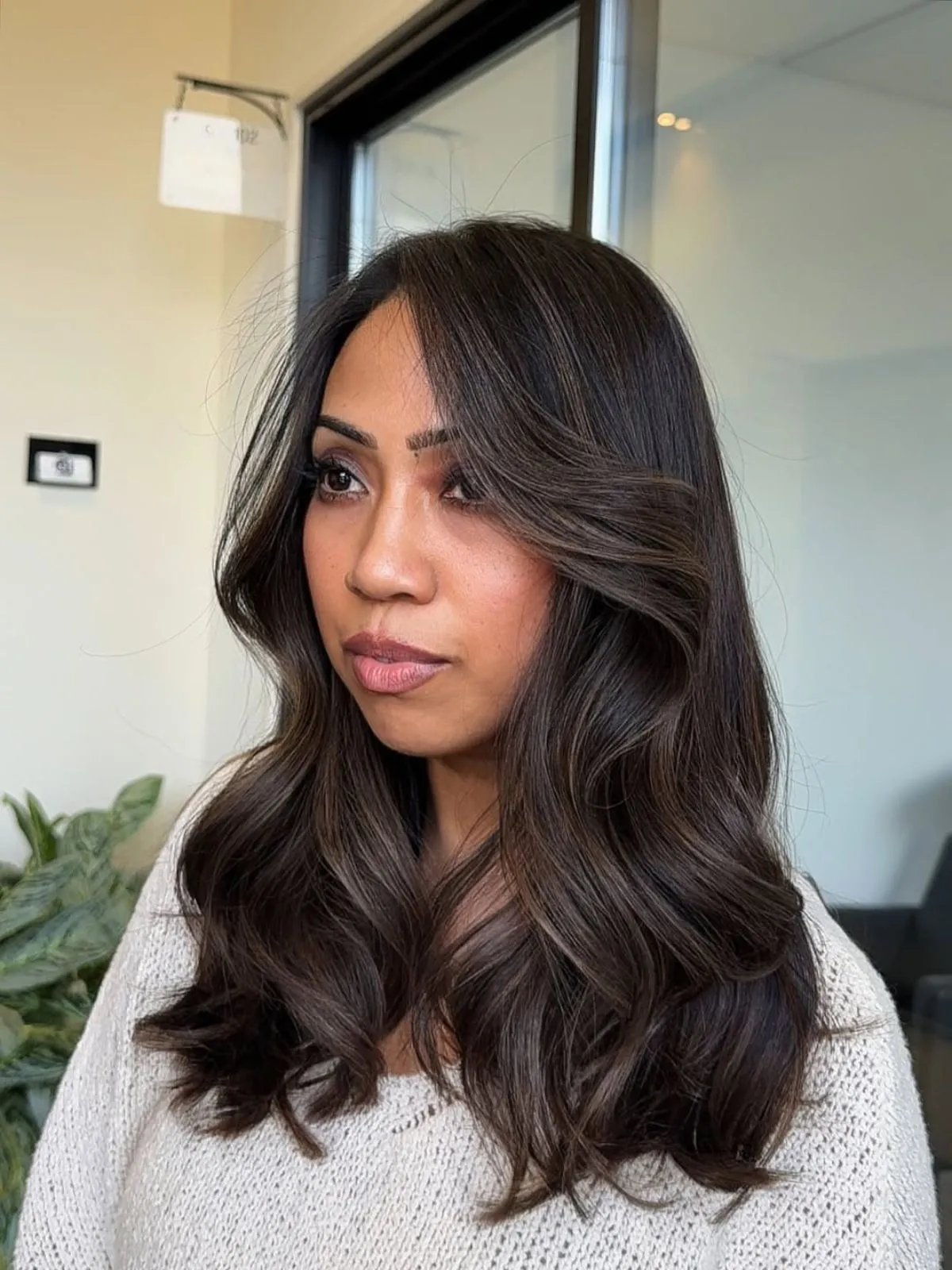
Here is the thing about cool toned highlights on dark brown: they are quieter than caramel or honey, but they do more work. Caramel highlights warm the whole head. Cool highlights create separation. They sit as thin, ash-blonde ribbons through the mid-lengths, never touching the root. The tone is beige-silver, not grey. On a side-parted blowout with soft waves, the cool highlights read as movement, not contrast. They lift the dark brown base without fighting it. The trick is the placement. Warm highlights can be chunky and still look intentional. Cool subtle highlights need to be fine and spaced. Too close together and the head reads streaky. Too far apart and you lose the effect. On thick, wavy texture, they catch the light in flashes. On fine, straight hair, they disappear.
Mid-Back Dark Brown With Auburn Highlights
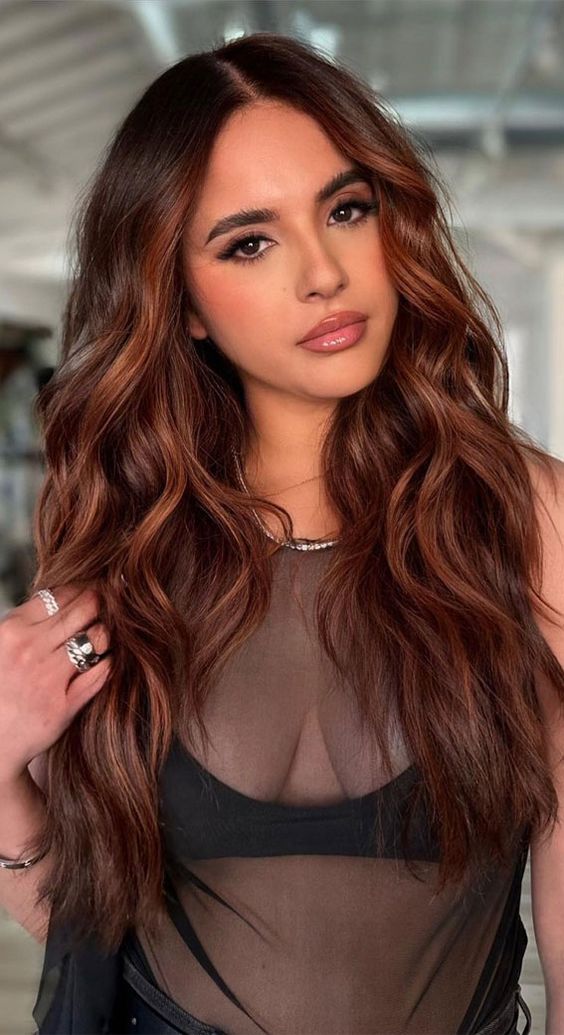
Who actually looks good with auburn highlights on dark brown? Let me narrow it down. The auburn highlights on dark brown work best on warm or olive skin tones. The auburn reads as a natural extension of the warmth in your skin. On cool or very fair skin, the auburn can pull orange and look separate from the base. The dark brown base here is neutral, not warm. That is the key. A warm brown base plus auburn highlights is too much red. A neutral base lets the auburn sit as a true accent. The mid-back length with long layers and loose waves gives the auburn room to travel. It is not a solid stripe. It is woven through the mid-lengths and ends, so the root stays dark and the colour graduates. The grow-out is soft. No hard line, no urgent root touch-up.
Dark Brown With Golden Blonde Highlights
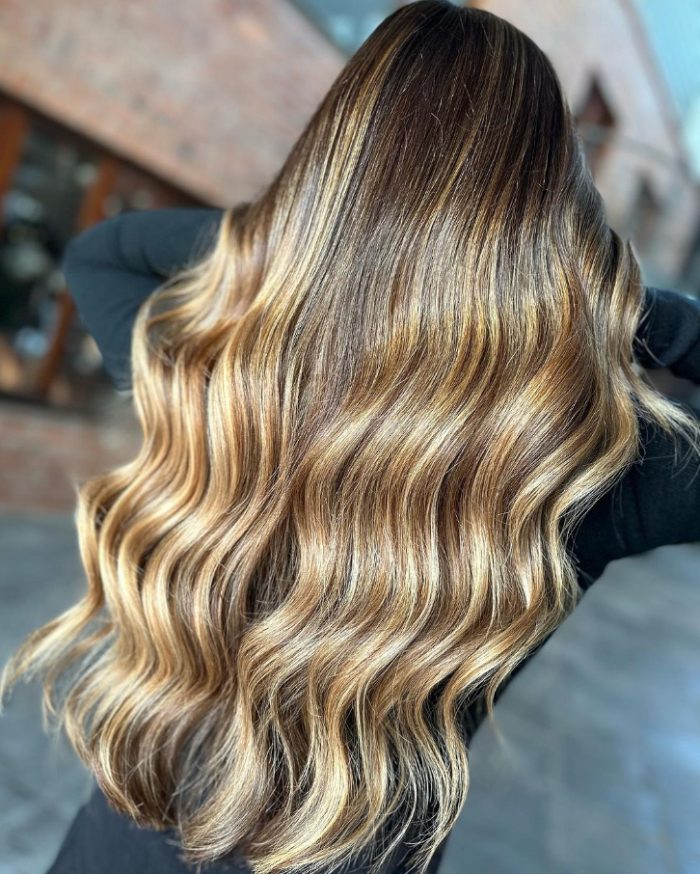
Monday morning, low light, you catch your reflection in a window. The golden blonde highlights on dark brown catch first. That is the point. The golden blonde highlights on dark brown are not subtle. They sit as thick, warm ribbons through the mid-lengths and ends, starting about two inches from the root. On a dark brown base that is cool enough to anchor them, the contrast is deliberate. The tone is honey, not brass. On thick, wavy texture with long layers, the highlights wrap around each wave. From the back, the colour reads as dimensional. From the front, it reads as warm. The grow-out is forgiving because the root is dark and the highlights start low. You get about ten weeks before the line becomes noticeable. That is a long time for a highlighted colour.
Final Thoughts
That warm shift I noticed at the salon? It shows up on every page of this list, just with more variation than I expected. What surprised me was how many of these colors work on a short schedule: a root shadow, a gloss, a few face-framing pieces instead of a full transformation.
- Tone at week six, not week ten.
- Gloss every four weeks for coppers.
- Root shadow buys six calm weeks.
- Trim only when shape shifts, not on a calendar.
I am booking the dark chocolate with copper. That one convinced me.