Feed-in braids blend natural hair with extensions at the root, creating a seamless base that keeps the style secure for weeks. The shift from thin, uniform braids to jumbo sizes and geometric scalp patterns means this category now covers everything from a two-braid commute to a full-head installation.
This collection of 35 looks spans chin-length bobs to waist-grazing lengths, with options for fine or thick textures, straight or curly finishes, and black bases or color streaks. If your last set of braids felt heavy or the parts showed too fast, these variations solve both problems without adding extra tension or salon time.
Jumbo Platinum Blonde Mid-Back Feed In Braids
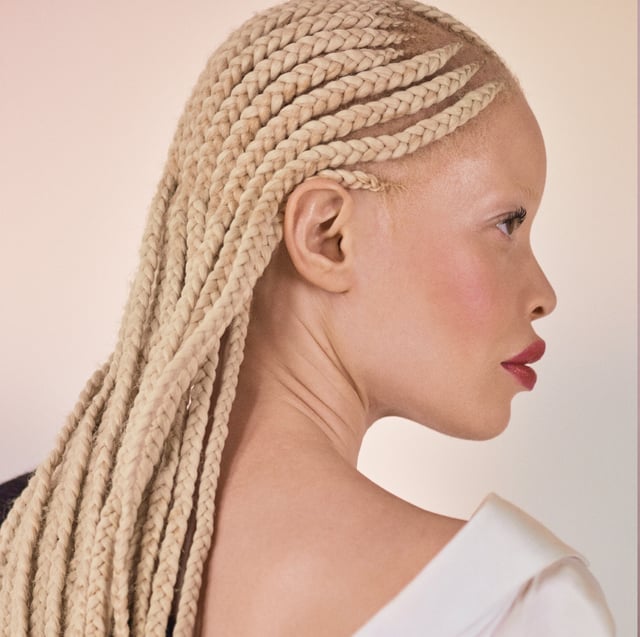
The design here is about scale: each braid is thick enough to stand on its own, yet the mid-back length keeps the silhouette from feeling heavy. That platinum blonde shade is the kind of commitment that requires a two-step lightening process before the extensions go in. The jumbo size means fewer total braids, which cuts installation time by about an hour compared to medium-sized ones. This texture works best on hair that is already dense and healthy, since the feed-in technique needs enough natural length to anchor each braid securely at the root.
Ask your stylist for: jumbo feed in braids, platinum blonde, mid-back length. A purple shampoo once a week stops the blonde from drifting into yellow territory. The braids hold their shape for about six to eight weeks before the roots need a refresh, and a trim at the ends every ten to twelve weeks keeps the line clean.
Chin Length Bob Braids With Geometric Front
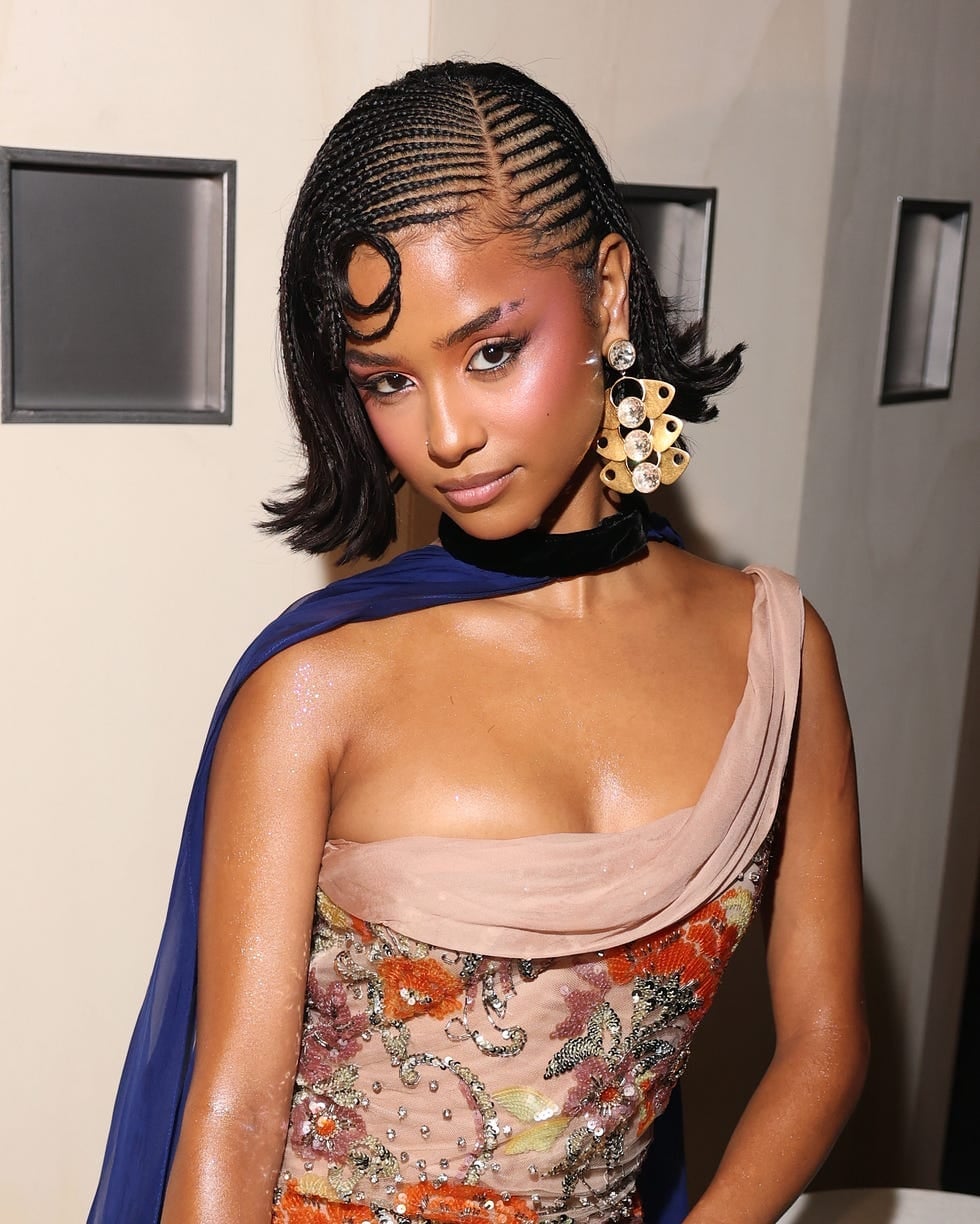
Can a bob braid still read as modern? Yes, when the front sections form a deliberate geometric pattern rather than a straight line. The chin length frames the jaw without adding bulk at the sides, which suits round and square face shapes equally well. That deep side parting shifts the visual weight, so the geometric front becomes a focal point rather than an afterthought. The wavy texture in the braids softens the sharp lines of the pattern. Ask your stylist for: chin-length bob braids, geometric front pattern, side-swept bang. The bob line holds its shape for about six weeks before the ends start to feather.
Beaded Chin Length Braided Bob
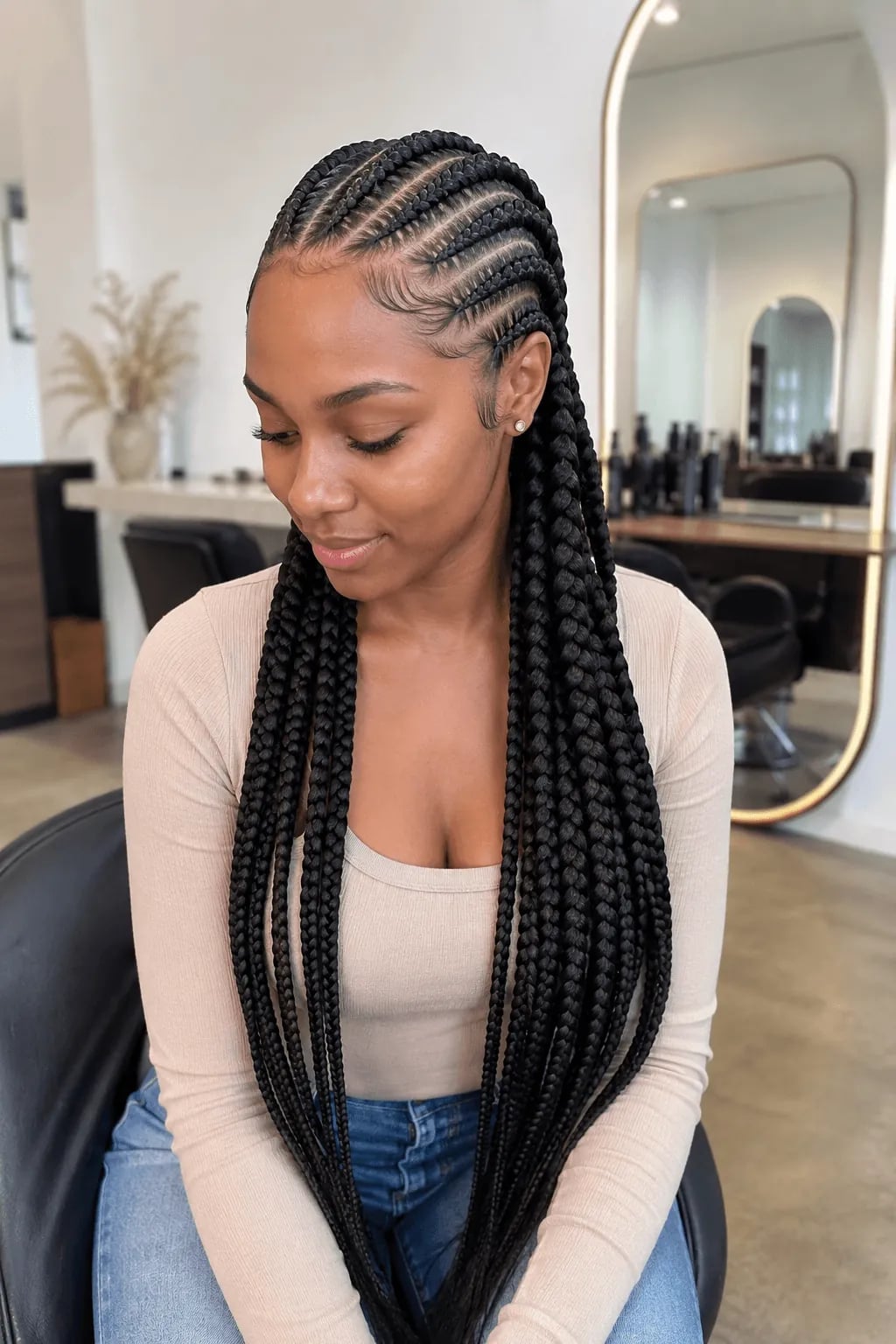
Beads on a bob are a different proposition than beads on long braids. Here the weight of the clear beads at the chin length adds a gentle swing, whereas on longer hair they would just clunk. The middle parting keeps the look symmetrical, so the beads become the only decorative element. This bob suits thick, wavy textures that can support the bead weight without the ends flipping up. Compare it to a plain bob: the beads turn a practical cut into a conversation piece. Ask your stylist for: chin-length braided bob, beaded ends, middle part. The beads need a check every few wears to ensure the fastenings are tight.
Collarbone Length Bob With Side Swept Effect
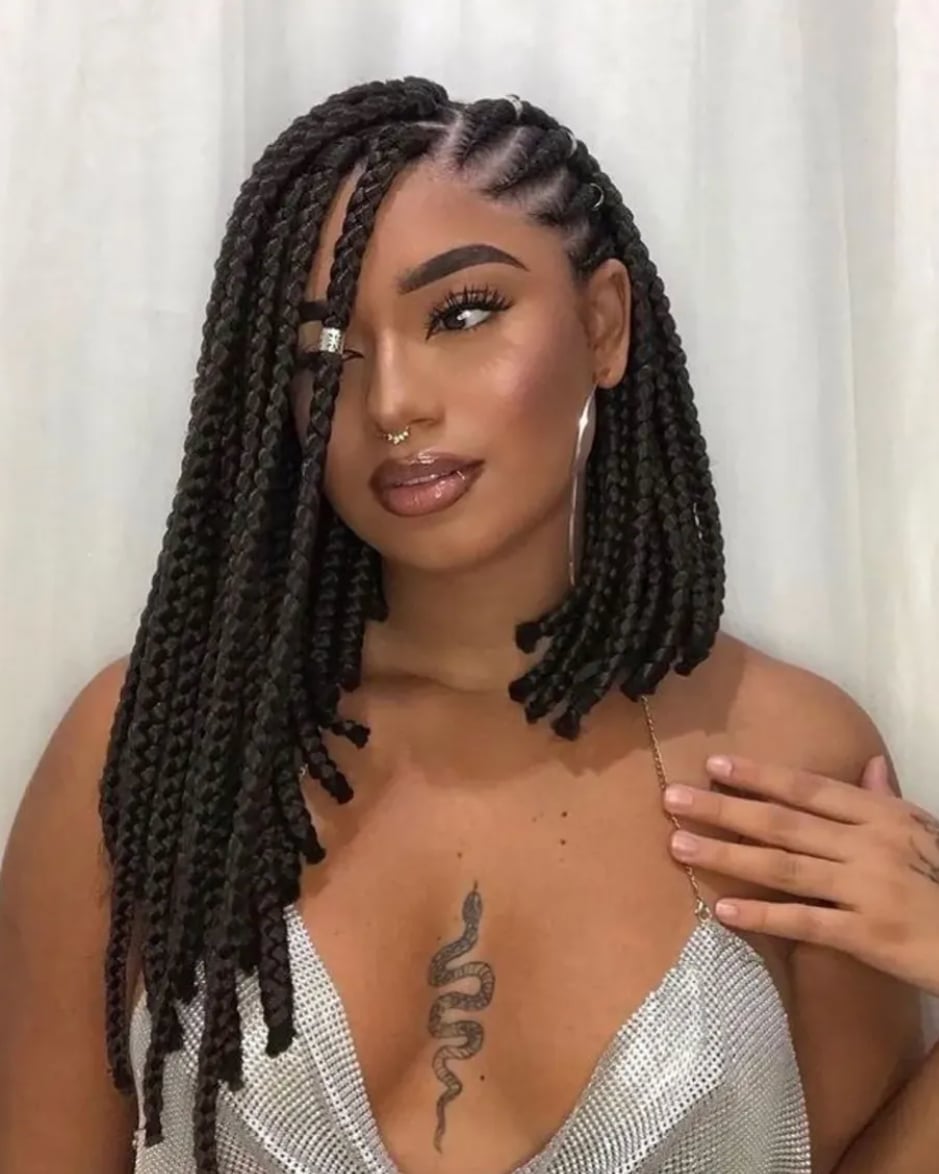
The side part here does not just change the parting; it shifts the entire bob silhouette so the longer side grazes the collarbone while the shorter side stays above the jaw. That asymmetry gives the style a deliberate shape. The straight texture of the braids gives the bob a sharp, clean edge that wavy braids cannot replicate. Ask your stylist for: collarbone length bob braids, side part, straight texture. A smoothing serum on the part lines adds the polish that makes this style look finished. The bob line needs a trim every six to eight weeks to maintain the crisp edge.
Mid-Back Two Large Braids With Beads
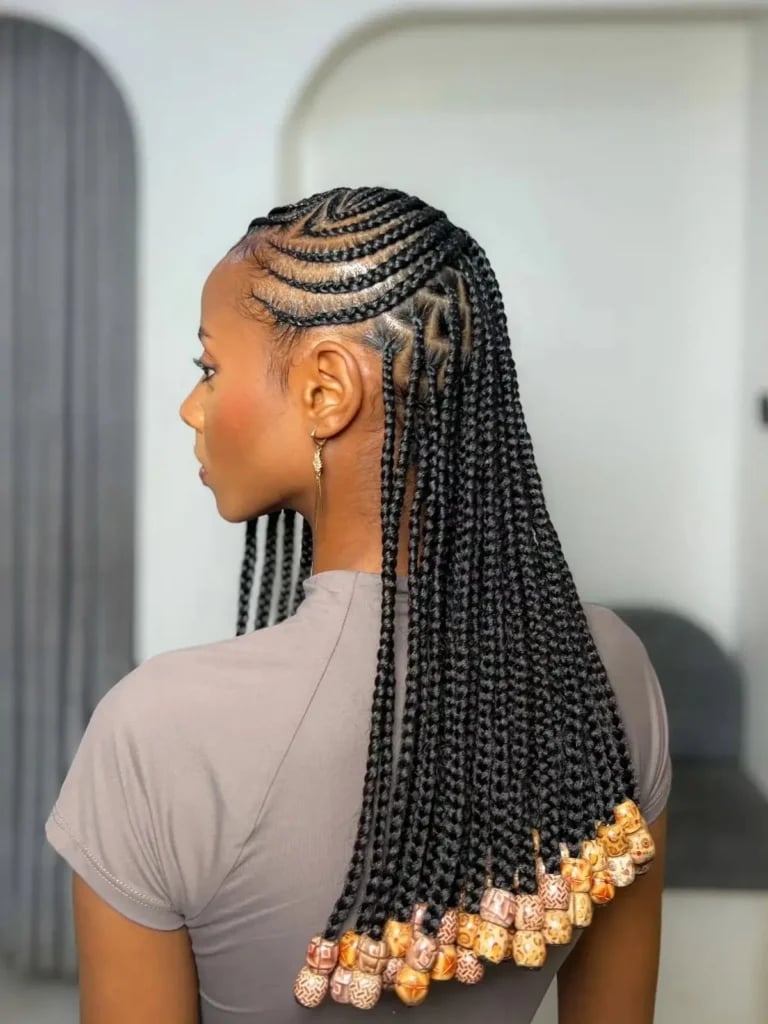
Two braids is the minimum viable product for a protective style, and the large size makes a case for simplicity. Each braid is thick enough to read as a single unit, with the beads at the ends providing a visual anchor that stops the length from looking plain. The middle parting keeps the weight evenly distributed, which matters when each braid carries the density of several smaller ones. The back view shows how the braids fall straight without tangling, a practical advantage of keeping the count low.
Ask your stylist for: two large feed in braids, mid-back length, beads on ends. The beads should be secured with a small elastic beneath each one so they do not slide. These braids hold their shape for about four weeks before the roots need attention, and the beads make night protection simpler since you can wrap each braid separately.
Mid-Back Braids With Neat Cornrow Lines
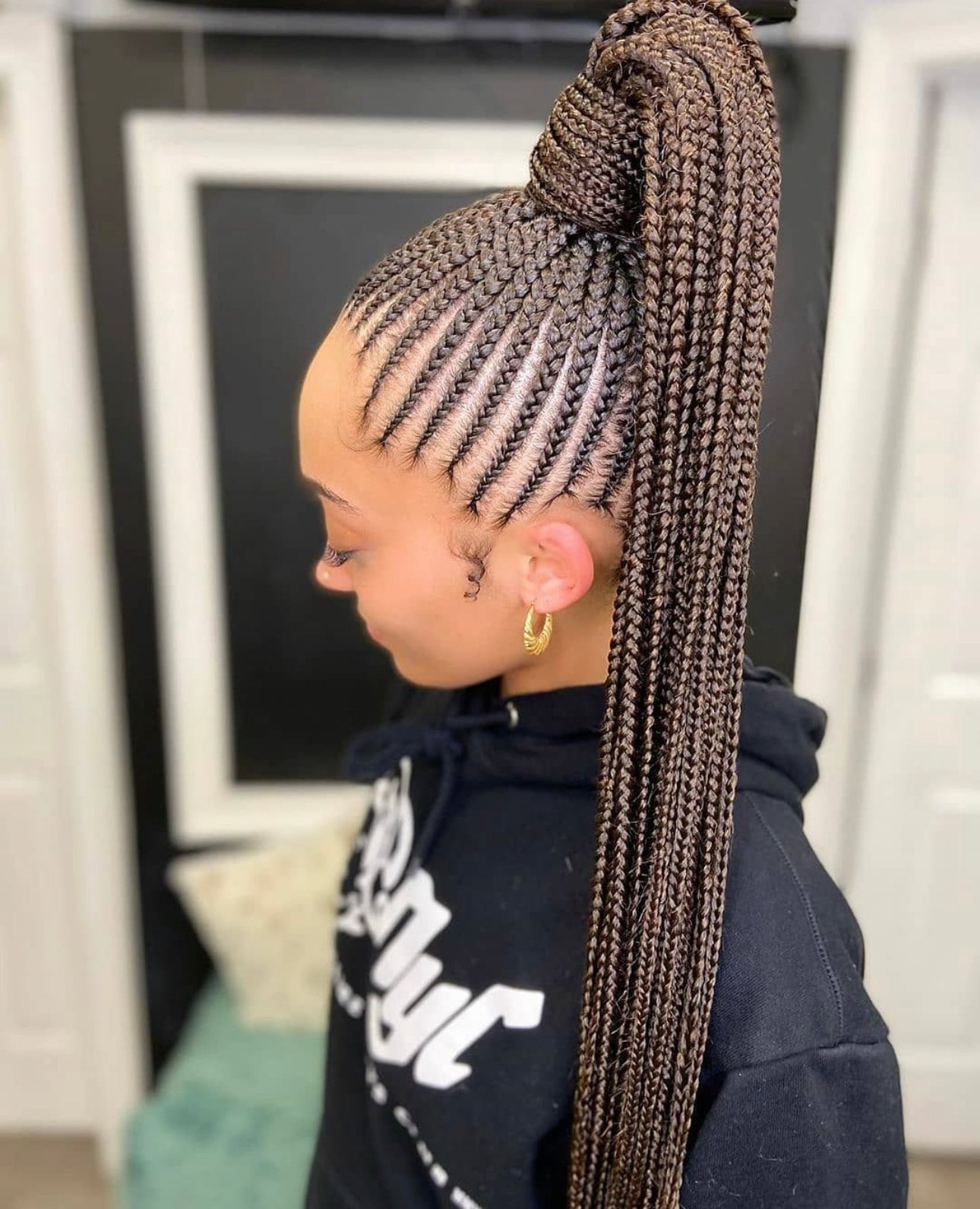
The rule with feed-in braids is that clean cornrow lines separate a good install from a great one. Here, thick black braids extend to mid-back from a middle parting, and every part sits straight and even. That precision means the scalp work looks crisp for weeks rather than getting fuzzy by week two.
This style suits those with dense hair who want a polished, low-maintenance braid that holds its shape. Ask your stylist for: feed in braids with very neat cornrows, mid-back length. A lightweight hairspray misted along the parts keeps them defined between refresh sessions.
Mid-Back Braids With Orange Streaks & Curly Ends
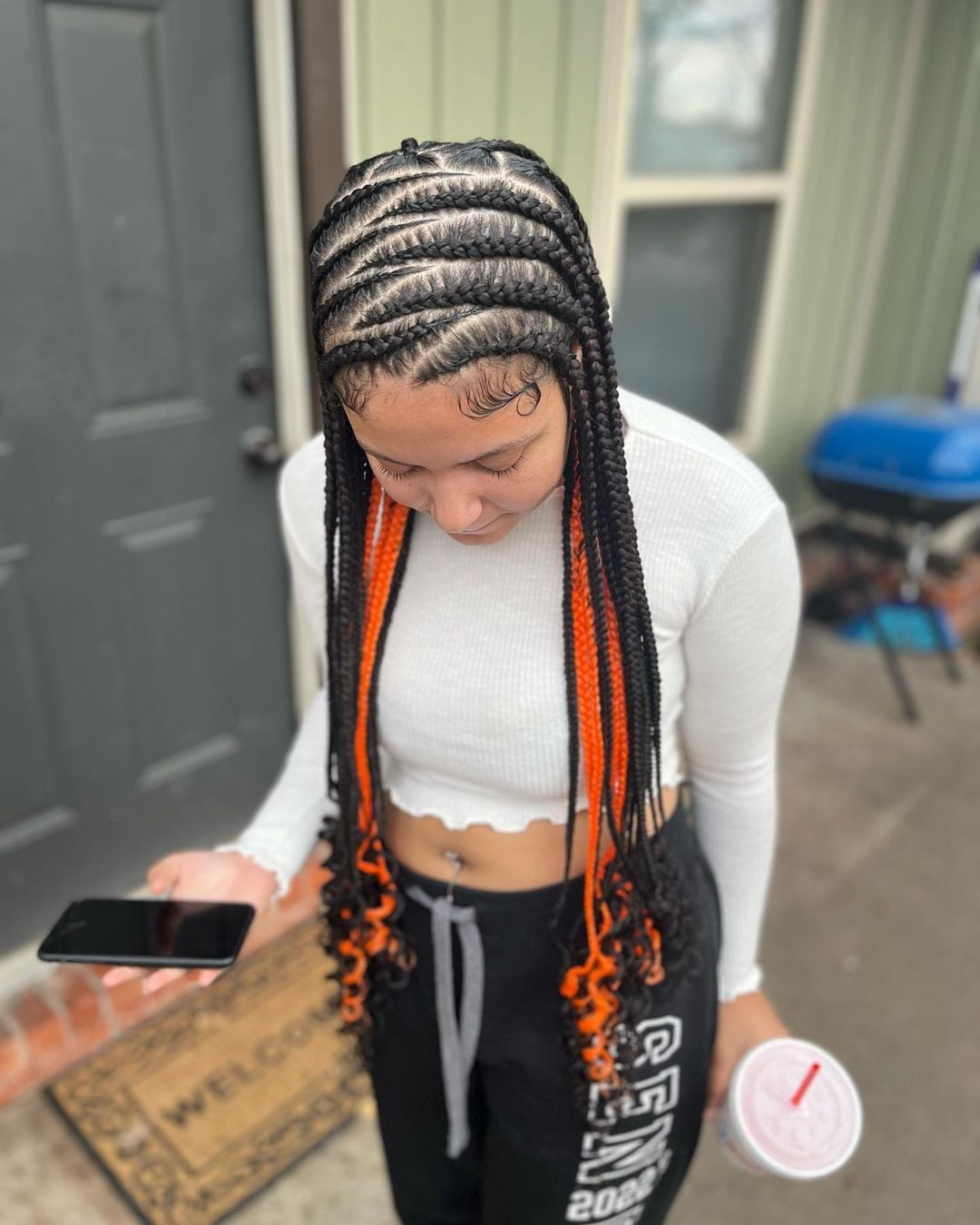
Black braids with orange streaks make a clear fashion statement. These thick feed-in braids reach mid-back, with orange sections woven in from root to tip and curly ends that soften the whole silhouette. The geometric scalp patterns add texture at the part line, so the color does not have to do all the work. For a seasonal refresh, think fall or early spring, when a warm pop of orange lands naturally. A curl-defining cream on the ends keeps the shape, and a color-depositing conditioner extends the streak’s life between salon visits.
Mid-Back Braids With Clean Side Parting
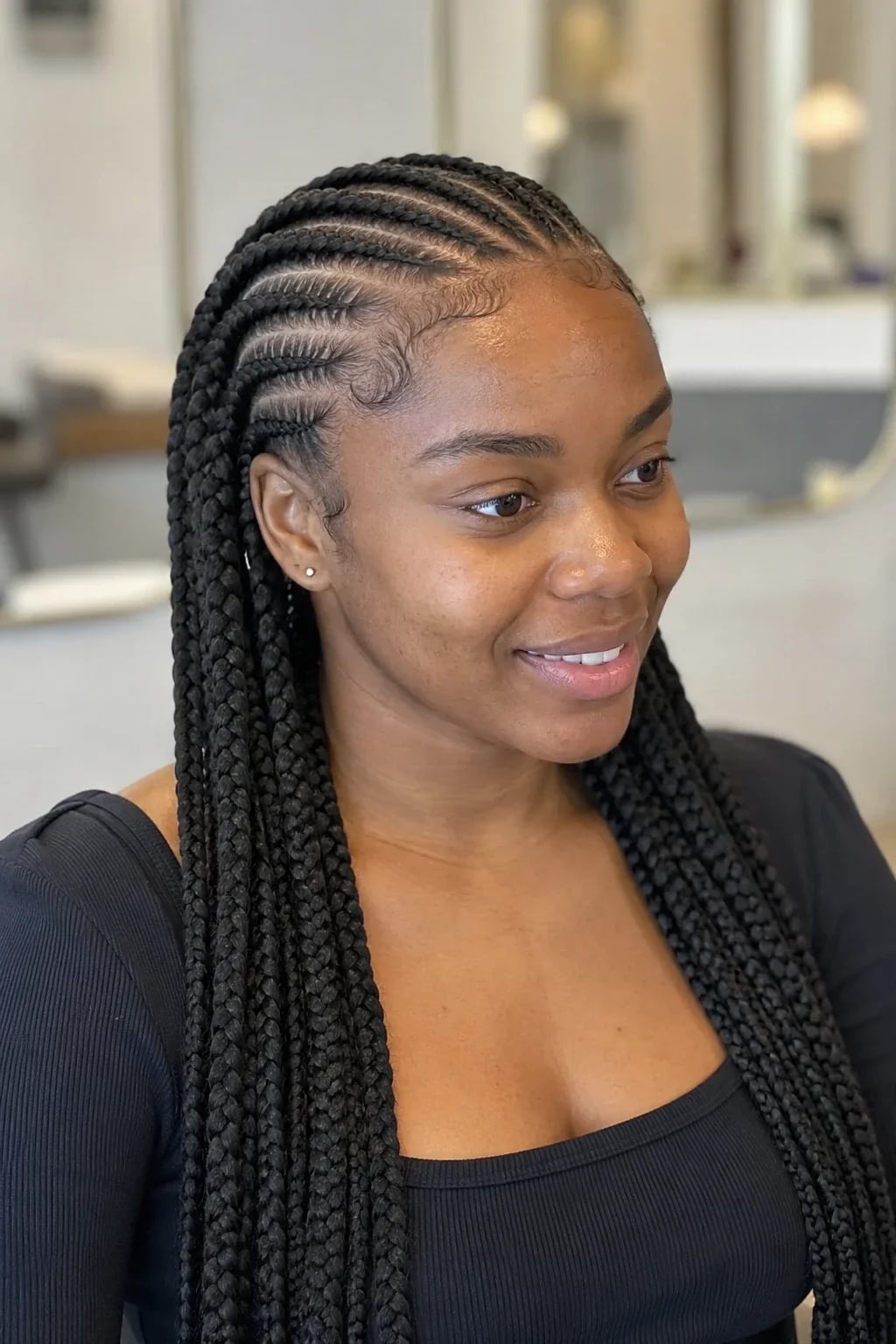
A side part in feed-in braids shifts the visual weight of the style, which is useful for balancing a round or square face shape. Here, thick black braids fall to mid-back from a clean side part, and the cornrow lines follow the part’s angle without any stray sections. The asymmetry draws the eye diagonally rather than straight down, giving the hair more movement even though it is braided.
Hair that is thick and dense holds this part best, since thinner textures may let the part widen over time. Ask your stylist for: feed in braids with a clean side part, mid-back length. A dab of gel along the part line at night stops it from shifting while you sleep.
Mid-Back Braids With Ombré Curly Ends
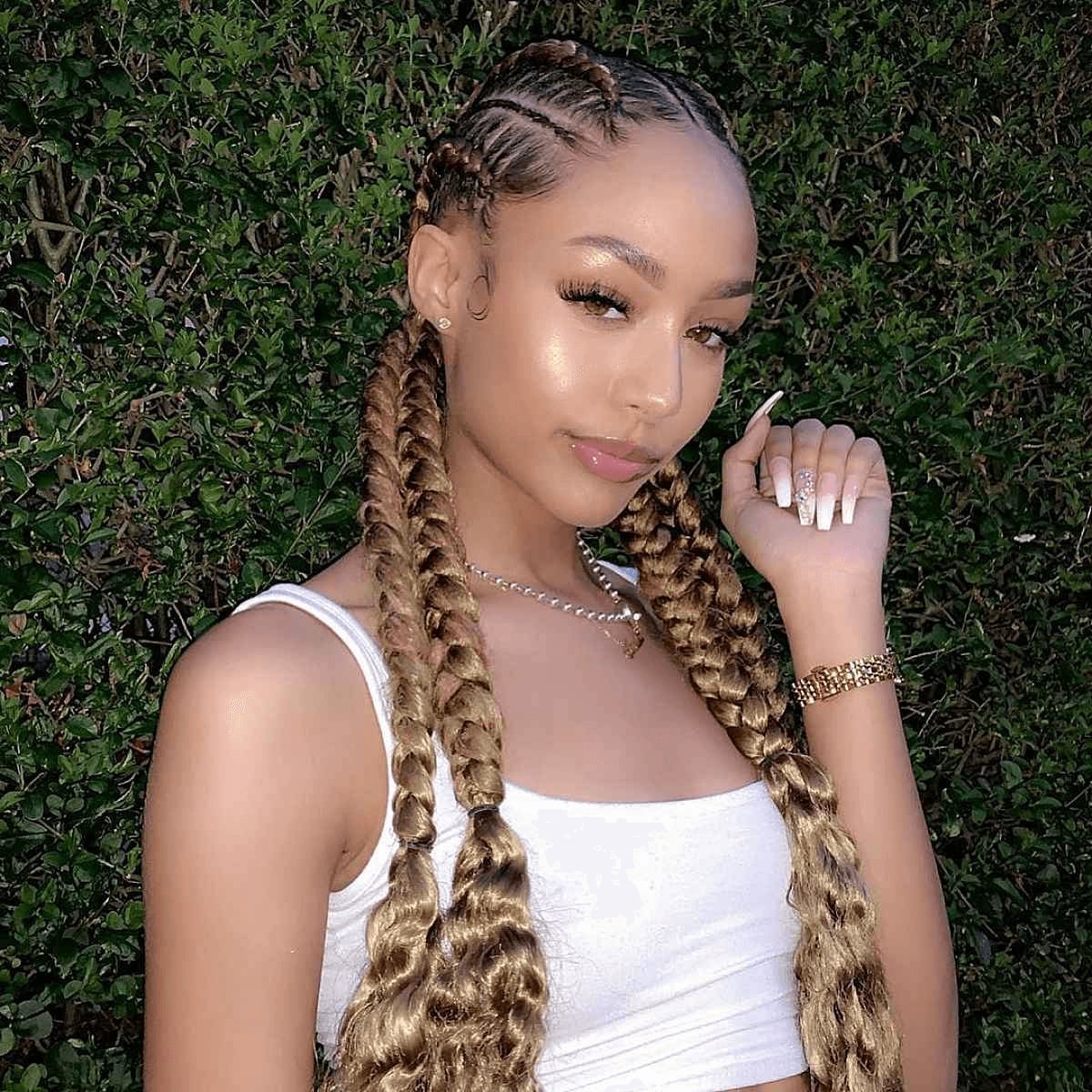
Can you get a color melt in braids without it looking like two separate wigs spliced together? Yes, if the transition starts at the cheekbone. These thick feed-in braids go from black-brown at the root to a warm blonde and brown ombré, with curly ends that catch the lighter shade. The middle parting keeps the ombré symmetrical, and the curl pattern at the tips hides any hard color line that the stylist might have missed.
The upkeep is about the ends, not the roots. A curl refresher spray revives the shape between washes, and the ombré itself grows out softly since the darker base stays close to the scalp. Ask your stylist for: feed in braids, blonde and brown ombré, curly ends, middle part. Plan for a touch-up every 10 to 12 weeks to keep the color vibrant.
Mid-Back Jumbo Braids With Baby Hairs
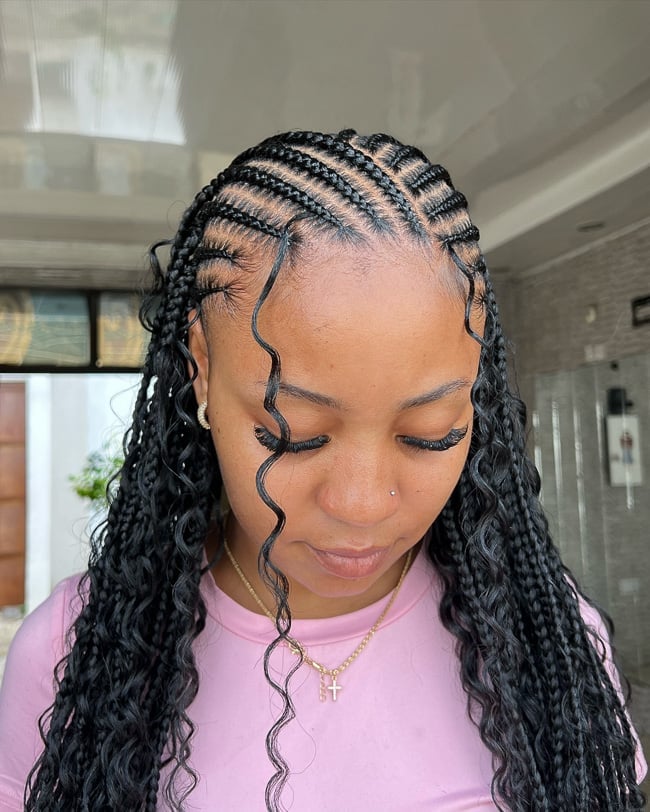
Jumbo braids already save install time, but the real flex here is the baby hair work. These mid-back feed-in braids have a middle parting, neat cornrows down the scalp, and sculpted baby hairs along the hairline that are laid with enough precision to hold a swoop. The wavy ends add a relaxed finish, which is a smart counterpoint to the polished edges.
The honest trade-off is the skill required for the baby hairs. They take a steady hand and a strong-hold gel or wax to stay in place, so this is not a last-minute install. Ask your stylist for: jumbo feed in braids, mid-back length, neat cornrows, sculpted baby hairs. If the edges are not your priority, skip the baby hair work and let the jumbo braids carry the look on their own.
Waist Length Braids With Geometric Scalp Pattern
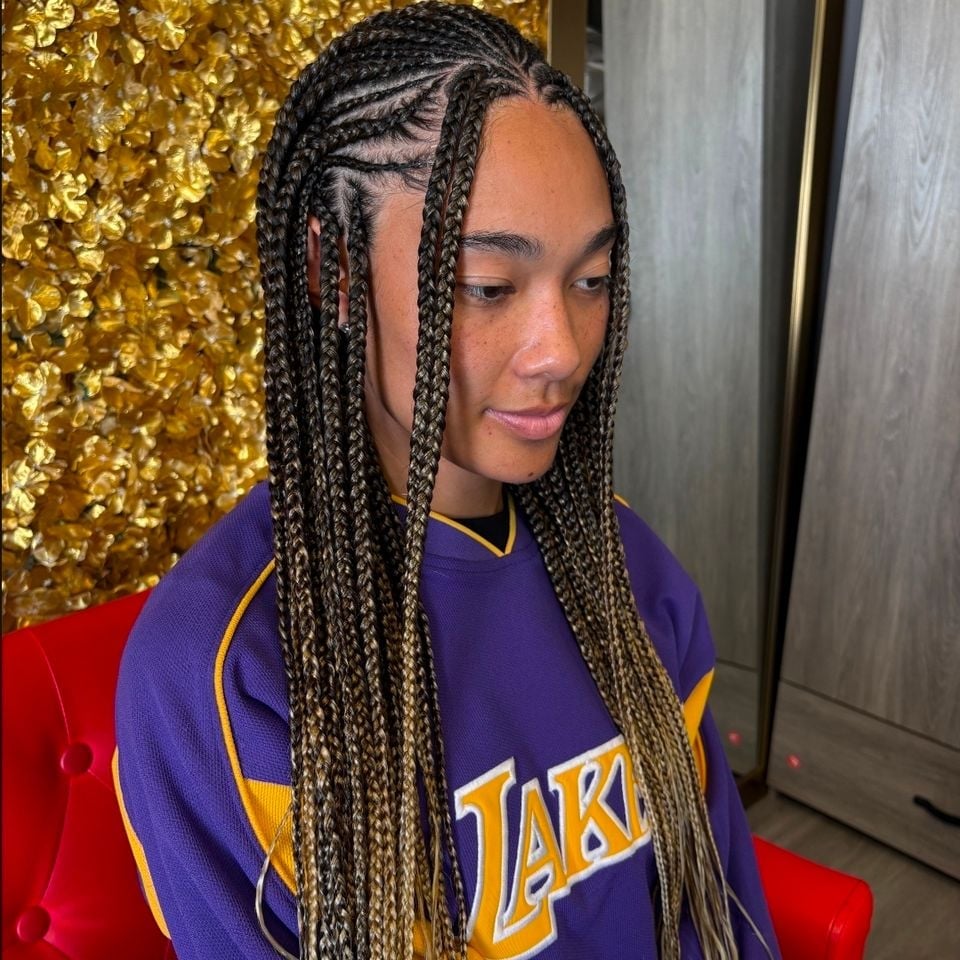
This look suits thick hair that can handle the tension of tight, structured parts. The hold is excellent for the first two weeks, then the edges may soften. Keep the scalp clean to highlight the design. Avoid heavy creams that can blur the lines. A trim every eight weeks keeps the ends even.
Mid-Back Braids With Subtle Gray Streaks
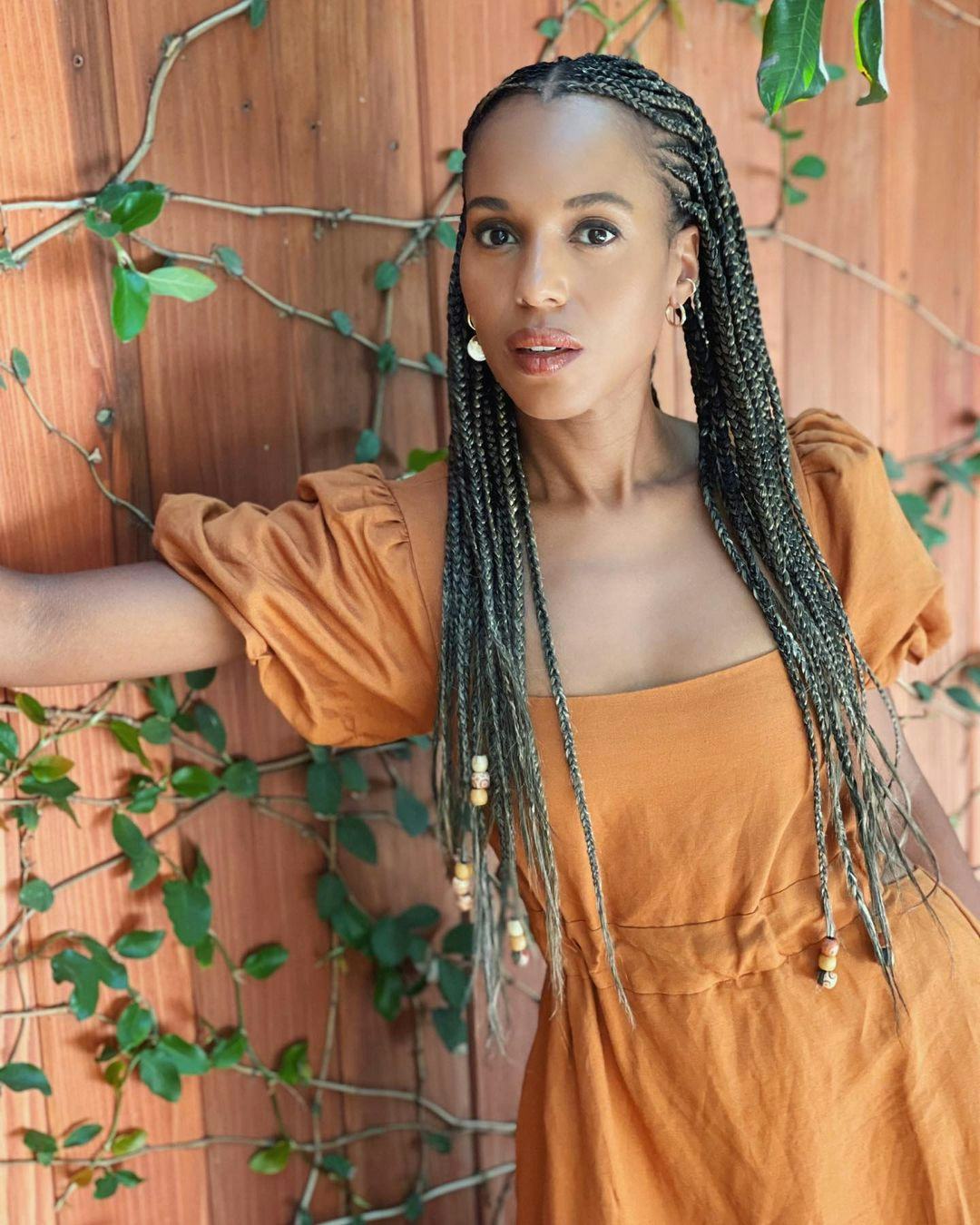
Bold color streaks get all the attention, but subtle gray strands add depth. They weave through a dark brown base at mid-back length. The middle part keeps the braids symmetrical, letting the gray appear as a natural highlight. Ask your colorist for: feed in braids, dark brown with gray streaks, mid-back length.
This style suits thick hair that wants dimension without high contrast. The gray tones fade faster than darker shades, so a toning appointment every six to eight weeks keeps them from turning brassy. Use a color-safe shampoo. The hold is solid for three to four weeks, then the braids loosen slightly. A trim every 10 to 12 weeks maintains the ends.
Mid-Back Braids With Geometric Side Pattern
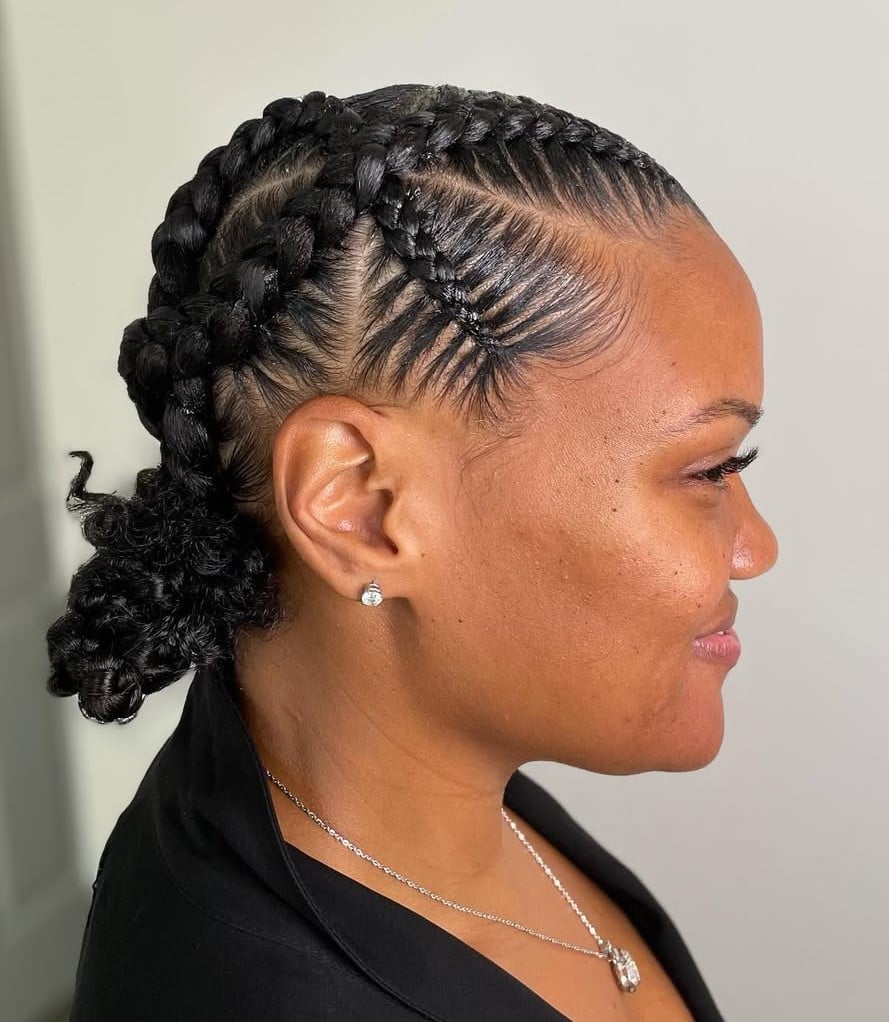
The pattern needs a stylist comfortable with angles, not just straight lines. The loose curls soften the look, so the geometric work feels deliberate, not severe. This style suits thick hair that can hold the curl pattern without frizzing. The hold on the braids is strong for three weeks; the curls last about five days before needing a refresh with curl cream. A trim every eight weeks keeps the ends healthy.
Mid-Back Black Braids With Orange Streaks
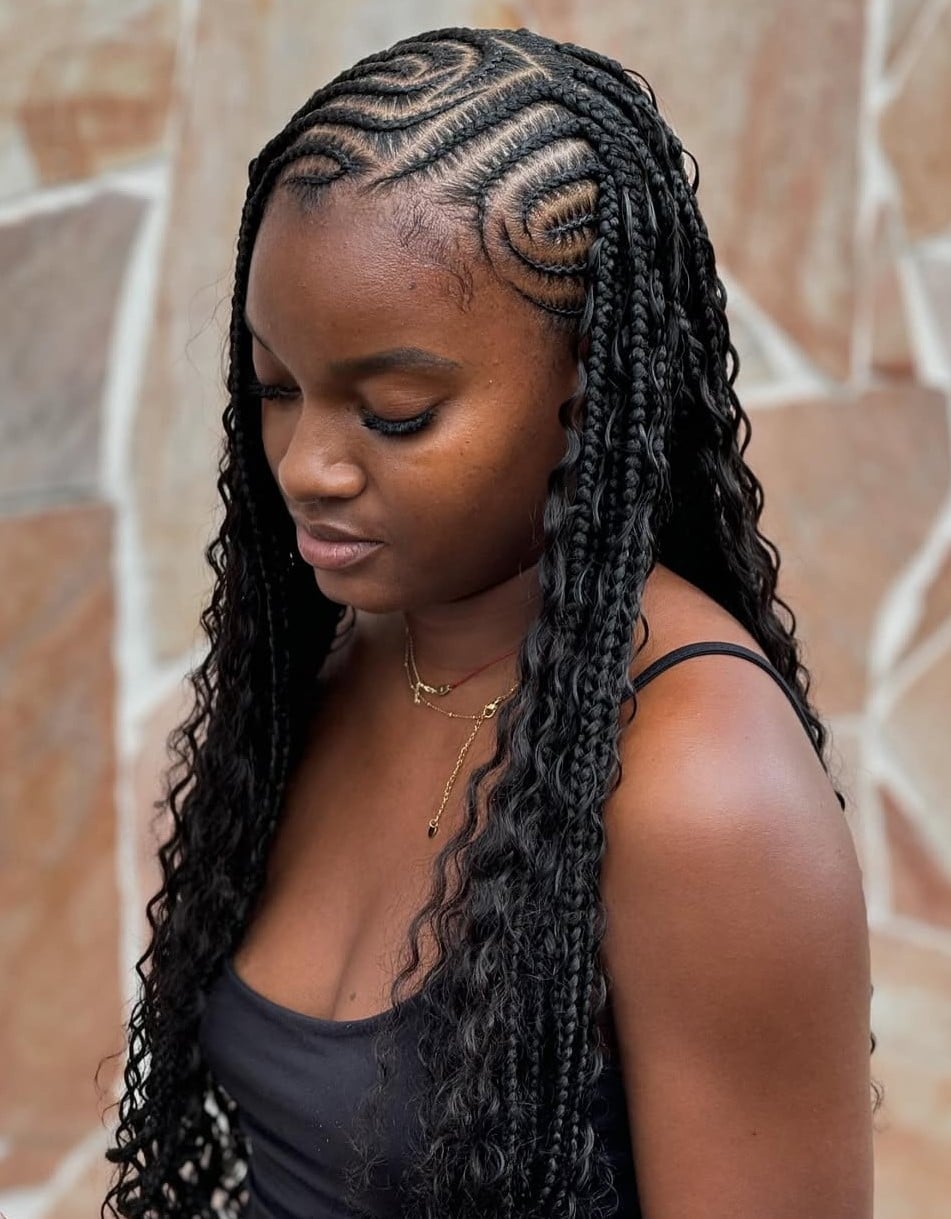
Orange streaks on a black base create a contrast that demands attention. The thick braids reach mid-back, and the geometric scalp pattern adds structure. The curly ends soften the look, keeping it from feeling too graphic. Ask your colorist for: feed in braids, black base with orange streaks, curly ends, geometric scalp.
The orange streaks need maintenance. Bright tones fade in about four weeks, so a toning appointment every four to six weeks keeps them vibrant. The curly ends require a curl-defining cream applied every other day to prevent frizz. The braids hold their shape for three to four weeks before the roots need refreshing. The scalp pattern stays visible for the first two weeks, then the new growth softens the lines. A trim every eight weeks prevents split ends.
Mid-Back Braids With Ornate Baby Hairs, Black
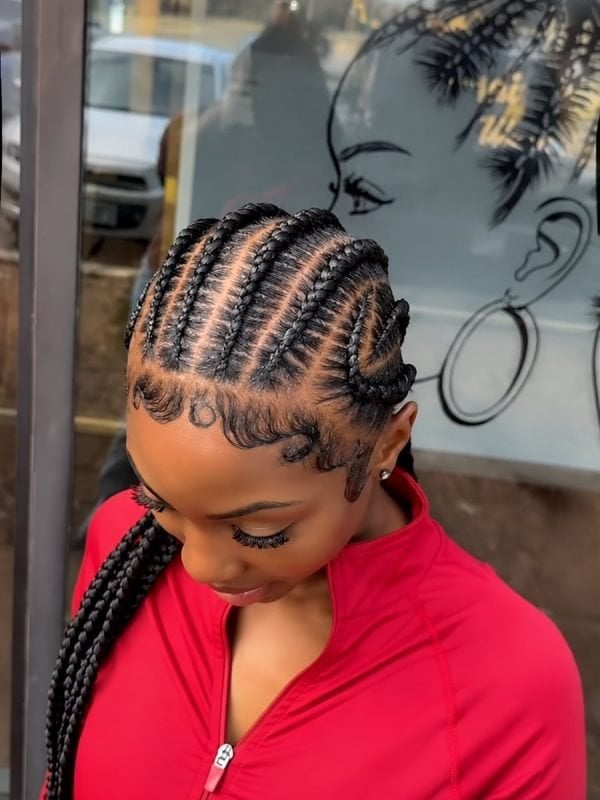
Ornate baby hairs turn the hairline into a design element. The black feed-in braids form neat cornrows that drop to mid-back, with subtle wavy ends. The baby hairs are sculpted into precise arcs and swirls, adding a decorative frame. Ask your stylist for: feed in braids, mid-back length, ornate baby hairs, wavy ends.
Time is a key factor. Sculpting baby hairs with gel or wax takes skill and patience, and the results last only until the next wash. A strong hold gel can extend the shape by a day or two, but humidity or sweat will undo the work quickly. This style suits thick hair that can handle the tension of tight cornrows. The braids hold for three to four weeks, but the baby hairs need daily attention. This style works best for someone who enjoys a detailed daily routine.
Mid-Back Jumbo Braids With Geometric Pattern, Dark Brown
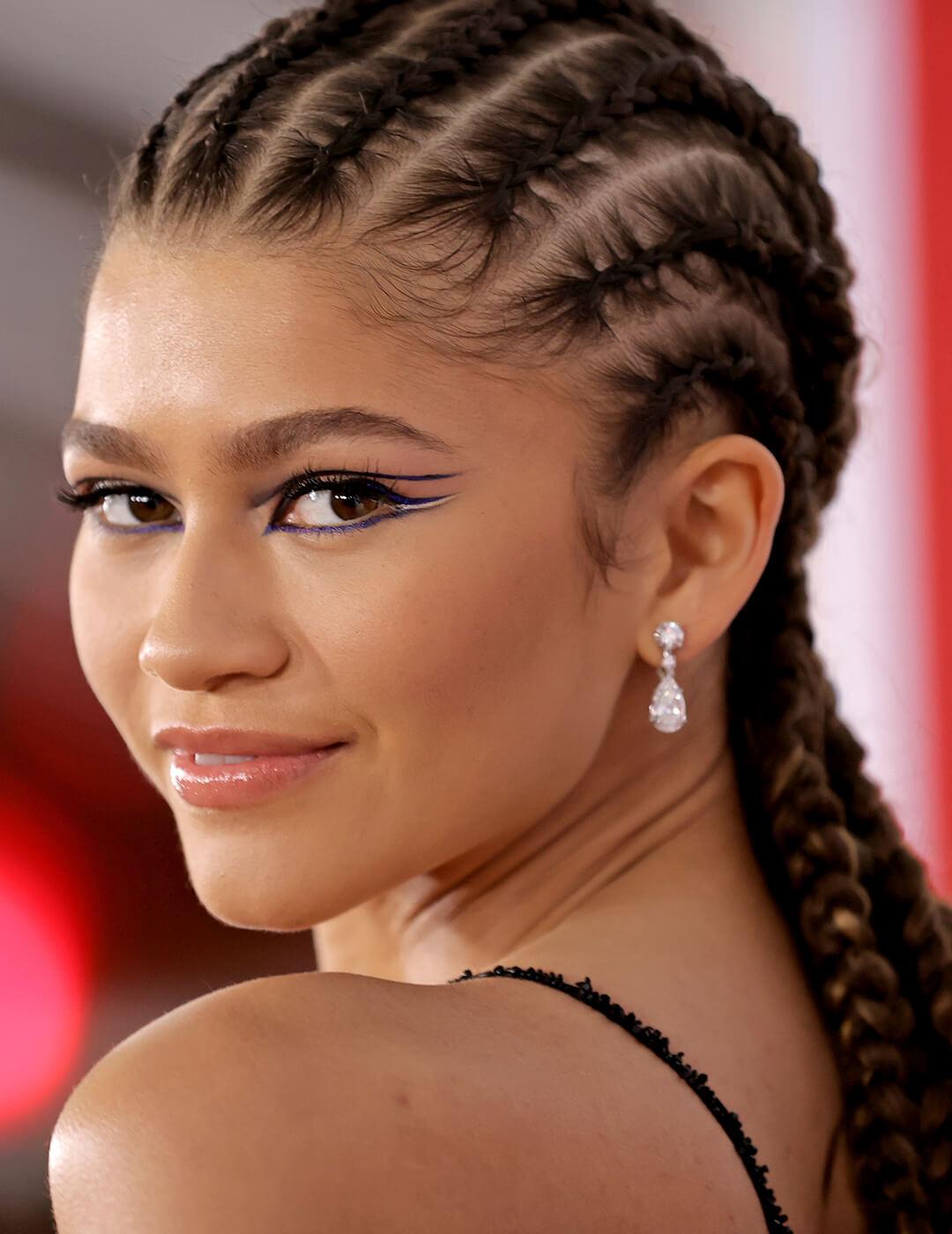
The geometric pattern here is a structural choice. Each jumbo braid is built from a precise square or triangle section, which gives the feed-in a clean, architectural foundation that holds its shape for weeks. The dark brown base keeps the focus on the pattern and the color, making the lines deliberate. Ask your stylist for: jumbo feed in braids, geometric scalp pattern, mid-back length. Thick hair handles the weight of these large braids best, and the middle part balances the symmetry. To keep the geometric lines crisp, run a lightweight oil along the parts every few days.
Mid-Back Two Large Braids, A Woman With Thick
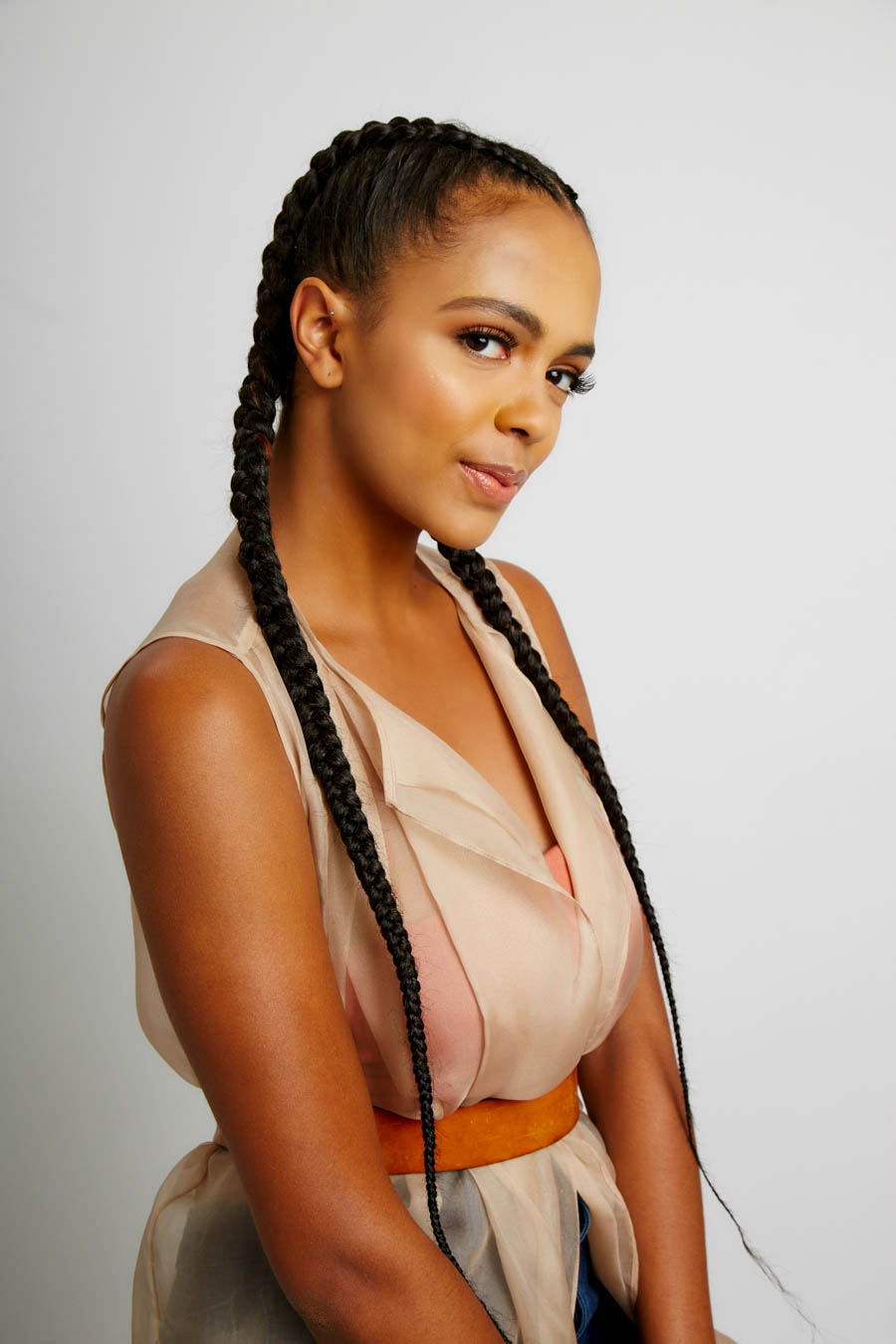
Can two braids really do the job of a full head? For thick hair, yes. The dense texture gives these two large feed-in braids their structure, thinner hair would let the braids droop after a few days. The middle parting keeps the look symmetrical, and the black base keeps it versatile. Ask your stylist for: two large feed in braids, mid-back length, middle part. This is a genuinely low-maintenance option: no individual braids to re-tie, no frizz to chase. The braids are heavy, so a satin scarf at night is required to keep tension even.
Chin Length Braids With Heart Shape Pattern
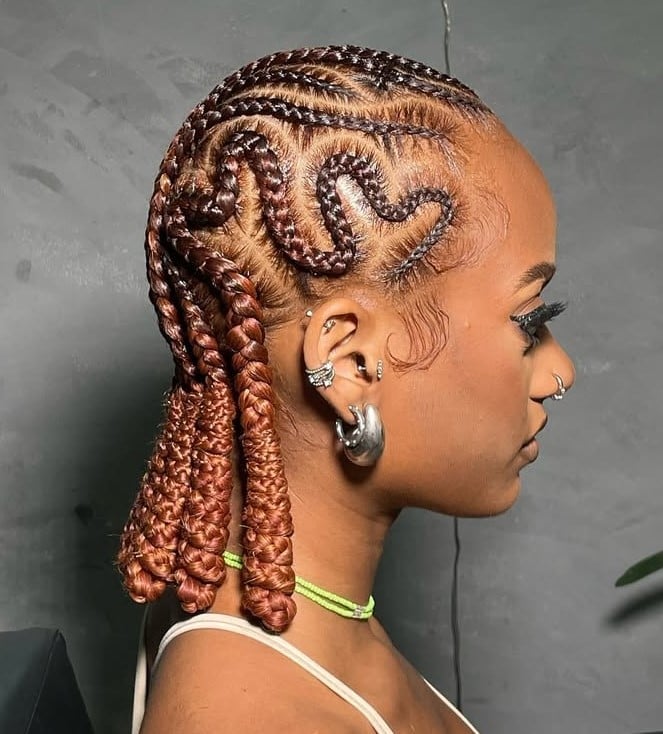
A heart-shaped scalp pattern is the romantic cousin of the strict geometric look. Where a square pattern reads as modern and sharp, this curved design feels softer and more playful, especially with the wavy texture at the chin-length ends. The brown base with auburn highlights adds warmth without competing with the shape. Ask your stylist for: feed in braids, heart shape pattern on scalp, chin length, wavy texture. This style suits those who want a design that draws the eye to the crown rather than the length. The chin-length bob keeps the overall silhouette tidy, so the pattern stays the star.
Sleek Shoulder Length Cornrows
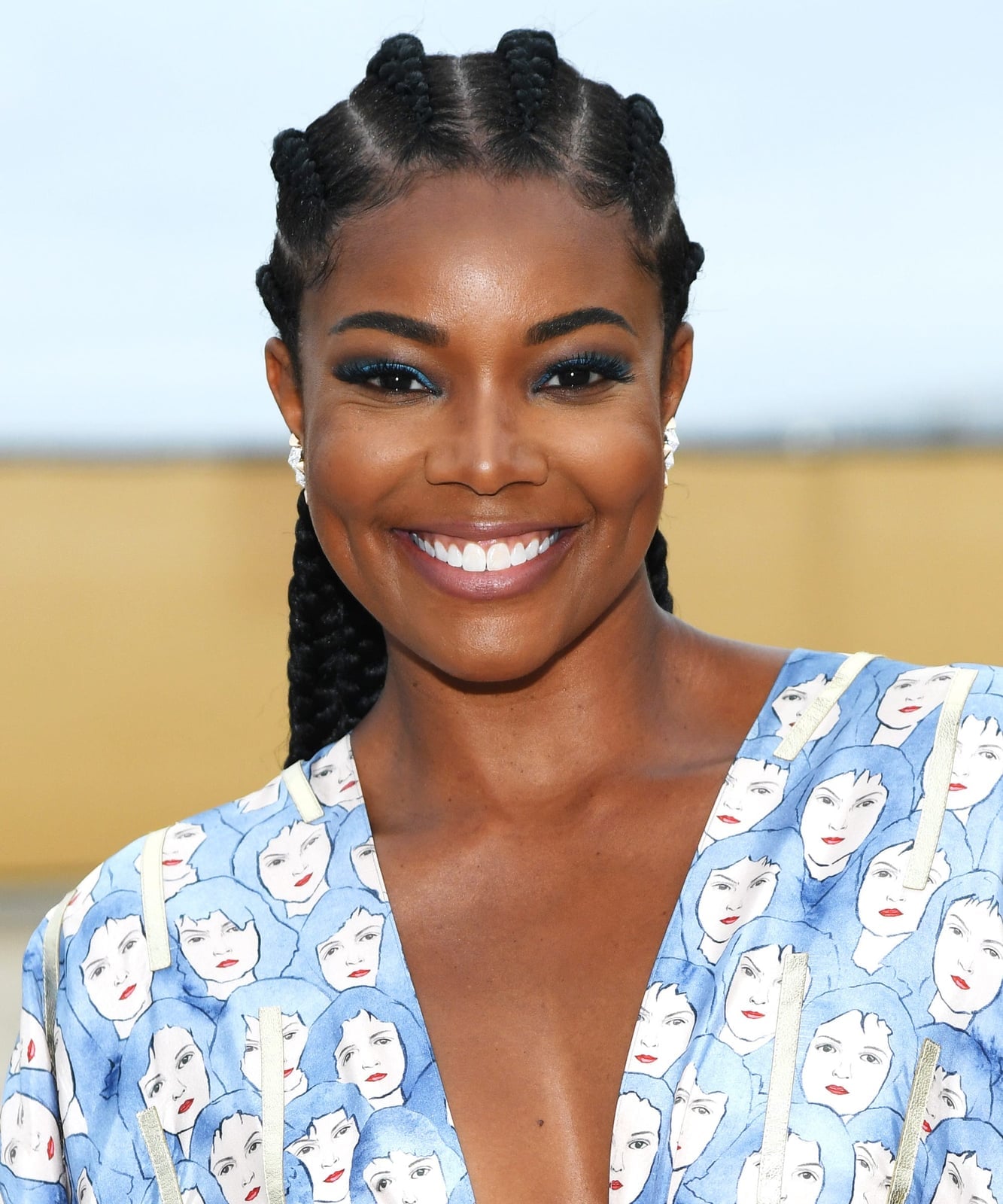
The black base keeps the style classic, and the shoulder length means the braids swing rather than hang. Ask your stylist for: sleek shoulder length cornrows, middle part. The key words are “sleek” and “medium thickness”, too thin and the cornrows look fragile, too thick and they lose the neat scalp-hugging effect. A trim at the shoulder-length line every eight weeks keeps the ends blunt and polished.
Mid-Back Braids With Blonde & Brown Streaks
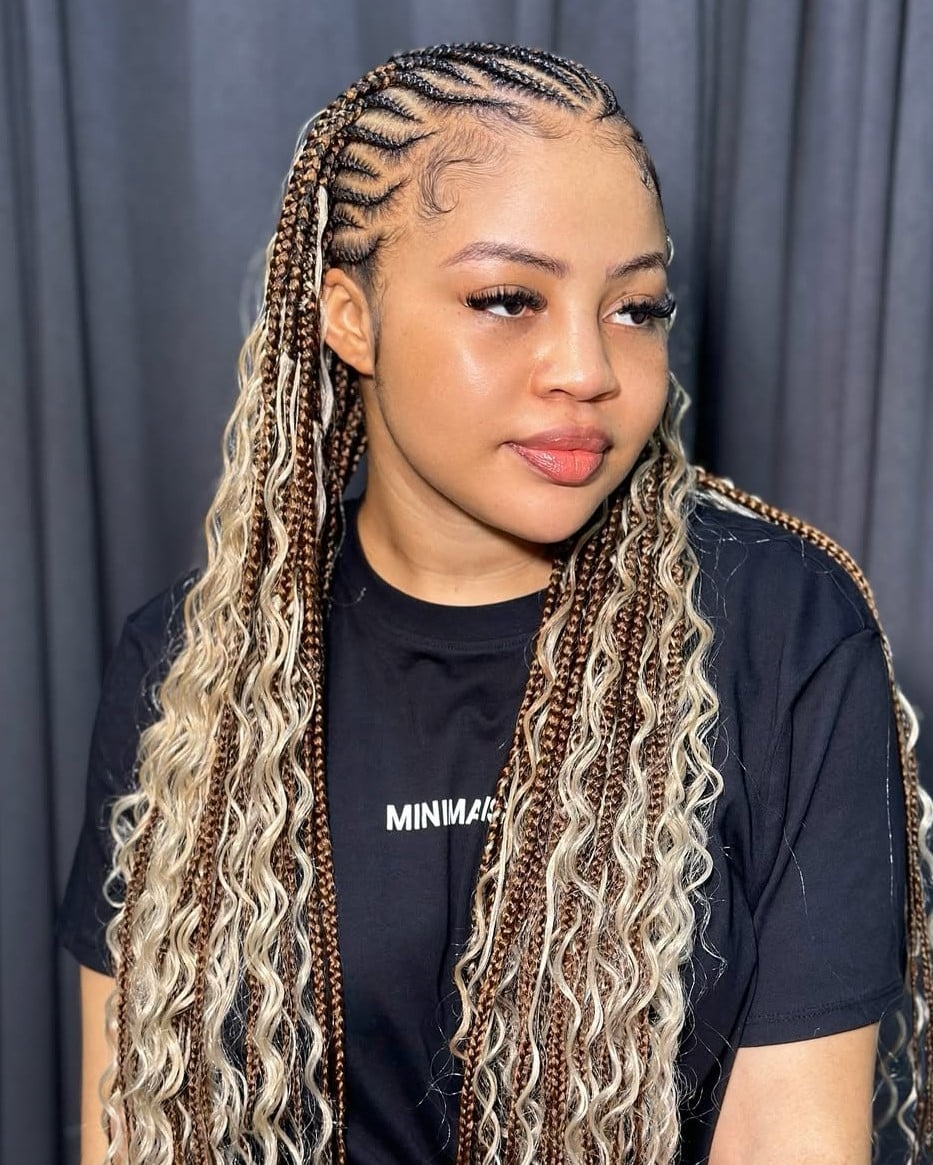
The curly ends add a soft finish to the otherwise straight braid body, which is a smart way to blend the extension texture with natural hair. Ask your stylist for: feed in braids, black base with blonde and brown streaks, curly ends. The streaks require a bit of planning: the color is added during the braiding process, so you need to decide placement beforehand. A color-depositing conditioner on the blonde sections every few weeks prevents the streaks from turning brassy against the dark base.
Mid-Back Layered Braids With Loose Curls
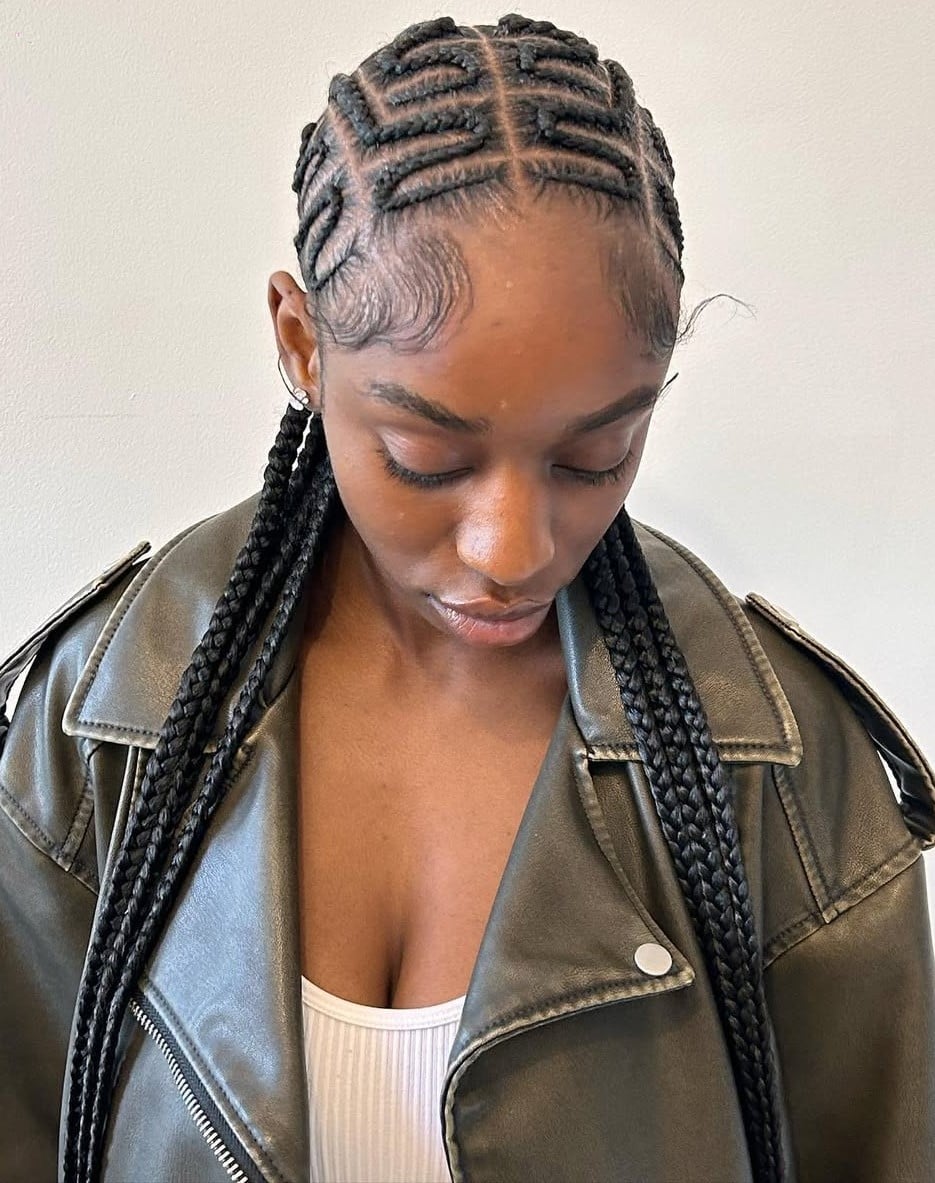
These mid-back feed-in braids use a middle part and incorporate blonde and brown highlights throughout, then the ends loosen into soft, wavy curls. The layering creates volume and a lighter feel, so the style has movement instead of a single heavy weight. Ask your stylist for: layered feed in braids, blonde and brown highlights, loose wavy curls. The technique requires a salon visit, since each braid must taper into the curl section smoothly.
The layering also means the braids sit differently depending on how you part them. A middle part keeps the volume balanced on both sides. Gently separate the curls with your fingers to maintain the texture, and refresh the layers with a texturizing spray between washes. The color and the curl finish work together for a detailed look.
Waist Length Braids With Curtain Bangs
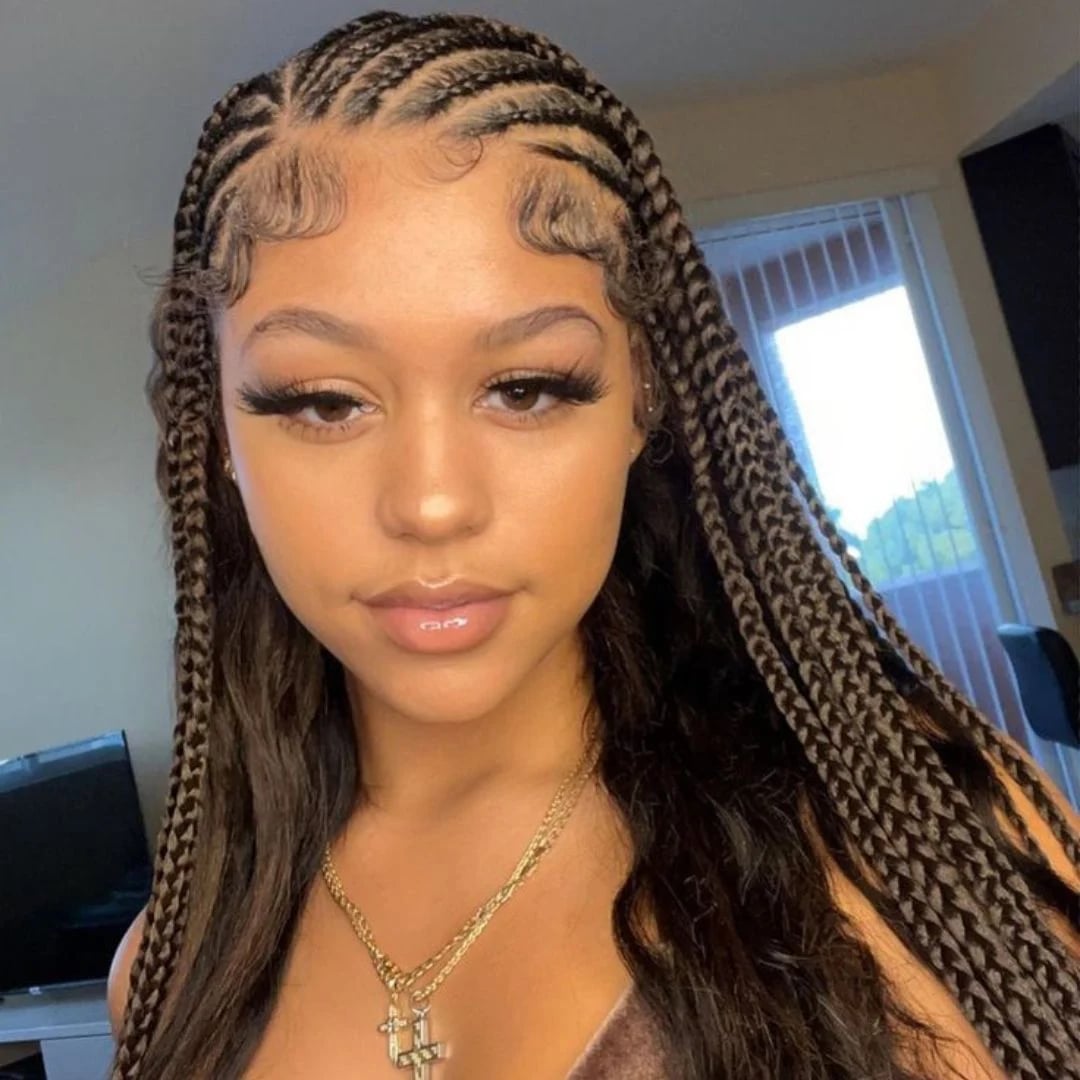
Curtain bangs are not just for loose hair. These waist-length feed-in braids prove it, with thin braids that frame the face from a middle part and include blonde highlights throughout the length. The curtain bangs soften the long, heavy look of waist-length braids, making the style work for round and square face shapes by drawing attention outward rather than straight down. Ask your stylist for: thin feed in braids, waist length, curtain bangs, blonde highlights. The medium texture of the braids keeps the bangs from feeling too bulky, and the blonde highlights add dimension without a full color commitment. This is a detailed style that balances length with face-framing softness.
Waist Length Braids With Zig-Zag Parting
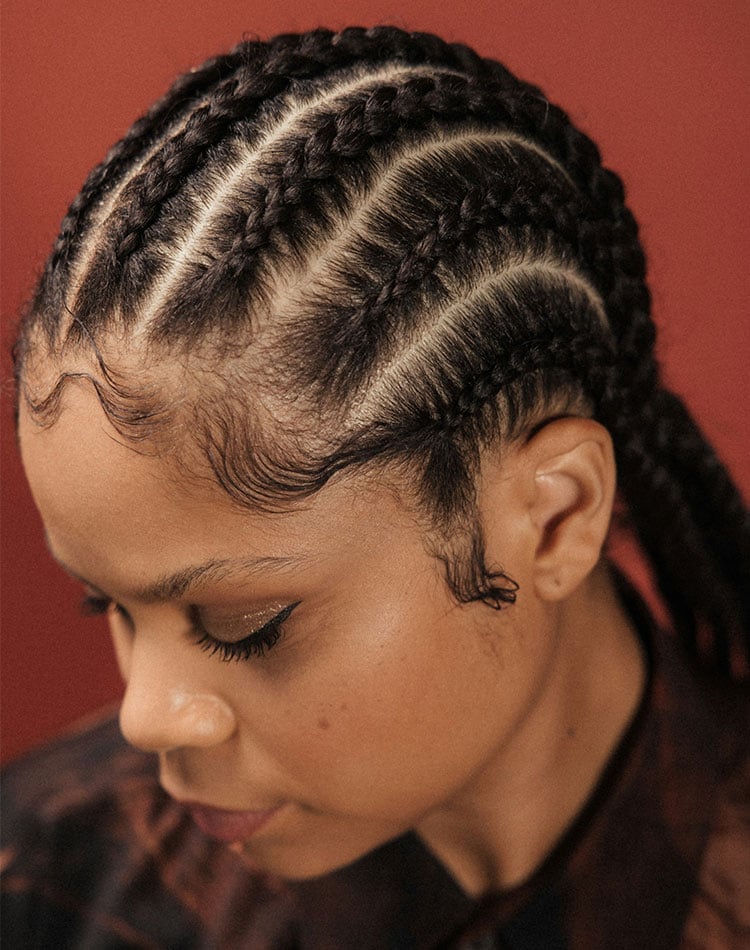
A zig-zag parting turns a straightforward braided style into a deliberate design. These thick, black feed-in braids extend to the waist, with the side part creating a sharp, angular line across the scalp. The zig-zag pattern adds visual interest at the root, which is especially useful as the style wears. Ask your stylist for: feed in braids, waist length, zig-zag side parting. The main wear reality is that a zig-zag part can loosen faster than a straight one, especially near the crown. Maintaining it requires a fine-tooth comb and a light hold gel applied to the part line every few days. The thick texture of the braids helps the pattern stay visible, and the black color highlights the parting itself. The style holds best when the braids are installed with even tension across the entire scalp.
Shoulder Length Straight Braids
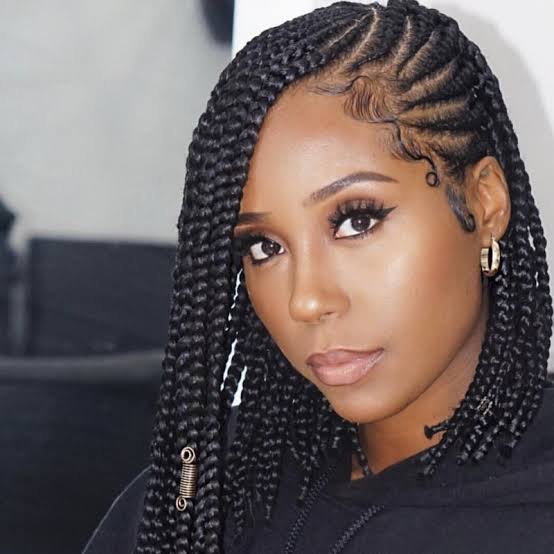
What happens when you take feed-in braids and keep them straight and polished? You get a style that is neat, work-appropriate, and low on fuss. These shoulder-length braids use a side part and a clean, straight texture throughout, with a black base that reads as classic. Ask your stylist for: shoulder length straight feed in braids, side part. The honest trade-off is that straight braids can appear less voluminous than textured or curly versions, especially at shoulder length. If your hair is fine, the straight texture may look flat rather than sleek. The style suits thick hair best, where the weight of each braid creates a clean line. It is a polished look that works for daily wear, but the volume trade-off is real.
Mid-Back Large Braids
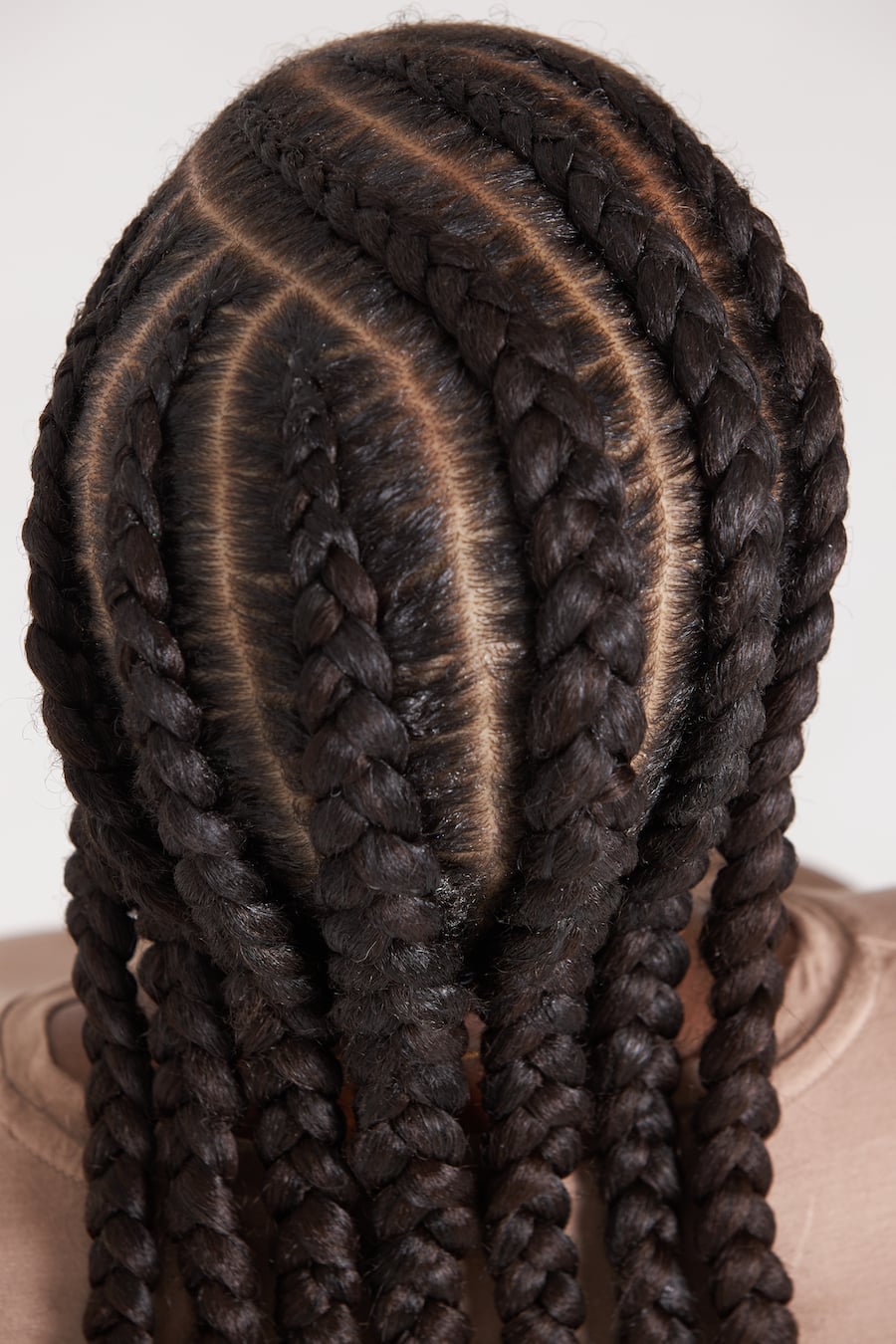
The technique for large feed-in braids is about spacing and tension. These thick, black braids are arranged in parallel rows that extend to the mid-back, with a clean middle parting that keeps the pattern symmetrical. Each braid is substantial, which means fewer total braids and a faster installation time. Ask your stylist for: large feed in braids, mid-back length, neat parts. The stylist sections the hair into wider parts than a standard braid, then feeds in extension hair gradually to build thickness from root to tip. The thick texture of the braids creates a bold, structured silhouette that holds its shape well. A middle parting reinforces the symmetry, and the black color highlights the size and neatness of the rows. This is a style built on precision and scale.
Mid-Back Braids With Curved Scalp Patterns
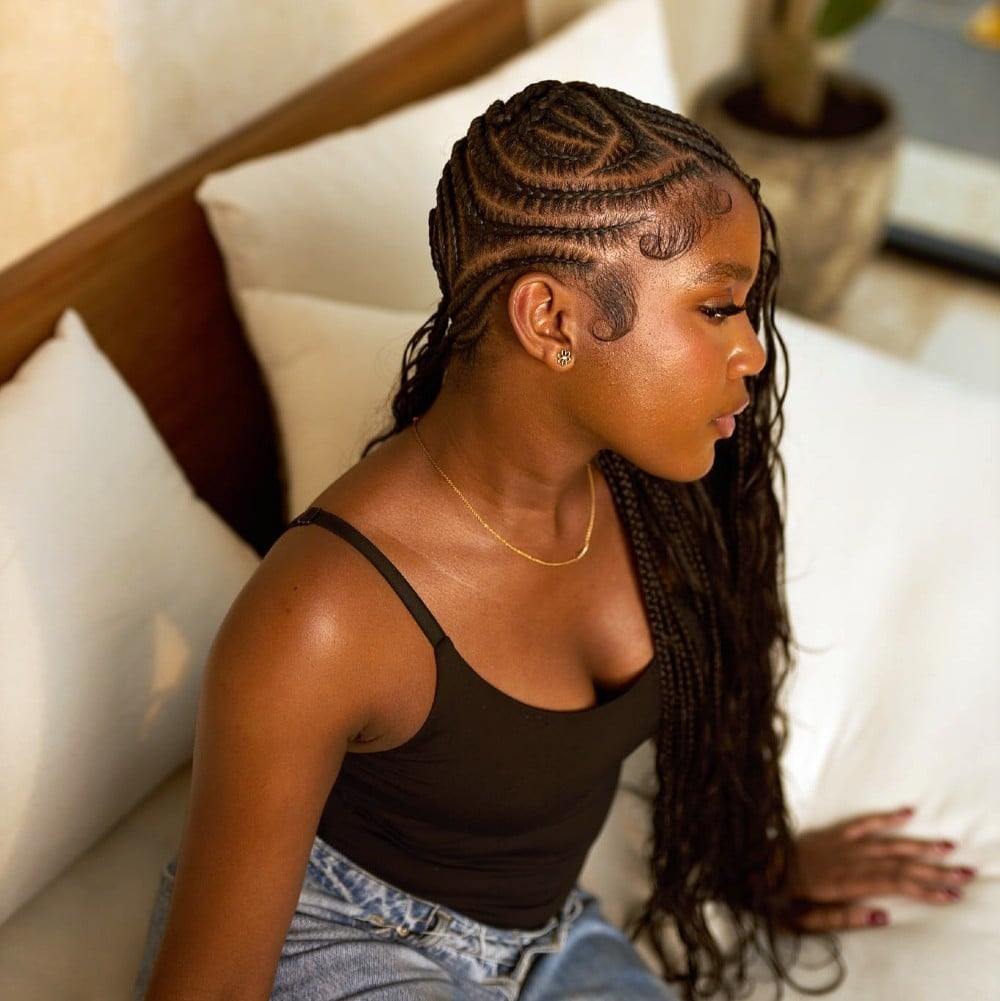
Sharp geometric parts get all the attention, but curved scalp patterns offer something quieter. These thick black feed-in braids sweep into soft arcs at the root, then drop into loose braids with curly ends that hit mid-back. The side view catches the full effect of those sculpted lines against the sleek braided sections. This style works best with thick hair and a patient stylist who understands how to map curves that actually follow the shape of the head. Ask your stylist for: feed in braids, curved scalp patterns, curly ends, mid-back length.
Those curved cornrow lines stay defined for weeks, especially if you keep the scalp clean and hit the ends with a curl cream now and then. Straight parts can feel a little rigid; this is the version that moves with you.
Shoulder Length Braids With Geometric Pattern
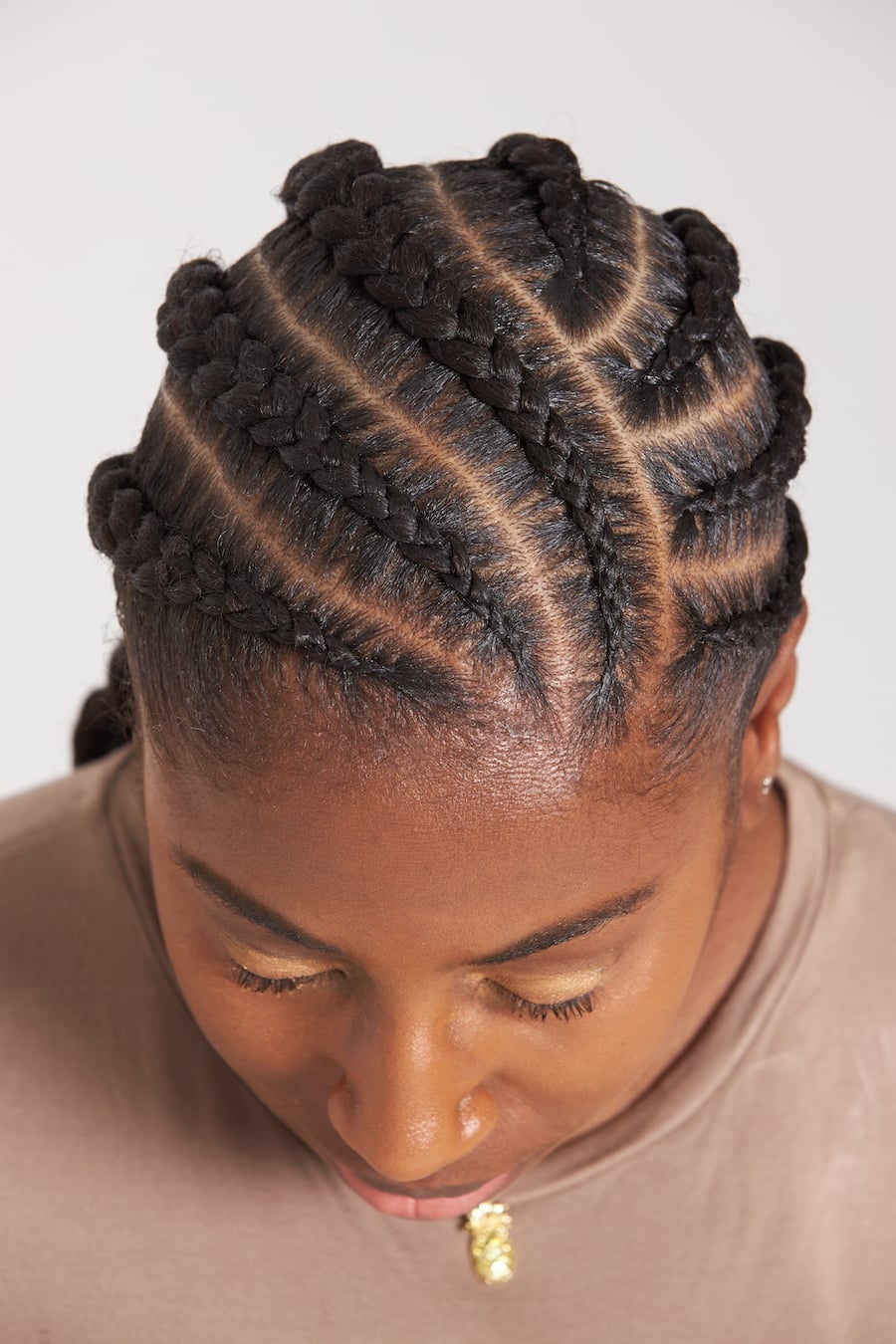
This geometric pattern works because it refuses to be uniform. Some braids are thicker, some are thinner, and the parts between them form a deliberate grid that reads as modern and architectural. The shoulder length keeps the style practical while the black base lets the scalp design do the talking. Thick hair is the obvious starting point here, since the contrast between braid sizes needs volume to land. Ask your stylist for: feed in braids, geometric pattern, shoulder length, varied thickness. Be specific about which sections get the thicker braids and where you want the pattern to tighten up. A reference photo helps more than a vague description.
Mid-Back Braids With Neat Cornrows & Baby Hairs
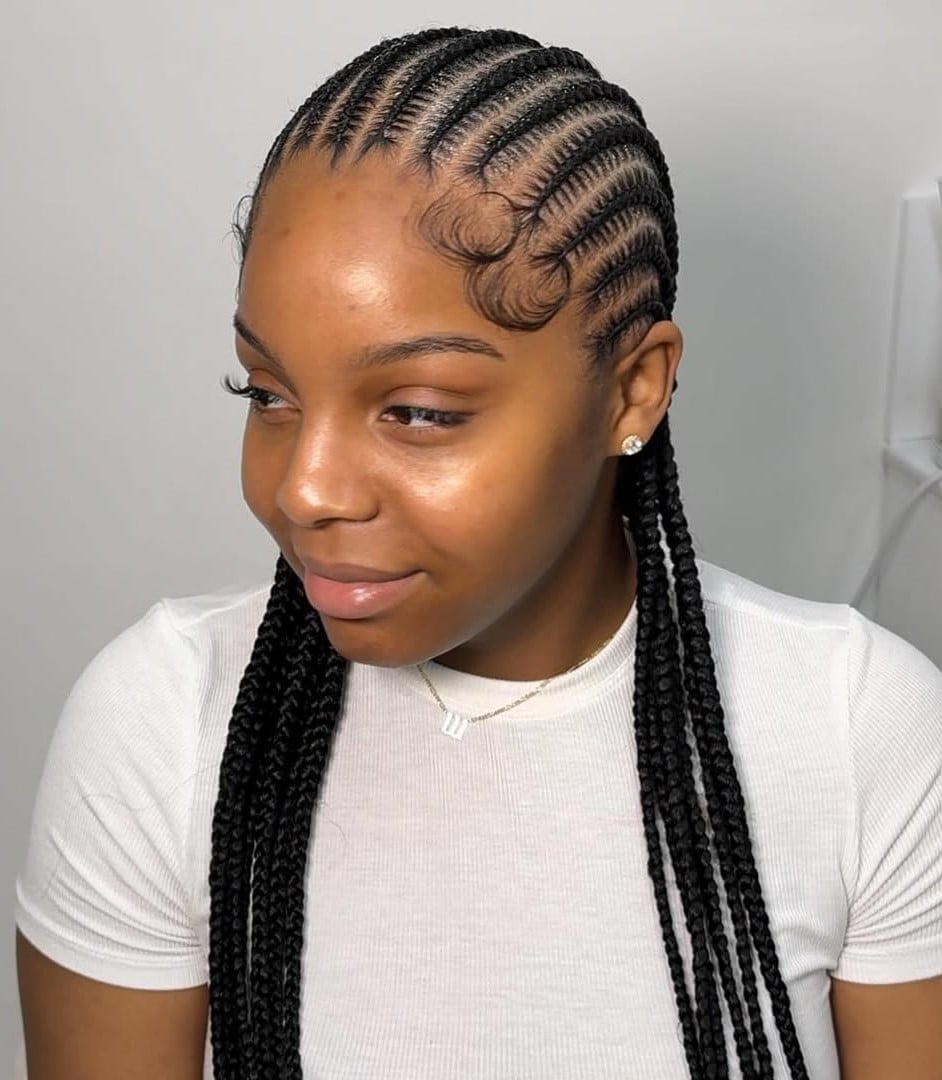
Neat cornrows and baby hairs are a combination that requires a strong hold gel. These jumbo feed-in braids follow clean cornrow lines down to mid-back, with the baby hairs sculpted into precise swoops along the hairline. The black base emphasizes the shape of the braids and the polished edges. Thick hair gives the jumbo sections the weight they need to hang well, and the wavy ends add a soft finish against the structured roots.
Upkeep is about maintaining those edges. A satin scarf at night keeps the baby hairs from lifting, and a light spritz of water in the morning helps them reset without reapplying gel every day. The cornrows themselves hold their shape for a solid three to four weeks before the new growth starts to blur the lines. The trade-off for that sharp finish is a longer installation session, but the daily routine after that is minimal.
Thick Braids With Geometric Parting
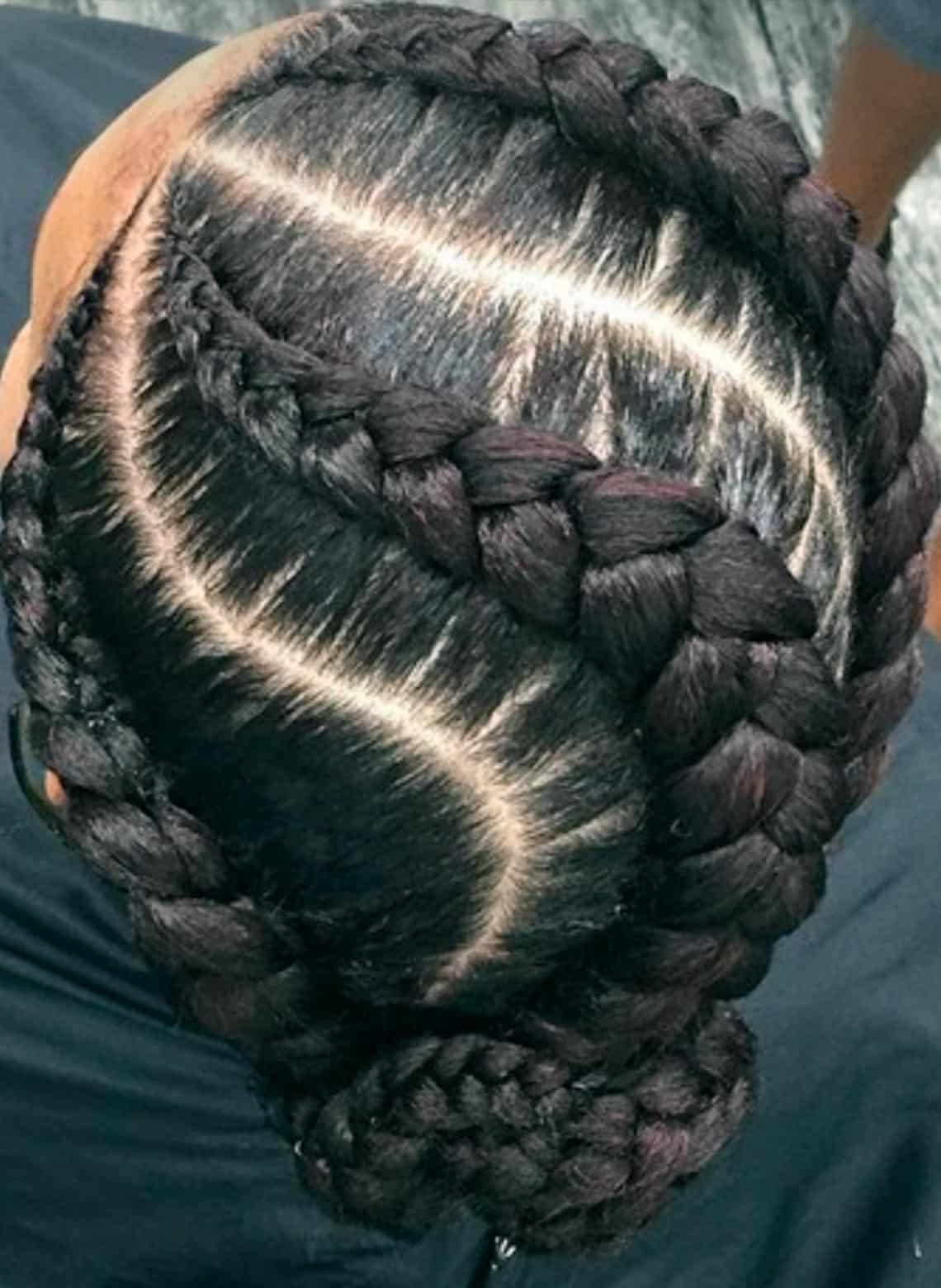
Can a parting be the whole point of the style? When it is this precise, yes. Thick black feed-in braids radiate from a clean middle part, with each section divided by a symmetrical geometric pattern that turns the scalp into a deliberate canvas. The braids themselves are large and voluminous, which makes the parting lines look even more intentional by contrast. Thick hair is non-negotiable here, since thin strands would not fill the sections the same way. Ask your stylist for: feed in braids, geometric parting, symmetrical pattern.
The honest drawback is that a perfect geometric parting requires a stylist who treats parts like math. One uneven line and the whole symmetry falls apart. It is a salon-only ask, and you want someone who has done this specific pattern before, not someone learning on your head.
Mid-Back Twisted Braids With Ombre
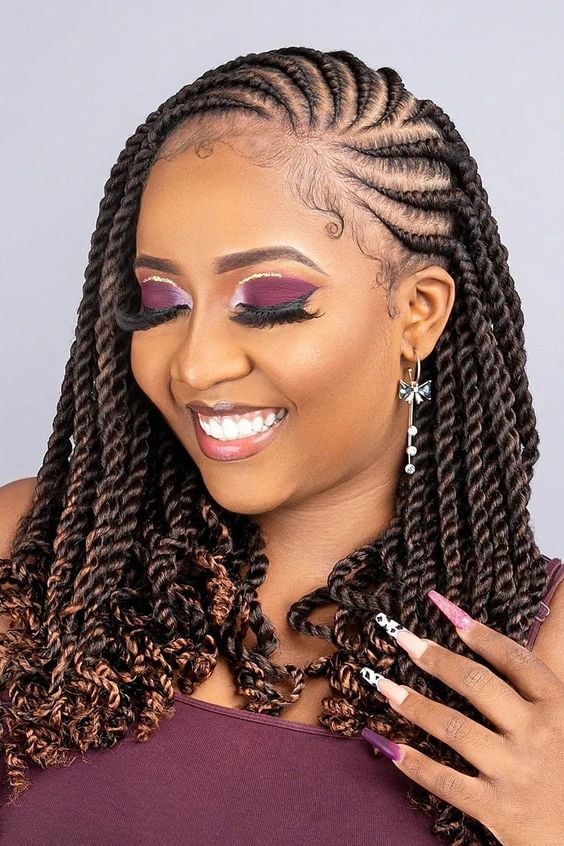
A twist on feed-in braids starts with the technique. Each braid is twisted rather than straight-braided, which gives the sections a rope-like texture that catches light differently. Here the dark brown base fades into lighter brown ombre highlights that run through the mid-back length, with the ends curling into soft waves. The middle part keeps the look balanced, and the wavy texture at the tips softens what could otherwise read as too uniform. Thick hair works best because the twist technique needs volume to hold its shape.
Ask your stylist for: twisted feed in braids, mid-back length, dark brown with lighter brown ombre. The twisting process takes longer than standard braiding, but the result is a style that moves with more body and a color transition that looks natural rather than painted on. A color-safe conditioner keeps the ombre from fading unevenly.
Mid-Back Braids With Neatly Laid Edges
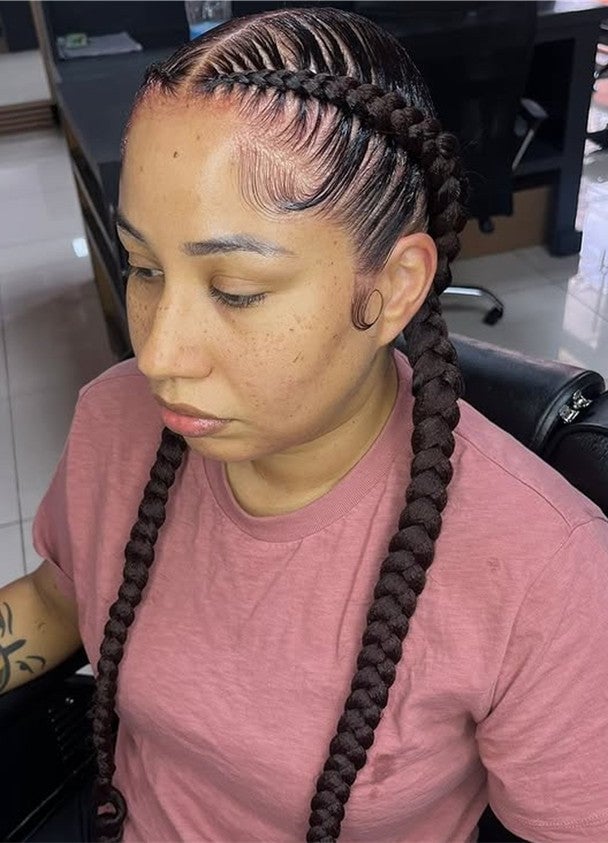
The design here is about precision: two thick feed-in braids at mid-back length with a clean middle part and edges so smooth they look painted on. This style genuinely flatters those with thick hair who want a refined finish, because the fullness of the braids balances the sculpted hairline without looking sparse. A square or oval face shape benefits most from the symmetry of the middle part.
Ask your stylist for: two thick feed in braids, mid-back length, neatly laid edges. The hold comes from a strong gel or wax applied to the hairline, which keeps the edges in place for days. The dark brown base color stays low-maintenance, so the main upkeep is refreshing the edge styling every few days and moisturizing the scalp. A trim every eight weeks keeps the ends even.
Shoulder Length Straight Braids With Side Part
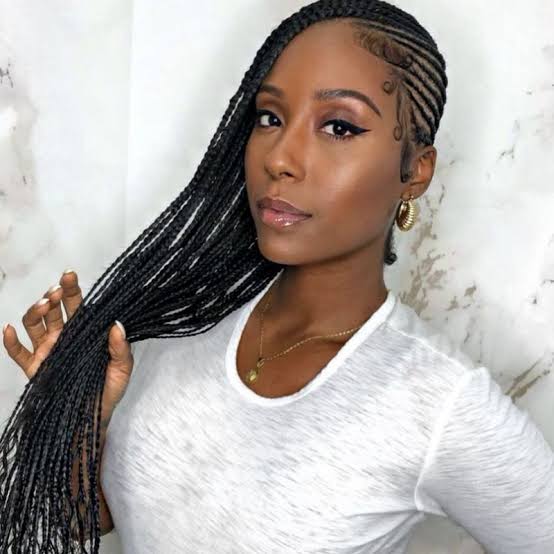
Set these shoulder-length straight braids against a wavy or textured style, and the difference is clear: this version is about sleek uniformity rather than movement. The side part adds asymmetry, which works well for round or heart-shaped faces by breaking up the horizontal line at the shoulders. The straight texture means the braids lie flat and catch the light evenly, giving a polished finish that lasts all day.
Mid-Back Two Jumbo Feed In Braids
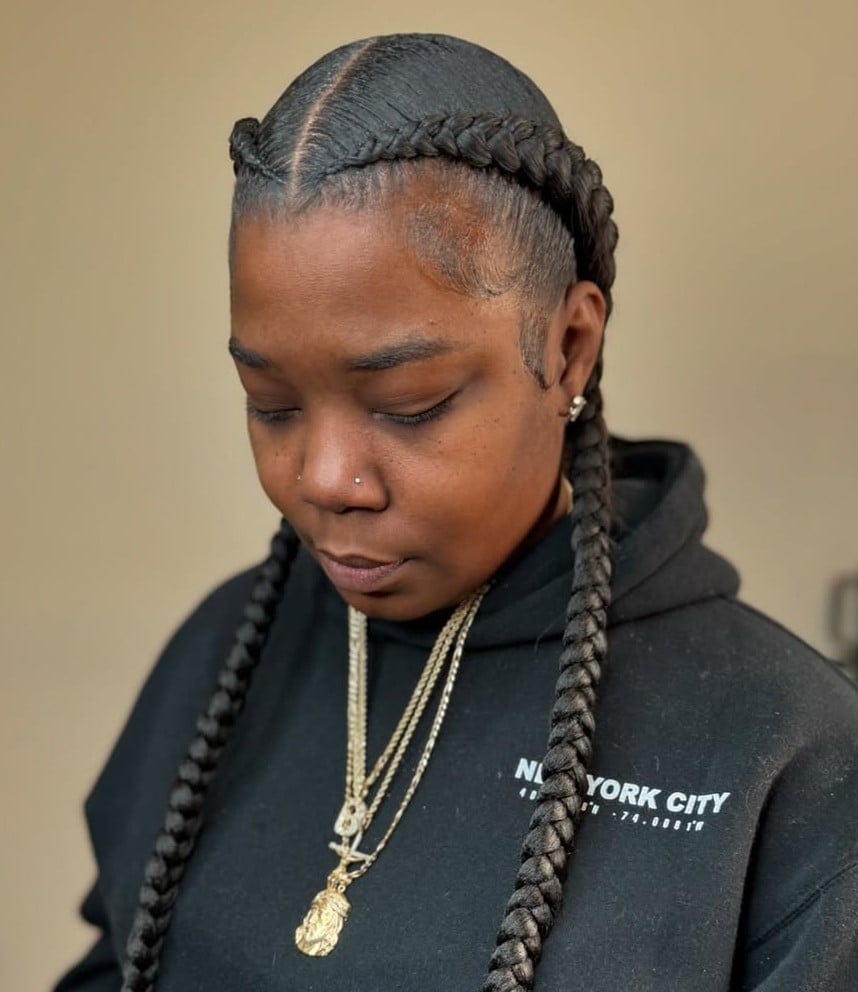
How do you get two braids this thick and defined? Start with the right words. Ask your stylist for: two jumbo feed in braids, mid-back length, middle part. The key is specifying “jumbo” so they use enough extension hair to create that substantial, straight silhouette. A middle part keeps the look symmetrical, which suits oval and long face shapes by adding width at the temples.
The braids should be braided with consistent tension from root to tip to maintain the straight, defined appearance. A black base color hides any minor frizz between washes, and the hold is strong enough for daily wear without constant retouching. For upkeep, you will want to wrap the ends at night to prevent unraveling and schedule a fresh install every six to eight weeks.
Shoulder Length Braids With Neat Cornrows, Black
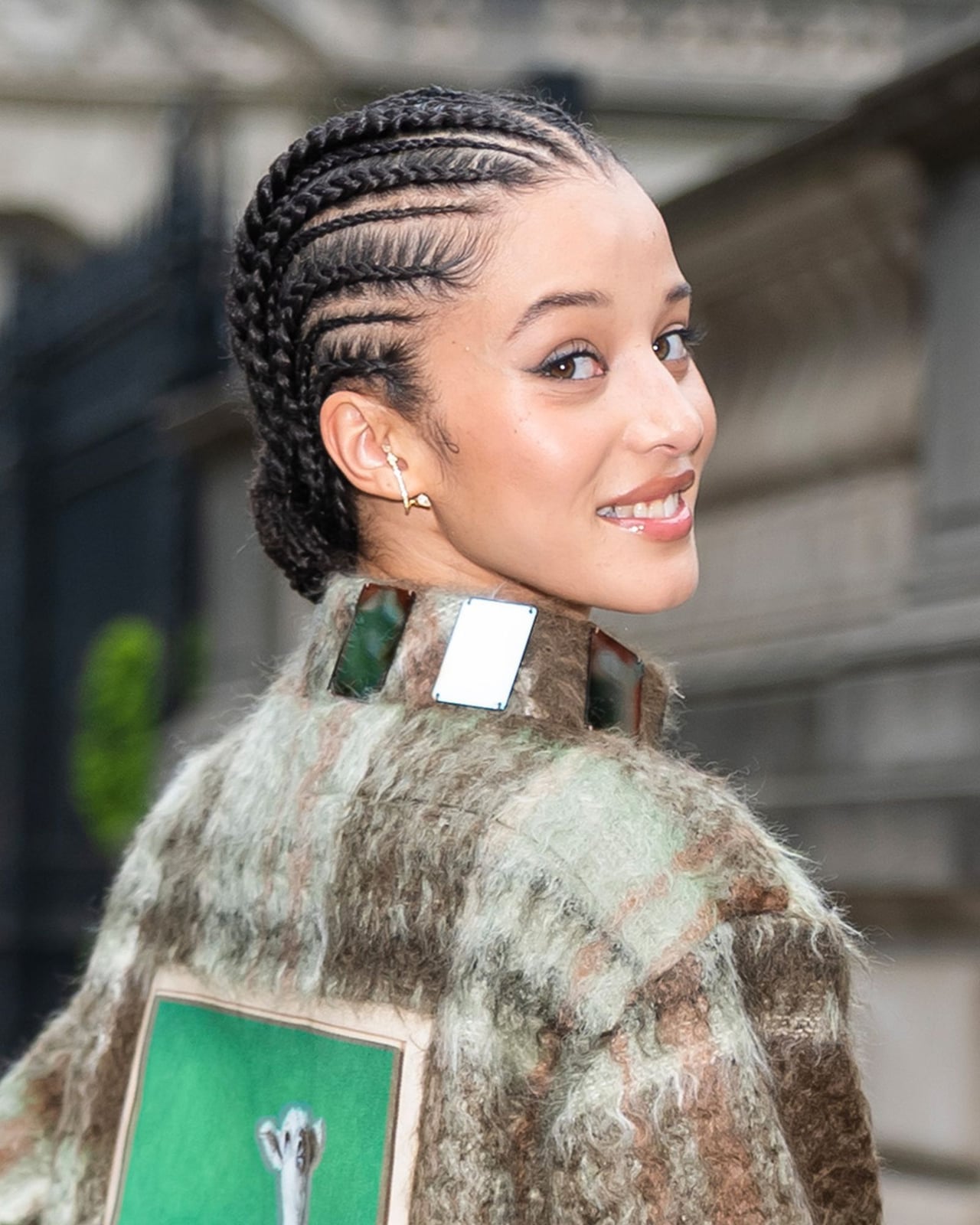
The neat cornrows here sit close to the scalp with a middle parting, and the shoulder-length braids have a natural wavy texture that softens the overall silhouette. This finish typically wears well for thick hair because the braids hang evenly without puffing up. The black base color hides any new growth for about two weeks before the roots become visible.
For upkeep, apply a lightweight oil to the scalp every few days to keep the cornrows from looking dry, and trim the ends every six to eight weeks to prevent fraying. The hold is reliable for daily activities, but sleeping with a satin scarf helps keep the neatness intact until the next wash day.
Mid-Back Cornrows With Blue Streaks
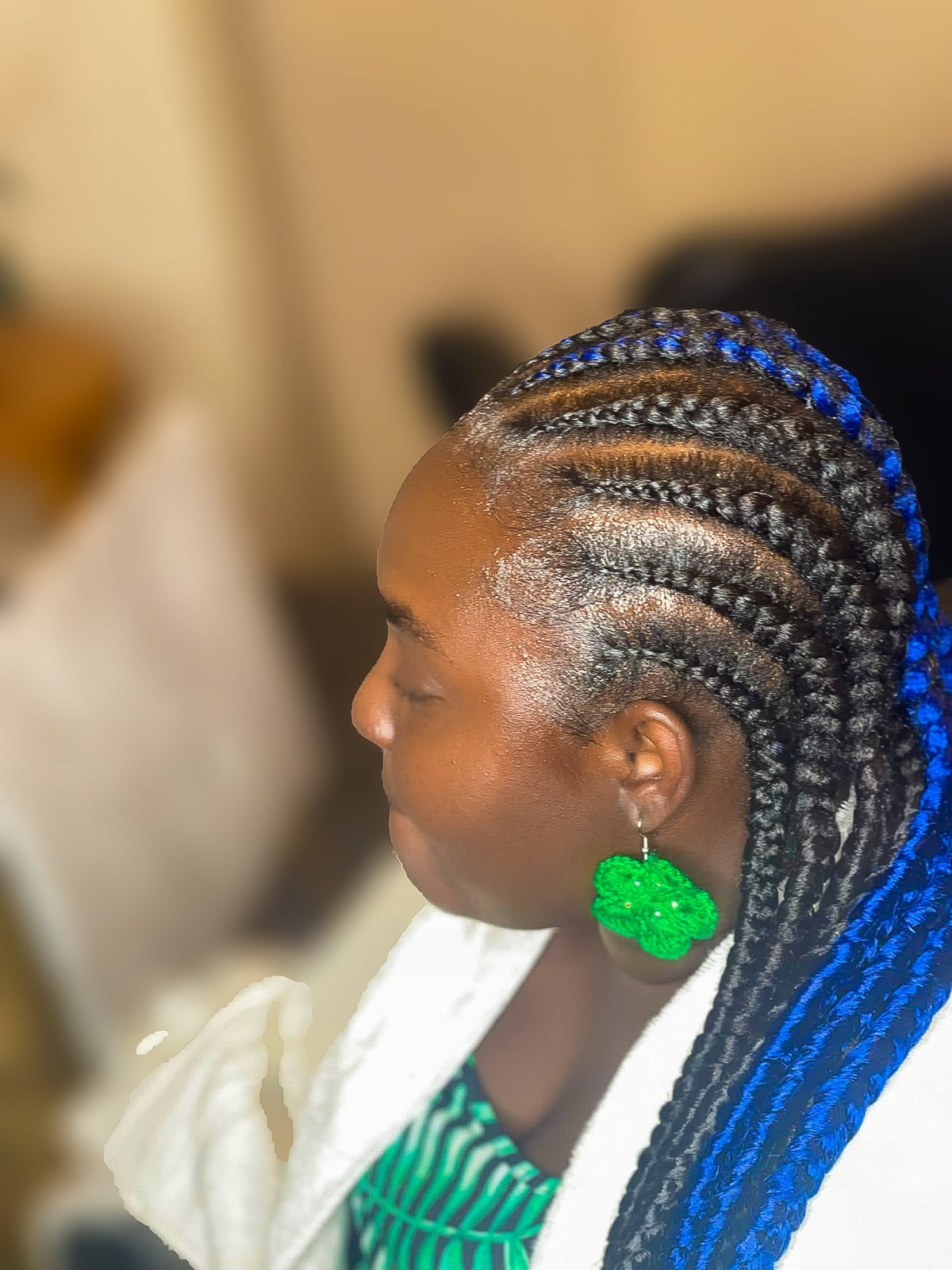
Vibrant blue streaks running through fine, dense cornrows at mid-back length create a high-contrast look that is hard to ignore. The middle part keeps the pattern balanced, and the thick density of the braids ensures the color pops without looking sparse. This style suits anyone who wants a bold statement, but there is a trade-off: fine braids with color streaks can show wear more quickly, especially at the ends where the blue may fade or the braids may loosen.
Ask your stylist for: fine cornrows with blue streaks, mid-back length. The color requires a toner or color-safe shampoo every four to six weeks to keep the blue from turning muddy. The drawback is that you will need a refresh sooner than a solid black style, typically around eight to ten weeks, depending on how fast your hair grows and how often you wash.
Final Thoughts
For finer hair textures, opt for medium-sized braids to maintain volume and avoid excessive tension. For those seeking low maintenance, consider styles with straight ends and skip intricate curly or beaded additions.
- Keep scalp moisturized with a lightweight oil or spray, focusing on the parts.
- Avoid excessive tension on the hairline to prevent breakage; secure edges gently.
- Sleep with a silk or satin bonnet to protect braids from frizz and preserve style.
- Trim stray hairs or split ends as needed to maintain a neat appearance.
Feed-in braids offer a world of style possibilities.

