Frizzy hair has a reputation for being difficult, but the real problem is usually a cut that fights your natural texture. The current shift is toward lived-in color, soft face-framing layers, and styles that let your hair do its thing without a flat iron in sight.
These 27 Hairstyles for Frizzy Hair range from low-upkeep long layers to bold short crops, with options for every density and face shape. Whether your frizz comes with fine strands that fall flat or thick coils that need bulk management, there is a cut here that works with your texture. No more fighting your hair every morning.
Voluminous Mid-Back Natural Curls With Middle Part
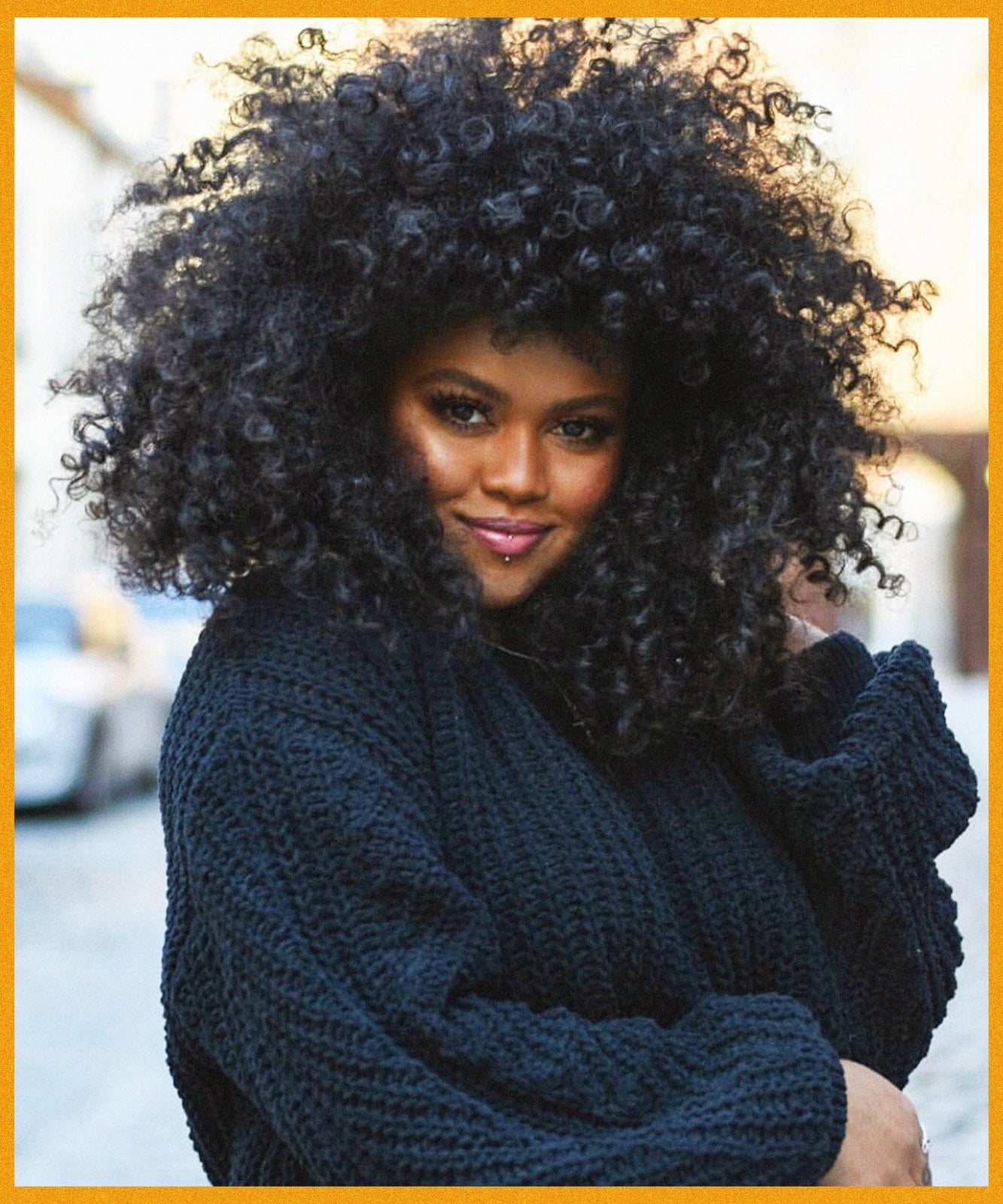
Who it suits: naturally curly or coily hair of thick texture, starting at shoulder length or longer. The volume comes from air drying and natural curl, and the middle part balances the width. If your hair is fine or low density, the weight of long layers may pull out the curl; a shorter version works better.
Glossy Mid-Back Waves With Subtle Highlights
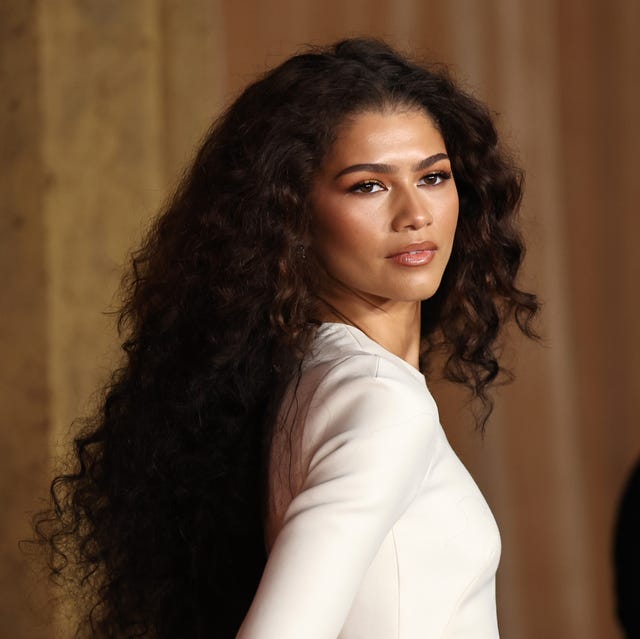
The glossy finish here comes from the combination of long layers and a shine serum, not from heat styling. The subtle highlights sit close to the base color, so the dimension reads as natural light rather than a salon appointment. Ask your stylist for: mid-back length with long layers, natural glossy waves. A side view shows how the layers stack to create movement without losing the thick, dark brown density. The middle parting keeps the fall even.
This technique suits thick, wavy hair that already holds a polished air-dried wave. The highlights need a toning appointment every 12 weeks to keep the warm tones from drifting brassy. A trim every 8 to 10 weeks maintains the clean hemline and prevents the ends from thinning out. The frizz is minimal here because the long layers let the wave pattern settle without interruption.
Abundant Mid-Back Curls With Subtle Dimension
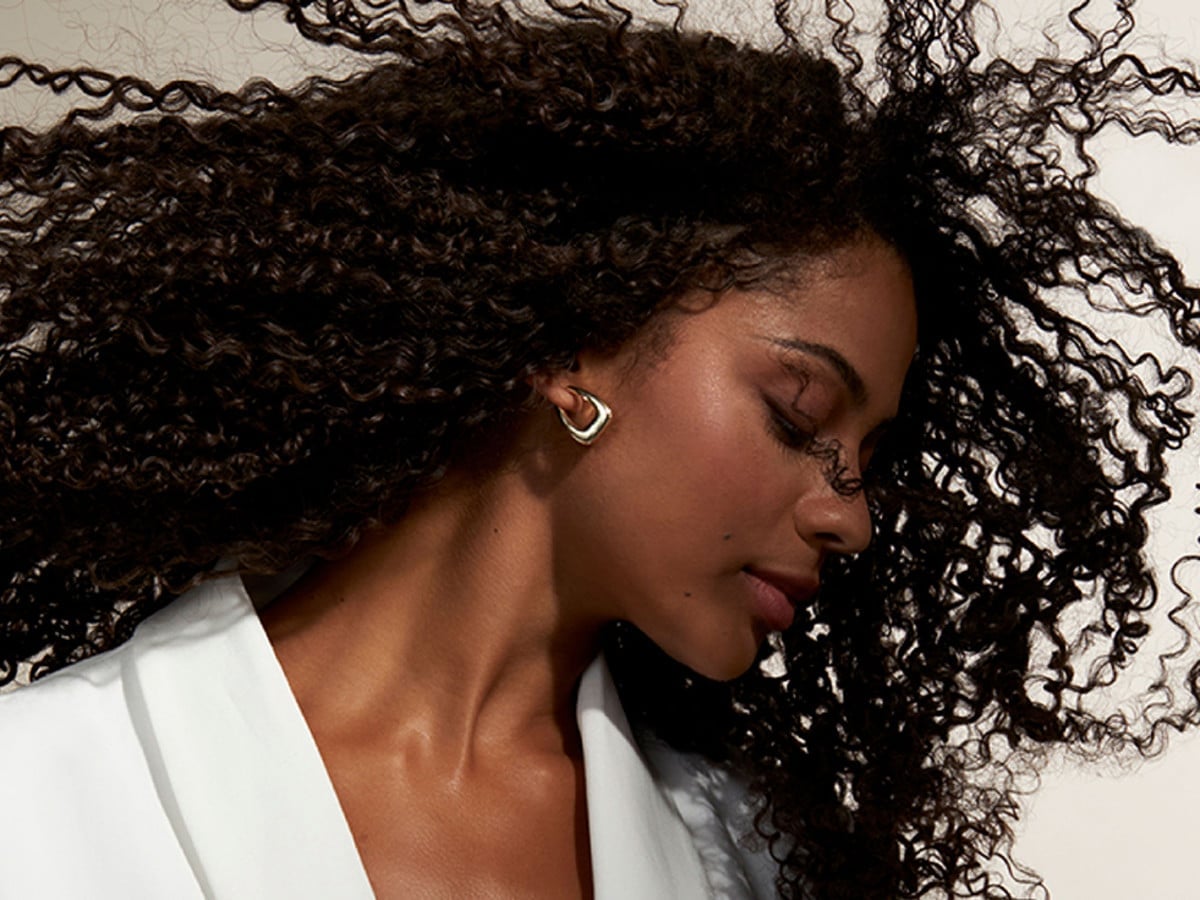
Where the previous style relies on a glossy, controlled wave, this one leans into abundant natural curls and lets them spread. The subtle highlights, a few shades lighter than the dark brown base, add depth without changing the overall tone. Ask your stylist for: mid-back length, abundant natural curls, subtle highlights. A curl-enhancing product scrunched into damp hair is enough to define the pattern; air drying preserves the volume that a diffuser would compress. For thick, curly hair that tends to look flat at the root, this cut and color combination keeps the eye moving. The side view shows how the long layers prevent the bulk from sitting too heavy at the ends. A trim every 10 to 12 weeks is standard.
Voluminous Medium Brown Natural Curls
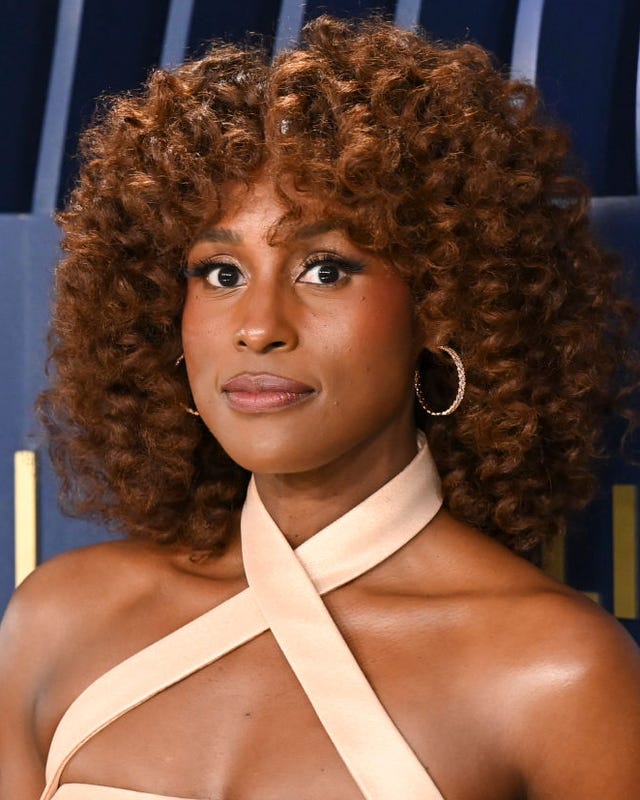
Maximum natural volume without a pyramid shape comes from strategic layering that removes weight from the interior while leaving the perimeter intact. Ask your stylist for: mid-back length, voluminous natural curls, medium brown. The medium brown base color is a single tone, so the texture creates dimension on its own. A curl-defining cream applied to soaking wet hair and scrunched upward sets the pattern; air drying is essential for the frizz to settle into shape. This is a salon-leaning cut: the layering requires precision, but daily styling is minimal. A trim every 10 to 12 weeks keeps the volume distributed evenly.
Dark Blonde Mid-Back Waves With Balayage
The curtain bangs here are the detail that turns a standard mid-back cut into a face-framing system. They blend into the long layers and catch the balayage highlights, so the lightest pieces sit around the cheekbones and shoulders. Ask your stylist for: mid-back length, long layers, curtain bangs, dark blonde balayage. The wavy texture is air-dried, with a texturizing spray added at the ends for separation. This is a salon-built style: the balayage placement and the curtain fringe both require a skilled hand. The season for this cut is transitional, fall and spring, when humidity is unpredictable and you want the option of pulling it back without losing the shape. A trim every 8 to 10 weeks keeps the bangs from landing in your eyes and the layers from blending into one length.
Braids With Loose Curly Ends
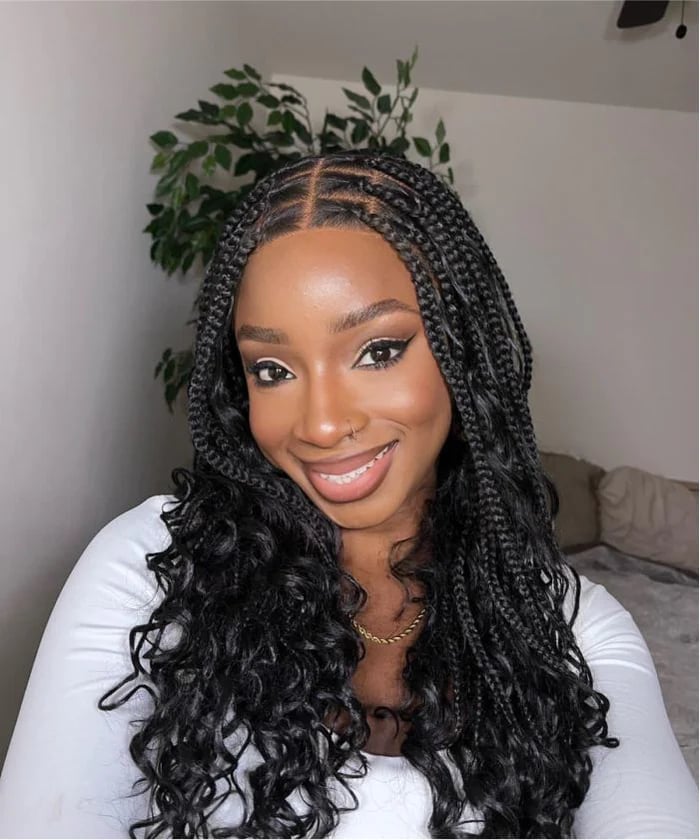
The genius of this style is the handoff: box braids handle the top and sides with tidy structure, then dissolve into loose, defined curls that fall past the shoulders. The middle part keeps the braided half from feeling severe, while the dark black color lets the two textures talk to each other. It suits hair of mid-back length that can handle braiding without strain, and it is a salon commitment. Ask your stylist for: box braids with loose curly ends, mid-back length. Once the braids are in, saturate the curly ends with a curl-defining serum and re-braid as needed to keep the transition clean.
This protective style does not hide your natural texture, it gives it a vacation. The braids cut down on daily detangling, but the loose ends still need their moisture routine. Plan for a few hours in the chair to get the braids right, and expect to refresh the ends more often than the roots.
Voluminous Coily and Wavy Mid-Back Textures

Two models, one message: thick coily wavy hair at mid-back length is a volume event, not a problem to be flattened. The dark brown coily side gets blonde highlights for dimension, while the wavy blonde side just lets its natural body run. Both are air-dried, which is the point. Layers are what keep this much texture from turning into a triangle, so ask your stylist for: mid-back length, embrace natural volume and texture. A diffuser on low heat will enhance the curl pattern without crushing it, and a trim every ten to twelve weeks keeps the ends from looking ragged. This is for anyone with thick hair who is tired of fighting the frizz and ready to let it take up space.
Shoulder-Length Defined Natural Curls
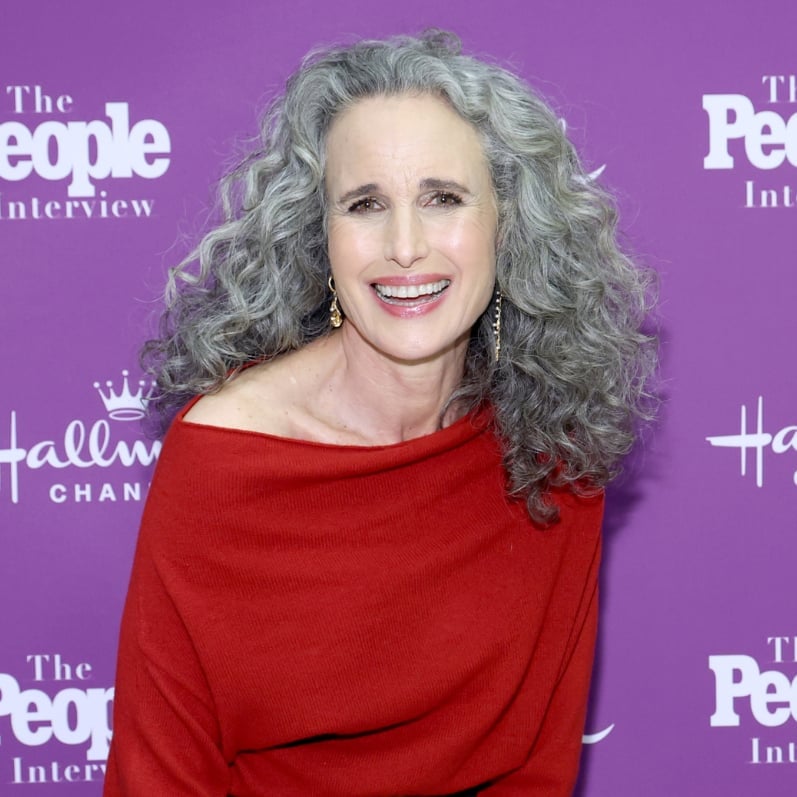
Thick, dark brown hair cut into layers lets each curl land where it should, and the middle part shows off the pattern from a side view. The air-dried finish keeps the frizzy texture honest, which is what gives it that lived-in volume. Ask your stylist for: shoulder length, defined natural curls. A curl-defining cream worked through wet hair and a diffuser will set the shape, and a trim every eight to ten weeks keeps the ends from splitting. This length is the sweet spot for defined curls that still move.
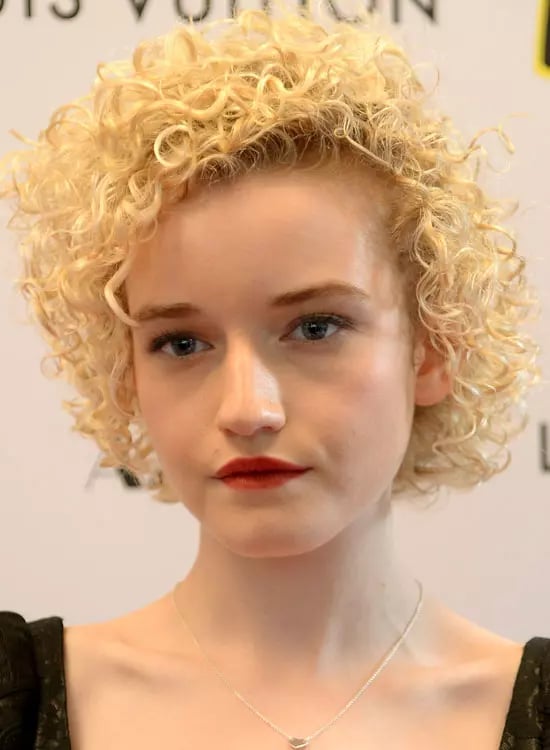
Dark Brown Shoulder-Length Curly Shag
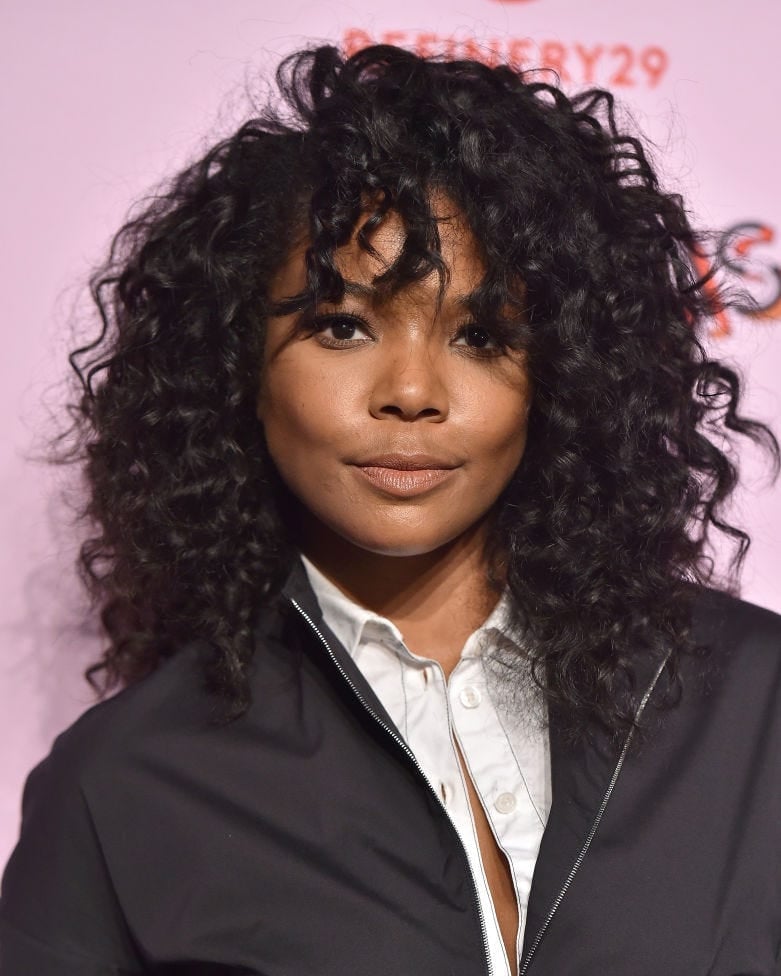
A shag can work on curly hair without turning into a mushroom. Ask for curtain bangs and let the layers do the math. This shoulder-length cut on dark brown, thick curls keeps the volume at the crown and the face-framing pieces soft. The air-dried texture with visible frizz is what makes the shag look modern, not fussy. Ask your stylist for: shoulder length curly shag, curtain bangs. This is a salon cut, since the layering has to be done on dry curls to work. A texturizing spray will accentuate the shag effect between trims, which you will want every six to eight weeks to keep the shape.
Voluminous Updo With Shoulder-Length Curls
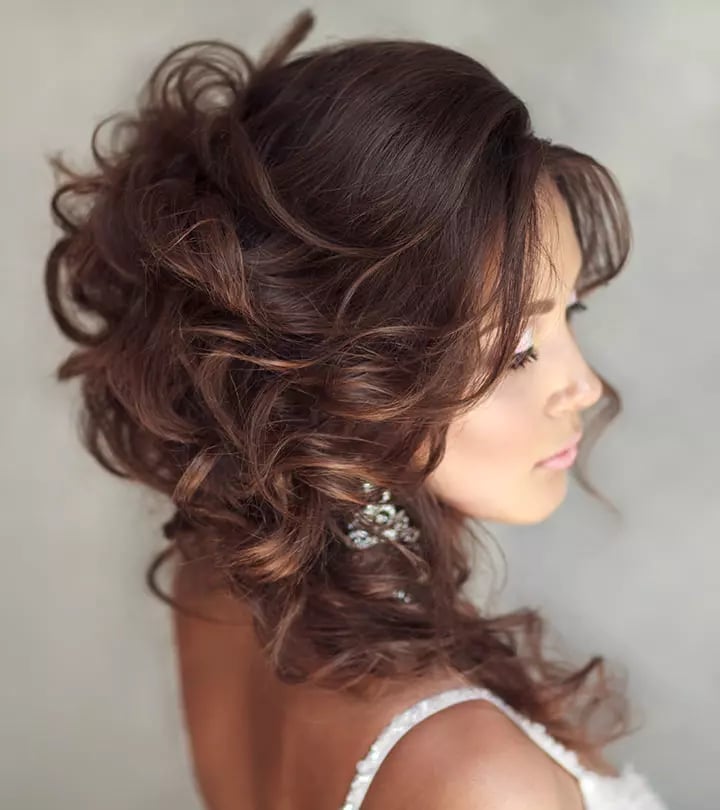
Dark brown, shoulder-length curls with a frizzy texture are pinned to create volume. The side parting adds asymmetry, keeping it from looking like a bun. It is an evening or event style, since it takes more effort than a daily ponytail. Ask your stylist for: voluminous updo with shoulder-length loose curls. A texturizing spray gives the curls grip so they stay put, and decorative pins add security without needing a single bobby pin to show. The frizz is the feature here; it gives the silhouette its soft, cloud-like edge.
Shoulder-Length Curly Hair With Bangs
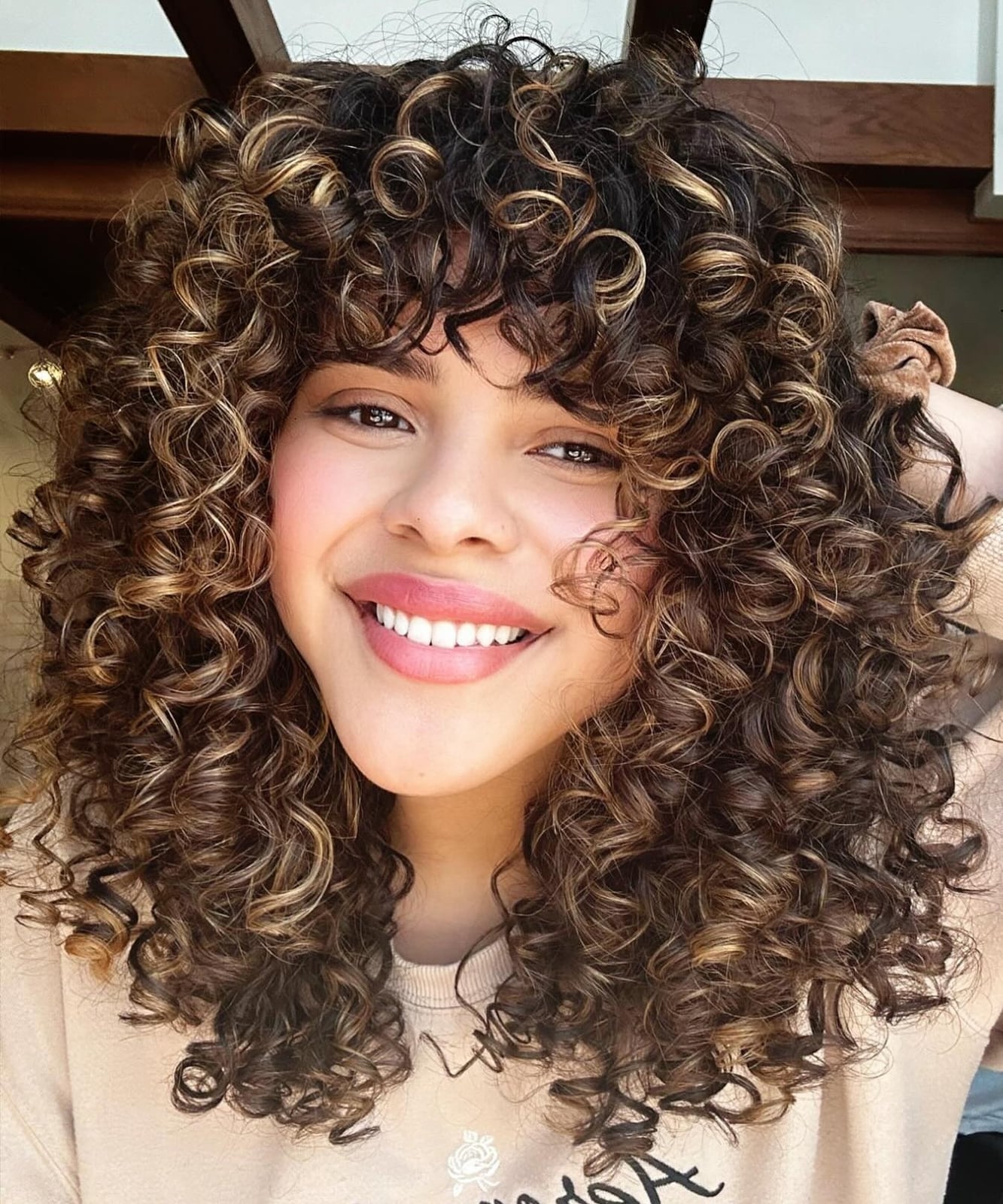
Curly bangs turn a shoulder-length cut into a face-framing statement instead of a shapeless mass. The side parting shows off the dark brown base and blonde highlights, while the thick, air-dried curls keep everything lively. This works best for those with naturally curly hair and a willingness to commit to bangs, since they need trimming every four to six weeks to hold their shape. Ask your stylist for: shoulder length layered cut, curly bangs. A curl-defining cream, scrunched in while damp, encourages the texture without fighting the frizz.
Collarbone Curls With Honey Blonde Roots
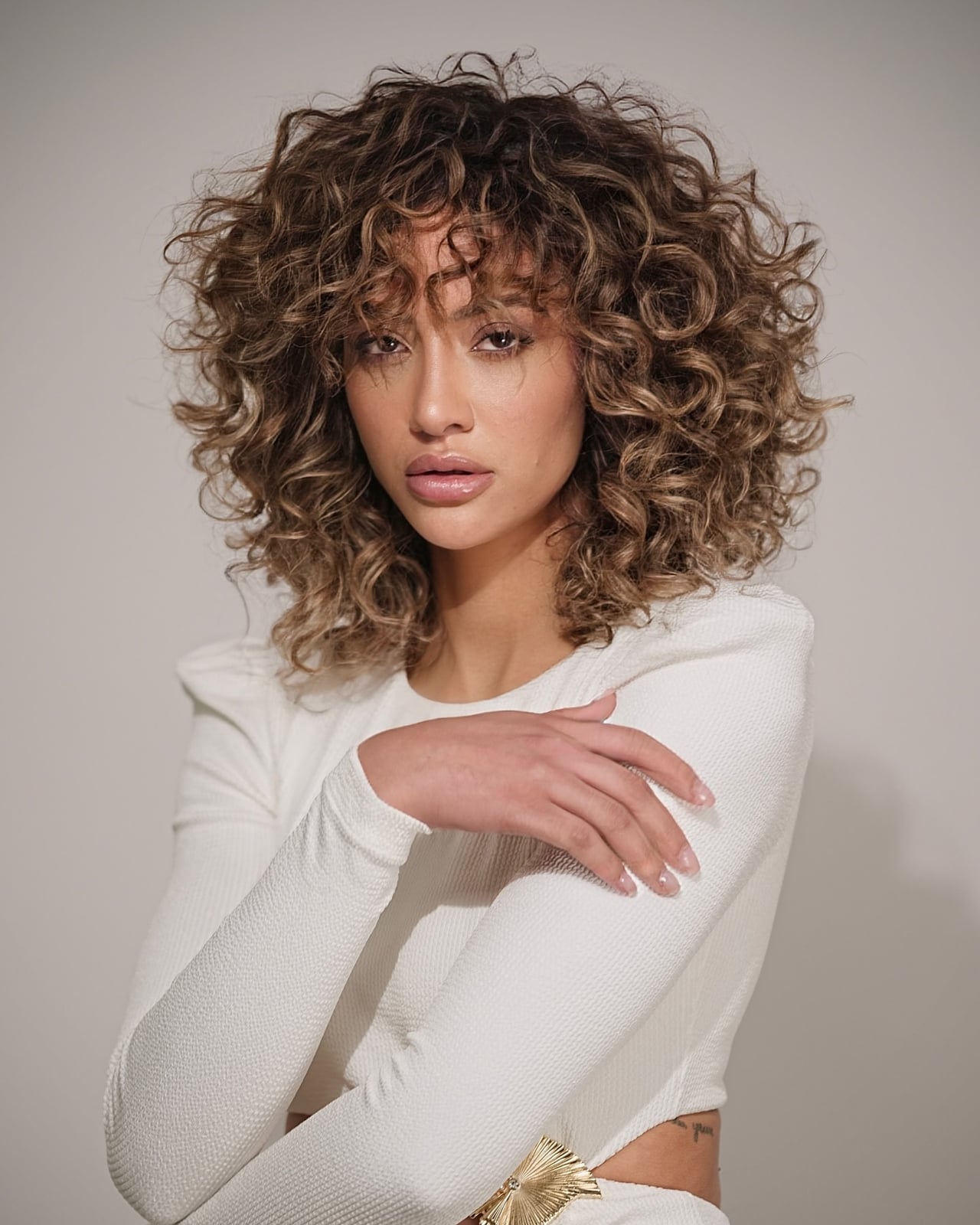
If you’re torn between a bold all-over blonde and a subtle depth, this collarbone length with honey blonde and darker roots splits the difference. The darker shadow at the roots keeps the color from feeling flat, while the curtain bangs and defined, voluminous curls give the style a soft, lived-in feel. It suits thick, wavy or curly hair that can handle volume without turning into a triangle. Ask your colorist for: honey blonde with dark roots, curtain bangs. Since the root shadow is meant to grow out, you can stretch the color appointments, but the cut itself needs a trim every six to eight weeks to keep the curls bouncing.
Collarbone Layers With Blonde Balayage
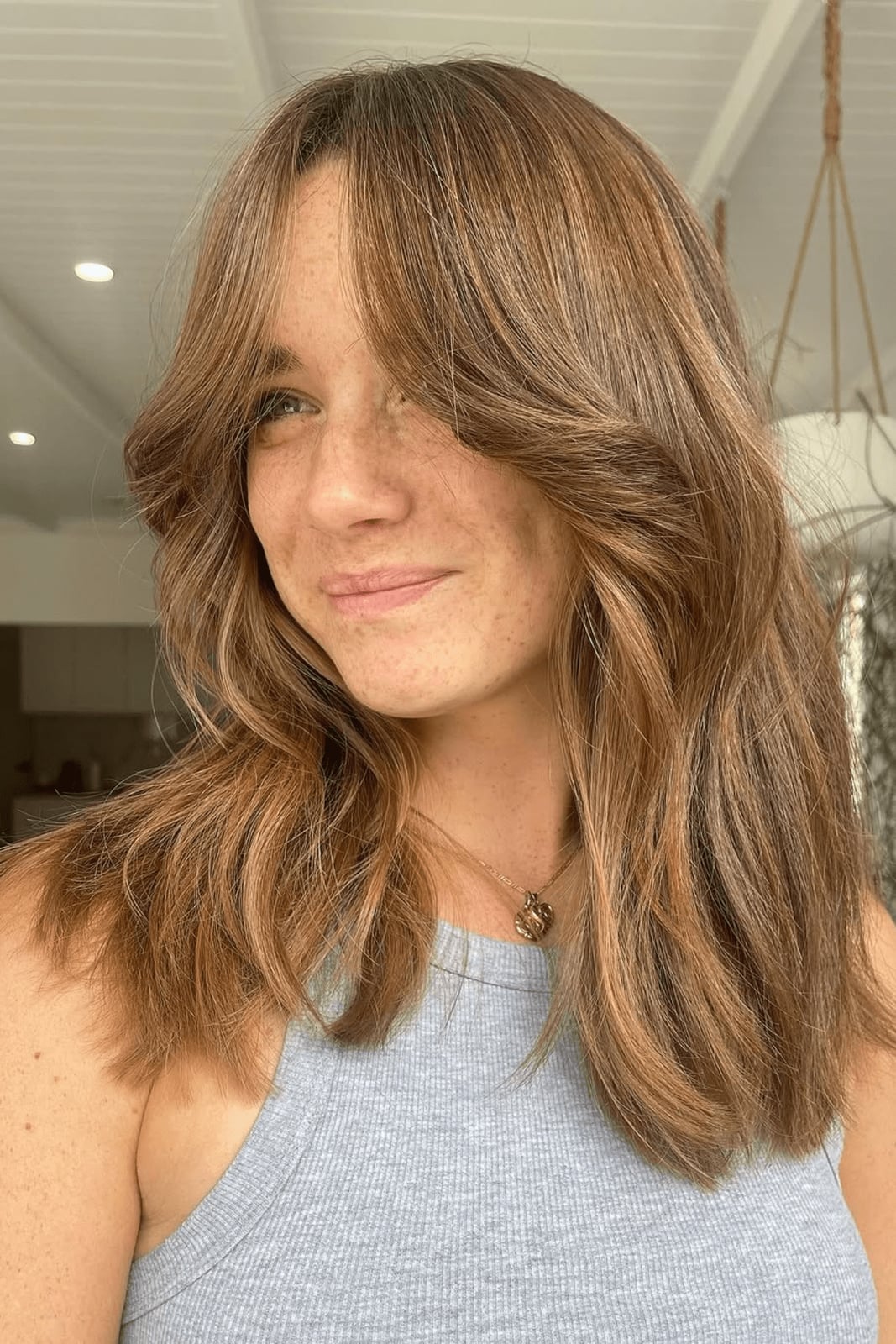
The long layers in this collarbone cut are cut to move with the wave, not against it, which is exactly what you want when your texture leans frizzy. The face-framing bangs start at the middle part and sweep outward, so they blend into the hair instead of sitting as a separate piece. The blonde balayage on the medium brown base adds dimension without requiring a root touch-up every month. Ask your colorist for: medium brown blonde balayage, face-framing bangs. This is a salon build, from the balayage placement to the layer points, so budget for the chair time and skip attempting it at home.
Collarbone Waves With Face-Framing Bangs

Loose waves with a bit of frizz are the whole point of this collarbone cut, which makes it a warm-weather workhorse. The long layers keep the thick texture from weighing itself down, and the curtain bangs frame the face without needing constant fussing. Since the style relies on natural texture, you can skip the hot tools on humid days and just let it dry, which is a relief when the forecast says thunderstorms. Ask your stylist for: collarbone length long layers, curtain bangs. The dark brown base with subtle highlights adds depth, and a light mousse applied to damp hair encourages the wave pattern. Expect a trim every eight to ten weeks to keep the layers from growing into one solid block.
Collarbone Lob With Defined Curls
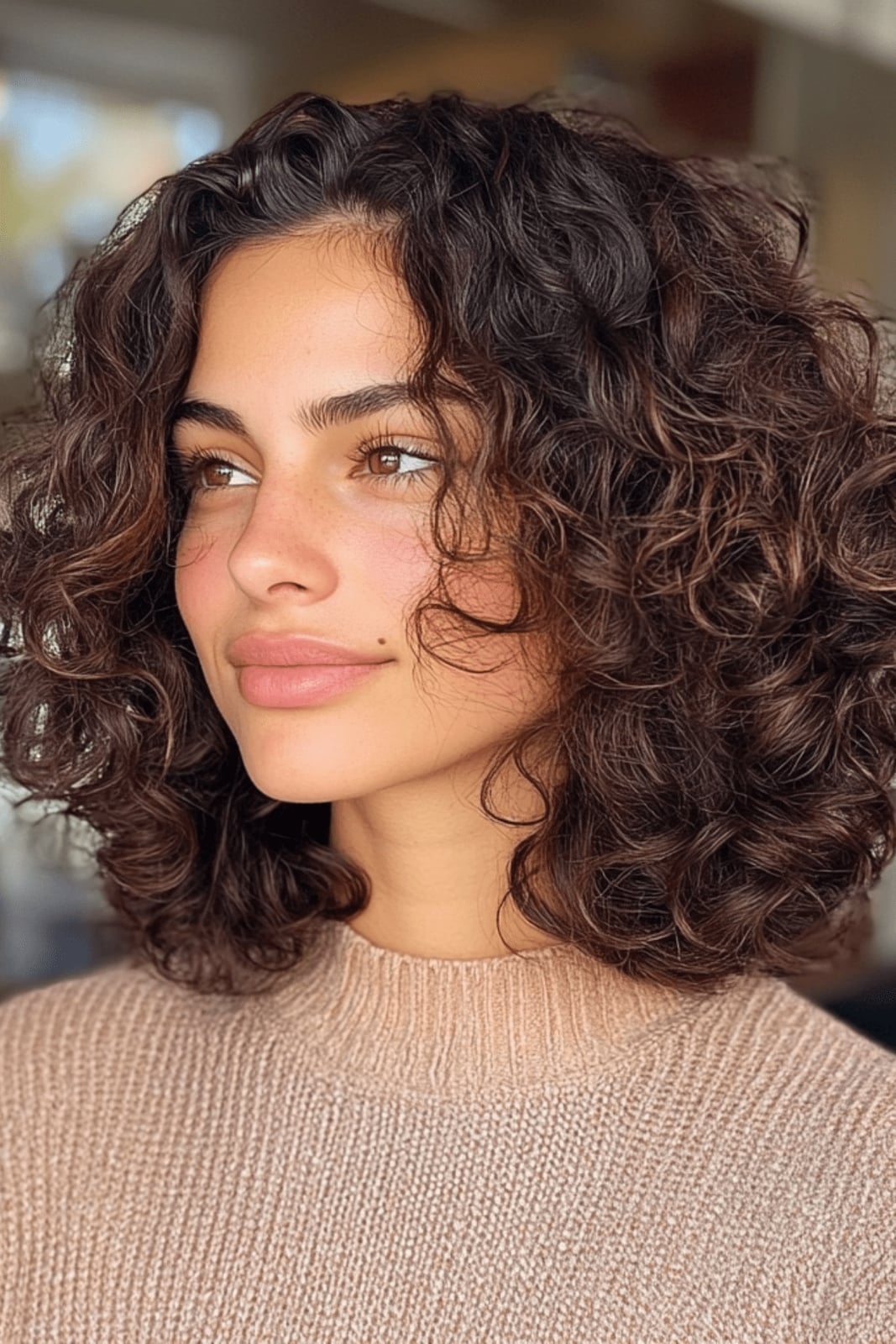
Defined curls in a lob are a commitment, because the shorter length means every curl has to land right or the whole shape looks off. That said, when the cut is done well, the collarbone length gives you enough weight to keep the curl pattern from shrinking up into a puff. The curtain bangs soften the front, and the dark brown with subtle highlights adds a bit of shimmer. Ask your stylist for: collarbone length lob, defined curls, curtain bangs. To keep the definition, you’ll be applying curl cream and diffusing on wash days, and the lob needs a trim every eight to ten weeks. The downside: on a bad humidity day, the curls may decide to go their own way, and there’s not much length to hide behind.
Collarbone Layers With Face-Framing Bangs, Wavy
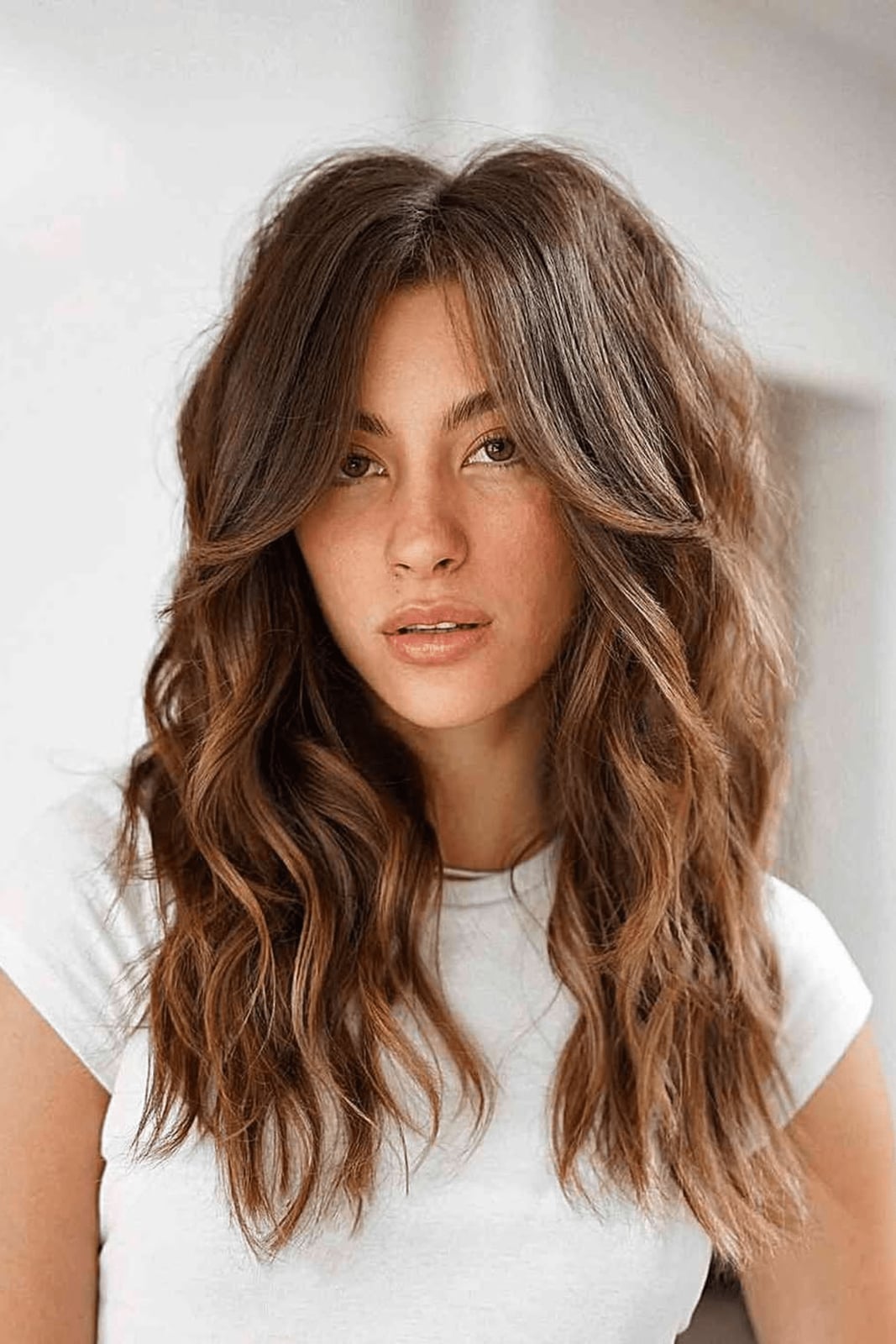
Face-framing pieces that cooperate with wavy, thick, slightly frizzy hair start with long layers cut to collarbone length and face-framing bangs that begin below the cheekbone. The middle part lets the front pieces fall forward naturally, so the waves do most of the work. Dark brown with subtle highlights keeps the dimension from turning muddy. Ask your stylist for: collarbone length long layers, face-framing bangs. To style, apply a texturizing spray to damp hair, then air dry, and the collarbone face framing bangs will settle into place. This cut suits thick, wavy textures that need weight removed without losing shape.
Voluminous Gray Lob With Soft Waves
On fine hair, volume is usually a negotiation, not a guarantee. This voluminous gray lob stacks the odds in your favor: collarbone length, soft layers, and a side part that lets side-swept bangs sweep some lift right into the crown. The polished blowout finish turns fine, wavy texture into something that looks deliberately shaped rather than flattened. A lob this length keeps fine strands from dragging themselves down, while the layers give the waves somewhere to go. Ask your stylist for: collarbone length lob, voluminous soft waves, side-swept bangs. If your texture is thicker, the same cut reads heavier, so your stylist would remove more weight through the interior. For fine hair, a volumizing spray at the roots before blow drying keeps the shape honest.
Collarbone Layers With Honey Blonde Balayage, Side Swept Bangs
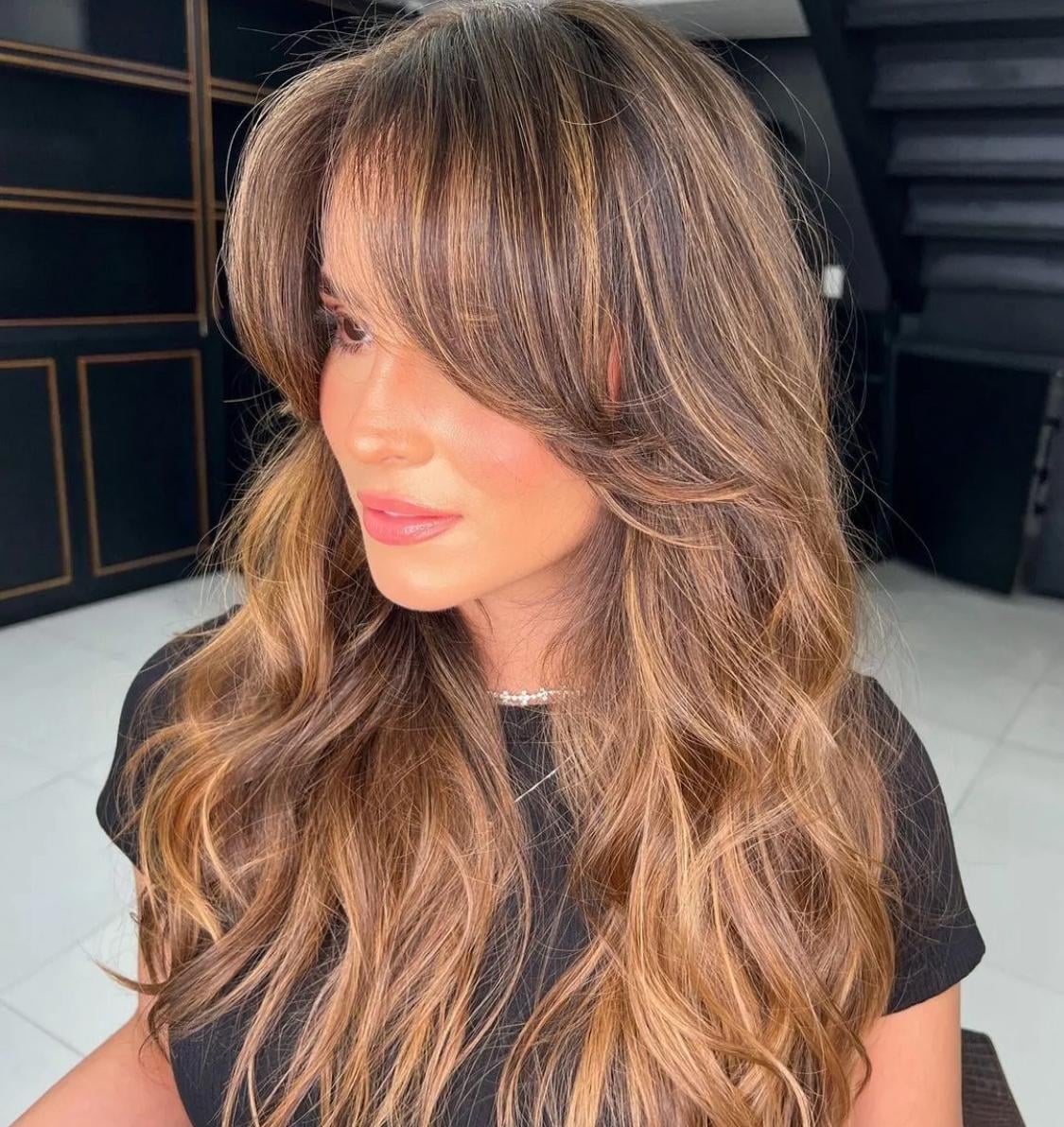
The design logic here is that soft layers do the structural work while the honey blonde balayage handles the color. Long, soft layers are cut into collarbone-length hair, with side-swept bangs that blend into the front. The balayage is painted freehand, so the lighter pieces land where the waves naturally catch light, no foil lines in sight. On thick, wavy texture, this means the color shows dimension, not stripes. This is a salon build: the balayage alone takes a few hours, and the cut needs to be shaped around your wave pattern. Ask your stylist for: collarbone length long layers, side-swept bangs, honey blonde balayage. A smoothing serum on dry hair keeps the frizz in check without weighing the waves down.
Collarbone Shag With Wispy Curtain Bangs
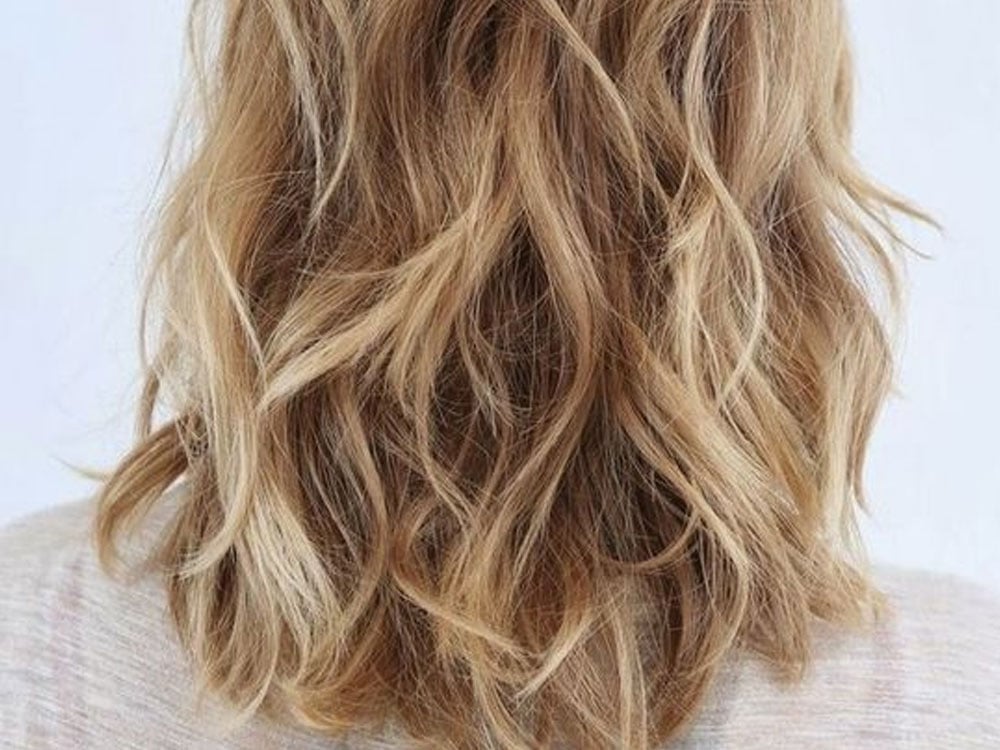
Few cuts handle a festival lineup better than a shag, and this collarbone version brings the goods. The choppy, textured layers are cut to collarbone length, with wispy curtain bangs that part in the middle and frame the face without committing to full fringe duty. The dark brown base with subtle highlights gives the tousled waves enough depth to look deliberate, not messy. This is the cut for thick, wavy, frizzy hair that has been fighting its own volume for years. Ask your stylist for: collarbone length shag, wispy curtain bangs. A texturizing spray worked through damp hair, then a quick tousle as it dries, and the shape holds through a long day outdoors. It lands somewhere between lived-in and deliberate, which is exactly where it should be.
Collarbone Shag With Choppy Layers
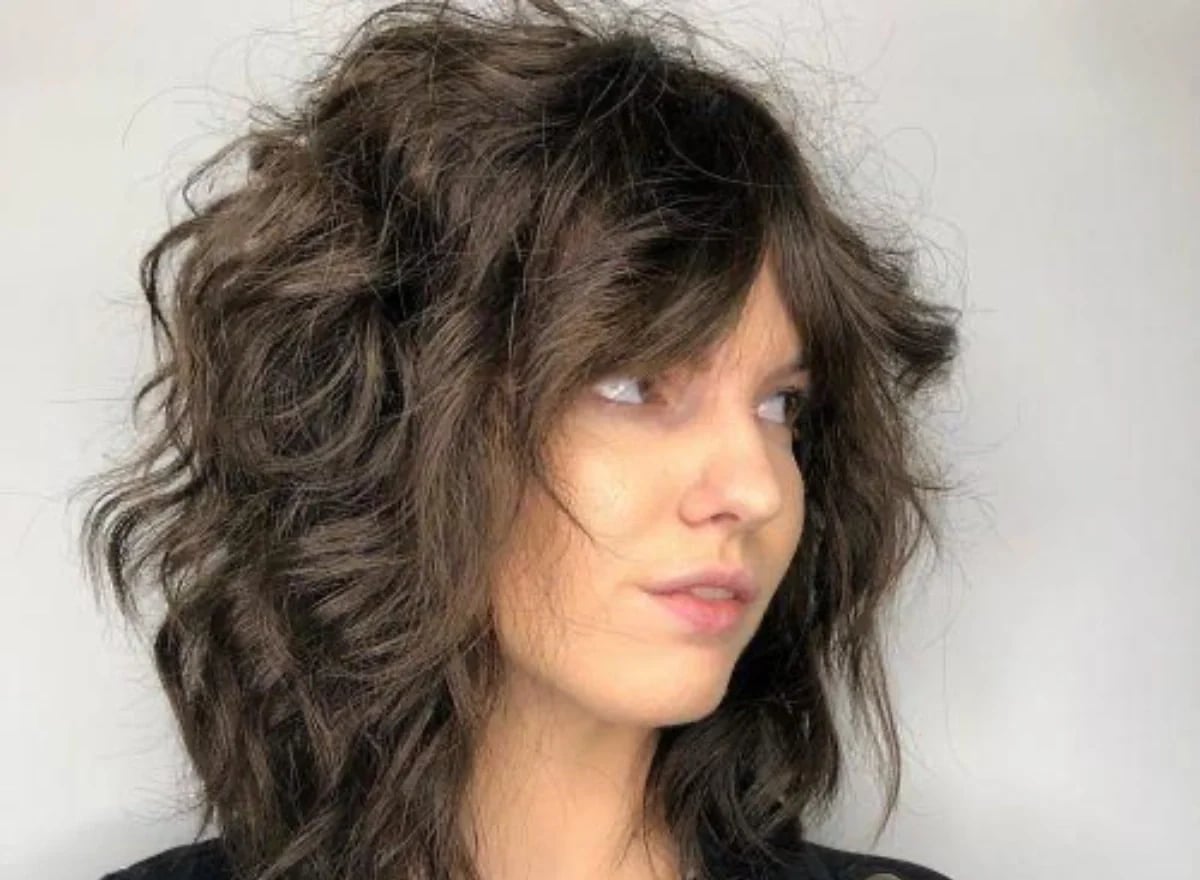
Air dried hair only looks this good if the cut was precise to begin with. A collarbone shag with choppy layers and wispy bangs is built on the idea that texture is the style. The choppy layers are cut into thick, wavy hair to remove bulk and let each wave land on its own terms. The wispy bangs frame the face lightly, and the side part keeps the shape from feeling too round. Ask your stylist for: collarbone length shag, choppy layers, wispy bangs. The daily effort is low, a texturizing paste on damp hair and walk away, but the cut itself demands a stylist who knows how to slice into thick texture. A trim every six to eight weeks keeps the choppy ends from turning into one blunt blob. This style wears its personality up front, so if you prefer your hair quiet, this is not it.
Shoulder-Length Shaggy Layers With Curtain Bangs
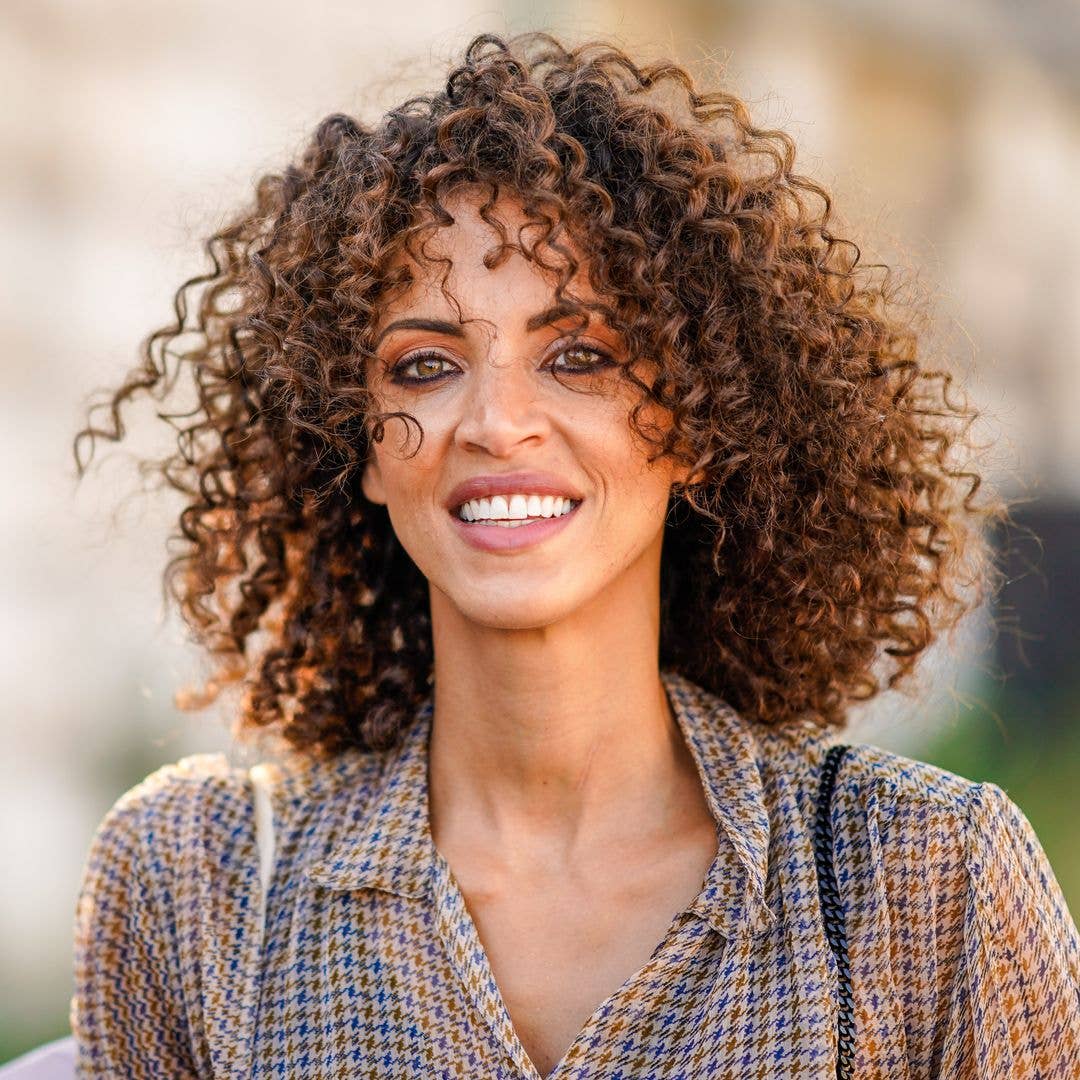
Wondering how to get that shaggy, air-dried look without looking like you gave up? The secret is in the layering. This shoulder-length cut stacks shaggy layers that remove weight while keeping the wavy, slightly frizzy texture intact. Curtain bangs frame the face and blend into the layers, so the whole thing moves as one piece. Ask your stylist for: shoulder-length shaggy layers, curtain bangs. It’s a salon-leaning cut, but the styling is DIY: a texturizing spray, a quick scrunch, and you’re out the door. Plan on a trim every six to eight weeks to keep the shape honest.
Chin-Length Thick Curly Cut With Frizz

The defined curls here keep their shape while the frizz adds a lived-in texture that reads as natural, not neglected. This cut suits round and oval faces best, drawing the eye downward and balancing width. Ask your stylist for: chin-length short curly cut, embrace frizz. A curl-defining cream and air drying are all you need; the frizz is part of the design. Trim every six to eight weeks to keep the ends from looking ragged.
Chin-Length Layered Bob With Curtain Bangs

If you’re torn between a blunt bob and something with more movement, this layered version splits the difference. The chin-length bob keeps a clean silhouette, while soft curtain bangs and internal layers give it a voluminous, curly lift that a one-length cut can’t match. The salt and pepper color adds contrast that makes the curl pattern pop. Compared to a smoother, straighter bob, this one leans into thickness and texture, so it’s the better pick for naturally curly hair that wants to breathe. Ask your stylist for: chin-length layered bob, curtain bangs. A curl cream and air drying will keep the shape defined, and a trim every six to eight weeks maintains the bounce.
Chin-Length Shag With Short Textured Bangs
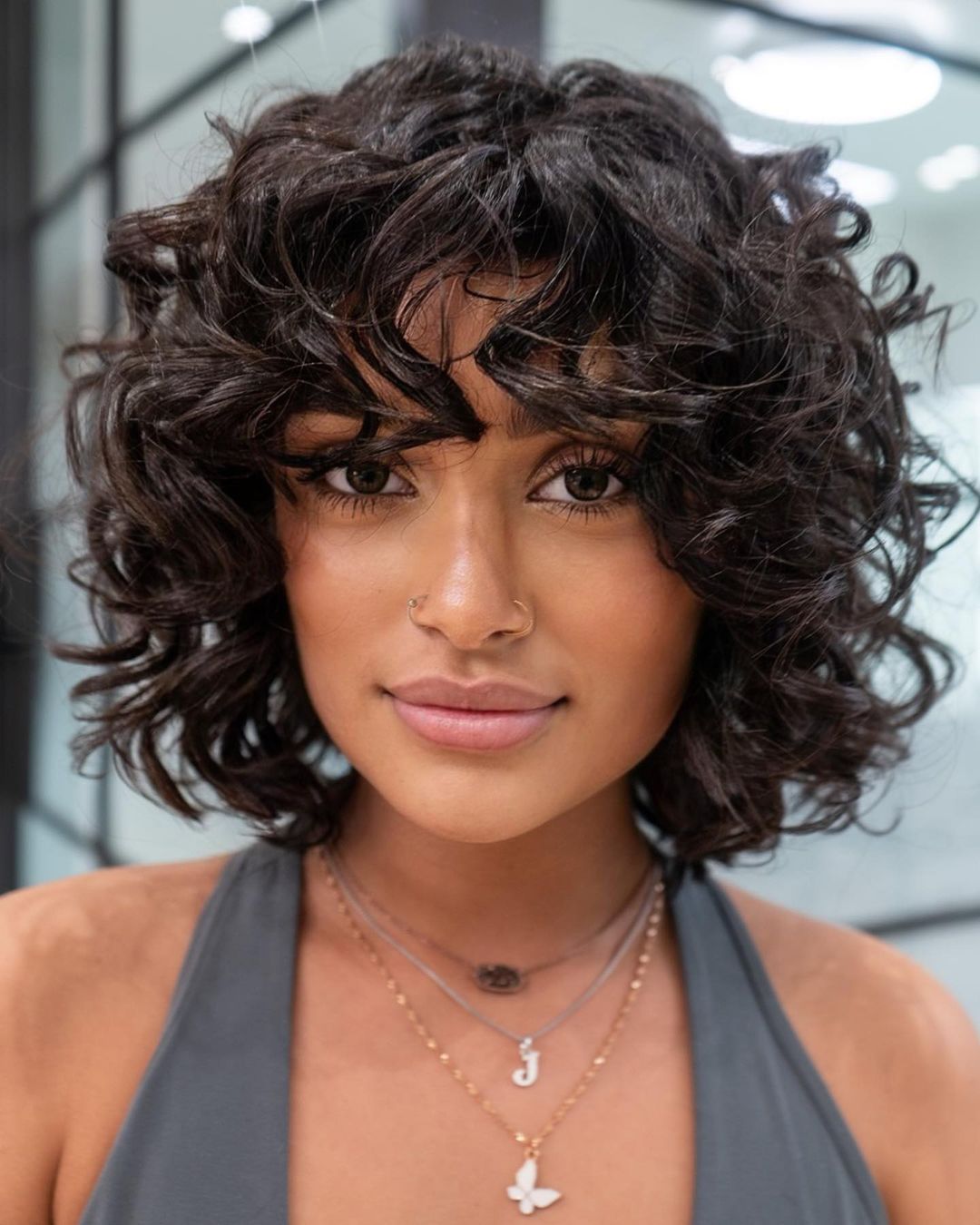
The technique here is all about contrast: short, textured bangs that stop well above the brow, paired with a chin-length shag that layers the crown and sides. Defined ringlets get room to coil, while the frizz adds a soft halo that keeps the cut from looking too precious. This is a salon cut through and through, since the bangs alone require a steady hand to get that piecey, not blunt, finish. Ask your stylist for: chin-length shag, short textured bangs. Styling is straightforward: a curl-defining paste worked through damp hair, then air dry. A trim every six to eight weeks keeps the bangs from growing into your eyes.
Ear-Length Short Bob With Defined Curls
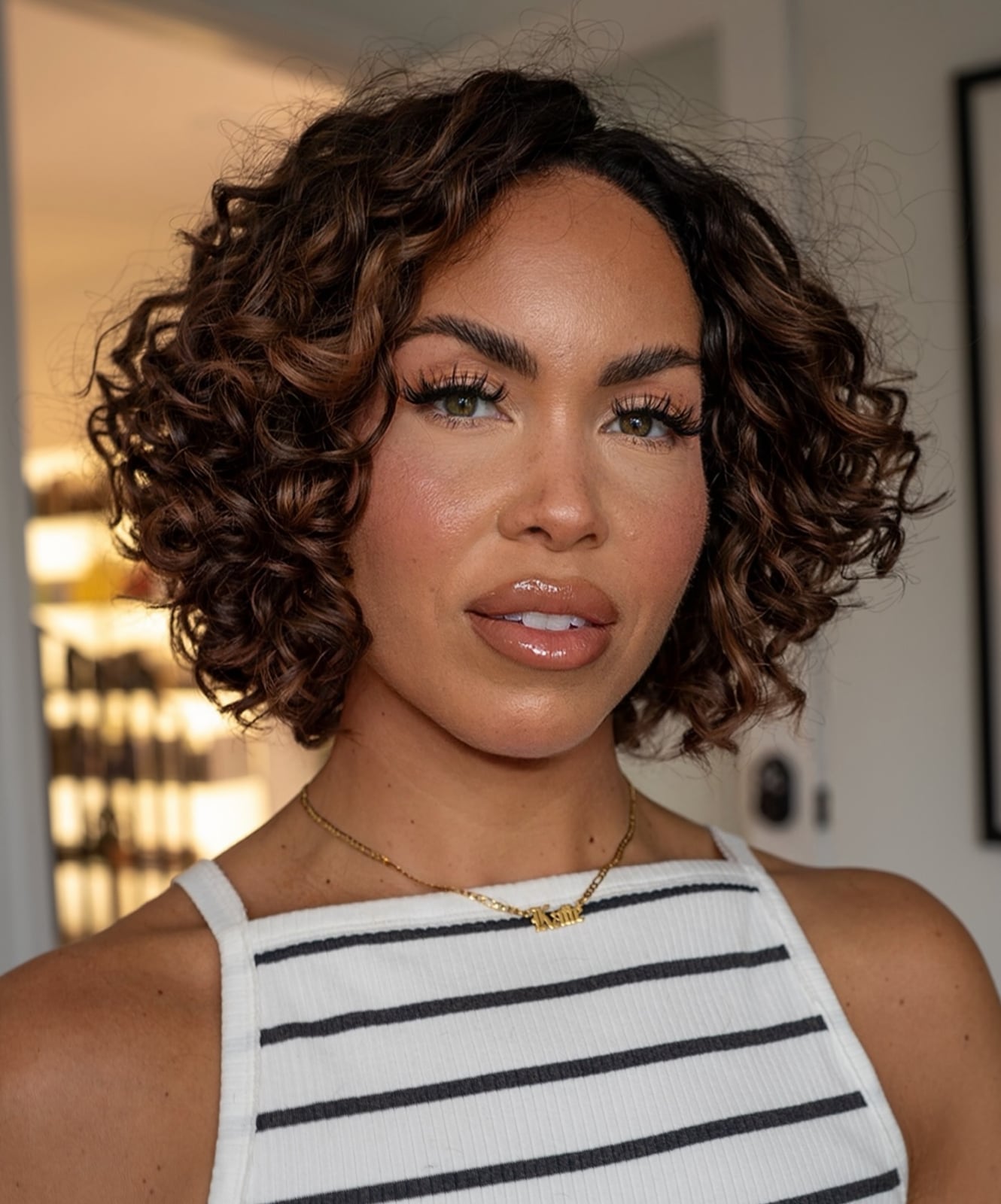
Come summer, an ear-length bob is the haircut equivalent of kicking off your shoes. This short bob stops right at the ear, which means less hair touching your neck and more defined, bouncy curls on display. The thick, frizzy texture works in your favor here, giving the cut a full, rounded shape that a finer hair type couldn’t pull off. Dark brown with auburn highlights adds depth that catches the eye. Ask your stylist for: ear-length short bob, defined bouncy curls. Styling is minimal: a curl-defining serum, air dry, and go. It’s a salon cut that pays off in daily ease, with a trim every six to eight weeks to keep the line crisp.
Ear-Length Short Bob With Curly Bangs
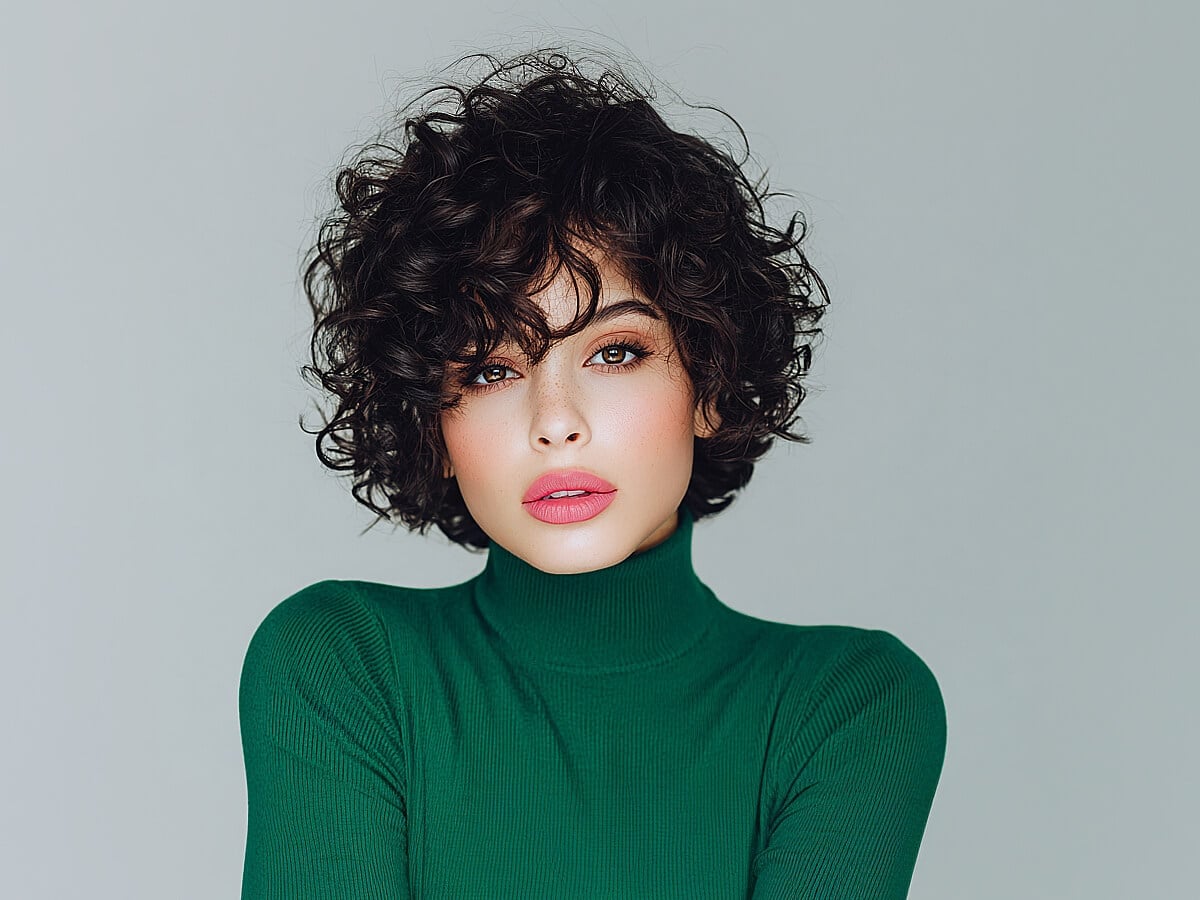
Curly bangs need a haircut that respects their bounce, or they turn into a triangle. An ear-length short bob with curly bangs keeps the shape compact so the curls stay defined instead of spreading out. The dark brown, thick texture air dries with visible frizz, which is part of the charm. Ask your stylist for: ear length short bob, curly bangs.
This cut suits thick, curly hair that can handle the density of a bob without weighing down. A curl-defining cream helps keep the bangs from separating into odd strands, and air drying is the fastest route. Curly bangs need a trim every 6-8 weeks to hold their shape, or they start to wander into your eyes and lose the frame.
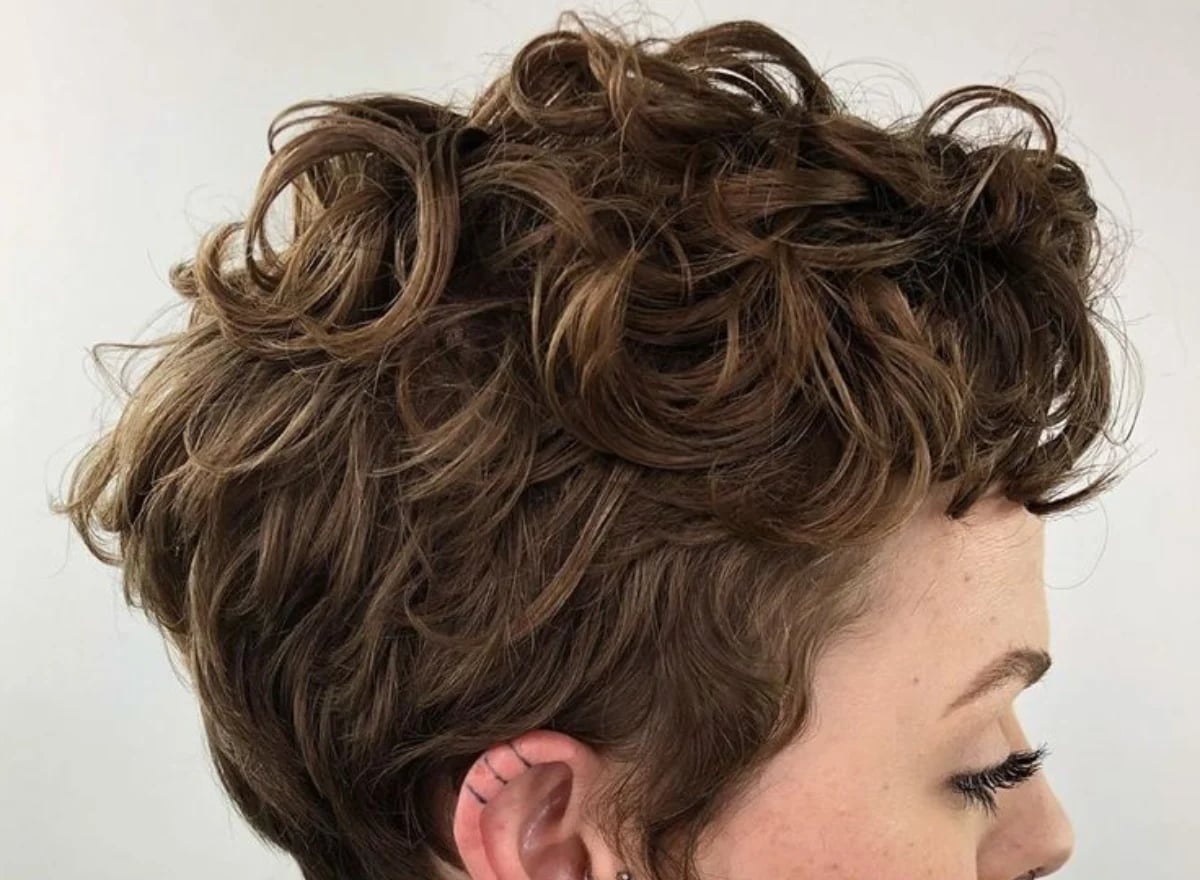
Short Pixie Cut With Voluminous Curls
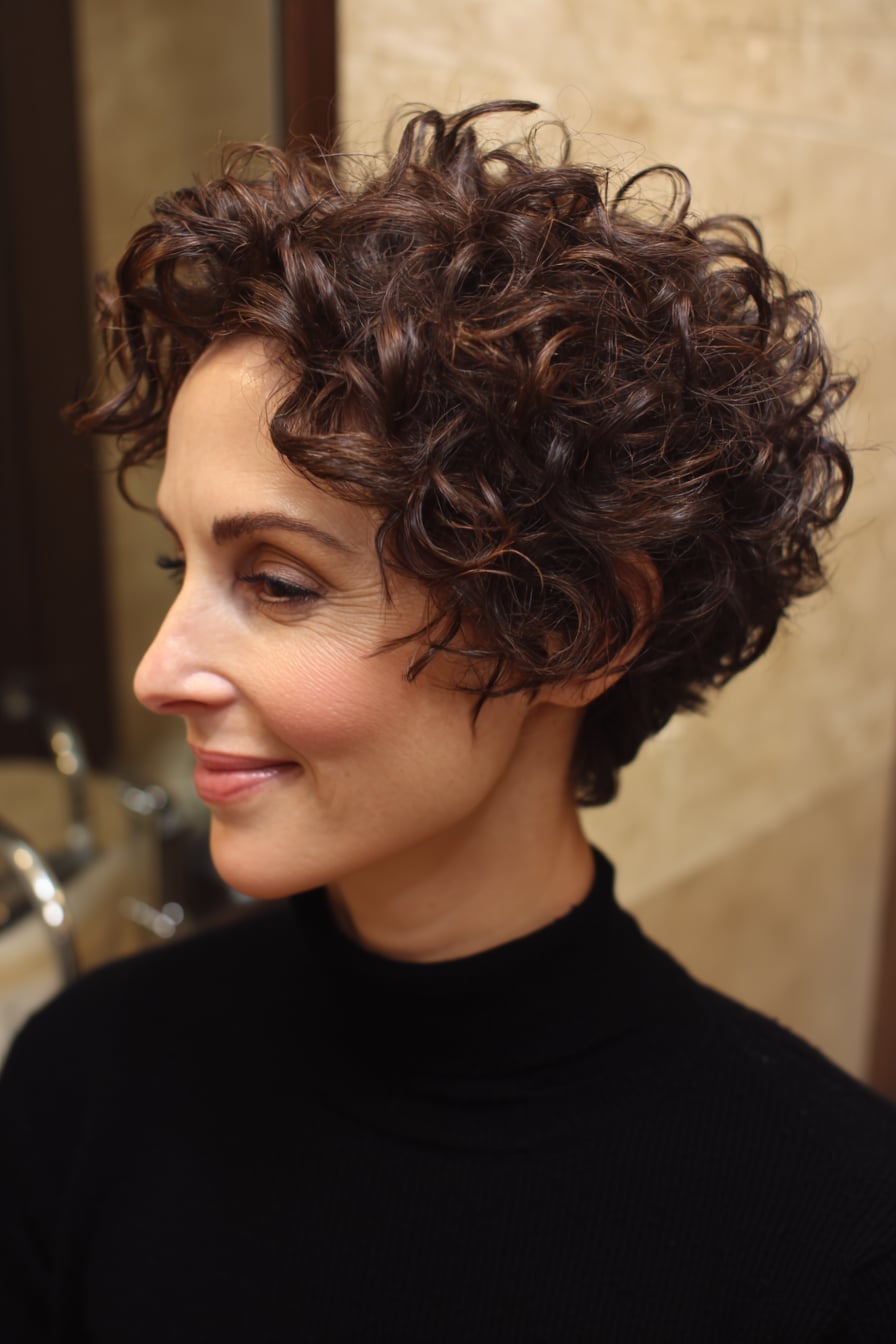
Wondering how to get volume without the frizz taking over? A short pixie cut with voluminous curls is the answer, especially for fine, curly hair that needs lift at the roots. The dark brown color with subtle auburn undertones adds depth, while short side-swept bangs keep the face open. Ask your stylist for: short pixie cut, voluminous curls, short side-swept bangs. This is a salon cut, not a DIY project, because the layers need precision to avoid a lopsided result. The payoff is a style that air dries into shape with a scrunch of texturizing paste.
Final Thoughts
When you choose a cut for frizzy hair, let your density be the guide. Thick hair benefits from long layers that remove weight and let curls spring up, while finer hair holds shape better with a blunt baseline or a shorter length that builds fullness.
- Trim every 6-10 weeks to maintain shape and prevent split ends.
- Use a sulfate-free shampoo and conditioner designed for curly or frizzy hair.
- Apply a leave-in conditioner or curl cream to damp hair to enhance definition and reduce frizz.
- Air dry or use a diffuser on low heat to minimize frizz.
The right cut makes all the difference, so embrace your texture.

