19 Hairstyles for Gray Hair Over 50 with Layered Gray Bob Curtain Bangs 2027

Gray hair over 50 is less about hiding the silver and more about letting a sharp cut do the talking. Soft face-framing layers and curtain bangs are the current favorites, replacing heavy side-swept fringes and poker-straight styles from seasons past.
This collection of 19 hairstyles for gray hair over 50 runs the gamut from longer, layered looks to short, textured pixies. Whether your fine strands fall flat by noon or your thick curls need weight removed, each cut here solves a specific problem without demanding a stylist visit every two weeks. Expect blunt bobs, lived-in shags, and everything in between.
Collarbone Bob With Side-Swept Bangs

Blunt ends on a collarbone bob give fine, straight gray hair a silhouette that actually holds its shape rather than drifting into a sad triangle. The side-swept bangs and subtle side part break up the line just enough to keep it modern without requiring a curling iron. This cut works best if your hair reaches collarbone length or longer and your texture is on the finer side; the side-swept bangs also soften square and round jawlines. Ask your stylist for a collarbone bob with side-swept bangs and blunt ends. Air dry with a light texturizing spray for that piecey finish, and plan for a baseline trim every six to eight weeks.
Chin Length Bob With Curtain Bangs

A chin-length bob with a middle part relies on precision: if the curtain bangs are cut a millimeter too short, they lose their softness. On fine, straight silver-gray hair, the smooth blowout finish keeps the silhouette clean and the bangs frame the face without fighting the length. Ask your stylist for a chin-length bob with curtain bangs and a middle part. The curtain bangs suit most face shapes because they can be swept to the sides, and a round brush is all you need to style them outward. A trim every six weeks keeps the line sharp.
Layered Lob With Curtain Bangs And Highlights
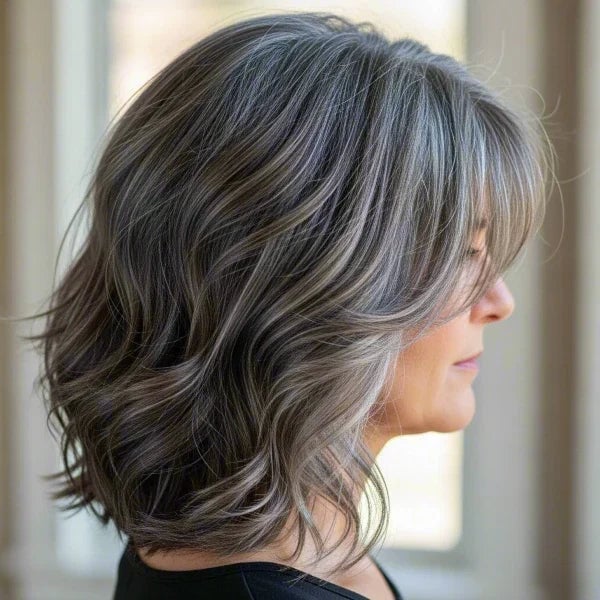
Wondering exactly what to say at the salon to get those face-framing layers without losing length? Start with collarbone length, then ask for soft layers that begin around the chin and curtain bangs that blend into them. The silver highlights are painted on the ends to add dimension against the gray base, not chunky but fine enough to create subtle contrast in loose waves.
Ask your stylist for a collarbone lob with curtain bangs, face-framing layers, and subtle silver highlights. Medium-density wavy hair holds the shape best, and the face-framing layers especially suit round and oval faces. Apply a wave-enhancing serum to damp hair and air dry or diffuse; the layers will need a trim every eight to ten weeks.
Layered Bob With Curtain Bangs And Waves
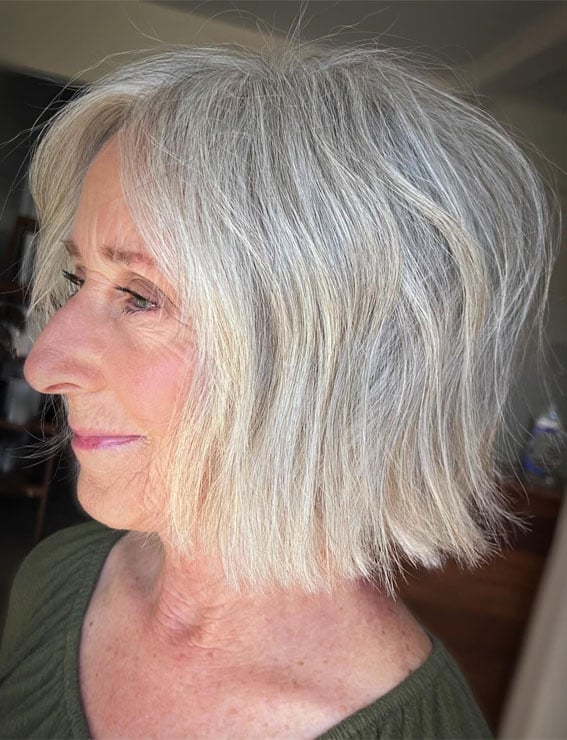
Where a blunt bob can feel severe and a long shag can feel messy, this collarbone layered bob with curtain bangs lands in the middle: visible wave, soft movement, but a defined shape. The middle part and curtain bangs open up the face, while the layers stack enough density to keep the waves from slipping flat. Medium-density wavy hair at collarbone length is the sweet spot here. Ask your stylist for a collarbone layered bob with curtain bangs and soft waves. Use a large barrel curling iron to enhance the wave pattern after blow-drying, and book a trim every six to eight weeks.
Collarbone Shag With Wispy Bangs
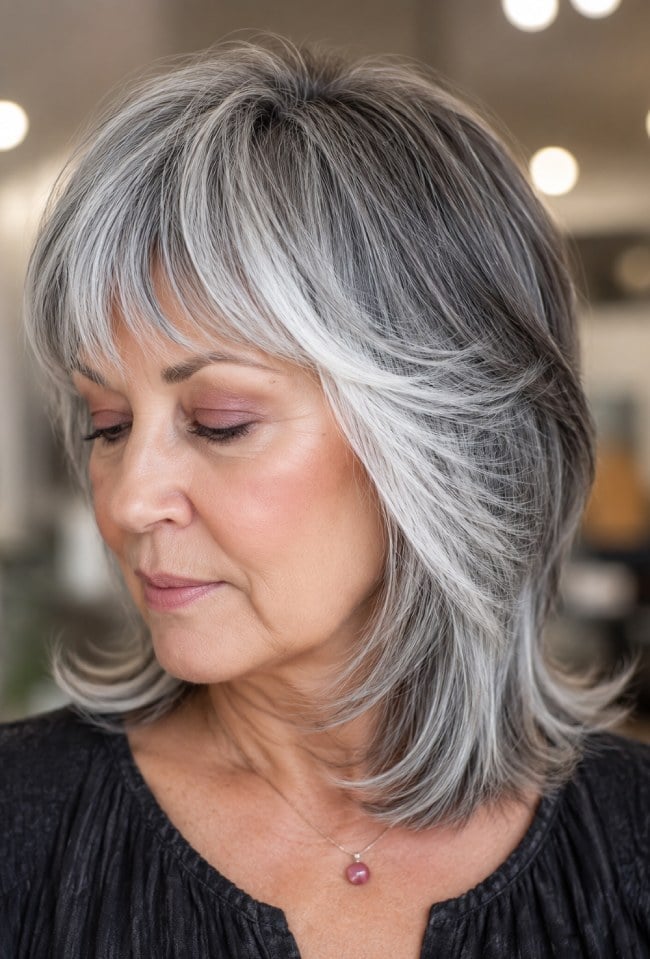
The collarbone shag with wispy bangs relies on a texturizing spray to keep its shape. Those face-framing layers and the wispy fringe are designed to separate and move, which means air drying alone often leads to a shapeless fluff. Thick, wavy hair handles the layering best, and the middle part keeps the shag from looking too retro.
Ask your stylist for a collarbone shag with wispy bangs and face-framing layers. On humid days, the shorter layers can curl unpredictably, so a spritz of texture spray and a quick scrunch is your default morning move. A trim every eight to ten weeks stops the shag from becoming a mullet.
Layered Shag With Side-Swept Bangs
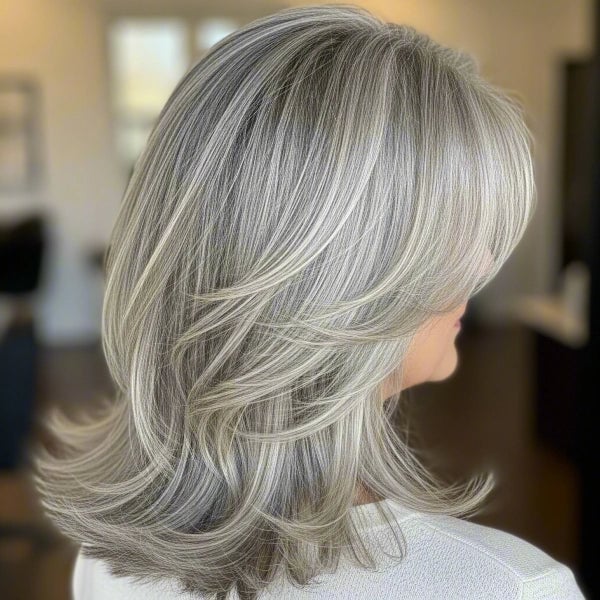
A shag lives on precision layering, so the common mistake is letting your stylist go rogue with the shears. This collarbone-length version keeps the face-framing layers soft and the side-swept bangs deliberate. Fine wavy hair needs each layer cut with the texture in mind, or the shape collapses.
Ask your stylist for: collarbone shag, side-swept bangs, face-framing layers. Book a trim every eight to ten weeks to protect the weight distribution. A blowout with volume at the roots is the simplest way to style it at home.
Collarbone Bob With Side-Swept Fringe, Wavy, Close-Up Take

The beauty of this collarbone bob is that the side-swept fringe softens the line of the cut without committing to full bangs. The side parting and gently tousled waves give the gray a lived-in texture that reads as relaxed rather than unkempt, which makes it a natural fit for the transitional weeks between seasons. Medium density wavy hair holds the shape best, and the fringe helps soften angular jawlines. Ask your stylist for a collarbone bob, side-swept fringe, soft waves. A spritz of sea salt spray and a quick scrunch with your fingers is all it takes to wake up the texture, then let it air dry or use a diffuser on low. The baseline needs a trim every six to eight weeks to keep the ends from straying.
Layered Chin Bob With Volume

Does a layered bob with volume work for rounder face shapes? Yes, if the crown lift is built into the cut. This chin-length version uses soft layers and a voluminous blowout to create vertical height, with side-swept bangs that keep the perimeter light. Medium density wavy gray hair with subtle silver highlights adds movement.
Ask your stylist for: chin length layered bob, soft waves, volume. The lift at the crown requires a round brush during drying.
Layered Chin Bob With Side-Swept Bangs
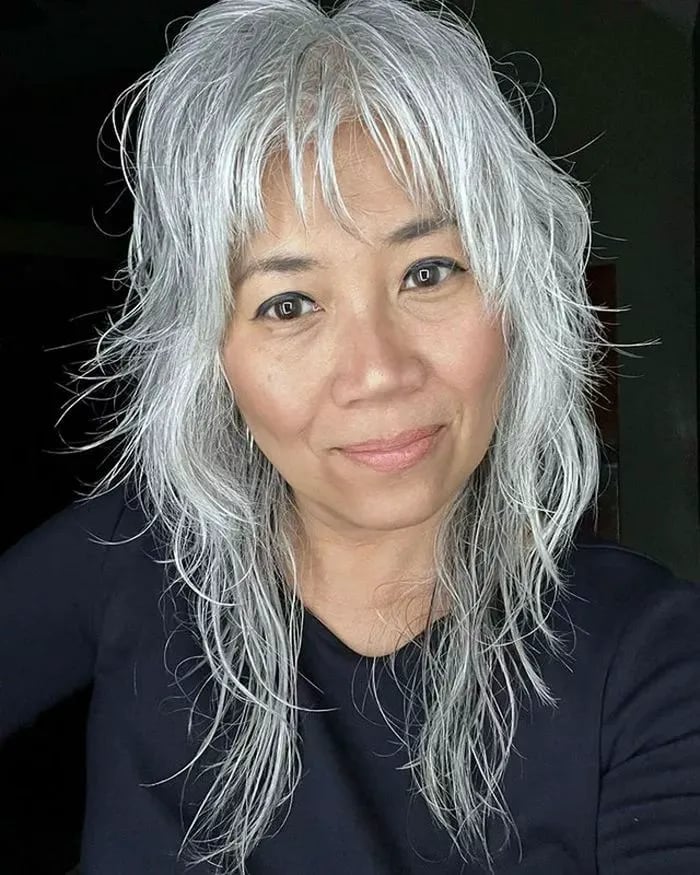
Textured layers on fine wavy gray hair demand a specific cutting technique: each section is point-cut rather than blunt, which prevents the ends from looking sparse. This chin-length bob with side-swept bangs uses that approach to create definition without losing density. The subtle blonde highlights add dimension to the gray base.
Ask your stylist for: chin length layered bob, textured layers, side-swept bangs. A small dab of texturizing paste on the ends keeps the separation visible between trims.
Chin Bob With Blunt Bangs And Color Panels
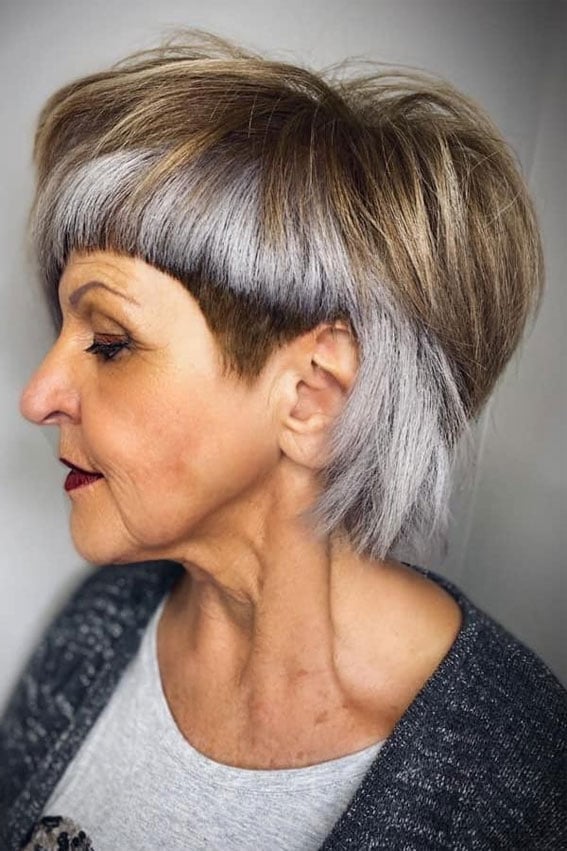
A classic blunt bob keeps things simple, but this one adds contrasting color panels in gray and blonde that shift the look toward statement territory. The straight fine texture and blunt bangs create a clean, graphic line that works well on oval or long face shapes. The drawback is the upkeep: paneled color needs a toning appointment every four to six weeks, and the blunt bangs need a flat iron pass daily to stay sharp.
Ask your stylist for: chin length bob, blunt bangs, contrasting color panels. A baseline trim every six weeks keeps the shape from losing its edge.
Angled Chin Bob With Smooth Blowout
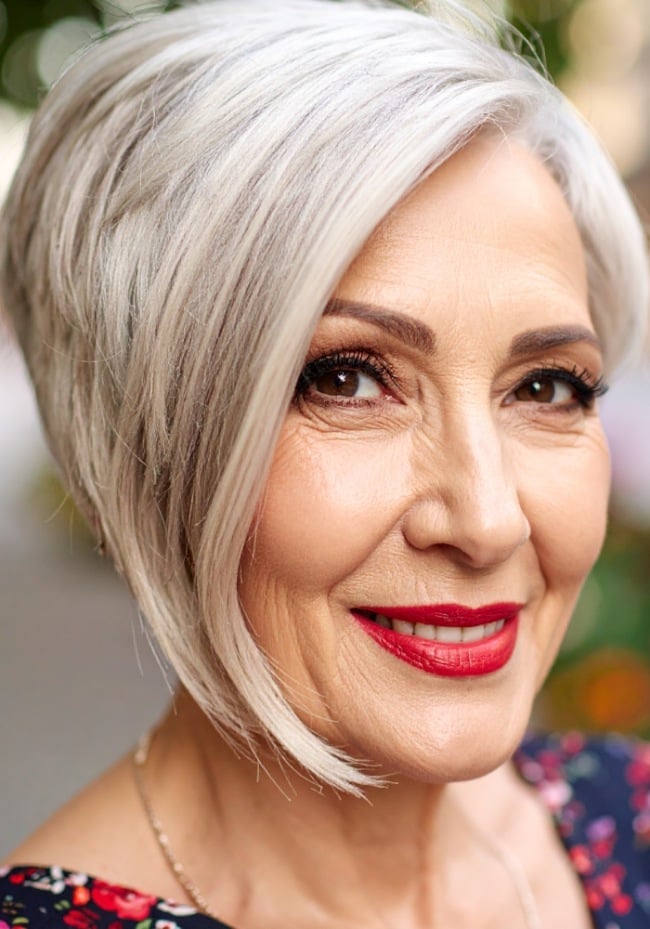
Wondering how to get that sharp, angled line without it looking like a helmet? Ask your stylist for a chin length angled bob, side-swept bangs, and a smooth finish, then let them work the blowout with a round brush to tuck the ends under. The fine, straight ash blonde gray texture takes direction well, so the angle stays crisp. A ceramic flat iron on low heat seals the deal. Expect to revisit the salon every six to eight weeks, because the sharpness is the whole point.
Short Layered Cut With Textured Bangs
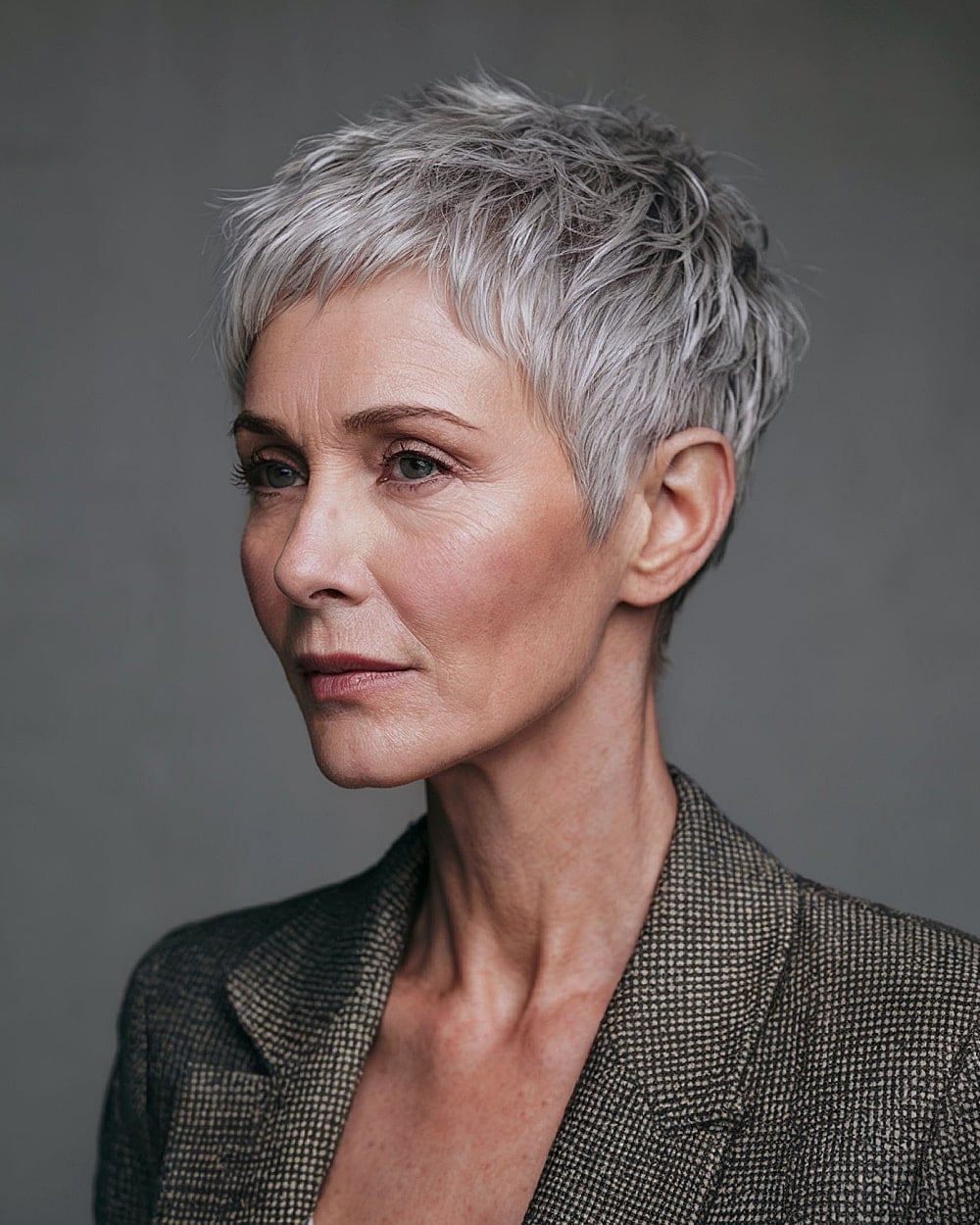
The piecey, textured ends on this short layered cut require a morning commitment. With wavy, medium density hair at ear length, a side parting and short, textured bangs, the style needs a texturizing paste worked through damp sections to define each piece. Skip that step and the layers lose their shape. The result is a look that reads as deliberately undone.
Short Pixie With Blunt Fringe
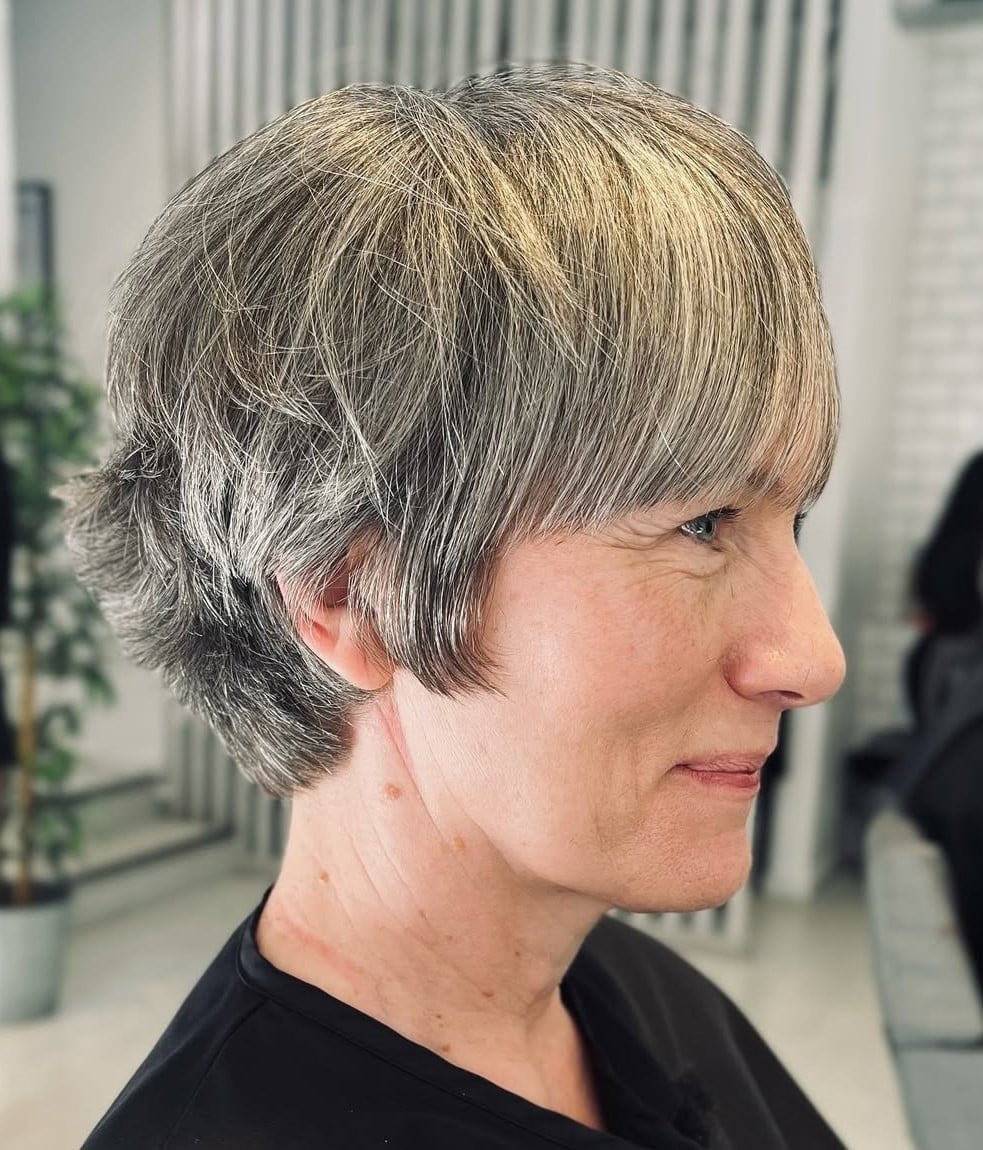
The mistake is assuming a blunt fringe on fine, wavy hair will stay sharp on its own. It won’t, not without precise layering behind it. Ask your stylist for a short pixie, blunt fringe, and textured blowout, and be clear that the fringe has to fall cleanly over the forehead. The salt and pepper gray with subtle blonde highlights adds depth, but the fringe is the anchor. A salon-leaning cut like this means booking a trim every four to six weeks. In between, a dab of pomade keeps the edge from drifting.
Short Pixie With Swept Bangs

For warmer months, this short layered pixie with swept-to-the-side bangs is the low maintenance answer to humidity. The silver white color and fine, straight texture take a textured blowout well, and the volume at the crown gives the ear length cut a lift that lasts through the day. Ask your stylist for a short pixie, swept-to-the-side bangs, volume at crown. Use a volumizing mousse at the roots before drying, and a trim every four to six weeks keeps the shape honest.
Gray Pixie With Textured Top

Is your hair fine and straight, but you still want a pixie that doesn’t lie flat? The short textured top on this gray cut is your answer, because the layers are cut to stand up rather than fall. With no bangs to manage, the side-swept parting keeps the ear length shape simple. Ask your stylist for a short pixie, textured top, swept to the side. A wax or paste worked into the top defines the pieces without weighing them down. Trim it every four to six weeks, and the texture does the rest.
Textured Light Gray Pixie
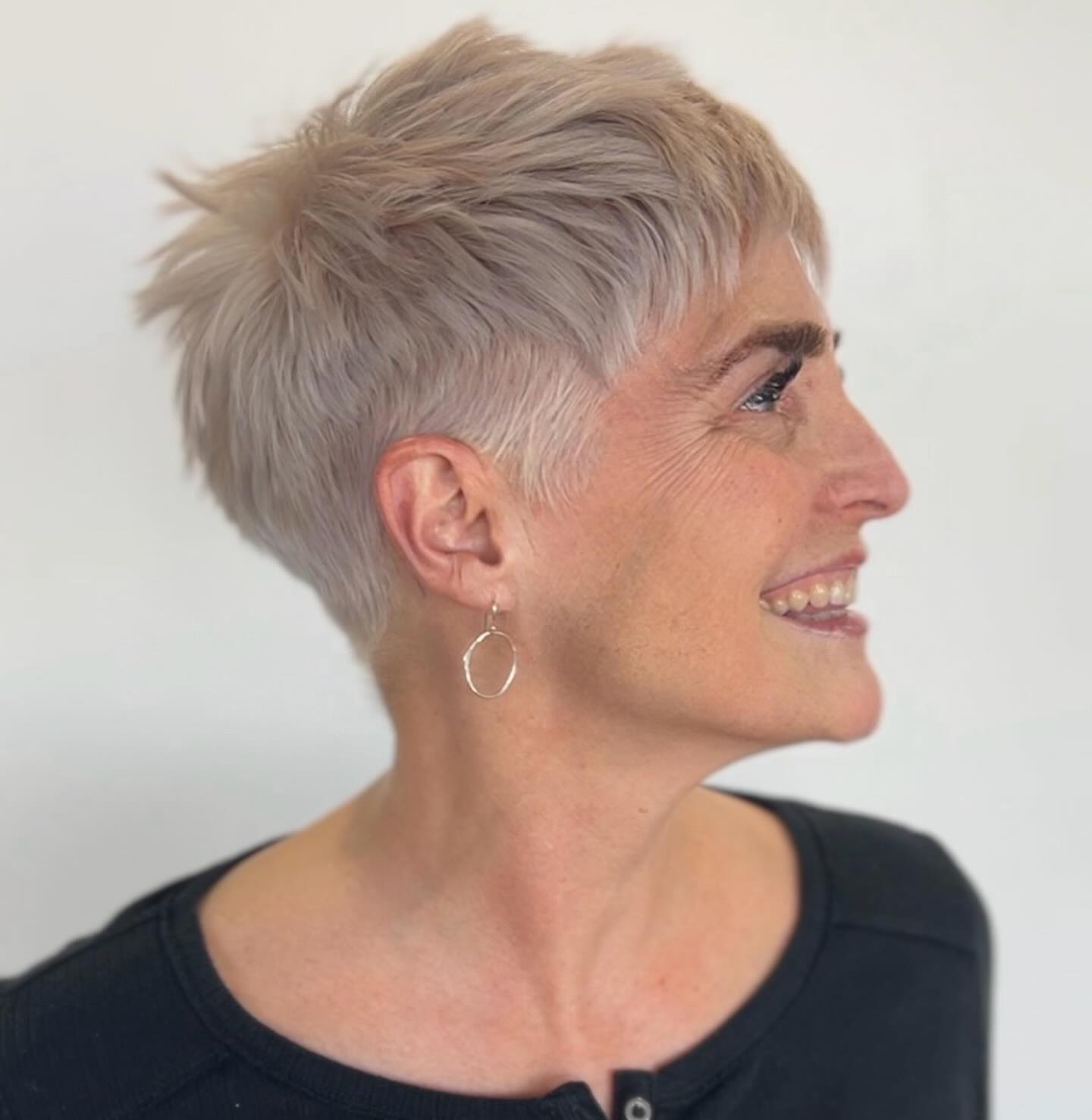
A light gray pixie at ear length relies on precise point cutting to create those separated, choppy side pieces. The technique removes bulk at the ends while leaving the top dense enough to sweep across. Ask your stylist for a short pixie, textured side pieces, light gray. Fine straight hair holds the shape best; the side sweep softens most face shapes. A texturizing spray on damp hair, scrunched in, gives the finish its deliberate roughness. This cut needs a trim every four to six weeks to keep the side pieces from merging back into a solid block.
Textured Gray Pixie With Volume
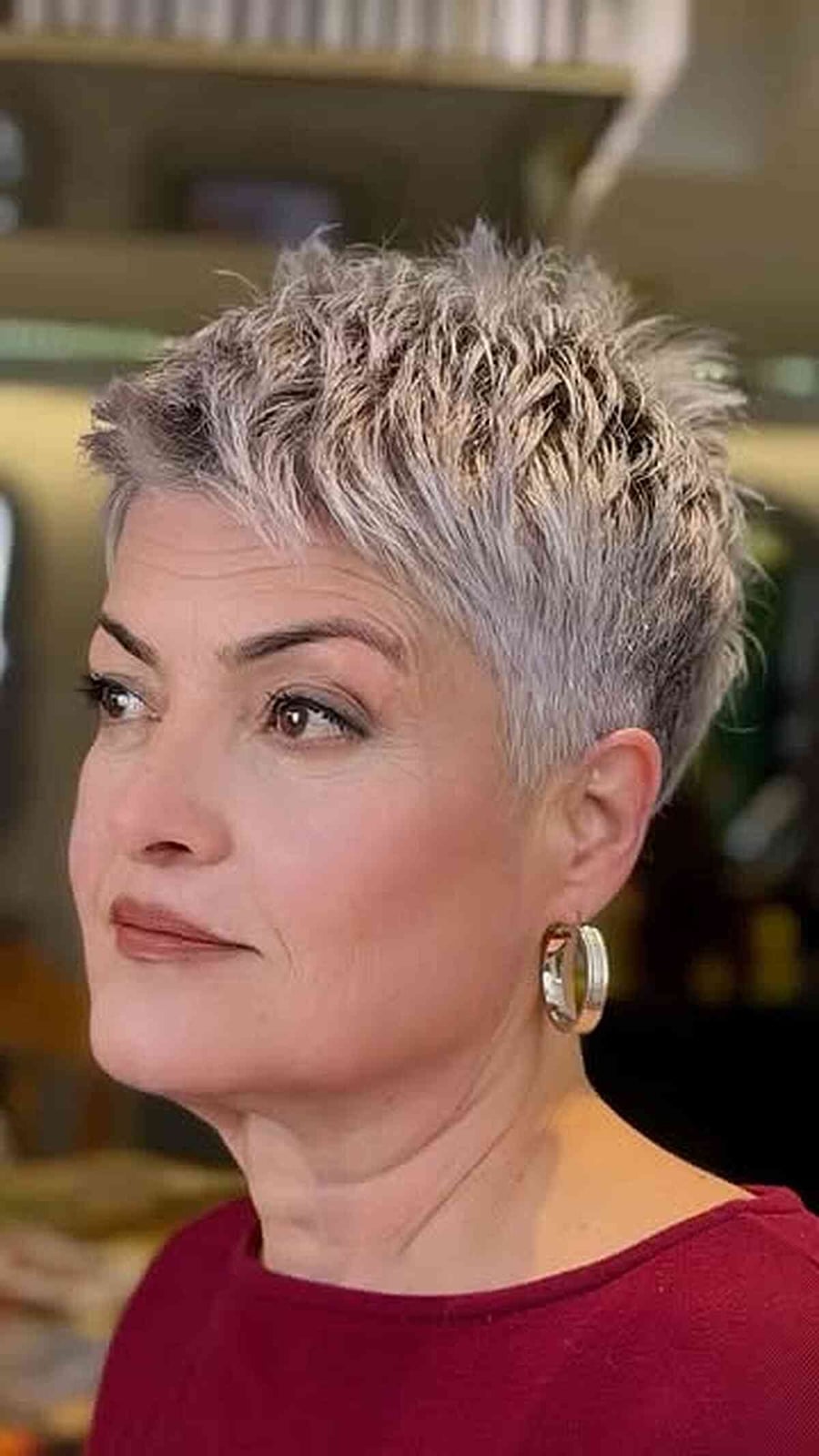
Can a pixie look both tidy and disheveled at the same time? This one does, thanks to a middle part and upward styling on dense straight hair. Ask your stylist for a short pixie, textured top, middle part. The trick is in the finish: a volumizing paste worked into damp roots, then blown upward with a round brush. The result is a lifted crown and a flattened nape. Trim every four to six weeks to preserve the shape; a middle part can also help elongate rounder face shapes.
Edgy Gray Pixie With Spiky Texture
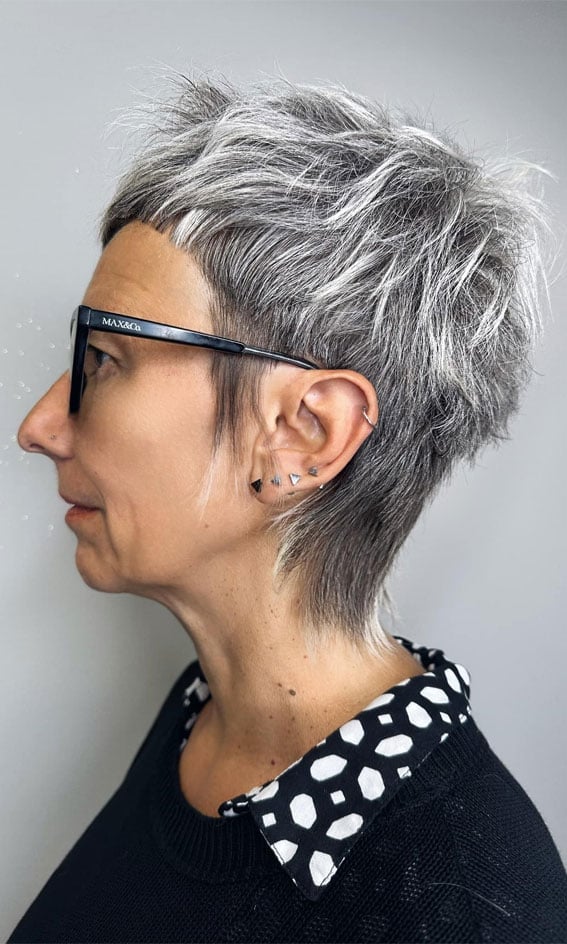
A softer pixie lets the gray do the work. This one does not: the spiky top and short side-swept bangs demand a strong hold wax or gel applied piece by piece. The gray base with white highlights adds contrast that looks deliberate. Ask your stylist for an edgy pixie, spiky texture, short side-swept bangs. The morning commitment includes about ten minutes of styling and a trim every four weeks. Fine straight hair yields the sharpest spikes.
Shoulder Length Layers With Natural Waves
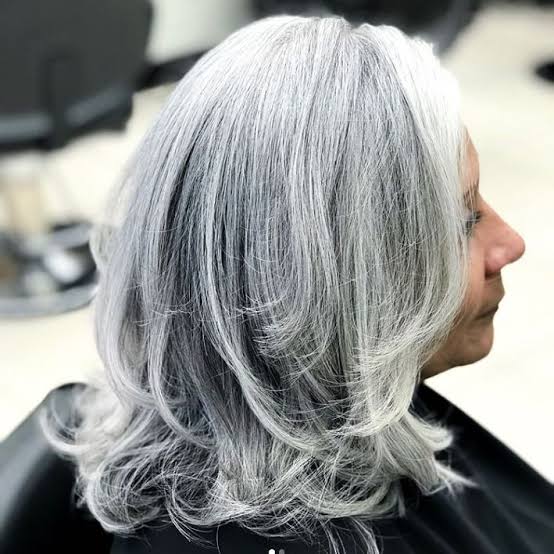
Long, soft layers through shoulder-length hair do what layers promise: reduce weight and encourage natural wave without looking cut into. The middle part and air-dried texture keep the gray with darker undertones front and center. Ask your stylist for shoulder length, long soft layers, natural waves. Thick wavy hair benefits most from this approach, as the layers prevent the dreaded triangle shape. A leave-in conditioner and a quick diffuse or air dry is all the styling time required. Plan for a trim every ten to twelve weeks to keep the layers from losing their shape.
Final Thoughts
For fine gray hair, keep a blunt baseline and add soft layers only at the ends to create fullness without sacrificing density. For thicker gray hair, ask for longer layers that reduce weight and let the silver move. Gray hair is a canvas for modern style.
- Trim blunt bobs every six to eight weeks to maintain sharp lines.
- Refresh gray tones with purple shampoo or toner every four to six weeks.
- Use a heat protectant spray before blow-drying to prevent damage.
- Wash hair with sulfate-free shampoos to preserve color and moisture.
