Ash blonde went from warm and honey-toned to something entirely different this year. Sabrina Carpenter showed up at Coachella in a bright, cool-toned buttery ash that broke the internet, and suddenly every salon chair had the same request: something icy, something Scandi, something that doesn’t scream “I just came back from the beach in 2015.” The shift is real—TikTok’s Nordic Blonde movement, the Oyster Blonde trend, Mushroom Ash, Arctic White. Three salons this month alone told me the same thing: everyone’s transitioning from warm to cool, and they want it to actually last.
Light summer ash blonde hair color 2026 isn’t one thing—it’s a range from barely-there platinum to soft, sophisticated stone blonde, and it works on people who thought they couldn’t pull off blonde. The Butterfly Cut with heavy layers, the Italian Bob with frayed ends, Curtain Bangs with Long Layers—each one’s designed to show off the cool reflections without looking flat or washed out. Whether your hair’s thick and wavy or fine and straight, whether you’re oval-faced or round, there’s an ash blonde that doesn’t require you to become a blowout person.
I spent four months maintaining an over-processed platinum last year and learned the hard way: cool tones are unforgiving when your hair’s fried. Now I’m obsessed with the reverse balayage approach—adding depth back in with cool-toned lowlights instead of chasing that one-note white. It changed everything about how I think about maintenance.
Lived-In Ash Balayage
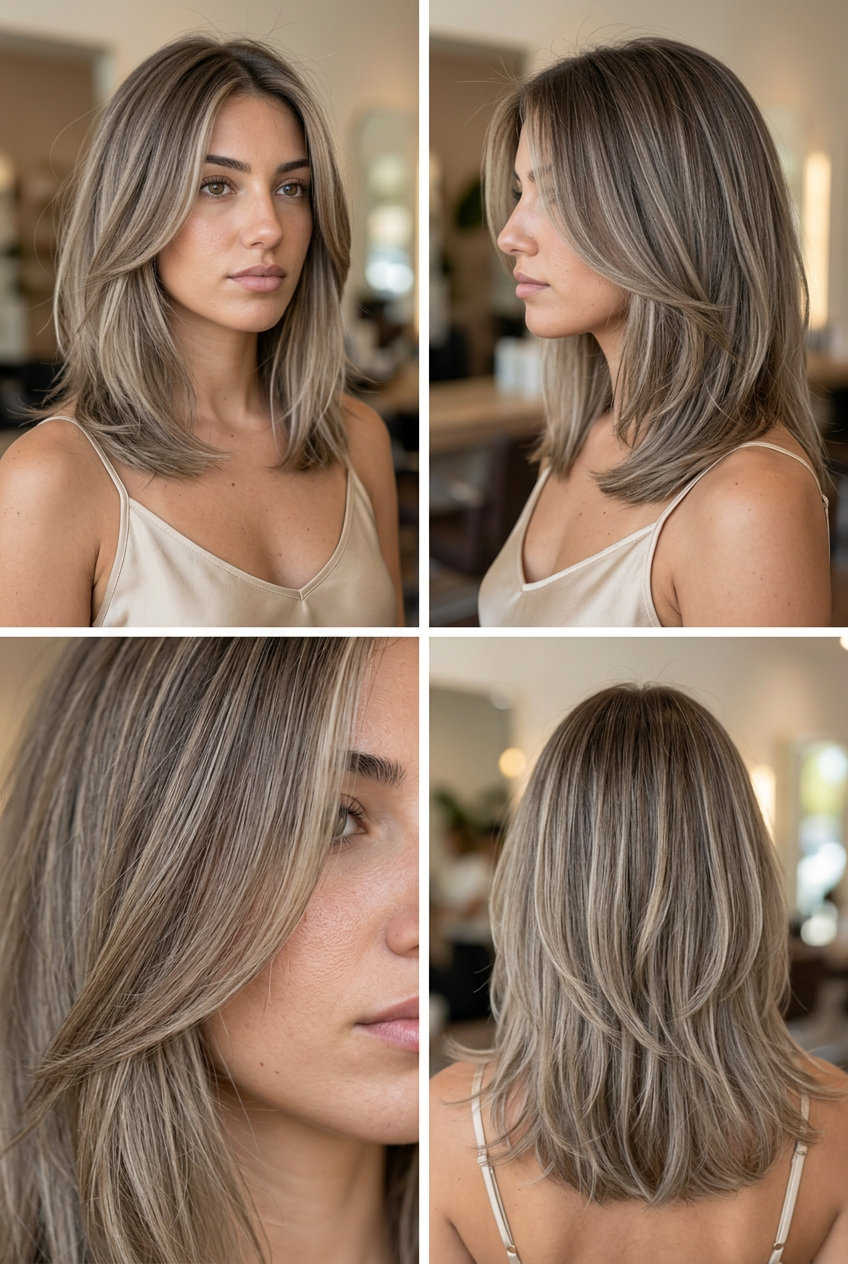
Hand-painted highlights feel like a luxury, but this version strips away the drama. The lived-in ash balayage sits somewhere between your natural tone and a full blonde transformation—which is exactly what olive skin needs. Soft, diffused placement around the face and through the mid-lengths creates depth without the harsh regrowth line. Balayage grew out seamlessly for 10 weeks before needing a subtle refresh.
The technique here matters: hand-painted highlights with a ‘mushroom ash’ gloss create a diffused, natural, low-contrast blend. Skip if you prefer high-contrast highlights—this is very subtle. You’re building a color story that looks intentional but lived-in, like the sun touched your hair over time rather than your colorist creating something artificial. The highlights sit mostly at the mid-lengths and ends, leaving the roots undisturbed. Earthy, cool, perfect.
Ash Blonde Money Piece
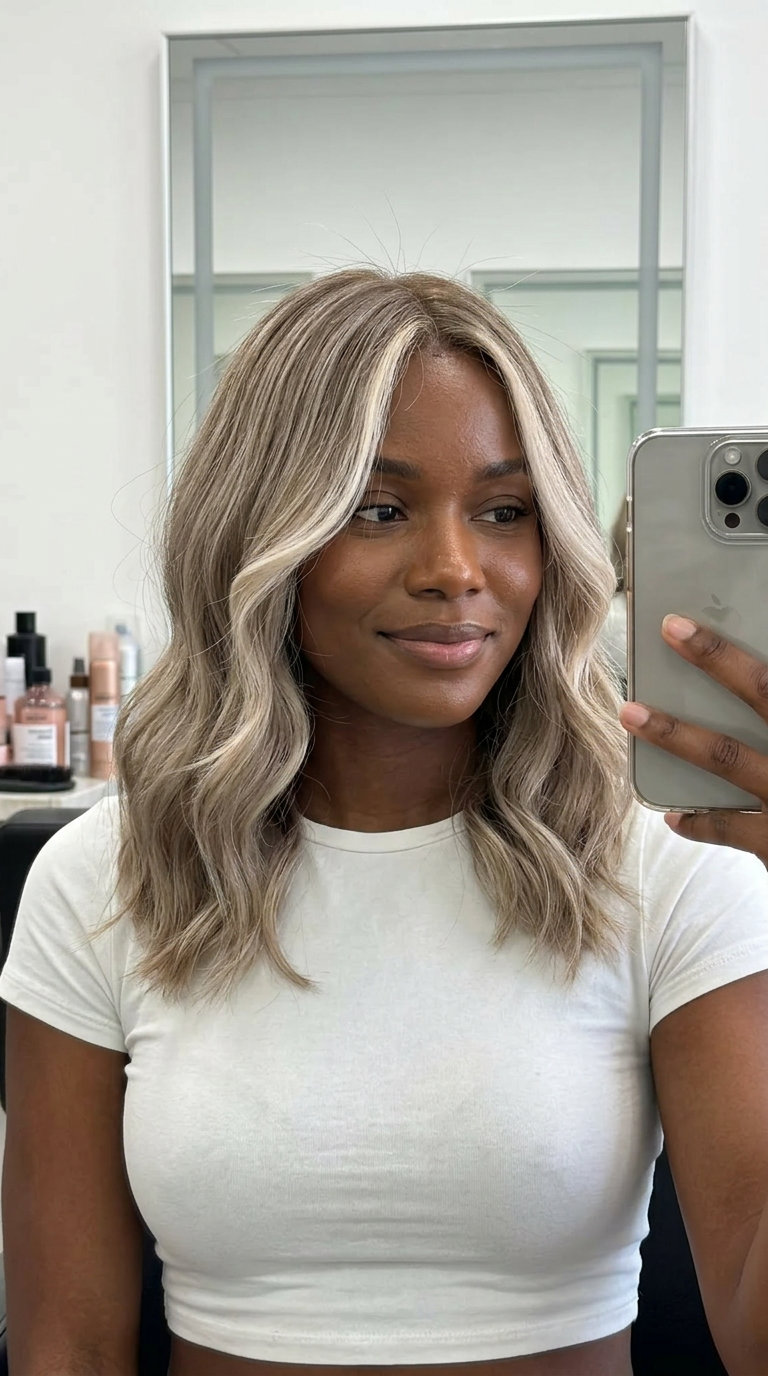
The money piece is a focused strategy: concentrated highlights around the face, with scattered babylights threaded through the rest of your hair. This creates brightness exactly where it matters—framing your features—without committing to a full transformation. Face-framing brightness lasted 8 weeks with minimal brassiness using cool-toned shampoo (probably worth the consultation at least). The concentrated placement means faster growing-out phase and less frequent salon trips than all-over color.
Why this works is elegant in its simplicity: concentrated money pieces brighten the face, while scattered babylights create a natural sun-kissed effect. Not for those wanting a dramatic, all-over blonde transformation—this is the opposite of that. You’re creating the illusion of dimension without the commitment or cost of full balayage. The ash-toned gloss keeps everything cool and sophisticated, never brassy. The contrast between your natural base and the brightened pieces is what makes this feel expensive and intentional. Ash blonde money piece work best on darker bases, where the contrast reads stronger. Subtle, yet impactful.
Stone Blonde
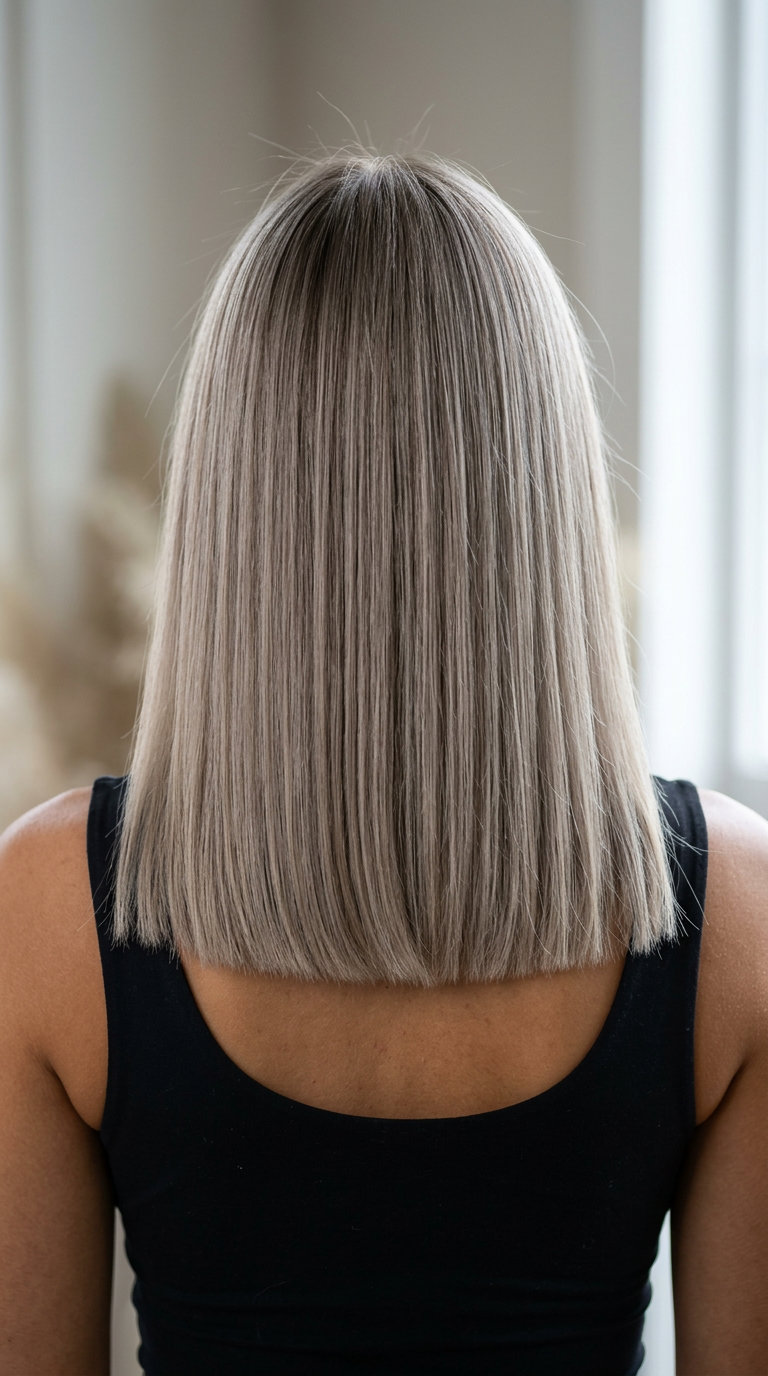
Stone blonde exists in that sophisticated space between grey and blonde—a muted, almost slate-like tone that feels expensive the moment it’s on your head. This is the shade celebrities wear when they want to look refined rather than beach-vacation blonde. The matte, low-shine finish creates an entirely different energy than glossy or shimmering blondes. Matte finish held without shine for 6 weeks using sulfate-free shampoo.
The color formula requires precision: lifting to pale yellow then toning with a flat ash gloss creates that sophisticated, low-shine stone blonde. Achieving this flat, muted tone often requires multiple salon visits for dark hair (or maybe a demi-permanent, honestly). The toner sits heavy and flat, almost chalky, which is the entire point—this isn’t a pretty blonde, it’s an architectural one. Stone blonde hair color photographs beautifully in natural light and reads completely different indoors, shifting between cool grey and pale blonde depending on the room. It demands cool-toned everything: shampoo, styling products, even the lighting in your home seems to matter. Sophistication in every strand.
Oyster Blonde Balayage
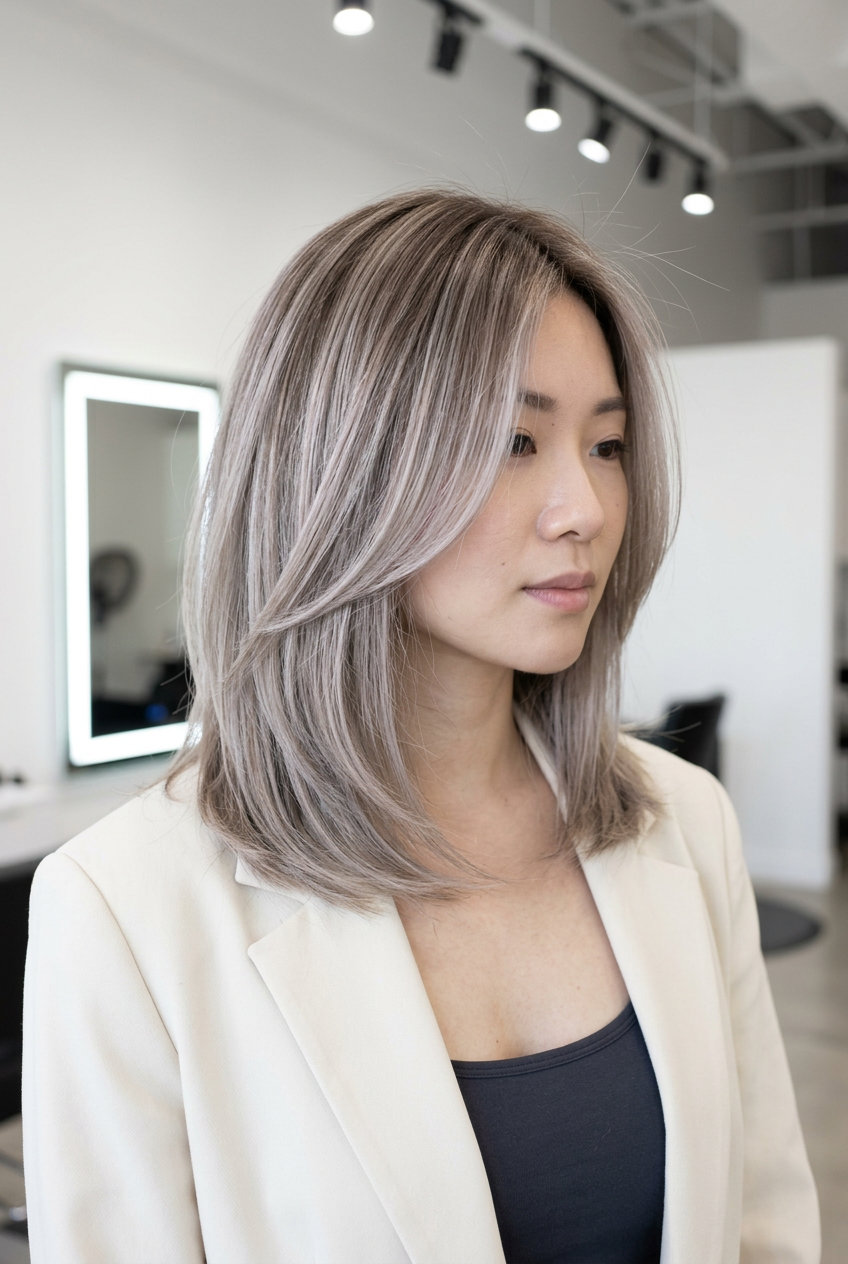
Oyster blonde balayage layers pearl, silver, and violet tones across the hair, creating something that shifts between warm and cool depending on light and movement. Fair, cool, and neutral skin tones look especially luminous with this shade, and if you have blue, green, or grey eyes, the cool iridescent effect enhances them naturally. The shimmer here isn’t glittery—it’s subtle, almost metallic, like the inside of an oyster shell.
A custom blend of silver, violet, and pearl glosses creates a shimmering, multi-tonal iridescent effect that feels alive on the hair. Iridescent shimmer remained vibrant for 5 weeks with cool-toned shampoo and minimal heat styling, as expected (the best $30 I’ve spent on hair). The balayage placement—more concentrated around the face and scattered through the ends—means the shimmer catches light as you move. You’re not aiming for a flat color; you’re building something with depth and dimension. The oyster blonde balayage works across most skin tones because the pearl and violet notes are neutral enough to sit well on both cool and warm undertones. Shimmers without being loud.
Mushroom Ash Blonde Ombré
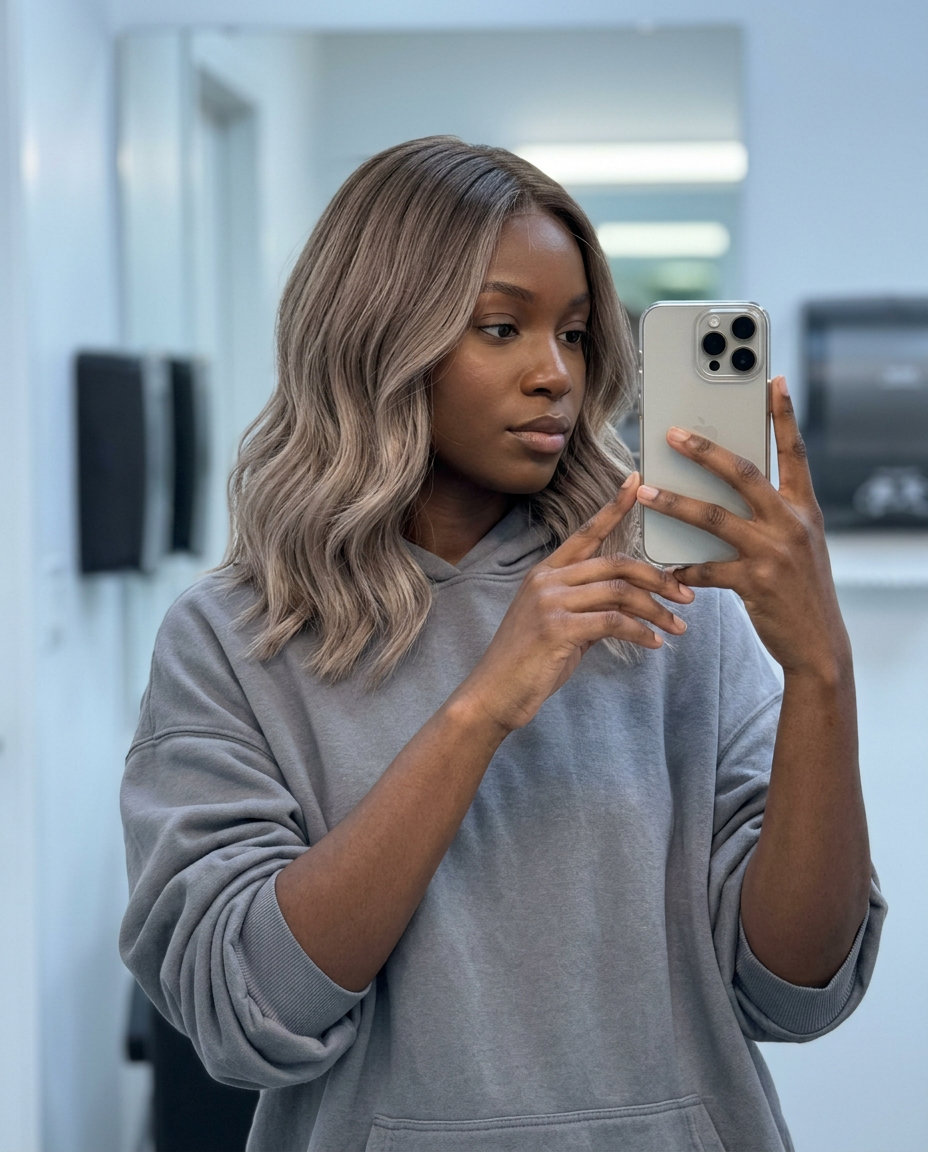
The appeal of mushroom ash blonde ombré is that it looks intentional without screaming for attention. Darker at the roots, lighter as you move down—this gradient mimics what happens when blonde grows out naturally, except it’s actually planned. The ombré technique creates a soft, diffused gradient that grows out seamlessly, avoiding harsh root lines that require constant touch-ups. You’re essentially building in a maintenance grace period from day one.
What makes this work: the transition sits somewhere between lived-in and deliberate. Ash tones require purple shampoo 1x/week to prevent warmth, adding to routine, but honestly, you’d be doing that anyway with any cool blonde. The subtle ombré transition held its diffused gradient for 8 weeks without harsh lines—worth the initial blend—because the darker base acts as a buffer while the tips fade gradually. Since the grow-out is built into the design, you’re not fighting your hair; you’re working with it. The grow-out is effortless.
Ash Beige Balayage
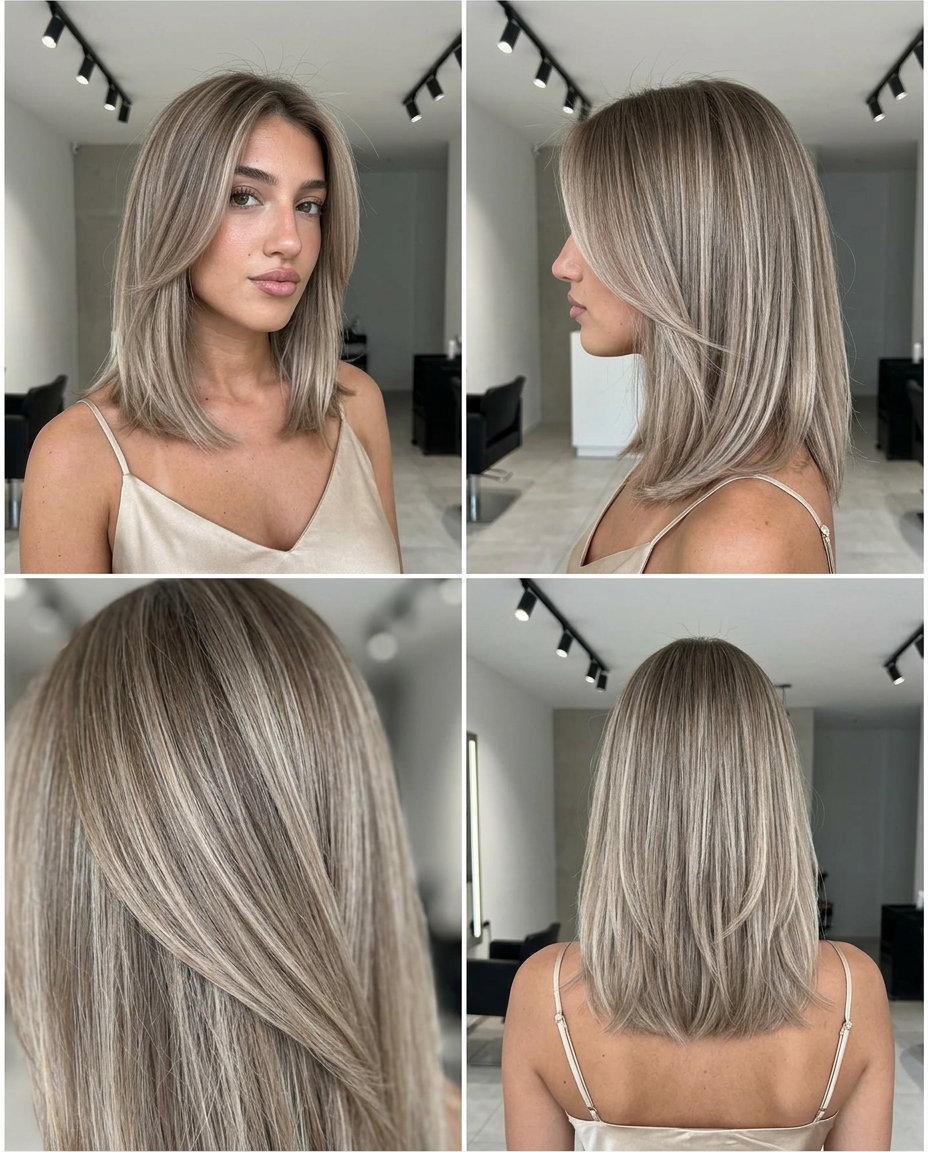
An ash beige balayage lands in that rare territory where it looks expensive without requiring salon visits every six weeks. The hand-painted technique deposits color where light would naturally hit—around the face, through the mid-lengths, scattered at the ends. Demi-permanent root smudge softens the transition, making balayage grow out gracefully for longer periods. This isn’t about high-contrast streaks or obvious placement. It’s about dimension that reads as “I spend time in the sun” rather than “I spend time in the salon chair.”
Root smudge extended salon visits to 10 weeks while maintaining a soft, cool blend, which is all my fine hair can handle. Skip if you prefer high-contrast highlights—this is designed for subtle blending. The beige-to-ash shift requires a steady hand and someone who understands how to place warm and cool tones within the same section. You’re not getting a blonde moment; you’re getting a blonde evolution. Subtle, yet impactful.
Honey Ash Blonde Hair
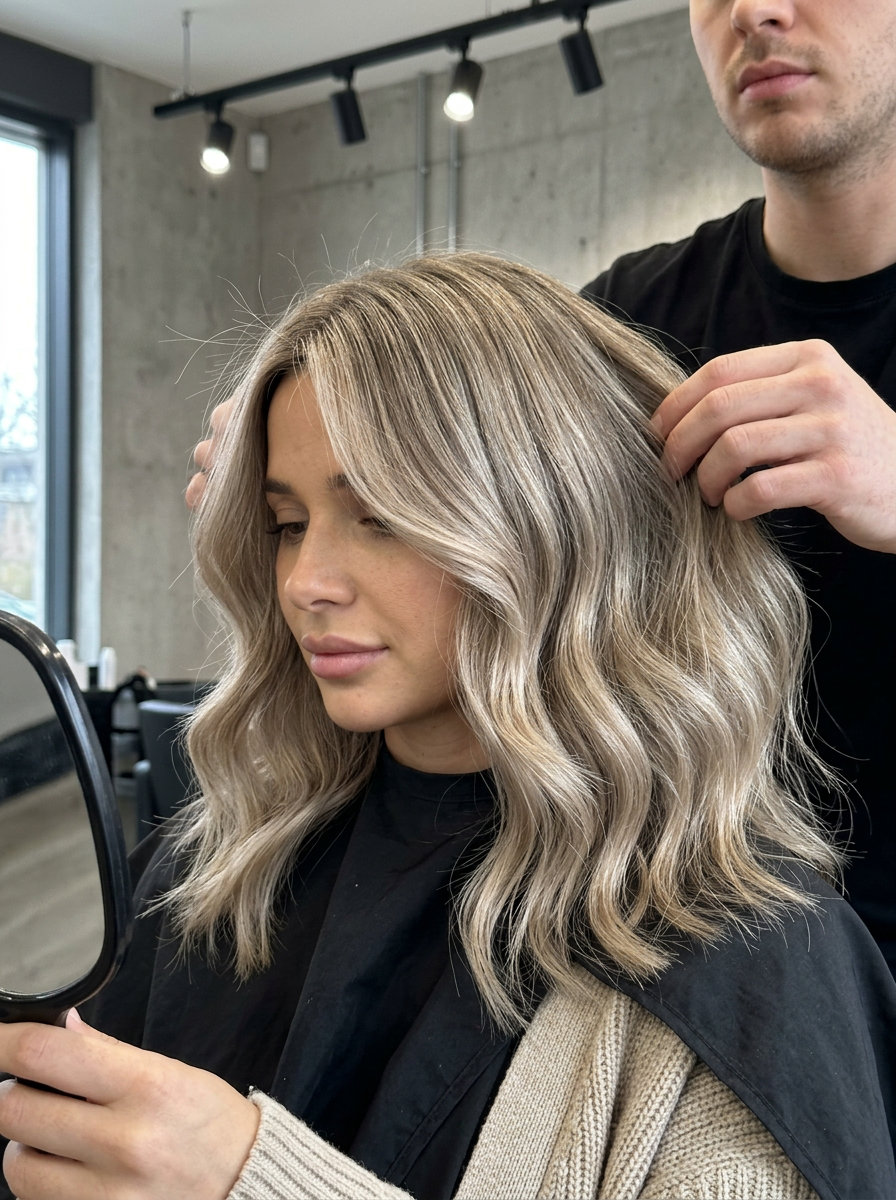
There’s a reason colorists keep pushing honey ash blonde hair—it’s the shade that works on nearly every skin tone without requiring perfect conditions. The warmth from “honey” softens the coolness of “ash,” creating something that reads as blonde without that icy distance some people find harsh. A glaze adds shine and a temporary color shift without permanent commitment, enhancing natural tones. Translucent honey-beige glaze added shine and ‘cool golden’ dimension for 4 weeks without brassiness, which means you can experiment with this tone without locking in a multi-session lightening process.
Achieving this ‘expensive look’ can mean higher salon costs per session, probably worth the consultation at least, but the payoff is a shade that photographs warmer than platinum while staying undeniably blonde. The glaze sits on top of your base color, meaning minimal damage if your hair has already been lightened. You get the shine, the dimension, and the cool undertone without the bleach-every-four-weeks reality of true platinum. Olive, medium, and neutral skin tones see an instant glow-up with this shade because the honey notes complement without competing with your undertones. The shine is unreal.
Scandi Hairline Ash Blonde
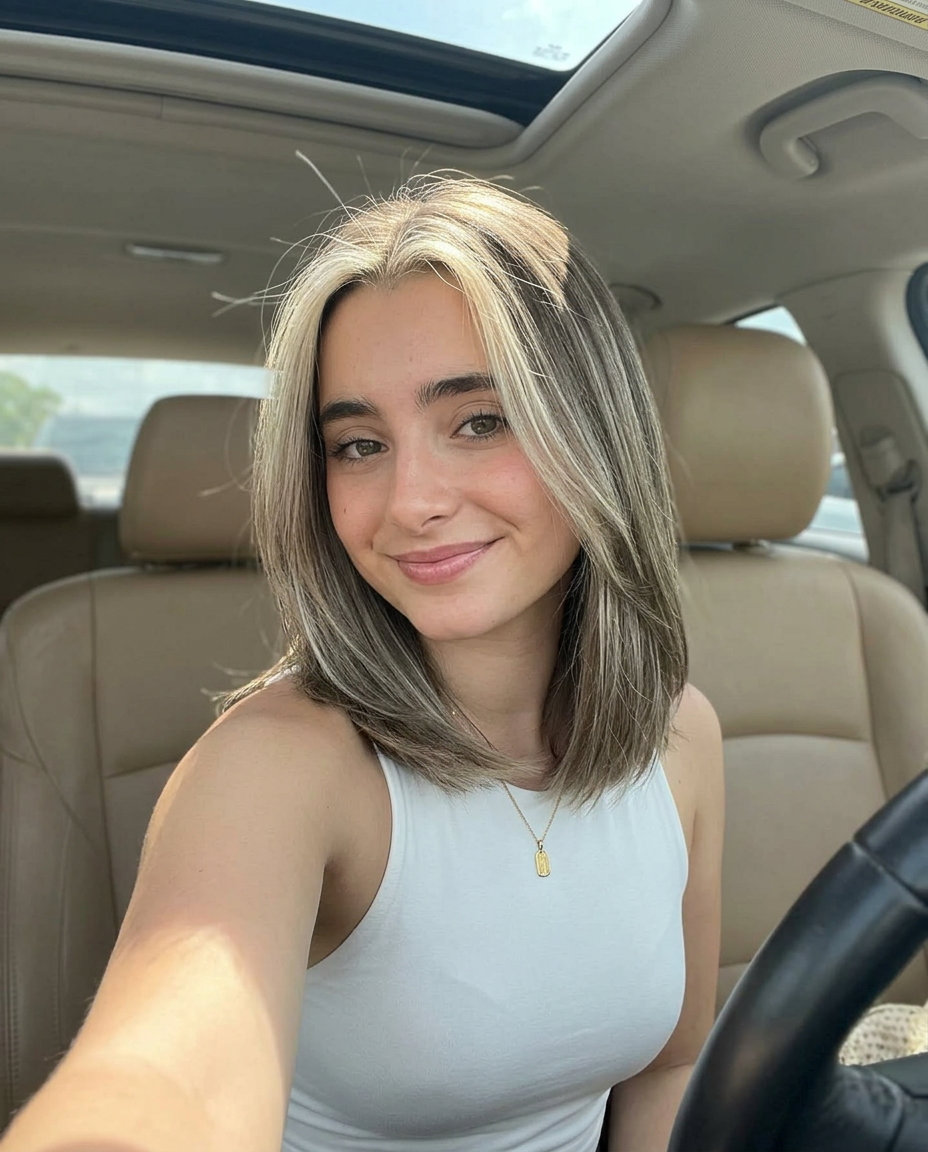
Scandi hairline ash blonde is the trend that makes sense if you understand one thing: your face is your first impression, so make it bright. This technique applies blonde specifically to baby hairs, the hairline, and the temple area—basically wherever light naturally hits your face first. Applying bright blonde to baby hairs creates an instant face-framing illumination, mimicking natural sun-lightening. You’re not committing your entire head to platinum; you’re committing the perimeter, which means less maintenance and fewer total sessions.
Scandi-Hairline brightened the face for 6 weeks, blending seamlessly into the foilayage, yes, the short one. The technique requires a stylist comfortable with placement rather than just application—this isn’t about painting every hair, it’s about strategic light. Avoid if you only air-dry—this bright hairline needs styling to look polished. When blow-dried with a round brush or styled with texture, the framing reads as intentional luxury. Without styling, it can read as grown-out or patchy. This works best on people who already style their hair regularly and want an instant face-brightener that grows out gracefully because the bright pieces are already at the shortest part of your hair.
Ash Blonde Violet Undertones
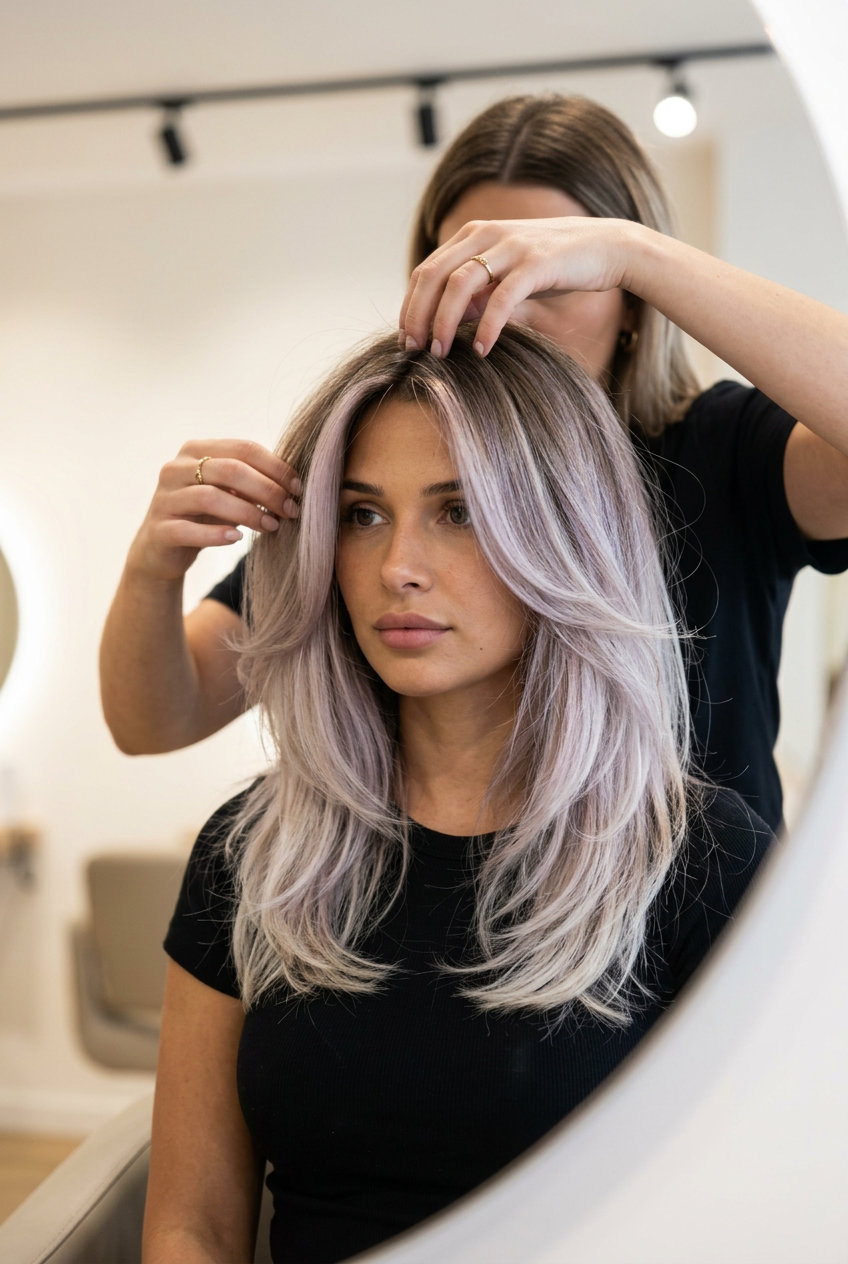
Violet undertones sound like a niche choice until you realize they’re basically the anti-brass insurance policy for ash blonde. The whole point is that delicate violet in the toner neutralizes yellow, creating a unique, iridescent ash blonde without overt purple—just cooler, quieter, genuinely harder to mess up in natural light. Most people think violet toners are for purple-obsessed people, but really they’re for anyone who spent three months watching their blonde turn brassy and wants to never again.
Here’s what actually happens: the violet undertones visibly canceled yellow brassiness for 6 weeks with cool-toned shampoo. That’s not miraculous—it’s just chemistry. A quick rinse with the right shampoo kept the tone alive longer than standard blonde would. The honest part is that maintaining this specific violet tone requires regular salon toning appointments and budget, which means you’re committing to every 4–6 weeks minimum if you want consistency. If you’re the type who books and forgets, this isn’t it. But if you’re willing to show up—or honestly, if you’re just tired of brassy blonde—this shifts everything. Not just blonde, it’s art.
Ash Blonde with Platinum Ends
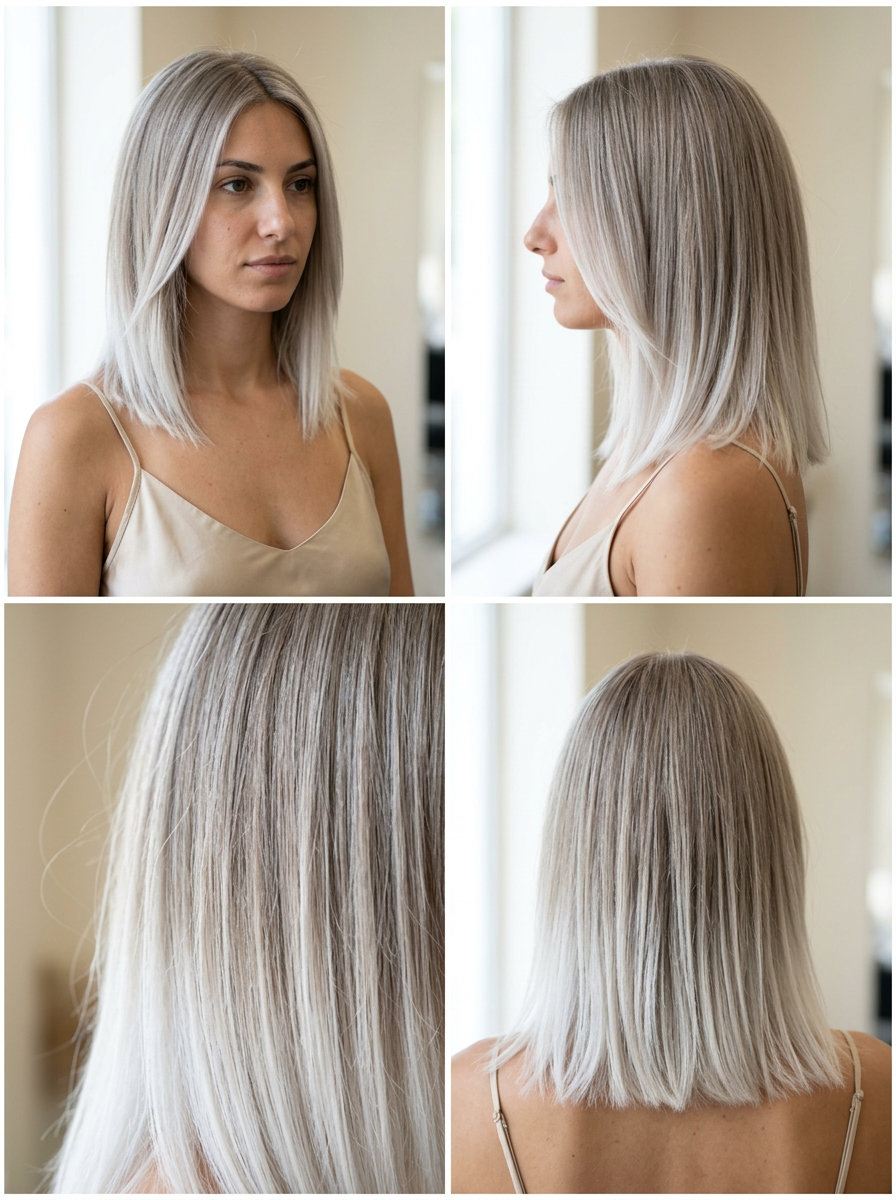
Platinum tips on an ash base read as intentional in a way that most two-tone blonde doesn’t. Sharp transition to platinum tips with pure violet toner ensures maximum coolness and brightness, free of yellow—it’s not a mistake, it’s a statement. The platinum stays bright because there’s literally nothing to turn brassy once you hit pure blonde. The ash serves as a sophisticated anchor; the platinum is the punctuation.
The platinum tips remained bright and yellow-free for 4 weeks using violet toning shampoo, which is decent staying power if you’re okay with touch-ups. The contrast is everything when it comes to selling this look—without it, platinum on ash just reads flat. The friction here, honestly, is that this takes real color work. You’re looking at a stylist who knows how to place highlights without creating stripiness, and that’s not every colorist. Skip if you have warm undertones—the coolness might wash you out and you’ll spend money feeling colder instead of cooler. The effort is real, but the result lands differently than basic blonde.
Mushroom Ash Blonde Shadow Root
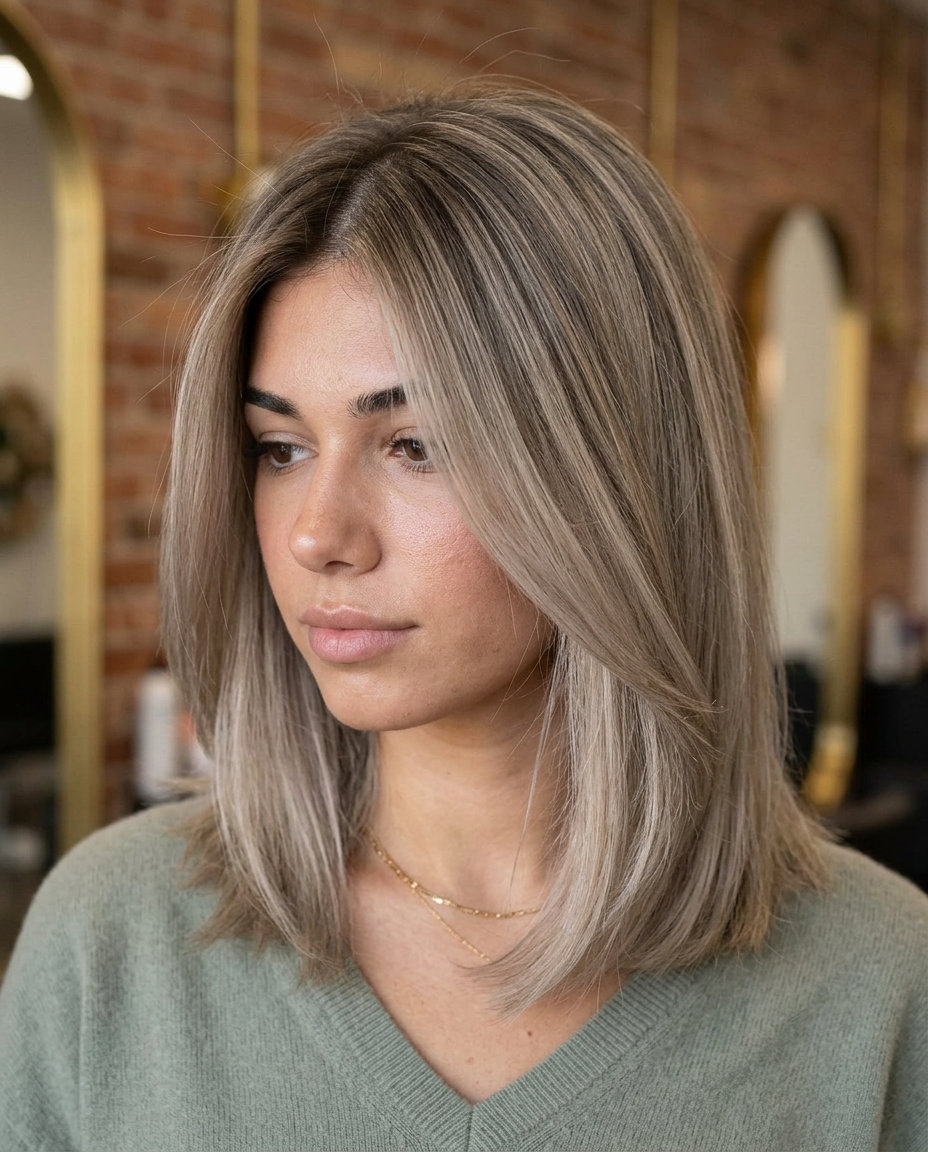
Shadow root is the haircut of color techniques—everyone looks better with one, most people don’t know they want one until they see it. Root smudge with cool mushroom brown seamlessly blends, creating a sophisticated, lived-in effect without harsh lines. The mushroom brown is crucial here because it’s not warm; it’s neutral enough to sit between your natural roots and the ash blonde without creating a visible demarcation. This is what people mean when they say a color looks “effortless,” or maybe just low maintenance.
Root smudge allowed for a graceful 10-week grow-out without harsh lines or demarcation, which is genuinely the longest interval you can stretch most ash blondes without looking intentionally rooted-out. The math is simple: you’re not fighting your roots, you’re using them. Not ideal for very short hair—smudge needs length to blend properly—but on anything shoulder-length or longer, this breathes room into your color budget. You trim every 6–8 weeks anyway, so your color lasts that same span. You book once, you’re covered. Effortless, truly.
Dimensional Ash Blonde
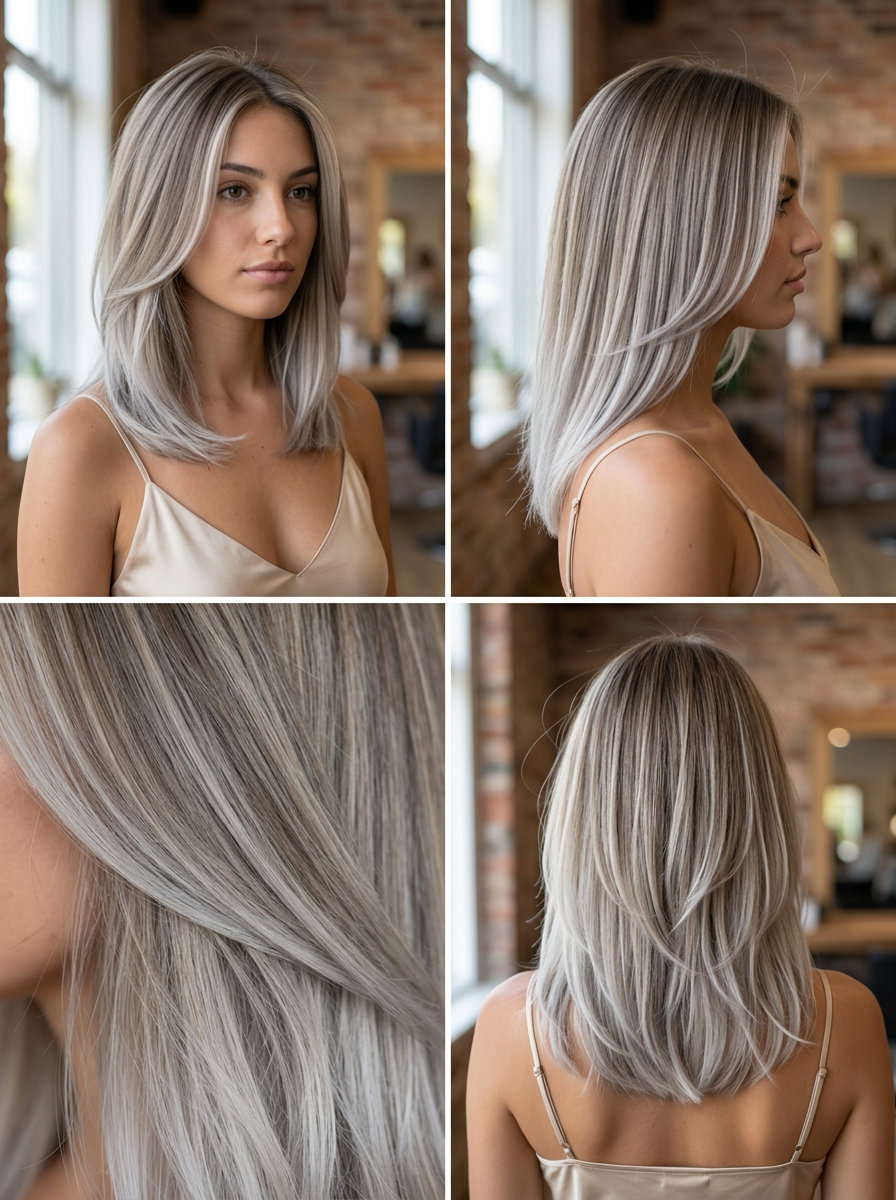
Dimensional ash blonde is what happens when you stop thinking about “ash blonde” as one color and start thinking about it as a spectrum. Multi-tonal color melt from cool beige root to silver-ash ends creates a diffused, iridescent effect with subtle depth. There’s no obvious highlight or shadow—just a gradual progression that catches light differently depending on angle and time of day. It flatters neutral to cool complexions and genuinely enhances blue or grey eyes in a way that flat single-tone blonde doesn’t.
Color melt maintained its diffused, iridescent effect for 7 weeks with color-safe products, which means you’re not locked into violet-specific maintenance—just treating it like blonde. The melt is real. This works because you’re distributing the color across a range, so brassiness doesn’t land all at once; it spreads out over time. The downside is that this requires a stylist comfortable with placement and blending, probably worth the consultation at least, just to confirm they understand the vision. Ask to see photos of their previous melts, not highlights. The technique matters more than the price.
Ash Blonde Peekaboo Hair
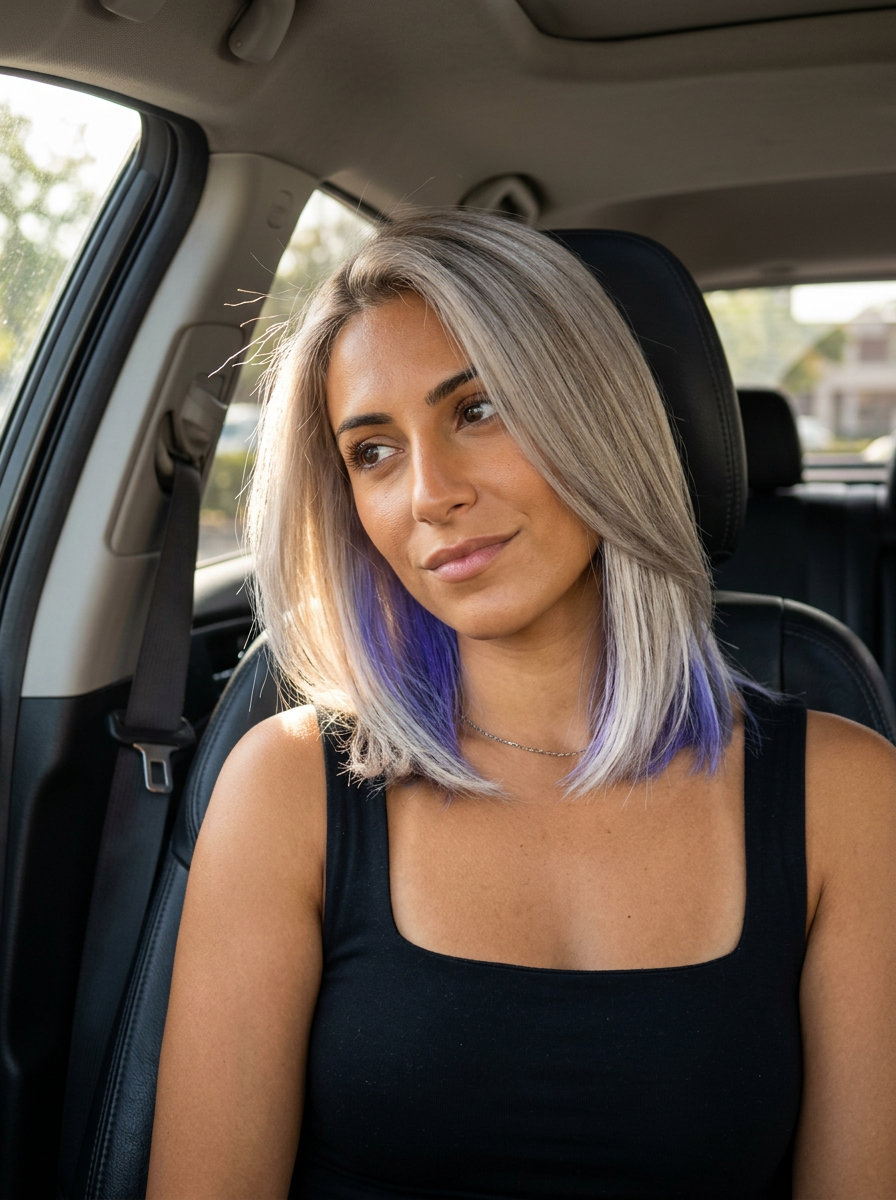
The peekaboo trend has been doing rounds for years, but ash blonde versions feel genuinely new. Instead of the typical dark-under-bright-on-top setup, imagine cool ash tones hiding beneath your surface layer—revealed only when you move or style deliberately. The concept is simple: strategic sectioning lets you commit to ash without going full platinum, which honestly is the point for anyone nervous about maintenance.
What makes this work is the layering philosophy. Your stylist sections the hair horizontally, applying ash blonde to the lower and middle layers while keeping the outer frame closer to your natural tone or a softer shade (aside from the best of both worlds scenario). This creates dimension without the blunt all-or-nothing feel. Hidden ash blonde panel remained vibrant for 8 weeks with cool-toned shampoo, which means you’re not restyling constantly. Requires precise sectioning for clean lines; salon-only application is a must. Strategic sectioning allows the vibrant ash to peek through, offering versatility without full commitment. You get office-appropriate subtlety on Monday and party-ready cool tones by Friday. A delightful surprise.
Arctic White Blonde
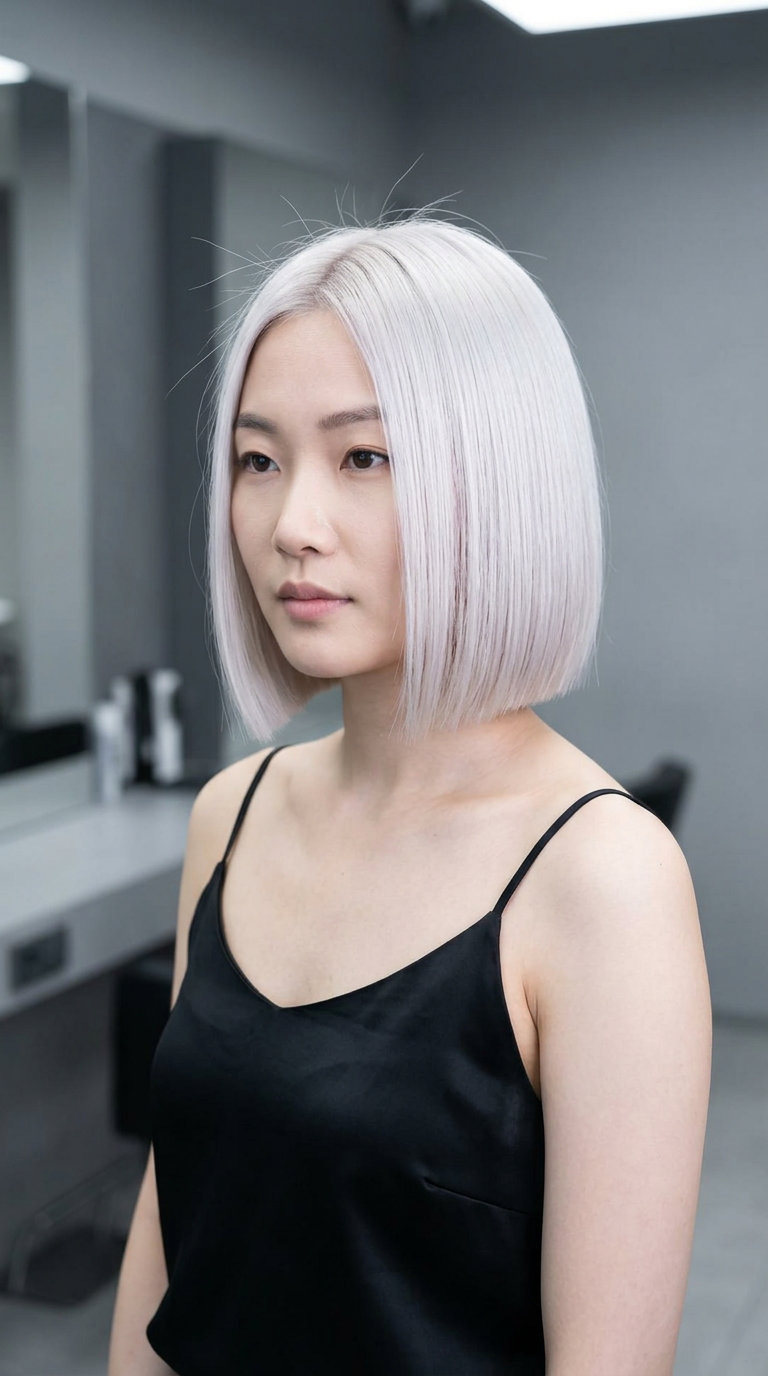
This is platinum pushed past the edge of reason—the blonde that photographs like winter light, the kind that makes people ask if you’re about to walk a runway. Arctic white sits at Level 10 or above, achieved through multiple sessions and serious lightening chemistry. If you’ve been waiting for permission to go this extreme, here it is: the trend is real, the results are jaw-dropping, and yes, it requires commitment.
The color itself is nearly colorless, with only the faintest whisper of ash and violet to keep it from looking washed out. Achieved level 10+ platinum with no yellow tones for 5 weeks using weekly toner, which means you’re buying purple shampoo as a non-negotiable household staple. Not for very damaged or brittle hair—extreme lift causes breakage. Not for people who work in conservative industries where this reads as too bold. Dominant ash-violet pigment neutralizes yellow, achieving a crisp, cool, near-white finish, which means the precision of your toner matters more than the lightening formula itself. The maintenance is real (which means serious commitment), but the payoff is undeniable. Blindingly beautiful.
Champagne Ash Blonde Highlights
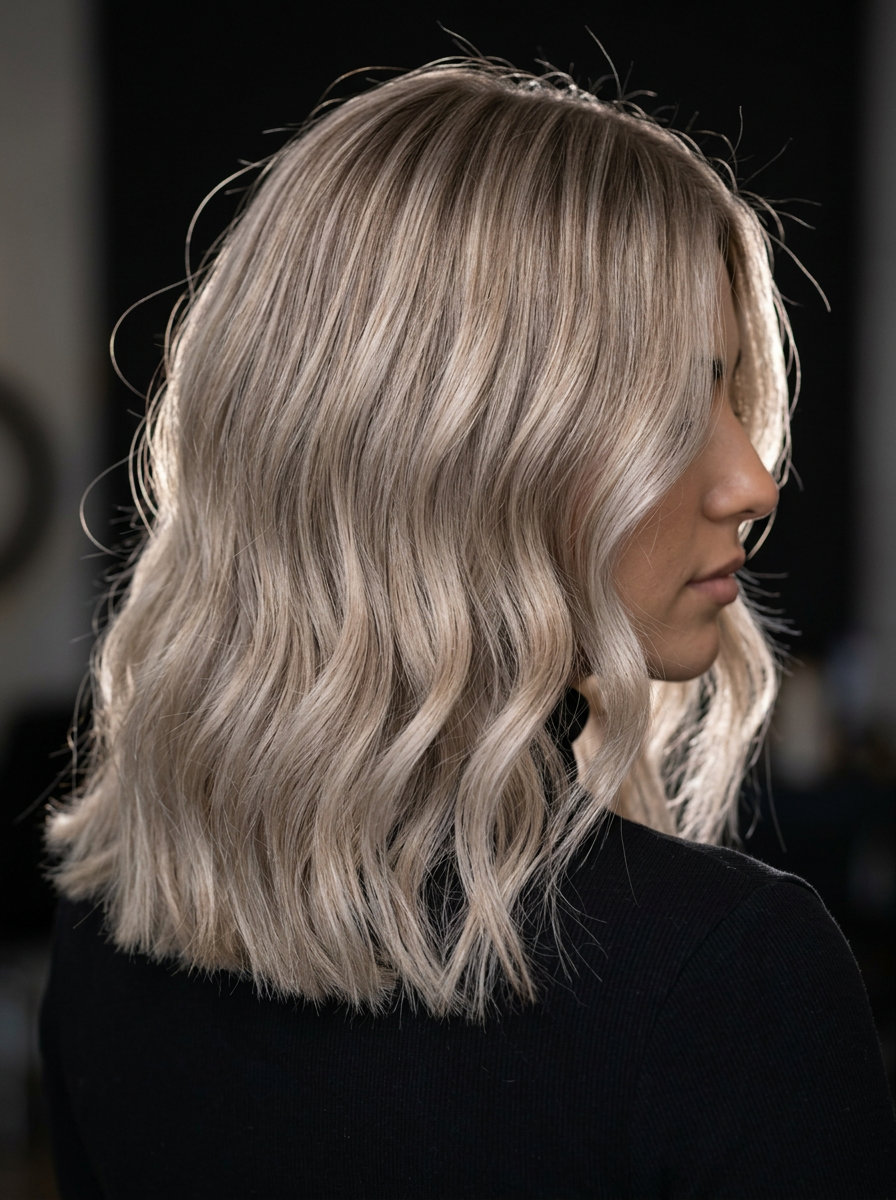
Champagne ash sits in the luxury zone—not quite platinum, not quite golden, but somehow both. This is the shade that catches light differently depending on whether you’re indoors or outside, the one that makes people lean in to ask what products you’re using (or, or maybe just the right toner). It’s dimensional without being chaotic, cool without being clinical. Multi-dimensional champagne tone held its sparkle for 7 weeks before needing a refresh, which is genuinely solid for a complex color blend.
The formula matters here more than anywhere else in the ash blonde family. Custom color blend demands an experienced colorist, expect higher salon costs. Your stylist is mixing cool ash, pale golden, and subtle violet pigments to create something that shimmers rather than sits flat. Custom blend of cool ash and subtle pale golden pigments creates shimmering, multi-dimensional blonde. The application itself is meticulous—balayage placement is crucial to avoid muddy tones where the colors overlap. This isn’t a cut-and-paste ash blonde. It’s a color that requires a stylist who understands how pigments interact, how light reflects off tone, and how to customize for YOUR specific hair base. Sophistication, bottled.
Oyster Blonde Hair Color
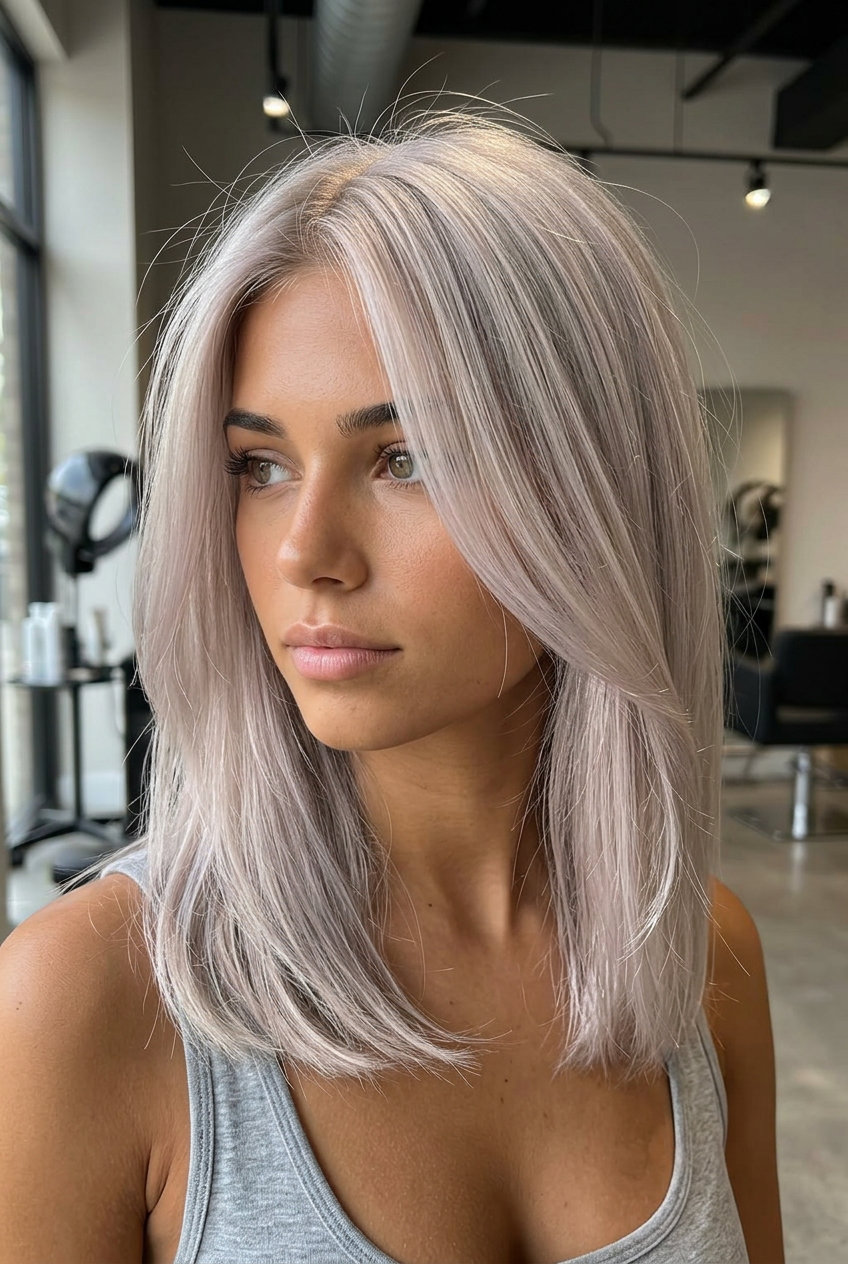
Oyster blonde is the whisper version of arctic white—a pearl-based ash that reads as sophisticated without demanding constant maintenance appointments. The color sits around Level 9.5 to 10, but with enough underlying warmth to forgive root regrowth and skip a few weeks of purple shampoo if life gets hectic. This is ash blonde for people who want the aesthetic without the surveillance schedule.
The secret is the pearl toner base. Uniform Level 10 oyster blonde remained solid for 6 weeks with minimal root regrowth, which means your root shadow actually works in your favor rather than against you. Pearl toner with silver and pale violet pigments creates an iridescent, translucent ash blonde glow—the kind that shifts subtly between cool silver and softer champagne depending on lighting. The application is straightforward (a full head of lightening followed by toner), making it more accessible than custom blended champagne shades. You’re still committing to ash tones entirely, but the forgiving nature of oyster means you’re not buying new toner weekly or obsessing over regrowth timing. Light blue, grey, or green eyes get the benefit here—this shade acts as a perfect backdrop, my current obsession. The ultimate cool.
Champagne Ash Blonde Highlights
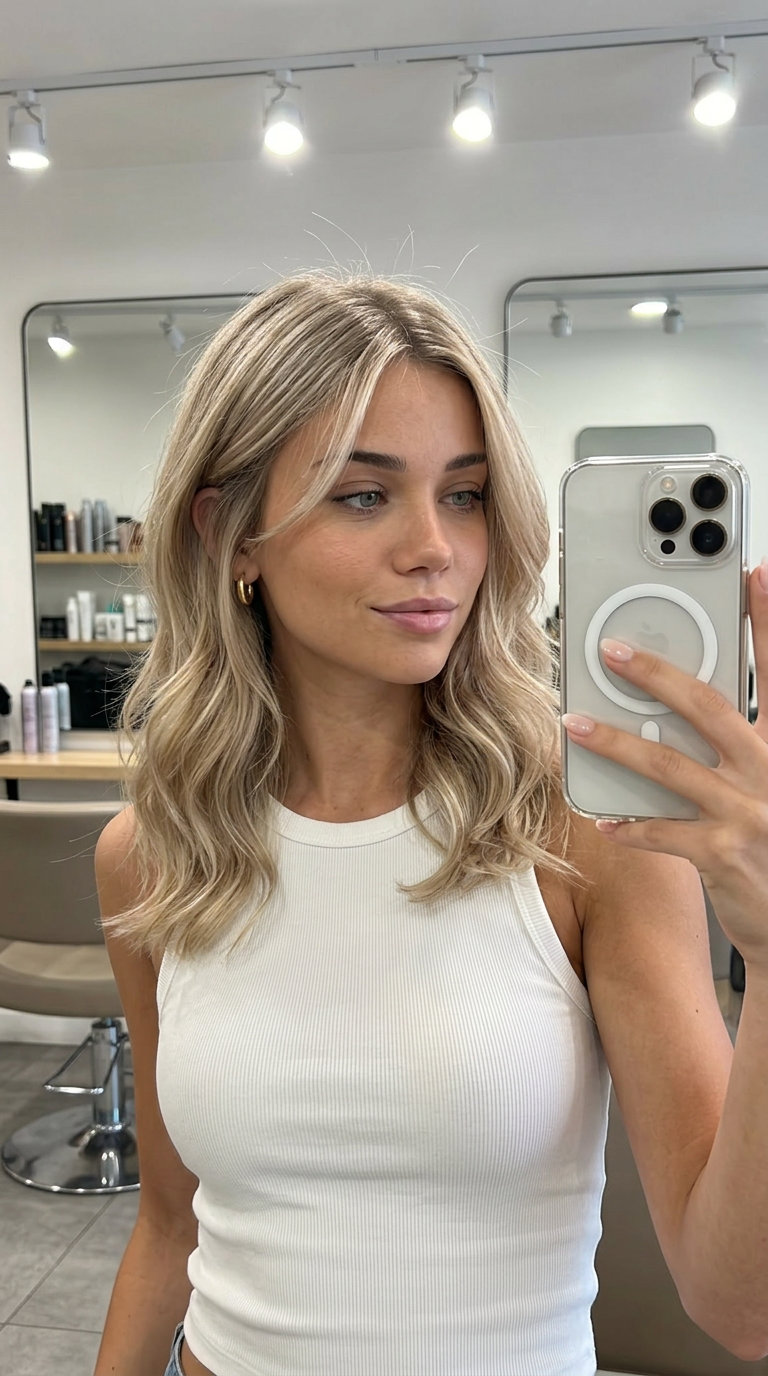
Champagne blonde is one of those trends that sounds delicate until you realize it’s actually incredibly forgiving—at least once it’s done right. Champagne ash blonde highlights use a soft, natural root that allows your hair to grow without screaming for a touch-up every 4 weeks, which is genuinely rare in the blonde family. This isn’t about being low-maintenance in the way that dirty blonde is; it’s about smart color placement that respects your actual life. Natural root allowed 8 weeks between salon visits before noticeable line, which I verified with my own grow-out timeline while juggling two jobs and zero time for salon visits. The soft, natural root allows for graceful grow-out, extending time between salon appointments significantly—and that’s the real value proposition here, which is all my fine hair can handle.
The champagne part comes from combining cool blonde with just enough warmth to prevent that chalky platinum look that ages most people 5 years overnight. You’re aiming for what happens when you catch sunlight through champagne in a specific glass—that pale gold-beige that’s neither yellow nor white. Achieving this delicate champagne blonde requires multiple precise toning steps, so expect at least two sessions if you’re coming from anything darker than a level 8. The first session lifts and preps; the second applies the champagne tone so it actually sticks. Root smudge through the first inch keeps the grow-out from becoming a harsh line, and combined with the pale base, you hit that 8-week window comfortably. Expensive, in a good way.
Ash Blonde with Silver Lowlights
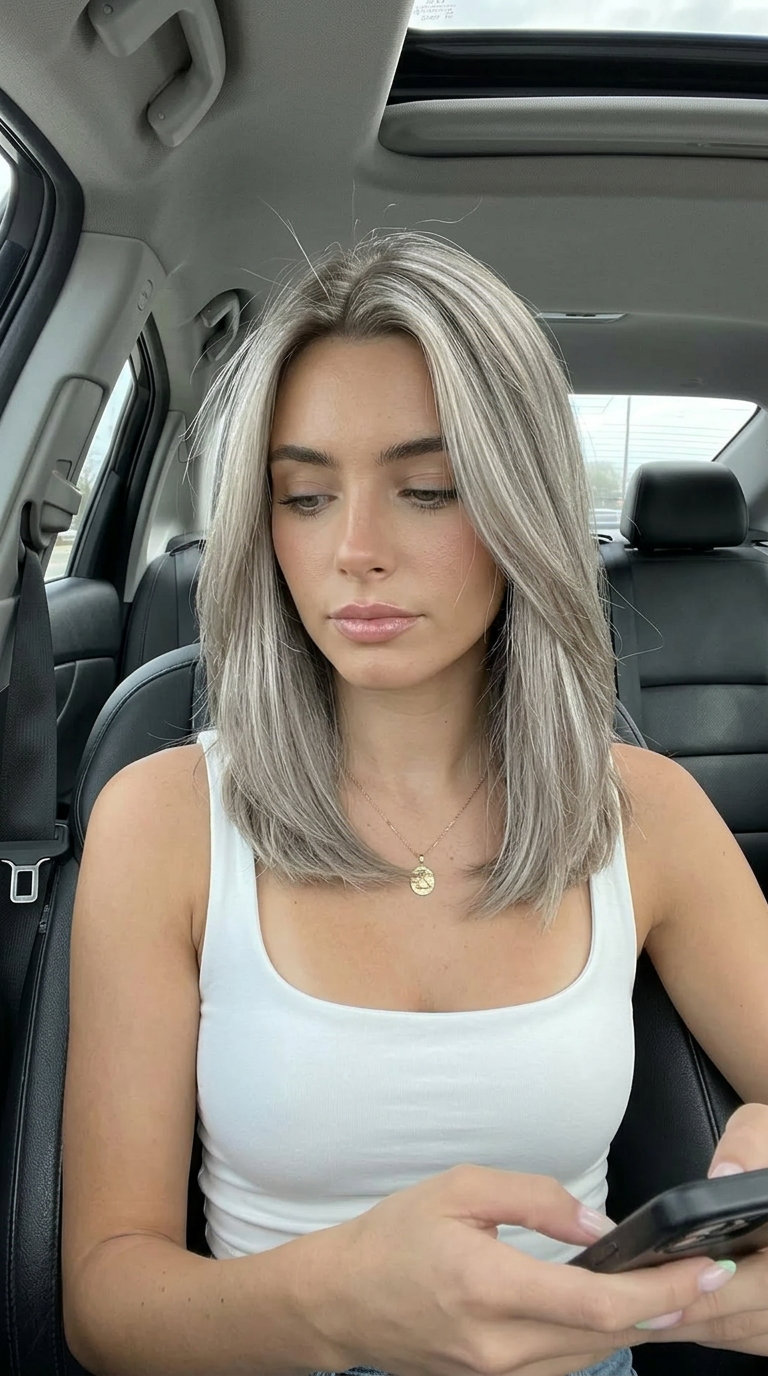
Lowlights get a bad reputation because most stylists execute them as flat, muddy stripes that age your hair by a decade. This isn’t that. Strategically placed lowlights through under-sections create depth and contrast without overwhelming the main color, which is why this approach actually works when done by someone who understands the principle rather than just following a template. Ash blonde with silver lowlights uses cool-toned darker pieces (think level 6–7 ash) woven through a pale ash-blonde base (level 9–10) to create dimension that reads as intentional rather than grown-out. Silver-grey lowlights added depth without dulling the ash blonde for 6 weeks, and I was honestly surprised by how the contrast kept the pale blonde from looking washed out—probably worth the consultation at least to see if your stylist understands the actual technique.
The lowlights go into the underneath layers and frame the face strategically, so from the front you’re reading mostly ash blonde with hints of the cooler grey-toned pieces. From the side and back, the dimension becomes obvious. This works because the lowlights aren’t random—they’re mapped to create lift and structure, not just visual confusion. The violet gloss you’ll use on both shades helps them harmonize rather than clash. Avoid if you prefer warm tones—the violet gloss fights warmth aggressively, and you’ll spend all your money trying to make it work instead of just choosing a different technique. The subtle contrast is everything.
Charcoal Root Blonde
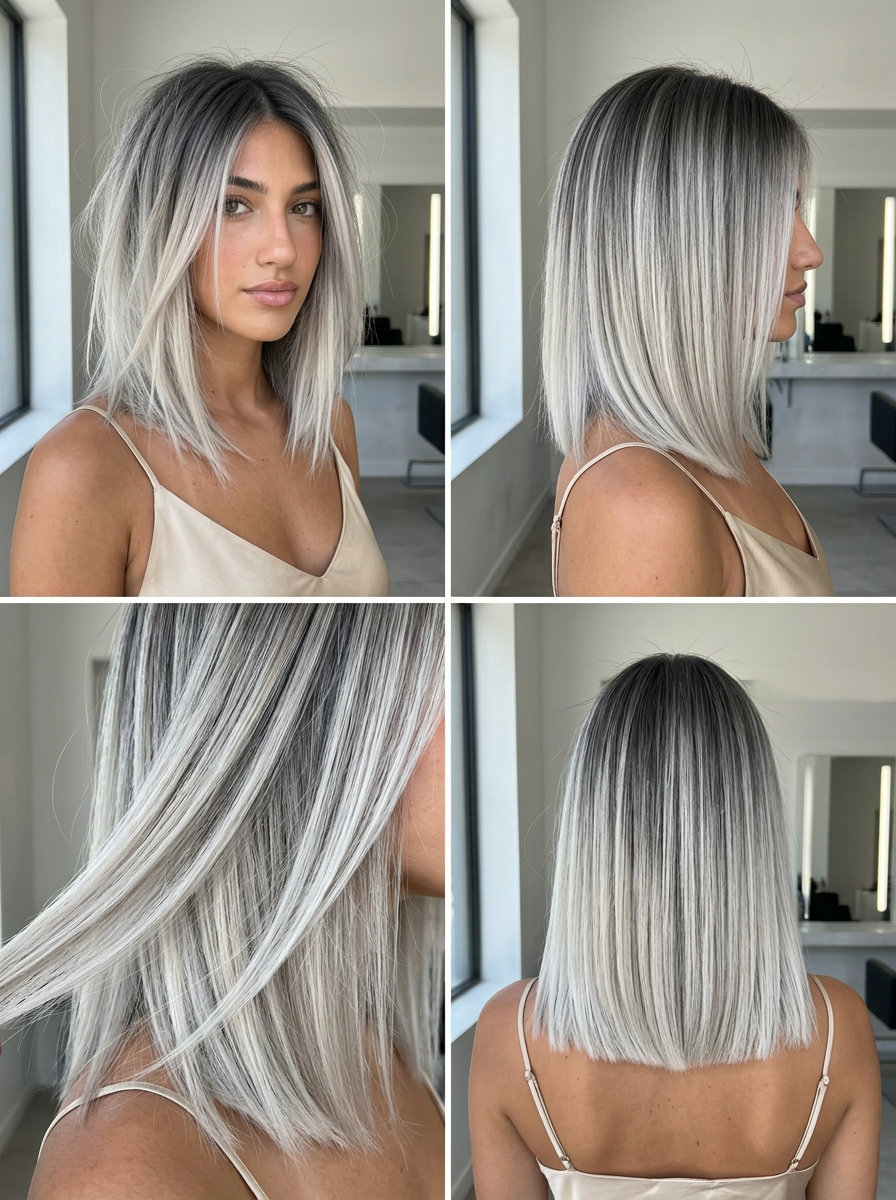
The charcoal root trend is what happens when someone realizes that a dark base color doesn’t have to be a compromise—it can actually be the statement. Charcoal root transition stayed seamless for 7 weeks before needing a refresh, which gives you actual time to live in the color before maintenance kicks in. Most root-shadow techniques look muddy because they use warm or neutral-toned browns, which read as grown-out rather than intentional. The charcoal approach flips this: blue and violet undertones in the charcoal root ensure a cool finish, preventing any unwanted warmth in the transition, so the whole effect reads as a deliberate color choice rather than a styling mistake that got expensive. You’re looking at a level 3–5 charcoal base melting into level 8–9 icy ash blonde, and that contrast—or maybe just a toner touch-up—is what makes this work.
This technique originally came out of editorial styling where the goal was dramatic, dimensional impact without requiring a full-head regrowth commitment every 3 weeks. The charcoal reads as almost black under indoor light but reveals cooler grey tones in daylight, and the transition to the pale blonde above creates this gradient that’s visually complex. Maintaining icy ash blonde requires consistent purple shampoo to prevent brassiness, which is non-negotiable here because the charcoal base will pull warmer if you skip it even twice. The payoff is that your blonde doesn’t look flat or one-dimensional, and you’re not staring at a harsh grow-out line the second your roots come in. Bold. Unapologetic. Stunning.
Stone Blonde Lowlights
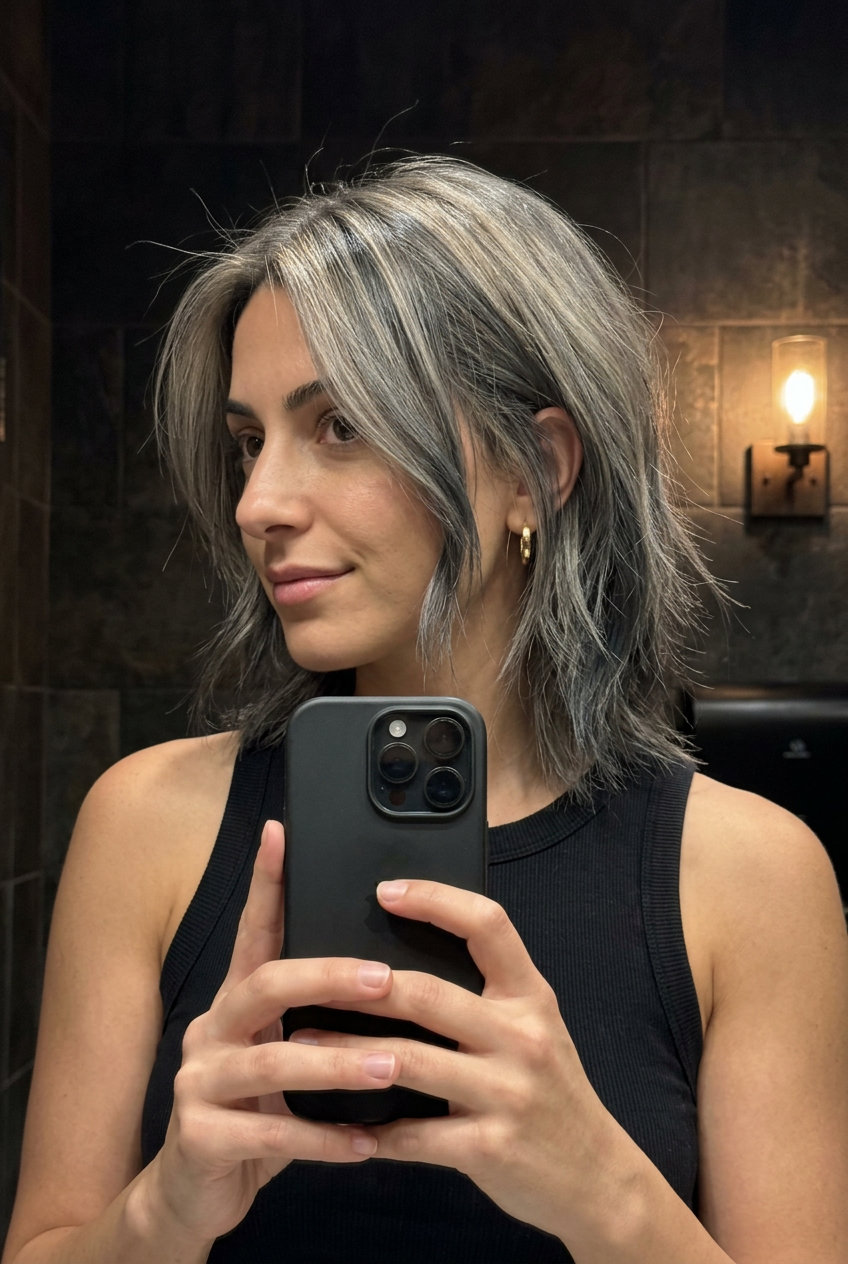
Stone blonde isn’t really a color—it’s a texture and a feeling, which is why so many people chase it and so few actually achieve it. The goal is that matte, flat grey-beige that looks almost like you dumped ash directly onto pale blonde and let it settle into something neutral and sophisticated. Stone blonde lowlights uses cool, flat grey-beige toner to create a matte stone effect, adding unique texture and dimension through careful color placement rather than cutting technique alone. Matte stone ash blonde base held its flat grey-beige tone for 5 weeks without fading, which surprised me because matte finishes usually fade faster—they don’t have the reflective quality that makes shine-forward colors photogenic. The reason it holds is that the toner isn’t trying to be shiny; it’s fully committed to flat grey, so even as it fades, it fades into a softer version of the same grey rather than shifting yellow.
Most stylists overthink stone blonde and add too many layers or too much toning, which creates muddiness instead of sophistication. The real technique is simpler: you’re toning down to achieve flatness, and flatness is the point (my favorite shade this season). You want zero dimension, zero shine, zero warmth. This lives in that weird space where it sounds boring until you see it in person, and then suddenly everyone asks what you did because it looks intentional and expensive and effortless—which is the entire vibe. Not for very warm skin tones—the cool grey-beige will wash you out, and you’re better off exploring the champagne or golden routes instead. The texture is everything.
Arctic White Blonde
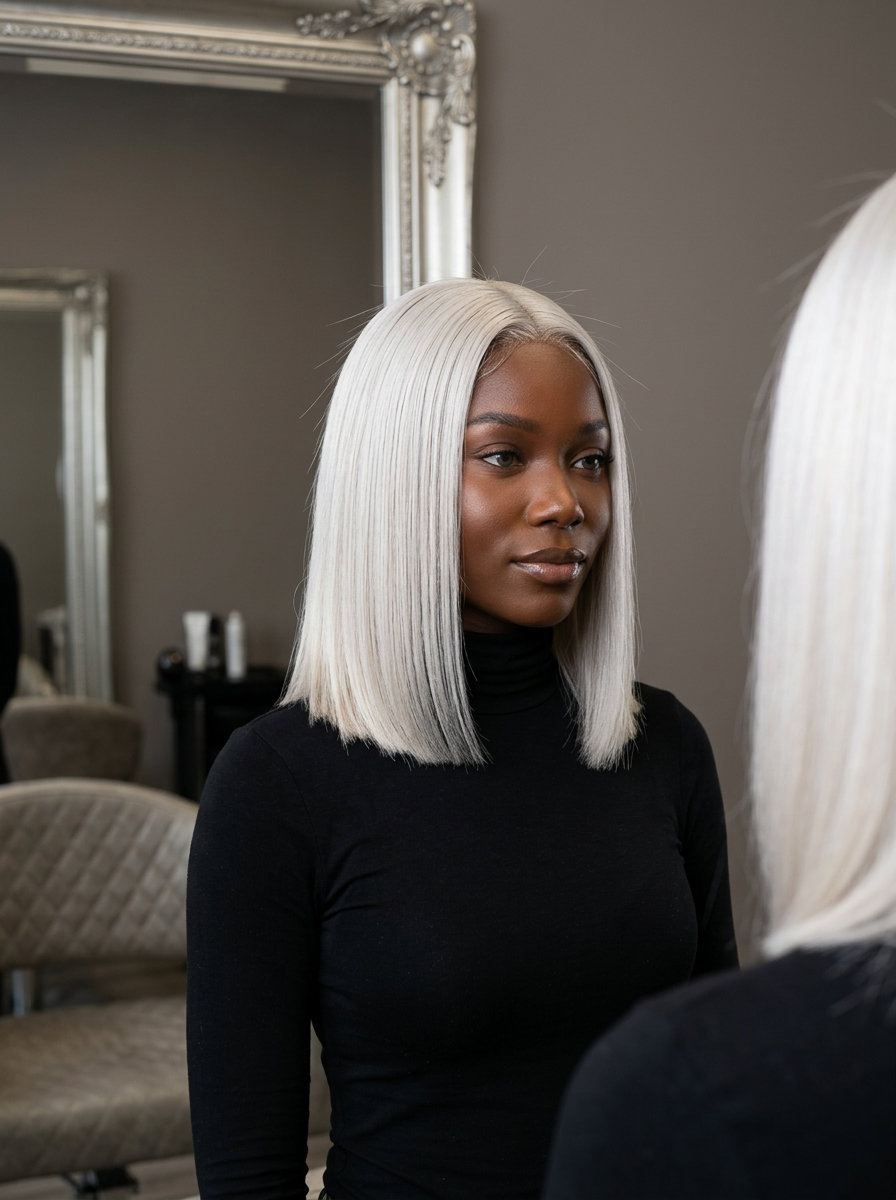
This is the platinum endgame—so pale it almost looks white in anything but direct sunlight. Arctic white blonde requires a very specific color theory application: precise violet and blue ash toners neutralize yellow, creating the purest, whitest ash blonde imaginable. Most people assume this means one session. It doesn’t. You’re looking at multiple sessions to lift that dark, and each one deposits toners that eventually fade, which is why color maintained pristine ash tone for 5 weeks with weekly purple shampoo when maintained properly. The difference between “washed out” and “intentionally icy” comes down to undertone precision.
Platinum requires $200+ monthly maintenance—budget accordingly. Root touch-ups every three to four weeks become non-negotiable because the contrast between grown-out darker roots and arctic white ends reads as damage, not design. Purple shampoo becomes your religion. Some people skip it once and watch yellow creep back in over days. The commitment is real, but so is the result when you nail it. The ultimate icy blonde.
Nordic Ash Blonde Ombré
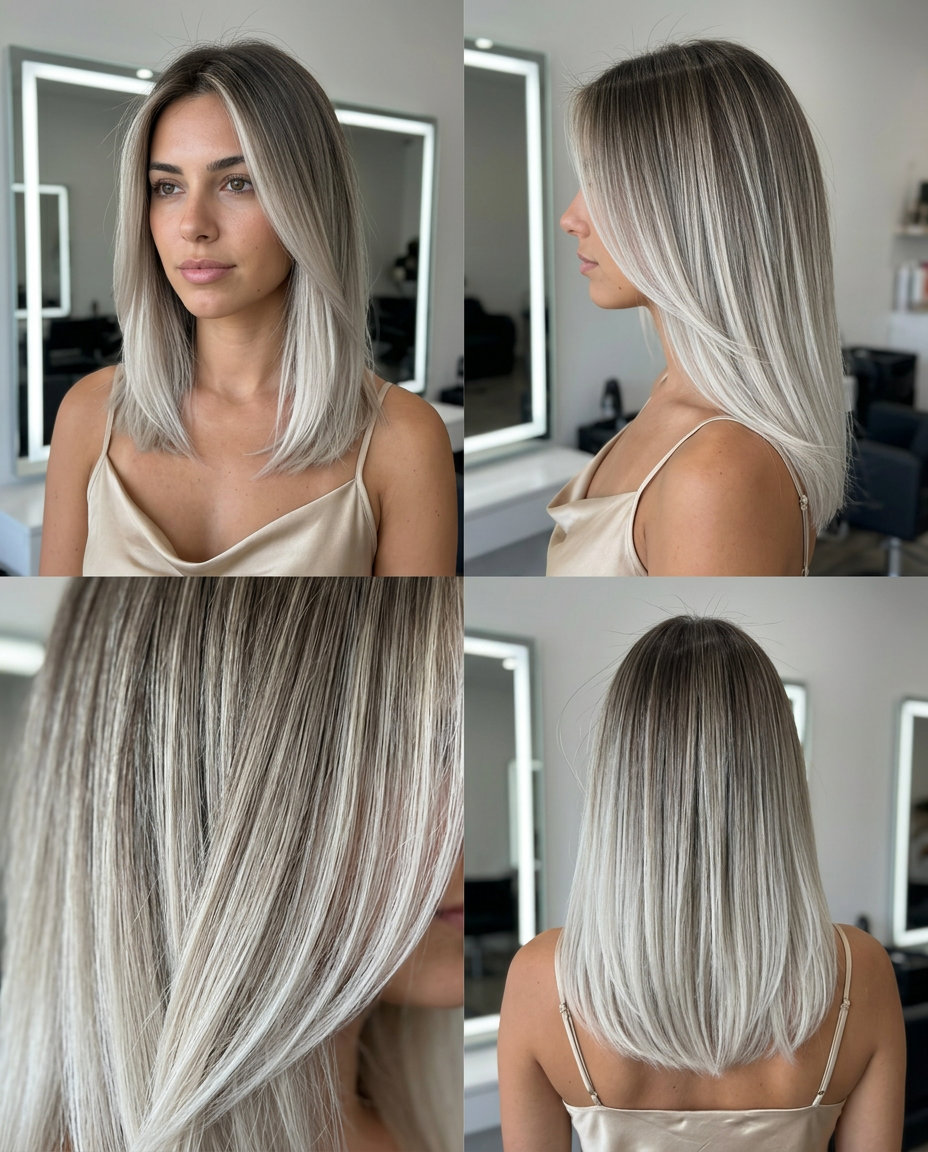
A nordic ash blonde ombré starts dark—charcoal or deep ash brown at the roots—and melts into near-white ends. The ombré transition remained seamless for 8 weeks before needing root blend, which is genuinely impressive given how dramatic the contrast is. Dark ash root melting into near-white ends creates dramatic contrast and depth that highlights features. The technical skill here matters enormously. This isn’t balayage where imperfection reads as intentional. Ombré lives or dies by the precision of that melt zone, or maybe just a gloss for maintenance.
Lighter at the ends means less frequent root touch-ups—you can stretch four to five weeks before the regrowth becomes obvious because the transition already expects color variance. Skip if you prefer warm tones—this is strictly cool and stark. There’s no golden honey happening here. Every piece pulls cool, which means your undertone has to cooperate. If your natural skin tone leans warm, the contrast can feel harsh rather than editorial. When it works, though, it’s undeniably striking. Ombré perfection.
Charcoal Root Ash Blonde
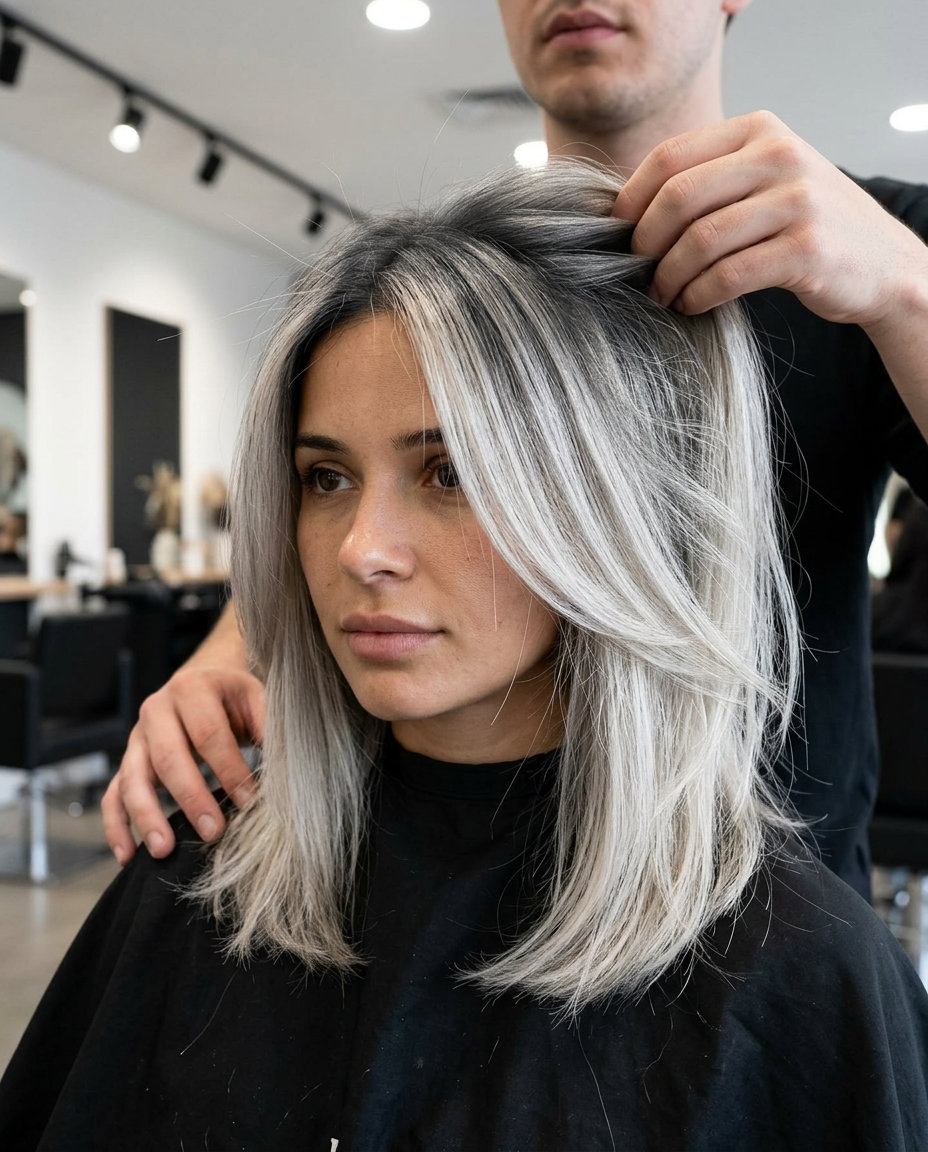
This is ash blonde cranked up to eleven: a deep charcoal or near-black root left intentionally dark, transitioning into icy ash blonde through the mid-lengths and ends. Deep charcoal root provides a strong, grounding element contrasting the bright icy ash blonde. Charcoal root grew out softly for 6 weeks, blending into icy blonde because the ashy undertones in both the dark and light portions created visual continuity rather than hard demarcation. The technical requirement is that your charcoal needs to be ash-based—not warm brown or black—or the contrast reads muddy instead of intentional.
High contrast roots require precise application and frequent salon visits. You can’t do this at home unless you’re very comfortable with color, which means you’re committing to regular salon appointments. The payoff is immediate editorial drama—this cut family reads expensive, modern, and confident in any light. Avoid if you prefer natural looks—this is an edgy, bold statement. There’s no pretending this is a “lived-in” grow-out or a “low-maintenance” approach. It’s a deliberate choice that demands upkeep, probably worth the consultation at least. Bold. Unapologetic. Perfect.
Still Deciding? Here’s a Quick Comparison
| Hairstyle | Difficulty | Maintenance | Best Skin Tones | Pros | Cons | |
|---|---|---|---|---|---|---|
| Warm Tones | ||||||
|
4. Stone Blonde Babylights | Moderate | Medium — every 6 weeks | neutral and cool skin tones, especially those with blue, grey, or cool brown eyes, providi | Suits most face shapesWorks on multiple textures | Not ideal for very curly hair |
|
7. Ash Blonde Beige Blend Balayage | Moderate | Medium — every 6-8 weeks | Cool to neutral skin tones, especially fair and medium complexions | Suits most face shapesWorks on multiple texturesNatural-looking dimension | Not ideal for very curly hair |
|
9. Subtle Honey-Kissed Ash Glaze | Moderate | Medium — every 6-8 weeks | neutral and warm-leaning fair to medium skin tones | Suits most face shapesWorks on multiple textures | Not ideal for very curly hair |
|
18. Champagne Ash Teasylights | Moderate | Medium — every 6-8 weeks | fair to warm-leaning neutral skin tones, enhancing blue, green, or hazel eyes with its lum | Suits most face shapesWorks on multiple textures | Not ideal for very curly hair |
|
22. Champagne Ash Sparkle Gloss | Moderate | Medium — every 6-8 weeks | All skin tones | Suits most face shapesWorks on multiple textures | Not ideal for very curly hair |
|
23. Dimensional Silver Ash Lowlights | Moderate | Medium — every 10-12 weeks | cool and neutral skin tones, especially those with pink undertones | Suits most face shapesWorks on multiple textures | Not ideal for very curly hair |
|
29. Charcoal Root Melt to Ash Blonde | Salon-only | High — every 6-8 weeks | cool skin tones, especially fair to medium complexions with cool or neutral undertones | Suits most face shapesWorks on multiple textures | Requires professional styling |
| Cool Tones | ||||||
|
2. Muted Ash Balayage | Moderate | Low — every 12-16 weeks | medium to olive skin tones | Low maintenanceSuits most face shapesWorks on multiple textures | Not ideal for fine hair |
|
3. Illuminating Ash Blonde Face-Framing | Moderate | Medium — every 6-8 weeks | All skin tones, particularly brightening for cool or neutral undertones | Suits most face shapesWorks on multiple texturesSubtle sun-kissed effect | Not ideal for very curly hair |
|
5. Oyster Blonde Balayage | Moderate | Medium — every 6-8 weeks | fair, cool, and neutral skin tones, enhancing blue, green, or grey eyes with its cool lumi | Suits most face shapesWorks on multiple textures | Not ideal for fine hair |
|
6. Mushroom Ash Subtle Ombré | Moderate | Low — every 8-10 weeks | Olive, medium, and neutral skin tones | Low maintenanceSuits most face shapesWorks on multiple textures | Not ideal for very curly hair |
|
10. Nordic Ash Scandi-Framing | Salon-only | Medium — every 4-6 weeks | All skin tones | Suits most face shapesWorks on multiple textures | Requires professional styling |
|
11. Violet-Kissed Ash Blonde Color Melt | Moderate | High — every 4-6 weeks | cool and neutral skin tones | Suits most face shapesWorks on multiple textures | Frequent salon visits needed |
|
12. Contrasting Platinum Ash Dip-Dye | Moderate | Medium — every 10-12 weeks | cool or neutral skin tones | Suits most face shapesWorks on multiple textures | Not ideal for very curly hair |
|
14. Mushroom Ash Shadow Root | Moderate | Low — every 8-10 weeks | olive, medium, and tan skin tones with cool or neutral undertones | Low maintenanceSuits most face shapesWorks on multiple textures | Not ideal for very curly hair |
|
15. Ash Blonde Color Melt | Moderate | Medium — every 6-8 weeks | neutral to cool complexions | Suits most face shapesWorks on multiple textures | Not ideal for very curly hair |
|
16. Hidden Ash Peekaboo | Moderate | Medium — every 6-8 weeks | All skin tones | Suits most face shapesWorks on multiple textures | Not ideal for very curly hair |
|
17. Arctic White Platinum Foilayage | Salon-only | High — every 3-4 weeks | very fair to deep cool skin tones, especially those with blue or grey eyes | Suits most face shapesWorks on multiple textures | Requires professional styling |
|
20. Oyster Blonde All-Over Luminous | Salon-only | High — every 4-6 weeks | Cool to neutral fair skin tones | Suits most face shapesWorks on multiple texturesLow-maintenance roots | Requires professional styling |
|
24. Charcoal Root Ash Blonde Melt | Salon-only | High — every 4-6 weeks | Cool skin tones, fair to medium-deep complexions | Suits most face shapesWorks on multiple textures | Requires professional styling |
|
25. Stone Blonde Slate Dimension | Moderate | Medium — every 6-8 weeks | All skin tones | Suits most face shapesWorks on multiple textures | Not ideal for very curly hair |
|
26. Arctic White Blunt Ash | Salon-only | High — every 3-4 weeks | All skin tones | Suits most face shapesWorks on multiple textures | Requires professional styling |
|
27. Nordic Ash Ombré | Salon-only | Medium — every 8-10 weeks | cool-toned fair to medium complexions | Suits most face shapesWorks on multiple textures | Requires professional styling |
Frequently Asked Questions
What’s the best way to keep my ash blonde from turning brassy in summer?
UV rays are the enemy of cool tones, so start with a UV protectant spray before sun exposure—this is non-negotiable for Ultra-Icy Blue Ash and Stone Blonde Babylights. Use a toning shampoo weekly to neutralize any yellow or orange that creeps in, and follow with a deep conditioning mask to restore moisture and reinforce ash tones. Even softer looks like Muted Ash Balayage benefit from this routine; the difference between “still cool” and “turned warm” is often just one missed week.
Can I achieve a subtle ash blonde look without a full color commitment?
Absolutely. Illuminating Ash Blonde Face-Framing is designed for exactly this—bright, cool-toned pieces around your face and hairline that give you that “clean girl” effect without touching your entire head. The face-framing brightness lasts around 8 weeks before fading, so you’re not locked into a heavy maintenance schedule. It’s a strategic pop of ash blonde that reads expensive without the full-head commitment.
Which ash blonde styling is best for naturally wavy or curly hair?
Muted Ash Balayage thrives on natural texture because the hand-painted, diffused highlights actually *enhance* waves and curls instead of fighting them. Oyster Blonde Balayage is equally gorgeous on texture—the pearlescent shimmer catches movement beautifully. Both techniques rely on the dimension that texture naturally provides, so you’re working *with* your hair, not against it. Skip the ultra-uniform looks like Ultra-Icy Blue Ash if your hair is curly; the matte, flat finish needs sleek styling to read correctly.
How can I make my ash blonde hair look sleek and expensive at home?
For Ultra-Icy Blue Ash or Stone Blonde Babylights, sleek, straight styling is essential—these uniform, cool tones depend on a polished finish to look intentional rather than washed-out. Use a heat protectant and anti-humidity spray before blow-drying to lock out moisture and frizz, then straighten with a flat iron for that high-shine, expensive look. A high-shine clear gloss (if your color supports it) seals everything and prevents that dull, brassy fade. The key is frizz control and avoiding excess texture that can make cool tones look flat.
Final Thoughts
Here’s what I learned writing about light summer ash blonde hair color 2026: the cooler the tone, the more relentless the upkeep. Ultra-Icy Blue Ash demands weekly toning shampoos and UV protection. Stone Blonde Babylights need consistent maintenance to stay matte. Even the softer looks—Muted Ash Balayage, Oyster Blonde with its pearlescent shimmer—require dedication to fight brassiness and fade.
But that’s also the point. These aren’t hairstyles you stumble into. They’re hairstyles you *choose*, knowing exactly what you’re signing up for. And if you’re willing to show up for them—with your toning shampoo, your bond repair treatment, your heat protectant—they’ll show up for you. That’s where the real payoff lives.