Little girl braids are a timeless way to keep young hair neat, and this year they are getting softer: think lived-in color, glossy natural texture, and face-framing layers that let a braid feel more like a style and less like a chore.
You will find 22 ideas here, from intricate box braids and cornrows to simple French and fishtail plaits, spanning every length and texture. Whether your child has fine hair that slips out of a ponytail by lunch or thick, coily strands that need a style that lasts a week, this collection covers it. Little Girl Braids is your answer to school mornings, playdates, and picture day.
Dark Brown Box Braids With High Ponytail Top Knot
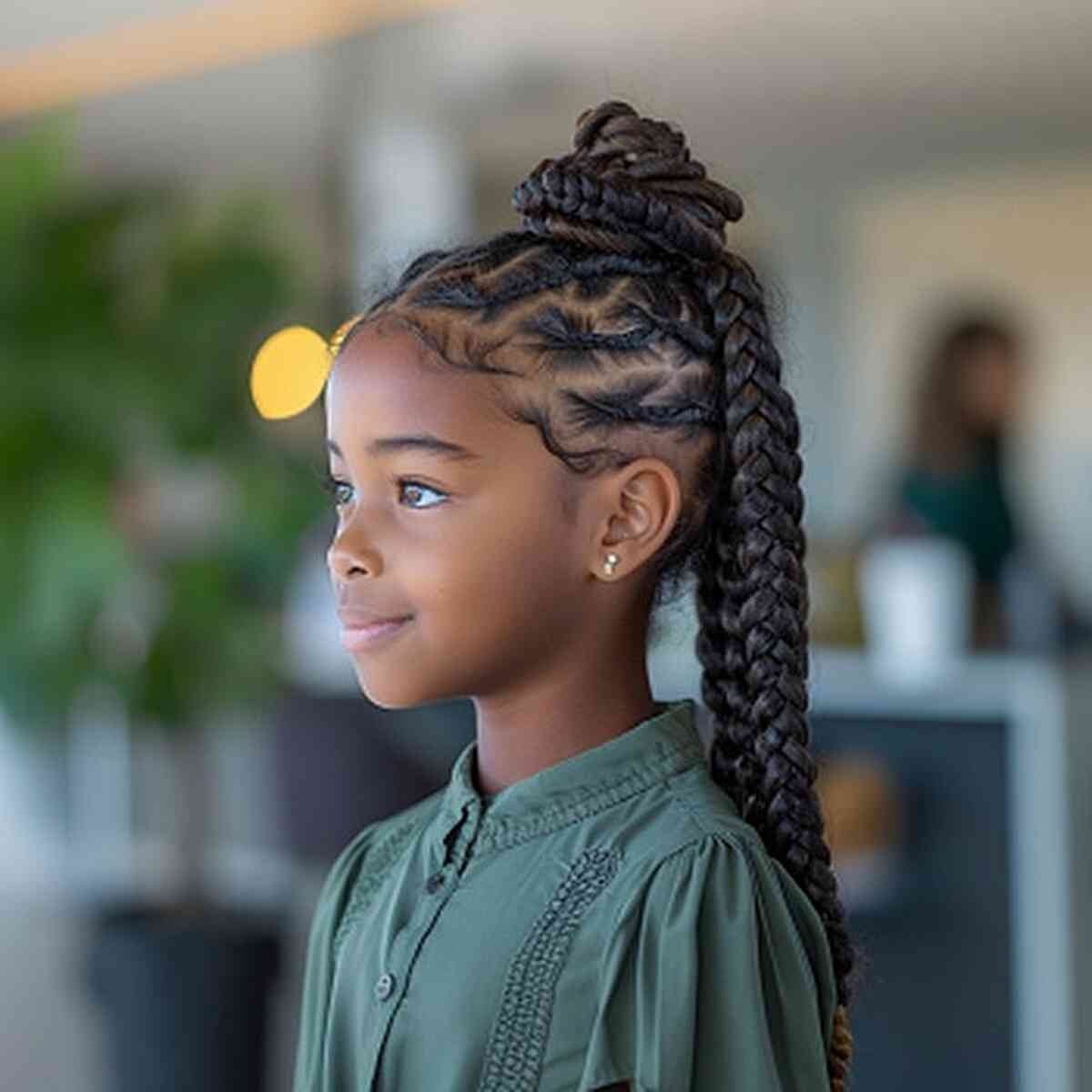
Thick, coily hair that can hold a braid pattern this detailed is the real prerequisite here, not just length. The dark brown box braids are sectioned into an intricate front design, then pulled into a high ponytail with a substantial top knot that lands at mid-back. A middle part keeps the geometry clean. Ask your stylist for: box braids with high ponytail and top knot. This is salon work, due to the intricate parting and knot structure.
Apply a light sheen spray to the braids for added definition. The hold is excellent: the top knot stays put through active play, and the braids themselves need a touch-up every two to three weeks to keep the edges crisp. Best for medium to long lengths where the weight of the braids won’t pull on the scalp.
Side Part Cornrows Transitioning to Mid-Back Braids
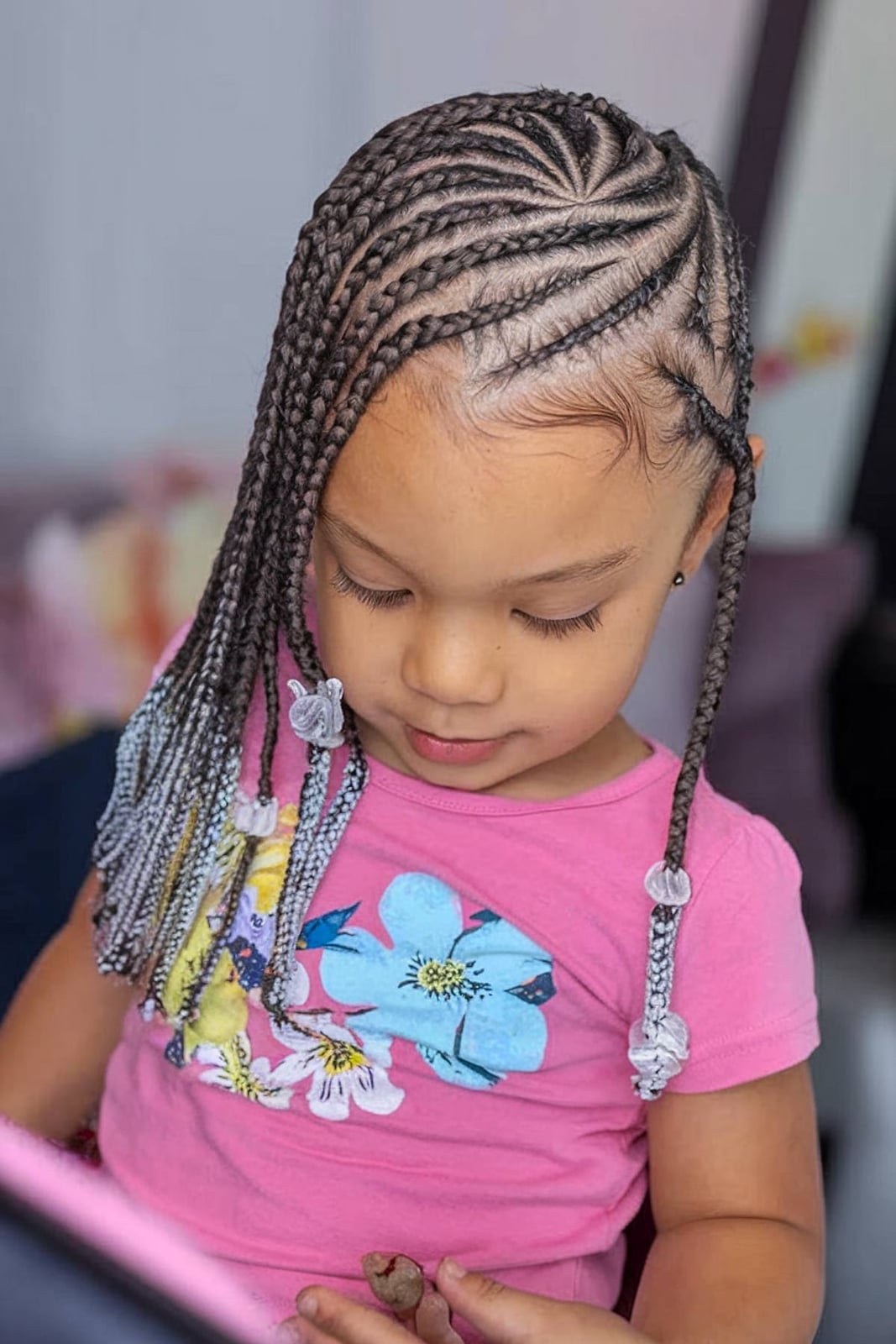
The design here does something clever: tight cornrows on one side of the part gradually release into individual braids that fall to mid-back. That transition from scalp-hugging pattern to swinging length adds visual movement without losing the neatness. Small beaded accessories at the ends give the braids a little weight. Ask your stylist for: cornrows on one side with braids and beads.
Thick, wavy hair starting at shoulder length or longer holds this shape best. The side part breaks up the symmetry, which is useful for keeping the cornrows from feeling too uniform. A salon appointment is required for the cornrow sectioning; the beads should be clamped on securely so they don’t slide off mid-week.
Neat Dark Brown Box Braids With Baby Hairs
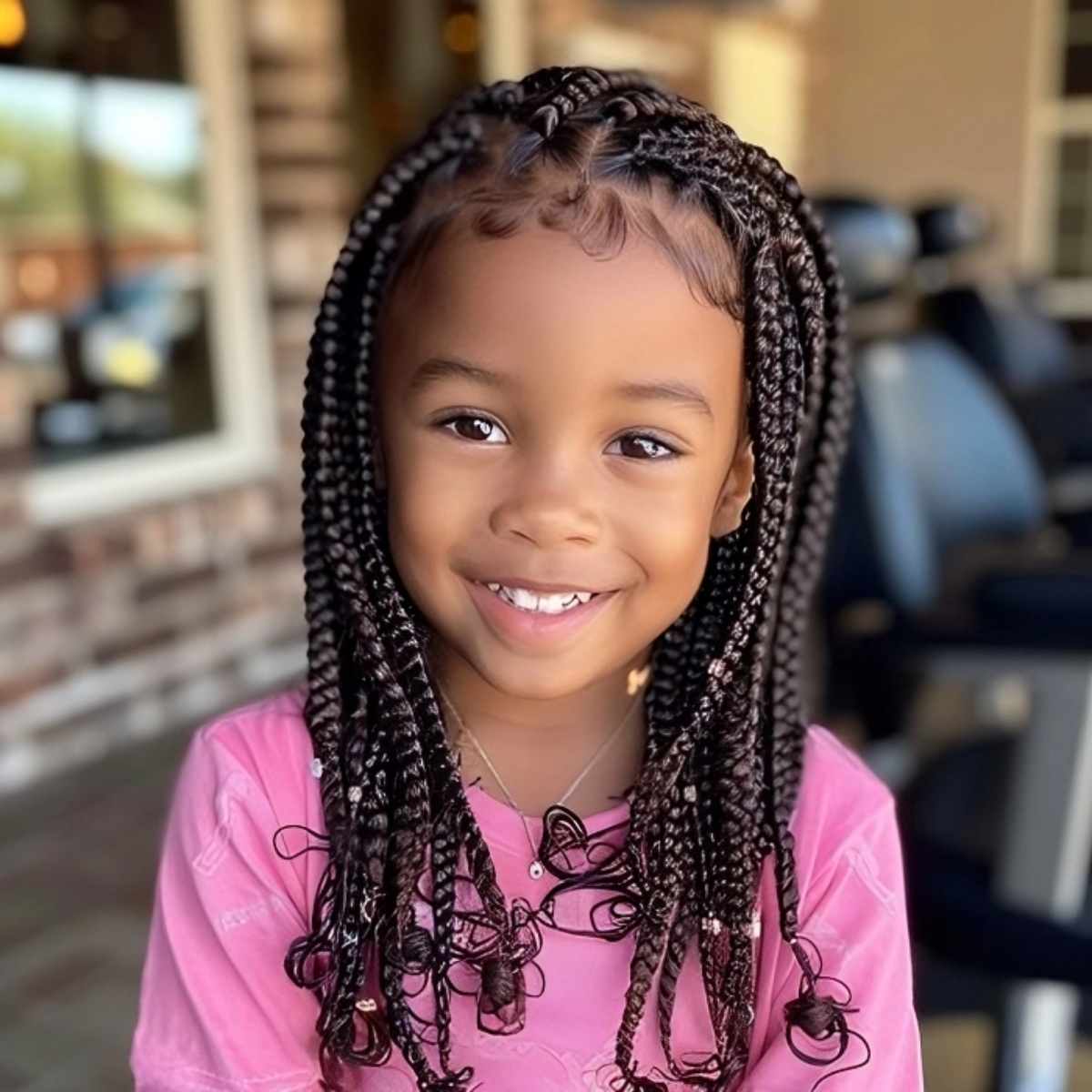
Baby hairs that frame the face with swooped curves look polished rather than fuzzy. Ask your stylist for: box braids with baby hairs along the hairline. The thick dark brown braids are parted down the middle and fall to mid-back, but the real detail is the delicate, swooped baby hairs framing the face. A fine-tooth comb and a dab of light hold gel are all you need to set them. Works best on thick hair of at least shoulder length, and the hold on those baby hairs lasts through a full day at school or a party.
Black Box Braids With Colorful Beads
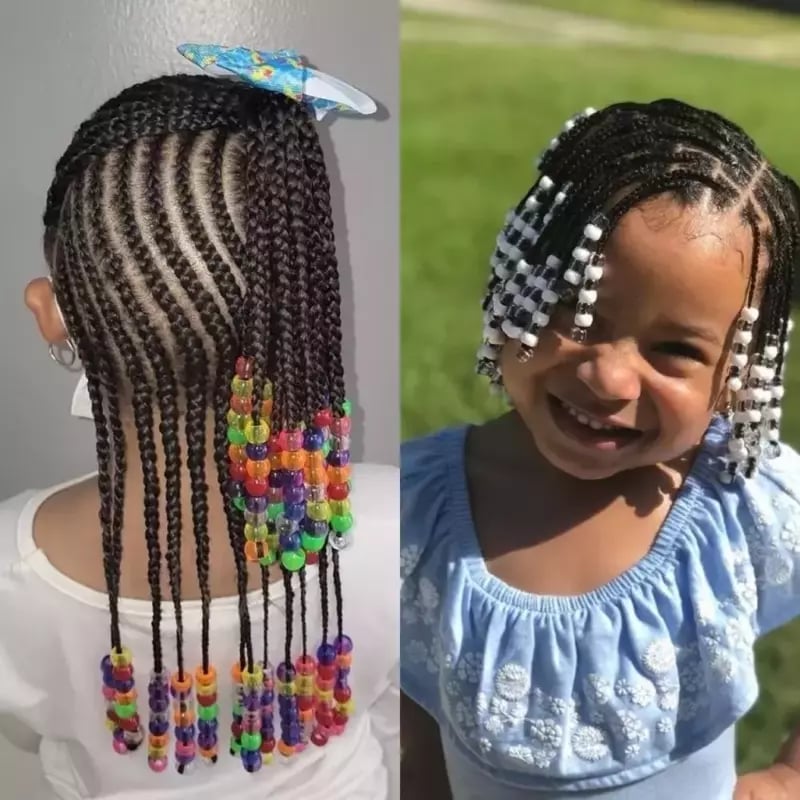
Beads on braids versus beads on cornrows: the difference is in the movement. Thin black box braids with a clean middle part allow each strand to swing independently, so the colorful beads click and shift with every head turn. A small patterned clip at the top anchors the look without competing with the beads. Ask your stylist for: thin box braids with colorful beads. This works best on thick, straight hair, where the braids can be fine enough to keep the scalp comfortable. The beads need to be crimped on tight to avoid becoming floor decorations.
Black Cornrows With Face-Framing Colorful Beads
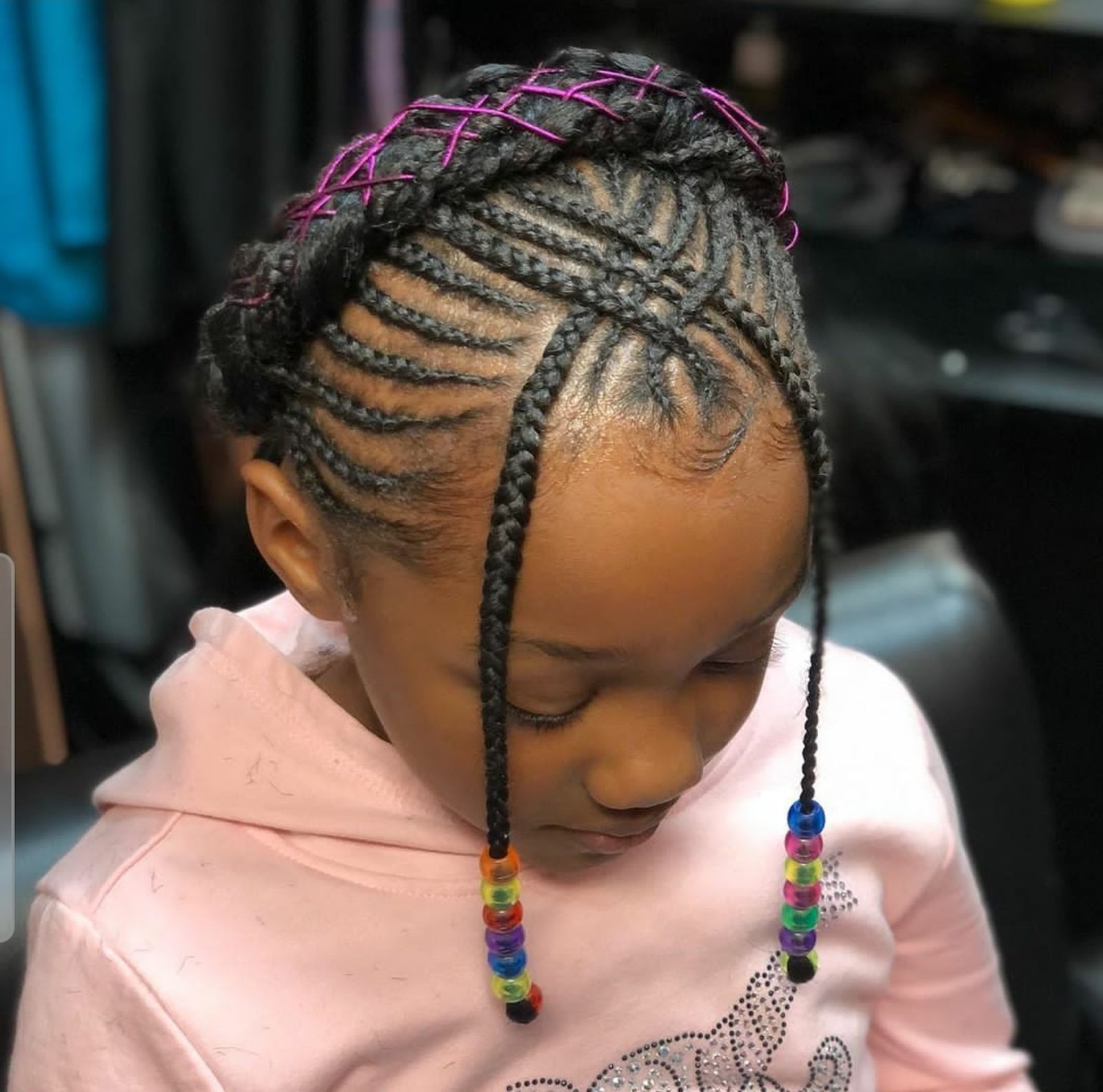
At shoulder length, cornrows feel lighter and less heavy than longer versions, which makes this a natural pick for warmer months or festivals. The intricate black cornrows follow a middle part, and the colorful beads are concentrated on the face-framing braids, drawing attention forward. Ask your stylist for: cornrows with face-framing braids and beads. The scalp needs regular moisture to stay comfortable under the tension, and the beads should be checked weekly for security. Thick, straight hair holds the pattern cleanly, and the shoulder length keeps the overall weight manageable.
Black Box Braids With Pink Highlights and Geometric Parting
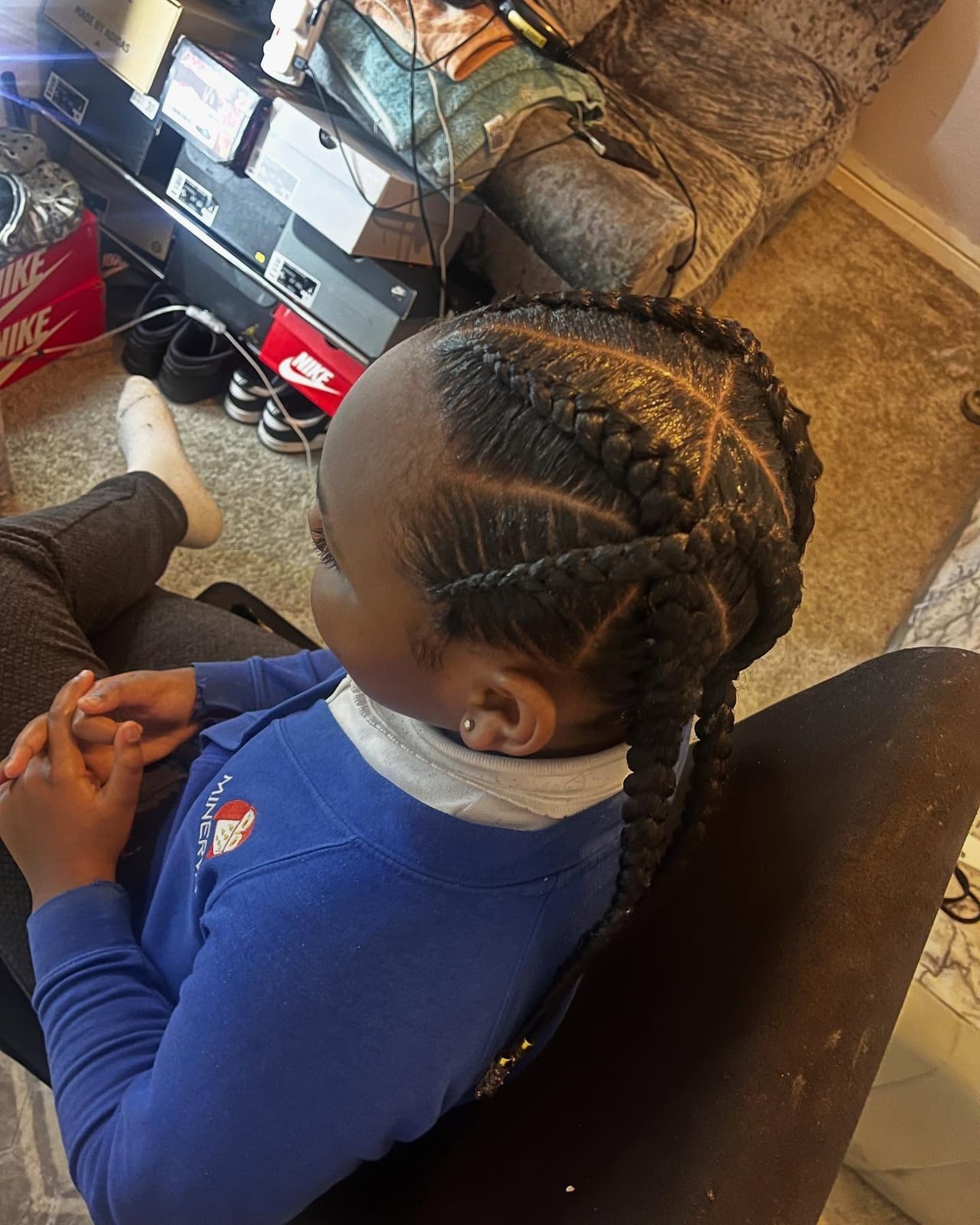
Geometric partings turn a standard set of box braids into a deliberate design, and the pink highlights here add a playful contrast against black. The view from above makes the precision of those clean, angular sections the whole point. Thick, coily hair at least shoulder length can handle the structure, and the color pop works best when the base is dark enough to make the pink read clearly rather than blend in. Ask your colorist for: box braids with pink highlights and geometric part.
The catch with a geometric parting is that it has to stay crisp, which means a salon visit is your only real option. Expect to sit for a while while each section is mapped and braided individually. The pink highlights will fade faster than the black base, so a color-safe shampoo and cool water are worth the small hassle. If the pattern shifts after a few days, that is normal: reapplying a light gel to the part lines can buy you another day or two of clean geometry.
Black Cornrows Styled in a Heart Pattern
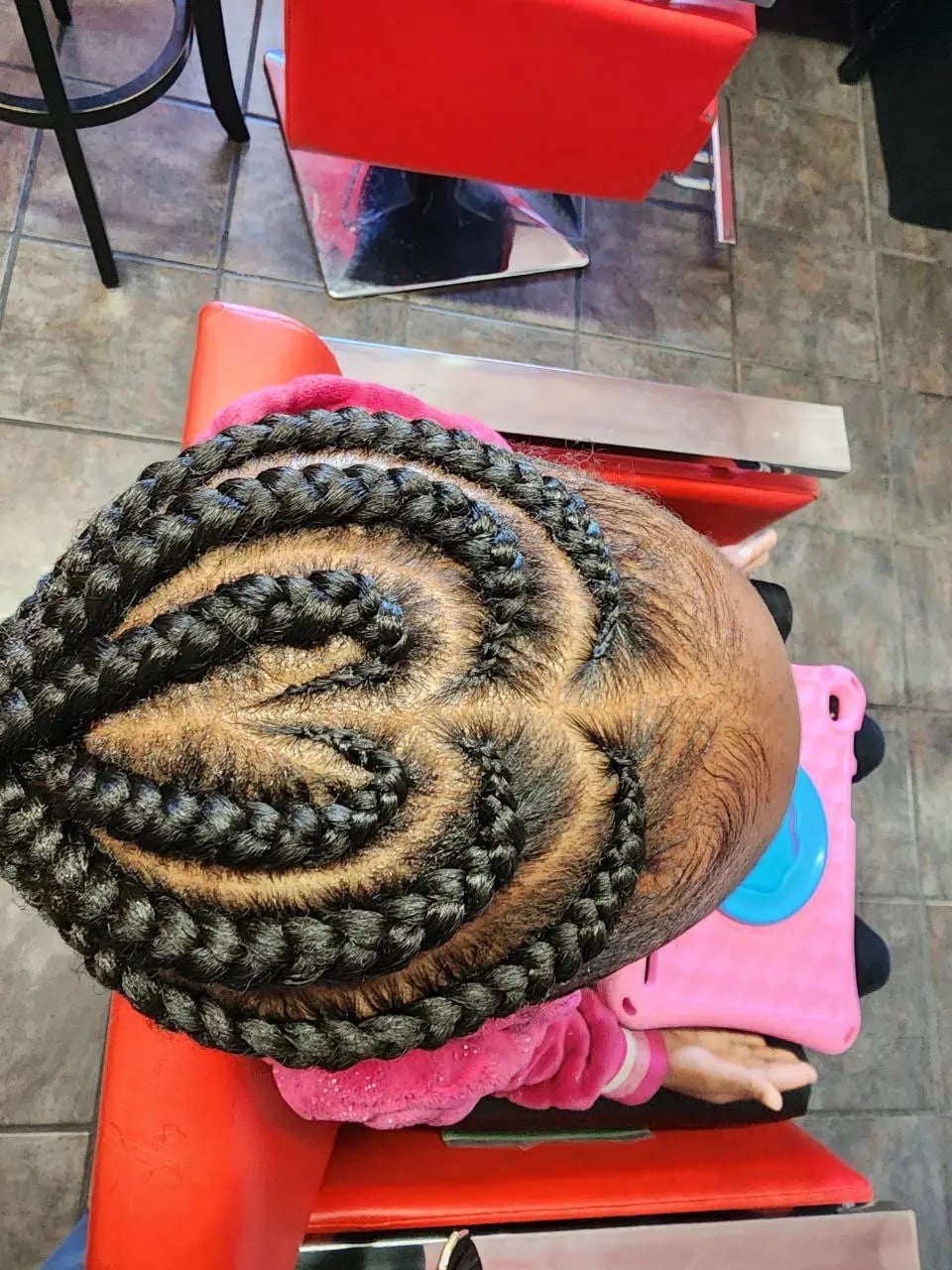
This one is for the girl with enough hair volume to let a scalp design breathe. The heart pattern sits front and center, radiating from a middle part, and the cornrows follow the shape closely. Thick hair is required: fine or thin hair will not hold the distinct curves, and the pattern will look more like a suggestion than a statement. Ask your stylist for: cornrows in a heart pattern.
Anyone with shorter hair can still get the look if the nape area is long enough to braid into the design. A middle part keeps the pattern symmetrical, and the clean scalp around the braids is part of the appeal. This is a salon-only style that takes patience from both braider and wearer, but the result is a literal heart on the head. It works best for a special event or a picture day when the top view will actually be seen.
Black Box Braids With Geometric Parting and Orange Elastics
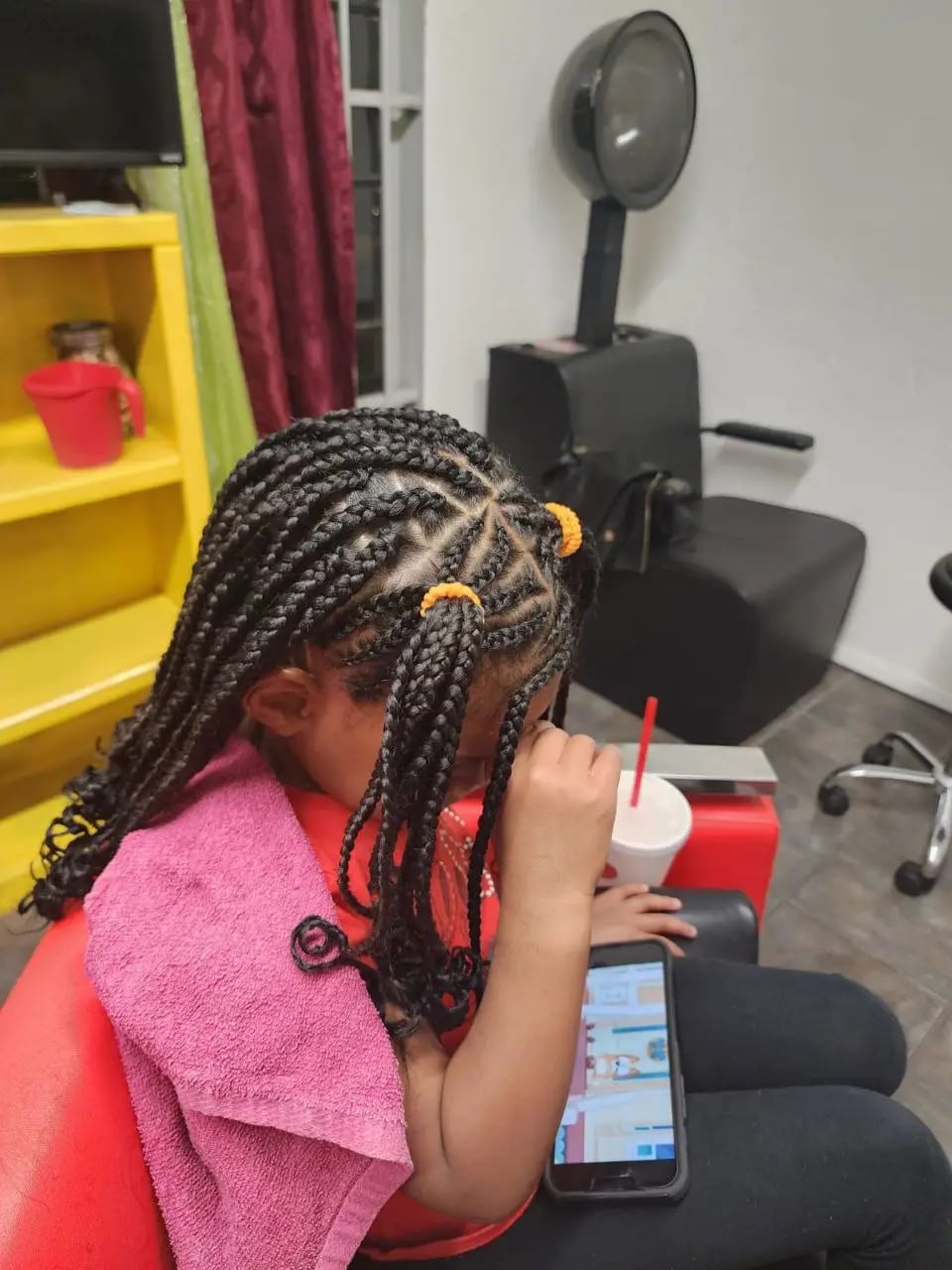
A practical rule with geometric partings: the more precise the sections, the more attention they need during wear. These black box braids use clean, angular part lines and small orange elastics at the base, with some ends left loose and curly for texture contrast. Thick hair at least shoulder length is the starting point, and the geometric pattern works best when the hair is long enough to show the full braid length below the parting. Ask your colorist for: box braids with geometric part and orange elastics.
Upkeep is straightforward but daily. The curly ends should air dry rather than see heat, and a light leave-in keeps them from tangling into each other. The geometric part lines will soften after a few days, so a small amount of edge control brushed along the part can reset the look without a full redo. A trim every eight to ten weeks keeps the ends from fraying, and the orange elastics are easy to replace if one snaps.
Black Two Strand Twists With Gold Rings
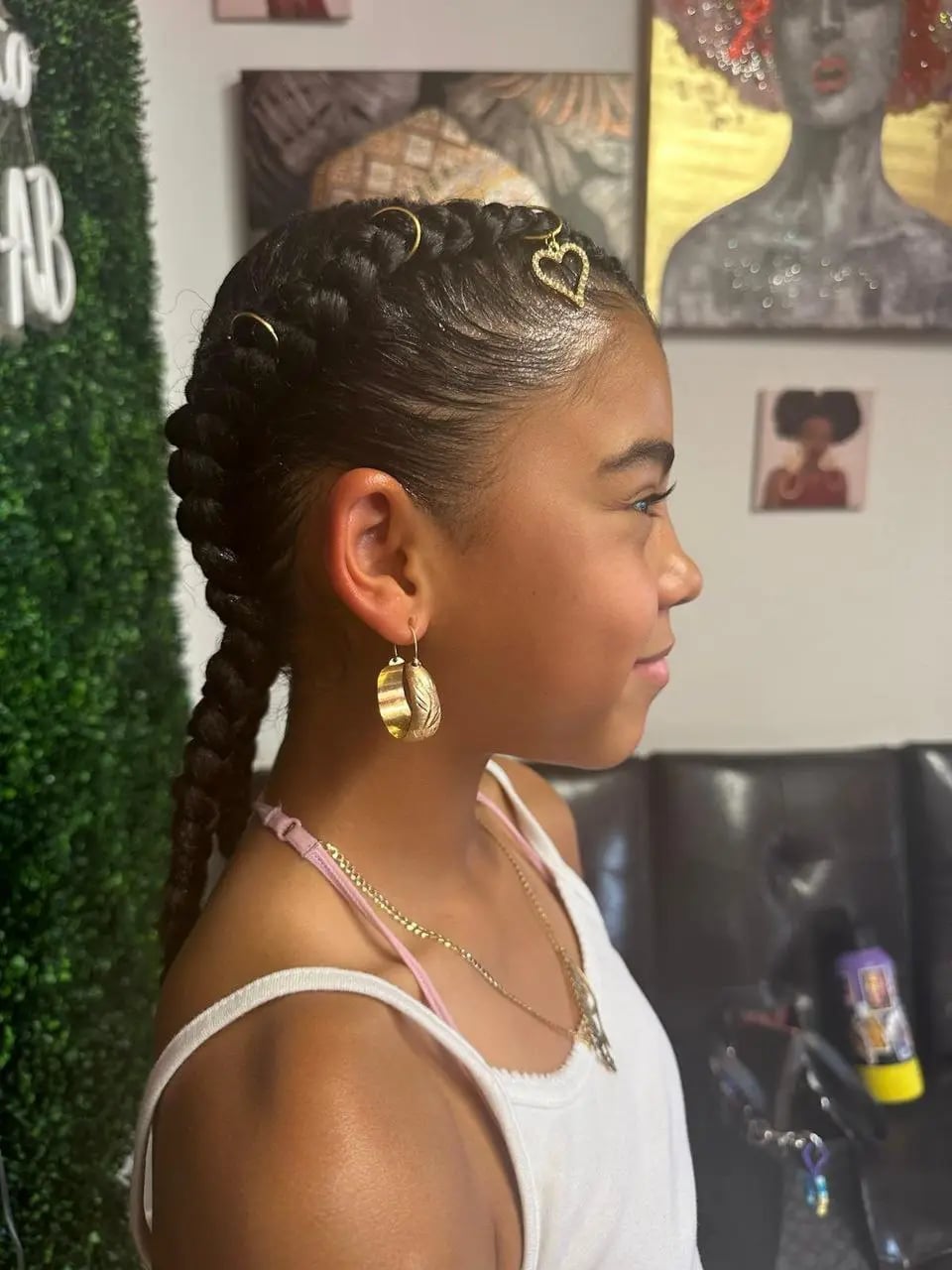
Two-strand twists are a faster alternative to box braids, and the gold rings and heart-shaped charms here turn a simple protective style into something celebratory. The hair is sectioned from a middle part, twisted down to mid-back, then threaded with metal accents. Thick, coily hair at least shoulder length holds the twist shape best without unraveling. Ask your stylist for: two braids with gold rings and heart charms.
The technique is straightforward: each section is twisted, then the rings are slid on and secured before the next twist. A salon does it faster and more evenly, but a parent with practice can manage this at home in about an hour. The charms need to be attached firmly so they do not slide off during sleep or play. This is a party-ready look that still stays neat for school the next day.
Dark Brown Braids With White Ribbon Bows
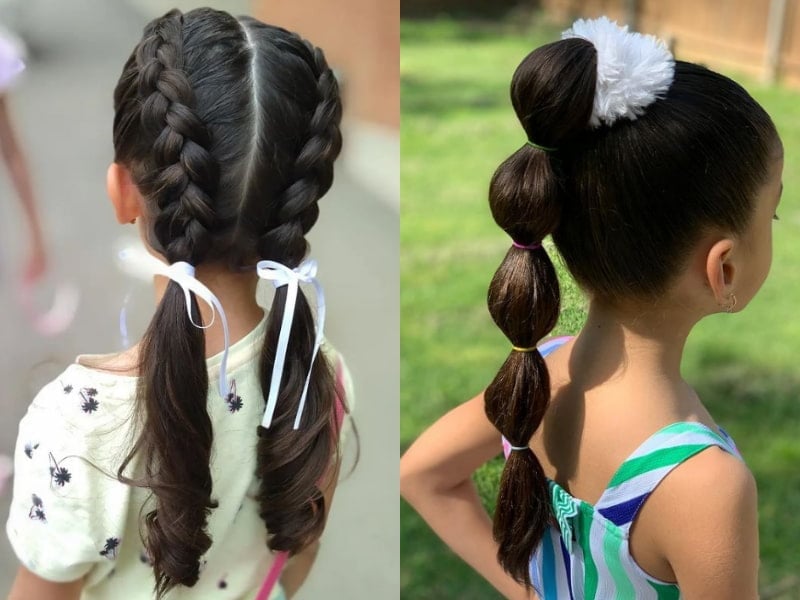
Two neat braids with white ribbon bows at the ends are the kind of style that looks like a special occasion but takes less time than you think. The dark brown hair is straight and dense, parted in the middle, and braided cleanly down to mid-back. The bows add a finishing touch without needing clips or pins that could slip out. Ask your stylist for: two braids with white ribbon bows.
This lands perfectly for picture day, a holiday gathering, or a birthday party where the hair needs to stay out of the way and still look polished. The bows can match the dress or stand out as a contrast, and they are easy to swap for a different color for the next event. Straight texture holds the braid smoothness, but a light spritz of water before braiding helps control flyaways. A middle part keeps the symmetry, and the braids themselves hold for two to three days before needing a redo.
Dark Brown Fishtail Braid With Lighter Ends
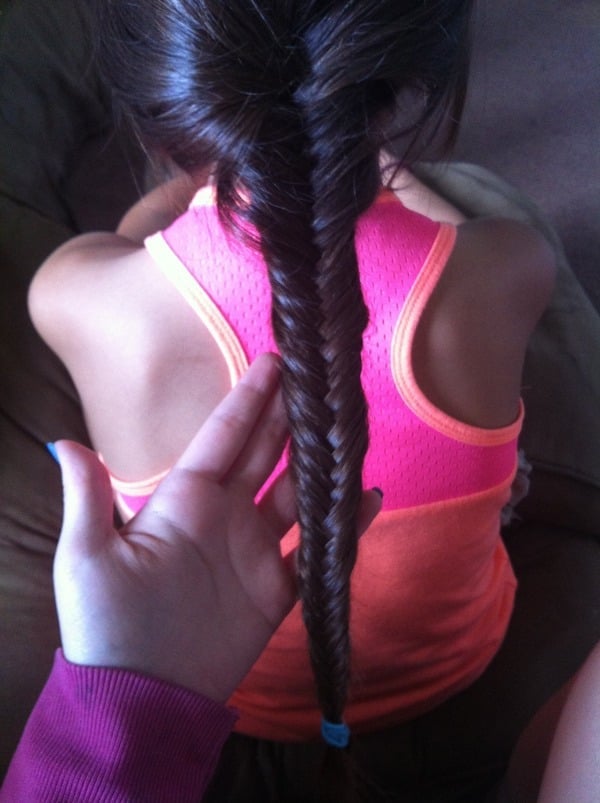
A long fishtail braid demands patience and a steady hand, but the payoff is a textured, eye-catching style that holds up through a full day. This one starts at a middle part on dark brown hair and runs to mid-back, where the lighter ends add a subtle fade without any color commitment. Ask your stylist for a long fishtail braid. It works best on thick, wavy hair that is at least shoulder length, anything finer and the sections blur together instead of popping.
Time is the main cost. Getting the alternating sections even takes practice, and braiding thick hair on a wiggly child is a two-person job the first few tries. Once finished, gently pull the edges outward to widen the braid and show off the wavy texture. The hold is solid enough for school or a playdate, but loosening it at night keeps the hair from creasing too sharply.
Blonde Braid With Visible Layers
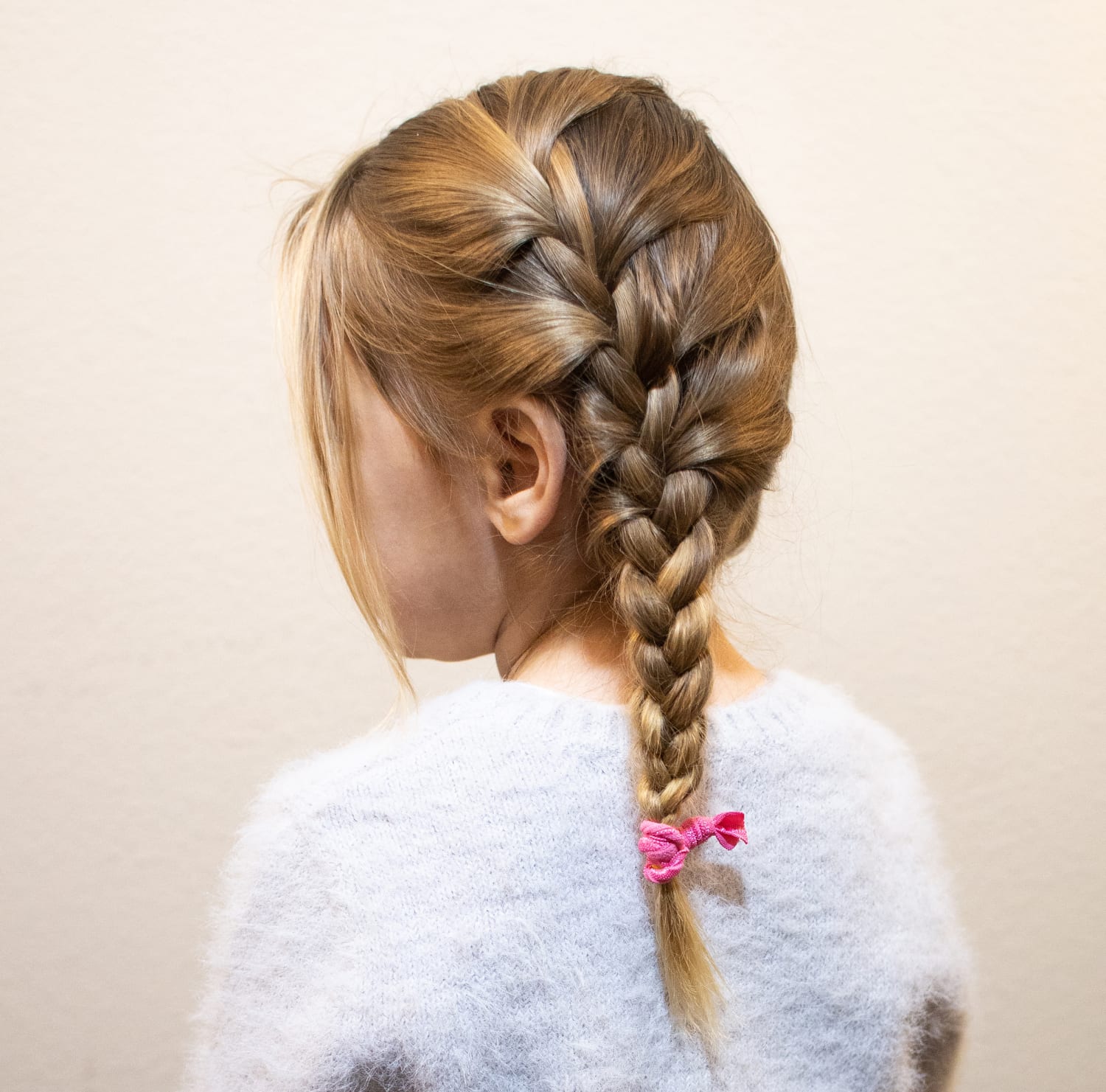
Can a braid have movement and still stay neat? This one says yes. The thick, warm blonde hair is woven into a single braid that runs to mid-back, and the visible layers create little peaks and valleys along the plait instead of a flat tube. Ask your stylist for a layered braid. Thick, wavy hair with subtle layering is the ideal candidate, the shorter pieces tuck into the braid but still add texture. A tight elastic at the end keeps everything in place, and the tone variations in the blonde give the braid depth without any extra product.
Blonde Fishtail Braid With Highlights
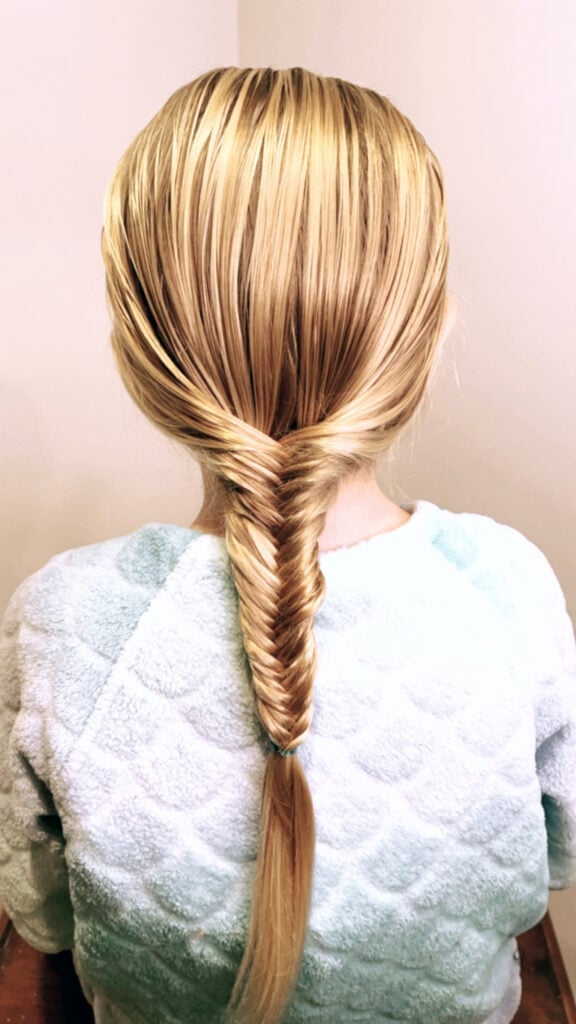
A fishtail braid already stands out, but add highlights and the pattern becomes a checkerboard of light and dark. This version is tight, straight and thick, running from a middle part to mid-back on blonde hair with subtle highlights woven throughout. Ask your stylist for a tight fishtail braid with highlights. Straight, thick hair holds the crisp sections best, wavy hair works but will soften the edges.
The highlights earn their keep here. Each alternating piece reflects light differently, so the braid reads as dimensional. After braiding, gently tug the outer edges to loosen the weave; this reveals more of the highlight stripe and prevents the style from looking too severe. A toning appointment every eight weeks keeps the blonde from going brassy. The style holds for a full school day, though sleeping on a tight fishtail can leave creases, so a loose low ponytail at night is a good habit.
Blonde French Braid With Ponytail and White Bow
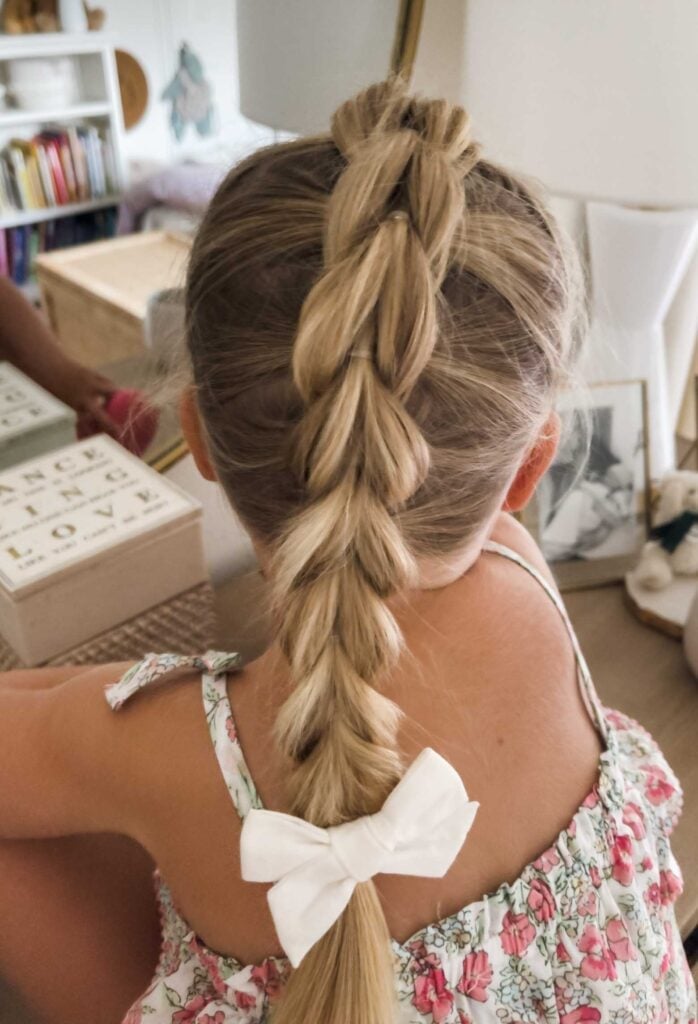
This is a salon-ready style that stays tidy through the day. Thick, wavy blonde hair is French-braided from a middle part, then gathered into a ponytail at the nape with a crisp white bow securing it. Ask your stylist for a French braid into a ponytail with a white bow. The bow should be proportional to the child’s head, too large and it pulls the eye, too small and it disappears into the braid.
This is not a five-minute morning style. The French braid needs a steady hand and the ponytail section must be gathered evenly to avoid bumps. A salon visit is the easiest route, but for the dedicated parent, a practice run the night before helps get the tension right. The white bow adds a finished touch that works for parties, recitals or school photos. The hold is strong, and the style stays neat from morning to evening.
Light Brown Double French Braids to Single Braid
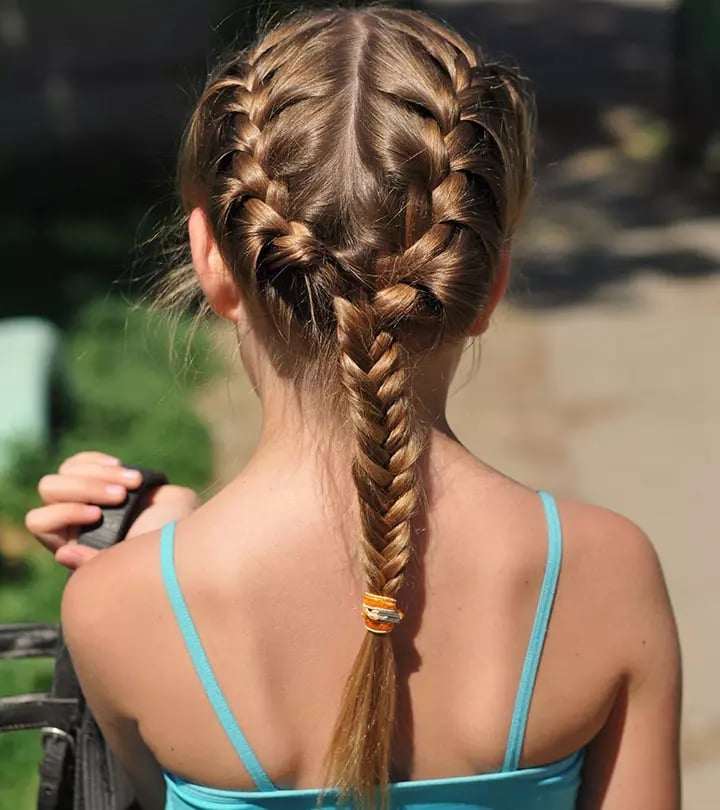
Two French braids start at the hairline and meet at the back to become one thicker braid, a design that keeps hair contained and looks more intricate than a single plait. On light brown hair with blonde highlights, the wavy, thick texture gives each braid body. Ask your stylist for double French braids into a single braid. The visual effect is closer to a crown braid than a standard ponytail, so it works well for active days when hair needs to stay put. The hold is excellent, and the single braid at the back avoids the bulk of two separate tails. Thick hair is required, fine hair will not have enough weight for the transition to look seamless.
Fine Blonde Wavy Braids
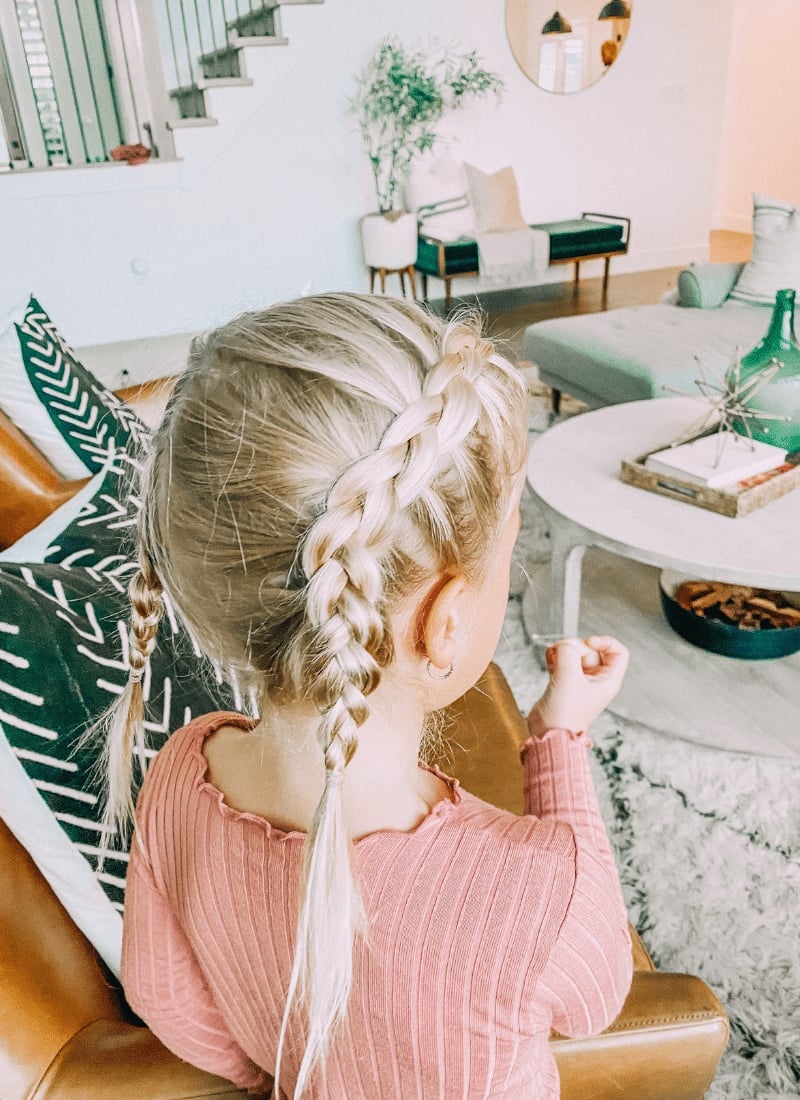
Fine hair can still pull off thick braids, but it needs some help getting there. On wavy, fine blonde hair cut to mid-back, two loose braids from a middle part look full enough to appear substantial. Ask your stylist for two loose braids. Without a texturizing spray worked through each section before braiding, the braids can look thinner than you want, especially by the end of the day. A spritz at the roots and along the lengths gives fine hair the grip and volume it needs to hold a thicker shape. This is not a style you can rush on fine hair; the prep makes the difference.
Wavy texture helps here, since the natural bend keeps strands from slipping out as easily as they would on pin-straight hair. The braids land at mid-back, which gives the weight enough length to look balanced without dragging the braids loose. A middle part keeps the symmetry clean and the sections even, which matters more when each section is on the thinner side. This is an everyday style if you have the patience to add product first, but it leans toward salon execution for that reason.
Fine Blonde Wavy Braids With Middle Part
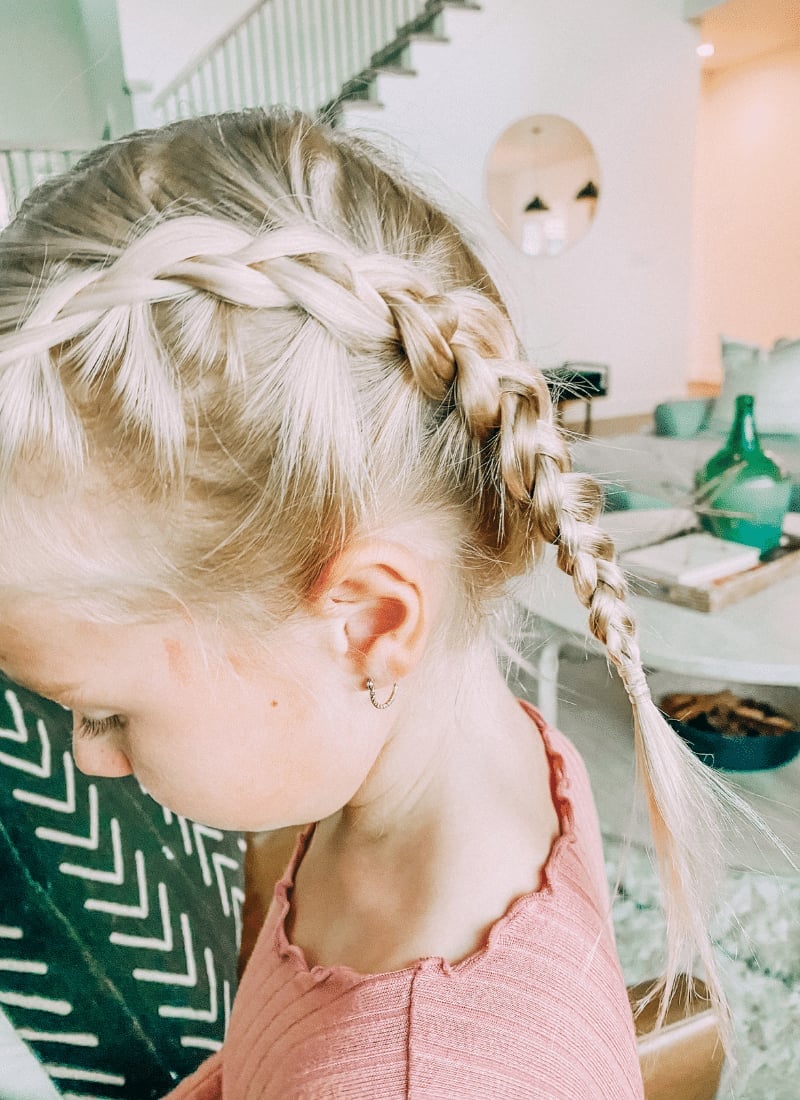
Who actually gets away with two thick braids on fine hair? Anyone with wavy texture and a middle part, as long as the hair reaches at least shoulder length. On fine, wavy blonde hair cut to mid-back, the braids sit wide enough to look full rather than sparse. Ask your stylist for two thick braids. The middle part divides the hair evenly, which keeps both braids the same width, a detail that matters more when the hair is fine. Wavy texture adds natural grip, so the braids hold better than they would on straight hair of the same density.
The hold is good, but it is not the iron grip you get on thicker hair. A light dusting of dry shampoo at the roots before braiding gives fine hair extra body and keeps the braids from loosening by midday. This style works with the texture instead of fighting it. Anyone with very straight, fine hair should expect a shorter hold and thinner-looking braids without product assistance. The middle part is essential here; a side part would make one braid noticeably thicker than the other.
Medium Brown Waterfall Braid
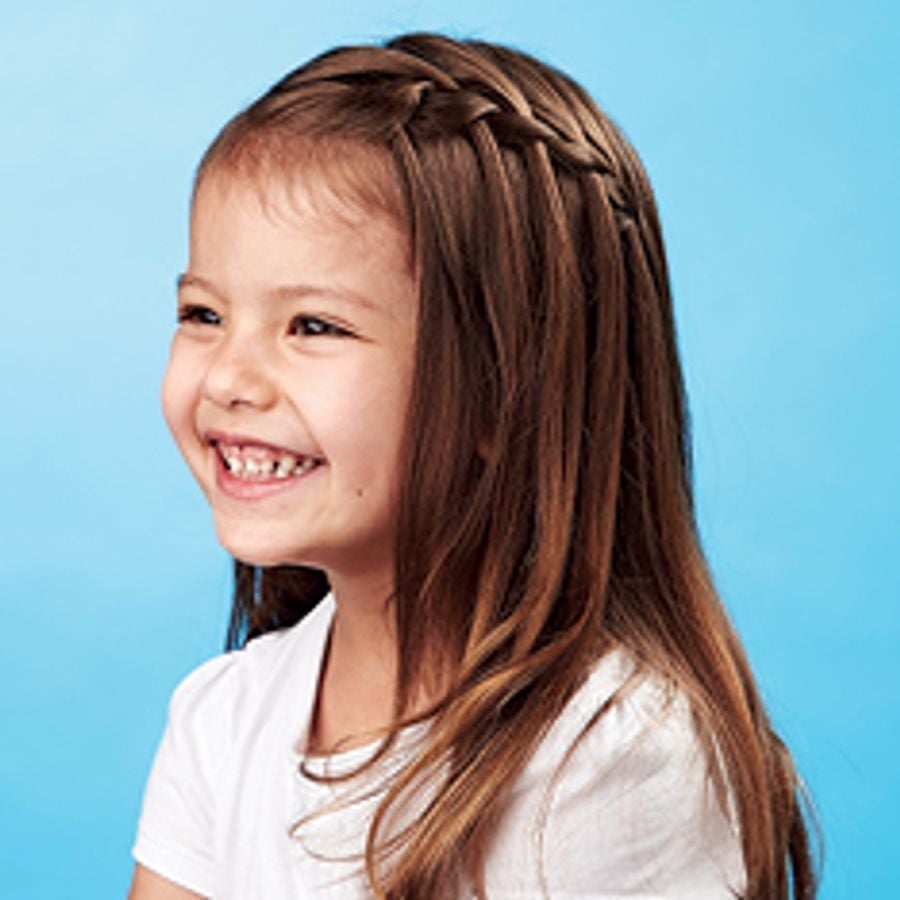
A waterfall braid works by dropping strands from the top section with each crossover, so the braid runs along the crown while the rest of the hair hangs loose. On straight, fine medium brown hair cut to mid-back, this technique creates a delicate braided line that stays visible without pulling the hair tight. Ask your stylist for a side waterfall braid. The side start lets the braid curve naturally around the head. This is a true DIY style once you learn the drop motion, which takes about two practice runs. The hold is light; a few small bobby pins at the end keep the braid from unraveling. A slight tug on each loop after braiding gives it that relaxed, woven look.
Fine Blonde Shoulder Length French Braids
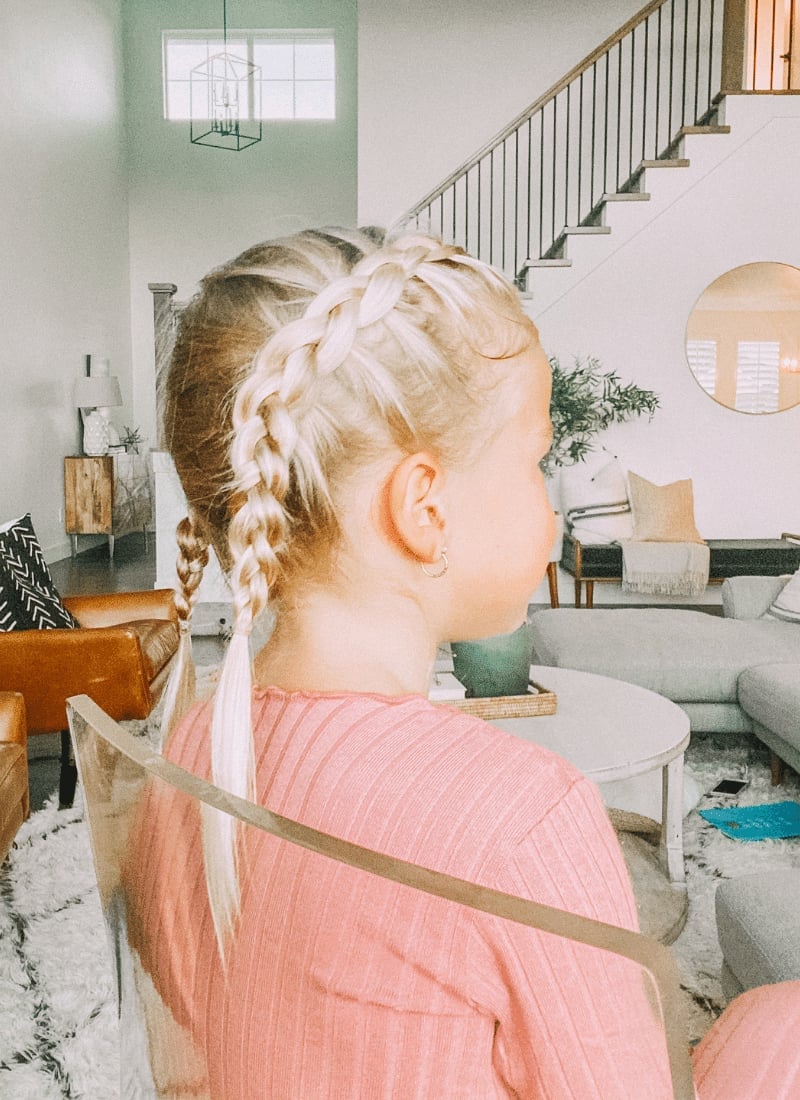
Two French braids from a side parting keep shoulder-length hair tidy without needing length to work with. On fine, wavy blonde hair that ends at the shoulder, the braids stay neat and close to the scalp, which prevents flyaways from escaping. Ask your stylist for two french braids. The side swept bangs are left out, which softens the hairline and keeps the braids from pulling at the forehead. This is a straightforward DIY style; section the hair at the side part, braid each side from the crown down, and secure with small clear elastics. The wavy texture helps the braids hold their shape without slipping. The result is a school-ready or everyday look that takes under ten minutes once you have the hand motion down.
Medium Brown French Braid Back View
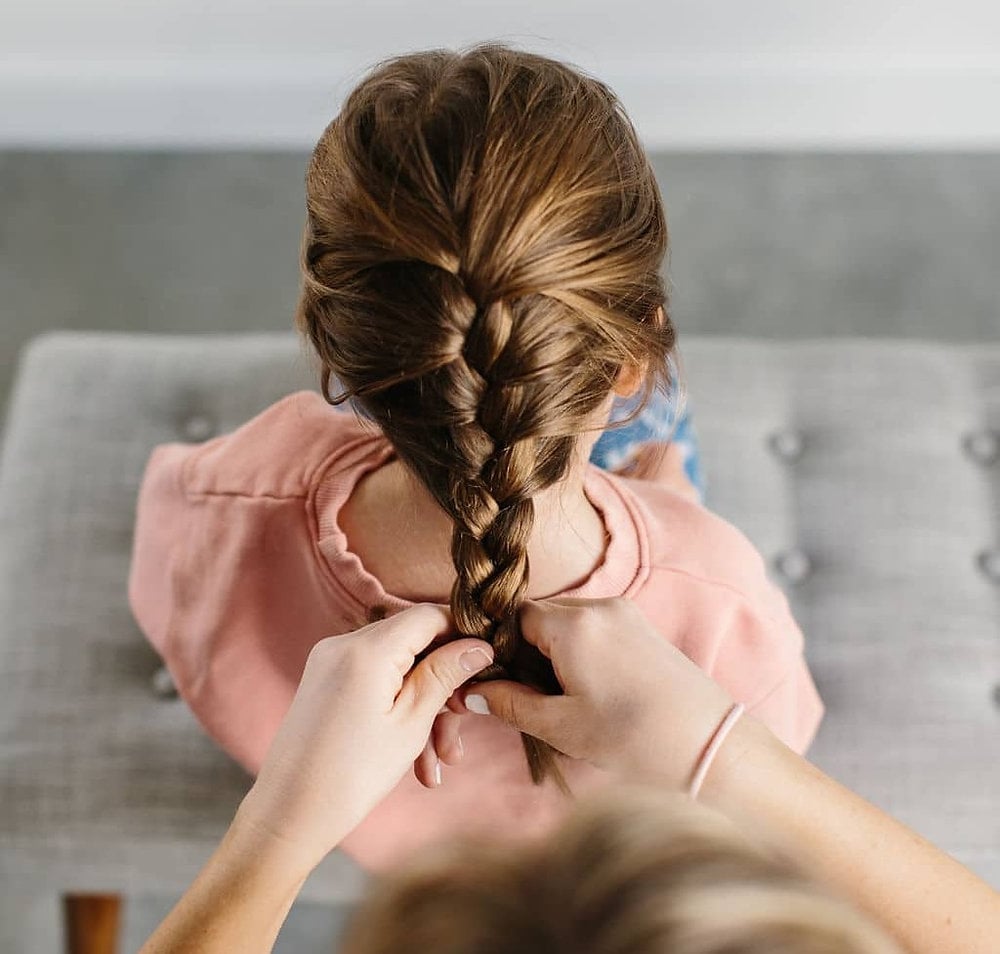
A classic French braid and a tight scalp braid are not the same thing, and the difference shows in how the braid wears. On medium brown, straight hair of medium density cut to mid-back, a French braid from a middle parting sits close to the head at the crown and loosens slightly as it goes down. Ask your stylist for a classic french braid. The middle part keeps the braid centered, which suits a symmetrical finish. The hold is strong at the top but loosens through the length, so the braid does not pull at the scalp all day. A clear elastic at the end keeps the finish invisible. Medium density hair gives the braid enough weight to stay in place without needing pins. A trim every eight weeks keeps the layers from poking out of the braid as the hair grows.
Shoulder Length Black Braids With White Beads
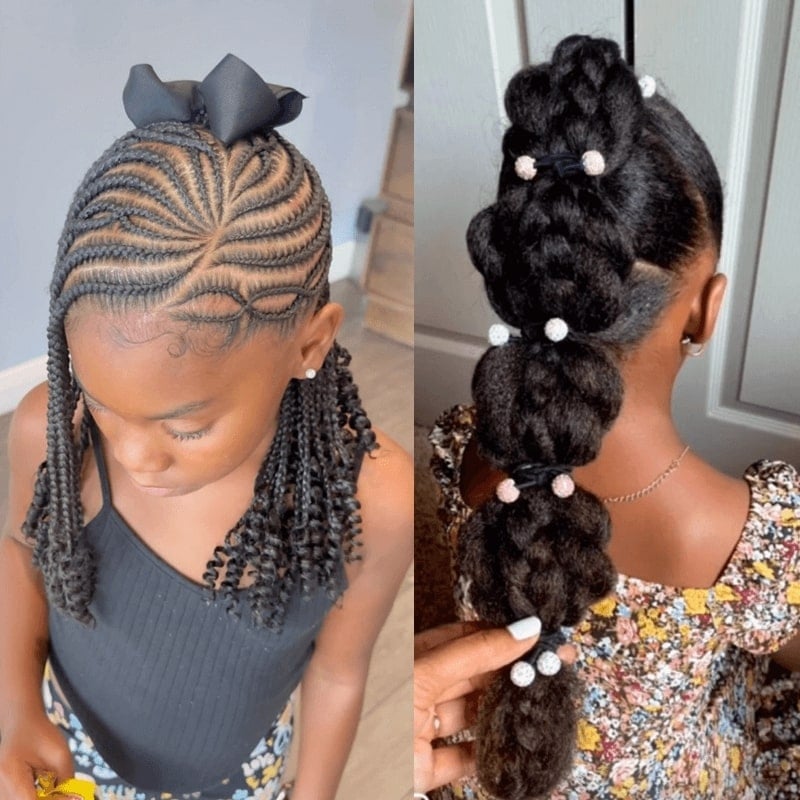
The mistake is thinking beads are just for decoration. On these shoulder-length black braids, the white beads do double duty: they add a charming detail and provide just enough weight to keep finer braids from flipping out. A middle part keeps the look symmetrical and away from the face. Ask your stylist for small braids with white beads. The real drawback is that beads can snag or loosen over time, so check them periodically and avoid aggressive brushing.
Blonde Crown Braid With Short Bangs and Bun
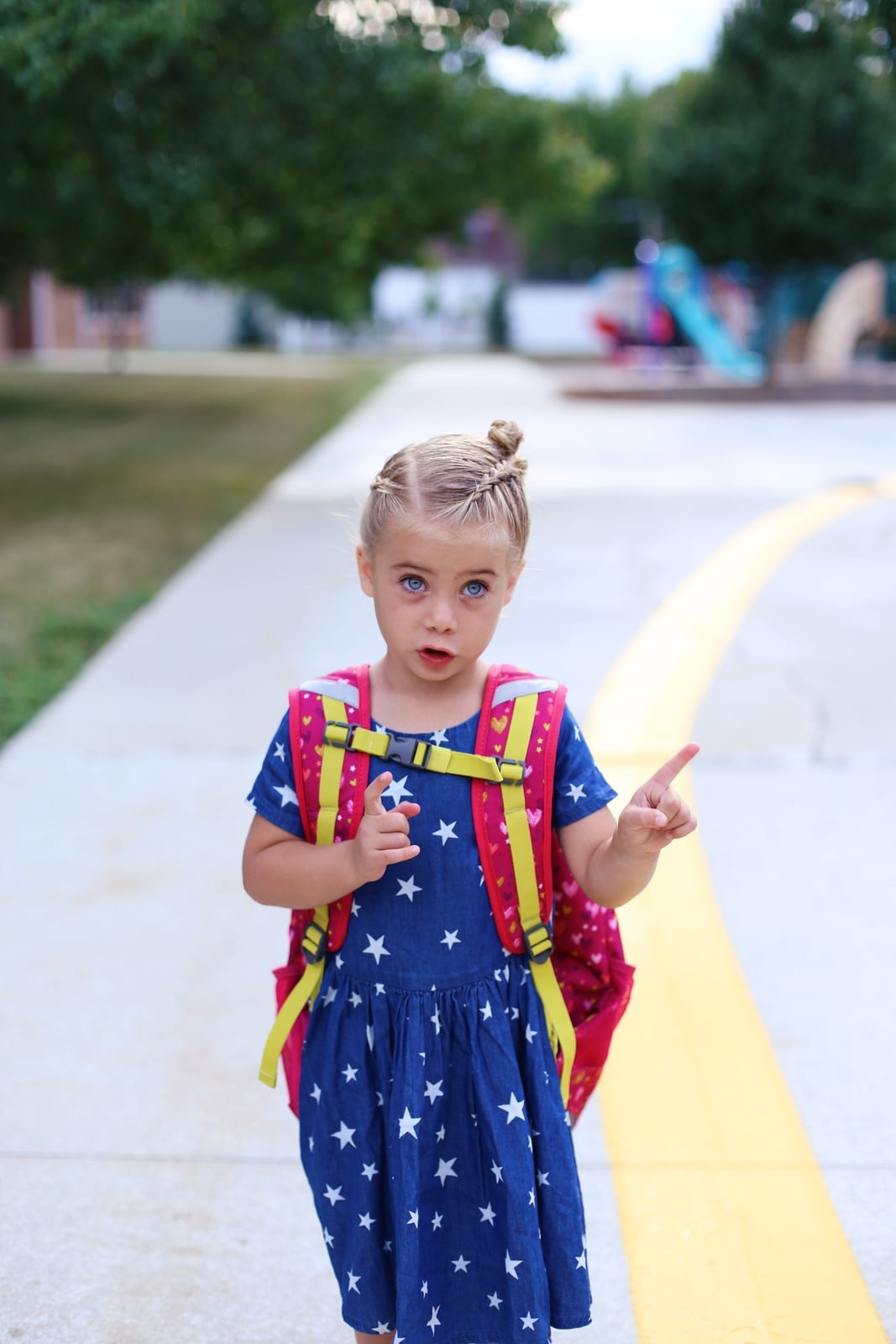
How do you get that crown braid to stay on fine, straight hair? A texturizing spray adds grip before you start braiding, which helps the crown braid hold its shape around the head. This shoulder-length style pairs the braid with a small top bun and short bangs parted to the side. Ask your stylist for a crown braid with short bangs and a bun. A salon visit is the smart move here: the braid pattern and bun placement require two hands and a mirror.
Final Thoughts
For fine or easily-tangled hair, stick with smoother styles like French or Dutch braids and add a light smoothing serum to keep flyaways down. For thick or coily hair, box braids and cornrows give better definition and hold up longer between touch-ups.
- Keep the scalp moisturized with a lightweight spray or oil.
- Use a silk or satin scarf at night to prevent frizz.
- Check beads regularly to ensure they are secure.
- Trim frayed ends every 6-8 weeks to keep braids neat.
- Wash gently and let braids air dry completely.
Braids offer endless charm and practicality for young hair.

