Soft face-framing layers and curtain bangs are making a strong case for natural texture this season, replacing the flat-ironed look with something that moves. The shift is toward glossy, lived-in hair that doesn’t require a fresh blowout every morning.
These 33 Natural Hairstyles cover the full range: low-upkeep crops and high-volume afros, salon-level braided updos and quick ponytails you can do yourself. Whether your hair is fine and falls flat by noon or thick and coily with a mind of its own, there’s a style here that holds its shape without a fight.
Voluminous Shoulder Length Blowout With Curtain Bangs
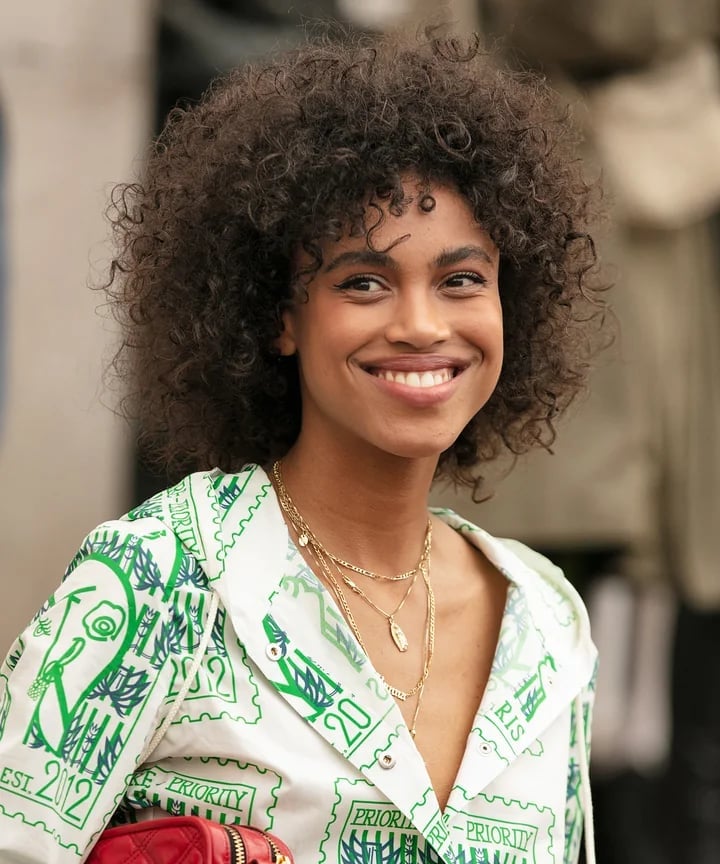
A voluminous blowout with soft waves and curtain bangs is a lesson in engineering lift where it matters most. The shoulder length and middle parting give the wavy, thick hair room to move without losing shape. Ask your stylist for: shoulder length voluminous blowout with soft waves and curtain bangs. This style suits round and heart faces because the curtain bangs soften the forehead without adding width. Blow-dry with a round brush, directing hair away from the face for maximum volume. A trim every six to eight weeks keeps the shape fresh.
Short Gray Curly Crop With Undercut
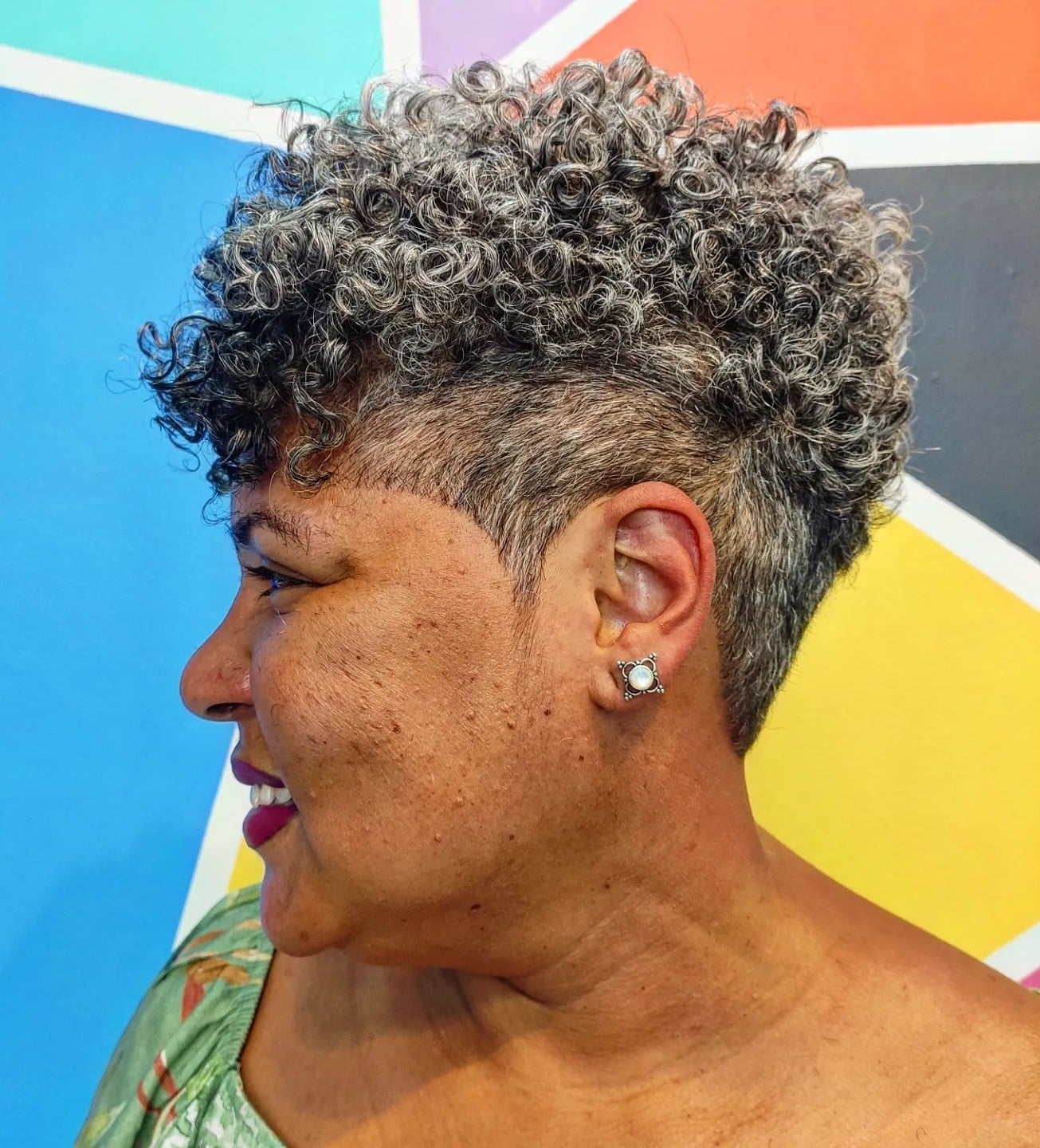
The undercut on the sides lifts the visual weight off fine, curly hair, letting the gray curls on top do the work. A side parting adds asymmetry to the short crop. Ask your stylist for: short curly cut with undercut and gray color on top. The contrast between shaved sides and natural texture is the point. The one real drawback is the upkeep: the undercut needs a touch-up every three to four weeks to stay sharp.
Mohawk With Honey Blonde Highlights And Undercut
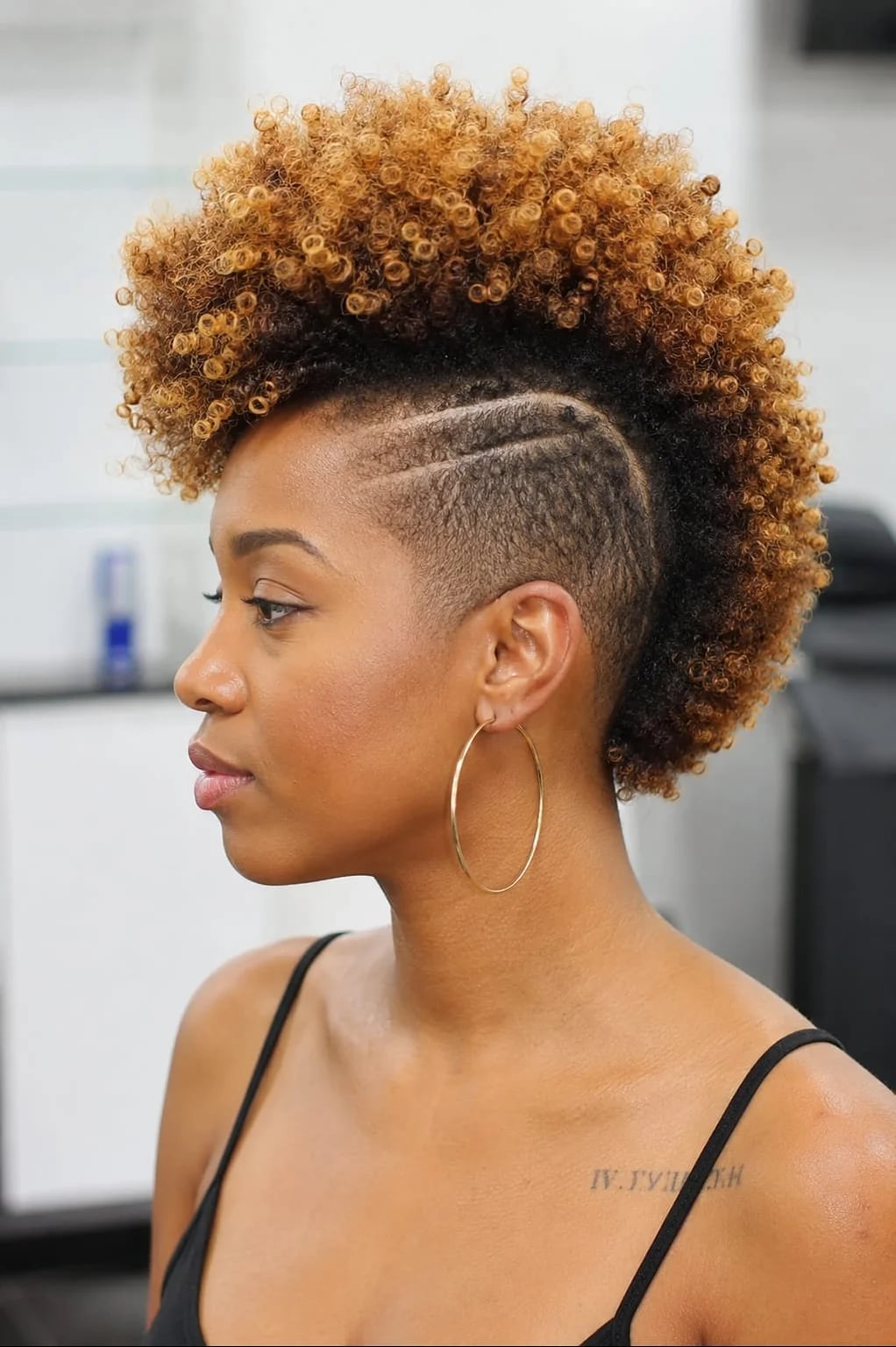
Where a standard mohawk relies on height alone, this version uses honey blonde highlights on the thick, curly top to add dimension against the sharply undercut sides. The etched lines on the shaved sections turn a bold shape into a deliberate design. Ask your stylist for: short mohawk with undercut, etched lines, and honey blonde highlights. This is the choice for thick, curly hair that wants to go loud rather than soft.
Short Coily Hair High Bun With Micro Braids
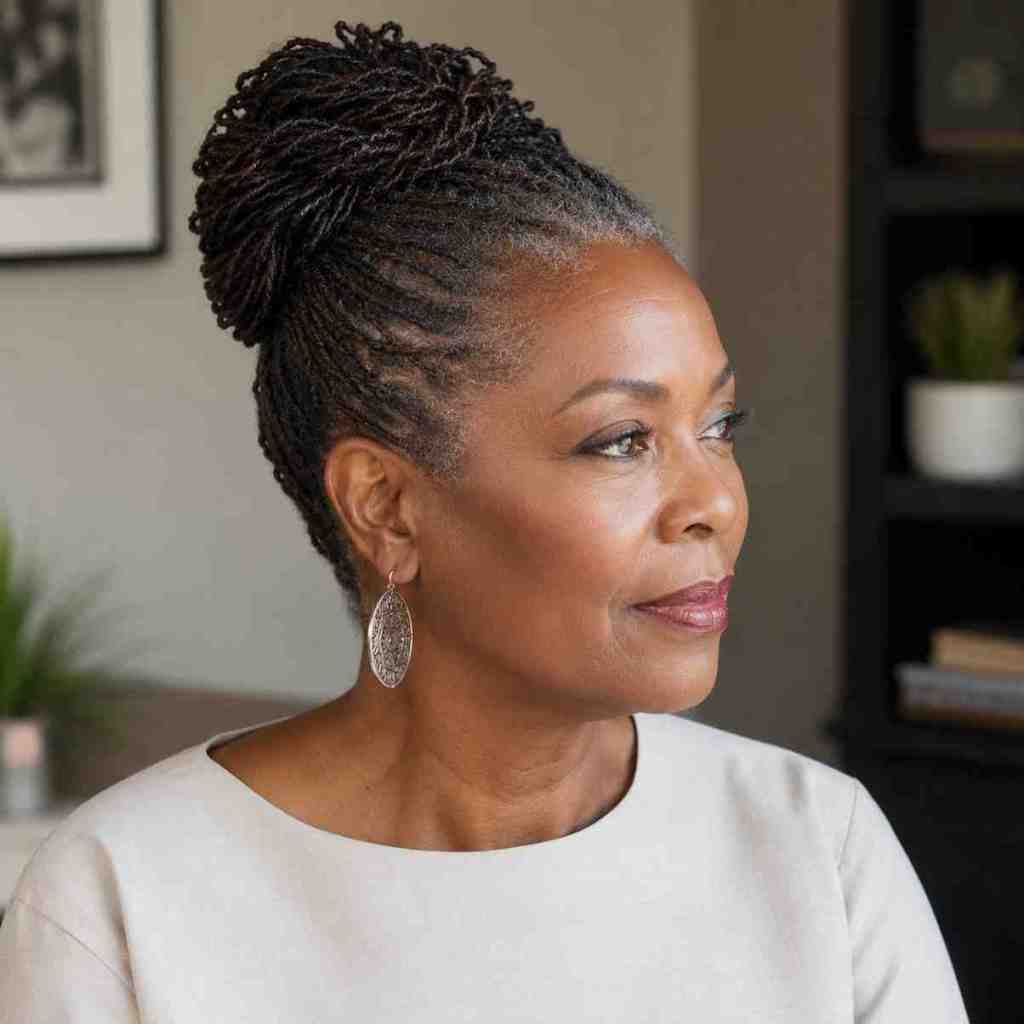
How do you get short, coily hair into a high bun without it unraveling by lunch? Micro braids. The braids pull the dark brown and gray-streaked hair back from the front, while the bun sits high on the crown. Ask your stylist for: short coily high bun with micro braids. The slicked back front suits oval and heart faces. Secure the bun with pins and a firm hold hairspray. The micro braids need regular scalp moisturizing to stay comfortable.
Short Layered Bob With Side-Swept Bangs
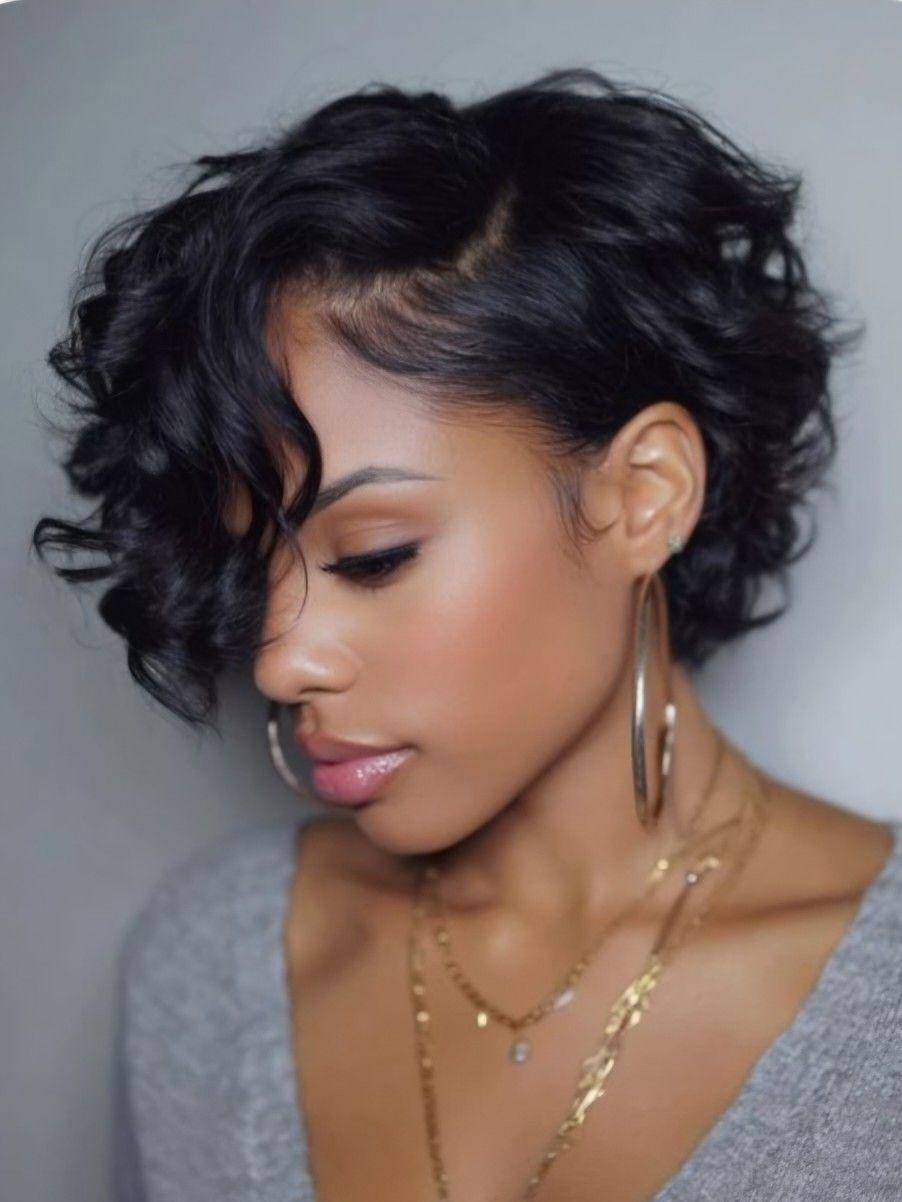
A chin length bob with side-swept bangs works because the layers break up the density of thick, wavy black hair without sacrificing weight. The side parting and soft wave pattern keep the silhouette from reading as a solid block. Ask your stylist for: chin length short layered bob with side-swept bangs. This cut flatters square and round faces by drawing the eye diagonally across the jaw. A texturizing spray enhances the waves, and a trim every six to eight weeks is all it needs.
Textured Crop With Side-Swept Bangs
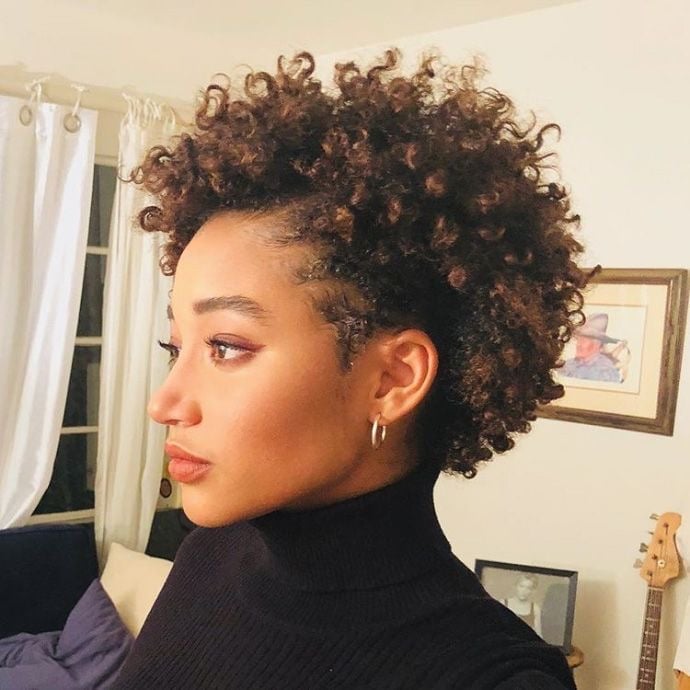
This textured crop relies on the natural curl pattern of thick, dark brown hair, so the shape is built by the hair, not forced into it. A curl-defining cream worked through damp strands is all the styling you need, and air drying does the rest. The side-swept bangs and side parting break up the roundness of a short cut, which works well for oval and heart-shaped faces. Ask your stylist for: short textured crop with side-swept bangs. To keep the shape crisp, plan a trim every four to six weeks. This is a true DIY style, though the initial cut is best handled by someone who understands how curls fall.
Elegant Updo With Braids And Gold Beads
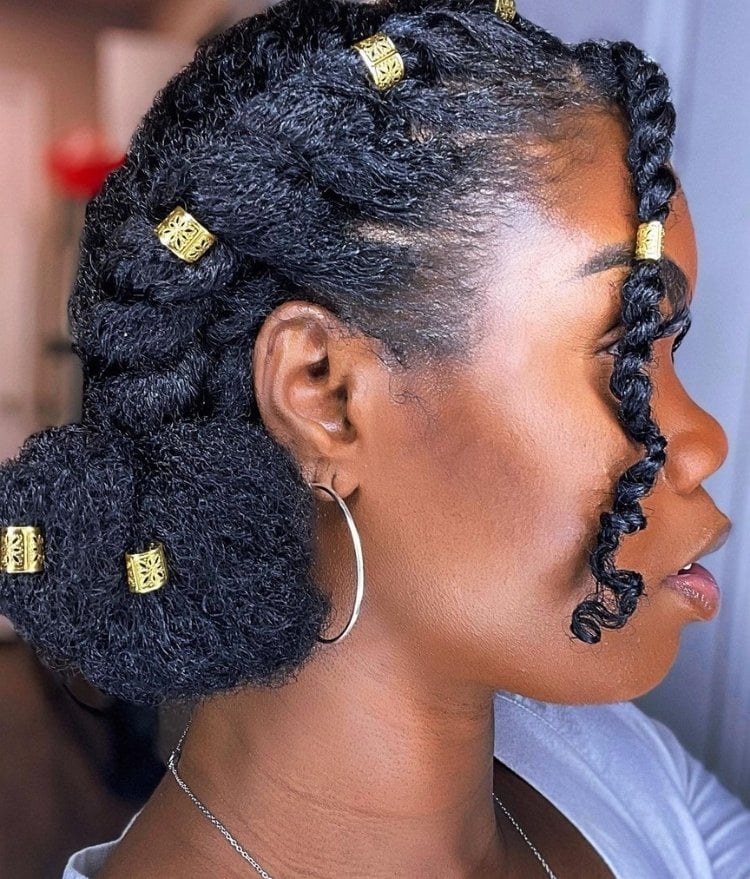
The gold beads are the focal point here, but the updo itself is a careful construction of braids and twists that gives the style its structure. Black, coily hair of chin length or longer is sectioned into patterns, with each braid anchored before the next twist begins. Curly tendrils are left out around the face, softening the silhouette and making the style work for most face shapes. Ask your stylist for: elegant updo with braids, twists, and gold bead accents. A strong-hold gel keeps the edges sleek, and pin curls set the tendrils in place. This is a salon-level style built for a formal occasion, and it holds well for several days.
Mid-Back Wavy Hair With Face-Framing Layers
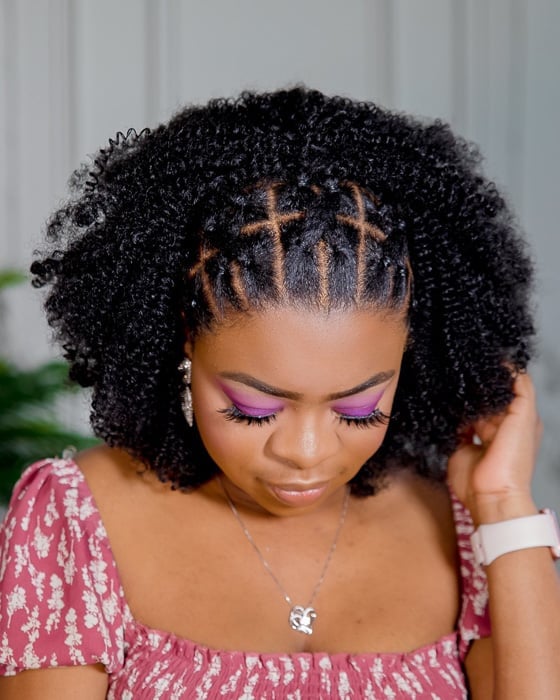
Can you get soft face-framing layers and curtain bangs without a daily styling commitment? Yes, if you let your hair do most of the work. This cut starts with thick, wavy hair at mid-back length, dark brown with blonde highlights that create a lived-in color effect. Curtain bangs are cut to blend into the layers, so they grow out gradually.
A curl-enhancing product on damp hair and a diffuser or simple air drying is all the styling needed. The layers move with the wave pattern. Ask your stylist for: mid-back wavy hair with face-framing layers and curtain bangs. Trim the layers every eight to ten weeks to keep the shape from becoming a single blunt block. The blonde highlights will need a toning appointment around the same interval to stay cool.
High Messy Bun With Blonde Face-Framing Pieces
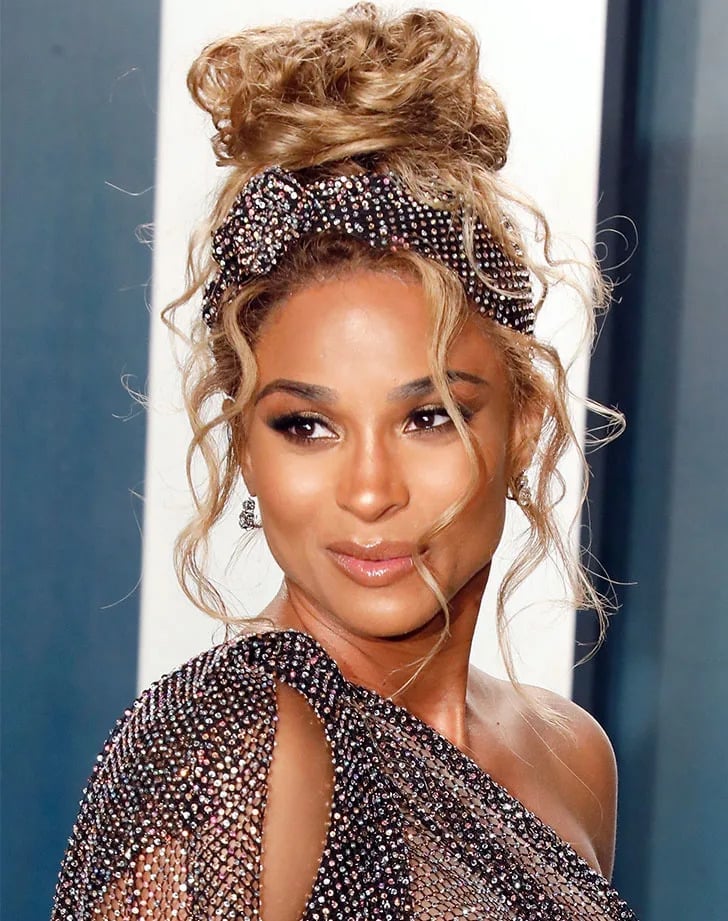
A high messy bun on fine, wavy hair is a gamble: you want volume, but fine hair tends to flatten under its own weight. The trick is dry shampoo worked into the roots before you pull it up, which gives the texture something to grip. The face-framing pieces, in blonde, are left loose to soften the look and work for all face shapes.
This style can look flat instead of intentionally undone if the hair is too clean or too fine. Bobby pins and a firm-hold hairspray are essential for keeping the bun aloft. Ask your stylist for: high messy bun with face-framing pieces. The bun itself is a quick DIY, but getting the placement and volume right for a special occasion often takes a second pair of hands.
Long Neat Braids Mid-Back
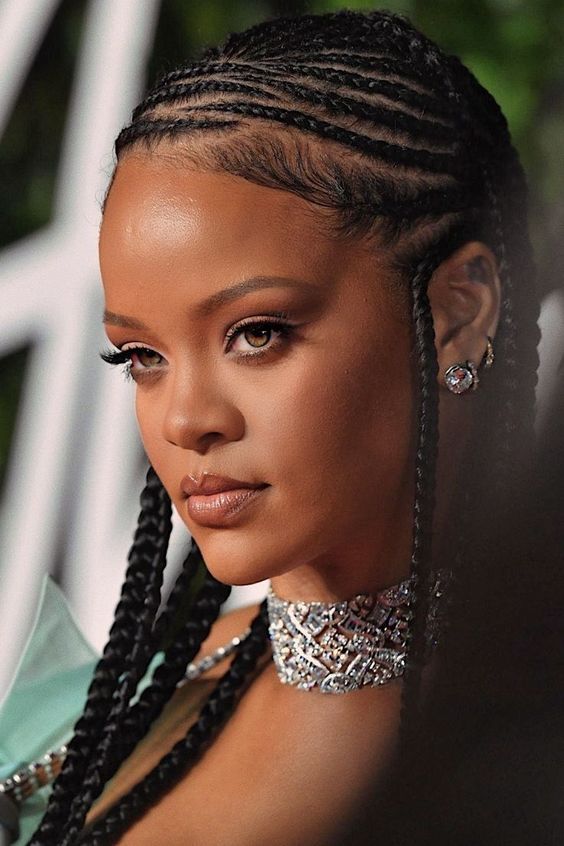
Long, neat braids require precision in the parting and even tension through each section, with sleek edges as a defining feature. Thick, straight, black hair at mid-back length is ideal for this style because it helps the braids hang uniformly. Each braid is formed from the root to the tip, with a braid balm sealed into the ends to prevent fraying. Ask your stylist for: long, neat, mid-back braids. The style suits all face shapes, and the hold is excellent: expect it to stay intact for two to three weeks before re-braiding is needed.
High Ponytail Afro Puff
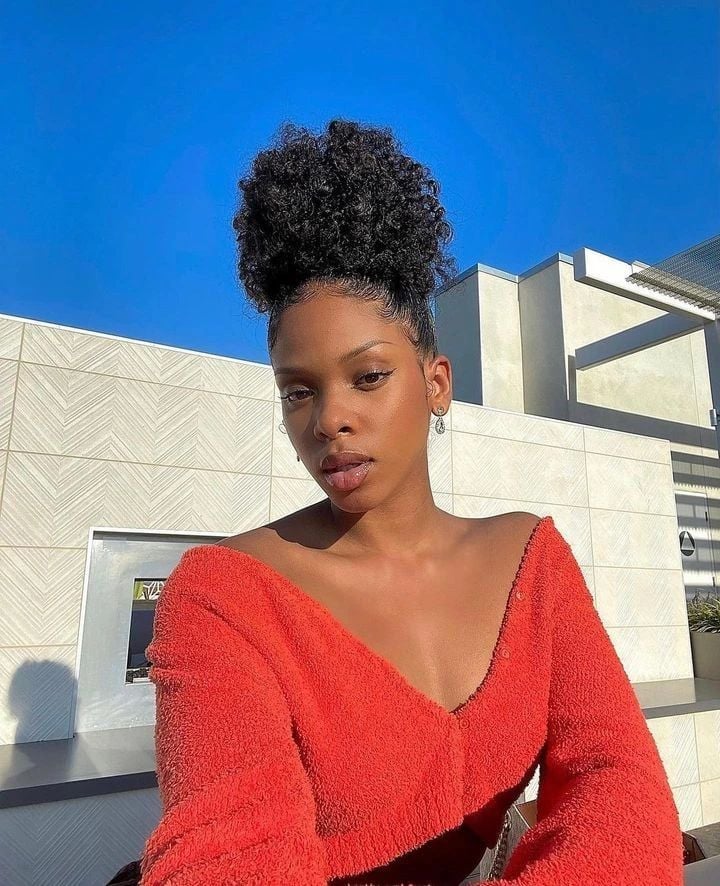
Ever wonder how to get that perfectly round, gravity-defying puff without it looking like a helmet? The trick is all in the prep. Start with damp, thick, curly hair and apply a strong hold gel at the base and edges. Comb everything up into a high ponytail, securing it tightly so the base is smooth. Then let the length fan out naturally, finger-fluffing the curls, not brushing them, gives the puff its signature volume. A middle parting keeps the front sleek while the rest does its thing.
This is a DIY-friendly look if you have long, thick, curly black hair and about fifteen minutes. The hold comes from the gel at the hairline and the elastic at the base; the puff itself stays bouncy because you aren’t fighting the texture. Ask your stylist for: high ponytail afro puff with sleek base. No bangs means you rely on the shape of the puff to frame the face, which it does for most face shapes. Trimming the ends every ten to twelve weeks keeps the puff from looking ragged.
Shoulder Length Afro Puff With Geometric Braids
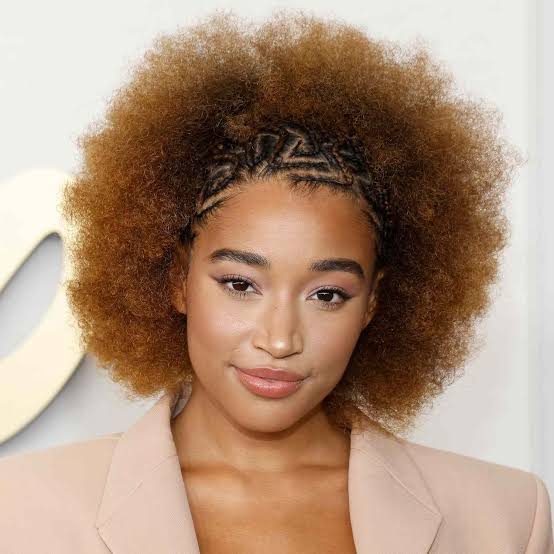
Geometric braids running along the hairline turn a simple shoulder length afro puff into a style that looks more intricate than a basic puff. The side parting lets the braids sit at an angle, drawing attention to the structure instead of just the volume. On thick, coily, light brown hair, the contrast between the defined braids and the soft puff creates visual interest. This is a salon built style. Those straight lines require sectioning clips and precision. Ask your stylist for: shoulder length afro puff with geometric front braids. The puff itself suits most face shapes because the height balances the width, but the braids add a graphic element that works especially well if you want to highlight the hairline.
Voluminous Bun With Slicked Back Front
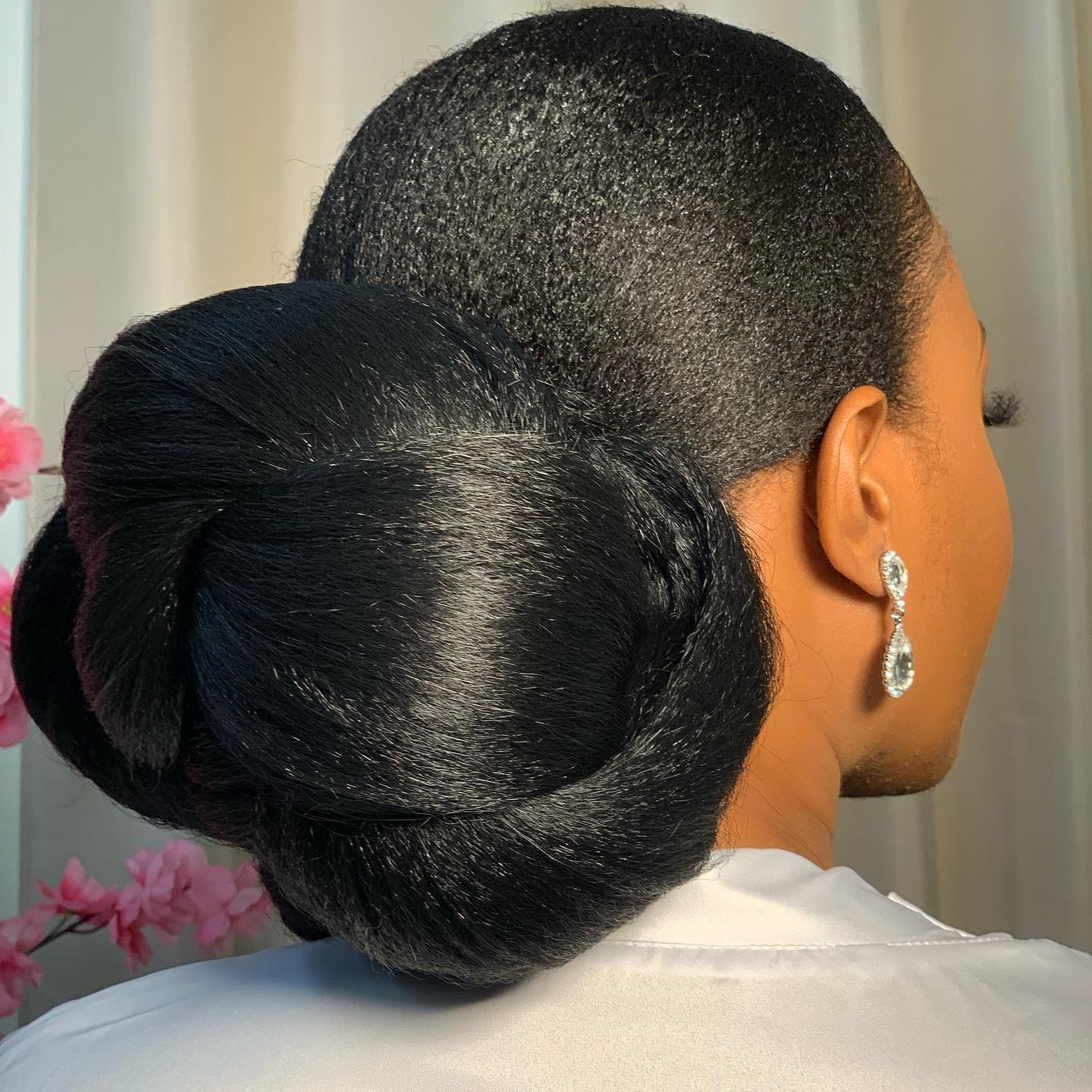
A slicked-back front sounds simple until you try it on dense, straight black hair and discover that one bump ruins the whole line. The mistake is using a gel that dries too fast, leaving you with a crusty shell instead of a smooth, glossy surface. Work in sections with a strong hold gel, smoothing each piece back with a fine-tooth comb before it sets. The reward is a voluminous, intricately twisted bun at the back that stays put through a full evening. The drawback: any stray hairs at the nape will mock you. Ask your stylist for: voluminous twisted bun with slicked back front. This look requires mid-back length or longer, and the slicked front suits oval faces best. A trim every eight weeks keeps the ends clean enough for the bun to sit smoothly.
Textured Curls On Top With Short Sides
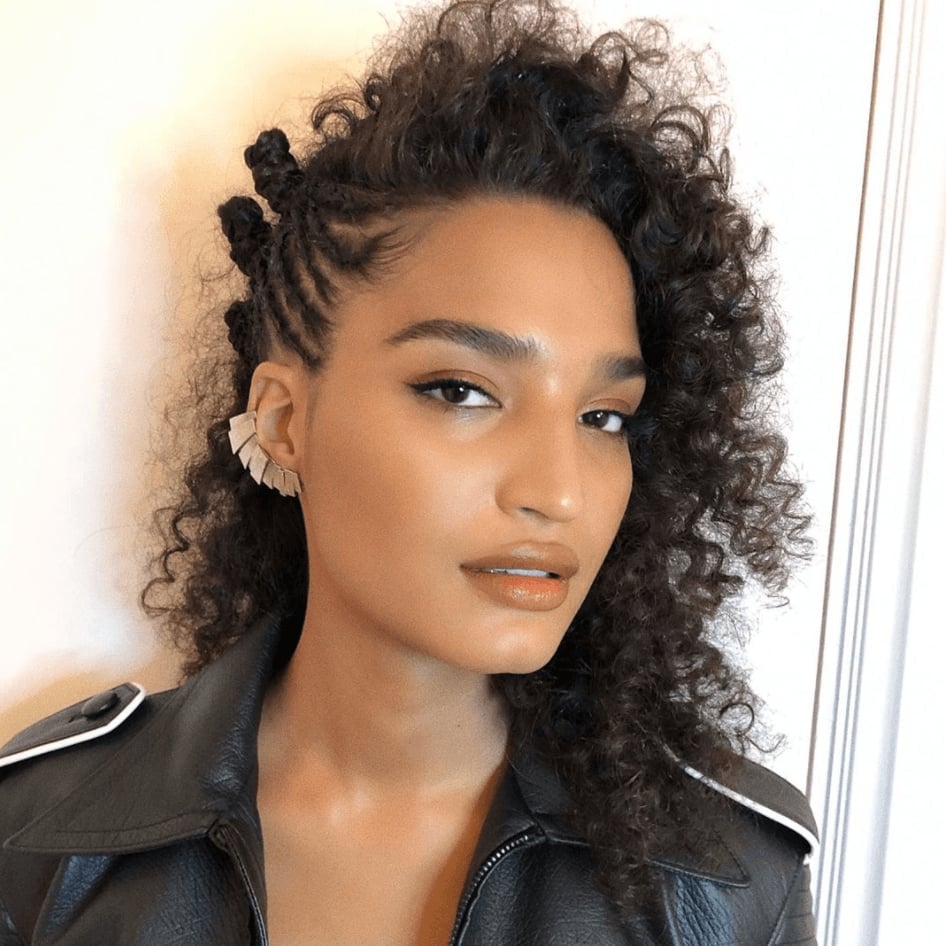
The technical trick here is that the top is cut to a longer length than the sides, but the real work is in how the curls are encouraged to go up and out rather than droop. On thick, curly black hair, a curl-defining cream applied to damp hair and then diffused on low heat creates the lift. The closely cropped sides provide a clean frame, making the textured curls on top the undisputed focal point. Ask your stylist for: short sides with textured, voluminous curls on top. The side view shows the shape best, the contrast between the short sides and the height on top suits most face shapes. The short sides need trimming every three to four weeks to keep the line sharp.
Half-Up Half-Down Blowout With Volume
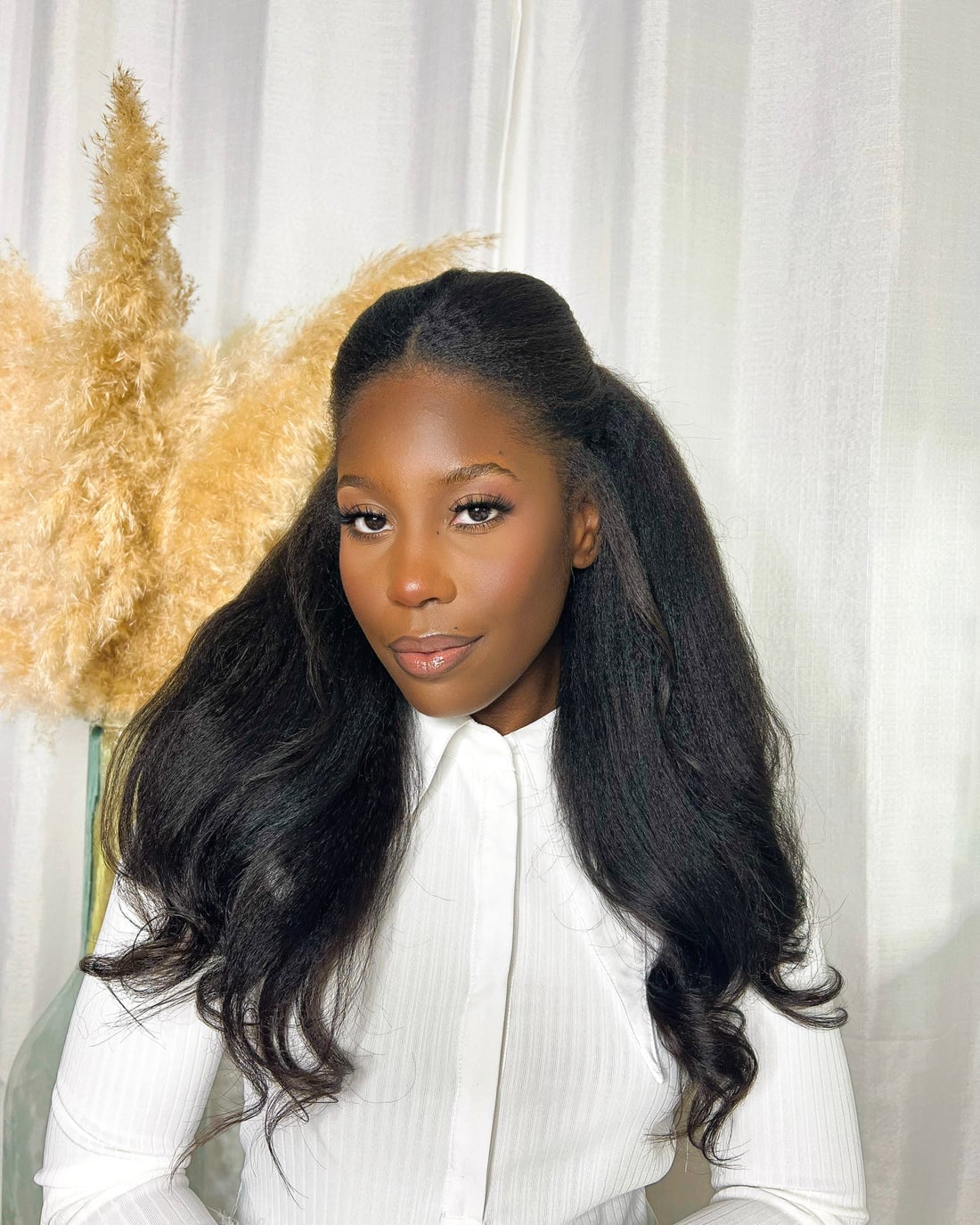
How do you keep a half-up style from looking like you just got tired of styling the rest? Volume. The top section needs enough lift that it does not sit flat against the crown. For thick, wavy black hair at mid-back length, blow-dry the whole head with a large round brush, focusing on lifting the roots. Then loosely tie the upper section at the crown, tight enough to hold, loose enough to leave movement. The lower section cascades in soft waves. Ask your stylist for: mid-back half-up half-down blowout with volume. Layers in the cut help the waves fall naturally and avoid clumping. Trim those layers every eight to ten weeks to keep the shape. A texture spray on the ends refreshes the hold between washes.
Voluminous Burgundy Afro
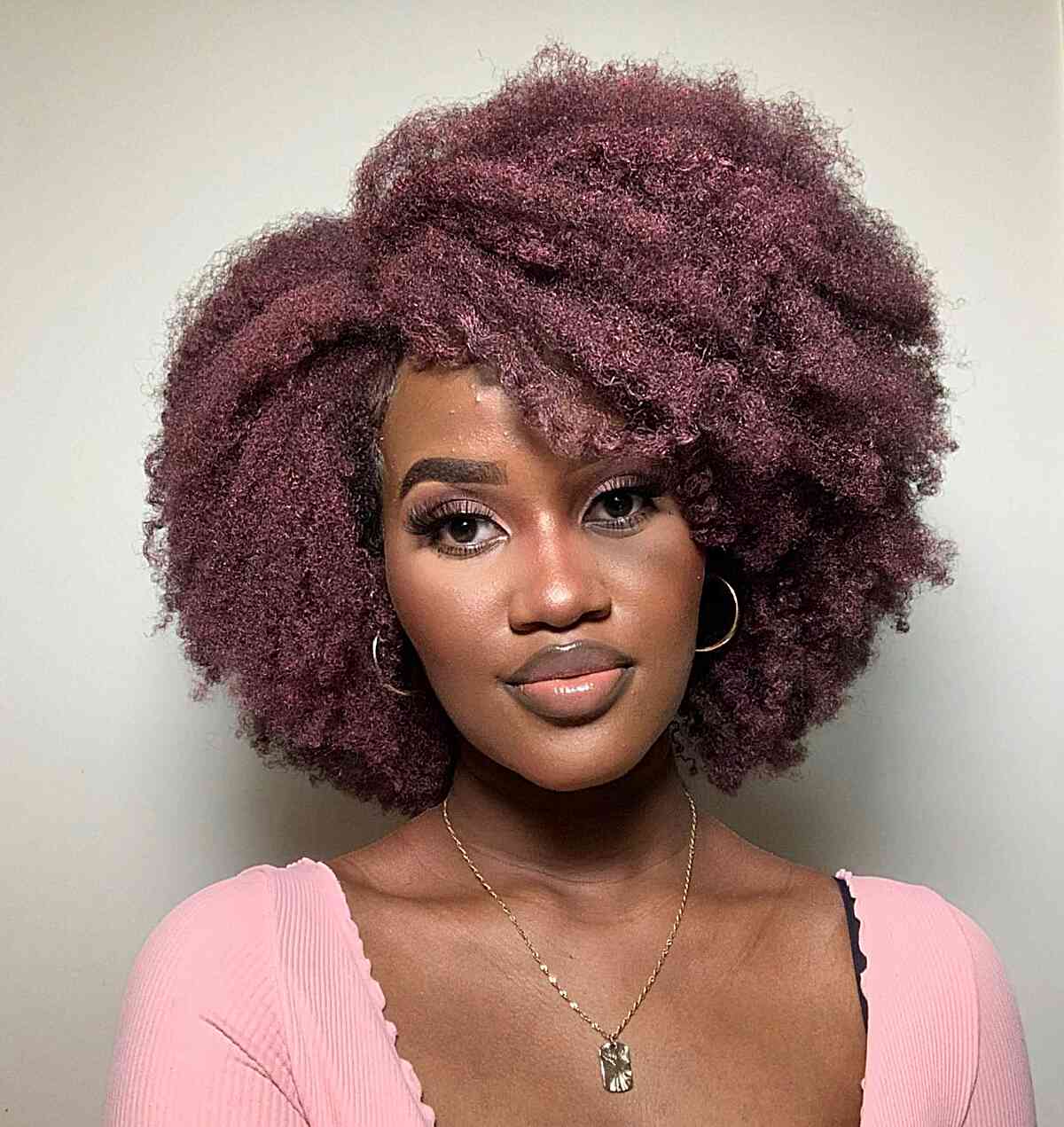
A burgundy afro is less a hairstyle and more a statement, the kind that walks into a room before you do. The color turns thick, coily shoulder-length hair into a vibrant cloud of texture. Ask your colorist for: shoulder length voluminous burgundy afro. Achieving this at home is straightforward: a pick to lift the roots and regular moisturizing to keep the shade from looking thirsty. No heat, no round brush, no twenty-minute argument with a blow dryer. Burgundy fades faster than black, so a color-depositing conditioner every few washes becomes part of the rhythm.
Unique Bubble Ponytail With Fine Hair
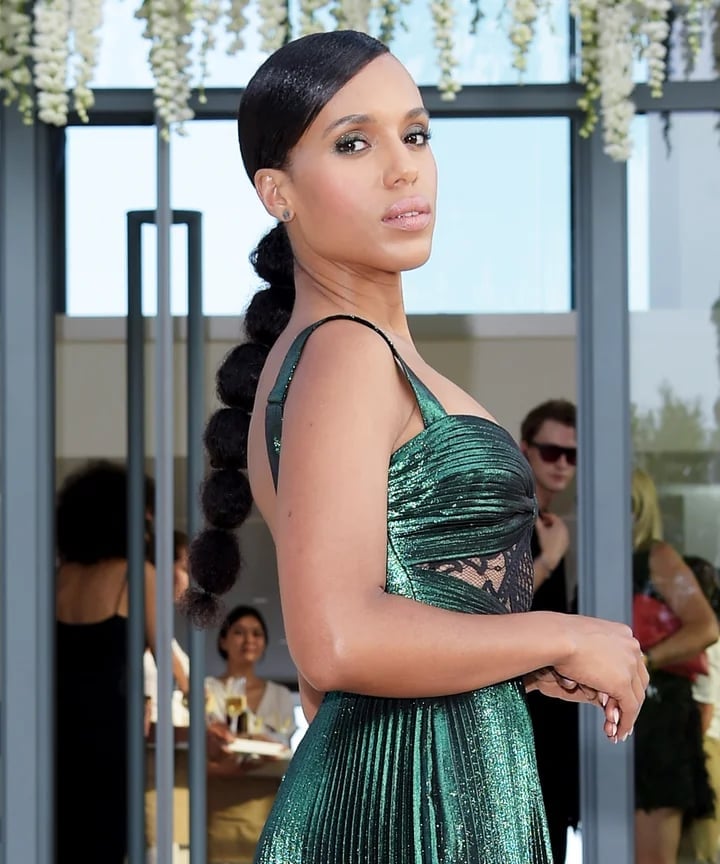
Fine, straight hair rarely gets to play with volume, which is exactly why the bubble ponytail feels like a cheat code. The side-parted front pulls back smooth and flat, then the length from mid-back down is sectioned into distinct spherical segments. Ask your stylist for: mid-back bubble ponytail with side parting. Each bubble is secured with a clear elastic, and the trick is keeping the sections even so the whole thing forms a deliberate, structured line.
The drawback: fine hair can show every elastic, and the bubbles can deflate after a few hours of movement. A texture spray on each section before securing helps the hold last through an evening. This is a salon-level build, not a quick at-home style, but the payoff is a shape that looks like architecture.
Shoulder Length Bob With Natural Curls
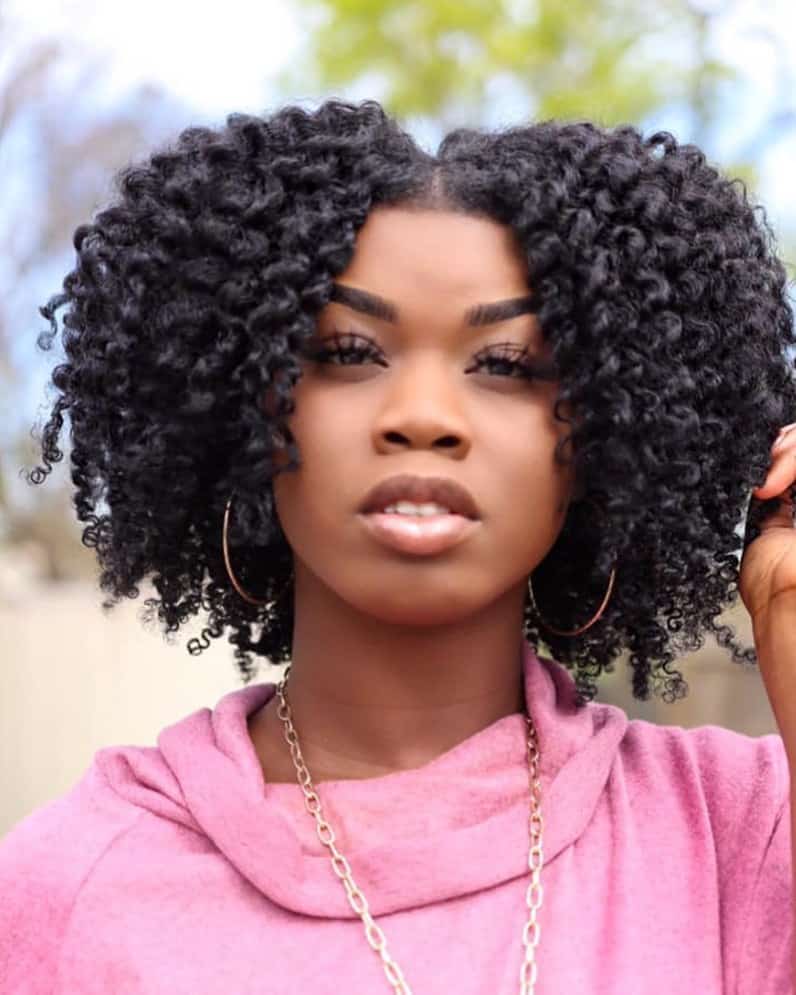
Does a shoulder-length bob actually work on thick curls, or is it a recipe for triangle head? It works, provided the cut respects the curl pattern. The middle-parted shape lands right at the shoulders, letting the natural volume spread outward rather than puffing up like a mushroom. Ask your stylist for: shoulder length curly bob, air-dried. A curl-defining cream on damp hair and zero heat is the entire styling routine. Trims every six to eight weeks keep the ends from going rogue. The bob suits most face shapes because the length softens the jaw while the width balances a longer face.
Tapered Cut With Geometric Braids
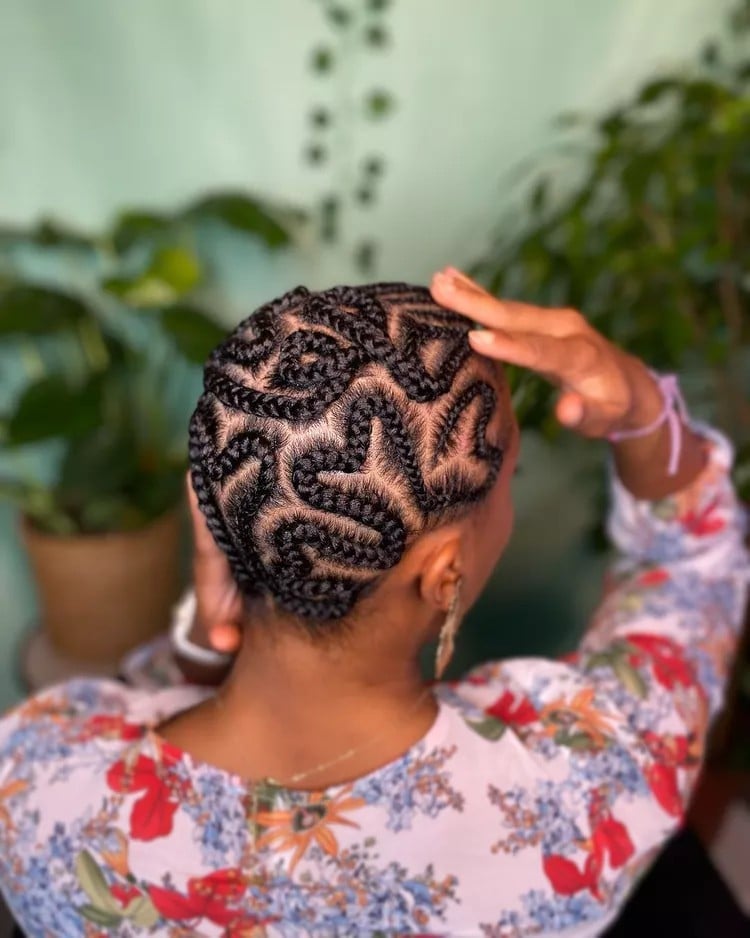
A zig-zag parting is not a happy accident; it is the foundation of a geometric braid pattern that covers the scalp like a map. On thick, coily hair cut short and tapered, the braids follow precise lines that shift direction at each angle. Ask your stylist for: short tapered cut with intricate geometric braids. The back view shows the full extent of the design, with the braids hugging the head closely and the tapered nape keeping the silhouette clean. This is precision work, not a quick style. Each braid is built to last, but the pattern requires a steady hand and a clear plan before the first section is parted.
Mid-Back Smooth Blowout With Soft Layers
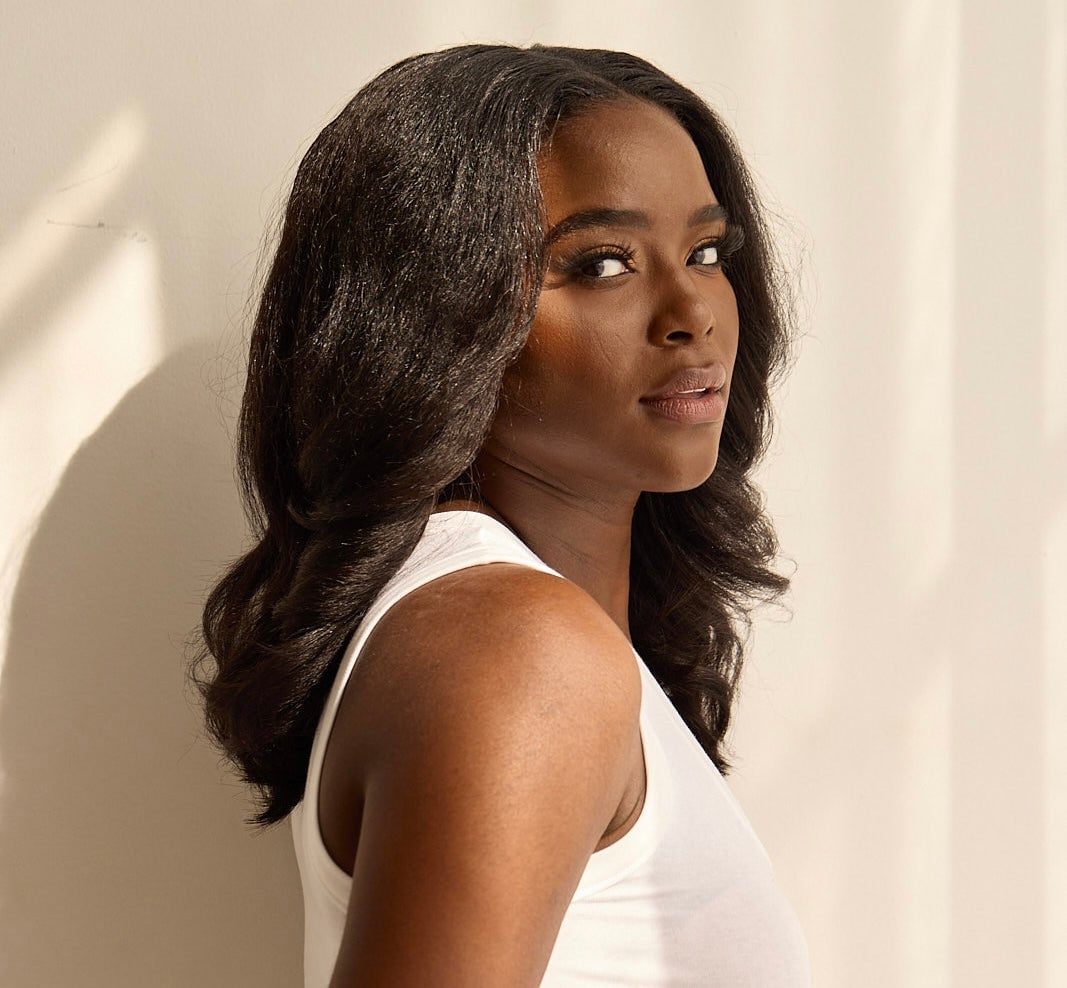
A smooth blowout on thick, straight hair creates a dense yet light finish. Soft layers cut through the mid-back length keep the shape from falling flat. Ask your stylist for: mid-back smooth blowout with soft layers. A ceramic flat iron or a large barrel curling iron creates the glossy finish, and the middle part lets the layers fall symmetrically. The upkeep requires trims every eight to ten weeks to keep the ends sharp, and humidity is the enemy of that glassy surface. A heat protectant before styling and a light oil on the ends are the only products needed.
Coily Bubble Ponytail
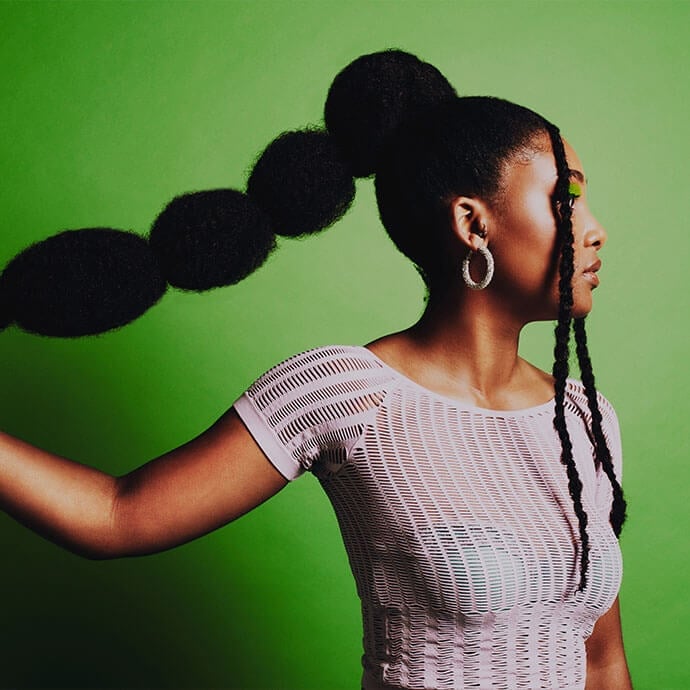
Can a segmented ponytail actually hold its shape on coily hair? Yes, but the mistake is using too few elastics. This mid-back style uses strong elastics at even intervals to create distinct bubbles, with a single braid falling over the shoulder for contrast. The coily texture gives each segment natural grip and body that straight hair cannot replicate. Ask your stylist for: mid-back coily bubble ponytail. The segments can lose definition after a few hours of movement, so the elastics need to be tight enough to hold without snapping strands. A small piece of hair wrapped around the top elastic hides the base without adding bulk.
The style works best on hair that is at least mid-back length, since shorter lengths create stubbier bubbles that look less polished. The black color keeps the focus on the segmented shape and the single braid detail. This is not a five-minute morning style. It is a salon-leaning look that requires patience for sectioning and even spacing. The payoff is a ponytail that looks sculptural and deliberate.
Shoulder Length Curly Ponytail With Auburn Tips
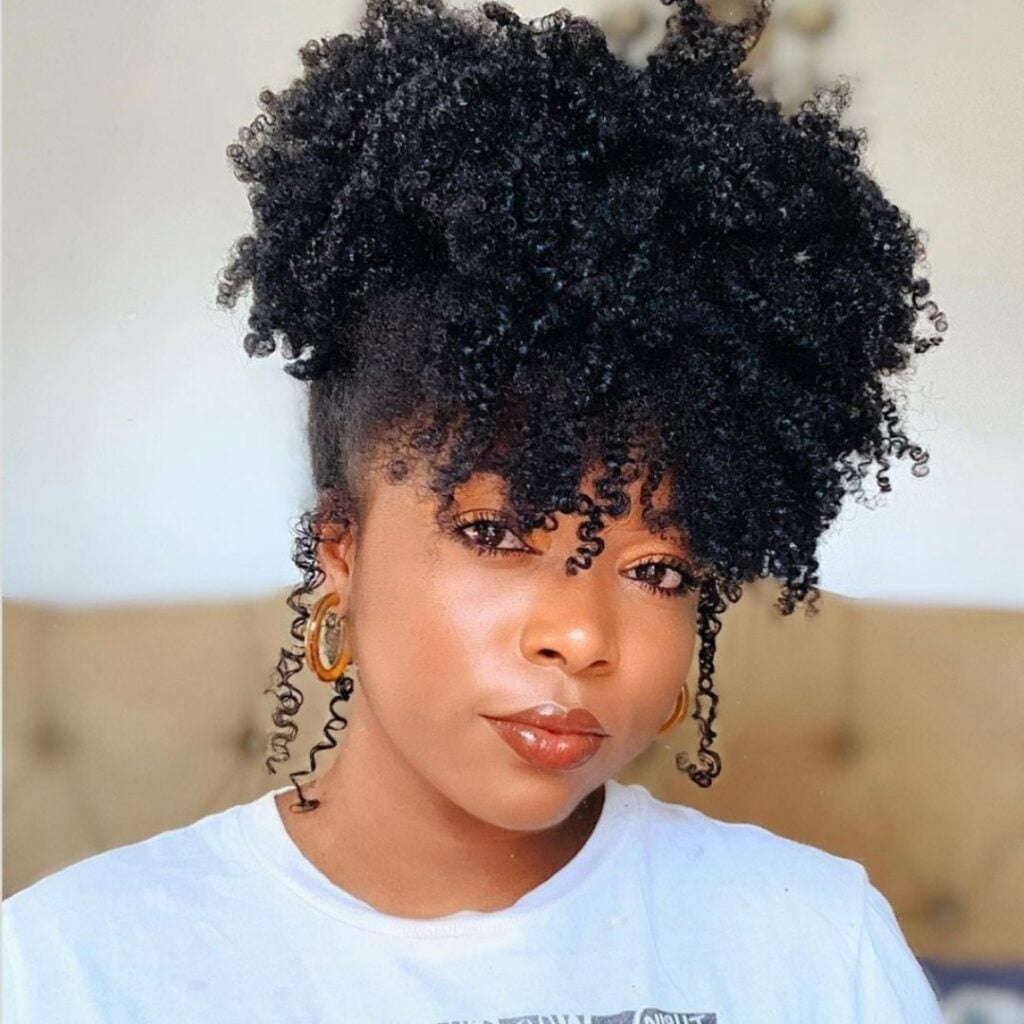
A high ponytail on thick, curly hair already has volume built in, but the auburn tips add a color shift that stops the look from blending into one dark mass. The shoulder length keeps the ponytail from weighing down the crown, while the curly bangs frame the face and soften the pulled-back line. Ask your colorist for: shoulder length high curly ponytail with curly bangs and auburn tips. The side parting adds lift at the root, which counteracts the natural weight of thick curls. Loose tendrils at the sides break up the silhouette and keep it from looking severe. This style genuinely flatters round and oval face shapes, since the height at the crown lengthens the face and the bangs shorten the forehead. Square face shapes should pass unless the bangs are soft enough to graze the jawline. The auburn tips require a gloss or toner every four to six weeks to stay warm rather than brassy.
Micro Braids In Pigtails With Scrunchies
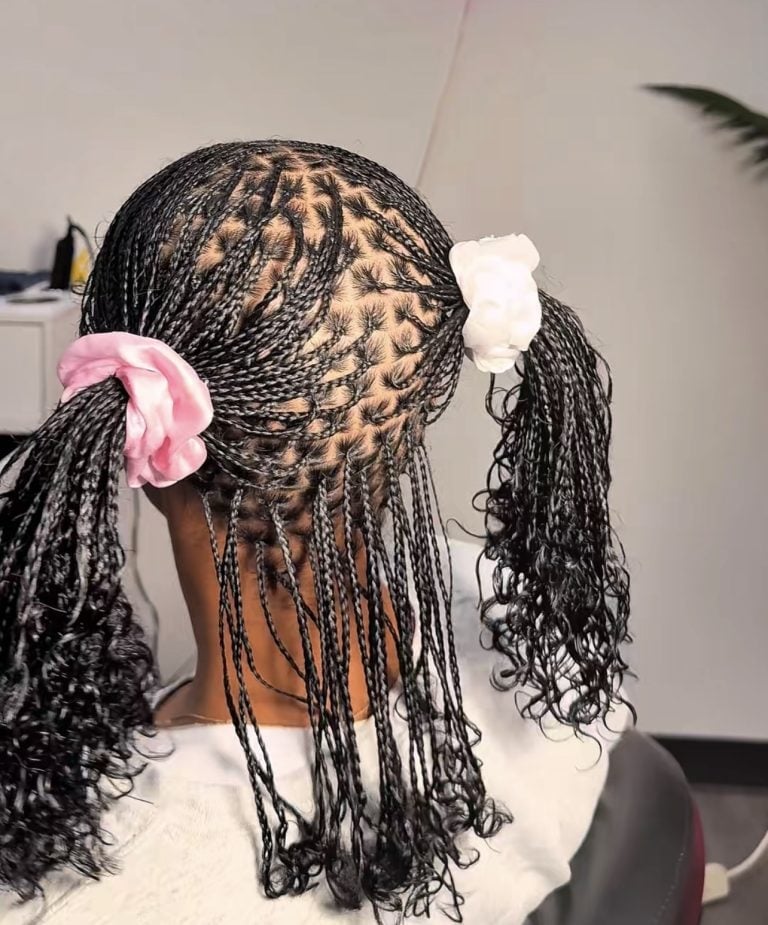
The technique behind micro braids in pigtails is about the parting as much as the braiding. The scalp shows a neat geometric parting that divides the hair into two even sections, which keeps the pigtails balanced. Each micro braid is thin and uniform, running from the root to mid-back, where the curly ends break the straight line. Ask your stylist for: mid-back micro braids in pigtails with scrunchies. The scrunchies at the base serve a purpose beyond decoration. They secure the ends without the metal or plastic of standard elastics, which can snag the fine braids. The coily texture at the ends provides natural grip, so the braids do not unravel easily. The parting pattern requires a steady hand and a rattail comb. This is a salon technique, not a weekend DIY. The neatness of the parting and the evenness of the braid width determine whether the result looks polished or rushed. The black color lets the scalp pattern read clearly without color contrast competing for attention.
High Bun With Scarf Accent
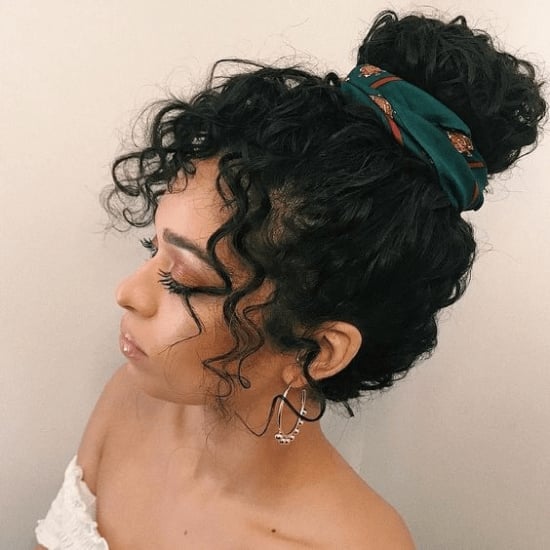
How long will a high bun with a scarf actually stay put on thick, curly hair? The answer depends on how you wrap the scarf. The bun itself is built from long, thick, black curls twisted into a secure shape at the crown. The patterned scarf wraps around the base and ties in a knot, adding a color accent without touching the curls themselves. Ask your stylist for: high bun with scarf accent and face-framing curls. The middle parting and loose curls around the face soften the pulled-back structure, so the look does not read as severe. The scarf needs to be tied tight enough to hold but not so tight that it creates a ridge in the hair. A satin or silk scarf is the practical choice here. Cotton or linen will tug at the curls and cause frizz at the edges. The bun itself holds well for a full day if it is pinned with bobby pins crossed in an X pattern. The face-framing curls last about four to six hours before they start to drop, so a refresh with a curling iron or a twist-and-pin might be needed by late afternoon.
Braided Updo With Large Sections
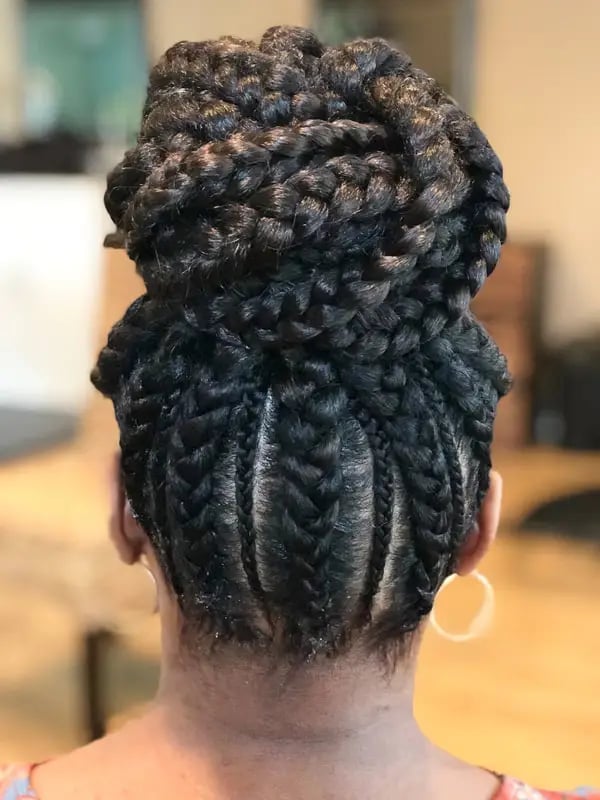
A braided updo built from large sections depends entirely on the thickness of the hair. Thick black hair at mid-back length provides enough weight and density for the braids to be substantial. Each braid is thick and defined, woven from a large subsection of hair and then pinned into a high updo at the crown. Ask your stylist for: high braided updo with large sections. The back view reveals the pattern: the braids curve and stack in a way that creates an almost architectural shape. The middle parting keeps the front line clean and symmetrical. Large braids take longer to dry after washing, since the thickness traps moisture in the center of each section. On thick hair, this style holds its shape for a full evening without much sagging, but it is not a quick fix. The braiding alone takes about forty minutes, and the pinning takes another fifteen. The braids are the decoration, so no flowers or pins are needed.
Shoulder Length Lob With Braided Hairline
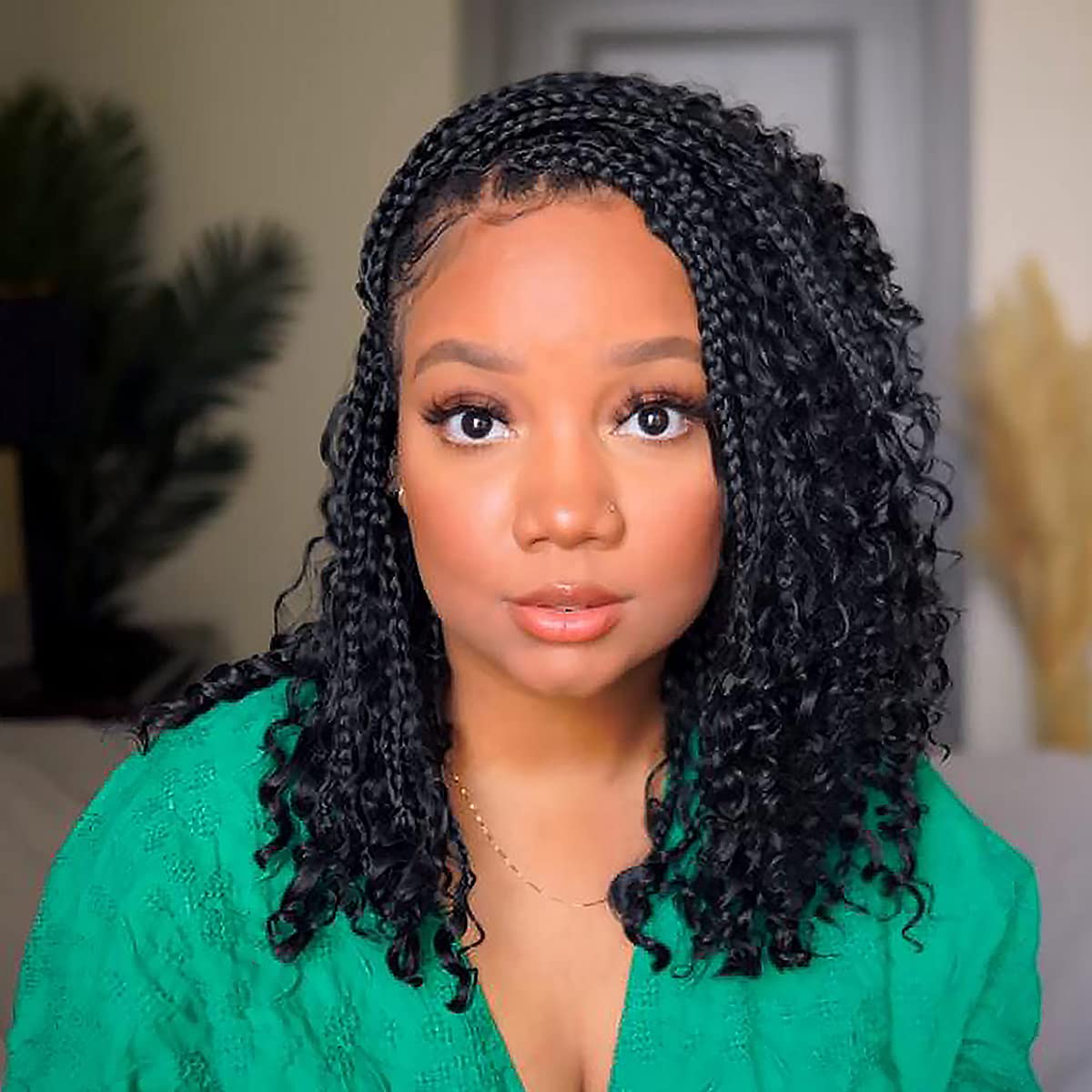
A braided hairline turns a standard lob into something that looks like it took a lot more effort than it did. For fine, wavy hair at shoulder length, the braid adds enough detail to keep the cut from reading as flat, and the side bangs soften the transition from braid to loose curl. Ask your stylist for: shoulder length lob with braided hairline and side bangs. The braids need to be tight at the start, and the curls need a light hold spray to stay defined. A trim every six to eight weeks keeps the lob shape clean.
Short Tapered Cut With Fine Curls, Curly Dark Brown Hair
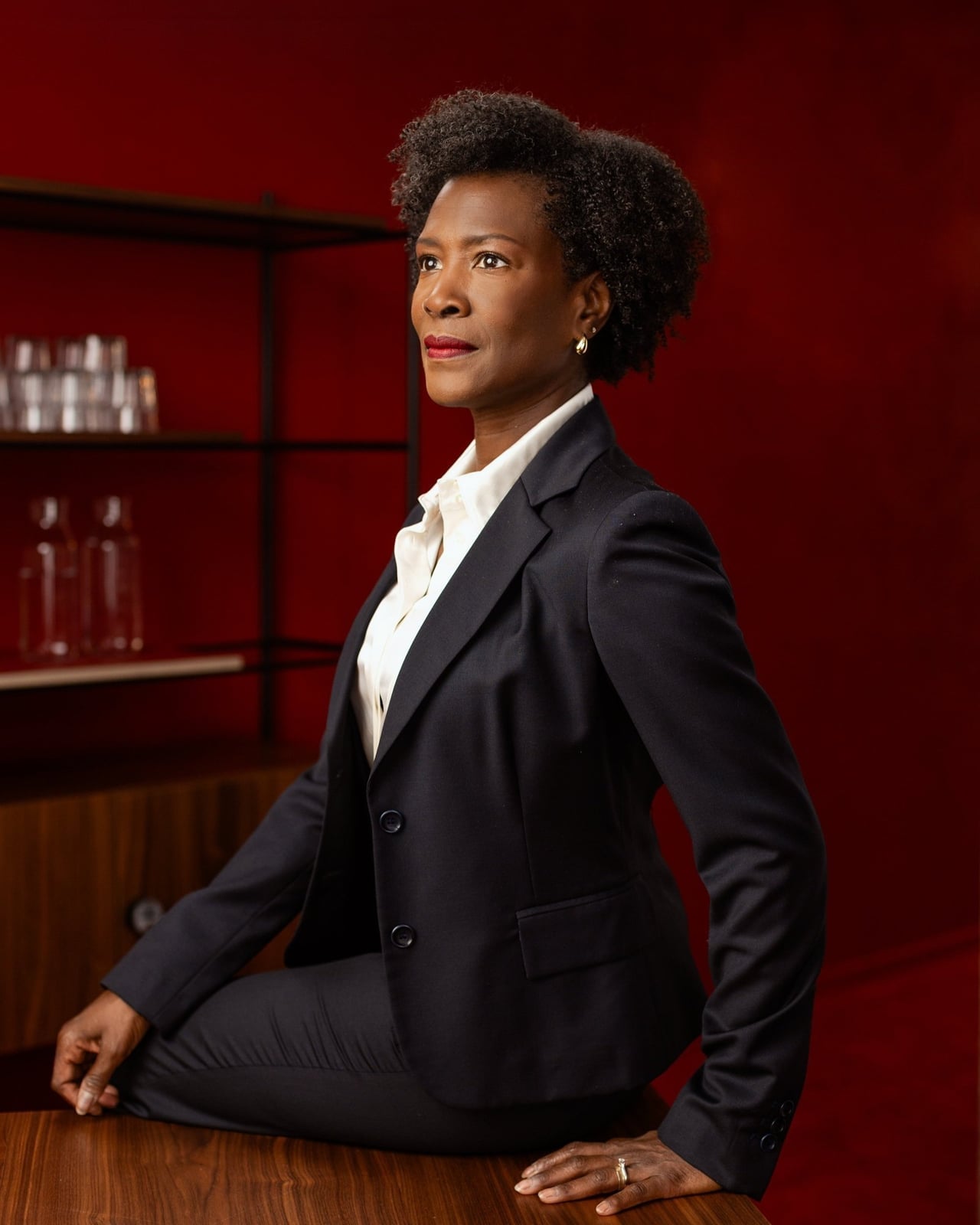
Can you actually get a short, tapered cut to look this good without a round brush and a blow dryer? Yes, if you work with what you have. The fine, curly dark brown hair is air-dried with a visible side parting, and the tapered shape does the work of adding volume where it counts. The key is applying a curl-defining cream to damp hair and scrunching upward, then leaving it alone until dry. This is a DIY-friendly style, though a salon trim every 4 to 6 weeks is what keeps the taper from turning into a mushroom.
Mid-Back Ponytail With Braided Accents
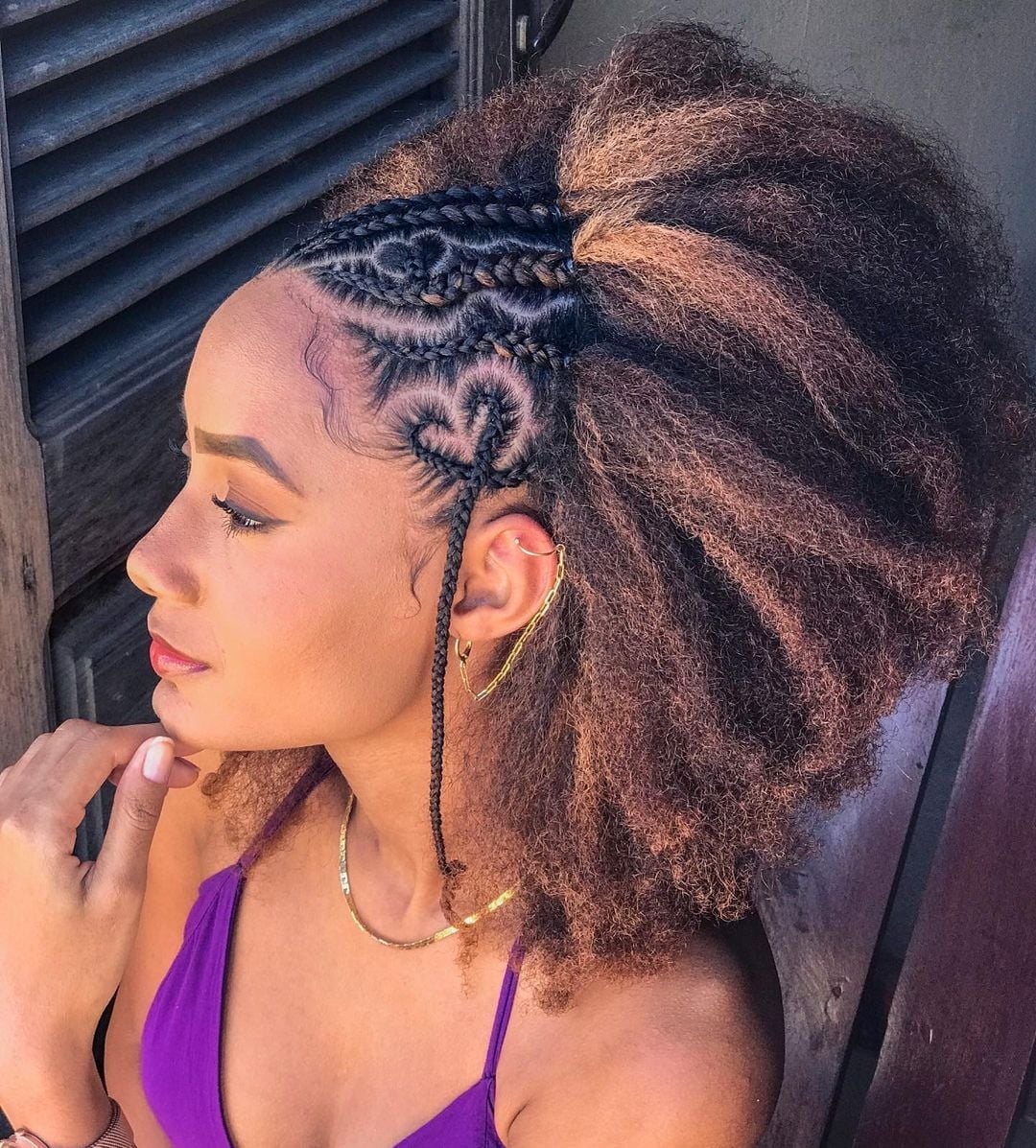
The braided accents here are not sewn onto a finished ponytail. Small sections of hair along the hairline are braided and then gathered into the main ponytail, so the braids sit flush against the head and the ponytail forms one continuous piece. Thick, curly brown hair with blonde highlights at mid-back length gives the braids enough weight to hold their shape. Ask your stylist for: mid-back ponytail with face-framing braided accents. The braids integrate best when the ponytail is high enough that the hair falls straight down from the crown.
The blonde highlights add dimension that keeps the braids from merging into a single dark mass. A hairspray with a firm hold keeps the braids neat without making the curly ponytail stiff. This is a salon-level technique: getting the braid tension even and the ponytail volume balanced usually takes a second set of hands.
Updo With Loose Curls And Wispy Bangs
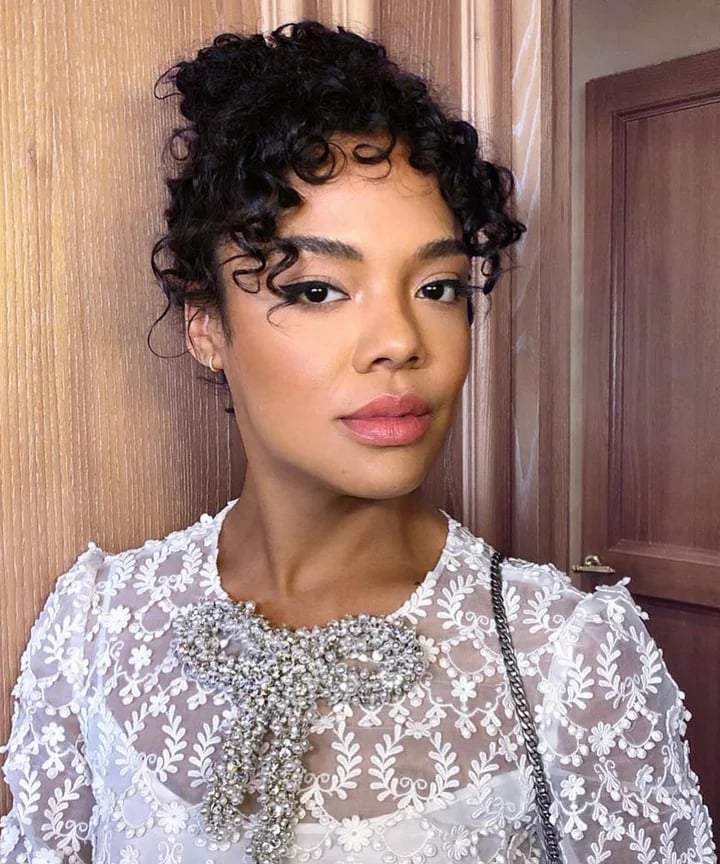
An updo with wispy bangs and face-framing curls is a study in deliberate looseness. Thick, wavy black hair at shoulder length is pulled back just enough to stay out of the way, with soft tendrils left out to break the line around the face. The wispy bangs are cut short enough to clear the eyes but long enough to tuck behind an ear if needed. Ask your stylist for: loose updo with face-framing curls and wispy bangs.
The hold comes from the pins, not from product. Gently pull out a few face-framing pieces after securing the updo, and let them air-dry or set them with a small roller for a few minutes. The wispy bangs will need a trim roughly every three weeks to stay at that length. The style wears best on second-day hair, when the natural wave has enough grip to stay in place.
Mid-Back Loose Curls With Voluminous Blowout
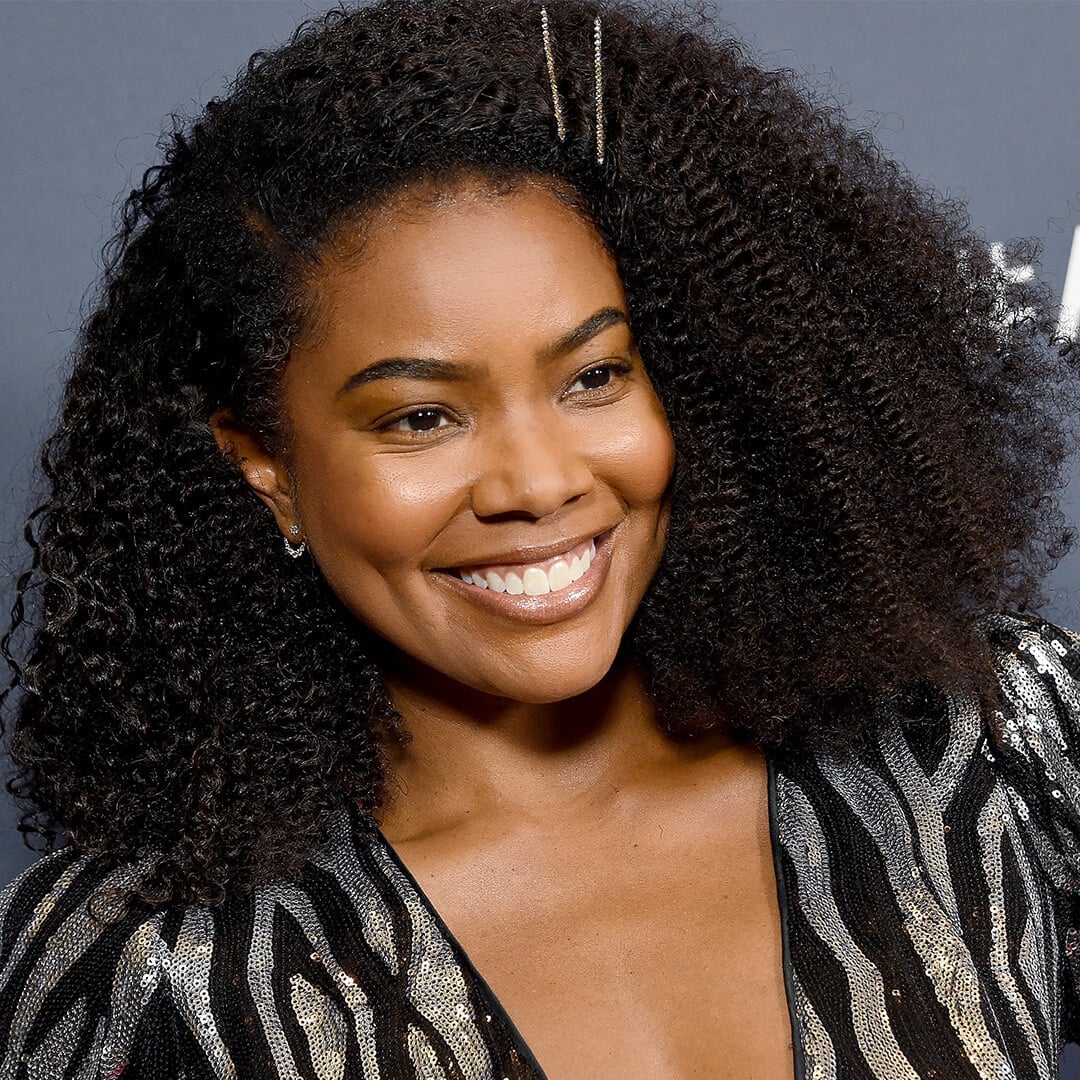
How long does it take to get curly hair that looks this smooth and this big at the same time? Longer than you think. Black curly hair at mid-back length with subtle long layers needs a round brush blowout section by section, followed by rollers or a curling wand on the ends to set the loose curl. The side parting helps direct the volume upward rather than outward. Ask your stylist for: mid-back voluminous blowout with loose curls.
The honest drawback is that this is not a 15-minute style. The blowout alone can take 45 minutes for thick hair, and the curls will need pinning or rollers for another 20 to hold. Humidity works against the shape, so a heat protectant with anti-humidity properties is worth the extra step. The layers will need a trim every eight to ten weeks to keep the curls from looking straggly at the ends.
Afro Puff With Braids Along Hairline
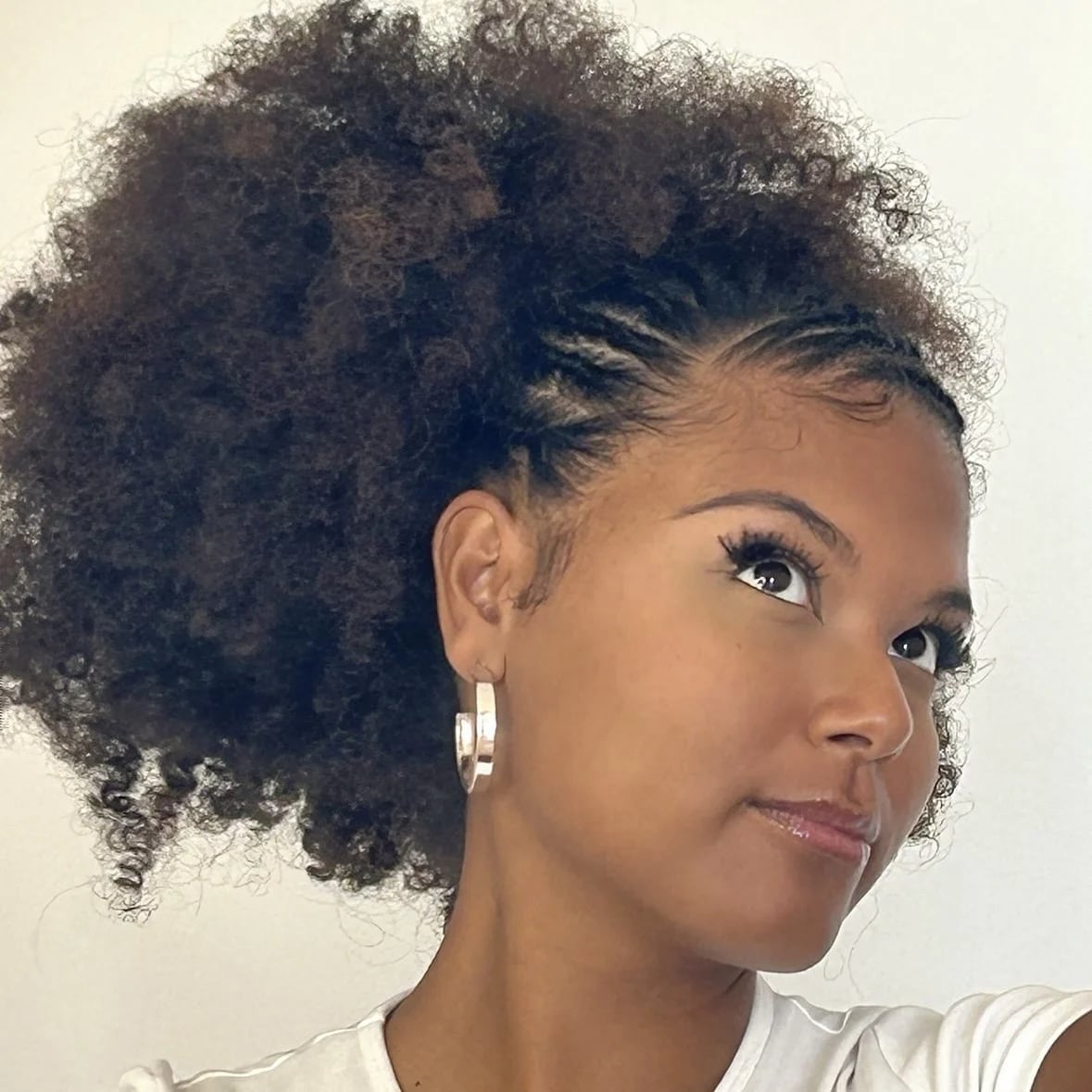
A high afro puff is already a statement, but adding small braids along the hairline turns it into deliberate design. This styling suits thick, curly hair at shoulder length or longer and works with most face shapes. Ask your stylist for: high afro puff with braids along the hairline. The base braids need to stay neat and moisturized, while the puff itself gets fluffed for maximum volume. The afro shape requires a trim every 10 to 12 weeks to keep its rounded form.
Large Mid-Back Afro
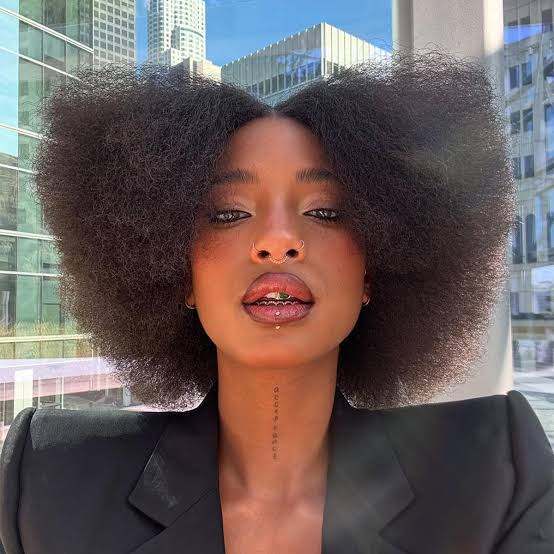
This is the shape that air-drying was made for. The large afro starts with thick, coily hair at mid-back length or longer, washed and left to dry without a brush in sight. A pick is the only tool needed to lift the roots and define the natural circumference of the style.
DIY is the entire point here, though a trim every 10 to 12 weeks keeps the silhouette from turning into a triangle. A moisturizing spray helps maintain the texture between washes. The result is a shape that relies on the hair’s own structure, not heat or tension.
Mid-Back Voluminous Wavy Curls
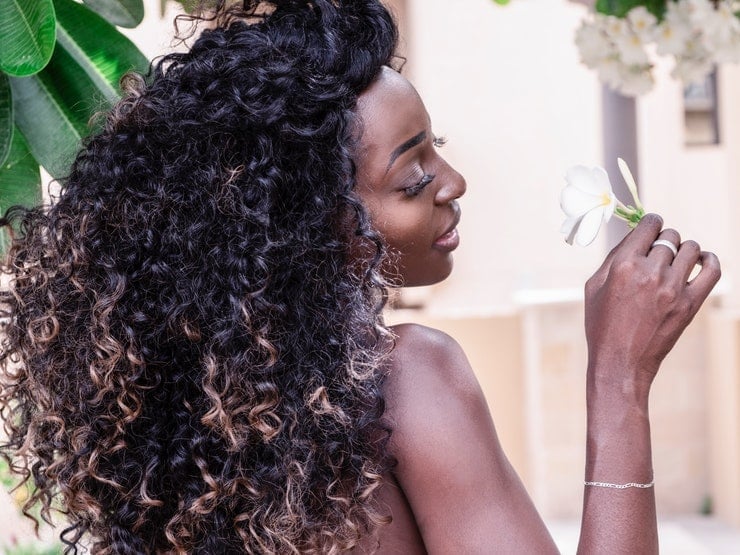
Can you get this much volume without a diffuser and forty five minutes of hover drying? Yes, but the result is frizz. For thick, wavy-curly hair at mid-back length or longer, air-drying creates loose, voluminous curls with a side parting, but the texture will have a mind of its own. The subtle blonde highlights add dimension that helps the waves look structured rather than chaotic.
Ask your colorist for: dark brown with blonde highlights. Managing the frizz means applying a curl-enhancing mousse to soaking wet hair and not touching it until it is fully dry. A trim every 8 to 10 weeks keeps the layers from dragging the shape down. The downside is that this look is weather dependent, high humidity will expand the volume past the point of control.
Final Thoughts
For fine hair, stick with blunt lines and soft layers that create the illusion of density. Thick and coily textures can lean into volume with afros, braided updos, or textured ponytails that define the curl pattern. A trim every eight to ten weeks keeps the shape honest, and a weekly deep condition keeps the elasticity where it belongs.
- Trim curly and wavy hair every 8-10 weeks to maintain shape and prevent split ends.
- Deep condition coily and thick hair weekly to maintain moisture and elasticity.
- Use heat protectant spray before any heat styling, even for blowouts.
- Refresh air-dried styles with a light serum or curl refresher spray as needed.
- For braided styles, ensure regular scalp cleansing and moisturizing to promote healthy growth.
Your natural texture is your best asset. Style it with confidence.

