
Ombre hair is a gradient color technique that darkens at the roots and lightens toward the ends, creating depth and movement without the high-maintenance grow-out of a full bleach. The 2024 shift favors softer transitions and lived-in shades over harsh lines, making it work for both straight and wavy textures.
This collection of 30 ombre ideas spans subtle blondes, coppers, silvers, and vivids across lengths from chin-grazing bobs to mid-back waves. You will find options for fine hair that needs volume, coarse strands that hold a curl, and anyone tired of a visible root line every four weeks. The range covers salon-heavy looks and simpler blends that fade gracefully on their own.
Dramatic Black to Silver White Ombre
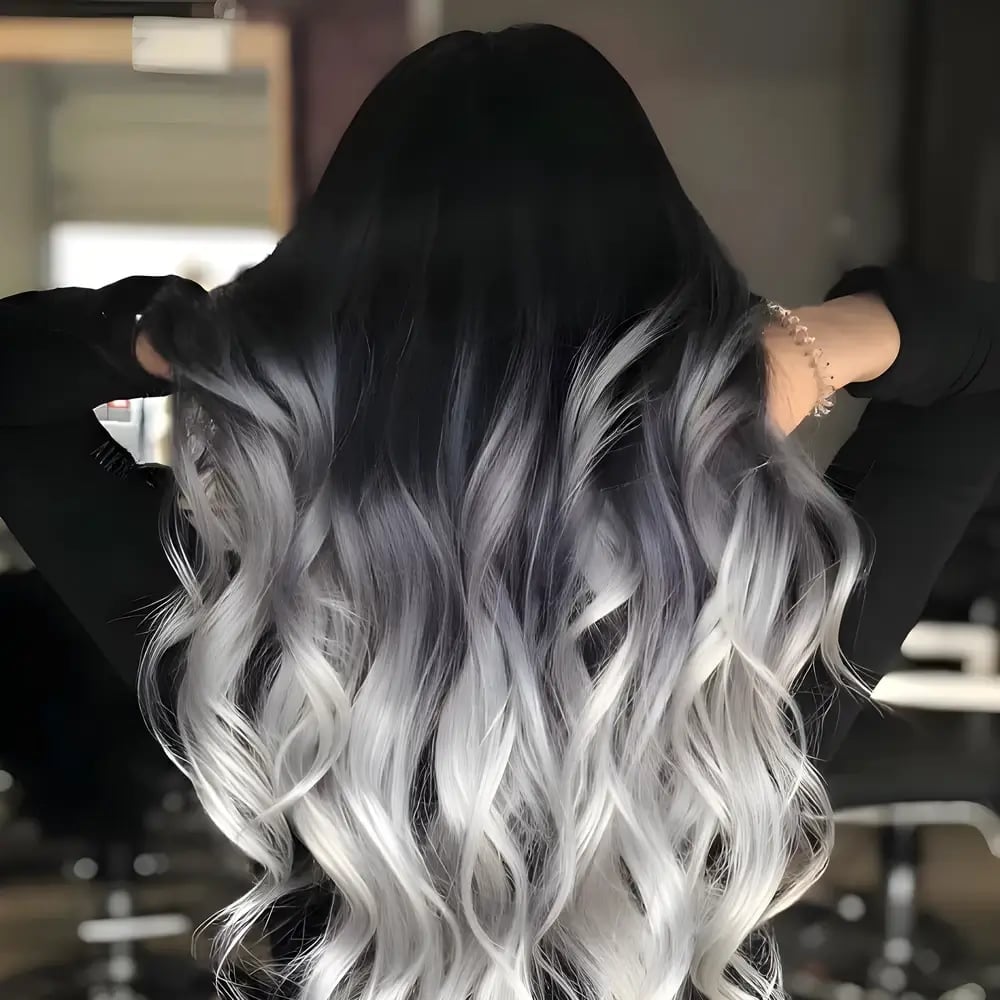
The design hinges on a precise engineering feat: the black base stays deep and cool at the roots while the mid-lengths shift through gray into a bright white at the ends, a gradient so smooth it reads as a single deliberate sweep of color. This black to silver white ombre works because the mid-back length gives the transition room to breathe, and the loose waves catch the color change from every angle, making the high-gloss finish part of the effect.
Ask your colorist for: dramatic black to silver white ombre, mid-back length. The medium density matters here, since the lighter ends need enough hair to show the silver tones without looking stringy. Once you commit, upkeep is a routine: a purple shampoo keeps the white from turning brassy, and a trim every six to eight weeks keeps the ends looking sharp rather than frazzled.
Collarbone Bob Dark Brown to Copper Ombre
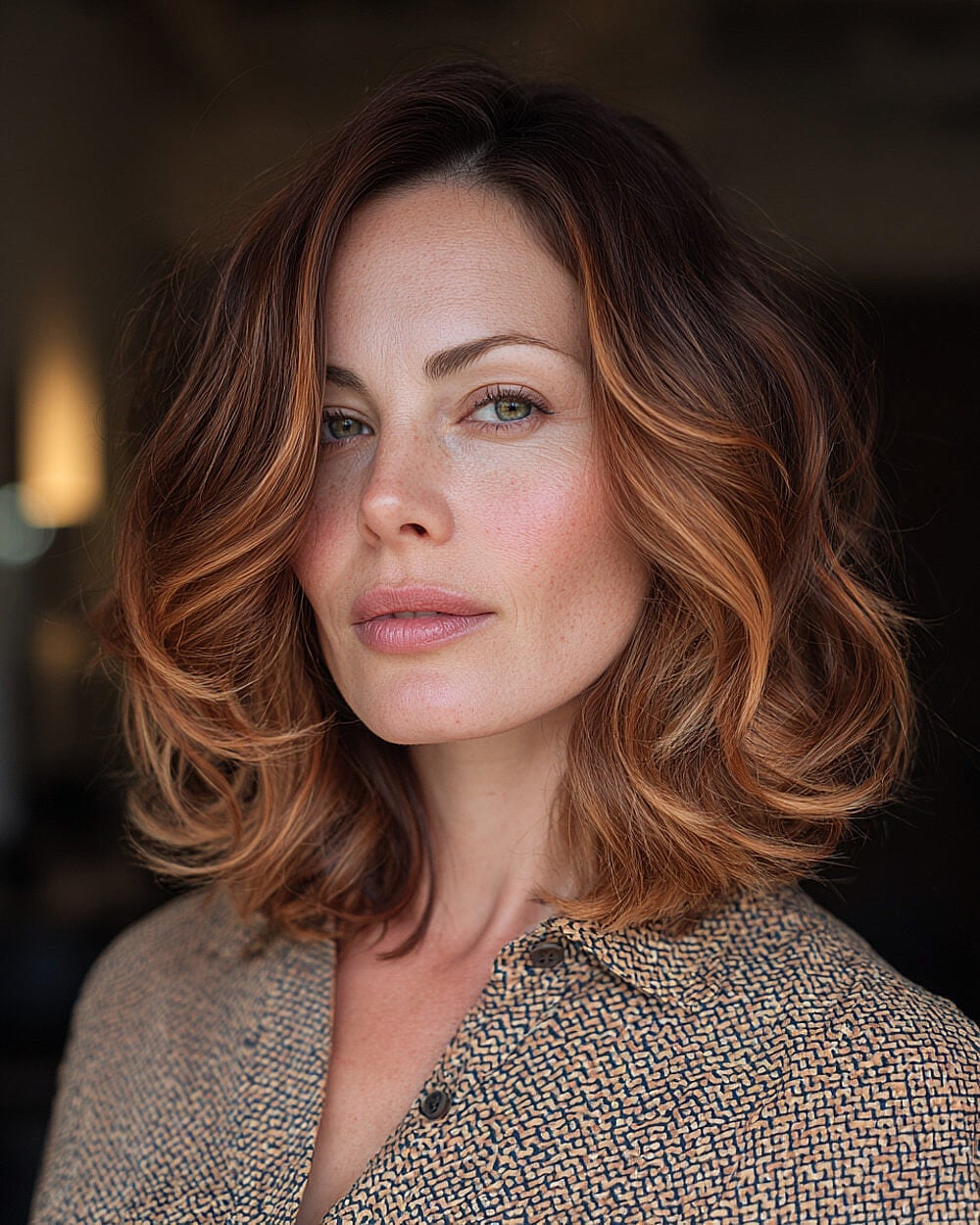
Wondering if a warm copper ombre will work on your thick, wavy hair? This collarbone bob is the argument that it will. The dark brown base grounds the style while the copper takes over at the ends, and the soft waves give the color transition a dimensional, lived-in feel that a poker-straight version would flatten. The side parting adds a touch of polish that keeps it office-appropriate rather than costume-y.
Ask your colorist for: collarbone bob, dark brown to copper ombre, soft waves. The thick texture is what carries this look, since the copper needs weight to show its richness. It suits oval and square face shapes best, and the bob line will need a trim every six to eight weeks to hold its shape.
Mid-Back Dark Brown to Golden Blonde Ombre
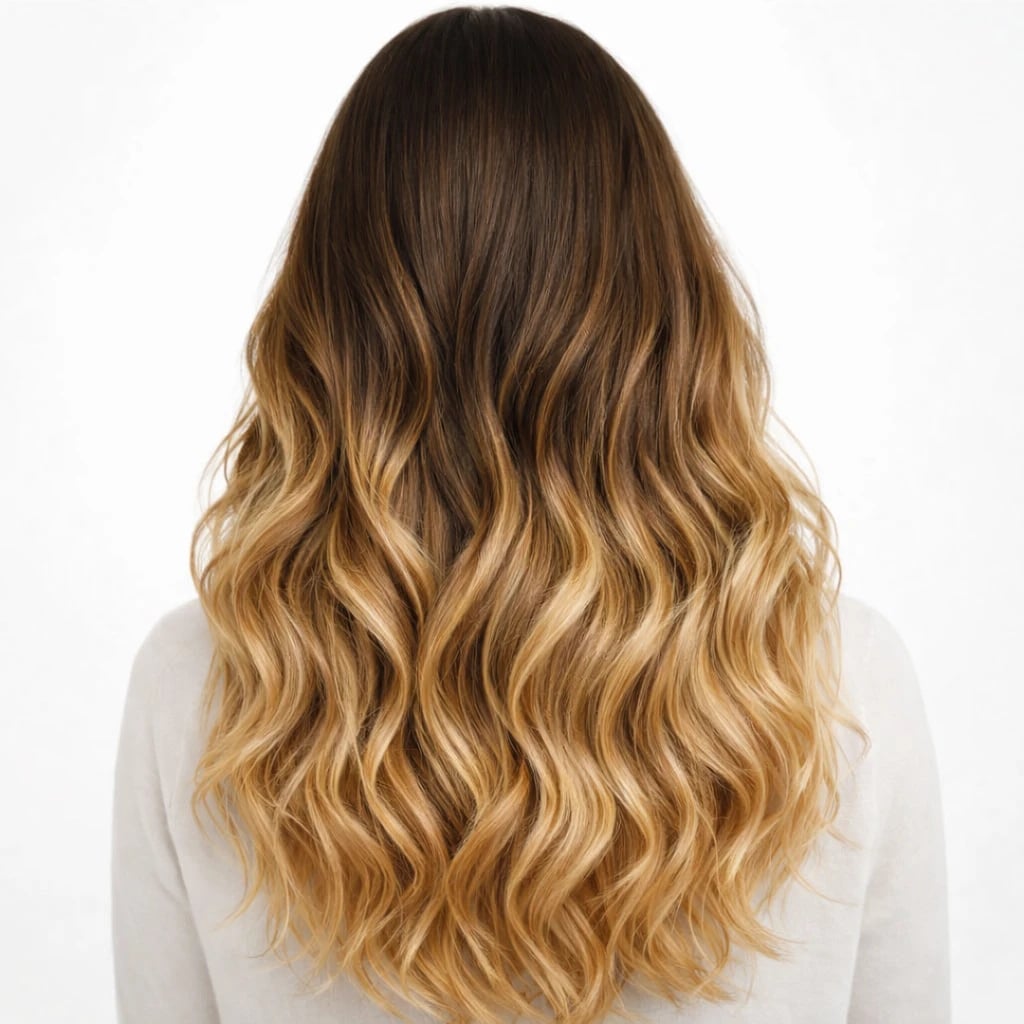
Where some ombre styles hit you over the head with contrast, this one is the polite conversationalist. The transition from a rich dark brown base to warm golden blonde ends is seamless, so the eye travels the length of the hair without a hard line interrupting it. That is the difference between this and an abrupt, two-tone color job: the gradient here does the work, and the thick, wavy texture gives the blonde somewhere to glow.
Ask your colorist for: mid-back length, dark brown to golden blonde ombre, wavy blowout. The middle parting keeps things symmetrical, and the soft waves enhance the gradient by reflecting light at different points. A smoothing serum helps maintain that glossy finish, and the blonde ends will need a toning appointment every eight to ten weeks to stay golden and avoid brassiness.
Face-Framing Layers Dark Brown Base Blonde Balayage
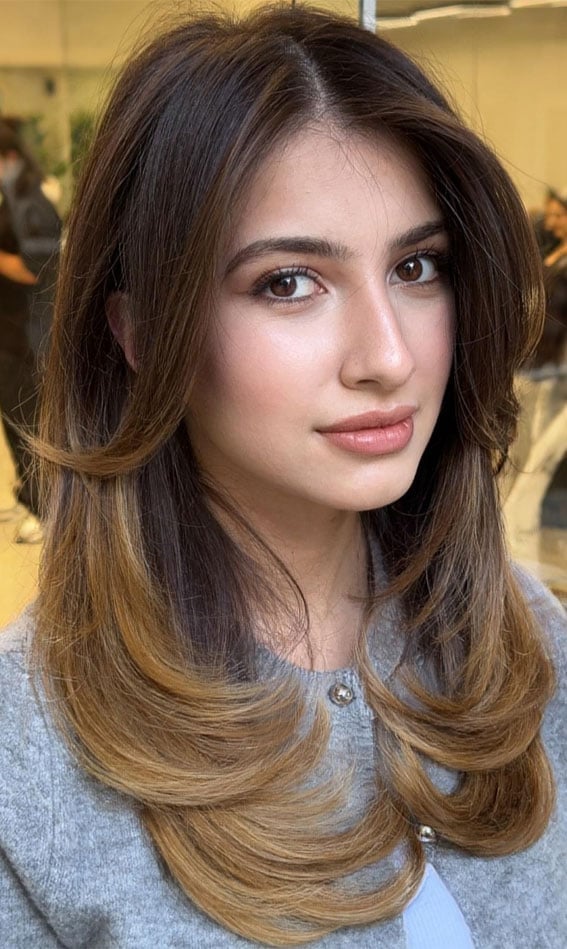
The design starts with a dark brown base that holds the roots, then the blonde balayage takes over in a way that is painted, not foiled, so the light pieces sit where the face-framing layers fall. That is the trick: the layers are not an afterthought, they are the delivery system for the color. The blowout with soft waves shows off the dimension, and the thick, wavy texture gives the balayage plenty of surface to work with.
Ask your colorist for: dark brown base, blonde balayage, face-framing layers, mid-back length. When you sit in the chair, be specific about wanting the lightness concentrated around the face, since that is what makes the layers pop. This combination suits oval, round, and heart shapes, and the layers will need a trim every ten to twelve weeks to keep their shape.
Collarbone Layers Dark Brown Base Blonde Balayage Curtain Bangs
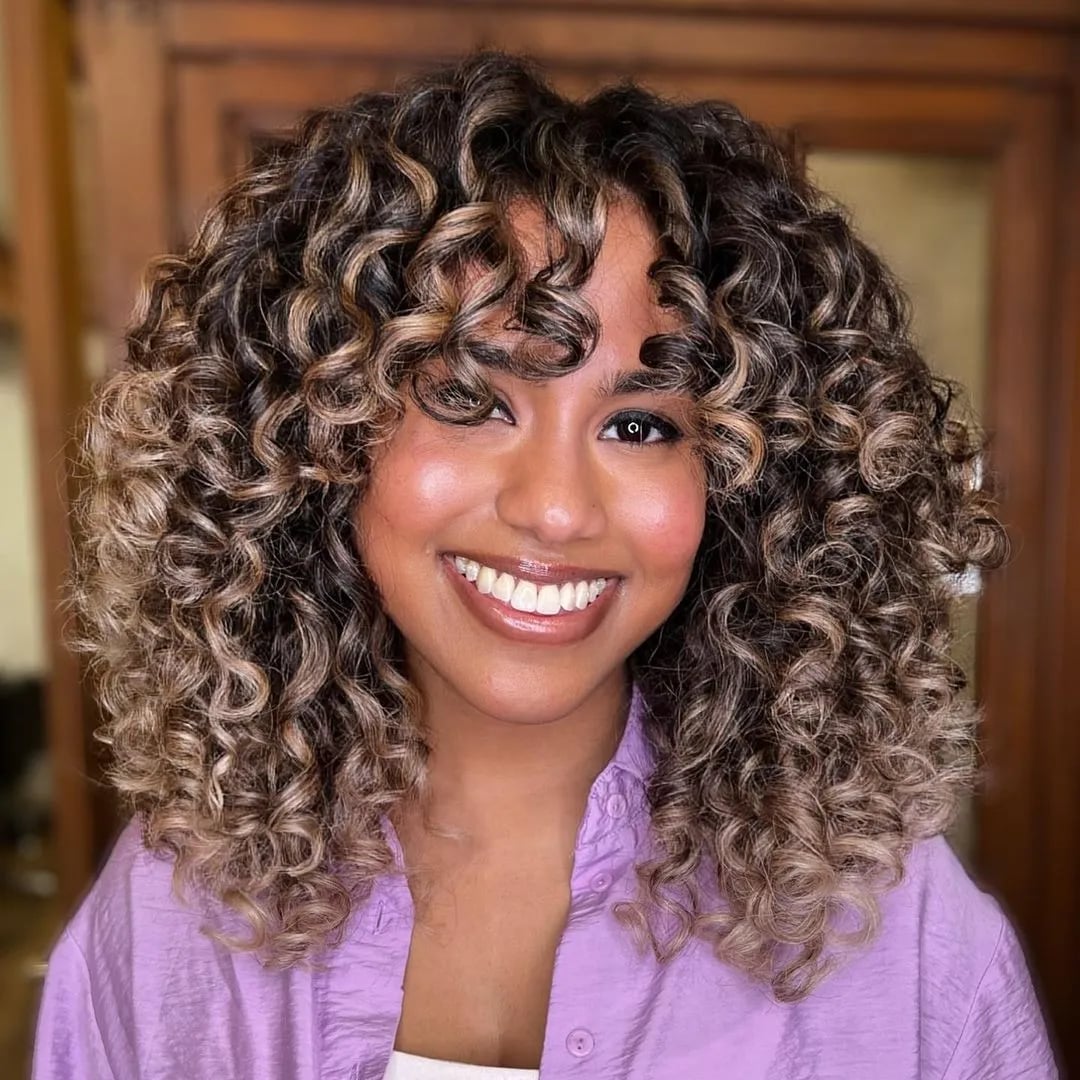
The collarbone length gives this cut a practical, no-nonsense starting point, but the curtain bangs are where the personality lives. The dark brown base with blonde balayage creates a striking contrast, and the air-dried texture keeps the whole thing from looking too polished. Curtain bangs require a commitment: they need a trim every four to six weeks, or they start to lose their shape and hang in your eyes.
Ask your stylist for: collarbone length layers, dark brown base, blonde balayage, curtain bangs. The thick, wavy texture is what makes the air-dried look work, so a sea salt spray is your friend here. This style suits round and square face shapes. The middle parting keeps the bangs balanced.
Mid-Back Dark Brown to Golden Blonde Ombre with Curtain Bangs, Wavy
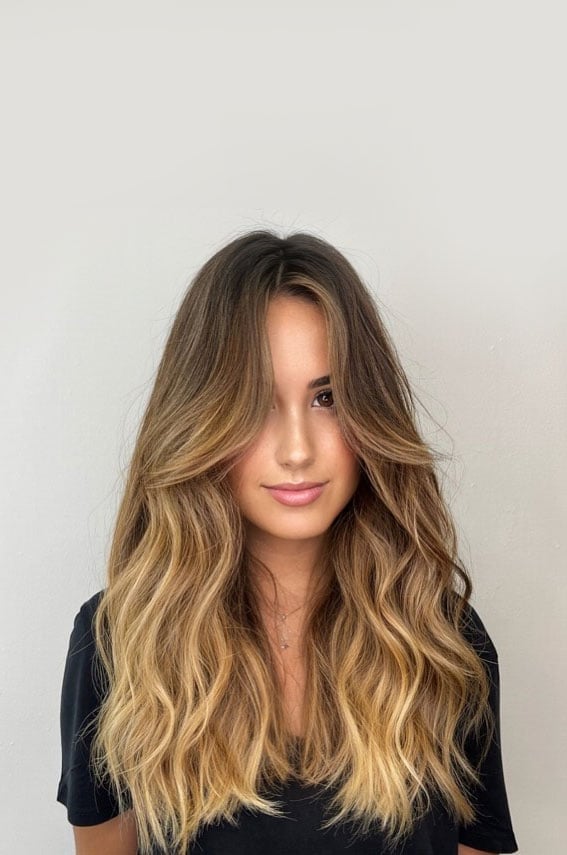
Can curtain bangs survive an ombre that starts dark brown and ends bright golden blonde? Yes, if the layers are long enough to keep the weight from falling straight into your eyes. The curtain bangs here are cut to blend into the mid-back length, so the transition reads as part of the cut. Ask your colorist for: mid-back length, dark brown to bright golden blonde ombre, curtain bangs. The wavy blowout helps the gradient hit differently at every angle, which is the goal of this technique.
The golden blonde ends demand a purple shampoo every second wash to stay bright. The bangs will need a trim every four to six weeks, or they start grazing your cheekbones at an awkward length. A large barrel curling iron wraps each section once for a wave that holds for two days. The thick texture is your friend here, because thin hair can look weighed down by the dark base and the heavy wave pattern.
Long Layers Dark Brown to Blonde Ombre
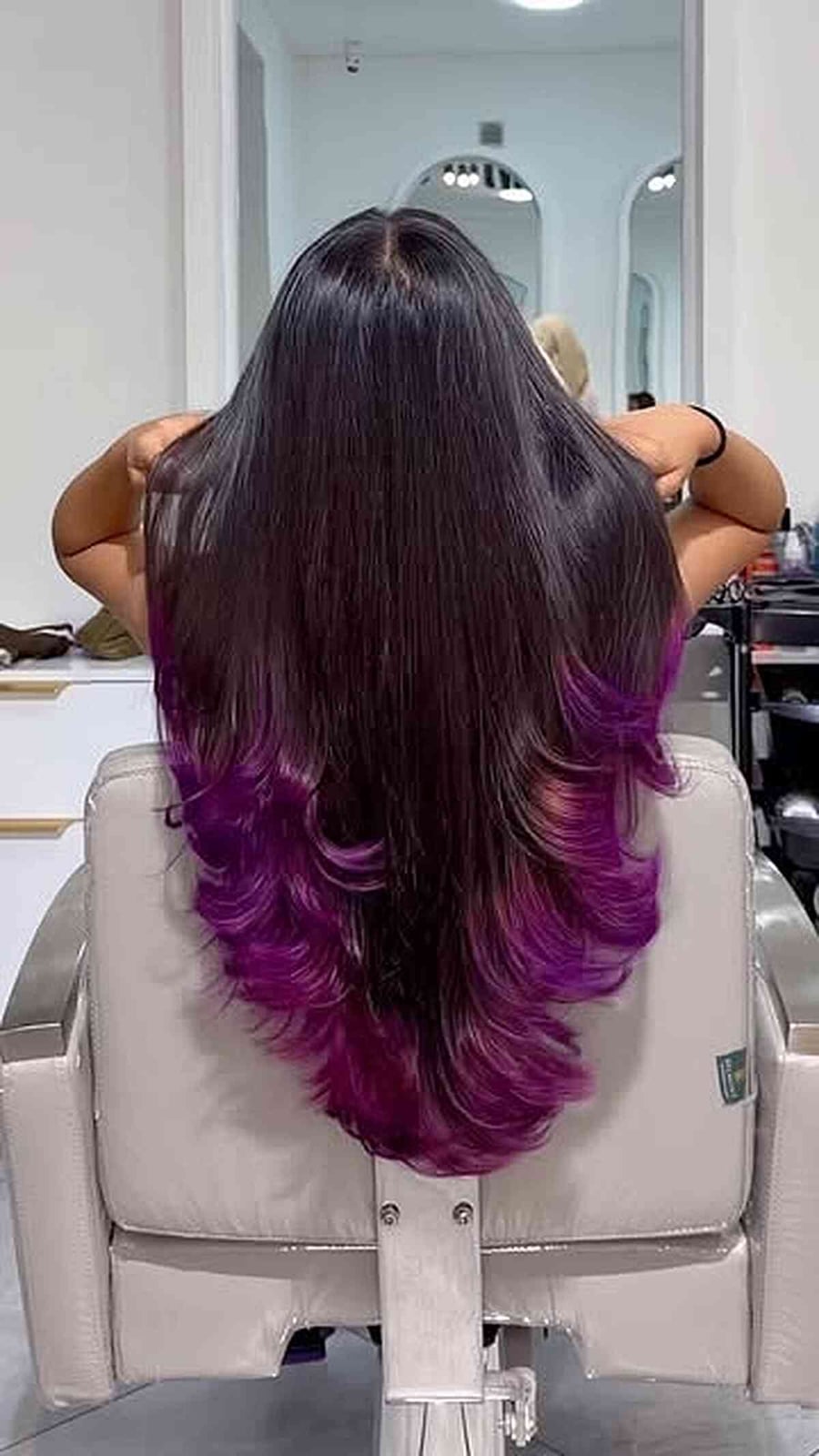
A smooth ombre from dark brown roots to soft blonde ends works best when the hair is not too dense. Medium density hair lets the lighter ends show through without the dark base swallowing the transition. The long layers here are cut to hit mid-back length, and the loose waves give the blonde ends a glossy finish that catches light from a back view. Ask your colorist for: mid-back length, dark brown to blonde ombre, long layers, loose waves.
This design suits wavy hair because the natural bend softens the line where the dark meets the light. On straight hair, the gradient needs to be painted lower to avoid a hard horizontal line. Medium density hair holds a wave for about a day without product, and the blonde ends benefit from a toning appointment every eight to ten weeks to keep them from turning into a brassy yellow. The middle part lets the color fall evenly on both sides.
Collarbone Ash Blonde Ombre Straight Fine Hair
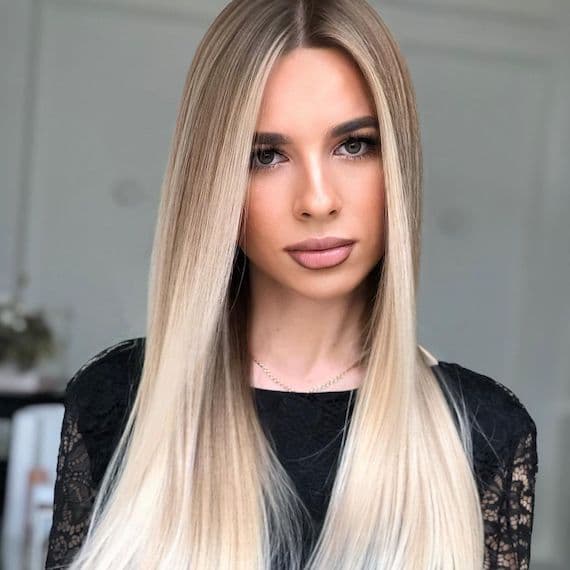
An ash blonde ombre on fine, straight hair is a lesson in precision: the collarbone length keeps the cut clean, and the middle part shows exactly where the color graduates. The ash tone cancels warmth, which matters because fine hair tends to show brassiness faster than coarse hair. Ask your colorist for: collarbone length, ash blonde ombre, straight fine hair. This is a salon job, not a kitchen-sink experiment, because lifting to ash blonde without damaging fine strands requires a low-volume developer and a careful eye on the clock.
Fiery Red to Blonde Ombre Lob
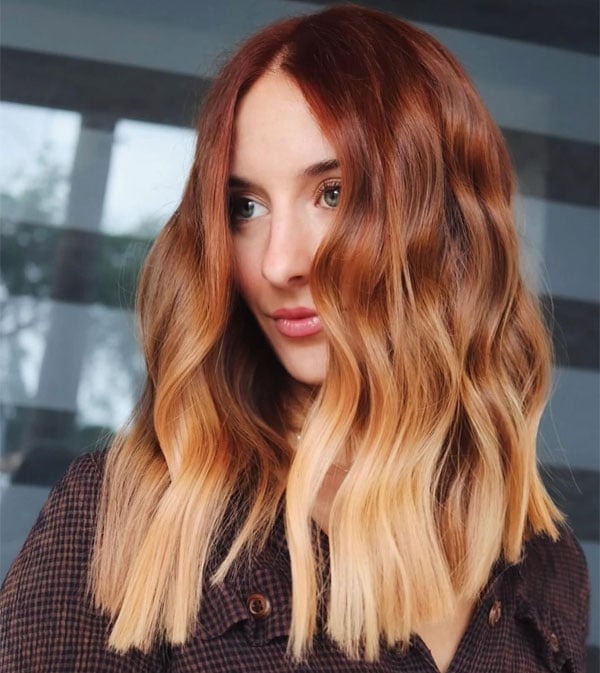
Fiery red is often a summer impulse, but the red-to-blonde ombre lands best in autumn or winter, when the warmth feels deliberate rather than desperate. The lob hits collarbone length, and the side part lets the loose waves fall in a way that hides the grow-out line for an extra week. Ask your colorist for: collarbone lob, fiery red to blonde ombre, side parting. The red base fades faster than the blonde ends, so a color-depositing conditioner every other wash keeps the fire alive without a full salon visit.
Seamless Dark Brown to Honey Blonde Ombre
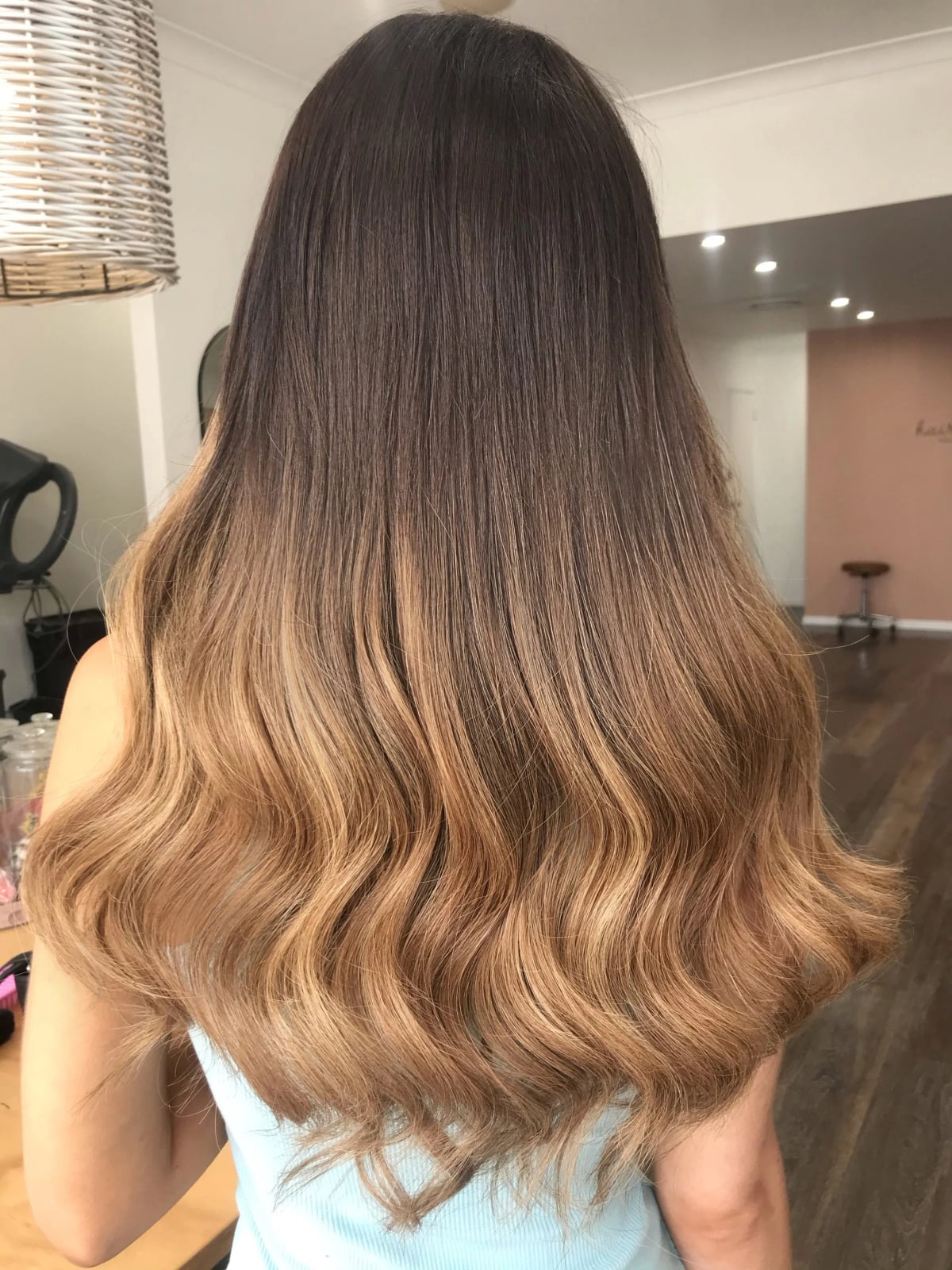
A honey blonde ombre looks best when the dark brown melts into the light shade without a visible line. The colorist paints the lightener low and feathers the edges with a balayage motion to create that soft shift. The mid-back length here gives the color room to change gradually, and the thick wavy texture hides any tiny demarcation lines that might appear. Ask your colorist for: mid-back length, dark brown to honey blonde ombre, seamless blend.
When you sit in the chair, say the word seamless out loud. That tells the colorist you want soft edges, not a hard line. A root shadow in a tone between your natural brown and the honey blonde helps the grow-out phase last ten to twelve weeks before you need a trim. The middle part and blowout styling make the gradient visible from every angle, which is the purpose of the technique. A shine serum on the ends adds the gloss that makes a seamless ombre look finished.
Mid-Back Dark Brown to Blonde Ombre Waves, Creating A Soft
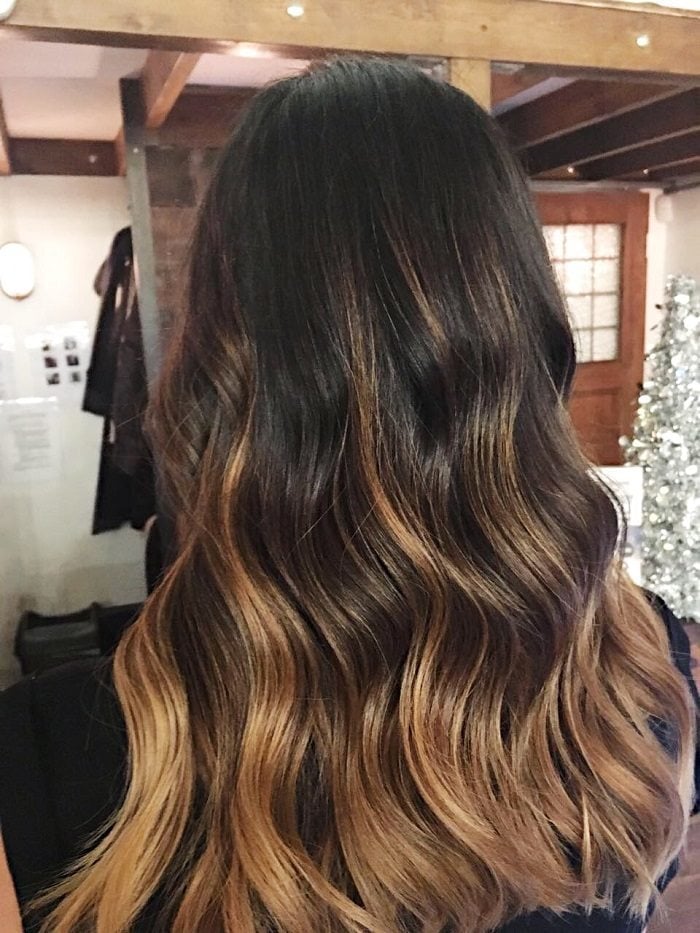
Thick, wavy hair holds a gradient color longer than fine strands, so this mid-back dark brown to blonde ombre keeps its shape and contrast through several washes. The loose waves break up the transition, which makes the grow-out line less obvious than it would be on straight hair. Ask your colorist for a mid-back length dark brown to blonde ombre, then let the natural texture do the styling work. A texturizing spray on damp hair and a diffuser gives you soft, flowing waves in about fifteen minutes. The blonde ends need a toning appointment every eight to ten weeks to stay bright, and the thick texture means the color fades evenly instead of patchy.
Because the ombre starts lower on the head, the dark roots give you a built-in shadow that extends the time between touch-ups. That makes this a low-maintenance option for dimension without committing to frequent salon visits. The middle part and the length below the shoulders work with most face shapes, and the layers keep the weight from pulling the waves flat.
Mid-Back Dark Brown to Fiery Red Ombre
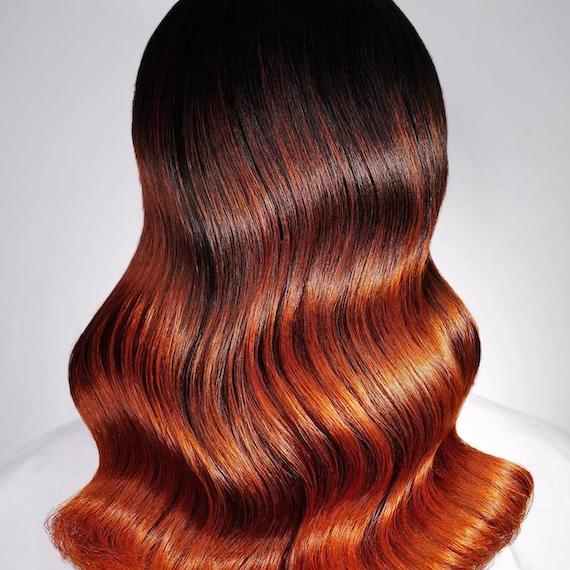
If you are torn between a subtle auburn and a full-on red, this dark brown to fiery red ombre lands somewhere bolder than a tinted gloss but less demanding than an all-over color. The deep waves show off the vibrant ends, and the glossy finish makes the transition look smooth, not striped. Ask your colorist for a mid-back length dark brown to fiery red ombre, and keep the root color dark so the red looks like a deliberate choice, not an accident. This one suits thick, wavy hair best, because the movement helps the two tones blend. Red fades faster than most colors, so a color-safe conditioner and cooler washing water will stretch the vibrancy between appointments.
Collarbone Wavy Bob Dark Brown to Blue Ombre
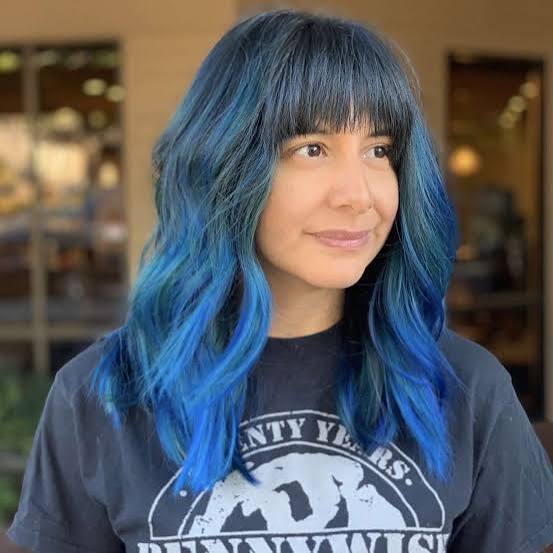
When summer festival season rolls around, a collarbone wavy bob with blunt bangs and a dark brown to bright blue ombre is the hair equivalent of wearing a neon accessory: it does not whisper. The textured waves give the blue ends movement, and the blunt bangs frame the face without hiding the color. Ask your colorist for a collarbone wavy bob, blunt bangs, dark brown to bright blue ombre. The blue will fade to a pastel within a few weeks, so plan it for a short burst of fun rather than a long-term commitment. A color-depositing conditioner refreshes the tone between washes, and the bangs will need a trim every four to six weeks to keep their shape.
Collarbone Dark Brown to Silver Gray Ombre
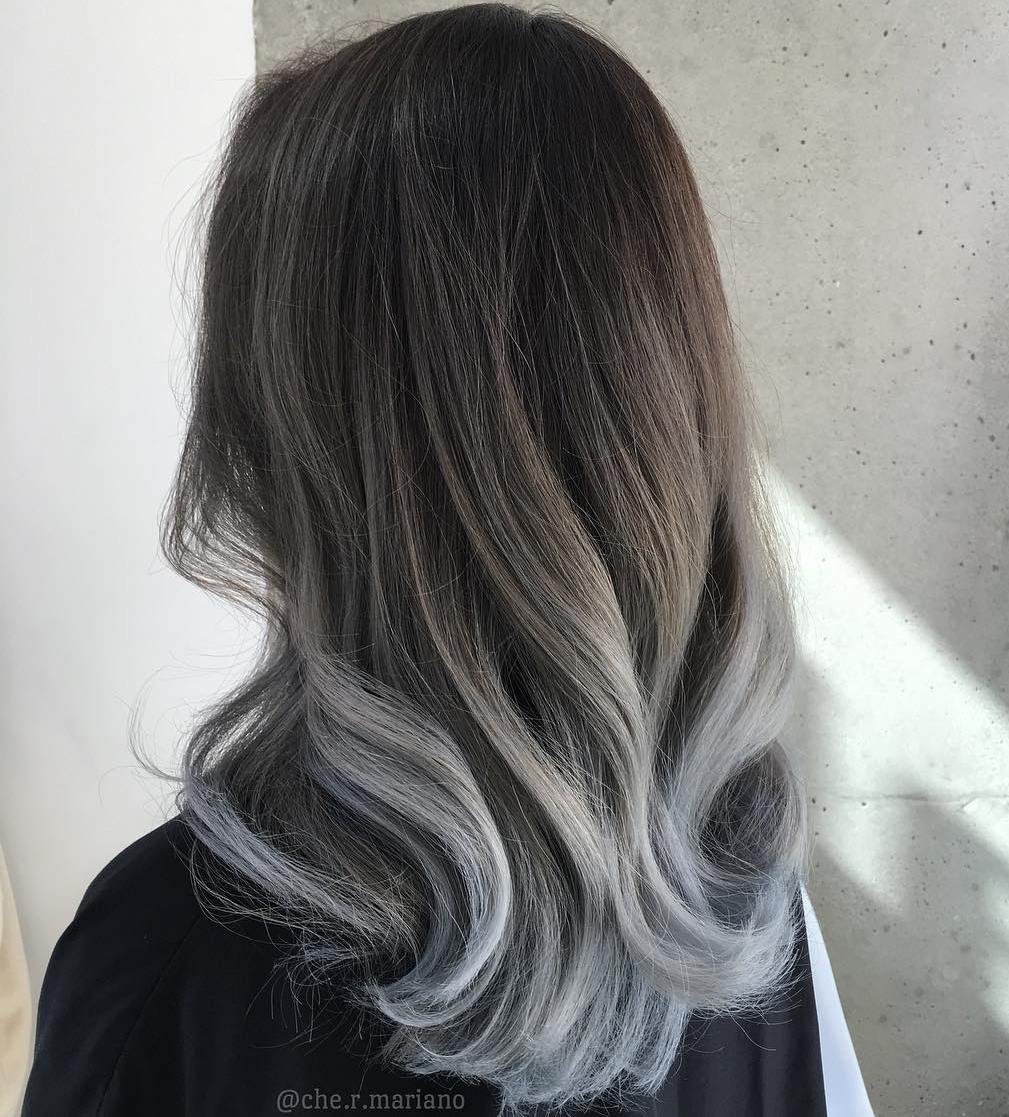
Wondering if gray hair is worth the upkeep when you are not actually going gray? This collarbone dark brown to silver gray ombre gives you the effect without the full commitment. The cool-toned silver ends sit on a dark brown base, and the soft waves make the gradient look like it grew that way. Ask your colorist for a collarbone length dark brown to silver gray ombre. The cool tone pairs well with medium-thick wavy hair, where the texture reflects light and keeps the silver from looking flat. A purple toning shampoo is required here, because gray turns muddy yellow without it. Plan on using it once a week and a trim every ten to twelve weeks to keep the ends healthy.
Mid-Back Dark Base to Gray Silver Ombre
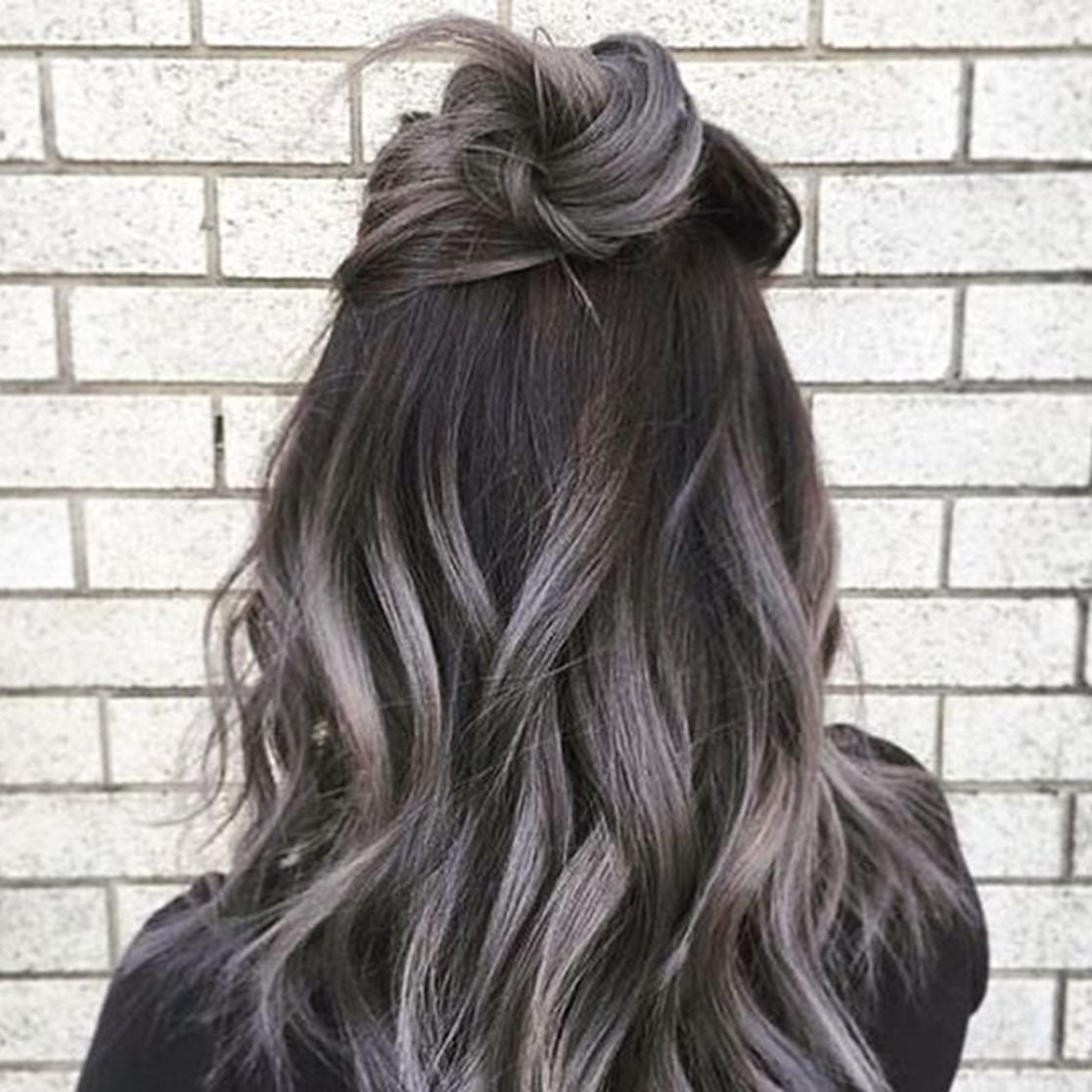
Getting from a dark base to a true gray silver ombre is a two-step process that starts with lifting the pigment out of the mid-lengths and ends, then toning the lifted hair to cancel out warmth. The back view shows how the color blends down the length, with loose waves softening the transition so it never looks like two separate colors. Ask your colorist for a mid-back length dark base to gray silver ombre, loose waves. This is a salon-only job, because the lift needs to be precise to avoid banding. The thick, wavy texture helps disguise any slight unevenness in the gradient, and the middle part keeps the color symmetrical. Expect to spend a few hours in the chair, and bring a reference photo so your colorist knows exactly how light you want the silver to go.
Collarbone Dark Brown to Blonde Ombre Waves
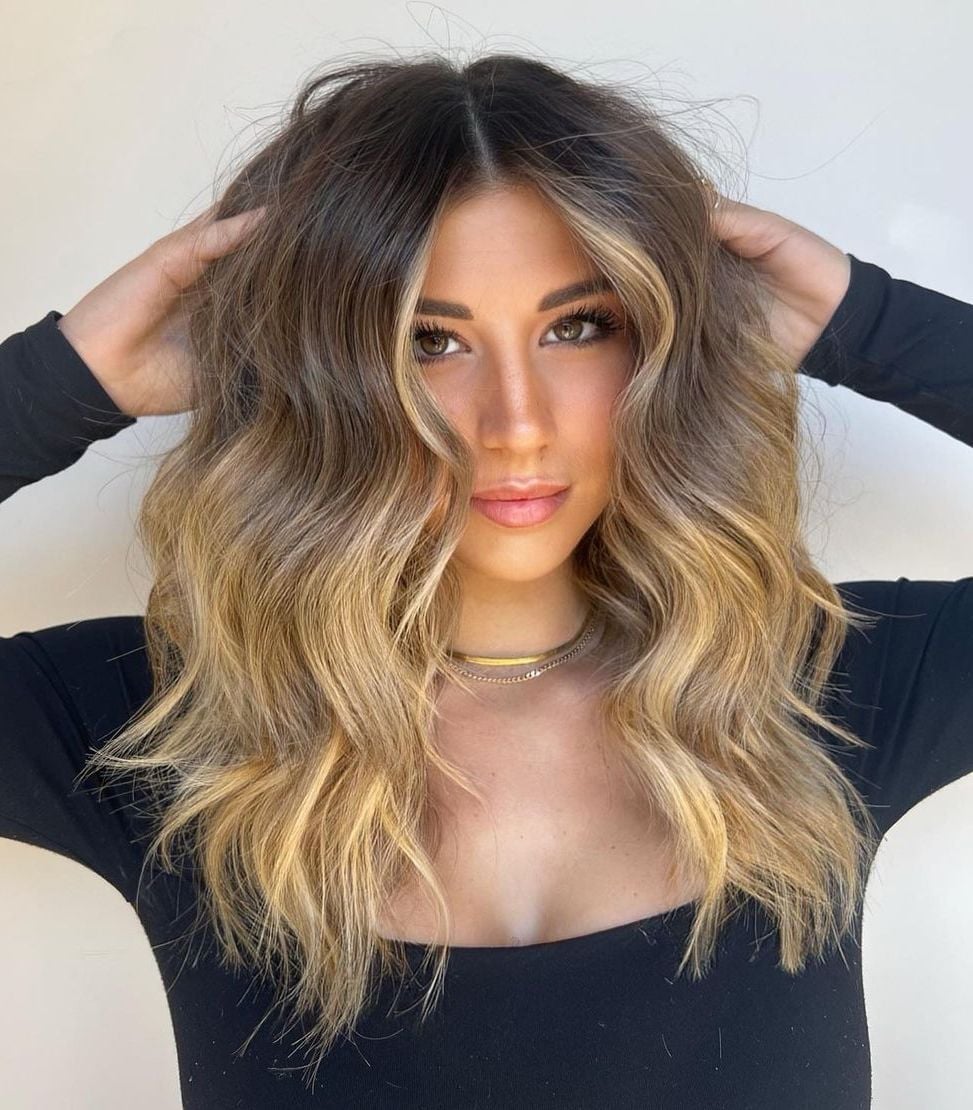
The gradient starts low enough that the roots look like your natural color, a key trick of a collarbone dark brown to blonde ombre. Ask your colorist for a soft, face-framing transition that begins around the chin, so the blonde brightens the ends without washing out the top half. The loose, voluminous waves hide the line where the two shades meet, making the blend look natural. Ask your colorist for: collarbone length, dark brown to blonde ombre, face-framing layers. Use a round brush while blow-drying to get that bend at the ends, and plan on a toning appointment every 8 to 10 weeks to keep the blonde from turning brassy.
Mid-Back Pink to Aqua Blue Purple Ombre
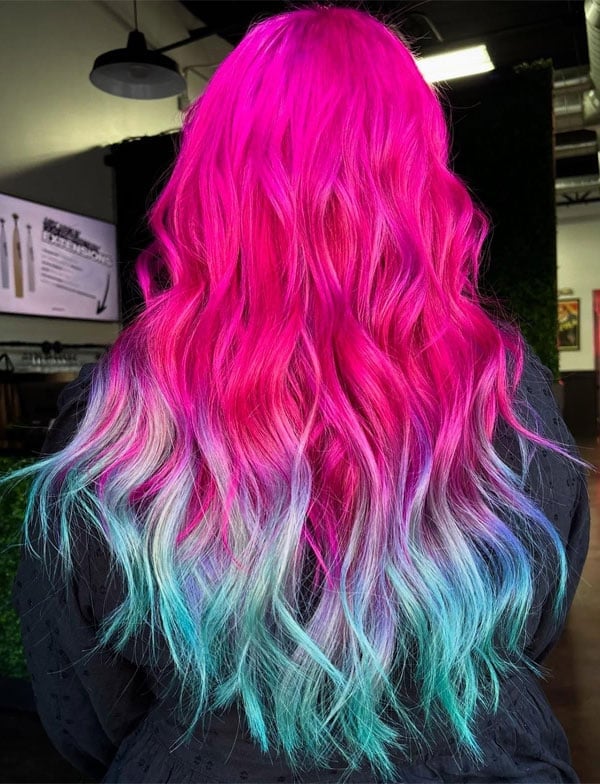
Can vivid color survive past the first two washes? Yes, if you accept that upkeep is the price of admission. A mid-back pink to aqua blue purple ombre is a salon commitment, and the loose waves are what let the gradient show its full range without looking like a striped ribbon. The roots stay pink, the ends shift through aqua and purple, and every shade needs its own maintenance schedule. Ask your colorist for: mid-back length, pink to aqua blue purple ombre, loose waves.
Washing in cool water slows the fade, but these tones will still dull faster than any brunette blend. Color-depositing conditioners keep the pink and purple from turning a muddy lavender, and a trim every 10 to 12 weeks stops the ends from looking frayed. This is not a low-maintenance choice, but the payoff is a gradient that gets compliments from people who usually ignore hair.
Mid-Back Purple to Lavender Ombre Waves
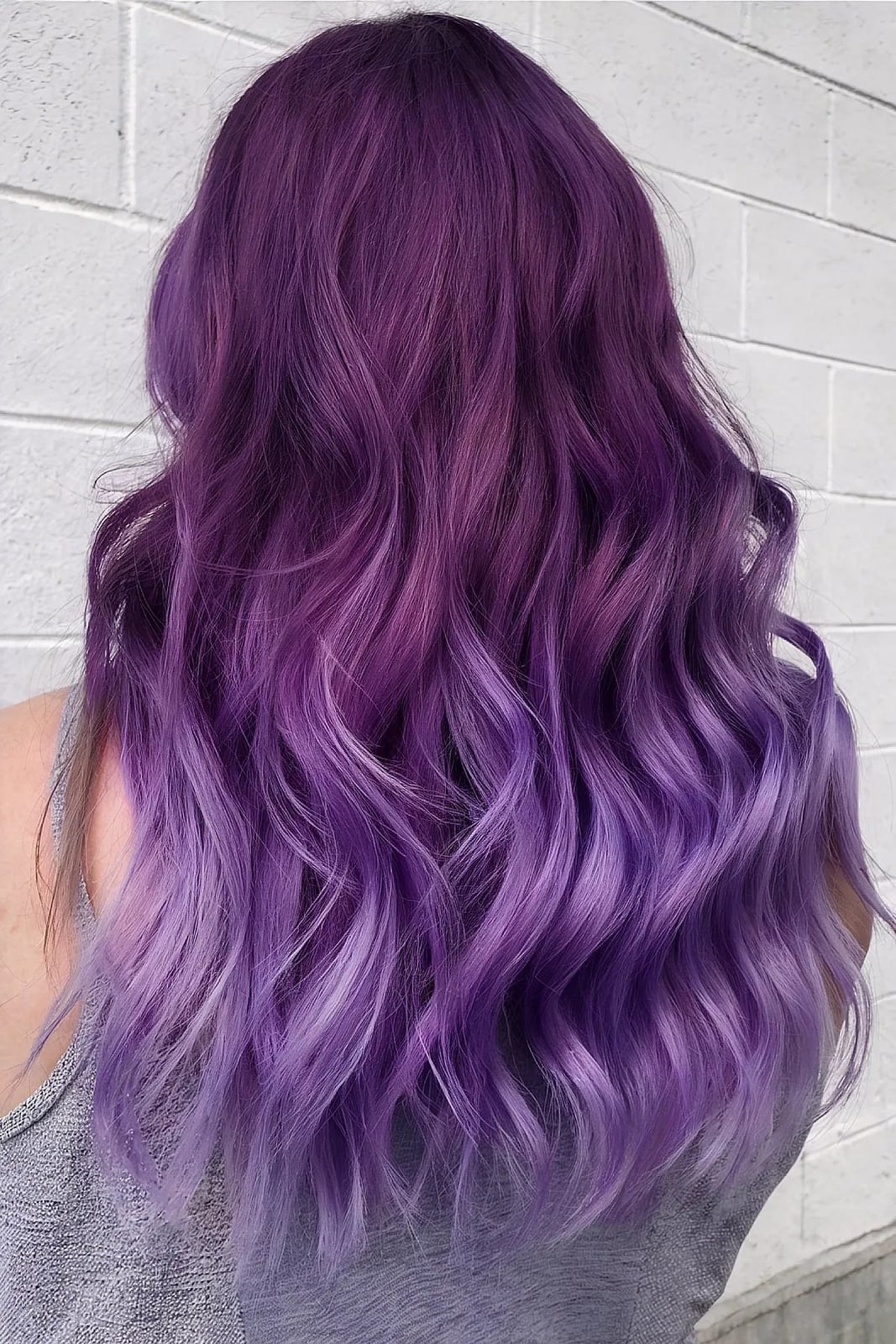
The trick to a purple to lavender ombre is that the deep root provides a strong base, giving the lighter ends something to graduate from. On medium density, wavy hair, the long layers catch the shift between shades, so the gradient looks like movement instead of a hard line.
This one works best if your hair has some natural wave to it, since the texture breaks up the color and keeps the lavender from pooling in flat sections. Ask your colorist for: mid-back length, purple to lavender ombre, loose waves. The gloss finish is part of the look, so a color-safe shampoo and conditioner are not optional. Lavender fades fast, which means a toning appointment every 6 to 8 weeks if you want it to stay that pale instead of drifting toward gray.
Collarbone Bob Dark Brown to Blonde Ombre, Middle
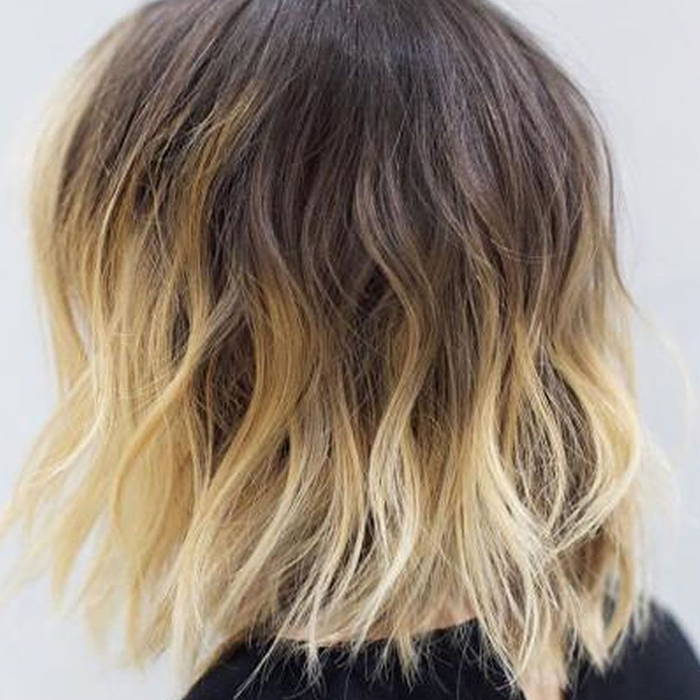
On a collarbone bob, the transition from dark brown to bright blonde lands right at the shoulders, which makes the color placement the whole design. The middle parting splits the gradient symmetrically, so the blonde frames both sides of the face equally. Ask your colorist for: collarbone bob, dark brown to blonde ombre, loose wavy blowout.
This is a salon job, not a box-dye situation, because a bob gives the colorist less canvas to blend on and any banding shows immediately. The loose blowout softens the contrast between the two shades, and a texturizing spray adds the wave definition that keeps the ends from looking flat. The bob itself needs a trim every six to eight weeks, or the shape goes boxy and the ombre loses its clean finish.
Mid-Back Dark Brown to Warm Blonde Ombre, Close-Up Take
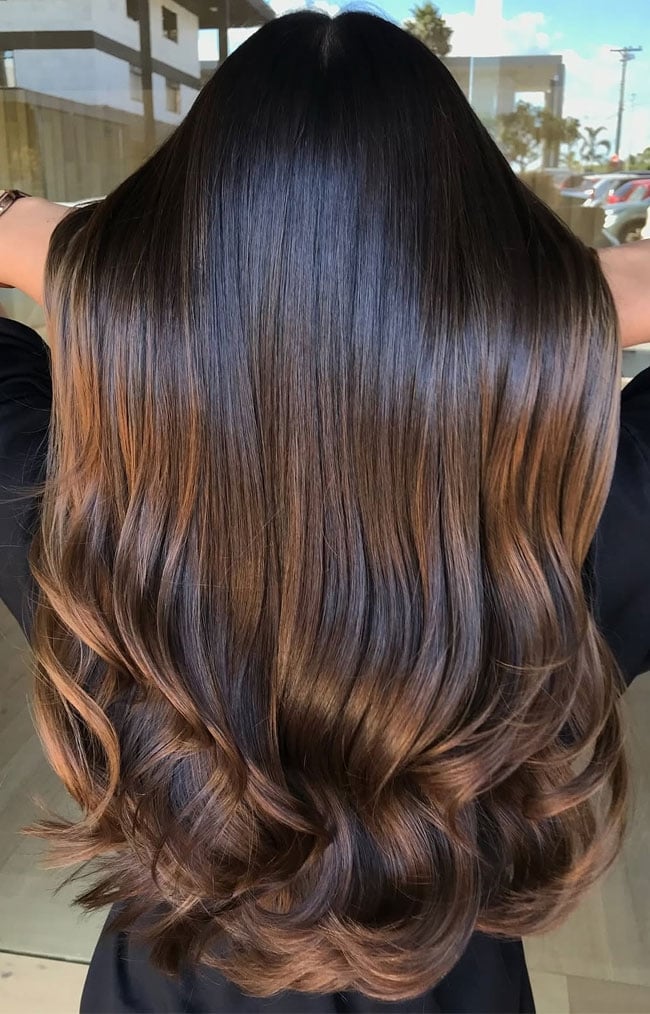
Unlike a version with visible banding, this dark brown to warm honey blonde ombre blends so gradually that you cannot tell where one shade ends and the other begins. The thick, wavy texture helps, since the loose, bouncy waves scatter the light and hide any faint line of demarcation.
Ask your colorist for: mid-back length, dark brown to warm honey blonde ombre, loose waves. The warmth in the blonde is what keeps the whole thing looking natural, rather than like the ends were dunked in bleach. This is the ombre for someone who wants the dimension of a gradient without the high-contrast drama. The smooth transition means you can let it grow out for a while before the roots become a problem, and a trim every 10 to 12 weeks keeps the ends healthy enough to hold the bounce.
Chin Length Blunt Bob Dark Brown to Blonde Ombre
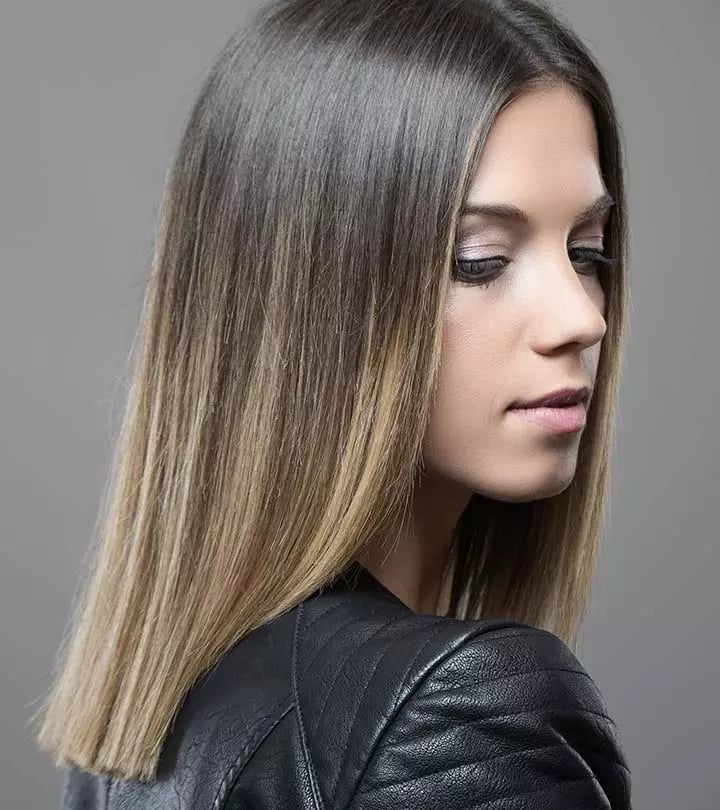
Can a blunt bob handle an ombre without looking like two separate haircuts? Yes, when the dark brown roots melt into blonde ends along a sharp, clean line. The contrast is the point here, so keep the cut exact and the color transition defined rather than blended to death. This works best on fine, straight hair, where the sleek finish and middle part show off the gradient without interference. Chin length suits oval, square, and heart face shapes. Ask your colorist for: chin length blunt bob, dark brown to blonde ombre. The blunt line needs a trim every six weeks to stay sharp, and a flat iron keeps the finish slick.
Mid-Back Blonde to Dark Brown Reverse Ombre, Long Layers
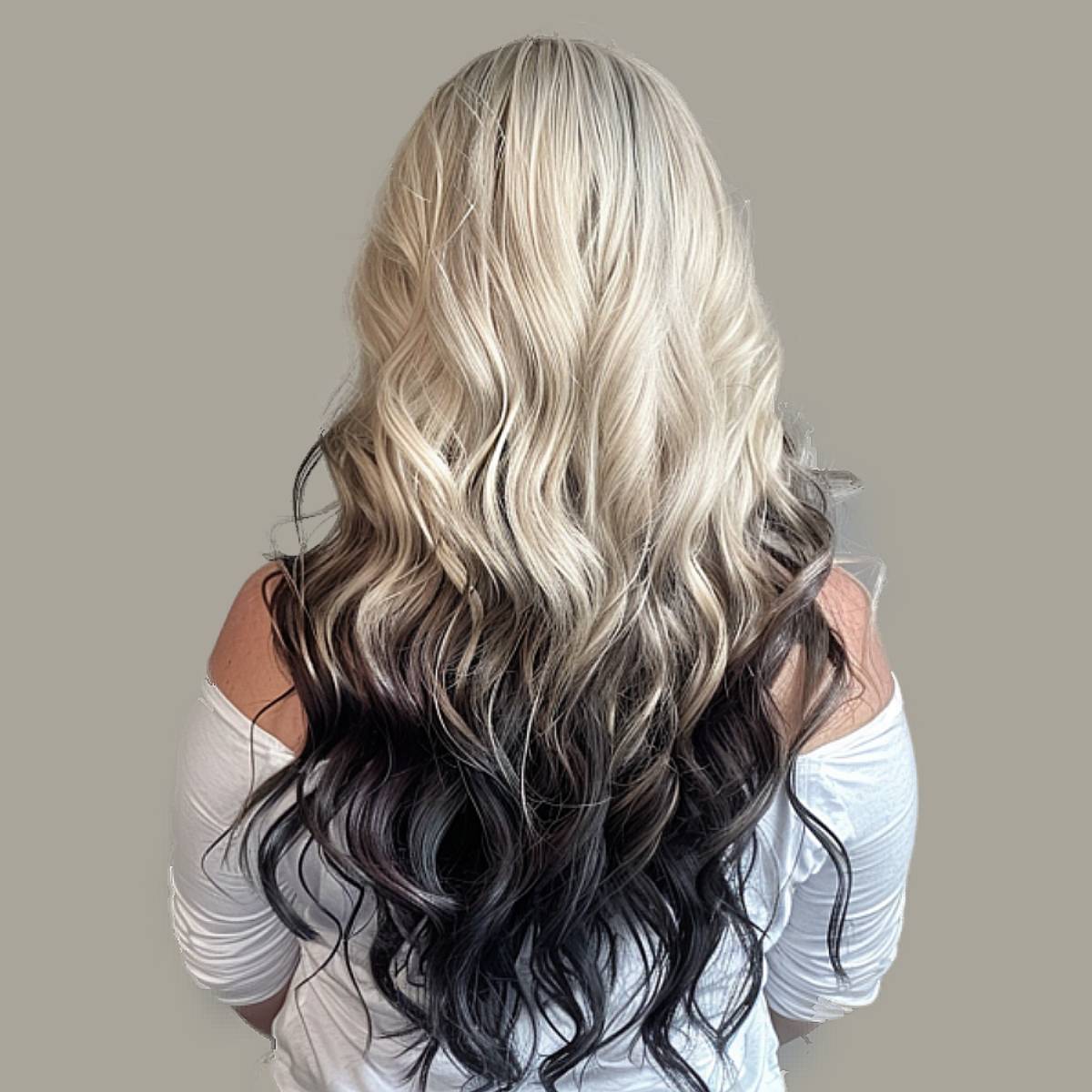
The reverse ombre flips the usual script: blonde at the roots, dark brown at the ends, with the transition landing somewhere around the mid-lengths. On thick, wavy hair that reaches the mid-back, the loose waves give the color shift a soft, organic movement that a flat, straight canvas would not. The mistake most people make is treating this like a standard balayage and letting the blonde fade into a brassy mess near the roots. Lifting blonde to dark brown takes precision, and a purple shampoo keeps the lighter section bright between appointments. The honest drawback is upkeep: the blonde roots demand attention every ten to twelve weeks. Ask your colorist for: mid-back length, blonde to dark brown reverse ombre. A trim in that same window keeps the long layers from dragging the shape down.
Collarbone Wavy Lob Dark Brown to Pink Purple Ombre
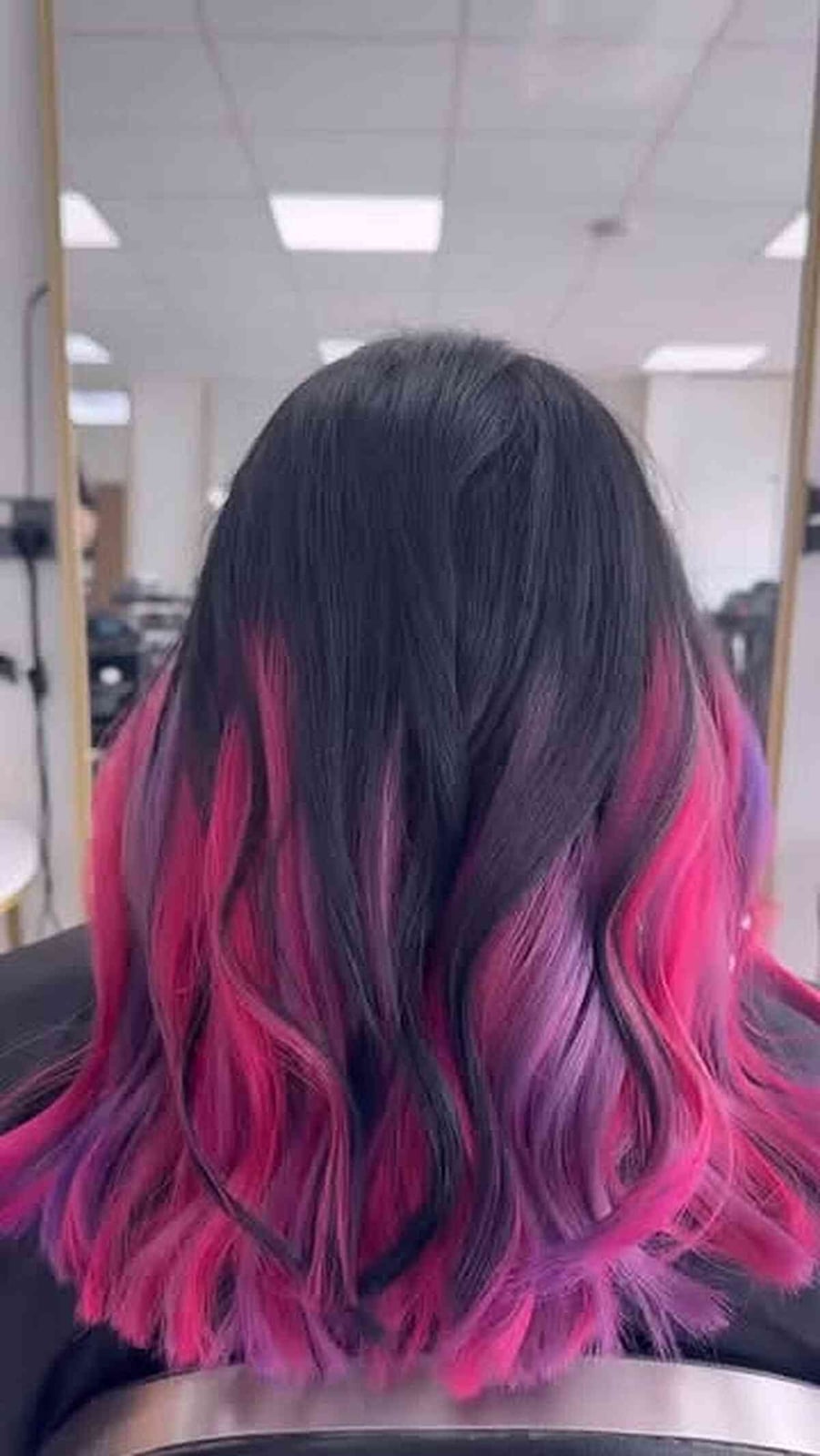
Pink and purple ends need a dark base to make the color pop, and this collarbone lob delivers with dark brown roots that give way to vibrant tones. The wavy texture, medium density, and middle part mean the blend sits somewhere between playful and polished. Color-safe products are not a suggestion here; they are the difference between pink that lasts and pink that turns muddy. The loose waves help the transition read as intentional, but the real work happens in the chair. Ask your colorist for: collarbone wavy lob, dark brown to pink and purple ombre. Vibrant tones fade faster than natural shades, so plan on refreshing the color every eight to ten weeks, with a trim in the same rhythm to keep the lob shape from growing out.
Mid-Back Ash Blonde Ombre with Side Part
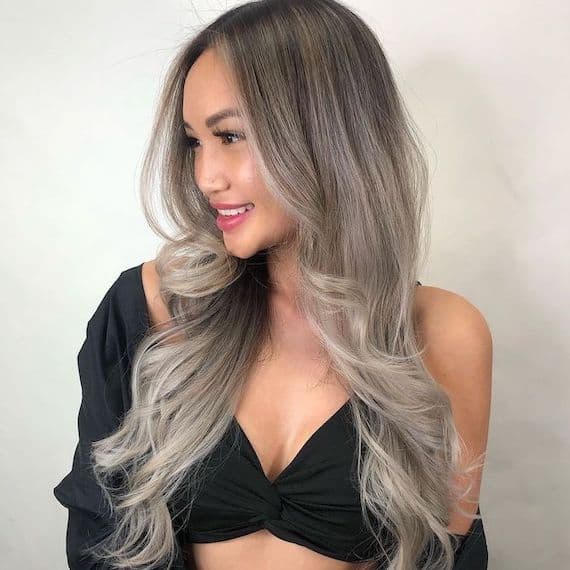
Who actually suits an ash blonde ombre? Thick, wavy hair that reaches the mid-back, with enough density to carry the color shift from mid-length to ends. The side part matters here because it changes how the light hits the ash tone, making the gradient look softer on one side and more defined on the other. The transition starts around the mid-lengths, which keeps the roots low-maintenance while the ends do the talking. Round and oval face shapes get the most out of a side part, since it adds asymmetry without fighting the hair’s natural movement. Ask your colorist for: mid-back length, ash blonde ombre, loose waves, side parting. A texturizing spray gives the waves grip, and a toning appointment every six to eight weeks keeps the ash from drifting yellow.
Mid-Back Dark Brown to Warm Golden Blonde Straight, Middle

A deep brown base melting into warm golden blonde ends looks intentional, especially when the hair is straight, thick, and falls past the mid-back. The technique here is about placement: the transition needs to start low enough that the roots stay rich, but high enough that the blonde has room to glow. Straight hair shows every line of the color work, so the blend has to be smooth, not striped. This is a salon job, not a box-dye situation, because getting that gradient even across thick hair takes a practiced hand. Ask your colorist for: mid-back length, dark brown to warm golden blonde ombre. A flat iron and a shine serum deliver the glossy finish, and a trim every ten to twelve weeks keeps the ends healthy enough to hold the color.
Mid-Back Dark Brown to Deep Red Purple Ombre, Wavy
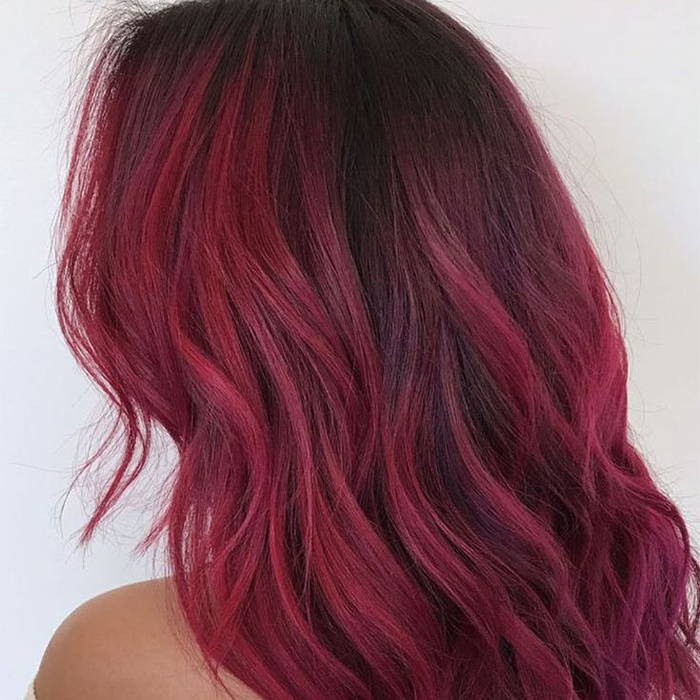
A very dark brown base that fades into a deep red-purple at the mid-back ends is a color placement designed for impact. The loose waves pull the two hues together, making the transition look blended rather than striped. Ask your colorist for: mid-back length, dark brown to deep red purple ombre, loose waves. This is a salon-only job, and the red-purple tone needs a color-depositing shampoo to stay rich between appointments.
On thick, wavy hair the gradient spreads evenly across each wave, which is harder to achieve on fine or straight textures. The middle part keeps the color symmetrical, so both sides fade at the same point. A trim every ten to twelve weeks keeps the ends healthy enough to hold the deep pigment.
Collarbone Wavy Lob Natural Brown Ombre
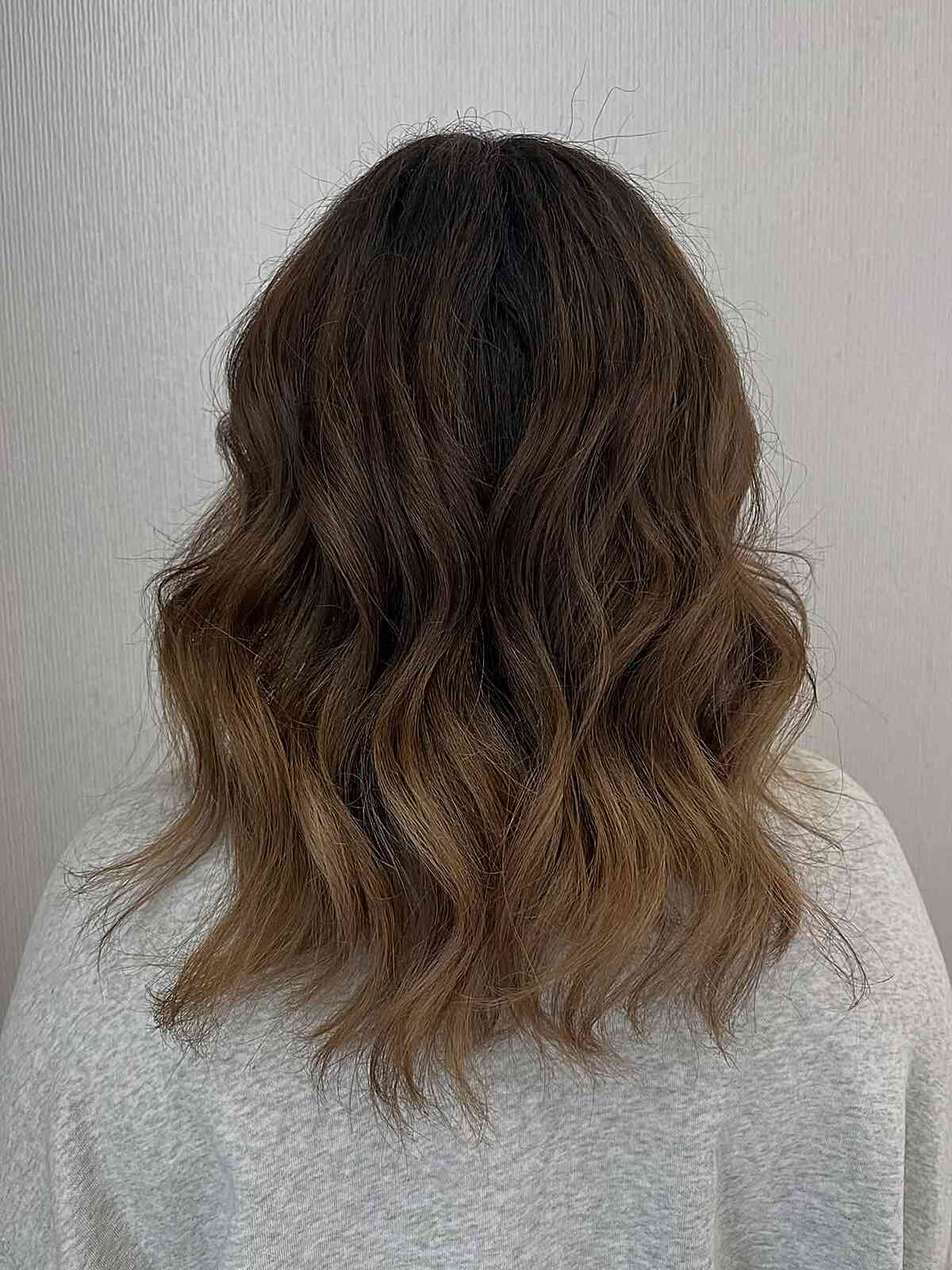
Can a color transition look like it grew that way? This collarbone lob proves yes, with a dark brown root easing into lighter brown ends and nothing about it reads as high-maintenance. The loose waves add movement without hiding the gradient. Ask your colorist for: collarbone wavy lob, natural brown ombre, loose waves.
The lob itself needs a trim every six to eight weeks to keep the collarbone line sharp, but the color grows out softly because the root is already dark. A texture spray at the mid-lengths gives the waves grip without weighing down medium-density hair. No toning appointments needed for this one.
Mid-Back Dark Brown to Bright Blue Ombre Waves
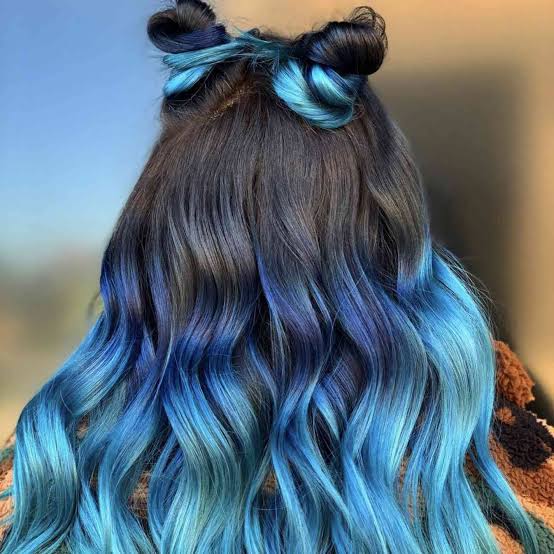
The dark brown root anchors the look so the vibrant ends don’t feel disconnected from the scalp. Ask your colorist for: mid-back length, dark brown to bright blue ombre, loose waves. Thick, wavy hair carries the color density better than fine straight hair, where the blue can look sparse. The middle part keeps the blue equally distributed on both sides. A color-depositing shampoo in a matching blue tone is the difference between three weeks of vibrancy and six.
Collarbone Red to Black Ombre Wavy Lob
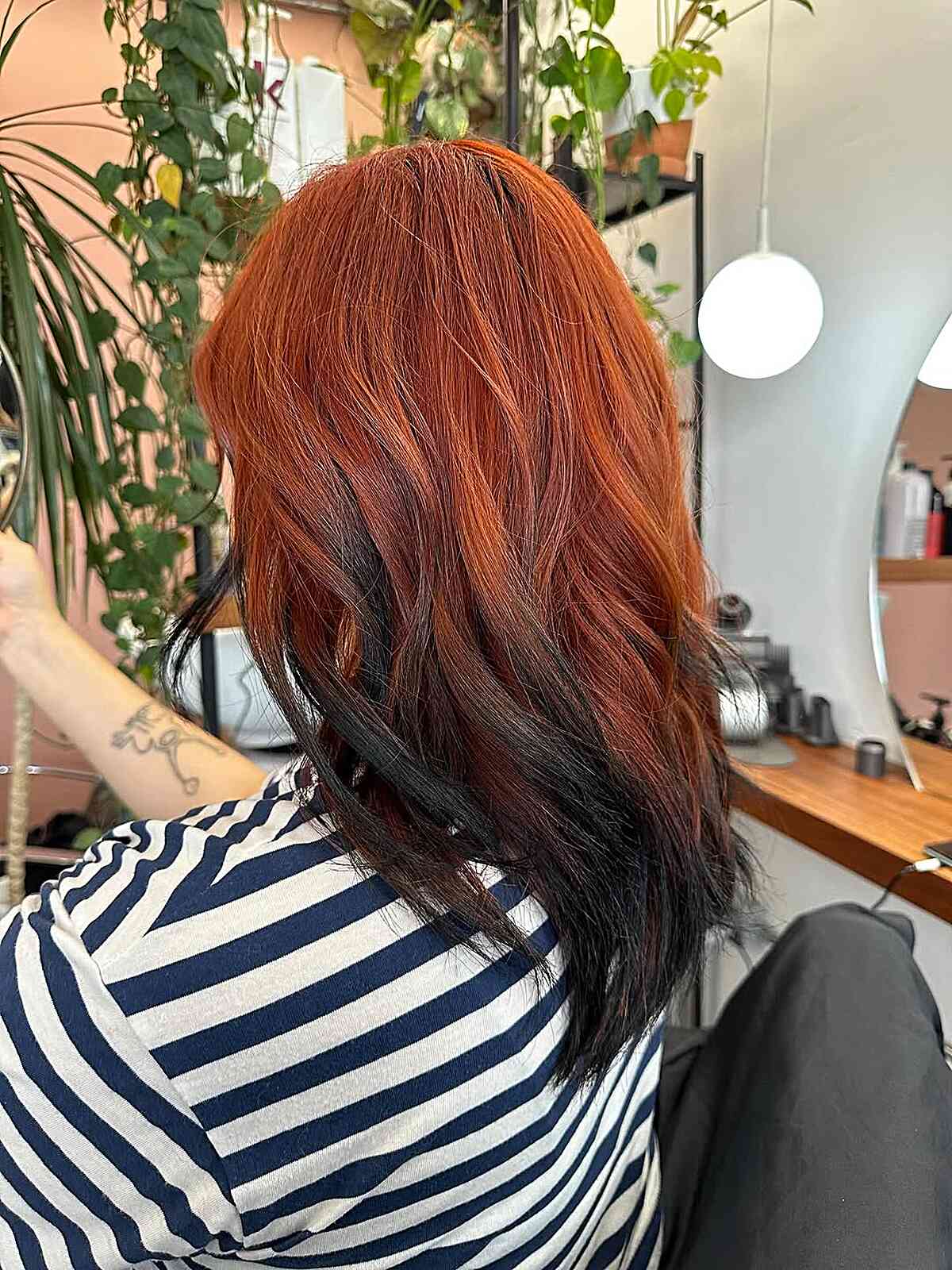
A warm red that drops into black at the ends is a color arc that works best when the seasons shift. The collarbone lob keeps the two tones close enough to feel intentional, and the loose waves stop the dark ends from reading as a flat block. Ask your colorist for: collarbone wavy lob, red to black ombre, loose waves. The red sits at the top and mid-lengths, so a color-safe shampoo for red hair preserves the warmth. The black ends need no upkeep beyond a trim every six to eight weeks. This one lands naturally in autumn but holds its own for a gothic-inspired look any month.
Chin Length Bob Dark Roots to Blonde Ombre, With A Fine Texture
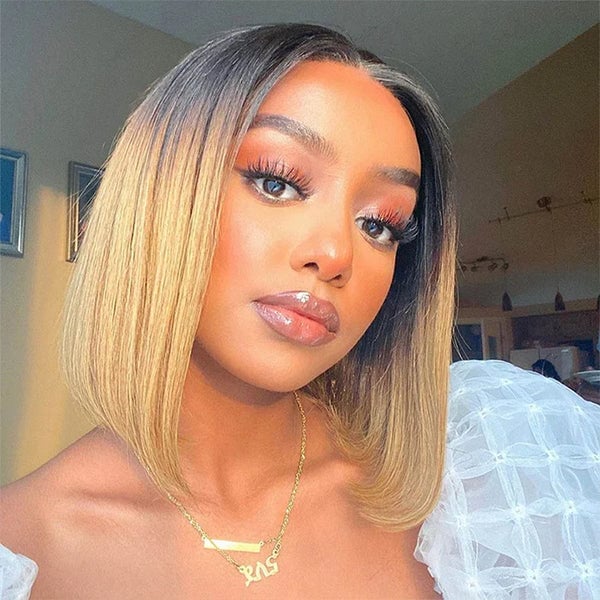
A chin-length bob with blunt bangs and a side part already makes a sharp silhouette. Add dark roots that fade to blonde ends, and the ombre becomes a structural element. Fine, straight hair holds the sleek line without puffing at the roots. Ask your colorist for: chin length bob, blunt bangs, dark roots to blonde ombre, straight fine hair. The blunt bangs suit oval, square, and heart face shapes, and the side part breaks up the symmetry. A flat iron and a smoothing cream keep the finish polished, with the bangs needing a trim every four to six weeks to stay precise.
Final Thoughts
For a low-maintenance ombre, opt for a transition that starts lower down the hair shaft and uses natural shades that are close to your base color. That way, new growth blends in rather than announces itself.
- Deep condition hair weekly to maintain color vibrancy and prevent dryness.
- Use sulfate-free shampoos and color-safe conditioners to prolong the ombre effect.
- Schedule toning appointments every 6-8 weeks to keep blonde or gray tones bright.
- Protect hair from heat styling with a thermal protectant spray.
Find your perfect ombre and embrace the gradient.