Overnight hairstyles do the work while you sleep, so you wake up to something closer to a salon finish than a bedhead disaster. The trick is in the prep: braids, twists, rollers, or buns that set the shape without heat, which is why lived-in texture and soft face-framing layers are having a moment.
This collection of 34 overnight hairstyles covers everything from a quick three-strand braid to intricate cornrows, for fine or thick hair, short or long lengths, and every texture from straight to coily. If your fine waves fall flat by noon, your grow-out line shows too fast, or your curtain bangs refuse to sit right, these styles give you a head start.
Wavy Mid-Back Hair With Curtain Bangs
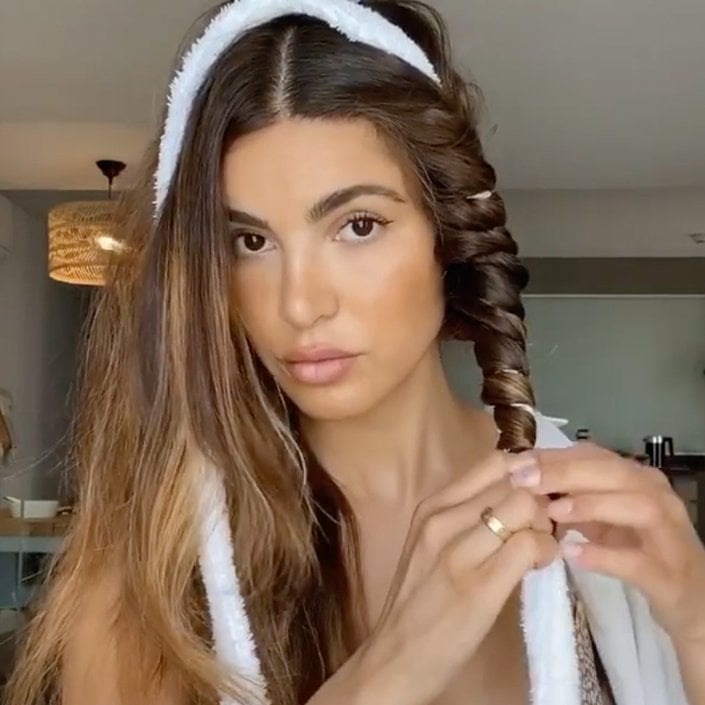
Twisting sections of hair around your finger is the oldest trick in the overnight wave playbook, and here it is doing exactly what it promises. The dark blonde balayage adds dimension to the wavy texture, while the curtain bangs and middle part keep the look current. Ask your stylist for: mid-back wavy hair, curtain bangs, balayage. Thick, wavy hair starting at mid-back length takes this technique best, and the curtain bangs soften round and heart faces. To set the waves, dampen each section slightly, twist it away from your face, and secure it with a small clip. Sleep on it, and you have a full head of waves by morning with zero heat damage.
The layers in this cut need a trim every 8-10 weeks to keep the shape. For the balayage, a toning appointment every 10-12 weeks keeps the dark blonde from pulling brassy. The middle parting and the twisting technique work together to create waves that start at the jaw and continue to the ends, so the hold is strongest where the hair is longest.
Collarbone Waves With Side Part
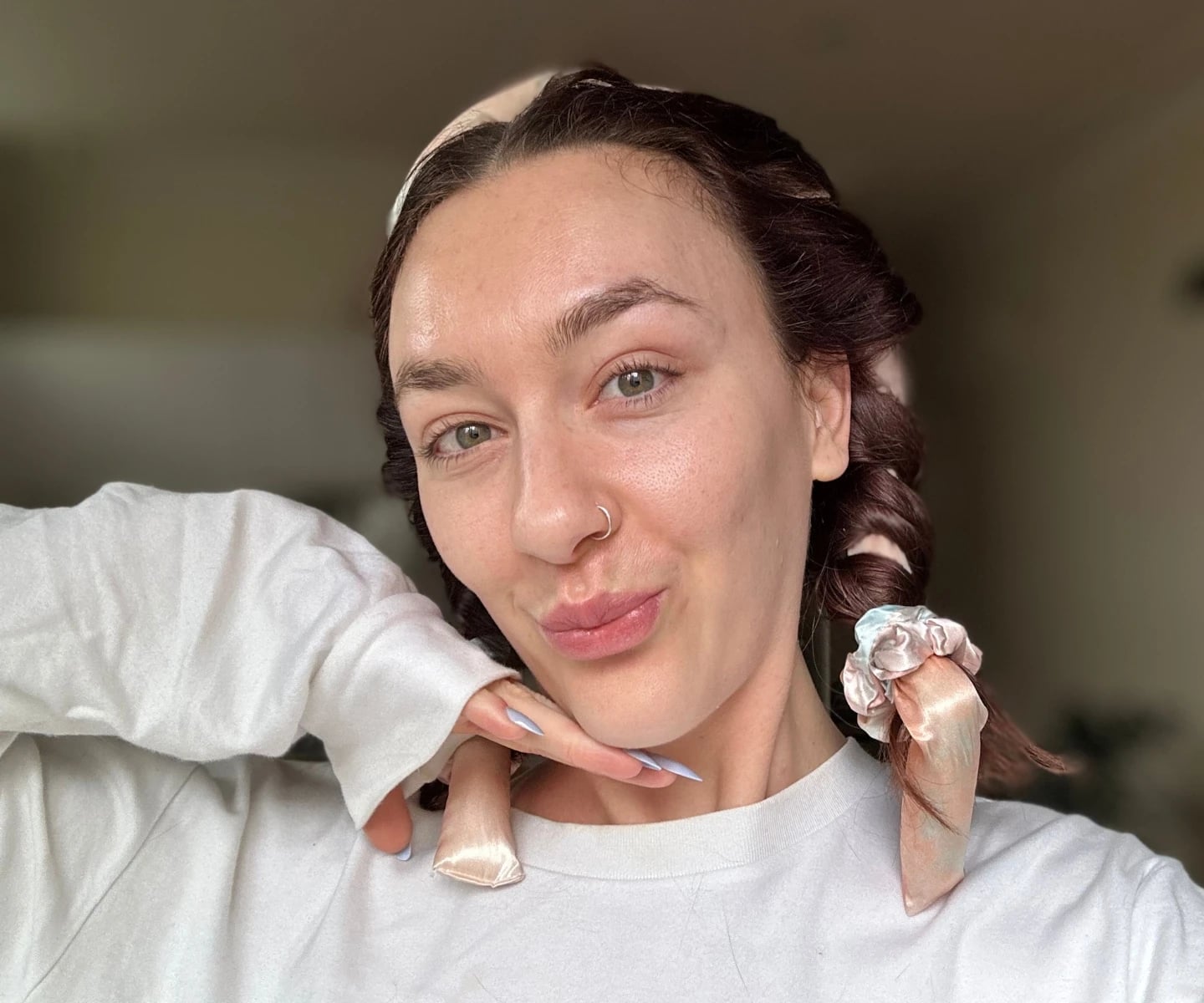
How do you get collarbone-length waves without touching a hot tool? You sleep in velcro rollers and a few small braids, exactly as this image shows. The medium brown color stays neutral, and the side-swept bangs break up the wave pattern so it does not look like a uniform curl set. Ask your stylist for: collarbone waves, side parting, side-swept bangs, prep for curls. Fine, wavy hair at collarbone length takes this method well, and the side-swept bangs complement oval and square faces. Roll damp hair in medium velcro rollers, braid the bottom few inches, and sleep. The hold lasts through the next day if you do not brush it out completely. Trim the collarbone length every 6-8 weeks to prevent the ends from looking sparse.
Thick Mid-Back Three-Strand Braid
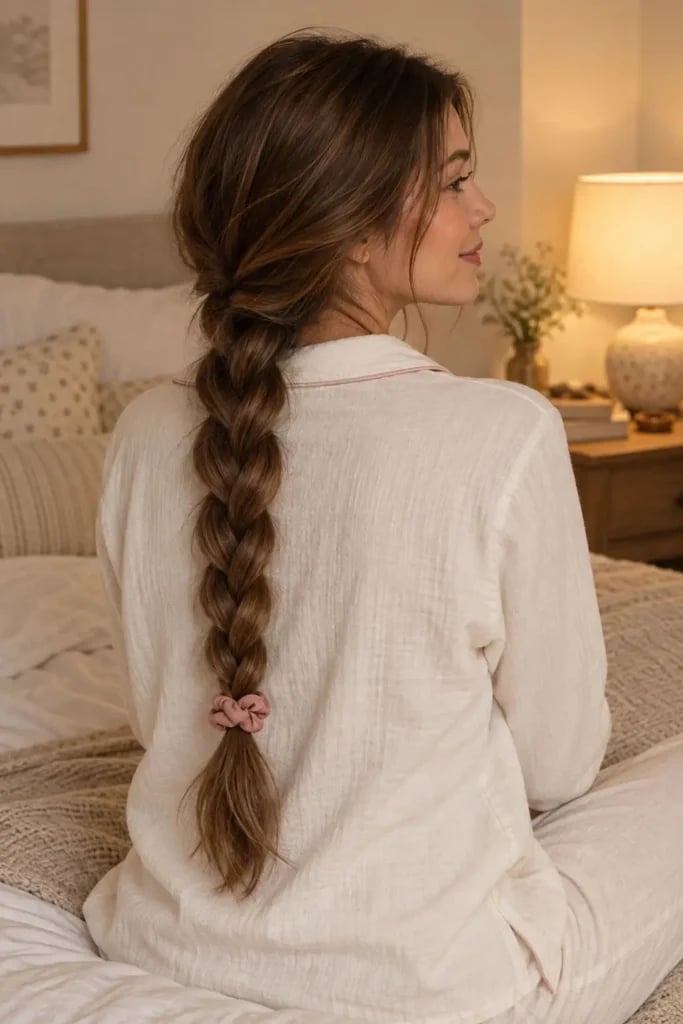
A three-strand braid is the baseline overnight style, but this thick, dense version is something else entirely. The dark brown base with subtle lighter brown highlights keeps the braid from reading as a single flat block of color, and the pink scrunchie adds a casual anchor. Ask your stylist for: thick three-strand braid, mid-back. This braid is not the quick twist you do before bed. It requires a texturizing spray for grip and a steady hand to section the hair evenly. Thick, wavy hair of mid-back length suits this braid best; finer hair would need extensions to achieve the same volume. The braid holds for a full day of movement, and when you take it out, the waves last another day.
Contrast this with a salon-created braid that uses additional hair for thickness, which takes about 45 minutes and costs more than a DIY version. The DIY alternative uses a texturizing spray and a slightly looser tension to mimic the density. The subtle highlights here are key, without them, a thick braid can look too heavy and one-dimensional. A toning appointment every 8-10 weeks keeps the highlights from turning brassy against the dark brown base.
Blonde Collarbone Waves With Curtain Bangs
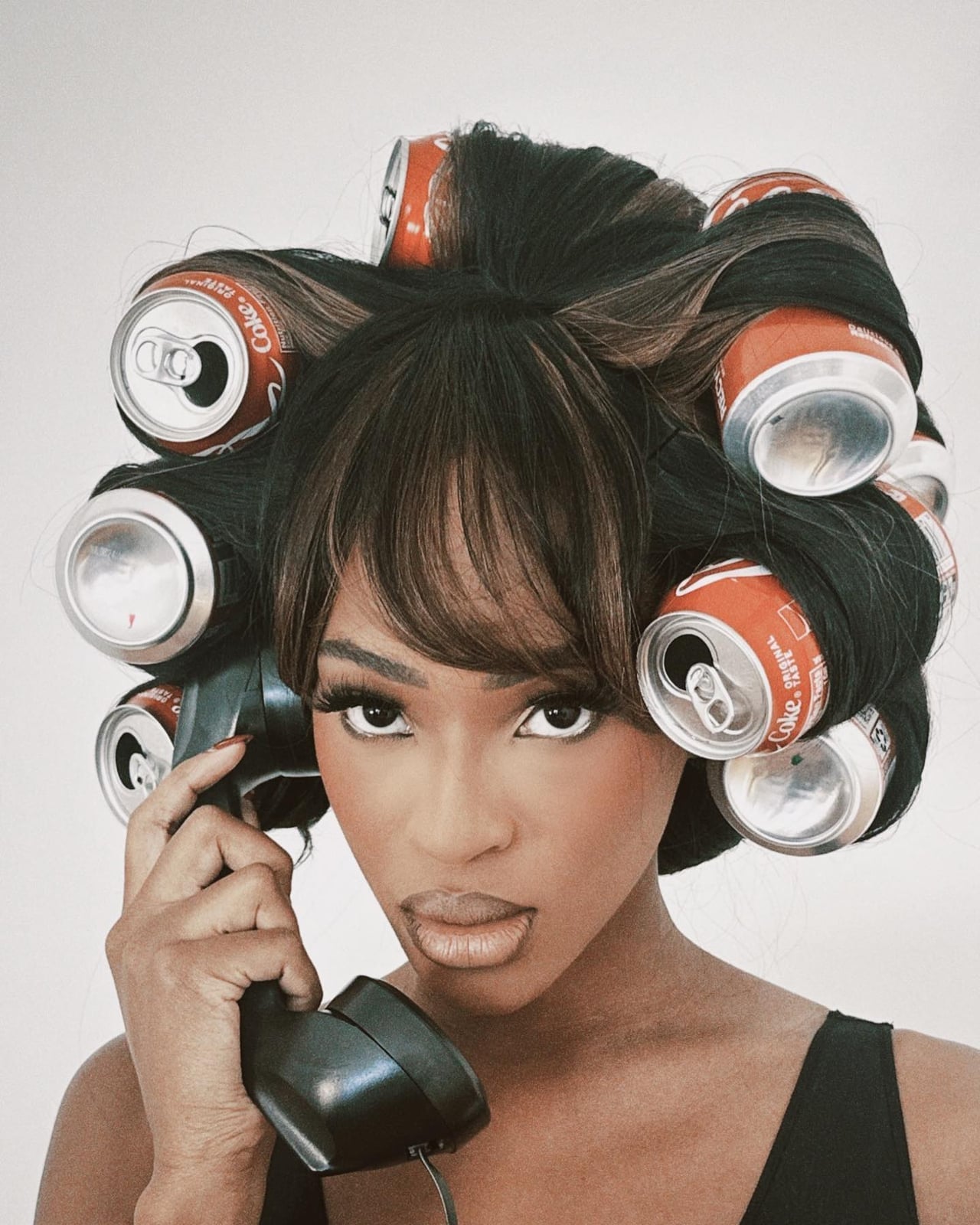
The large, voluminous waves here are the result of sleeping in large rollers, and the blonde color with subtle highlights gives them a glossy, dimensional effect. The curtain bangs and middle part are the defining details. They frame the face without cutting off the wave pattern at the jaw. Ask your stylist for: collarbone waves, curtain bangs, large roller set. Thick, wavy hair at collarbone length takes this set best, and the curtain bangs soften round and heart faces. If your hair is fine, use smaller rollers and a volumizing mousse at the roots. The hold is strong for a full day, and the waves relax into soft bends on day two. Trim the collarbone length every 6-8 weeks to keep the ends from looking ragged against the blonde.
Short Wavy Pin Curls
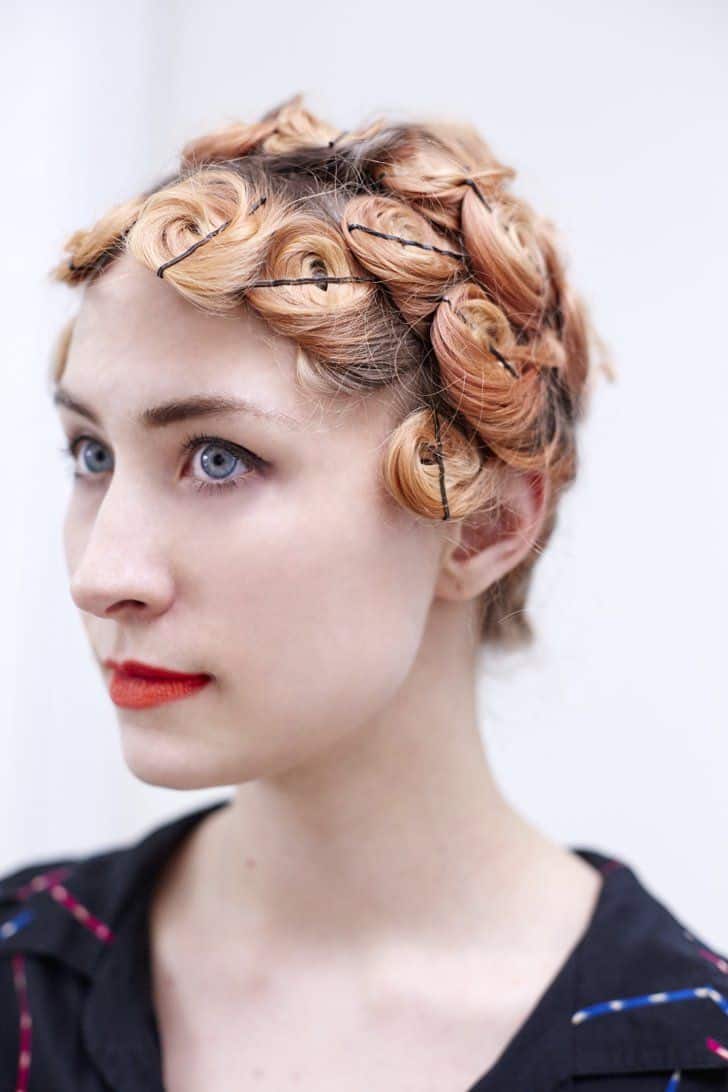
Pin curls on short, ear-length hair are a vintage technique that works best in warm weather, when you want the hair off your neck and the set locks in faster. The light brown color with blonde highlights adds warmth, and the side parting gives the pin curls a deliberate, uneven pattern rather than a uniform grid. Ask your stylist for: short hair, small pin curls, side parting. Short hair, approximately ear length, takes pin curls well, and the technique adds texture to fine hair that otherwise falls flat. Secure each curl tightly with a bobby pin, and let it dry fully before removing them. The hold lasts through a full evening event, and the waves soften into a tousled finish by the next morning. The side parting and the pin curls work together to create volume at the crown, which is the main reason this style suits special occasions.
Fine Wavy Braided Bun
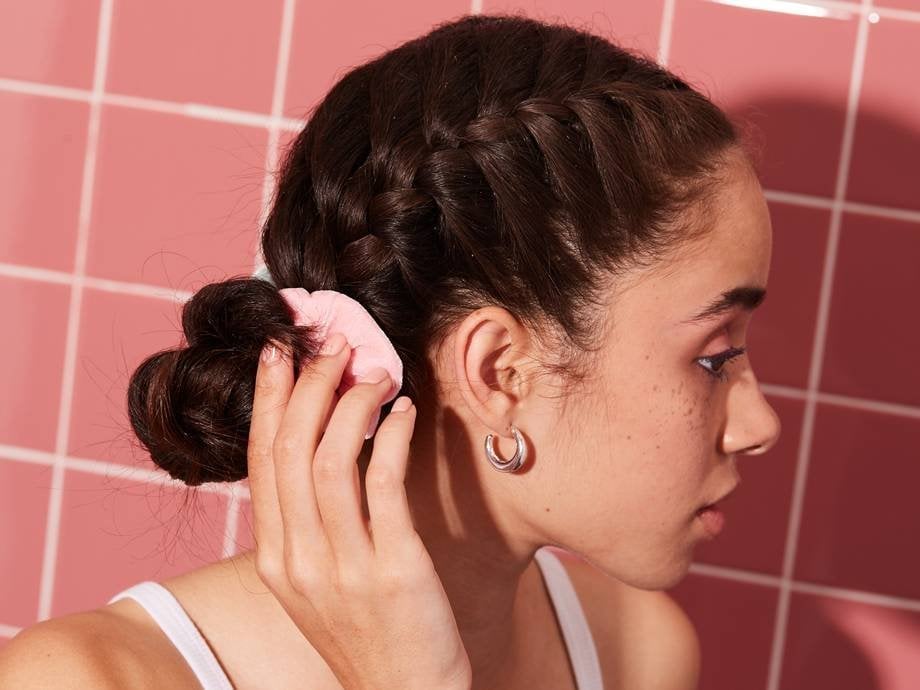
Fine, wavy hair often deflates in a bun, but braiding it first gives the style some much-needed substance. The braided texture adds visual weight, and the side parting keeps the look from feeling too severe. Ask your stylist for: collarbone braided bun, side parting.
Braid loosely before twisting into a bun for a softer finish that holds better on fine strands. The collarbone length makes this a practical everyday option, though the braid can loosen over the course of the day. A trim every six to eight weeks keeps the ends from looking scrappy, and the subtle highlights add depth that helps the braid read clearly.
Shoulder Length Blowout With Face Framing
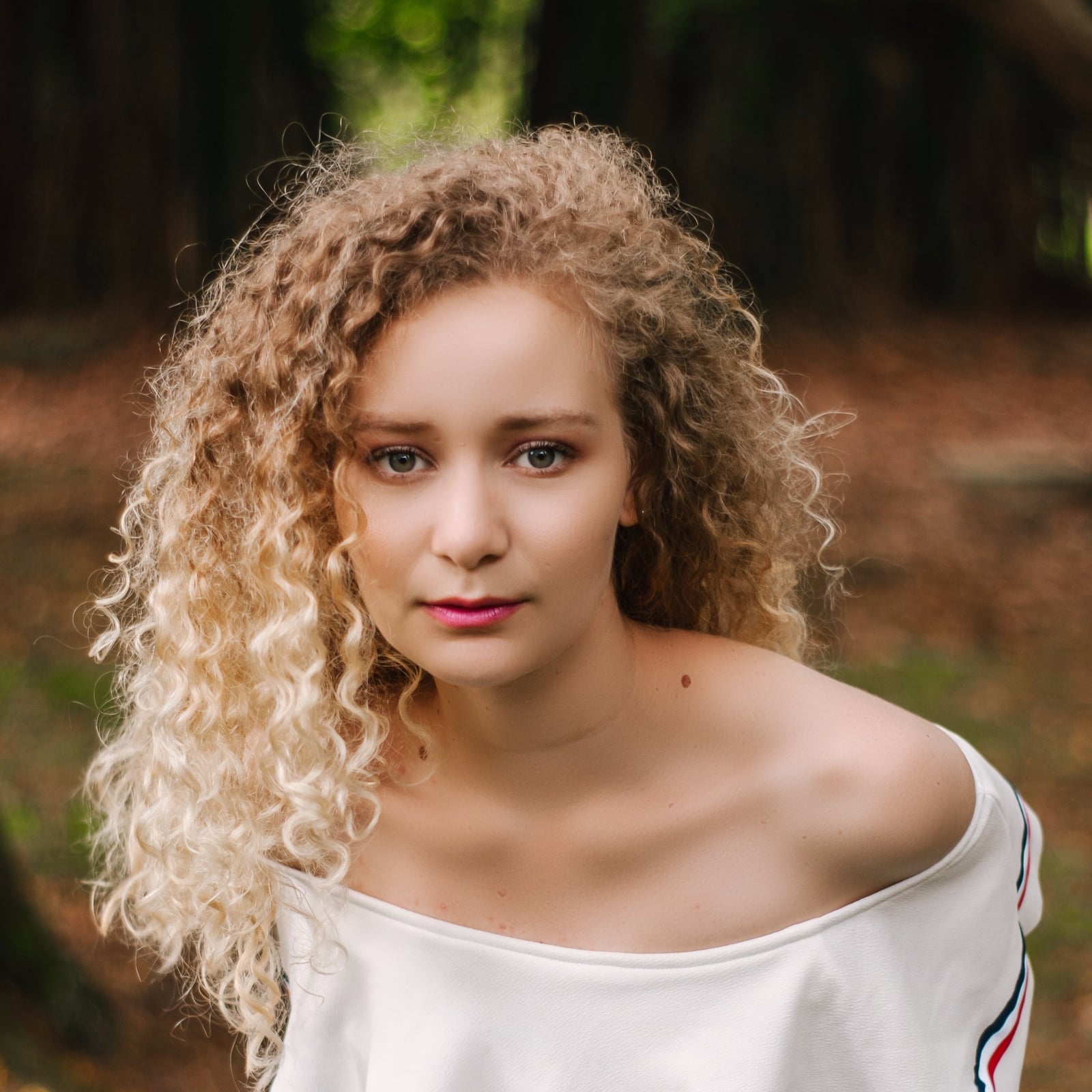
The shoulder-length blowout relies on face-framing layers cut to hit just below the chin, which gives the style its lift. A middle part lets the layers fall forward, and the blonde highlights around the face draw attention to the movement. Ask your stylist for: shoulder length layered blowout, face-framing highlights. Thick, wavy hair takes the round brush well during blow-drying, creating volume at the roots that lasts into the evening. The brown base with lighter pieces at the front softens the overall effect without a full color commitment.
Mid-Back Wavy Ponytail With Scrunchie
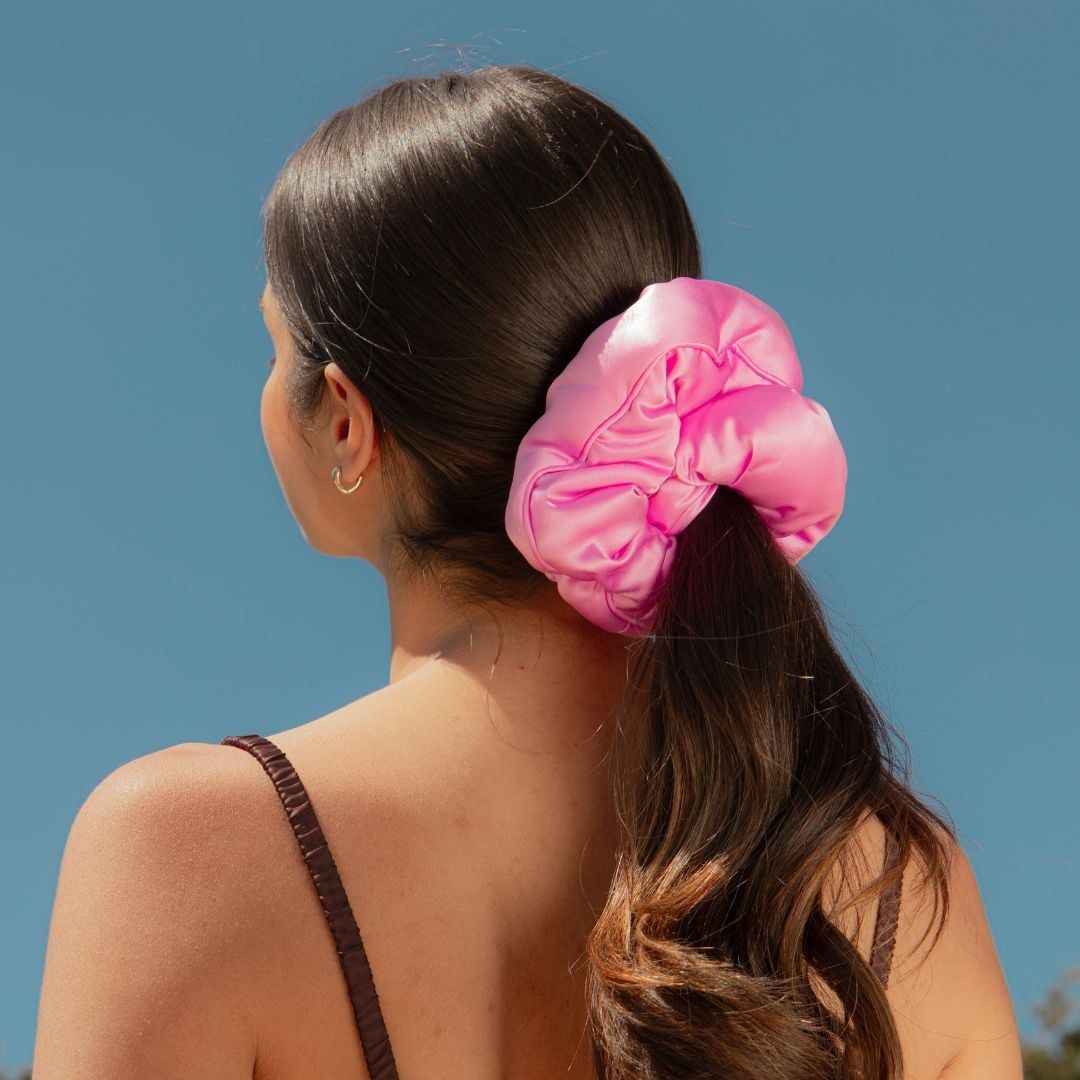
This is a DIY style through and through: gather the hair high, secure it, and let the scrunchie be the focal point. A section of hair wrapped around the base hides the elastic for a more polished finish, but the scrunchie is the real star here. It suits all face shapes, and a trim every eight to ten weeks keeps the ends healthy.
Blonde Wavy Low Bun
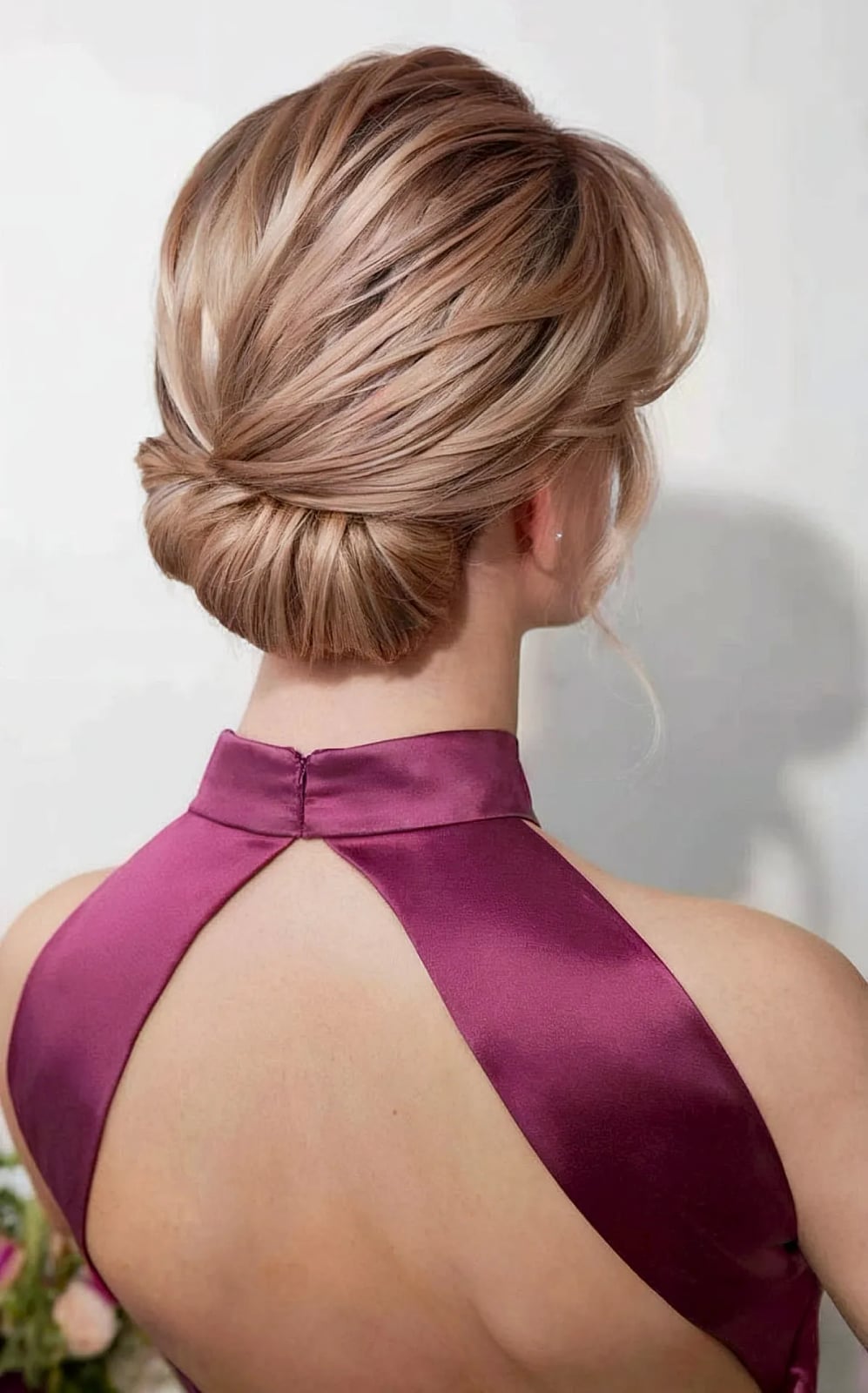
Set against a simple ponytail, the blonde wavy low bun is the dressier cousin that requires a salon appointment. The soft waves are smoothed into a low bun at the nape, with subtle highlights giving the style dimension. Ask your colorist for: blonde wavy hair, low bun at nape. A texturizing spray before styling improves hold, which matters for any updo. This is a salon-crafted look, not a five-minute morning fix, and it suits long, wavy hair of any density. The low placement works for all face shapes, and the finished result looks polished without being stiff.
Black Braided Updo With Baby Hairs
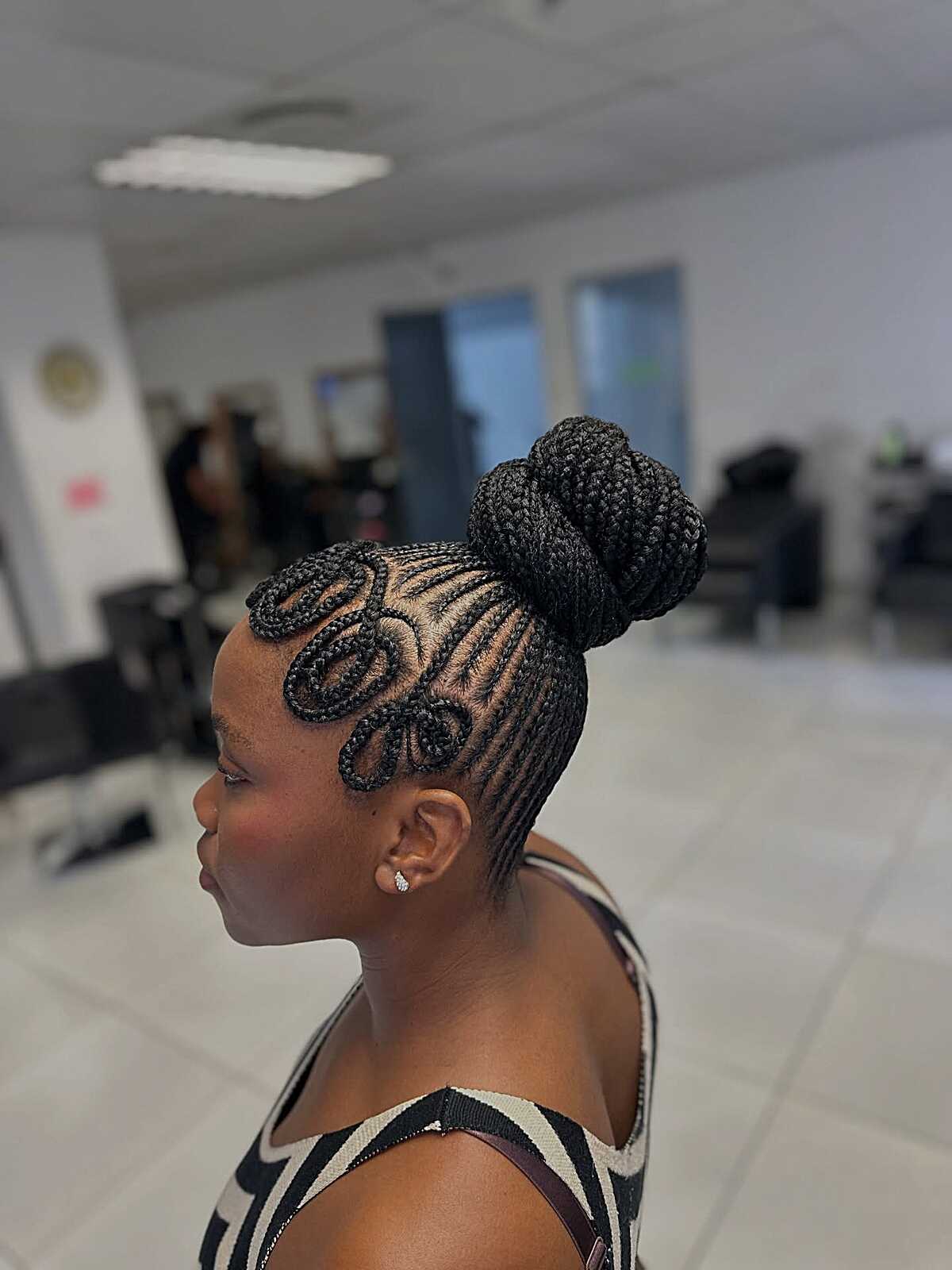
The intricate braided updo builds upward, with a large braided bun at the crown that gives the style real height. Decorative braids wrap around the bun, and the defined baby hairs along the hairline soften the whole design. Ask your stylist for: intricate black braided updo, baby hairs. This is a professional braiding job, not a DIY project, and it suits thick, coily hair best. Moistening the baby hairs with a gel or pomade keeps them in place for the duration of the event.
Dark Brown Wavy Braid and Updo
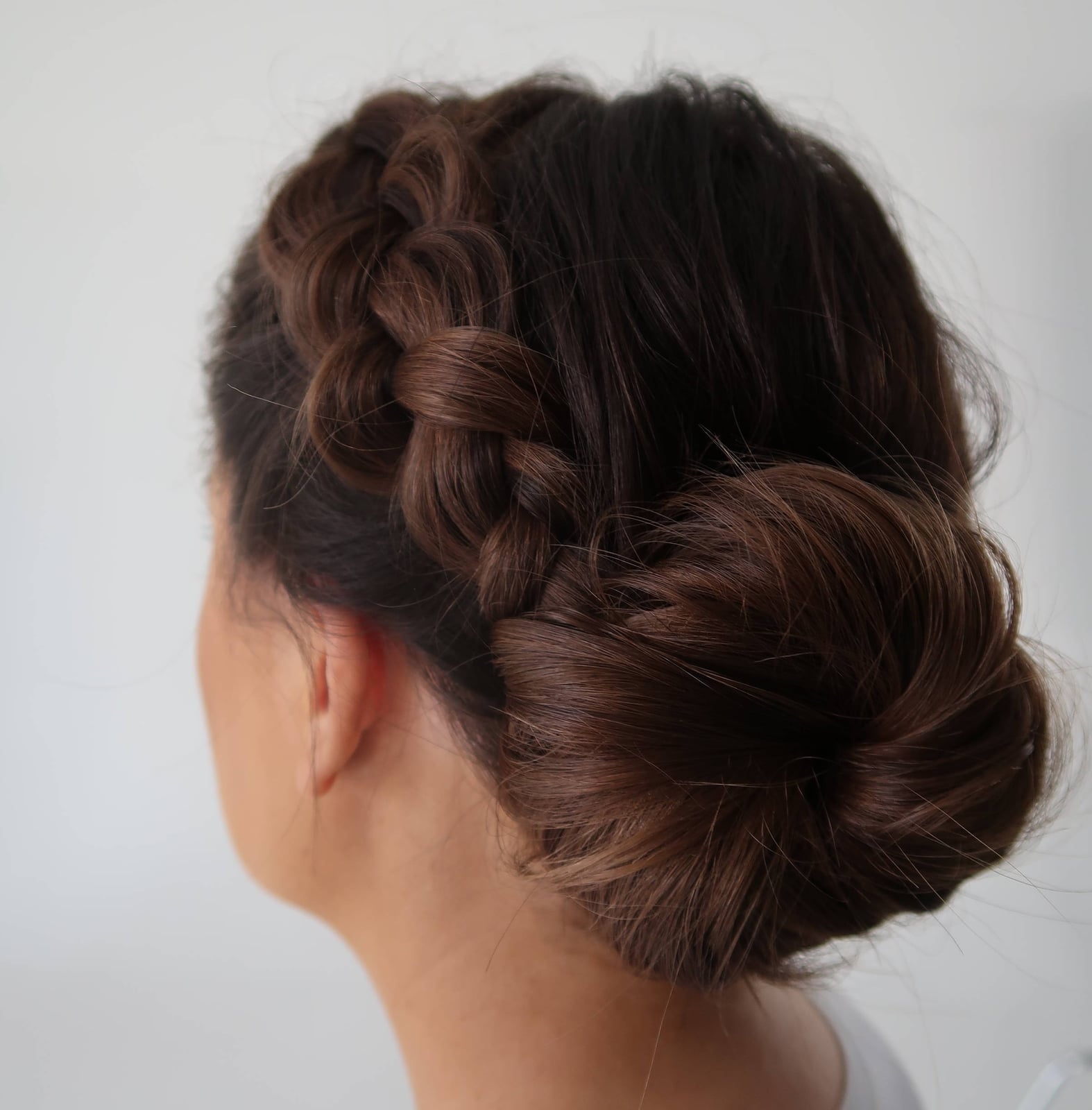
This dark brown wavy braid and updo starts with a large, chunky braid that gets twisted into a low bun, a construction that reads clearly from the back. It’s a style built for thick, wavy hair that reaches mid-back, where the braid’s weight keeps the bun secure without a dozen pins doing most of the work. Updos of this kind suit all face shapes, since the bun sits low and the braid adds visual interest without pulling the face into a harsh line.
Ask your stylist for: mid-back chunky braid into low bun. The braid needs to be firm enough to hold its shape, so expect a salon visit for this look. Once it’s in, the style holds through a full workday or an evening event, and the wavy texture gives it a softer finish than a slicked-back version. Keep the mid-back length in check with a trim every eight to ten weeks, and the braid will stay clean and avoid fraying at the ends.
Black Coily Cornrows Into Low Bun
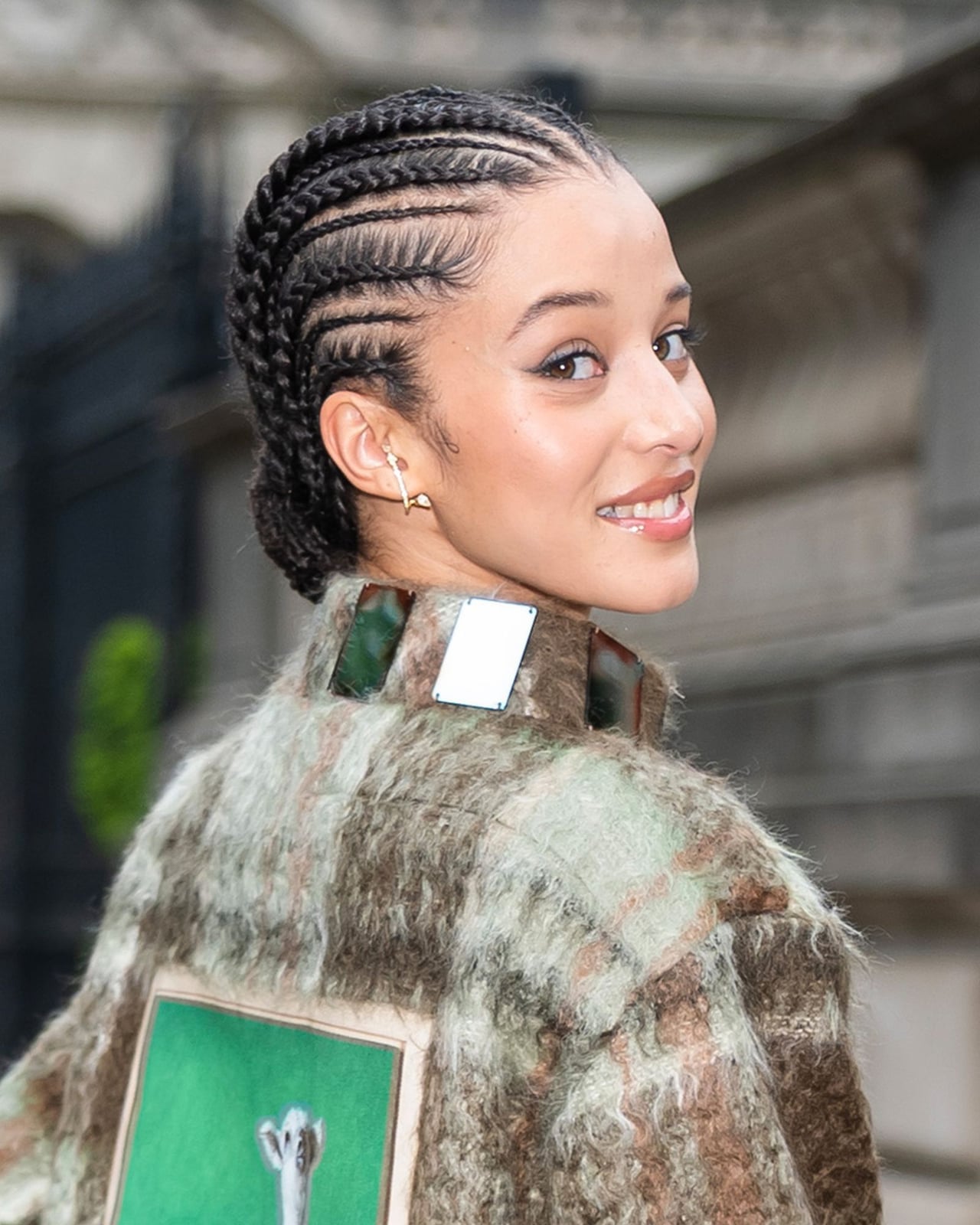
This is a style that looks neat for days, but only if you treat it right. The tight cornrows are gathered into a low bun, with a distinct middle parting that keeps the lines sharp from the back. It works best on shoulder-length coily, dense hair, where the cornrows lie flat and the bun has enough substance to look intentional rather than sparse. Low buns like this suit all face shapes, since the height stays at the back and the front remains clean.
Ask your stylist for: shoulder length cornrows into low bun. The upkeep is where the reality sets in: coily hair needs moisture to keep the cornrows from frizzing, so a moisturizing product becomes your daily companion. The edges also need attention, a light trim as they grow out keeps the hairline tidy. The one real drawback is the time it takes to install, a salon session that eats an afternoon, but the result holds for a week or more with minimal daily effort.
Blonde Wavy Twisted Low Bun, Updo
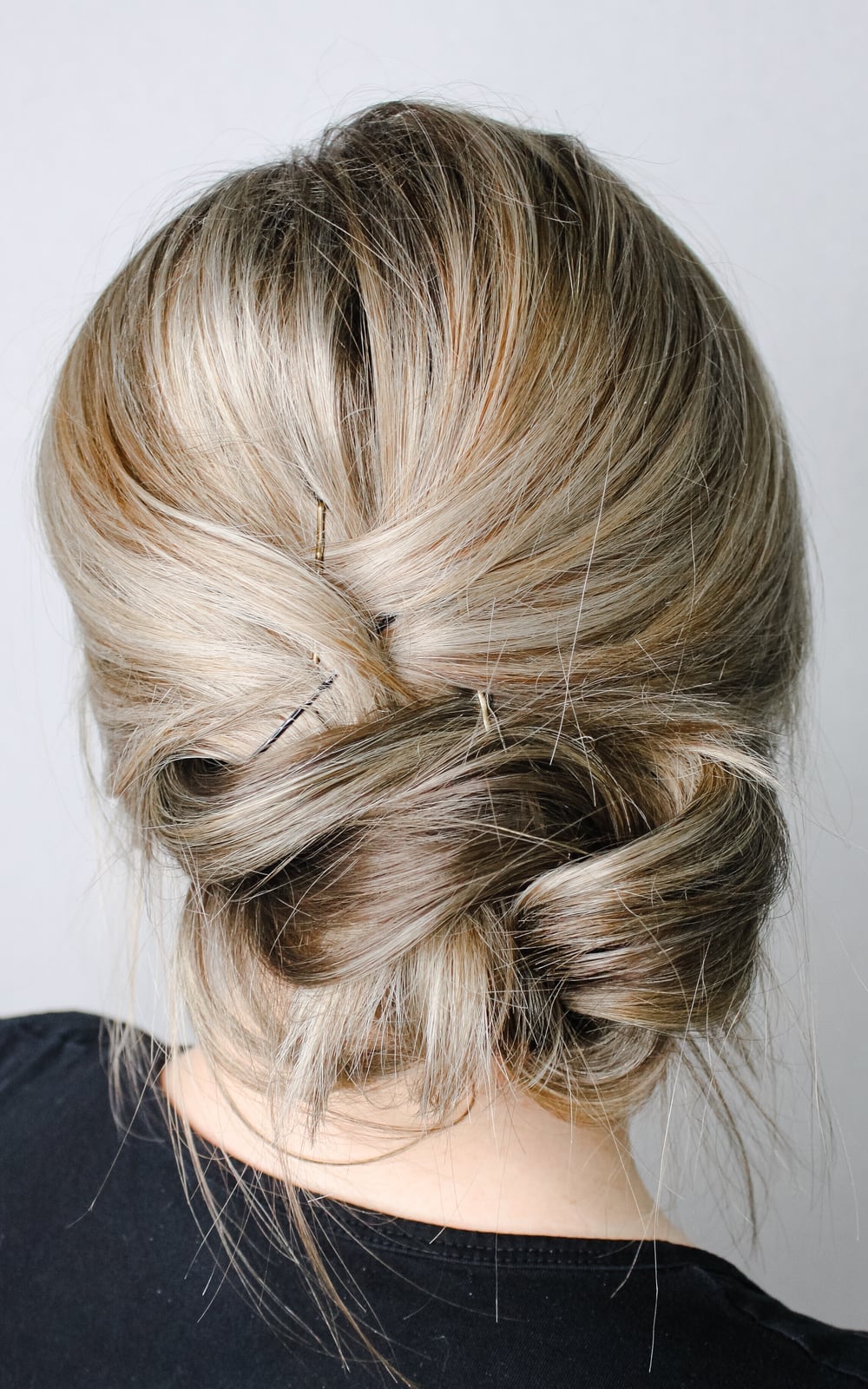
The twisted sections in this blonde low bun are what make it work: each piece is pinned separately, so the bun reads as a series of smooth waves rather than a single lump. The wavy, thick texture gives the updo volume that holds its shape from a late afternoon event through dinner, and the low placement keeps it from feeling like you’re trying too hard. It’s a style that suits any hair past the shoulders, and the low bun works with all face shapes since nothing is pulled tight at the temples.
Ask your stylist for: thick wavy blonde hair, twisted low bun. It’s a salon-leaning style, the kind you’d ask for before a wedding or a formal dinner, where you want the hair to stay put without constant checking. The blonde needs a toner visit every six to eight weeks to keep the shade from drifting brassy, and a texturizing spray applied before twisting gives the wavy pieces the grip they need to stay pinned. The result is elegant, but it’s not a five-minute morning style.
Platinum Blonde Dutch Braids To Pigtails
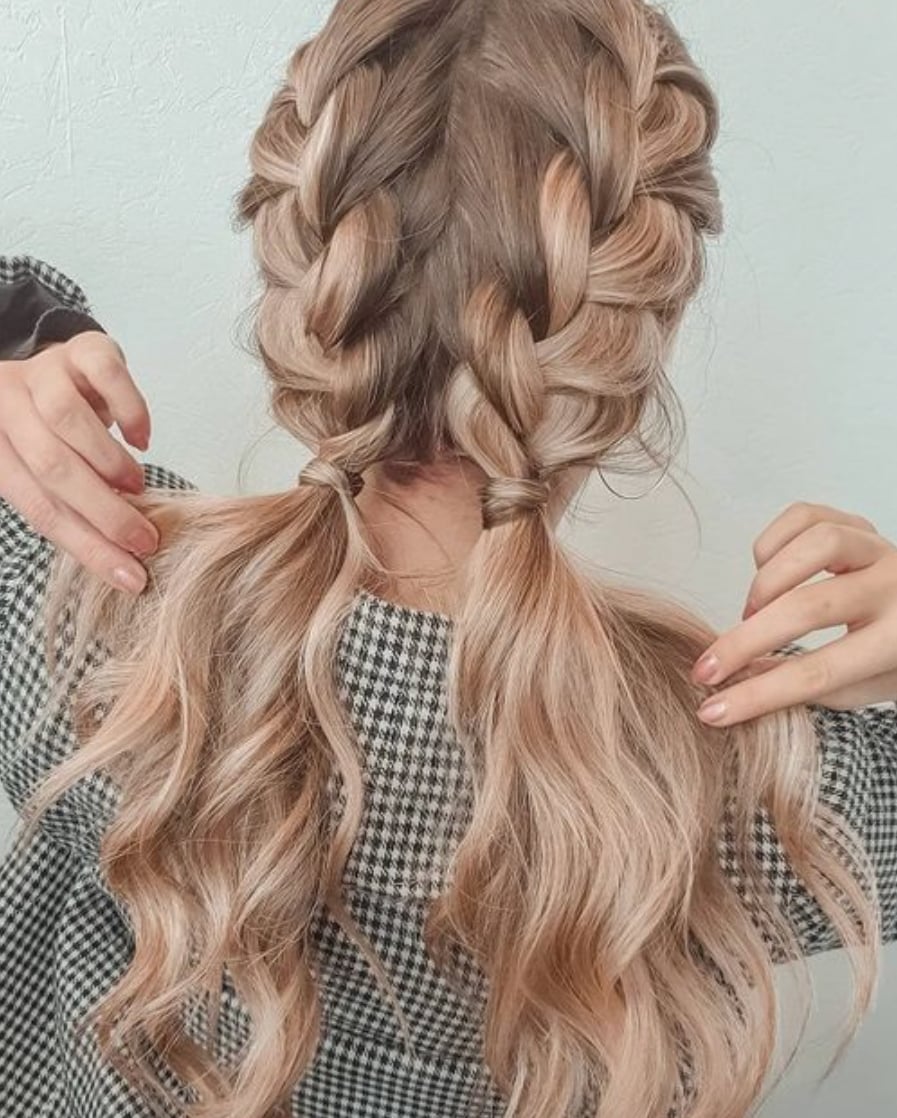
Two Dutch braids that end in low pigtails avoid a juvenile look through precise styling: the braids run cleanly down the nape, where they tie off into loose pigtails, leaving the ends to fall in soft waves. The platinum blonde with rose gold undertones adds warmth that softens the style, and the curtain bangs frame the face, which is a good match for round or heart-shaped faces. This look suits fine, wavy hair of mid-back length, where the braids do not pull too tight and the pigtails have enough weight to hang properly.
Ask your stylist for: mid-back platinum blonde hair, Dutch braids to pigtails, curtain bangs. This is a salon-leaning style, since the braiding needs to be even and the color requires a bleach session plus toner to get that rose gold undertone. If you are doing it yourself, practice the Dutch braid on a friend first, because the tension is tricky to get right on your own head. The braids hold for a full day of activity, and when you take them out, you get loose waves that last another day.
Black Loose Box Braids
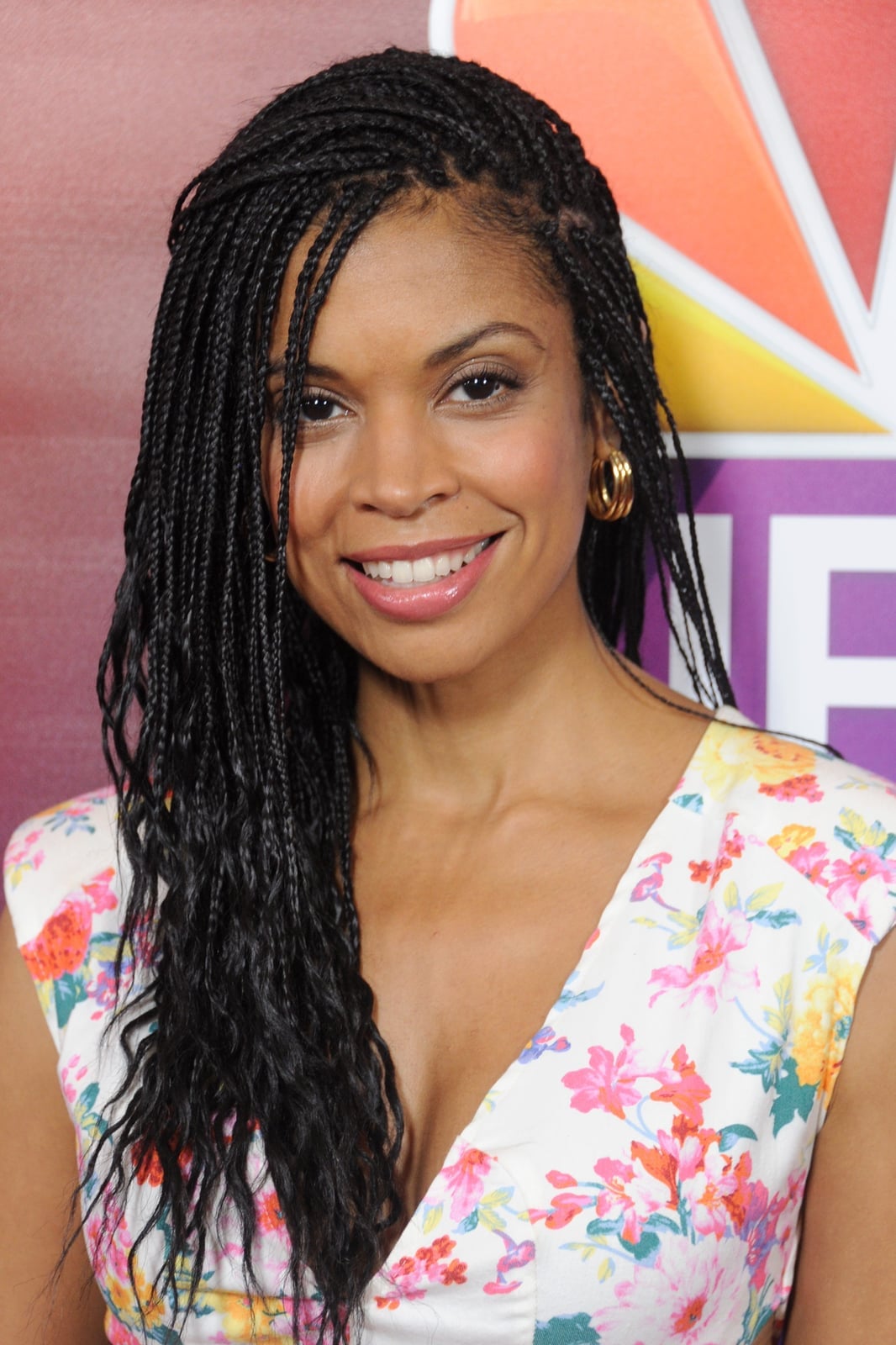
Loose box braids are a technical project, and the result depends on how the sections are parted and how much tension is used at the root. Here, the braids are small and loose, falling to mid-back length, and some are left to frame the face, which softens the overall line. The black color is uniform, which lets the braid texture show without distraction. This style suits hair that is at least mid-back length, since the braids need enough weight to hang straight, and it works with all face shapes because the parting can be adjusted to flatter.
Ask your stylist for: mid-back loose box braids. The technique involves sectioning the hair into small squares, then braiding each one with a firm but not tight grip, so the braid moves naturally. It is a salon job that takes several hours, but the payoff is a style that lasts for weeks with minimal daily upkeep. A light oil applied to the braids keeps them from drying out, and trimming the ends every so often prevents them from fraying. The only real downside is the weight, which can pull on the scalp if the braids are too heavy.
Black Braids With Beads
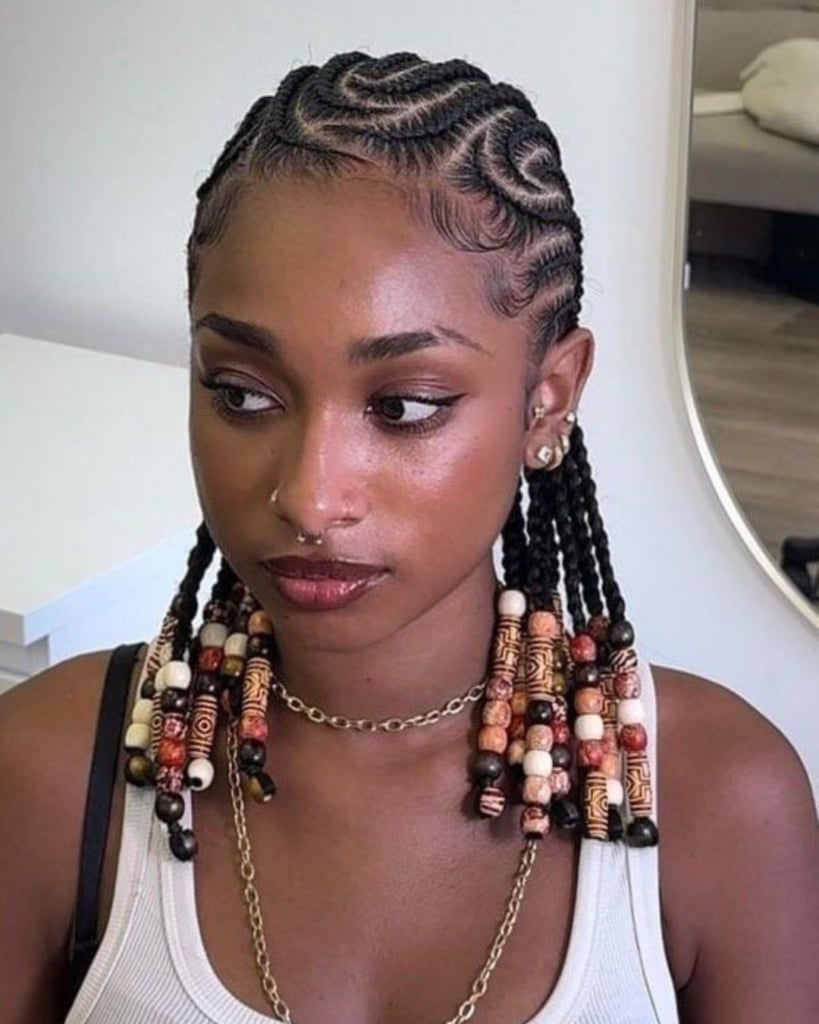
Compared to plain cornrows, braids with beads add a tactile, visual layer that makes the whole style feel more finished. The black coily texture here is braided close to the scalp at the roots, then loosens into mid-back length braids that carry the beads, so the ornament moves with you. The beads reflect light and add weight, which changes how the braids swing. This works for any face shape, since the vertical lines of the braids balance the face without adding width. Ask your stylist for mid-back black braids with beads. Make sure the beads are secured properly, because loose ones tug at the roots and pull the braid out of shape.
For black braided hair with beads, the salon time is the real investment, but the style holds for weeks with minimal daily effort. The beads demand a little care: avoid sleeping on them without a silk scarf, and skip heavy products that build up on the metal or wood. It is not a style you can whip up at home in five minutes, but it gives you a low-maintenance look that does not need a morning routine.
Ash Blonde Twisted Low Bun
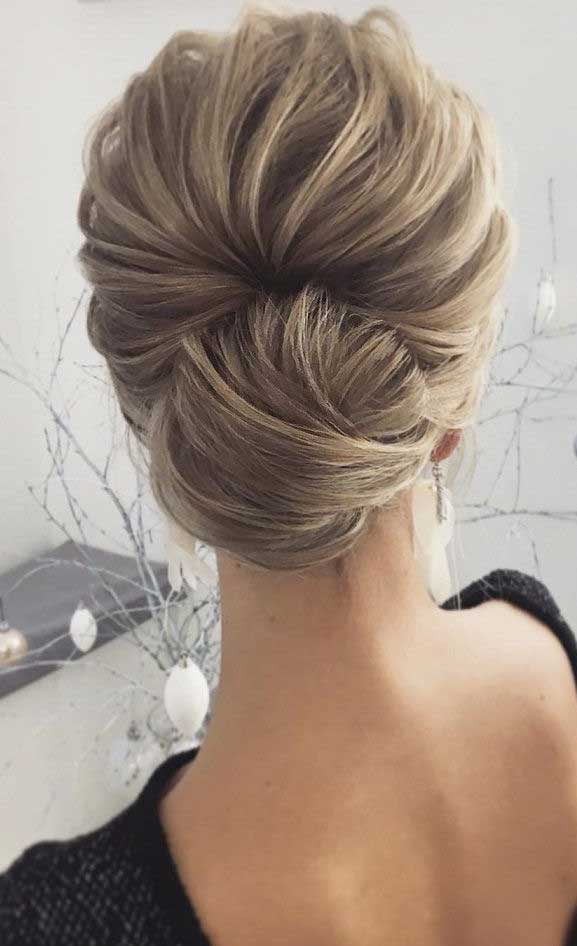
The twisted low bun builds its volume from the inside out, with ash blonde sections twisted and pinned at the nape to create a smooth, rounded silhouette that does not flatten against the neck. This style genuinely flatters medium density hair, because the twisting adds body without needing the bulk of very thick strands. It suits shoulder length hair or longer; anything shorter will not have enough material to twist into a full bun. Fine hair can work too, but you will want a teasing brush to lift the roots before twisting, otherwise the bun turns out small and tight. Ask your colorist for ash blonde wavy hair, twisted low bun. The ash blonde tone with subtle highlights keeps the bun from looking flat, and the wavy texture gives the twists a soft, natural edge. A trim every six to eight weeks keeps the ends clean so the twists lie neatly. This is an evening or formal choice, but it also holds up for a long day since the bun is pinned securely and the twists do not loosen quickly.
Mid-Back Straight Blowout With Highlights
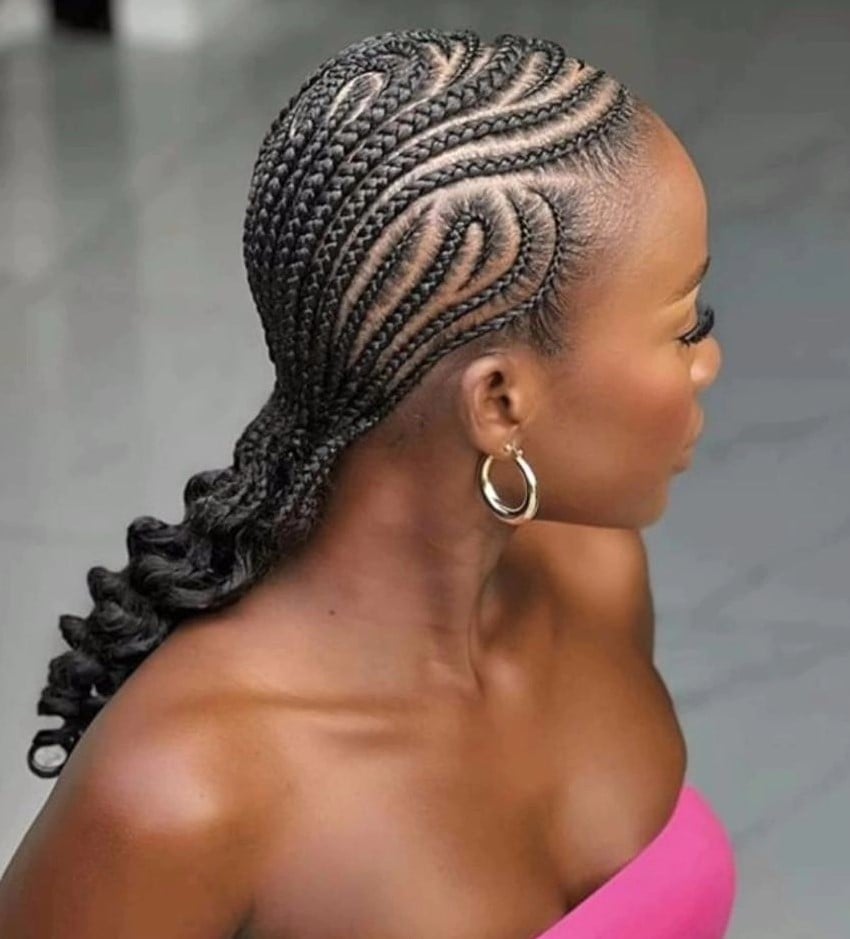
A mid-back straight blowout is a classic for a reason: it delivers a glossy, polished finish that looks professional and put-together. The straight, thick texture here falls smoothly from a middle parting, and the dark brown base with subtle blonde highlights adds dimension so the hair does not look like a single flat sheet. The glossy finish is the standout, but it is also the part that requires the most upkeep. To maintain that shine, use a boar bristle brush while blow drying on a low heat setting, and finish with a light serum on the ends. The highlights grow out gently, so you can stretch toning appointments to every eight to ten weeks, but the mid-back length needs a trim on the same schedule to keep the ends from splitting and the blowout from looking ragged. This style does not survive a night of sleep. You will need to re-blow dry or at least touch up with a round brush in the morning, which adds about fifteen minutes to your routine. It is a salon-finished look that requires daily effort to maintain, so it suits someone who does not mind the styling time.
Dark Brown Mohawk Braid
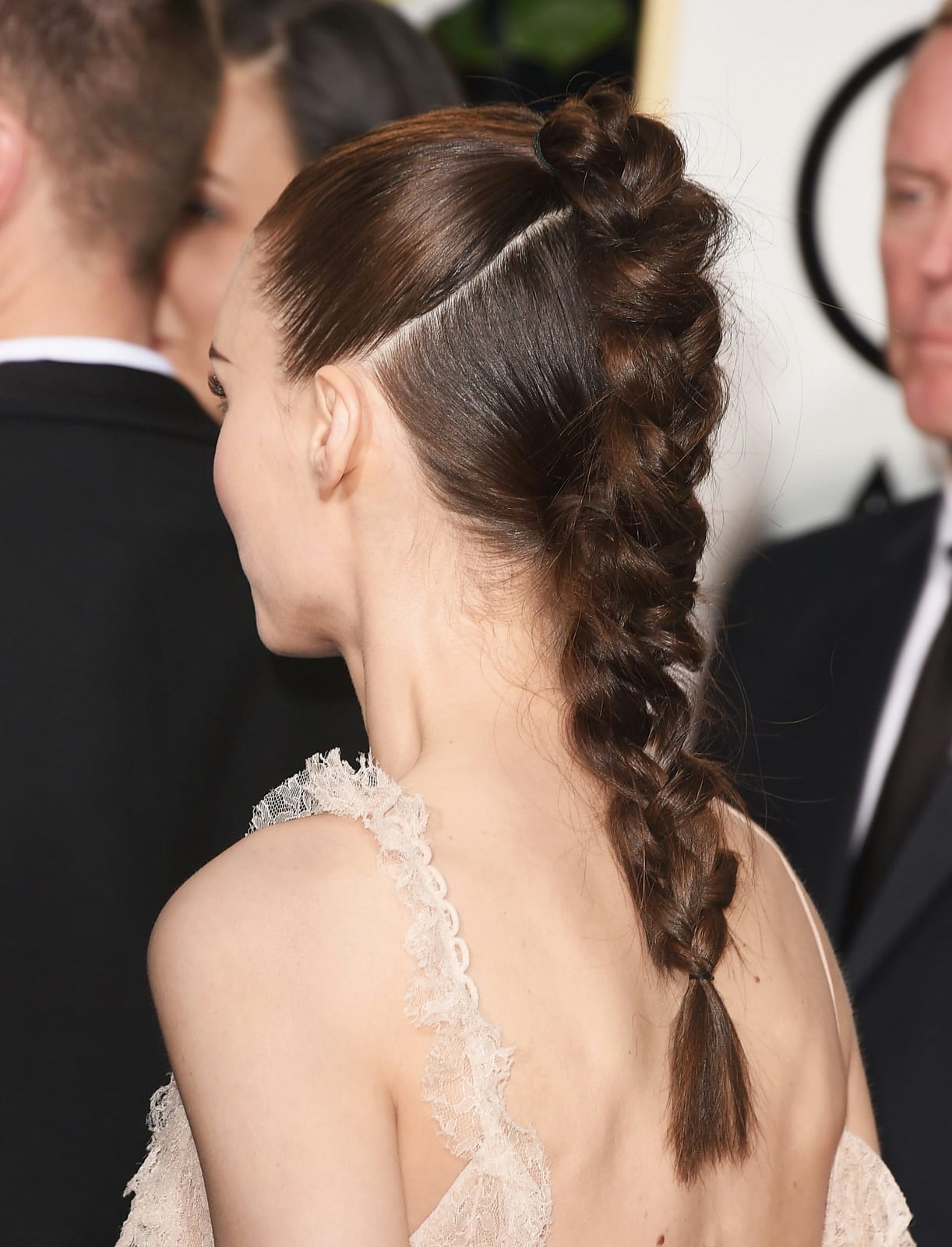
The mohawk braid is built by sectioning the hair from the forehead to the nape, then braiding that central strip tightly against the scalp while the sides are either braided back or left to fall. Here, the dark brown, thick, straight texture gives the braid a clean, defined line, and the clean side parting near the hairline keeps the front from looking messy. This style suits all face shapes because the vertical braid elongates the face and the side parting adds asymmetry. Ask your stylist for dark brown thick hair, mohawk braid, side parting. A strong hold gel applied before braiding keeps the strands sleek and prevents flyaways, and the braid itself holds its shape for several days if you sleep on a silk pillowcase. The thick texture is ideal, since fine hair may not have enough weight to keep the braid from looking flat. This is an edgy, festival-ready look that does not need daily styling, but it does require a salon visit to get the braid tight and even.
Dark Brown Tribal Braids With Baby Hairs
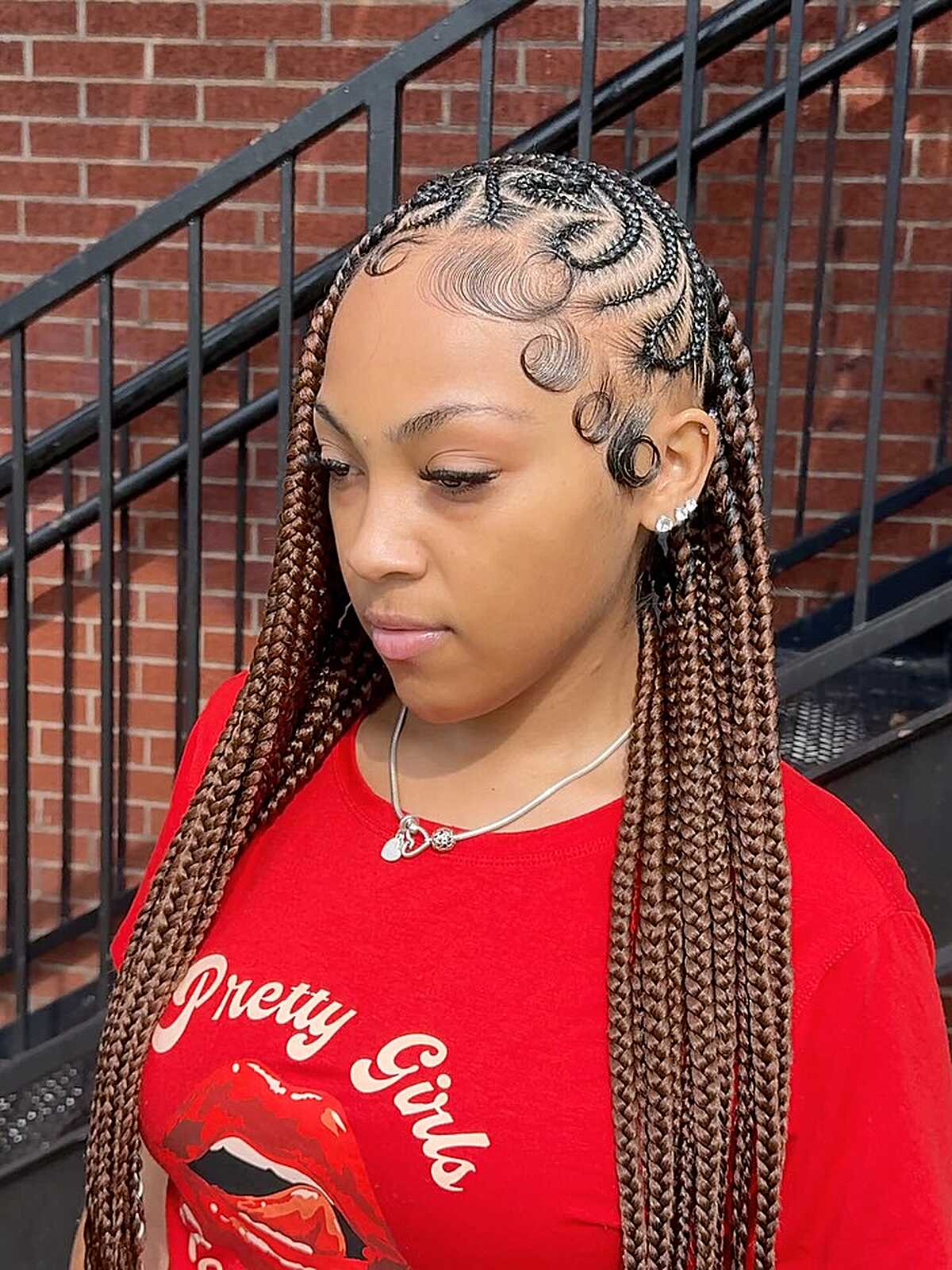
Tribal braids with defined baby hairs are a style that lands best in warm weather, when the braids keep hair off the neck and the baby hairs frame the face without sticking to it. The intricate scalp braids start at the roots and transition into mid-back length braids that shift from dark brown to a lighter brown hue, so the color change adds depth along the length. The middle parting keeps the style symmetrical, and the defined baby hairs soften the hairline, which suits any face shape. Ask your stylist for mid-back tribal braids, baby hairs. The baby hairs are the detail that makes this look feel deliberate, and they hold their shape with a light serum or edge control. This is an everyday, casual choice that does not require morning styling, but the braids take several hours in the salon and need a silk scarf at night to keep the edges from frizzing. The wavy ends on the longer strands give the braids a natural, lived-in finish that does not look stiff.
Reddish-Brown Wavy Updo With Braids
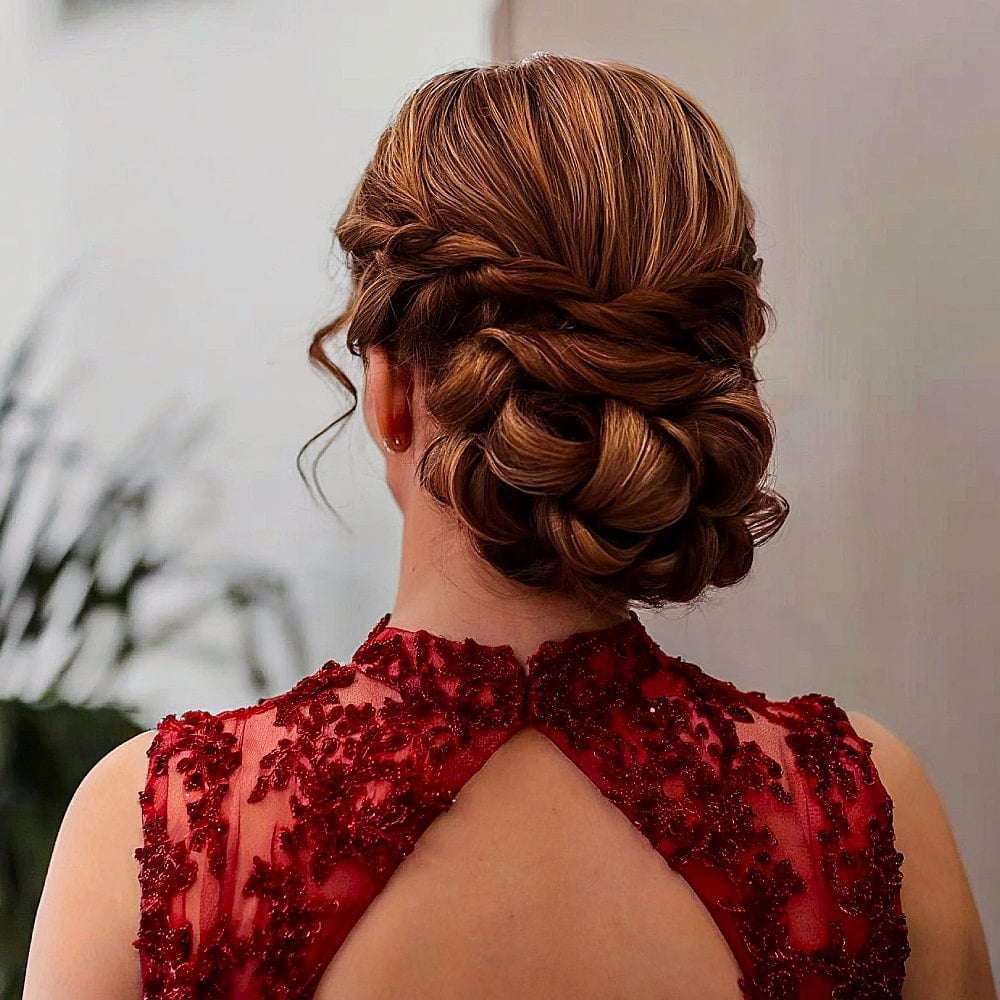
Ever wondered how to describe that intricate updo you saw on someone and now want for yourself? It starts with asking for the construction, not just the color. For this reddish brown wavy updo, the stylist works with your thick, long hair, sectioning it into rolled pieces and braided segments that are pinned into place. The back view is where the architecture shows, so ask your stylist for a long reddish-brown wavy updo with multiple braided and rolled sections.
This is a salon-build, not a bedtime twist. The braids and rolls are secured with pins and a firm hairspray to hold the shape through a long event. It suits thick, wavy hair best, since fine strands tend to let the sections slip. Complex updos work for all face shapes when the crown volume is balanced. Plan for a trim every ten to twelve weeks to keep the ends clean enough to roll neatly.
Blonde Box Braids High Ponytail
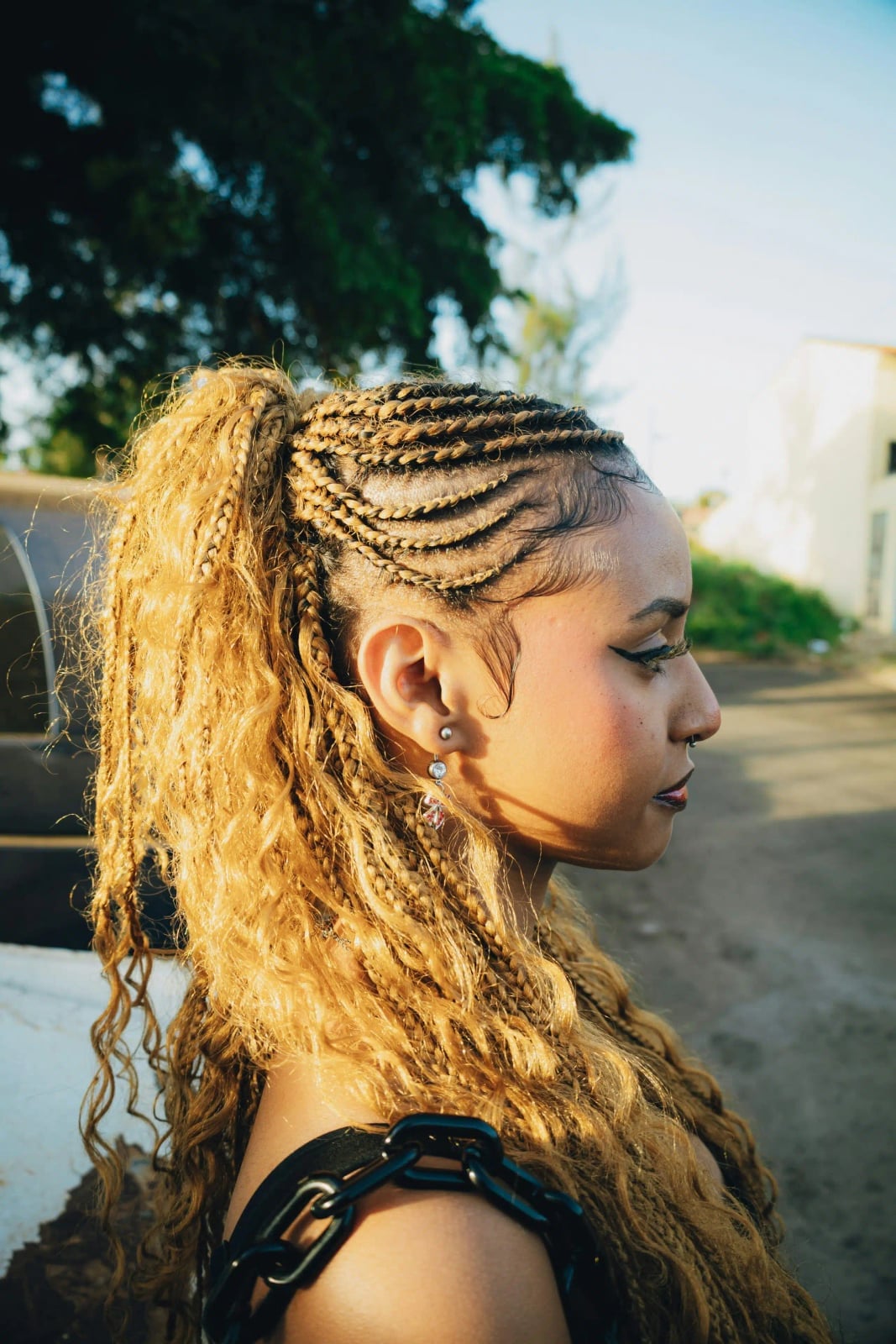
Compared to a low braided bun, this high ponytail reads as sportier and more immediate. The blonde box braids are pulled up to the crown, and the curly ends give the silhouette a softer finish than a straight braid would. Baby hairs are laid along the hairline to keep the look polished, not severe. Ask your colorist for mid-back blonde box braids with curly ends and a high ponytail.
The ponytail works on any face shape, though the high placement adds length to a rounder face. It suits hair that can hold braids without frizzing at the root, so dense textures do best. The curly ends mean the style holds its movement all day. Blonde braids need a toner refresh every six to eight weeks to keep the color from warming toward brass.
Messy Blonde Updo With Loose Tendrils
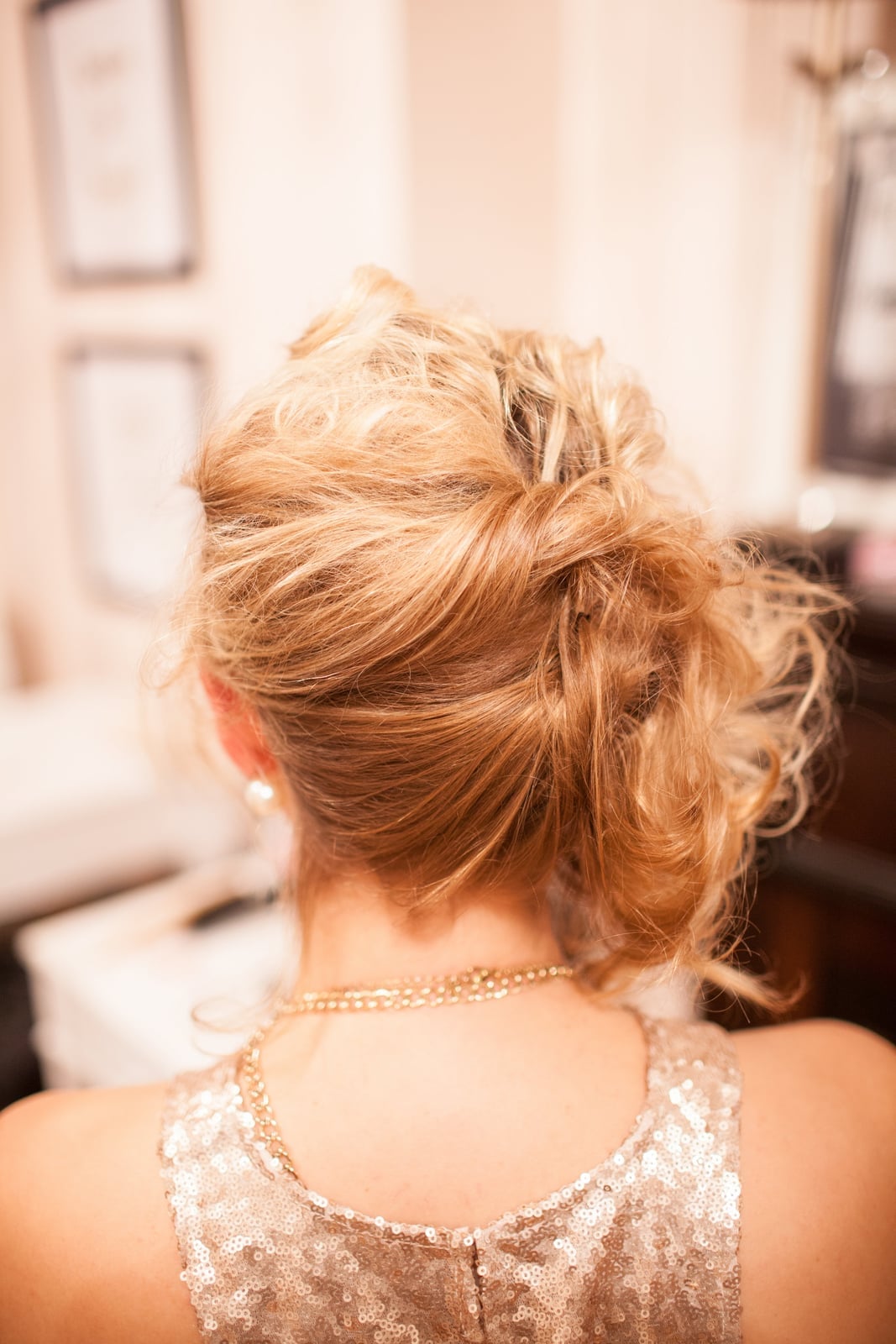
The design is deliberately uneven. Fine, wavy blonde hair is gathered into a loose updo at the back, with wisps left free along the nape and around the face. That asymmetry is the point, so resist the urge to tuck everything in. To build it yourself, start with second-day hair for grip, twist sections up and pin them loosely, then pull out a few tendrils. Ask your stylist for a fine wavy blonde cut with face-framing layers to make the loose pieces fall naturally. The style suits fine hair because it does not need density to read as full. It holds for a few hours, but the tendrils will soften into a halo by evening, which is exactly the look. A trim every six to eight weeks keeps the ends from looking ragged when they are loose.
Black Coily Braided Ponytail
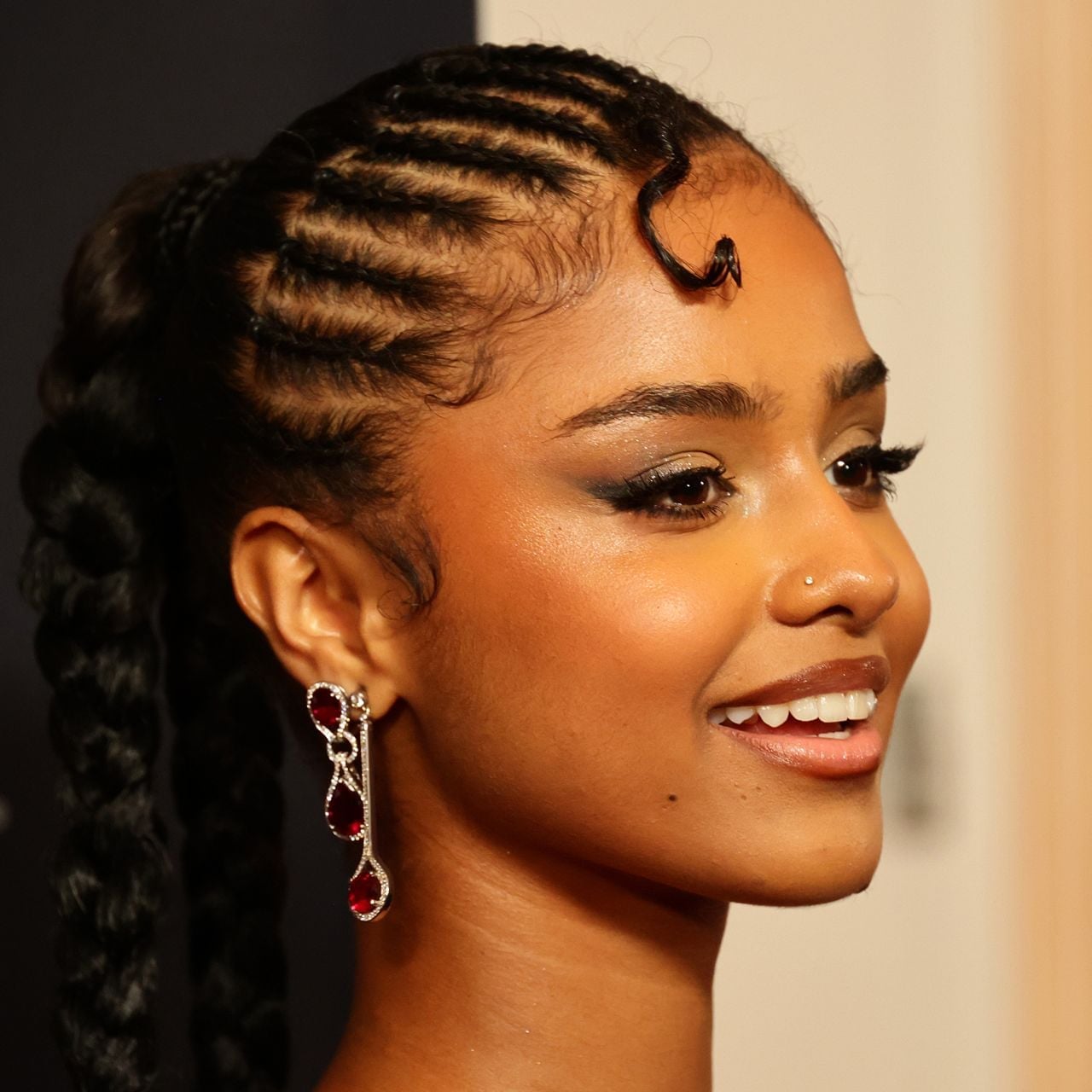
The cornrows start at the hairline and feed into two thick braids that form the ponytail, with a small curl left at the front. That transition is what makes the style look polished. It suits dense, coily hair of mid-back length, since the braids need substance to hold the shape. Ponytails work on all face shapes, but the height can be adjusted to suit your preference. Ask your stylist for mid-back coily hair with cornrows into a braided ponytail. The style holds well overnight, especially if you wrap the base in a silk scarf. To keep the cornrows smooth, apply a braid balm every few days, and trim the ends whenever they start to fray, usually every eight to ten weeks.
Brown Wavy Low Braided Buns
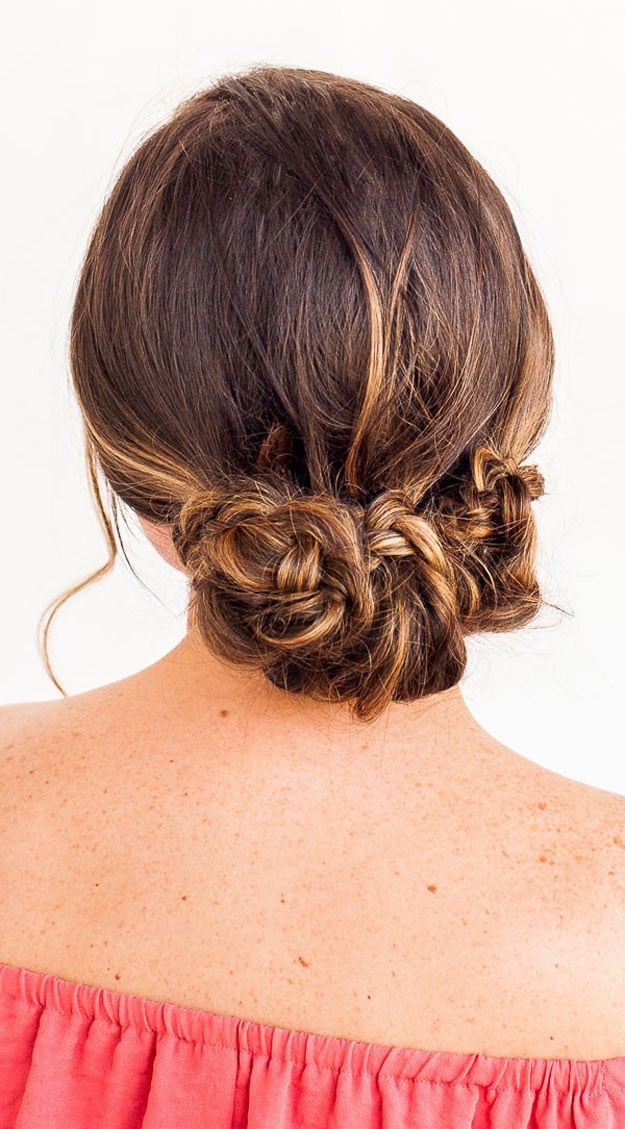
This is a look that holds its shape, but only if you start with a tight braid. The two low buns are built from wavy, medium-density hair at collarbone length, with the brown base carrying subtle blonde highlights that show through the braid texture. Ask your stylist for collarbone wavy hair with two low braided buns. The buns sit at the nape and stay put through a workday. If the braids are loose, the buns soften by midafternoon. Braid tightly before coiling, and pin the ends well. For upkeep, a trim every six to eight weeks keeps the collarbone length from dusting the shoulders.
Black Coily Braids Half Up
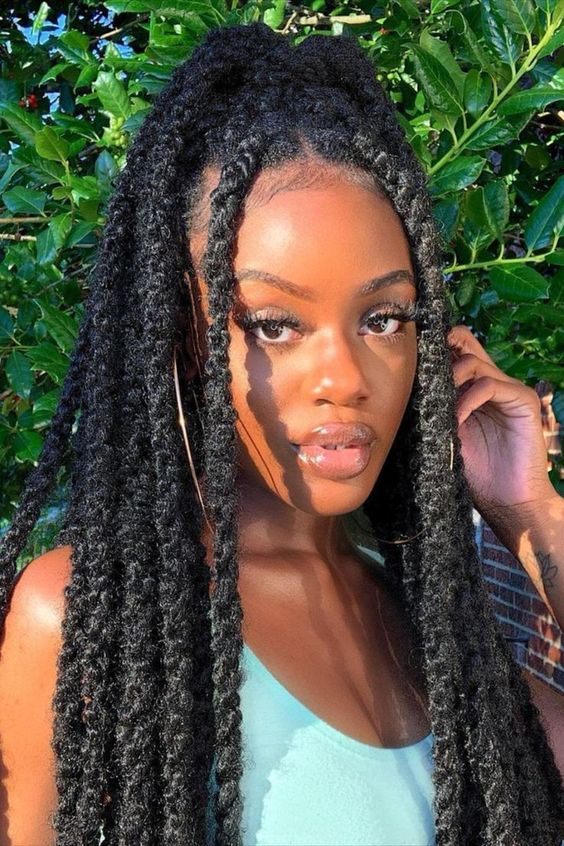
The half-up style here is built from intricate braids that run through thick, coily black hair at mid-back length. The design works because the braiding starts close to the scalp, then the upper section is gathered and secured while the rest hangs free. This setup suits coily hair that is dense enough to hold the braid pattern, and the half-up shape pairs well with most face shapes since it adds volume at the crown without pulling the sides tight. Ask your stylist for: mid-back coily braids half up. The braids should be sectioned evenly for a balanced look, and a satin scarf worn overnight keeps the coils from frizzing before morning.
Dark Brown Braided Faux Hawk Two Top Knots
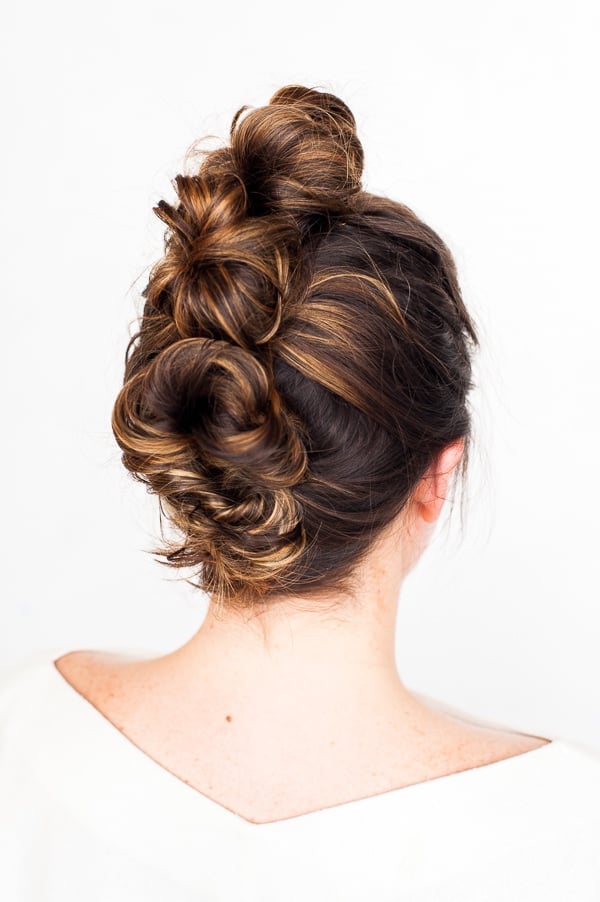
A dark brown base with caramel highlights adds depth to this braided faux hawk that finishes in two top knots at mid-back length. The thick, wavy texture is essential here because the braids need enough grip to stay in place while the top knots sit firmly on the crown. Festival season is the obvious setting for this one, though it also works for any occasion where you want the hair to be the focal point. Ask your stylist for: dark brown faux hawk with two top knots. The caramel highlights need a toning appointment every six to eight weeks to keep the warmth from turning muddy.
Black Braids With Voluminous Loose Curls
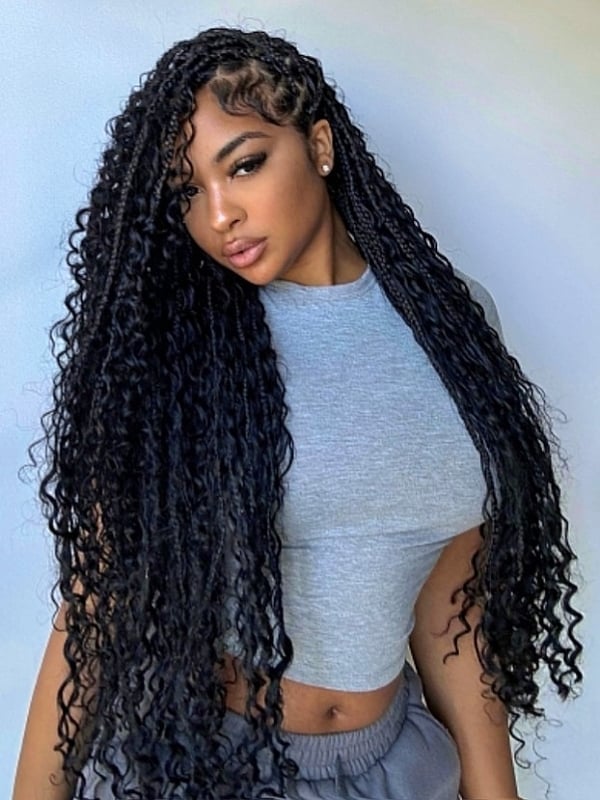
Braids installed close to the root transition into big, bouncy curls at the ends. A salon specializing in this technique uses a wand to curl the last few inches left loose. This works on long black hair that can handle the weight of braids plus the volume of the curl section. A side parting keeps the shape from feeling too symmetrical. Ask your stylist for: long black braids with voluminous loose curls. This is a salon-only job. The braiding alone takes a few hours, and the curls need to be set with heat. This style lasts several days with minimal touch-ups.
Fine Straight Slicked Back Low Bun
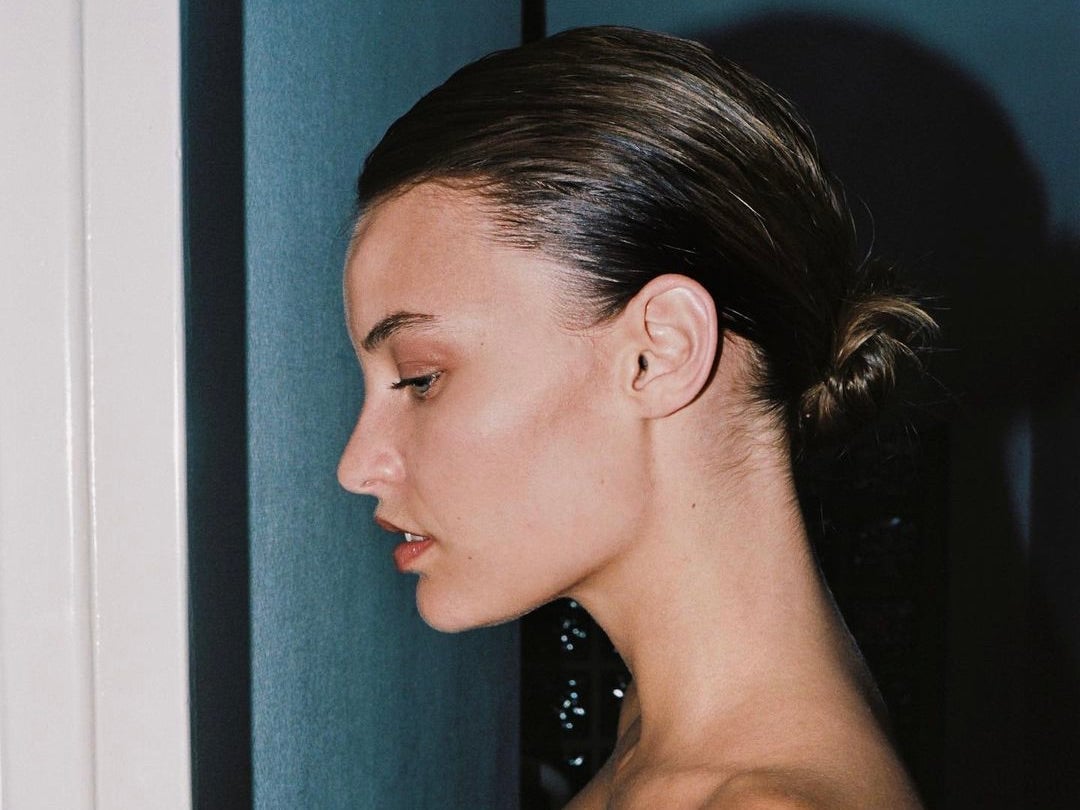
This is the opposite of the textured, messy low buns you see everywhere. Fine, straight dark brown hair is slicked back from a middle parting, and the finish is glossy and smooth. Where a messy bun relies on grip and texture, this one needs a strong hold product to keep every strand in place. It suits fine hair of shoulder length or longer, and the sleek surface makes the hair look denser than it is. Ask your stylist for: fine straight hair slicked back low bun. For anyone who finds that textured buns make fine hair look thinner, this is a valid alternative.
Ash Blonde Wavy Fishtail Braid
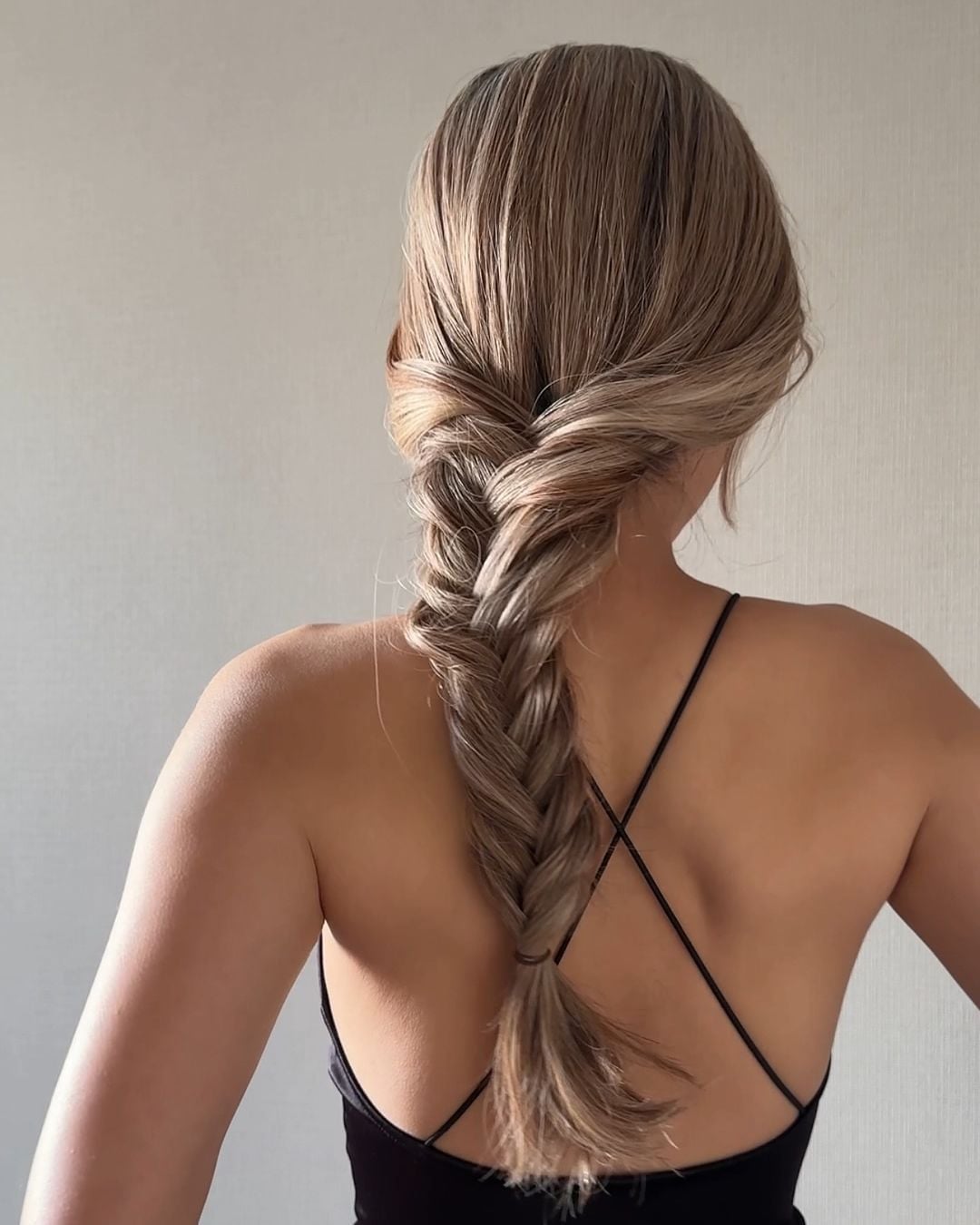
Collarbone length ash blonde hair with a visible root shadow is woven into a fishtail braid that sits loose and slightly undone. The key is to braid with tension at the scalp and then loosen the sections by gently pulling the edges outward once the braid is secured. This creates a fuller, softer line that works on medium wavy texture. The root shadow means you can stretch the time between salon visits. Ask your stylist for: collarbone ash blonde fishtail braid. A trim every six to eight weeks keeps the ends clean so the braid stays tight at the base and soft at the tips.
Thick Wavy Black Curls
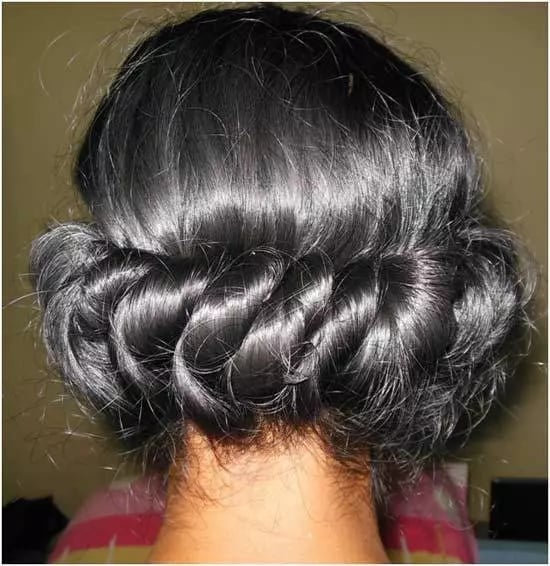
Voluminous curls in thick, wavy black hair with subtle gray streaks are a rare find, and they earn their keep. This texture, cut into layers at mid-back length, gives the hair natural movement and body that thinner strands simply can’t muster. The gray streaks add dimension without needing a color appointment, which is a quiet win for anyone who wants low-maintenance contrast.
These thick wavy black curls suit nearly every face shape because the volume sits at the sides and nape, balancing proportions without overwhelming. If your hair is fine or thin, the look will fall flat rather than hold its shape, so it’s best for those with genuine density. Ask your stylist for mid-back thick wavy black hair with voluminous curls, then use a diffuser on your dryer to enhance definition. A trim every 8 to 10 weeks keeps the layers from turning into a shapeless mass.
Mid-Back Wavy Hair With Braided Accents
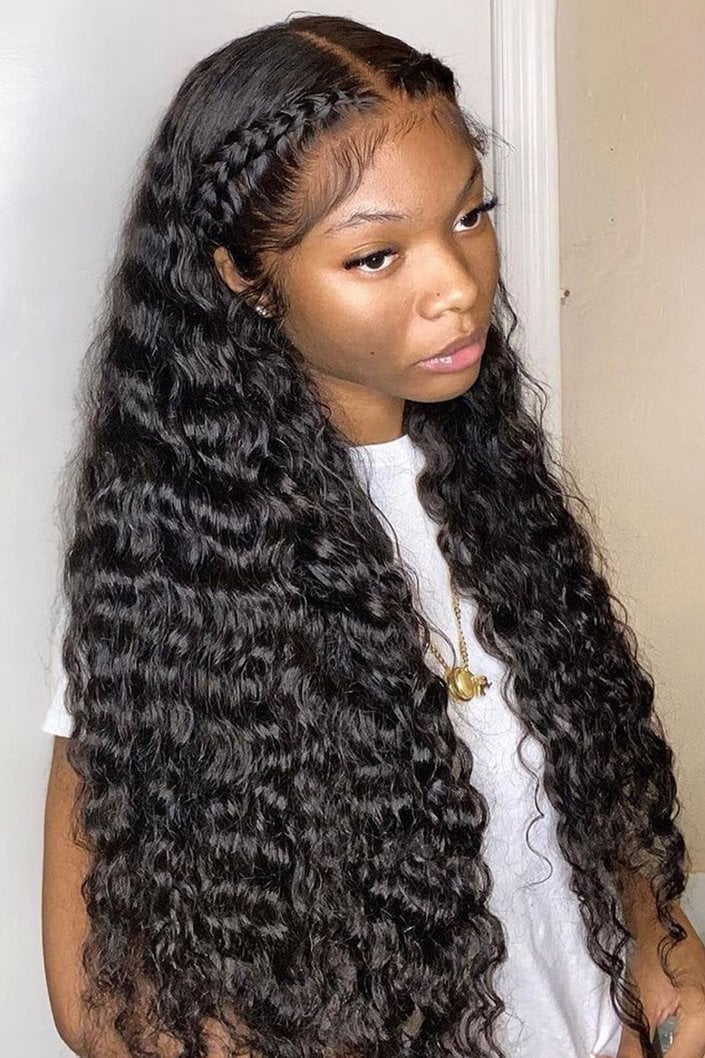
Does the braided front detail actually hold through a full day, or does it loosen into a fuzzy memory by noon? The reality is that two small face-framing braids in mid-back length wavy dark brown hair will stay put longer if you start with slightly damp hair and secure the ends with tiny clear elastics. The subtle highlights woven through the waves give the style depth, so the braids are a deliberate focal point.
The upkeep is lighter than it looks: a trim every 8 to 10 weeks keeps the layers and curtain bangs in line, and you can redo the braids in under ten minutes each morning. The braids will loosen as the day wears on, especially if your hair is silky or fine. Ask your stylist for mid-back wavy hair with face-framing braids, and keep a small brush on hand to tidy the part when it drifts.
Blonde Mid-Back Waves With Pink Ends
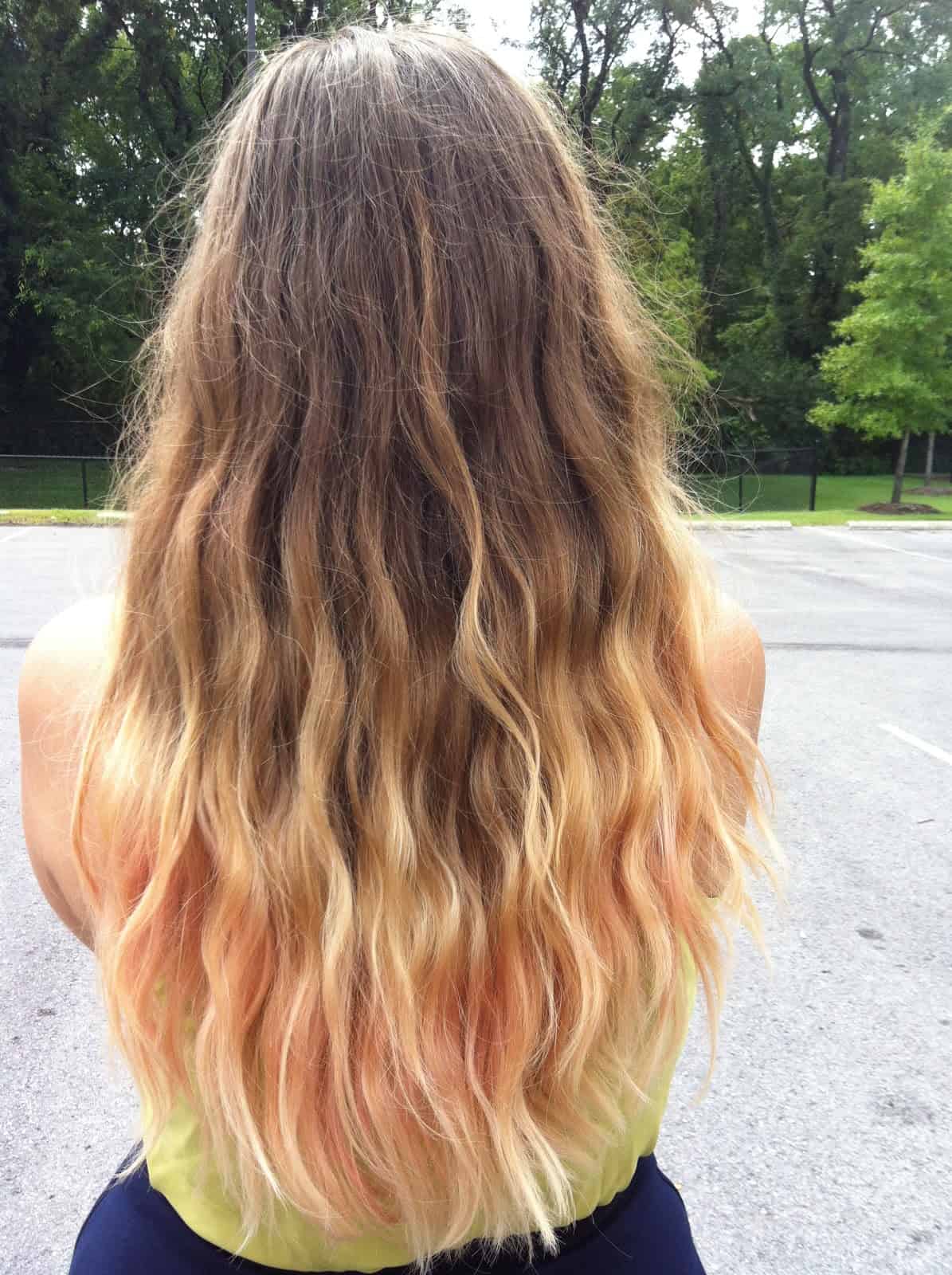
The pink ends are the kind of detail that makes you look twice, and they’re perfectly placed for summer festivals or any event where you want the hair to carry the mood. The blonde base fades into vibrant pink at the mid-back length, with loose waves that catch the light and show off the ombre effect. This is a DIY-friendly transformation: a semi-permanent pink over the ends will give you the color shift without a salon visit, and the waves hide any unevenness as the shade fades.
Ask your colorist for mid-back blonde hair with pink ends and loose waves, then maintain the vibrancy with a color-depositing conditioner. The layers keep the waves from falling flat, and a trim every 8 to 10 weeks keeps the ends healthy enough to hold the pink. Just know that the color will wash out faster than you’d like, so touch-ups become a bi-weekly ritual.
Black And Blonde Braids Top Knot
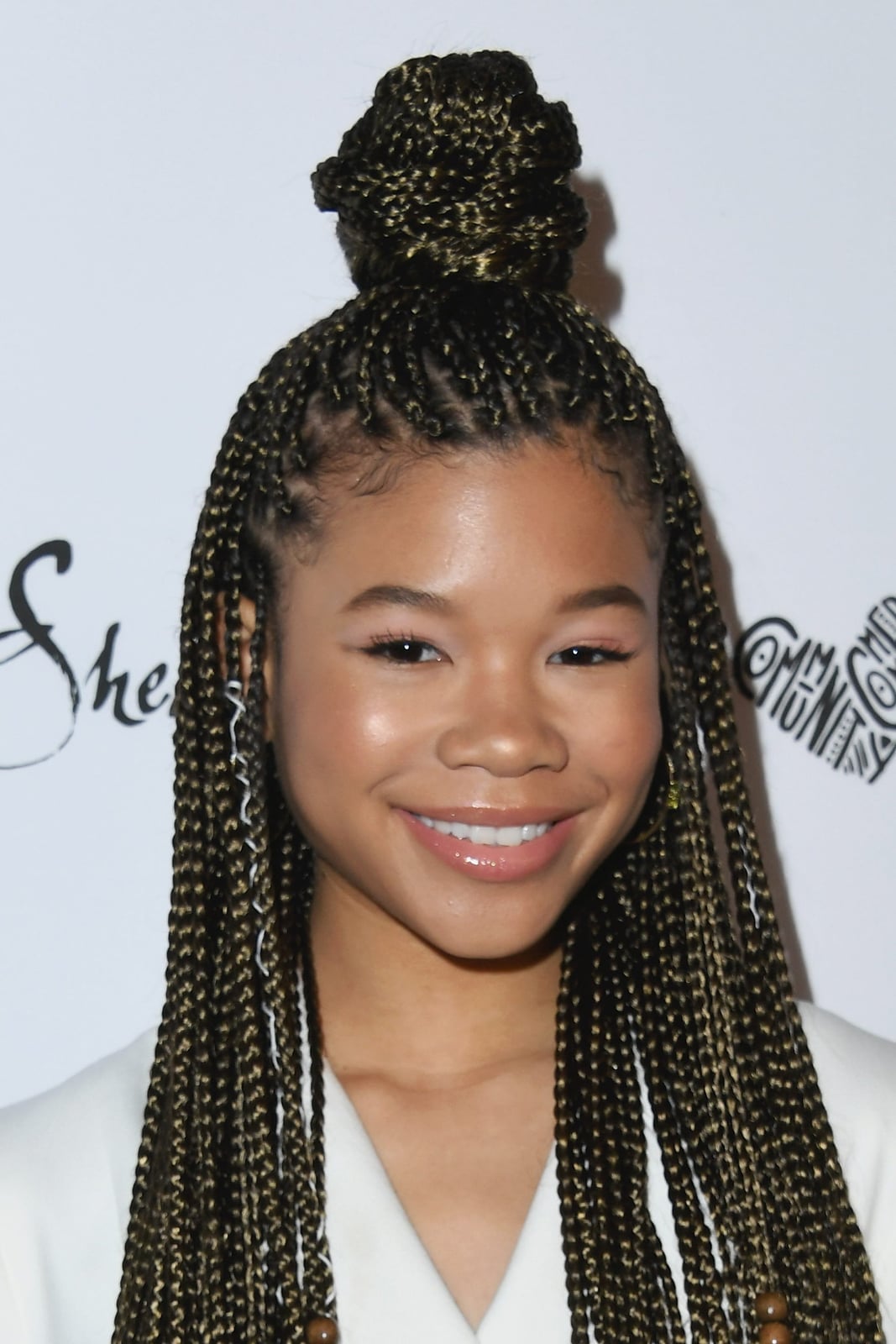
How do you get a top knot that actually stays put all day without giving yourself a headache? The answer is in the contrast and the construction: box braids in a mix of black and blonde tones, gathered high on the head, create a look that’s both practical and striking. The middle parting keeps the braids neat at the roots, and the high placement means the weight is distributed evenly, so it won’t pull at the temples.
Ask your stylist for mid-back box braids in black and blonde with a high top knot, and specify the color placement so the contrast reads clearly. This style suits all face shapes because the knot adds height without widening the face, and the braids frame the sides. Secure the knot with pins and a light hairspray, and you’re set for a long day without constant readjusting. The main thing to get right is the tension: too tight and you’ll feel it, too loose and the knot will wobble.
Final Thoughts
For fine hair, opt for looser braids or gentle rollers to avoid tension and creasing. Thick hair benefits from tighter braids or secure buns to keep volume in check overnight.
- Trim split ends every six to eight weeks for healthy growth.
- Refresh color with a toner every four to six weeks as needed.
- Protect hair from heat with a heat protectant spray before any styling.
- Wash and condition two to three times a week, focusing on the scalp.
- Sleep on a silk pillowcase to reduce friction and frizz.
Wake up to beautiful hair with these overnight styling secrets.

