Pigtails have moved past the schoolyard, and the new versions are all about texture, color, and a deliberate, polished finish. Whether it is a lived-in ash blonde or a glossy natural wave, the modern pigtail leans into soft face-framing layers and curtain bangs rather than a flat, uniform look.
This collection of 31 pigtails hairstyles covers everything from low-upkeep, five-minute looks to intricate salon braids, so there is an option for fine hair that falls flat by noon, thick hair that needs taming, or anyone managing a visible grow-out line. Each style shows exactly how the hair is worn and how it holds, no guesswork required.
Classic Mid-Back Braided Pigtails
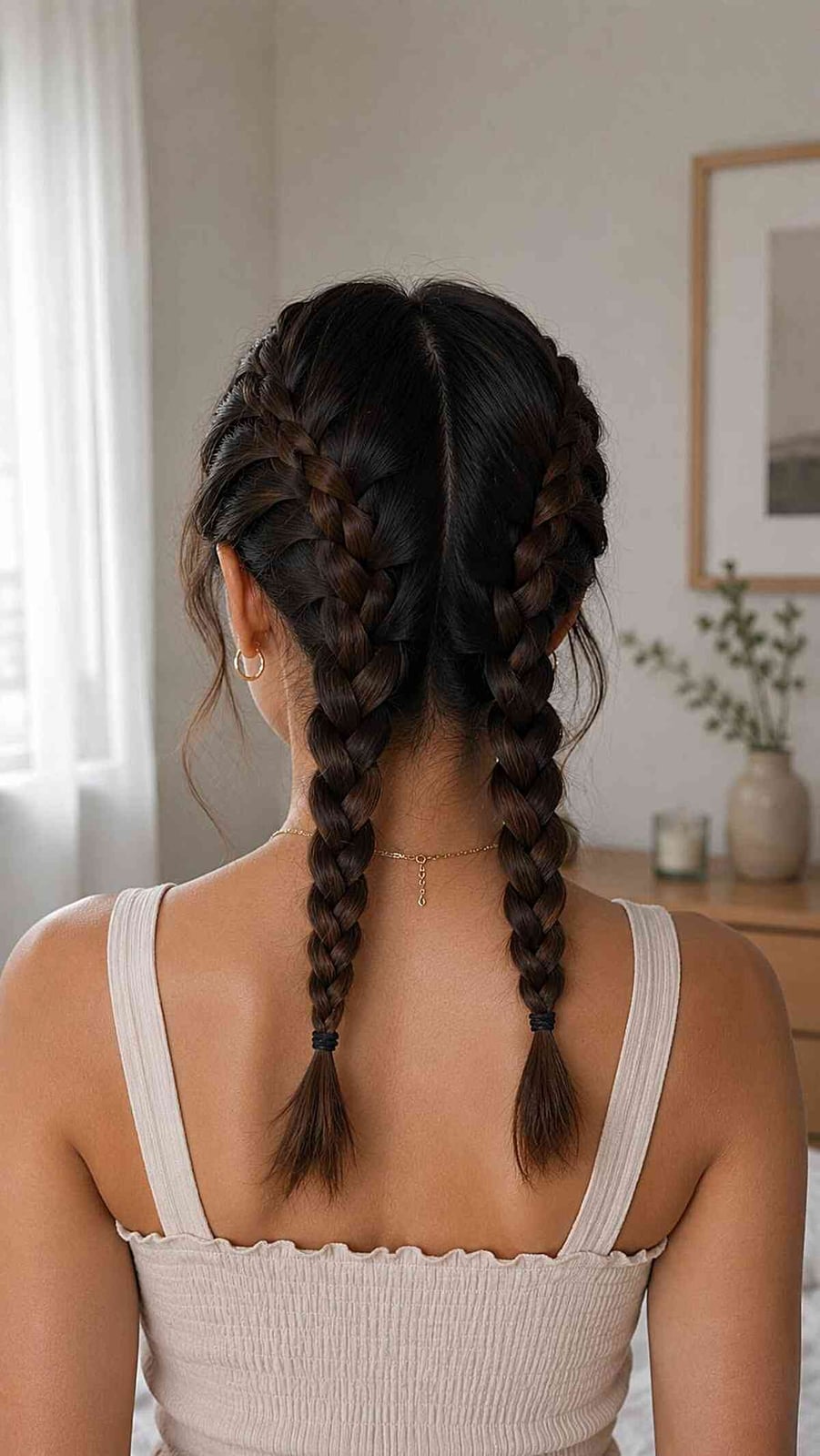
Two even braids from a center part, dark brown and thick, reaching the mid-back. That straight texture holds a three-strand plait without much persuasion, so the silhouette stays crisp. Ask your stylist for: classic braided pigtails to mid-back. The design works because it does not fight the hair’s natural weight; the braiding compresses the density just enough to keep it neat.
A smoothing serum brushed through before sectioning prevents flyaways at the crown. The braids themselves last a full day of movement, though the start of the part may soften after a few hours. A trim every eight weeks keeps the ends uniform. This is the version that makes you wonder why you ever overthought pigtails in the first place.
High Pigtails With Loose Honey Blonde Waves
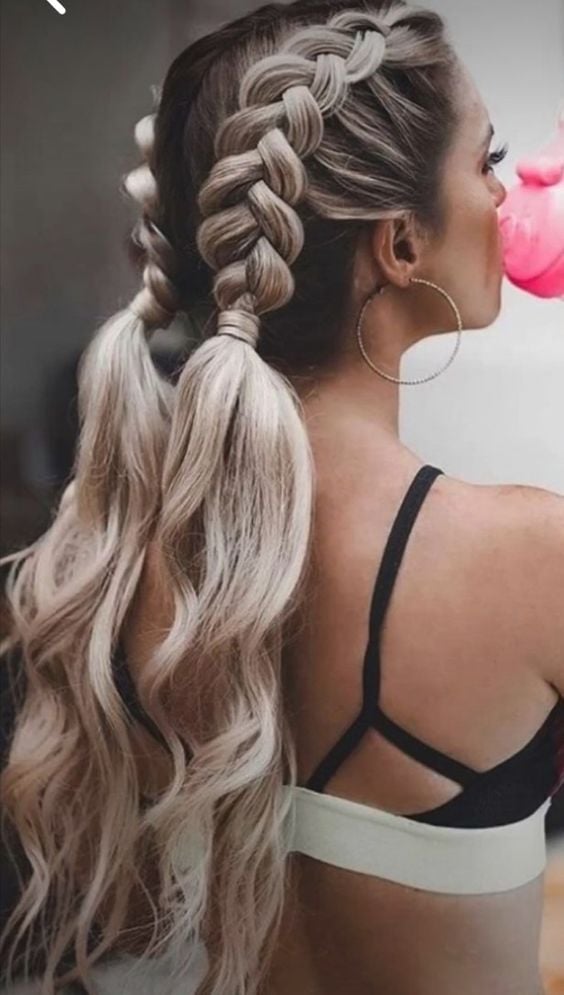
Can high pigtails read as grown-up when they sit above the ears and wave instead of hang? Yes, if the color has dimension and the texture is loose rather than tight. Here, honey blonde highlights catch the light, while curtain bangs break up the forehead line. Ask your colorist for: high pigtails with loose waves and curtain bangs. The collarbone length keeps the pigtails from pulling the face down, and the middle part balances the volume on both sides.
- A texturizing spray after styling stops the waves from collapsing.
- This look belongs at an outdoor brunch or a daytime event where you want polish without structure.
DIY Bubble Pigtails Light Brown
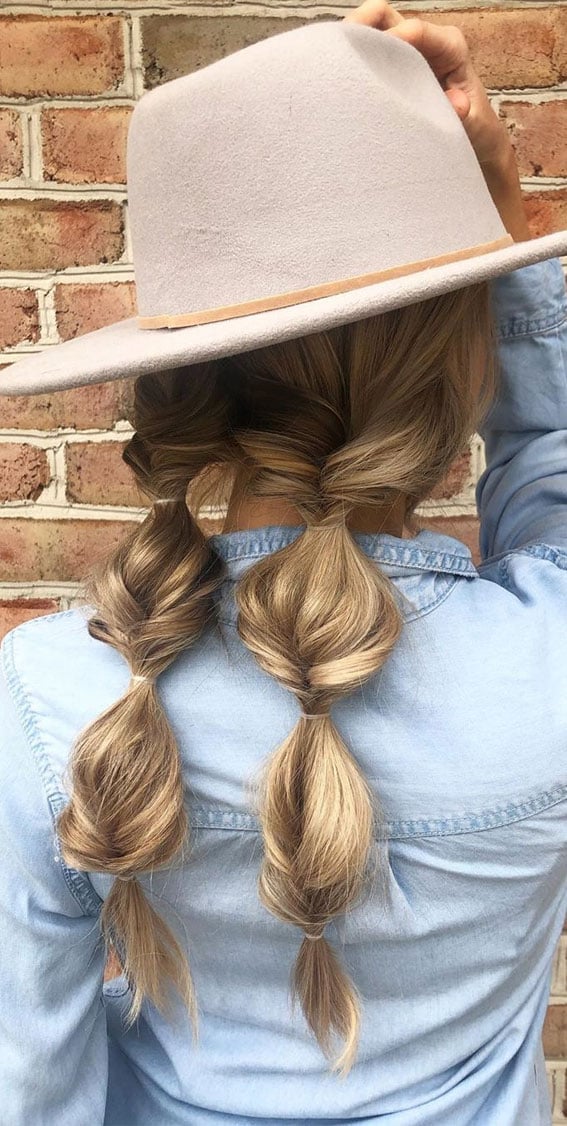
The bubble pigtail is a series of elastics placed an inch apart down a ponytail, then the section between each elastic is gently tugged wider. For light brown hair with blonde highlights, the contrast between the banded sections and the expanded hair becomes the pattern. Ask your stylist for: bubble pigtails with blonde highlights. The common mistake is pulling each bubble too evenly, which makes them look like a row of sausages rather than soft rounds.
This is a DIY win, not a salon appointment. Thick, straight hair at mid-back length gives the best result because the weight holds the bubbles in place. Use small clear elastics for a subtle effect or match them to the highlights for more structure. The whole style takes about fifteen minutes and comes undone just as fast when you snip the elastics out.
Voluminous Platinum Blonde Pull-Through Braids
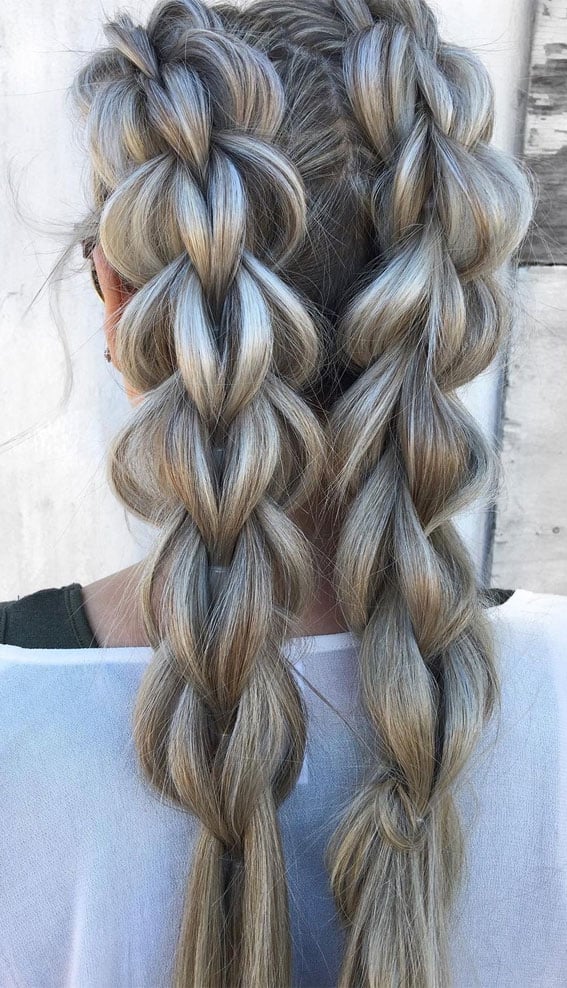
A pull-through braid builds volume by inserting a ponytail into its own section, then tightening to create a puffed loop. Here, the technique is applied twice for two pigtails, and the platinum blonde shade with ash undertones gives each loop a sharp edge. Ask your colorist for: chunky platinum blonde pull-through braid pigtails. The back view shows the precision required; each section must be the same size for the braids to mirror each other.
Gently tugging each loop outward after finishing adds the intentional fullness. The wavy texture of the hair helps the loops read as texture rather than gaps. A toning appointment every four weeks keeps the platinum from pulling yellow, which would dull the contrast between the braid sections. This is a salon-level technique, not a rushed evening project.
Collarbone Ash Blonde Braids
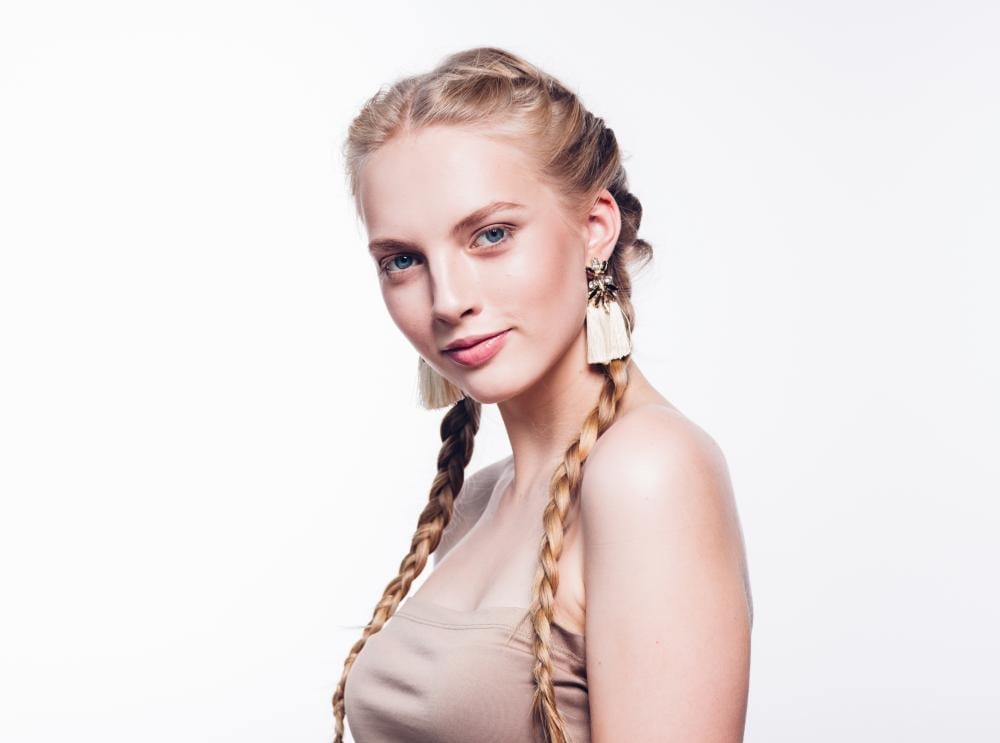
These two braids sit at the collarbone, which is shorter than most braided pigtails you see. The ash blonde color and fine, wavy texture mean the braids do not look heavy. They skim the shoulders. Ask your colorist for: collarbone ash blonde braids. Compare this to a longer version that would pull the same fine hair into a thinner strand; the shorter length preserves the braid’s visual weight.
The front view shows how the braids frame the face without hiding the jawline, which is the advantage of stopping at the collarbone. Spray the waves with a texturizing product before braiding to give the sections some grip, so the plait holds its shape through a full day. An ash toner applied every six weeks prevents warmth from creeping into the blonde.
Mid-Back Bubble Braids Blonde Highlights
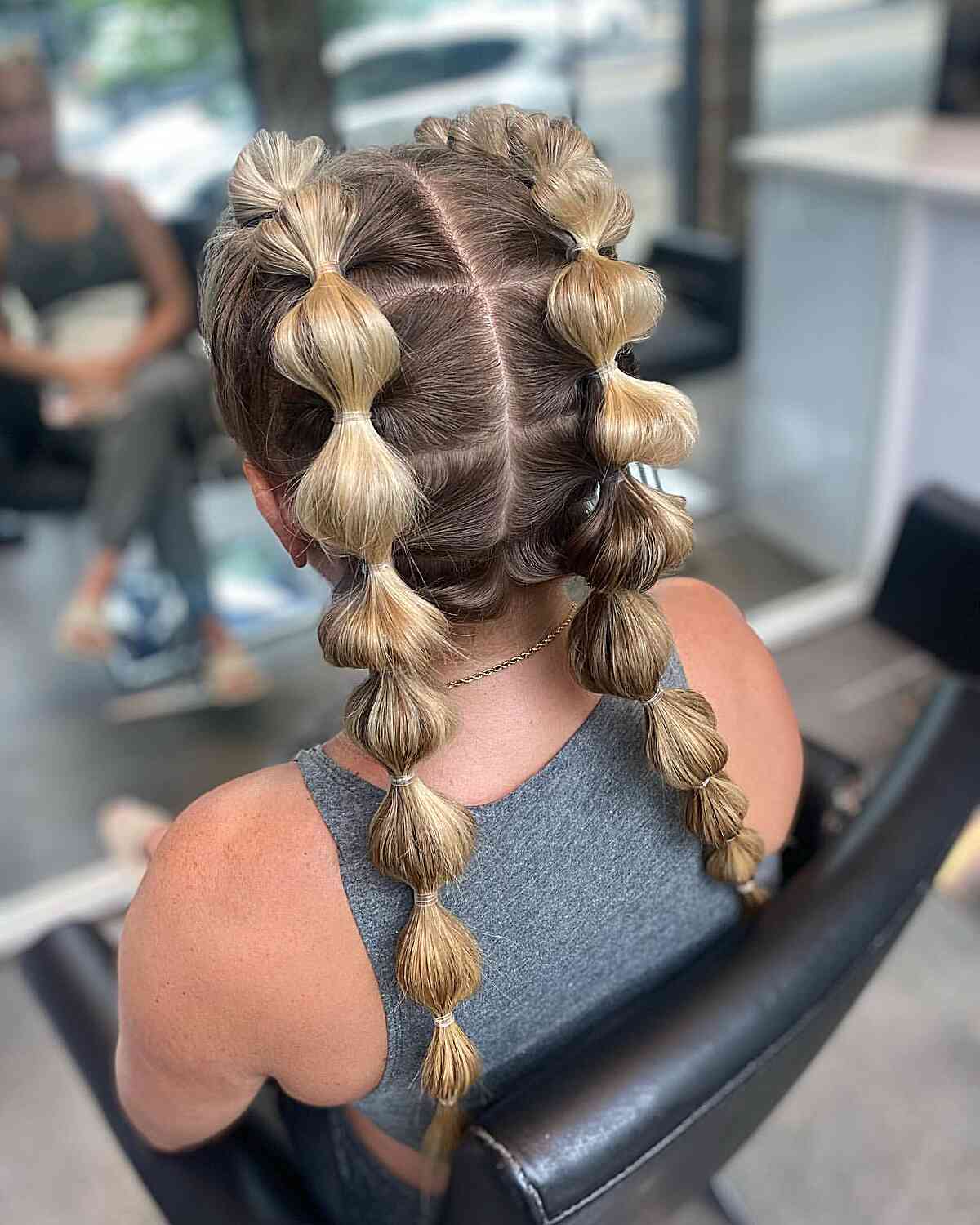
Bubble braids look playful, but they do require a certain level of patience and hair thickness to pull off. On thick, wavy hair with blonde and brown highlights, those distinct sections create a striking visual rhythm that a standard braid just doesn’t have. Ask your stylist for: bubble braids with blonde and brown highlights. The downside: each bubble needs to be secured with a clear elastic, and if your hair is on the finer side, the sections can collapse or look uneven by midday. A weekly refresh of the elastics helps maintain the shape, and a trim every eight weeks keeps the ends from fraying into the bubbles.
The middle part is key here, as it gives the style symmetry from the back view. Without that clean division, the braids can lose their structural intent. This is a salon-level look, not something you want to attempt five minutes before leaving the house.
Twisted Black Loc Pigtails
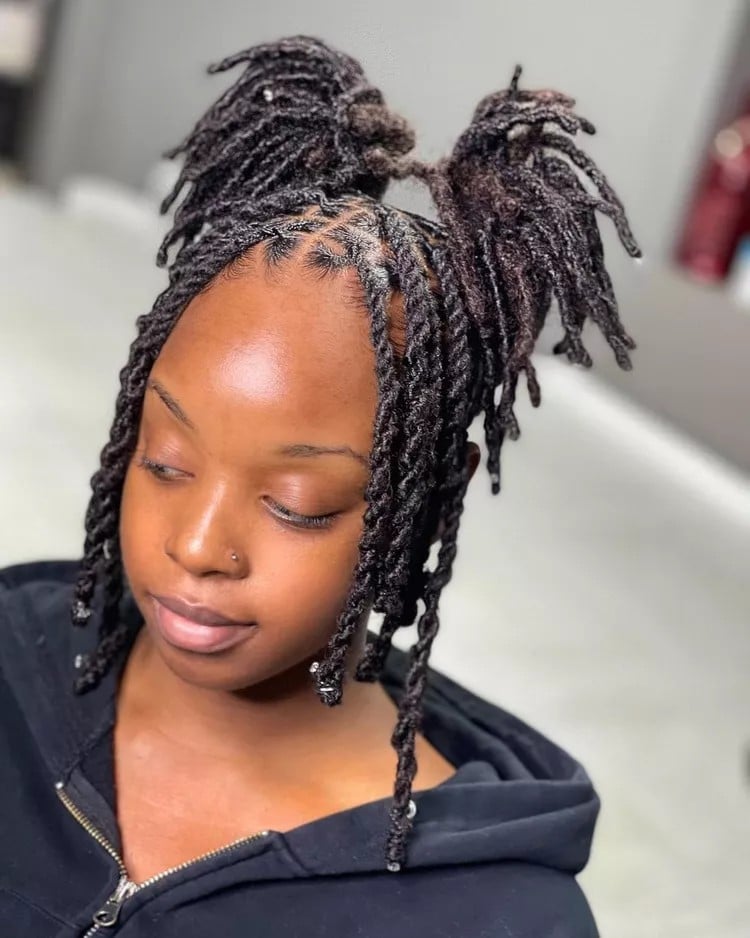
This is a precise design: thick, curly black locs are twisted into two pigtails that sit at the shoulder, with a middle part that keeps everything orderly. The twisting technique is what separates this from a simple ponytail. Each loc is wrapped around itself to create a rope-like texture that holds without pins or product. Ask your stylist for: twisted loc pigtails to the shoulder. The shape works best on locs that have some maturity and weight, so the twists don’t unravel within a few hours. A salon visit is required here, as the twisting pattern needs even tension to last.
Collarbone Dutch Braids Vibrant Orange
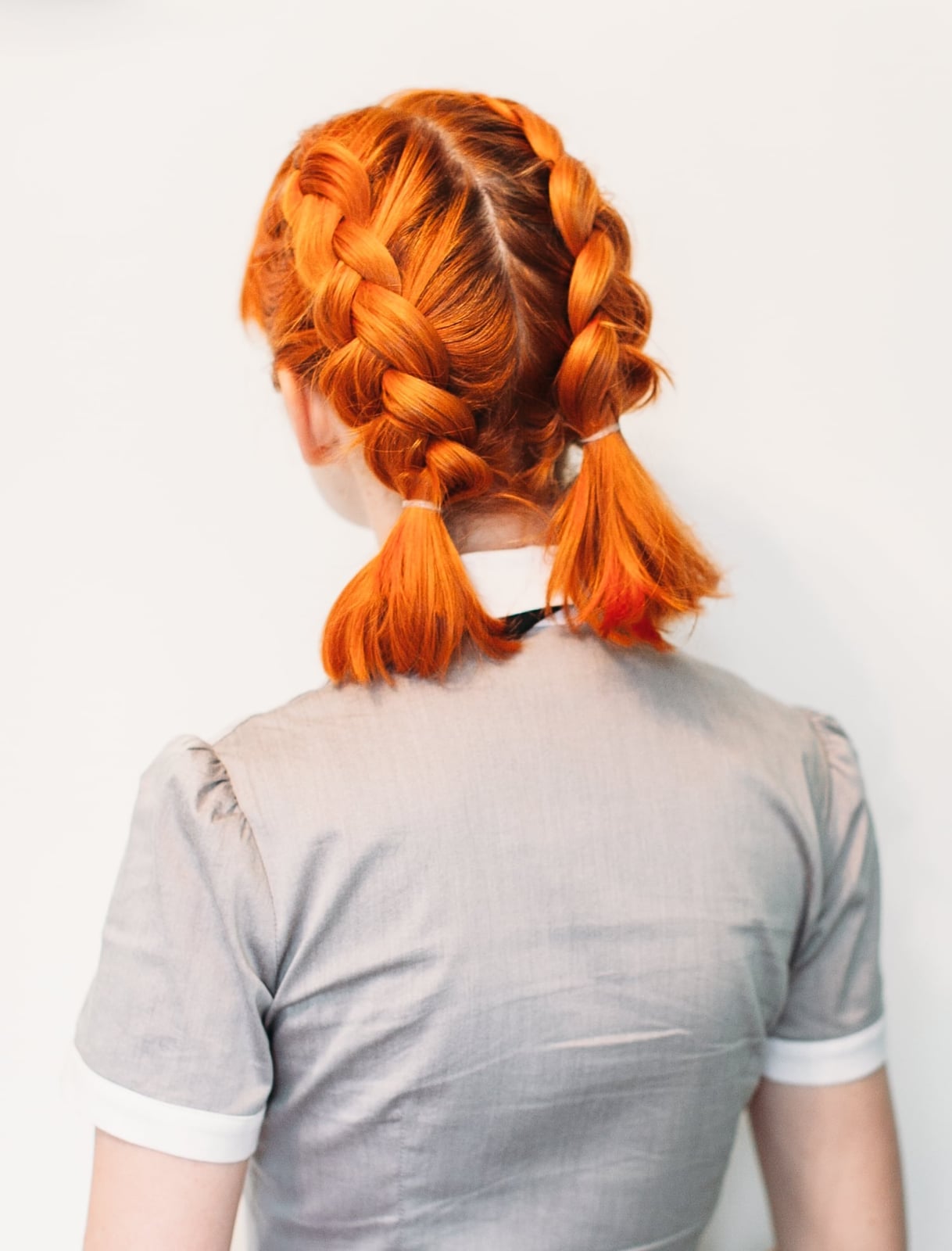
Vibrant orange is a color that suits late summer or early fall, when the warm tone complements a fading tan. Here, double Dutch braids start from a middle part and end at the collarbone, with the thick, wavy texture giving the braids body instead of a flat, tight appearance. Ask your colorist for: collarbone length Dutch braids in vibrant orange. The intensity of the shade means a color-safe shampoo is essential, and a toning appointment every four weeks will prevent the orange from shifting toward brassy yellow. This is a festival or event look, not a daily commute style.
Collarbone Dutch Braids Fishtail Detail

Can you combine a Dutch braid with a fishtail without the whole thing looking like a tangled mess? Yes, but only if your hair has enough weight to hold the detail. Here, two thick Dutch braids in light brown with blonde highlights meet the collarbone, with a fishtail section woven into each braid for added texture. Ask your stylist for: collarbone Dutch braids with fishtail detail. The common mistake is pulling the fishtail too tight, which flattens the braid and hides the pattern. A slight looseness in the fishtail section keeps the detail visible. Fine hair will struggle here. The fishtail needs density to show the pattern clearly.
Collarbone Loose Pigtails Dark Brown
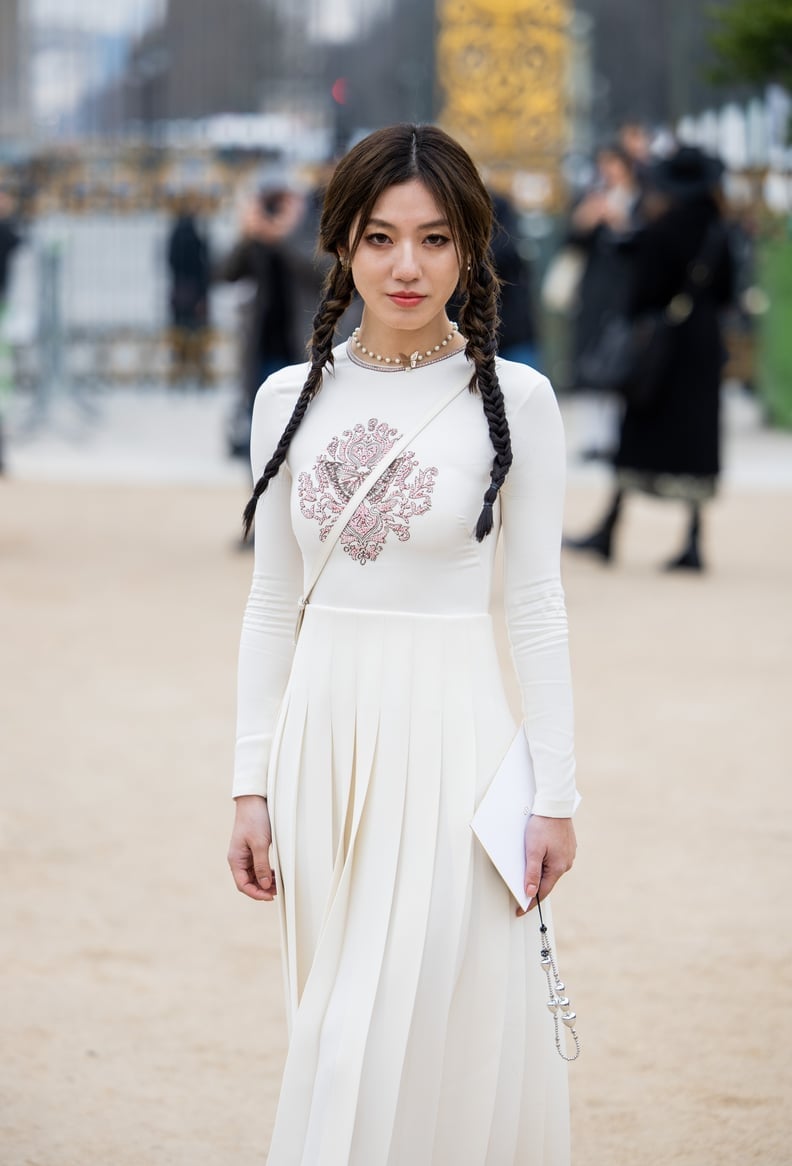
Loose pigtails on dark brown, wavy hair are the low-commitment version of a braided style. The hair falls to the collarbone with a natural wave and a glossy finish, and the middle part keeps the look grounded. Ask your stylist for: loose pigtails to the collarbone. To get close to this at home, start with damp, medium-textured hair, apply a texturizing cream, and scrunch as you blow-dry on low heat. Section the hair with a middle part, then gather each side into a low pigtail, leaving the ends loose rather than securing them with a tight elastic. Trim every eight to ten weeks to keep the ends from looking straggly.
Decorative Rope Accent Braided Pigtails
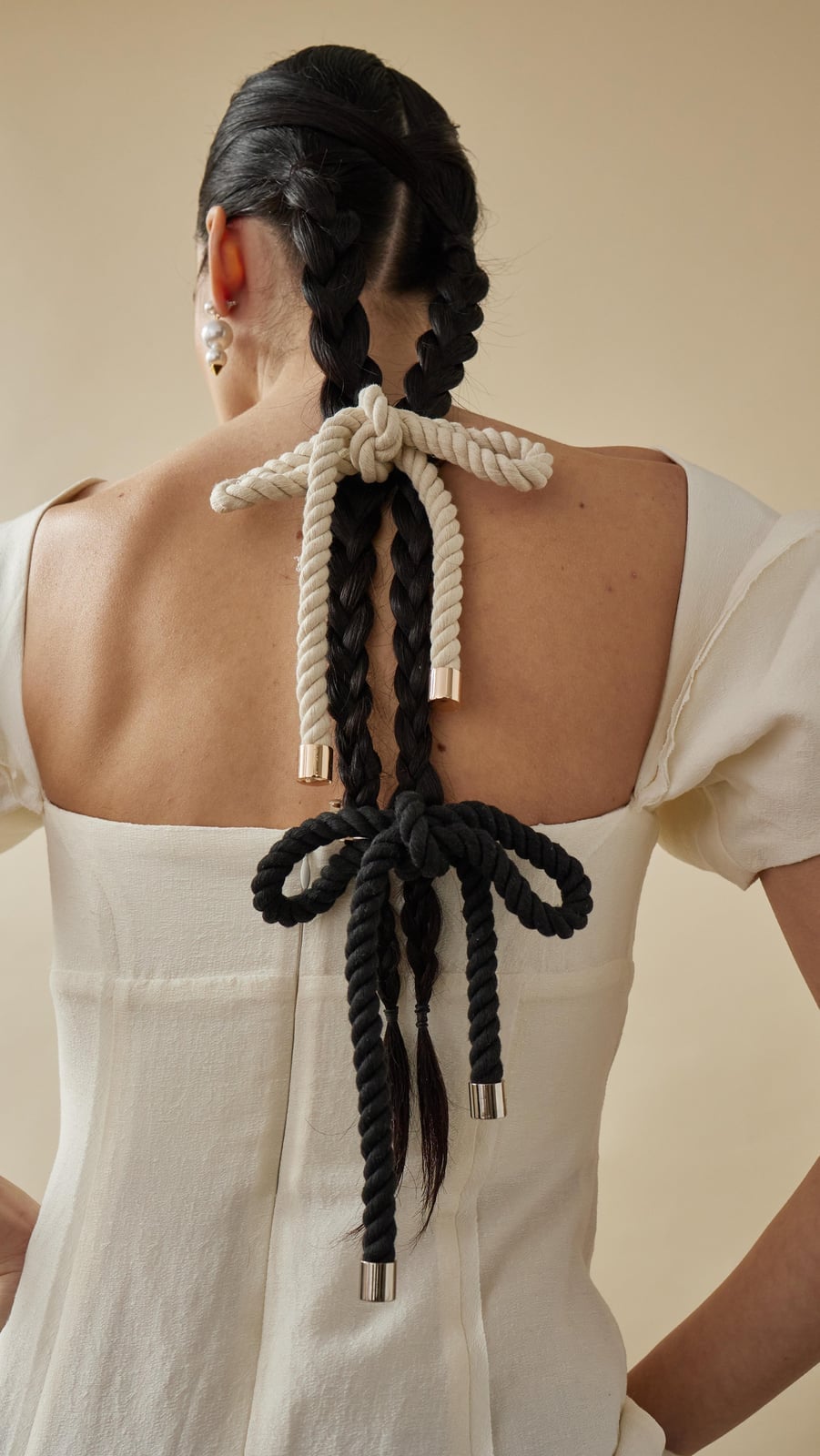
The rope is woven into these pigtails, not just wrapped around them, forming a bow effect at the nape. Metallic gold accents cap the ends of the dark brown braids, which fall straight and thick to mid-back. This salon-level style starts with a middle part and no bangs, and it suits occasions where the back of your head gets as much attention as the front.
Ask your stylist for: mid-back braided pigtails with rope accents. The ropes need to be tied securely so they don’t shift during wear, and they should come out before you wash. The black and cream strands against the dark brown base create the design’s depth, so keep the base color as is and let the embellishment do the talking.
Front View Wavy Reddish-Brown Braids
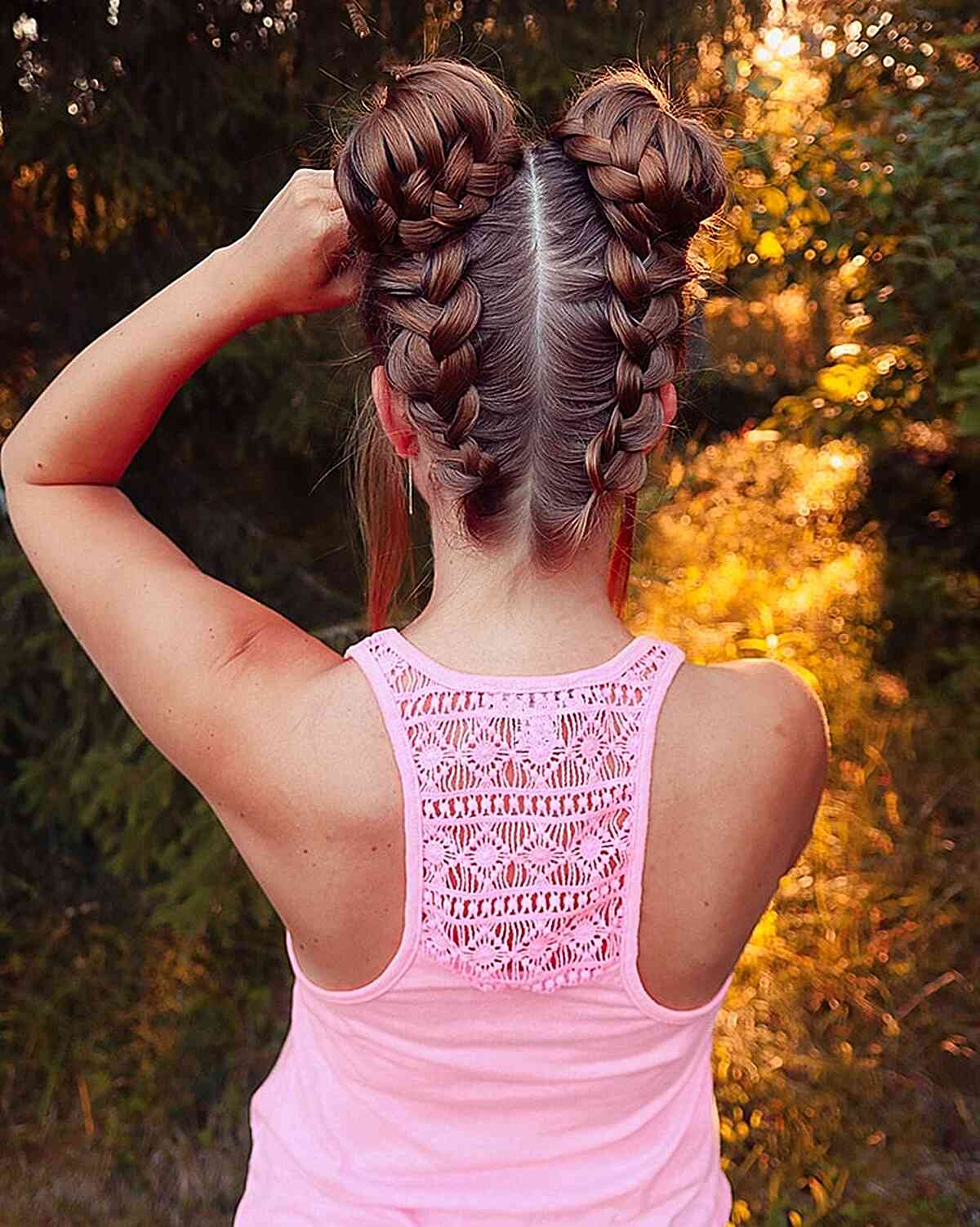
Wondering if double braids will overwhelm a round face or a fine texture? These thick, wavy pigtails prove the opposite when they start from a clean middle part and land at mid-back. The warm reddish-brown color with lighter undertones adds dimension, and the wavy texture keeps the braids from looking too stiff or severe.
Ask your stylist for: mid-back wavy braided pigtails in reddish-brown. The braids suit anyone with enough density to fill them out, and the waves help soften the overall effect. Keep the ends sealed with a lightweight oil to prevent fraying, and plan on a trim every six to eight weeks to keep the length looking tidy.
Intricate Dutch Braids Dark Brown Highlights
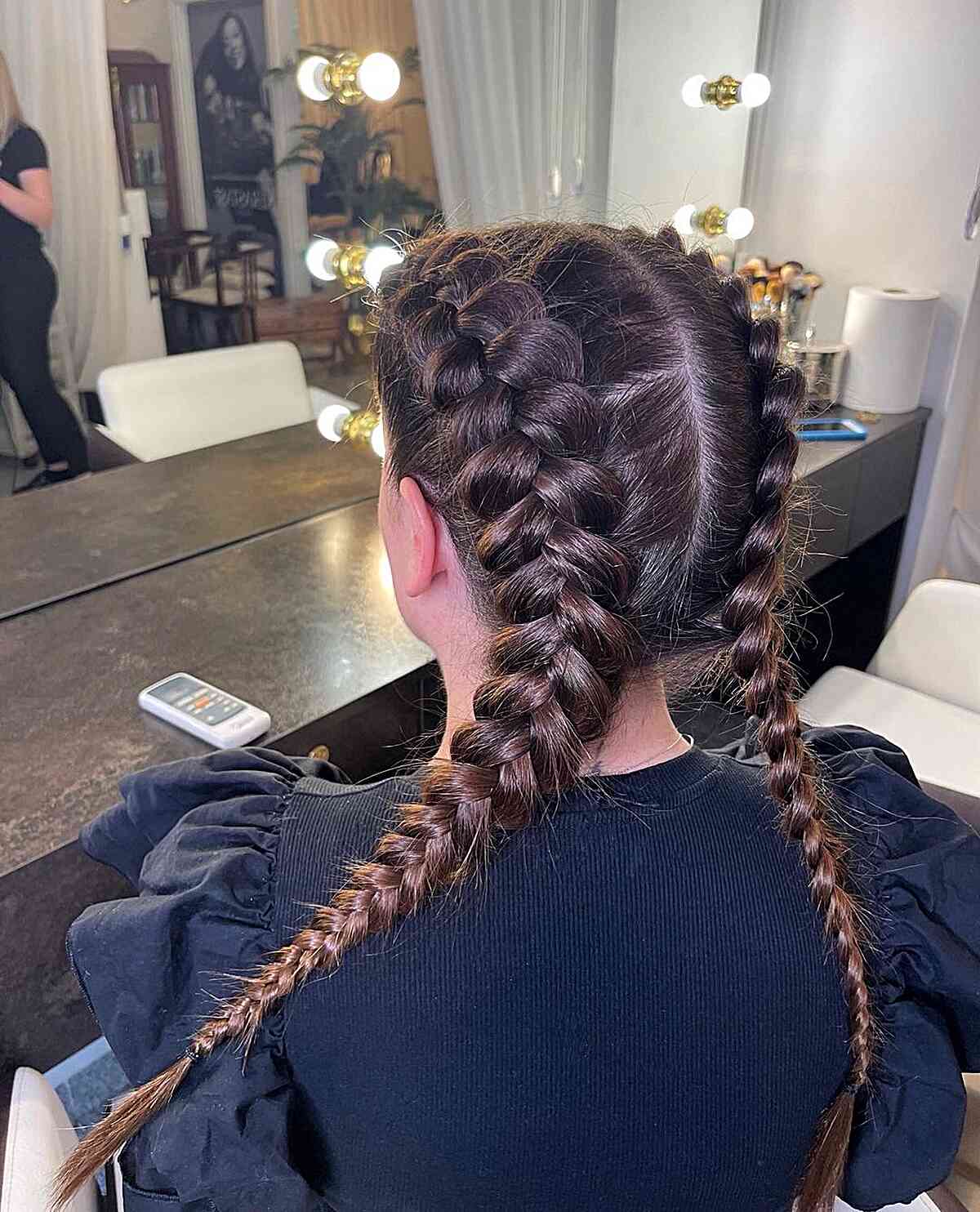
The Dutch braid technique raises each strand over the next, which makes these pigtails sit proud of the scalp and show off every twist. On thick, wavy hair in dark brown with lighter brown highlights, the alternating colors catch the light as the braid moves, and the middle part keeps the whole construction symmetrical. The braids are woven tightly, so they hold their shape for a full day of wear without needing a touch-up.
Ask your stylist for: intricate Dutch braid pigtails with highlights. To keep the pattern crisp, a light-hold hairspray brushed over the surface tames flyaways without gluing the braid stiff. Because the hair is wavy, expect the braids to loosen slightly as the day goes on, which is part of the appeal. Trim the ends every six to eight weeks to maintain the clean finish.
Braided Pigtails Dark Base Blonde Highlights
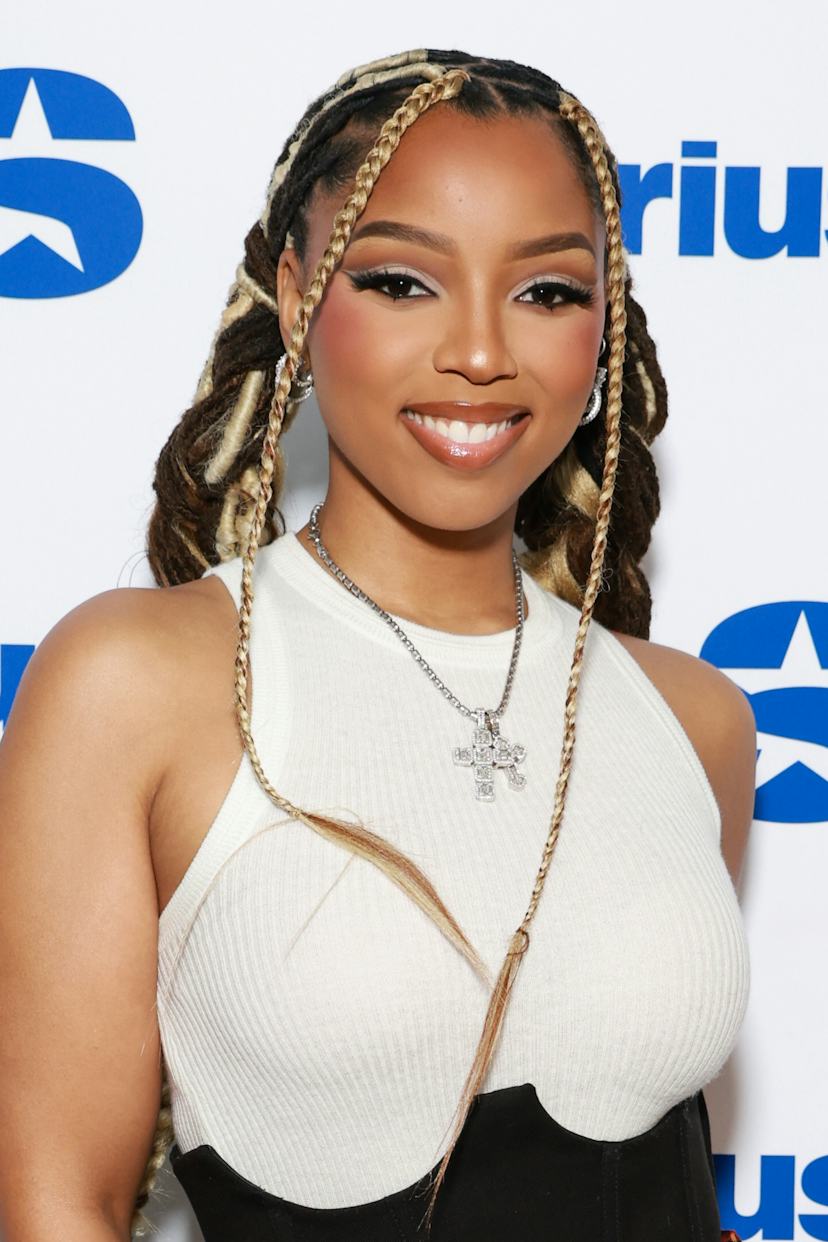
Solid color braids can read flat from across the room, but a dark base with prominent blonde highlights gives each twist a striated, almost marbled effect that moves as you do. These coily, dense pigtails fall to mid-back with loose strands left out around the face, which softens the look and keeps it from feeling too severe. The two tones are the point here, so it works best on hair that is already thick enough to hold the braid’s shape without looking sparse.
Ask your colorist for: dark base with blonde highlights in two braided pigtails. The loose face-framing pieces need a little styling to sit right, but they also hide the transition where the braid starts. Because coily hair dries out faster, work a leave-in conditioner through the lengths before braiding, and book a trim every eight to ten weeks to keep the ends from splitting.
Blunt Bob High Pigtails Black
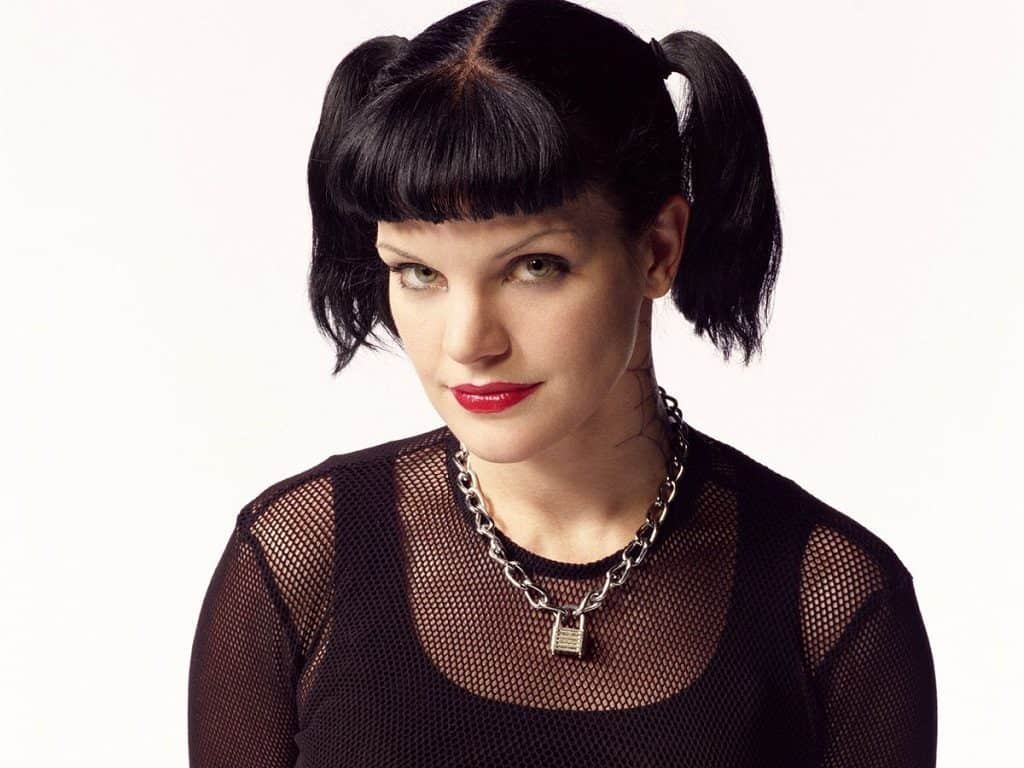
Can you really pull off pigtails on a chin-length bob? When the bob is blunt and the bangs are equally blunt, yes, especially if your hair is fine and straight. The high placement of these two pigtails adds lift at the crown, which balances the heavy line of the cut, and the black color makes the graphic shape read even sharper.
Ask your stylist for: high pigtails on a blunt bob with blunt bangs. This is a DIY-friendly style: pull the top sections up, smooth them with a flat iron, and secure with small elastics. The bob and bangs need a trim every four to six weeks to keep the blunt edge from losing its precision.
Mid-Back Pigtails With Blunt Bangs

Blunt bangs with pigtails are a high-contrast pairing that looks sleek and sharp, but the mistake most people make is letting the bangs grow past the brow. The photo shows a middle parted, straight black mane pulled into two high pigtails that fall to mid-back, with the blunt fringe sitting just above the eyebrows. That precision is the entire point: the bangs carry the geometric edge while the pigtails keep the rest soft.
Ask your stylist for: mid-back pigtails with blunt bangs. This works best on thick, straight hair that can hold a clean line without frizzing by noon. The real drawback is maintenance: blunt bangs need a trim every three to four weeks, and as they grow out, they start to curtain around the temples, which changes the whole look. The pigtails themselves can go eight to ten weeks between trims, but the bangs will dictate your salon schedule.
Mid-Back Pigtails Loose Waves Curtain Bangs
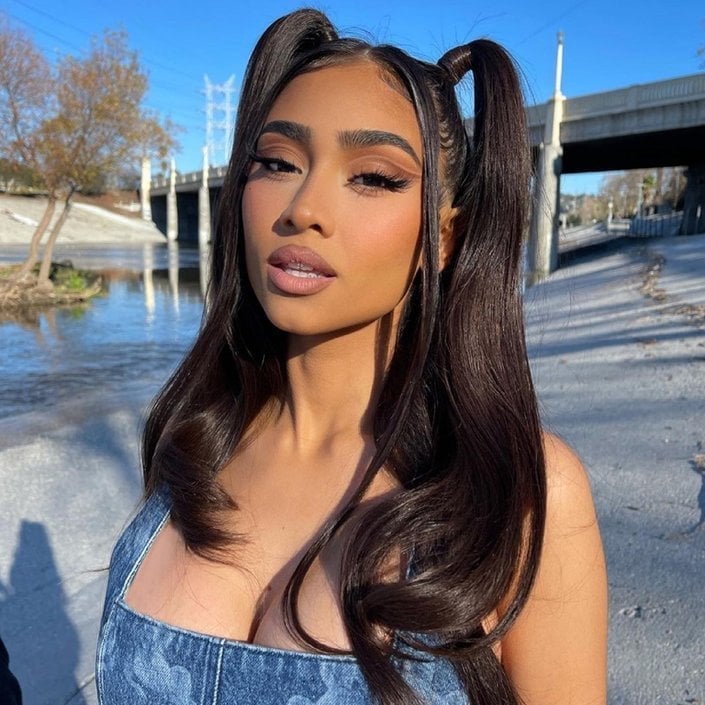
The design here hinges on the face-framing layers: long curtain bangs that blend into the loose waves, so the pigtails feel soft rather than severe. The hair is dark brown, thick, and wavy, parted down the middle and gathered into two high pigtails that reach mid-back. The waves start at the jaw and continue to the ends, which keeps the pigtails from looking like two heavy curtains.
Ask your stylist for: mid-back pigtails with loose waves and curtain bangs. This suits thick, wavy hair that can hold a bend without constant reheating. To build the waves, use a large barrel curling iron and wrap sections away from the face; the bangs should be blow-dried with a round brush so they swoop outward instead of hanging flat. The hold is decent for a full day, but expect to refresh the wave pattern near the ends by evening.
Glossy Waves Mid-Back Pigtails
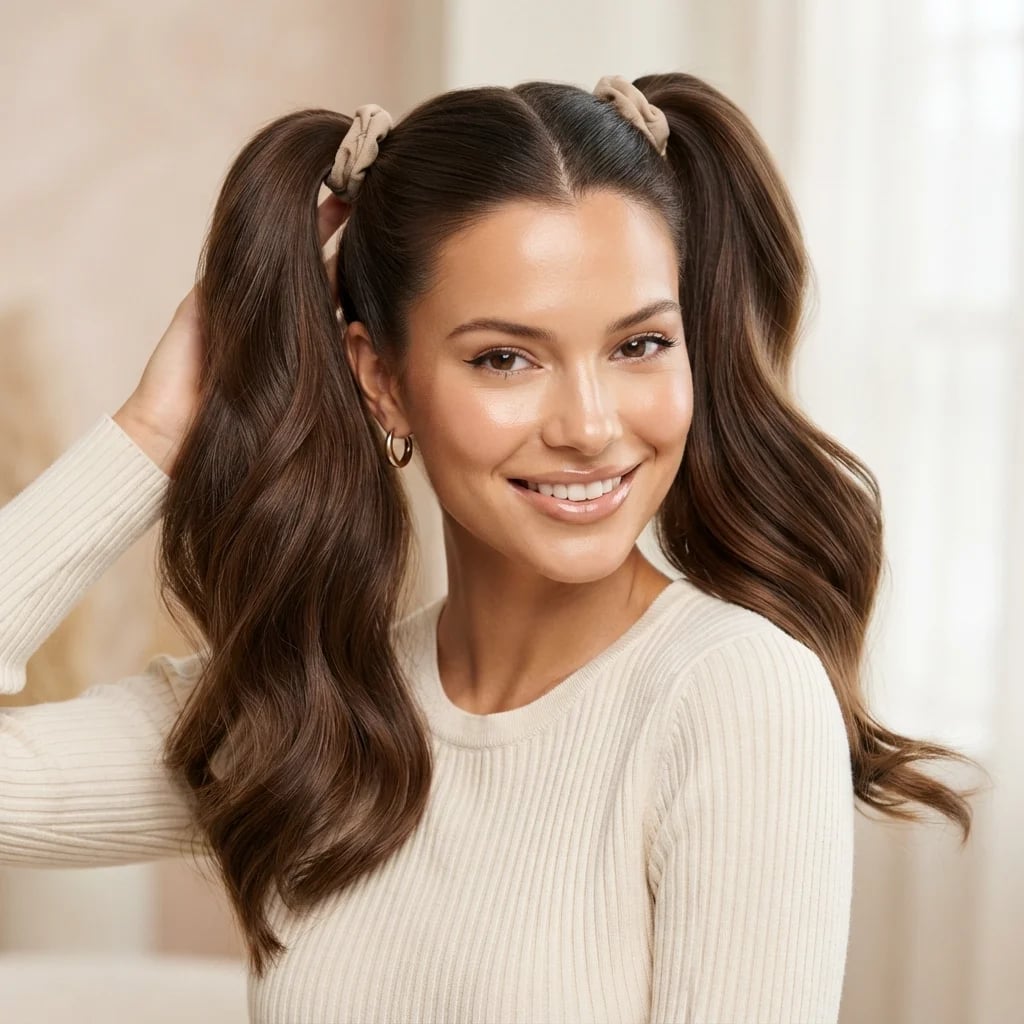
High pigtails with glossy waves are the warm-weather answer to a polished ponytail: the shine looks done-up, but the loose movement keeps it from feeling stiff. The hair is dark brown with subtle lighter pieces woven through, parted in the middle, and pulled into two high pigtails that fall to mid-back, with soft curtain bangs framing the forehead. The gloss comes from the cuticle lying flat, so a shine serum applied to damp hair before blow-drying does the trick. This is a salon-leaning look that suits events like outdoor weddings or garden parties, where the light catches the waves and the pigtails stay out of your face.
Intricate Braids Dark Brown Highlights, Close-Up Take
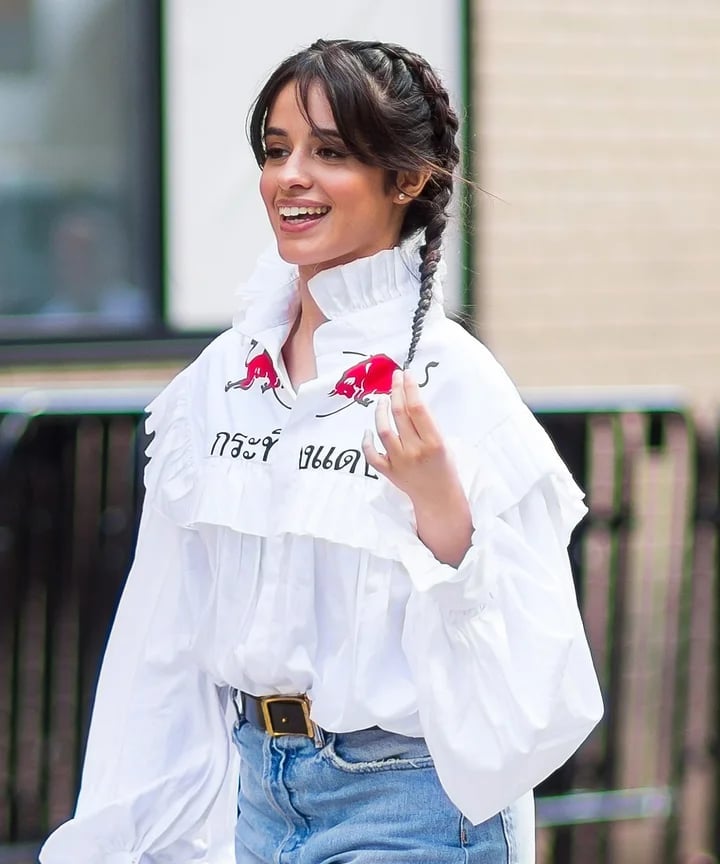
What makes these braids intricate is the pattern: each pigtail is woven with a visible, multi-strand technique that shows off the dark brown base and the subtle lighter highlights running through it. The hair is thick and wavy, parted in the middle, with soft curtain bangs left loose to frame the face. The braids start at the crown and continue to mid-back, and the texture of the waves keeps the braids from looking too rigid.
Ask your stylist for: intricate braids with curtain bangs and subtle highlights. This works on thick, wavy hair because the natural volume gives the braids body; fine hair would look stringy. The technique requires sections to be kept even, so it is not a quick DIY. A product applied to the roots before braiding helps grip, and a trim every six to eight weeks keeps the ends from splitting. The hold is solid for a day or two, but the braids will loosen at the crown as you move.
Long Voluminous Wavy Pigtails
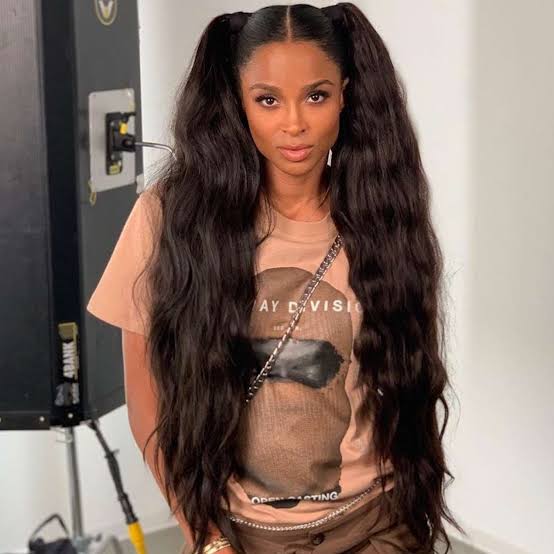
Can you wear long, voluminous wavy pigtails without looking like you are heading to a festival? The answer is yes, but only if the placement is high and the waves are soft. The photo shows thick, dark brown hair pulled into two high pigtails that fall past the shoulders, with a middle part and no bangs. The volume comes from the natural wave pattern, not from teasing, so the pigtails have movement and not stiffness. This suits a long or oval face because the high placement adds height; those with a round face might prefer the pigtails lower to avoid extra width at the temples. Ask your stylist for: long, voluminous wavy pigtails. The key is long layers that let the waves stack without creating a triangle shape. This is a salon-leaning style that holds best on second-day hair, and a mousse applied at the roots before blow-drying gives the lift that lasts through the day.
High Pigtails Black With Red Streaks
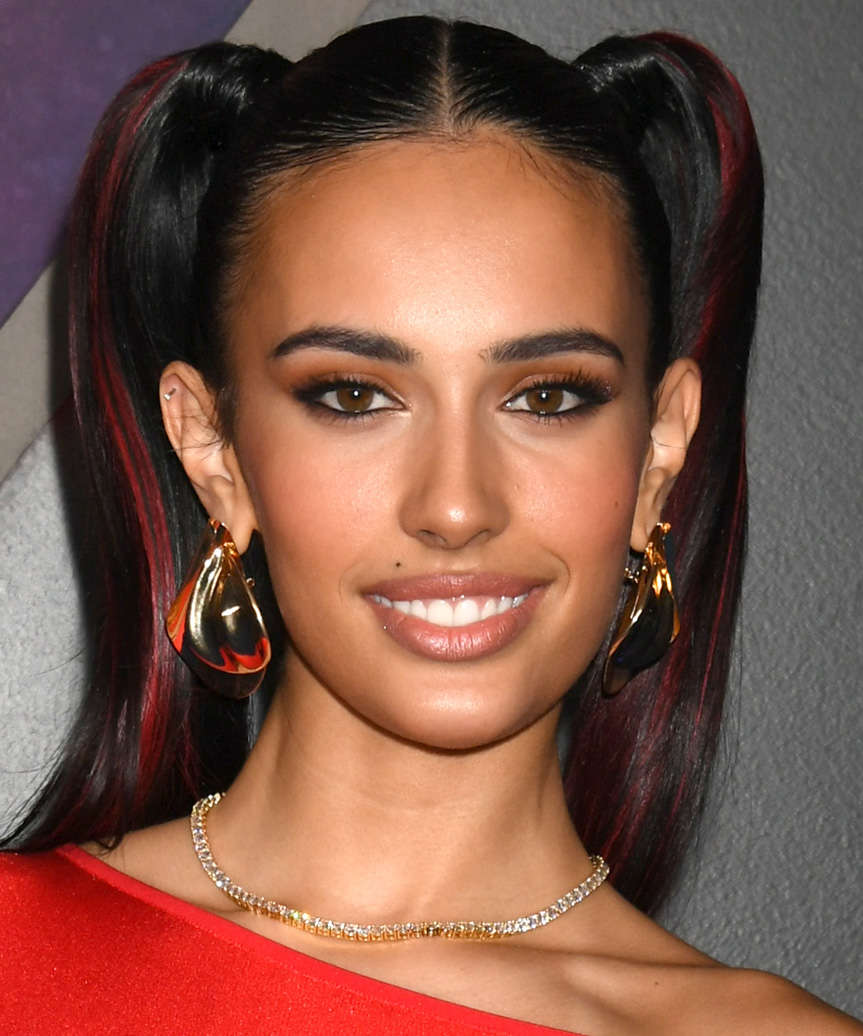
You get a lot of mileage from a high pigtail placement when the color does the heavy lifting, here, vibrant red streaks cut through straight black hair like signal flares. Ask your colorist for: high pigtails with red streaks. The middle part keeps the two sections balanced, and the high placement means the pigtails swing clear of the shoulders. A color-protecting shampoo will keep the red from drifting into rust, and a trim every eight to ten weeks maintains the blunt ends that make the streaks pop.
Mid-Back Braids With Sparkling Accessories
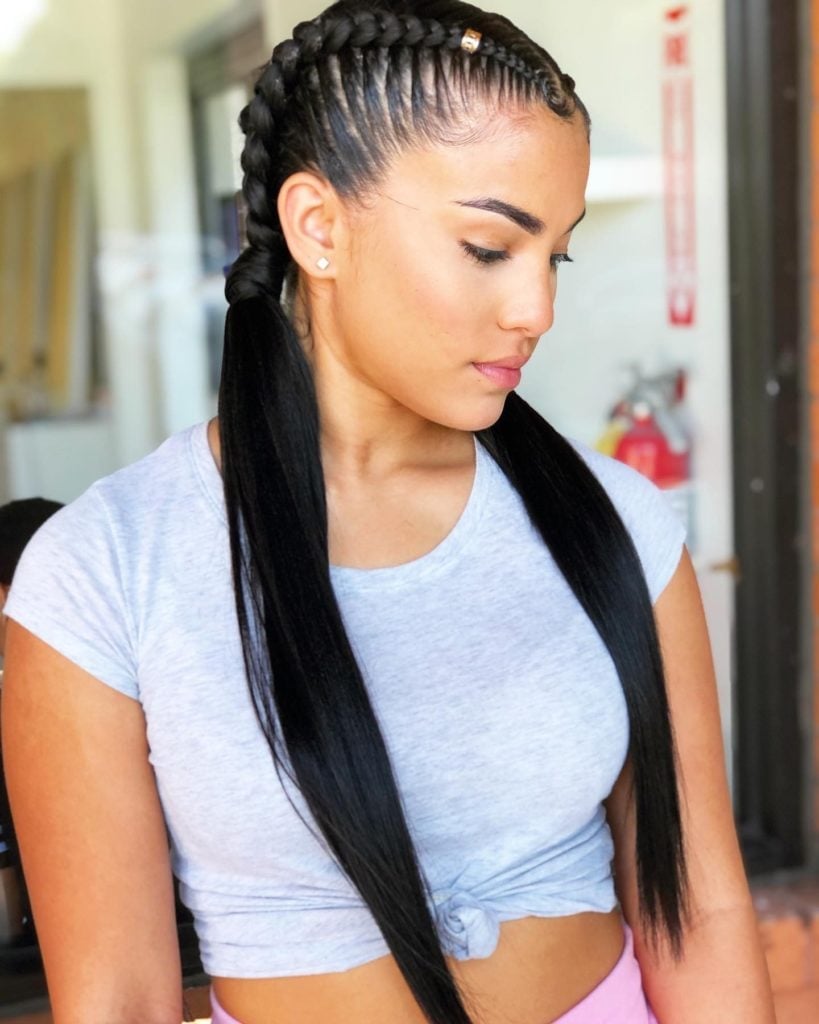
The neatness of two tightly woven braids creates a clean canvas, and the sparkling accessories do the rest. Placed at regular intervals along each braid, they catch light without overwhelming the hair’s natural gloss.
Straight, thick texture is ideal here. It holds the braids smooth and keeps the accessories from sliding. Ask your stylist for: mid-back braids with sparkling accessories. The middle part ensures symmetry, which matters when you are adding visible hardware. Secure each accessory with a small elastic underneath so it stays put through a full evening, and plan to remove them before washing to avoid tangles.
Side View Neat Braided Pigtails
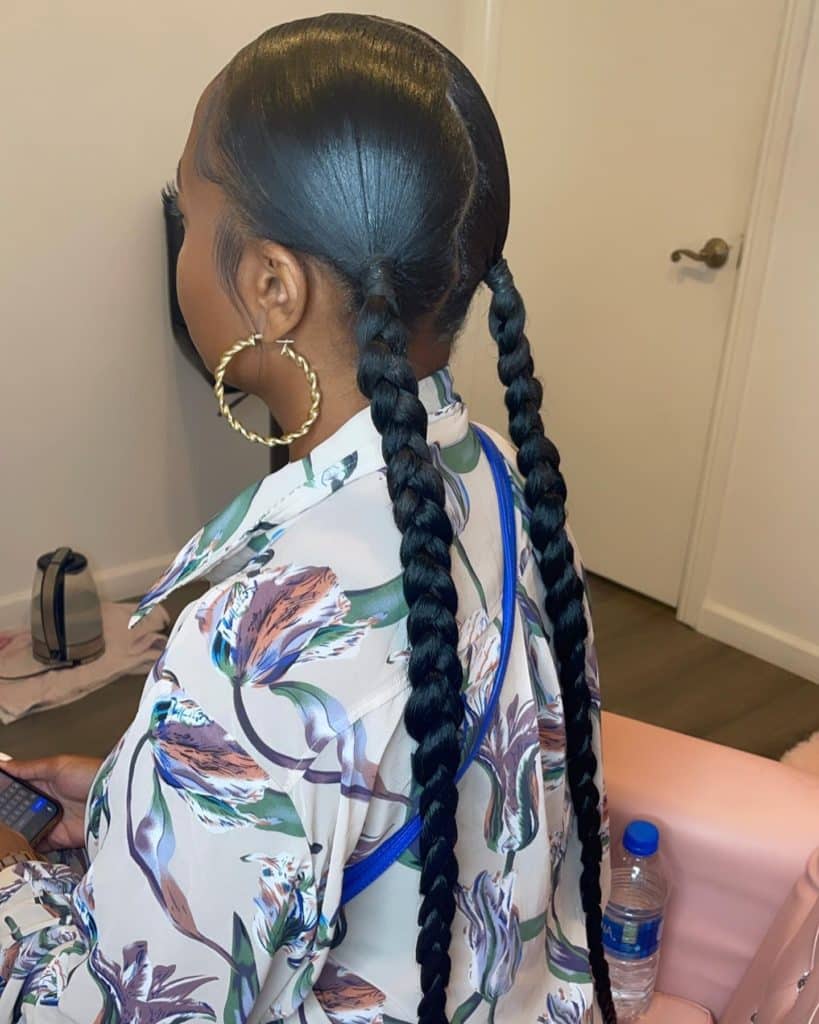
The side view reveals what front-facing photos hide: the braids are woven tight enough that no flyaways escape, and each section is exactly the same thickness from crown to end. Ask your stylist for: neat braided pigtails to mid-back. This is a salon-level finish because uneven tension shows immediately in straight, thick hair.
DIY braiders can get close with practice, but the precision here, each braid a mirror of the other, is why you book a pro. The dark brown color helps the clean lines appear polished. A strong-hold hairspray on a toothbrush smooths any baby hairs, and a trim every six to eight weeks keeps the ends blunt.
Mid-Back Fishtail Braids Blonde Dark Roots
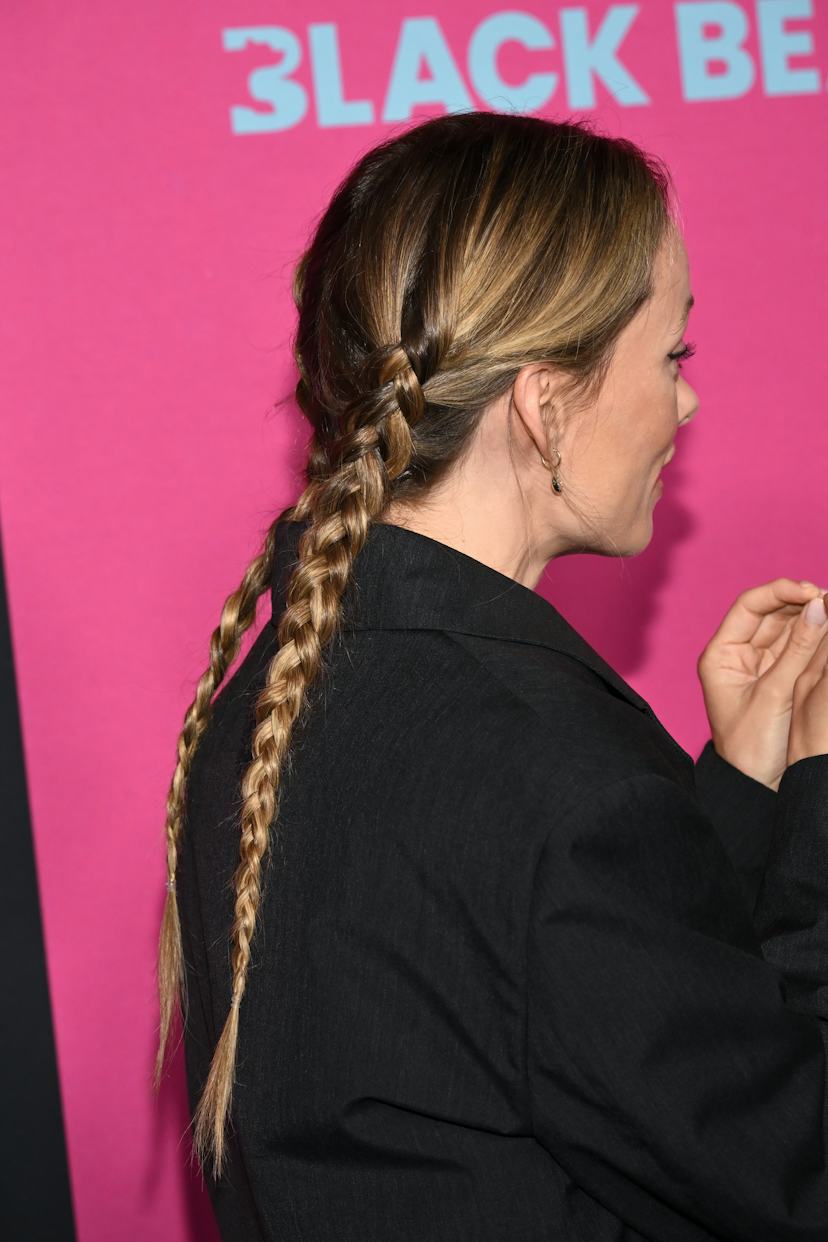
Fishtail braids with visible dark roots wear the grow-out differently than a solid blonde would, the contrast becomes part of the design, not a problem to fix. Ask your colorist for: mid-back fishtail braids with dark roots. A toning appointment every four to six weeks keeps the blonde sections from turning brassy while the roots stay natural. Gently pull apart each braid section for a wider, more textured silhouette that holds its shape all day without product.
Voluminous Pull-Through Braids Ash Blonde, Mid-Back
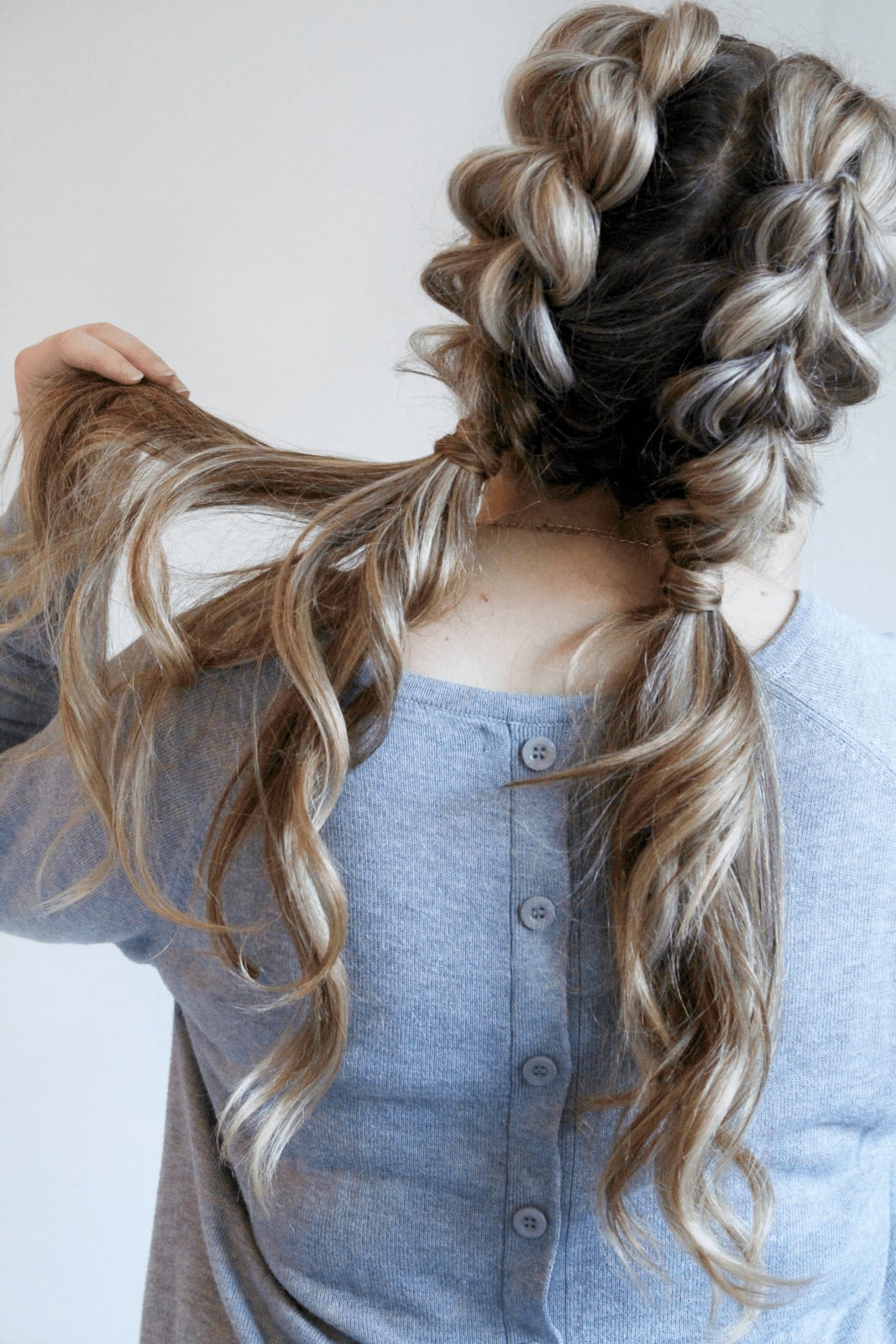
Pull-through braids deliver volume that a standard three-strand braid cannot match. Each section is doubled, so the resulting pigtail looks twice as thick. The ash blonde base with dark roots adds depth, but there is a trade-off. This is a daily-commitment style because the pulled sections loosen as you move.
Anyone who wants a set-and-forget option should skip it. Ask your stylist for: voluminous ash blonde pull-through braid pigtails. The middle part keeps the volume symmetrical. A purple shampoo once a week prevents the ash tone from warming up, and a toning appointment every four to six weeks handles the rest. The volume holds best on day one and softens from there.
Mid-Back Dark Brown Classic Braids

Can face-framing braids actually work on everyone? The answer is close to yes when they start with curtain bangs and a middle part, as they do here. A dark brown base with subtle highlights gives the loose braids dimension without needing a full color commitment. The wavy, thick texture holds the braids in place, and the mid-back length means there is enough weight to keep them from unraveling.
Ask your stylist for: classic braided pigtails to mid-back with curtain bangs. The layers around the face soften a square or angular jaw, while the braids themselves add volume on the sides for longer faces. A smoothing serum before braiding cuts down on flyaways, and a trim every six to eight weeks keeps the ends neat.
Mid-Back Blonde Dutch Braids
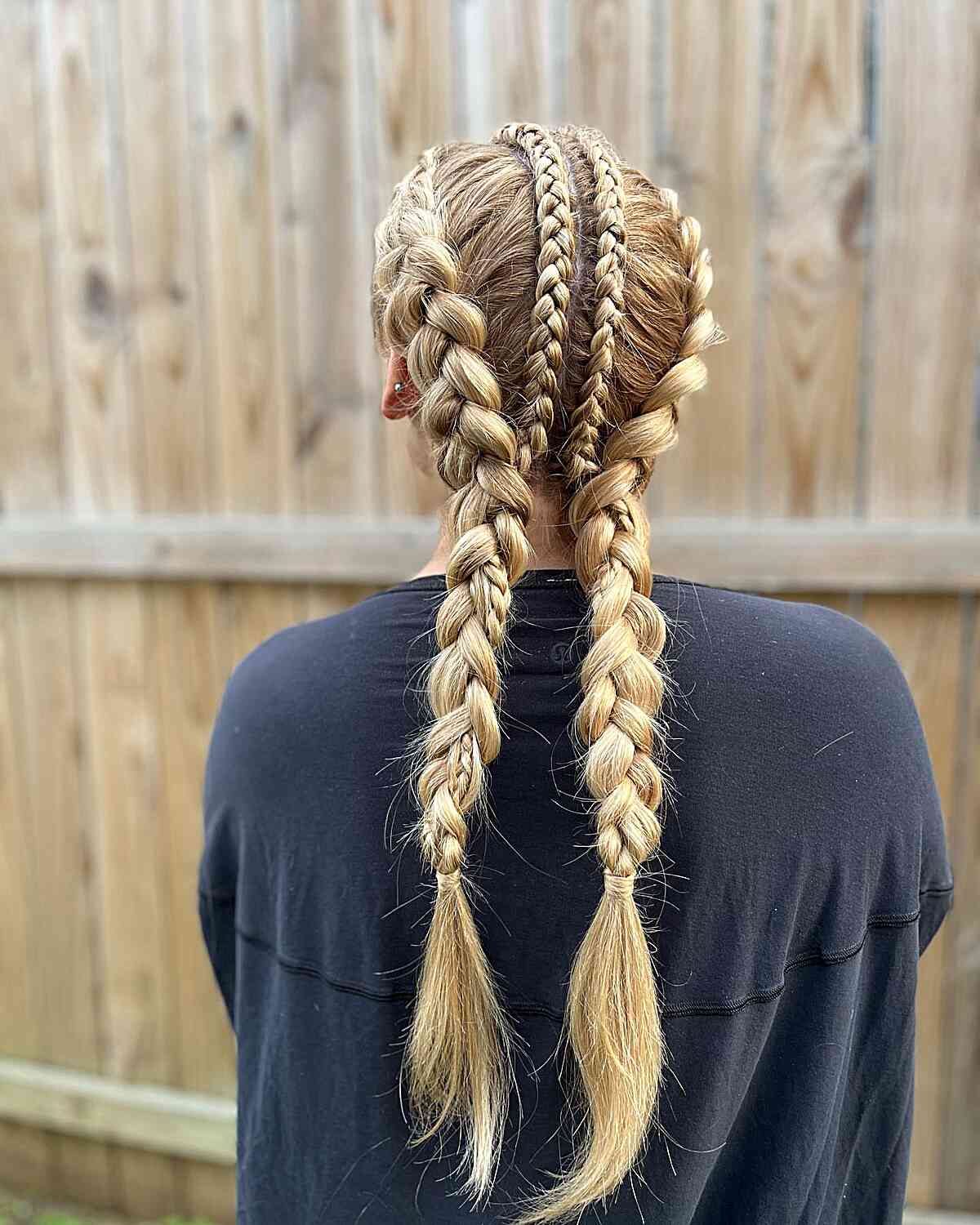
A Dutch braid is a reverse French braid: the strands cross under instead of over, which lifts the braid off the scalp. Here, two thick Dutch braids run from a middle part down to mid-back, ending in loose blonde waves with lighter highlights. The dense, wavy texture gives the braids a lot of visual weight. Ask your colorist for: mid-back Dutch braid pigtails with highlights. A texturizing spray on the finished braids keeps the weave defined, and a trim every six to eight weeks prevents the wavy ends from looking ragged.
Mid-Back Loose Braids With Bows
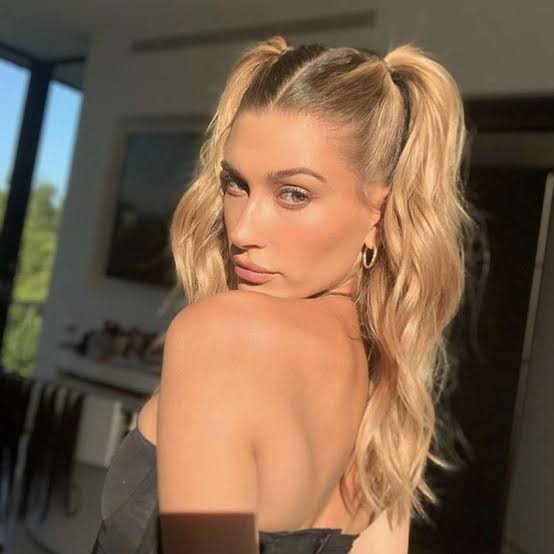
Small white bows turn loose pigtails into something you would wear to a garden party, not a playground. The ash blonde base with a root shadow keeps the glossy waves from looking washed out, and the curtain bangs frame the face without competing with the bows. The collarbone length is short enough that the pigtails do not swing into everything you do. Ask your stylist for: loose braids with bows and curtain bangs. This is a look for spring or early fall, when a little extra polish feels right without being fussy.
Mid-Back Pigtails Ash Blonde Balayage
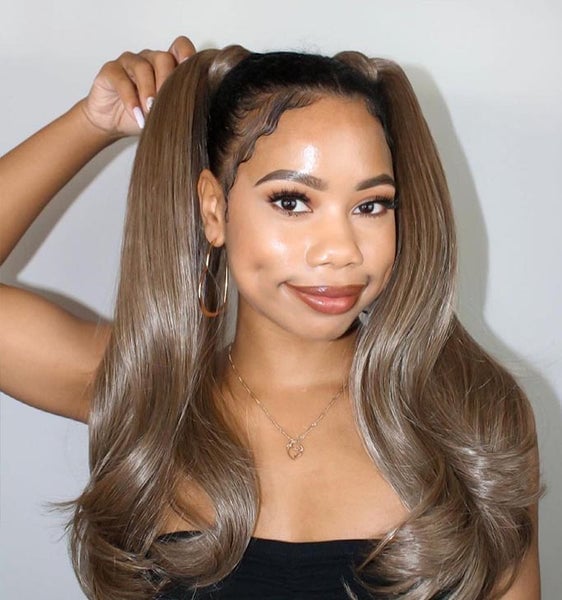
Ash blonde balayage works on loose wavy pigtails because the hand-painted light pieces catch the wave peaks, not the valleys. The mid-back length gives the high pigtails enough heft to hold their shape, and the wispy bangs keep the forehead from feeling bare. Ask your colorist for: high pigtails with wispy bangs and ash blonde balayage. A texturizing spray on the waves keeps the body without crunch, and a toner appointment every ten to twelve weeks stops the ash from warming up. A trim every eight weeks keeps the wispy bangs from turning into full fringe.
Collarbone Ash Blonde High Pigtails, Curtain Bangs
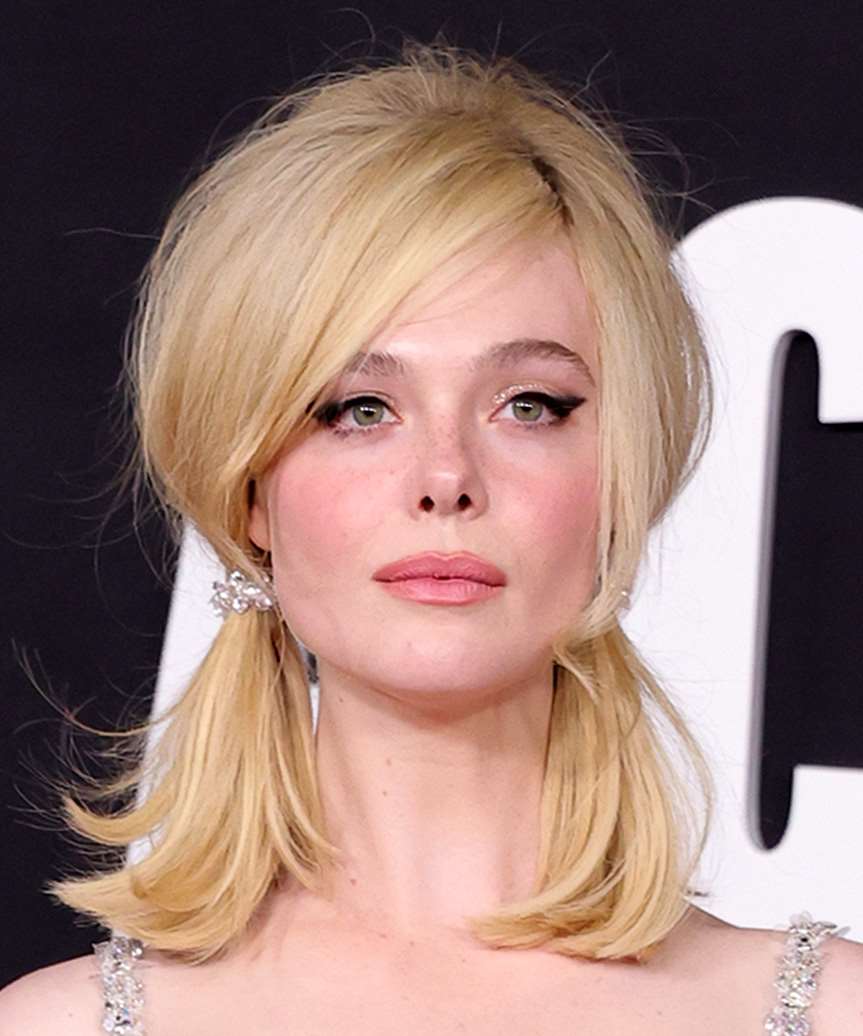
Fine wavy hair usually rebels against high pigtails, but collarbone length is short enough to keep the weight manageable. The ash blonde color here has a darker root shadow, which adds depth and makes the fine strands look denser. The curtain bangs break up the horizontal line of the pigtails. Ask your colorist for: high pigtails with loose waves and curtain bangs. The middle part elongates a round face, while the soft waves on the sides balance a long face. A shine serum on the ends helps the fine texture hold the wave pattern longer.
Shoulder Ash Blonde Braided Pigtails

Two neat braided pigtails from a middle parting, with blunt bangs and an ash blonde shade, make a graphic, low-effort statement. This is a natural fit for fine, straight hair at shoulder length: the braids hold their shape without bulk, and the blunt bangs add structure to the face. Ask your stylist for shoulder length braided pigtails with blunt bangs. To keep the look sharp, smooth flyaways with a dab of balm and trim the bangs every three to four weeks. Sunglasses turn the whole thing into a street style moment, no salon required.
Final Thoughts
Fine hair benefits from volume-building styles like bubble braids or pull-through braids, while thick hair can handle intricate braids and sleek high pigtails. The right technique makes the difference.
- Trim braided styles every 6-10 weeks to maintain braid integrity and prevent frizz.
- Tone blonde pigtails every 4-6 weeks to counteract brassiness.
- Use a heat protectant spray before styling wavy or straight pigtails.
- Wash pigtails as needed, allowing them to air dry or using a low-heat setting.
Master the art of the pigtail for a versatile and fun hairstyle.

