A running ponytail is a practical choice, but the right one depends on your hair’s texture, length, and how much time you have before you hit the pavement. Lived-in color and soft, face-framing layers are trending, which means your ponytail can look modern without a fresh salon visit.
These 17 Running Hairstyles range from quick, five-minute fixes to styles that hold through a marathon. Whether your hair is fine and falls flat by mile two, or thick and curly that needs taming, there’s a secure option here. No more stopping to redo your bun or tuck away stray pieces.
Thick Wavy Dark Blonde High Ponytail Flowing

The high ponytail here is built for motion, not for standing still. A strong elastic at the crown keeps the thick, wavy dark blonde hair anchored while the mid-back length streams behind with every stride. The middle parting keeps the front tidy, so nothing drifts into your face mid-run.
This style suits thick, wavy hair of mid-back length or longer, and the high placement works with most face shapes by adding lift at the crown. Ask your stylist for a high, flowing ponytail for activity, with layers cut in to let the waves move freely. Secure it with a sturdy tie, add a texturizing spray for grip, and plan a trim every eight to ten weeks. The payoff is a running hairstyles classic that holds through sprints and long distances alike.
Voluminous Ash Blonde Ponytail With Loose Curls
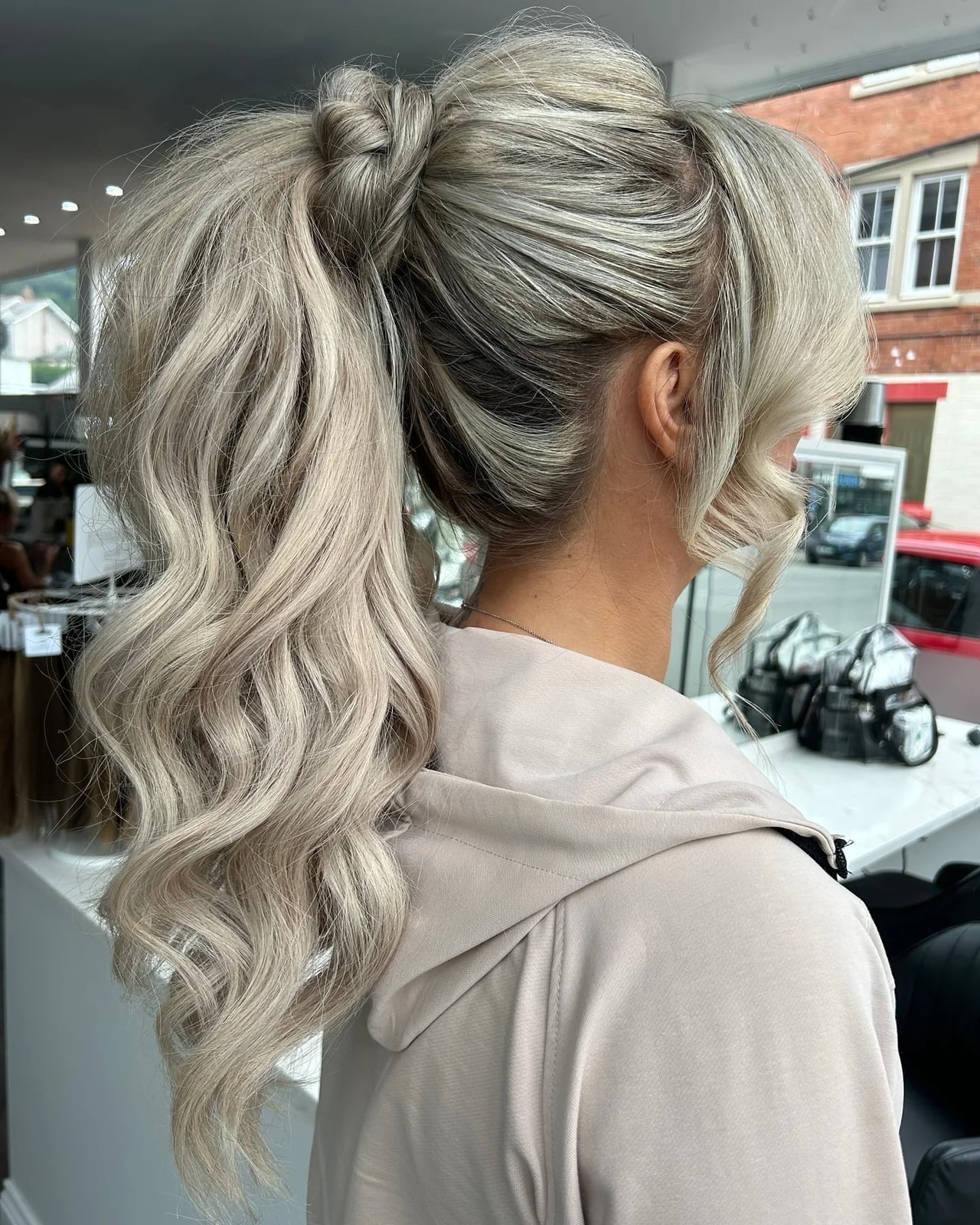
Wondering if a voluminous ponytail will actually stay put on a run? The trick is in the texture: large, loose curls give the ash blonde hair body and grip, so the high ponytail holds its shape without constant re-adjusting. Face-framing tendrils soften the look, and the highlights add dimension.
This style suits thick, wavy hair of mid-back length, and the volume works well for oval and heart-shaped faces by balancing the lower half. Ask your colorist for a high ponytail with loose curls and volume, plus subtle highlights for depth. It’s a salon-level style that suits an active lifestyle, so book a toning appointment every six to eight weeks to keep the ash blonde from turning brassy.
Thick Dark Brown Braided Ponytail
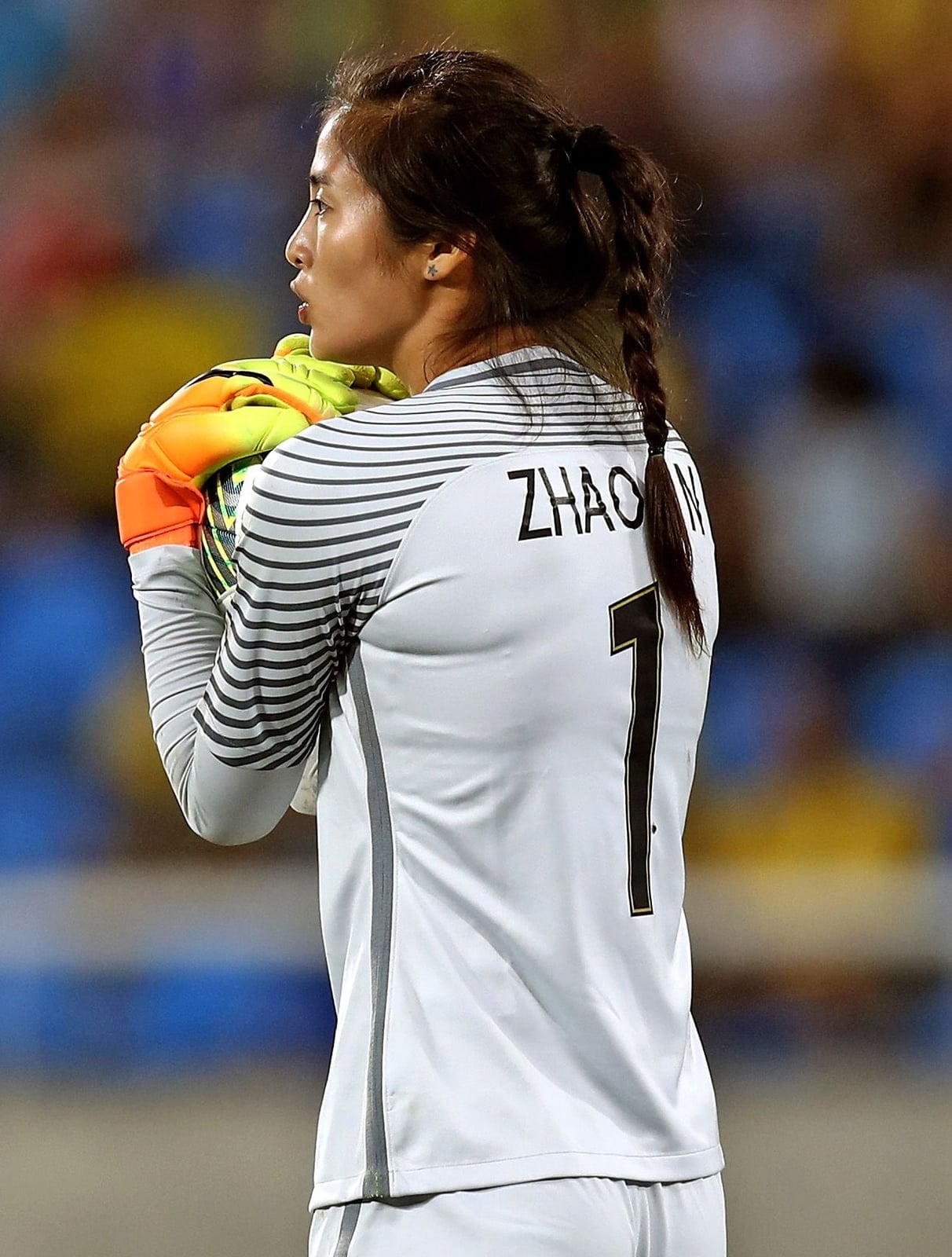
A thick, straight dark brown ponytail braided from the crown to the mid-back is a lesson in efficiency: the braid pulls the hair taut, locks in the length, and removes any chance of flyaways mid-stride. The middle parting keeps the front smooth, and the thick braid reads as a solid, secure unit.
Ask your stylist for a high, thick braided ponytail, keeping the braid uniform from root to tip. It suits thick, straight hair of mid-back length or longer, and works with any face shape. What to mention at the chair:
- Request a tight, even braid that starts at the crown.
- Ask for a strong elastic that won’t dent the braid.
- Specify the braid should extend to the mid-back, not beyond.
Voluminous Blonde Side Part Ponytail
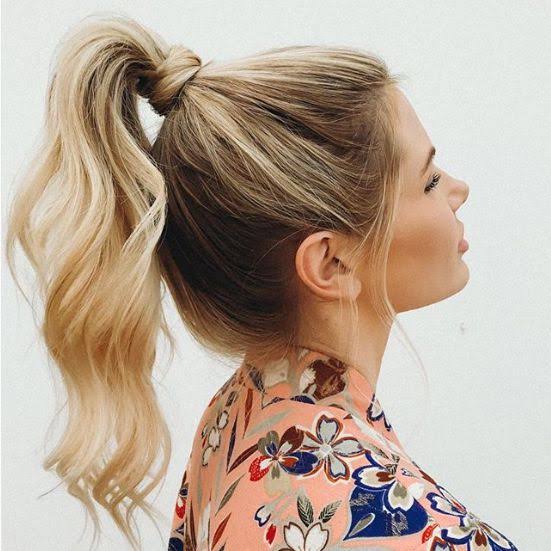
Compared to the middle-parted ponytails above, this one trades symmetry for lift. The side parting pushes the thick, wavy blonde hair to one side, which adds instant height at the crown and makes the high ponytail look fuller without extra teasing. The mid-back length waves give it a relaxed, lived-in feel.
It’s a DIY-friendly style: gather the hair high, secure it, and let the side part do the work. Ask your stylist for a high, voluminous wavy blonde ponytail with side part, and keep the layers soft so the waves don’t tangle. Tease the crown lightly for extra height, and refresh the blonde with a purple shampoo weekly to keep the tone bright. This one suits thick, wavy hair of mid-back length, and the side part flatters square and oval faces by softening the jawline.
Honey Blonde Cornrow Braided Ponytail
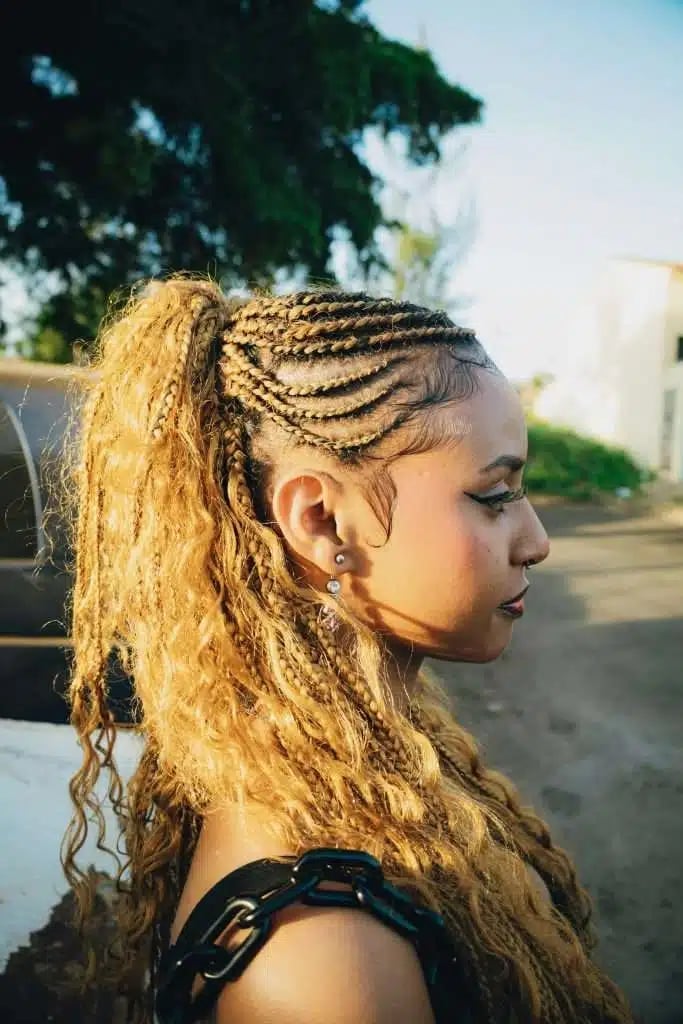
The cornrow technique here starts at the scalp, with intricate braids that lay flat and transition into a loose, curly ponytail at the mid-back. The honey blonde base with darker roots adds depth, and the thick, curly ends give the style its volume. The side view shows how the braids hug the head, keeping every strand locked in place.
Ask your stylist for a cornrow braided ponytail with loose curly ends, specifying the braids should be tight but not painful. It suits thick, curly or wavy hair of mid-back length, and the rows work with any face shape. The one real drawback: the transition point can fray if the braids aren’t sealed well, so expect to moisturize the scalp regularly and refresh the curls with water or curl cream. Plan a trim every ten to twelve weeks to keep the ends healthy.
Blonde Wavy Braided Ponytail With Headband
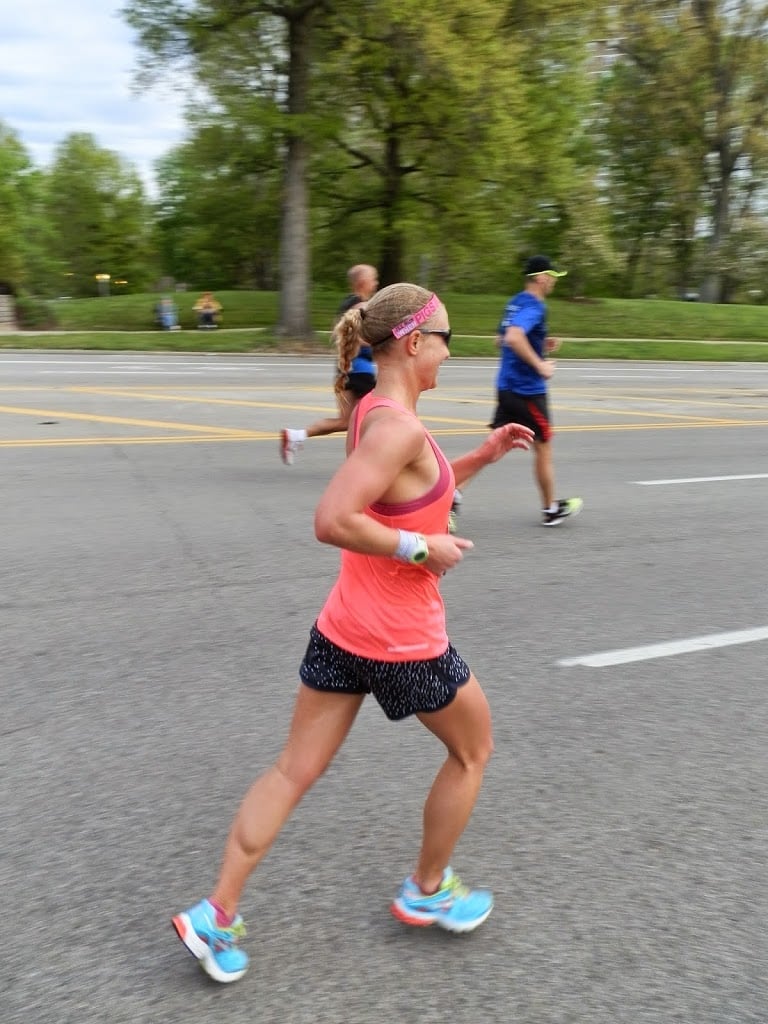
Ever wonder if a braided ponytail can survive an actual run without unraveling by mile two? This one, with its thick, wavy blonde texture braided into a single plait and held by a pink headband, is built for the task. The mid-back length gives the braid enough weight to swing naturally, while the middle parting keeps the face clear. It suits all face shapes, but the real requirement is thick, wavy hair: fine strands tend to slip out of a braid this substantial.
Ask your stylist for a braided ponytail secured with a headband. This is a salon-leaning style, so book it for a race day or a group training event when you want to look put together without fussing. The headband does double duty, keeping flyaways off your forehead and adding a pop of color. On the upkeep side, blonde needs a toning appointment every four to six weeks to keep the shade from going brassy.
Reddish Brown Straight Ponytail With Braid Detail
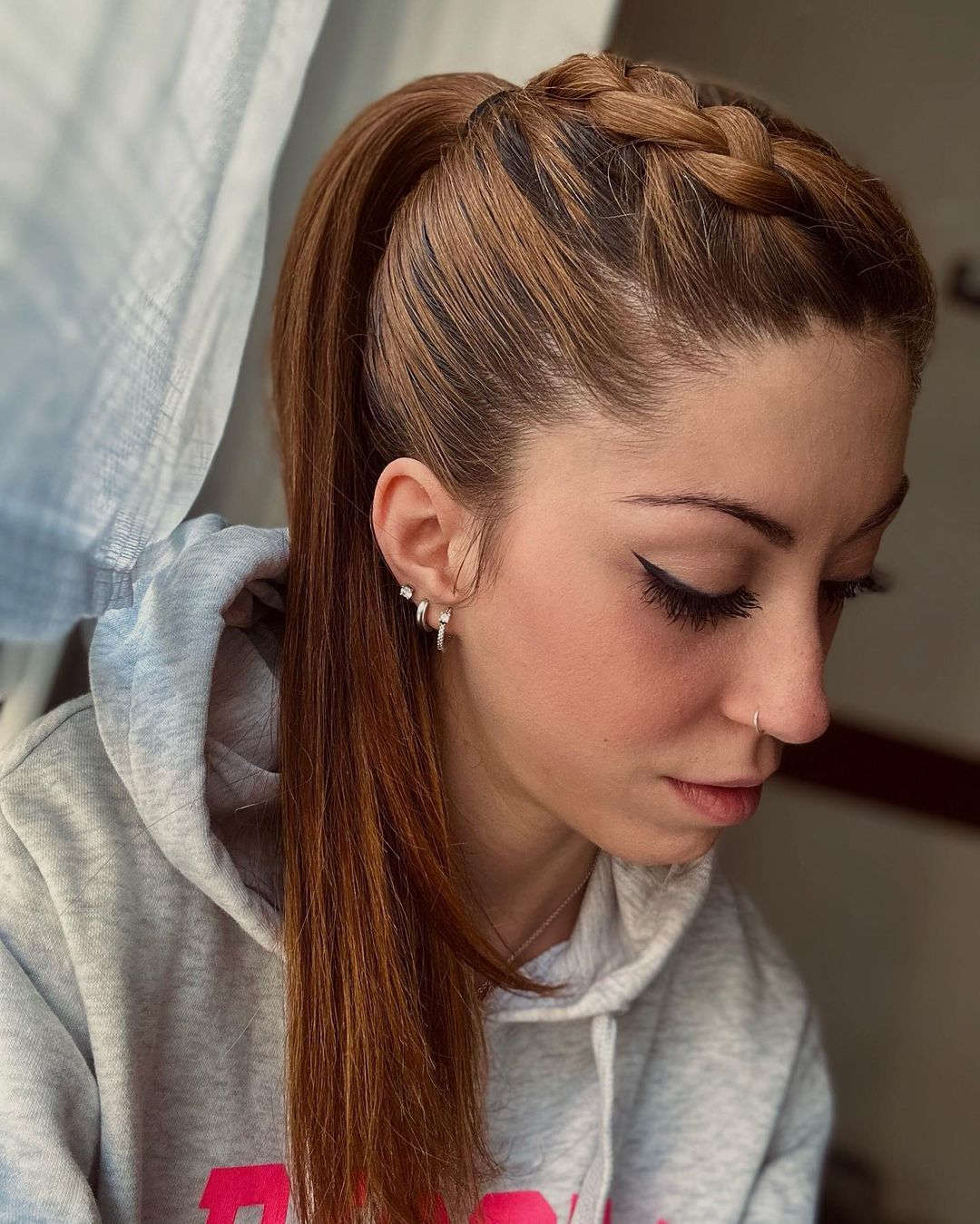
The common mistake with a hairline braid on fine, straight hair is pulling it too tight, which can cause breakage along the edges. This reddish-brown ponytail, falling to mid-back, works because the single braid is woven loosely enough to blend with the surrounding hair, not sit on top of it like a separate piece. Ask your stylist for a ponytail with braid detail along the hairline. The side parting helps the braid sweep naturally into the main ponytail, and it suits all face shapes since the detail is at the hairline, not the jaw. One drawback: on fine hair, the braid can look sparse if it is not sectioned cleanly, so a fine-tooth comb is essential to part the hair precisely before braiding.
Medium Brown Wavy Ponytail With Soft Waves
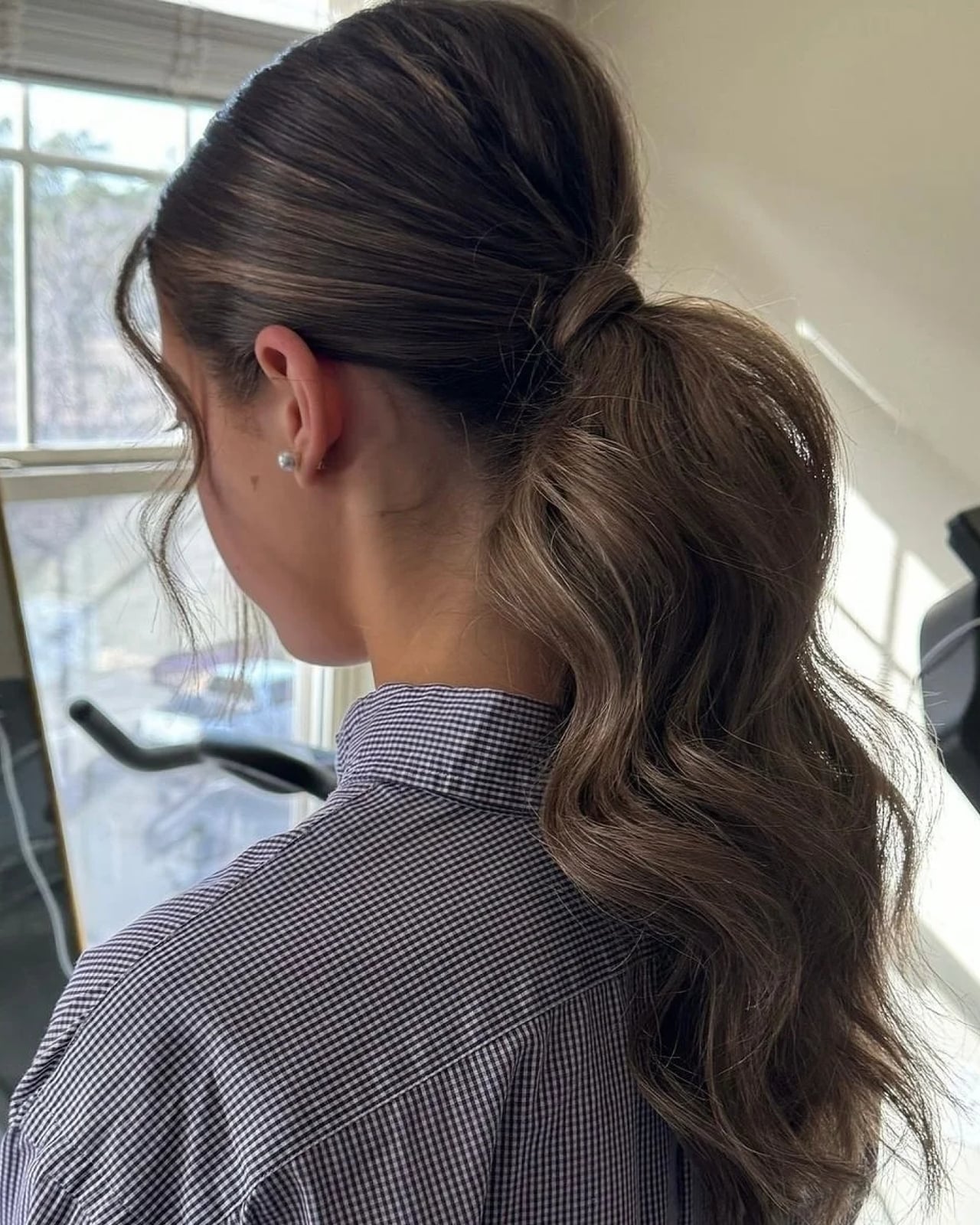
The design here is a medium brown ponytail with soft, loose waves and subtle highlights, gathered at the back of the head with enough volume at the crown to keep the silhouette from falling flat. What holds up during a run is the wave pattern: loose waves have more grip than straight hair, so the ponytail keeps its shape without constant re-styling. The mid-back length adds weight, which helps the waves hang rather than bounce into frizz.
Ask your stylist for a medium brown ponytail with soft waves and crown volume. This is a salon-leaning style, mostly because the waves need to be set with a large-barrel iron to look natural, not crimped. After a run, the waves relax but the volume at the crown stays, so a quick spritz of water and a re-scrunch brings the texture back. The subtle highlights need a toning appointment every six to eight weeks to keep the dimension clear.
Blonde Highlighted Ponytail With Sleek Base
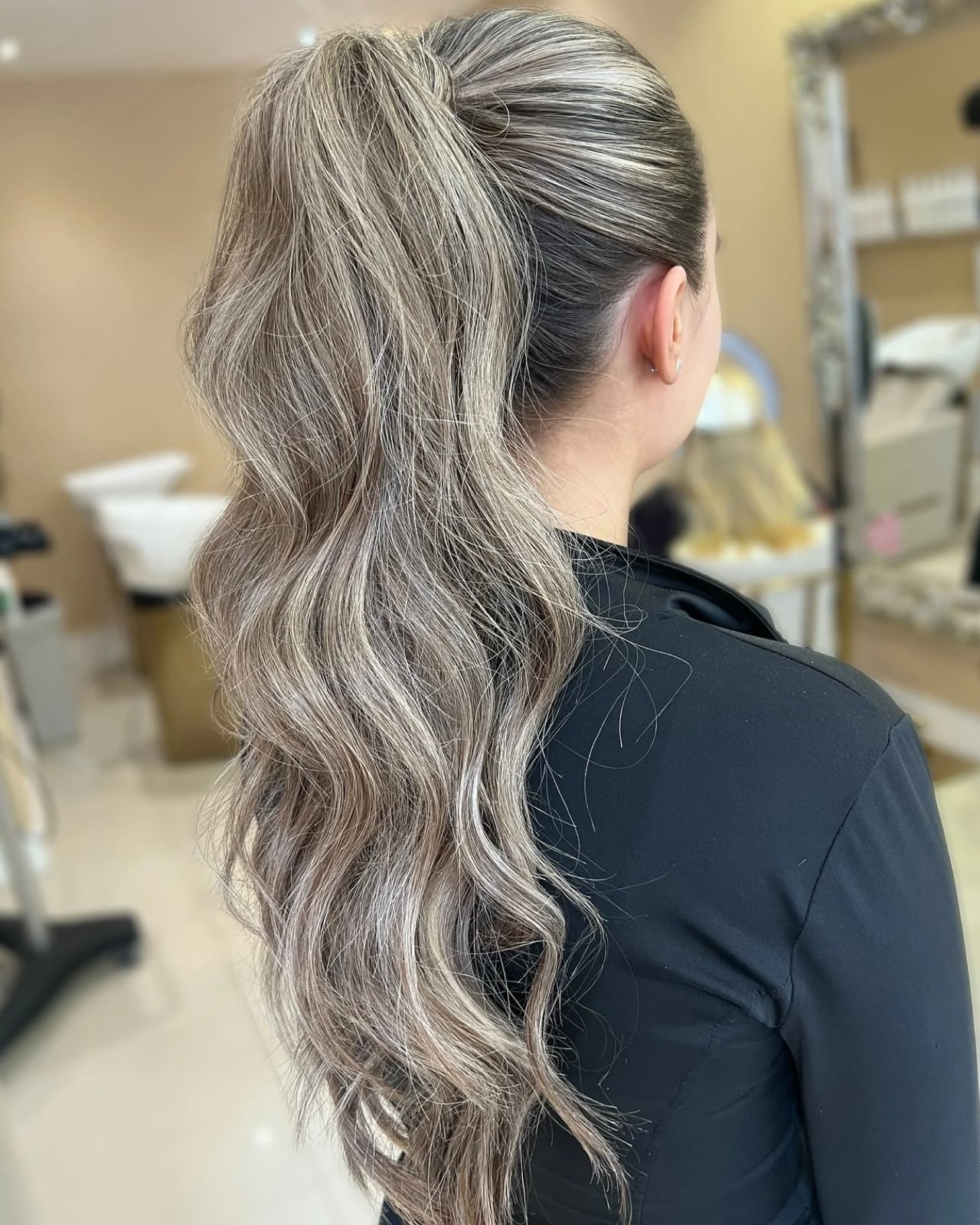
The technique starts with the base: the hair is pulled back smoothly from the face, then secured high on the head, which creates a sleek contrast with the wavy, highlighted length that follows. The blonde highlights are woven through the waves, adding depth so the ponytail reads as dimensional rather than a single block of color. The high placement is key, it lifts the eye and keeps the weight off the neck, which matters for a run.
Ask your stylist for a high ponytail with sleek base and blonde highlights. This is a salon-level style because the base requires a smooth finish, usually with a boar-bristle brush and a bit of smoothing cream to control flyaways. The waves are set with a curling iron, and the whole thing needs to be built in layers: sleek base first, then the ponytail, then the waves. Highlights need refreshing every six to eight weeks to keep the contrast sharp.
Thick Wavy Blonde High Ponytail, The Hair Extends To The Mid-Back
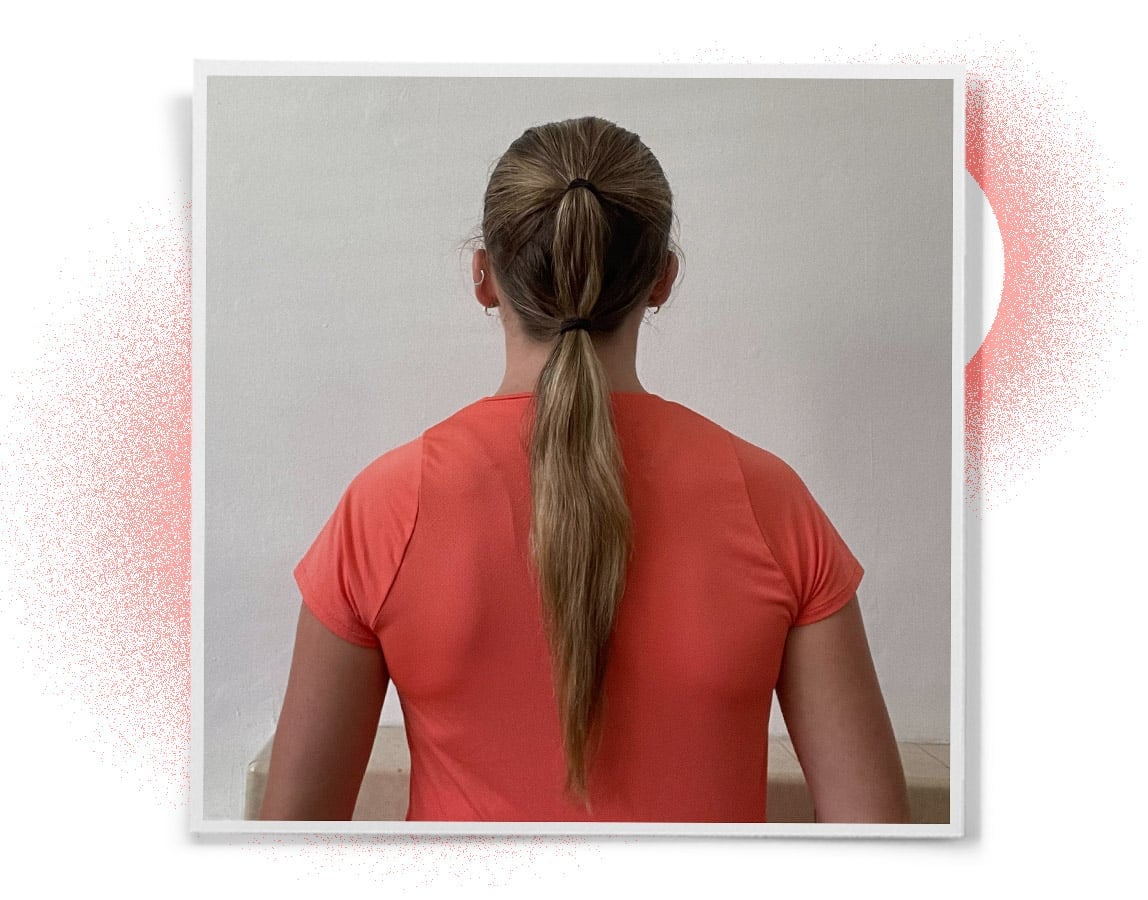
Wondering how to get a high ponytail that looks thick and wavy without spending an hour at the mirror? The key is in the ask. This one is a high, thick, wavy blonde ponytail that extends to the mid-back, with no bangs and a middle parting. The simplicity is the appeal: it is a DIY style that takes about five minutes once you know the trick.
Ask your stylist for a high, thick, wavy blonde ponytail. The words matter because a stylist will know to leave the crown slightly textured, which gives the ponytail natural volume without backcombing. At home, you can achieve the same by gathering the hair high, securing it with a tie that matches the blonde, and then applying a texturizing spray to the length to encourage the waves to hold. This style works for a daily run or a busy day, and it suits most face shapes because the height adds balance. Blonde color needs a gloss every four to six weeks to keep the tone fresh.
Thick Straight Red High Ponytail

This thick straight red ponytail sits high enough to stay out of the way on a trail run, and the mid-back length gives it some swing. Layers keep the weight from pulling the whole thing down, which matters when you’re picking up pace. To get close at home, start with a smoothing serum worked through damp hair, then blow-dry straight with a round brush. Gather everything at the crown and secure with a strong elastic. Finish by wrapping a small section of hair around the band and pinning it underneath. The red color needs a gloss or toner every six to eight weeks to keep it from dulling. Ask your stylist for: high, thick straight red ponytail.
Thick Curly Dark Brown Shoulder Length Ponytail

This high ponytail on shoulder-length curly dark brown hair is built for thick, curly textures that need room to move. The middle part pulls the front back cleanly while the wind-blown curls add volume without extra styling. The shorter length means you want enough density to fill the ponytail. Ask your stylist for: high ponytail for curly hair, shoulder length. A strong hold gel or mousse applied before gathering keeps the curls defined and frizz-free for the duration of a run. Trim every six to eight weeks to keep the ends from splitting.
Sleek Light Brown Straight Ponytail
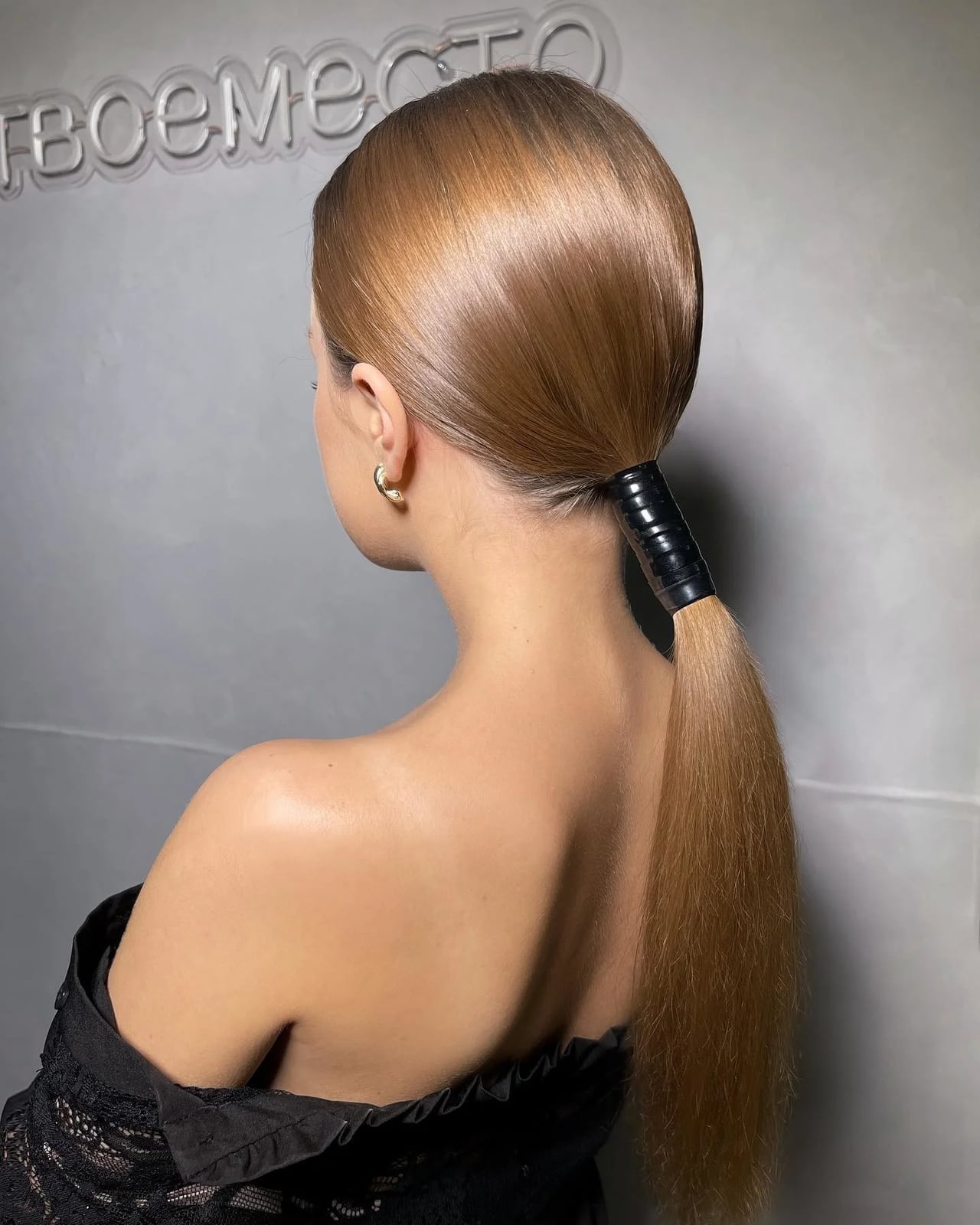
This sleek light brown ponytail is the opposite of the laid-back versions: it’s pulled tight, glossy, and precise. The fine, straight texture holds the shape well, and the mid-back length gives it enough weight to hang smoothly. You’ll need a shine serum and a boar bristle brush to get the finish this close, then a strong elastic to keep the base secure. The wrap detail at the band hides the hardware, which makes it look more polished than a plain ponytail. The trade-off is daily effort: any flyaways or frizz will show against the glossy surface, so expect to re-smooth the front before heading out. A trim every six to eight weeks keeps the ends blunt and clean. Ask your stylist for: sleek, glossy light brown ponytail.
Blonde Braids Crown Ponytail
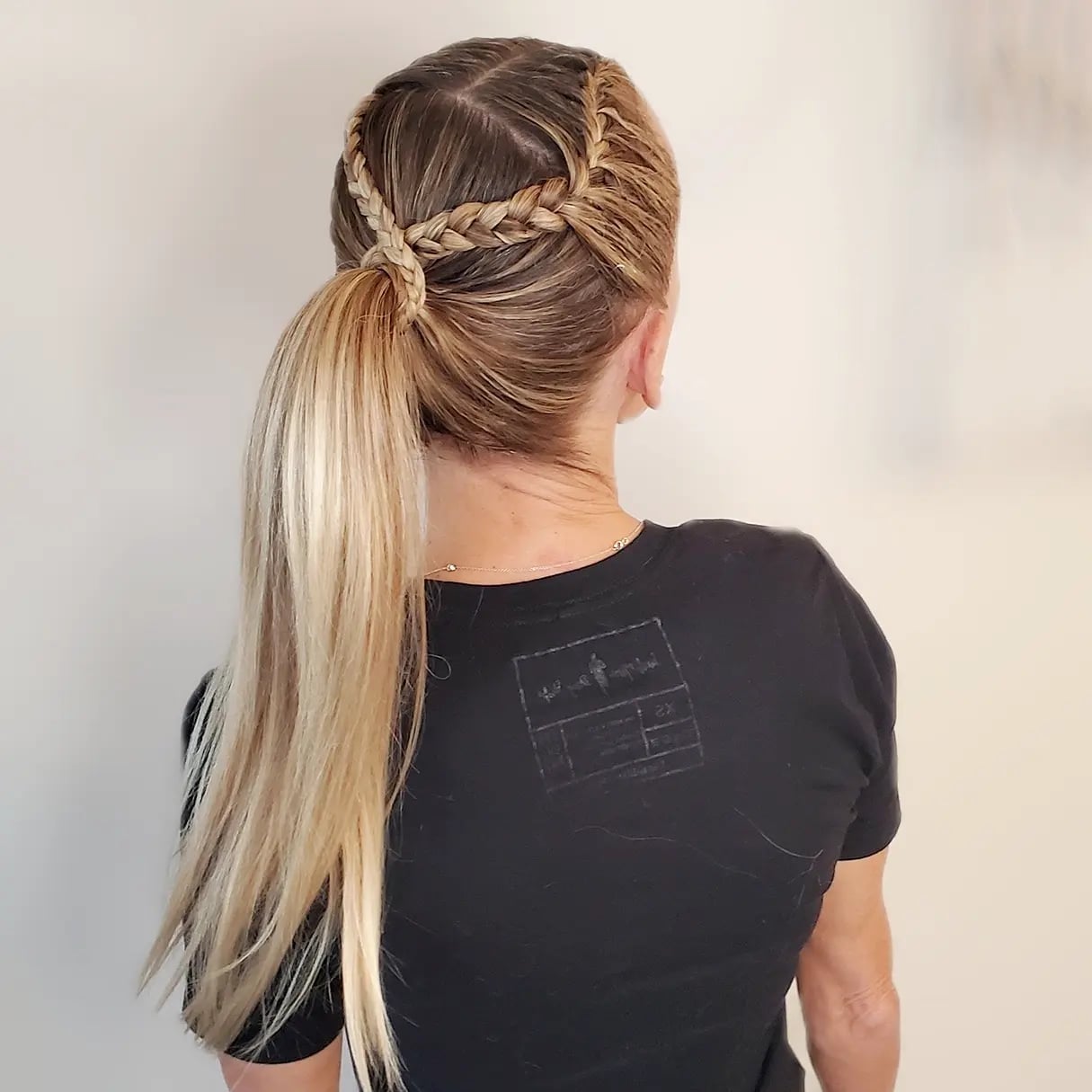
The braided crown here is built from the front hairline, worked back in a continuous plait that circles the head before feeding into the ponytail. The blonde highlights catch the braid pattern, so you see the texture even from behind. This style needs thick, wavy hair of mid-back length to support the braid and give the tail volume. The middle part keeps the crown symmetrical, and the braids are secured tightly at the nape so nothing shifts mid-run. Ask your stylist for: ponytail with braided crown detail. Because the braids hug the scalp, the style holds for hours, but the blonde requires a toner every four to six weeks to prevent brassiness.
Dark Brown Wavy High Ponytail Dynamic
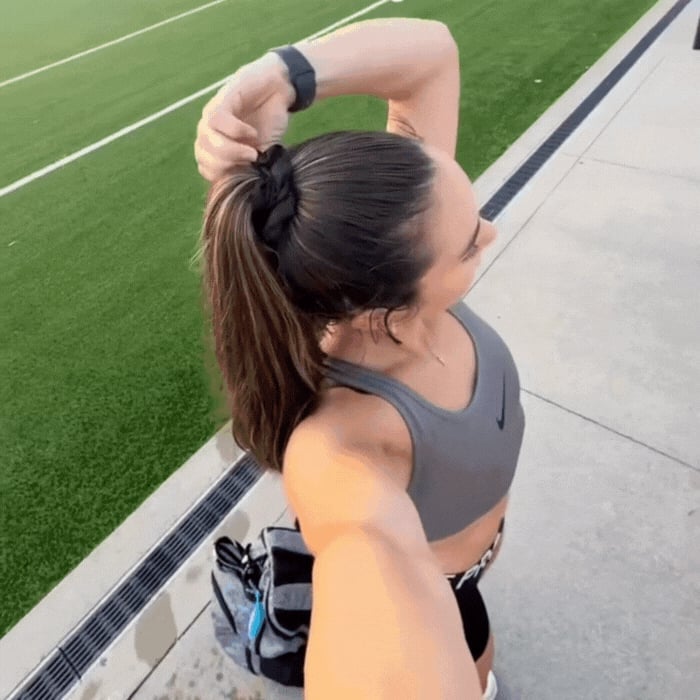
This high ponytail on thick, wavy dark brown hair moves with you, which is the point. The mid-back length adds momentum, and the waves keep it from looking flat. But the trade-off is real: to keep the front pulled back tightly, you need a strong hold product and a bit of patience, because waves have a habit of escaping. The middle part helps the sleek front look deliberate, not rushed. Ask your stylist for: tightly pulled high dark brown ponytail. It holds for a run, but expect to redo the front if you’re out for more than an hour. A trim every eight to ten weeks keeps the ends from fraying.
Thick Curly Black Space Buns With Clips
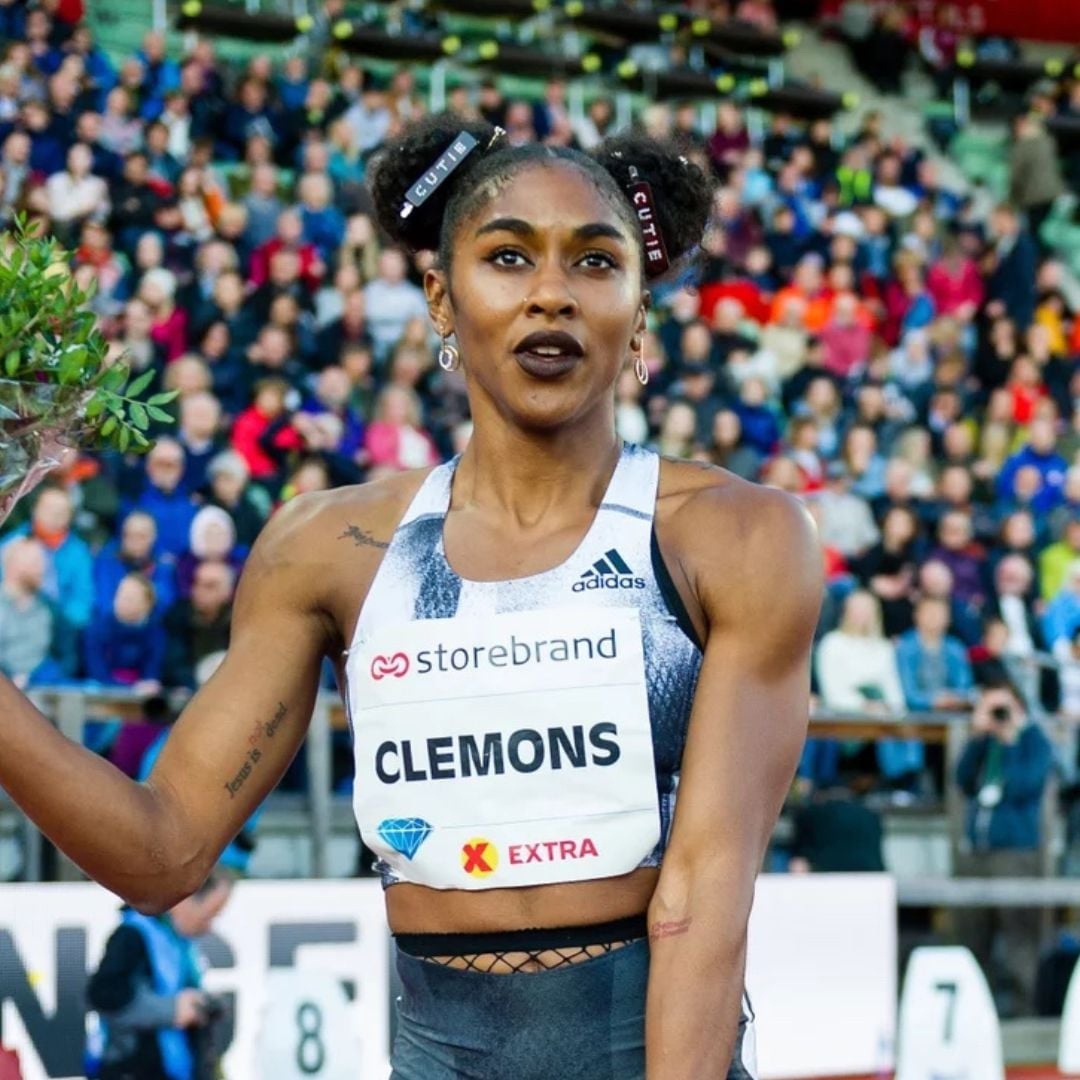
Ever wondered if space buns can actually survive a run without turning into a frizzy mess? With thick, curly black hair parted down the middle and swept into two high buns secured with small clips, this style stays put while the front wisps frame your forehead. The style works with many face shapes, and you need mid-back length or longer to wrap the curls into each bun. Ask your stylist for: two high space buns with front wisps. Apply a texturizing spray before sectioning for better grip, and plan a trim every eight to ten weeks.
Compared to a single ponytail, which can swing and slap your neck, the space buns hold everything closer to the head. That makes them a practical pick for sprints or a casual trail jog, while the curly black texture adds enough visual interest that you can skip the styling products.
Thick Curly Black Afro Puff With Headband

The clever part of the afro puff is that it pulls the hair up and away from both your face and your neck, which is exactly where heat builds during a run. For thick, curly black hair in a short length, gather it high on the crown, smooth the front with your palms, and secure it with a headband to catch any stray edges. It suits most face shapes and takes under five minutes to set. Ask your stylist for: high afro puff with headband. To keep the puff from flattening overnight, wrap it in a silk scarf and refresh the curls with a little water in the morning; a trim every twelve weeks keeps the shape round.
Final Thoughts
For fine hair, reach for styles with a braided base or added texture to create grip. For thick, curly hair, choose high puffs or secure buns that contain the volume without pulling at the scalp. Match the style to your texture and the distance ahead.
- Trim split ends every six to eight weeks.
- Use a heat protectant before any heat styling.
- Tuck loose ends back with bobby pins.
- Wash and condition one to two times weekly.
Keep your focus on the run, not your hair.

