Shadow root is the color technique that blends your natural base into lighter lengths, so the grow-out line looks deliberate instead of overdue. It’s the reason lived-in color now outranks the harsh regrowth of traditional highlights.
This collection covers 31 shadow root ideas, from short bobs to mid-back waves, in ash, honey, copper, and platinum tones. Whether your hair is fine or thick, straight or curly, there’s a version that softens the transition and stretches salon visits. If you’ve been fighting a visible root line or a tone that turns brassy, these are the fixes your colorist can build in.
Collarbone Ash Blonde With Shadow Root
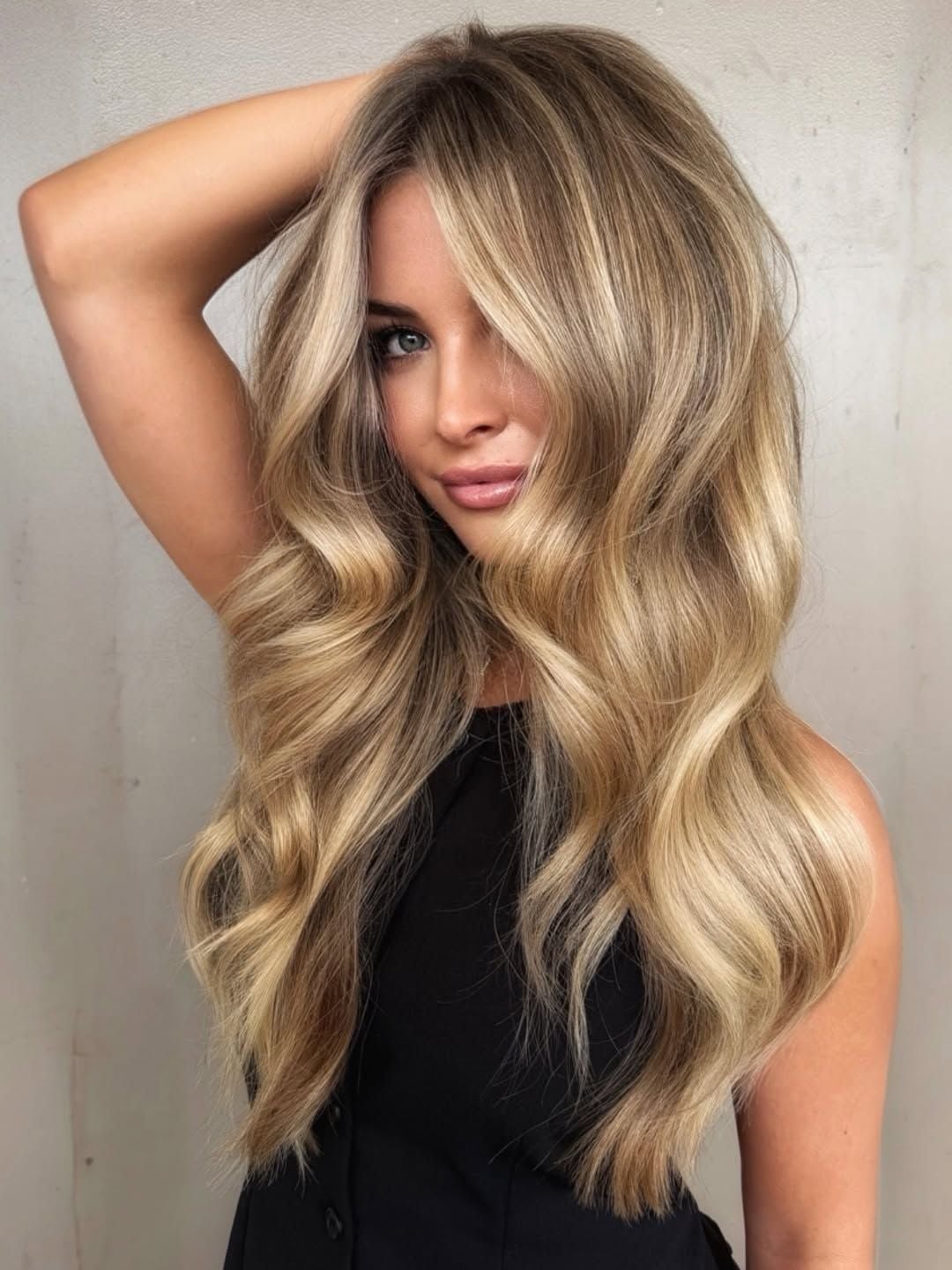
That ash blonde is cool enough to read as silver in some light, but the shadow root at the crown keeps it from looking washed out. The long layers and face-framing bangs give thick, wavy hair room to move without losing shape. Ask your colorist for: ash blonde with a shadow root, long layers and face-framing bangs. A middle part and collarbone length work with both oval and square faces. Style it with a texturizing spray for enhanced waves, and plan for a trim every eight to ten weeks to keep the layers from feeling heavy.
Blonde Balayage Bob With Dark Shadow Root
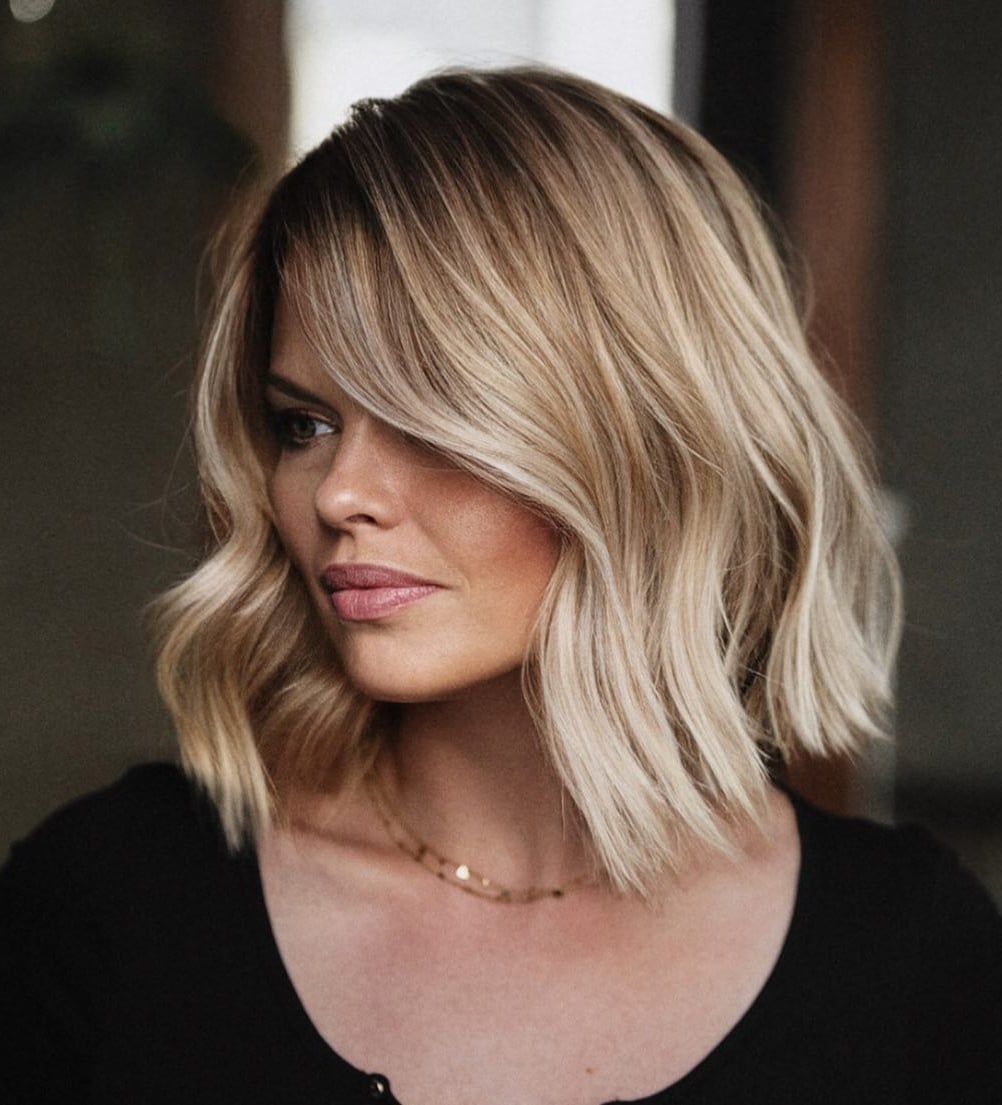
Wondering how to get a bob that doesn’t look like a single block of blonde? The answer is a dark shadow root that graduates into a blonde balayage. The bob hits at collarbone, so it clears the shoulders without hovering at an awkward in-between spot, and the curtain bangs soften a round or heart-shaped face. Ask your colorist for: blonde balayage bob with a dark shadow root and curtain bangs. The soft waves are a blowout with a large round brush, and the blonde needs a toning appointment every six to eight weeks to keep brassiness away.
Beige Blonde Balayage With Dark Root Shadow, Mid-Back
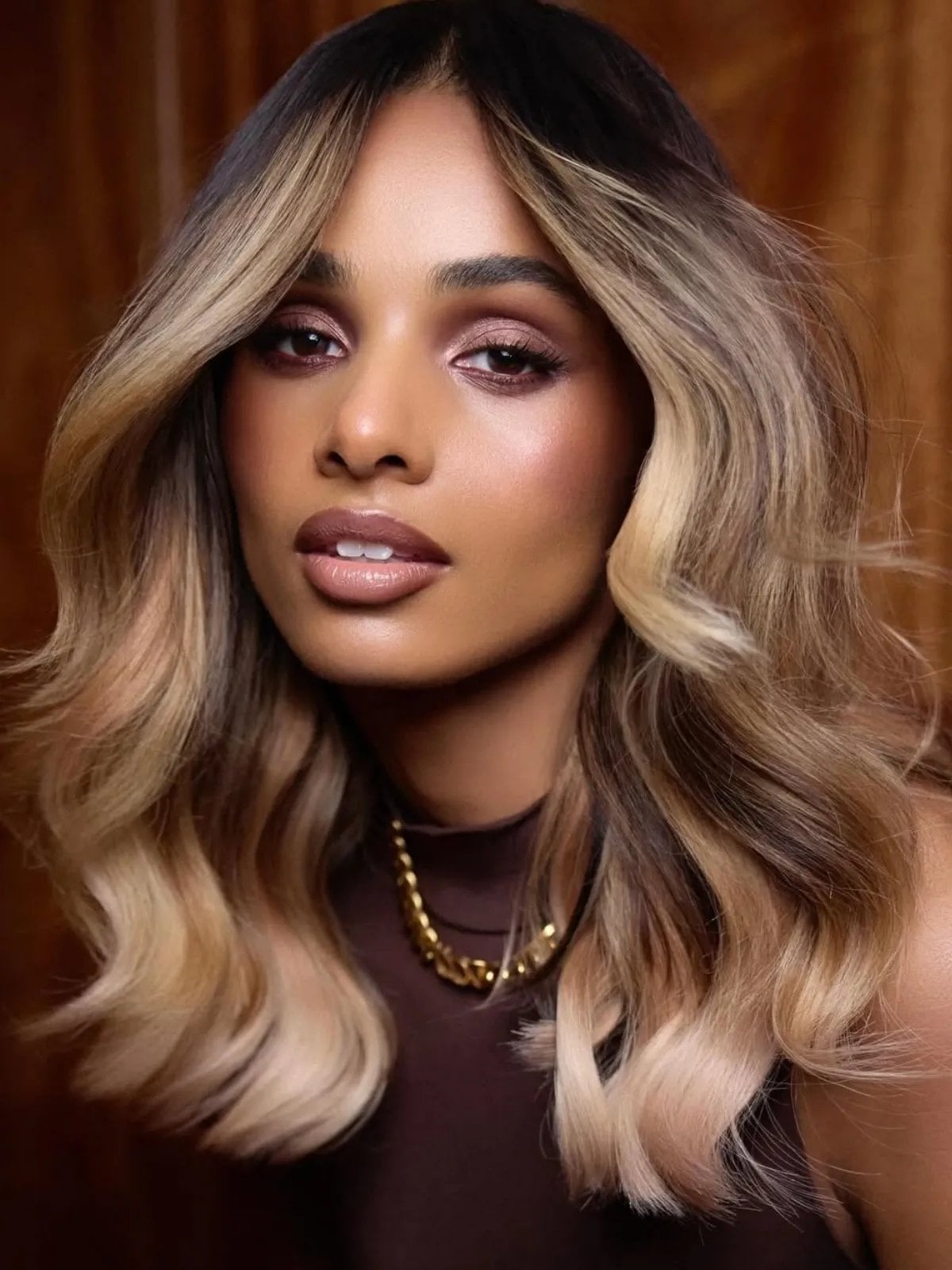
A shadow root is built by painting the darker base color a quarter-inch down from the scalp, then feathering it into the lighter lengths so no hard line exists. Here the transition moves from a dark root shadow into a beige blonde balayage across thick, wavy mid-back-length hair. The curtain bangs and long layers keep the weight distributed rather than dropping all the volume at the ends. Ask your colorist for: dark root shadow to beige blonde balayage, long layers, curtain bangs. Use a smoothing serum for that glossy finish, and trim the layers every ten to twelve weeks to maintain the shape without losing length.
Stacked Pixie Bob With Icy Champagne Shadow Root
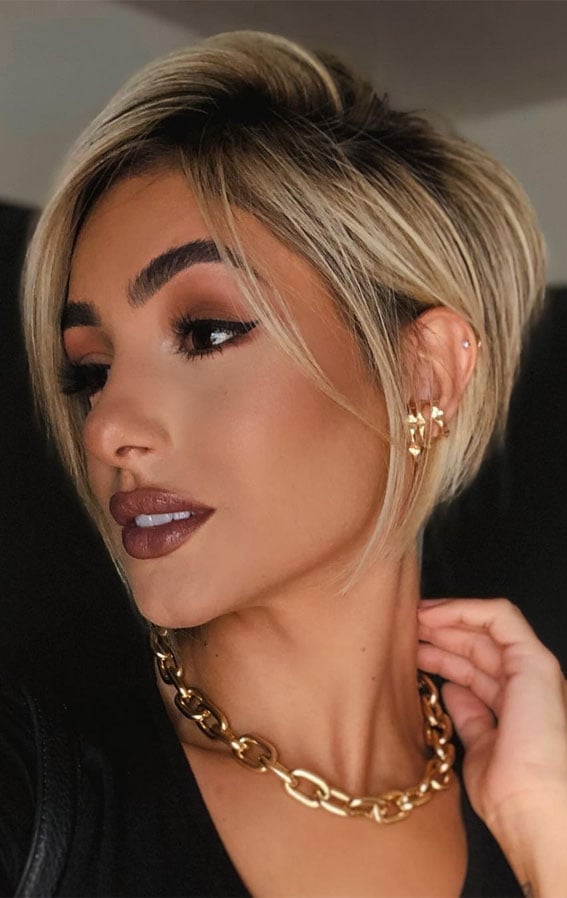
Fine, straight hair often struggles to hold a dimensional color, but a stacked pixie bob gives the icy champagne shadow root enough structure to read clearly. The shorter back and side-swept bangs mean the root shadow sits at the crown rather than vanishing into longer lengths. Ask your colorist for: stacked pixie bob, icy champagne blonde, side-swept bangs, shadow root. The sleek finish is a flat iron pass away, but the stacked cut demands a trim every four to six weeks to keep the silhouette sharp. Anyone with coarse or thick hair should pass. The stacked layers need finer weight to sit close to the head.
Long Bob With Side-Swept Bangs And Shadow Root
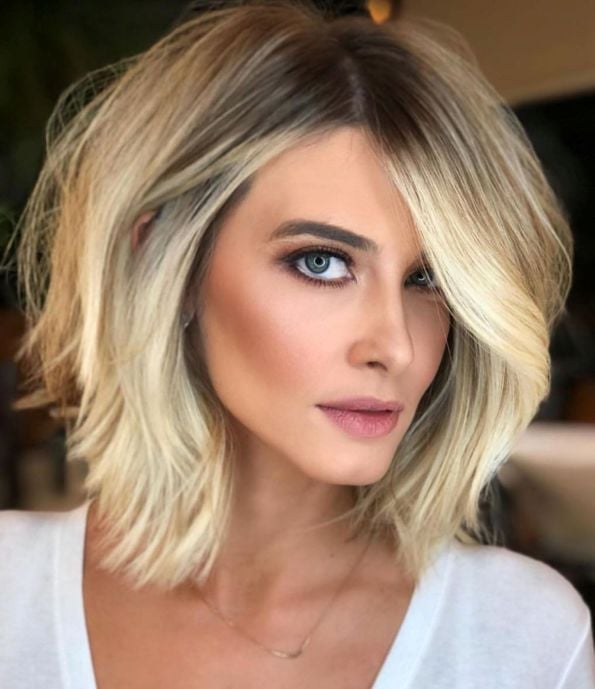
A traditional blonde lob can read as one flat shade, but the dark shadow root here adds contrast without needing a full balayage. The side-swept bangs and gentle waves keep the collarbone-length cut from feeling too blunt. Ask your colorist for: long bob, blonde with dark shadow root, side-swept bangs. Medium, wavy hair air-dries well with a curl cream for those loose waves, and the bob shape holds for about six to eight weeks before the ends need a trim. It is not a wash-and-wear cut. The side-swept bangs need a quick round-brush pass if you want them to sit correctly rather than drift into your eyes.
Fine Straight Bob With Platinum Blonde And Shadow Root
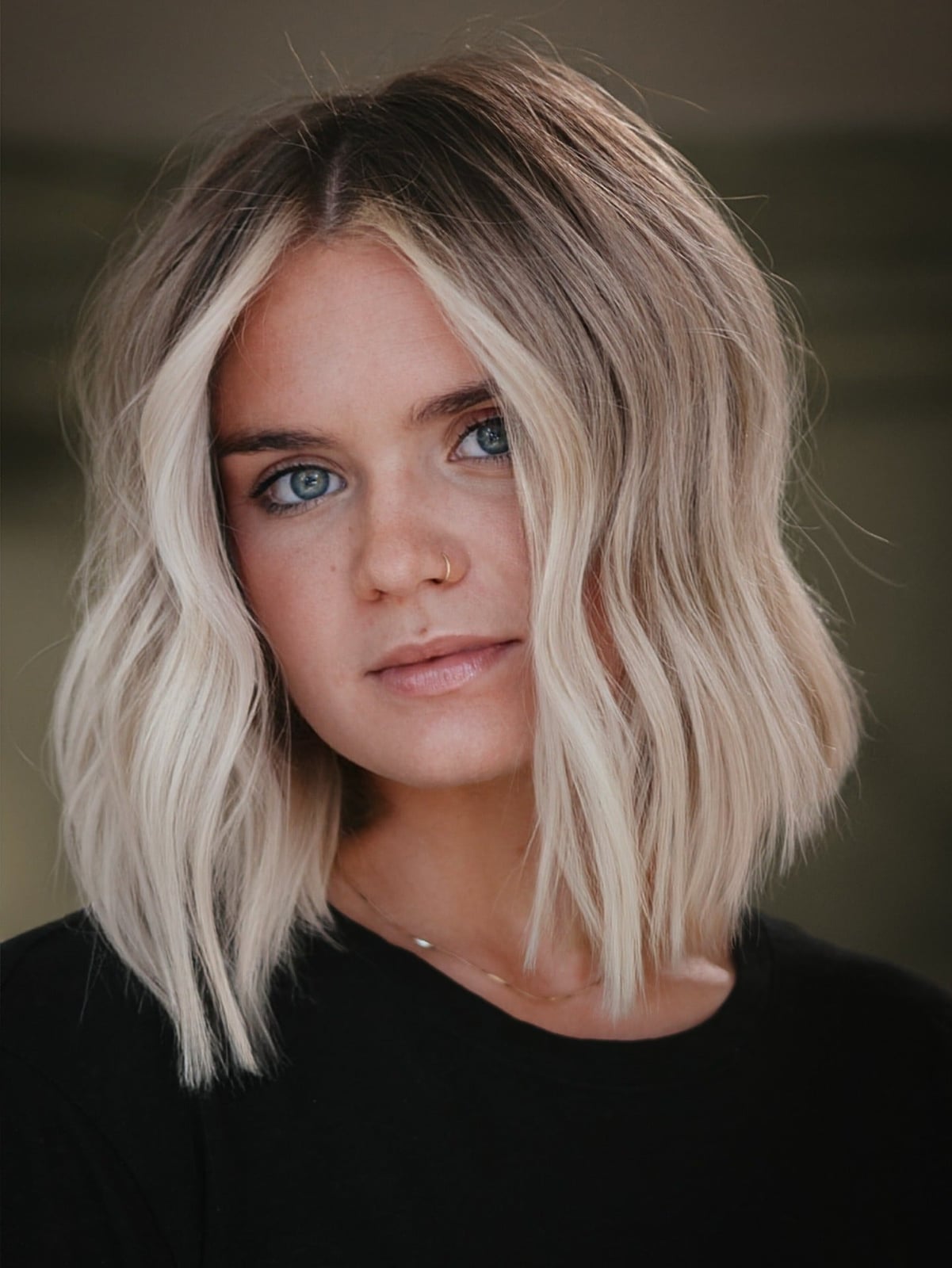
Ask your colorist for: collarbone bob, platinum blonde with dark root shadow. A volumizing spray at the roots helps maintain lift, and a trim every six to eight weeks keeps the blunt line crisp. This is a salon-only color placement. The dark-to-light ratio needs a skilled hand to avoid looking like grown-out bleach.
Mid-Back Dark Brown With Copper Balayage
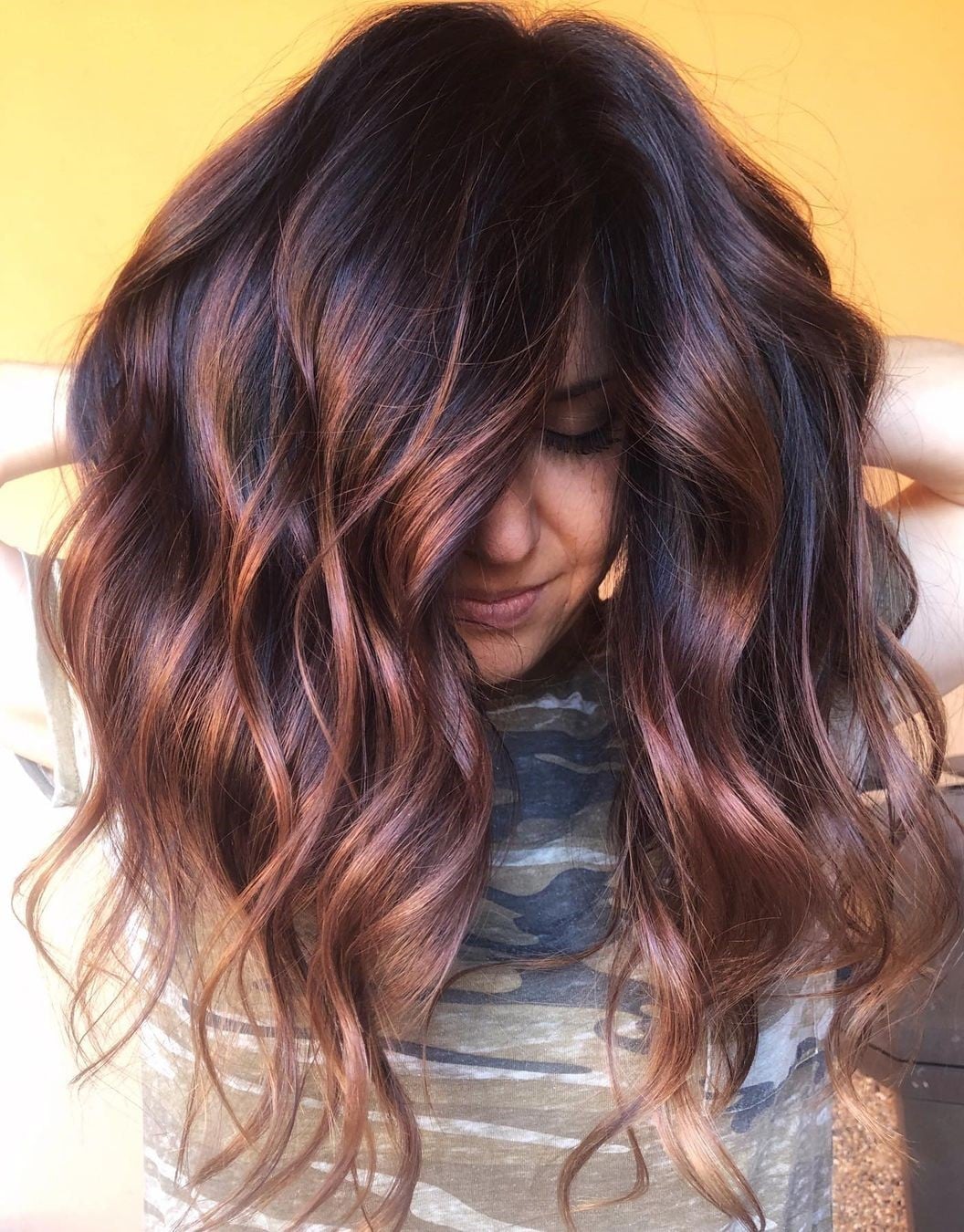
This is a rich, dimensional color placement: a dark brown base meets a copper balayage that runs through mid-back length hair with long layers and curtain bangs. The wavy texture catches the copper at different angles, so the color shifts from warm amber to deep bronze depending on how the hair falls.
Ask your colorist for: dark brown with copper balayage, long layers, curtain bangs. Thick, wavy hair at mid-back length holds the balayage gradient well, and the curtain bangs frame the face without cutting into the length. A color-depositing conditioner keeps the copper from turning brassy, and a trim every ten to twelve weeks maintains the layer shape.
Icy Pearl Blonde With Root Melt Shadow
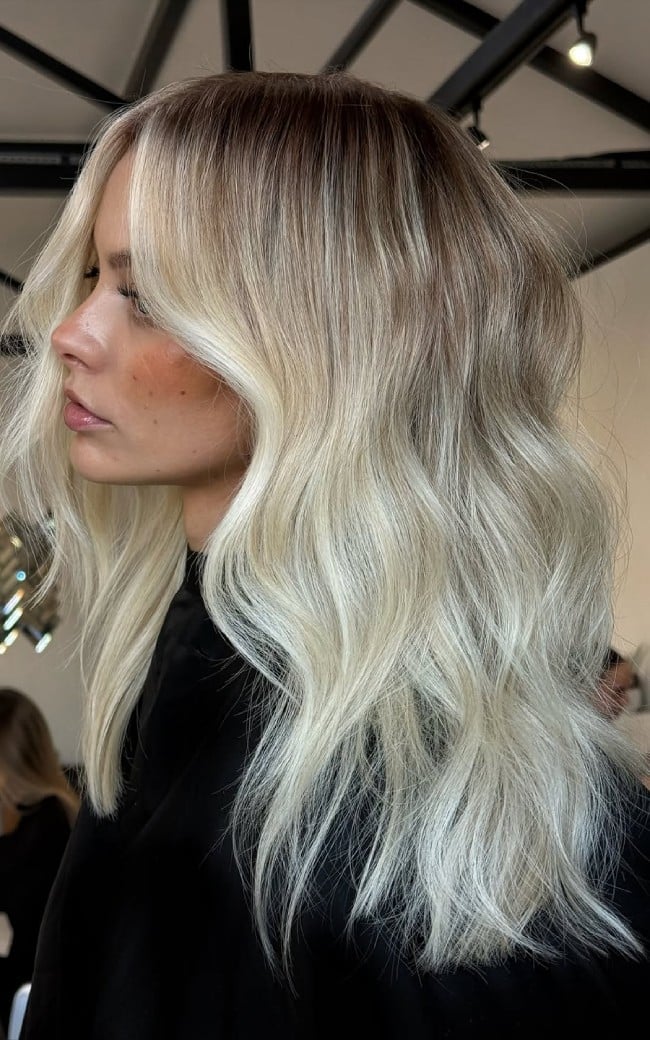
A root melt shadow creates a seamless transition into icy pearl blonde, avoiding the hard regrowth line of a traditional root shadow. On mid-back length hair with layers and face-framing bangs, the melt starts darker at the scalp and softens into the pearl tone by the mid-lengths, so the grow-out stays blended for weeks.
Ask your colorist for: icy pearl blonde with root melt shadow, layers, face-framing bangs. Medium-density, wavy hair carries the gradient naturally, and the face-framing bangs pull the icy tone forward for a polished effect. This works well for special events or a glam everyday look, though a purple toning shampoo is essential to keep the pearl from warming up.
Thick Curly Dark Brown With Honey Blonde Highlights
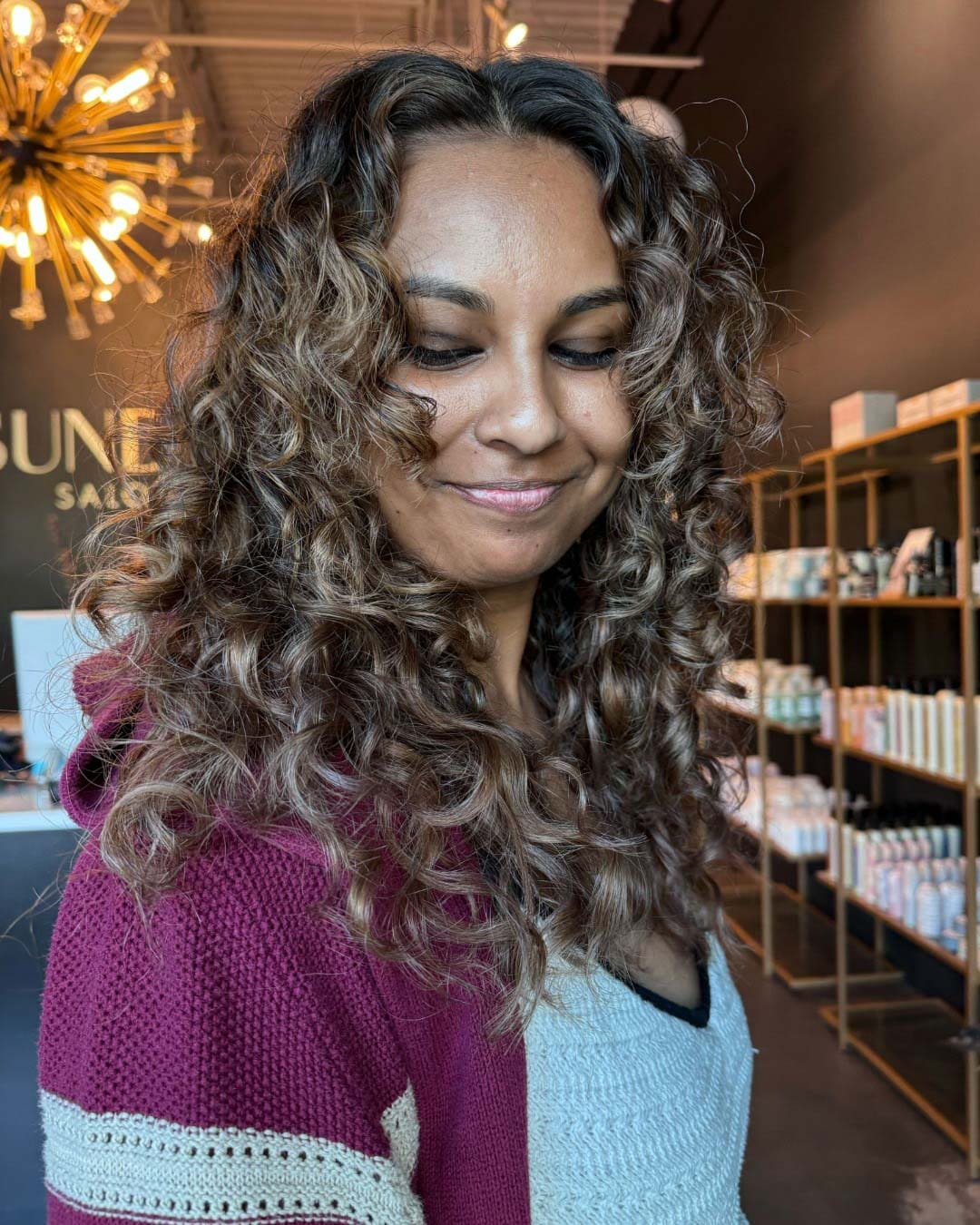
A shadow root on thick, curly dark brown hair grounds the look, while honey blonde highlights add warmth and dimension. The curtain bangs and loose waves keep the color from feeling heavy, and the dark root softens the contrast so the curls look cohesive. Ask your colorist for: dark brown with honey blonde highlights, shadow root, curtain bangs. This works well for thick, curly textures at collarbone length. The shadow root adds depth, and the honey tones catch light in the curls. Tighter curl patterns should ask for the highlights placed on larger sections to avoid a dotted effect.
Sandy Blonde With Dark Shadow Root And Lowlights
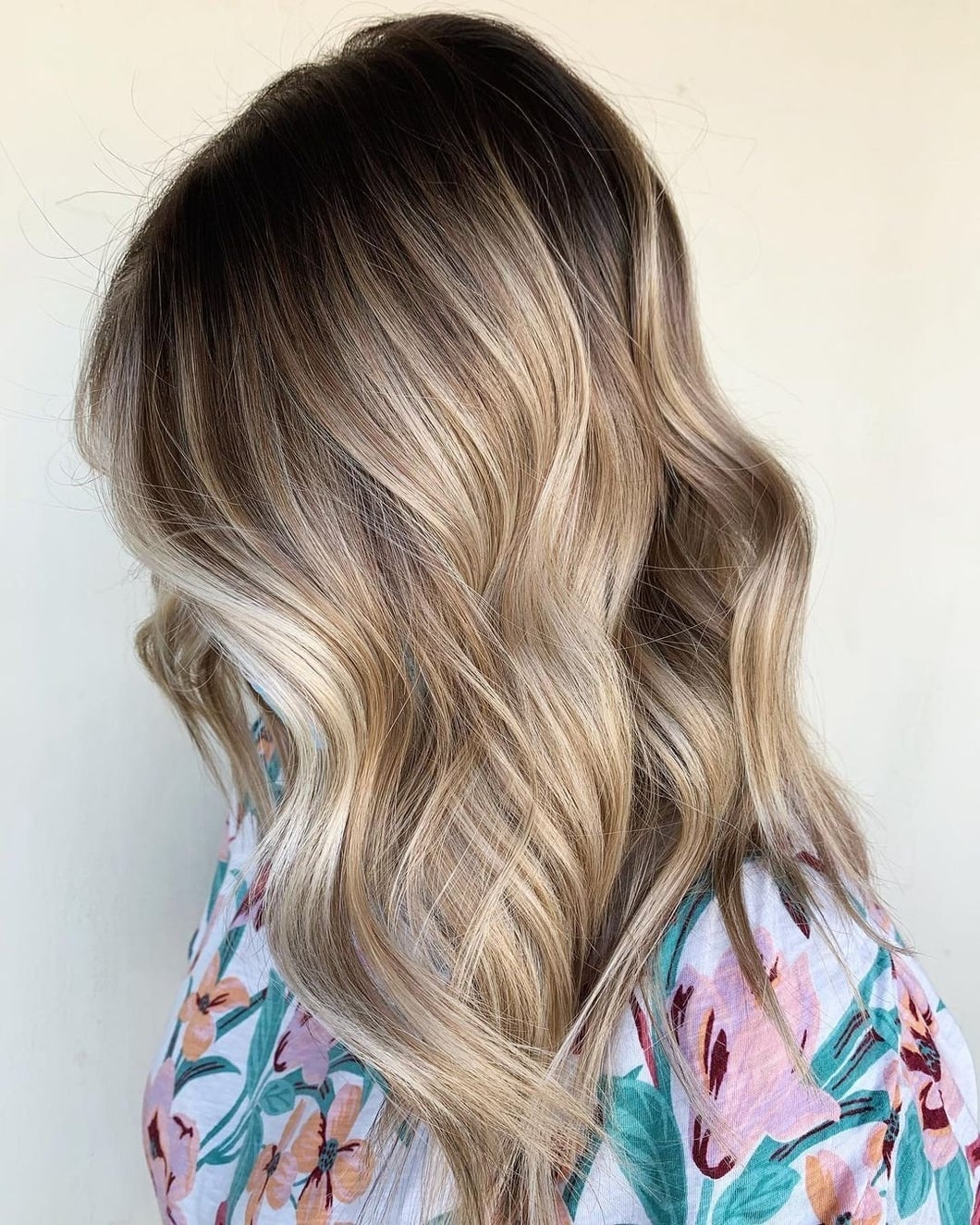
The lowlights run through the mid-lengths and ends, so the blonde never looks flat, and the shadow root at the scalp softens the grow-out for about six weeks. Ask your colorist for: sandy blonde with dark shadow root and lowlights, layers. Thick, wavy texture holds the dimensional color well, and a color-safe shampoo preserves the sandy tone. Trim the layers every eight to ten weeks to keep the shape from losing its movement.
Vibrant Orange With Dark Shadowed Root

That vibrant orange is the kind of color that demands attention, but the dark shadowed root keeps it from feeling one-note. On collarbone-length wavy hair with a side part, the contrast creates depth where a solid, bright shade would fall flat. Ask your colorist for: vibrant orange with dark roots, collarbone length. The wavy blowout texture helps diffuse the line where the two tones meet, making the transition look softer than it would on pin-straight hair. Medium density hair carries this balance well, enough body to show the color, not so much that the root looks heavy.
Vivid colors fade faster than natural shades, so plan on a toning appointment every four to six weeks to keep the orange from turning brassy or muddy. A color-depositing conditioner in a matching tone can stretch the time between salon visits. This is not a low-commitment shade, but the shadow root buys you a few extra weeks before the grow-out becomes obvious.
Honey Blonde Lob With Dark Brown Root

Wondering how to get that sunkissed look without the high-maintenance grow-out? The answer is a dark brown root that melts into honey blonde ends on a collarbone-grazing lob. Ask your colorist for: dark brown root to honey blonde lob. The middle part keeps the color distribution even, and the loose waves help the two tones blend naturally rather than sitting as a harsh line. Medium textured hair at this length holds the wave pattern well, which is what makes the transition look lived-in rather than painted on. The soft face-framing pieces lighten around the jaw, drawing attention to the shape of the cut itself.
Mid-Back Ash Blonde With Dark Shadow Root
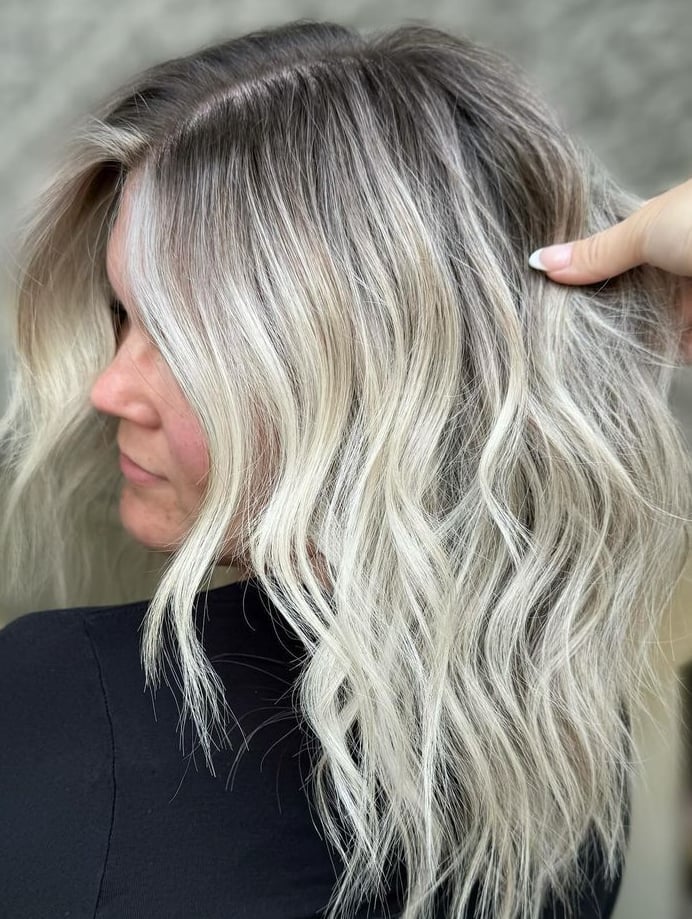
The colorist applies a dark shadow root directly at the scalp, then paints the ash blonde through the ends using a balayage technique. On thick, wavy hair at mid-back length, the contrast is deliberate: the dark base grounds the lightness, while the ash tone keeps the brassiness at bay. The long layers are cut to follow the wave pattern, so the color lands differently on each section of hair and does not fall in a uniform block. Ask your colorist for: ash blonde with dark shadow root, long layers. A toning appointment every six to eight weeks maintains the ash tone, and a purple shampoo used once a week helps between visits. Trim the layers every ten to twelve weeks to prevent the ends from looking stringy against the density.
The side view here shows how the shadow root sits about an inch deep before the ash blonde begins. That depth makes the grow-out period longer than traditional highlights, as the dark root blends into the shadow root and does not announce itself as regrowth.
Autumn Tones With Chestnut Shadow Root
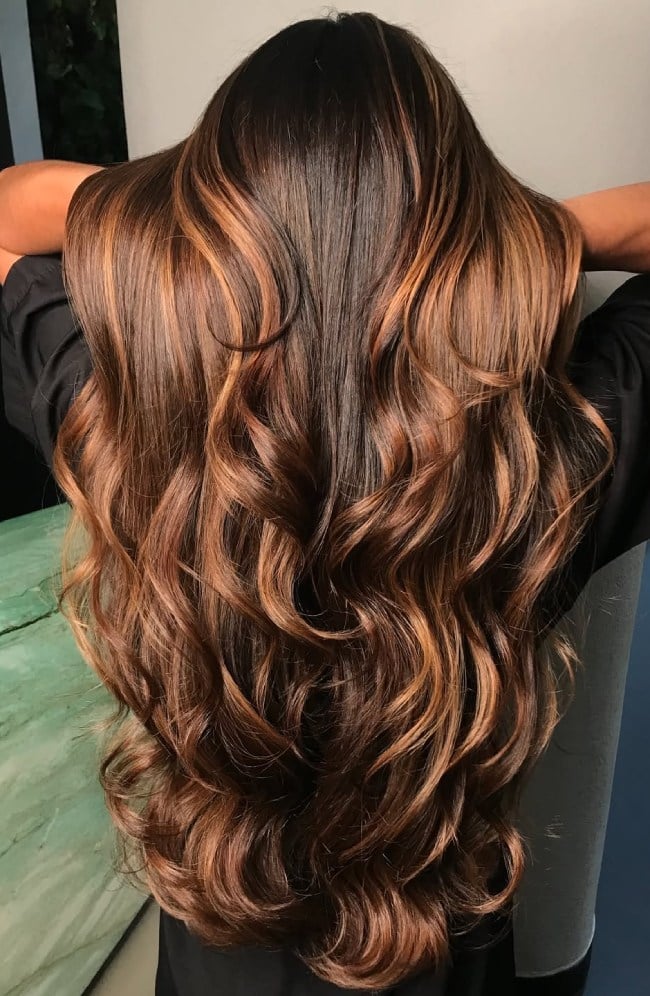
Cool blonde shades can feel out of place when the leaves start turning, but this warm alternative fits the season. The dark brown base gets a chestnut shadow root, then cinnamon and toffee tones are woven through the lengths as balayage. On thick, wavy hair at mid-back length with long layers, the result is dimensional with warm tones that shift in the light. Ask your colorist for: dark brown with chestnut shadow root, cinnamon toffee balayage, long layers. If you have been considering auburn or copper but worry about the upkeep, this blend uses the shadow root to soften the grow-out, so you can go six to eight weeks between appointments. It is a fall-friendly look that works just as well into winter.
Dark Blonde To Platinum Blend With Curtain Bangs
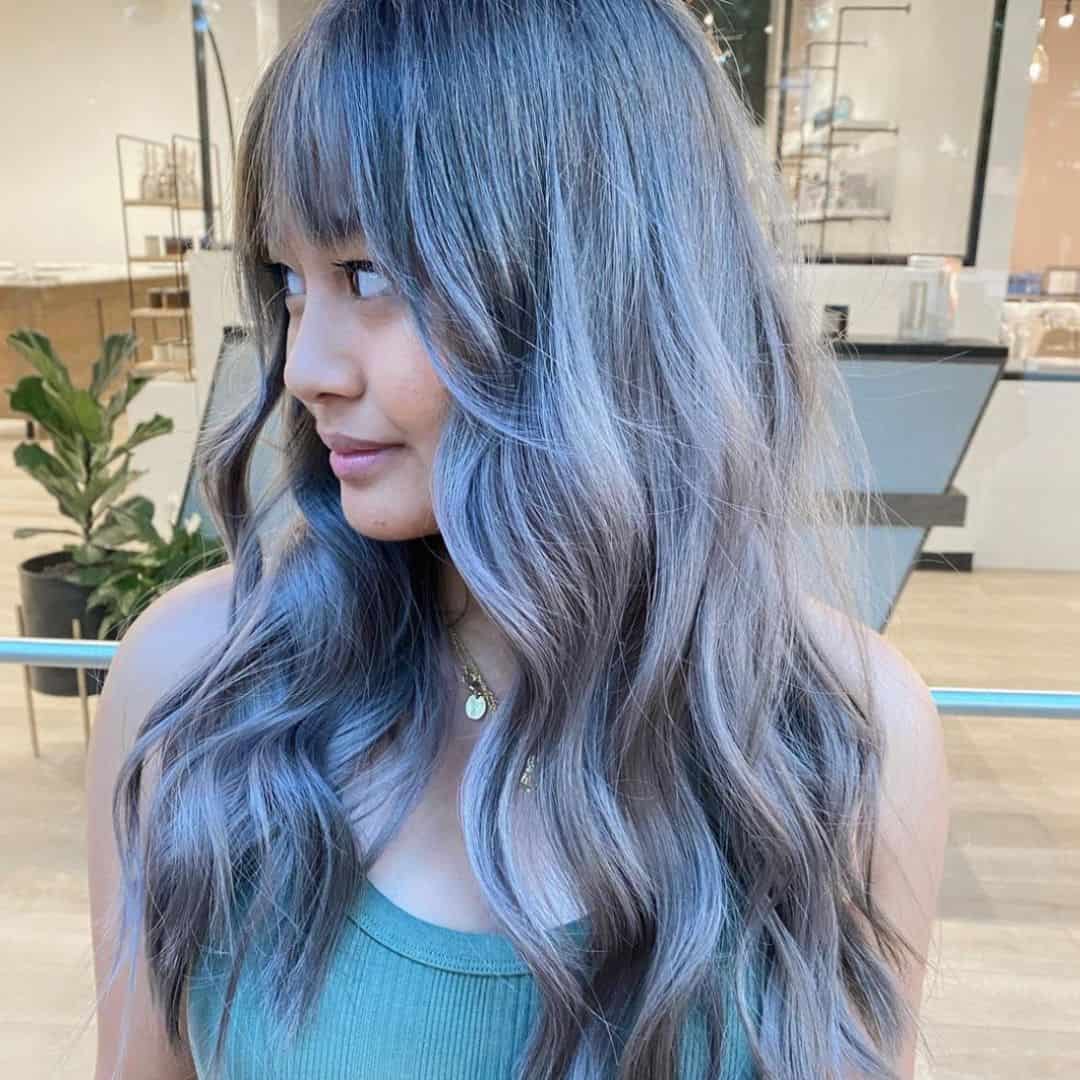
The dark blonde shadow root creates a foundation that keeps the platinum from washing everything out. Curtain bangs frame the face and break up the long sections of hair, which helps the color transition feel smooth. Ask your colorist for: dark blonde root to platinum blonde blend, curtain bangs. The middle part works well here because the curtain bangs fall symmetrically on both sides, and the loose waves carry the color through the lengths. Thick hair carries this level of lightness without looking thin, but the platinum sections will need a purple shampoo every other wash to stay icy. The shadow root buys you about six weeks before the regrowth becomes visible, which is generous for a high-contrast blonde.
Collarbone Blonde With Dark Roots And Face-Framing Layers
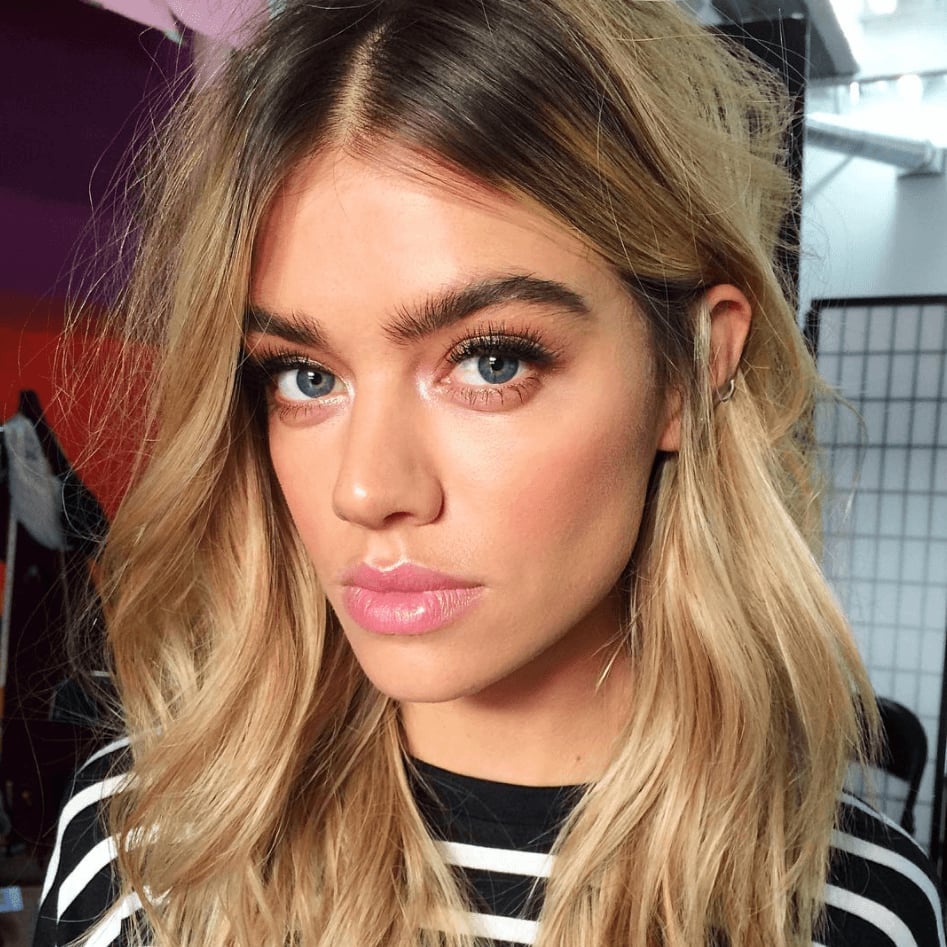
Dark roots with collarbone-length blonde hair mean the grow-out period is generous. Curtain bangs and face-framing layers give the color a softer transition, so the shadow root looks like a deliberate part of the design. Ask your colorist for: blonde with dark roots, curtain bangs, face-framing layers. The wavy blowout texture pairs with a round brush for volume, and those layers need a trim every eight to ten weeks to keep their shape.
Chin Length Honey Blonde Blunt Bob With Shadow Root

The honey blonde here is warm without being brassy, and the shadow root sits right at the crown to deepen the overall tone. A blunt chin-length bob gives the color a clean end line, while the wavy texture keeps it from looking severe. Ask your colorist for: honey blonde blunt bob with shadow root. This shade looks brighter against the darker base, and the blunt cut makes the contrast deliberate.
Short Bronde Bixie With Side-Swept Fringe And Shadow Root
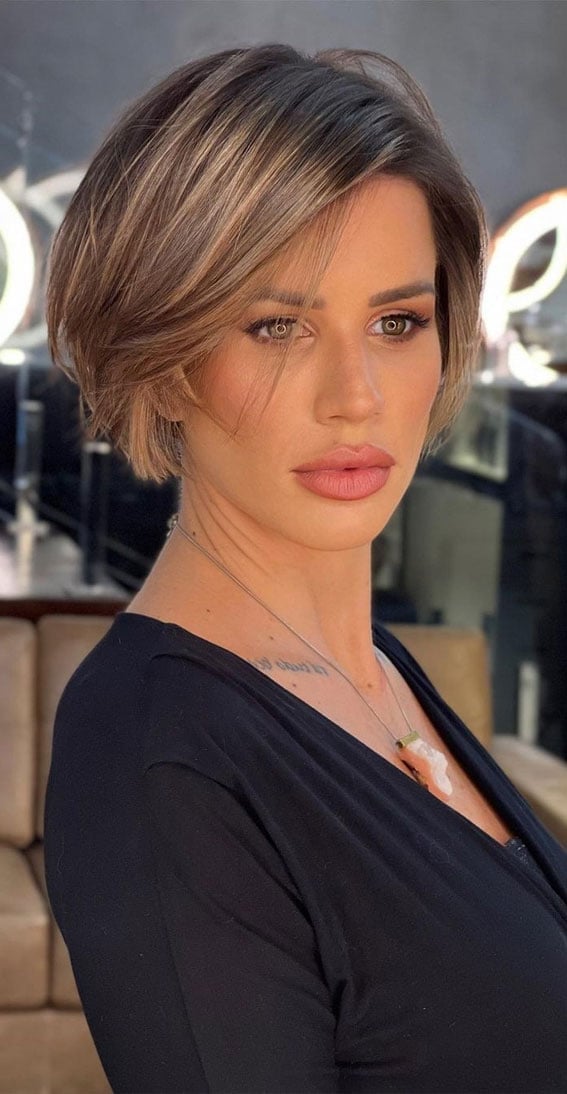
How do you ask for a color that doesn’t feel like a standard blonde? The bronde balayage with a dark shadow root gives a short bixie cut more depth without adding weight. The side-swept fringe keeps the front soft and the fine, straight texture makes the shadow root look smooth. Ask your colorist for: bronde bixie, side-swept fringe, dark shadow root. A texturizing paste will define the layers without disturbing the color transition.
Shoulder Length Dark To Blonde With Shadow Root
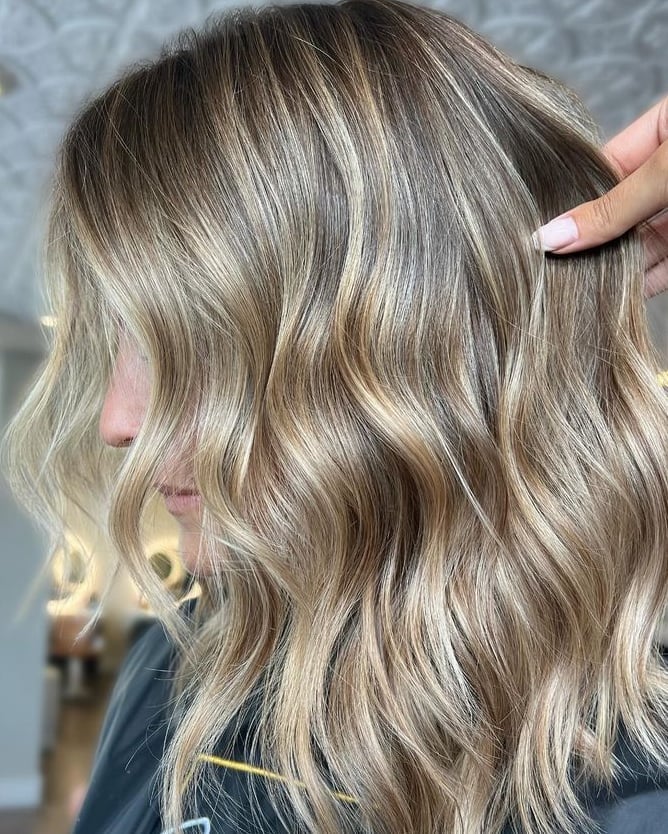
A dark brown base that transitions to lighter blonde requires more than just a root touch-up. The shadow root here acts as a buffer, so the color changes gradually rather than in a hard line. This is a salon-only process. Ask your colorist for: dark brown shadow root to blonde highlights, curtain bangs, shoulder length. DIY versions of this technique tend to create uneven bands, so the two-step process of base color and balayage is better left to a professional. Curtain bangs frame the face while the wavy texture softens the overall look.
Fiery Red Orange With Dark Brown Base
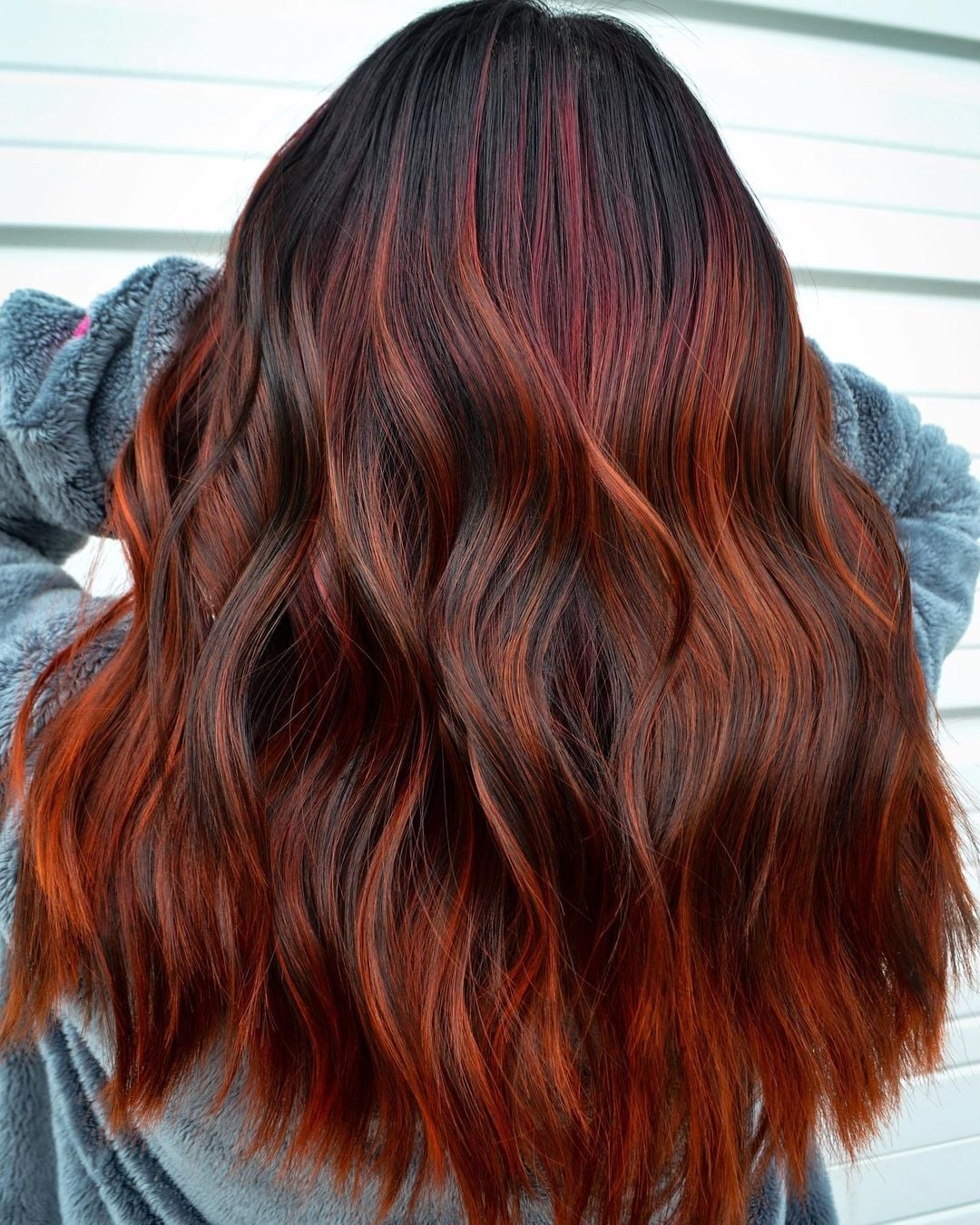
This is not a subtle copper gloss. The dark brown base anchors the color, while the fiery red and orange tones pull toward the ends with pink highlights woven in. Compared to a solid red dye, the shadow root here makes the grow-out period feel longer and the fade less obvious. Ask your colorist for: dark brown base to fiery red orange with pink highlights, subtle shadow root. The long layers add movement so the color shifts as the hair moves. Thick, wavy texture holds this kind of vibrancy better than fine hair, which tends to show the darker root more starkly.
Caramel Blonde Ombre With Dark Roots
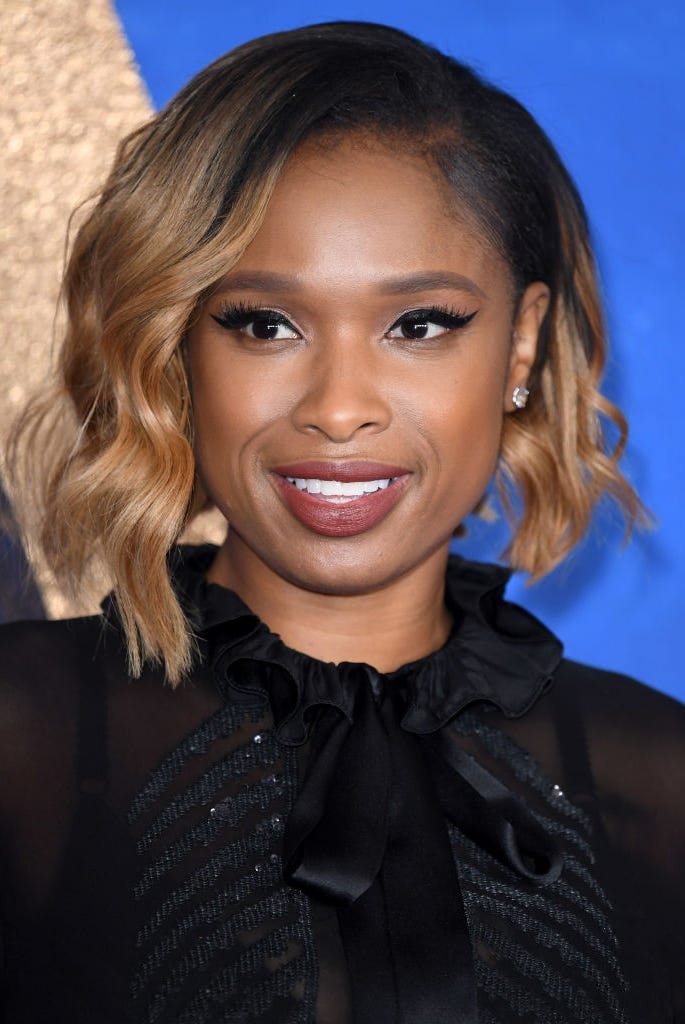
An ombre that starts with visible dark roots and melts into caramel and blonde tones creates a deliberate design choice. This shoulder-length, medium wavy cut with a middle part uses the shadow root to anchor the lighter ends, so the color feels grounded. Ombre on this texture creates a soft, lived-in transition that does not demand frequent touch-ups. Ask your colorist for: dark roots to caramel and blonde ombre. Medium, wavy hair at shoulder length suits this because the ombre softens the regrowth line. A gloss treatment every six to eight weeks keeps the caramel tones bright, and a trim every 10-12 weeks maintains the shape through the layers.
Dark Brown To Blonde Bob With Root Melt
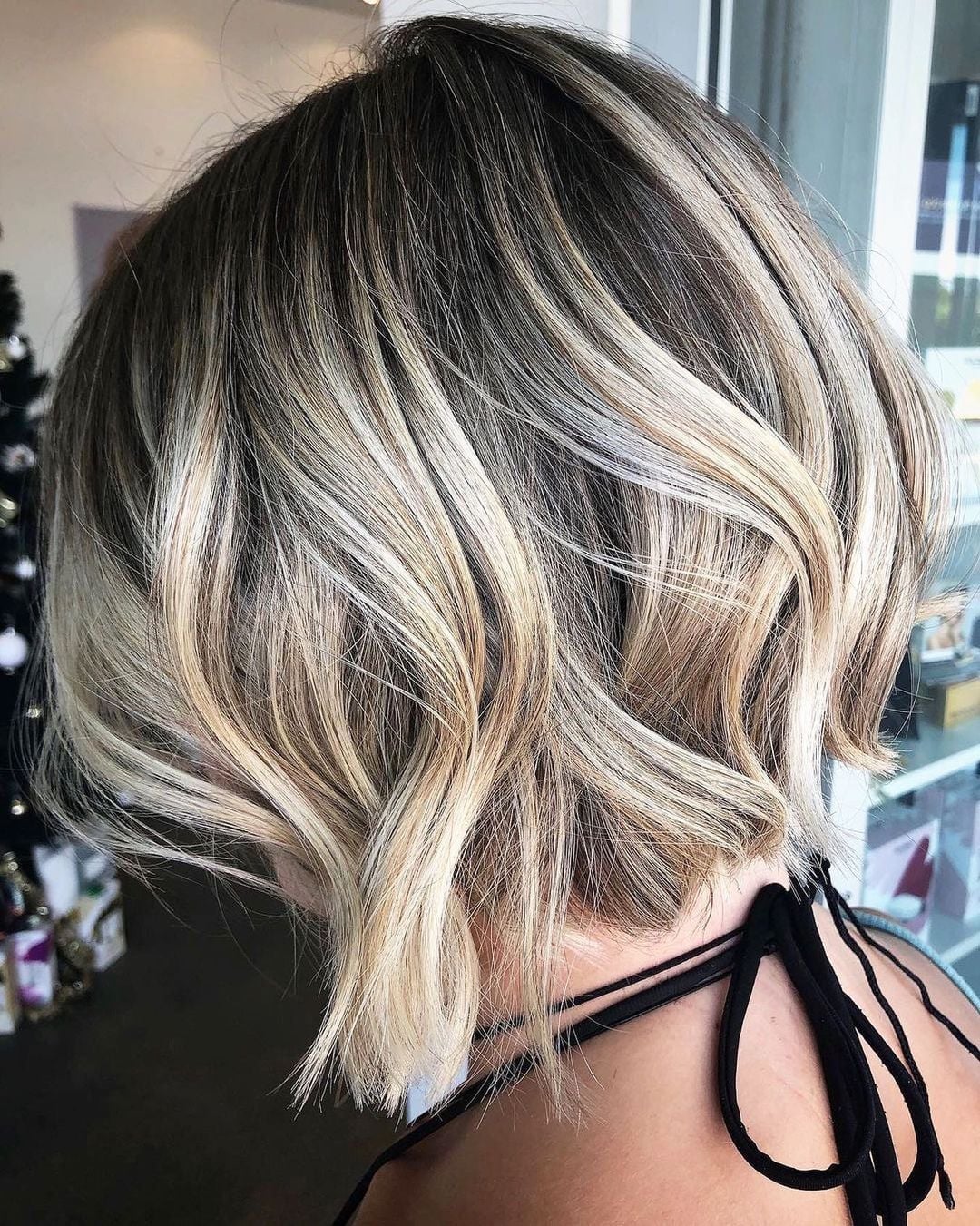
A root melt on a bob means the dark brown base graduates into lighter blonde tones without a visible line of demarcation. On this chin-length, fine wavy cut with a side part and air-dried texture, the transition sits close to the root area, so regrowth blends in as the hair grows. Ask your colorist for: dark brown to blonde bob with root melt. A texturizing spray worked through the waves adds definition without weighing down fine strands. Trim the bob every six to eight weeks to keep the blunt ends from looking straggly.
Mid-Back Dark Blonde To Platinum With Curtain Bangs, Wavy
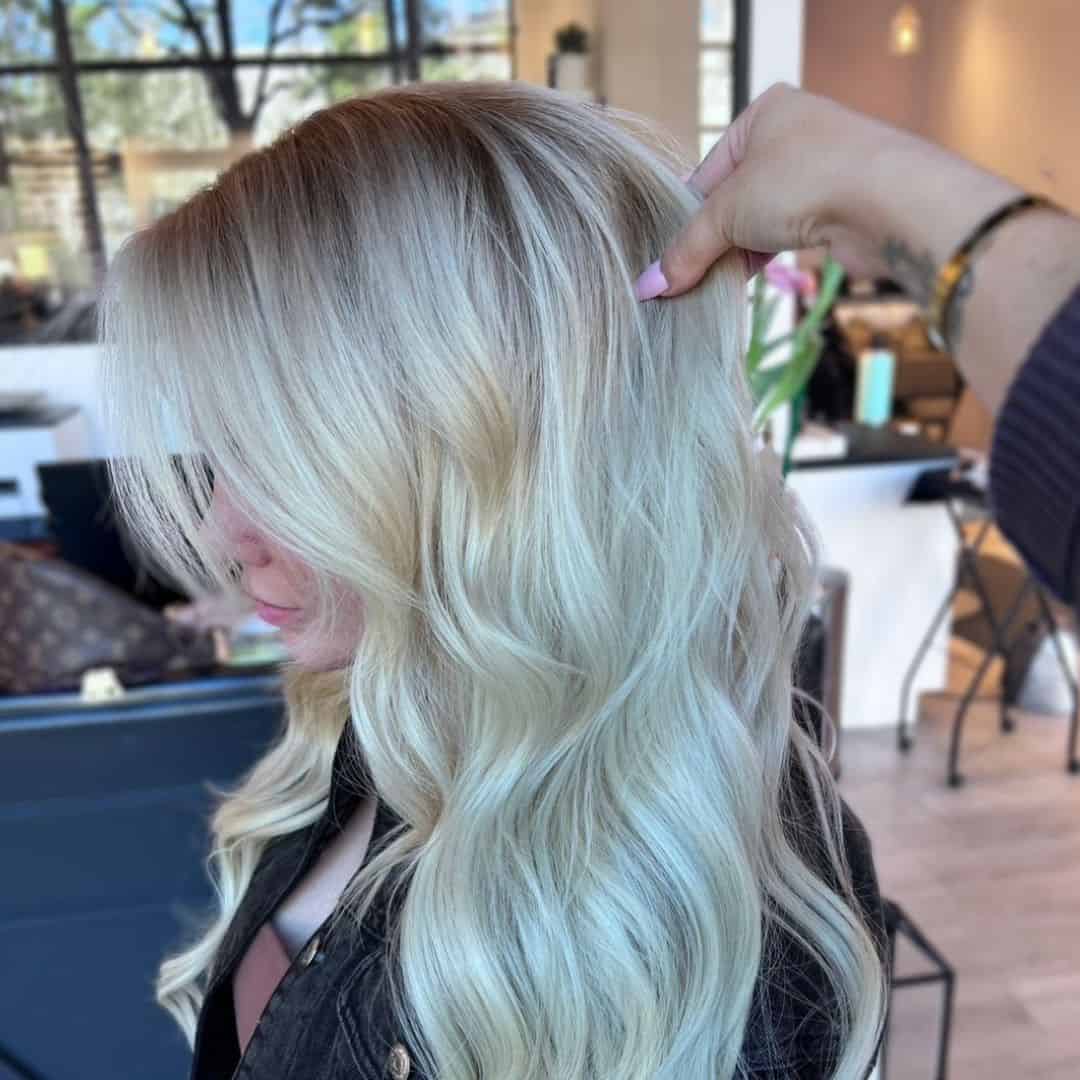
The design here hinges on contrast: a dark blonde shadow root that deepens at the crown versus platinum lengths that catch light differently. On a mid-back length, thick wavy hair with curtain bangs and a middle part, the root area anchors the brightness, so the platinum looks deliberate. The curtain bangs pick up the darker root tone at their base, blending the face-framing pieces into the overall color.
Ask your colorist for: dark blonde root to platinum blonde blend, curtain bangs. Thick, wavy hair at mid-back length carries this weight well, and the curtain bangs soften longer face shapes. A purple shampoo used once a week keeps the platinum from developing yellow tones. Trim the layers every 10-12 weeks to prevent the ends from thinning out.
Chin Length Angled Bob With Shadow Root And Blonde Highlights
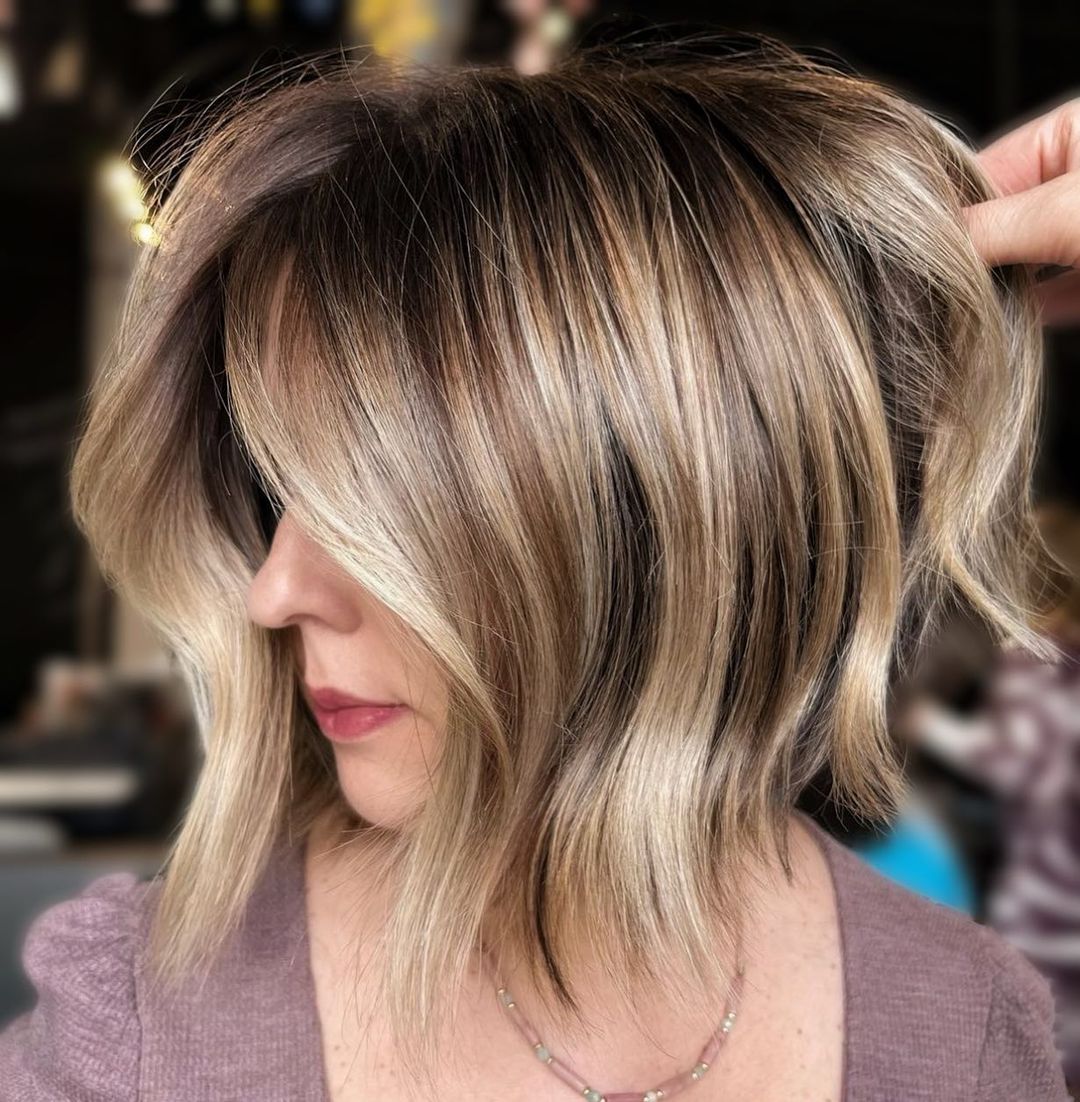
Wondering how to describe that specific blend of depth and brightness to your colorist? The key details are the dark brown shadow root at the base and the blonde highlights woven through the mid-lengths and ends, not a solid all-over lightening. On this chin-length angled bob with side-swept bangs and a wavy blowout, the shadow root creates a natural-looking depth that the highlights sit on top of. Ask your colorist for: dark brown shadow root with blonde highlights, chin length angled bob, side-swept bangs. Medium density, wavy hair at chin length works here, and the side-swept bangs balance rounder face shapes.
Chin Length Bixie With Blunt Bangs And Dark Blonde Shadow Root

A bixie cut needs precise color placement because the short, compact shape leaves little room for error. The dark blonde shadow root sits at the base and fades into lighter blonde through the top layers, which adds depth without overwhelming the fine, wavy texture. On this chin-length version with blunt bangs and a side part, the shadow root technique prevents the short layers from looking flat. Ask your colorist for: dark blonde shadow root to blonde bixie with blunt bangs. Fine, wavy hair at chin length suits this, and the blunt bangs add a modern edge. This is a salon-only project; the short length and visible root area require a colorist’s hand for a seamless blend.
Mid-Back Dark Brown With Blonde Balayage, Long Layers
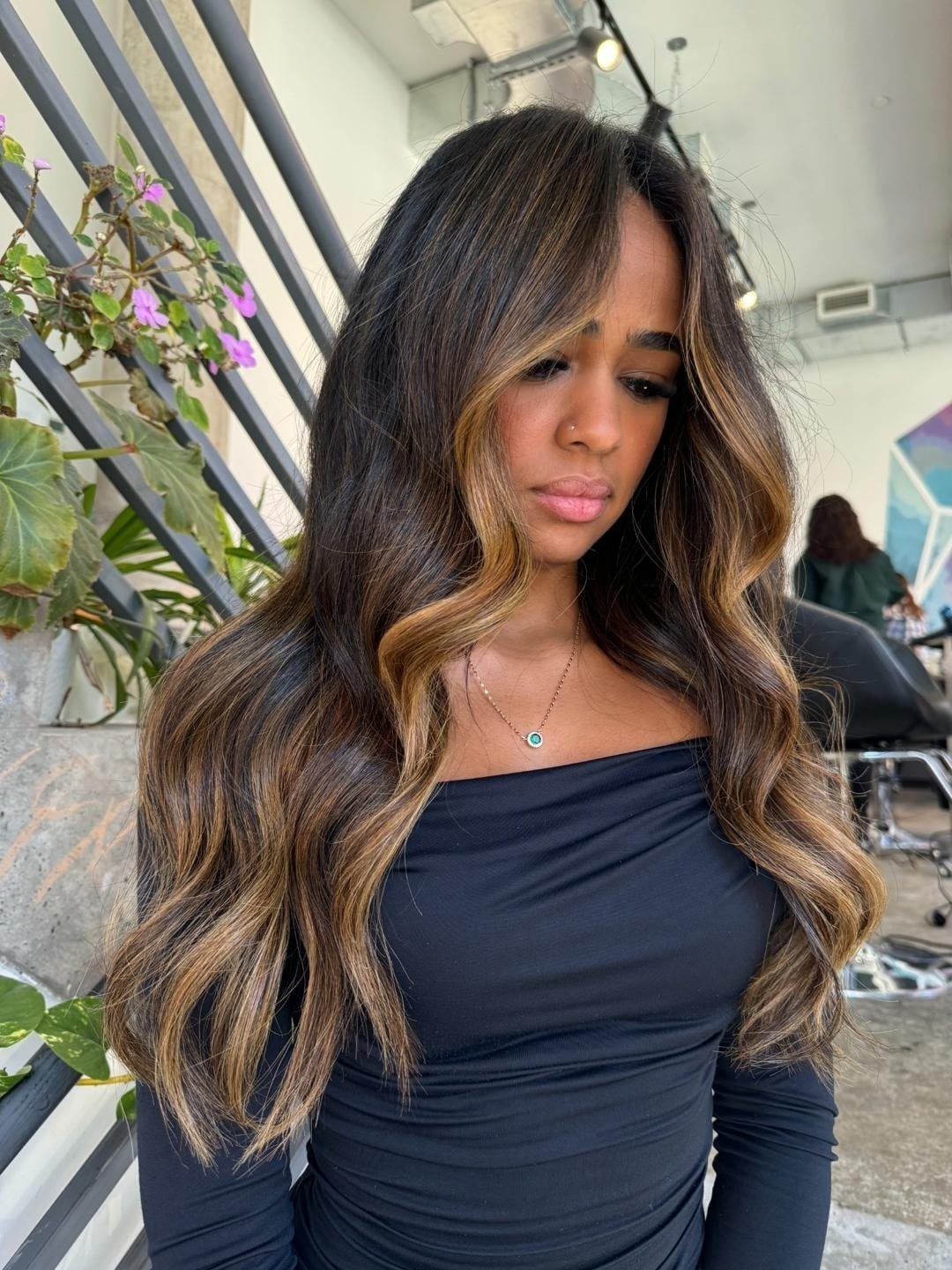
A balayage on thick, wavy hair at mid-back length is a different technique than the same application on a bob. The dark brown base acts as the anchor, and the blonde pieces are painted onto the long layers so they weave through the wave pattern instead of sitting on top of it. The middle parting and wavy blowout let the dimension be visible from the front without needing to flip your head around.
Ask your colorist for: dark brown with blonde balayage, long layers. This application suits thick hair that can carry the weight of both a dark base and lighter mid-lengths; if your texture is fine, the blonde sections can look sparse. The long layers keep the movement from forming a triangle shape, so a trim every ten to twelve weeks is enough to preserve the line.
Mid-Back Dark Blonde To Light Blonde With Shadow Root, Wavy
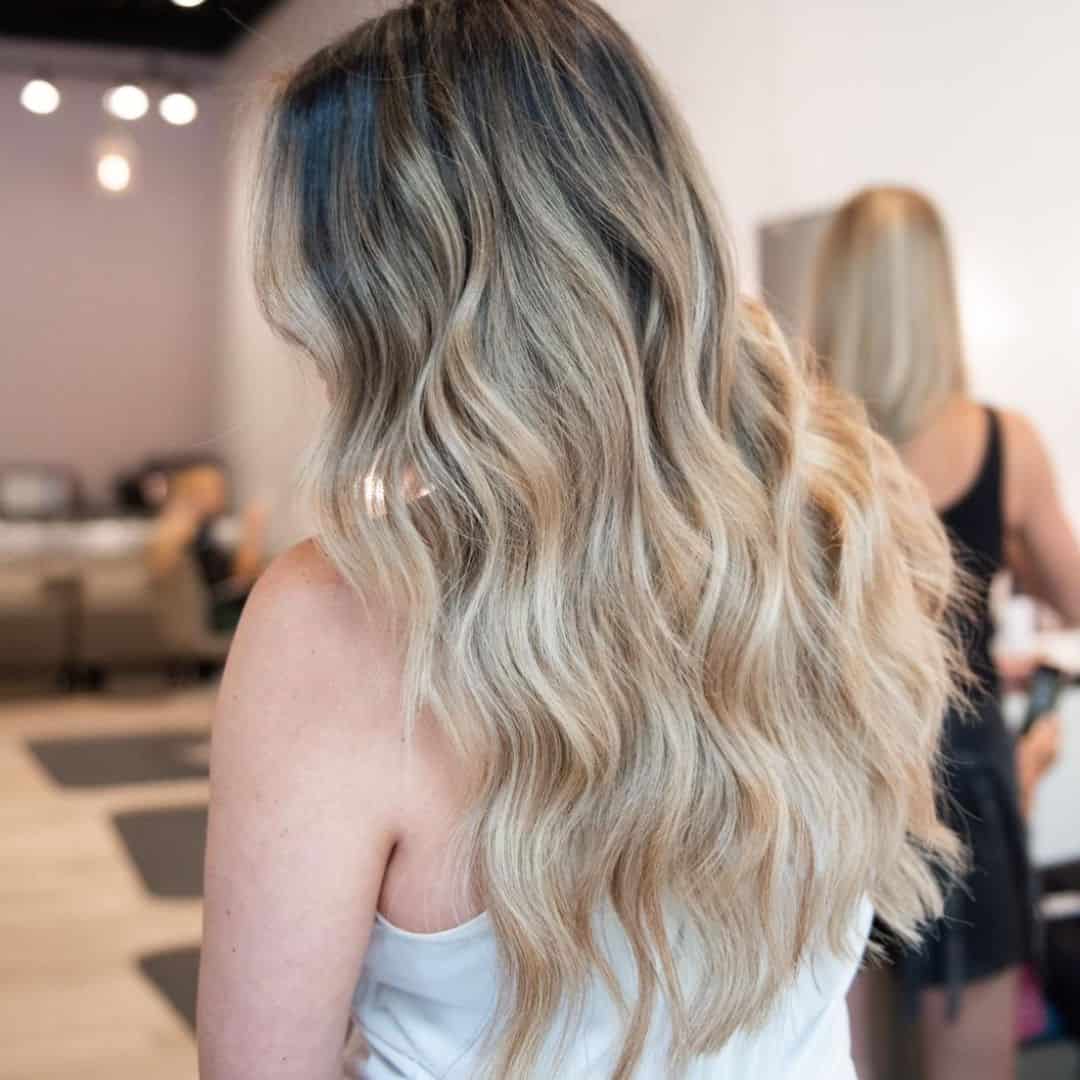
The design here is a gradient, not a stripe. The dark blonde shadow root sits close to the scalp and softens into lighter blonde through the mid-lengths, so there is no single line where one color ends and another begins. On thick, wavy hair at mid-back length, that gradual shift creates natural depth. The subtle layers help the lighter sections catch the wave folds without losing the overall blend.
Ask your colorist for: dark blonde shadow root to light blonde, subtle layers. Thick wavy texture is the ideal canvas because the waves scatter the light and hide any small tonal inconsistencies that would show on straight hair. If your hair is fine or low density, the shadow root can visually shorten the face unless the lighter blonde starts closer to the ear.
Collarbone Bob Dark Brown To Ash Blonde
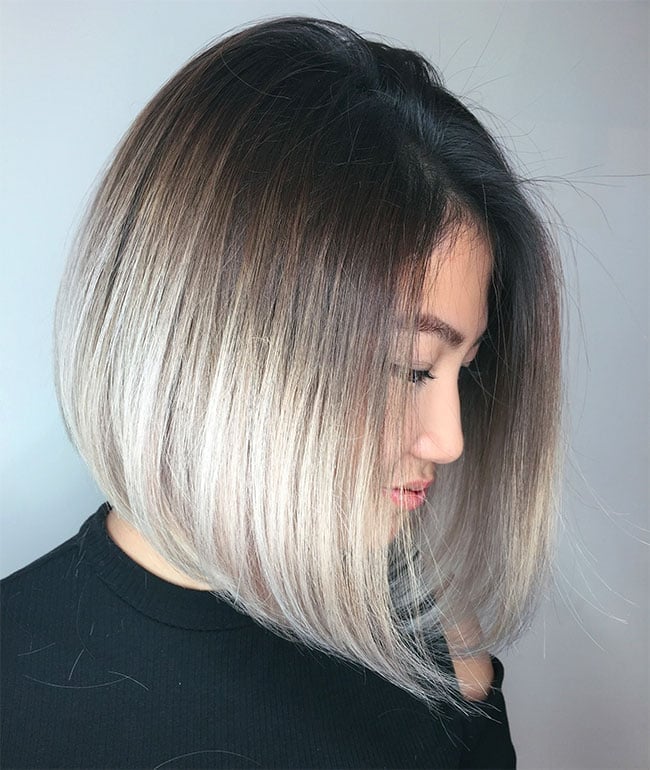
A blunt bob on fine, straight hair lives or dies by its line, so the color transition needs to be equally precise. The dark brown shadow root here is concentrated at the scalp and fades into ash blonde at the ends, which means the grow-out is a soft blend and not a stripe of new growth. Ask your colorist for: dark brown shadow root to ash blonde bob. A smoothing serum on the mid-lengths keeps the cuticle flat and the blonde from looking brassy. The bob itself needs a trim every six to eight weeks, and the shadow root buys you about the same window before the regrowth becomes visible.
Chin Length Layered Bob With Soft Shadow Roots
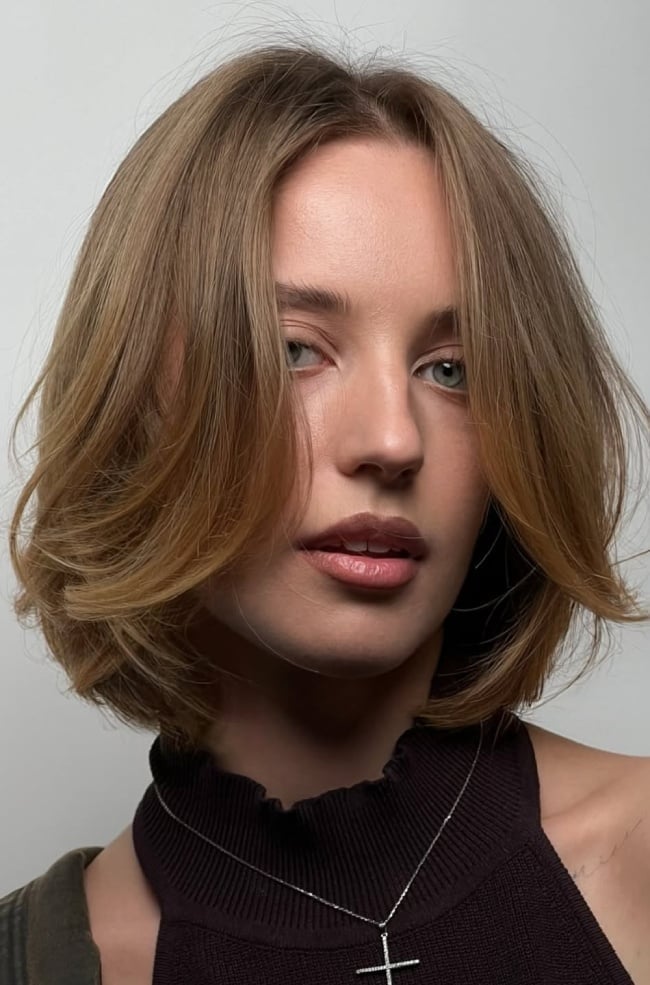
The soft shadow roots here are barely darker than the honey beige blonde lengths, which is the point. On a chin-length layered bob, a strong root contrast would cut the face in half; this version lets the color move with the layers instead. The face-framing pieces are cut to graze the jaw, and the side parting angles the weight so the bob does not sit as a solid block. Ask your colorist for: honey beige blonde layered bob with soft shadow roots and face-framing layers. The subtle root tone means you can go eight to ten weeks between color appointments without a visible line.
Collarbone Angled Bob With Curtain Bangs And Blonde Balayage
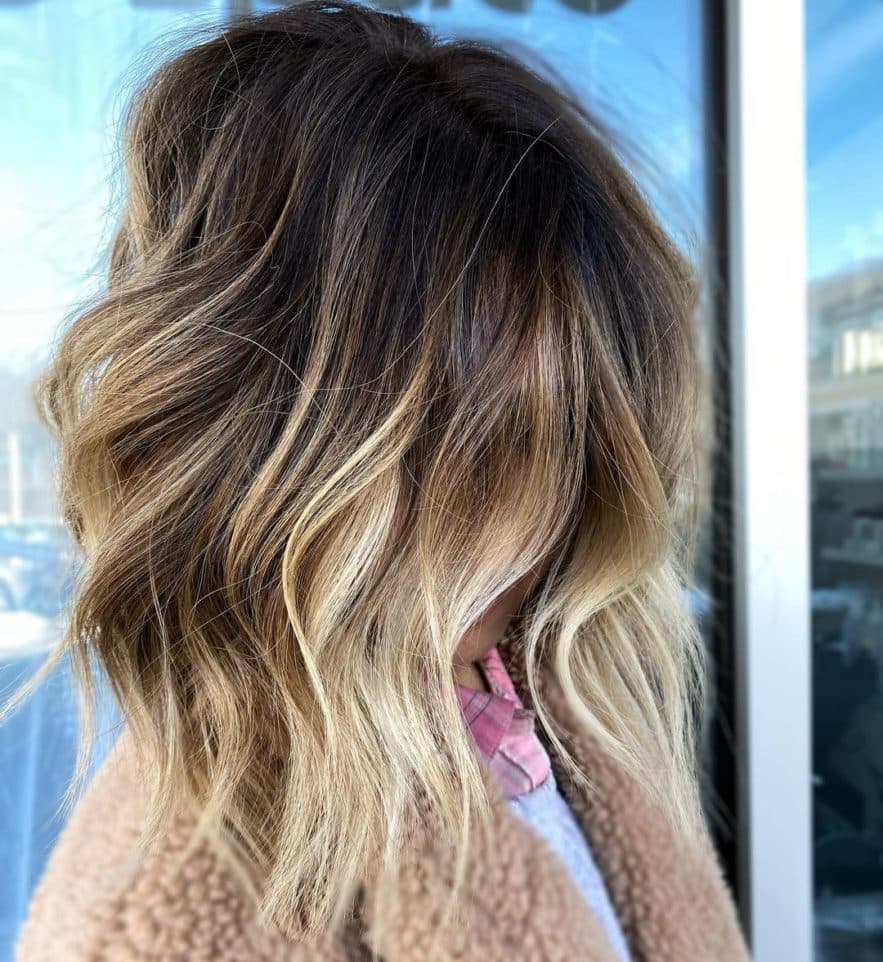
How do you ask for a shadow root that does not look like a helmet? Specify the shape first. This collarbone-length angled bob has a shorter back that graduates longer toward the front, and the curtain bangs are cut to sweep away from the face. The dark brown shadow root sits at the scalp and the balayage picks up around the cheekbone, so the lighter pieces hit the front corners exactly where the angle changes. Ask your colorist for: dark brown shadow root to blonde balayage angled bob with curtain bangs. The side part and soft waves keep the transition looking like grown-in dimension, not a root touch-up that got away from you.
Mid-Back Dark Brown To Ash Blonde Balayage, Loose Waves
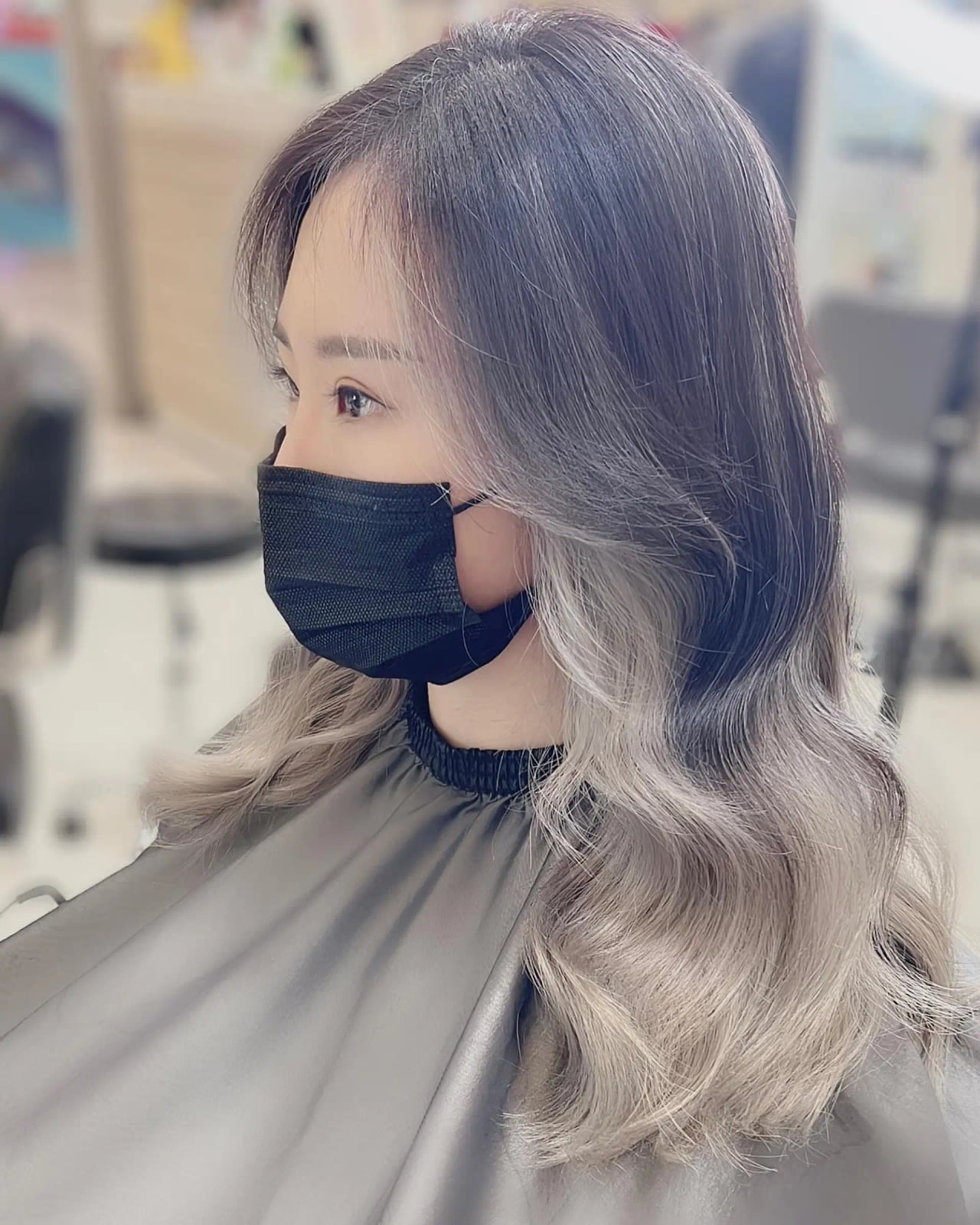
This balayage starts at the root with a true dark brown and transitions to an ash blonde that lands somewhere between beachy and reserved. The mid-back length and loose waves show off the seamless color shift, which relies on the technique more than the shade choice itself. Thick, wavy hair at this length holds the gradient without looking stripey, which is the whole point.
Ask your colorist for: dark brown to ash blonde balayage with shadow root. The ash tone on thick, wavy hair has a tendency to pull warm between appointments, so a purple toning shampoo in your rotation keeps brassiness at bay for about four weeks. Trim the layers every ten to twelve weeks to maintain the shape without losing the color’s soft finish.
Final Thoughts
When choosing a shadow root, match the contrast to your hair’s density. Fine hair benefits from a softer root melt at the scalp to avoid heaviness, while thick hair can handle a bolder difference. Let your natural base shade guide the blend, and you’ll get a seamless transition that grows out gracefully.
- Use sulfate-free shampoo to preserve color; tone every 6-8 weeks.
- Deep condition weekly to keep ends healthy, especially after lightening.
- Allow 6-10 weeks between touch-ups, depending on growth.
- Apply heat protectant before styling to protect color.
Embrace the blend. Your perfect shadow root awaits.

