Silver hair has moved past the stark, all-over statement into something with more range: soft face-framing layers, lived-in roots, and glossy natural texture are the current markers of the look. The cuts run from sharp pixies to long, loose waves, so the color finally gets a shape that does it justice.
This collection of 23 Silver Hair ideas covers the full spectrum, from low-maintenance salt-and-pepper crops to high-glam blowouts, with options for fine strands, thick manes, and every density in between. Whether your struggle is a fringe that refuses to sit or a grow-out line that shows too soon, there is a cut here that works with your texture, not against it.
Short Silver Pixie With Textured Bangs

This short silver pixie balances two textures: the bangs are cut short and piecey, each strand separated and spiked, while the sides stay smooth and close. That contrast gives fine, straight hair a deliberate edge without adding bulk. The white highlights lift the silver into something brighter, and the side parting keeps the shape from feeling too severe. It is a bold, low-density style that suits oval and square faces equally well. Ask your stylist for a short silver pixie with textured bangs and a spiked finish. A dab of pomade keeps the texture defined, but the real commitment is the trim, every four to six weeks, or the silhouette softens into something far less interesting.
Chic Silver Pixie With Side-Swept Fringe
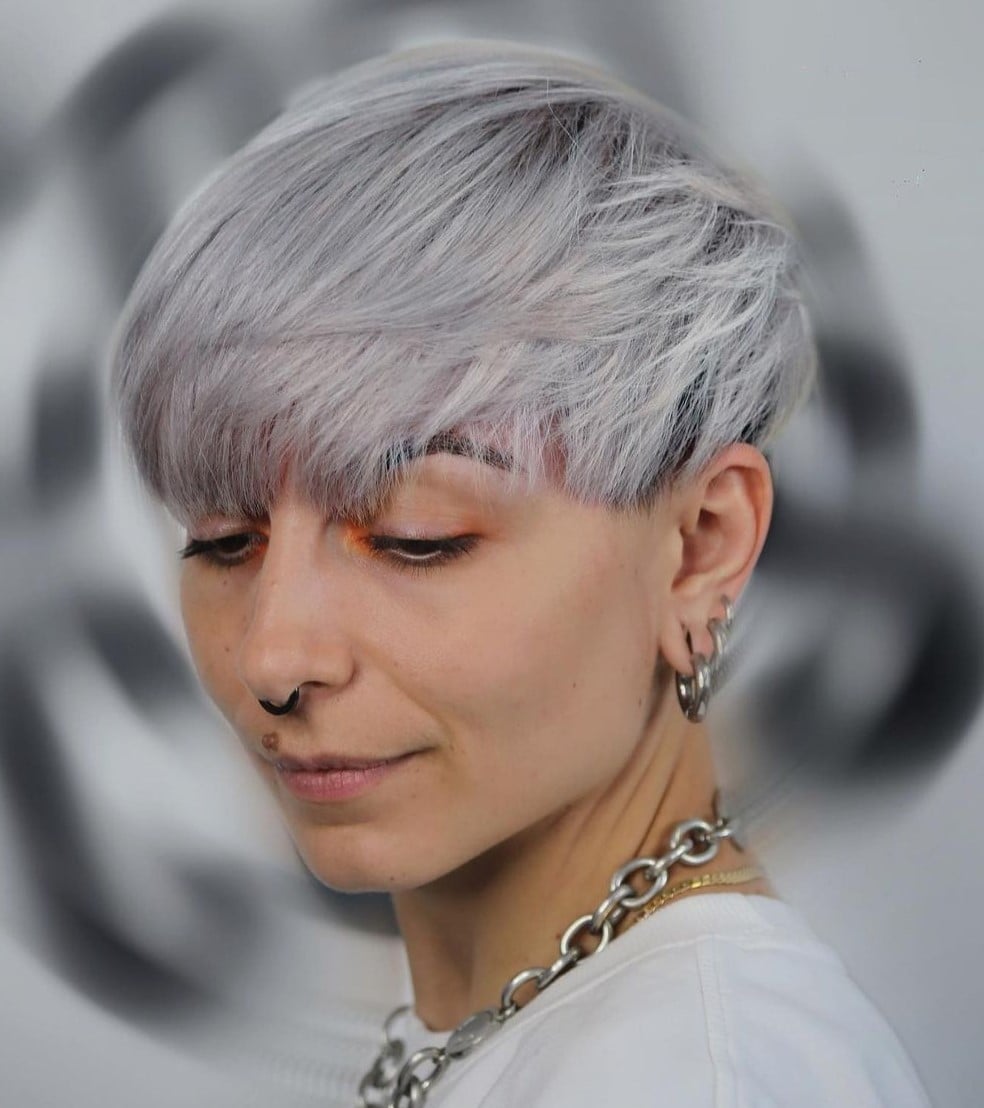
How do you keep a pixie from reading as a helmet? You ask for a fringe that is intentionally textured, not blunt. This chic silver pixie cuts to ear length with a short fringe swept to one side, and the textured finish gives fine, straight hair movement that a solid line never could. The uniform silver gains extra depth from the darker undercut peeking through, which adds a subtle shadow. It is a polished yet edgy option for oval, heart and diamond faces. Ask your stylist for a short silver pixie with a side-swept fringe and textured finish. A texturizing spray gives it hold, and touch-ups every four to five weeks keep the shape precise.
Short Blue-Silver Bob Wet Look
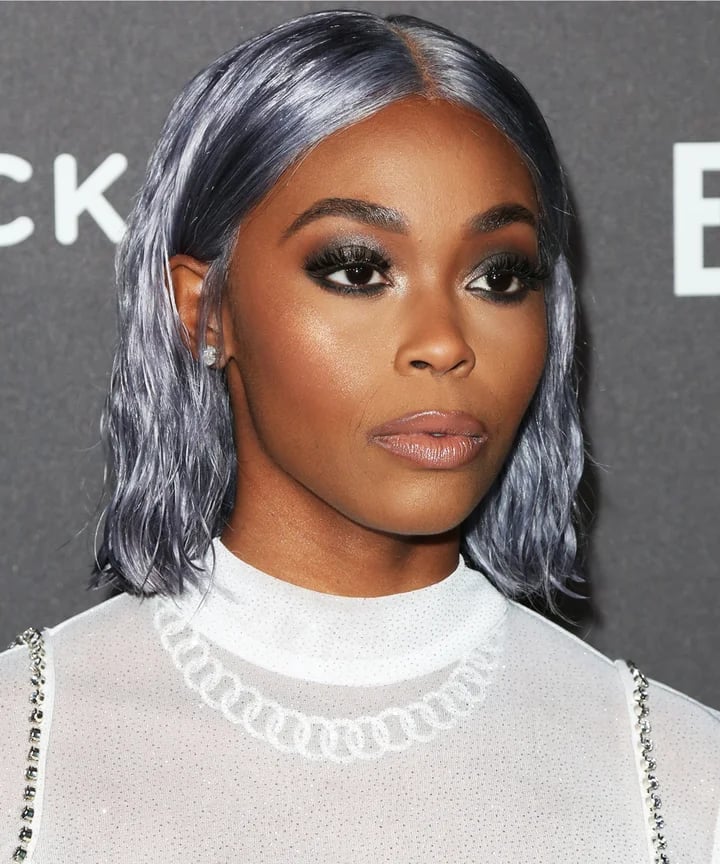
If you are torn between a classic silver bob and something with a pulse, the blue-silver version with a wet look settles it. This short bob stops at the ear with no bangs, and the middle parting plus slicked-back styling makes the vivid blue-silver shade the entire point. It is a bold color statement for fine, straight hair, and it suits oval and heart-shaped faces. The wet look is the high-maintenance cousin of a natural finish: you will need gel or pomade on damp hair every time, and the sharp line demands frequent trims. Ask your stylist for a short bob in blue-silver with a wet look. If that sounds like a lot, a softer blowout on the same cut is always an option for the days you want to blend in.
Short Layered Silver With Swept Bangs

Layers add movement here, and the side-swept bangs frame the face. This short layered cut stops at the ear in a cool silver tone, with the bangs swept to one side and soft volume built through the crown. The layers give fine, straight hair body, which can otherwise lie flat, and the side sweep breaks up the line across the forehead. It looks soft, not severe, which is the trick of a good short cut. Ask your stylist for a short layered silver cut with side-swept bangs and volume. The styling is simple: blow-dry with a round brush to lift the roots, and a trim every six to eight weeks keeps the layers from growing into a shapeless blob.
Soft Layered Silver Ear Length Cut

The blowout is doing the work in this ear length cut, and it shows. The short layered silver shape frames the face with a side parting and swept bangs, but the soft volume comes from how it is dried, not from the cut alone. Fine, straight hair needs a lift at the roots, and a round brush during the blowout delivers it. This soft, voluminous look suits oval and heart faces. Ask your stylist for a short layered silver cut with soft volume and side-swept bangs. Daily effort is real: use a root lifting product before drying, then a few minutes with the brush. The trim rhythm stays at every six to eight weeks, because layers that grow out lose their shape fast.
Chin Length Silver Bob Blowout

A smooth blowout on a chin-length bob takes time, so plan for it. The fine, straight texture here is what makes the silver color look so sharp, but it also means the style can fall flat without effort. Ask your stylist for a chin-length silver bob with a smooth blowout finish. Use a boar bristle brush to polish the ends and add shine as you dry. The drawback is that this cut needs a trim every six to eight weeks to keep the line clean, and a blowout this smooth rarely survives a humid day.
Silver Chin Length Bob With Wavy Layers

The design of this bob relies on soft, wavy layers cut to move with the hair’s natural texture, not against it. The side-swept fringe blends into the longer pieces, so the wave pattern stays continuous from root to end. Medium density wavy hair holds this shape best, and it suits oval and heart faces without extra work.
Ask your stylist for a chin-length bob with soft wavy layers and a side-swept fringe. Scrunch a sea salt spray into damp hair, then let it air dry for that undone finish. A trim every six to eight weeks keeps the layers from turning into one blunt block.
Chin Length Mullet With Wispy Fringe
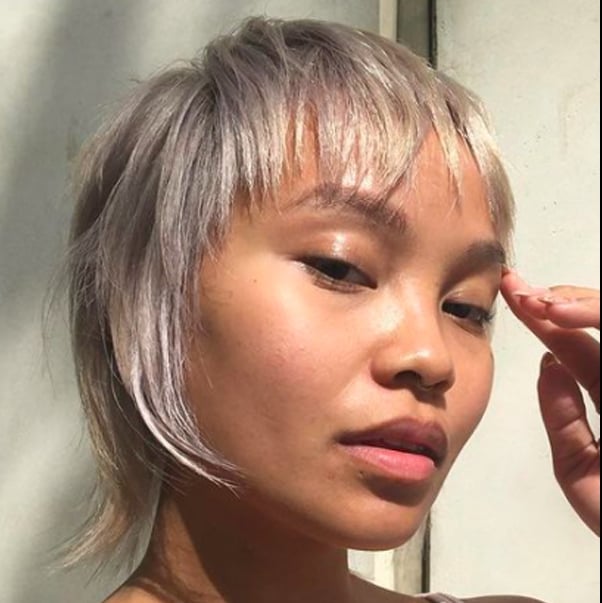
The modern take on the mullet keeps the length at the chin, which makes it read as a style choice rather than a dare. The short, wispy fringe is cut fine and straight, so it feathers across the forehead instead of sitting heavy. Pale silver blonde ties the whole shape together, giving the cut a polished edge that the old version never had.
This works on fine, straight hair, and it suits oval and angular faces that can carry the sharper lines. Ask your stylist for a chin-length mullet with pale silver blonde and a wispy fringe. A texturizing paste, worked through the ends, is all you need for that piecey finish. The mullet shape does require frequent trims, about every four weeks, to stop the back from growing into a shag.
Textured Silver Bob With Darker Roots

The contrast between the silver lengths and the darker roots is the whole point here, giving the bob a lived-in quality that a uniform color can’t match. The side parting and textured blowout add volume to the wavy, thick texture, so the cut holds its shape without much fuss.
Ask your colorist for a chin-length silver bob with darker roots and a textured blowout. Thick, wavy hair and oval and round face shapes are suited to this look. To keep the contrast sharp, you’ll need to touch up the roots every four to six weeks, and that is the real drawback. Let the waves dry with a diffuser to keep the texture natural. A trim every six to eight weeks keeps the shape fresh.
Textured Salt and Pepper Pixie
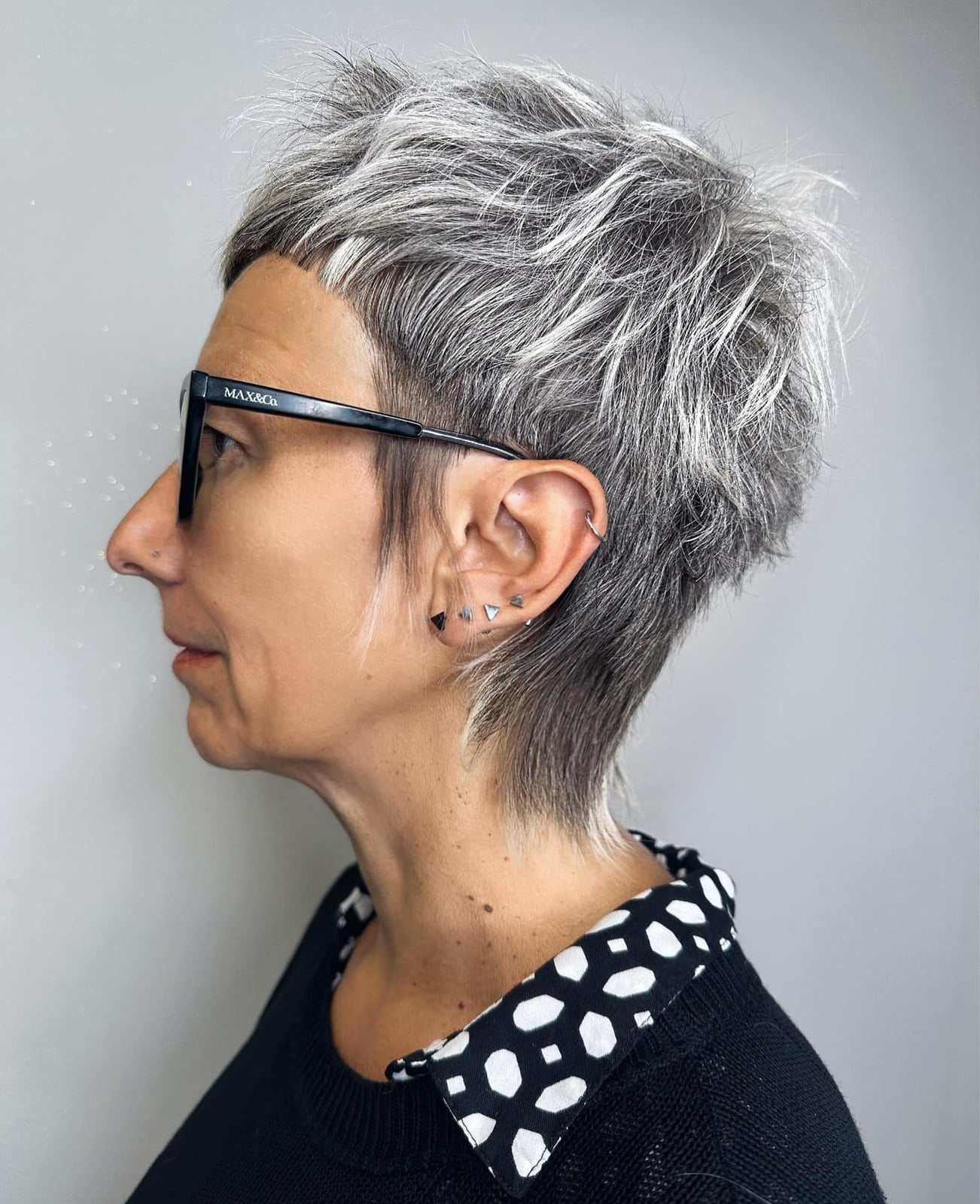
Wondering if a pixie will work with your thick, wavy hair? This one is proof it can, as long as the cut is textured enough to let the wave do its thing. The ear-length shape with a side parting and a slightly longer front section gives the hair room to move without looking bulky. Ask your stylist for a textured salt and pepper pixie cut, slightly longer front. Work a small amount of wax through the ends for definition, and expect a trim every four to six weeks to keep the silhouette sharp. The salt and pepper blend means you can skip the dye, which is the real win here.
Collarbone Bob Silver Gray Blend

The face-framing layers on this collarbone bob create movement without losing the blunt-ish weight of the shape. Side-swept bangs open up the face, while the silver-and-gray blend adds dimension that keeps the cut from reading as flat. This cut requires thick, wavy hair that can handle the interior layering without going wispy.
Ask your stylist for: a collarbone bob with soft waves and side-swept bangs. Those face-framing layers need a trim every six to eight weeks to keep their shape, otherwise the longest piece catches up and the whole thing turns into a one-length bob. On damp hair, a smoothing serum helps the waves land neatly rather than fanning out.
Collarbone Silver Bob With Curtain Bangs

How do you ask for a bob that looks polished but not stiff? Lead with the curtain bangs. On this collarbone-length cut, the bangs are cut to sweep open at the center part and blend right into the rest of the bob, so there is no harsh bang-line. The bright silver shade reads best when the cut has interior layering to catch light, which a voluminous blowout with a large round brush delivers. Ask your stylist for: a collarbone layered silver bob with curtain bangs and a voluminous blowout. The bangs will need a refresh every four to six weeks; the bob itself holds for about eight.
Shoulder Length Silver With Face-Framing Layers
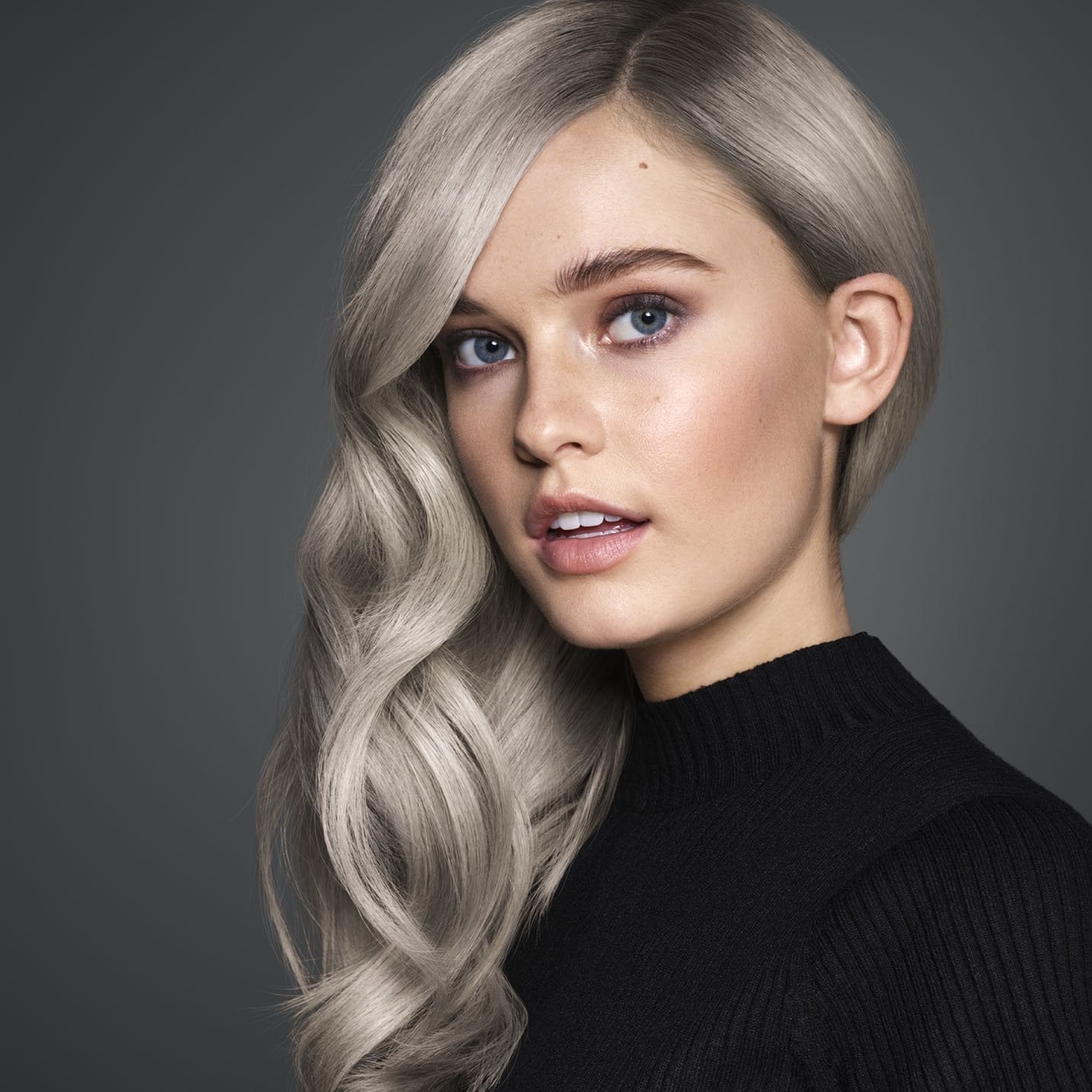
The soft face-framing layers here start near the cheekbone, letting the side-swept fringe blend into the cut. That design choice gives the collarbone length more movement than a blunt hem, especially in a cool bright silver that reflects every wave. The loose waves are set with a curling iron, then broken up with fingers for a polished finish. Ask your stylist for: a shoulder-length silver cut with face-framing layers and a side-swept fringe. Medium-density hair holds the shape best; very fine hair may lose the layer definition between trims.
Collarbone Layered Bob With Curtain Bangs, Wavy

The trick to this collarbone layered bob is the interior graduation: the layers are cut shorter underneath and longer on top, which builds volume at the crown without making the ends look thin. Curtain bangs are sliced to open at a middle parting and feather into the sides, so they frame the face without covering it. The subtle lighter highlights against the silver base add depth and texture.
To recreate the soft waves, blow-dry with a round brush, then wrap sections around a large-barrel iron and let them cool before breaking them apart with fingers. Ask your stylist for: a collarbone layered bob with curtain bangs and soft waves. A trim every six to eight weeks keeps the curtain bangs from becoming a solid fringe and stops the layers from growing past the bob line.
Collarbone Silver Shag With Air Dried Texture
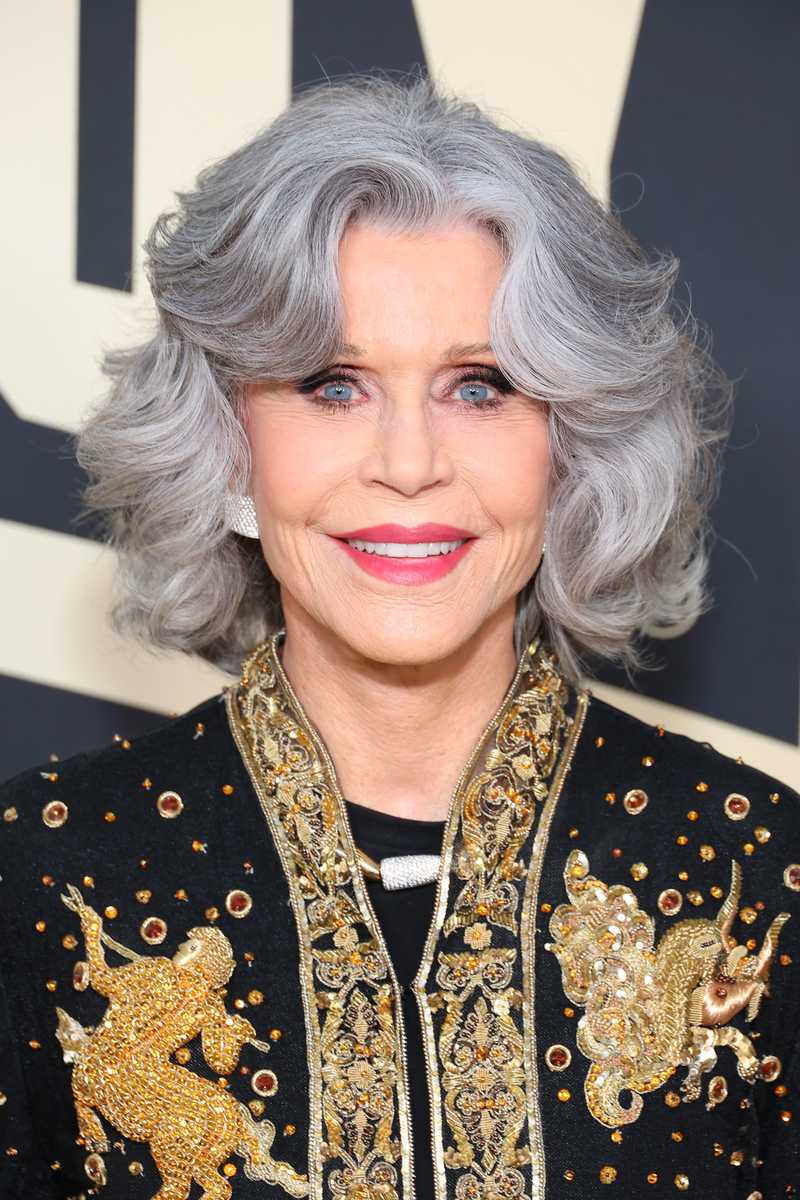
Compared to a polished blowout, this collarbone shag is the low-effort cousin who still shows up looking good. The shag cut relies on lots of internal layering and a disconnected hemline, so it naturally creates texture without a curling iron. With no bangs and a middle parting, the face-framing comes from the shortest layers around the cheekbones. This is a salon cut that lives its best life at home: apply a texturizing cream to damp hair, let it air dry, and the layers do the rest. Ask your stylist for: a collarbone length silver shag with air-dried texture. Thick, wavy hair takes to this cut best; finer hair may need a lightweight mousse at the roots to keep the shape from falling flat.
Shoulder Length Silver With Natural Waves
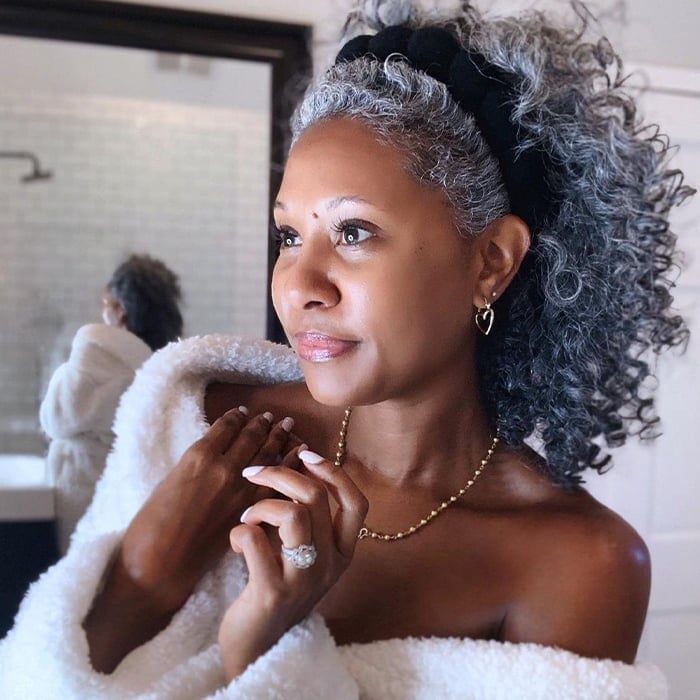
This haircut lets the color do the talking without any styling fuss. The shoulder-length layers give medium-density wavy hair enough shape to form its own texture, so you are not fighting to create movement. Ask your stylist for: shoulder-length hair with natural silver color and air-dried waves. A side part adds a little lift at the root without needing a round brush.
A leave-in conditioner on damp hair is really all you need to encourage the wave pattern. Let it dry on its own and resist the urge to touch it until it is fully set. A trim every eight to ten weeks keeps the ends healthy and prevents the layers from becoming a shapeless mass. This finish typically lasts two to three weeks with proper care.
Shoulder Length Silver With Face Framing Layers, Close-Up Take
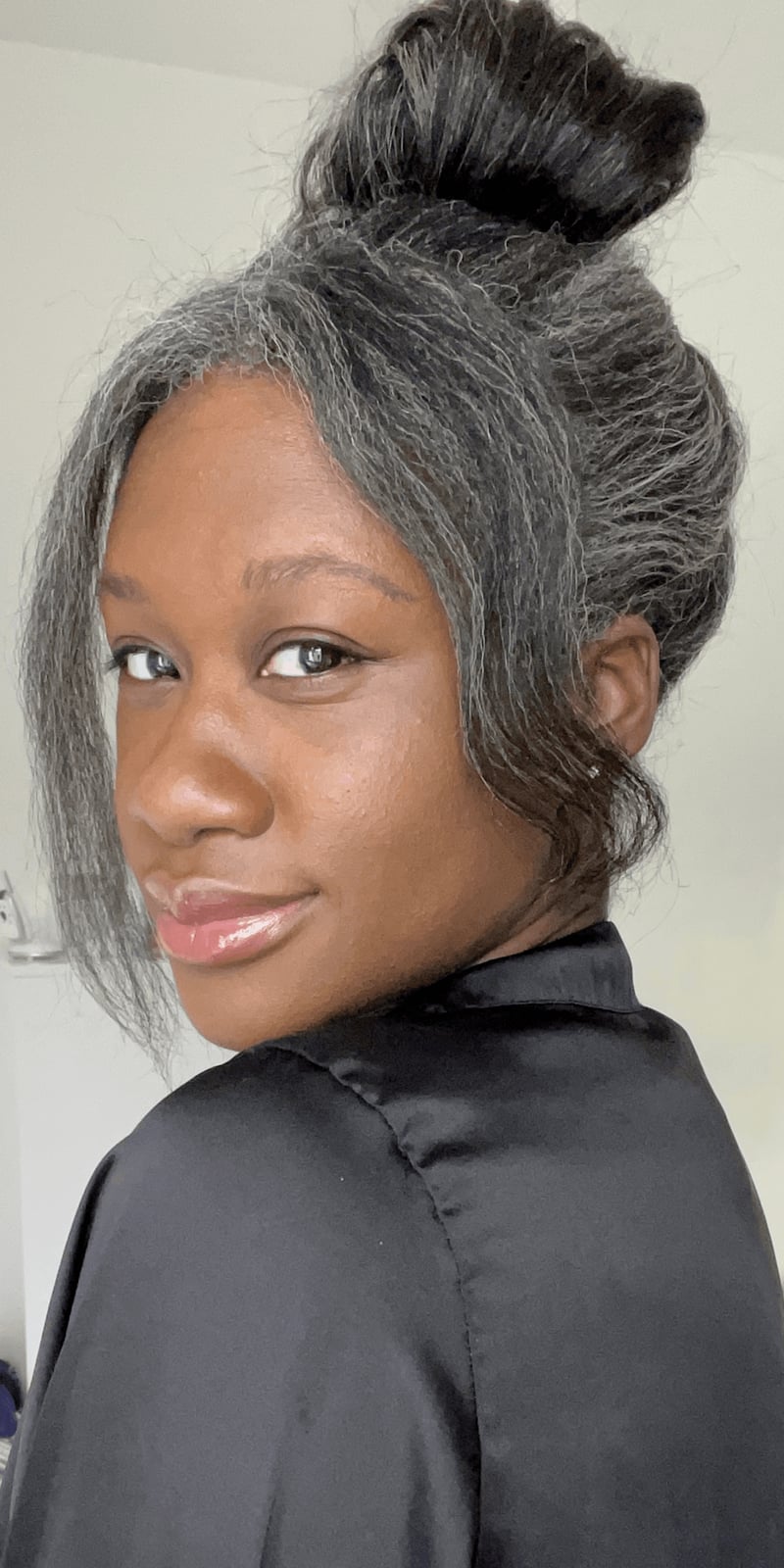
This is not a blunt cut pretending to have movement. The shoulder-length shape relies on face-framing layers that start at the jaw and graduate down, creating a soft A-line effect when paired with loose waves. Thick wavy hair benefits from this approach because it removes bulk without sacrificing length. Ask your stylist for: shoulder-length silver hair with face-framing layers and loose waves.
The middle part keeps the framing balanced on both sides, so the layers sweep forward rather than falling flat. A large-barrel curling wand used only on the front sections gives the shape more polish than air-drying alone. A trim every six to eight weeks maintains the layer placement and prevents the ends from looking straggly. The tonal variation in the silver color adds depth that a single shade cannot deliver.
Shoulder Length Silver With Wavy Bangs
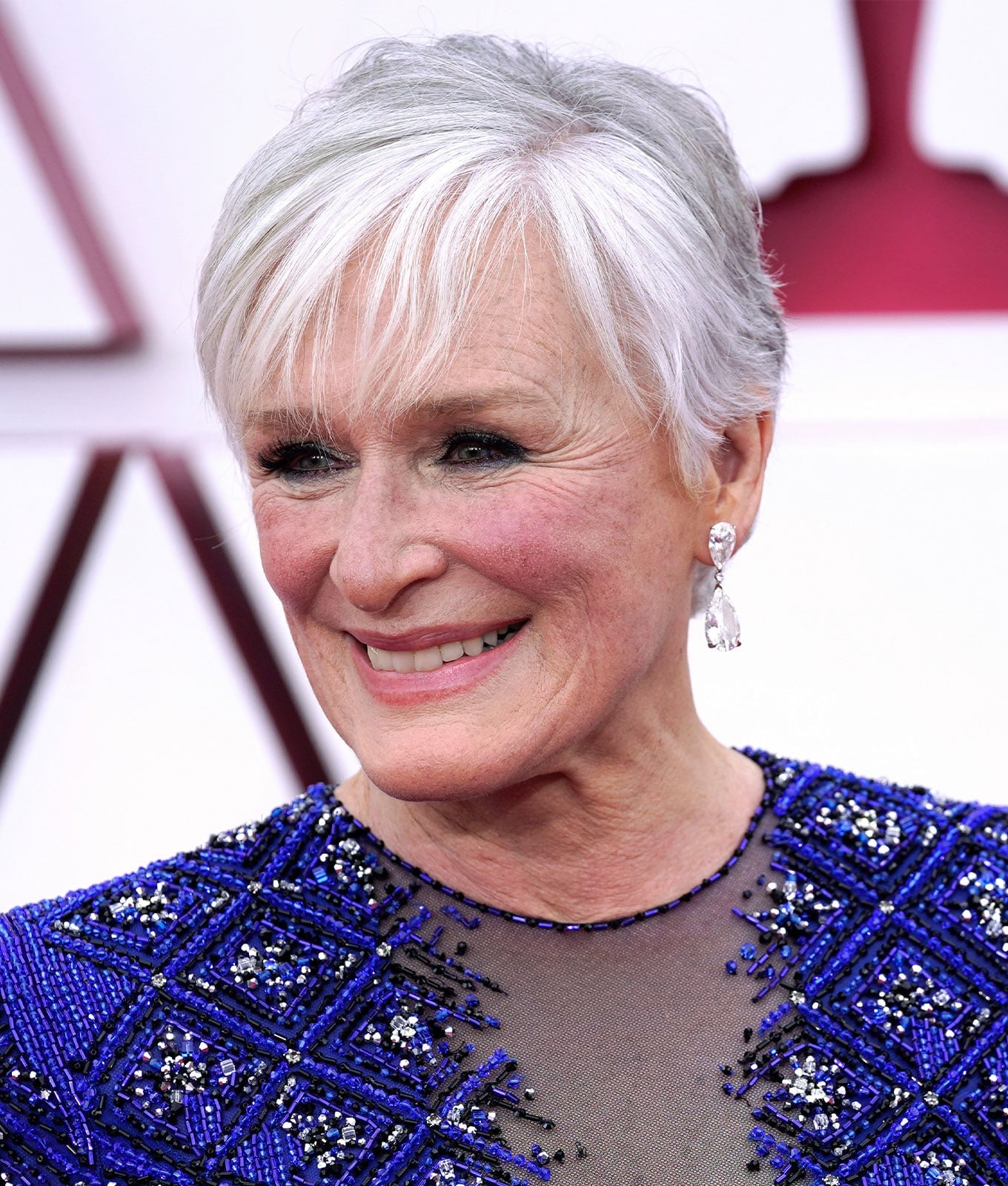
Can silver hair with wavy bangs look polished or will it just look like you forgot to brush? The answer depends on the side-swept fringe. A shoulder-length layered cut with a deep side part keeps the bangs sweeping across the forehead, which gives the soft waves a defined shape. Ask your stylist for: shoulder-length silver hair with soft waves and a side-swept fringe. A volumizing mousse applied to damp hair and diffused on low heat creates the wave pattern without frizz. The bangs need a quick refresh with a curling iron most mornings to keep them from falling flat. A trim every six to eight weeks maintains the fringe length and prevents it from sliding into your eyes.
Shoulder Length Silver With Middle Part

A middle part on silver hair is a commitment to symmetry. The shoulder-length cut with visible layers and loose waves works because the part creates a clean line down the center, letting the silver tones fan out evenly on both sides. Thick wavy hair has enough weight to hold the part in place without constant adjustment. Ask your stylist for: shoulder-length silver hair with loose waves and a middle part.
The trade-off is that a middle part exposes the root area more than a side part does, so the silver needs to be even from root to tip. A smoothing cream applied before drying prevents the natural wave from turning into frizz around the part line. A trim every eight to ten weeks keeps the layers defined and the ends healthy. The lived-in texture is the whole point here, not a sign of neglect.
Long Silver Hair With Loose Waves

Long silver hair is a popular choice for those who want both length and color. The mid-back length with layers and loose waves works best on thick wavy hair because the weight of the hair pulls the waves into a soft S-pattern. Ask your stylist for: long silver hair with loose waves and a middle part. A wide-tooth comb used on damp hair prevents breakage at the mid-lengths where long hair tends to weaken.
The uniform silver color looks best under soft, natural light, which is worth considering for formal occasions where flash photography can wash it out. For everyday wear, a loose braid or a low ponytail protects the ends during sleep. A trim every ten to twelve weeks keeps the ends from splitting without sacrificing the length you worked for. This style transitions from a casual day to a dressy evening with just a spritz of texture spray.
Mid-Back Silver Hair With Soft Layers
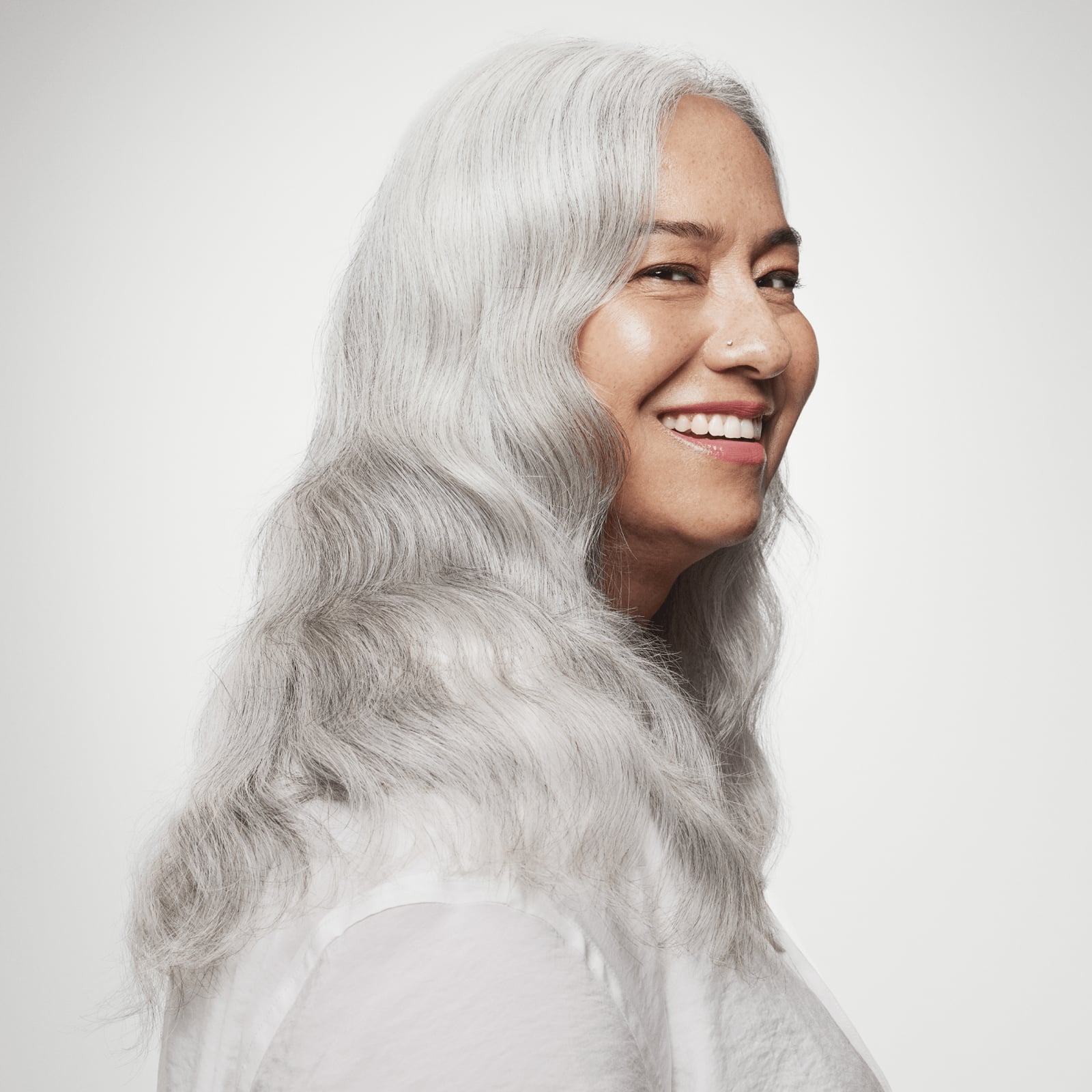
The side view tells the story here: silver hair that falls past the shoulders keeps its swing because the layers are cut to move with the wave, not against it. A middle parting lets the weight fall evenly, so the air-dried texture looks polished, not messy. This is the low-maintenance end of the silver spectrum, where the cut does the work and the styling is mostly about letting it dry.
Ask your stylist for: mid-back silver hair with soft layers and a middle part. Thick, wavy hair takes this best, since the layers need enough density to hold shape without going flat. A shine serum on damp hair keeps the gloss going, and a trim every eight to ten weeks stops the ends from looking straggly. It’s a salon-leaning cut that behaves like an everyday one.
Long Silver With Darker Strands Blowout
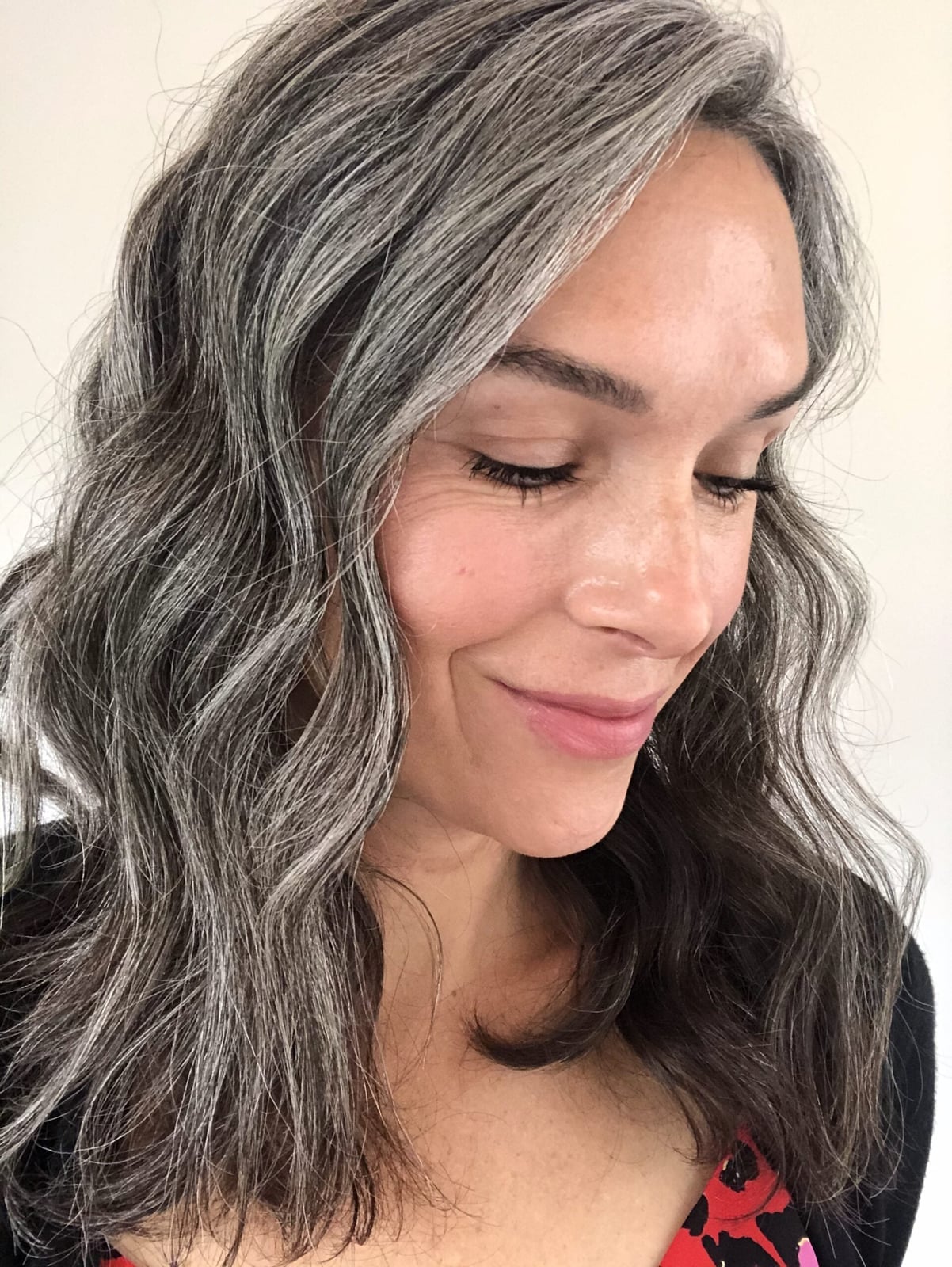
The practical rule for silver hair with darker strands is contrast: keep the base silver bright enough that the darker pieces read as depth, not grime. Ask your colorist for: long silver hair with darker strands, voluminous blowout. The technique involves weaving darker lowlights through the mid-lengths and ends, then finishing with a round brush blowout that bends the waves into soft, full motion. A side parting adds lift at the root.
This is not a DIY color job. The blend takes a skilled hand to avoid stripes, so plan on a salon visit for the initial weave, then a gloss or toner between appointments to keep the silver from going muddy. The payoff is a lived-in silver that moves like a blowout and hides regrowth better than a solid shade.
Textured Ash Blonde Shag With Curtain Bangs

How do you ask for a cut that looks like you woke up this way, only better? Ask your stylist for: textured shag with curtain bangs in ash blonde. The shag’s layers are cut short through the crown and longer at the ear, so fine, wavy hair gains the illusion of density. Curtain bangs frame the face without commitment, and the middle part keeps the messiness looking like a choice. When you ask, mention that you want the bangs to blend into the layers, not sit as a separate piece. The result is a lived-in texture that needs no heat styling, just a texturizing paste worked through dry hair.
Final Thoughts
Before you book, match the cut to your texture. Fine hair holds a blunt baseline or face-framing layers better than heavy interior layering, while thick hair benefits from layers that remove weight and add movement.
- Use purple shampoo and conditioner weekly to keep silver bright.
- Schedule salon toning every 6 to 8 weeks to fight brass.
- Spray on heat protectant before any hot styling.
- Trim split ends every 8 to 10 weeks to keep the shape sharp.
Silver hair is more versatile than ever, so choose the cut that complements your style.

