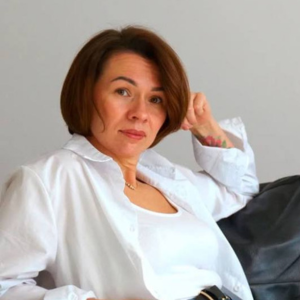
I keep seeing women with gray blending highlights in the salon chair next to mine. It is not just covering gray anymore, it is a deliberate choice. And honestly, it looks better than most all-over colors I have tried.
This roundup has 26 ways to wear Gray Blending Highlights, from low-maintenance pixies to long dramatic waves. Whether your hair is fine or thick, straight or curly, there is a version that actually works with your texture and your schedule.
I have been growing out my own bleach job for three years, and I know the struggle of a harsh root line at week five. Gray blending solves that without looking like you gave up.
Long Wavy Gray With Silver Highlights
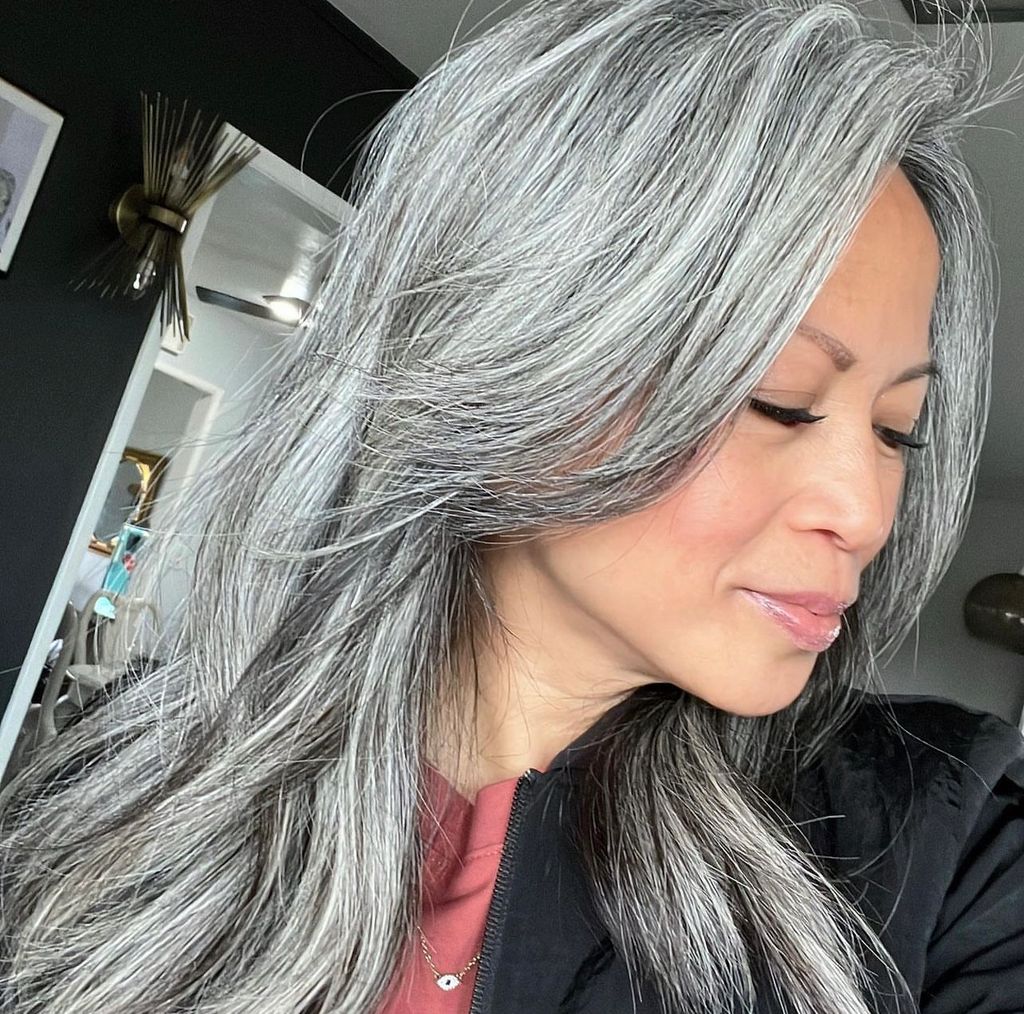
Ever notice how natural gray can look flat under overhead lights? That is where silver highlights earn their keep. On this mid-back long gray wavy hair, the silver is painted onto the surface layers only, so the natural gray stays dark underneath and the whole thing reads dimensional rather than old sweater.
The honest problem: silver oxidises. After week four it pulls warm, and a purple shampoo becomes your Saturday night plan. I keep a second bottle at my desk. The waves help — they break up the grow-out line and hide the brassiness for another week or two. Side-swept bangs soften a round face. Get it done in autumn, when the overcast light makes the silver reads truest and the brassiness takes longer to show.
Collarbone Waves With Ash Blonde Gray
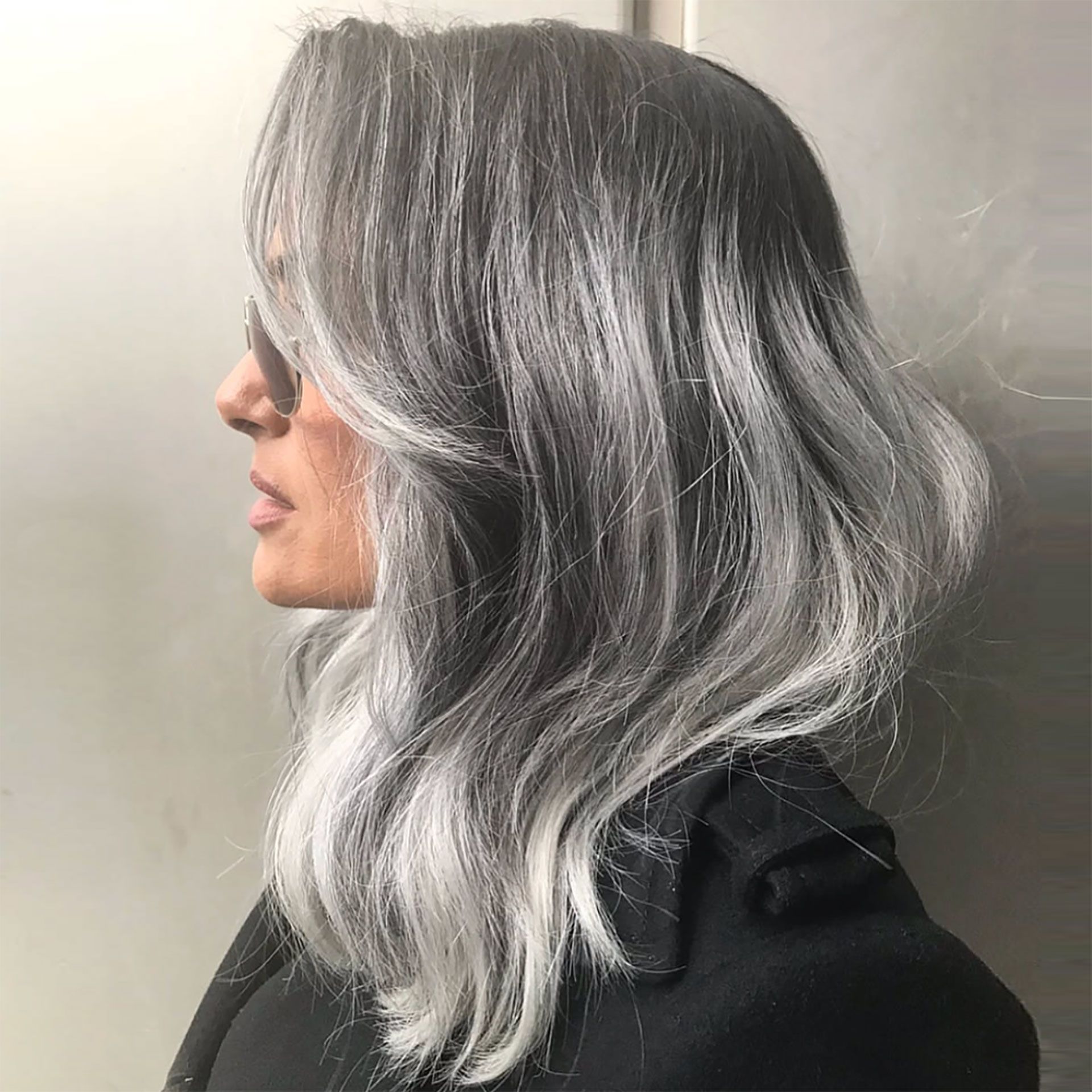
The stark contrast here is the whole point, and it only works if your hair can carry it. Natural gray with white and ash blonde highlights on collarbone-length layers gives medium-density wavy hair a bright, airy feel that a single flat color can’t touch. But here’s the honest downside: that same contrast will brass out fast if you skip the toning. I’ve seen this go yellow within three weeks on porous hair. If your texture is fine or your gray is sparse, the white highlights will overwhelm the base. For the right candidate, though, the ash blonde gray highlights read as deliberate, not accidental. It’s a look that needs a stylist who knows how to weave the light tones through the wave, not just paint them on top.
Fine Bob With Gray Brown Blend
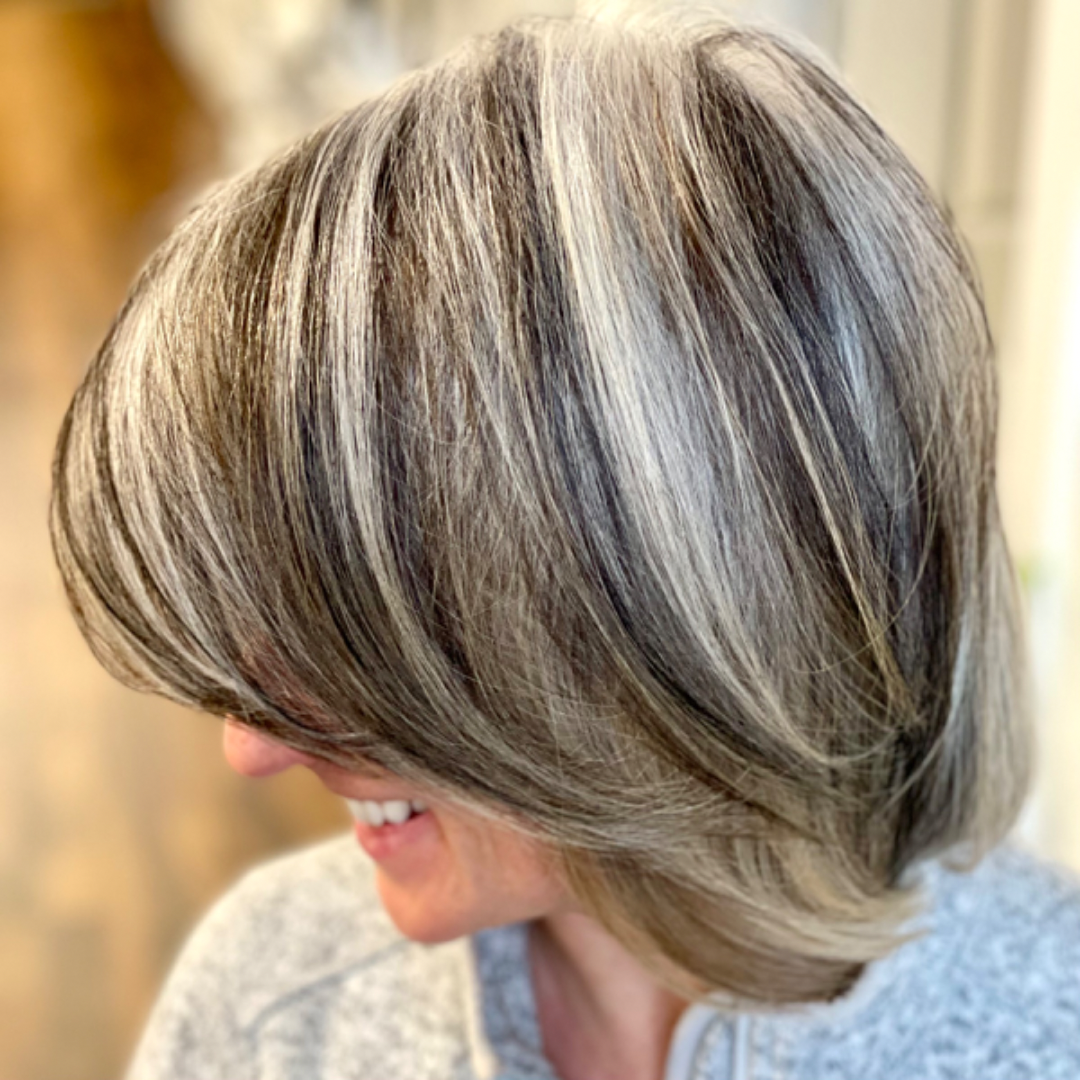
I’ll admit I was skeptical about a gray brown hair blend on fine, straight hair. The seamless blend of gray and dark brown highlights in this chin-length bob is subtle, not stark, but keeping it that way means booking a salon appointment every six weeks. At home, the line shows fast. The side-swept bangs and smooth layering help disguise the grow-out for about two weeks, but after that, you notice. This is not a between-dyes look.
Long Wavy Dark Base Gray Ash Blonde
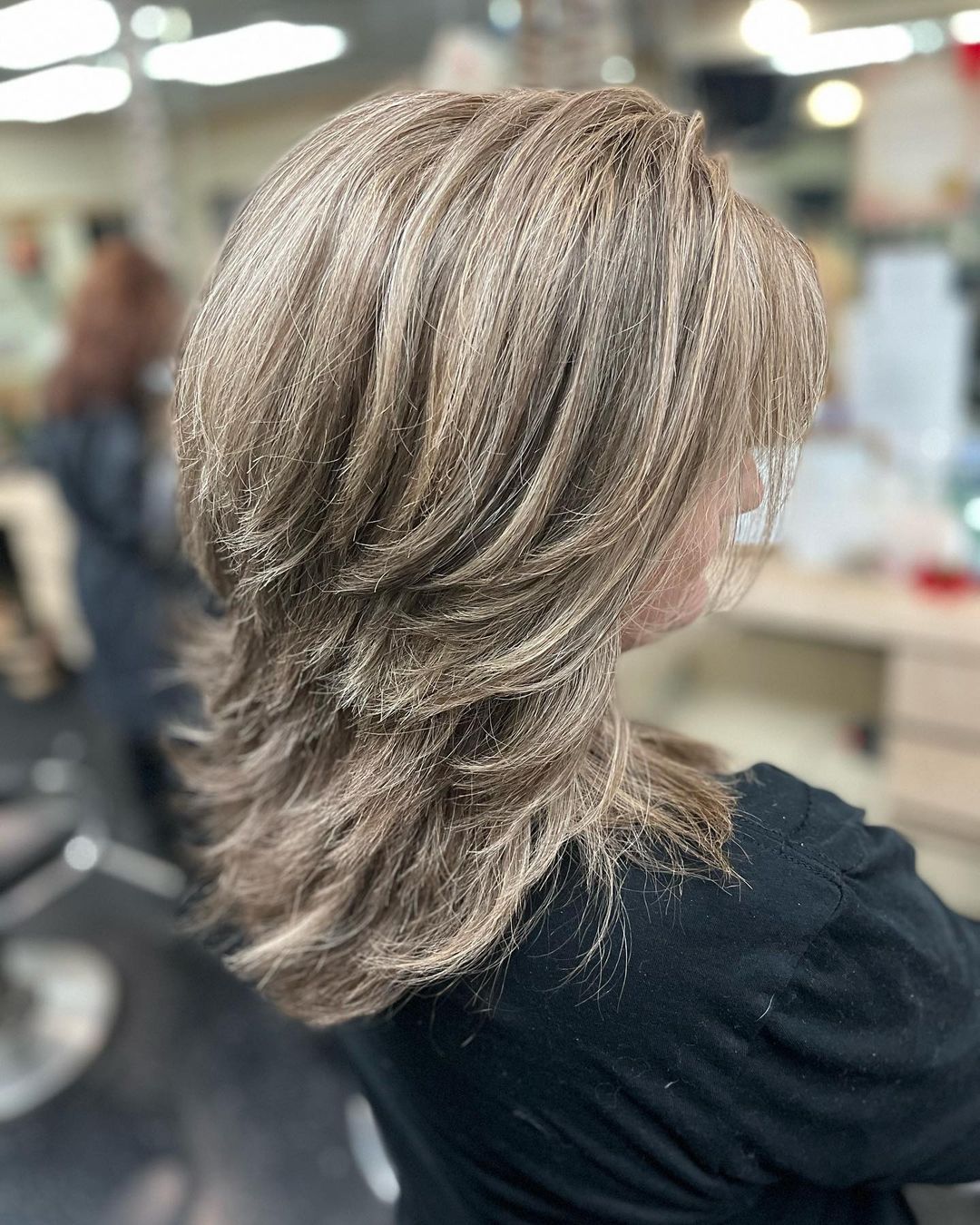
The trick with a dark gray ash blonde blend on thick, wavy hair is the placement. Your stylist paints the gray and ash blonde highlights starting a few inches from the root, leaving the dark base intact near the scalp. That root shadow buys you time, about three months before the line feels obvious. The waves soften the contrast, so the blend reads deliberate, not grown out.
Styling takes about 15 minutes with a curling iron, but the real work is in the chair. This is a two-step process: lighten the sections, then tone them to that cool ash finish. The grow-out is forgiving because the dark base blends into the natural regrowth. Just book a trim every ten weeks to keep the ends from looking stringy.
Vibrant Gray Collarbone Waves
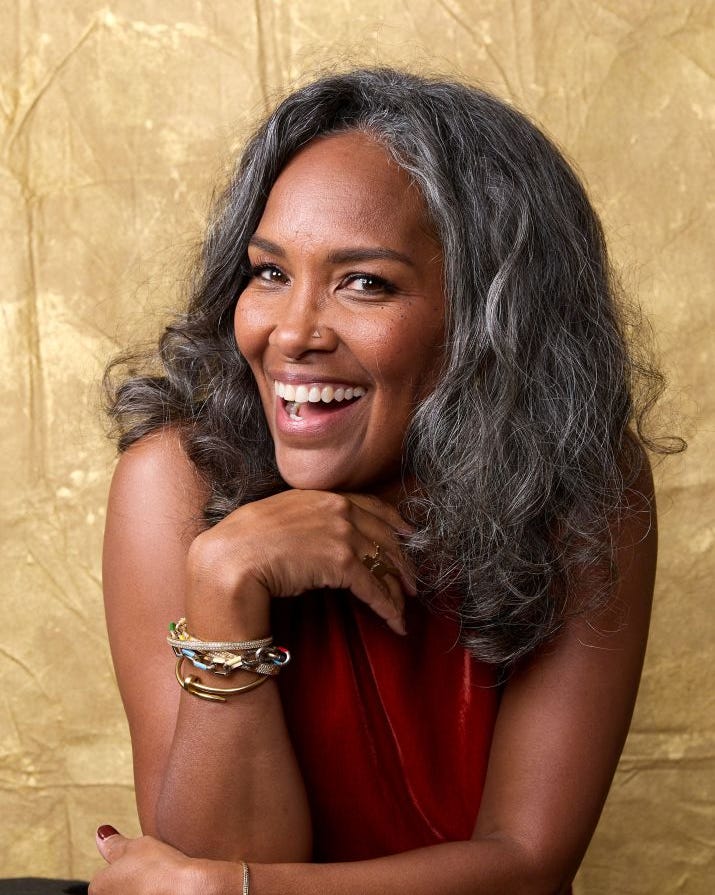
Can gray be vibrant? On this collarbone-length cut, yes, but it takes work. The gray blending highlights are lifted to a cool silver tone that catches light, which is exactly why it fades fast. Within three weeks, that vibrancy dulls to a dusty pewter unless you use a purple shampoo twice a week. The loose curls help disguise the shift, but the honest downside is the maintenance. This is not a set-it-and-forget-it gray. You have to want the upkeep.
Mid-Back Dark Base With Gray Silver
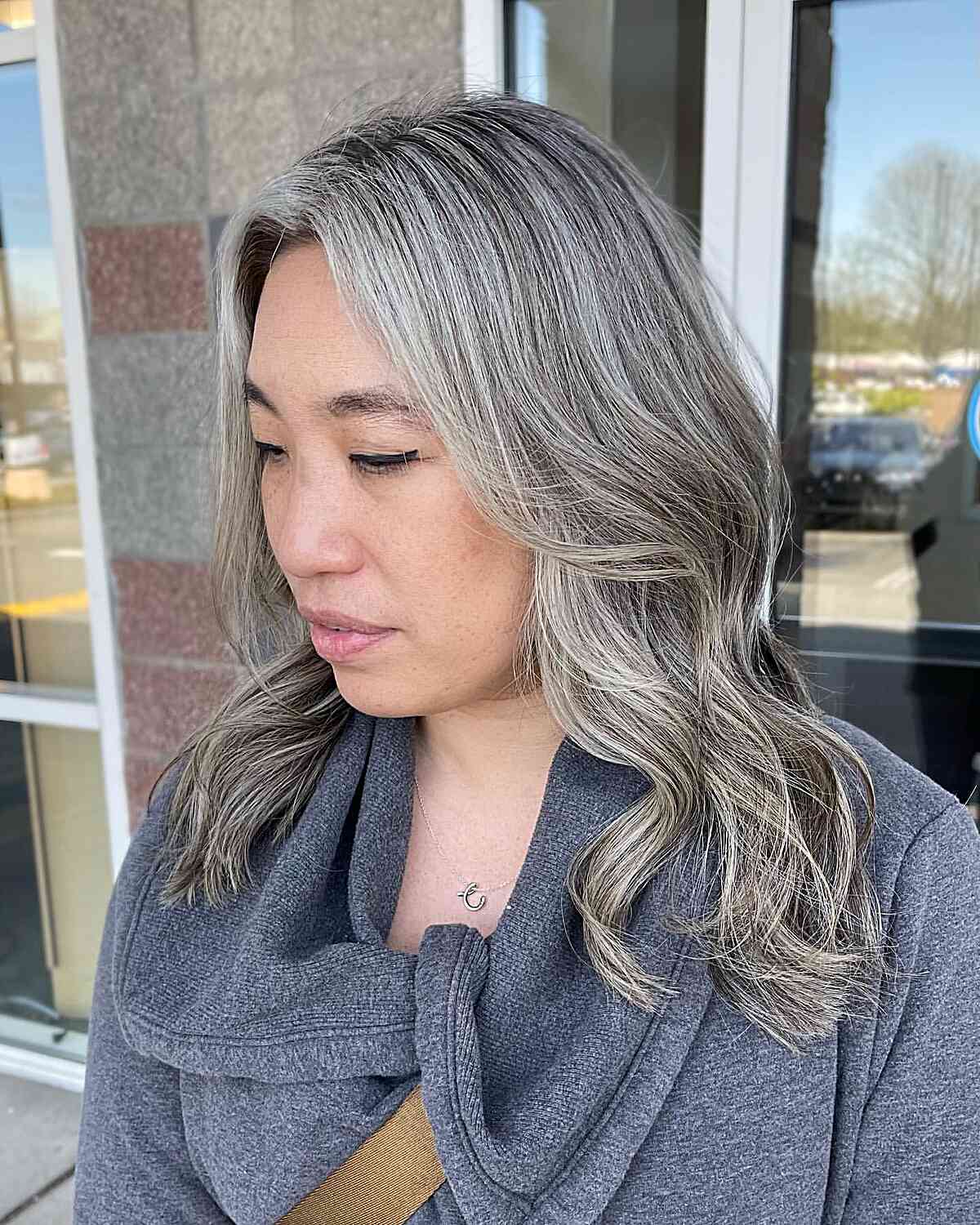
You see it in the morning light first. The dark hair gray silver highlights catch the sun, and suddenly the whole mid-back length looks dimensional. The blended gray and silver highlights are painted in soft ribbons through the layers, so the contrast is bold but not stripey. On thick, wavy hair, this holds its shape all day. The waves keep the silver from looking flat.
This is the kind of color that works for holiday parties or a Tuesday. The grow-out is slow because the dark base matches the natural root, so you can push eight weeks between trims. Just keep the ends healthy with regular cuts, or the silver starts to look brassy. One salon session every three months, and you are set.
Collarbone Lob Cool Gray Highlights
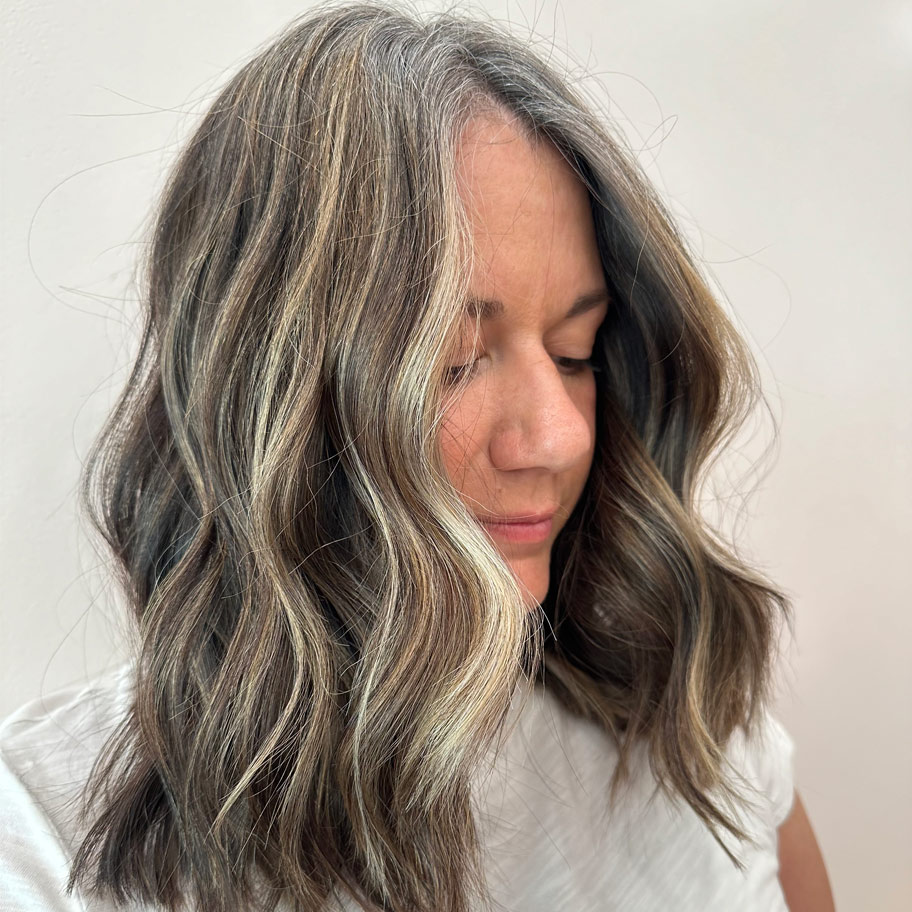
I keep coming back to this one because it flatters everyone who has ever told me their gray is “too mousy to work with.” The dark base is doing the heavy lifting here, a rich brown that reads almost black in low light, and the gray ash blonde highlights are woven through the mid-lengths and ends rather than plastered on top. That is the technique that sells me: the colorist keeps the root area deeper and lets the lighter pieces catch the waves, so the tone stays cool without ever looking like a costume. On my fine, straight hair this would need a bit of wave to show the dimension, but on the medium-textured, wavy length in the photo it looks like the gray grew in on purpose. The grow-out is the real win, though. Because the base is dark and the highlights are ash, there is no harsh line when your roots show at week five, just a soft shadow that buys you a trim every eight weeks and a lot of forgiveness.
Chin Bob Subtle Gray Blend
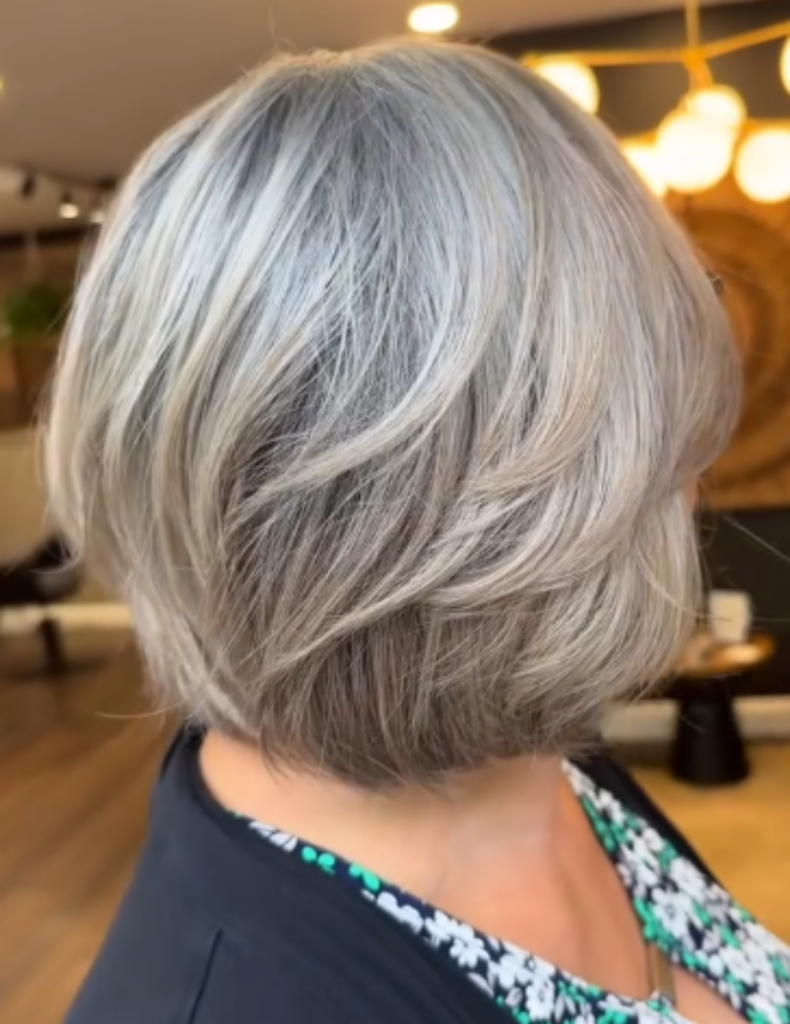
This is the cut I would book tomorrow if my hair were thicker than it is. The mid-back length gives the layers room to move, and the dark brown base with gray silver highlights reads expensive in a way that plain brown never quite manages. The technique here is a foil-based weave, which means the silver pieces are placed strategically through the layers rather than scattered like a bad highlight job, and the tone is cool without tipping into blue. No bangs means the face stays open, which suits a round face that does not need extra width at the cheekbone. But here is the honest downside: those layers are where split ends live. The silver tone is porous, so the ends dry out faster than the rest, and if you skip a trim past the eight-week mark, you will see it. I have sat through this exact process, and the grow-out is not bad, but the texture on the ends is the price you pay for the dimension.
Collarbone Layered Gray Ash Blonde Silver
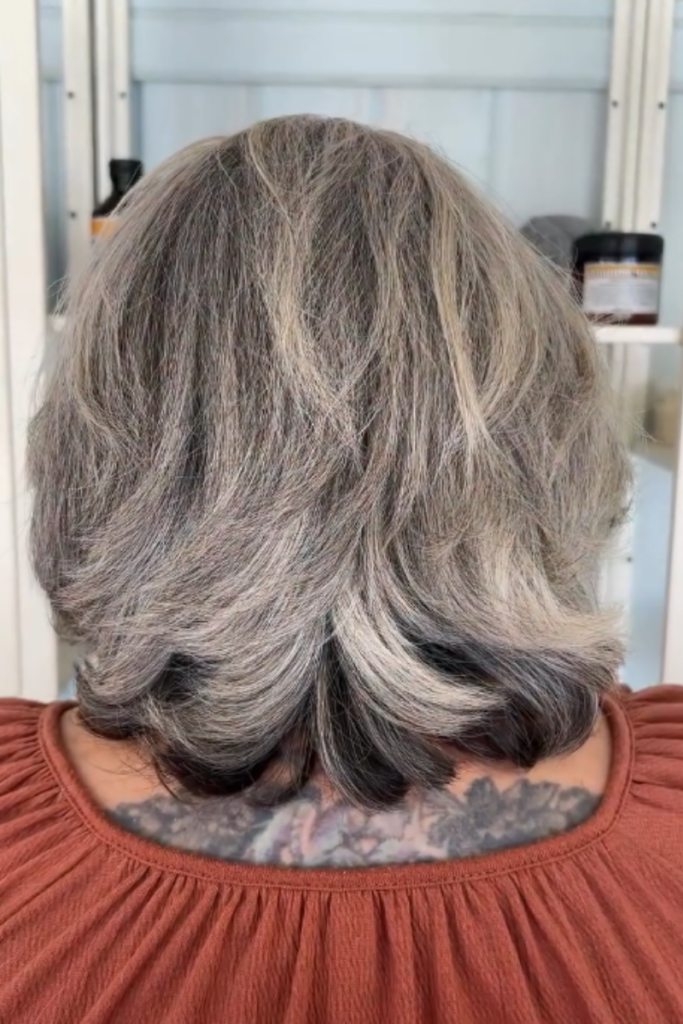
When did brown start looking this expensive? This collarbone lob is the answer to every client who wants gray blending but is not ready to commit to a full silver mane. The dark brown base grounds the whole thing, and the gray blonde highlights are placed to frame the face and catch the light when you move. On a lob this length, the technique is all about placement: the lighter pieces sit around the front and the crown, so the color does the work of adding depth and movement without a single layer being cut in. My fine, straight hair would hold this shape until about 4 pm before it went flat, but on the medium-textured hair in the photo, the waves give it a lived-in feel that lasts a full day. The tone is the trick, though. It is not a true silver and not a warm blonde, it sits in that gray-blonde middle ground that reads cool next to warm skin and needs a purple shampoo once a week to stay honest. Trims every six to eight weeks keep the blunt-ish ends from looking scraggly, and the grow-out is soft because the base is dark.
Chin Bob Silver Ash Highlights
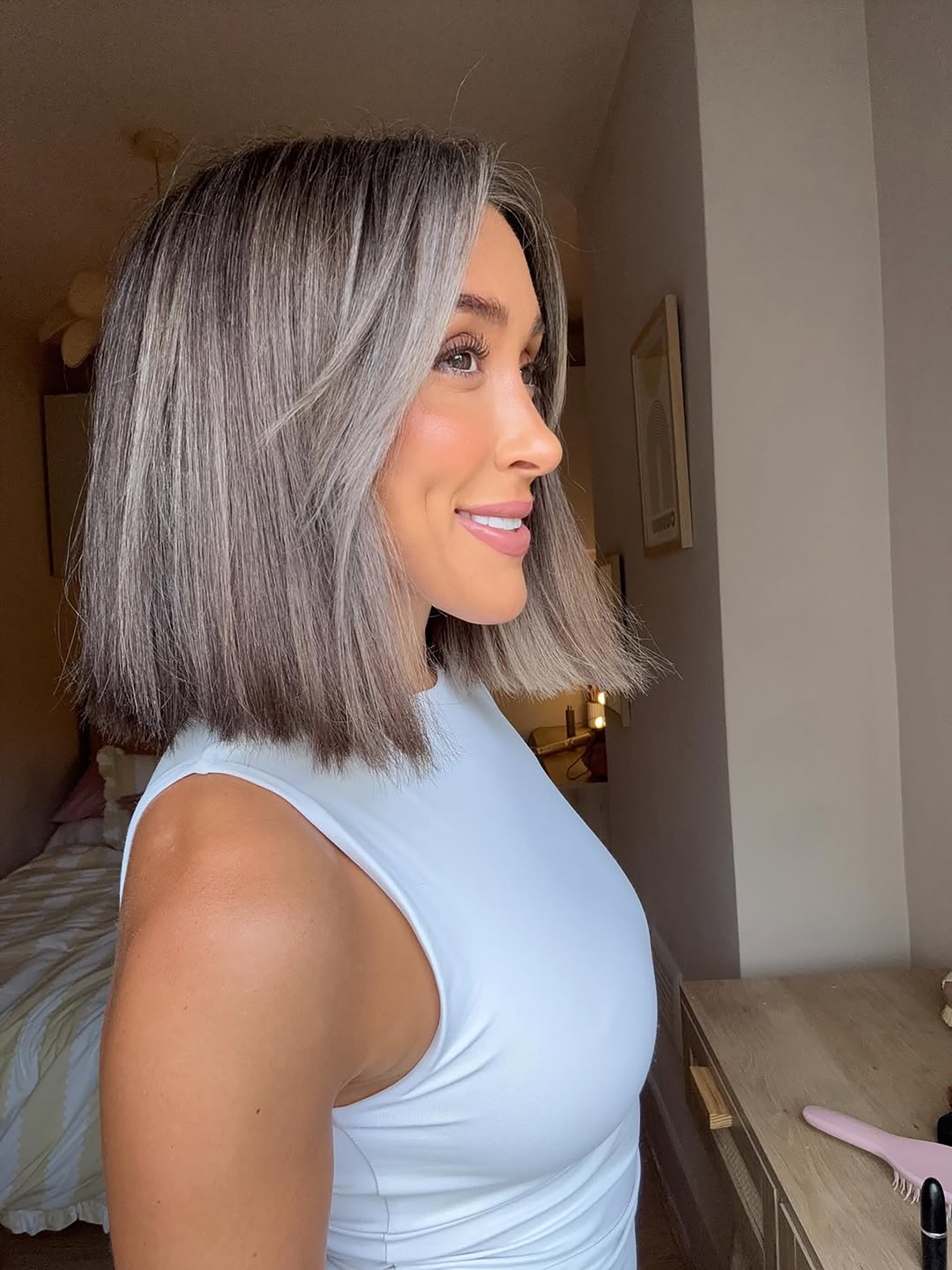
Resisted a bob for years because I thought my face was too round, then I tried it and the layers changed my mind. This chin-length cut with a dark base and gray silver highlights is doing something clever: the layers are cut to stack at the jaw, which visually narrows a round face, and the silver pieces are woven through the top to draw the eye up. The technique is a balayage-meets-foil hybrid, so the color is denser at the ends and softer at the root, which means the grow-out is not seamless, but it is graceful. On fine hair, this is a gift, the layers give the illusion of volume that my straight texture never holds on its own. The honest caveat: silver on a short cut shows every toning slip. Skip the purple shampoo for two weeks and the highlights go brassy, and on a bob there is nowhere to hide it. Book the appointment, this is not a bathroom-mirror job, but the payoff is a cut that looks sharp from every angle.
Lob Light Brown Blonde Ash Blend
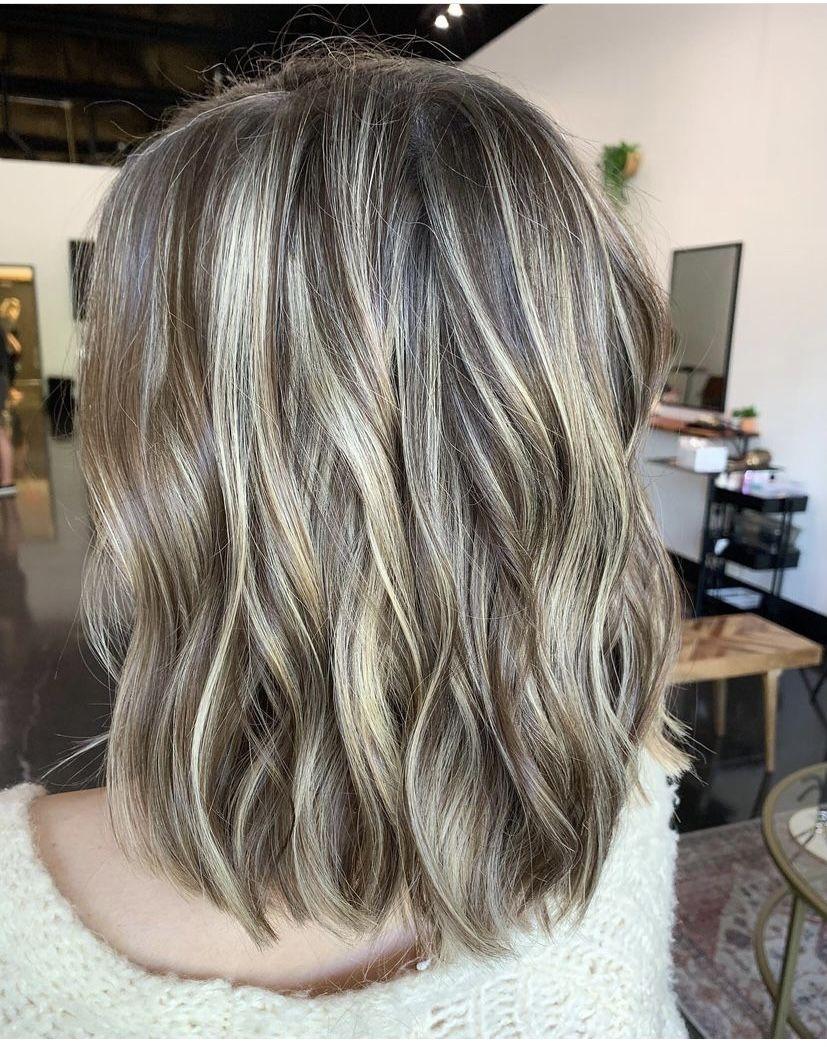
Best grow-out in this roundup. I have tested a lot of gray blending in my time, and this long-layered approach with a dark brown base and silver gray balayage is the one that keeps surprising me. The technique is a true balayage, hand-painted so the silver pieces land heavier around the face and melt into the base further down, which means the root line never slaps you in the face at week six. The tone is cool and metallic, but not icy, which is a hard balance to strike. On thick, wavy hair this is a showstopper, the layers give the silver room to catch the light, but on my fine, straight texture it would fall flat by lunch unless I added wave. The upkeep is the trade-off: trims every eight weeks keep the layers from getting scraggly, and a toning session every couple of months keeps the silver from going yellow. It is not a low-maintenance color, but it is a low-stress one, because the dark base does the hard work of hiding the grow-out.
No Bangs Mid-Back Layers Dark Brown Gray Silver
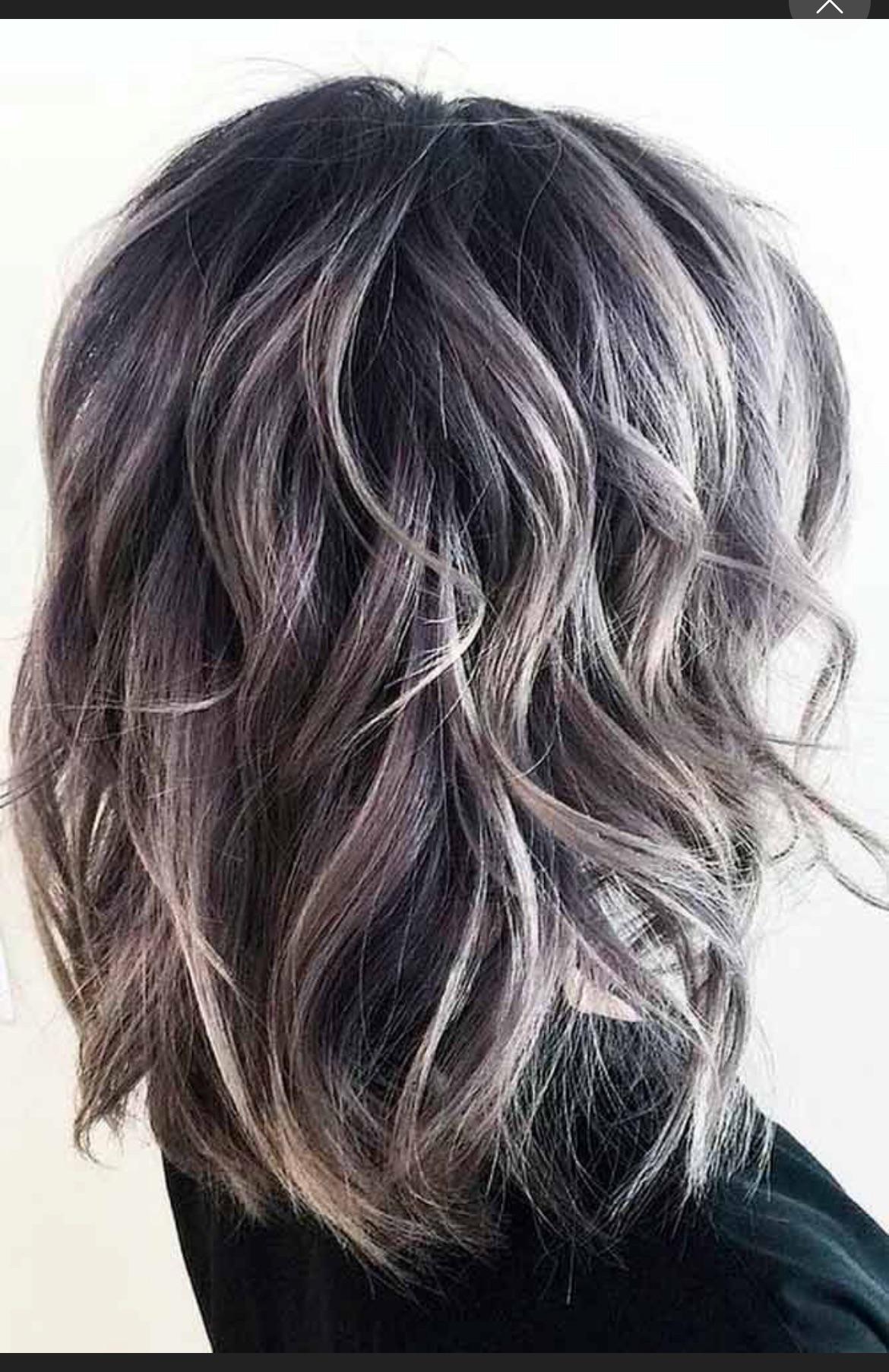
Why does this dark brown gray silver look like it took a master’s degree to achieve? Because the technique requires a precise base colour and carefully placed highlights to keep the contrast from looking muddy on thick, wavy hair. This is not a box-job colour.
The two-process method starts with the dark base applied from root to ends, saturating each thick section fully. After rinsing and drying, the stylist uses a balayage technique with a fine-tooth weave, selecting thin subsections to paint gray and silver highlights from mid-lengths to ends. The key is keeping the root area untouched by lightener to maintain depth. On thick wavy hair, the placement follows the natural wave pattern so the highlights land on the apex of each bend. This creates dimension without looking striped. For a formal winter event, think a gala or a holiday party, these loose waves catch the light in a way that reads as intentional. Not a daily style, but for the right occasion, it delivers.
Short Bob Ash Blonde Gray Tones
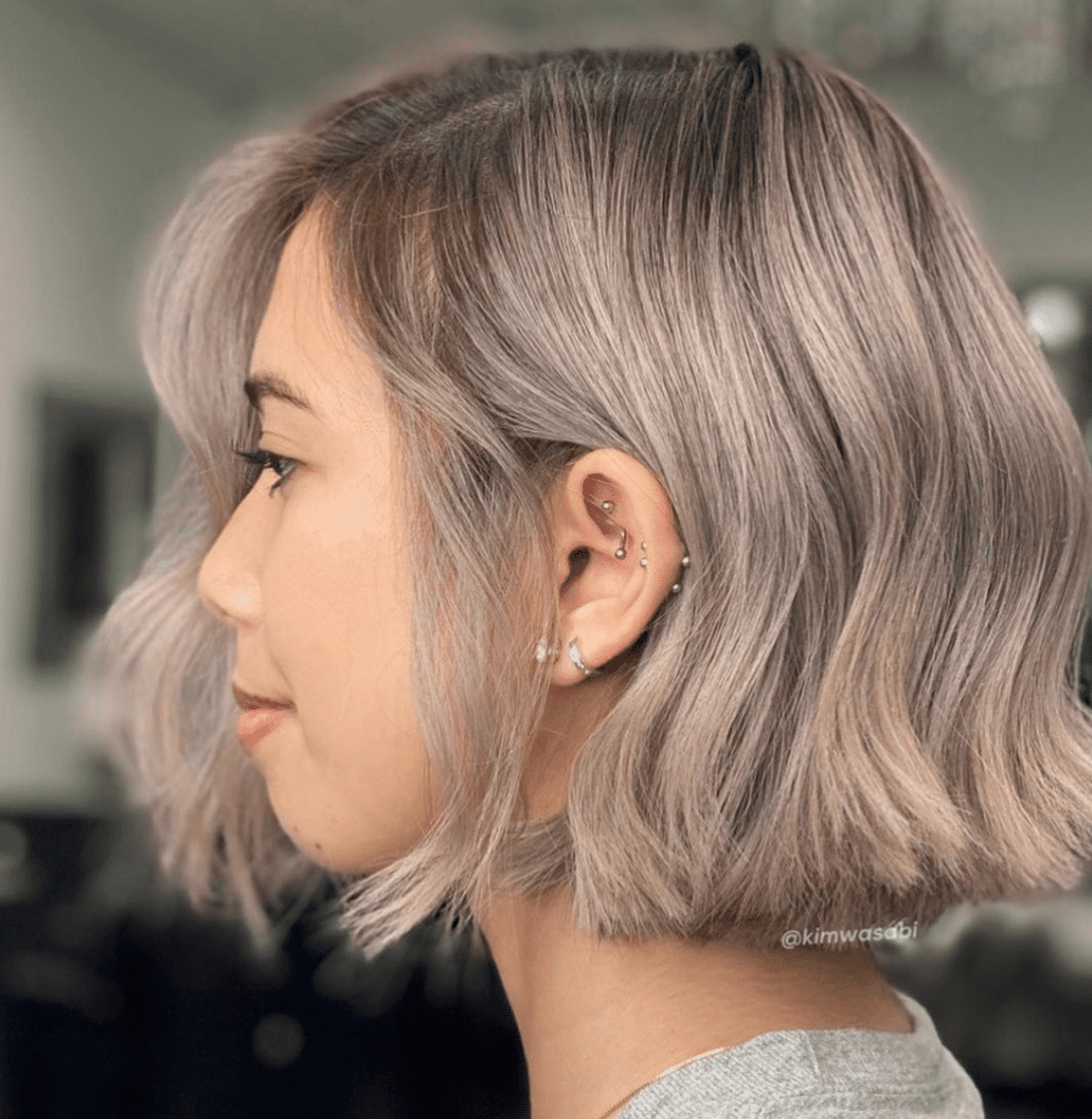
I have to confess: this ash blonde gray tones look is beautiful on the right head of hair. The subtle gray blending gives the ash blonde a grown-in softness that works best on naturally cool skin tones and fine to medium density. The downside? On very fine hair, the blonde can wash out the depth, making the cut look thinner than it is. And the tone fades fast without regular toning. Skip if your texture is coarse or your skin runs warm.
Collarbone Dark Base Gray Silver
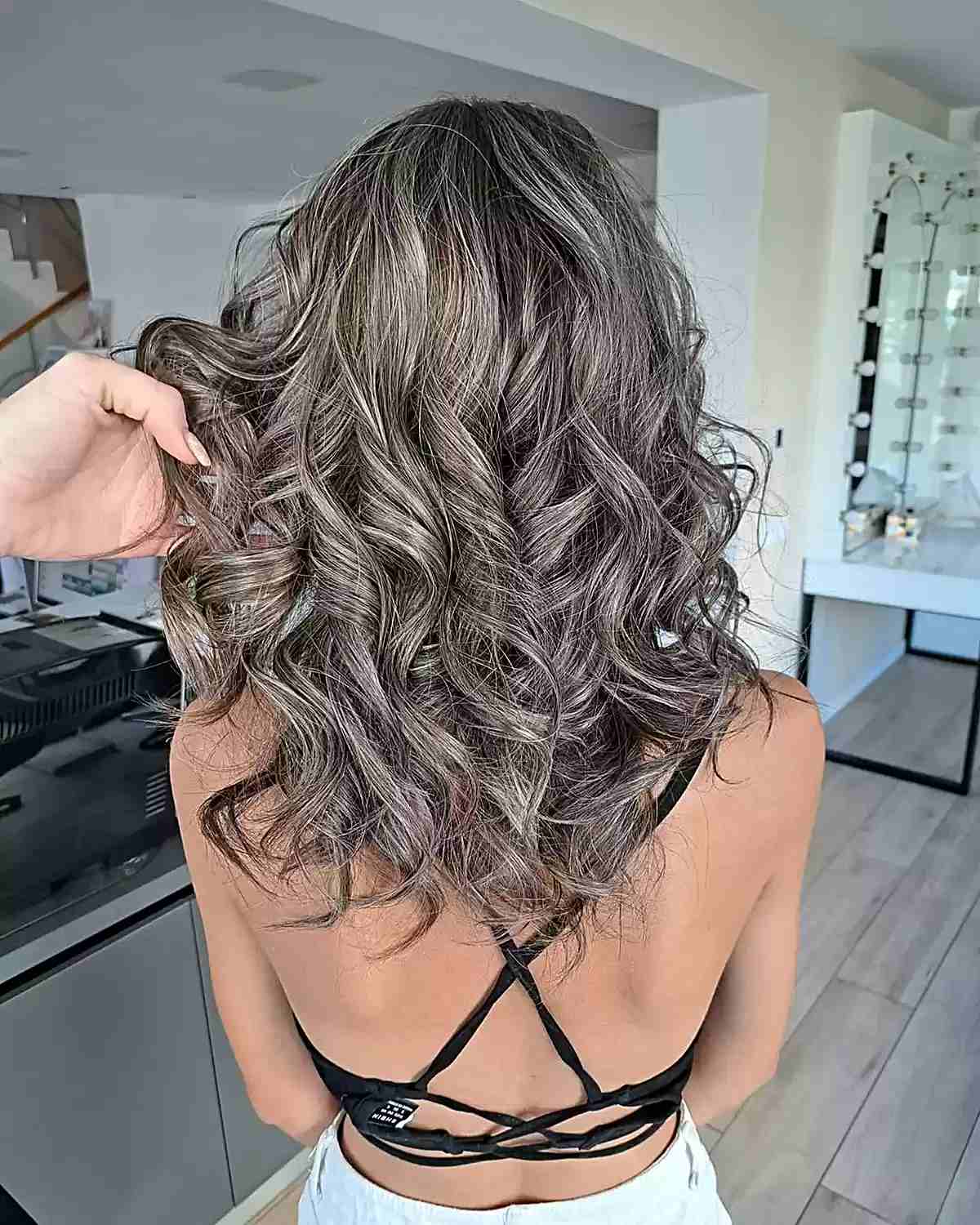
Monday morning it looks fresh. By Friday, the contrast still holds because the gray and silver highlights blend into the dark base without a harsh line.
This dark gray silver blend is surprisingly low-key for how dimensional it appears. The roots take about six weeks before they start to feel obvious. A trim every eight weeks keeps the ends clean. Three weeks in, the silver still reads cool if you use a toning shampoo every fourth wash. I find I can go two weeks between blow-dries by using dry shampoo at the roots. The loose waves, set with a medium-barrel iron, soften the edges and make the grow-out even more forgiving. They lose shape by day two, but a low-heat re-curl fixes it in ten minutes.
Chin Bob Wavy Ashy Gray Tones
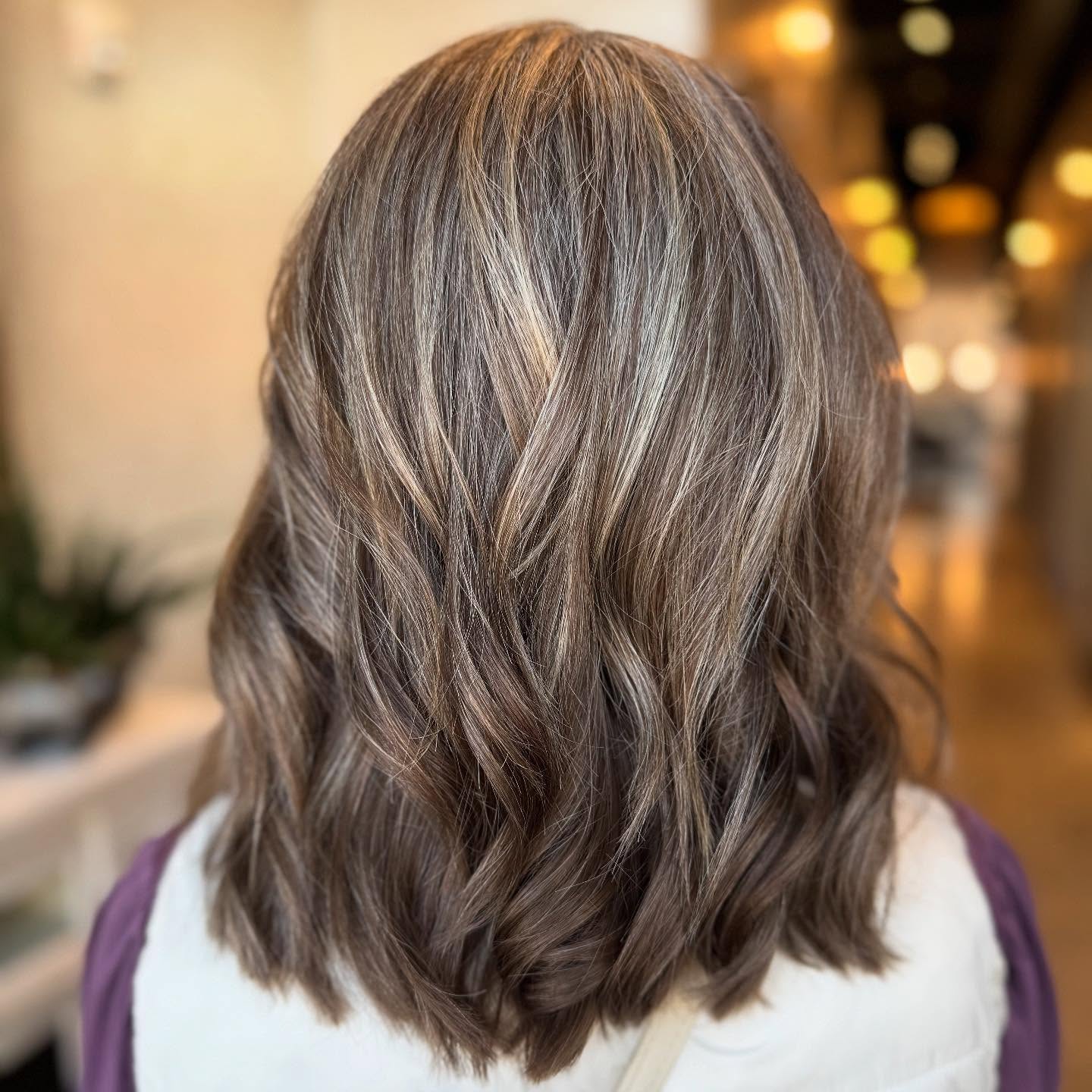
The ashy gray tones in this chin bob depend on a clean base lift, which is why this is not a DIY project. The gray blending highlights are painted from mid-shaft to end, leaving the root area dark to create depth. On medium-density wavy hair, the layers catch the light and keep the tone from reading flat. The salon uses a fine-weave technique and processes at low volume to prevent yellowing. Book a colorist who understands gray tones.
Mid-Back Dark Brown Gray Ash Blonde
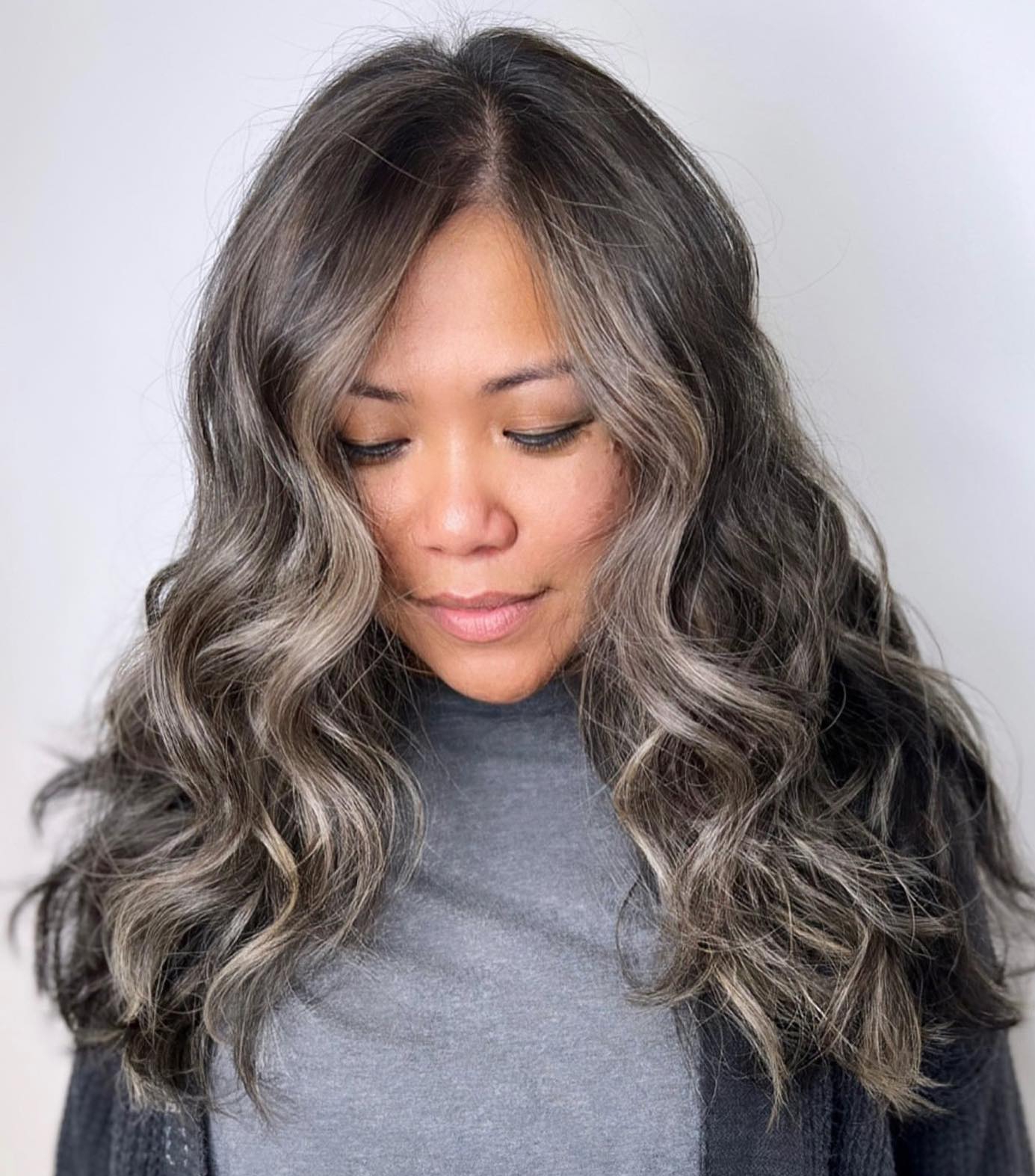
For my money, this dark brown gray ash blonde blend beats the more dramatic silver panel anytime. The gray and ash blonde highlights weave into each other so the transition from the dark base looks natural, not striped.
Compared to harsh silver streaks, this version keeps the depth of the brown while adding brightness through the ash and gray. On thick wavy hair, the highlights catch light at different angles rather than screaming for attention. The technique uses a fine weave through the crown and face-framing sections, blending the gray and ash tones from mid-lengths to ends. The ash component stops the blonde from veering brassy. Roots stay dark, which means less frequent trips to the salon. With silver panels, the contrast is stark and the grow-out is obvious. Here, the gray and ash blend into each other, so even at week ten, the roots look like a deliberate shadow root.
Collarbone Lob Dark Brown Ash Gray
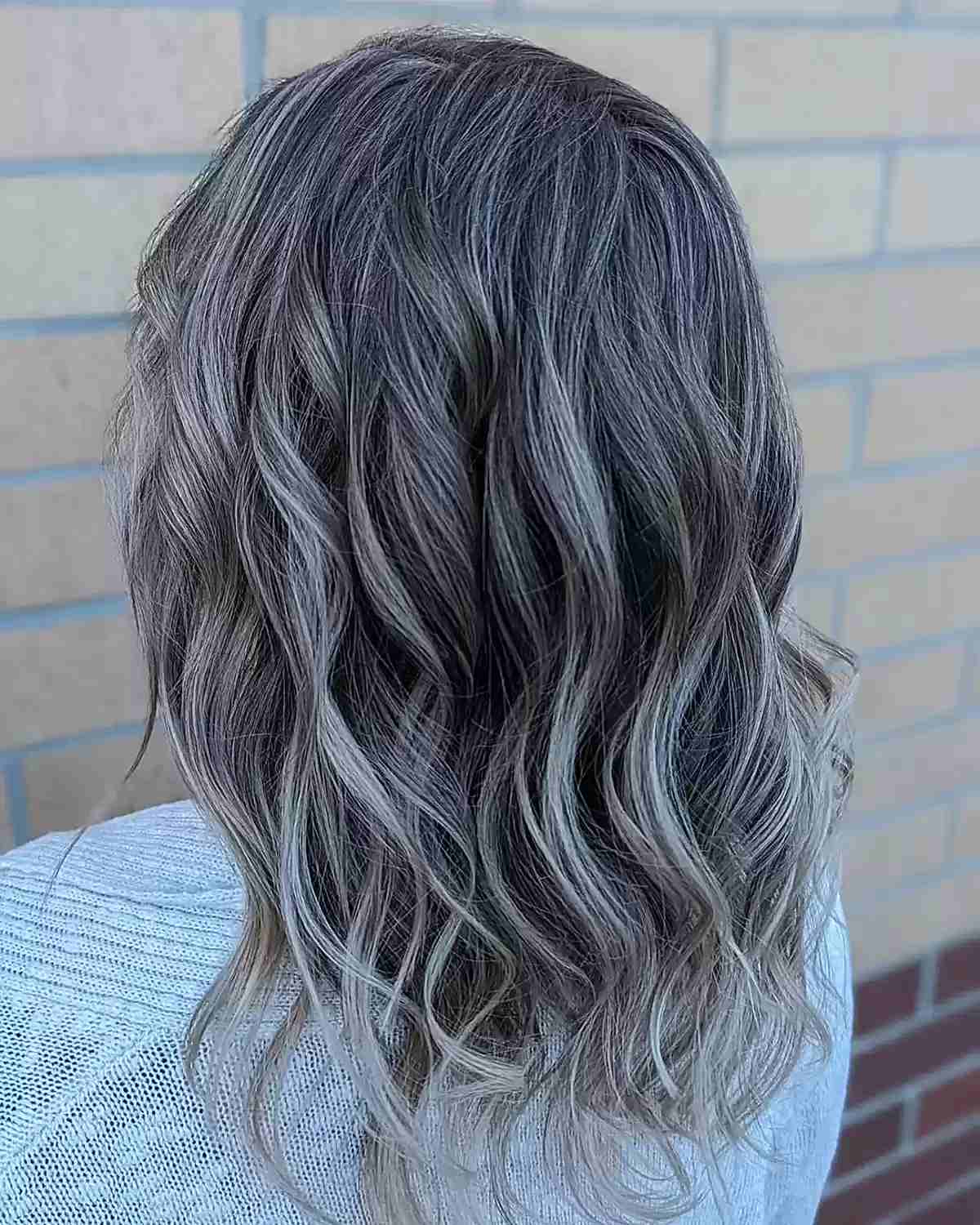
Who is this for, really? Anyone with a medium-density wavy texture who wants to ease into gray without a stark line. The dark brown ash gray blend starts at the root and melts into ash blonde and gray highlights through the collarbone-length layers. That back-view wave keeps the dimension from reading flat. The seamless blend means your natural gray can grow in without a harsh regrowth. The catch? That soft transition needs a colorist who understands tone. Skip this if your base has warm undertones the ash will fight. Tell them: connect the gray to my dark brown, no visible line.
Wavy And Thick Mid-Back Dark Brown Ash Gray Blend
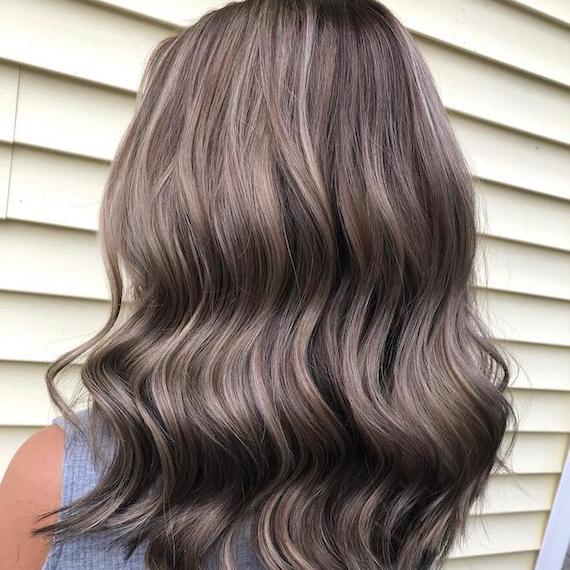
Here is the thing about thick wavy hair and color: it eats pigment. The dark brown ash gray highlights on this mid-back length took work, layered dark brown base then ash blonde and gray highlights woven through sections. Day one, the contrast is deliberate, cool-toned. By day three? The waves hold the ash tones better than any straight hair I have seen.
Grow-out is the real story here. The blend buys you ten weeks before the root line speaks. But thick hair needs regular toning, every fourth wash minimum. The ash pulls green if you skip it. A good purple shampoo buys you one extra week. That is the trade-off for all that movement.
Gray Blending Highlights Mid-Back Dark Base Dramatic Gray
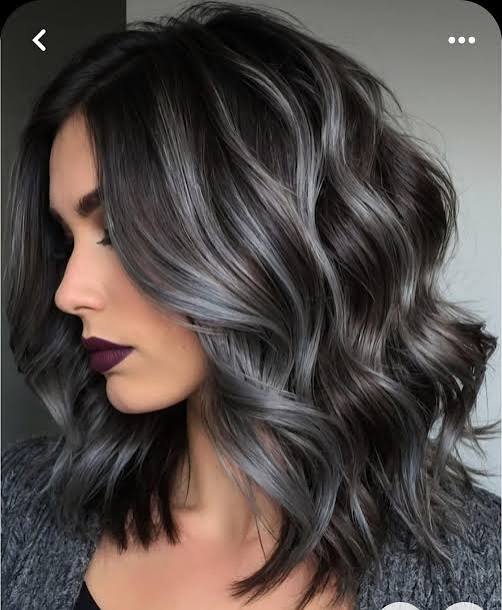
This is a salon job, period. The dramatic gray highlights are built by isolating thick sections on a mid-back dark base and lightening them to a matte silver. That contrast between dark base and gray reads bold from the side view, almost graphic. The technique is called heavy weaves, not babylights. My colorist told me the trick: leave the root one inch unprocessed so the gray floats, not sits. Do not try this at home. The line between dramatic and muddy is about fifteen minutes of processing. Book the consultation first.
Layers Mid-Back Dark Base Subtle Gray Ash
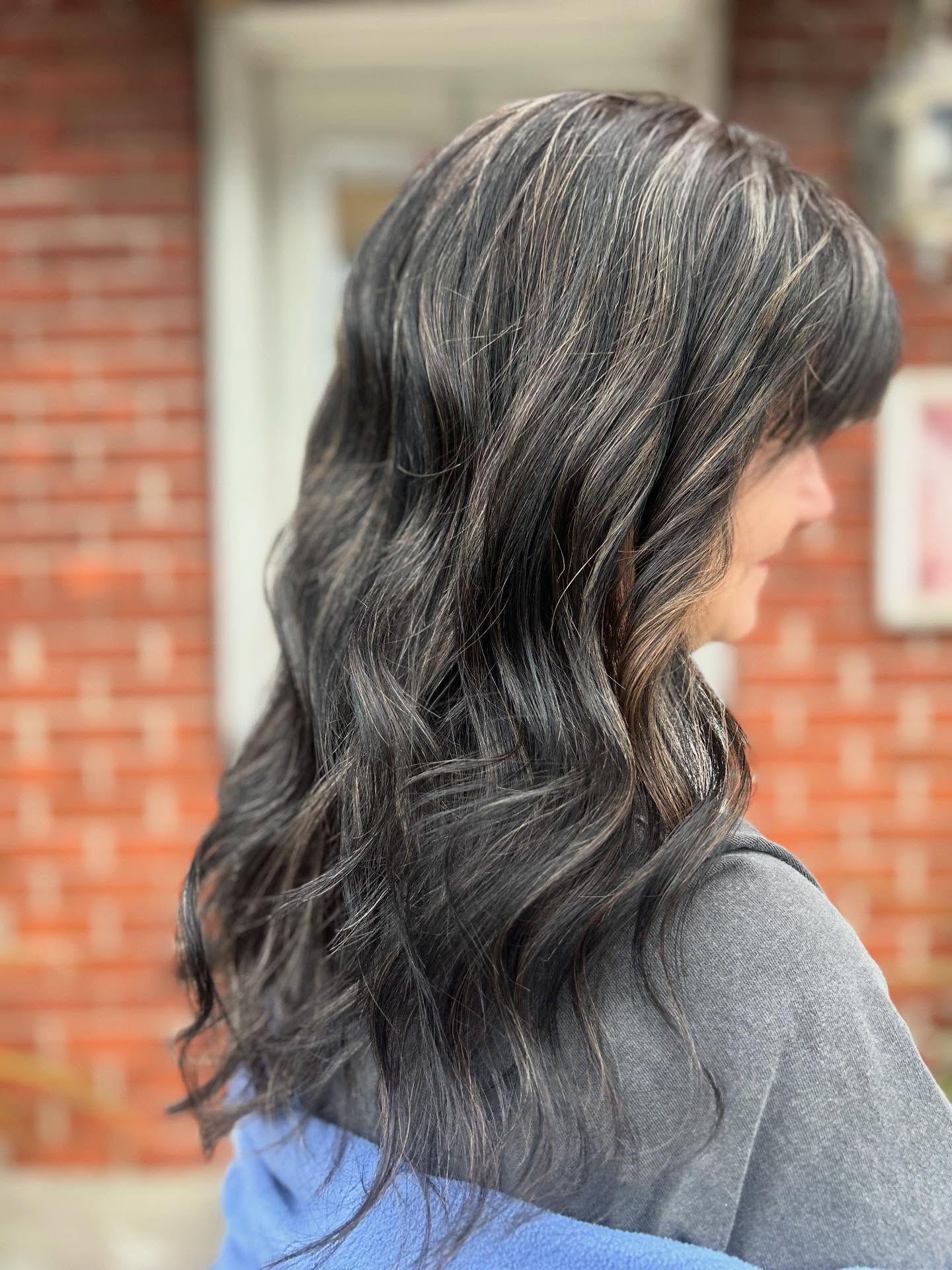
Can this really stay subtle, or does it go brassy by week two? The subtle gray ash blend works on a medium-density wavy texture if the gray and ash blonde highlights are painted low, never at the root. The mid-back layers let the lighter pieces peek through without dominating. I have seen this done well exactly once in person. The rest of the time the ash shifted warm by the first wash.
The honest downside: gray and ash blonde highlights fight brass, especially on a dark base. Your stylist needs to pre-tone the lifted sections before the gloss. Ask for a bleach bath, not foils, on the darker sections. It lifts less aggressively. And accept that this needs a toner refresh at week six. Subtle is high maintenance in disguise.
Mid-Back Natural Gray Blowout
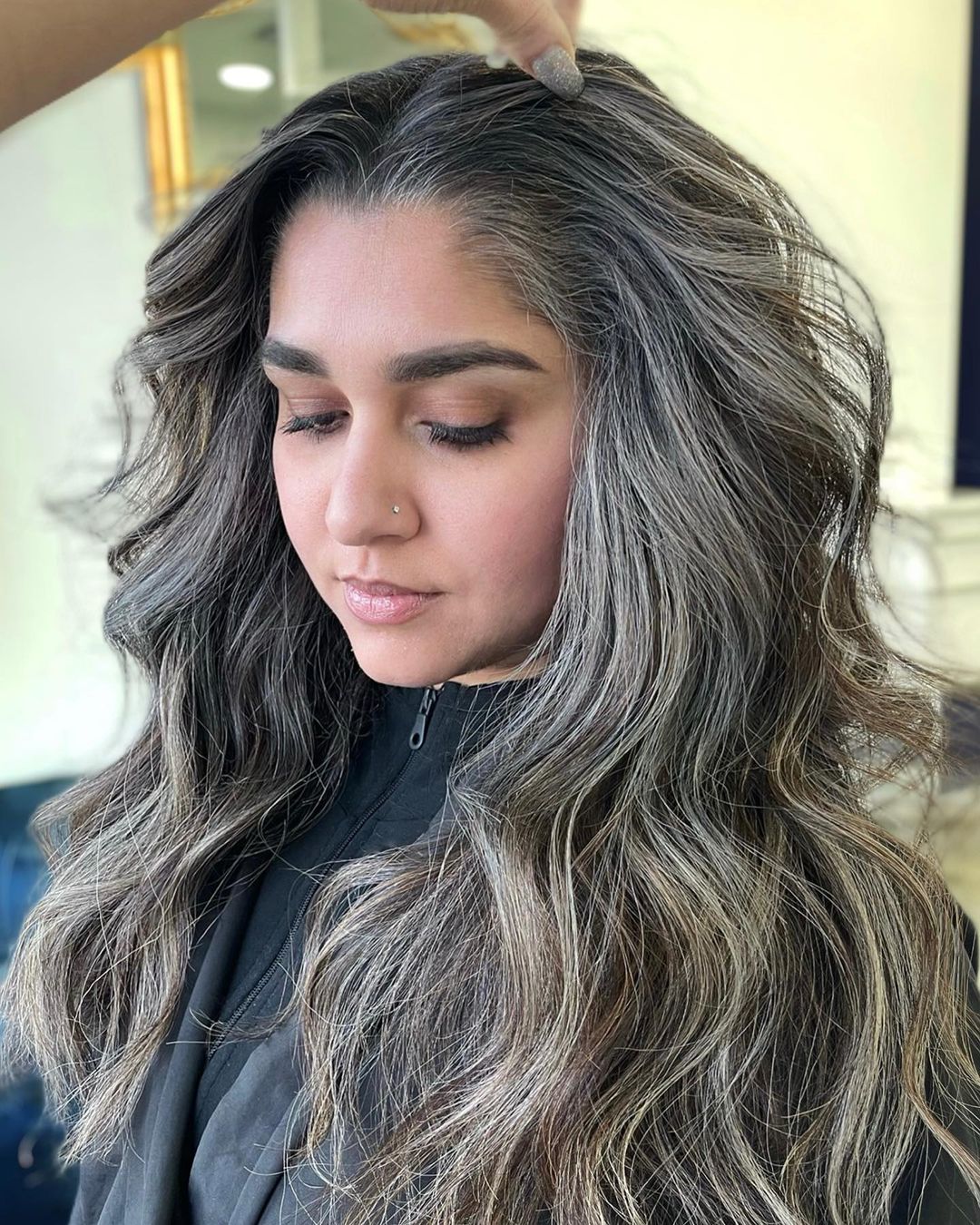
Hated the idea of blending gray into a blowout. Thought it would read like a missed root appointment. The natural gray blending on this thick wavy hair is the opposite. The gray blending highlights start at the root and fan through the mid-back layers with no sharp transition. It looks like the gray grew in, not that anyone forced it. Best suited for thick hair that holds a wave. Fine hair would lose the separation. Compared to a solid silver gloss, this one lets the natural gray lead. That is smarter.
Blowout With Soft Waves Collarbone Lob Dark Brown Ash
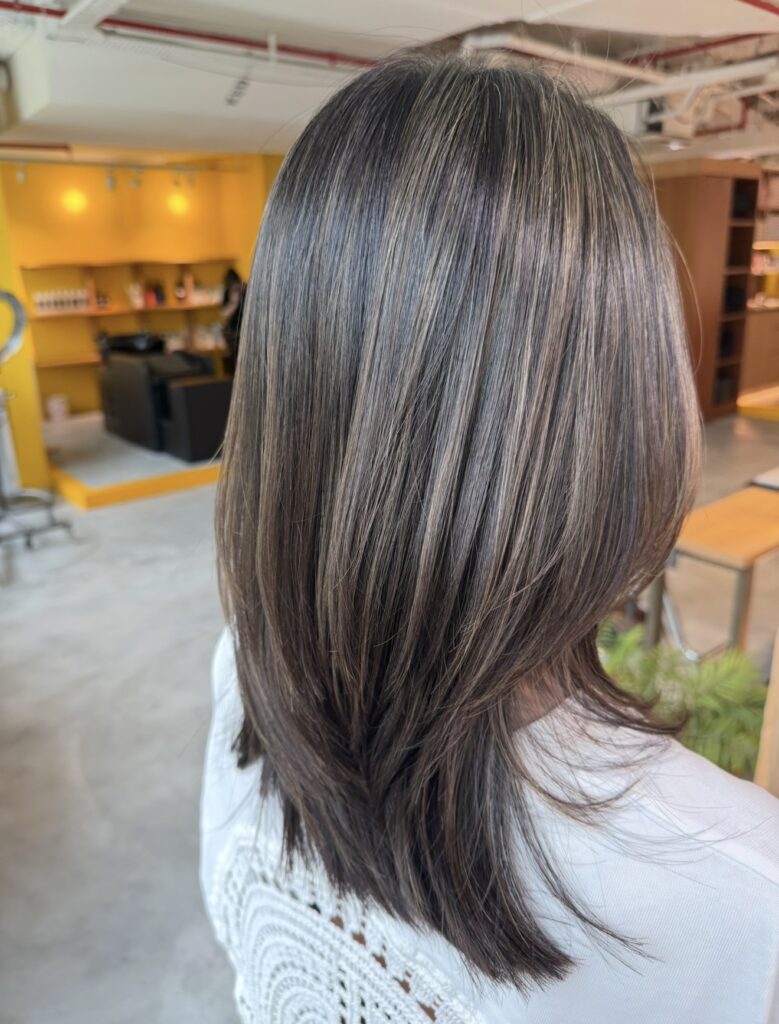
A blowout that holds past lunch is rare. This collarbone lob starts with a dark brown ash blonde base, then ash blonde highlights are painted through the layers — cool, never brassy. The technique is foil highlights, which gives that clean contrast from the back view. It takes about two hours in the chair, and the blowout with soft waves adds another 20 minutes at home.
Wear is the easy part: the straight texture holds volume well, and the ash tones stay cool for about six weeks before they need a toner refresh. Trims every eight weeks keep the ends healthy. The contrast between the dark base and ash highlights means grow-out is visible but not harsh — the dark root blends into the dark base naturally.
No Bangs Collarbone Lob Dark Brown Gray Blonde
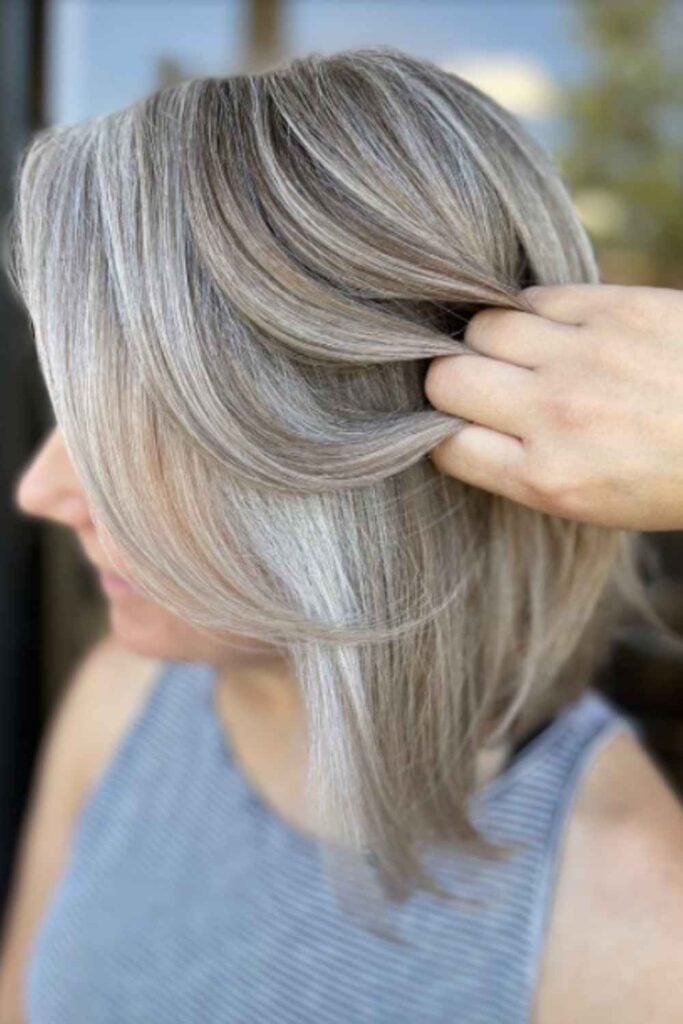
Gray and blonde together read like a soft silver on a dark brown base — a natural blend that works best in cooler months when the light is low. The technique uses fine highlights woven through the mid-lengths and ends, avoiding the root for a soft grow-out. Tone is ashy, not warm. The downside: the blonde sections can turn brassy after four weeks, especially on wavy, medium-density hair. A purple shampoo is non-negotiable.
Collarbone Wavy Ashy Gray Blowout
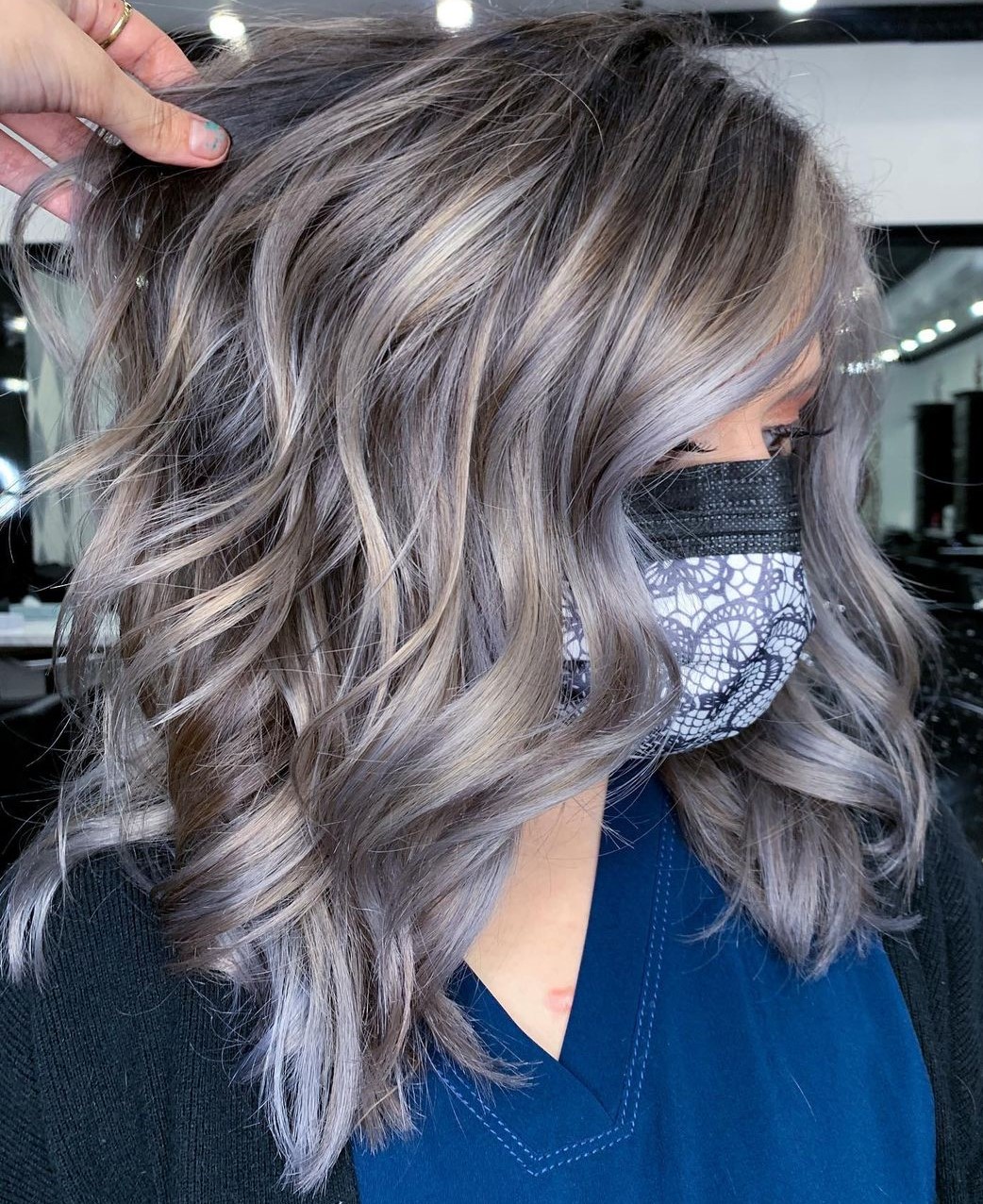
Can you get this ashy gray blowout at home? Probably not. The gray blending highlights here are painted onto a collarbone-length cut with layers, and the cool-toned gray highlights are placed to catch the light in the waves. That takes a stylist who knows how to weave fine sections and tone them to a true ash — no green or blue cast. At the salon, expect two to three hours for application and processing. The wavy, thick texture helps the color blend naturally, but the technique is too precise for a bathroom mirror. Book it.
Collarbone Wavy Gray Blended Highlights
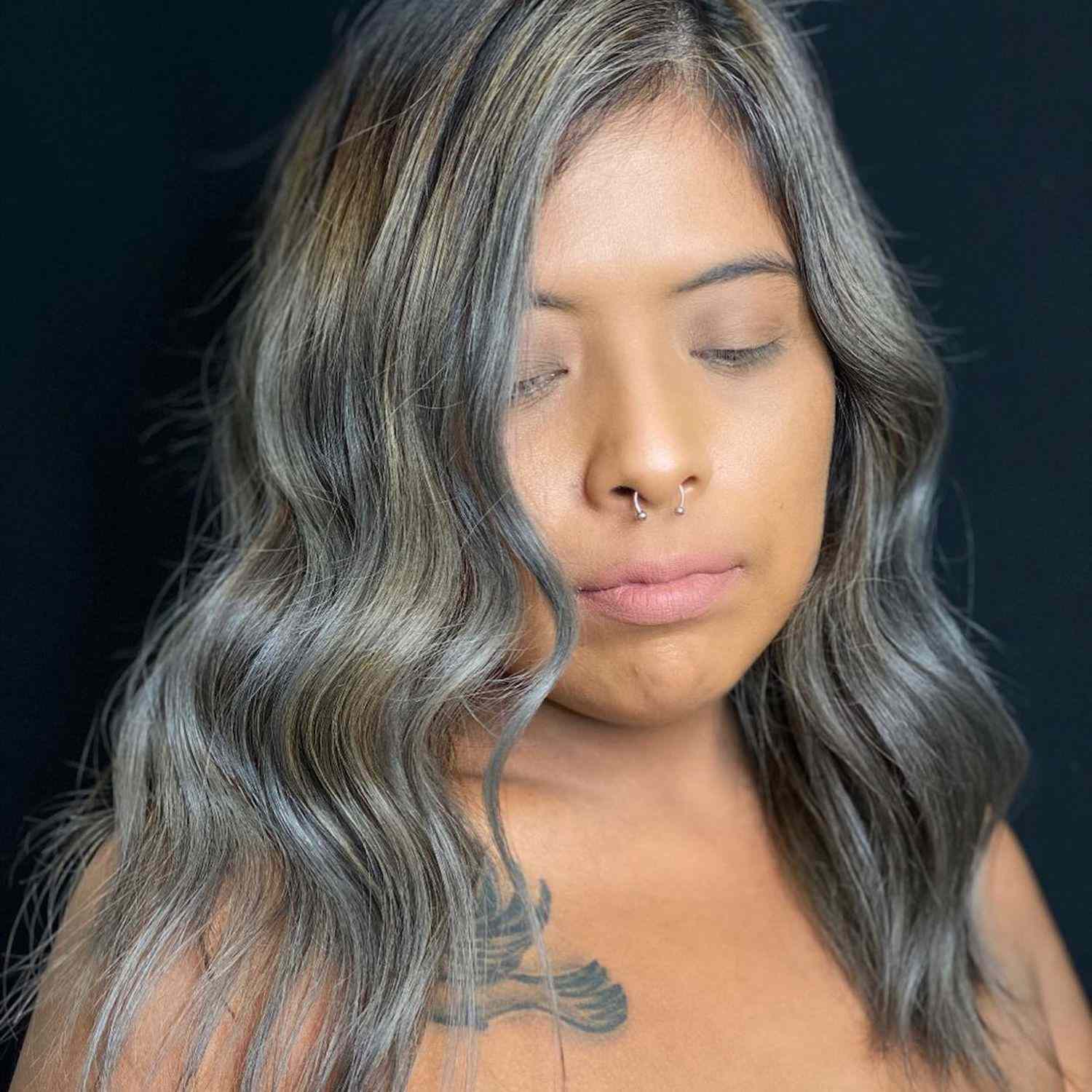
This is the most wearable gray I’ve seen. The gray base is softened with blended highlights in silver and pale gray, creating a multidimensional effect that reads as natural, not costumey. The stylist uses a hand-painted technique, keeping the lighter pieces concentrated on the mid-lengths and ends to preserve the root. The collarbone length with layers gives the waves room to move, and the thick texture holds the shape without product. This look lands in fall, when the muted tones complement the season’s low light — think a weekend brunch or a holiday gathering.
The honest downside: wavy, thick hair is prone to split ends when lightened, even with a gentle technique. The blended highlights require regular trims every six to eight weeks to keep the ends healthy. If your hair is already dry, skip the high-lift process and ask for a lower-volume developer. This look suits medium to coarse hair best — fine hair might not carry the weight of the highlights.
Collarbone Gray Contrast Highlights
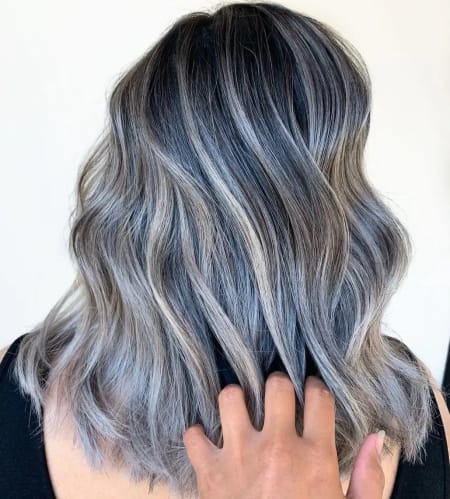
I admit, I love the contrast but hate the upkeep. These gray contrast highlights sit on a collarbone-length cut with layers, the distinct highlights creating a bold play between dark and light on wavy, thick hair. The wear is dramatic for the first three weeks, then the contrast softens as the gray tones fade. Upkeep means a toner appointment every four to six weeks and a trim every eight to keep the ends sharp. A color-safe shampoo helps, but the contrast demands attention.
Final Thoughts
After writing all 26 of these, I realized something. Gray blending is not a compromise, it is an upgrade. The contrast adds depth that solid color cannot touch, and the grow-out is the best part.
I am booking the textured gray pixie next. That one surprised me most.