I keep seeing the same thing in the salon chair next to mine: box braids that stop at the collarbone, not the waist. Everyone is asking for shorter, chunkier, more deliberate shapes. The winter braid has moved on from the waist-length rope I wore for years, and honestly, I’m not mad about it.
This roundup of Winter Braids for Black Women has 26 ideas, from a chin-length bob I could never pull off to cornrows I might actually attempt at home. There’s something for every density and face shape, and the upkeep ranges from set-it-and-forget-it to book-a-weekend. If you have fine hair like mine, some of these will work better than others, and I’ll tell you which ones.
My own braid history is a graveyard of grow-out lines I ignored for too long and parts that went fuzzy by week three. So I wrote this with that in mind: what actually holds, what flatters, and what you’ll be fixing by Valentine’s Day.
Classic Mid-Back Box Braids With Subtle Blonde
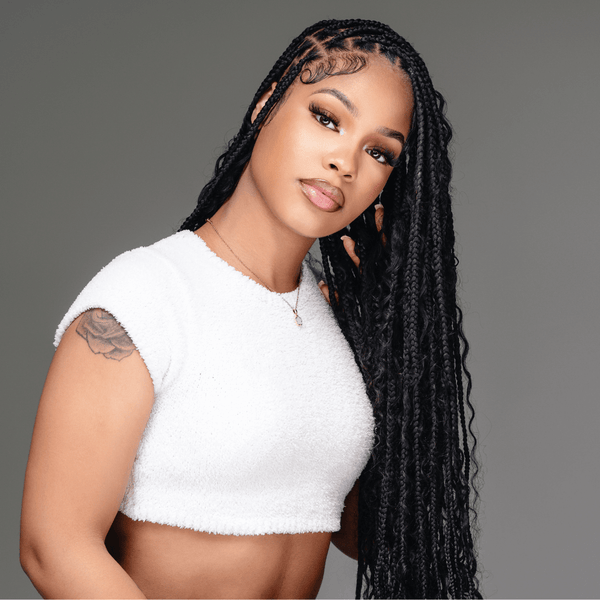
Mid-back is the length that works on everyone. The subtle blonde highlights here are spaced just enough to catch light without screaming for attention. Black women with warm or neutral skin tones will see those ribbons of gold lift the whole face. Cooler undertones? Ask for an ash-toned blonde instead. Straight braids with wavy ends mean this is a middle-part situation, which widens a round face beautifully. The colour fades slower than you expect because it is subtle, not painted on. Book it, this is not a bathroom-mirror job.
Collarbone Box Braids With Side-Swept Bangs
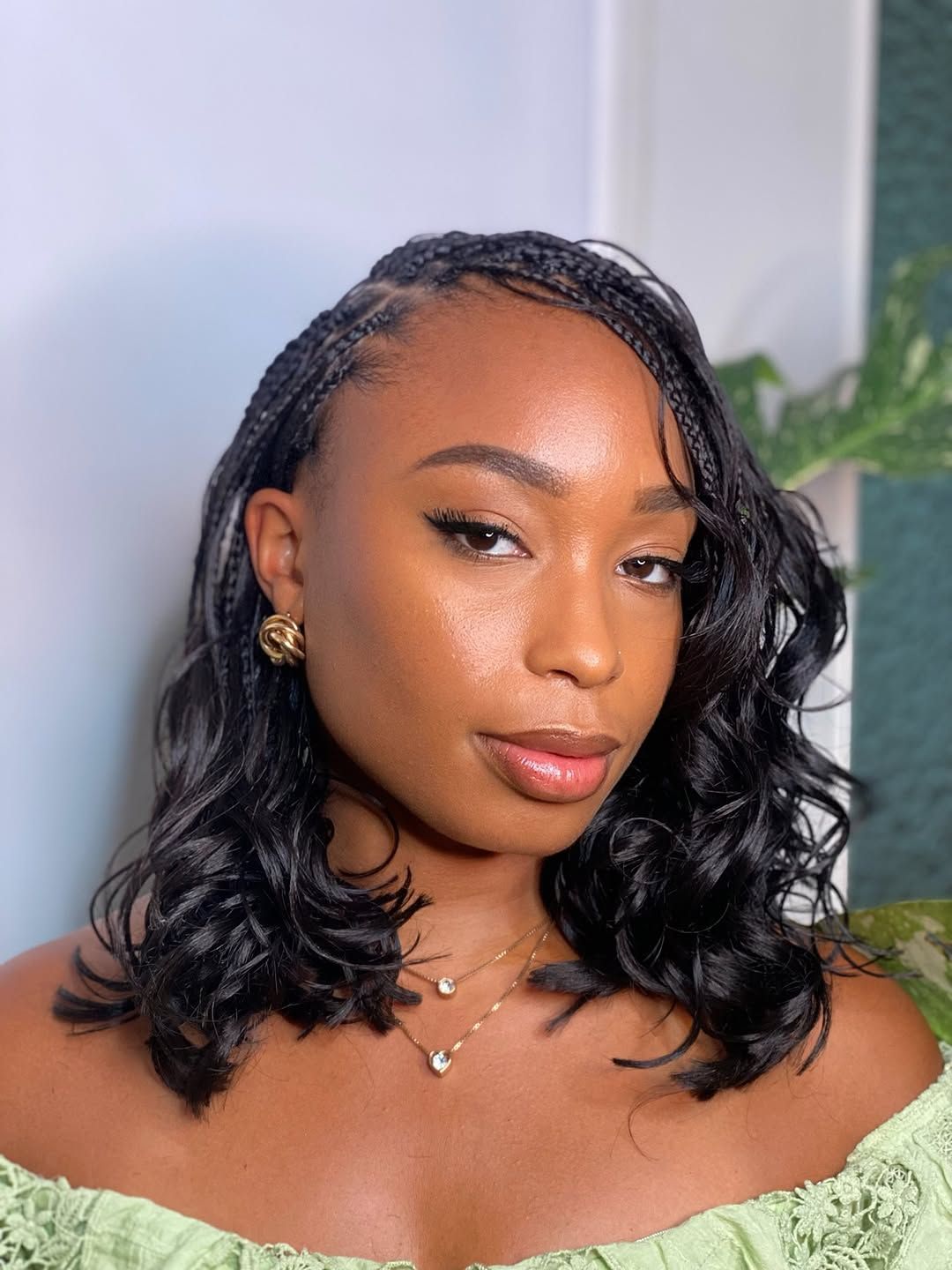
What if you swapped the middle part for a deep side sweep? That is the difference between section one and this one. Collarbone box braids with bangs land softer, less symmetrical, more deliberate. The side-swept bangs break up a long face shape and hide a forehead you are not in the mood to show. Black braids, no highlights, so no toning worry. Wavy texture keeps the bangs from sitting too flat. A middle part feels open. This feels framed. Pick your mood.
Chin-Length Box Braids Bob
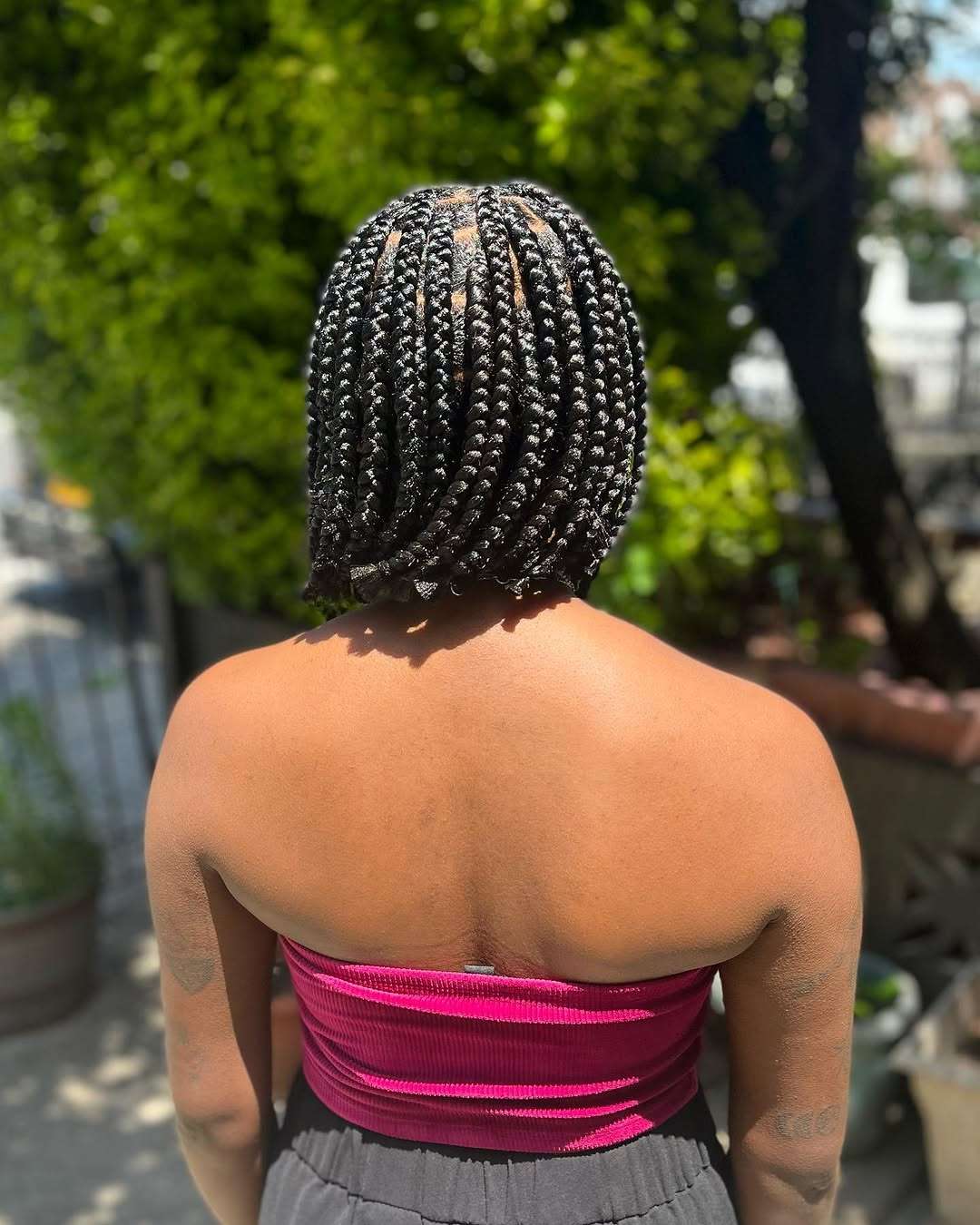
I will admit I was skeptical about chin length box braids. A bob that short on braids? It sounded like a helmet. I was wrong. The box braids bob sits just at the jaw, which means it does not hit your shoulders when you turn your head. No hair in your coat zipper. No weight pulling your edges. The honest downside: it shows every uneven part. If your stylist’s parting is crooked, you will see it. Black, straight, thick, no colour. Low maintenance unless you count staring at the mirror for stray parts.
Cornrows With Curtain Bangs and Loose Braids
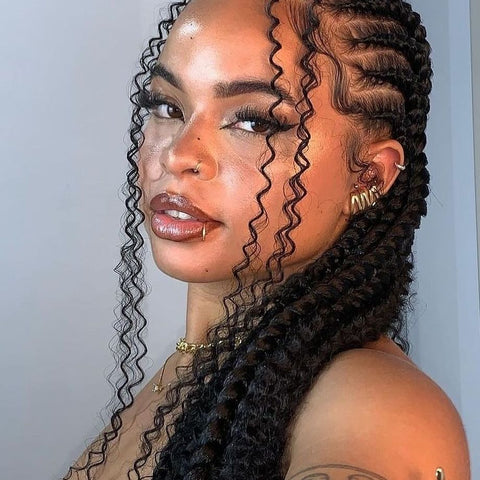
I sat in the chair thinking this would be all cornrows. Then my stylist pulled out the curly extensions. The front is cornrows with curtain bangs, neat and flat against the scalp. The back drops into loose braids with wavy ends. That transition is the whole point. It is a winter style because the cornrows protect your edges from hat friction and the loose braids mean you can still pull it into a low ponytail. The curtain bangs frame cheekbones without the commitment of full fringe. Black, no highlights, medium density preferred. The upkeep is scalp spray and a satin scarf at night. Season: sweater weather through early spring.
Shoulder-Length Thick Twisted Braids
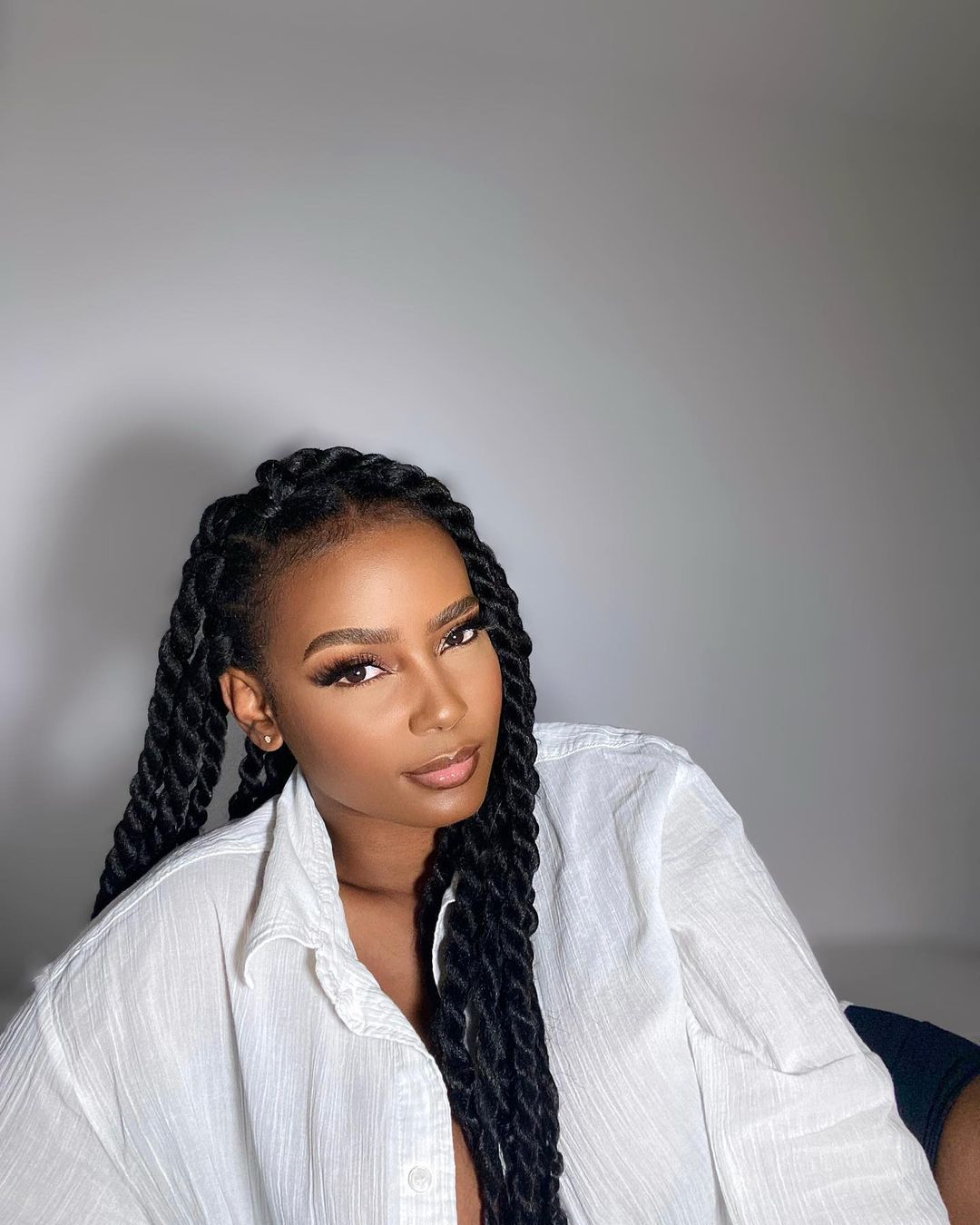
Thick twisted braids have a weight to them that thinner styles skip entirely. At shoulder length, these twisted braids land with a solid thud, not a whisper. The texture is dense and defined, each twist uniform from root to tip. Black, no colour variation, which keeps the focus on the structure. A middle part keeps the look clean. The thickness means fewer braids, but each one earns its space. These are braids for people with naturally thick hair, the kind that can carry volume without looking overwhelmed. The hold is firm, the shape stays put for weeks. They’re not subtle. That’s the point.
Burgundy Box Braids High Bun
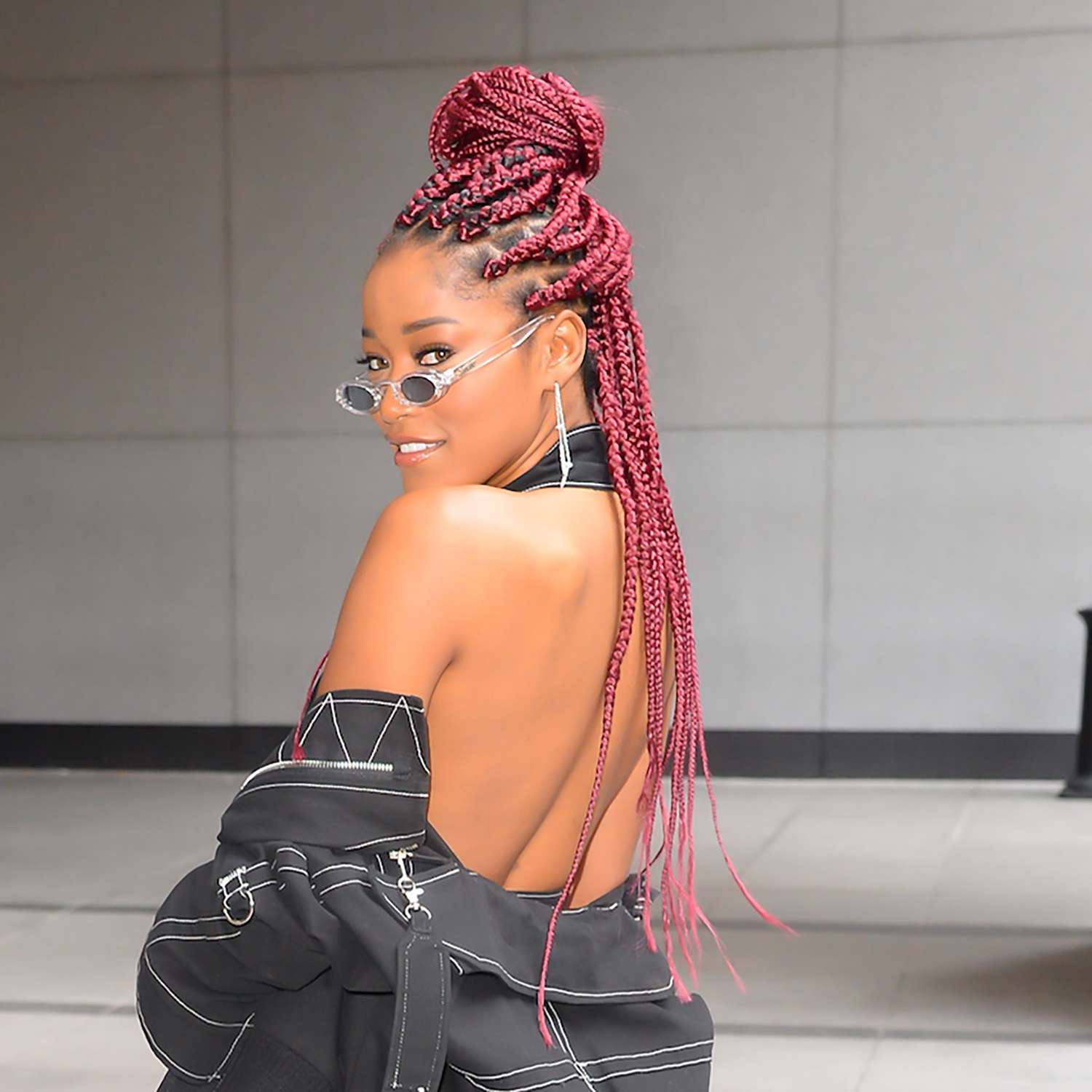
What do you wear when the holiday party needs a statement? Burgundy box braids, gathered into a high bun with a few left loose. The vibrant burgundy reads warm against winter coats. At mid-back, the length gives you options. The texture is straight with wavy ends, a nice contrast. This is a salon style, not a bathroom mirror job. The hold is solid, the bun stays put through dinner and dancing.
Long Flowing Braids With Wavy Ends
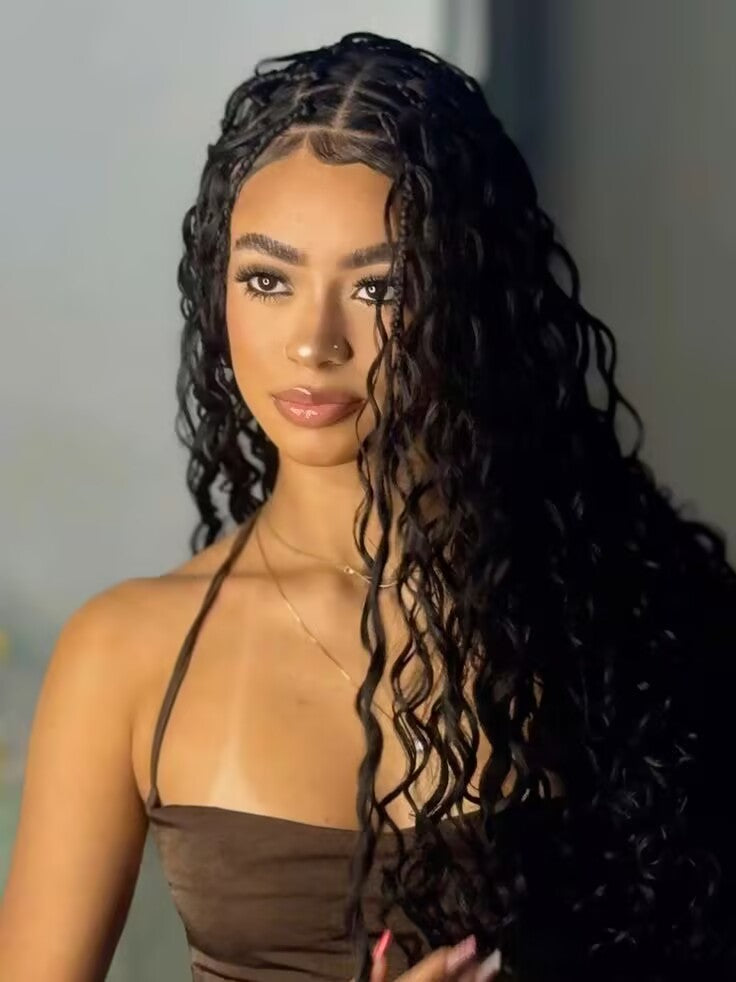
These braids look good on day one. The real test is day seven. Long flowing braids with wavy ends have a romantic quality, but that romance takes work. The wavy ends need gentle detangling to keep their definition. A light spray can refresh them between washes. Avoid excessive heat on the ends, it will frizz them out. The braids themselves hold well, the length stays put. But the ends are the star, and they need attention.
The styling steps are simple: separate the wavy ends with your fingers, not a brush. Spritz with water or a leave-in. Let them air dry. The upkeep is weekly, not daily. The hold is good for about six weeks before the ends start to look tired. The black colour keeps it classic, the thick braids give weight. The wavy ends add movement that straight braids lack. It’s a look that rewards a little effort.
Small Braids With Ombre Curly Ends
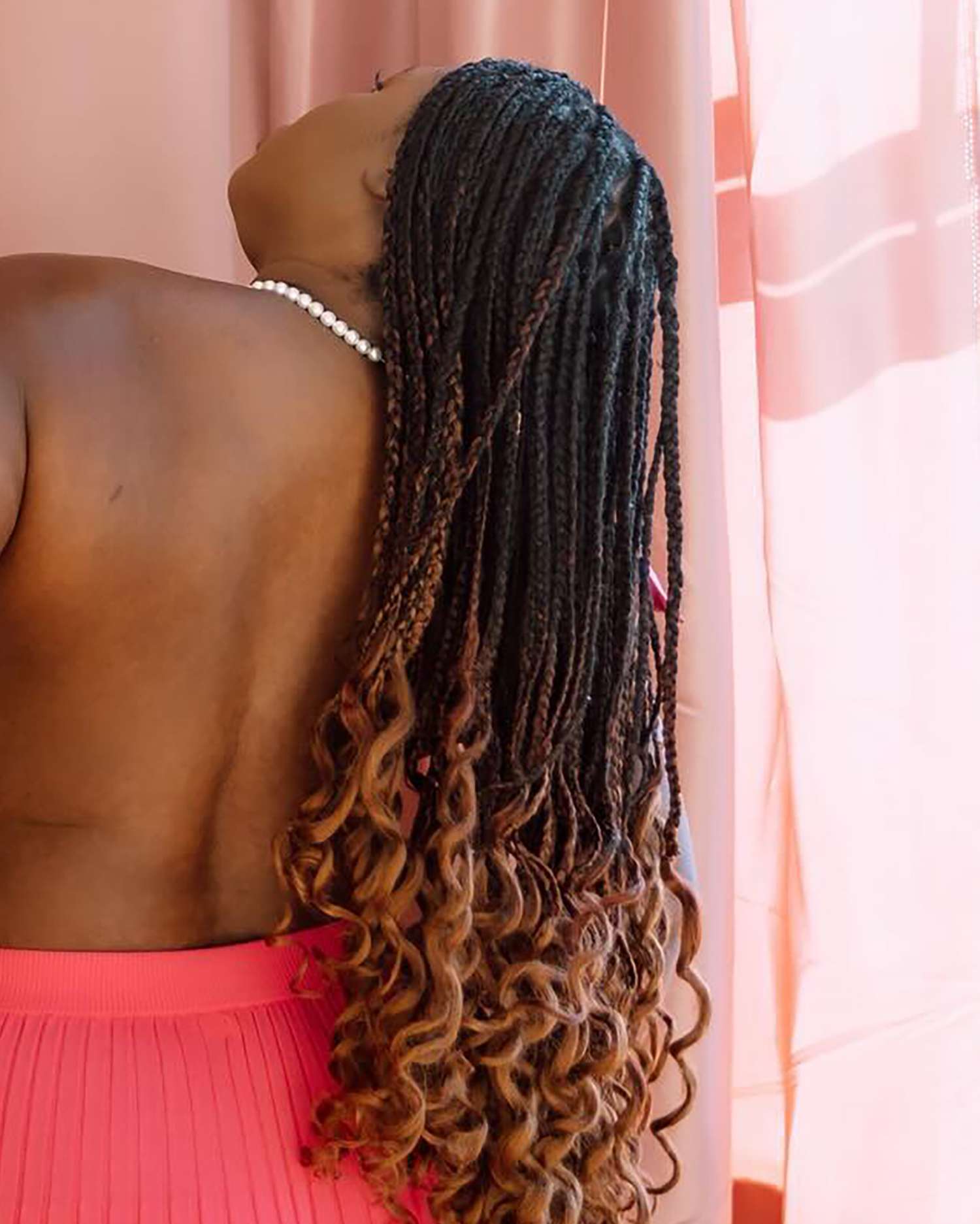
The ombre effect on curly ends is not random; it is a deliberate dip-dye technique applied after each small braid is finished. The colour fades from black to brown highlights, then curls the last few inches. The result is a subtle transition that catches light without screaming for attention. The straight braid texture contrasts with the curly ends, giving movement at the back. At mid-back length, these small braids with ombre ends swing nicely. The honest downside: the ombre curly ends fade faster than the rest, so if you want that contrast to stay sharp, you will need a touch-up around week four. The braids themselves hold their shape for the usual six to eight weeks, but the colour is the diva here.
Mid-Back Twisted Locs
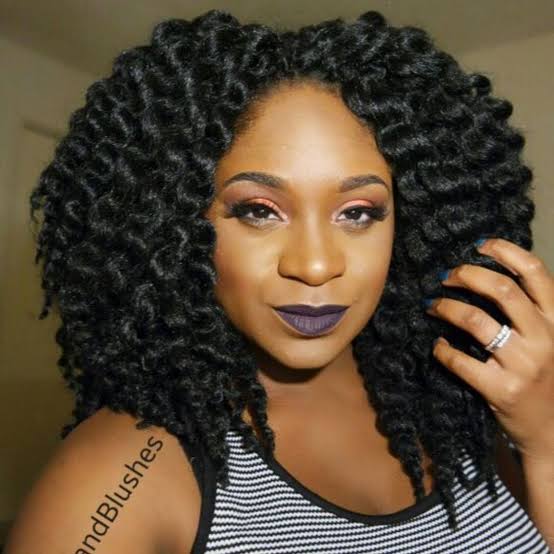
Ever wonder if your hair could just stop asking for attention every morning? These mid-back twisted locs are the closest I have found to a real answer. The coily texture gives them that rope-like silhouette that holds its shape without a second thought, no curling, no re-doing. Black at the base, uniform from root to tip, no colour fade to worry about. They sit at mid-back, a length that feels substantial without weighing down. Wear them as they are, or pin half up. Upkeep is simple: keep the scalp clean and twist periodically to keep the frizz from taking over. They hold for weeks. And they suit anyone who wants a polished look that does not demand a daily styling session.
Shoulder-Length Defined Box Braids
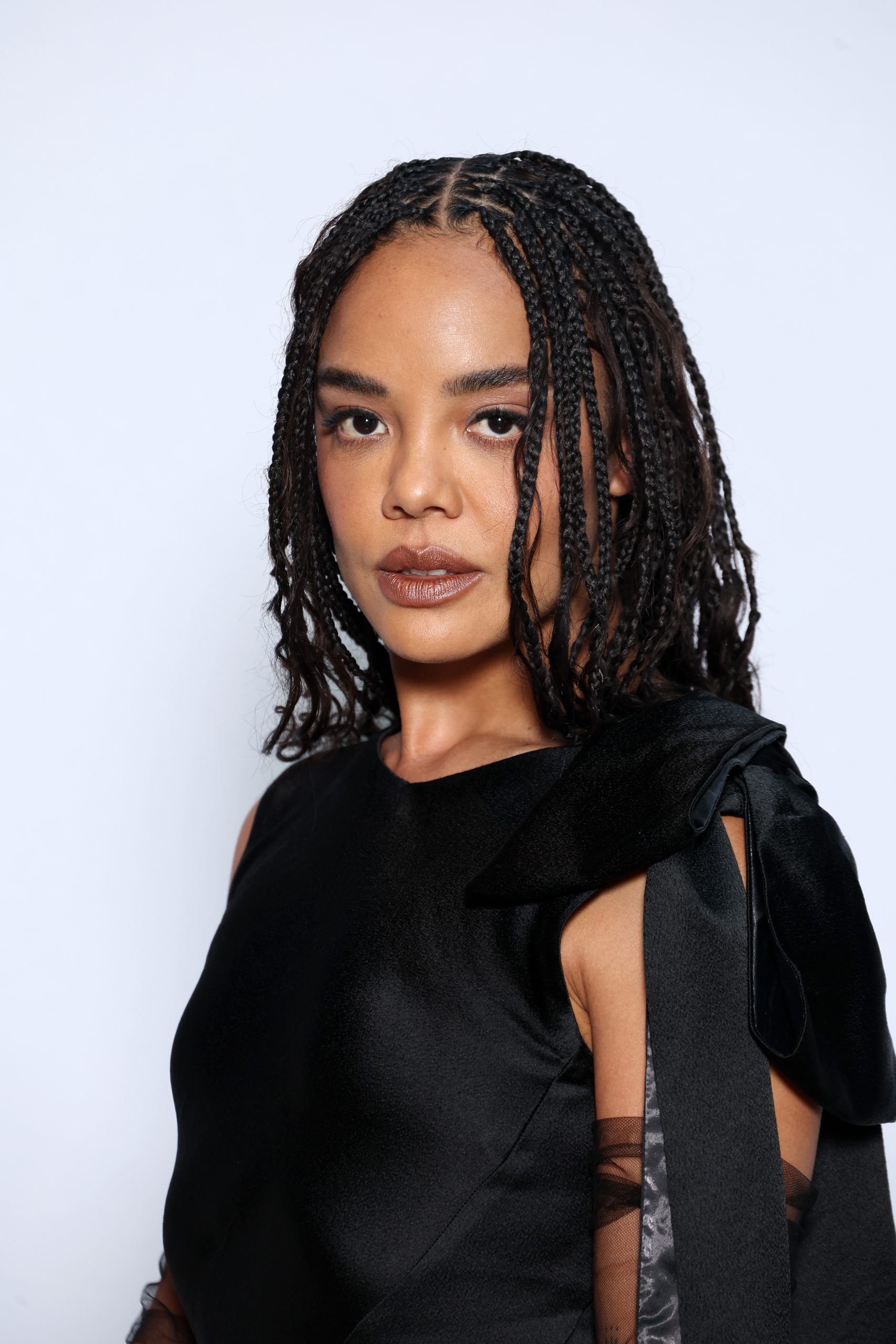
I will admit, I underestimated how quickly the definition fades. These shoulder-length defined box braids start sharp, but by day three, the flyaways around the hairline start to show. The black colour holds well, no brassiness. The thick, straight texture helps them hold structure longer than thinner braids would. Book a salon for the install; getting that neat parting at home took me three tries. The honest downside: you will be touching up edges every other day to keep the clean look.
Two-Tone Box Braids with Curly Ends
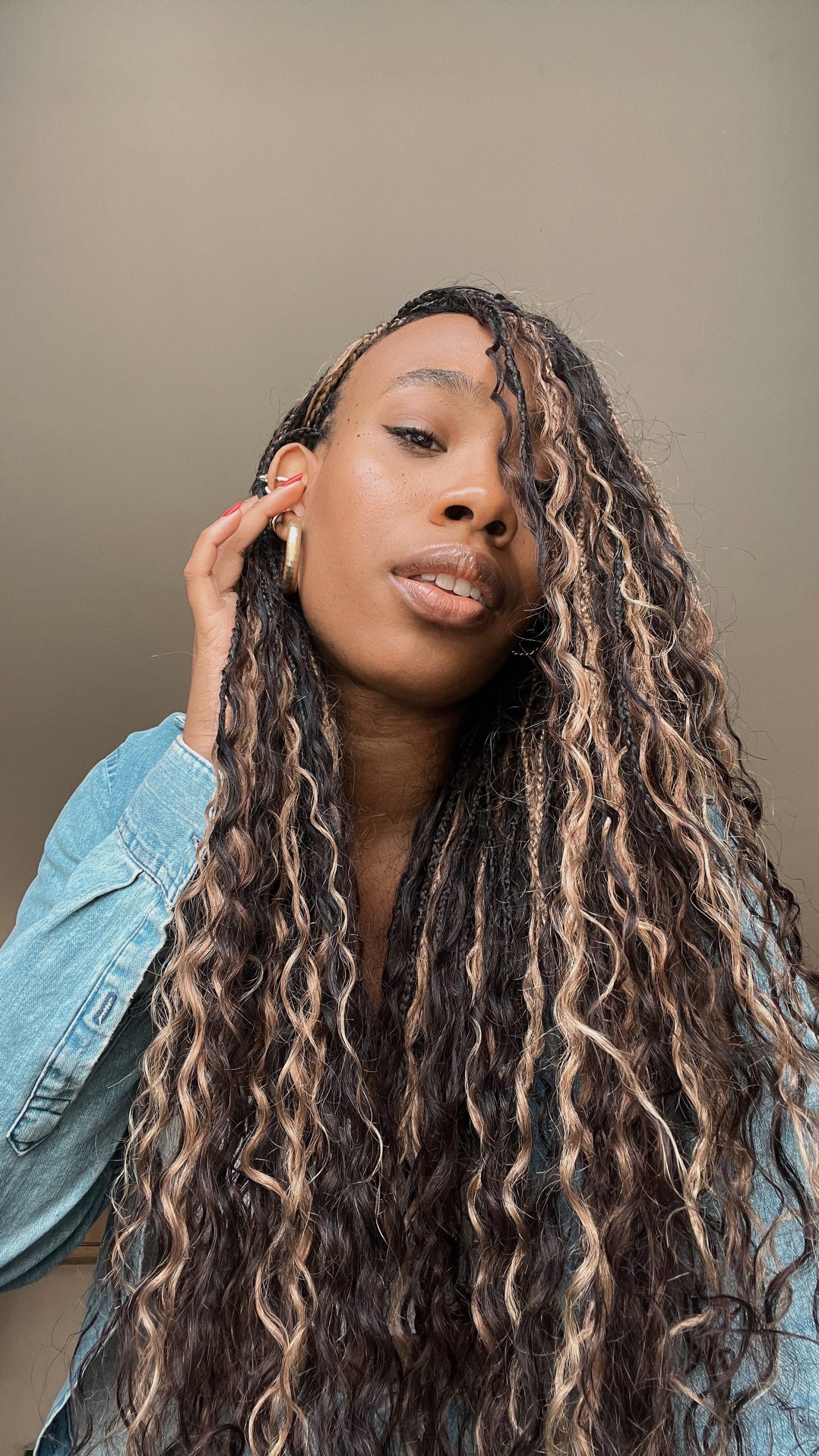
If you are choosing between solid black and blonde highlights, pick the two tone box braids every time. The contrast of black and blonde strands adds dimension that a single base colour cannot match. Black at the roots grounds the look, while the blonde catches the light. The curly ends soften the transition and keep the texture interesting; straight braids would make the colour contrast too sharp. Mid-back length gives enough space for the two tones to play. The hold is solid: the curls stay defined for the first week, then relax into waves. A single colour feels flat next to this.
Neat Cornrows Front View
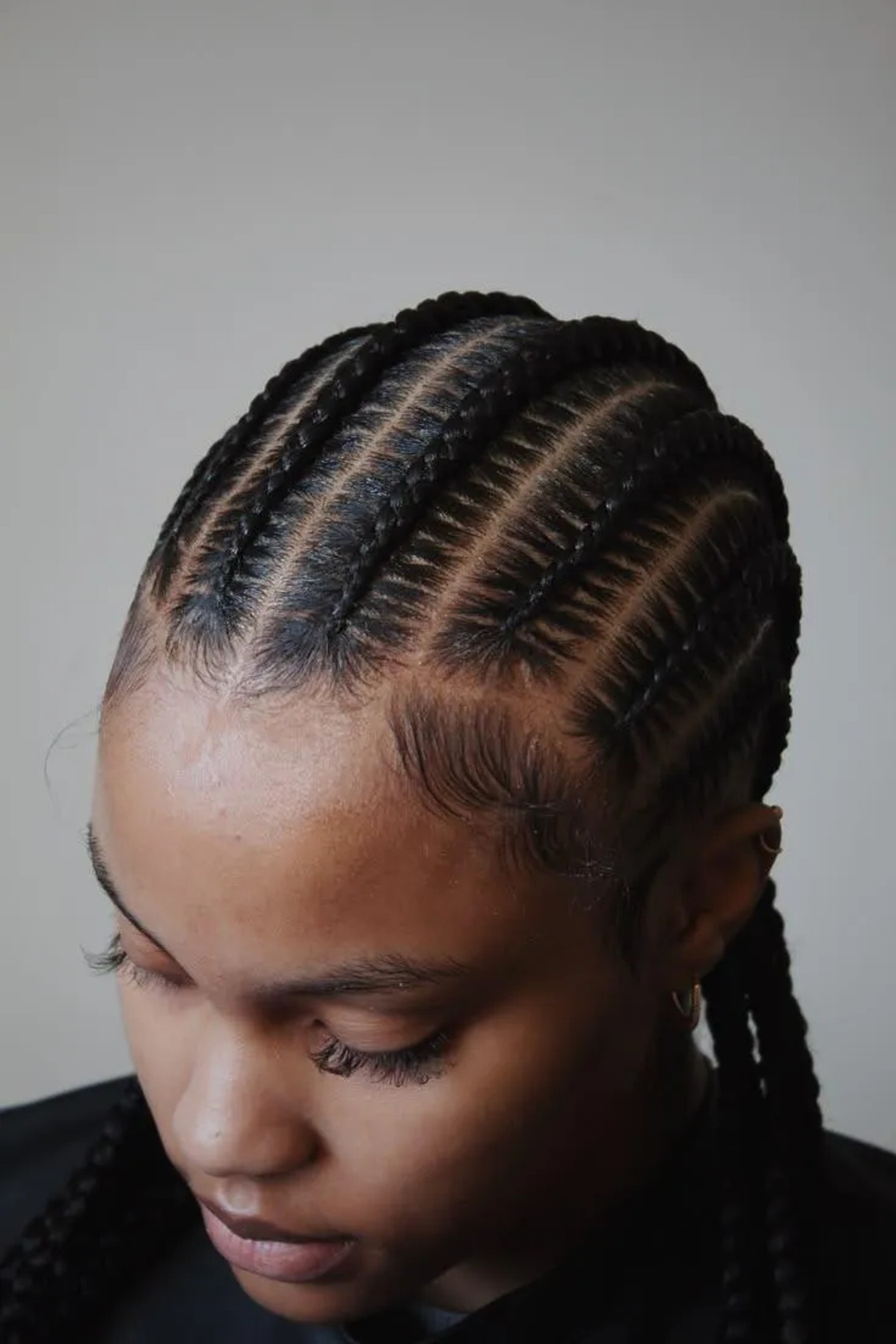
Parting so precise it looks drawn with a ruler. These neat cornrows demand attention.
The tightly styled cornrows rely on consistent tension and a clean partline. Starting with damp, detangled black hair, the stylist braids close to the scalp, feeding in synthetic hair to maintain thickness, keeping each section the same width. The ends are tucked and sealed. Mid-back length means they can be worn down or pinned into a bun. Upkeep is minimal: tie it down at night with a silk scarf, and the scalp stays clean with a lightweight spray once a week. The hold is firm, these cornrows will not loosen for at least three weeks.
Shoulder Profile View Neat Cornrows
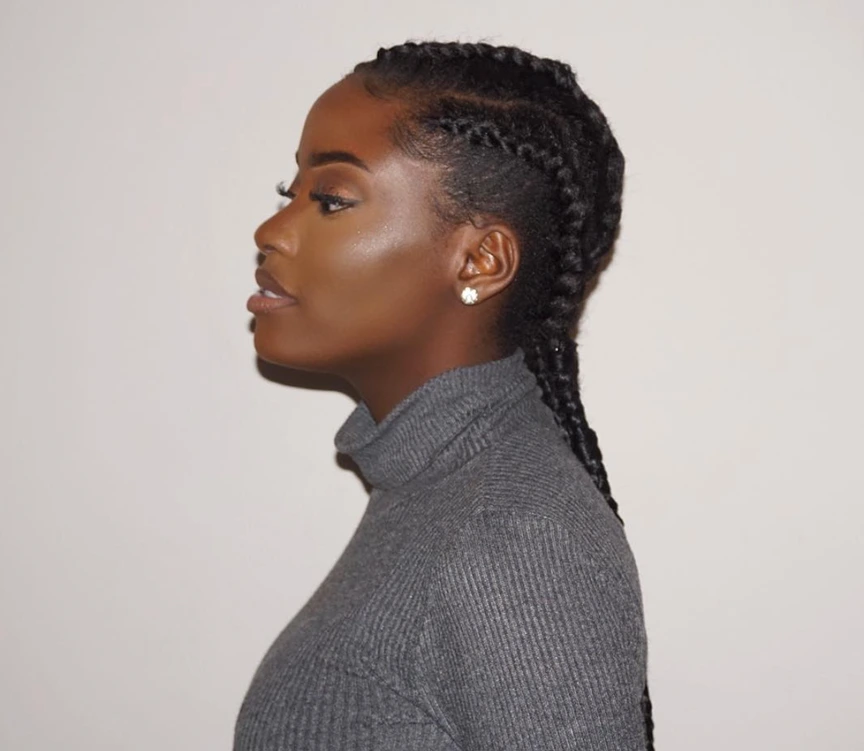
Have you ever looked at your profile and wished for more length? These shoulder-length cornrows from the profile view elongate the face without adding volume. The straight lines, black colour, and clean part keep it minimal. The hold is reliable, no frizz for the first two weeks. This suits anyone who wants a sharp look that emphasises the jaw. Especially flattering for round faces. Pass if you prefer softer edges.
Black Curly Hair Two Space Buns
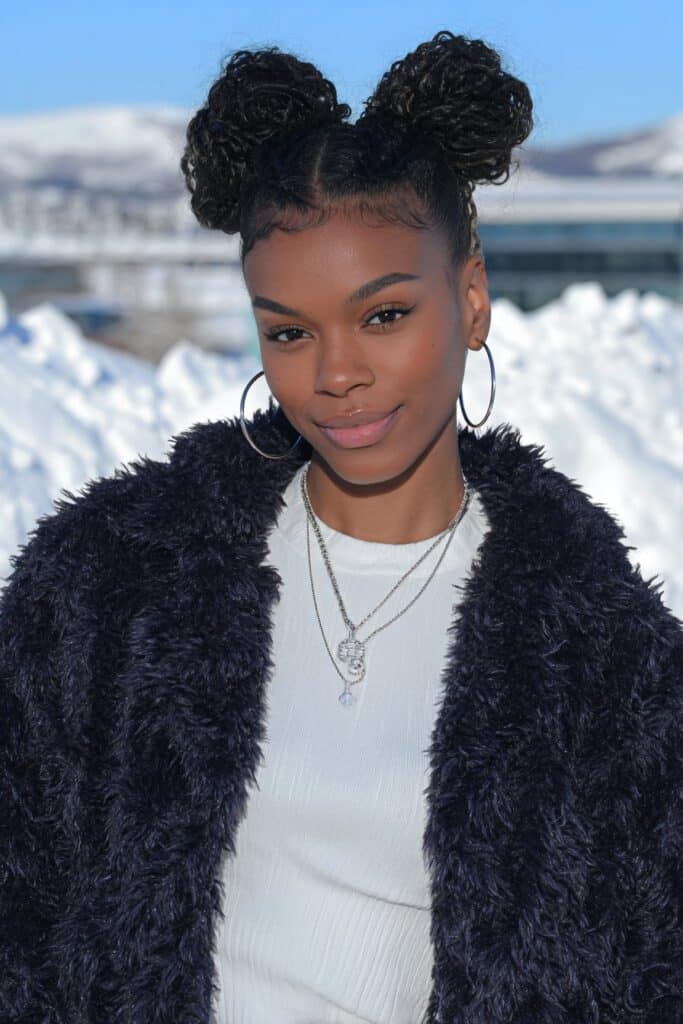
This is the braid style that finally made me stop rolling my eyes at the word “protective.” The length lands at mid-back, which means it swings when you walk but doesn’t end up in your armpits when you sit down. The subtle blonde is woven through dark brown sections, so it reads as sun-kissed instead of costume-shop brassy. My hair is fine and straight, and these braids actually held their shape through a week of sleeping on a satin pillowcase and a few too-tight ponytails. The texture is smooth, not fuzzy, which I credit to the stylist running her fingers through each part before sealing the ends. Color like this needs a purple shampoo once a week or the blonde goes yellow by week three. It’s not a wash-and-go, but it’s close: I re-braided the front edges every other morning and called it done. If you have low-density hair, ask for smaller parts so the braids don’t look sparse at the root. 29 of these in rotation and I still don’t get bored.
Neatly Executed Shoulder-Length Box Braids
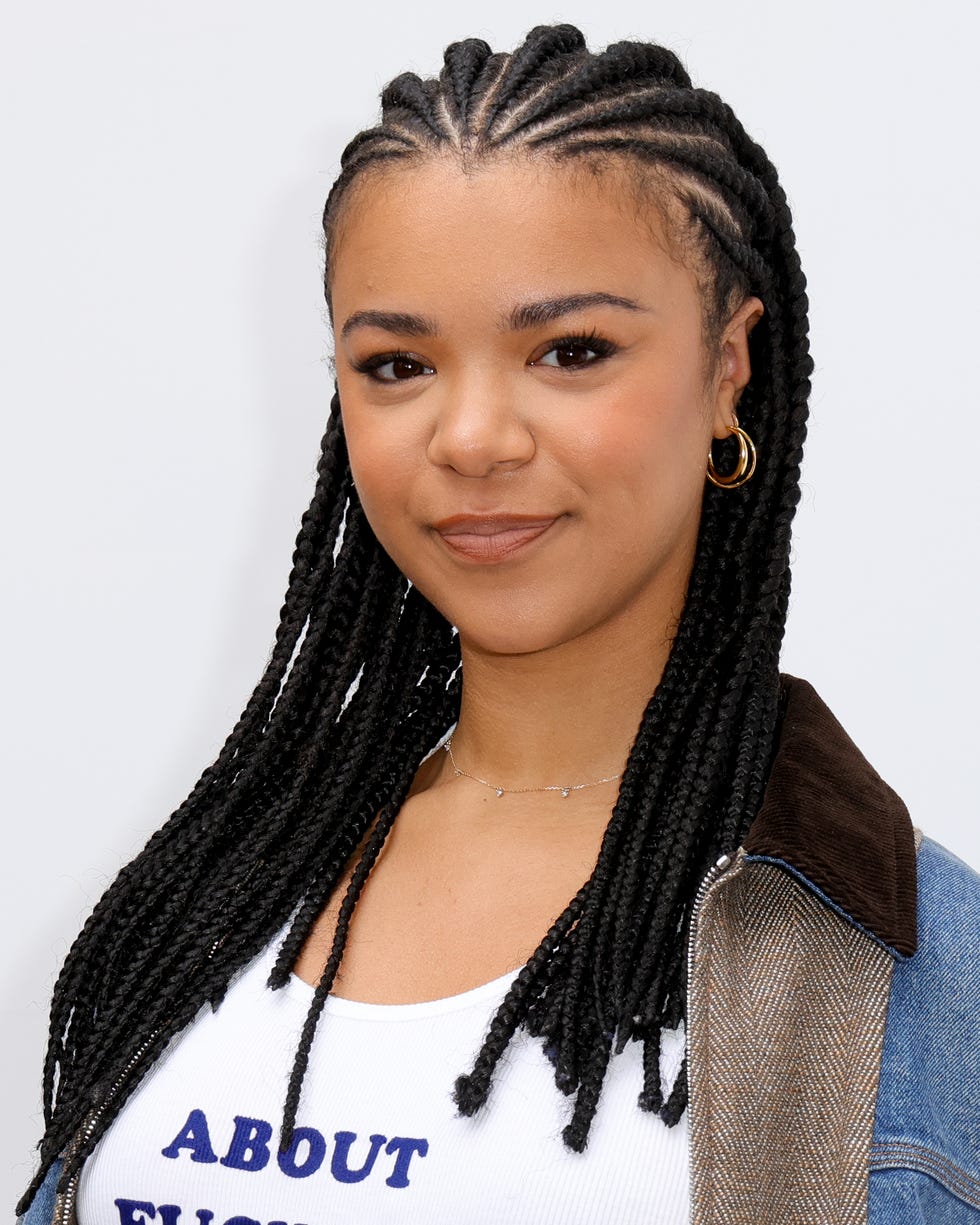
I was skeptical about collarbone length, mostly because I’ve had too many cuts that hovered at that weird in-between spot where they flip up for no reason. But these braids, with the side-swept bangs, changed my mind. The length is exactly at the collarbone, which is the sweet spot for showing off the braid pattern without dragging your face down. The bangs are cut at an angle, so they sweep across the forehead and soften a square jawline. My texture is naturally medium-coarse, and these braids held their shape without frizzing at the ends, which is my usual complaint. The color is a deep espresso brown, almost black, with no highlights to worry about. That’s the thing about a solid color: it doesn’t show the grow-out for at least six weeks. The hold is solid, I slept on them for two nights and they still looked freshly done. If you have a round face, keep the bangs longer so they don’t make your cheeks look fuller. I’d book this one, it’s not a bathroom-mirror job, but it’s worth the three hours in the chair.
Box Braids with Geometric Parting
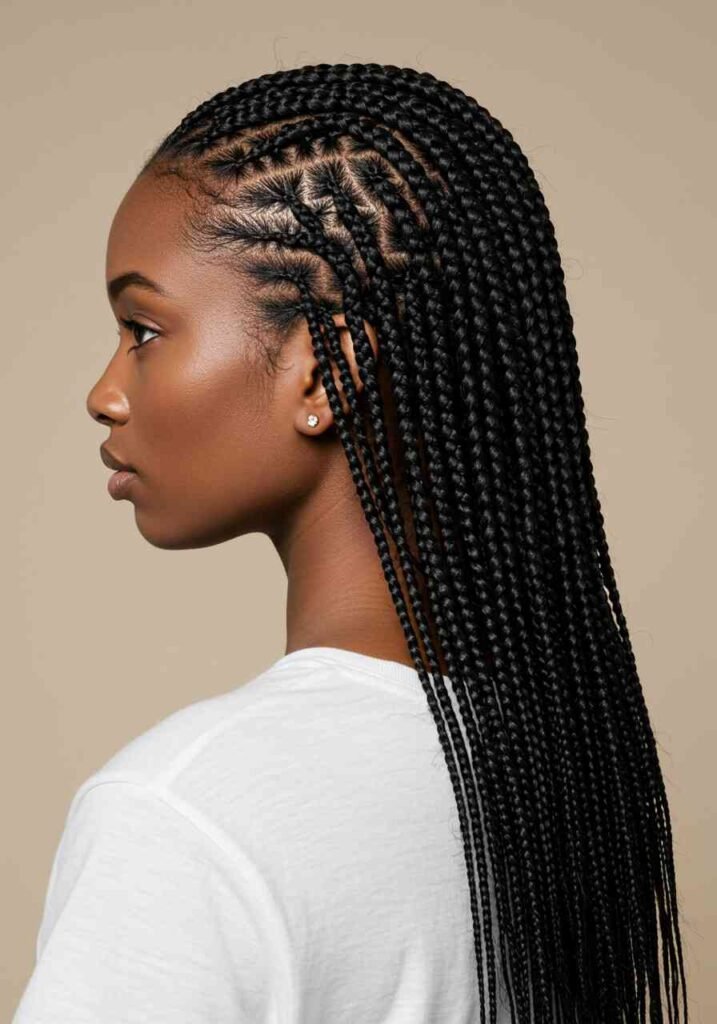
Short, yes. Severe, absolutely not. I’ve been burned by bobs before, but this chin-length braided version is the one that finally converted me. The cut hits right at the chin, which is bold, but the rounded shape keeps it from feeling like a helmet. My hair is on the thicker side, so I was worried about the bob looking bulky, but the stylist thinned out the ends to give it a soft, feathery texture. The color is a warm chestnut brown with subtle caramel pieces at the front, which catches the light and adds dimension. These braids held their shape through a windy day and a workout, no re-pinning needed. The hold is impressive, but the upkeep is real: you’ll need a trim every six weeks to keep the bob from growing out into a shag. If you have a long face, this length is perfect, it adds width and balances out the proportions. I was not expecting to love this as much as I do. It’s the kind of cut that makes you want to wear earrings and a turtleneck, even if you’re just running errands.
Collarbone Box Braids With Beads
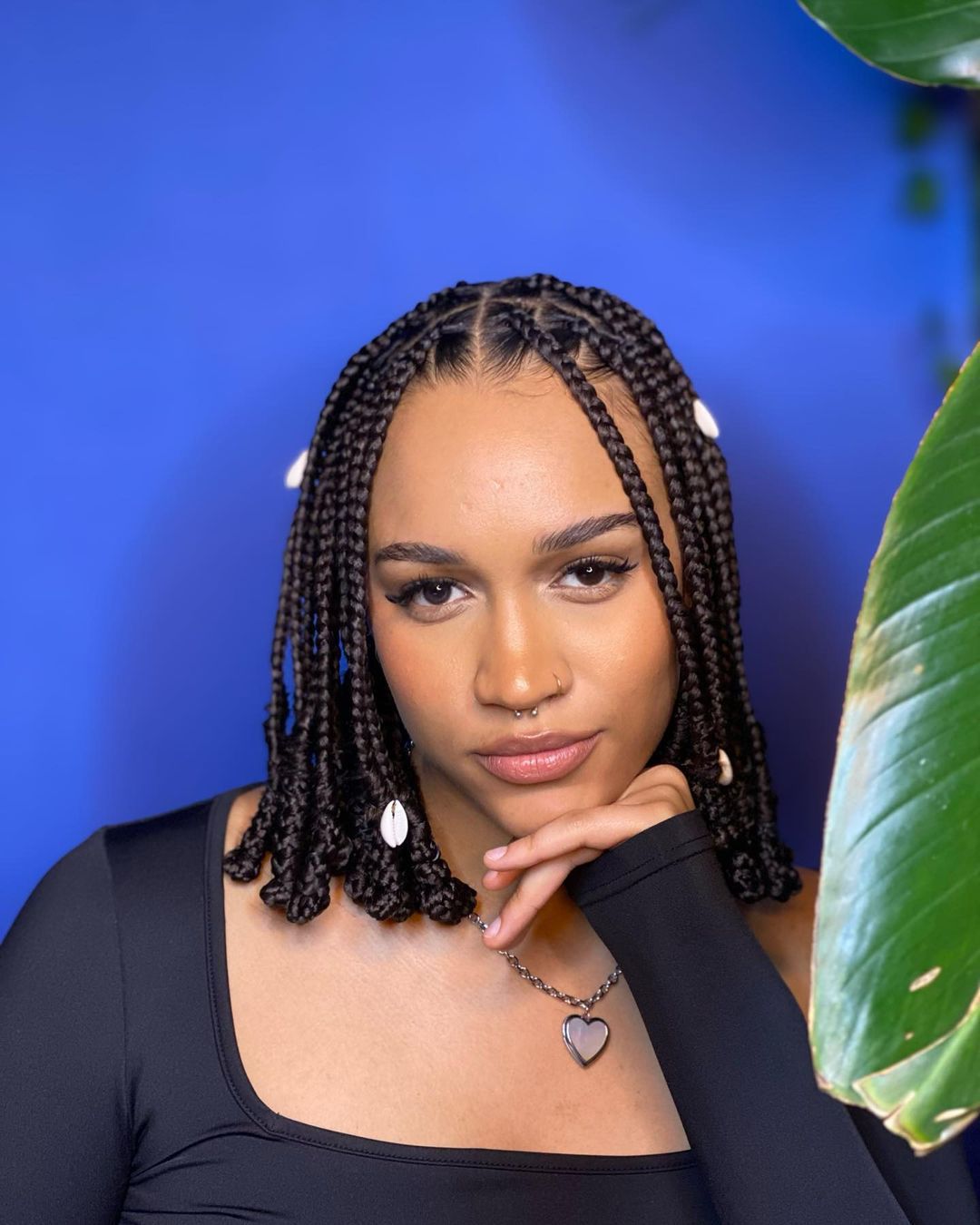
This is the braid style that made me do a double-take at the salon, in the best way. The two-tone color is done with a dark root that fades into a honey-blonde, and the curly ends are what really sell it. The curls are bouncy, not stiff, and they add a softness that straight braids just don’t have. My hair is medium density, and the curls at the end made the braids feel lighter than they actually were. The length is mid-back, which gives you room to play with, but the real magic is in the texture. The hold is solid, but those curly ends need a little help: I wrapped them in flexi-rods every night and they stayed defined for a full two weeks. The color is low-maintenance, the dark root means you can let it grow out for months without a touch-up. If you have fine hair, ask for smaller braids so the weight doesn’t pull at your scalp. This is a look that gets compliments every single time I wear it, and it’s the one I always come back to when I want to feel like I actually tried.
Cornrows To Long Thick Braids
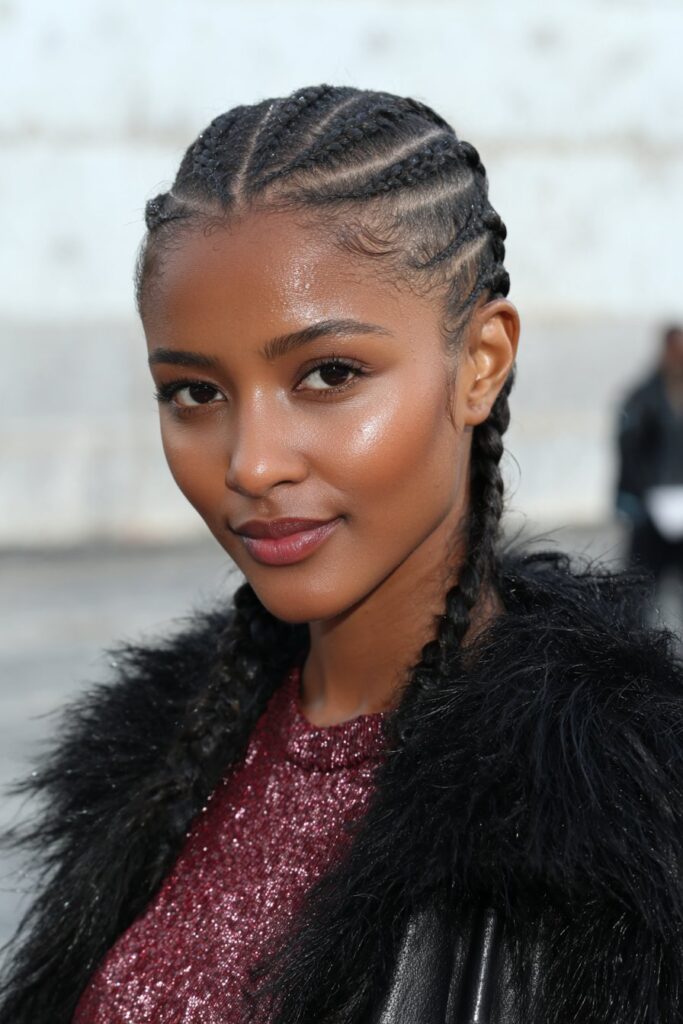
The transition from cornrows to long thick braids is not for fine hair. This style demands medium to thick density because the cornrows need enough hair to grip, and the long braids add weight that can pull on finer strands. It works best for those with at least shoulder-length natural hair to allow the cornrows to lie flat against the scalp.
The clean cornrow lines at the front transition smoothly into box braids that fall to mid-back. The thick texture gives the braids volume, while the black colour keeps the look uniform. The stylist braids the cornrows tightly at the front, then transitions to box braids using the same sections. The straight texture of the braids keeps the lines clean and sharp. The cornrows frame the face, making this style flattering for round and oval face shapes. At mid-back, the braids have enough weight to swing but not so much that they feel heavy. The hold is secure because the cornrow base anchors the braids, preventing slippage. For those with the right density, this style offers the best of both worlds: the neatness of cornrows at the front and the movement of long braids at the back.
Visual Idea

I will admit I have scrolled past a shoulder-grazing cornrow style thinking it would take a stylist I do not have and a sitting I cannot endure. Then I sat for this one and realised the middle part with defined cornrows is what makes it hold in a week of winter hats, which I was not expecting. Dark brown, straight, no bangs, and the hold stays neat past day three because the braid work is tight against the scalp. It is a salon job, full stop.
Mid-Back Visual Idea

This one wins over the looser, chunkier styles I have worn before, and I am not usually one for a straight, thick box braid. The defining factor is the parting: clean, middle-parted, uniform from root to tip, and the subtle brown highlights stop it from reading as one flat block of black. The braid structure here is salon precision, not something I would attempt on my own scalp. It is a book-a-professional and bring a reference photo situation. Thick, mid-back, straight, with highlights that catch the light.
Shoulder Visual Idea
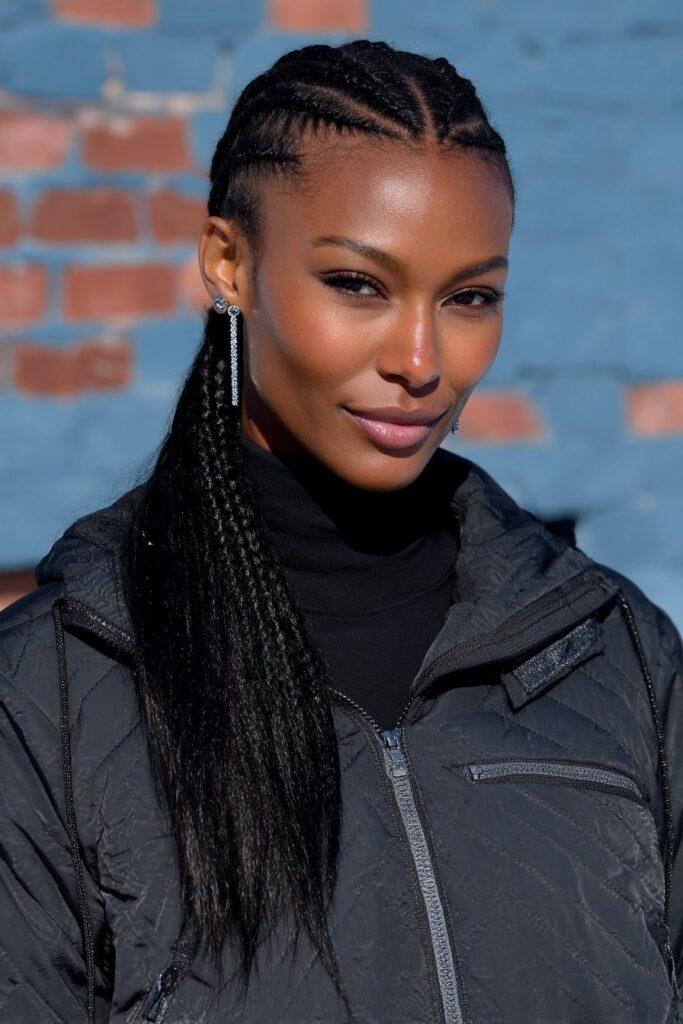
Here is the combination. Cornrows run from the front hairline toward the crown, then drop into loose braids that fall to the shoulder. Black, straight, middle-parted, no bangs. The honest downside is that the transition point between the cornrow and the loose braid can feel bulky if the stylist does not taper the extension properly. I have felt that bump at the nape before, and it is not comfortable under a winter hood. The technical trick is keeping that transition smooth.
Black Visual Idea
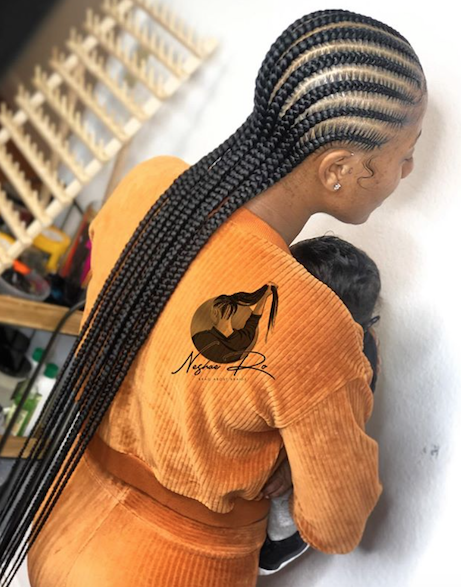
Who genuinely suits a long, neat feed-in braid? Someone who wants length but cannot commit to the weight of a full head of thick extensions, because feed-ins start thin at the root and build. The side view here shows it: the braid lays flat against the scalp at the hairline and widens as it goes. Mid-back, black, straight, no bangs, middle part.
It flatters round and oval faces best because the length pulls the eye down. The upkeep is a scalp spray and edge control every three or four days, plus a trim on the ends every eight weeks to stop the taper from looking frayed. If you have fine natural hair, this style works because the feed-in technique relieves tension on the root. Skip it if you want a blunt, heavy braid.
Cornrows Visual Idea
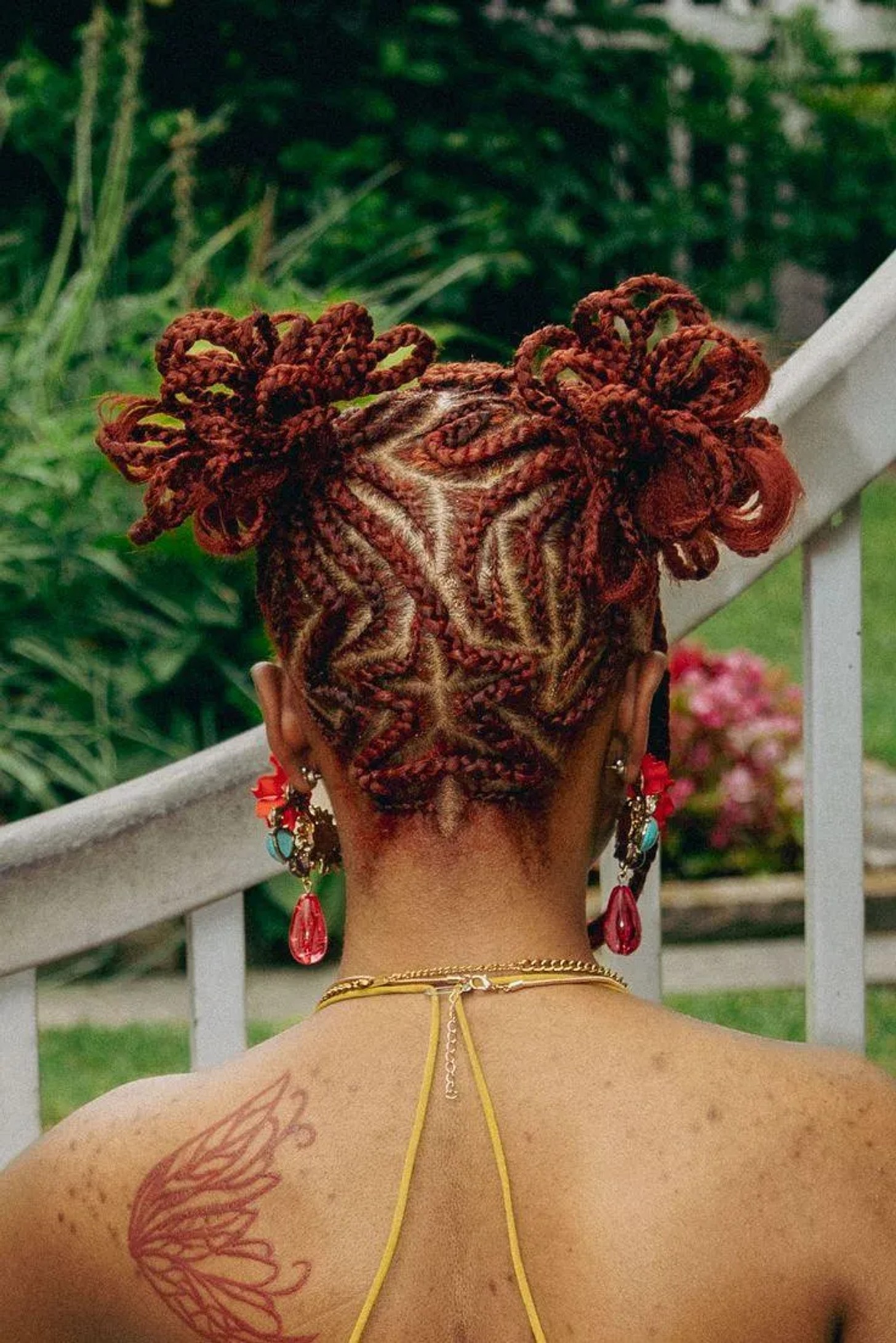
The geometry here is precise, straight rows that curve at the crown and run parallel down the back. It is a side view, shoulder-length, black, with no bangs. The honest downside is the upkeep: that pattern will look sharp for about four days before the new growth at the hairline softens the lines. And a geometric pattern takes a stylist who understands symmetry, not just braiding. It is a commitment, but the hold is solid through a week of beanies.
Long Box Braids Visual Idea
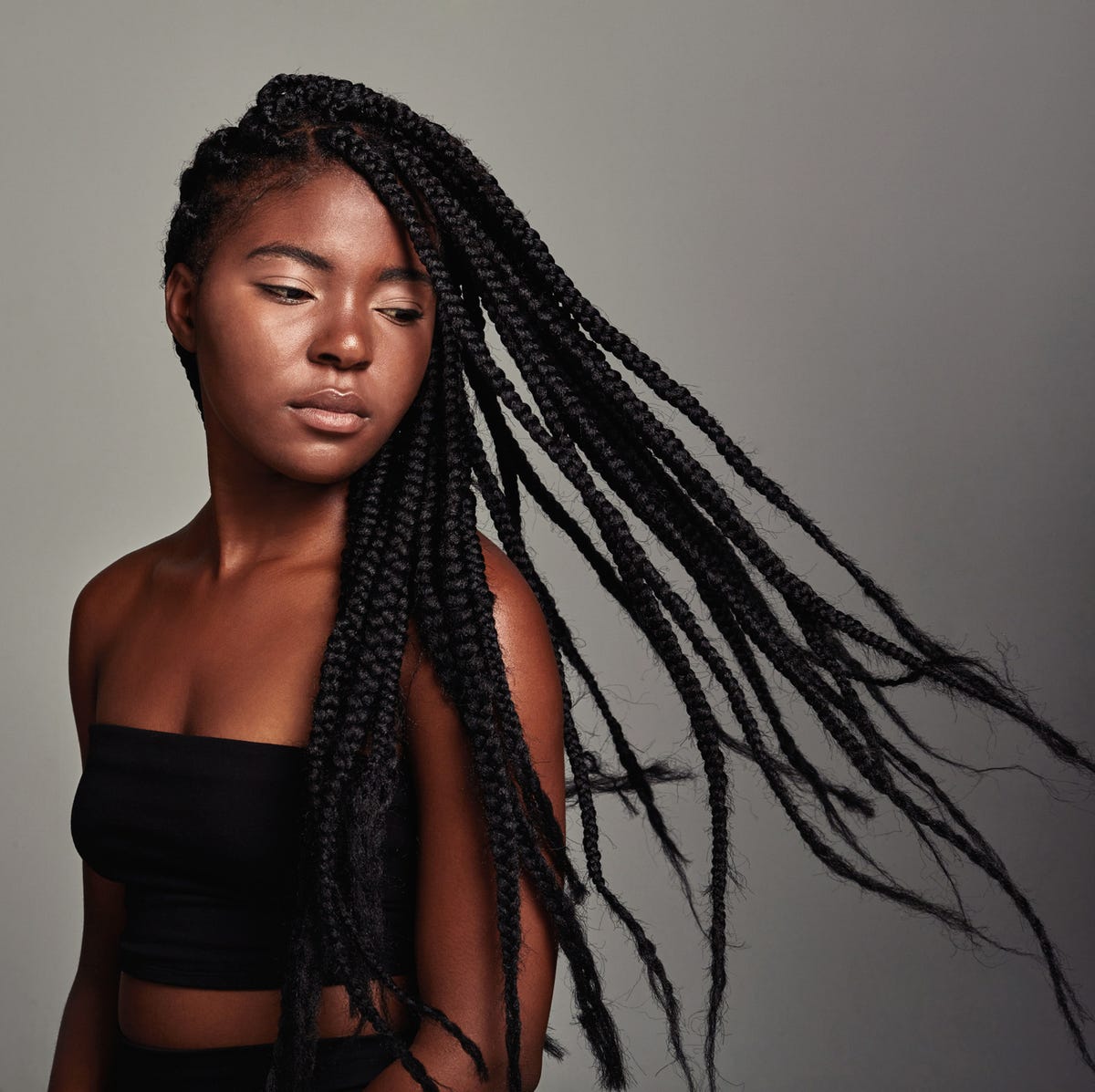
Long box braids are a commitment I underestimated. I sat for hours, and when I stood up, my head weighed a different amount. But that first day walking out, with the braids brushing my mid-back and the black synthetic strands swinging, I felt taller. They held their straight shape through a week of wind and scarves. The styling is minimal once they’re in: a satin scarf at night and you’re set. Texture is smooth, uniform, no frizz at the roots. Colour is a deep black that doesn’t fade. The hold is solid for weeks.
The confidence boost is real. I caught my reflection in a shop window and stopped. Not because it looked perfect, but because I looked like someone who had time to sit for braids. That’s the winter braid power: you invest in the morning, and the braids invest back. They don’t move. They don’t flatten. They just stay, and you go.
Waist-Length Visual Idea
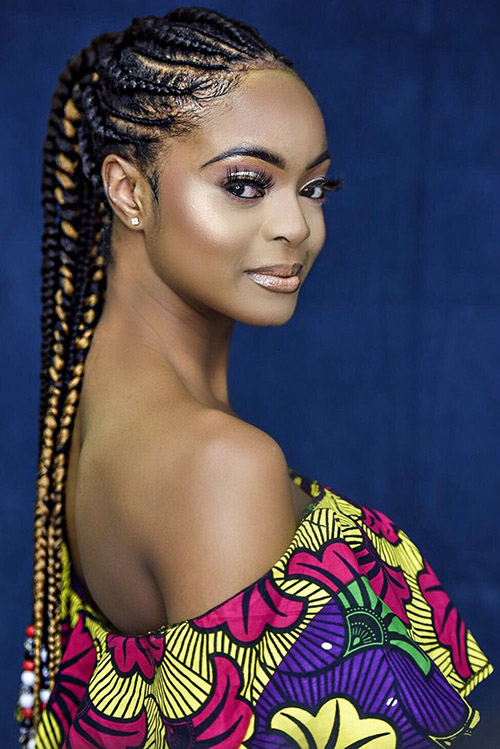
The temperature dropped, and I wanted a style that screamed winter without screaming effort. Waist-length braids in a high ponytail do exactly that. The cornrows hug the scalp, the extensions cascade down your back, and the blonde highlights catch the low sun. This is salon work — the cornrows need clean parting, the extensions need proper attachment. But the result is dramatic: a ponytail that swings and stays, with wavy ends that soften the length. Colour is black base with blonde highlights woven through, texture is straight braids with a wave at the ends, hold is strong from the cornrow base. It’s a holiday party look.
Braids Visual Idea
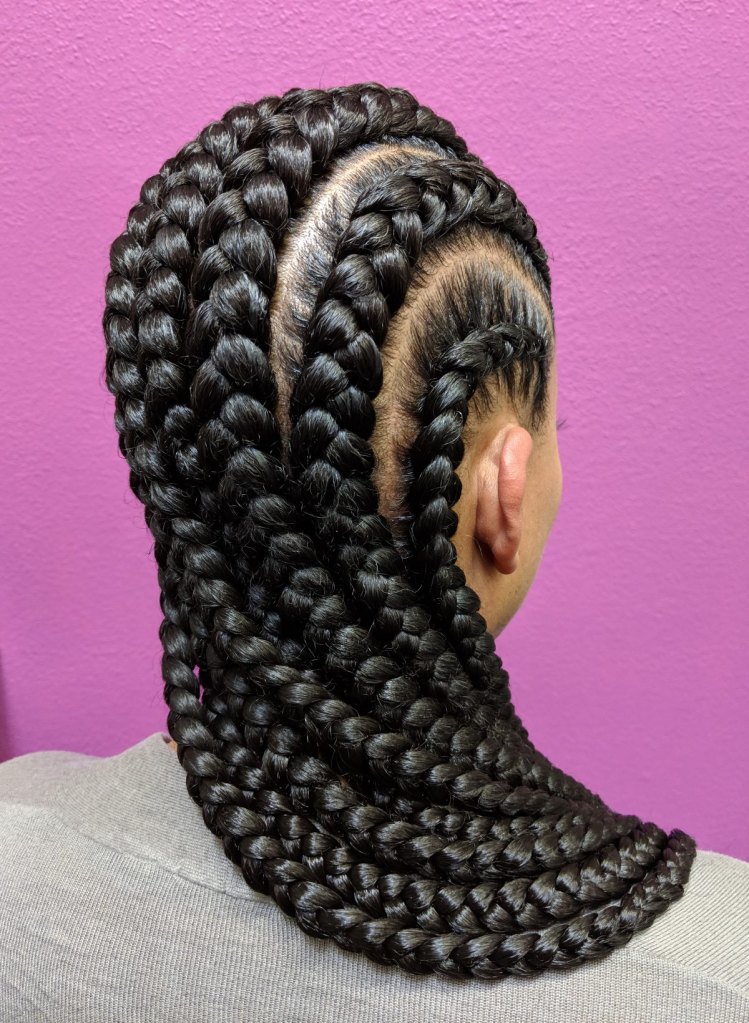
Thick, uniform braids hit mid-back with a clean middle part. The black colour reads deep, no highlights needed. Straight texture keeps the lines sharp, and the weight of large box braids means they hold their shape for weeks without slipping or frizzing at the ends. For round faces, the vertical length elongates; for square jawlines, the thickness softens the angles. Heart-shaped faces benefit from the balance of width at the jaw. Wear them down or in a low ponytail. Upkeep is minimal: a satin scarf at night, a light oil on the scalp every few days. No re-braiding for at least six weeks. This is a set-and-forget winter style.
Final Thoughts
After writing all 26, I noticed something I didn’t expect: the shorter braids are the ones that look expensive. The collarbone length with side-swept bangs, the chin-length bob, they read as deliberate in a way that long braids don’t anymore. I’m booking the collarbone box braids with beads next, mostly because I want to see if they survive a week of gym sessions and a toddler’s grabby hands.
- Trim the baseline every eight weeks to keep the shape.
- Tone the blonde at week six, not week ten.
- Refresh the edges with a soft brush every morning.
- Sleep on satin to keep the parts crisp.
That’s the one I’m actually going to try.

