Game day hair needs to stay put through warm-ups, innings, and the occasional victory slide. The trick is choosing a style that locks down every strand without requiring a second look in the mirror.
These 17 softball hairstyles range from five-minute ponytails to intricate braids that last a doubleheader. Whether your hair is fine and slips out of elastics or thick enough to overheat in a high ponytail, there is a solution here. The collection covers every texture and length, from cornrows that protect edges to bubble ponytails that add volume without extra weight. Softball Hairstyles that actually hold through the seventh inning stretch.
Honey Blonde Ponytail With Loose Waves
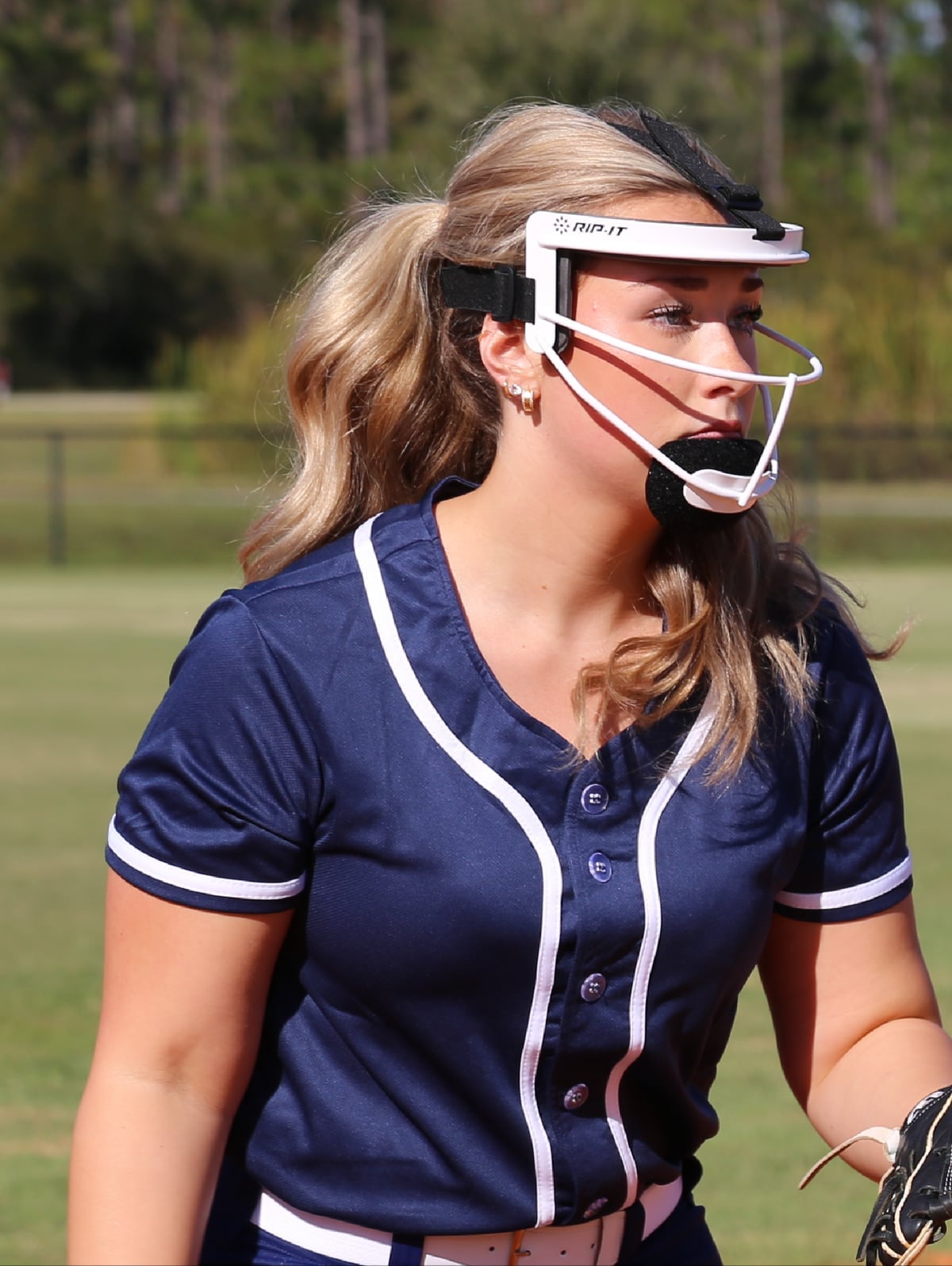
This ponytail is collarbone length, honey blonde, and built on loose waves that keep their shape without looking overdone. The side parting and soft curtain bangs do the face-framing work, which makes it a natural fit for oval and heart face shapes, since the waves add gentle width at the cheekbones. Thick, healthy hair of collarbone length or longer is the starting point, and the layers give the waves somewhere to move. Ask your stylist for a collarbone ponytail with loose waves and curtain bangs. Add grip at the roots and mid-lengths so the waves hold through a full game, and the bangs will need a trim every four to six weeks to keep them out of your eyes during warm-ups.
Mid-Back Fishtail Braid With Headband
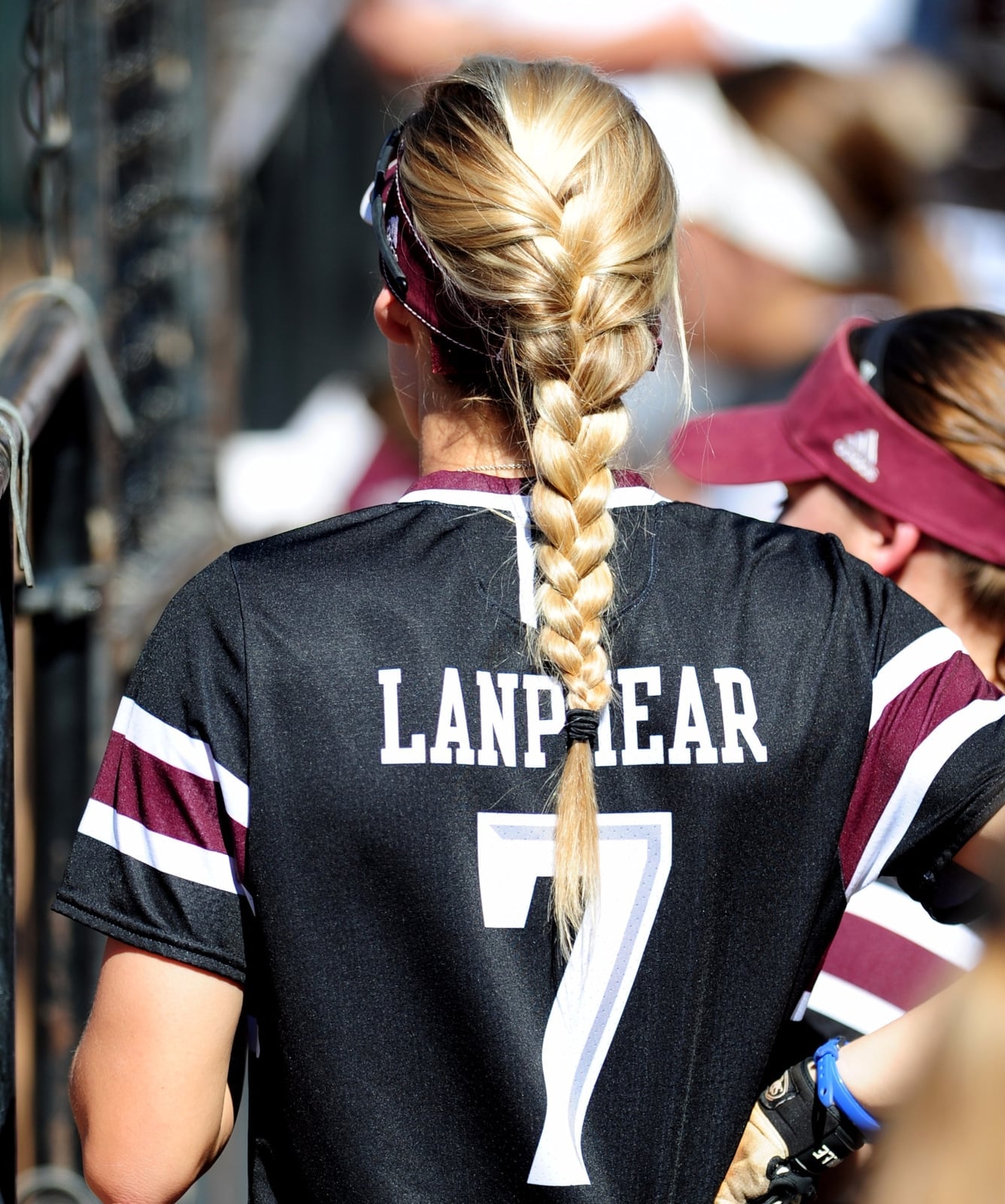
A fishtail braid is built by splitting the hair into two sections and crossing small pieces from the outside edge over to the opposite side, over and over, until you reach the ends. On this mid-back length blonde hair with wavy texture, the braid reads as thick and substantial, and the dark headband at the crown keeps the front pieces off your face without pins.
The technique suits anyone with thick, wavy hair of mid-back length or longer, and it holds well for oval and long face shapes because the braid adds volume at the sides. Ask your stylist for a mid-back fishtail braid with a headband. To build it at home, divide the hair into two even sections, then pull thin strands from the outer edge of each side and cross them over. It takes about ten minutes once you have the rhythm. After braiding, gently tug the sections outward for a fuller look, then set with a strong-hold hairspray. This one stays put through practice and carries into a post-game meal without looking like an afterthought.
Dark Brown Dutch Braid Into Chunky Braid
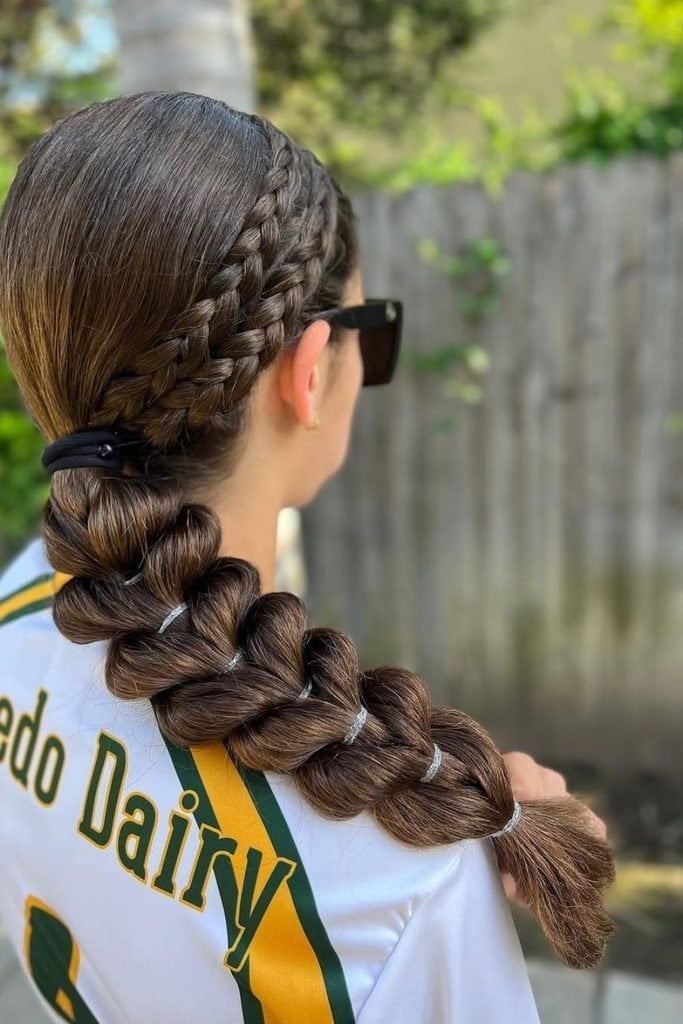
Compared with a standard three-strand braid, a Dutch braid demands more attention because the strands cross under rather than over, which lifts the braid off the scalp and makes it look more substantial. On this dark brown, thick, straight hair, the Dutch braid runs along the hairline and then widens into a chunky braid down the back, secured with silver hair ties that break up the length.
This is a salon-level style, not a five-minute bathroom job. The transition from the tight Dutch braid to the loose chunky braid is fiddly, and keeping the tension even across the crown takes practice. It suits thick, straight hair of mid-back length or longer, and the structure flatters all face shapes since the braid sits away from the face. Ask your stylist for a Dutch braid into a chunky braid. If you attempt it at home, start with the Dutch braid close to the scalp, then switch to a looser three-strand braid once you pass the nape. A smoothing serum along the Dutch braid section keeps flyaways down, and the chunky braid holds its shape for a full day on the field.
High Ponytail With Geometric Braided Top
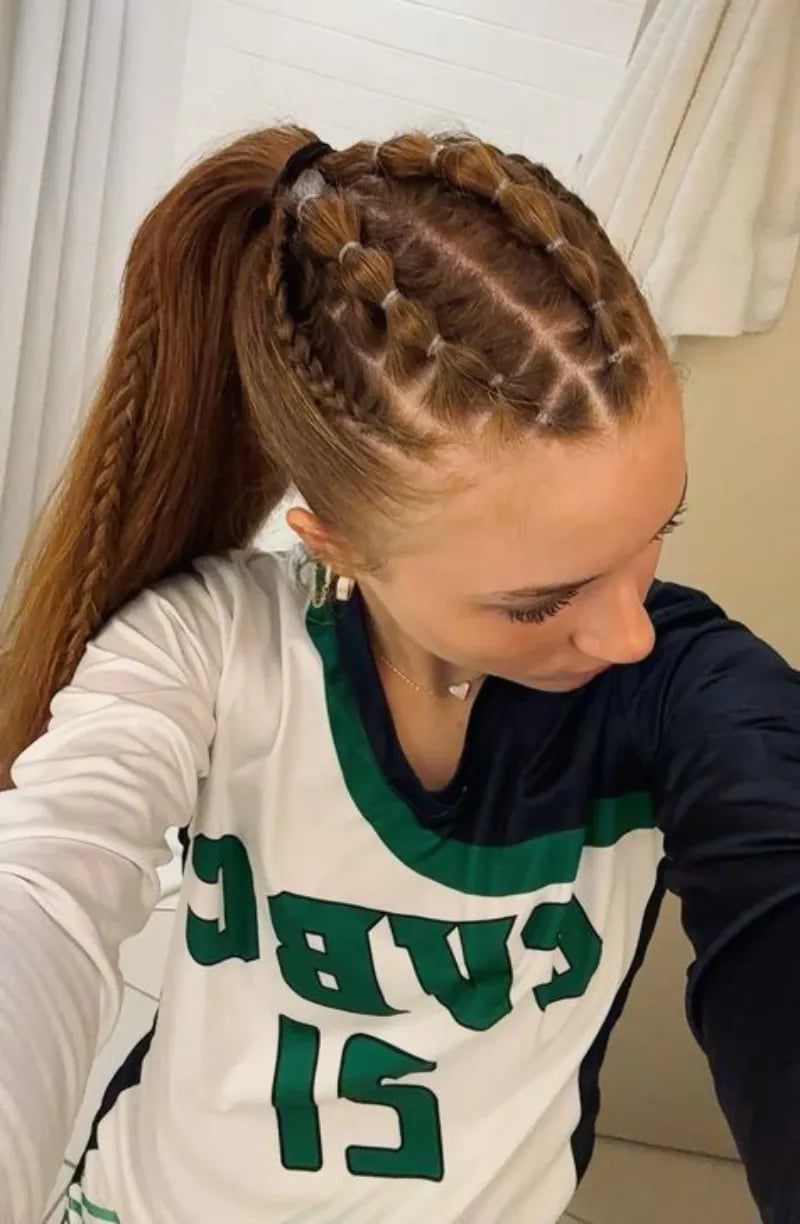
How do you ask for the braided sections on top without getting a basic cornrow? Bring the words: geometric. This high ponytail on reddish brown, wavy, thick hair has a crown of small, precisely sectioned braids that feed into the tail, and the effect is more sculptural than a simple scalp braid. It suits thick, wavy hair of mid-back length, and the height at the crown balances oval and square face shapes by adding length rather than width. Ask your stylist for a high ponytail with geometric braided sections. The braided top is worked on damp hair with a strong hold gel, so the scalp stays smooth and the pattern stays crisp. The ponytail itself gets a durable elastic, and the wavy texture means you do not need to curl it afterward. A trim every eight weeks keeps the ends clean, and the style holds its shape through a doubleheader without a touch-up.
Blonde And Pink Ombre Mohawk Braids
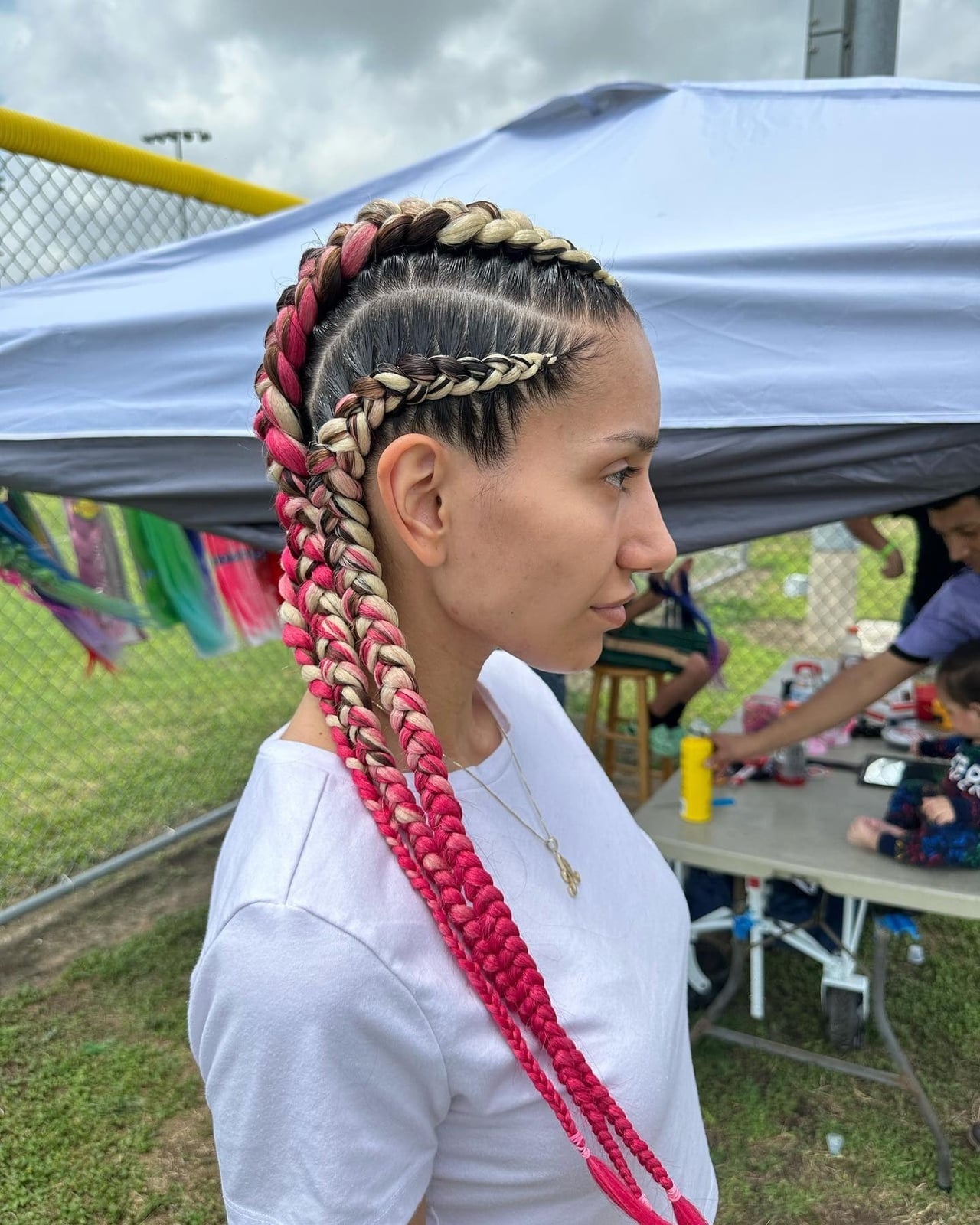
Summer showcase season is when a blonde and pink ombre mohawk braid makes its case. The two-tone color runs from a blonde root into vibrant pink at the ends, and the mohawk structure on top flows into thick braids down the back. The side parting keeps the braids off the face, and the undercut underneath gives the mohawk shape room to stand out.
This is a salon build: the undercut needs regular maintenance every three to four weeks, and the ombre color requires a toning appointment every six to eight weeks to keep the pink from turning brassy. It suits thick, straight hair of mid-back length or longer, and the vertical lines of the mohawk work well on oval face shapes. Ask your stylist for mohawk braids with ombre color. The braids themselves hold for several days with a satin scarf at night, and the color tends to draw questions about where it was done.
Long Dark Brown Ponytail With Cornrows
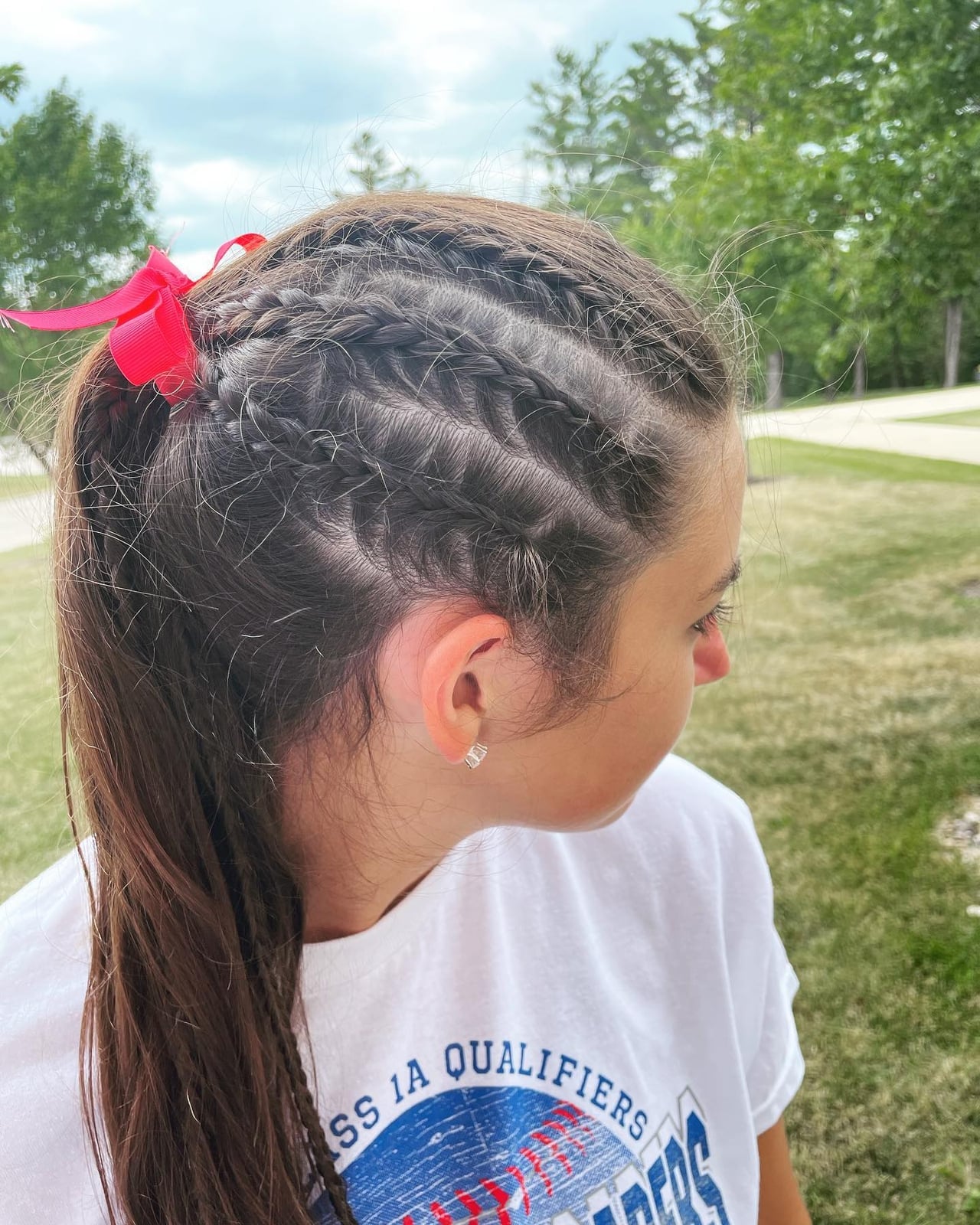
The design starts with detailed cornrows along one side before the thick, wavy dark brown hair gathers into a ponytail. This setup works best for those with long, dense hair who want the scalp security that cornrows provide. Ask your stylist for: long ponytail with side cornrows. The braids sit close to the scalp, so a light oil or serum every few days keeps the skin from feeling tight. One real drawback: the cornrows require a salon visit to install and a good thirty minutes of maintenance each morning to keep the edges neat. A bright pink hair tie adds a sporty finish, but the hold comes from the braids themselves.
Mid-Back Dark Brown Double Braids
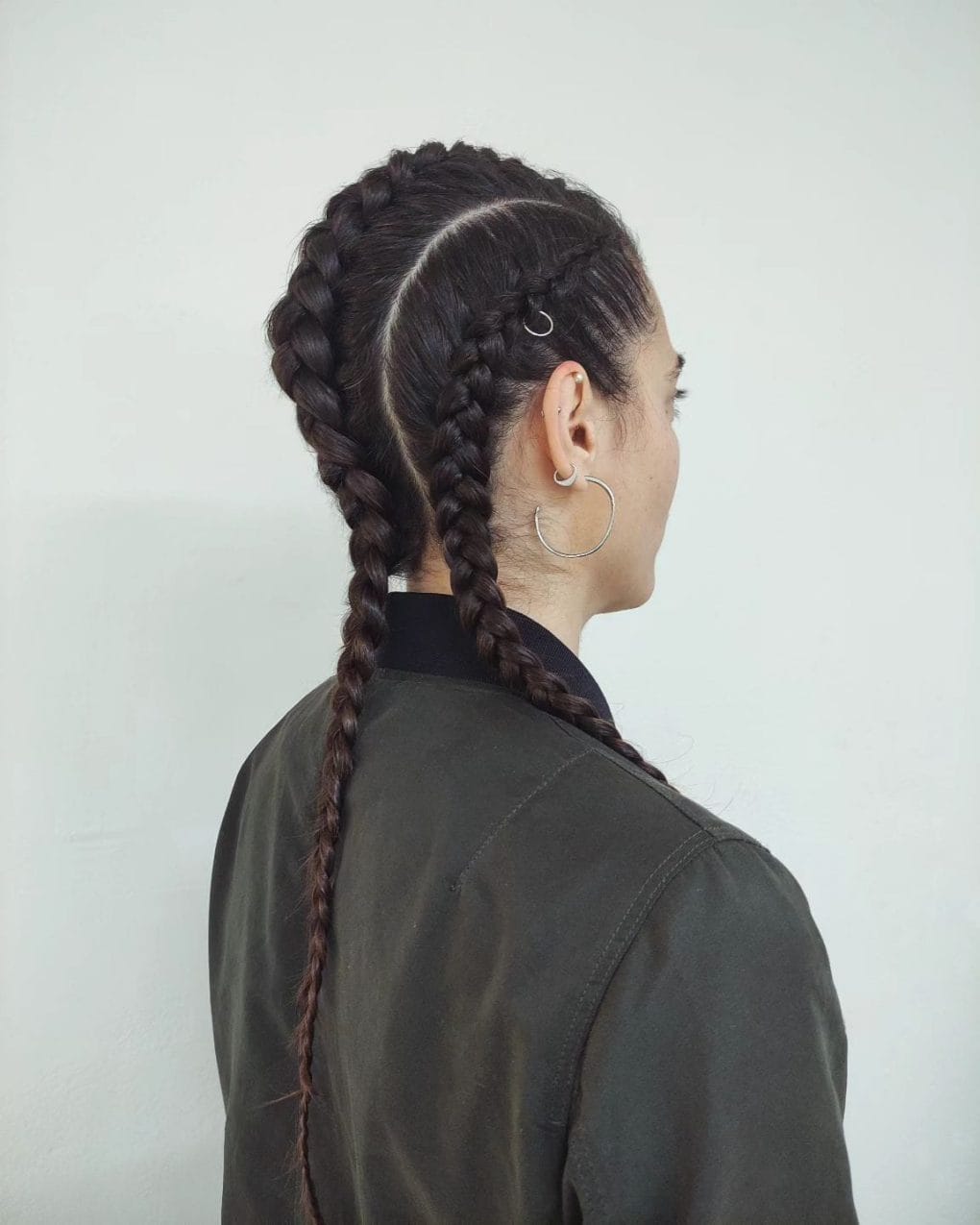
Two thick, wavy dark brown braids from a side parting sit securely against the back, offering a texture that stays put through a full game. This style genuinely flatters oval and heart face shapes because the double braids add width at the jaw, balancing a narrow chin. Ask your stylist for: mid-back double braids. The wavy texture holds the braid tighter than straight hair would, so you get a cleaner finish without extra product. Small silver hoops visible at the ear are optional but keep the look from reading as purely practical.
Shoulder Length Cornrows Into Loose Braids
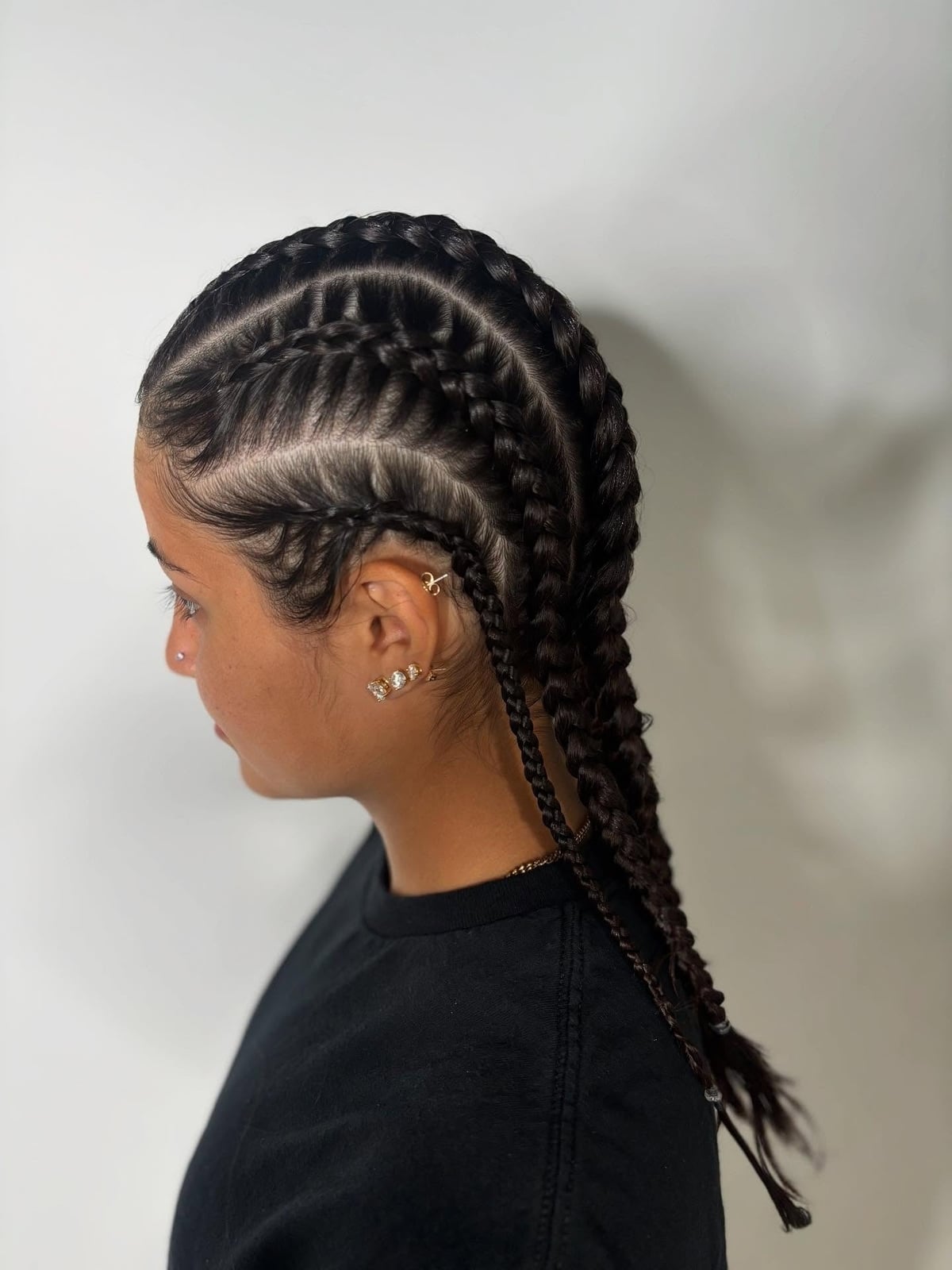
The cornrow pattern runs along the side of the head, then releases into loose braids that fall to the shoulders. Ask your stylist for: shoulder length cornrows into braids. The transition from tight scalp braiding to loose, wavy lengths gives you the hold of cornrows at the root with the movement of loose braids through the ends. This technique softens square and angular faces by adding gentle width around the jawline. The side parting keeps the cornrows cleanly defined without extra work on your part.
Mid-Back Blonde Double Bubble Ponytails
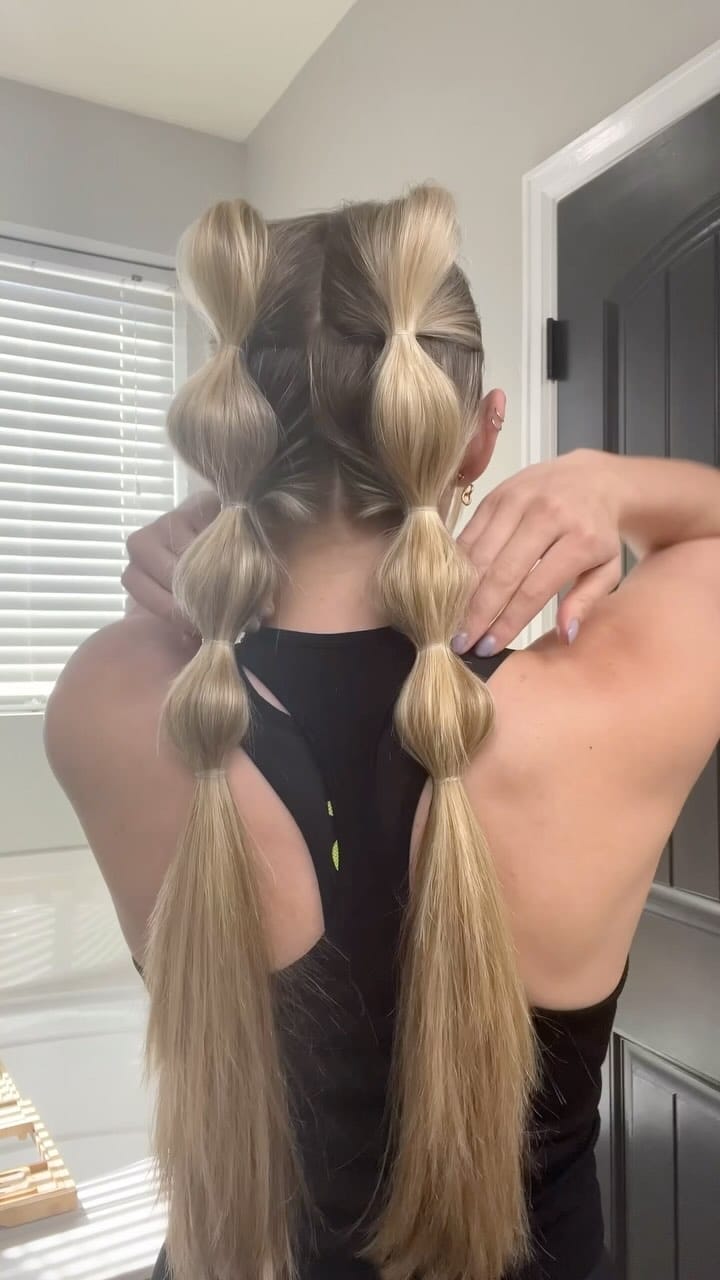
Two sections of straight, thick blonde hair, divided from a middle parting, are each secured with elastic bands at intervals to create a bubble effect down the back. The double bubble ponytail is one of the few game-day looks you can do yourself in under fifteen minutes. Ask your stylist for: mid-back double bubble ponytails. Use clear elastics to keep the focus on the blonde color, then gently tug each section for volume. The straight texture makes the bubbles distinct, and a salon visit is only necessary to trim the layers so they hit exactly at each elastic.
Mid-Back Blonde Pull-Through Braid
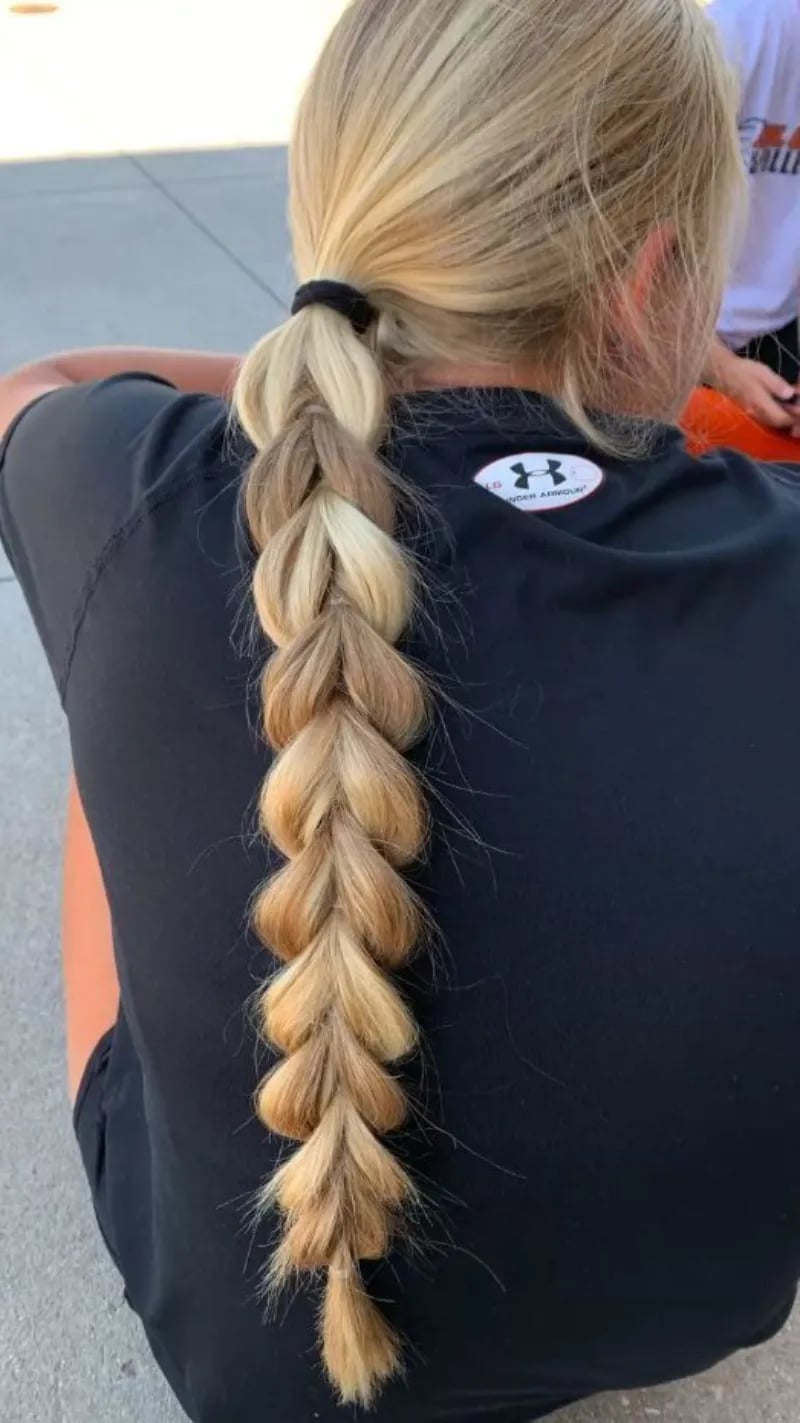
Does the pull-through braid actually hold through a seven-inning game? Yes, if the base ponytail is secured tightly. This version uses thick, wavy blonde hair with darker roots and highlights, parted in the middle, and woven into a pull-through braid that sits at mid-back. Ask your stylist for: mid-back pull-through braid. The darker roots mean you can go four to six weeks between toning appointments without a visible grow-out line. Adding grip at the roots before braiding helps the style stay put, and the whole style takes about twenty minutes to take down at night.
Mid-Back Ponytail With Braided Headband
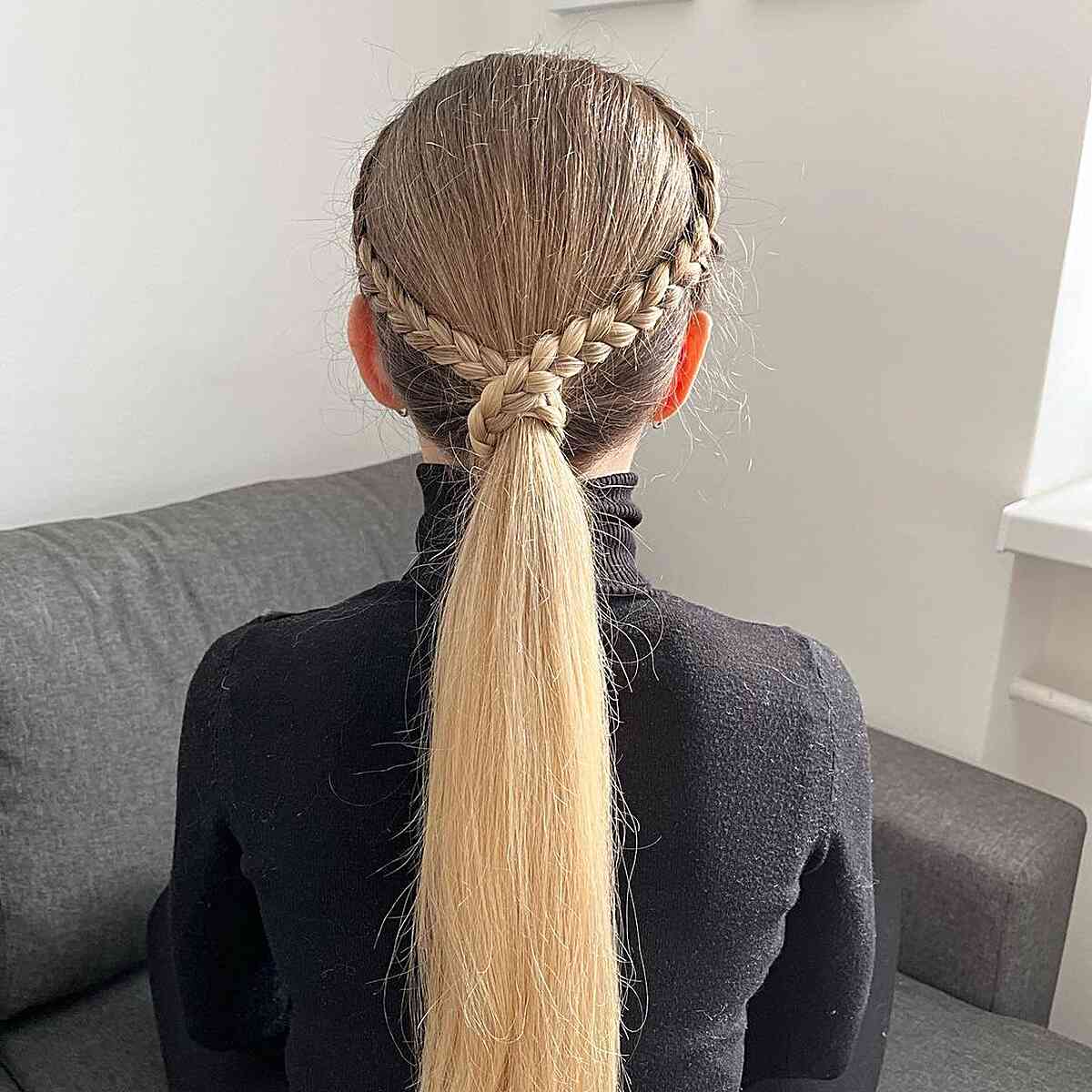
The ponytail with braided headband starts as two braids at the temples, meets at the back, and feeds into a high ponytail, so the whole design holds as one unit. It suits thick, straight hair of mid-back length or longer, and the middle parting softens round and square faces. Ask your stylist for a ponytail with intricate braided headband. This is a salon-level build, and the braided sections need pins to stay tight against the scalp while the ponytail itself is smoothed for a sleek finish. The light brown color reads neutral from the dugout to the bleachers.
The hold is the real selling point. Once the headband braids are pinned and the ponytail is secured, nothing shifts during a full game, which is more than you can say for the batting helmet you’ll pull over it. Just don’t expect to replicate this on a Tuesday morning. The precision of those temple braids takes practice, or a very patient friend.
Shoulder Length Scalp Braids Into Messy Bun
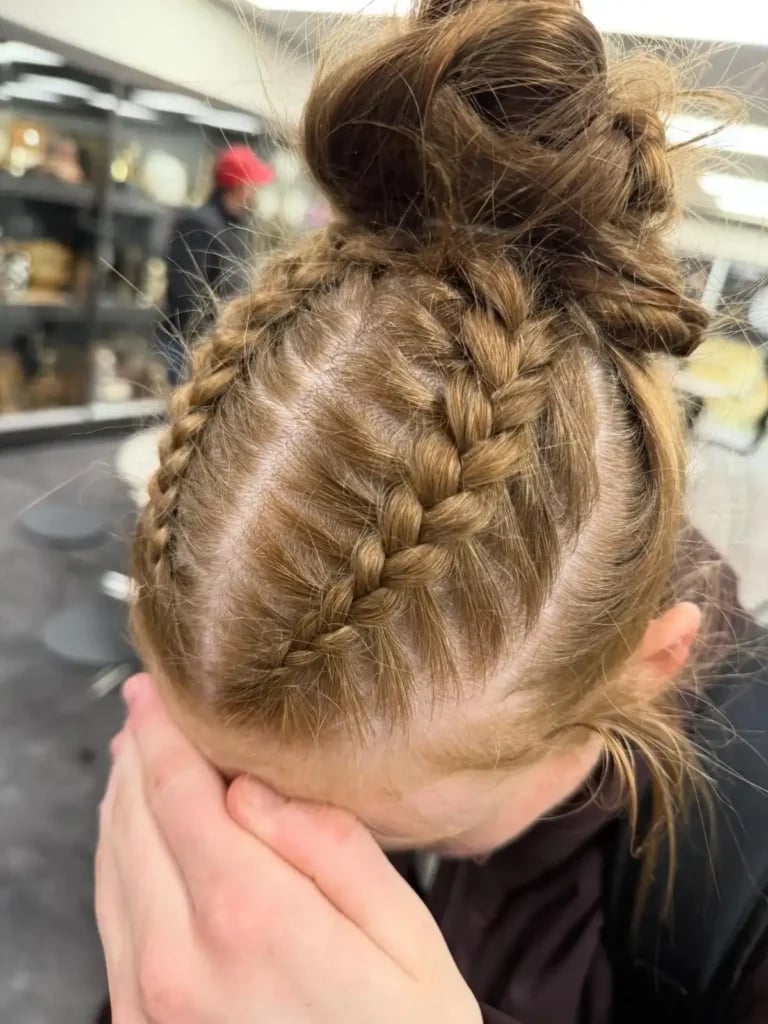
This style uses intricate scalp braids that work well with medium-density hair, and the reddish brown color adds warmth. The braids start at the hairline and lead into a messy bun at the crown, which gives angular faces some softness and oval faces a bit of height. Ask your stylist for scalp braids into a messy bun. The wavy texture helps the bun hold its volume, and a texturizing spray at the roots keeps the style intact for several hours. It is a practical option for busy days, but the bun does require small elastics to keep the braids anchored.
Mid-Back Blonde Fishtail Braid, Wavy
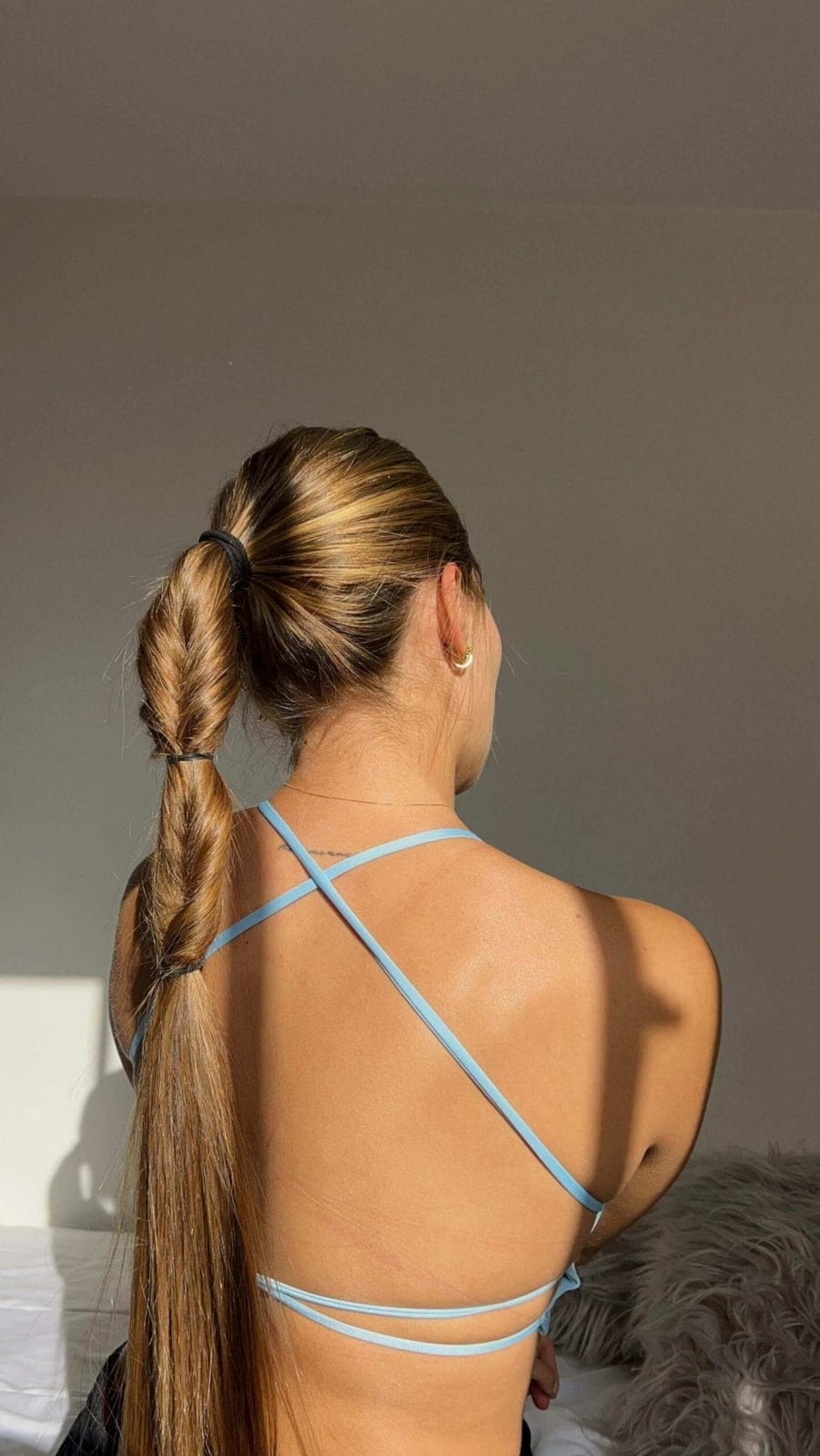
The fishtail braid here starts at the nape and runs the full mid-back length, which means the pattern stays visible even under a cap. On thick, wavy hair with blonde highlights, the braid picks up dimension from the light catching the separate strands. Ask your stylist for a mid-back fishtail braid. The technique is straightforward: split the hair into two sections, cross thin pieces from each side, then gently pull the finished braid apart to widen it. That step is where the volume lives. A clear elastic at the end keeps it secure for a tournament, and the middle parting keeps the front tidy. It suits oval and heart faces, and the loose, relaxed finish holds well because the waves grip the braid naturally.
Shoulder Dutch Braid Into Sleek Ponytail
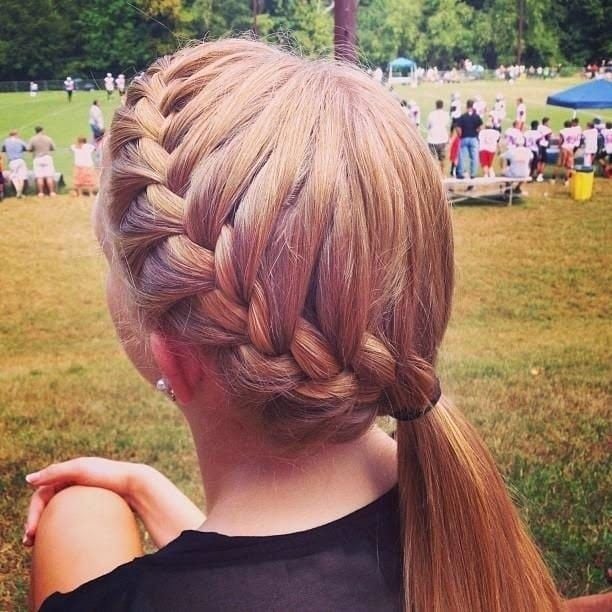
How do you get a braid that stays put but doesn’t look like you tried too hard? The Dutch braid starts at the crown, weaves down to the nape, and transitions into a sleek ponytail, with the side-swept bangs left loose to soften angular faces. Ask your stylist for a Dutch braid into a sleek ponytail with side bangs. On medium-density, wavy hair with subtle highlights, the braid adds texture while the ponytail keeps the length controlled. A fine-tooth comb smooths the ponytail for that clean finish, and the whole thing ends around the shoulder, so it clears the collar of a jersey. It’s a game-day look that holds through warm-ups and the seventh inning stretch.
Mid-Back Ponytail With Fishtail Detail
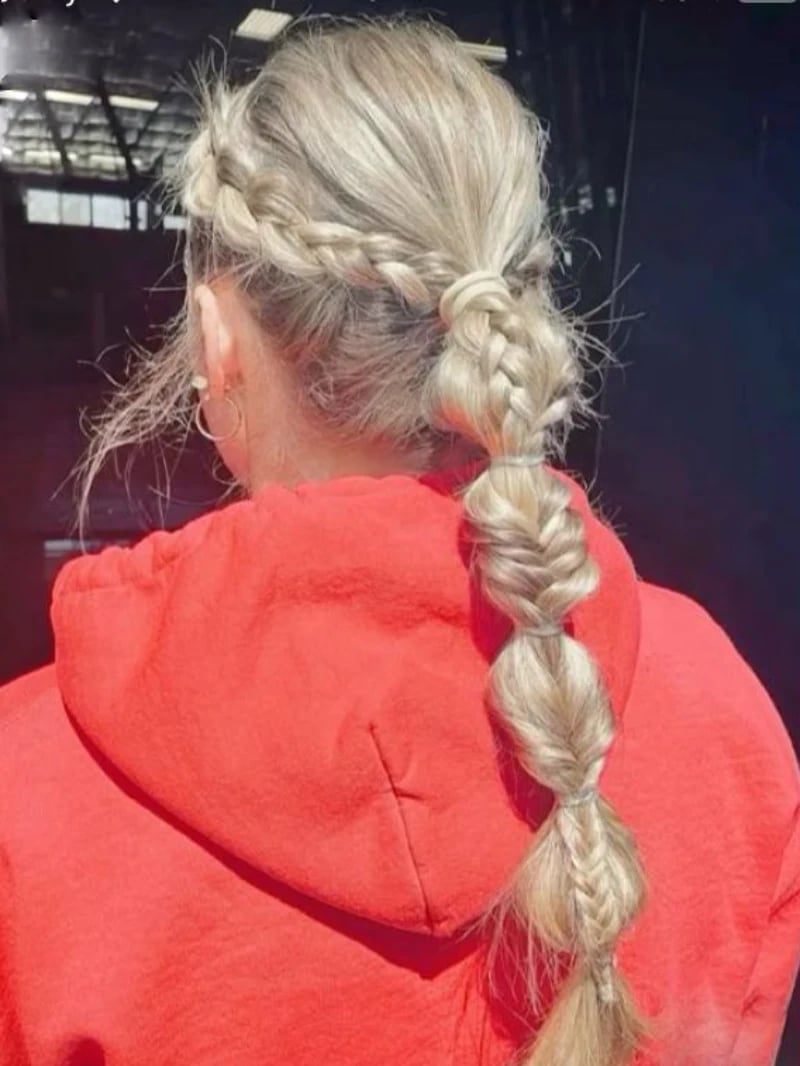
The high ponytail with multiple braids is a summer tournament staple because it keeps long hair off the neck while still showing off the length. The fishtail braid at the bottom adds a decorative finish, and the smaller braids higher up break up the mass of thick, wavy hair. Ask your stylist for a high ponytail with intricate fishtail braid. The lighter blonde highlights give the braids definition, so the detail reads even from the stands. Secure each braid section with small clear elastics, then wrap a strand of hair around the base to hide the band. The mid-back length means it swings with movement, but the braids keep the whole thing from turning into a tangled mess by the final pitch.
Shoulder Length Ash Blonde French Braids
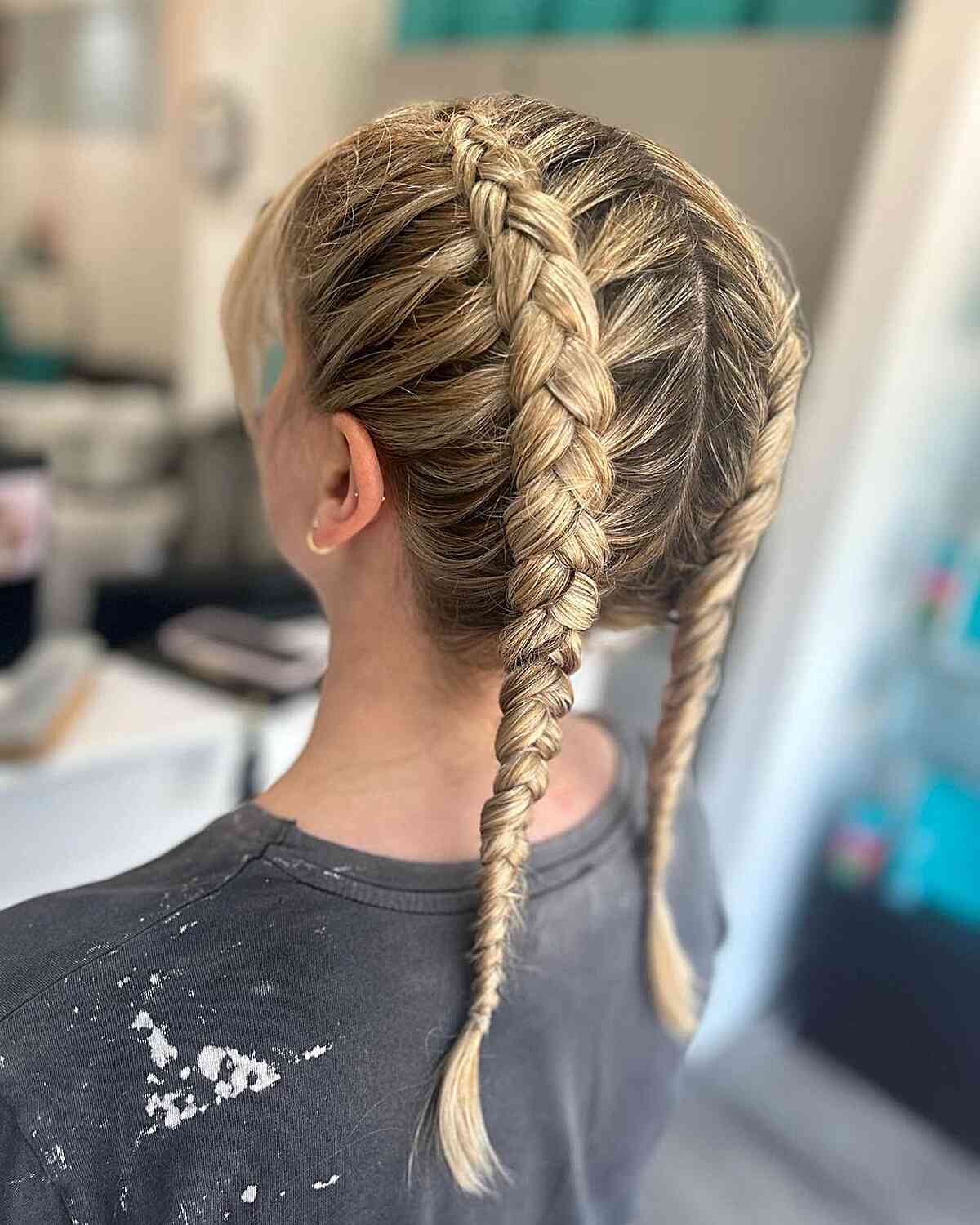
French braids read as tidy until you factor in medium-density wavy hair, which has a talent for escaping in fine wisps around the ears. Braid tightly from the roots to keep the ash blonde french braids anchored, then seal the surface with a finishing spray so the flyaways behave for the full game. The style suits shoulder-length hair and up, works with any face shape, and asks for a middle parting to keep both sides even. Ask your stylist for: shoulder length ash blonde French braids. A trim every eight weeks keeps the ends blunt enough to braid cleanly.
Mid-Back Dark Brown Double Dutch Braids, Clearly Showing The Hairstyle
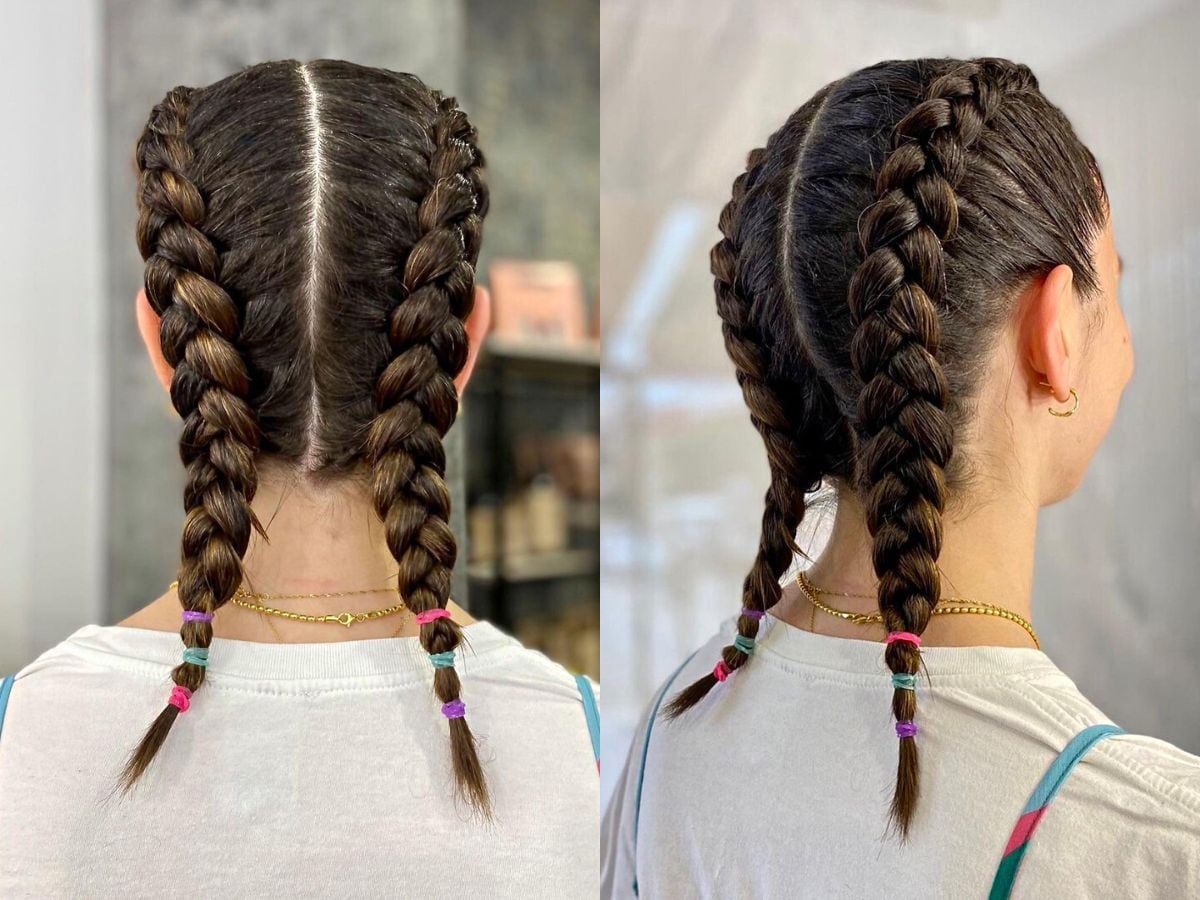
The design works because each Dutch braid sits raised off the scalp, which means the part must stay arrow-straight or the whole geometry wobbles. That precision is why this is a salon job: expect about an hour in the chair, with small colorful elastics at the ends doing the finishing work. Thick, straight dark brown hair at mid-back length or longer gives the braids the weight they need to hold their shape, and the style suits any face shape. The drawback is the tightness at the roots, which can pull after a long day. Ask your stylist for: mid-back double Dutch braids. Doing it yourself risks uneven tension and a part that drifts.
Final Thoughts
For maximum security during play, choose tightly executed braids or a high, tight ponytail. If you want something faster, go with a simple braid variation or a bubble ponytail. Keep the care simple and your hair will stay put.
- Trim braids every 8-10 weeks to maintain shape.
- Use a texturizing spray for grip before styling braids.
- Apply heat protectant before using styling tools on ponytails.
- Wash hair 1-2 times per week to maintain scalp health and braid integrity.
Play hard, look good, and keep your hair in check.

