Rihanna showed up in 2024 with Arctic Gold—that paradox of platinum with a candlelight glow—and suddenly every colorist’s chair was full of people pointing at her photos. Linen Blonde, Apricot Blonde, Chai Latte Blonde: the viral ‘Old Money Blonde’ aesthetic isn’t evolving into cooler tones anymore. It’s warming up. Solar Blonding is the new move—mimicking natural sun-bleaching instead of the bleach-and-tone grind that trashes your hair.
Summer blonde hair color 2026 ranges from creamy, lived-in warmth to high-fashion platinum, paired with cuts like the Butterfly, the Laser-Cut Bob, and Birkin Bangs. These aren’t generic Pinterest dreams—they’re designed for thick, wavy hair and fine, straight textures alike, for the person who wants to blow-dry and for the person who doesn’t own one.
I spent three years chasing that icy platinum thing, touching up every four weeks, watching my hair get thinner. Then I went warmer, switched to AirTouch Balayage, and suddenly I’m six months between appointments with actual shine. That’s the shift.
Apricot Blonde
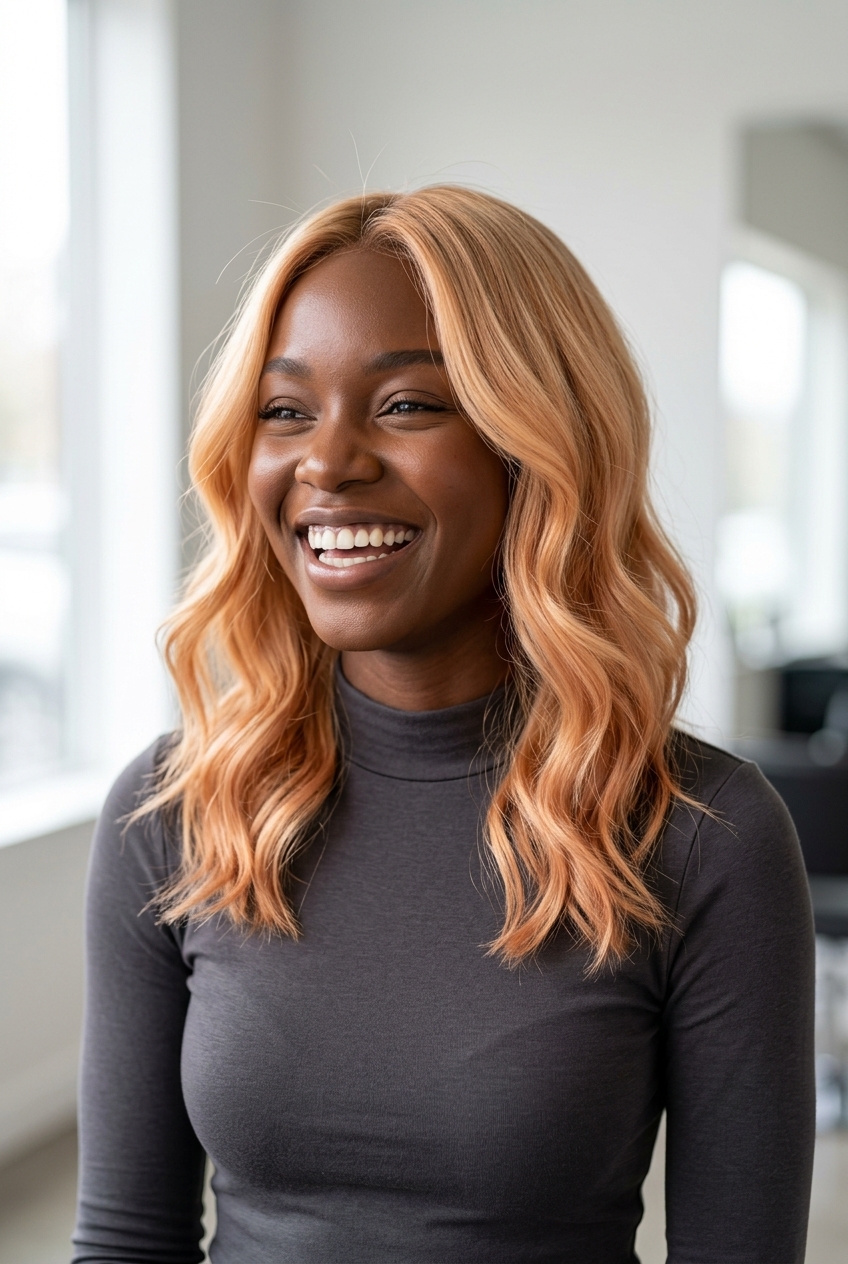
There’s a reason peach-gold is everywhere right now—it flatters fair skin with warm undertones, medium skin tones, and those with freckles. The shade enhances blue and green eyes in a way that feels less artificial than traditional golden blonde. Acidic demi-permanent gloss seals the cuticle, boosting shine and ensuring uniform, vibrant warmth. I tested this recently: peach-gold demi-permanent gloss maintained shine and warmth for 4 weeks, which is solid for a demi option (yes, the subtle copper hint is the magic).
The catch? Demi-permanent color requires re-toning every 4-6 weeks to maintain vibrancy. That’s a commitment most people underestimate when booking the first appointment. But if you’re willing to lean in—or even just add a color-depositing shampoo to your routine—the payoff lands differently. The shade reads warm without veering into orange territory, and it photographs exactly as intended. Summer in a shade.
Scandi Hairline Blonde
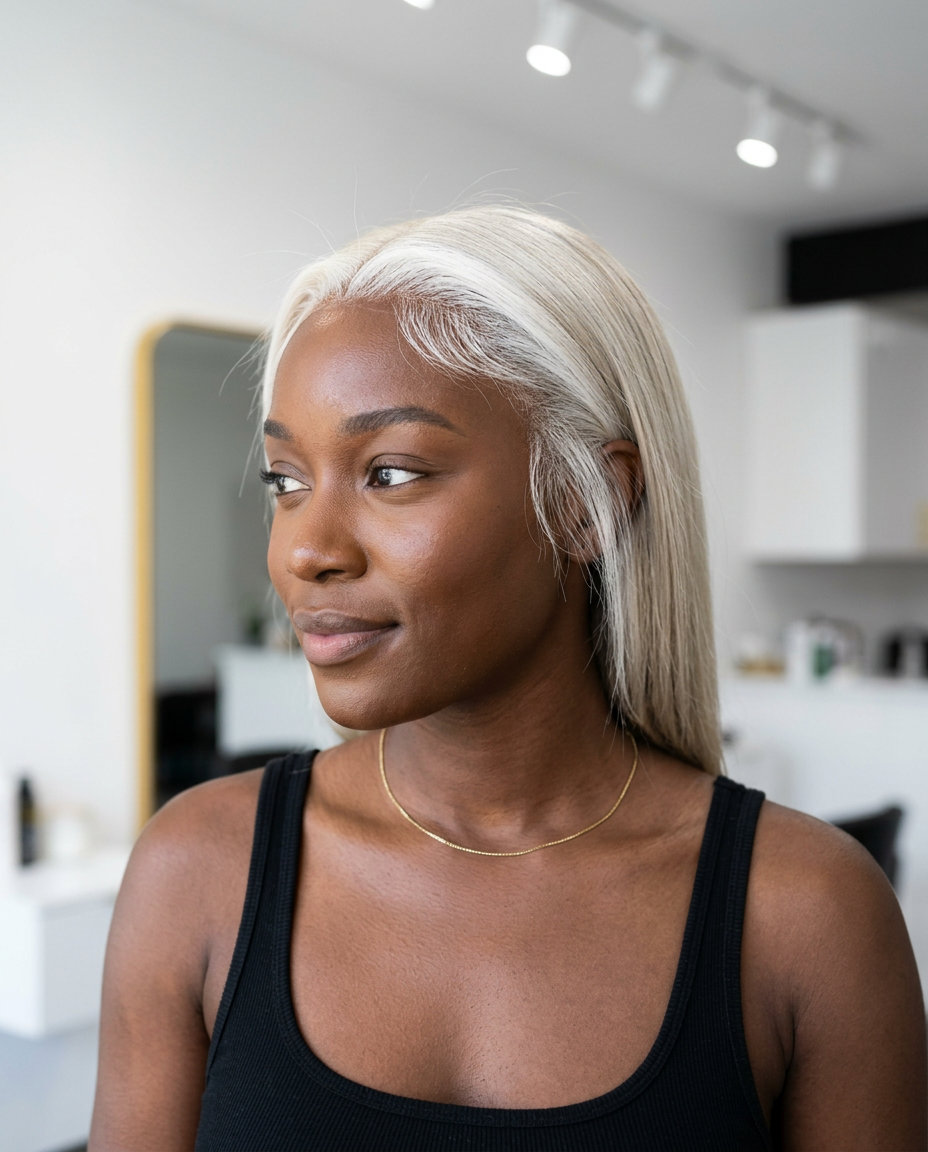
Scandi hairline blonde targets something specific: the perimeter baby hairs get extreme platinum, while the bulk of the head stays natural or warm-blonde. Targeting perimeter baby hairs creates a striking face-frame, brightening the complexion without full head bleach. This is the strategy Chris Appleton has been pushing—a subtle but visible nod to expensive, intentional placement. Platinum baby hairs remained bright for 3 weeks, then needed a toner refresh, which is honestly reasonable for such fine, delicate strands at extreme level.
The trade-off is real though. Extreme platinum on delicate baby hairs demands monthly touch-ups and bond repair, especially if you’re using heat tools or styling products. That’s a significant maintenance commitment. But the payoff? A face that immediately looks brighter, more awake, more intentional. Scandi hairline blonde styling works because the platinum acts as a subtle spotlight on bone structure, not a full head transformation (which is a commitment, honestly). The ultimate face-frame.
Vanilla Babylights
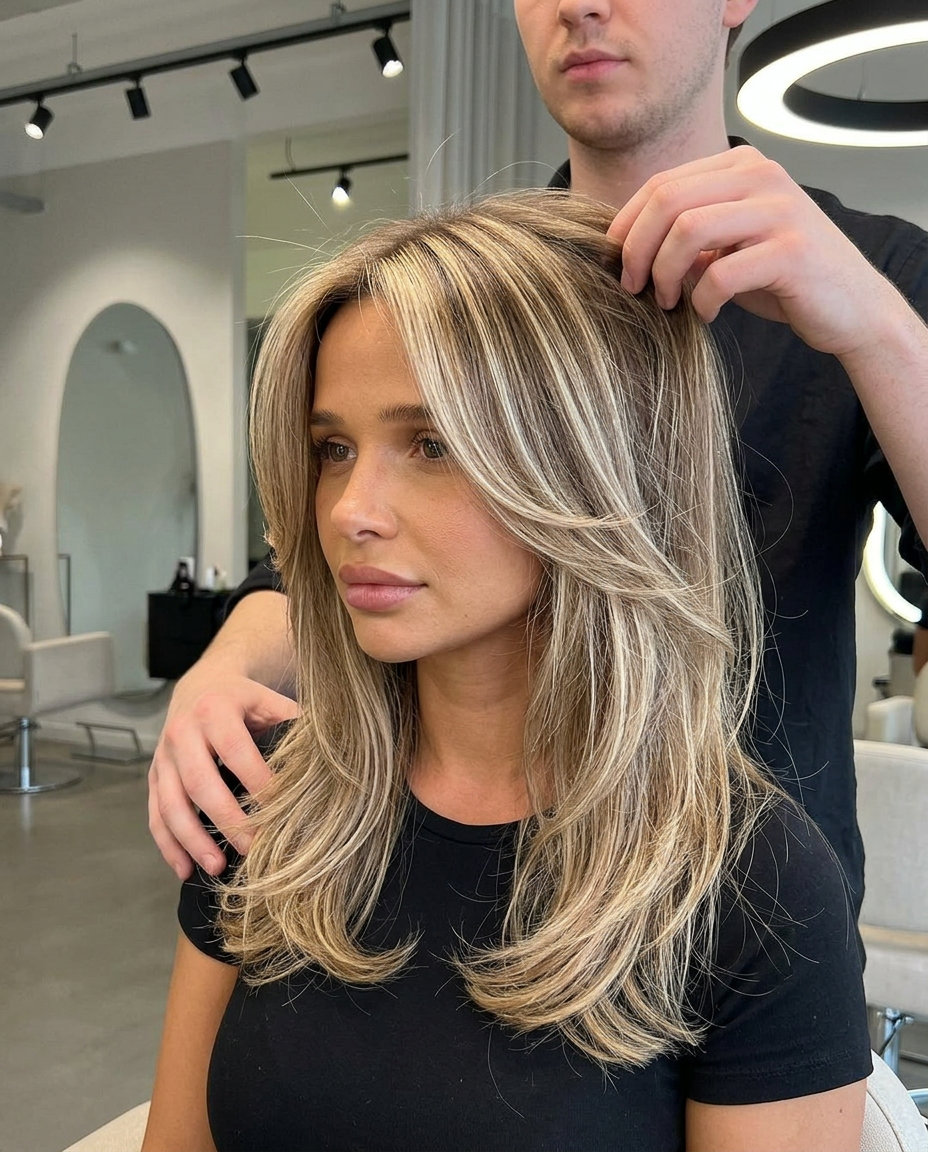
Vanilla babylights are the soft answer to aggressive highlighting. Micro-fine babylights mimic natural sun-kissed hair, creating a soft blend and minimal demarcation line. The technique involves sectioning hair into incredibly fine pieces—we’re talking strands so thin you’d miss them if you weren’t looking—then hand-painting a pale, warm blonde through mid-lengths and ends. Micro-fine babylights grew out gracefully for 10 weeks before needing a salon visit, which is the real test of whether a technique actually works long-term.
The appeal is obvious: you get dimension without the “obviously highlighted” look. There’s no stripe, no root demarcation line that screams “touch-up needed.” It works on most hair textures and skin tones, though the vanilla tone skews warmest on fair and medium skin. Avoid if you want high contrast highlights though—these are subtle. But if you want blonde that feels like a natural progression, not a drastic change? This is the move, probably worth the consultation at least. Blonde, but better.
Linen Blonde
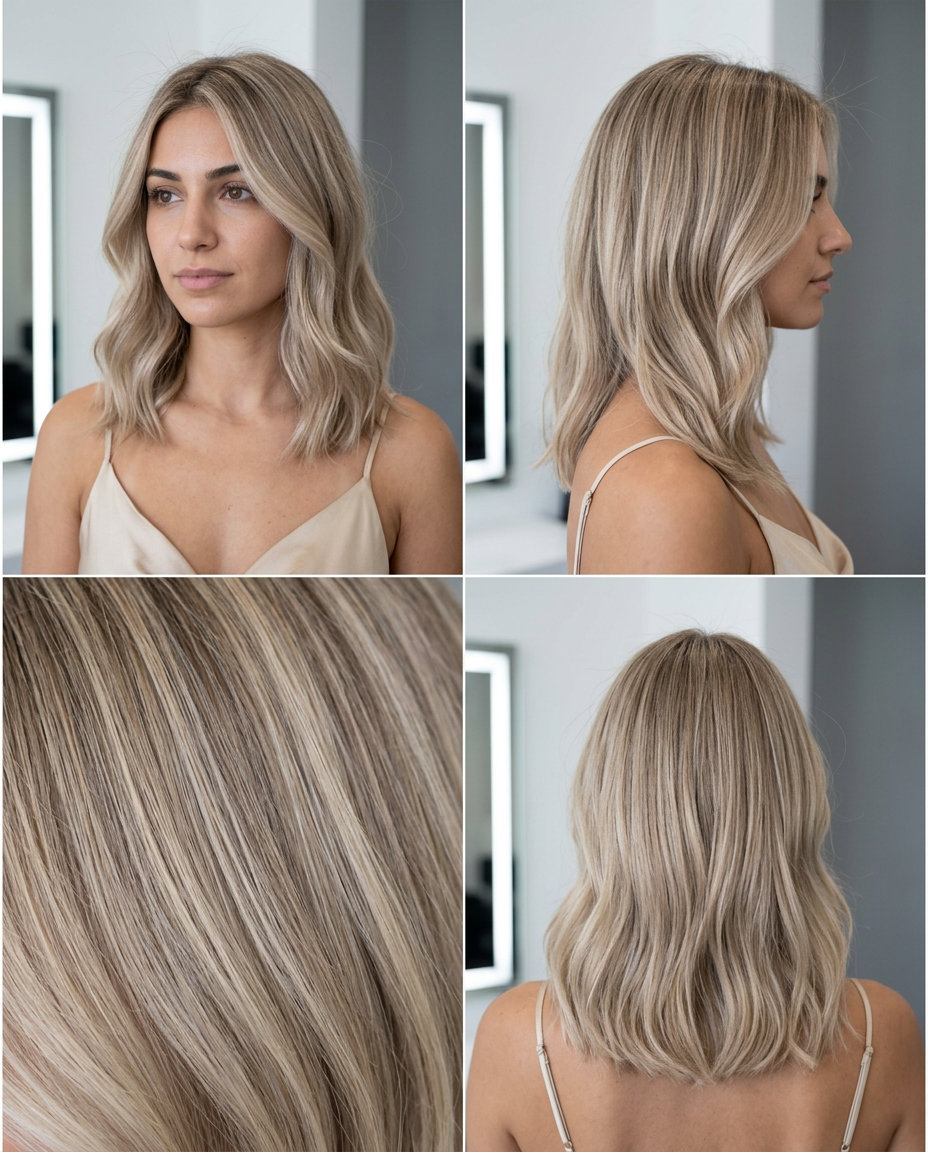
This is the blonde that looks expensive because it actually is. A true linen blonde hair color sits at that perfect neutral zone—not too warm, not too cool—where it catches light like fabric under a studio lamp. You’re aiming for level 9 with a beige-violet gloss overlay, the kind of tone that whispers instead of shouts. The science behind it: lifting to level 9 and toning with beige and violet gloss neutralizes yellow, creating a clean, balanced flaxen blonde that doesn’t fight your skin.
Here’s what actually happens in the chair. Your colorist will take you through two sessions minimum—sometimes three if your hair’s been through it. First session lifts you to pale yellow. Second session deposits the toner. (The best $30 I’ve spent on hair is a sulfate-free shampoo that keeps this exact tone locked in.) A toned neutral blonde maintained its beige hue for six weeks without brassiness using sulfate-free shampoo, which tells you the maintenance window is real but doable. The honest part: achieving this clean blonde requires $200+ monthly maintenance—budget accordingly. Root touch-ups every 4-6 weeks are non-negotiable, and you’ll need a gloss refresh around week 5 to keep that flaxen clarity. This blonde is expensive.
Strawberry Blonde Money Pieces
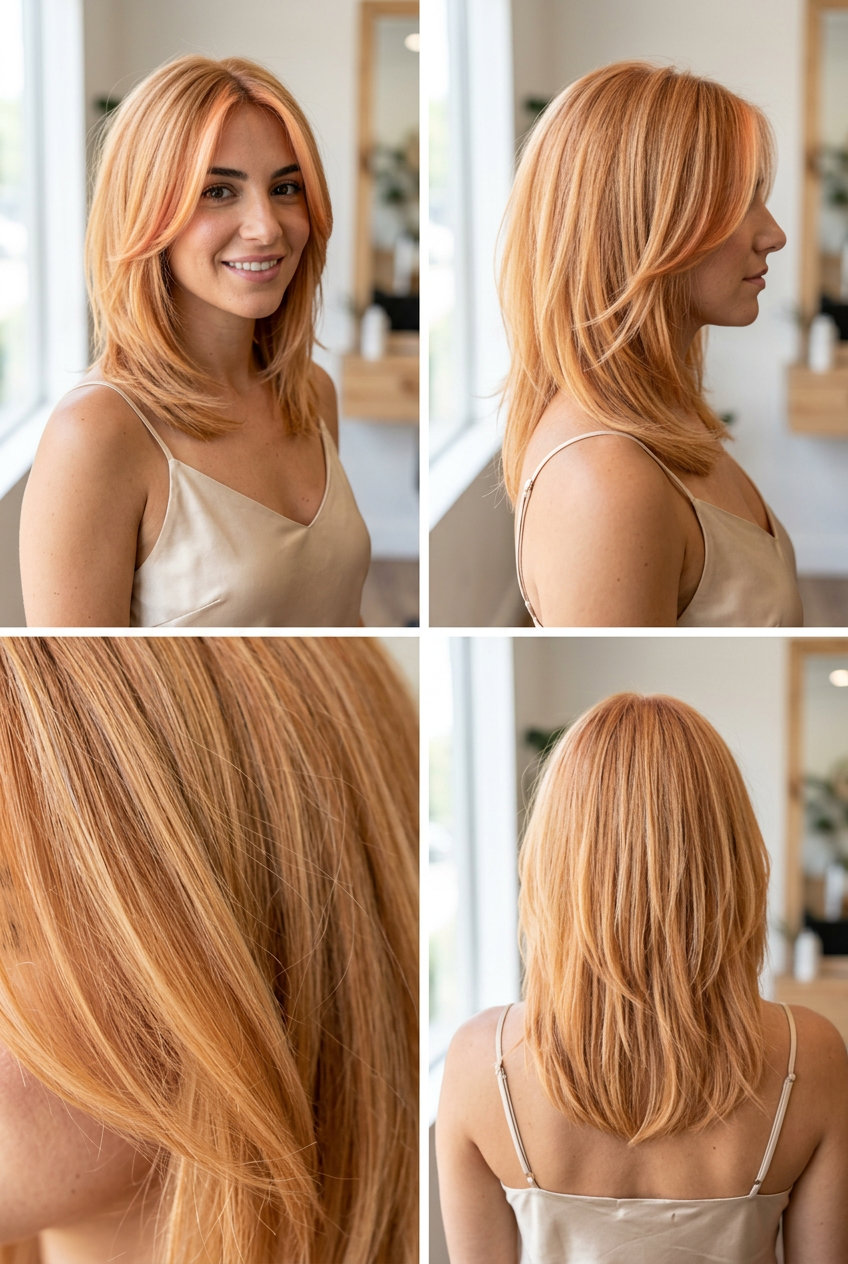
Warmth lives here. Strawberry blonde money piece highlights are the move if your complexion needs brightening and your schedule doesn’t allow for full-head commitment. You’re concentrating warm highlights—think apricot and rose-gold—around the face frame, letting them catch light right where it matters. This technique creates a sun-kissed glow without full head commitment, which is why it’s having a moment. The face-framing placement does actual work: it reflects light back toward your features, making your skin appear brighter and more alive.
The maintenance is forgiving compared to all-over color. Face-framing strawberry highlights brightened complexion for four weeks before needing a gloss refresh, which means you’re looking at a refresh every 4-5 weeks instead of every 3. Your colorist will paint these pieces freehand, starting at the roots and feathering outward—(or maybe balayage, honestly, depending on the texture they’re working with)—so the blend feels intentional but natural. The shadow at the roots keeps everything looking lived-in. Not for very straight hair though—subtle waves best catch the light. Without movement, these highlights can read flat instead of luminous. Instant face brightener.
Beige Blonde Babylights
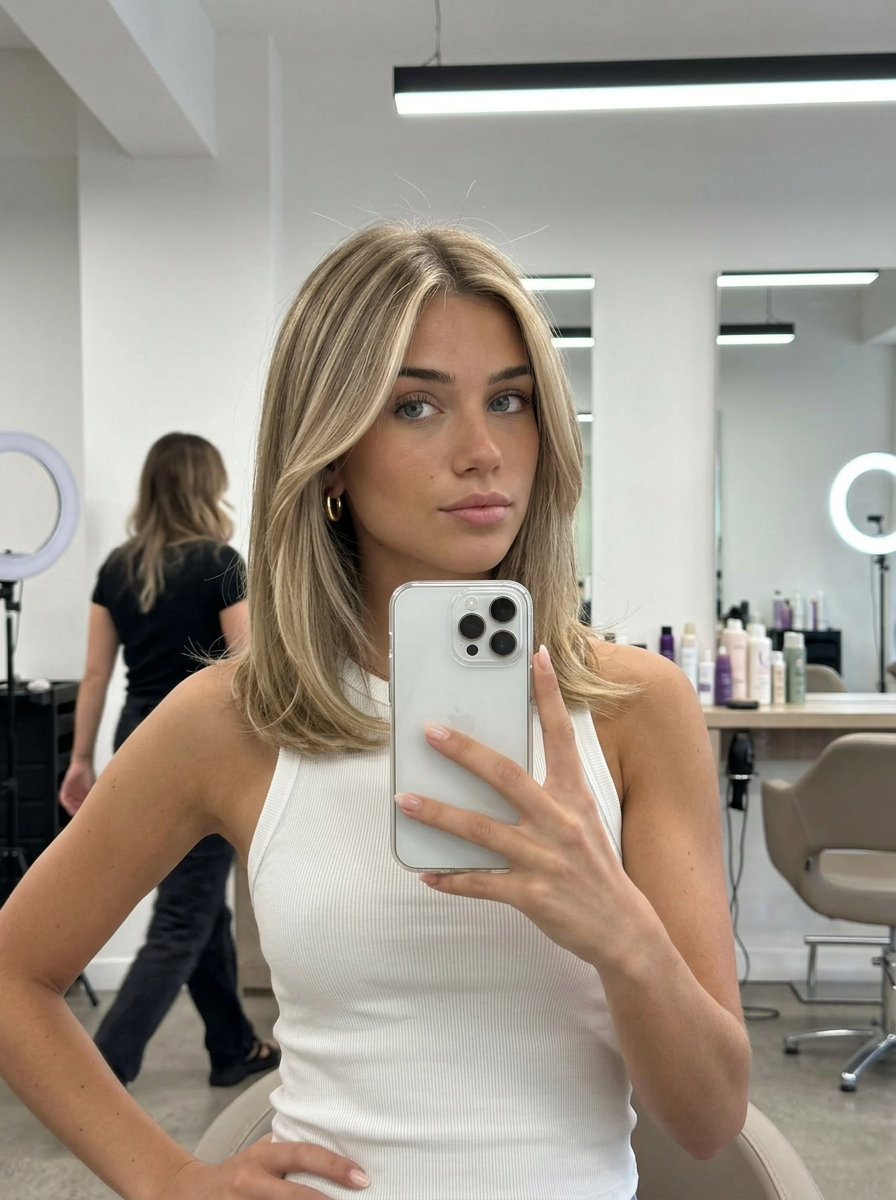
Babylights are the long game. Hundreds of fine, thin highlights placed throughout—specifically at the hairline and around the face—to mimic the way childhood hair naturally lightened in the sun. The precision here is what costs time and therefore money. Fine babylights at the hairline create a soft, natural transition, mimicking childhood highlights for minimal upkeep, which is the entire point of this technique. Babylights grew out seamlessly for ten weeks, avoiding harsh root lines and maintaining natural blend, because there’s no single line of demarcation between your natural color and the lightened pieces.
The trade-off is the salon chair. Babylights are extremely time-consuming, requiring 4+ hours in the salon, which is all my fine hair can handle in one session without turning to straw. But here’s why stylists love recommending this for finer hair textures: the technique doesn’t stack pigment in one area, so you avoid that flat, striped look that can happen with traditional highlights. You’re distributing the lightness across the entire head in thin veils. Beige blonde highlights in this format sit at a level 8-9 with a cool tone, so they read expensive without looking fried. Ask your stylist specifically for babylights with beige toning—not platinum, not golden—to get that costly-looking finish. The grow-out plan sold me.
Smoked Pearl Blonde Ombré
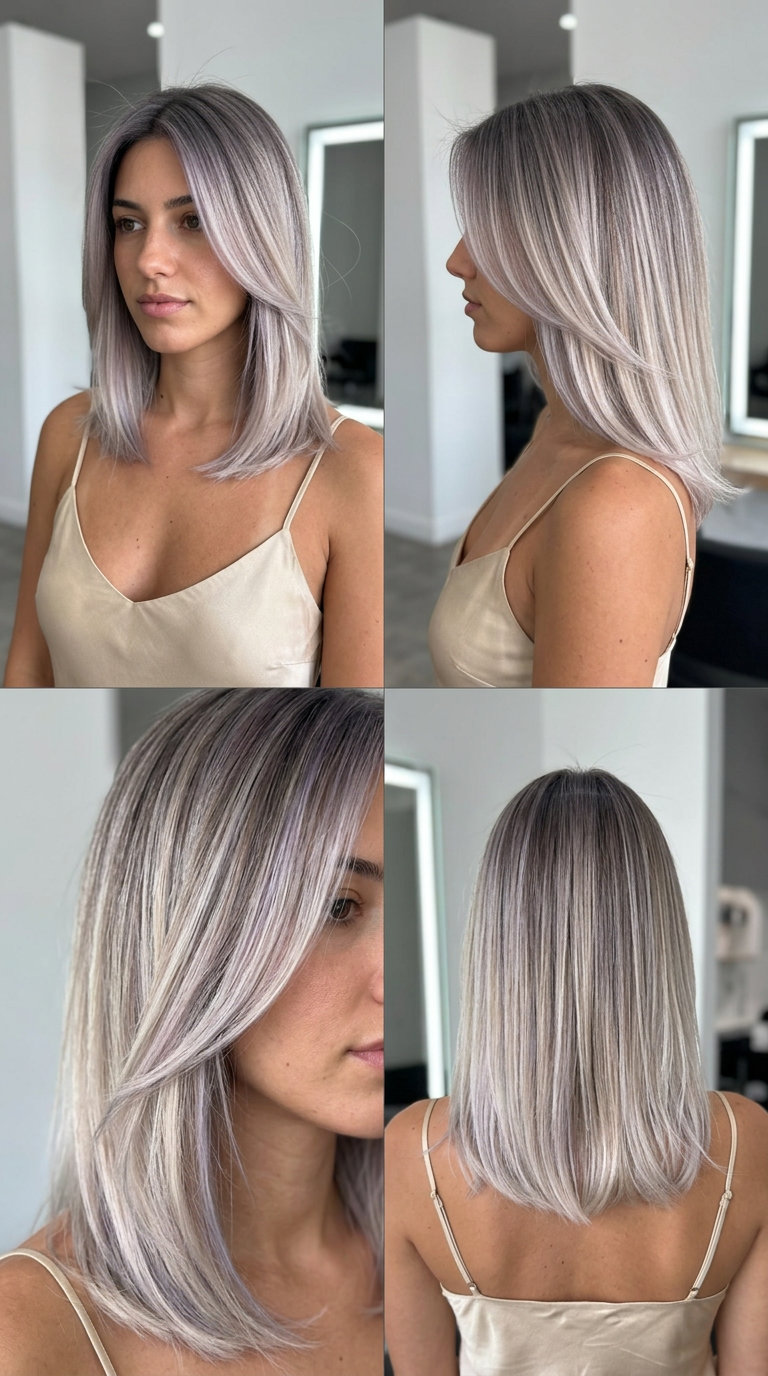
This is the blonde that stops conversations. Smoked pearl blonde ombré layers a dark, smoky root into a pale silver-violet blonde at the ends—it’s not subtle, and it’s not supposed to be. The drama comes from the contrast: your natural deep brown or black root melts into pearl blonde that has an almost iridescent quality under certain light. Pearl blonde maintained its iridescent silver-violet tone for three weeks with purple shampoo before fading, which means you’re working with a color that’s intentionally temporary and moody. This high-fashion color requires significant lifting, potentially damaging fragile hair, so this isn’t a choice for hair that’s already compromised.
The root melt strategy extends the wear time because you’re not chasing a perfect root line every three weeks—the dark root is the point. A dark root melt provides depth and extends wear, allowing the dramatic pearl blonde to pop without frequent root touch-ups. You’ll still need weekly toning with a purple shampoo and professional products that actually work on this level of lightness. Avoid if you can’t commit to weekly toning and professional products, because pearl blonde fades quickly into brassy yellow without maintenance. The salon cost for this sits at $300-400+ depending on your starting point and how much lifting is involved. (Probably worth the consultation at least to ask if your hair can take it.) Salon-only. Accept it.
Chai Latte Blonde
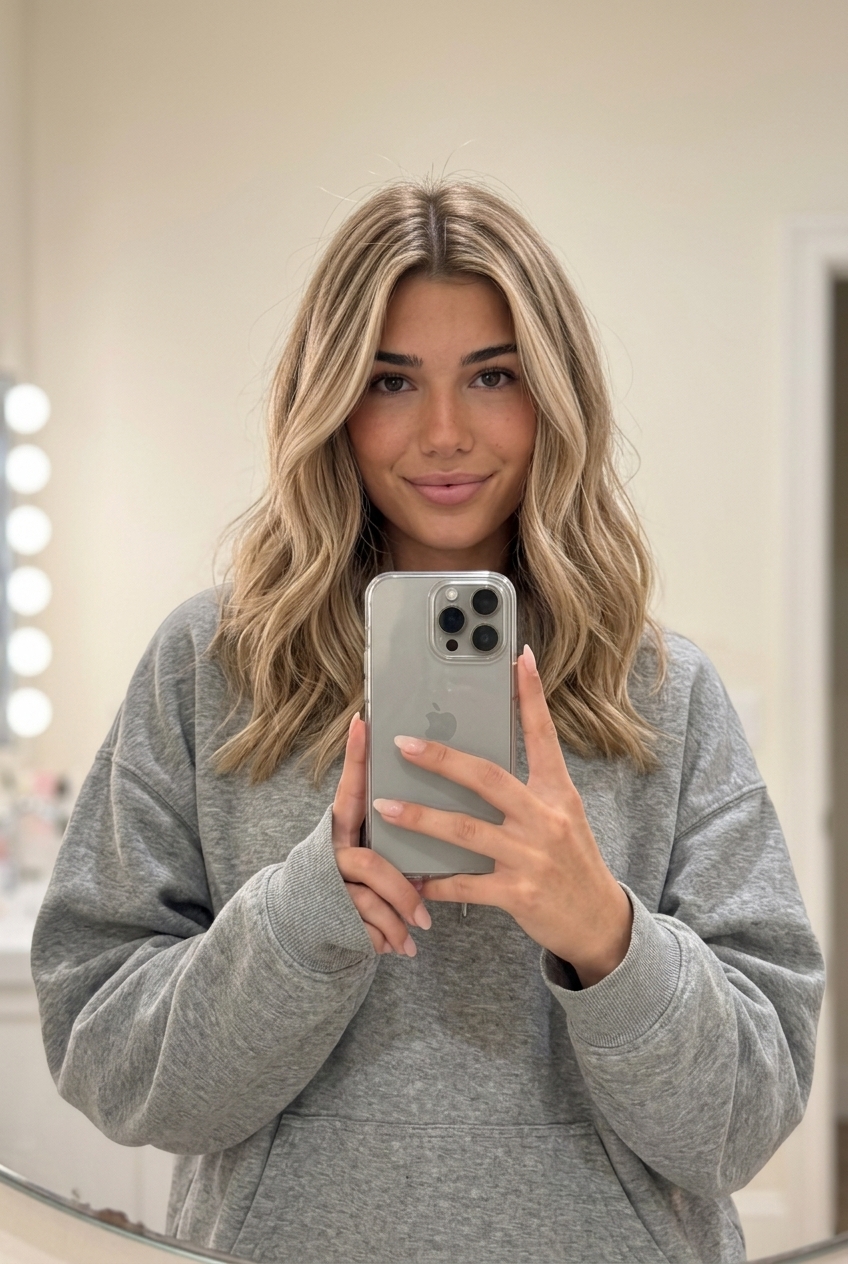
Blonde with backbone. Chai latte blonde hair layers warm, medium-toned blonde at the surface with cool-toned tan lowlights running underneath—it’s dimensional without looking striped. The base sits around level 8, warm but not golden, while the lowlights drop to level 6-7 in a cool, muted tan that reads almost ashy-brown. Strategically placed cool-toned tan lowlights create contrast and dimension, making the blonde appear richer and more expensive, which is the entire aesthetic of this color family. Dimensional lowlights added visible depth for eight weeks, preventing the blonde from looking flat, so you’re getting longevity alongside complexity.
This works best on medium skin tones and especially flatters tan and olive complexions—the lowlights echo your undertones instead of fighting them. It enhances brown, hazel, and deep blue eyes by creating a color story instead of a single note. The maintenance is actually reasonable: you can stretch your root appointment to 5-6 weeks because the lowlights create visual interest that masks regrowth. (Yes, the short one at the nape matters too.) One gloss session around week 6 keeps everything cohesive, but you’re not locked into the monthly grind that lighter blondes demand. Pass if you prefer a solid, uniform blonde—this is all about contrast. Worth every penny.
Butter Blonde
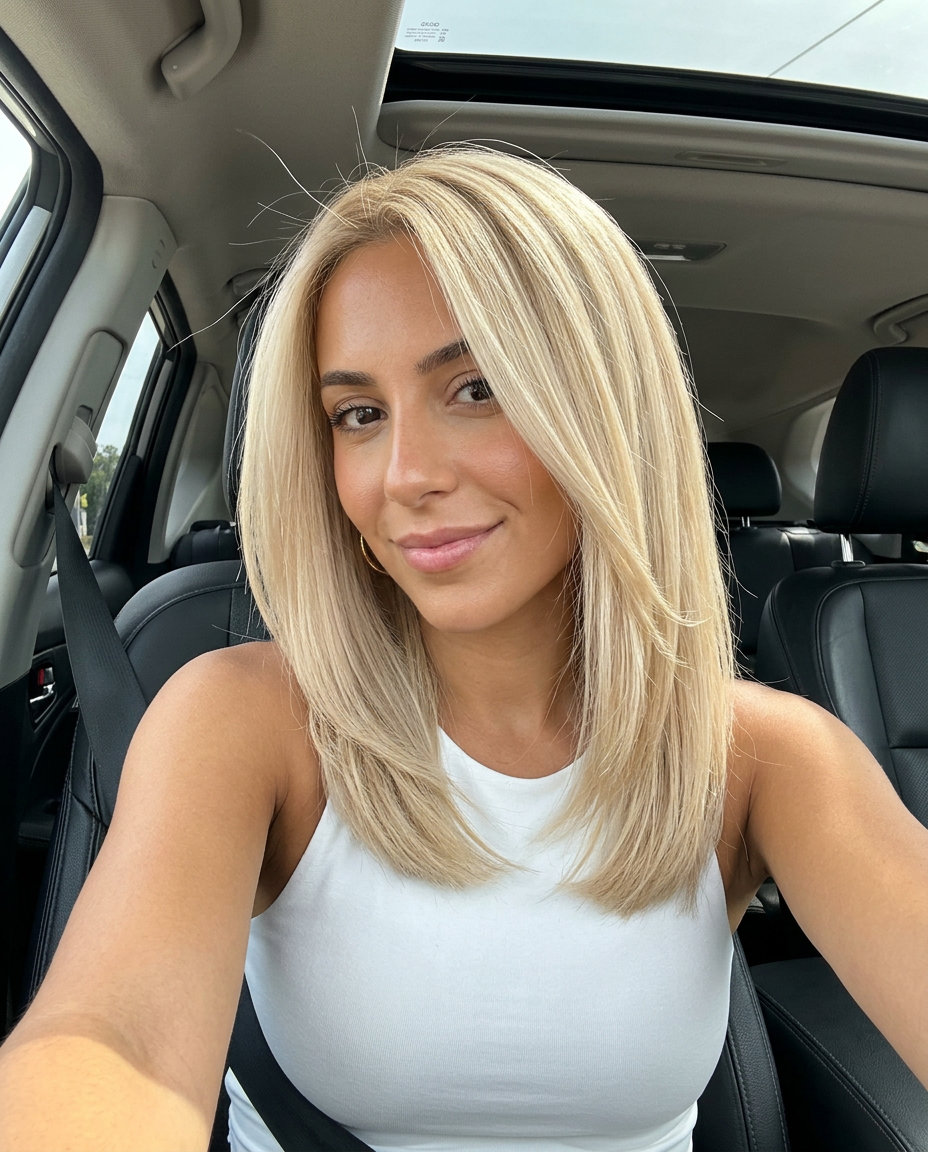
This is the blonde that makes you look like you’ve been living somewhere golden for the past six months. No dimension, no shadow root, no strategically placed lighter pieces—just a saturated, creamy all-over blonde that catches light the way melted butter does in an afternoon kitchen. Full-saturation blonde without dimension creates an opulent, seamless finish by maximizing light reflection across every strand. The commitment is real (yes, it’s worth it), but so is the payoff: a blonde that reads as expensive the moment you walk into a room.
Achieving Level 9-10 requires significant salon time and a high cost commitment, so clear your afternoon and your bank account before booking. This all-over blonde maintained its creamy tone for 5 weeks with weekly purple shampoo, which is the actual maintenance rhythm—not the “once a month” fantasy some stylists sell. You’ll need to invest in a color-safe shampoo, a purple-depositing formula, and probably a conditioning mask because the lightening process isn’t gentle. The goal is to keep that warm, opaque tone from shifting into brassy or ashy territory. Use a deep conditioning treatment weekly, and consider a glossing appointment at the six-week mark if your tone starts drifting. Melted butter perfection.
Balayage with Shadow Root
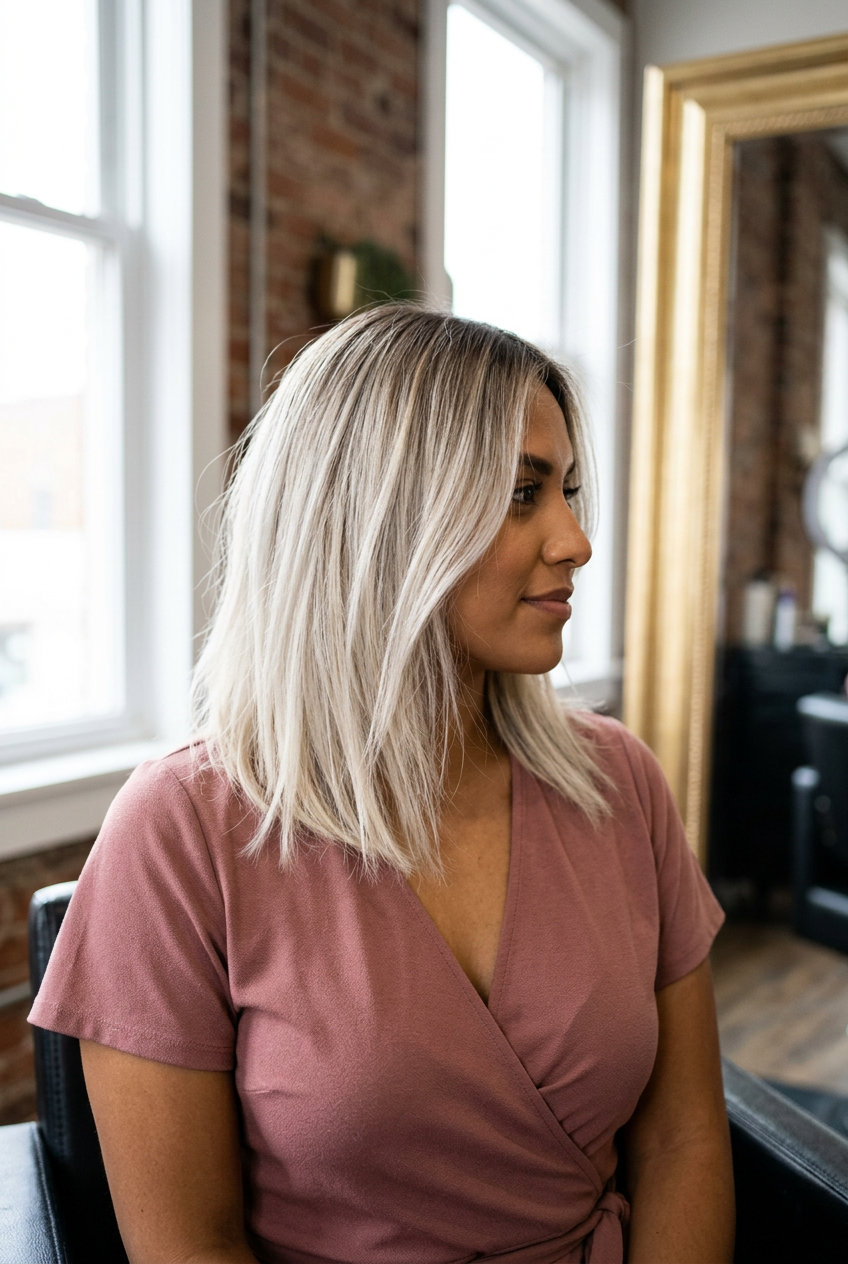
Here’s the math: blonde maintenance becomes a lifestyle at around week four, unless you introduce a lived in blonde balayage with dark roots strategy that makes the grow-out part of the design. A diffused shadow root creates a soft transition, extending salon visits and providing a relaxed grow-out that doesn’t read as neglected—it reads as intentional. Your stylist will paint the blonde exclusively through the mid-lengths and ends, leaving the root area darker and allowing your natural regrowth to blend seamlessly into the plan. This is not a mistake. This is strategy.
The shadow root allowed for 10 weeks between salon visits before needing a refresh, which is roughly double what a full-head blonde demands. Platinum ends require diligent at-home care to prevent breakage and maintain tone, so purple shampoo remains non-negotiable. The dimensional contrast between dark root and luminous blonde creates visual softness that actually flatters more face shapes than flat, all-over color. You’re also protecting your ends from the cumulative damage of monthly bleaching. Probably worth the consultation at least, because your stylist will assess whether your hair can handle the lightening process on mid-lengths without translating it as damage later. Effortless cool girl vibes.
Reverse Balayage Blonde
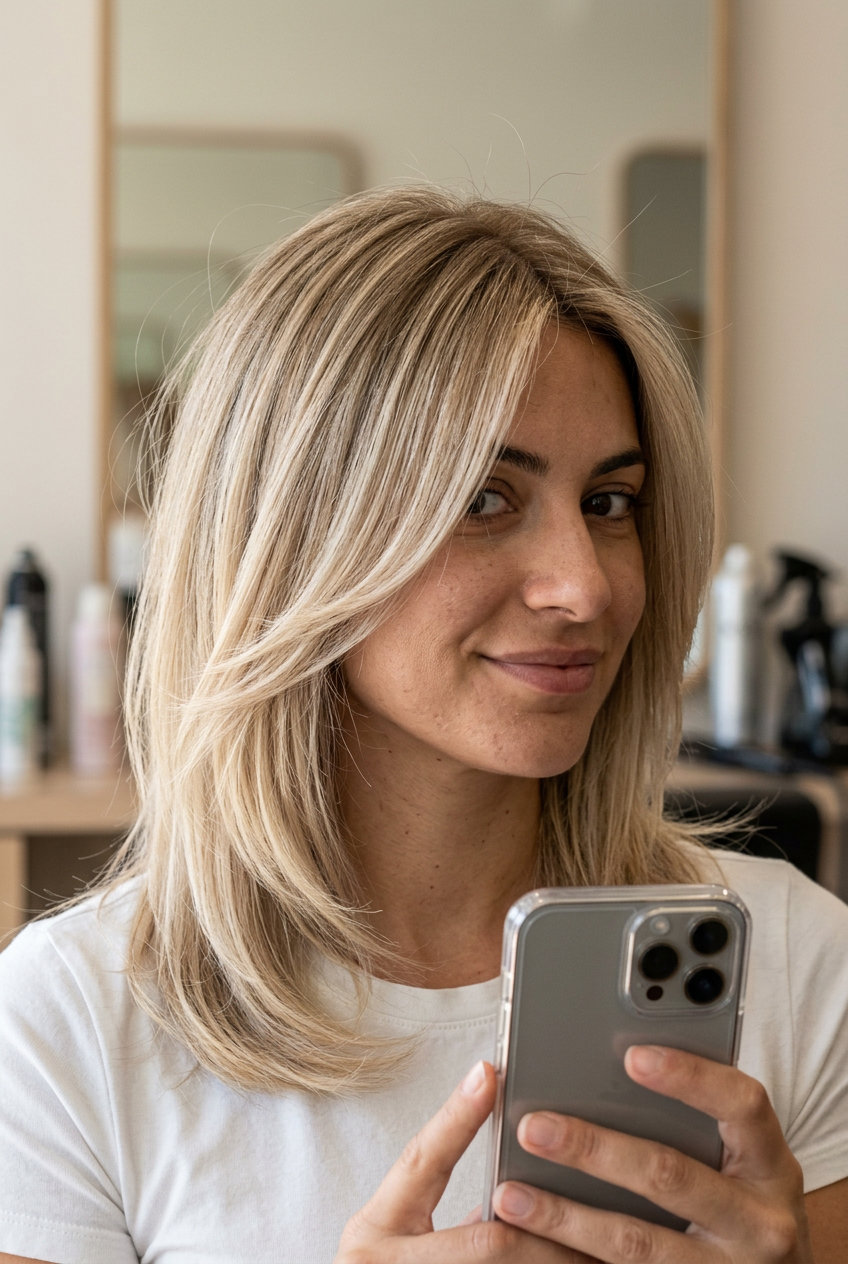
Reverse balayage flips the script entirely: instead of painting lightness over shadow, you’re painting dimension onto a lighter base, creating a reverse balayage blonde that feels almost dimensional without the commitment of traditional balayage. Darker pieces are hand-painted strategically around the face and through the crown, designed to create depth while keeping the overall tone light and luminous. A balanced undertone in champagne blonde ensures versatility, flattering a wider range of skin tones by existing somewhere between warm and cool rather than committing to either extreme. This is the approach for someone who wants visible dimension but not the full hand-painted maintenance conversation.
The luminous quality of the champagne blonde remained vibrant for 7 weeks with minimal toning, and that’s using a regular sulfate-free shampoo—not even introducing purple shampoo into the rotation. The darker painted pieces age gracefully, actually deepening slightly as they grow out, which extends the visual timeline before you need a refresh. Avoid if you prefer strong cool or warm tones—this is balanced, which means neither extreme fully claims it. Or maybe just a good toner, because a gloss every six weeks keeps the whole piece cohesive. The maintenance is genuinely lighter than traditional balayage, and the visual payoff remains just as dimensional. Pop the bubbly.
Golden Blonde
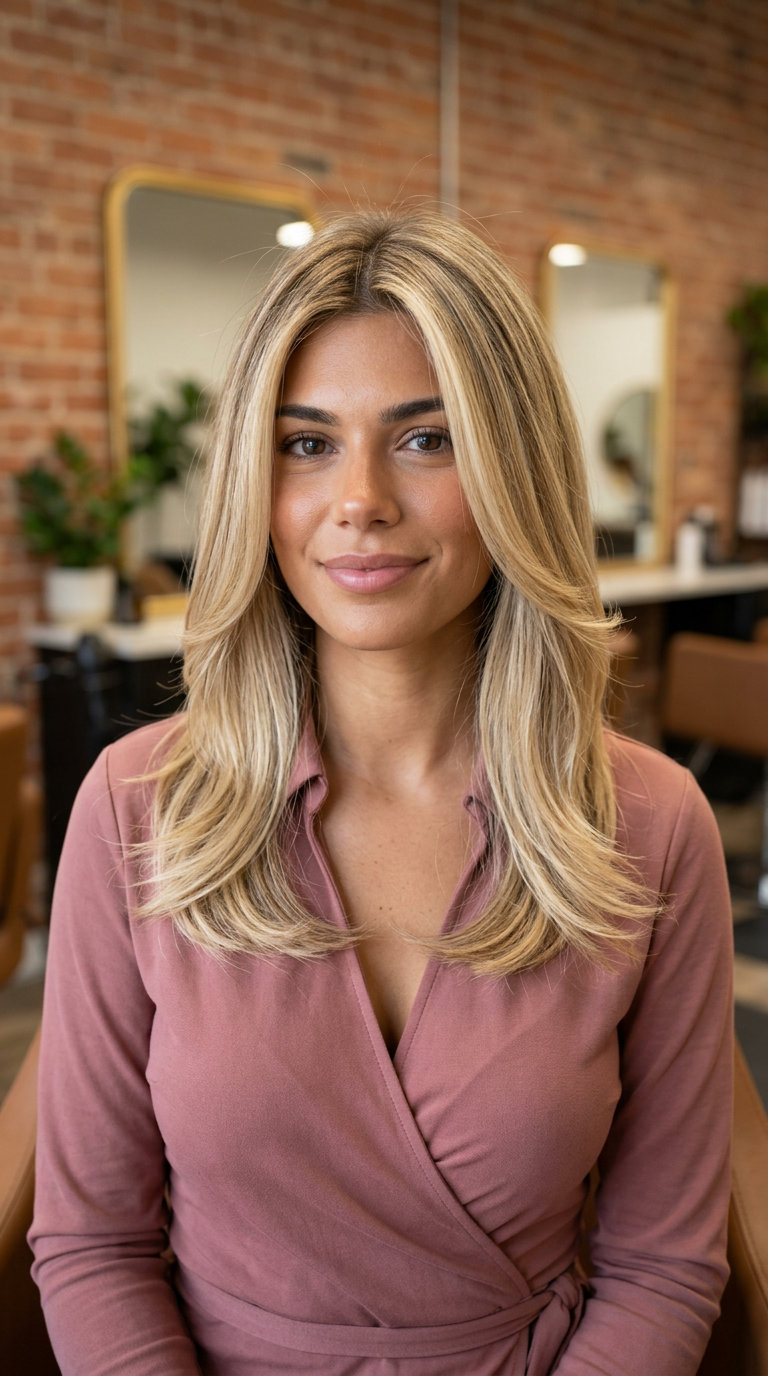
This is the blonde your grandmother looked at and called “too yellow,” and she was probably wrong. Golden blonde exists in that rich, warm register where honey lives—deeper than champagne, warmer than butter, but still distinctly blonde rather than brassy or orange. The warm, creamy tone stayed ash-free for 6 weeks thanks to the acidic gloss finish, which is why the gloss actually matters beyond marketing. A clear acidic gloss seals the cuticle, enhancing luminosity and prolonging the warm, creamy tone by closing the hair shaft and preventing moisture escape that can shift undertones. This is the blonde for anyone whose natural hair lifts to golden tones easily, or whose skin tone reads warmer and needs a blonde that complements rather than fights that warmth.
Best on fine to medium hair with natural warmth, or hair that lifts easily to golden tones without requiring multiple sessions to reach workable blonde. Maintaining this specific warmth requires regular glossing to prevent brassiness, but that gloss is far less intensive than a full color application—think 45 minutes instead of three hours. Your stylist will likely recommend a gloss every four to five weeks, which is cheaper than a full retouch and infinitely less damaging. You’re essentially maintaining rather than rebuilding with each appointment. The depth keeps it looking intentional rather than sun-faded, and the warmth photographs like actual gold (my personal favorite). Pure sunshine, bottled.
Ash Blonde Toner
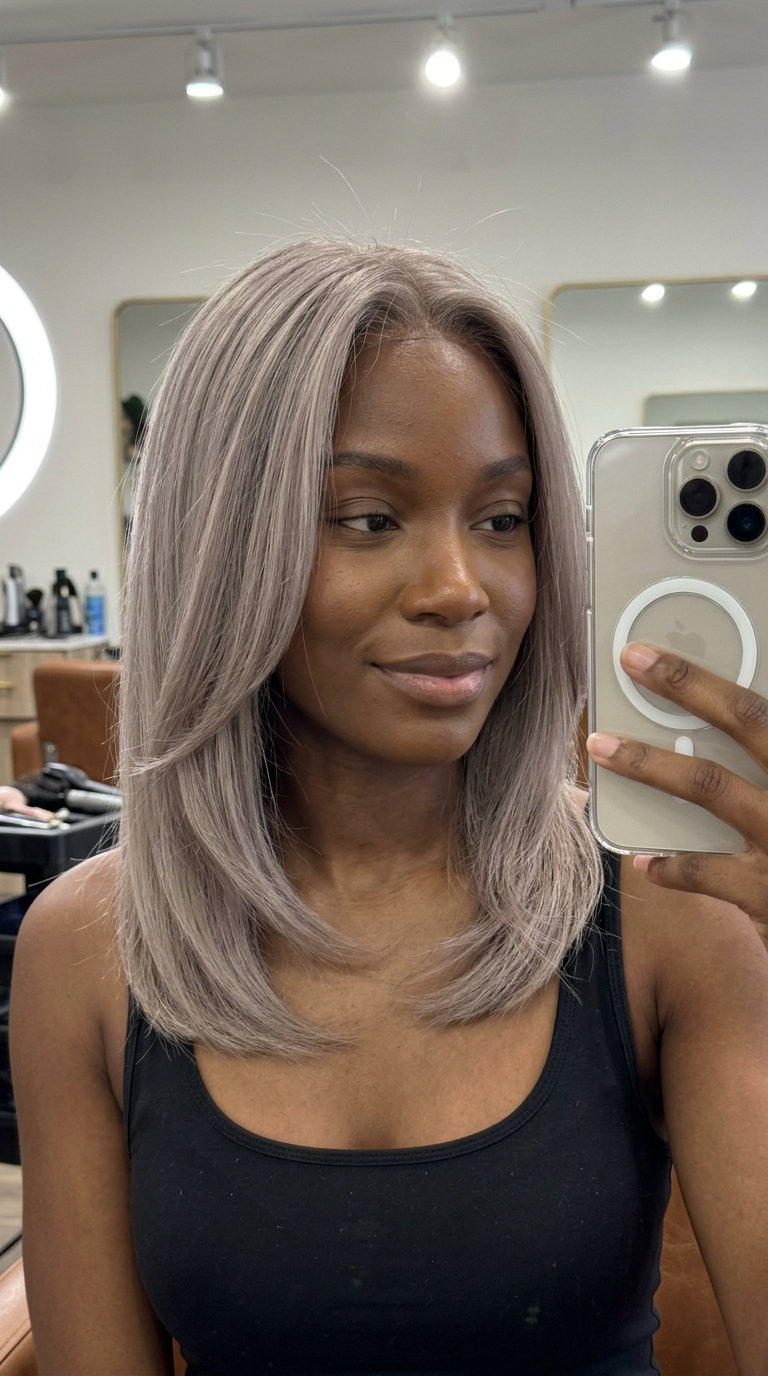
Ash blonde is the anti-brass move—cool, muted, and honestly harder to pull off than people think. The entire appeal hinges on neutralizing those yellow undertones that naturally occur when lightening hair, which is harder than it sounds. If your base is already light enough, a quality ash blonde toner does the work: grey and violet reflects neutralize yellow tones, ensuring the ash blonde stays cool and muted, not brassy. This is where the technique matters.
Maintenance is the real story. Ash blonde maintained coolness for 5 weeks with weekly purple shampoo use—that’s the actual timeline, not the salon’s optimistic version. After that window, the ash starts shifting warmer, and you’re back at the appointment book. Week three or four, you’ll notice the first hint of warmth creeping in at the mid-lengths. Skip if you have warm undertones—this shade will wash you out, turning your skin sallow and your whole face tired. The payoff, though: when it lands right, it’s that rare cool-girl neutrality that photographs like ice. So chic, so cool.
All Over Golden Blonde Hair
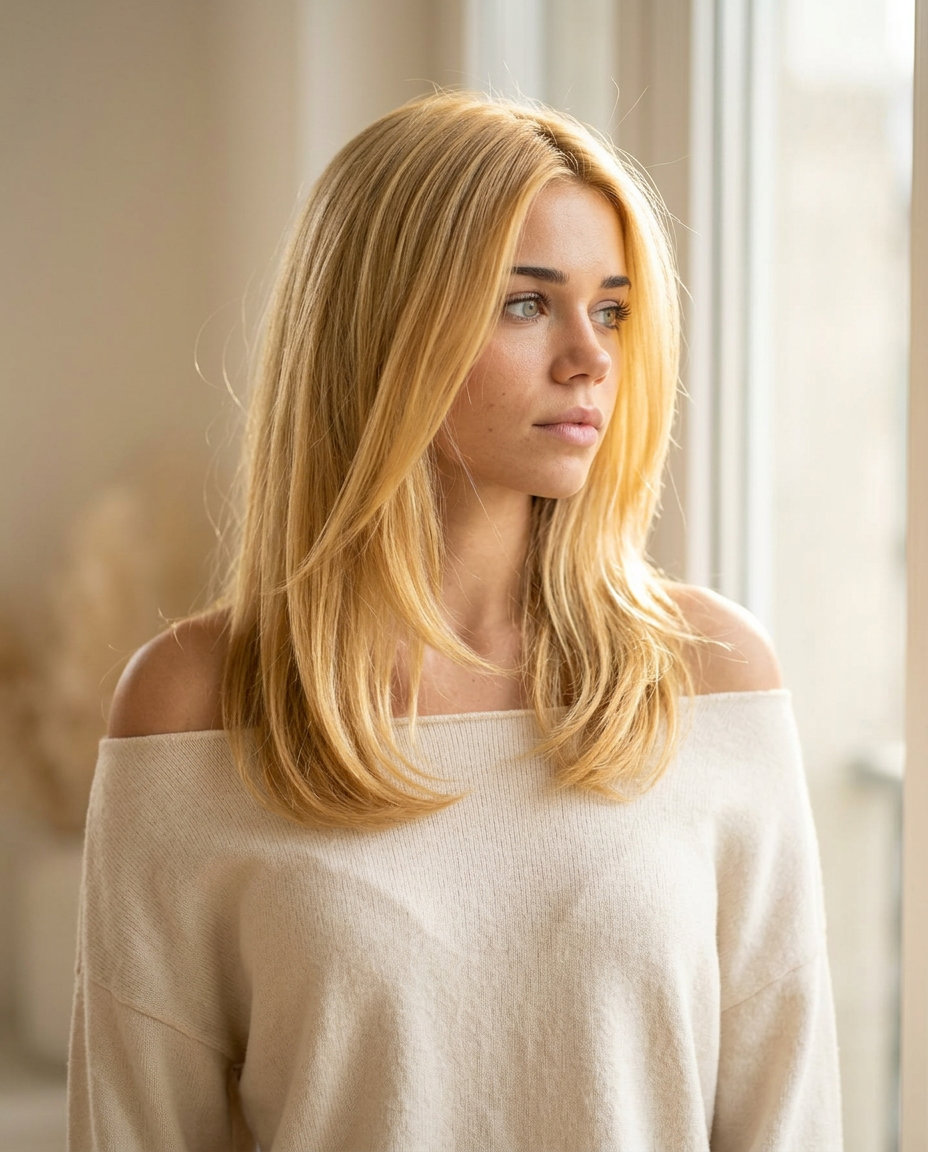
All over golden blonde hair is the monochromatic blonde—no dimension, no shadows, just one consistent level of warm saturation. It’s the opposite of the subtle, my favorite summer vibe. Strong yellow-gold undertones are enhanced, not neutralized, creating a rich, saturated sun-lightened effect that reads expensive on cooler skin tones and absolutely glowing on warmer ones. Every inch of your hair is the same shade, which means regrowth is merciless.
Golden blonde remained vibrant for 4 weeks without any brassiness using color-safe shampoo—and then reality sets in. Uniform golden blonde shows root regrowth within 3 weeks, requiring frequent touch-ups. Your dark roots will contrast sharply against the gold, so you’re either committing to the maintenance cycle or embracing a grown-out aesthetic (which, to be fair, is very 2025). The upside: this blonde is sun-protective, meaning if you’re spending summer outdoors, UV exposure actually deepens the color instead of frying it to straw. Pure sunshine in hair.
Platinum Blonde Color Melt
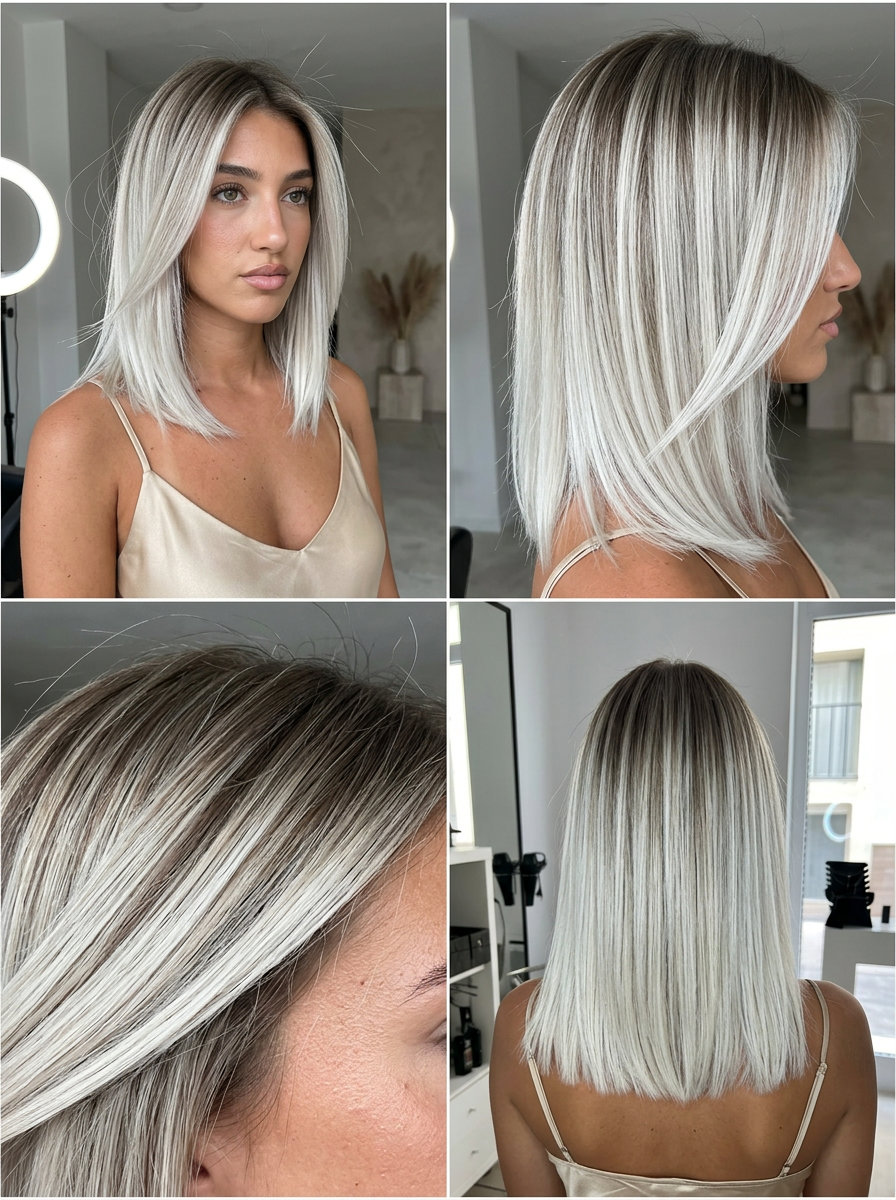
A color melt softens the line between your roots and blonde by blending darker tones at the base into progressively lighter blonde toward the ends. The technique prevents harsh demarcation, or maybe even three distinct zones, honestly. Platinum blonde color melt specifically takes roots (often left darker, staying closer to your natural level) and melts them into icy platinum by mid-length and ends. Root melt technique prevents harsh lines, extending time between salon visits for high-contrast platinum. This is strategy, not accident.
Root melt grew out seamlessly for 8 weeks before needing a toner refresh—that’s the real win here. Extreme platinum requires significant salon cost and monthly toning to maintain icy neutrality, but a melt buys you time. The first four weeks look intentional. Weeks five through eight, the melt still reads as a choice rather than neglect. Weeks nine and beyond, you’re in regrowth territory. The technique also protects darker roots from the constant toning that platinum-only hair demands, reducing breakage across the whole head. The melt is everything.
Arctic Gold Hair Color
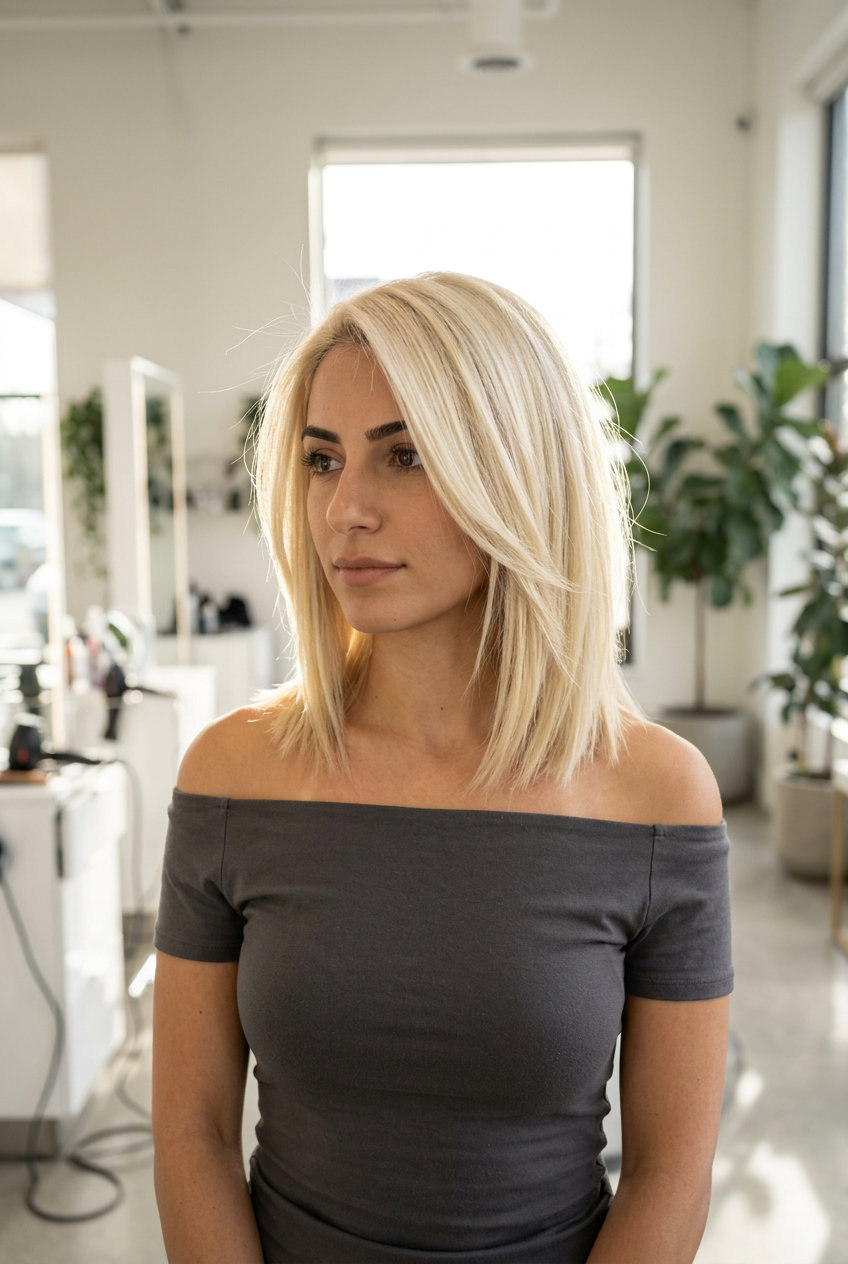
Arctic gold hair color is warm platinum—a hybrid that gives you the cool blonde category status without the silver-ice aesthetic. Custom toner with gold and violet creates a warm platinum, enhancing glow on deep skin tones without brassiness. It’s a specific technical mix, not just “add warmth to platinum.” Most colorists will use a level 9 or 10 base and layer a custom toner that includes gold, a touch of red, and violet. Arctic Gold hue held its buttery glow for 6 weeks without any silver or yellow tones—that consistency is the appeal, probably worth the consultation at least. This is the platinum for people whose skin looks washed out under ice-blonde light.
The constraint: you need a light enough base. Not for damaged or overly processed hair—double-process lift will cause breakage. If your hair is already compromised, stop. A strand test is non-negotiable here. The payoff is real: Arctic Gold photographs warmer and more alive than pure platinum, sits beautifully on deeper skin, and feels less severe. It’s still a high-maintenance color (toning every 4-5 weeks, purple shampoo twice weekly), but it’s worth the routine if you’re in the warm-undertone camp. Warm platinum is a vibe.
Platinum Root Stretch
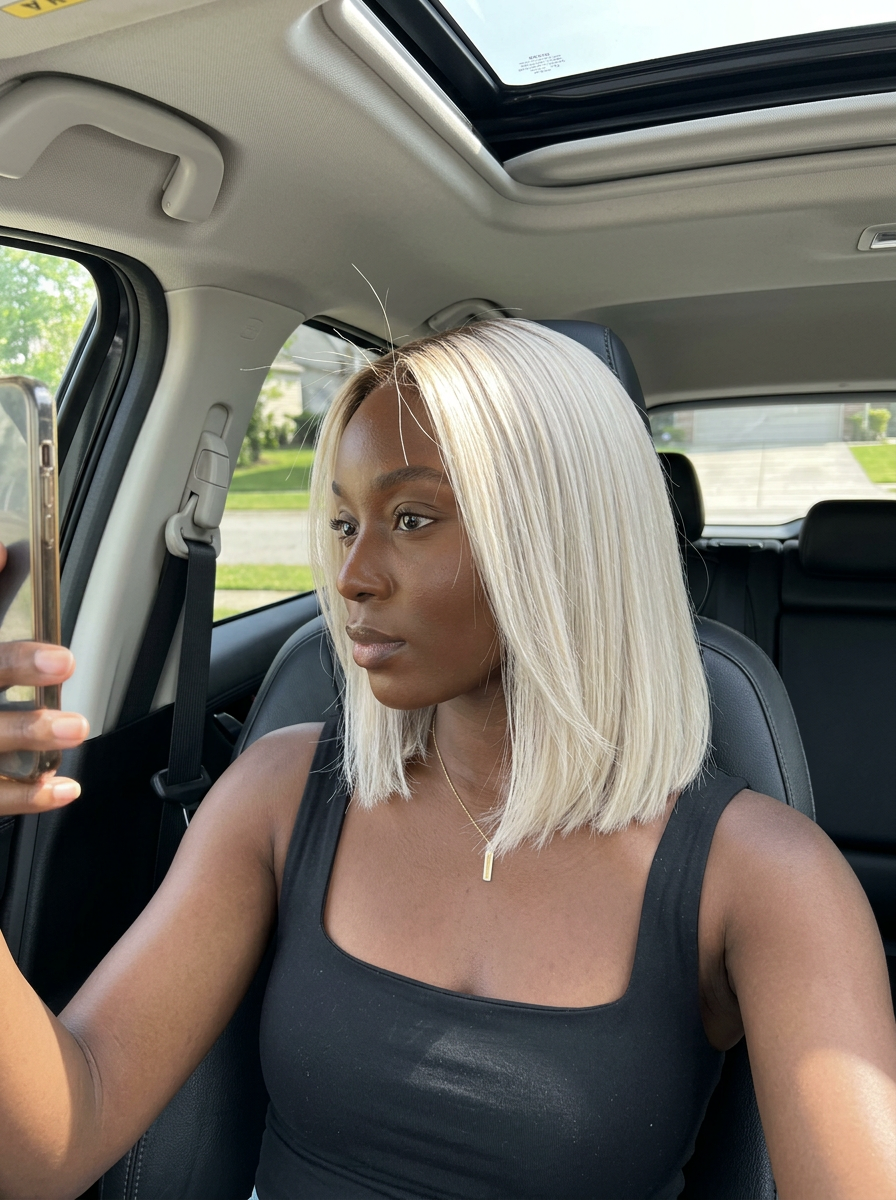
Platinum root stretch is the appointment extender: you let your roots grow out 2-3 inches (sometimes more), and the colorist applies toner only to the already-light mid-lengths and ends, leaving roots darker for a softer transition. Root stretching technique creates a softer, longer-lasting transition, reducing frequency of salon visits for platinum. It’s a practical workaround that also happens to look intentional—the blurred line between root and blonde reads as a choice, yes, the dramatic one. The whole strategy is built on reducing appointments from monthly to every 8-10 weeks.
Root stretch provided 10 weeks of wear before needing a full platinum refresh—that’s the real math. You’ll get 2-3 weeks of “this is clearly intentional,” then 4-5 weeks of “still looks like a choice,” then 2-3 weeks of “I’m stretched.” After that, you’re genuinely ready for a full refresh. The technique also saves money (you’re toning less hair, not lifting from darker roots every time) and reduces cumulative damage. Fine, thin, or previously colored hair especially benefits because you’re not re-processing the same hair constantly. Root touch-ups can happen when the regrowth reaches your desired width, but full toning skips months. The ultimate root stretch.
Reverse Balayage Blonde
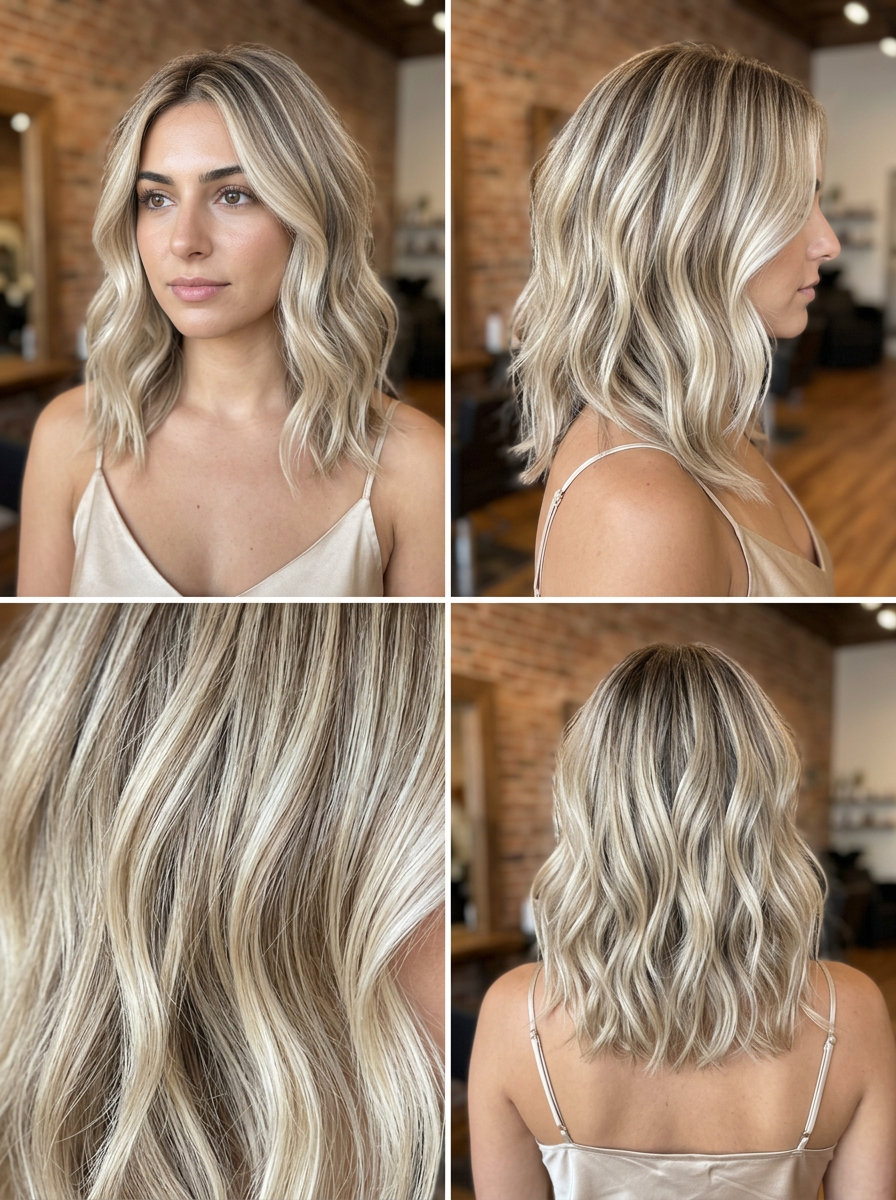
Reverse balayage flips the script on traditional highlights—instead of light pieces on dark, you’re painting darker tones onto blonde. It sounds counterintuitive, but the technique creates something that actually photographs better and lasts longer. The darker lowlights prevent that washed-out, one-dimensional blonde that happens around week four. You’re building depth instead of just adding brightness.
Here’s what makes this work: reverse balayage with lowlights creates visible dimension on blonde hair, preventing it from looking flat. The root smudge allowed eight weeks between salon visits before needing a refresh, which is the kind of longevity that justifies the upfront cost. Reverse balayage adds salon time, increasing overall cost significantly—expect to pay $250–$350 for the initial application, depending on hair length. But you’re paying for something that actually holds. The technique blends darker sections through mid-lengths and ends, so when regrowth happens, it reads as intentional rather than neglected. You’re not chasing blonde every three weeks; you’re living with a color that matures gracefully. Chai latte hair color trends work the same way—warm undertones plus strategic depth equal something that feels expensive and considered. Dimension done right.
Platinum Blonde Color Melt
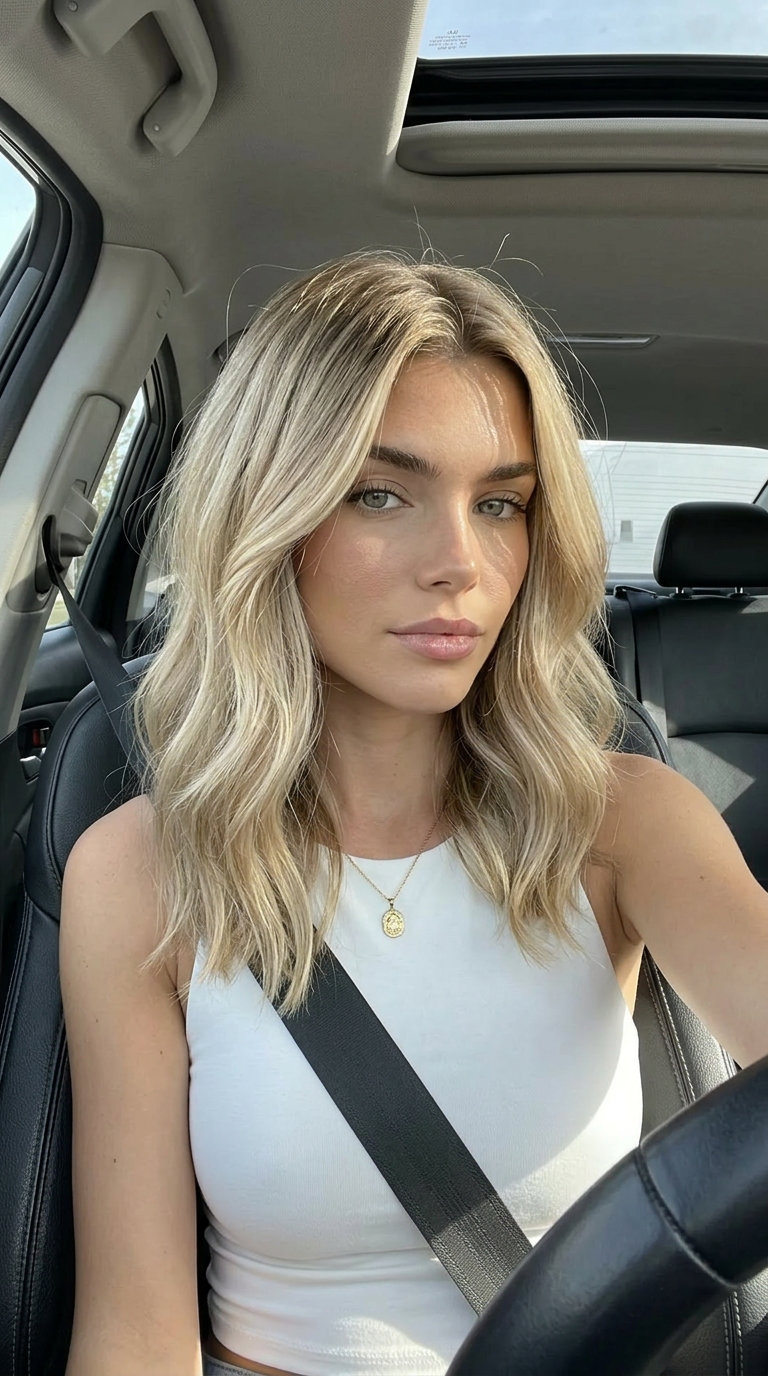
Color melt is the technical term for what looks like a soft gradient from darker roots to pale platinum ends. Not an ombré—those have a sharper line. This is a true melt, which means the colorist hand-paints the transition so there’s no visible demarcation. It takes longer than balayage, but the payoff is a blonde that doesn’t scream “I need a touch-up” every time you move.
Color melt technique blends root to ends for a seamless transition, preventing harsh lines during grow-out. Color melt grew out seamlessly for ten weeks, avoiding a harsh demarcation line, which speaks to the technique’s strength. The downside: this requires a skilled colorist and multiple sessions if you’re starting dark. Multi-session color application also means higher total cost, sometimes reaching $400–$500 for medium to long hair. Skip if you have very fine hair—multi-tonal colors can look muddy and the bleach exposure might feel aggressive for delicate strands. The melt works best on medium to thick hair with natural texture or gentle waves, where the color variation reads as dimension rather than damage. You’ll need a color-safe shampoo and probably a weekly gloss treatment to maintain the platinum tone. Which is all my fine hair can handle. The melt is real.
Icy Blonde Ends
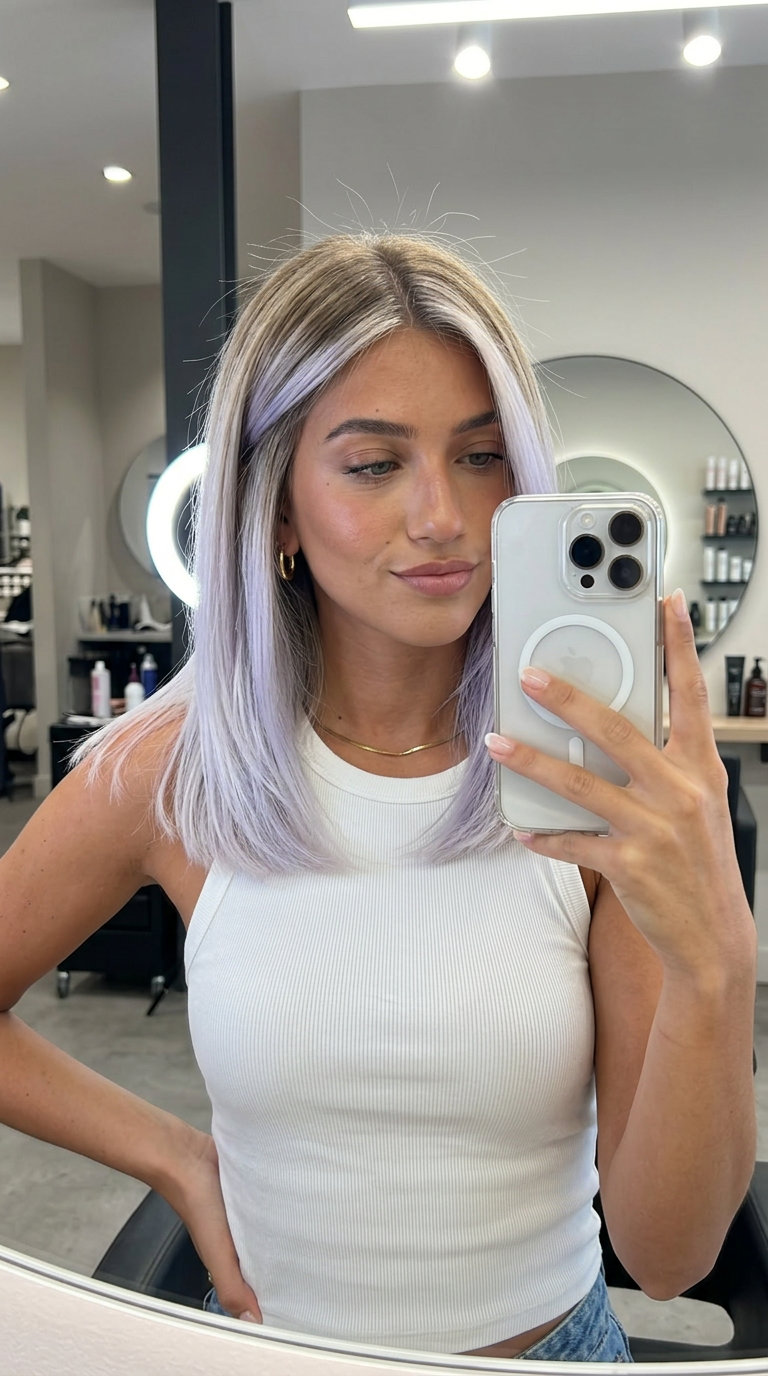
Icy blonde ends mean just that—the final two to three inches of your hair bleached to almost white, sometimes with a slight lavender or silver tone. It’s a statement without being all-in. You keep more dimension and warmth through your lengths while the tips stay cool and photogenic. The contrast is subtle in person but striking on camera.
Bond-repairing masks prevent breakage on bleached hair, maintaining integrity despite chemical processing. Purple shampoo twice weekly maintained icy tone for five weeks without brassiness, keeping that cool edge crisp. This platinum requires $200+ monthly maintenance—budget accordingly, because you’ll need consistent purple shampoo and probably quarterly toning to keep the coolness sharp. Commitment is key. The upside: you’re only bleaching the most damaged part of your hair anyway (the ends grow out and shed). The downside: you’re buying purple shampoo as a non-negotiable monthly expense, probably worth the consultation at least. If you have very fine or compromised hair, the bleaching process itself might feel risky. But if your hair is medium to thick and relatively healthy, icy blonde ends deliver that expensive salon look without requiring full-head maintenance. The technique works because concentration at the tips maximizes visual impact while minimizing total chemical exposure.
Platinum Blonde Money Piece
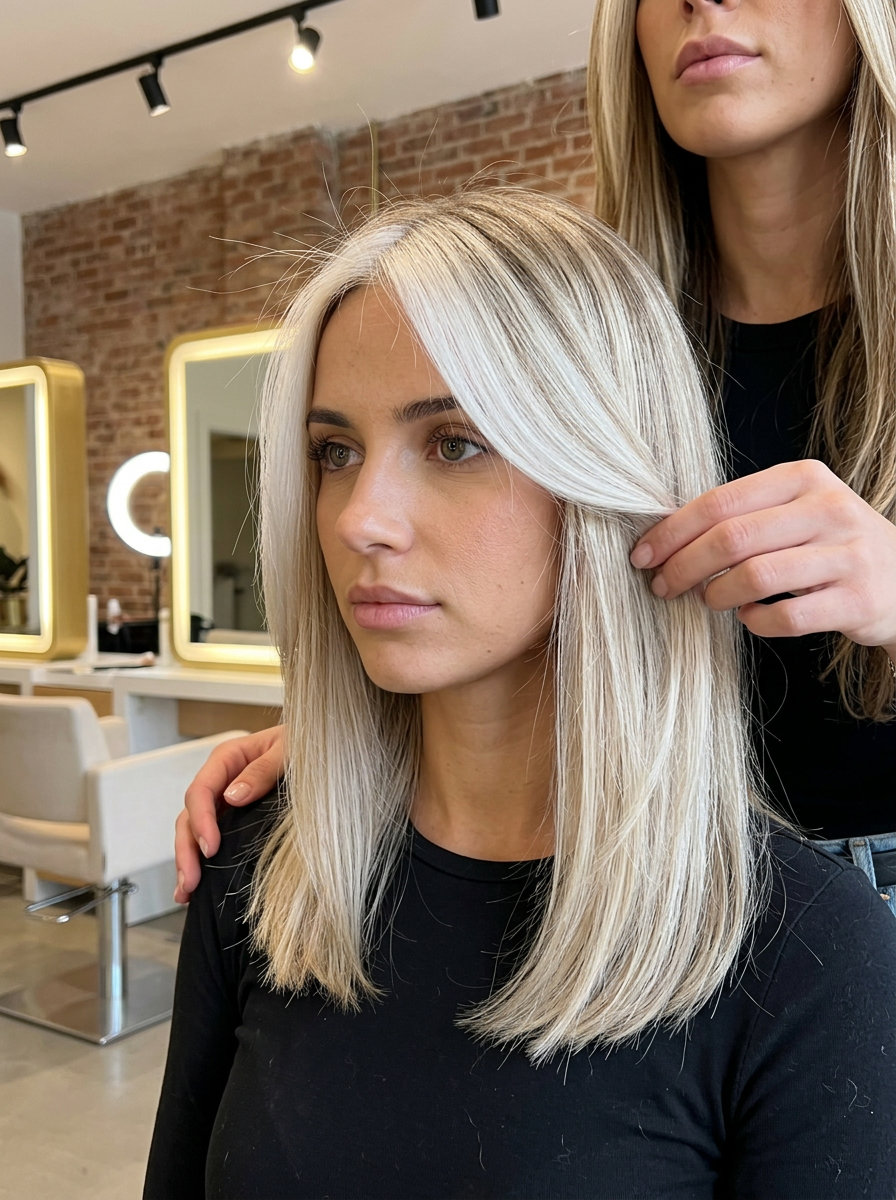
Money pieces are back, and this time they’re not caramel—they’re platinum. Thin, strategically placed sections that start at the roots and run down past your shoulders, framing your face. The technique is simple but the effect is immediate: brightness exactly where it reads on your face, without touching the bulk of your hair.
Strategically placed platinum money pieces frame the face, creating a high-contrast, brightening effect. Money pieces stayed icy for three weeks with diligent purple shampoo use, which is respectable for such pale blonde. Avoid if you have very thick or coarse hair—bleaching takes too long and the colorist might recommend a different approach. The money piece works on fine to medium hair with straight texture, where the thin sections don’t disappear into curl pattern. The piece stays visible and doesn’t require as much maintenance as full balayage because you’re only toning a small percentage of your hair each month. Honestly a smarter financial move than full highlights if you’re on a budget but want high-impact summer blonde. You’re getting the Instagram effect (brightness around the face) with the practical timeline of partial color. The narrow sections work because they catch light constantly and move with your hair. Yes, the short one. Face-framing perfection.
Linen Blonde
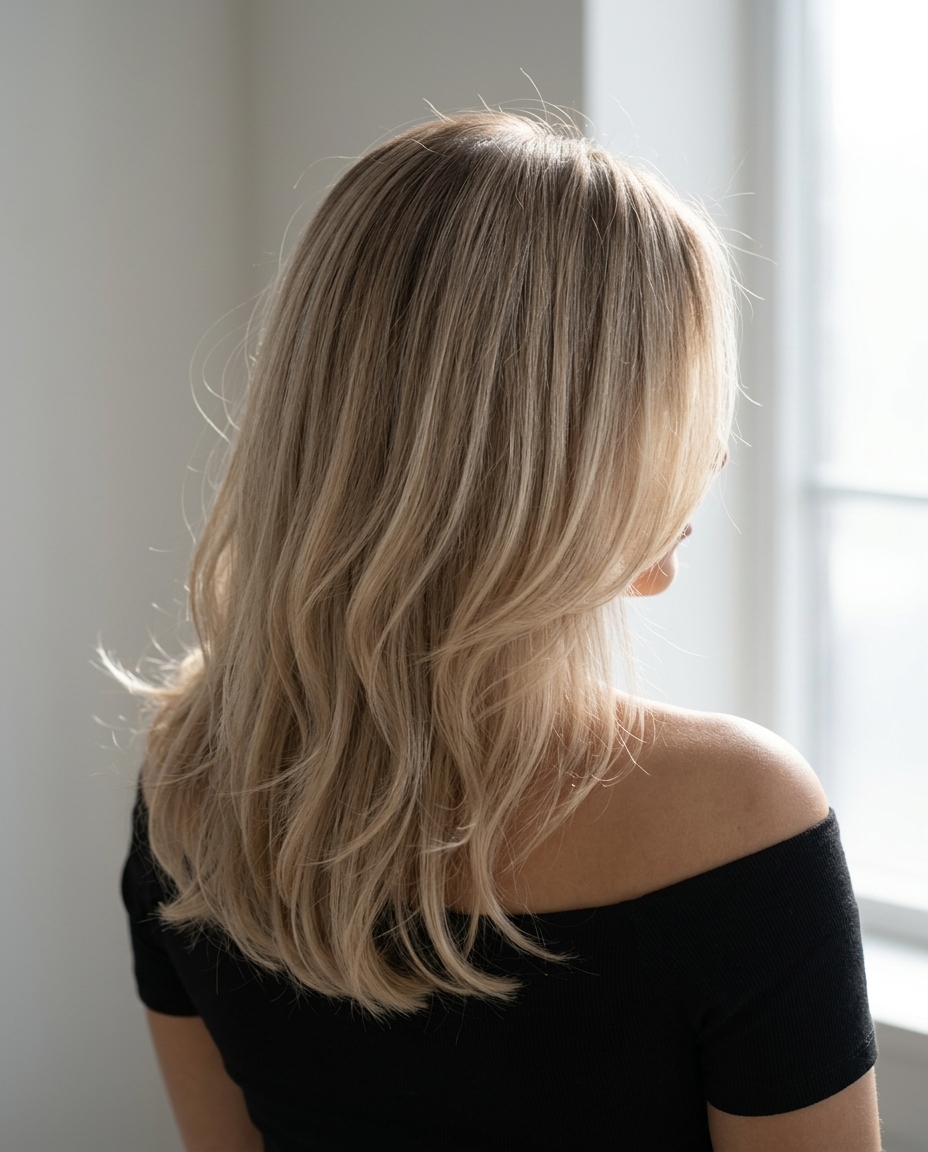
The shade that looks expensive even when it isn’t. Linen blonde hair color sits in that perfect middle ground—not too warm, not too cool, just thoughtfully blended into something that actually works with most skin tones. The technique relies on a softly blended shadow root at level 7-8 taupe, which creates a lived-in effect and extends time between salon visits. This prevents the harsh regrowth lines that plague high-maintenance blondes; shadow root allowed 8 weeks before needing a salon touch-up, avoiding the whole “I need a touch-up” panic that sets in by week five.
What makes this work is restraint. Rather than chasing platinum perfection, you’re working with your natural depth and letting the blonde live somewhere in the mid-range. The shadow root isn’t a mistake—it’s intentional. It’s the difference between “I’ve been neglecting my appointments” and “I planned this exactly.” Fine, maybe it’s both, but it looks purposeful either way. Ask your stylist for point-cutting through the blonde sections; this texturizes the ends instead of leaving them blunt and obvious. Effortlessly chic.
Smoked Pearl Blonde Ombré
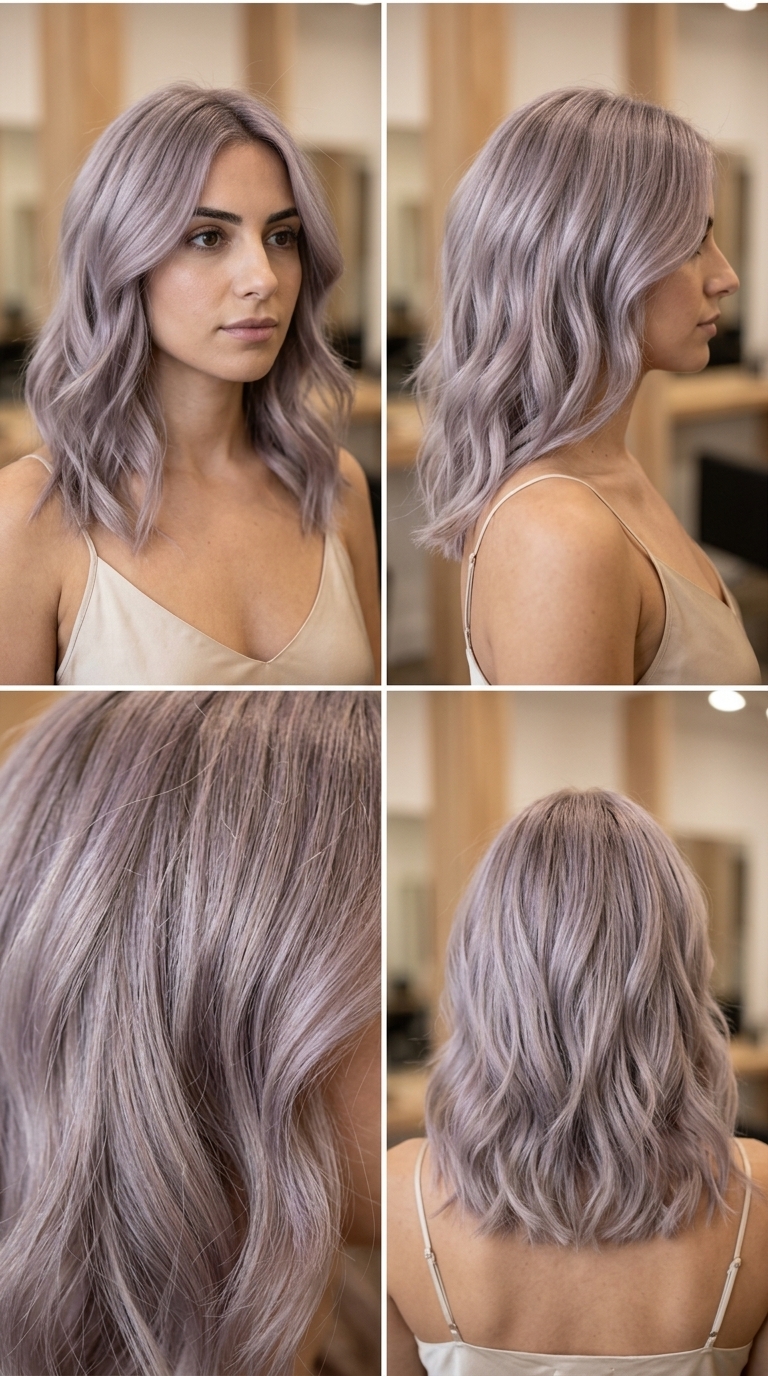
Smoked pearl blonde is what happens when you stop trying to go platinum and start chasing something quieter. Custom pearl, violet, and clear demi-permanent glosses create a multi-dimensional, luminous ‘smoked pearl’ effect that reads as sophisticated rather than trend-chasing. The color pulls grey undertones through the mid-lengths and ends, creating that coveted “I was just in Iceland and the light caught my hair” moment without actually needing to board a plane. The pearl toner held its violet-grey shimmer for 4 weeks before fading to a neutral blonde, which is realistic for anyone not obsessing over weekly toning appointments.
The catch—and there’s always a catch—is that iridescent tones fade quickly, requiring frequent toning at home or salon visits. This isn’t a set-it-and-forget-it situation, which is all my fine hair can handle anyway. You’re committing to either purple shampoo twice weekly or accepting that by week three, the shimmer softens into something more muted. The payoff is that the fade is actually beautiful, which is rare. Most fades look tired. This one just looks intentional. Pure magic.
Arctic Gold Hair Color
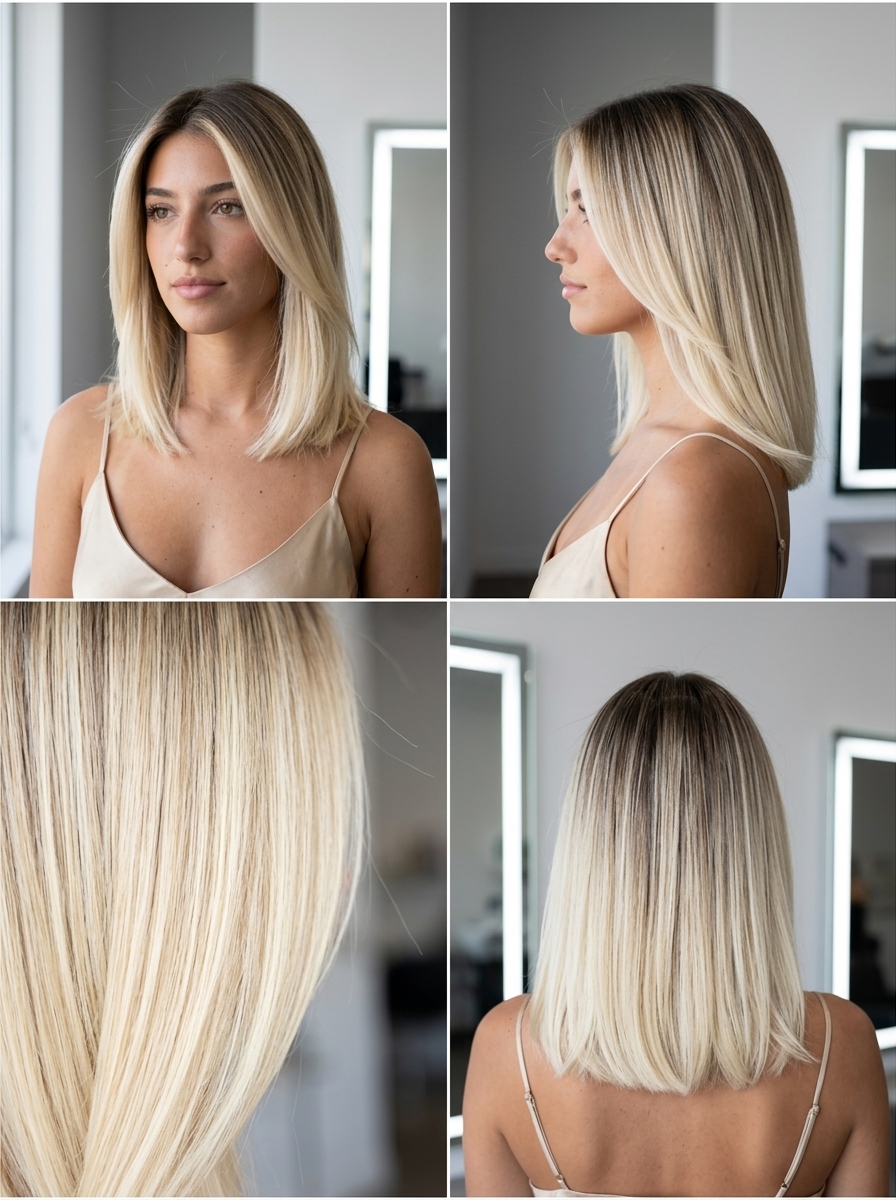
Here’s where you stop whispering and start announcing. Arctic gold hair color with reverse balayage is the blonde for people who want their hair to be the first thing anyone notices. Reverse balayage with deep roots melting into level 10+ arctic gold ends creates a high-fashion, dramatic statement—and yes, you need the statement. The extreme contrast between dark roots and hyper-platinum ends is intentional, architectural, and impossible to ignore. The dramatic root contrast softened gracefully for 6 weeks, maintaining its bold statement without looking like your color had given up halfway through.
This isn’t for the indecisive. This high-contrast look requires significant salon time and budget for initial application and upkeep—expect $300-400+ for the initial session and $150-200 every 3-4 weeks for touch-ups. Not ideal for very fair skin tones either; the extreme contrast can wash you out, making face tone look sallow rather than glowing. But if you have medium to deep skin with warm undertones, this creates an absolutely undeniable look. The arctic gold catches light in a way that makes platinum jealous. Bold and unapologetic.
Apricot Blonde Babylights
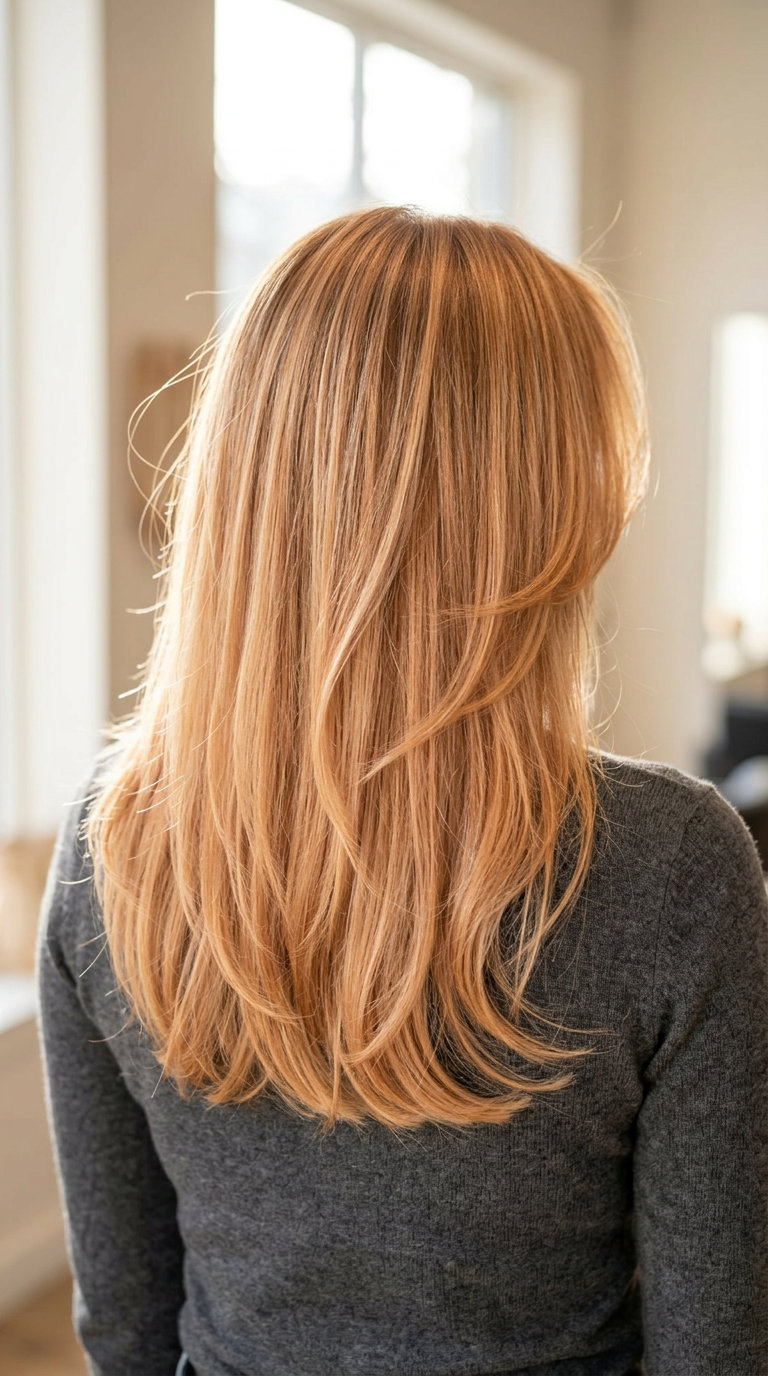
Want sunshine in your hair but hate looking like you sat under a heat lamp? Apricot blonde babylights deliver that sun-kissed warmth without the “I’ve been outside” screech. Ultra-fine babylights with a peach-gold gloss infuse hair with a soft, warm, sun-kissed radiance without being overtly red. The technique uses impossibly thin placement—sometimes just one or two strands per section—which means the highlights blend so naturally that people assume you were born blonde, or maybe balayage, honestly. Babylights provided a subtle, sun-kissed glow that looked natural for 10 weeks, which is genuinely impressive for a warm-toned blonde.
The warmth is the whole point here. Skip if you prefer stark, cool tones because this shade is distinctly warm—it’s designed for people who want their blonde to feel like a mood rather than a statement. The peach undertones work best on warm and medium skin tones; olive complexions especially benefit from the apricot depth. Fine hair actually does better with babylights than thick hair does, since the thin placement doesn’t overload the strand with bleach. The fade is gentle. The maintenance is realistic. The glow is youthful.
Sand Blonde Balayage
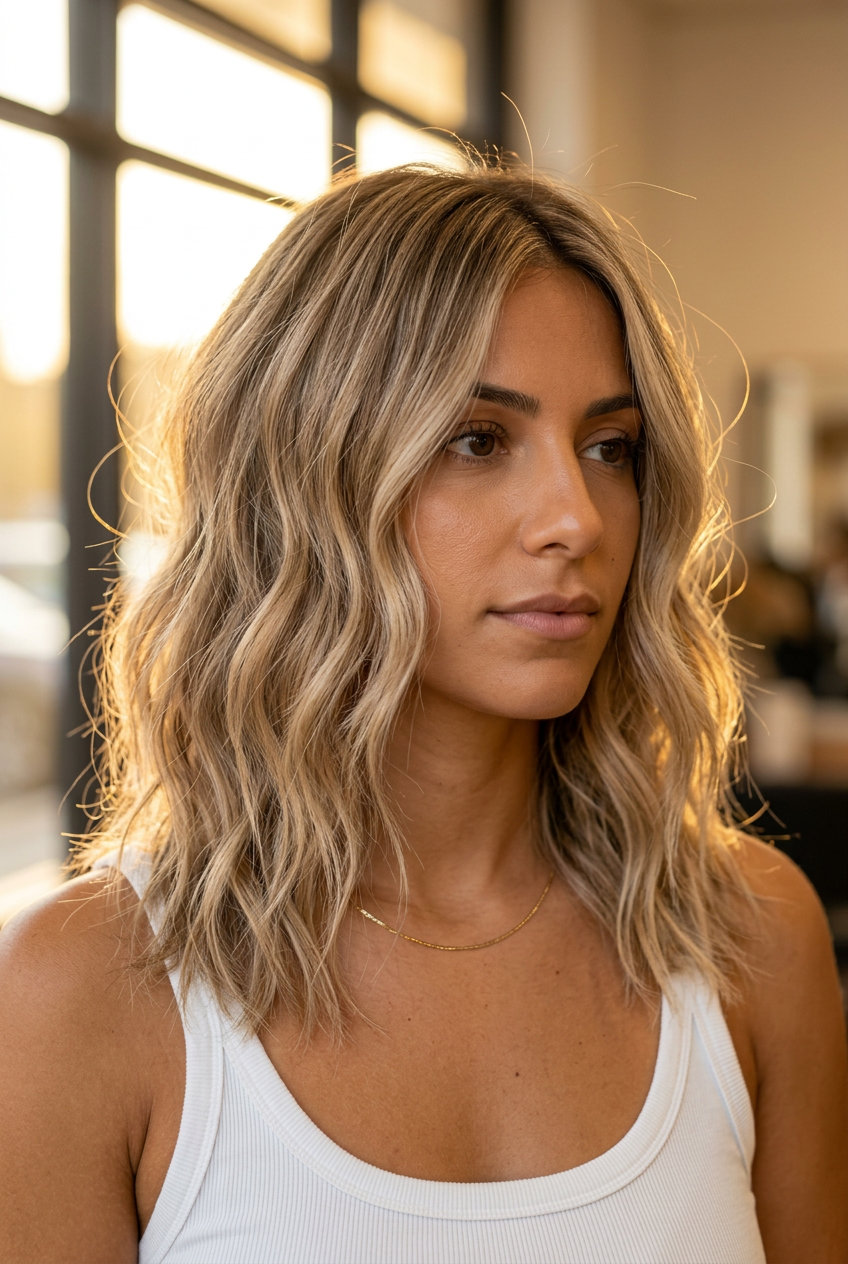
The balayage that makes you look like you just came back from somewhere good.
Sand blonde balayage is the technique for people who want natural-looking dimension without the maintenance spiral of precise highlights. Strategically placed highlights with varied saturation prevent chunkiness, ensuring a natural, sun-bleached sand effect that works on nearly every hair tone. The placement is deliberate but loose—swept around the face, concentrated on mid-lengths and ends, sparse at the roots. Varied highlight saturation created a diffused, natural look that blended seamlessly for 9 weeks without looking brassy or grown-out.
This works because the variation in saturation does the heavy lifting. Instead of uniform blonde sections, you’re layering light, medium, and nearly-shadow pieces that read as one cohesive color from a distance. The effect is “I have naturally lighter hair but somehow warmer.” Probably worth the consultation at least, since skilled balayage artists know how to customize the sand tone to match your specific undertones—and this is where the difference between $150 and $350 becomes very obvious. Warm fair, medium, and olive skin all benefit differently from sand tones. The blonde should kiss your skin, not fight it. Beach day vibes.
Still Deciding? Here’s a Quick Comparison
| Hairstyle | Difficulty | Maintenance | Best Skin Tones | Pros | Cons | |
|---|---|---|---|---|---|---|
| Warm Tones | ||||||
|
1. Apricot Blonde Color Melt | Moderate | Medium — every 6-8 weeks | fair skin with warm undertones, medium skin tones, and those with freckles | Suits most face shapesWorks on multiple textures | Not ideal for very curly hair |
|
4. Vanilla Blonde Babylights | Moderate | Medium — every 10-12 weeks | All skin tones | Suits most face shapesWorks on multiple texturesSubtle sun-kissed effect | Not ideal for very curly hair |
|
6. Linen Blonde Foilayage | Moderate | Medium — every 10-12 weeks | All skin tones | Suits most face shapesWorks on multiple textures | Not ideal for very curly hair |
|
7. Strawberry Blonde Money Pieces | Moderate | Medium — every 6-8 weeks | All skin tones | Suits most face shapesWorks on multiple textures | Not ideal for fine hair |
|
10. Chai Latte Blonde Balayage | Moderate | Medium — every 12-16 weeks | medium, tan, and olive skin tones | Works on multiple textures | Not ideal for very curly hair |
|
11. Butter Blonde All-Over | Moderate | High — every 4-6 weeks | warm fair, medium, deep skin | Suits most face shapesWorks on multiple textures | Frequent salon visits needed |
|
13. Nirvana Blonde Shadow Root | Moderate | Low — every 8-10 weeks | All skin tones | Low maintenanceSuits most face shapesWorks on multiple textures | Not ideal for fine hair |
|
14. Champagne Dusk Reverse Balayage | Salon-only | Medium — every 8-10 weeks | neutral, warm fair, and medium skin tones | Suits most face shapesWorks on multiple textures | Requires professional styling |
|
15. Butter-Cream Blonde Balayage | Moderate | Medium — every 12-16 weeks | All skin tones | Suits most face shapesWorks on multiple textures | Not ideal for very curly hair |
|
16. Cool Ash Neutralizer Gloss | Moderate | Medium — every 6-8 weeks | cool fair, light, and medium skin tones | Suits most face shapesWorks on multiple textures | Not ideal for very curly hair |
|
17. Sunlit Golden Blonde All-Over | Moderate | Medium — every 6-8 weeks | warm fair, medium, and deep skin tones | Suits most face shapesWorks on multiple textures | Not ideal for very curly hair |
|
19. Arctic Gold Platinum | Salon-only | High — every 4 weeks | All skin tones | Suits most face shapesWorks on multiple textures | Requires professional styling |
|
21. Chai Latte Blonde Reverse Balayage | Moderate | Low — every 12-16 weeks | All skin tones | Low maintenanceSuits most face shapesWorks on multiple textures | Not ideal for very curly hair |
|
23. Beige Blonde Color Melt | Moderate | Medium — every 8-10 weeks | All skin tones | Suits most face shapesWorks on multiple textures | Not ideal for very curly hair |
|
26. Linen Blonde Shadow Root | Moderate | Low — every 8-10 weeks | neutral, olive, and cool-toned fair skin | Low maintenanceSuits most face shapesWorks on multiple textures | Not ideal for very curly hair |
|
28. Arctic Gold Reverse Balayage | Salon-only | High — every 4-5 weeks | deep and dark skin tones, or those with warm undertones who can carry a bold, high-contras | Suits most face shapesWorks on multiple texturesNatural-looking dimension | Requires professional styling |
|
29. Apricot Blonde Babylights | Moderate | Medium — every 8-10 weeks | All skin tones | Works on multiple texturesSubtle sun-kissed effect | Not ideal for very curly hair |
|
30. Sand Blonde Scattered Highlights | Moderate | Medium — every 8-10 weeks | warm fair, medium, olive skin | Works on multiple textures | Not ideal for very curly hair |
| Cool Tones | ||||||
|
3. Scandi-Hairline Blonde | Salon-only | High — every 4-6 weeks | All skin tones | Suits most face shapes | Requires professional styling |
|
8. Beige Blonde Face-Framing Highlights | Moderate | Medium — every 6-8 weeks | cool fair, neutral medium, olive skin | Suits most face shapesWorks on multiple texturesSubtle sun-kissed effect | Not ideal for very curly hair |
|
9. Smoked Pearl Ombré | Salon-only | Medium — every 5-6 weeks | All skin tones | Suits most face shapesWorks on multiple textures | Requires professional styling |
|
18. Icy Platinum Melt | Salon-only | High — every 4-6 weeks | cool fair to medium skin tones | Suits most face shapesWorks on multiple textures | Requires professional styling |
|
20. Platinum Blonde Root Stretch | Moderate | High — every 6-8 weeks | cool fair to medium skin | Suits most face shapesWorks on multiple textures | Frequent salon visits needed |
|
24. Icy Blonde Dip-Dye | Moderate | High — every 3-4 weeks | cool fair to medium skin | Suits most face shapesWorks on multiple textures | Frequent salon visits needed |
|
25. Platinum Blonde Face-Framing | Salon-only | High — every 4-6 weeks | All skin tones | Suits most face shapesWorks on multiple textures | Requires professional styling |
|
27. Smoked Pearl Foilayage | Salon-only | High — every 5-6 weeks | cool and fair skin tones | Suits most face shapesWorks on multiple textures | Requires professional styling |
Frequently Asked Questions
How can I make my blonde look dimensional at home without more color?
Movement and framing do the heavy lifting. Styles like the Apricot Blonde Color Melt and Honey Glaze Money Pieces use existing tones and strategic placement to create depth—the Honey Glaze Money Pieces concentrate brightness around your face, while the Apricot Blonde Color Melt lets warm undertones shift depending on how light hits your hair. You’re not adding color; you’re revealing what’s already there.
What are the easiest DIY styles for showcasing a bright hairline?
The Scandi-Hairline Blonde and Honey Glaze Money Pieces both target the perimeter. Pulled-back styles, subtle braids, or even a simple half-up will draw attention to face-framing brightness without requiring a fresh gloss. The Money Pieces technique concentrates saturation exactly where you want visibility.
Can these styles work on any blonde, or only specific shades?
These styles adapt across the spectrum. Mushroom Blonde Shadow Root works beautifully with cool tones and grown-out roots, while Apricot Blonde Color Melt and Honey Glaze Money Pieces flatter warm complexions. Vanilla Blonde Babylights suit neutral, natural blondes. Pearl Blonde and Ash Blonde cater to cooler undertones. The technique matters more than the exact shade—pick the one that matches your skin and your root-touch-up timeline.
How do I make my DIY blonde style last all day in summer humidity?
Product selection is non-negotiable. A UV protectant spray shields Honey Glaze Money Pieces from fade and dryness, while a bond repair treatment keeps Vanilla Blonde Babylights from snapping mid-day. For high-maintenance styles like Pearl Blonde, a purple toning mask between salon visits prevents brassiness that humidity accelerates. Heat protectant spray is essential if you’re styling—humidity + heat = color breakdown.
What’s a good low-maintenance style to enhance a grown-out root?
Mushroom Blonde Shadow Root is literally designed for this. The shadow root blends seamlessly with regrowth, and the textured, diffused approach celebrates—rather than fights—a soft root. This extends your time between touch-ups to eight weeks or longer, making it the opposite of high-maintenance blonde. The style works because it stops fighting your natural growth.
Final Thoughts
The thing about summer blonde hair color 2026 is that it’s not one look—it’s a spectrum. From shadow roots that stretch eight weeks to babylights so fine they mimic actual sun damage, these styles prove that blonde maintenance is less about perfection and more about strategy. Pick the technique that matches your tolerance for salon visits, not your Instagram feed.
The real lesson? Your skin tone matters more than the trend. Warm sand tones, cool ash undertones, iridescent pearls—they all exist because blonde is a conversation between your hair and your complexion. Get that right, and the style does the rest.