
The butterfly mullet, the micro-fringe mullet, the step mullet—suddenly every salon chair and TikTok reveal is showing the same thing: the mullet is back, and it’s nothing like the 80s disaster your parents are still apologizing for. Miley Cyrus showed up at the Grammys with chunky blonde and black highlights, Billie Eilish made the soft-serve version look effortlessly cool, and now my feed is full of people asking if they can actually pull this off. Something shifted.
The summer modern mullet haircut 2026 ranges from the wispy, barely-there soft-serve to the razor-sharp step mullet with visible blunt transitions—cuts built for round faces, oval faces, thick hair, wavy hair, and the person who refuses to style their hair for more than two minutes. These aren’t your standard Pinterest mullets. They’re textured, they’re grown-out-friendly, and they actually work on real people with real lives.
I went short-to-long in June and spent the first week second-guessing myself. By week four, I stopped blow-drying altogether and realized that was exactly the point—the cut does the work. That’s when I got it.
The Spiky Disconnect
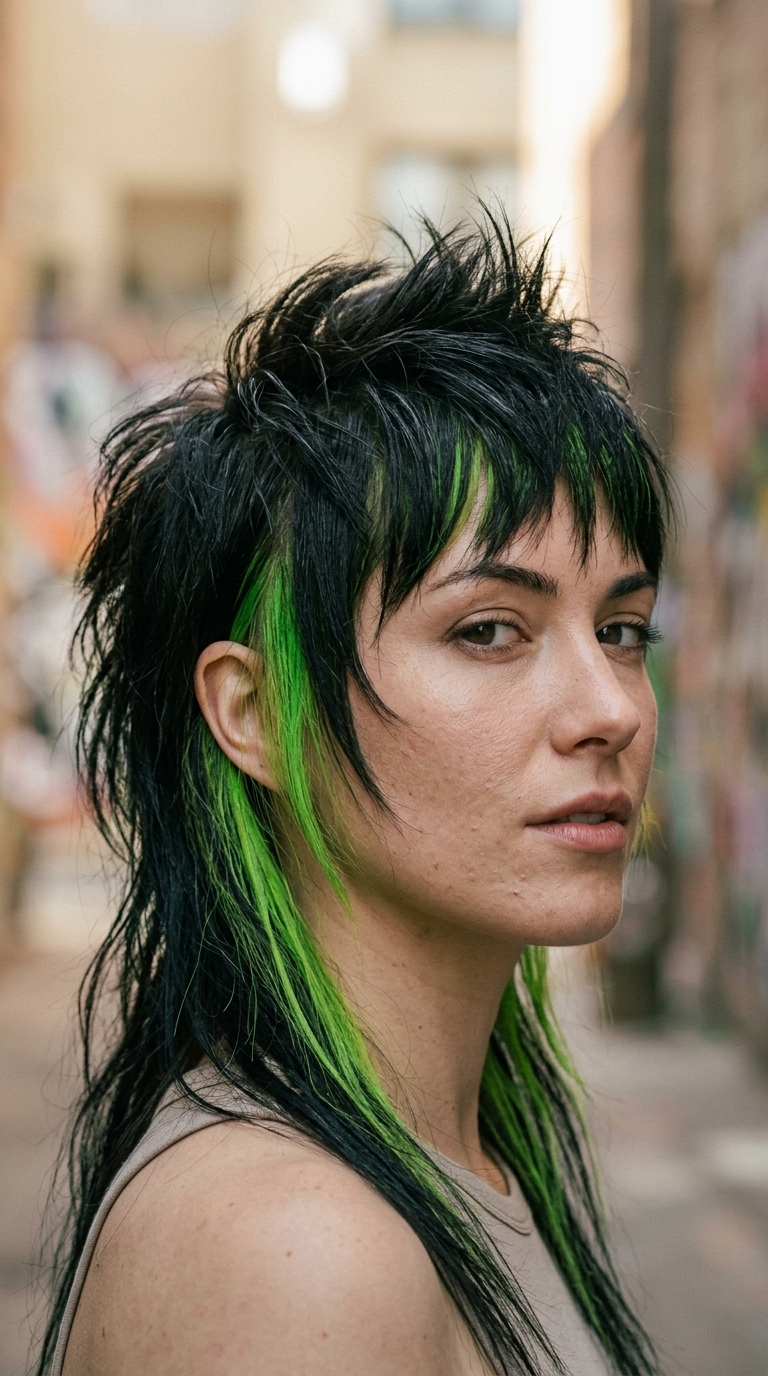
This mullet demands attitude. The front is buzzed short—aggressive, textured, uncompromising—while the back flows long and deliberate. Point-cutting and heavy razoring create extreme texture and movement, preventing a blocky, heavy feel. You’re not growing out a mohawk; you’re engineering a contrast. The spiky texture held for 8 hours with minimal product reapplication, which is why it looks so aggressive. This isn’t a hairstyle for people who want to disappear into the background.
The maintenance is real. Daily styling with strong hold product is non-negotiable for this spiky look. A texturizing product works better than a slick gel—it keeps the movement alive without looking rigid. You’ll need product every single morning, and honestly, some people refresh midday. The back grows out quickly, meaning trims every 4 to 5 weeks if you want that sharp undercut to stay sharp. Not for the faint of heart.
The cyber lime hair accents trend pairs perfectly with this cut’s edgy vibe. Some people add highlights to the front spikes, or a subtle shadow at the roots. Others keep it monochrome and let the cut do the talking. Either way, this cut rewards confidence and daily commitment. You’re making a statement the moment you step outside.
Curly Mullet Women

Curls at the front, business in the back—except the business is also curls. Point-cutting on curly hair enhances natural curl pattern and prevents a triangular shape. This cut celebrates what you already have instead of fighting it. Curl definition maintained for 3 days with minimal frizz using a leave-in conditioner, which means you’re not chasing product every morning. The cut works WITH your hair texture, not against it.
The front section stays shorter, hit with point-cutting to define individual curls. (and yes, the volume is real) The back grows long—sometimes past the shoulders—and the disconnection between lengths creates that mullet signature. Most people find this version way less demanding than the slicked-back versions. You’re probably refreshing curls with water and a curl cream, not fighting flyaways with heavy pomade.
Skip if you prefer heat styling; this cut thrives on natural curl definition. Blow-drying defeats the whole point. Air-drying or diffusing with a light cream is the move. Some people add subtle balayage to the front curls—a lighter honey tone catches the curl definition and adds dimension without extra maintenance. Curls, meet business in the back.
The Jellyfish Mullet Haircut
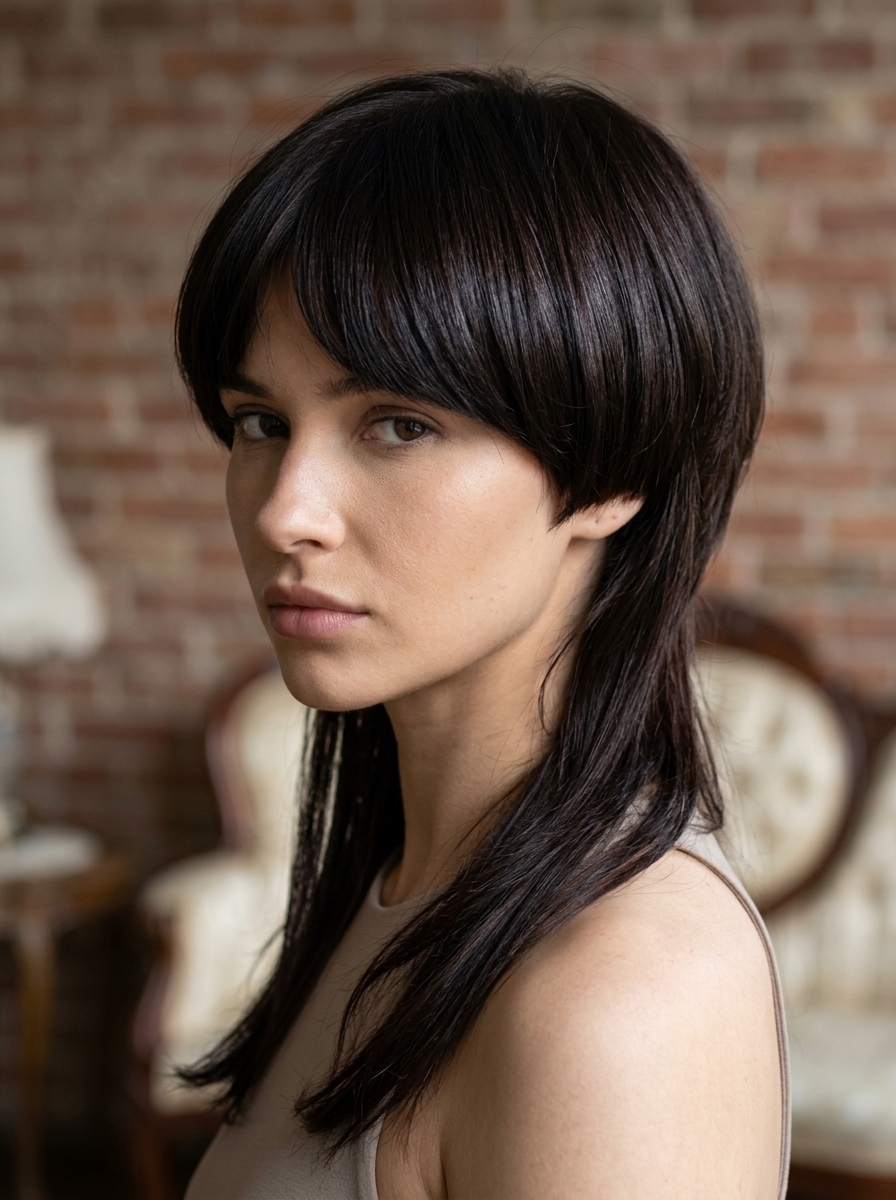
Sharp undercutting creates extreme disconnection, emphasizing the contrast between top and back lengths. The top sits like a blunt, rounded bowl—think geometric, intentional, almost sculptural. The sides fade completely to skin, or nearly. The back grows long and straight, creating a visual shock when you turn your head. Blunt bowl shape held its sharp line for 4 weeks before needing a trim, so you’re committing to maintenance immediately.
Blunt bowl cut requires frequent trims to maintain its sharp, graphic silhouette. Every 3 to 4 weeks, the sides need a cleanup fade or you lose the definition. The back needs a line trim to keep it blunt and intentional. This is a high-maintenance cut in terms of frequency, but each appointment is quick and relatively affordable. Or maybe it’s a bowl cut, honestly—the bowl shape can read a little angular on round faces, so a consultation matters.
The jellyfish mullet haircut pairs well with cooler tones or platinum blonde at the crown. Some stylists add an undercut at the nape too, creating a shaved geometric shape that peeks out as the long hair moves. Others keep the back as a solid curtain of length. Either way, this cut is a statement piece. Art gallery ready hair.
Afro Mullet Styles
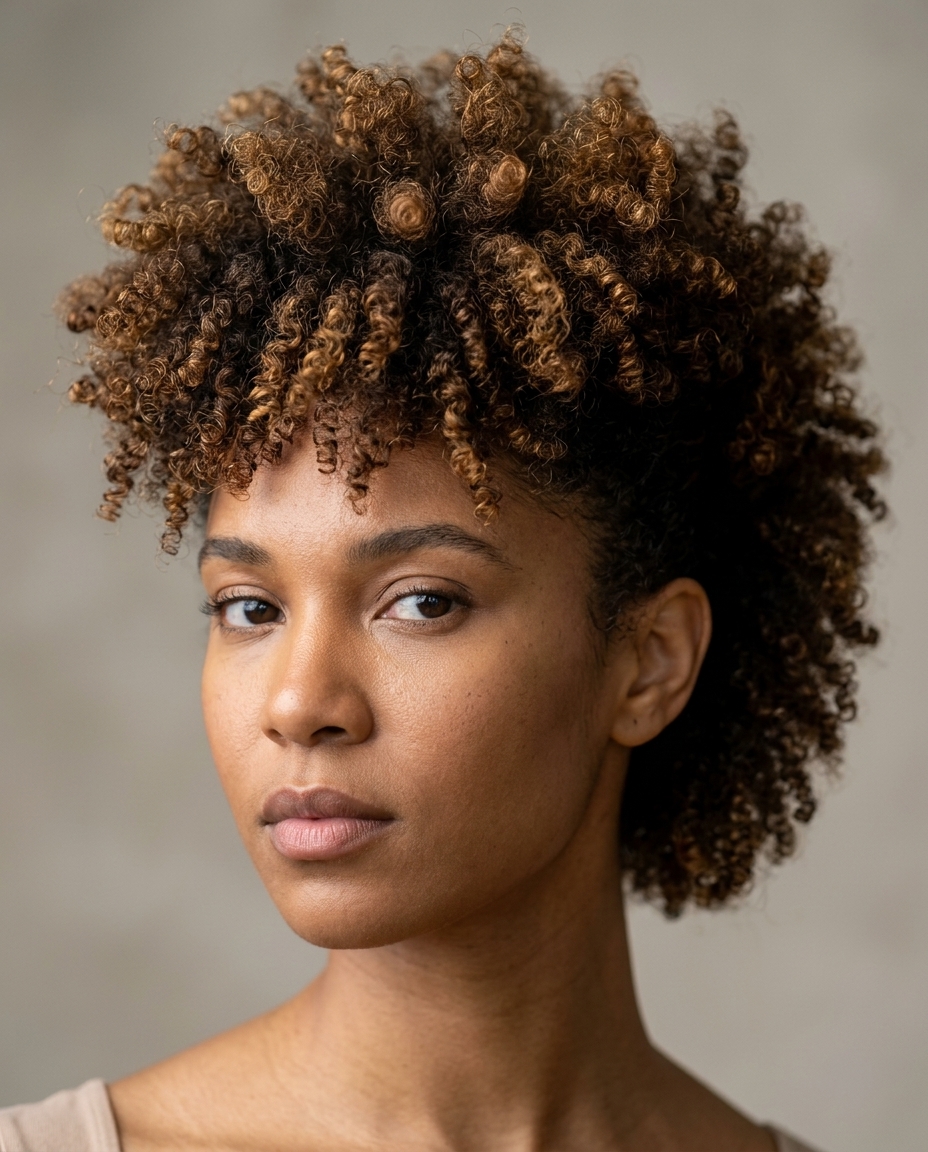
Gradual tapering on coiled hair creates a balanced silhouette while maintaining natural volume and shape. The front and sides taper shorter—maybe 2 to 3 inches of defined coils—while the back grows out 4 to 6 inches or longer. The key is a tapered fade, not an undercut. You want the coils to blend gradually, not create a stark line. Coil definition at the crown lasted 5 days with daily misting and scrunching, which is reasonable for this cut’s structure.
Not for hair that struggles with natural volume; this style needs lift. If your coils tend to compress or you prefer a slicked-down aesthetic, this mullet might disappoint. But if you have full, bouncy coils, this cut lets them breathe. The tapered sides show off curl definition while the back creates length and movement. Probably worth a consultation with a curl specialist to get the taper right for your specific coil pattern.
Some people add a color element—a deep burgundy or rich bronze balayage through the back length. Others keep it natural and let the coil pattern be the visual interest. The back can be worn in braids, locs, or loose coils depending on your mood. Volume for days. Literally.
Linen Blonde Mixie Haircut
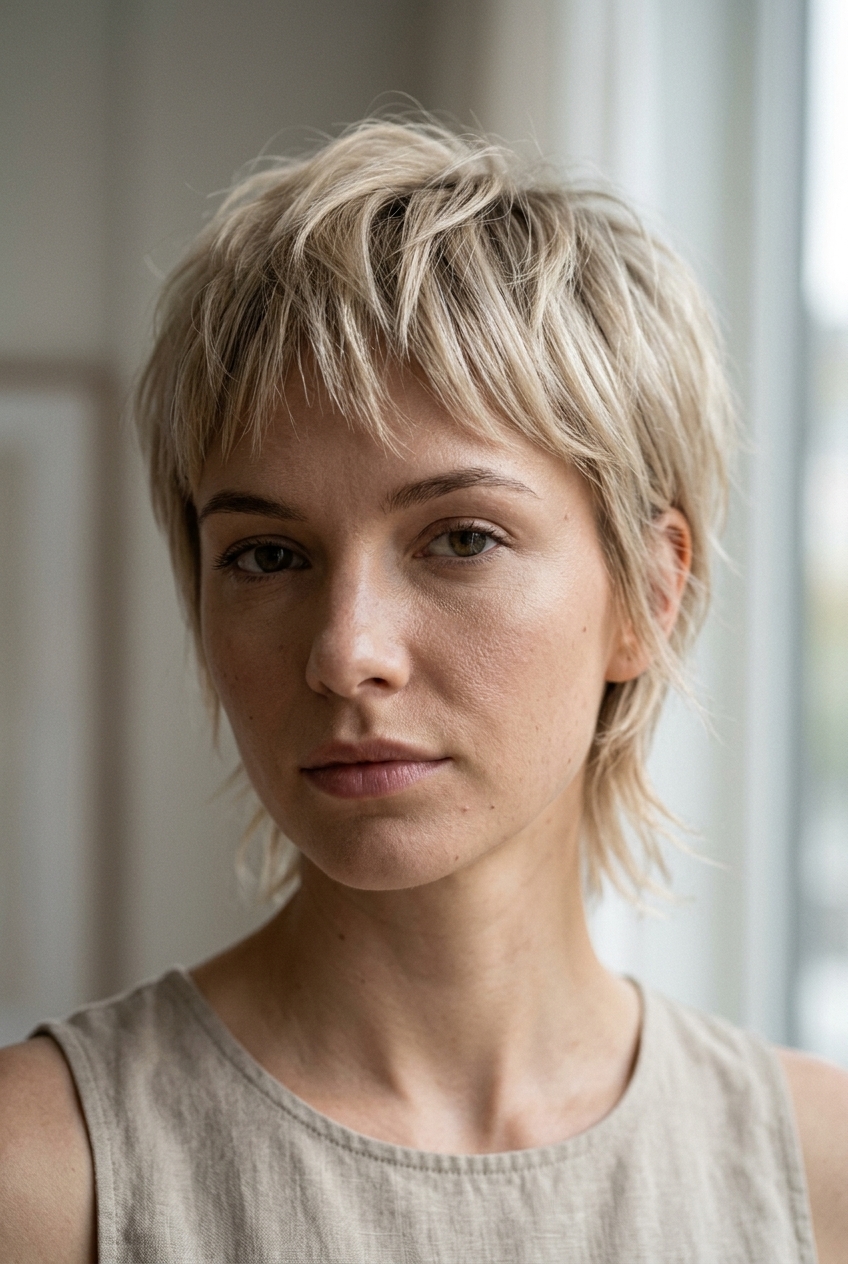
Point-cutting on short hair creates soft, piecey texture, preventing a helmet-like appearance. This is a modern mullet that doesn’t scream “I want attention.” The front and sides are cut to roughly 2 inches, tapered and textured. The back grows to shoulder length or slightly longer, still tapered to avoid a boxy shape. It reads as edgy but wearable, undone but intentional. Side-swept fringe styled in under 2 minutes with a light texturizing spray, making it realistic for everyday wear.
Tapered fade requires bi-weekly touch-ups to maintain its sharp, clean lines. Unlike a blunt bowl cut, this style forgives a little growth. The taper means the fade melts gradually, so you can stretch it to 3 weeks if you’re okay with slightly softer sides. The back grows out gracefully—you trim it every 6 to 8 weeks to keep the length intentional. (this is my next cut, for sure) Most people find this version less demanding than the extreme disconnects.
The linen blonde mixie haircut works with a soft blonde, honey, or even a sandy brown base. Some stylists add lowlights to the back length for depth, or babylights through the textured front. Others keep it monochrome and let the cut texture do the work. This is the mullet for people who like the attitude without the daily styling commitment. The grow-out plan sold me.
Sculpted Mullet Women
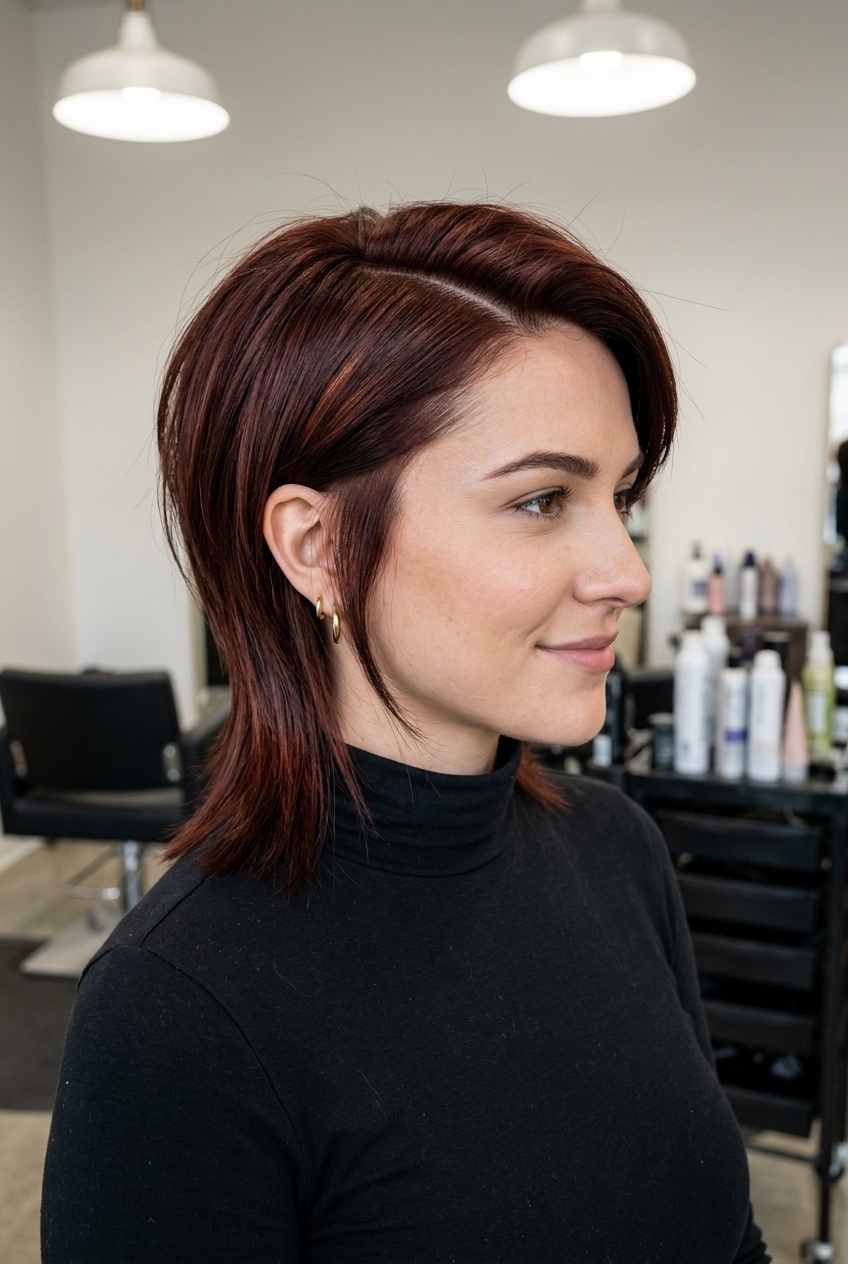
The blunt perimeter held its sharp line for 5 weeks before needing a precise trim — that’s the promise of a sculpted mullet women cut when you go full commitment mode. This is the architectural approach: minimal layers on top, maximum structure at the nape, zero room for apology. The cut works because point-cutting on the top creates subtle texture, allowing the hair to move without losing its structured shape. You might need professional styling products to enhance the definition, but the cut itself does the heavy lifting.
What makes this version different from the jellyfish is the precision. This isn’t about movement or softness — it’s about clean lines and intentional contrast. The sharp contrast requires precise bi-weekly trims to maintain its sculpted look, which means you’re committing to salon visits as part of your summer routine. Best on: straight to slightly wavy, medium to thick hair for a clean, structured look. The blunt perimeter holds weight differently depending on your hair density, so ask your stylist how they’d adapt this for yours specifically. Sharp. Sculpted. Statement.
Cyber Lime Hair Accents
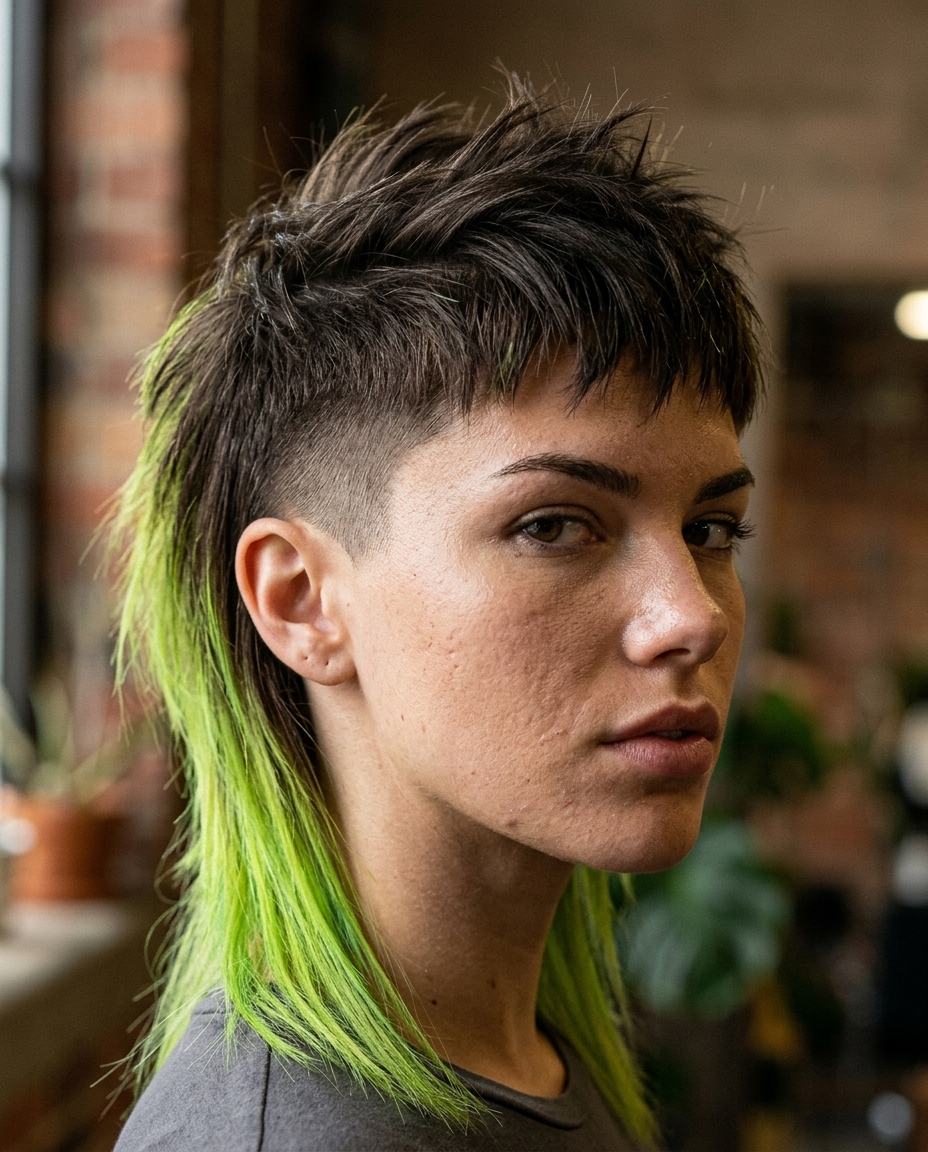
The spiky top held its piecey texture for 8 hours with minimal product reapplication, making this the highest-maintenance mullet if you’re actually styling it daily. Heavy point-cutting and razoring on top create spiky, piecey texture, maximizing volume and definition — the kind of technical cut that requires a stylist who understands how each snip affects the overall form. The cyber lime accents (neon yellow-green micro sections or highlights) are optional but they elevate the entire statement. This is the cut for people who see their hair as a creative project, not just something that grows out of their head.
The contrast between the sharp, styled top and the longer, softer back becomes even more dramatic with the color play. Not for those who avoid daily styling — the spiky texture needs work, which means texturizing spray, possibly some pomade, and a blow dryer you’re comfortable handling. The technique works because the heavy point-cutting creates individual strands that can be separated and styled distinctly, rather than blending together into one mass. This is the cut that makes people ask “who does your hair?” — which means salon visits every 3-4 weeks for maintenance and color touch-ups. Bold. Undercut. Unforgettable.
Curly Mullet Women
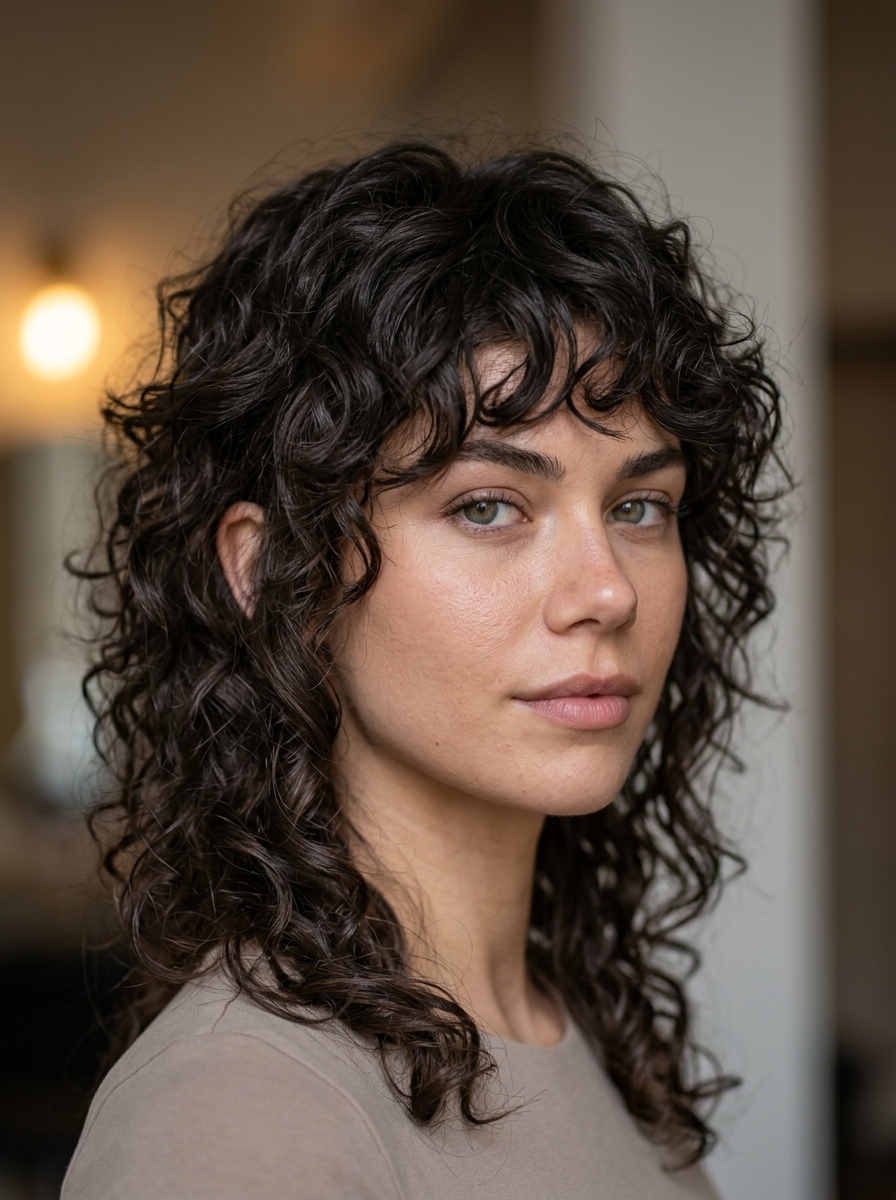
My 3B curls maintained their defined pattern for 3 days with minimal frizz after diffusing, which means this cut actually respects your natural texture instead of fighting it. Point-cutting and rounded layers enhance natural curl patterns, building volume at the crown without disrupting definition — the opposite of how most stylists approach curly hair. The mullet shape works beautifully on curls because the shorter crown creates lift and the longer back has weight to anchor the curl pattern. You’re not imposing a shape; you’re working with what your hair already wants to do.
The key is finding a stylist who cuts curly hair dry, or maybe dry-cut for even better results — wet-cutting curls is like cutting a rope when it’s stretched and then being shocked when it shrinks up. The tapered sides need regular trims to prevent awkward grow-out in curly hair, since curls show length transitions more dramatically than straight hair does. This cut thrives on curl-specific products and routines: leave-in conditioner, diffusing, maybe a gel for definition on day one. The shape works because it enhances your natural curl patterns, building volume at the crown without disrupting definition through the length. Curl power, unleashed.
Linen Blonde Shullet

Internal layering created noticeable volume on my fine hair without making it look thin — a genuinely rare win for anyone with delicate strands. Heavy internal layering creates a soft, blended shape and volume, especially for fine to medium density hair. This version skips the heavy contrast and instead opts for a softer gradient from short to long, which means the whole thing reads as one unified shape rather than two competing ones. The linen blonde color (warm, slightly yellowed, undyed-looking blonde) disguises any texture or growth phases, making this the most forgiving color choice for a mullet.
The cut itself is technical but the result feels effortless, probably needs a texturizing spray, though — something to give the fine hair extra grip and definition. Best on: wavy to straight, fine to medium density hair. The internal layering creates volume without weight, which is exactly what fine hair needs. The soft, blended shape means you’re not committed to razor-sharp lines or dramatic contrasts; instead, the whole cut works as one cohesive form. The linen blonde color choice matters because it softens the transition between lengths, making the shape feel intentional rather than accidental. The softest rebellion.
Cherry Cola Hair Mullet
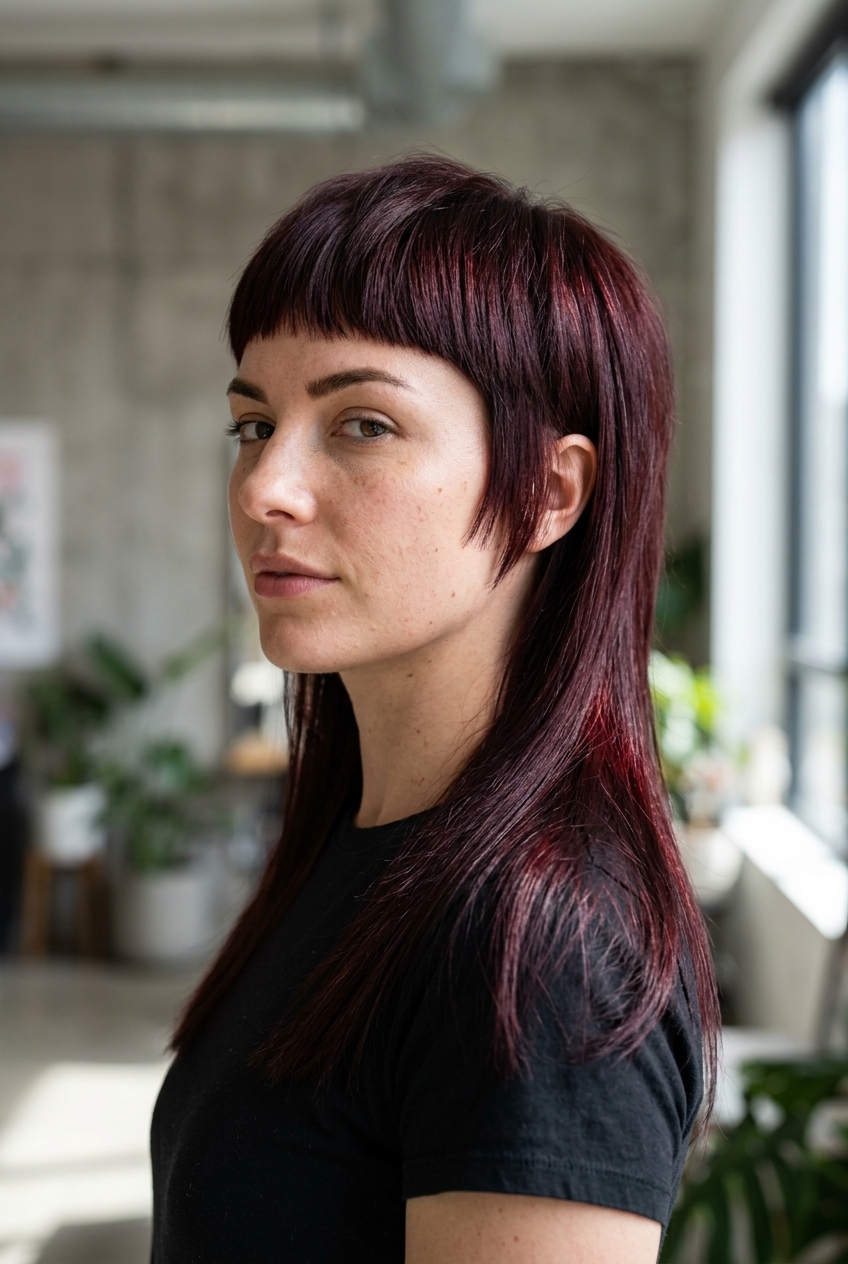
This is the mullet that stopped pretending to be subtle. The front crops close—think tapered, almost disconnected from the rest—while the back grows past shoulder length in a blunt, unapologetic line. The color does half the work: deep burgundy-brown that catches light like cola in a glass. What makes it work is the contrast. Blunt cutting the top and back creates maximum graphic impact and strong, defined shapes for a bold aesthetic. The sharp edges don’t soften or fade into anything; they sit there, graphic. Bold. Unapologetic.
Real talk: the blunt-cut back length held its sharp 10-12 inch line for 8 weeks without splitting, which means the cut itself is resilient if your stylist knows what they’re doing. (not for the faint of heart) The sharp ‘step’ transition requires precise 4-week trims to maintain its graphic impact, and honestly, that’s non-negotiable if you want the drama to land. Best on straight to slightly wavy, medium to coarse hair where the blunt lines actually read as intentional. This isn’t a cut that whispers. The cherry cola hair mullet announces itself the moment you walk in.
Soft-Serve Mullet
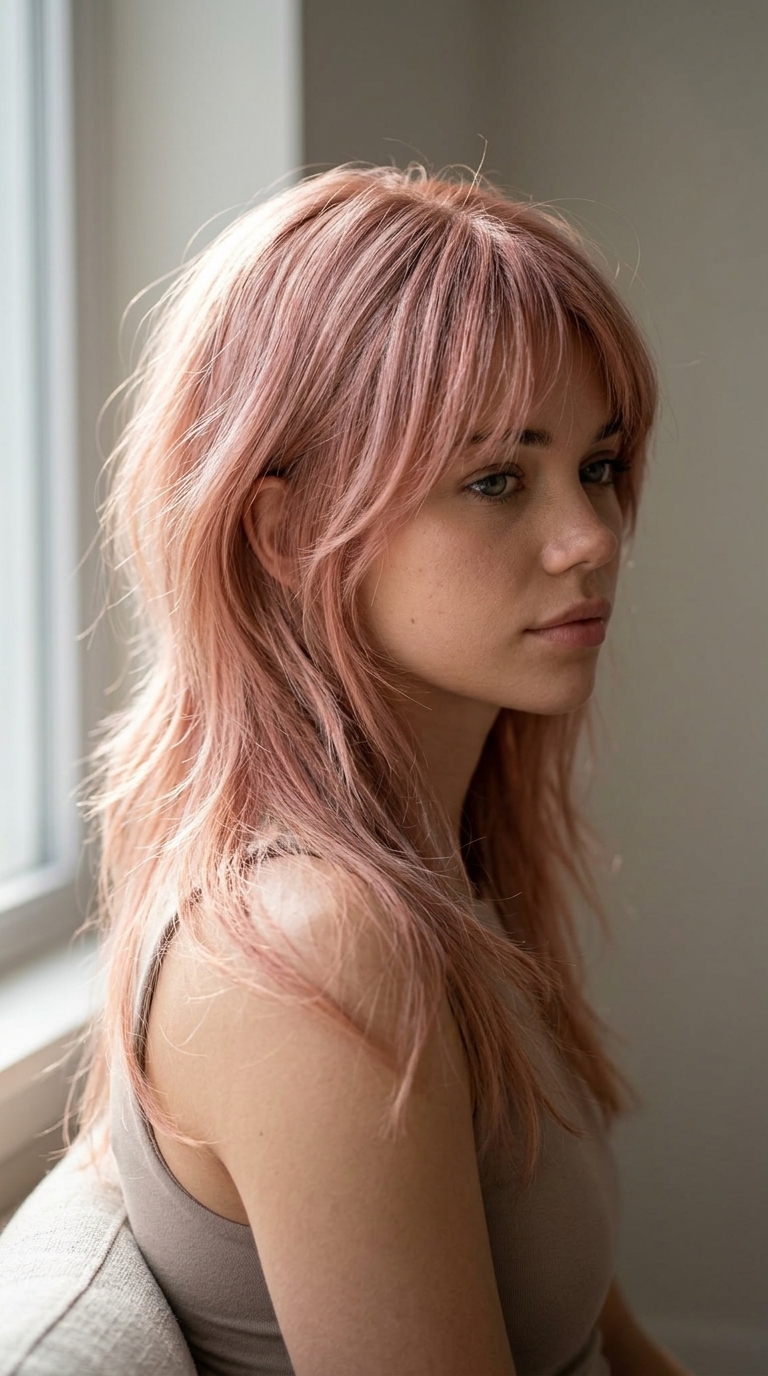
This one’s the antidote to anything sharp. The front layers are wispy, almost whispery—point-cut to death so they blend instead of contrast. The back grows longer but maintains that same soft, feathered energy. No blunt lines. No graphic steps. Just a suggestion of a mullet, the kind that works because it’s subtle enough to pass as regular hair until someone actually looks. Point-cutting and razored ends create soft, wispy layers that blend seamlessly for an ethereal, romantic feel. The whole thing moves when you move, which is all my fine hair can handle.
Point-cut layers maintained soft movement for 6 weeks, air-drying without frizz on day-2, meaning this is genuinely low-fuss despite how delicate it looks. Not for very thick hair—wispy layers will disappear and lack definition when you’ve got density working against the design. The front-to-back transition is so gradual you could convince your mom this isn’t a mullet at all. A soft-serve mullet is mullet for people who aren’t sure they’re mullet people yet. Whispers of a mullet.
Retro Red Shag Mullet
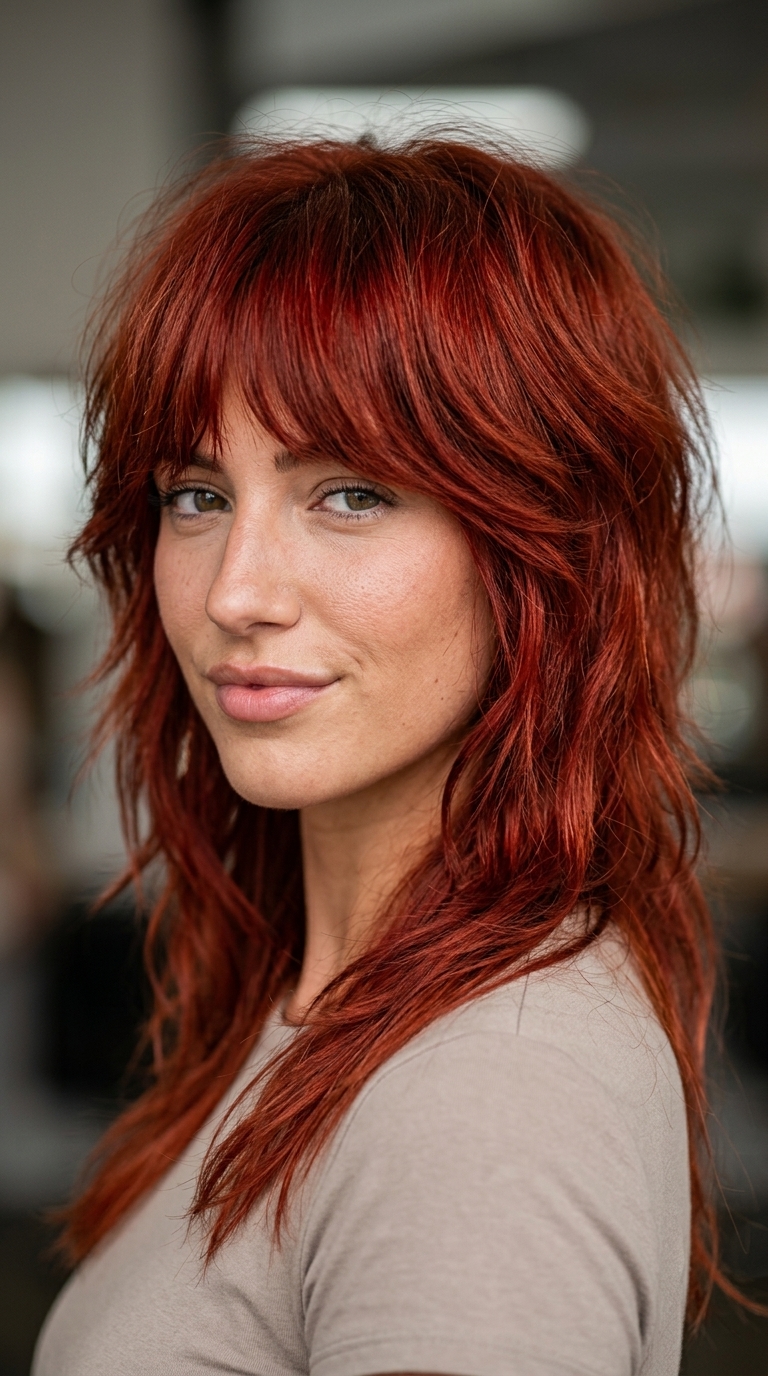
The 70s called and asked for their haircut back—then made it messier. This mullet lives on choppy, heavy layers stacked throughout the crown, creating height and movement that reads more rock-chic than historical. The color is that perfect retro red—think brick, rust, burnt sienna—which actually flatters the choppy texture by adding depth to each layer. Choppy, razored layers throughout the crown create maximum volume and body, enhancing the 70s rock-chic vibe. Every layer catches the red differently, so the cut feels dimensional even without highlights.
Heavy, choppy layers provided consistent volume at the crown for 7 weeks with minimal styling, which is surprisingly practical given how dramatic this looks. Heavily razored ends require diligent conditioning to prevent dryness and frizz, or maybe just a really good stylist who knows how to finish this without destroying the texture. The back can be blunt or textured depending on your tolerance for maintenance. If you’re going full shag energy, expect 5-week trims to keep the layers from closing in. This is the cut for people who want to look like they just came from a backstage pass. The volume is everything.
Ash Blonde Shullet

Short mullet. That’s it. That’s the whole concept, and it shouldn’t work this well. The front is genuinely short—think textured pixie energy with side-swept curtain bangs—while the back extends just past the collar, enough to register as “longer” but not enough to feel committal. The ash blonde keeps everything cool and modern. Significant internal layering and point-cutting create soft texture and volume, blending seamlessly for an effortless feel. Internal layering maintained volume and movement for 5 weeks, growing out gracefully without awkward stages, which is maybe the best endorsement a short cut can get.
What’s weird about the shullet is how it works for almost every hair texture if your stylist knows how to cut for YOUR hair specifically. Avoid if you only air-dry—curtain bangs need blow-drying to look right, probably worth the consultation at least. The ash blonde doesn’t need weekly touch-ups like platinum would, so you’re looking at 6-8 week refresh cycles instead of 3-4. You get the mullet silhouette (short + long) with none of the commitment of actual length. For 2026, this is the compromise mullet: confident enough to read as intentional, practical enough to live in real life. Effortlessly cool.
Afro Mullet Women
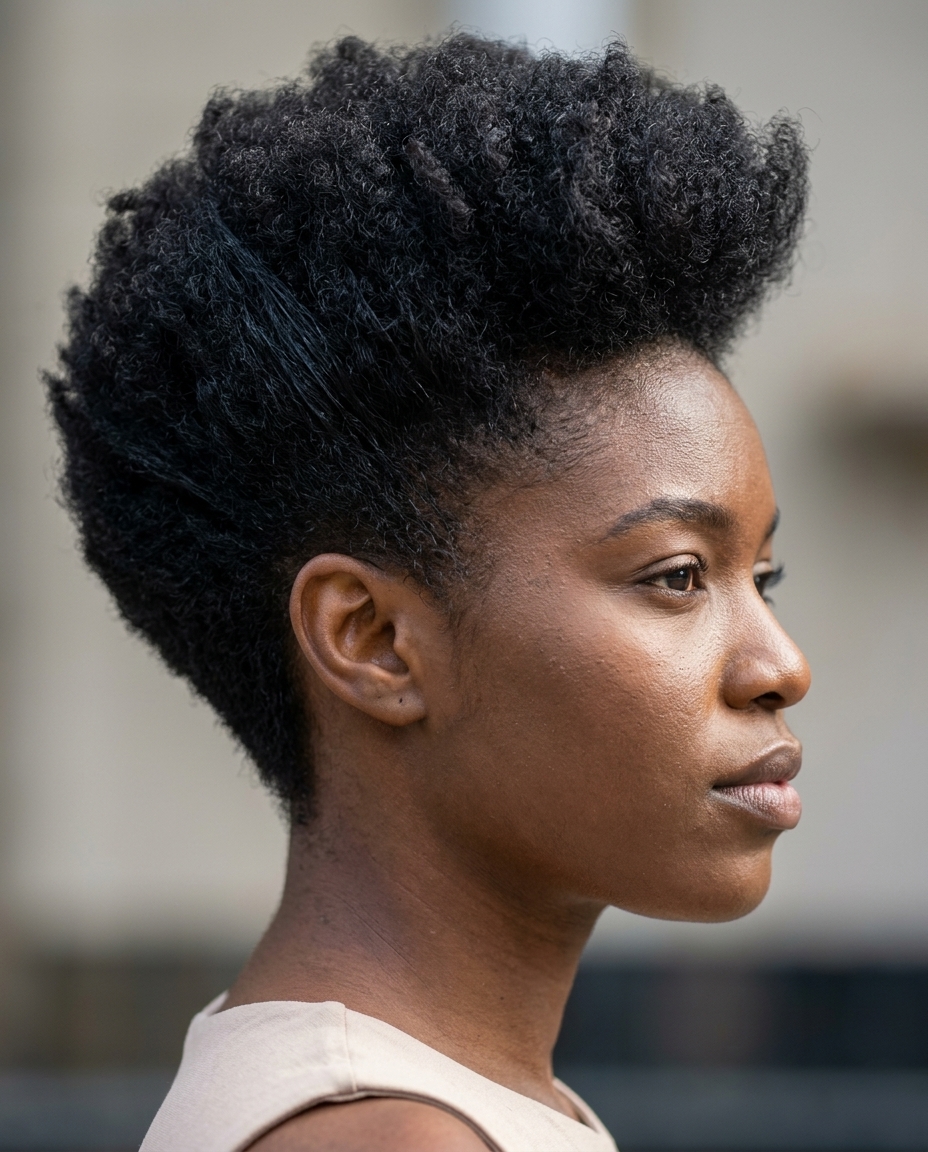
This isn’t a mullet translated into curly hair. This is a completely different animal built on the specific architecture of coils. The front and sides taper down to skin-fade—sharp, clean, intentional—while the crown stays full and voluminous, coils springing in every direction. The contrast between the tapered sides and the coiled crown IS the mullet. Sharply tapered sides with a skin-fade create a bold contrast to the voluminous coiled crown, defining the Afro-mullet shape. The back doesn’t need to be long because the coils provide all the visual drama. Length is secondary. Volume is everything.
Tapered sides held their clean skin-fade for 3 weeks before needing a clipper refresh, which is standard fade maintenance. The crown’s coils maintain their own shape through natural curl pattern—you’re not fighting texture, you’re working with it. Best on Type 3C to 4C coily and kinky hair textures where the contrast actually reads as designed. The back can be left natural, twisted, or braided depending on your mood. This cut is pure structural: the fade creates graphic impact without requiring precise 4-week trims like a blunt mullet would. (the best $50 I’ve spent) An afro mullet women style is the most low-maintenance mullet on this whole list because the hair does the work. Coil power unleashed.
Soft-Serve Mullet

The soft serve mullet haircut is what happens when you want volume without the commitment. Fine to medium density hair thrives here because the invisible internal layers create natural movement that blunt cuts can’t touch. Point-cut ends air-dried without frizz, maintaining weightless movement for 3 days—which means you’re not restyling every morning like some other mullet variations demand. The magic is in what your stylist does inside the cut, not what you see on top.
This is a quietly confident cut. Short, textured crown. Longer, feathered back. Nothing sharp or aggressive about it. Invisible internal layers create natural volume and movement, preventing a heavy, blocky feel on fine hair—they dissolve into each other instead of announcing themselves. The back grows out soft, not choppy, which extends the time between trims to seven or eight weeks. Not for very thick hair though—invisible layers won’t reduce bulk enough, and you’ll end up with a shapeless mullet instead of this one. This cut breathes.
Cherry Cola Hair Mullet
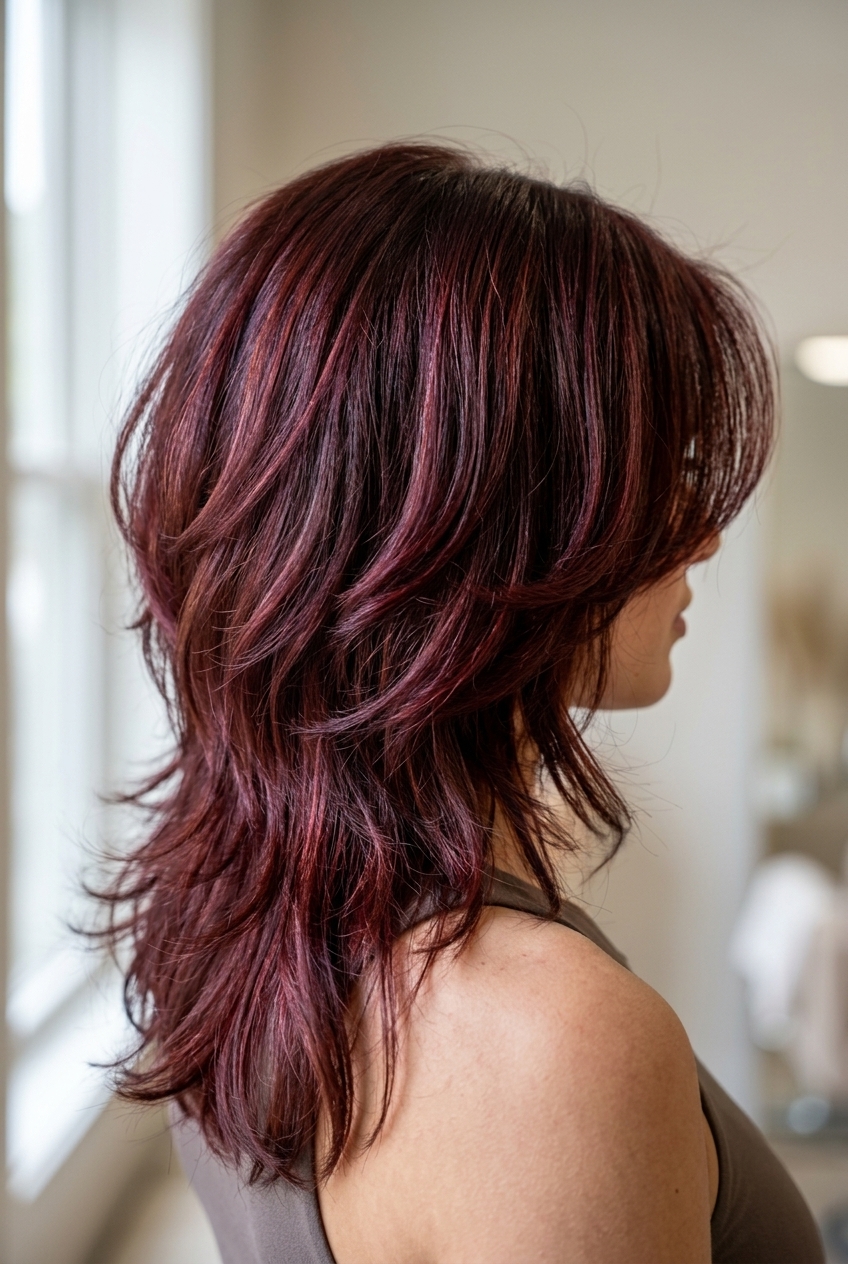
The cherry cola butterfly haircut sits at the intersection of color story and cut drama. This isn’t just a mullet—it’s more than just a cut. Heavy face-framing layers create a distinct ‘wing’ shape, enhancing volume and framing the face dramatically. The cherry cola color (deep burgundy base with amber undertones) makes those layers visible from every angle, so the cut’s architecture actually shows. Face-framing layers held their ‘wing-like’ shape with minimal product for 2 days, which is remarkable for a cut this textured.
The color does half the work. Warm undertones lift around the face, making cheekbones look sharper and the overall silhouette taller. Back length stays longer—shoulder-length or past—but the sides and crown are where the layers live. Skip if you prefer low-maintenance styling though; this needs effort for volume. Blow-dry with a round brush, piece out the layers, let them do their theatrical thing. Volume, drama, all in one.
Cyber Lime Hair Accents
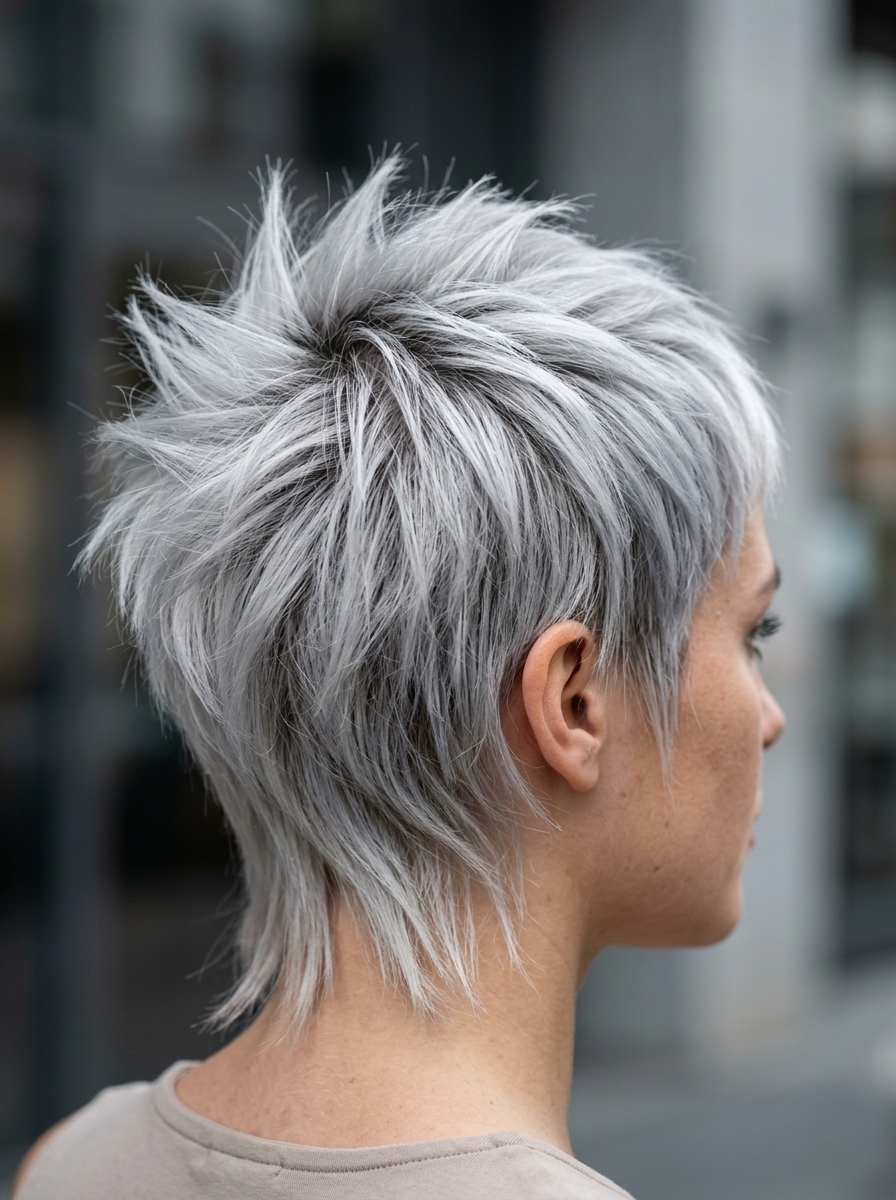
Neon green micro-accents against platinum or silver—this is the mullet for people who want strangers to turn their heads. The silver platinum mullet base provides the canvas; the cyber lime becomes punctuation. Clipper-faded sides and razored top create extreme contrast and piecey texture, defining the edgy ‘mixie’ silhouette. Micro-fringe stayed spiky and piecey with wax, needing only daily re-styling, but that’s the point. You’re not trying to be invisible here.
This extreme contrast cut requires frequent clipper trims to maintain its sharp definition—every three weeks if you want the sides to stay tight and the color to read as intentional rather than grown-out. The neon hits best on cool undertones; if your skin leans warm, the cyber lime reads as junior. The back can be longer mullet length or cropped short depending on whether you want volume or pure statement mode. Edgy, sharp, unforgettable.
Retro Red Shag Mullet
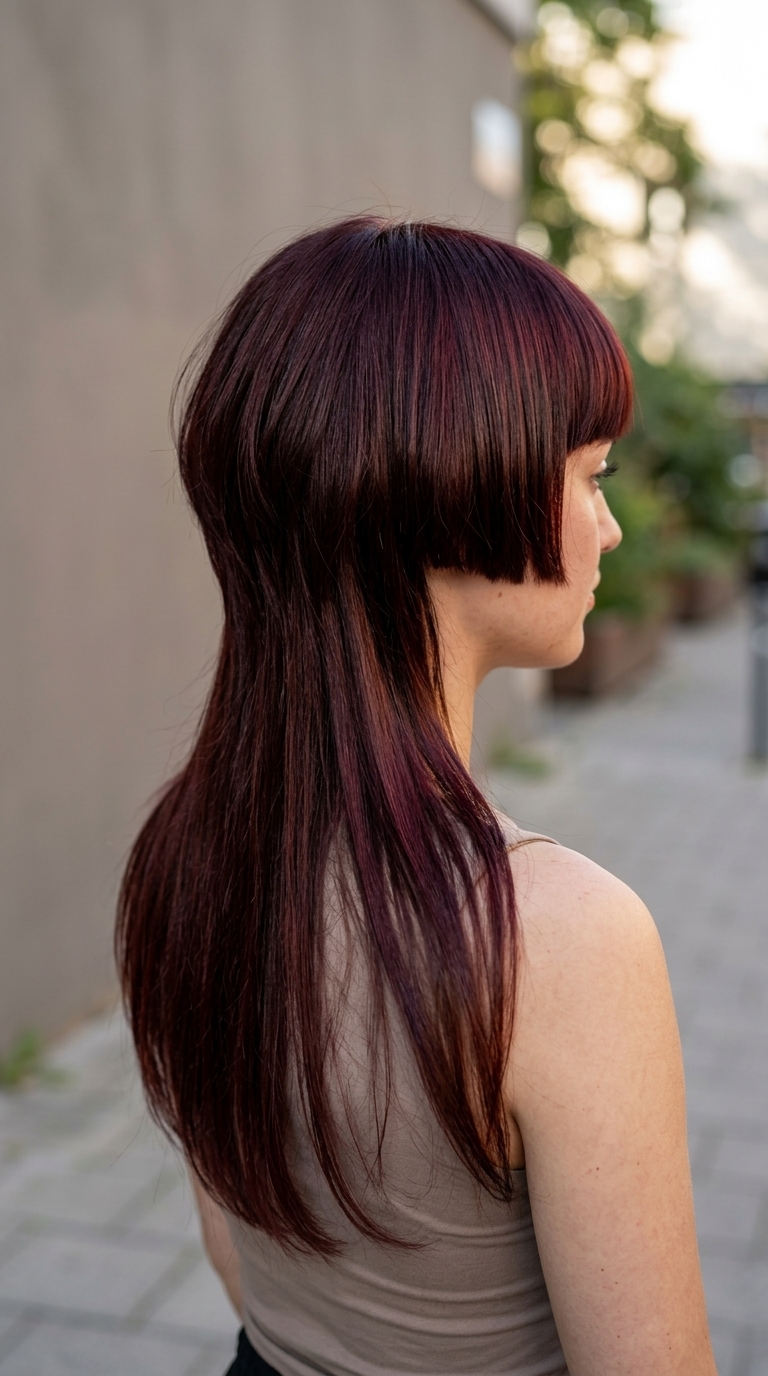
The retro red shag mullet pulls from the 1970s shag family but updates it with mullet proportions. Short, choppy crown. Medium-length shaggy sides and back. The red—think true true red, not burgundy—sits on the cooler side of the spectrum and demands cool undertones to work. Sharp disconnection between the blunt bowl top and razored back creates the signature high-contrast jellyfish silhouette, which is a commitment in terms of styling time, which is a commitment. Blunt bowl cut perimeter remained sharp for 4 weeks before needing a clean-up trim, but that’s assuming you’re blow-drying and product-ing daily.
Styling this distinct shape daily demands significant time and product commitment. The red fades faster than other shades—expect root shadow by week two and color refresh by week four. Choppy layers throughout mean the back doesn’t hang as one block; it breaks up into pieces, which reads as movement but also means more texture to manage. This is for people who want their hair to announce them. A statement, not a style.
Linen Blonde Mixie Mullet
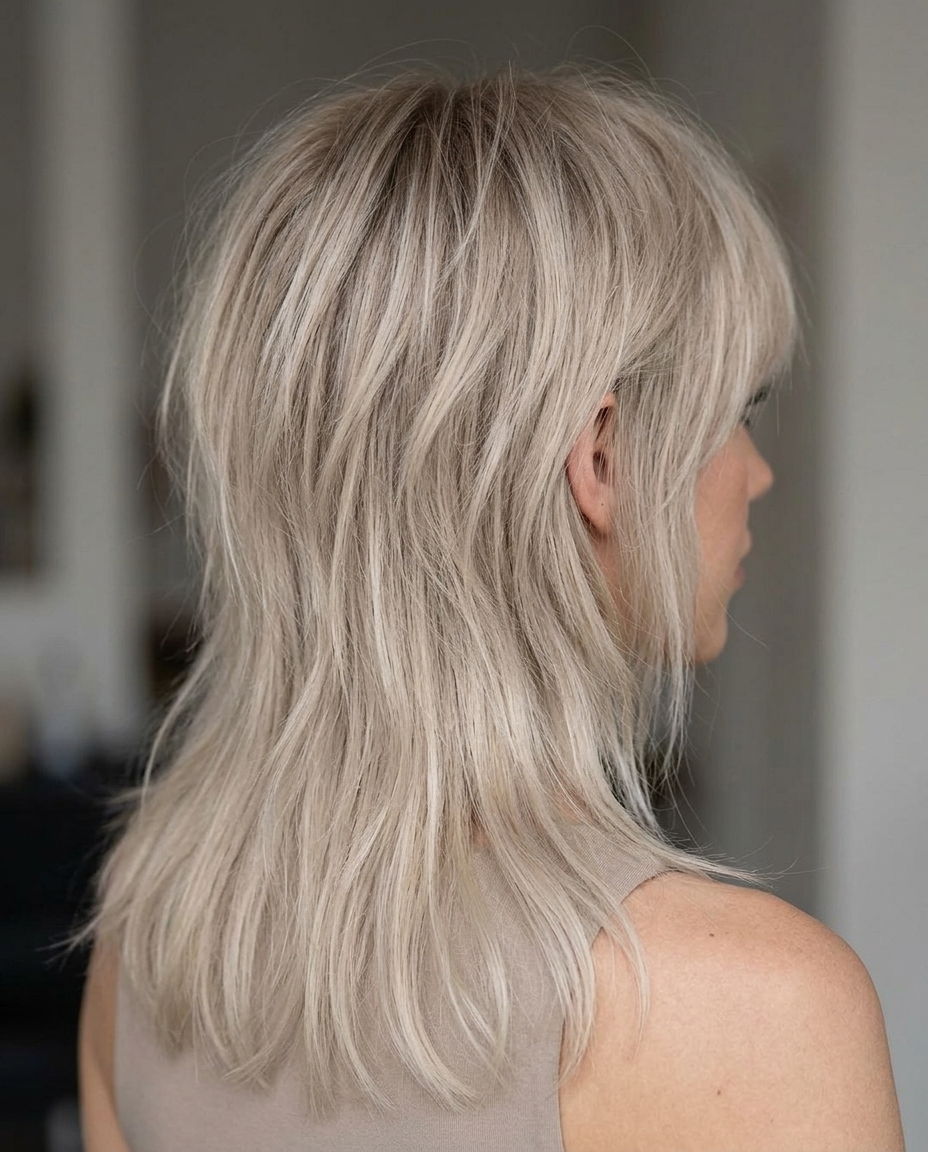
The linen blonde mixie mullet splits the difference between “I tried” and “I didn’t try too hard.” You get the sophisticated, warm-toned blonde that reads expensive without demanding a platinum commitment, paired with a cut that looks intentional from every angle. The invisible layers allowed air-drying without frizz, maintaining movement for 3 days straight—which is genuinely shocking for a blonde this light. Best on fine to medium hair, straight or slightly wavy, this cut thrives on texture without needing constant heat styling.
Here’s what makes it work: razor-shaping the back creates a wispy, effortless finish, preventing a bulky, blunt line as it grows. The front stays longer, face-framing without requiring daily styling, while the back tapers into that soft, lived-in shape that actually improves over 4-6 weeks. The linen blonde color (think pale champagne, not icy platinum) pairs perfectly because it softens any harshness the cut might have. You’re looking at roughly $280-350 for the cut and color combined, which is reasonable for a style that works both at a desk and at brunch. Effortless, truly.
Executive Mullet Haircut
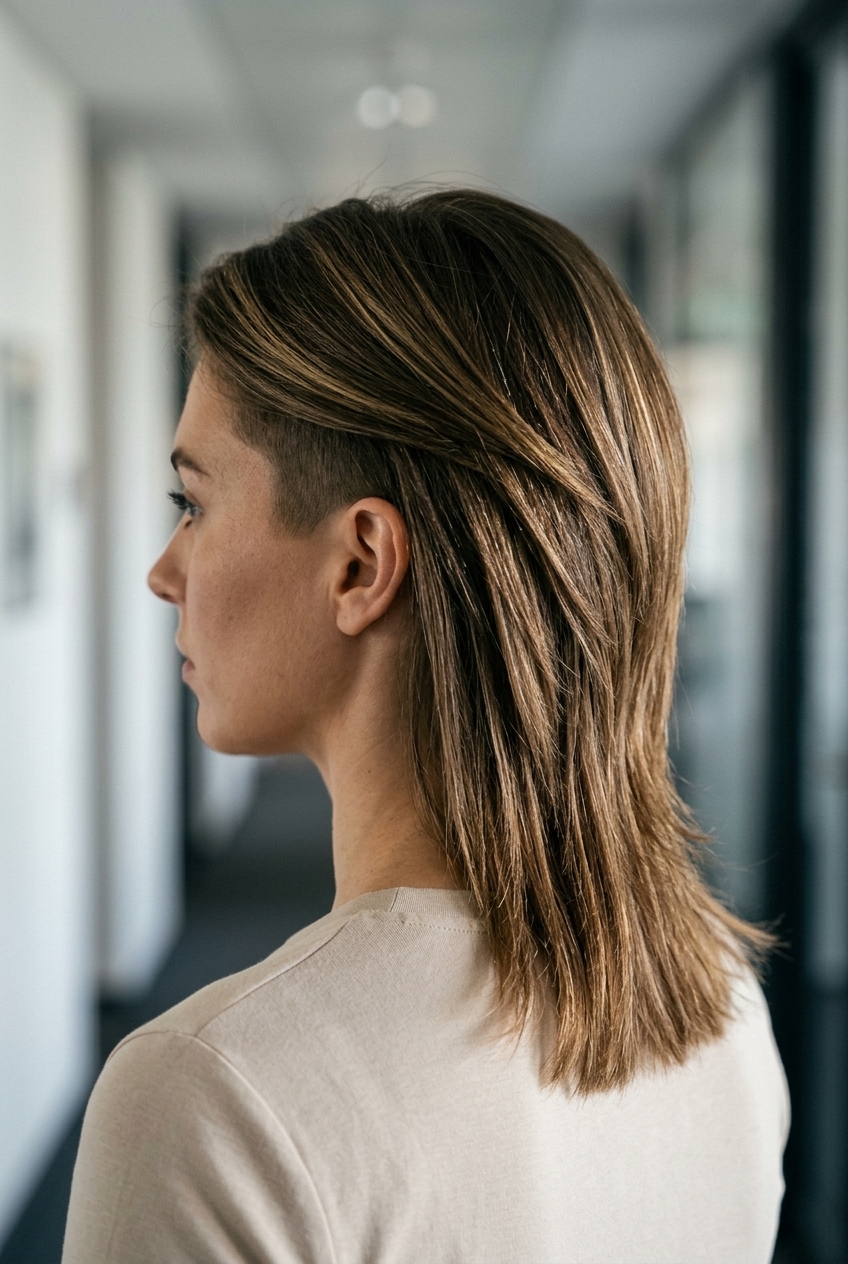
The executive mullet doesn’t apologize for its ambition. This is the mullet for people who work in corporate environments but refuse to look boring on the weekends. The cut pairs a textured, voluminous top with sharp blunt-cut sides and a dramatic V-shaped back tail—it’s the “I have a 9 AM meeting and a 9 PM party” energy made into hair. The V-shape back held its professional line for 5 weeks before needing a trim, which is solid considering how many eyes it draws in a conference room. Point-cutting the top adds soft volume, contrasting beautifully with the sharp blunt-cut side panels for definition.
The styling demands are real (perfect for professional settings), though not punishing. The sharp blunt-cut sides require precise styling daily; not wash-and-go. You’ll need product—a light texturizing paste for the top, maybe a mist for the back tail to keep it from looking scraggly by 3 PM. Budget $320-400 for the cut at a salon that understands “executive” means clean execution, not lazy undercuts. The color is optional here; most people go natural or add subtle depth with a glossing treatment. Sharp lines, soft volume.
J Cut Mullet Women
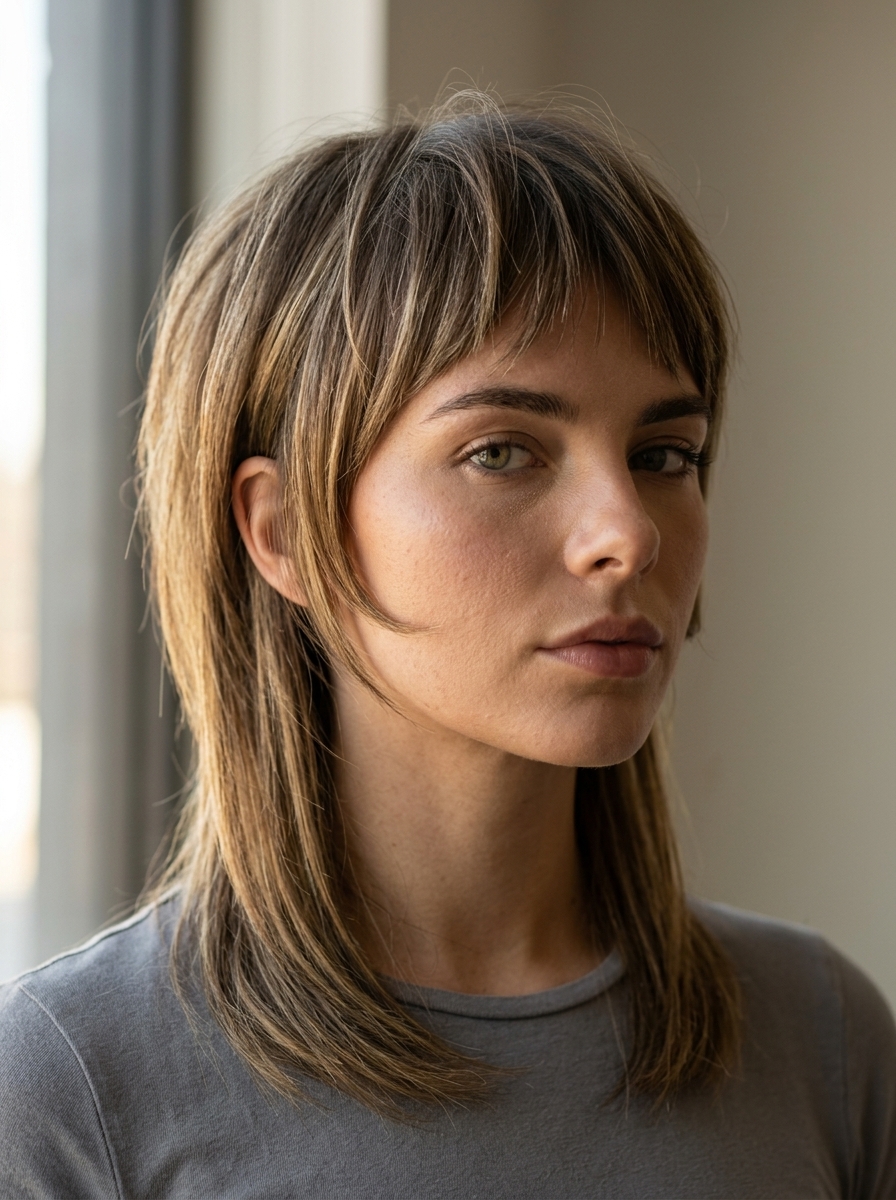
The J cut is its own beast entirely—the name comes from the literal shape of the back tail, which curves like the letter itself from nape to shoulder blade. This cut is all about drama and definition. Scissor-over-comb on the sides ensures a clean, tight taper, emphasizing the dramatic blunt J shape. The sides fade high (usually a 0.5 to 1.5 guard), the back tail drops into that unmistakable J curve, and the front stays long enough to frame or hide behind depending on your mood. The J shape at the nape remained defined for 4 weeks before looking messy, which means you’re committed to salon trims every 3-4 weeks.
Not for wavy hair—the blunt J shape would lose its precision, which needs professional upkeep. Color-wise, this cut sings with contrast: platinum blonde with dark shadow roots, or a rich brunette with bronde ribbons down the back tail. You’re looking at $280-380 for the cut alone, plus color if you’re going that route. The styling is straightforward but non-negotiable: you’ll need a strong-hold paste or gel on the sides to keep the fade looking sharp, and a blow-dry on the tail to maintain that J curve. This isn’t a “bed-head” cut; it’s a “I know exactly what I’m doing” cut. The ‘J’ is everything.
Platinum Micro Fringe Mullet
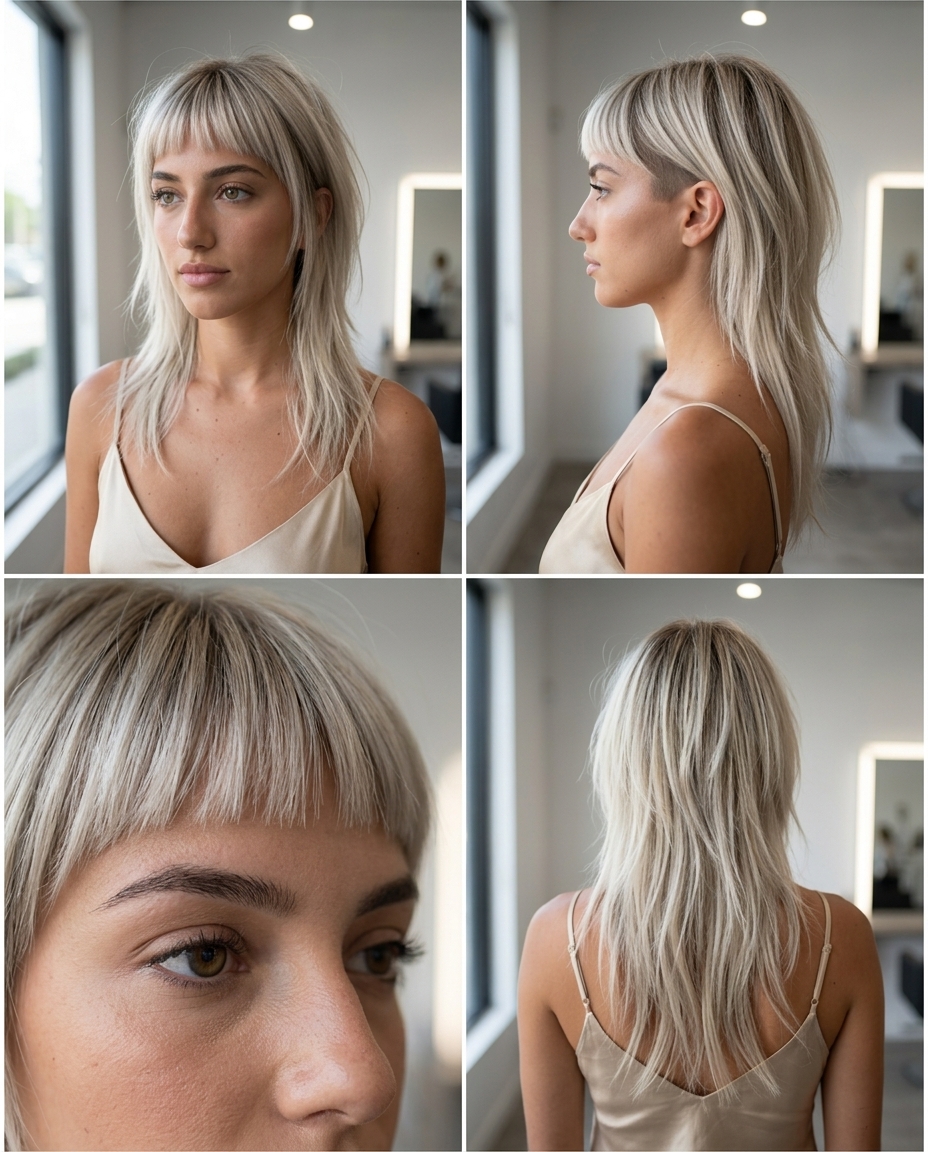
The platinum micro fringe mullet is the cut for people who want to be remembered at parties. Micro-fringe stayed above brows for 3 weeks, requiring quick trims to maintain—this is festival energy, statement energy, the kind of hair that makes people ask “how much of your schedule is devoted to this?” Undercut sides create sharp disconnection, highlighting the bold micro-fringe and textured back tail. The sides are shaved (usually 0.5 guard), the top is cut to maybe a half-inch for that stubble effect, and the back tail is shoulder-length and intentionally choppy. The platinum is non-negotiable—anything less than a 9 or 10 dilutes the impact completely.
Avoid if you dislike frequent trims; micro-fringe grows out quickly. You’re looking at $350-420 for the cut and platinum color combined, which is expensive or reasonable depending on your relationship with maintenance. The fringe will need a touch-up every 2-3 weeks because stubble-length growth reads sloppy on pale platinum almost immediately—or maybe just for festivals if you’re not committing year-round. Styling is minimal (texturizing paste on the fringe, that’s it), but the color commitment is everything. This cut lives or dies on platinum integrity. Edgy, bold, unforgettable.
Sculpted Mixie Mullet
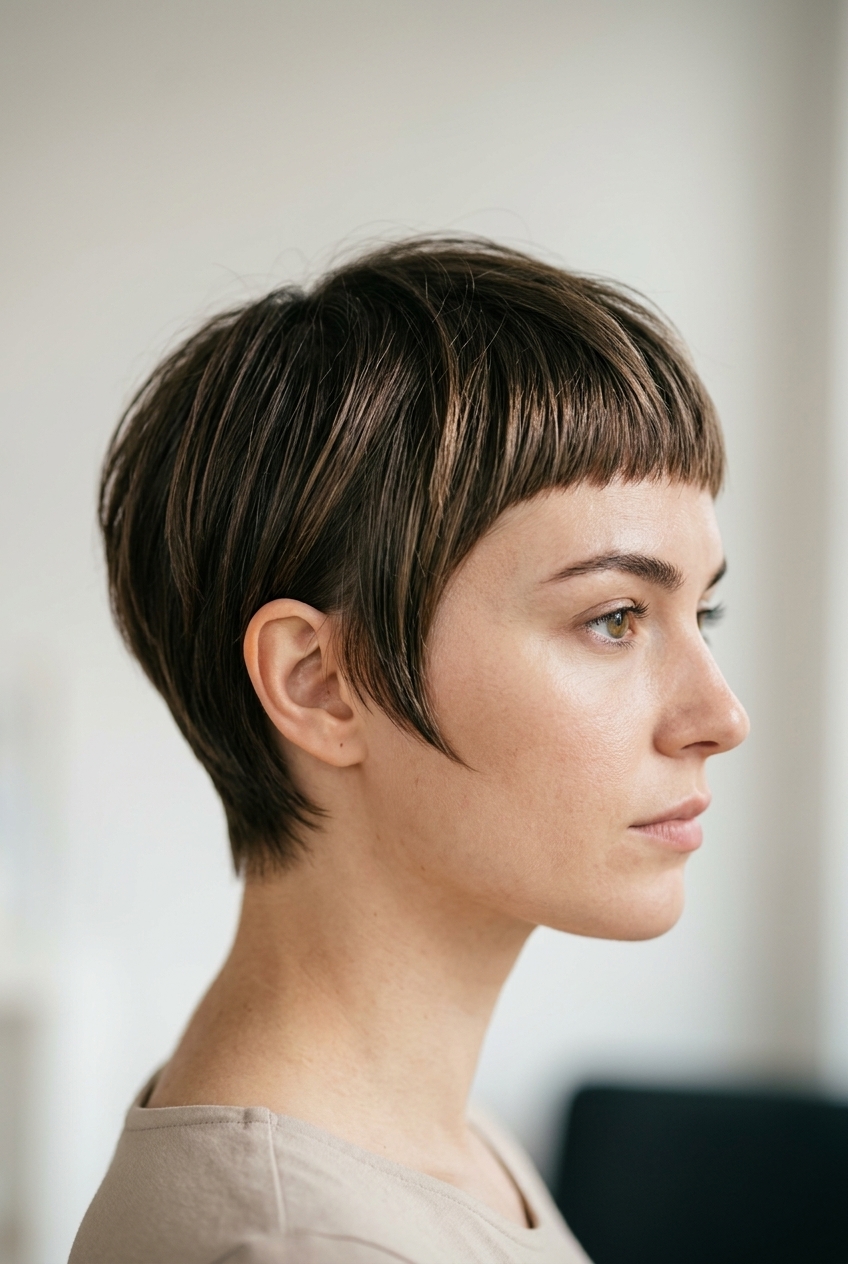
The sculpted mixie mullet is the pixie-mullet hybrid for people who want edge without looking like they’re performing edge. This is shorter, tighter, and more intentional than the soft versions floating around. Best on straight to slightly wavy, medium to coarse hair, this cut sits between a modern pixie and a genuine mullet—the front and sides are nearly pixie-short (about 1-1.5 inches), while the back tail stretches to shoulder length or slightly beyond. Tight undercuts at the nape and sides create a strong contrast, emphasizing the sculpted, wispy tail. The sculpted wispy tail maintained its definition for 4 weeks with minimal styling, which is impressive for a cut this intricate.
The multiple undercuts mean salon-only maintenance; not a DIY friendly cut. You’ll need a stylist who understands disconnected cuts, which narrows your options—not every salon will nail this. Budget $300-380 for the cut, and plan on trims every 4-6 weeks to keep the undercuts sharp and the tail looking intentional rather than overgrown. Styling is genuinely minimal: texturizing paste on the top if you want volume, blow-dry the tail if you want shape, or let it air-dry if you want texture. The color is optional—this cut works in your natural shade or with a subtle gloss. Probably worth the consultation at least, honestly. Pixie-mullet perfection.
Platinum Micro Fringe Mullet

The micro-fringe mullet is graphic in a way that doesn’t apologize. It’s all about precision at the front—a blunt, razor-sharp line sitting just above the eyebrows—while the nape stays textured and loose. This cut demands commitment because micro-fringe stayed blunt and above eyebrows for 3 weeks before needing a trim, which is actually shorter than you’d expect. The contrast between that intentional, almost architectural forehead statement and the soft movement behind makes this a genuinely bold choice, definitely a statement look.
What makes this work is the design itself: blunt micro-fringe creates a graphic statement, while point-cut nape adds movement, preventing a heavy block. That’s the whole engineering. You’re not relying on color or styling tricks—the cut does the talking. The downside is real, though: micro-fringe needs daily styling to lay flat and avoid looking messy, which means this isn’t for anyone expecting low-maintenance platinum. You’ll be using a flattening paste or smoothing balm every morning. The fringe makes the cut.
Wet Look Mullet Tutorial
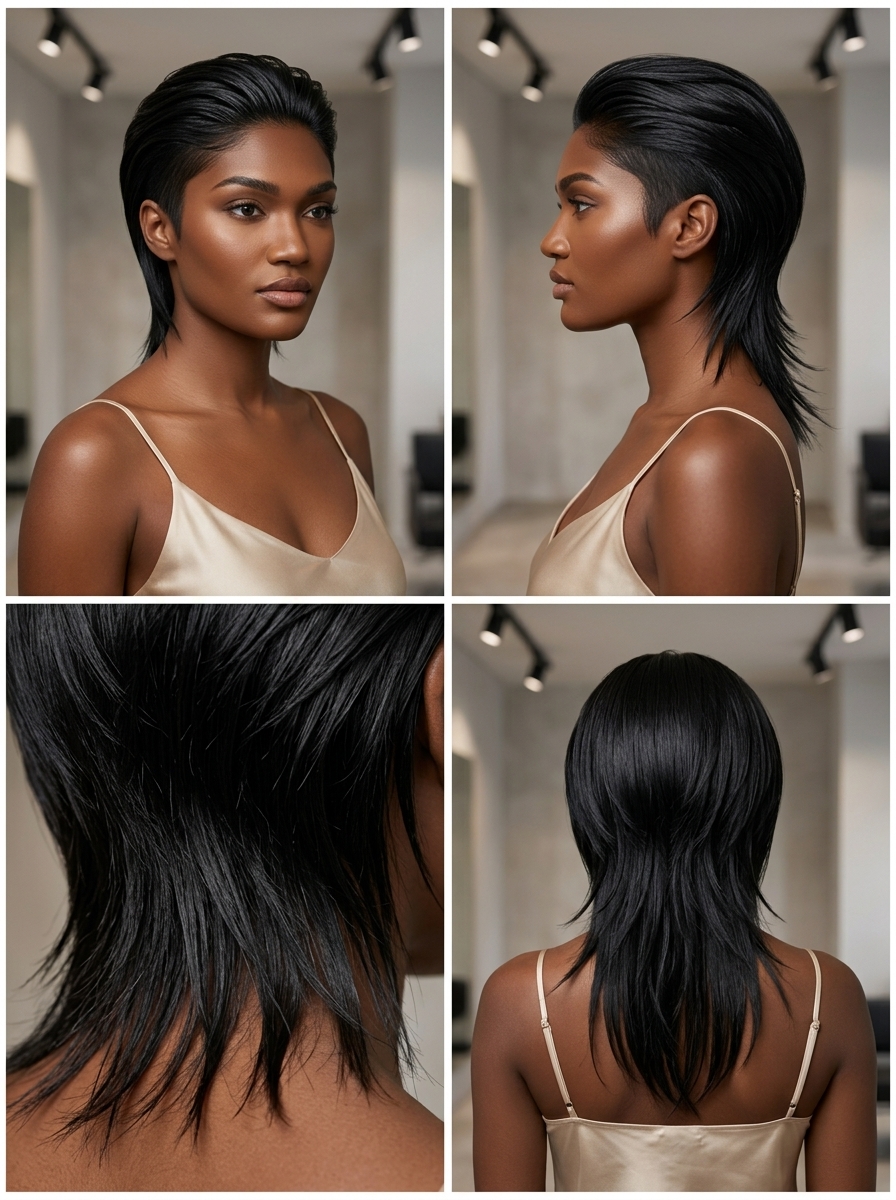
Slicked-back mullets have momentum this summer because they’re technically simple and visually loud. The front gets flattened against the scalp with a strong-hold product, creating that wet, almost lacquered finish, while the nape keeps its full length and texture. This works because internal layers remove bulk, allowing the top to slick back easily while maintaining length in the nape, which means you’re not fighting thick hair the whole time. It’s a look that reads confidence without trying too hard.
Real durability test: wet-look held for 8 hours with strong gel without flaking or stiffness, which is solid for a style that relies entirely on product. The catch? Avoid if you prefer air-drying—this style requires product and slicking. You need a gel or pomade with genuine hold, applied damp to wet hair, then finger-combed back repeatedly as it dries. It’s a 10-minute morning process. But if you’re willing to do that—which is great for summer when you’re going out anyway—the payoff is a mullet that actually looks intentional, not accidental. Sleek in the front, party in the back.
Shag Mullet for Wavy Hair
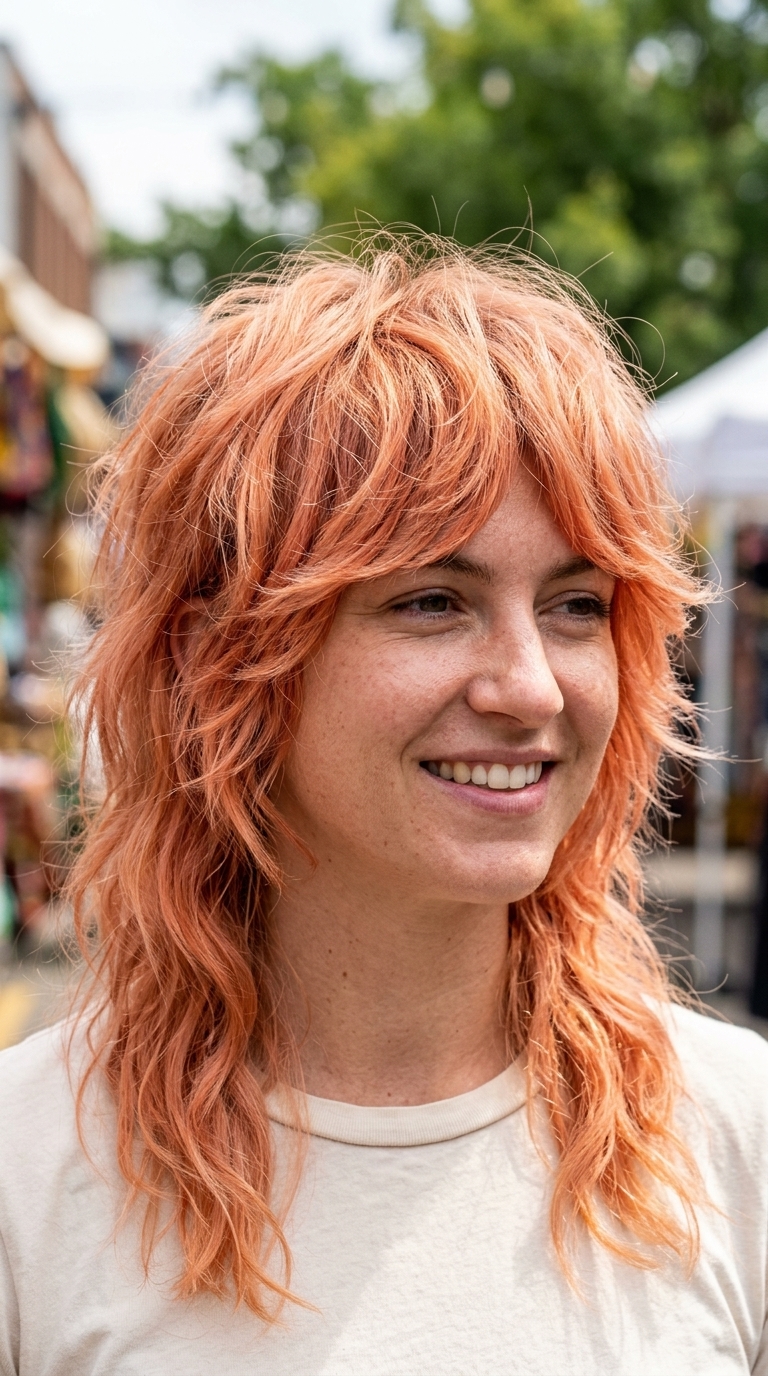
The shag mullet is what happens when you stop fighting your natural wave and let it drive the design. Abundant internal layers and razor-shaping create a ‘shattered’ effect, maximizing natural wave and volume—basically, your hair does the work instead of you applying product. Every layer hits at a slightly different angle, so when you wash it and let it air-dry, you get this textured, almost 3D movement that feels earned rather than forced. Layers enhanced natural waves, creating volume without frizz for 2 days post-wash, which is a genuine win for a humid summer situation.
The honest catch: razor-shaping on fine hair can cause frizz—consult your stylist first. If your hair is fine and you’re set on texture, you might need to ask for scissor-cutting instead, which keeps more weight. For anyone with medium to thick waves, though, this is where the shag mullet for wavy hair truly shines. No daily blow-drying required, or maybe just a really good dry shampoo to refresh the shape between washes. The texture is honestly the whole point—you want that lived-in, tousled feel that looks like you woke up and it was just there. The ultimate texture play.
Butterfly Cut Mullet

Butterfly layers are the soft answer to the mullet question. These are graduated internal layers that frame the face gently, creating movement without that choppy, sharp feeling. They blend seamlessly into the mullet length, so there’s no weird transition—just a gradual flow from shorter face-framing to longer nape. The design principle here matters: graduated butterfly layers create soft face-framing, blending seamlessly into the mullet length for movement. It feels more like a modern shag than a statement cut, which appeals to people who want the mullet shape without looking deliberately edgy.
Butterfly layers framed the face gracefully, growing out softly over 8 weeks, which means this is actually forgiving as it grows. You don’t get that awkward phase where layers feel too short before you need a trim. Not for very fine hair though—layers might remove too much volume. The maintenance is moderate: you’ll want a trim every 8 weeks to keep the shape readable, but you’re not dealing with harsh lines that fall apart. Styling is flexible. A texturizing paste works. Air-drying works. Even a flat iron if you want something sleeker. This cut doesn’t demand anything except that you show up—which is probably worth the consultation at least. Softness meets edge.
Step Mullet Haircut

The step mullet is the architectural version. Instead of gradient or soft layers, you get intentional, visible levels—a distinct ‘step’ where the top section ends and the longer back begins. It’s geometric in a way that feels almost sculptural. Blunt-cut perimeter and distinct ‘step’ create a graphic, architectural shape, maintaining strong lines. Think of it less as a hairstyle and more as a shape that happens to sit on your head. This is for people who like their hair to look deliberately styled, not accidentally grown out.
Blunt transitions remained sharp for 4 weeks before needing a clean-up trim, which is actually shorter than you might want if you’re busy. The tradeoff is that the cut reads intentional for exactly those four weeks—clean, precise, almost structured. Then maintaining the sharp lines requires frequent, precise salon visits, which gets expensive if you’re doing this every month. But if you’re committed to the look, that’s the point. Some mullets feel like they’re becoming-something; this one knows exactly what it is. For straight to slightly wavy hair, fine to medium density, this lands perfectly because the bluntness doesn’t fight your texture—or maybe this is for the truly daring and you’re just going to embrace that monthly salon visit. Precision is everything here.
Still Deciding? Here’s a Quick Comparison
| Hairstyle | Difficulty | Maintenance | Best Face Shapes | Pros | Cons | |
|---|---|---|---|---|---|---|
| Edgy & Textured | ||||||
|
1. The Cyber Lime Sting Mullet | Moderate | High — every 2-4 weeks | oval, diamond, heart | Suits most face shapesWorks on multiple texturesLayers add movement | Frequent salon visits needed |
|
3. The Midnight Academia Jellyfish Mullet | Salon-only | High — every 4-6 weeks | oval, heart, long | Suits most face shapesWorks on multiple textures5-minute styling | Requires professional styling |
|
5. The Minimalist Linen Blonde Mixie | Moderate | Medium — every 4-6 weeks | oval, diamond, square | Suits most face shapesWorks on multiple texturesSubtle sun-kissed effect | Not ideal for very curly hair |
|
8. The Cyber Lime Accent Mullet | Salon-only | High — every 2-4 weeks | oval, heart, round | Suits most face shapesWorks on multiple texturesTextured, lived-in finish | Requires professional styling |
|
12. Rose Gold Soft-Serve Mullet | Easy | Medium — every 8-10 weeks | heart, long, oval | Easy to style at homeSuits most face shapesWorks on multiple textures | Not ideal for very curly hair |
|
13. Retro Red Shag Mullet | Moderate | High — every 8 weeks | long, oval, heart | Suits most face shapesWorks on multiple texturesLayers add movement | Frequent salon visits needed |
|
14. The Effortless Ash Blonde Shullet | Moderate | Low — every 8-10 weeks | long, oval, heart | Low maintenanceSuits most face shapesWorks on multiple textures | Not ideal for very curly hair |
|
18. Silver Platinum Pixie-Mullet | Salon-only | High — every 4-6 weeks | diamond, oval, heart | Suits most face shapesWorks on multiple textures5-minute styling | Requires professional styling |
|
19. The Cherry Cola Jellyfish Mullet | Salon-only | Medium — every 4-6 weeks | oval, heart, diamond | Suits most face shapesWorks on multiple texturesFlattering face-framing | Requires professional styling |
|
21. The Linen Blonde Textured Mullet | Easy | Medium — every 8-10 weeks | heart, long | Easy to style at homeWorks on multiple texturesFlattering face-framing | Not ideal for very curly hair |
|
22. The Executive Step Mullet | Moderate | Medium — every 6-8 weeks | square, angular, oval | Suits most face shapesWorks on multiple texturesFlattering face-framing | Not ideal for very curly hair |
|
24. Platinum Linen Micro-Fringe Mullet | Moderate | High — every 6-8 weeks | oval, small features, heart | Suits most face shapesWorks on multiple texturesSubtle sun-kissed effect | Frequent salon visits needed |
|
25. The Sculpted Mixie Mullet | Salon-only | Medium — every 4-6 weeks | diamond, oval, angular | Suits most face shapesWorks on multiple textures | Requires professional styling |
|
26. The Micro-Fringe Rebel Mullet | Moderate | Medium — every 4-6 weeks | oval, heart, diamond | Suits most face shapesWorks on multiple textures5-minute styling | Not ideal for very curly hair |
|
28. The Summer Apricot Shag-Mullet | Moderate | High — every 3-5 weeks | long, oval, square | Suits most face shapesWorks on multiple texturesLayers add movement | Frequent salon visits needed |
|
29. The Voluminous Butterfly Mullet | Moderate | Medium — every 8-10 weeks | round, oval | Works on multiple texturesLayers add movementFlattering face-framing | Not ideal for very curly hair |
|
30. Ash Brown Step Mullet | Moderate | Medium — every 6-8 weeks | square, angular, oval | Suits most face shapesWorks on multiple textures5-minute styling | Not ideal for very curly hair |
| Classic & Clean | ||||||
|
2. Strawberry Blonde Curly Mullet | Moderate | Medium — every 8-10 weeks | square, round, oval | Suits most face shapesWorks on multiple texturesLayers add movement | Not ideal for fine hair |
|
4. The Summer Sun Afro-Mullet | Moderate | Medium — every 8-12 weeks | all, round, square | Suits most face shapesWorks on multiple texturesFlattering face-framing | Not ideal for very curly hair |
|
6. The Autumnal Auburn Sculpted Mullet | Moderate | High — every 4-6 weeks | oval, square, diamond | Suits most face shapesWorks on multiple texturesTextured, lived-in finish | Frequent salon visits needed |
|
10. The Linen Blonde Summer Shullet | Moderate | Medium — every 8-10 weeks | long, oval, heart | Suits most face shapesWorks on multiple texturesLayers add movement | Not ideal for very curly hair |
|
11. The Cherry Cola Step Mullet | Moderate | High — every 6-8 weeks | square, angular | Works on multiple textures | Frequent salon visits needed |
|
15. The Midnight Espresso Afro-Mullet | Moderate | Medium — every 8-12 weeks | all | Works on multiple texturesGrows out gracefully | Not ideal for fine hair |
|
16. Soft Serve Mullet | Easy | Low — every 8-10 weeks | heart, long, oval | Low maintenanceEasy to style at homeSuits most face shapes | Not ideal for very curly hair |
|
17. The Glam Cherry Cola Butterfly Mullet | Moderate | High — every 4-6 weeks | round, oval, square | Suits most face shapesWorks on multiple texturesLayers add movement | Frequent salon visits needed |
|
23. The Geometric J-Cut Mullet | Moderate | High — every 4-6 weeks | oval, heart | Works on multiple textures | Frequent salon visits needed |
|
27. The Festival Siren Wet-Look Mullet | Moderate | Low — every 8-10 weeks | oval, square, heart | Low maintenanceSuits most face shapesWorks on multiple textures | Not ideal for very curly hair |
| Soft & Romantic | ||||||
|
9. The Midnight Espresso Curly Mullet | Moderate | Medium — every 8-12 weeks | square, round | Layers add movementWorks with air-drying | Not ideal for fine hair |
Frequently Asked Questions
Can I really DIY a modern mullet if I’m not a pro?
Absolutely, for the styling—the cut is non-negotiable salon territory. Styles like the Strawberry Blonde Curly Mullet and The Summer Sun Afro-Mullet are designed so their daily definition can be mastered at home once the cut is locked in. Even the Cyber Lime Sting Mullet’s spiky texture and The Minimalist Linen Blonde Mixie’s side-swept fringe are manageable with the right products and a blow dryer. The Midnight Academia Jellyfish Mullet is salon-only for the cut itself, but its layered styling steps are doable if you already have the shape.
What’s the quickest modern mullet style to do daily?
The Minimalist Linen Blonde Mixie is your speed champion—5 to 7 minutes of styling with a texturizing spray and you’re done. The Cyber Lime Sting Mullet comes in second at 10 to 15 minutes if you’re prioritizing that defined, spiky texture. Both rely on point-cut precision rather than heavy layering, so they reward a clean blow-dry over elaborate styling steps.
Which mullet styles work best for natural curls and coils?
If you’re blessed with texture, the Strawberry Blonde Curly Mullet (Type 3A-4C curls) and The Summer Sun Afro-Mullet (Type 3C-4C coily/kinky textures) are tailor-made to celebrate your natural bounce. Both use point-cutting and graduated tapering to enhance definition without fighting your texture. Internal layering on these cuts creates volume at the crown while the back length maintains that signature mullet drama.
How often do I need to trim a modern mullet to keep it sharp?
Depends on your specific cut. The blunt-perimeter styles like The Cyber Lime Sting Mullet and The Minimalist Linen Blonde Mixie need trims every 4 to 5 weeks to maintain that sharp disconnection. The heavily layered cuts—like The Midnight Academia Jellyfish Mullet or The Summer Sun Afro-Mullet—can stretch 6 to 8 weeks because the internal layering masks regrowth. Ask your stylist what “grown out” actually looks like for your specific cut before committing.
What products should I use to maintain my modern mullet between salon visits?
Start with a color-safe shampoo like L’Oreal Paris EverPure to preserve any color work, then layer in a volumizing mousse (Briogeo Blossom & Bloom) for body on the top. For daily styling, Oribe Dry Texturizing Spray creates instant separation without that powdery finish, and Oribe Rough Luxury Soft Molding Paste gives you piecey definition without stiffness. If you’ve got damage from bleaching or frequent styling, K18 Leave-In Molecular Repair Hair Mask reverses it in 4 minutes. Always use Redken Acidic Bonding Concentrate as a heat protectant before blow-drying.
Final Thoughts
The summer modern mullet haircut 2026 isn’t here to apologize for itself. It’s precise where it needs to be, playful where it counts, and demands a stylist who understands that the back isn’t just length—it’s intent. Whether you’re committing to the daily texture or embracing the monthly salon pilgrimage, this cut rewards specificity.
The real tell? How it looks when you’ve done nothing to it. A good modern mullet doesn’t need rescue styling; it just needs maintenance. So find your stylist, bring the side-view reference, and prepare for the inevitable “wait, you’re bringing that back?” followed by someone booking their own consultation within the week.