
I keep seeing cinnamon brown everywhere, mostly in the salon chair next to mine, where women are asking for warm, spicy tones instead of the ash blonde we all swore by five years ago. It’s not a trend that screams, it just sits there looking like the color you should have been born with. I’m not mad about it, I’m just surprised it took this long.
Here are 29 cinnamon brown hair ideas, from low upkeep to high, short to long, salon to DIY. There’s a shade for every density and texture, and a few that will test your patience if you hate the grow-out phase. Cinnamon Brown Hair works because it flatters warm skin and brightens fine strands without the upkeep of a full blonde.
I remember my own grow-out line at week five, that harsh stripe of dark roots against faded caramel. Cinnamon brown fixes that problem with a root shadow that blurs the line, and that’s why I’m writing this.
Solid Rich Cinnamon Brown With Soft Waves
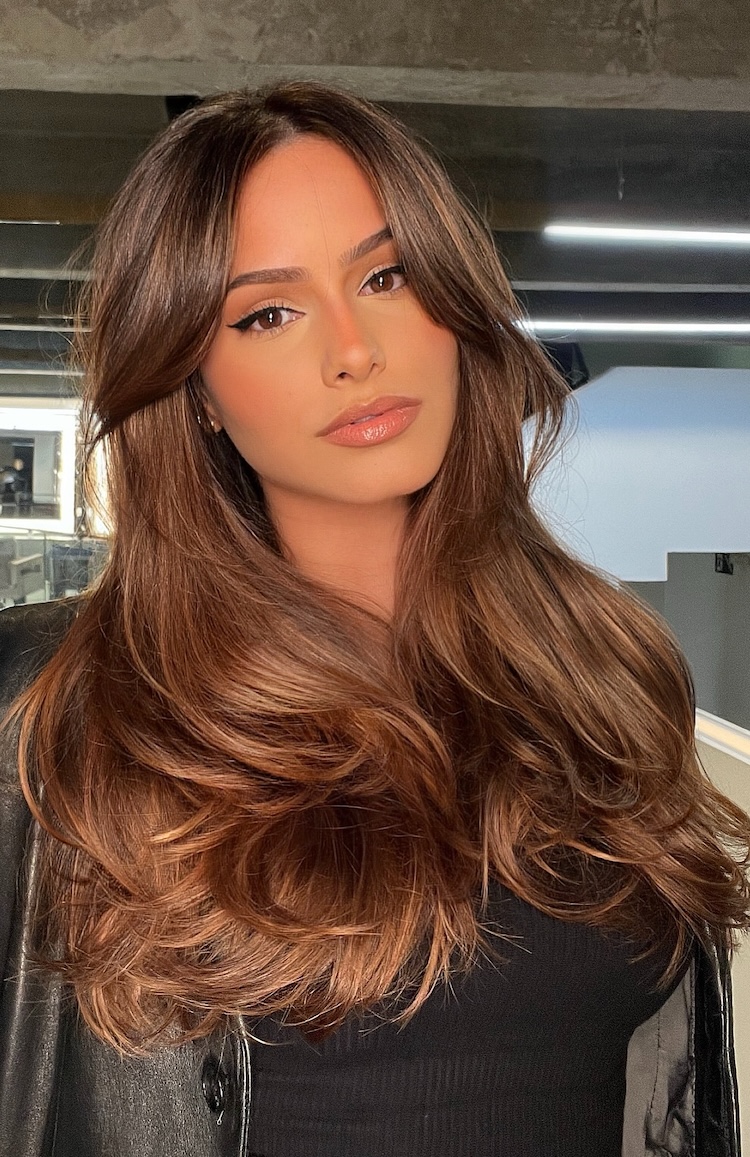
The richness of this shade catches the light in a way that straight-up brown never does. That’s the solid rich cinnamon brown working its magic, a base shade that lands somewhere between auburn and chestnut with a warm, almost spicy glow. It flatters warm and olive skin tones especially, and on neutral complexions it reads like a grown-up version of bronde. The soft waves and curtain bangs keep the mid-back length from feeling heavy, and the thick, wavy texture holds the blowout shape without fighting it. A middle part opens up the face, and the shine is what you notice first.
Deep Brown With Auburn Copper Balayage
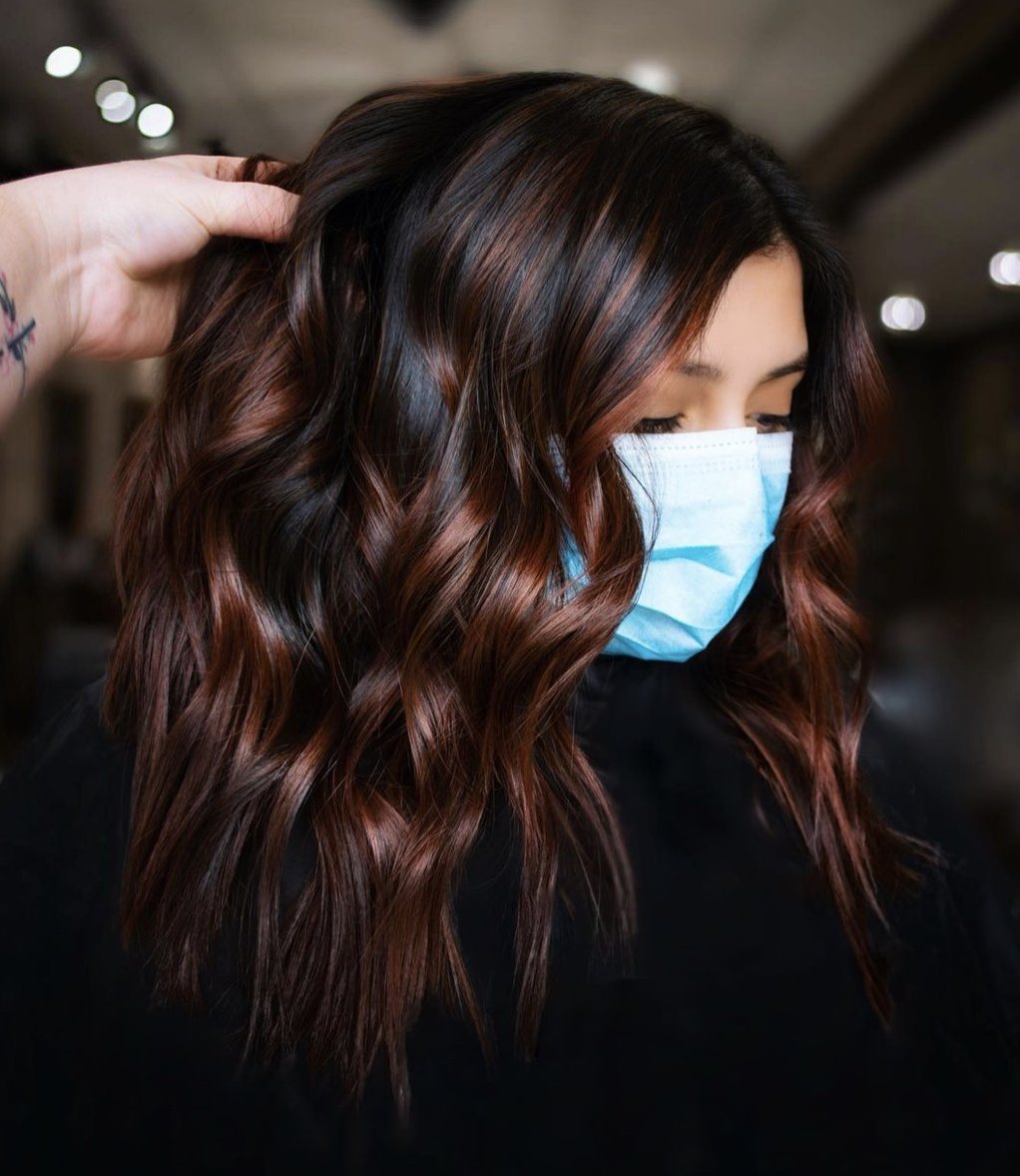
Ever wonder how some hair manages to look both deep and glowing at the same time? It’s the auburn copper balayage technique, applied over a deep dark brown base that grounds the whole thing. The colour is hand-painted from mid-length down, so the transition from dark root to copper isn’t a line, it’s a gradient. That collarbone length with loose waves shows off the dimension better than straight hair would.
The upkeep is real but not punishing. I’d plan a toner appointment every eight weeks to keep the copper from turning orange. Wash with cool water to slow the warmth from fading, and your colourist will thank you for booking the gloss.
Deep Brown With Warm Copper Highlights
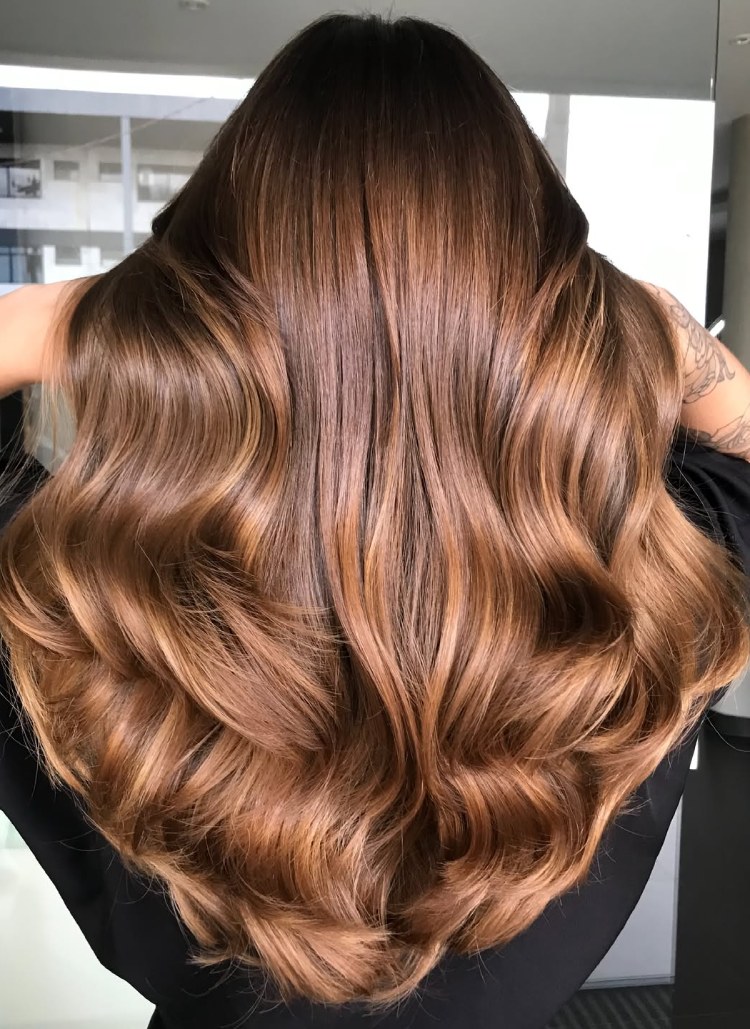
For anyone torn between all-over color and something more strategic, this is the smarter bet. An all-over copper is a commitment: you’re in for root touch-ups and a brassiness battle. The deep brown copper highlights approach lets you keep a dark base while the warm copper highlights add brightness where it counts: around the face and through the ends. It’s the difference between a single note and a chord.
The contrast is the point. The highlights sit on the top layers and around the face, leaving the underlayers dark for depth. The back view shows the full effect: the thick, wavy texture catches the copper at different angles, and the mid-back length lets it cascade. The result is dimensional without being busy, custom without being fussy.
Warm Cinnamon Brown With Subtle Copper
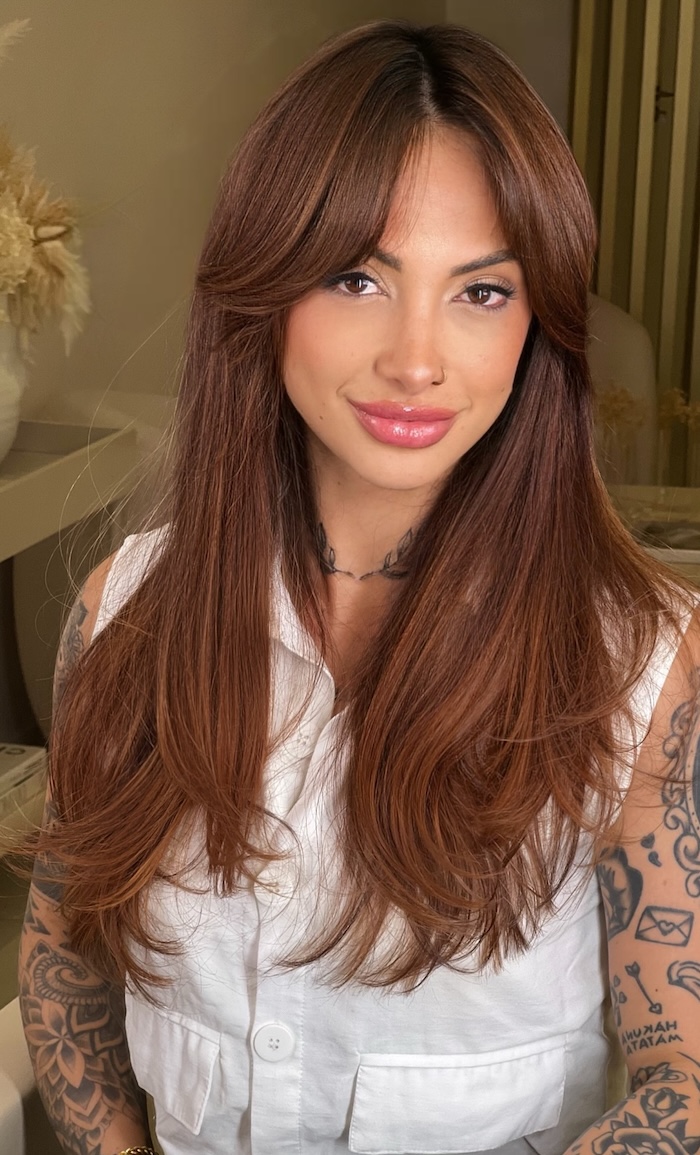
I’ll admit, I was skeptical about subtle copper. But this warm cinnamon brown with subtle copper tones barely fades across a week. The copper is so gentle it reads as a glow rather than a separate color, and it doesn’t turn brassy, it just softens to a warmer brown. Even after five washes, the copper is still there, just quieter. The collarbone length with curtain bangs and soft waves makes the most of the dimension. If you’re asking your stylist, say: cinnamon brown base, copper gloss, no highlights. That keeps it low-key and easy.
Chin Bob With Blonde Highlights
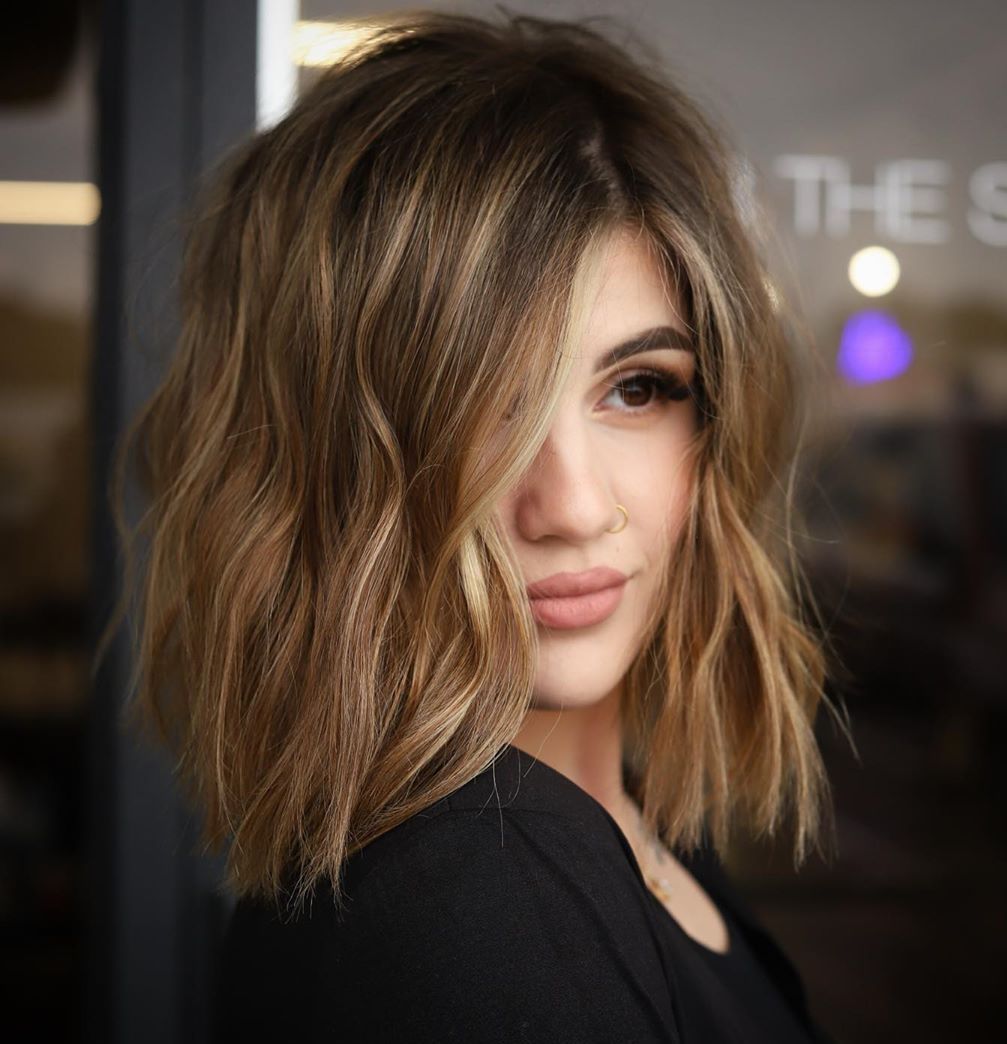
Here is the thing about a brown blonde bob: a chin-length bob has one chance to read as deliberate. My fine-haired friend calls it her sweet spot, but highlights on a bob read differently than on longer hair. The blonde highlights sit so close to the face that every streak either frames or fights it. The colour here is a warm brown base with soft blonde painted through the top layers. The technique is a fine balayage — not foils, not chunky. The tone stays warm, never ashy. The texture is wavy and medium density. This is a salon job. I tried to fix my own and ended up with one light side and one dark side. Do not repeat my Tuesday.
Cinnamon Brown With Face-Framing Balayage
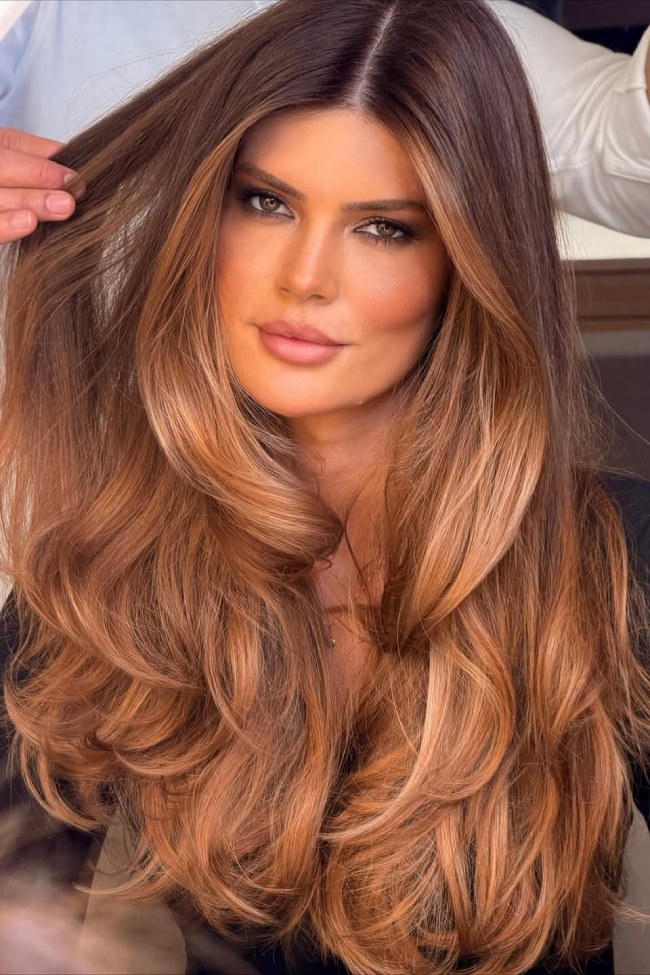
Have you ever seen a cinnamon brown balayage that makes you wonder why every brown is not this warm? The face-framing highlights here start about an inch from the root and feather down past collarbone. The base is a rich cinnamon brown. The technique is a hand-painted balayage, concentrated at the front sections, so the colour wraps around the face like a frame. The tone reads warm copper, not orange, not red. The length sits at collarbone. The texture is thick and wavy. This is a spring colour, or a fall one if you want light on dark days. The effect is that the light catches the front first. My straight-haired sister tried a version of this and said it gave her movement she did not know she had.
Warm Cinnamon Brown Hue
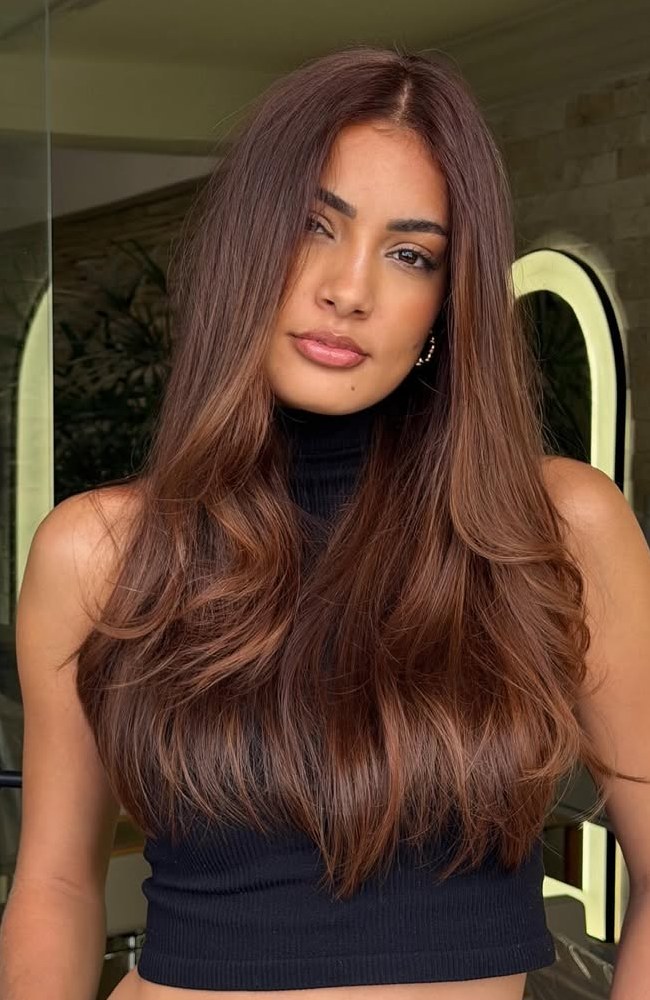
I used to think solid colour was boring. Then I had a year of highlights that grew out at different rates. A natural warm cinnamon brown hue with a gloss every eight weeks is not boring. It is a full night of sleep. The upkeep is a toning conditioner every third wash and a trim every eight to ten weeks. That is it.
Honey Brown With Golden Highlights
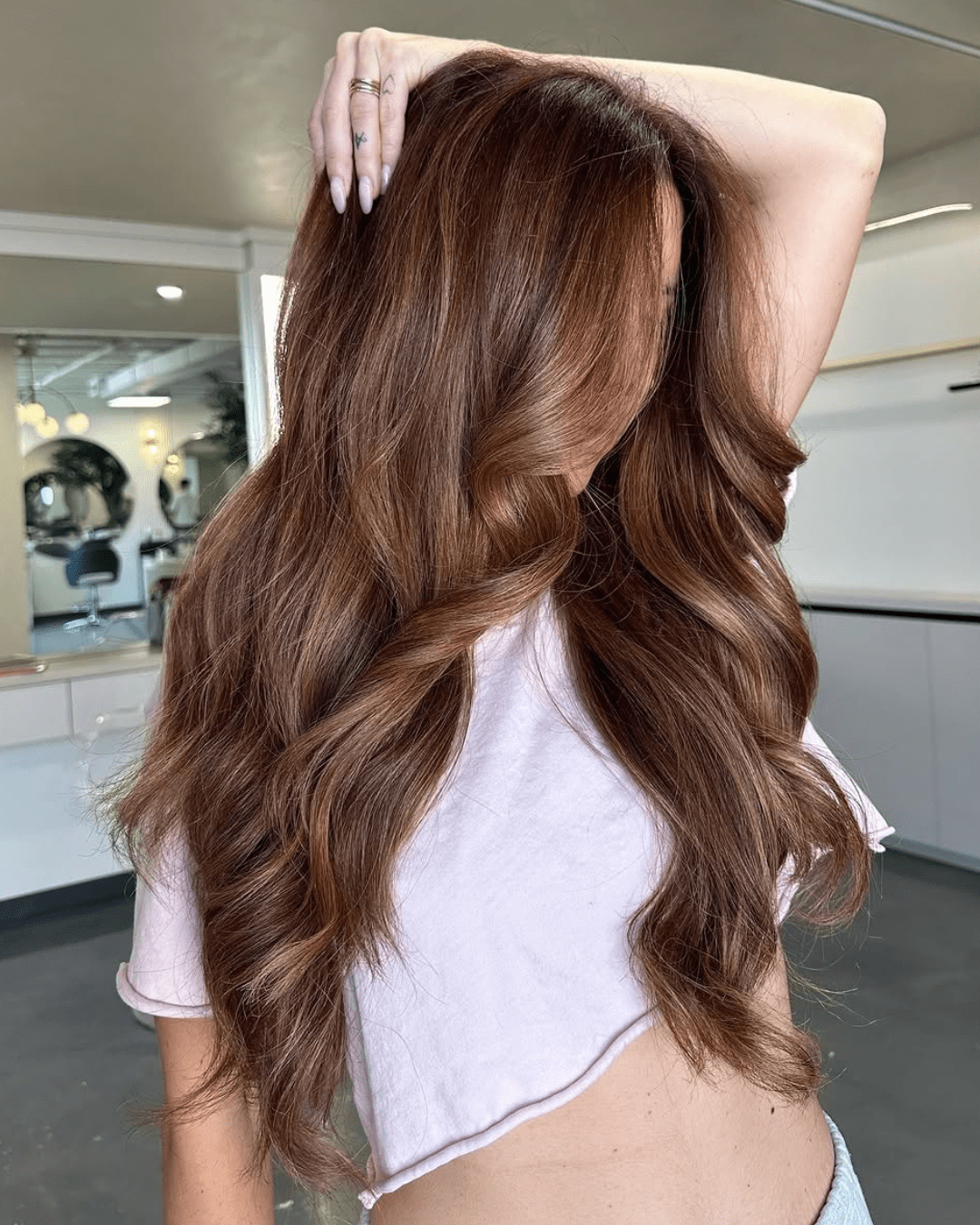
Is a honey brown golden highlights colour right for you? The answer depends on your base. This is a honey brown shade with golden highlights woven through. The technique is a foil weave, not a balayage, so the highlights are finer and more dispersed. The tone is golden warm. The length is mid-back. The texture is thick and wavy. This works best on a natural brown base between a level five and a level seven. If your hair is naturally dark brown or black, the contrast will read as blonde on brown, not as a honey blend. If your base is already light, it will blend seamlessly. My skin runs warm. The honey brown golden highlights read as sun, not as artificial light. On a cool complexion, the tone can look too yellow. Know your base before you book.
Dimensional Brown With Blonde Balayage
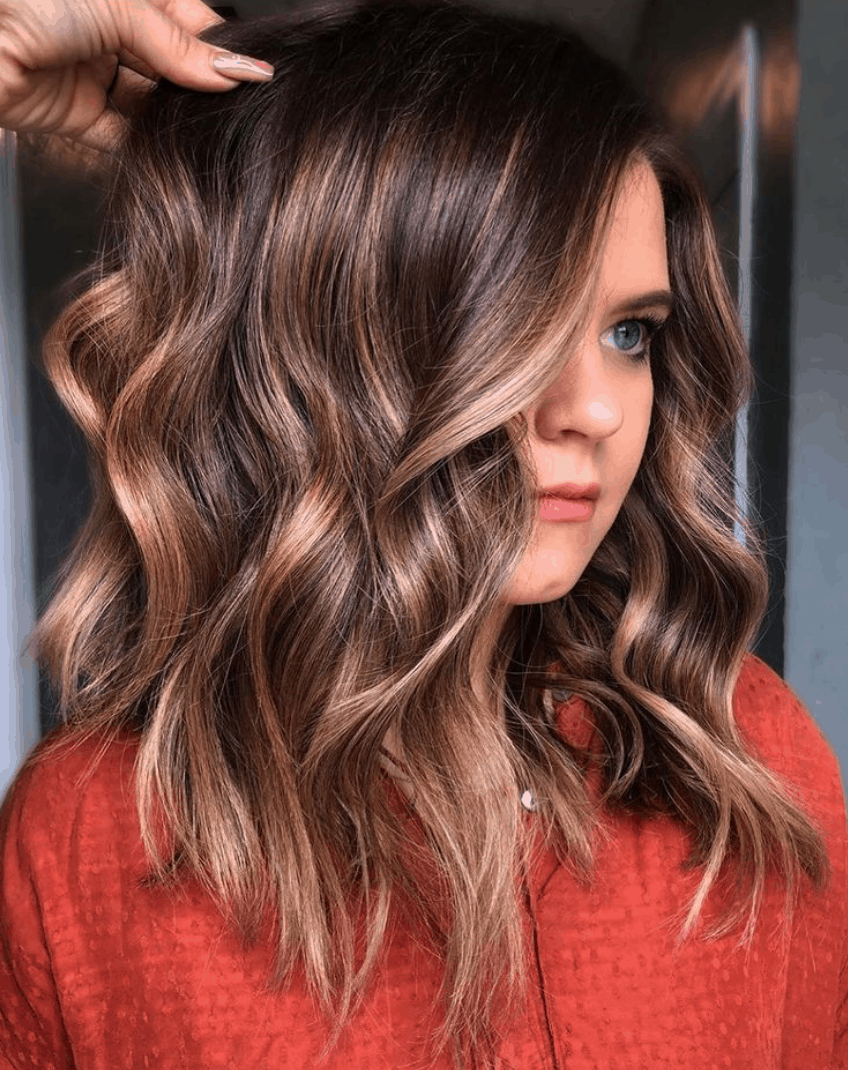
The difference between a brown blonde balayage and regular highlights is the root. The base here is a medium brown. The blonde balayage starts low, maybe two inches from the scalp. The tone is a cool-to-warm blonde. The length is collarbone. The texture is wavy, medium density.
Standard highlights start at the root and grow out as a stripe. A dimensional blonde balayage does not. The root is left dark, the mid-shaft blends to a soft brown, and the ends hit blonde. The grow-out is six weeks of no one noticing. The colour is all in the mid-lengths and ends. If you want low maintenance and high contrast, book the balayage. If you want brightness at the scalp every four weeks, choose the foil.
Vibrant Cinnamon Copper
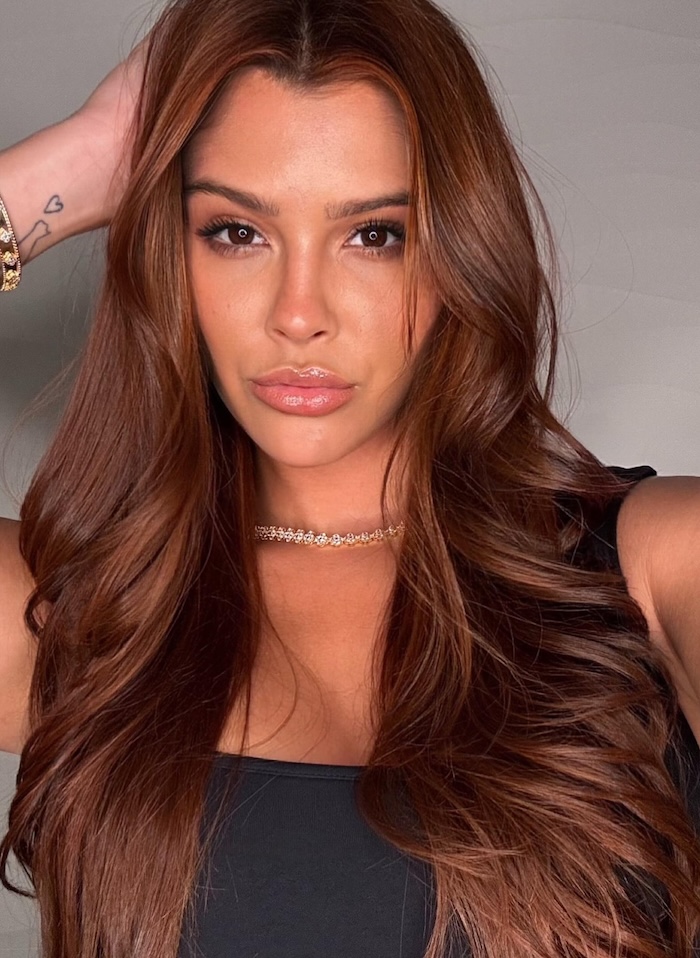
I have a confession: I booked this colour after a disastrous box dye attempt. The vibrant cinnamon copper hue is a rich cinnamon brown with copper undertones, applied with a balayage technique that keeps the root line soft. The tone is warm and bright without tipping into orange. Length is mid-back with long layers, and the texture is wavy and thick. Loose waves take about 20 minutes to style.
This shade works for fall and winter, but I wore it through spring too. It’s bold enough for a night out but reads natural in daylight. The copper undertones catch the sun in a way that makes me look like I planned it. The long layers give movement, and the middle part keeps it symmetrical. Thick wavy hair holds the waves well, so I don’t need to re-curl by afternoon.
Dark Brown With Subtle Cinnamon Highlights
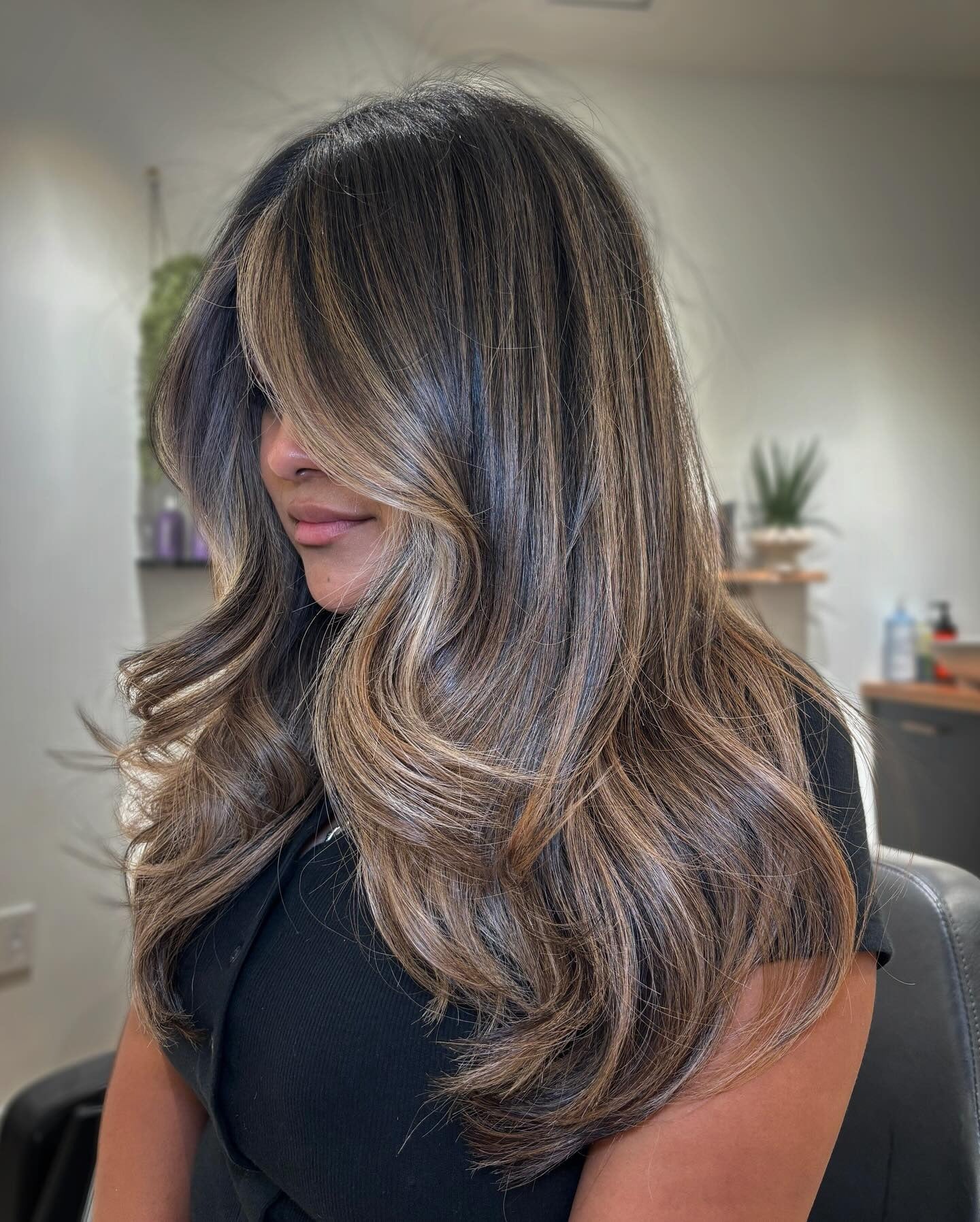
Are you worried that dark brown hair washes you out? The dark brown cinnamon highlights in this look are subtle enough to add warmth without a full colour change. The technique is a balayage that places lighter brown and subtle cinnamon highlights around the face. The tone is warm and dimensional, not brassy. Length is shoulder with layers and curtain bangs. The texture is wavy with medium density, and loose waves take about 15-20 minutes to style. These highlights soften a dark base for any complexion, especially if you have warm undertones.
Rich Deep Cinnamon Brown
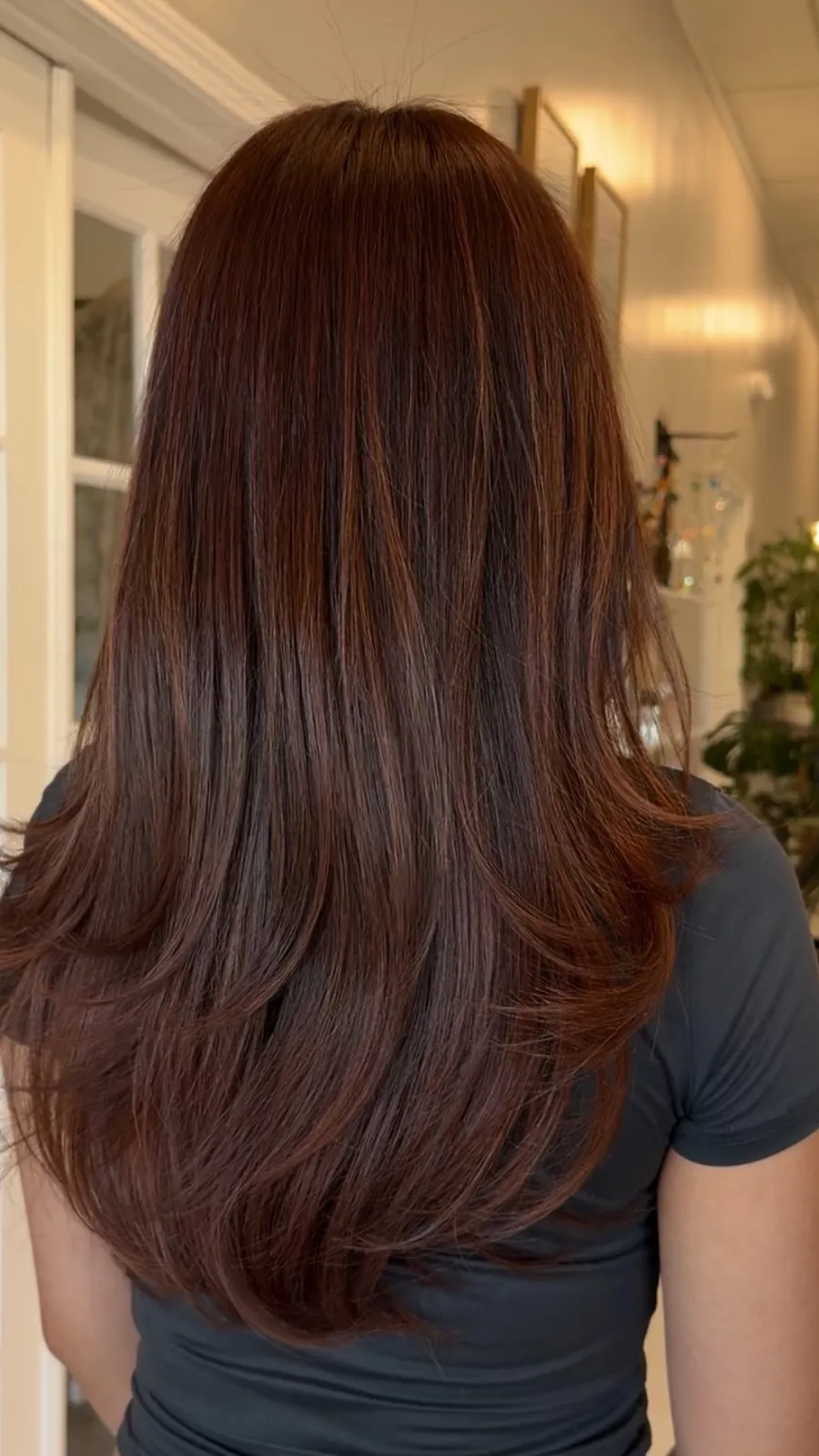
The grow-out phase of this rich deep cinnamon brown is actually kind to you. The colour is a rich cinnamon brown with subtle auburn undertones, applied as a single-process all-over colour. The tone is warm and deep, not flat. Length is mid-back with long layers, and the texture is wavy and thick. Loose waves take about 20 minutes to style.
Upkeep is manageable. The colour fades to a warmer cinnamon, not brassy, because of the auburn undertones. A gloss every 8-10 weeks keeps the shine. Trim every 8-10 weeks to maintain the layers. The dark base means roots show less obviously than with lighter colours. I get about six weeks before I notice a line. The waves hold all day on thick hair. By day three, the colour still looks fresh. I don’t need to heat style every day; a quick refresh with water and product works.
Medium Brown With Copper Red Undertones
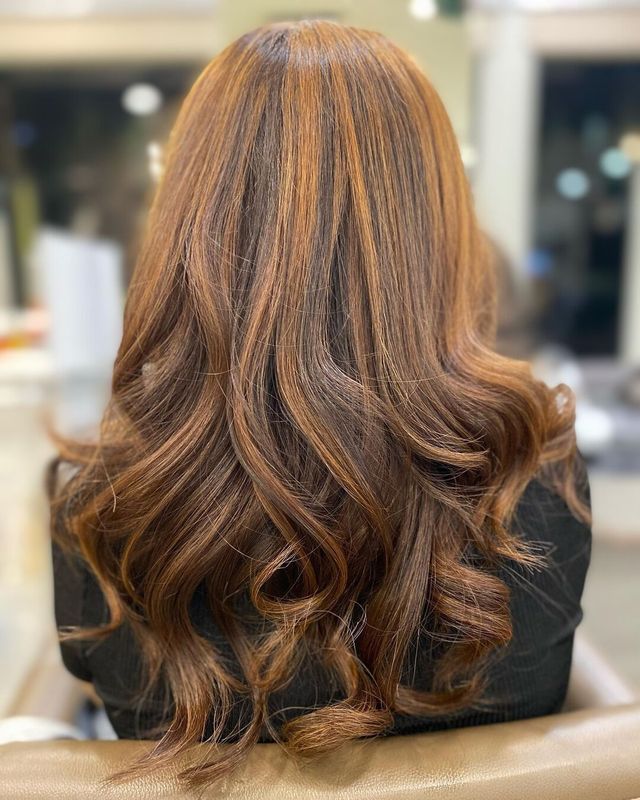
The biggest mistake people make with this colour is trying it at home. The medium brown copper red base has warm copper and reddish undertones that can turn brassy if the application is uneven. The technique requires a professional to balance the tones. The tone is warm and earthy, not clownish. Length is mid-back with layers, and the texture is wavy and thick. Loose waves take about 20 minutes to style.
DIY often results in patchy colour or too much red. A salon can place the colour evenly and use a toner to keep the copper from going orange. The back view shows the depth of the colour; it’s not flat. The layers help the colour catch light. If you want this look, book it. Don’t risk a box dye.
Cinnamon Brown With Copper Highlights
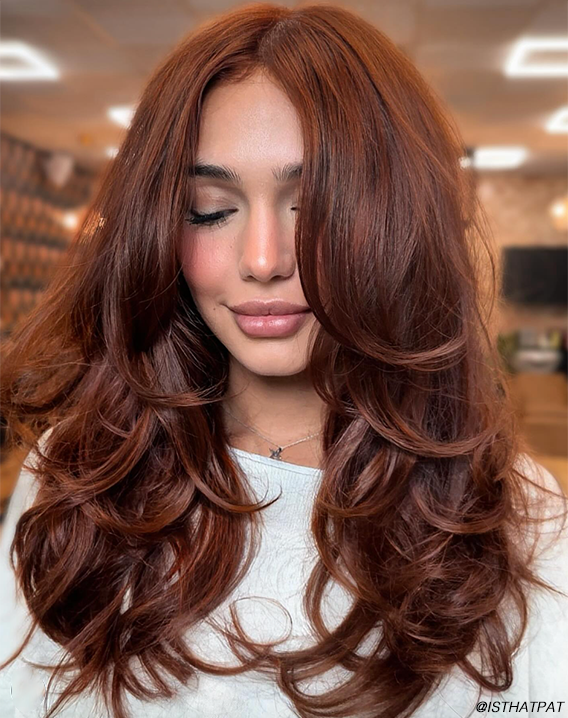
Ever wonder how those subtle copper highlights are placed? The cinnamon brown copper highlights are painted on with a balayage technique, starting mid-length to avoid a harsh root line. The stylist uses a freehand painting method to place the subtle copper highlights around the face and through the mid-lengths. The tone is warm and dimensional, with subtle copper highlights that catch the light without being stripey. The base is a rich cinnamon brown. Length is mid-back with layers and curtain bangs. The texture is wavy and thick. A blowout with loose waves takes about 20 minutes to style.
Medium Brown With Golden Undertones
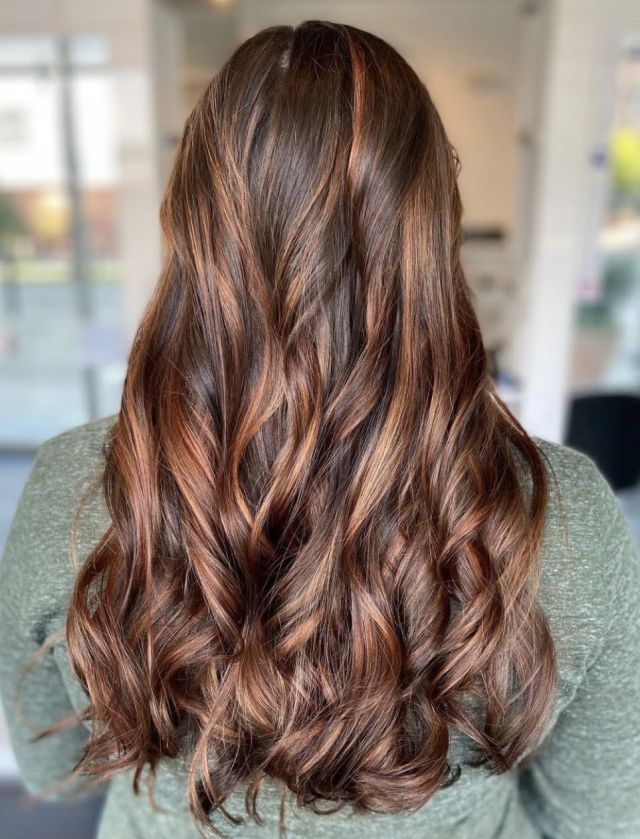
The golden undertones here are subtle, not screaming. This medium brown golden undertones shade uses a single-process technique to deliver even warmth from scalp to ends. The tone is soft gold, not amber or copper, so it stays understated. At mid-back length with thick, wavy texture, the colour reads dimensional even without highlights. A middle part lets the warmth spread symmetrically, and the back view shows how each wave catches a different glint.
These subtle warm golden undertones flatter warm skin tones best, especially those with yellow or peach undertones. Green and hazel eyes look brighter against the gold, while blue eyes tend to go grey, so pass if you have cool blue. Olive skin can carry it, but only if the gold is very muted. If your skin runs cool or pink, this shade will fight you, go with a neutral brown instead. The thick texture helps the colour hold its warmth longer, fine hair might lose it faster.
Dark Brown With Caramel Balayage
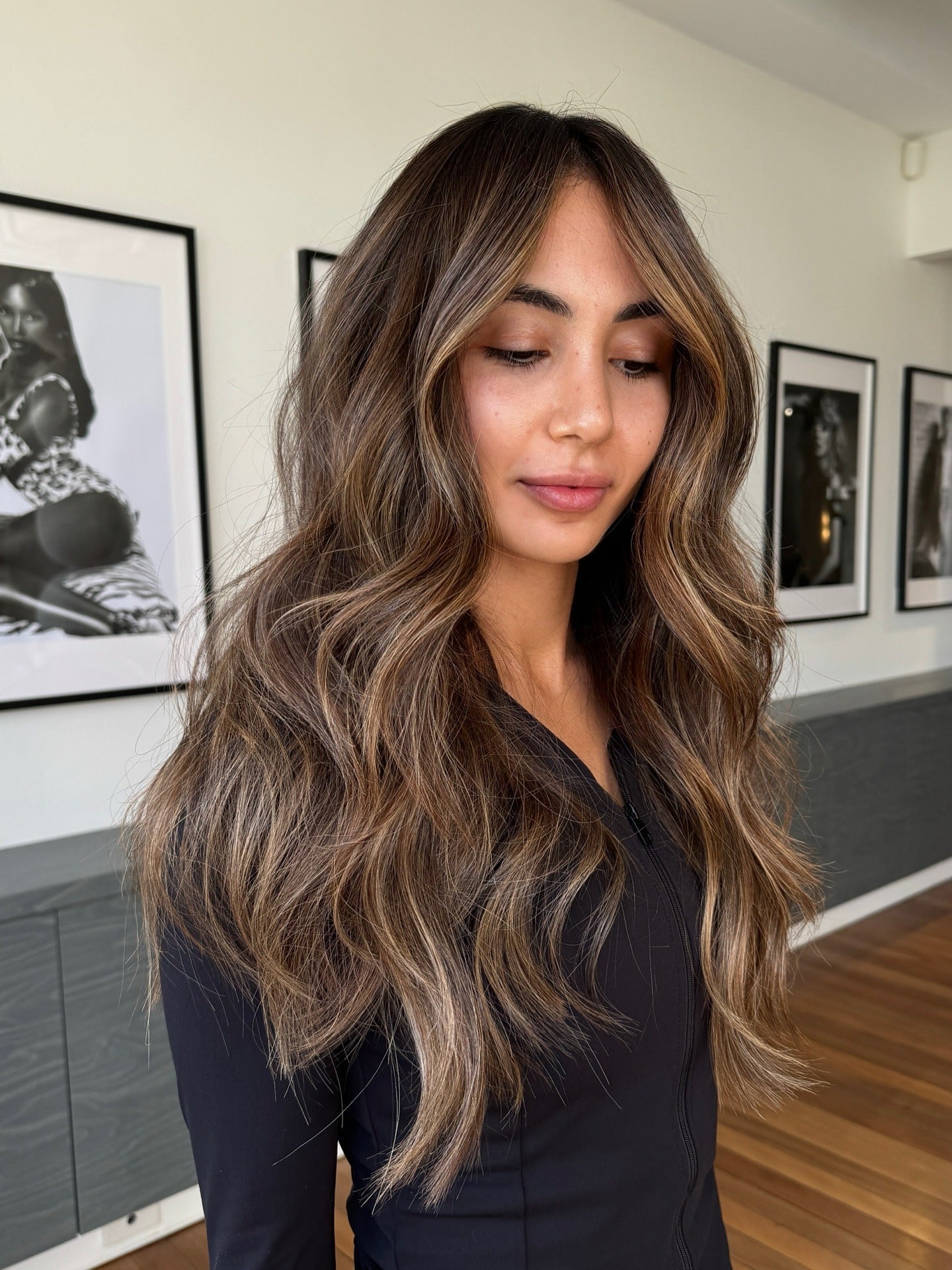
It is Monday morning and your roots still look fine. That is the promise of dark brown caramel balayage on a long, wavy texture. The technique uses hand-painted caramel balayage highlights that start a few inches from the root, so there is no harsh line when the base grows. The tone is warm caramel against the dark brown, and the length is long, past the shoulders, with thick waves that soften the transition.
The balayage grows out gracefully, which is the whole point. You can stretch eight weeks between touch-ups, sometimes ten. The caramel tones will need a toner refresh every couple of months to keep them bright, but that is a quick appointment. On day three, the waves are still soft and the caramel has not dulled. A dry shampoo at the roots is all it needs. The thick texture holds the balayage’s dimension, so the colour does not flatten into a single shade. By week six, the roots are barely noticeable, and the caramel has softened into a lived-in look.
Medium Brown With Copper & Blonde Highlights
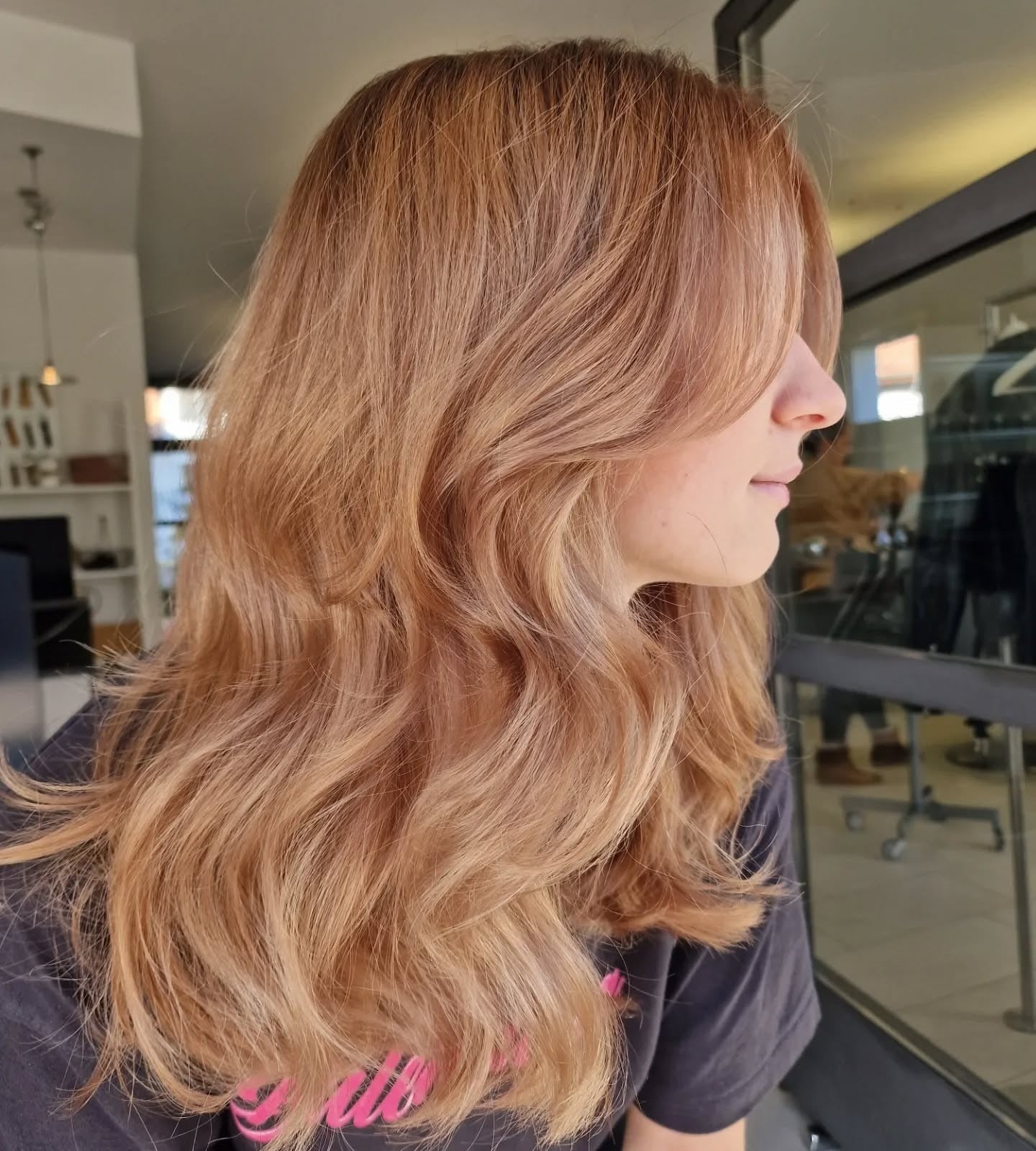
This is warmer than a neutral brown, but it is not red. The medium brown copper blonde base carries warm copper undertones, with subtle blonde highlights woven through the curtain bangs and layers. The technique is foil highlights, which place the blonde and copper where they catch light. At collarbone length with wavy medium-density texture, the dimension is visible even from across the room.
Compare this to a cool ash brown, which reads flat in sunlight. The copper and blonde here bounce light, so the hair looks alive. The curtain bangs frame the face without stealing focus from the colour. If you want warmth without committing to full copper, this is the compromise.
Mid-Back Dark Brown With Cinnamon Balayage
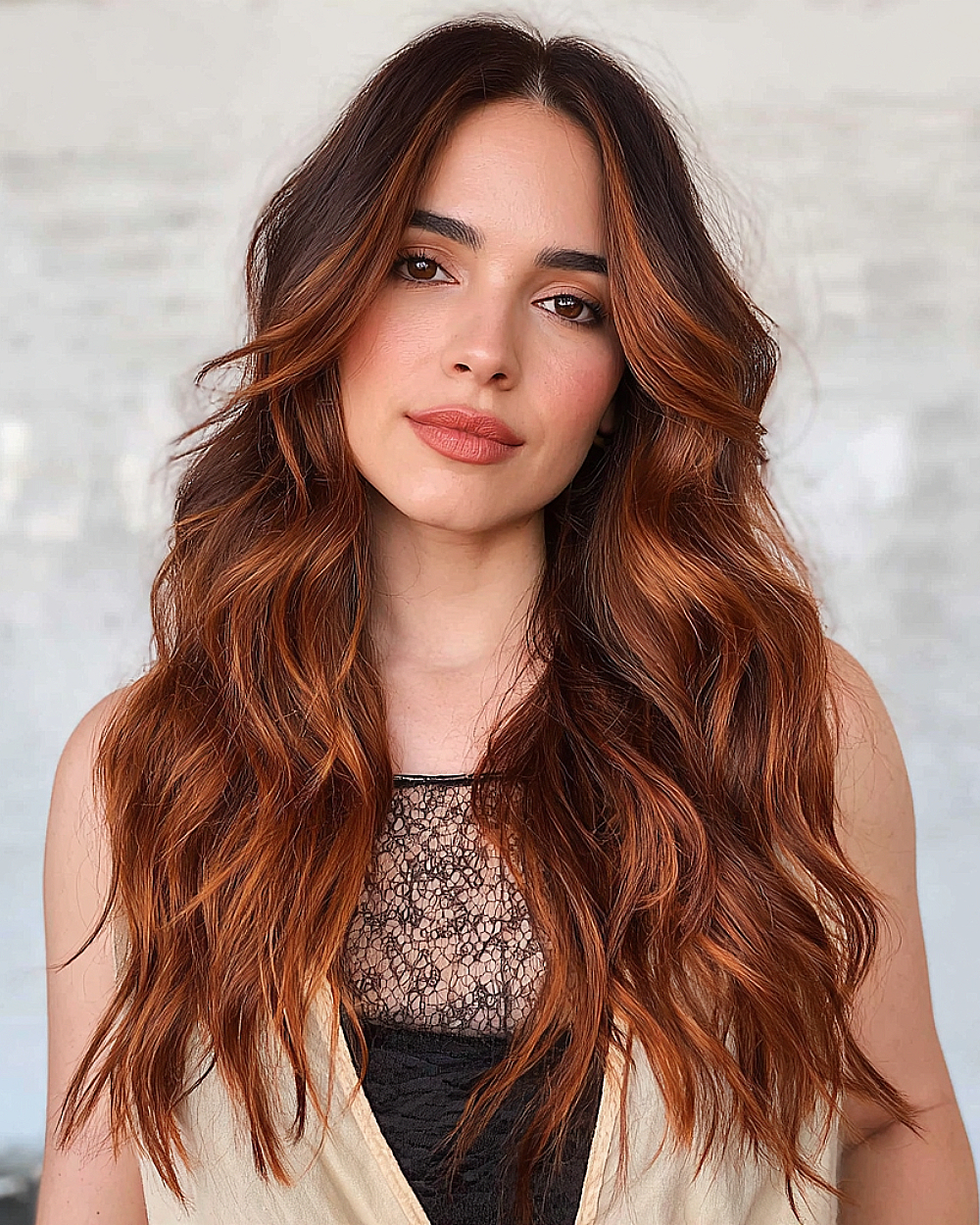
Ever wonder how cinnamon gets into dark brown without looking muddy? The trick is dark brown cinnamon balayage applied with a light hand. The stylist paints the warm cinnamon balayage on the mid-lengths and ends, leaving the roots dark. The technique uses a sweeping motion that blends the cinnamon into the base, so there is no hard line. The tone is warm cinnamon, not orange, and it sits on a dark brown base that grounds it.
At mid-back length with thick, wavy texture, the cinnamon catches light in the waves. The middle part allows the colour to fall evenly on both sides. Because the balayage is hand-painted, each section is slightly different, which adds depth. The close crop front view shows how the cinnamon frames the face without overpowering the dark base. The stylist will use a bowl and brush, not foils, to keep the colour soft. The result is a seamless transition from dark to cinnamon.
Dark Brown With Cinnamon Copper Balayage
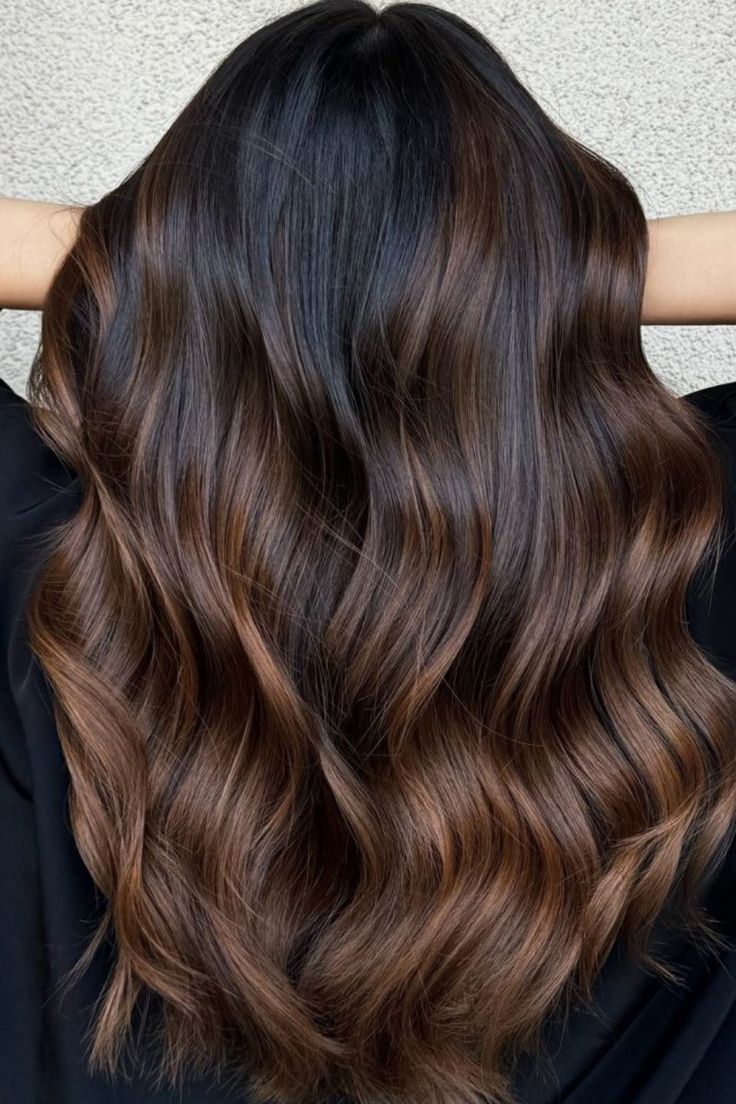
The copper in this balayage catches light differently than cinnamon. This dark brown cinnamon copper shade layers both tones on a dark base using a balayage technique, so the cinnamon and copper highlights are painted on freehand. The result is vibrant, with copper catching the sun and cinnamon warming the shadows. At mid-back length with thick, wavy texture, the colour shifts with every movement.
These vibrant tones complement warm skin tones best, especially those with olive or tan undertones. The copper brings out golden flecks in brown eyes, while cinnamon softens the contrast. If your skin is very fair or cool, the copper can look harsh, so pass. The balayage placement means the brightness stays on the ends, so it does not overwhelm the face. The back view shows the full spread of the colour, with the waves carrying both tones. This is a statement colour, not a subtle one.
Curtain Bangs Dark Brown With Cinnamon Balayage
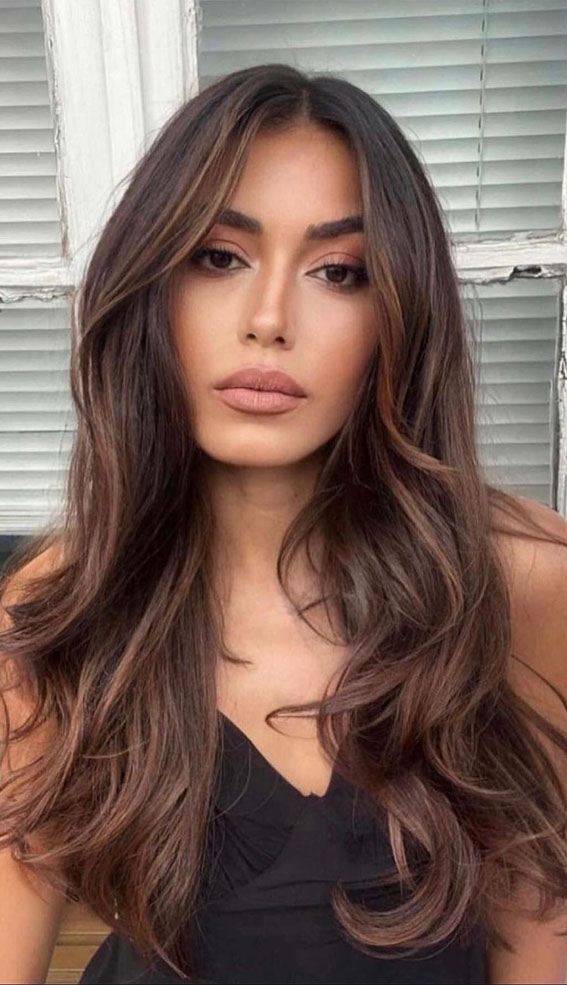
The curtain bangs hit my cheekbones and the warm cinnamon balayage starts a few inches from the root. Mid-back length with thick waves means it holds curl longer than my fine hair ever did. Twenty minutes with a round brush and a cool shot of the dryer gets the fringe to lie right. The cinnamon brown base fades slowly but the balayage technique means a toner visit every eight weeks, not six. My roots showed at week nine, not five.
Long Layers Dark Brown With Caramel-Cinnamon Balayage
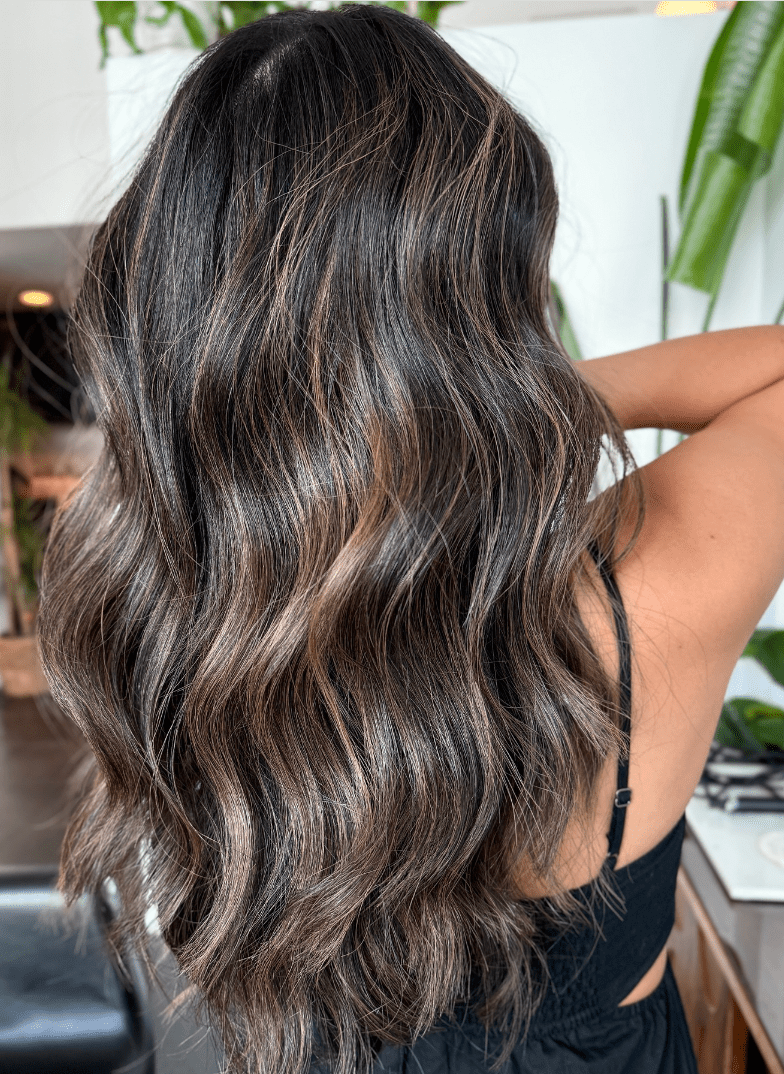
Most people book this hoping for a sun-kissed balayage effect that stays sunny. It does, if you keep the toner fresh. The dark brown base with caramel and cinnamon highlights looks dimensional at the salon, then goes brassy around week seven unless you use a cool-toned shampoo at home.
Go to the salon for this. A DIY gloss kit over a dark base turns orange fast, and you cannot fix that with a box dye. The long layers and mid-back length need someone who knows how to place the lightened sections thick enough to survive a blow-dry. Ask your stylist for a caramel-cinnamon balayage starting two inches from the root, with a warm undertone that leans copper, not gold.
Mid-Back Warm Cinnamon Brown With Highlights
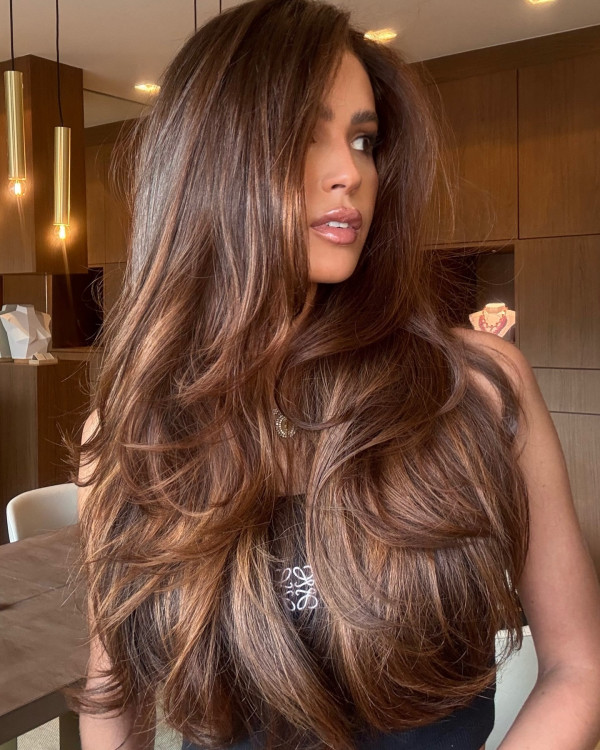
How does a stylist stop a cinnamon brown base from looking flat after six weeks? They weave subtle lighter strands through the mid-lengths and ends, not the root. The warm cinnamon brown highlights here run from a shade lighter than the base near the ears down to a few tonal shifts at the ends. On thick, wavy hair at mid-back length, the highlights catch light in sections, so the whole thing moves. No heavy chunking, just enough lighter strands to keep the cinnamon brown from reading as solid brown. The blowout with waves takes twenty minutes because the layers are cut to fall forward, not spread out.
No Bangs Dark Brown With Cinnamon Highlights
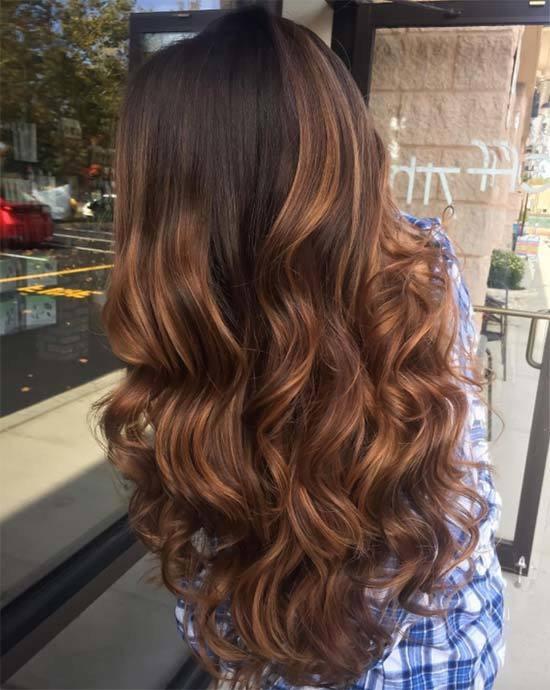
The cinnamon highlights on dark brown work best when your natural base is a level four or five — dark enough to create contrast, but not black. On a level two or three, the highlights need to be lifted more, which means twice the salon time and a higher chance of brassiness. On naturally copper or auburn hair, the cinnamon and brown blend reads seamless because the warm tones match the undertone.
Wavy, thick hair at mid-back length handles the dimension well. Fine hair? The highlights can get lost against a dark base unless the stylist uses a balayage technique that leaves the lightest pieces around the face. Skip it if your natural color is very dark and you do not want to sit for a double-process lift. The upkeep is one toner visit every eight weeks, and you need to use a sulfate-free shampoo to keep the cinnamon tone from turning orange.
No Bangs Dark Brown With Caramel Honey Balayage
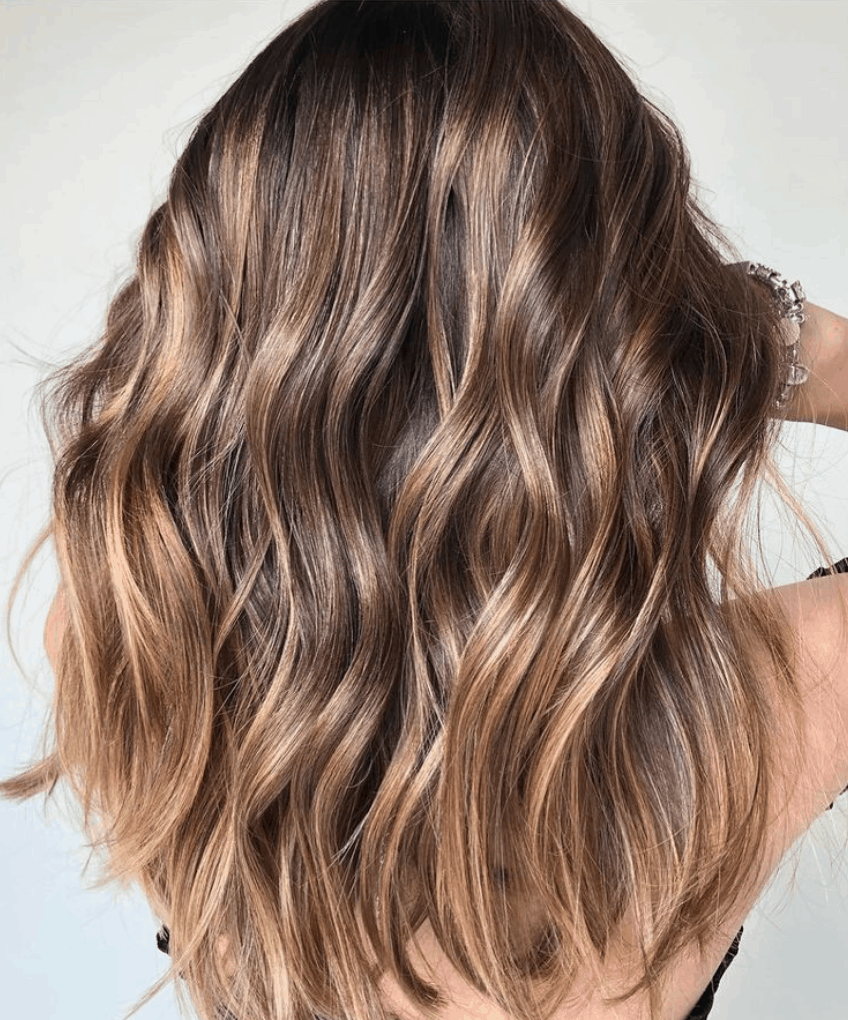
I will take warm balayage highlights over ash-toned highlights any day. The dark brown caramel honey balayage here reads rich, not muddy, because the caramel and honey tones sit on a warm base. Ash highlights on a dark base often go greenish or gray after a few weeks. These stay golden because the balayage technique keeps the lightest pieces concentrated on the mid-lengths and ends, away from the root where warmth clashes with a cooler base.
Wavy, thick hair at mid-back length holds the caramel honey glow for about ten weeks before the base starts to deepen. The warm balayage highlights fade slowly, and a gloss treatment at the salon every three months keeps them from turning brassy. If you have natural dark brown hair with red undertones, this will blend better than ash. If your skin runs cool, the warm tones might pull too orange, so ask your stylist for a caramel honey balayage with a neutral toner to mute the copper.
Back View Dark Brown With Cinnamon Highlights
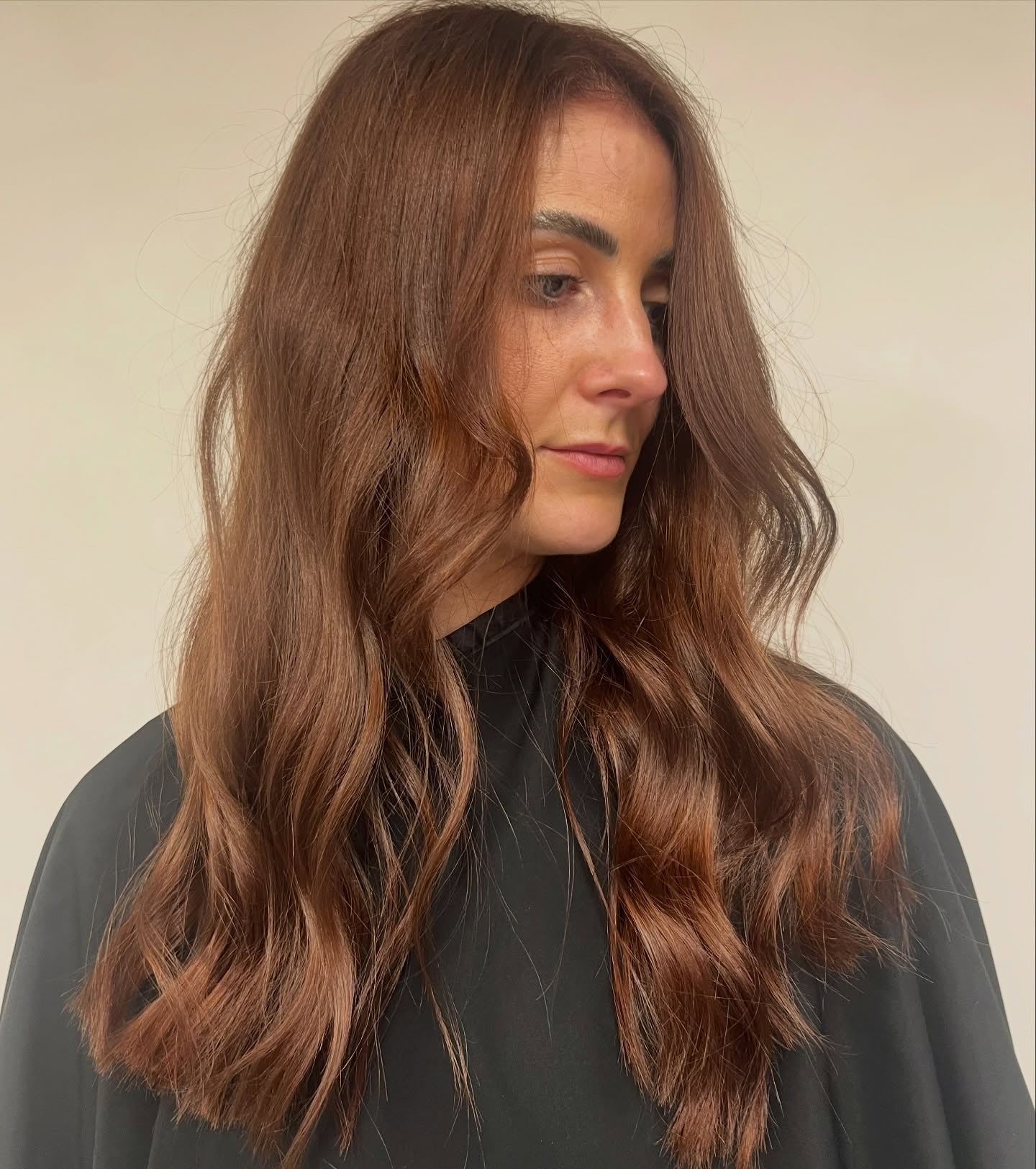
From the back, you see it first: a dark brown canvas that is not one flat block. The cinnamon and brown blend is woven through in soft ribbons, and that is the whole trick. Loose waves catch the warmer pieces at different angles; on straight hair, the variation would read more clearly but also fade faster. The mid-back length lets the dimension travel. Thick texture helps the highlights read as deliberate instead of scattered. The grow-out is forgiving because the base is close to the highlight depth. You will see a soft shift at week seven, not a hard line. A toner appointment around week ten resets the warmth.
Those dark brown cinnamon highlights run through the middle of each wave, not just the ends. That placement means the color still registers when you pull it back or braid it. Wavy hair holds this blend well because the bends break up the color every few inches. Straight, fine hair will look plainer: less movement means less obvious dimension. The loose waves take about twenty minutes with a curling iron. The cinnamon keeps its warmth for about eight weeks before it mutes into a neutral brown.
Medium Brown With Reddish-Cinnamon Undertones
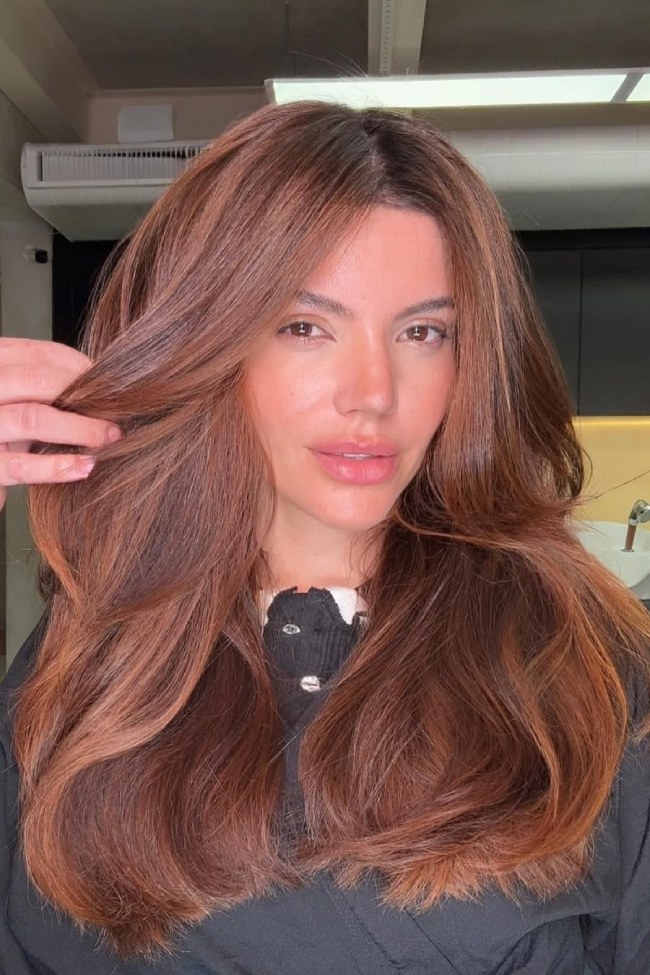
Have you seen a medium brown that reads like copper in one light and like bark in another? That is what the technique does here. The base is a medium brown reddish cinnamon — not too dark, not too warm — and the undertones are painted into the lengths with a gloss, not a full dye. Subtle highlights at the crown and around the face lift the dimension without creating a stripe. The technique is essentially a single-process gloss over a natural or dyed medium brown base, then a few hand-painted babylights at the top. The side part tells the light where to land. Thick, wavy hair lets the reddish-cinnamon undertones glow. Fine hair will need a lighter hand with the gloss or it darkens the whole thing into monotone.
Back View Dark Brown With Caramel Blonde Balayage
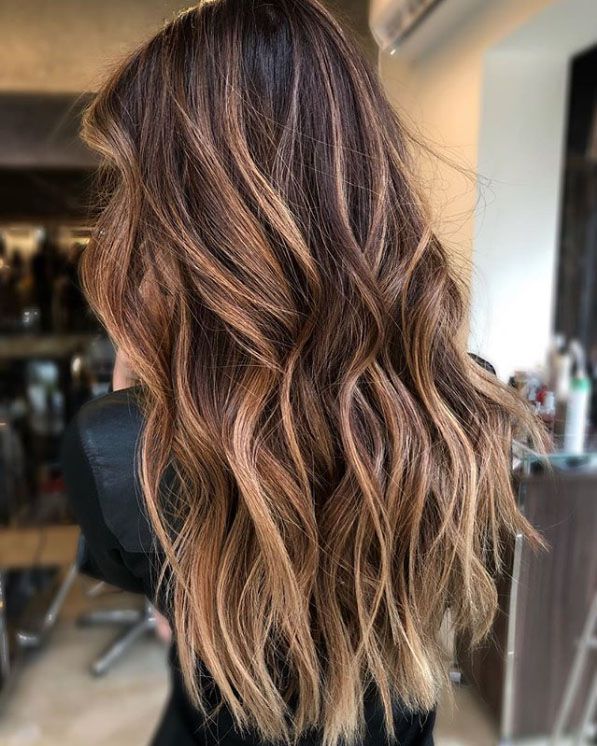
The back view tells the real story: a dark brown base that runs from root to mid-shaft, then a slow shift into caramel and blonde. The balayage highlights start below the ear and widen as they drop. That placement is deliberate. It keeps the top-looking rich and the ends looking expensive. The middle part splits the dark base evenly, so the caramel frames the shoulders on both sides. Thick, wavy texture helps the balayage blend naturally because the waves scatter the pigment. Straight hair would show the transition line more obviously, so a root shadow is worth asking for if you have straighter texture.
This dark brown caramel blonde pairing suits people whose natural color sits anywhere from a level-three to a level-five brown. If your base is lighter than that, the contrast flattens. If your base is darker, the stylist needs to lift more to get that caramel to register, which increases processing time. The two-tone effect is strongest on untouched hair — if you have old color on the ends, the lift takes unevenly. A trim every eight weeks keeps the ends sharp enough that the balayage looks intentional instead of faded.
Rich Brown With Reddish-Cinnamon Highlights
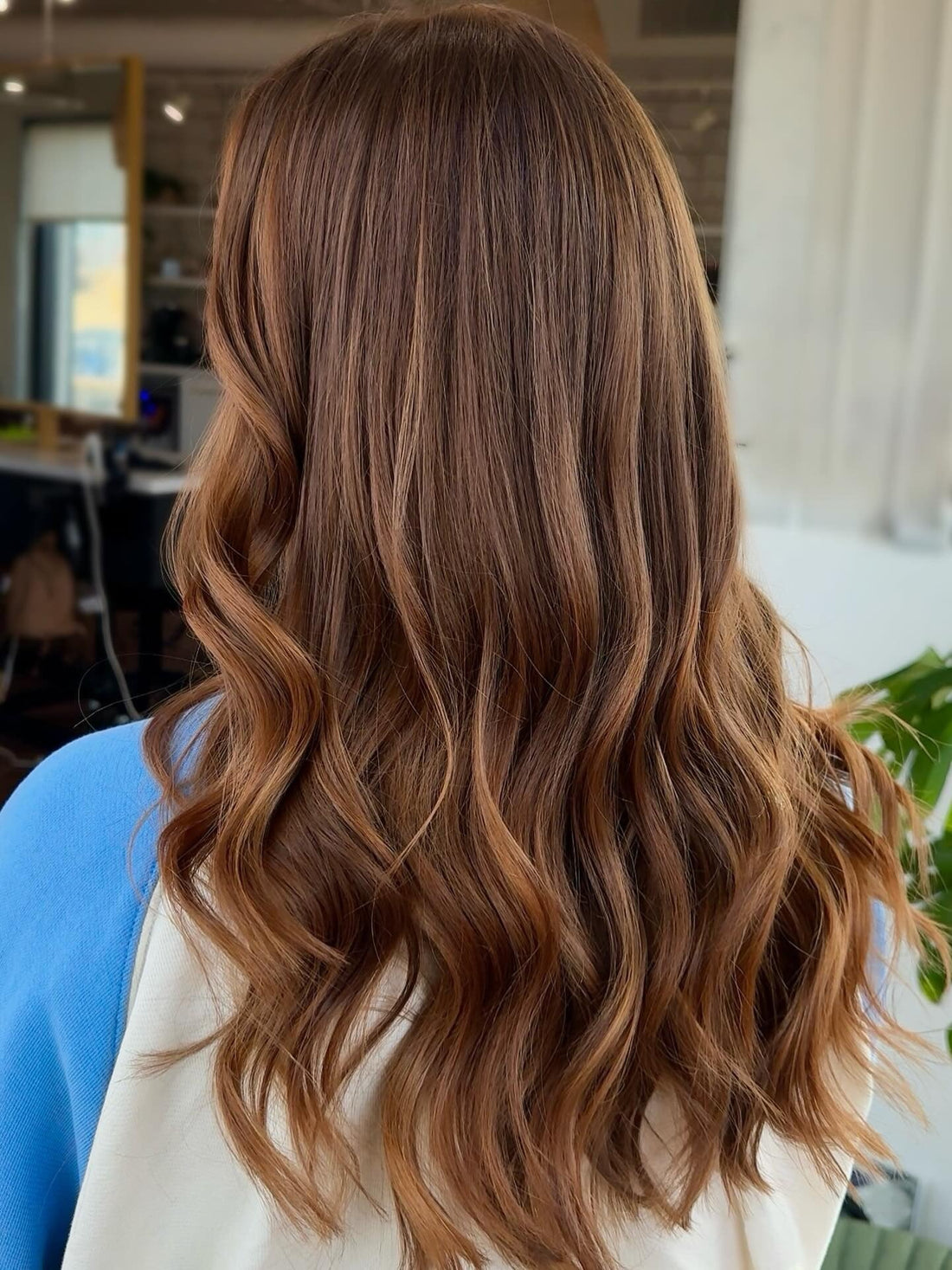
If you are weighing this against a softer, more blended cinnamon look, I will pick a side: go with the richer version. The rich brown reddish cinnamon base is deeper, the reddish-cinnamon highlights are punched in bolder, and the contrast is what makes it interesting. The technique here is a high-contrast balayage: the base stays at a level-three or -four brown, and the highlights lift to a level-seven red-cinnamon. That gap of about four levels creates visible dimension without going brassy. Thick, wavy hair is the ideal canvas because the coils hold the red longer than straight hair would. Loose waves at mid-back length let the cinnamon pieces wrap around the darker sections. Straight, fine hair will have cleaner lines but the red will fade to peach by week four.
Brown With Cinnamon Balayage Blowout
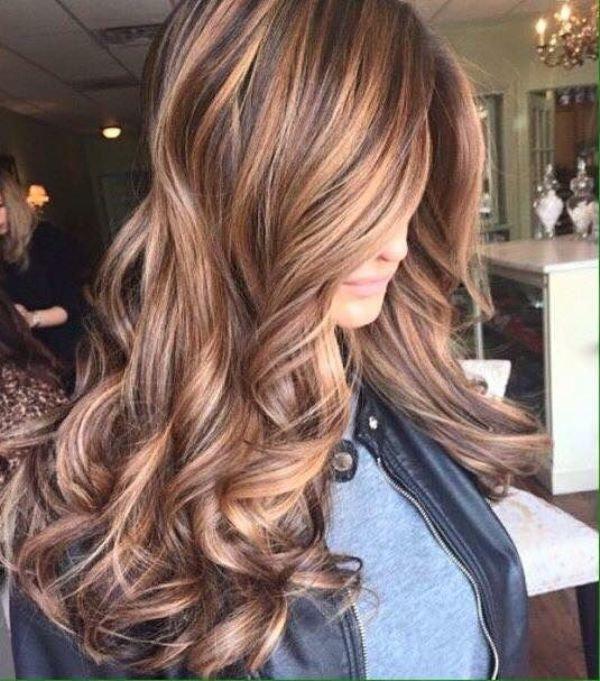
Ever wonder why the brown cinnamon balayage looks nothing like your old foil highlights? Balayage is painted freehand onto the hair’s surface, so the color melts from the natural root down to lighter mid-lengths and ends with no visible starting line. Foils create even sections that read as stripes once they grow out. The cinnamon balayage highlights here hit the outer layers and the middle of the shaft, leaving the underneath darker, which is exactly what thick, wavy, mid-back hair needs to keep dimension without going muddy. That technique is why it lands warm and soft, not chunky. It is also why this is a salon job. Painting freehand takes an eye for how light falls on each piece, and my bathroom mirror has failed me before. Book the appointment.
Final Thoughts
After writing all of these, I noticed one thing: cinnamon brown is less a color and more a strategy. It’s a way to get warmth without the brass, dimension without the stripe, and a grow-out that doesn’t make you want to wear a hat for a month. I’m booking the deep brown with caramel balayage next, mostly because I like my roots to stay quiet for eight weeks.
That’s the real win, a color that behaves long after you leave the chair.