Two-tone hair is having a moment, with contrasting shades adding depth and dimension to any cut. This season, the trend leans toward lived-in color with soft face-framing layers and curtain bangs that blend naturally rather than stark lines.
This collection of 18 Two Tone Hair ideas spans from subtle highlights to bold split dyes, covering short pixies to long layers. Whether your hair is fine and needs volume or thick and requires shaping, there is an option here that works with your texture and lifestyle. No more fighting a visible grow-out line or a fringe that won’t cooperate.
Long Layered Hair With Curtain Bangs Two-Tone
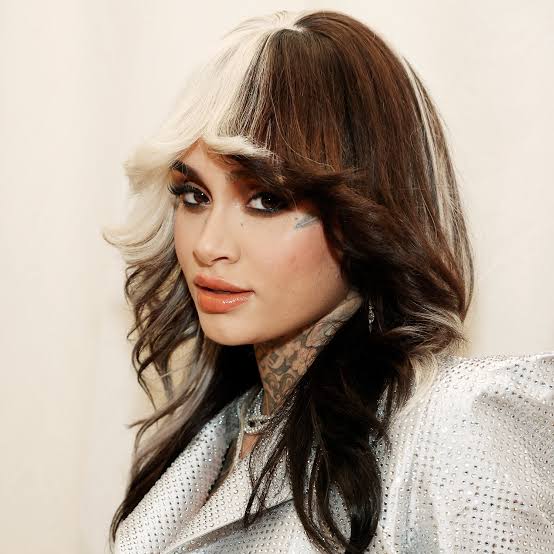
The two-tone effect here lives in the curtain bangs as much as the length. Dark brown and blonde layered throughout mid-back hair, with loose waves that let the contrast catch from different angles. The middle parting keeps the color blocks even on both sides, while the curtain bangs soften the transition at the jaw. Thick, wavy texture holds the wave pattern without much effort.
Ask your stylist for: long layered cut with loose waves, dark brown base with blonde face framing, curtain bangs. The bangs need trimming every four to six weeks to stay off the cheekbones. A large barrel curling iron builds the soft wave in about twenty minutes.
Long Straight Split Dyed Orange And Purple
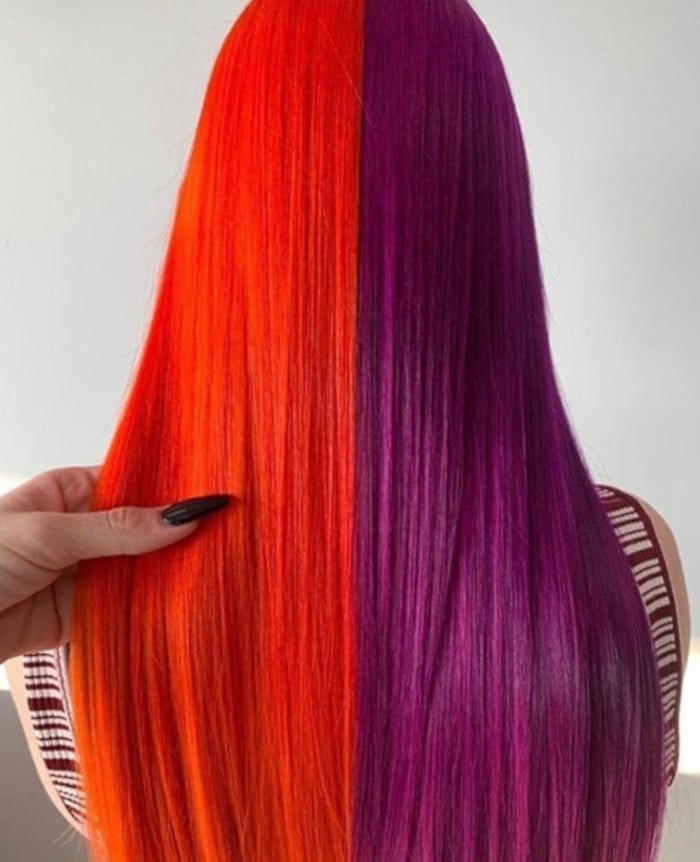
A vertical split dye reads differently on fine, straight hair than it does on thick or wavy texture. The flat surface shows every color boundary, which is the point. Orange on one side, deep purple on the other, parted down the middle with no bangs. The single drawback is the grow-out: the root line becomes obvious fast, so this style requires salon visits every four to five weeks.
Ask your colorist for: vertical split dye, one side orange, one side deep purple. Fine hair at shoulder length or longer works best; shorter lengths lose the graphic impact.
Mid-Back Straight Black And White Split
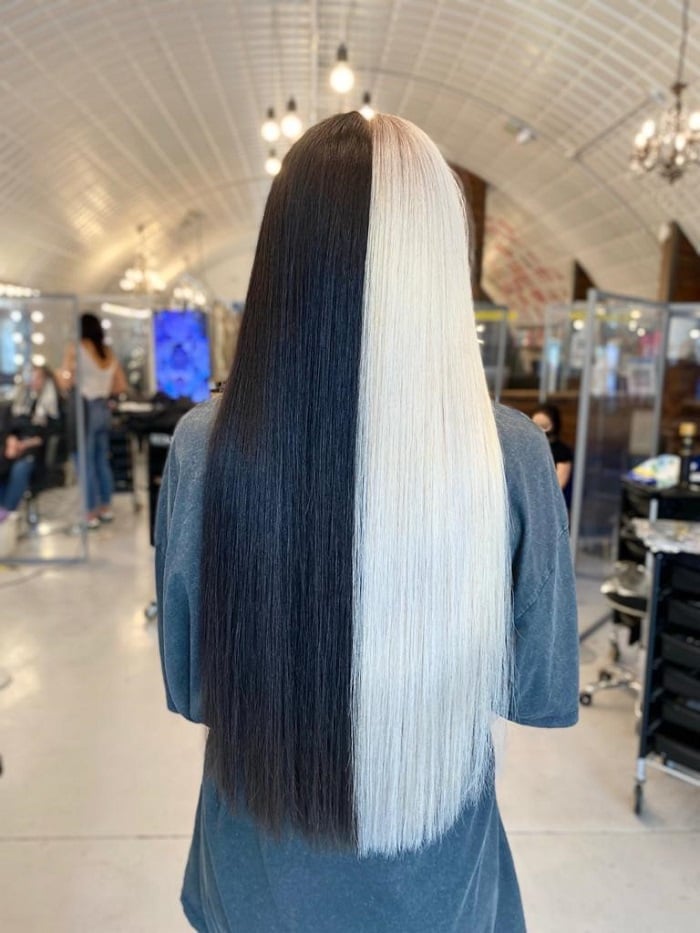
Black on one side, white on the other, and no gradient between them. The middle parting runs straight down the center of thick, mid-back hair, making the split feel architectural. Straight texture keeps the line clean from root to tip. The effect depends on precision: ask your colorist for a dramatic black and white split dye. This is a salon-only process that takes a full appointment to lift the white side properly.
Chin Length Bob Ash Blonde With Dark Undertones
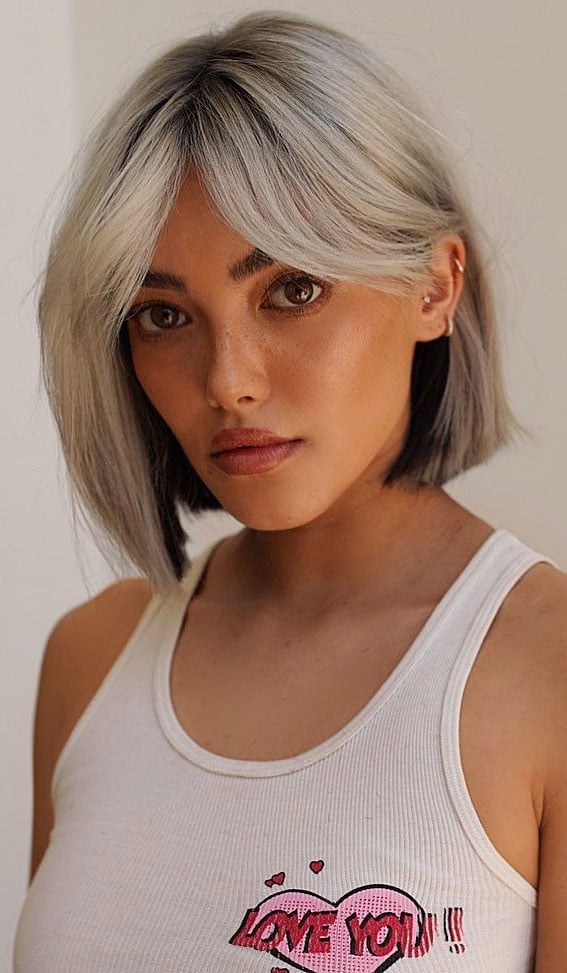
Is chin length too short for two-tone color? Not when the dark sits underneath and the ash blonde covers the top. The curtain bangs pull the lighter shade forward, so the contrast shows every time the hair moves. Fine, straight texture works well with a smooth blowout and a middle parting. Ask your stylist for: chin length bob, ash blonde with dark underneath, soft curtain bangs. A round brush adds volume at the crown. Trim every six to eight weeks to keep the bob shape sharp.
Collarbone Lob Pink And Teal Split Dye
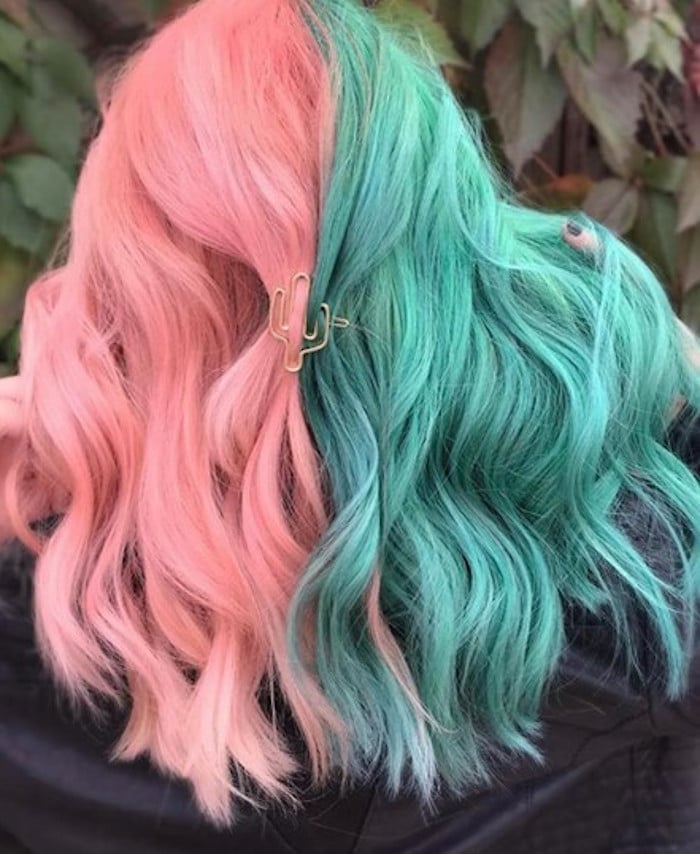
A split dye on a lob offers more movement than a longer canvas because the waves hit the collarbone and bounce back. Pink on one side, teal on the other, with a middle parting that divides them cleanly. Medium density wavy texture holds the loose wave without flattening the color zones. Ask your colorist for: collarbone lob, pink and teal split dye. This is a summer or festival look. The two tones need separate shampoo routines to avoid muddying the pastels.
Blunt Bob Dark Brown With Blonde Face Framing
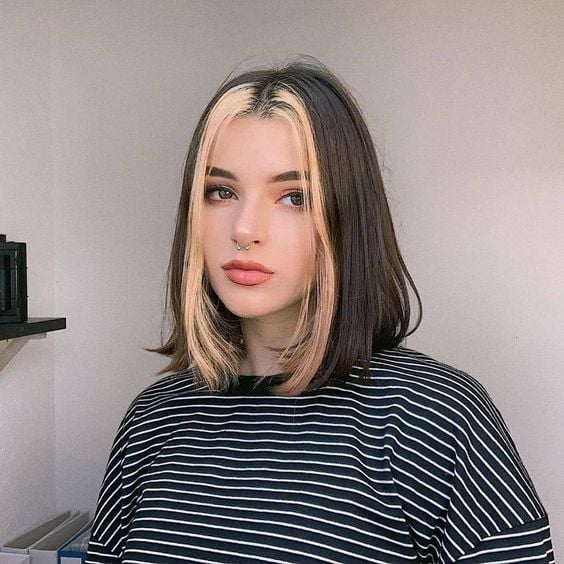
What do you ask for when you want a blunt bob that does not look flat? You bring a photo, and you use these words: chin length blunt bob, blunt bangs, dark brown with blonde face framing. The cut is a clean blunt bob that hits at the chin, with thick blunt bangs that land at the same level. The dark brown base stays solid, while the blonde face-framing highlights sit thick and wide at the front. A middle part lets the two tones split cleanly. Medium, straight texture holds the smooth blowout shape best. Blunt bangs work well on oval and long faces, where they shorten the visual length of the face.
Mid-Back Layers Blonde And Brown Two-Tone
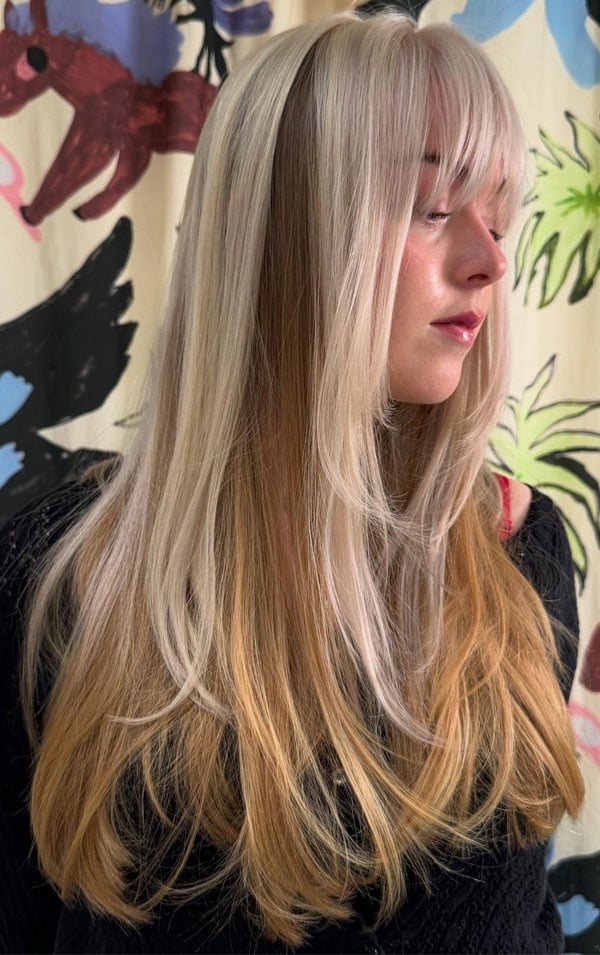
A two tone blonde and brown hair design on fine, straight texture looks intentional when the color placement matches the cut. Here, long layers cut into mid-back length keep the blonde concentrated at the front pieces, while the brown sits underneath, visible only when the hair moves. Wispy bangs break the middle part without adding visual weight, which helps soften angular faces.
The upkeep is straightforward. The blonde front pieces need a toning appointment every six to eight weeks to keep the shade from turning yellow against the brown. Fine straight hair air-dries quickly, but the layers mean you want a trim every eight to ten weeks to maintain the shape. The wispy bangs will need a snip every three to four weeks if you prefer them off your forehead.
Mid-Back Ponytail With Blonde Money Piece
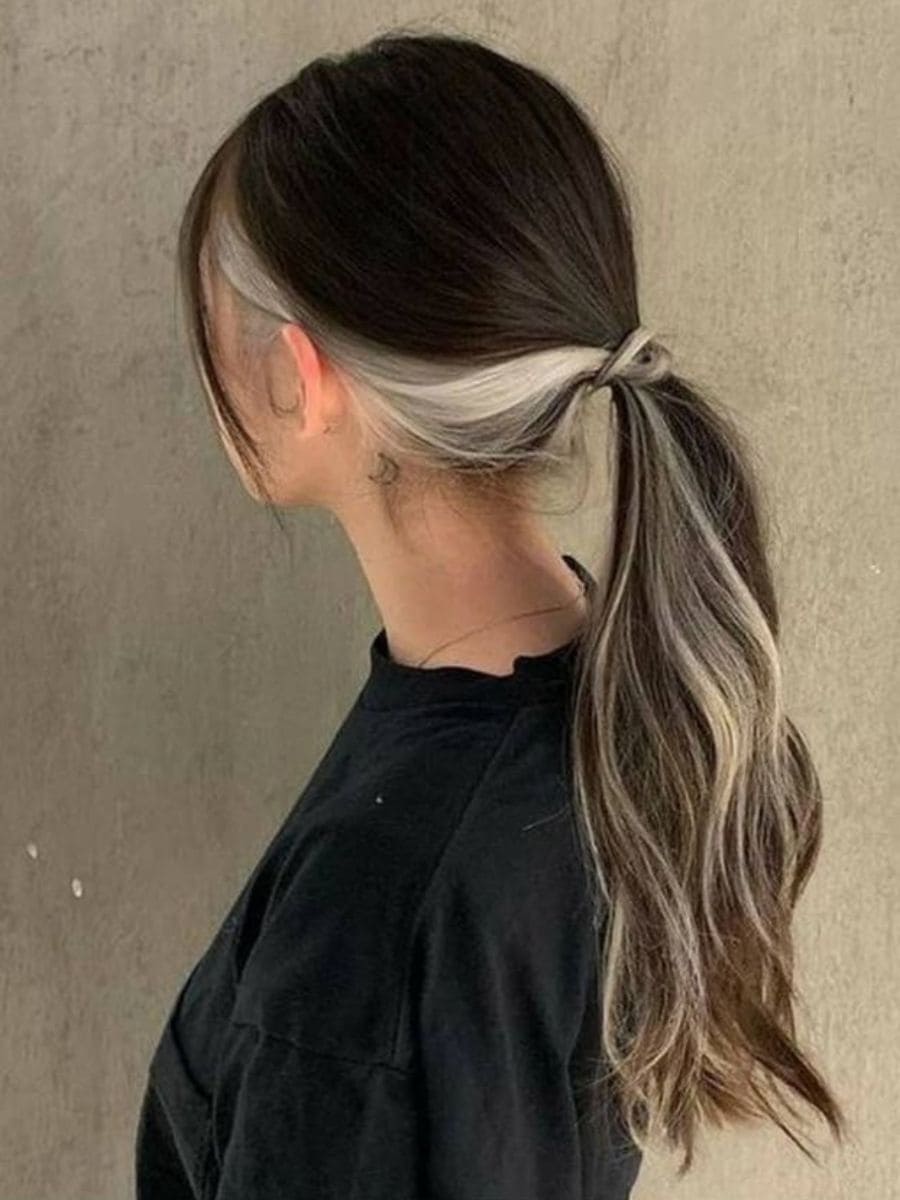
How does a ponytail become the event rather than the default? A thick blonde money piece, cut wide at the front and pulled back into a mid-back ponytail, is the reason. The dark brown base runs through the thick, wavy hair, so the blonde at the front reads as a separate piece. A side part lets the money piece fall asymmetrically, which adds movement to a style that otherwise lives in a ponytail.
The side view shows the contrast best: the blonde stays forward while the brown ponytail drops behind. Thick, wavy texture gives the ponytail natural volume, so you do not need to tease the crown. The face-framing pieces are long enough to tuck behind your ears or leave out. This is a salon color, not a DIY job, because the money piece needs a clean, thick line at the part.
Short Pixie Black And Blonde Finger Waves
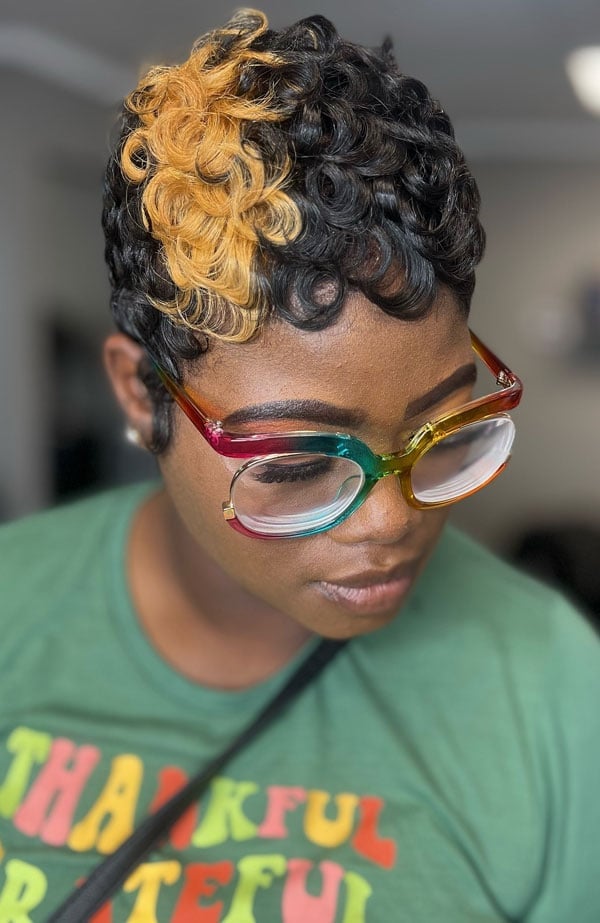
Finger waves on a pixie cut require the hair to hold a molded S-shape, which is easier when the color already marks the sections. Here, black and bright blonde two-tone coloring runs in alternating panels through a short pixie that ends at the ear. The side parting feeds into the wave pattern, with the blonde sections following the wave crest. Thick, curly texture helps the finger waves hold their shape without setting lotion, though a pomade helps define the ridges.
This is a salon-only project. A pixie cut with finger waves needs a stylist who can carve the color placement to match the wave direction, then cut the shape after the color is done. Curly, thick hair at ear length gives the most defined finger waves; fine straight hair would need a wet set and a lot of product.
Mid-Back Wavy Black With Blonde Face Framing
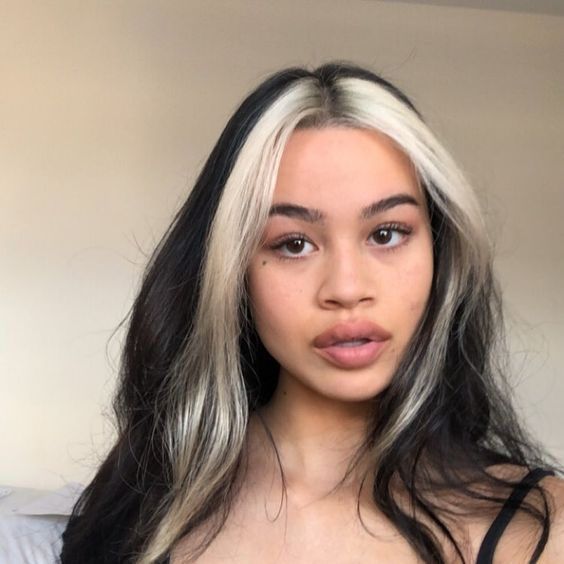
The effect of curtain bangs with blonde face-framing highlights on a dark black base is that the color seems to move with the wave pattern. The blonde pieces wrap around the face from the middle part, then disappear into the thick, wavy length at mid-back. The curtain bangs open at the center and sweep to each side, so the blonde sits on the outer edges of the face, not landing on the forehead. Wavy, thick texture keeps the color from blending into a single flat tone; the black base and blonde pieces remain distinct as the waves shift.
The front view shows the contrast most clearly at the cheekbones, where the blonde widens the visual line of the face. Curtain bangs soften round and heart faces by adding width at the cheek level. The air-dried finish means the waves stay natural, not uniform, which works with the two-tone placement. A trim every eight to ten weeks keeps the bangs at the right length.
Ear Length Short Layered Dark Brown And Blonde
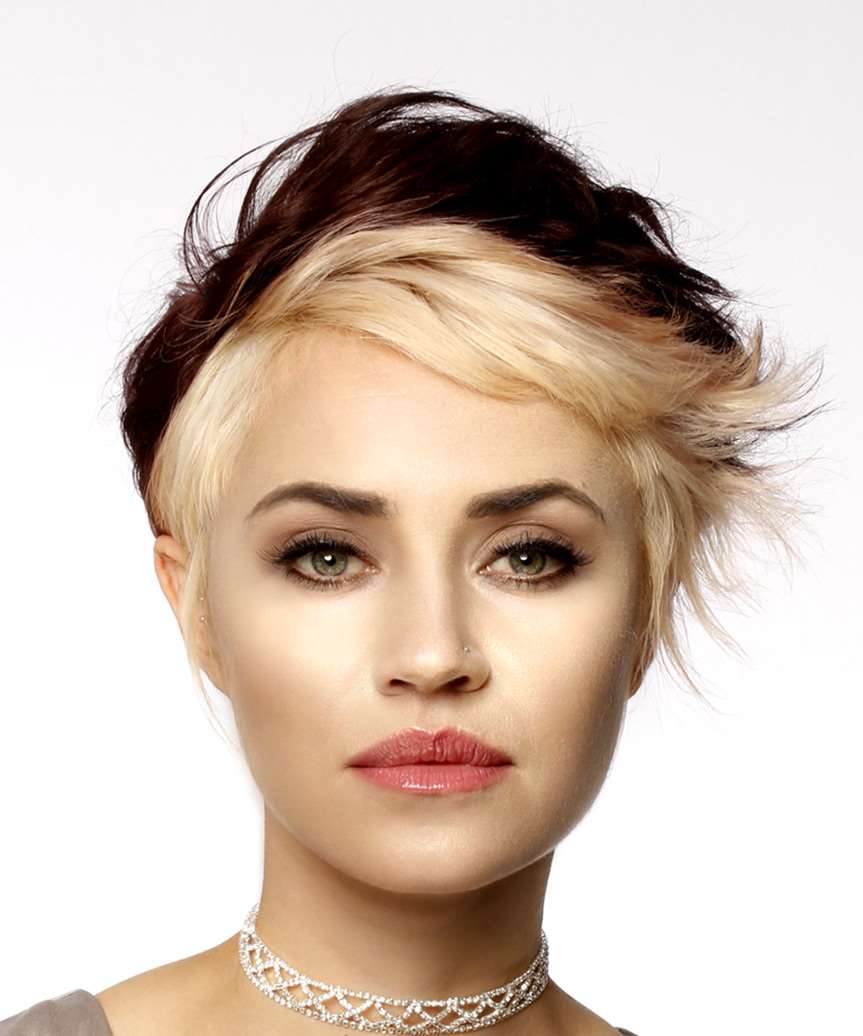
Is a two-tone color split worth it on shorter hair? Yes, when the cut and contrast work together. Fine, wavy hair at ear length benefits from the layered shape, which adds volume without bulk. The side-swept bangs draw attention across the face, making the dark brown on one side and blonde on the other a deliberate contrast. Ask your stylist for: short layered cut, dark brown and blonde contrast, side-swept fringe. Use a texturizing paste to define each layer and keep the line sharp. A trim every four to six weeks maintains the ear-length silhouette.
Mid-Back Braids Teal And Orange Split
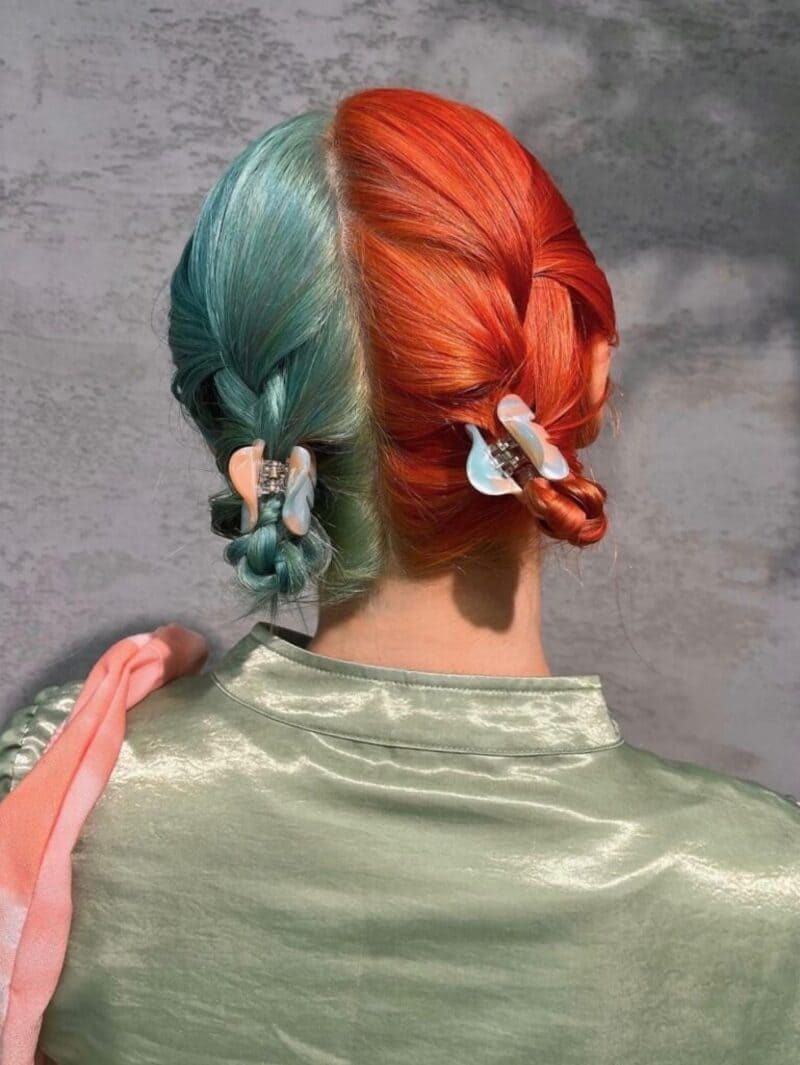
Ask your colorist for: mid-back braids, teal and orange split color. Braid the hair while it is damp for a smoother finish, then set with a light hold hairspray. This design works best for a festive occasion or a festival weekend. The look requires a full salon appointment to achieve the saturated shades on virgin or pre-lightened hair.
Ear Length Pixie Dark Brown And Light Blonde, Short Side-Swept Bangs
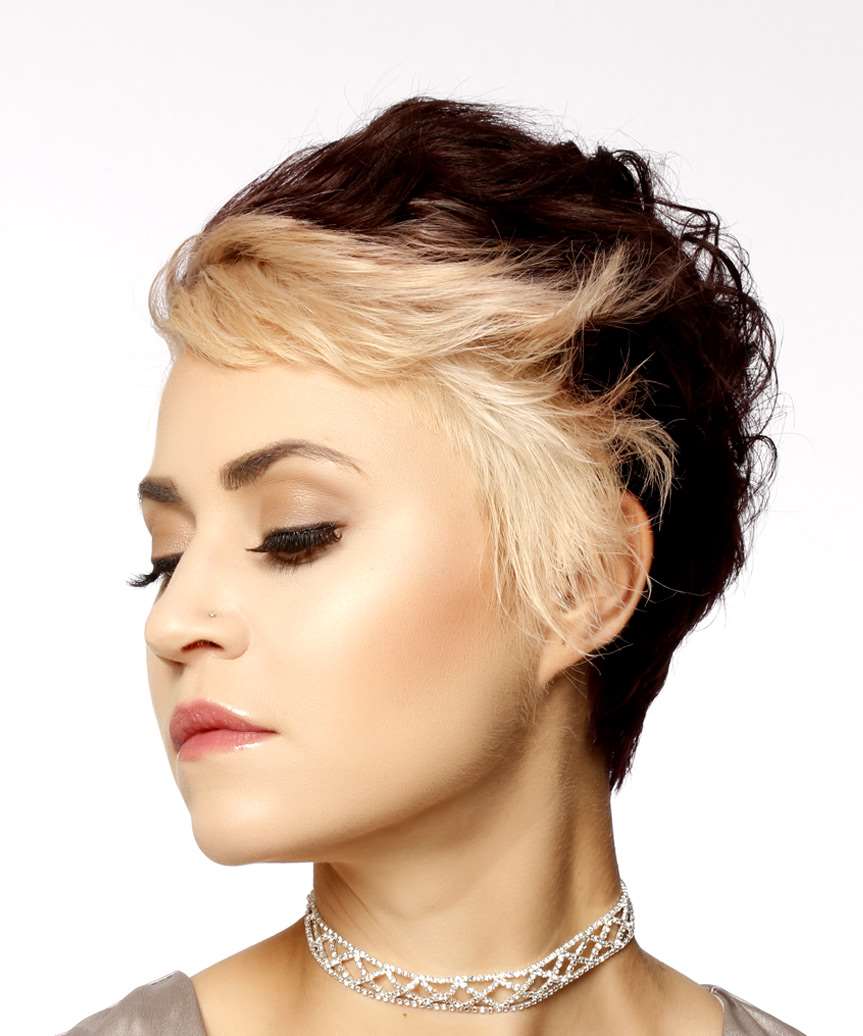
A pixie this short makes the two-tone color the whole story. The dark brown base is broken by light blonde sections at the fringe and sides, which hit the ear at their longest point. The mistake people make is letting the contrast fade into a muddy grow-out. On fine, straight hair, the side-swept bangs need a clean edge to keep the color separation visible. Ask your stylist for: short pixie, dark brown and light blonde contrast, swept bangs. The real drawback: this look demands a trim every four weeks to keep the shape and the color line sharp.
Chin Length Wavy Blonde With Coral Dip Dye
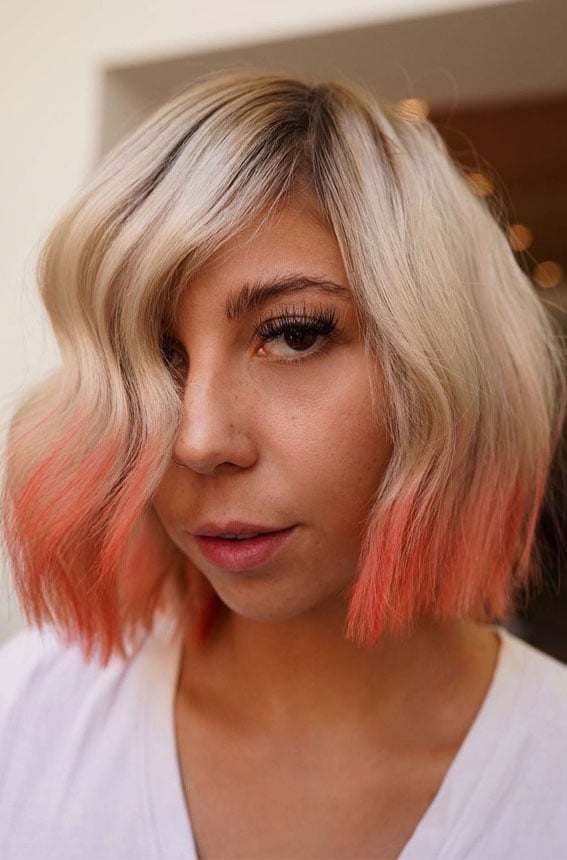
Here the color is a dip-dye, not an all-over bleach. A chin-length bob in medium wavy texture starts blonde and ends in a vibrant coral at the tips. The side parting lets the coral show more on one side. Ask your colorist for: chin length wavy bob, blonde with coral dip-dye ends. This is a salon job: the coral shade needs a pre-lightened base to hold its saturation, and the wavy texture helps the color transition look soft, not blunt. A sea salt spray encourages the natural wave pattern. Plan on a trim every eight to ten weeks to keep the bob from rounding out.
Ear Length Textured Pixie Dark Brown And Blonde, Wavy
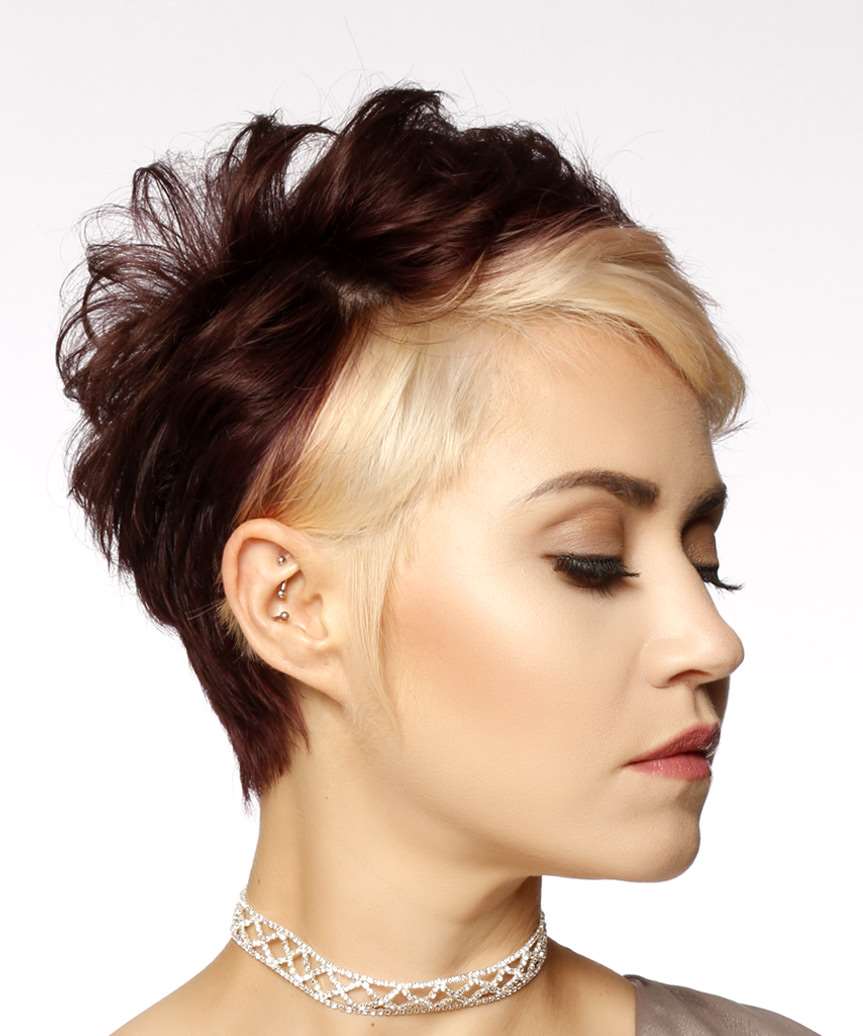
Thick, wavy hair at ear length handles the contrast well because the natural wave softens the boundary between shades. The short bangs are swept to the side, keeping the face open. Ask your stylist for: textured pixie, dark brown and bright blonde contrast. A volumizing mousse on damp hair gives lift without stiffness. This shape needs a cut every four to six weeks, and the blonde sections require a toning visit every six to eight weeks to prevent brassiness.
Chin Length Bob With Red Pink Peekaboo
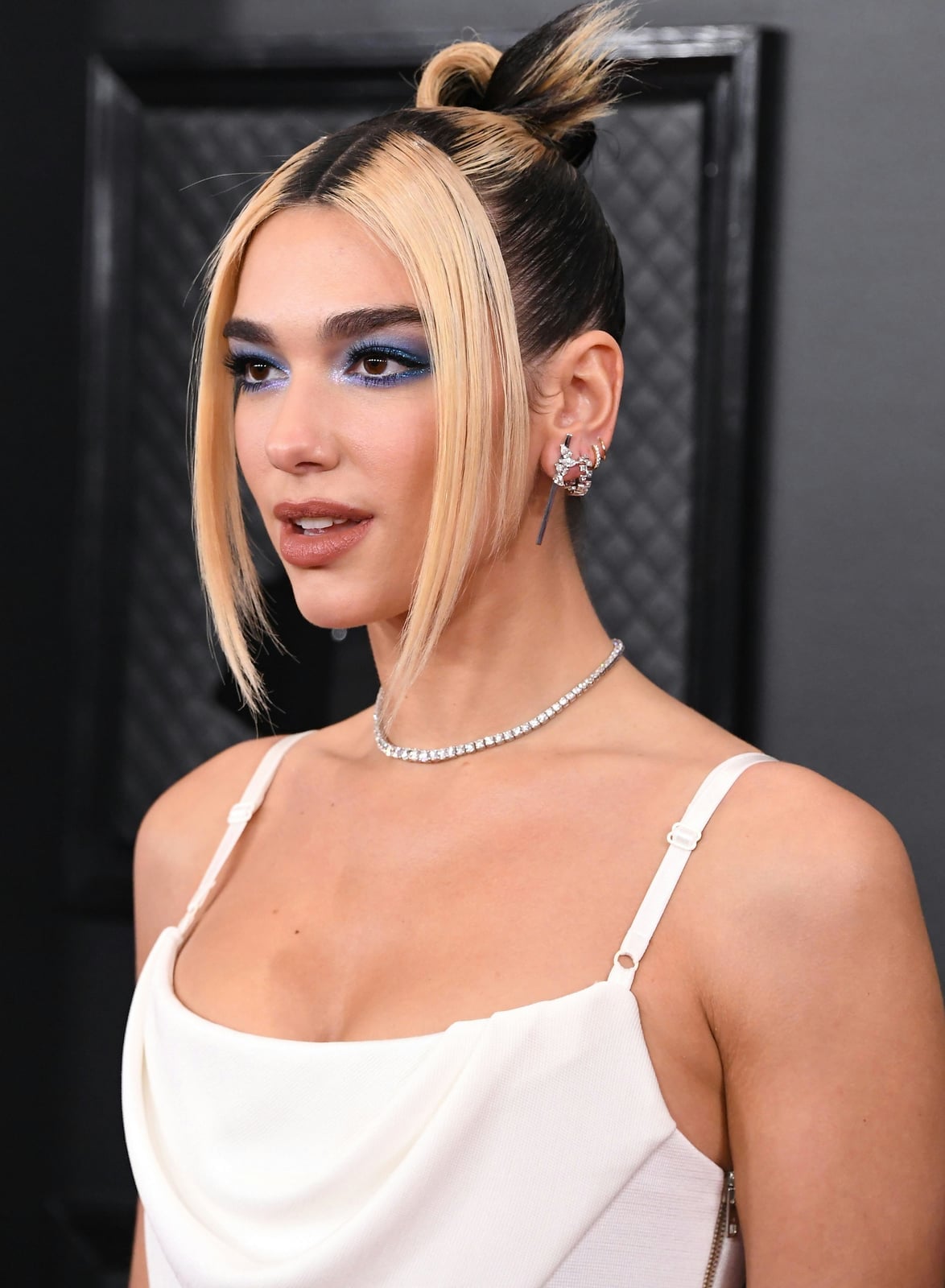
Ever wonder how to get a bold color without committing your whole head to it? Ask your stylist for a chin length blunt bob, dark brown with red/pink peekaboo underneath. The top layer stays a deep brunette, while the hidden underlayer reveals vibrant red and pink when you move. It’s a wavy, medium density cut with no bangs, so the peekaboo effect does all the talking. This bob with peekaboo color suits most face shapes and works best on hair that already has some wave to it. The one real drawback: you’ll need to show off the underside with loose waves or a side part, or nobody will ever see the fun part. Plan on a trim every six to eight weeks to keep the blunt edge sharp.
Chin Length Long Bob Blonde Face Framing
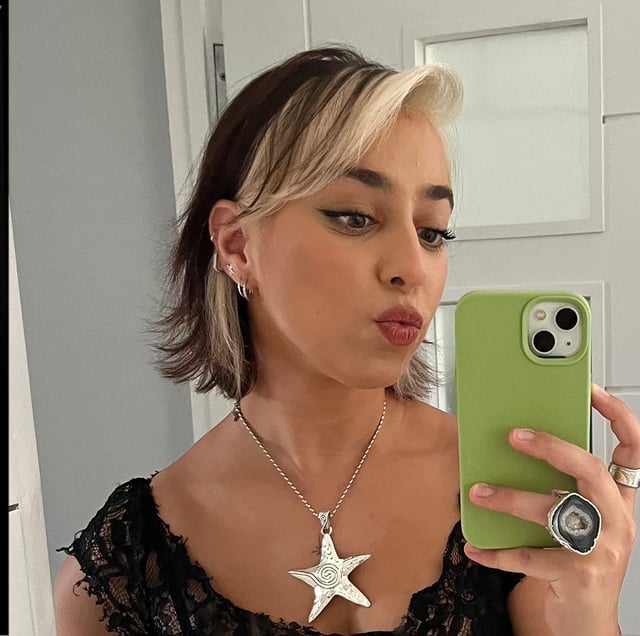
The sharp lines of a straight, chin length long bob get a lot more interesting when the front pieces are blonde and the rest stays dark brown. Ask your colorist for a chin length long bob, dark brown with blonde face framing. The middle parting puts those bright pieces right at your cheekbones, where they frame the face. This cut suits most face shapes and medium straight hair, and it needs a flat iron to keep the sleek finish. What you should know before booking: blonde face framing grows out fast. Those front pieces need a touch up every four to six weeks, and a trim every six to eight keeps the bob’s line clean. It is a look that says you thought about it, even when you did not.
Mid-Back Layers Dark Brown Reddish-Brown Two-Tone
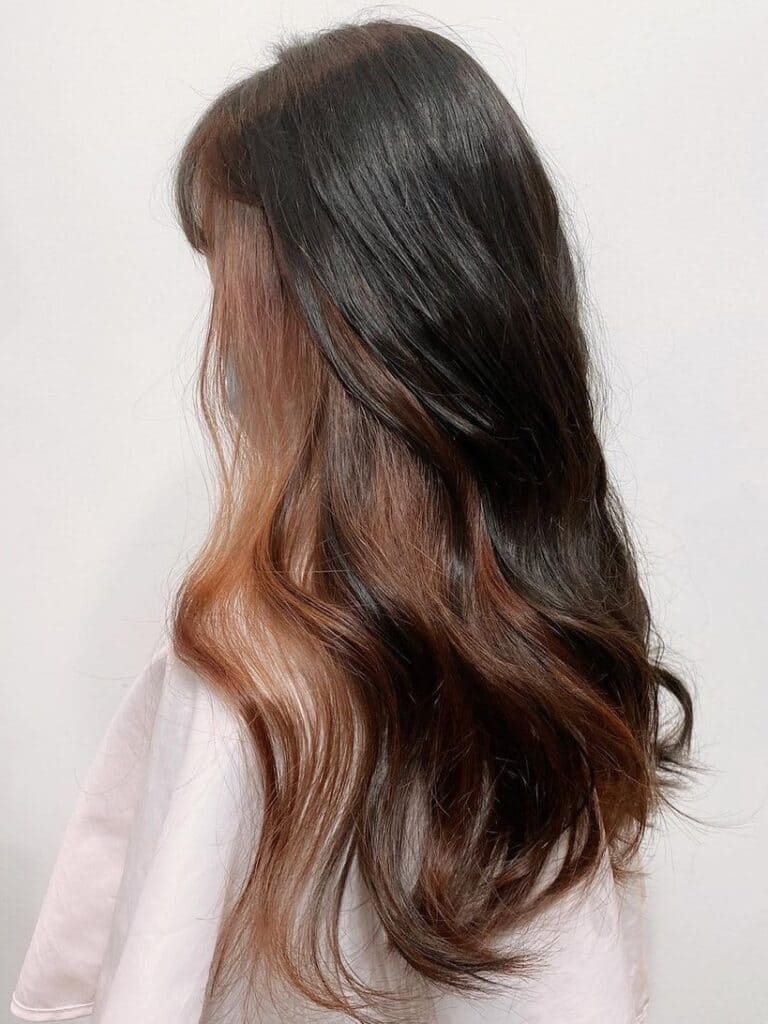
A two-tone effect doesn’t have to shout. This mid-back length cut uses long layers and a side part to blend dark brown into reddish-brown highlights and ends, so the color shifts as the hair moves. Ask your colorist for mid-back layers, dark brown with reddish-brown highlights and ends, side swept bangs. The wavy, thick texture catches the warmth of the reddish tones without going full copper. It’s a dimensional dark brown reddish brown hair idea that suits most face shapes, thanks to the soft side swept bangs. Styling is straightforward: a volumizing mousse and a round brush blowout will give the waves body and let the two shades show. Expect to visit the salon every eight to ten weeks for a trim, and a gloss treatment every six weeks or so keeps the reddish ends from dulling. This is the kind of color that looks expensive without being loud.
Final Thoughts
In choosing a two-tone look, let your maintenance tolerance guide you. Face-framing highlights or a peekaboo underlayer need less frequent touch-ups, while split dyes or contrasting blocks require salon visits every four to six weeks to keep lines crisp.
- Maintain color vibrancy with sulfate-free shampoos and cool water rinses.
- Use color-depositing conditioners to refresh tones between salon visits.
- Protect hair from heat styling with a thermal protectant spray.
- Expect touch-ups every 4-8 weeks, depending on the technique and growth rate.
Two-tone hair offers endless creative possibilities for personal expression.