Winter balayage trades sun-bleached ends for deeper, more dimensional blends that hold up to bulky sweaters and dry indoor heat. The shift is toward richer brunette bases, muted copper tones, and cool ash finishes that stay glossy without constant toning.
These 33 winter balayage ideas span collarbone to mid-back lengths, fine to thick textures, and warm to cool color families. Whether your hair flattens under a beanie or your grow-out line shows before you want it to, there is a version here that buys you eight weeks between appointments. Each one uses a lived-in technique that keeps the root soft and the ends light.
Dark Gray Base With Silver Balayage
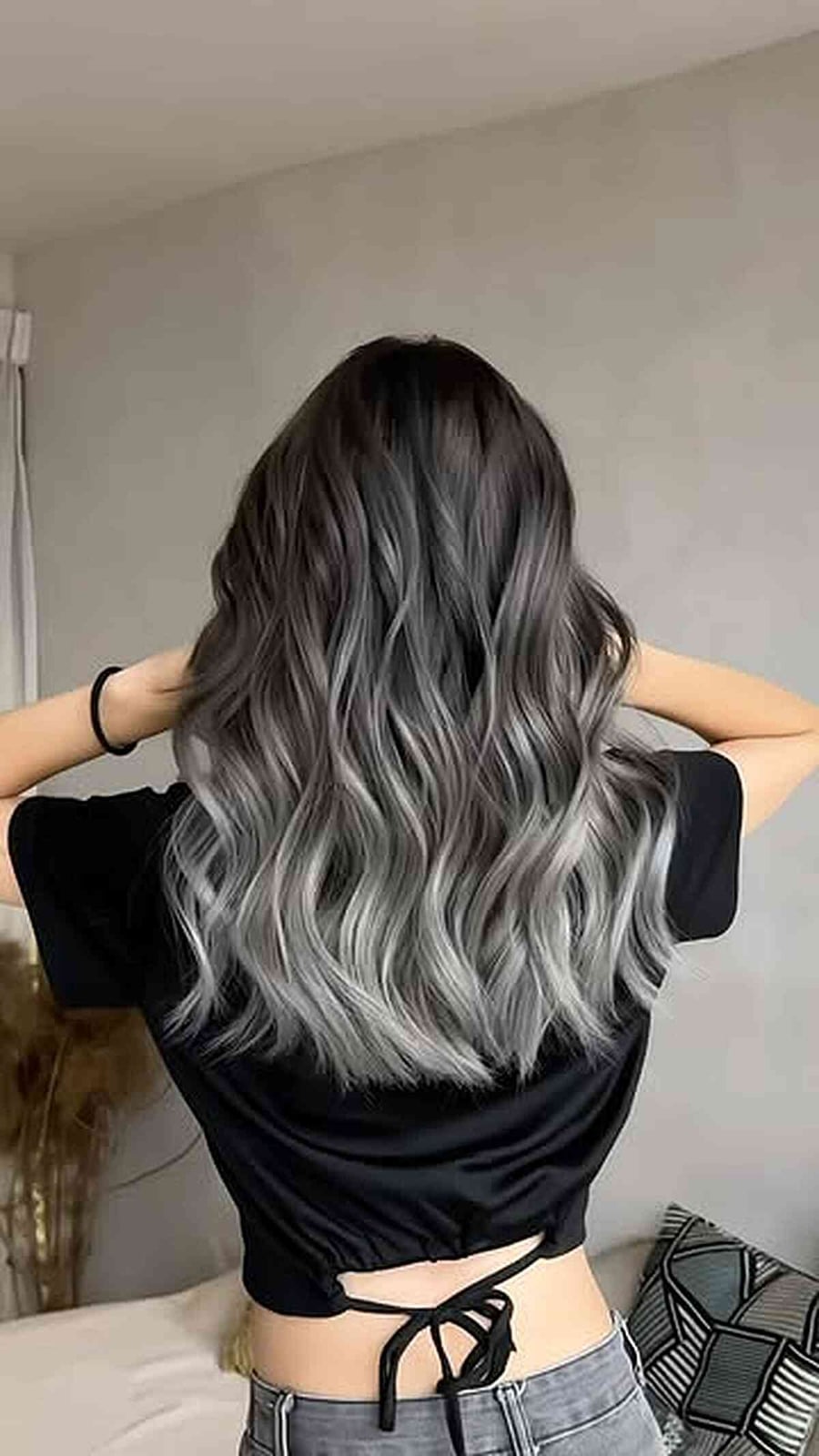
The gray to silver gradient here is built with a balayage technique that paints the lighter color freehand, starting low and diffusing upward, so the transition reads as a smooth fade. On thick, wavy hair at mid-back length with a middle parting, the dark gray base grounds the silver ends, which catch the eye without looking theatrical. This is a cool-toned, edgy direction that leans on the contrast between the deep root and the pale lengths.
Ask your colorist for: dark gray base with silver balayage. The process is all salon, and the result is a lived-in gradient that grows out with less of a harsh line than a traditional foil. Expect to refresh the silver with a purple shampoo at home once a week, and plan on a toning appointment every six to eight weeks to keep the metal cool and not muddy.
Collarbone Ash Blonde Balayage
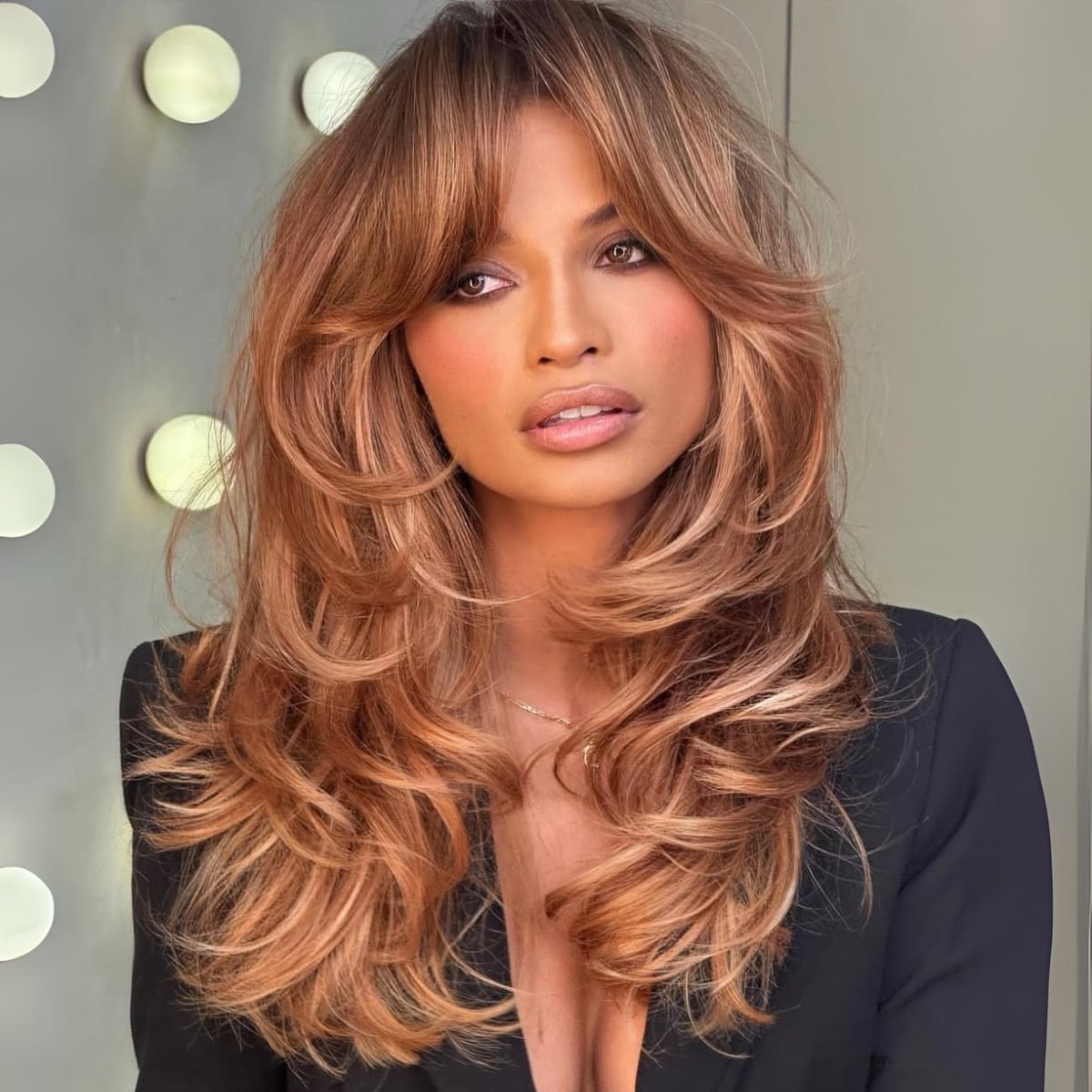
This collarbone ash blonde balayage works best on medium to thick hair with natural movement, because the soft, face-framing layers need weight to hold their shape. The dark blonde base keeps the cool ash blonde highlights from washing out the whole head, giving a dimensional effect that suits oval and heart face shapes without much fuss. Ask your colorist for: collarbone length ash blonde balayage with soft layers. A cool-toned shampoo at home keeps brassiness at bay, and a trim every ten to twelve weeks keeps the layers from turning shaggy. The blowout shown here is the easy part: the cut does the work, so a quick diffuser dry is enough for most mornings.
Chocolate Brown With Caramel Balayage
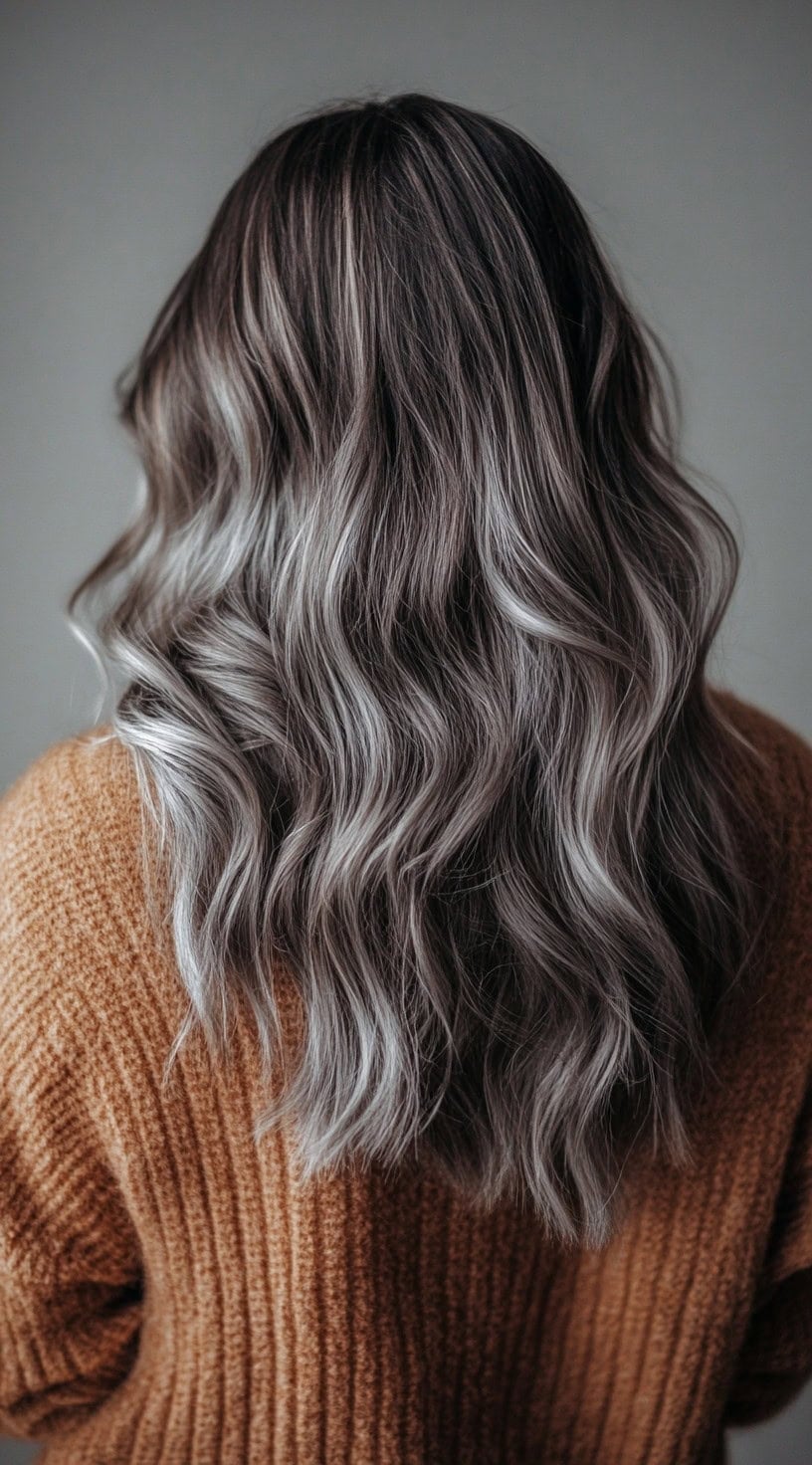
If you are torn between a solid chocolate brown and a full caramel blonde, this blend splits the difference. The rich chocolate brown base holds the depth, while the caramel balayage highlights add warmth and lift through the ends, creating dimension that a single flat color cannot match. On collarbone-length wavy hair with a middle parting, the caramel reads as sun-kissed. Ask your colorist for: chocolate brown base with caramel balayage. The caramel tones lean warm, so they pop against cooler brunette bases without clashing. Keep the shine going with a gloss treatment every six to eight weeks, and trim the ends every ten weeks to stop the waves from looking frayed.
Red-Brown Base With Copper Balayage and Curtain Bangs
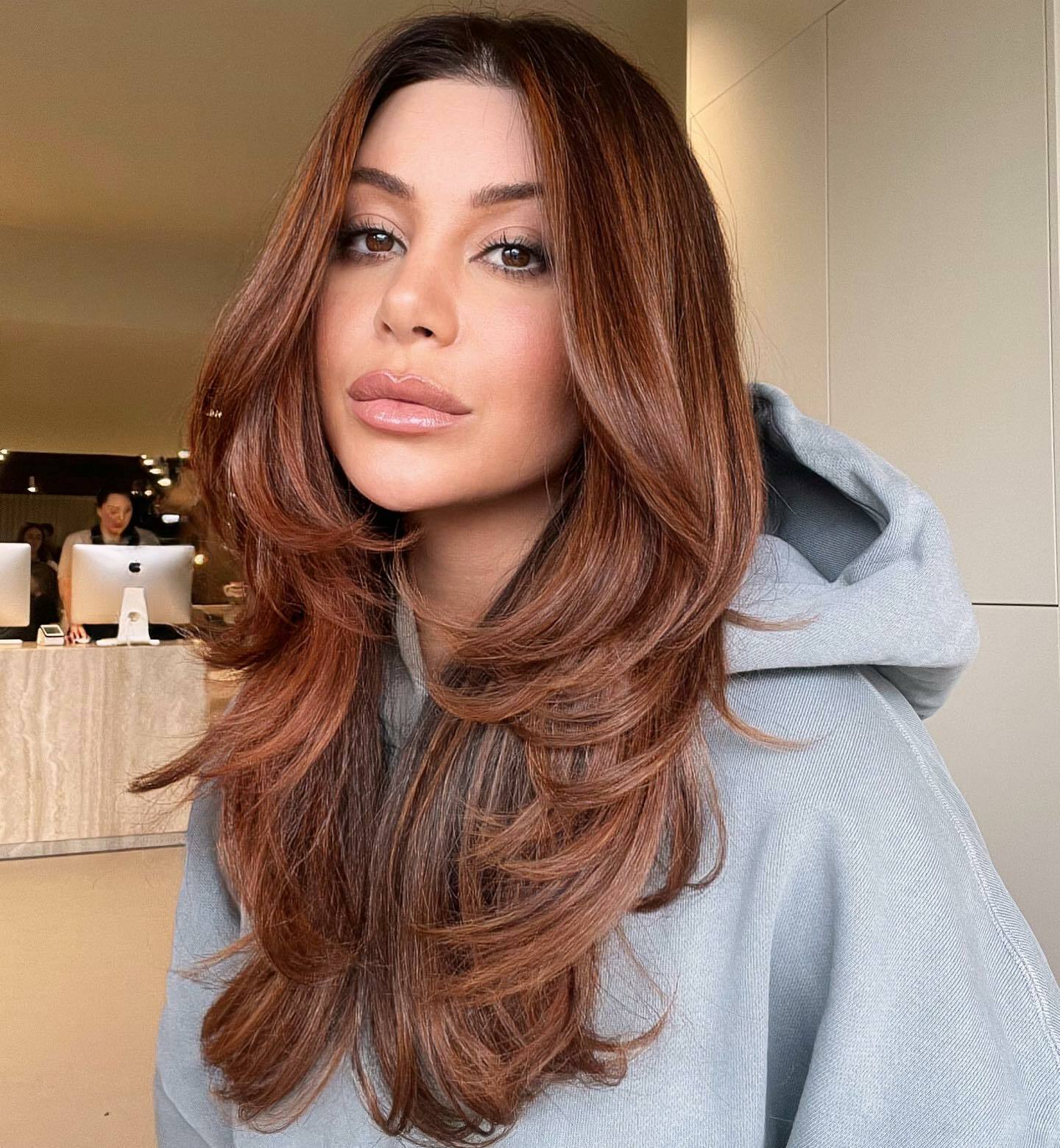
A red-brown base with copper balayage achieves a polished look through precise placement. The copper balayage is painted to brighten the face-framing layers and the ends, while the red-brown base keeps the roots deep, so the color has a gradient that complements the curtain bangs. On thick, wavy mid-back hair, the blowout gives the bangs their swoop and the layers their movement.
Ask your colorist for: red-brown base with copper balayage and curtain bangs. You want the copper to start a few inches from the root, not at the scalp, to avoid a harsh line. To keep the copper from fading to a dull orange, use a color-depositing conditioner once a week and schedule a bang trim every four to six weeks to maintain the curtain shape.
Dark Brown With Caramel Balayage Lob
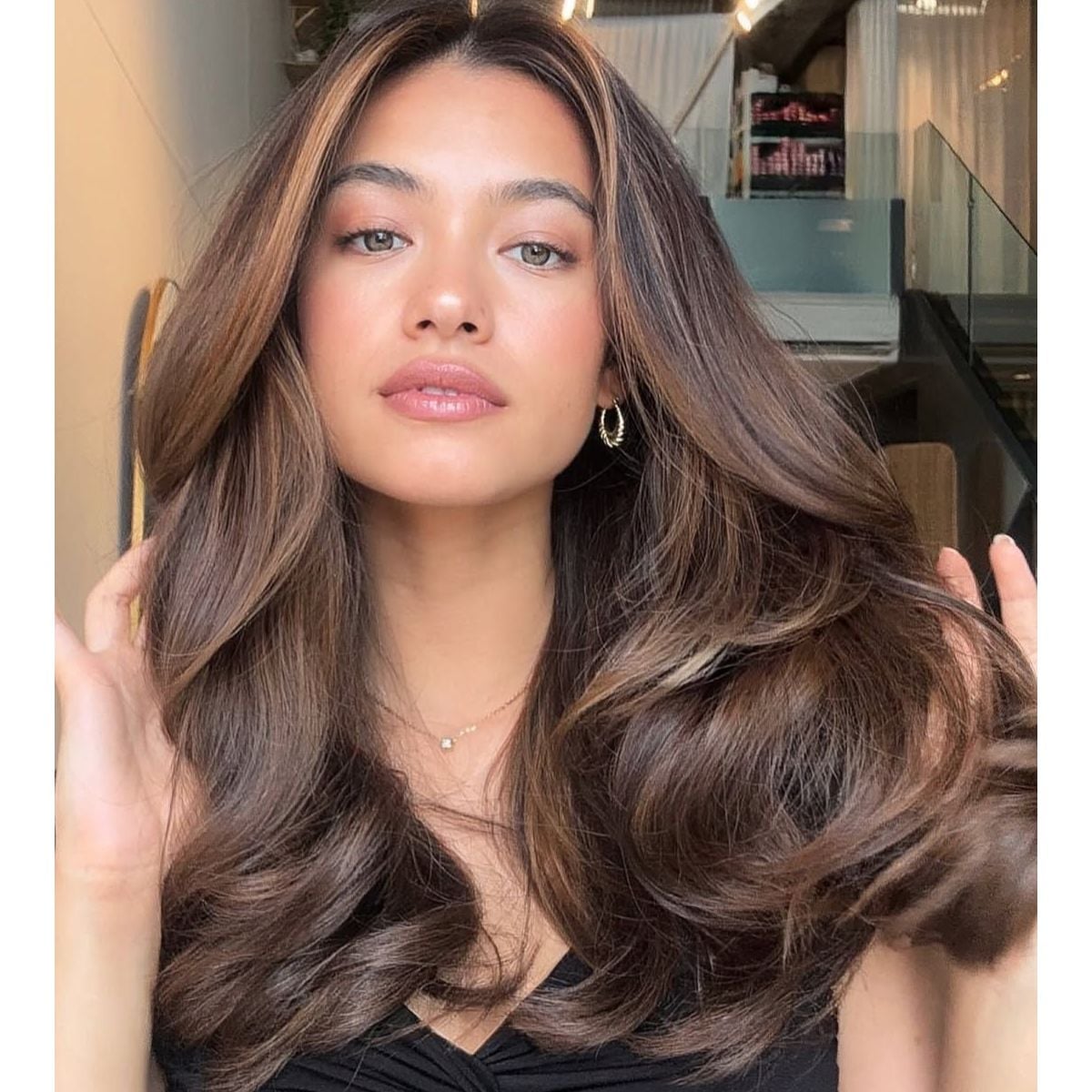
A lob at collarbone length with a dark brown base and caramel balayage wears well because the dimensional color hides grow-out and the face-framing layers soften a round or square jaw. The caramel highlights land around the face and through the ends, so the color brightens without overpowering the deep base. Ask your colorist for: dark brown base with caramel balayage lob and face-framing layers. In everyday wear, the caramel shows up best when the hair is styled with some wave, as the light catches the lighter pieces. To keep the caramel warm, a golden gloss every eight weeks helps, and a trim every eight to ten weeks keeps the lob shape from collapsing into a shapeless bob.
Ash Blonde Balayage With Curtain Bangs
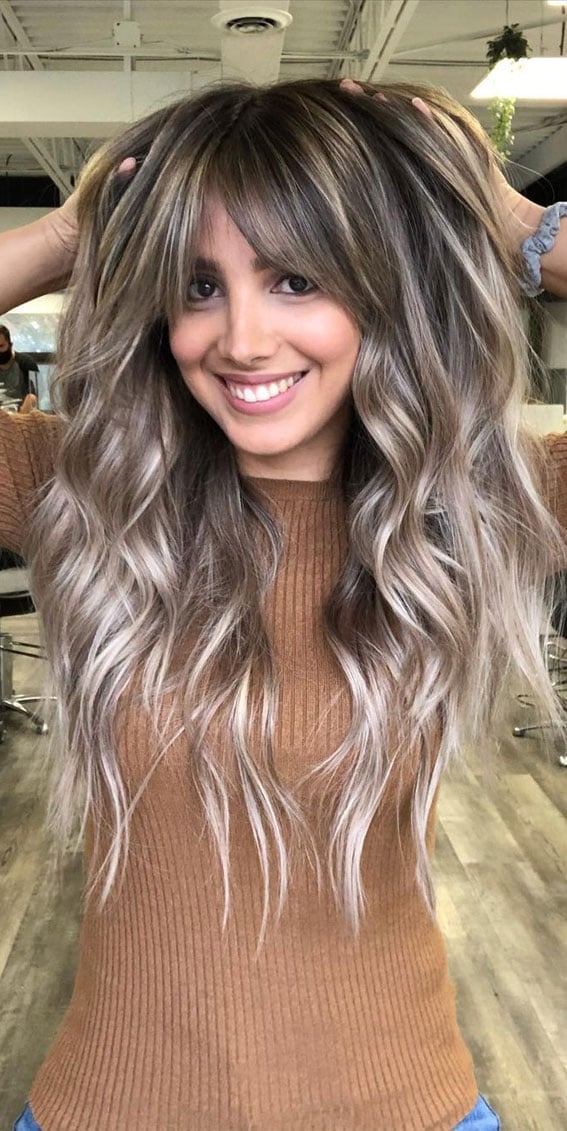
The trick with ash blonde balayage on a dark blonde base is remembering it’s a cool tone, not a license to ignore your roots. Curtain bangs at collarbone length frame the face, but they also lighten faster than the rest, so they’re the first place brassiness shows. A purple shampoo weekly keeps the ash honest, and expect to trim those bangs every four to six weeks. Ask your colorist for: collarbone length ash blonde balayage with curtain bangs. The real drawback: ash can turn muddy if your stylist lifts too high, so a darker base is your safety net. Medium to thick hair holds the waves best, and the middle part keeps the softness balanced.
Dark Brown With Caramel Mocha Balayage, Mid-Back
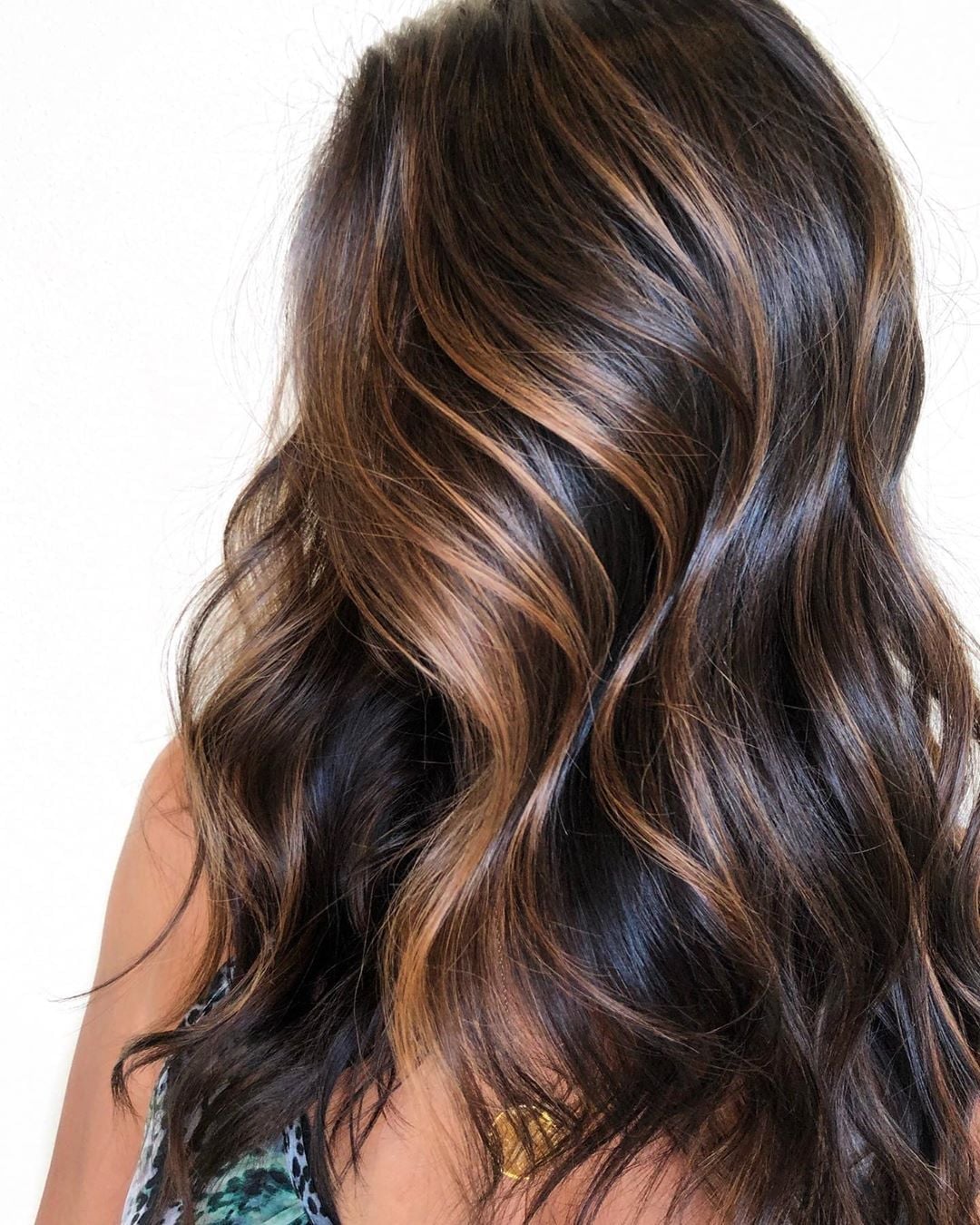
This design works because the caramel and mocha tones are painted in sections, not scattered. The dark brown base stays intact at the roots, while the lighter shades hit the ends, which is what gives the dimensional effect. On thick, wavy hair falling to mid-back, the waves catch each tone differently, so the color looks like it shifts as you move. The technique is a hand-painted balayage, which means the transition is soft, not striped. Ask your colorist for: dark brown base with caramel and mocha balayage. It’s a salon-only job, and the result is a rich, lived-in color that doesn’t need frequent root touch-ups. A color-protecting serum keeps the shine, and a trim every ten to twelve weeks keeps the ends healthy.
Dark Brown With Warm Copper Balayage
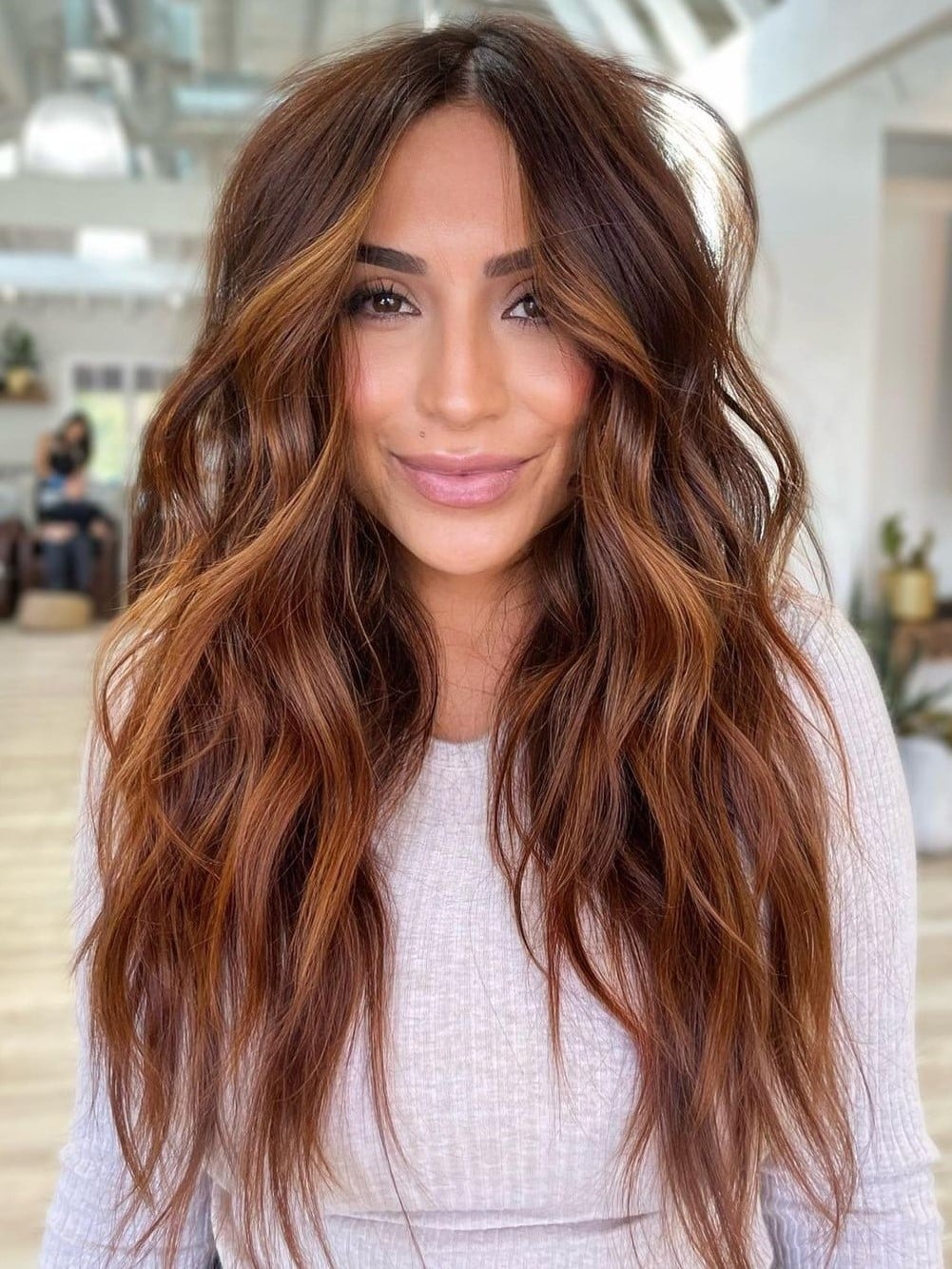
Warm copper balayage on a dark brown base is a genuinely flattering choice, but it’s not for everyone. If your hair is fine or you don’t like warmth, the copper can read as too orange against the dark base. On thick, wavy hair at mid-back length, the copper adds vibrancy without overwhelming the brown. The middle part lets the color fall symmetrically, and the glossy finish comes from a toner that keeps the copper bright. Ask your colorist for: dark brown base with warm copper balayage. The upkeep is real: copper fades fastest, so a color-depositing mask every four to six weeks refreshes the tone. A trim every ten to twelve weeks keeps the ends looking sharp. This is a salon-only color, and it’s best for those who want a noticeable shift without going fully blonde.
Dark Brown To Beige Blonde Balayage Lob
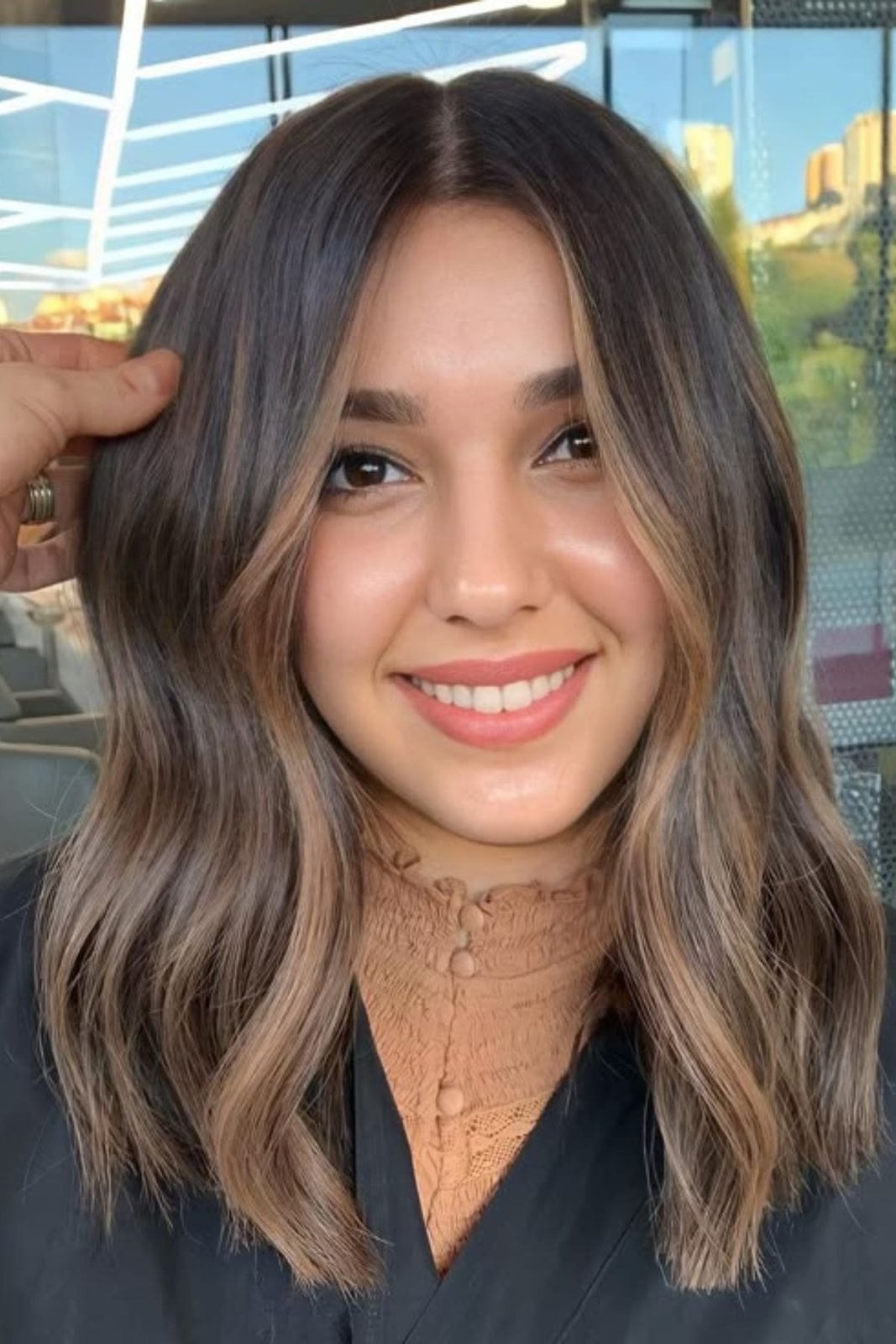
A lob at collarbone length with a middle part is a low-maintenance cut, but the beige blonde balayage asks for a bit more attention. The dark brown base at the roots transitions to soft beige blonde through the mid-lengths, and on medium density wavy hair, the blowout gives it that polished, everyday look. The beige tone is neutral, so it doesn’t lean too warm or too cool, which means it’s easier to maintain than a pure ash or gold. Ask your colorist for: dark brown to beige blonde balayage lob. Use a color-safe shampoo to keep the beige from muddying, and plan a trim every eight to ten weeks to keep the lob shape crisp. The grow-out is forgiving, but the lighter ends will need a gloss every few months to stay bright.
Dark Brown Balayage With Curtain Bangs
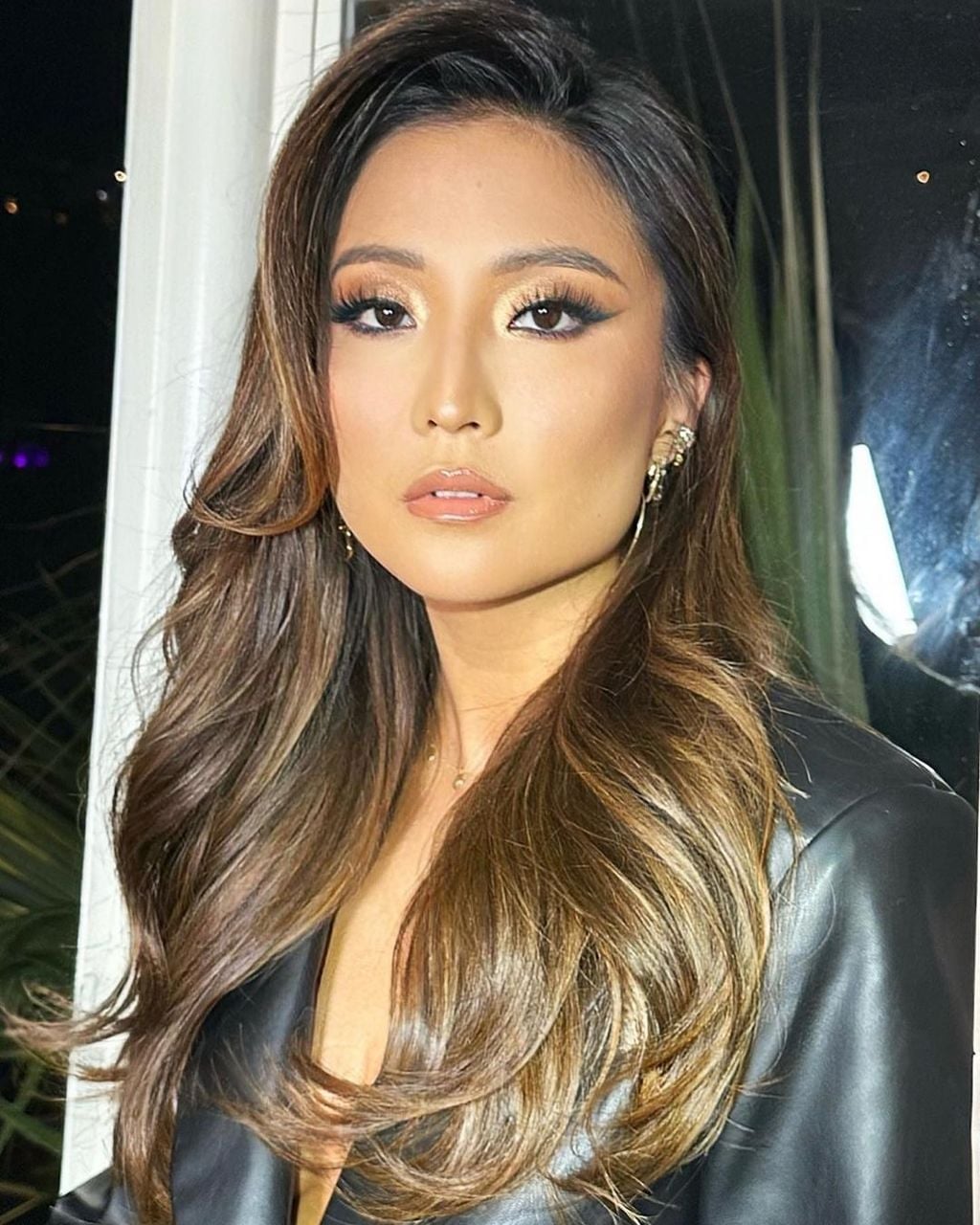
How do you ask for a balayage that doesn’t look like it came from a box? Be specific about the transition. You want a dark brown base that melts into lighter brown highlights, not a stripe or a streak. On thick, wavy hair with curtain bangs, the color should start a few inches from the roots to keep the depth. The bangs are the tricky part: they need to be lightened separately, but only the pieces that frame the face, so they blend with the rest. Ask your colorist for: dark brown base to light brown balayage with curtain bangs. Mention you want the lighter pieces to frame your face softly, not to look like a separate highlight. Long layers help the wavy blowout hold its shape, and the middle part keeps everything symmetrical. This is a salon-only technique, and the grow-out is forgiving.
Dark Brown With Ash Blonde Beige Balayage, Mid-Back
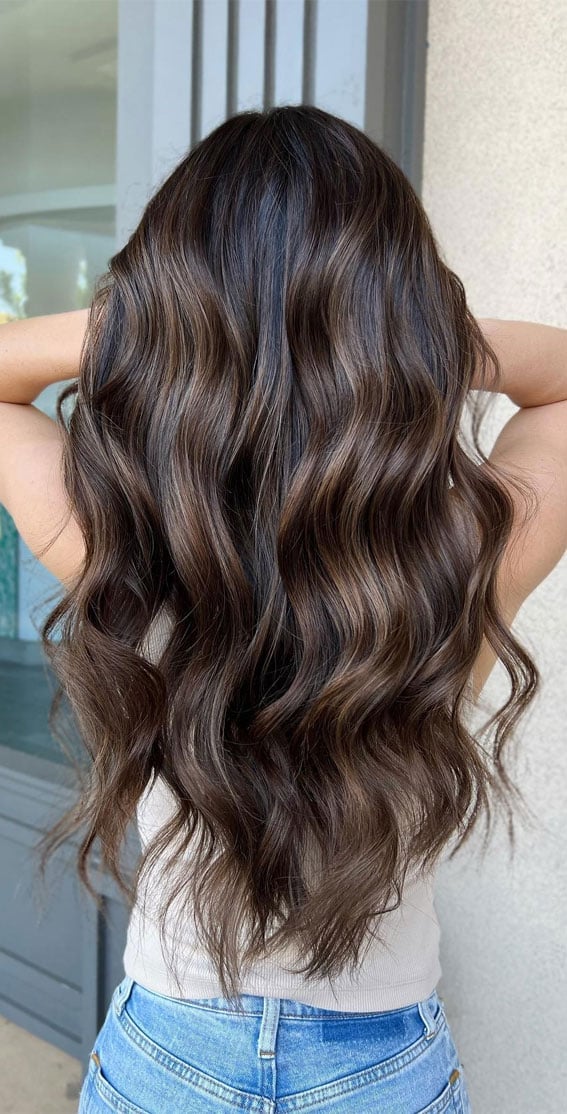
The back view reveals the architecture: a dark brown base carrying ash blonde and beige highlights that are painted close to the root but never quite touch it, creating a cool-toned gradient that looks deliberate, not accidental. This is a mid-back length on thick, wavy hair, with the lightness concentrated toward the ends.
That cool contrast works best on hair that already has some wave. Ask your colorist for: dark brown base with ash blonde and beige balayage. The technique keeps the root line soft, so a toning appointment every eight weeks and a trim every ten to twelve is all you need to keep the ash from turning brassy. Middle part, loose waves, no bangs: the color does the work.
Mid-Back Ash Blonde Balayage
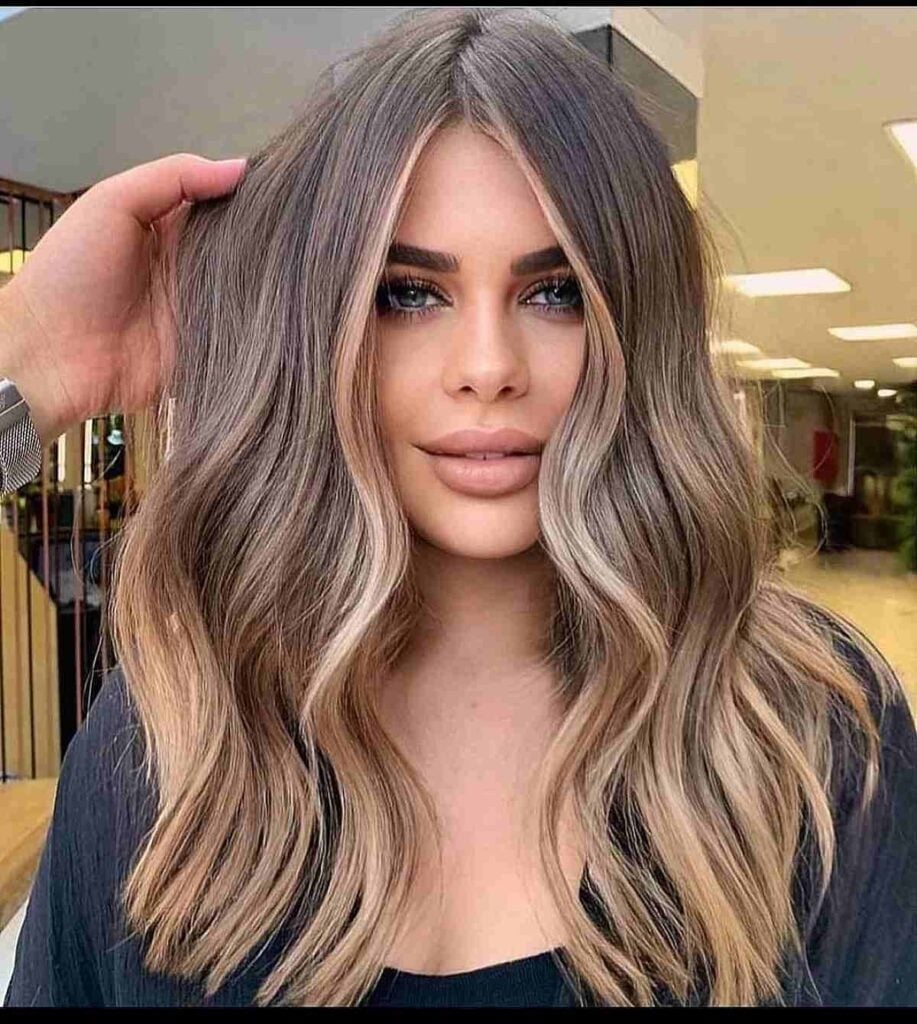
On collarbone length, ash blonde balayage reads as a statement piece. On mid-back length, it reads as a wash of cool light. The same technique, the same dark blonde base, but the longer canvas lets the soft layers and wavy blowout spread the tone so it never feels heavy. Ask your colorist for: mid-back length ash blonde balayage. Thick, wavy hair carries the dimension best. A toner every six to eight weeks keeps the ash from drifting into yellow, and a trim every ten to twelve weeks maintains the shape. No bangs, no fuss.
Blonde Balayage On Wavy Hair
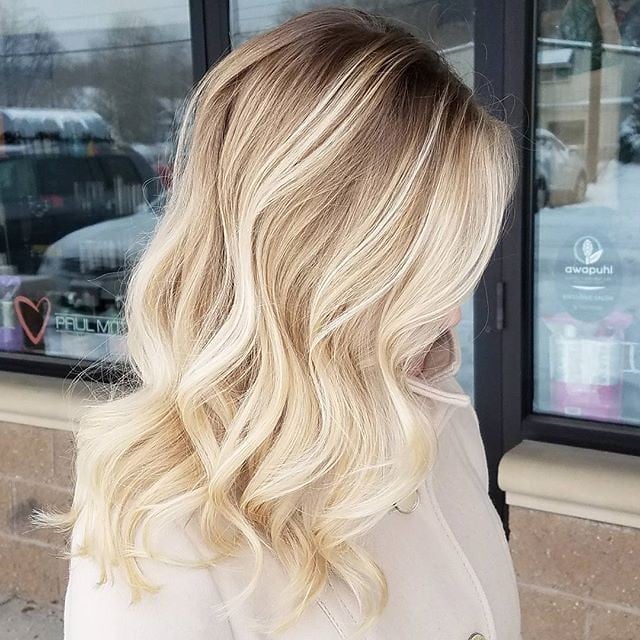
The darker root and lighter ends are painted freehand, following the wave pattern instead of fighting it. This is a salon technique: the colorist has to see how the hair falls when dry to place the light pieces where they catch the most movement. Ask your colorist for: collarbone length blonde balayage with darker roots. Wavy, thick hair at this length shows the dimension without needing a curling iron. A DIY toner mask every few weeks helps, but the application itself needs a professional. Side part, no bangs, and the grow-out is built in.
Collarbone Ash Brown With Cool Blonde Balayage
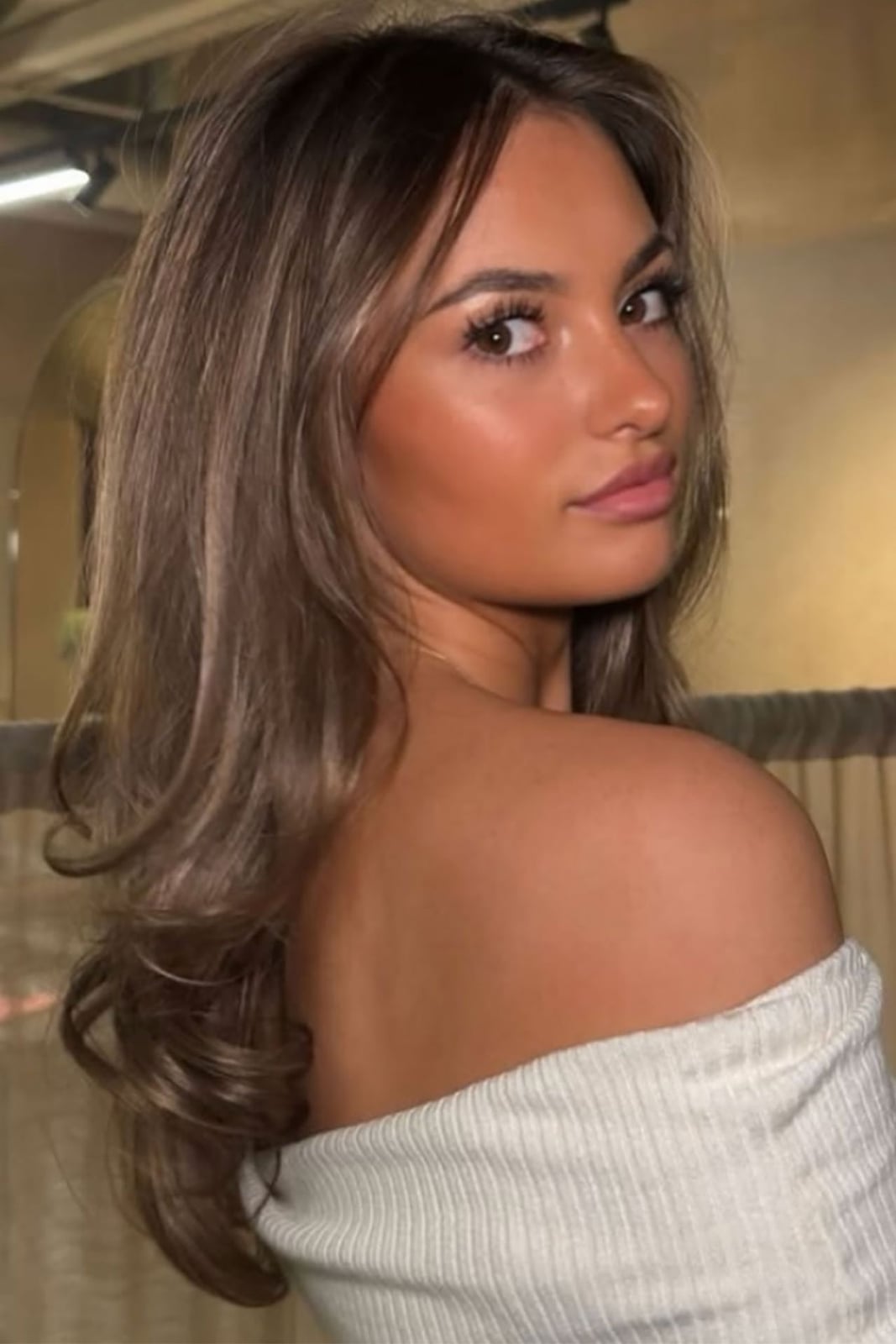
This one is for medium density hair that needs a lift without losing weight. The ash brown base grounds the look, while the cool blonde balayage runs through face-framing layers and curtain bangs, adding brightness where it counts. Ask your colorist for: collarbone length ash brown with cool blonde balayage and face-framing layers. The collarbone cut stops the color from feeling bottom-heavy. Curtain bangs soften the front without demanding a daily round of styling. Toner every six to eight weeks keeps the cool tones honest, and a trim every eight to ten weeks keeps the shape sharp.
Mid-Back Ash Blonde Balayage With Curtain Bangs
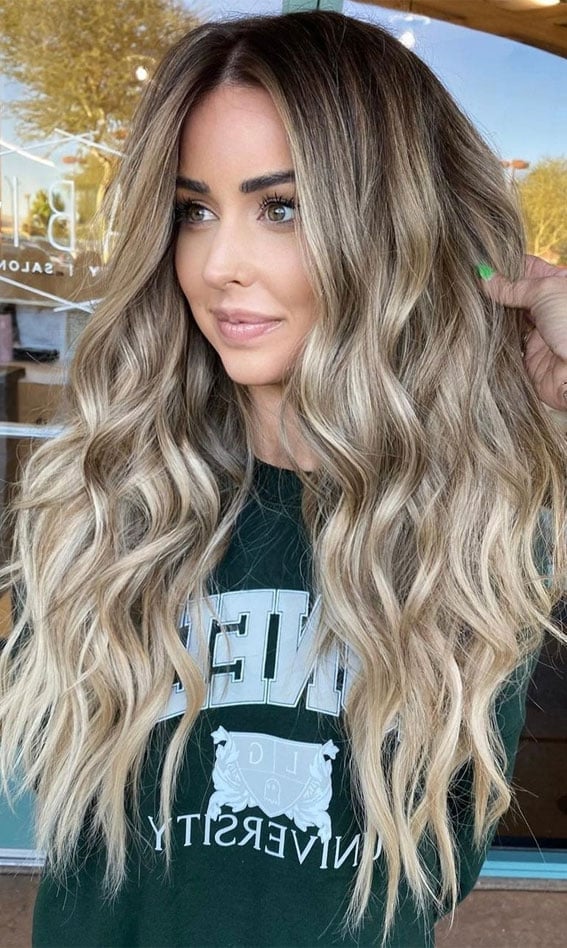
Ash blonde balayage on a dark blonde base already has a slower grow-out than a full bleach, but add curtain bangs and the upkeep math changes. The bangs need a trim every four to six weeks; the length can go ten to twelve. Ask your colorist for: mid-back length ash blonde balayage with curtain bangs. The wavy blowout keeps the bangs soft and the layers light, so you are not fighting a blunt line across your forehead. A purple shampoo once a week handles the ash tone between gloss appointments. Thick, wavy hair at mid-back carries the color without it reading as top-heavy.
Dark Brown With Caramel Balayage, Wavy Thick
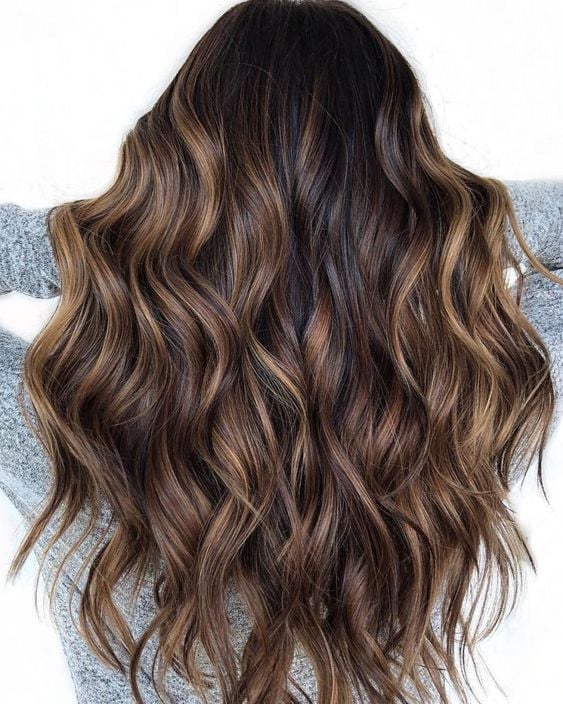
Caramel balayage on dark brown hair is a lesson in restraint: the lighter pieces start below the ears and build gently toward the ends, so the mid-back length keeps its depth instead of going full blonde. The technique relies on hand-painting fine sections rather than foiling every strand, which is why the transition reads as a soft melt instead of a stripe.
On wavy, thick hair, the caramel tones catch the bends of each wave, which gives the color more movement than it would on a straight canvas. Thick texture also hides the demarcation line longer, so the grow-out stays forgiving for about three months. Ask your colorist for: dark brown base with caramel balayage.
Collarbone Bob With Dark Blonde Balayage
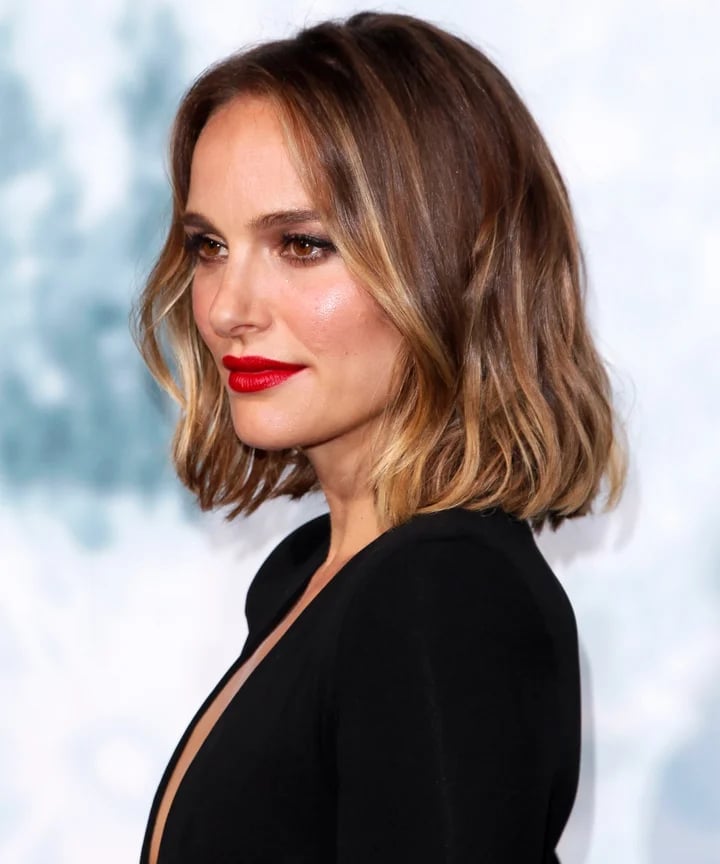
Wondering how to get that lived-in dark blonde on a bob without looking like you tried too hard? Start by asking for the color to be concentrated through the mid-lengths, leaving the root area slightly deeper. On a collarbone bob with curtain bangs, that placement keeps the cut light where it moves and grounded where it sits. Ask your colorist for: collarbone bob with dark blonde balayage. The side part and soft waves show off the dimension with every turn of the head.
Mid-Back Dark Brown With Golden Balayage
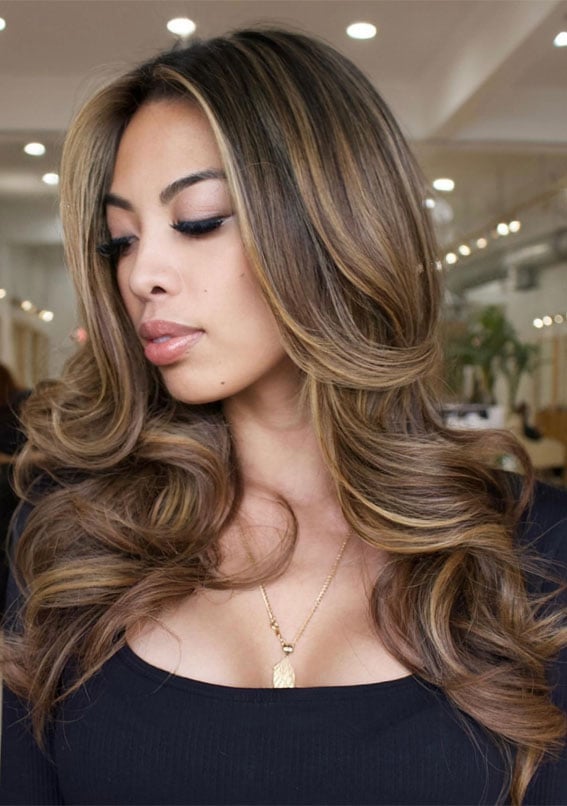
Golden balayage on a dark brown base is the warmer cousin of the ash blonde trend, and it earns its keep when the hair is styled in voluminous curls. The difference between this and a full blonde melt is the base: the dark brown stays visible at the roots and through the mid-lengths, so the golden pieces look like sun hitting the surface, not a complete color change.
If your hair is thick and wavy, the face-framing layers give the golden tones a place to land without overwhelming the depth. The dark base and warm highlights make the color feel rich for winter. Ask your colorist for: dark brown base with golden balayage and face-framing layers.
Collarbone Ash Blonde Balayage, Wavy Thick
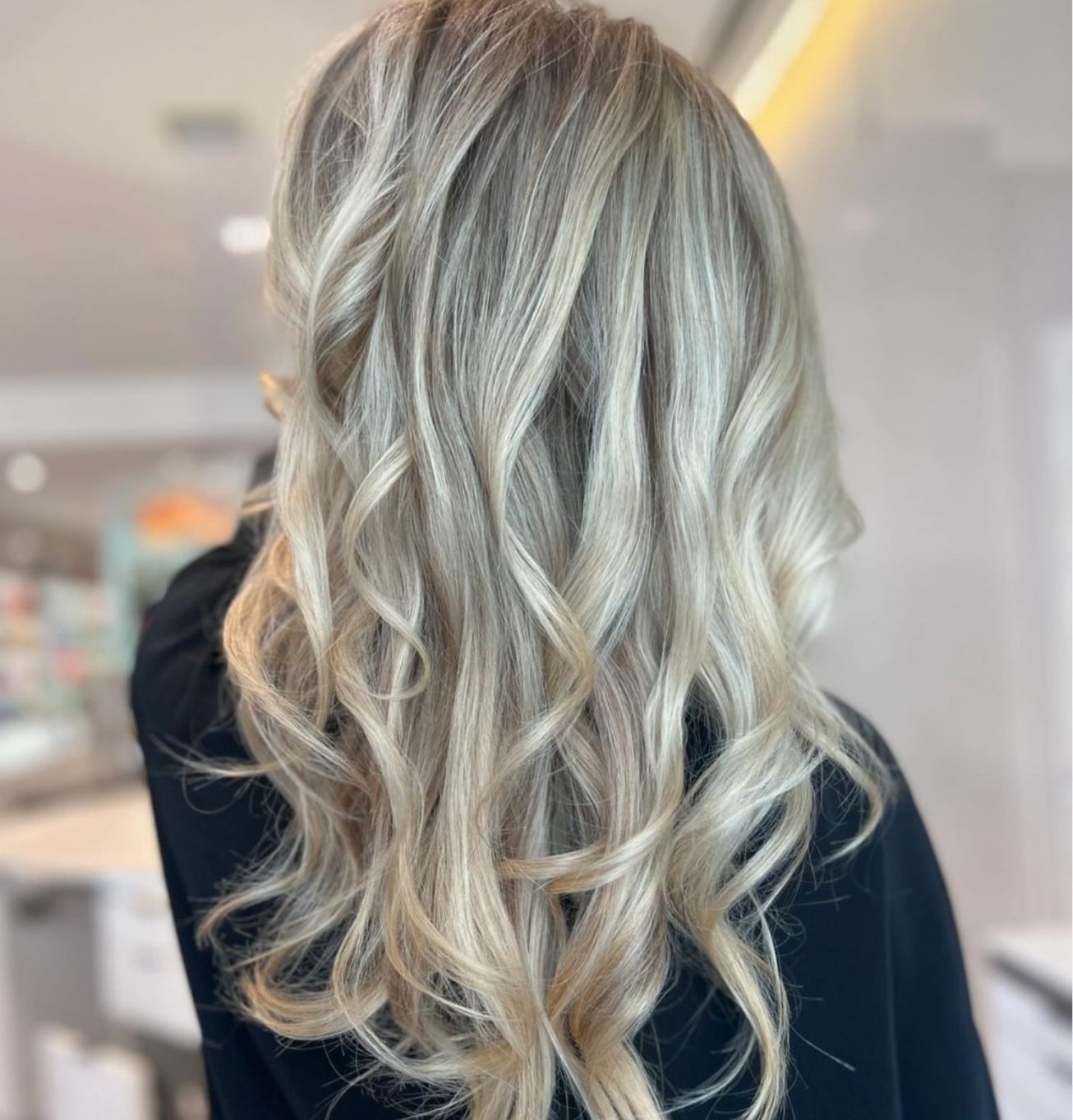
Ash blonde balayage on collarbone-length hair is a commitment to the cool side, and thick wavy texture handles it well because the waves break up any flatness that ash tones can sometimes bring. The balayage here stays subtle, with lighter pieces woven through the darker base rather than painted on thick, so the dimension comes from the contrast between the two. Ash tones fade faster than warm ones, so plan on a toning appointment every six to eight weeks to keep the gray-green cast away. Ask your colorist for: collarbone length ash blonde balayage.
Long Dark Brown With Blonde Balayage
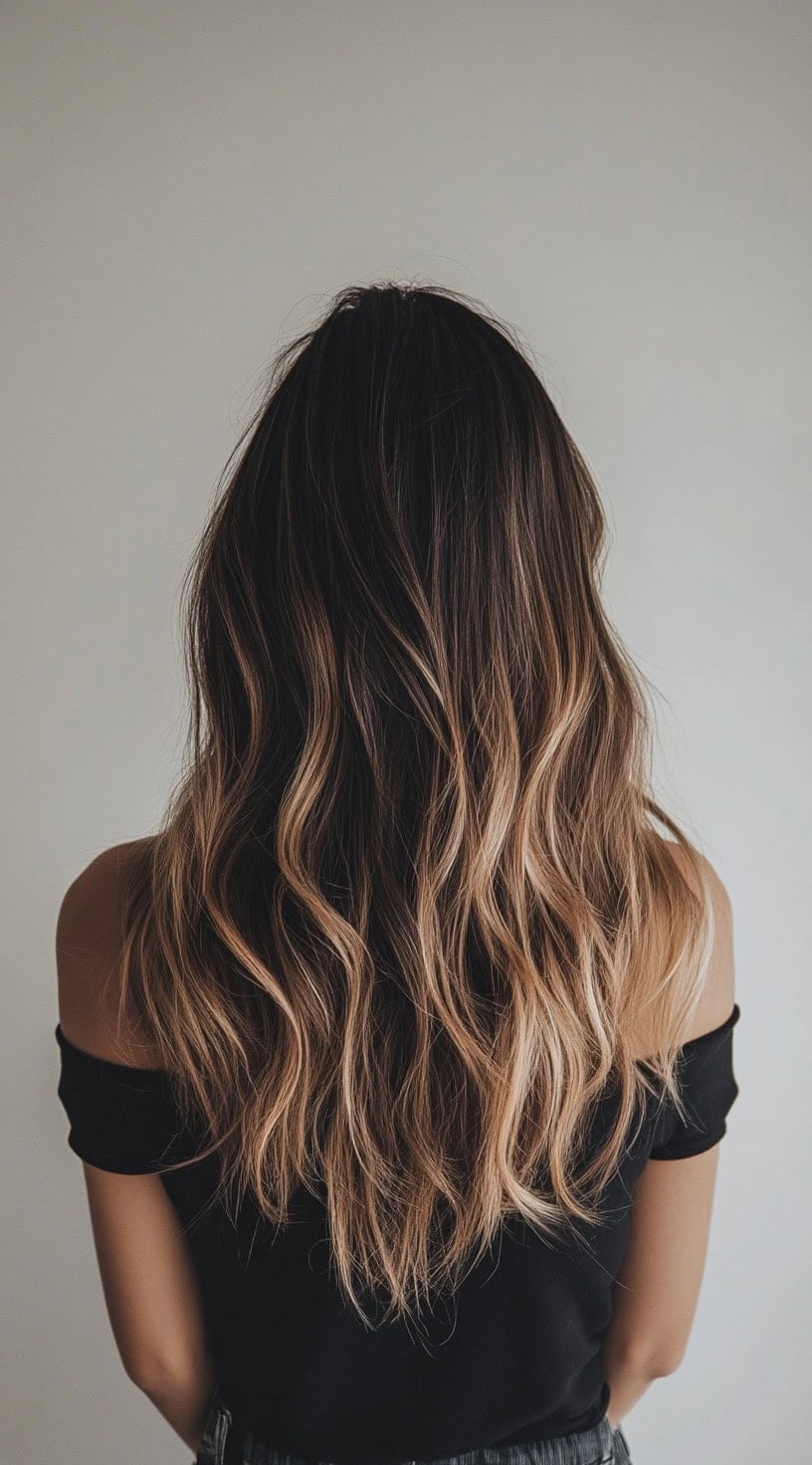
The trick to blonde balayage on long, dark brown hair is placement: the lightest pieces are concentrated through the ends, while the roots stay dark to anchor the whole thing. On thick hair with long layers, the loose waves catch the blonde at different points, so the color shifts as the hair moves instead of sitting in one flat block.
This is a high-contrast take on balayage, with the blonde standing out clearly against the dark brown base. The result is a winter color that looks deliberate without needing a full bleach out. Ask your colorist for: long dark brown with prominent blonde balayage.
Mid-Back Ash Blonde With Platinum Beige Balayage, Long Layers
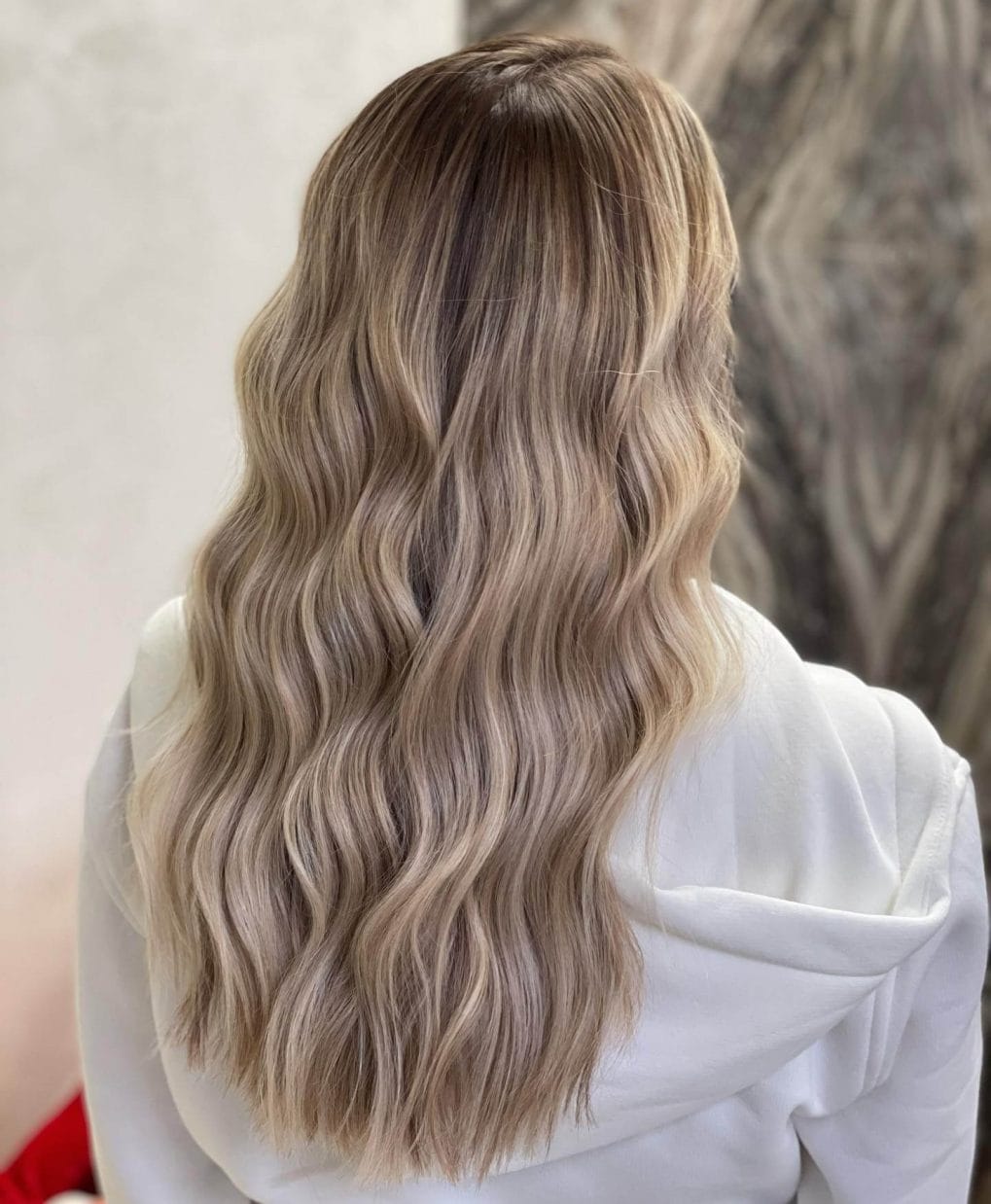
Cool-toned balayage lives or dies by its toner, and this ash blonde base with platinum and beige pieces is no exception. The mistake most people make is skipping the toning appointments, which lets the lighter strands drift brassy and the whole effect turns muddy instead of icy. On thick, wavy hair at mid-back length with long layers, this finish delivers a cool, dimensional look that moves with every wave. Ask your colorist for: ash blonde base with platinum and beige balayage. The tradeoff is real: a cool blonde this light needs a purple shampoo in rotation and a toning session every four to six weeks to stay true. Trims every ten to twelve weeks keep the long layers from splitting, because split ends show up faster on lightened hair.
If you are not ready for that rhythm, this is not the winter balayage for you. But if you can commit to the upkeep, the cool contrast looks polished and never washed out, which is the whole point of going ash in the first place.
Collarbone Medium Brown Balayage
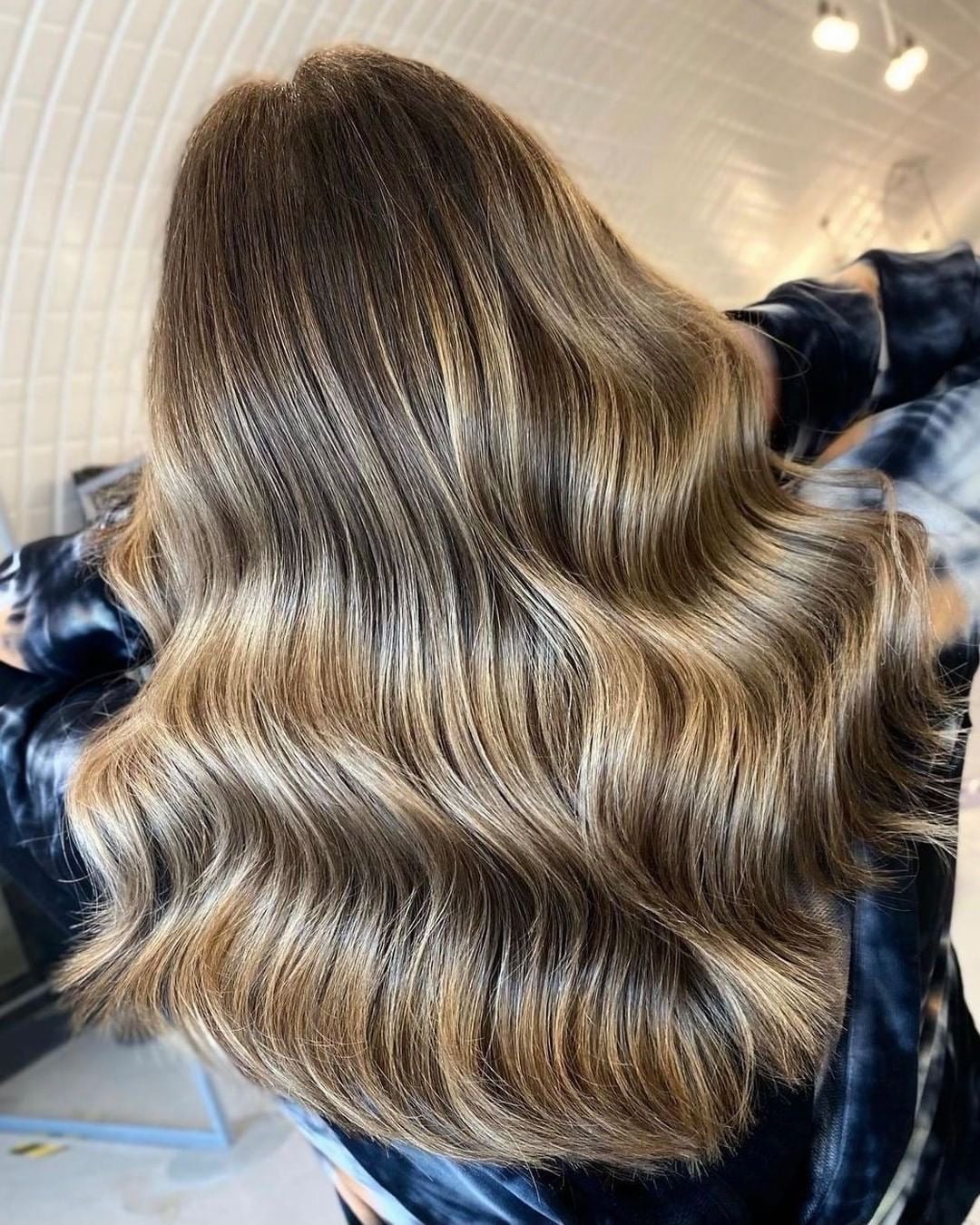
Medium brown balayage at collarbone length is the low-commitment option that genuinely flatters medium-density wavy hair, and it suits anyone who wants a natural lift without the upkeep of a full blonde. The subtle lighter brown highlights blend into the base so smoothly that the grow-out reads as intentional, not neglected. Ask your colorist for: collarbone length medium brown balayage. If your hair is very fine or very coarse, you might want a bit more contrast so the dimension does not disappear, but on medium texture with a wavy blowout, this is a set-and-forget color. A color-safe shampoo keeps the brown from dulling, and a trim every eight to ten weeks keeps the collarbone line clean.
Mid-Back Dark Blonde With Light Blonde Balayage
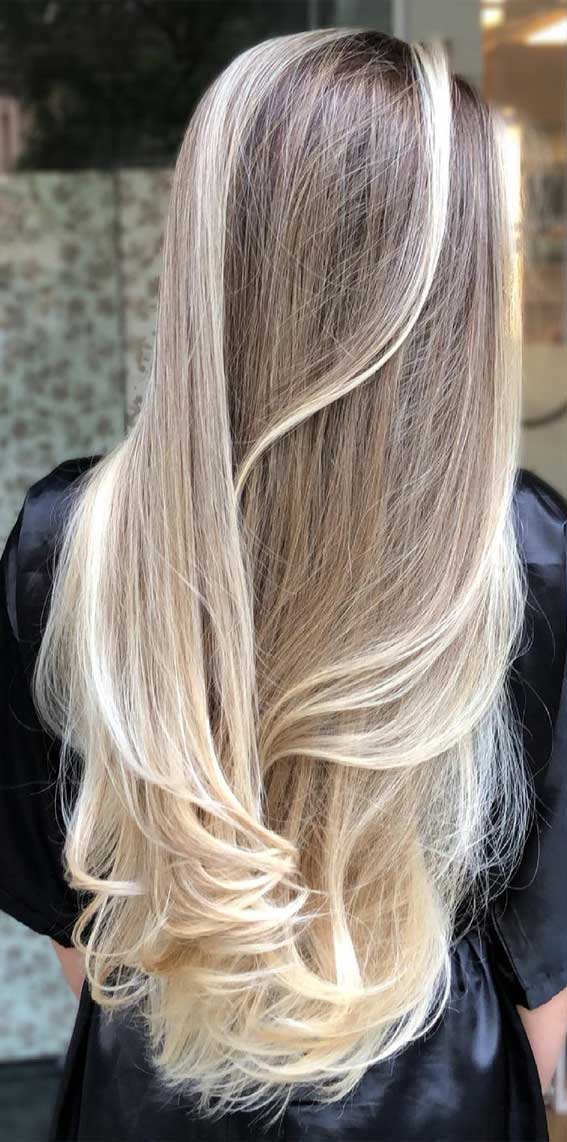
The grow-out is the whole design here: a dark blonde base with light blonde balayage that transitions smoothly from root to tip, so the line of demarcation never shows up like a stripe. On thick, wavy hair at mid-back length with long layers, the lighter ends catch the light while the roots stay grounded, which means you can stretch between salon visits without looking undone. Ask your colorist for: mid-back length dark blonde with light blonde balayage. The upkeep is mostly about tone, not roots: a toning appointment every six to eight weeks keeps the light blonde from going brassy, and a trim every ten to twelve weeks keeps the long layers moving. A purple shampoo at home stretches the time between toners, but it will not replace them entirely.
Mid-Back Medium Brown With Golden Caramel Balayage
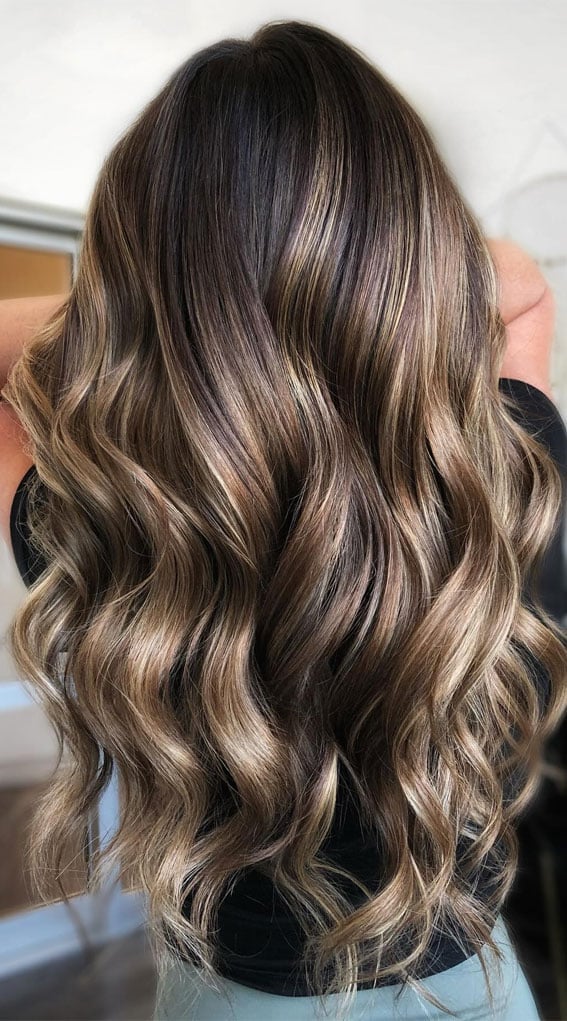
How do you ask for a sun-kissed effect without sounding vague? You name the tones: a medium brown base with golden blonde and caramel balayage, blended through the mid-lengths and ends of thick, wavy hair at mid-back length. The warmth in the caramel pieces is what sells the sun-kissed look, so be specific about wanting golden rather than ash, because the wrong undertone turns the whole thing flat. Ask your colorist for: medium brown base with golden blonde and caramel balayage. Long layers give the color room to show, since the lighter pieces catch on the movement of the waves. This one wears well between visits, but a color-safe shampoo keeps the warmth from dulling, and a trim every ten to twelve weeks keeps the ends looking healthy.
Mid-Back Honey Blonde Balayage, Wavy Thick
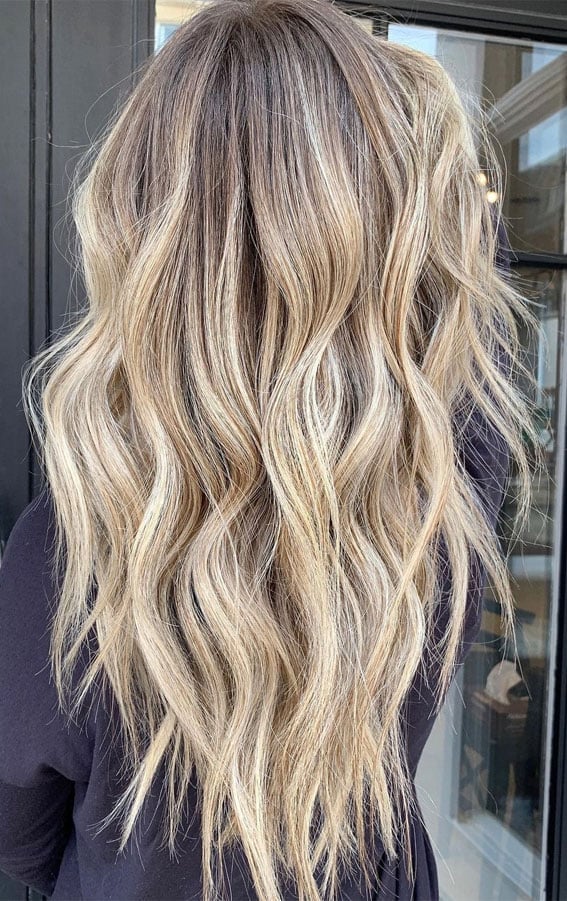
Honey blonde balayage on thick, wavy hair is built by painting the lightener in sweeping strokes that start darker at the root and fade lighter toward the ends, creating a lived-in gradient rather than a solid color. On mid-back length hair with layers, the technique lets the honey tones catch each wave instead of sitting flat, which is why the effect looks so seamless on wavy textures. Ask your colorist for: mid-back length honey blonde balayage. The darker root keeps the grow-out soft, so you can go longer between touch-ups, and a color-depositing conditioner in a honey shade keeps the warmth from fading between salon visits. A trim every ten to twelve weeks keeps the waves from looking ragged at the ends.
Dark Brown With Auburn Balayage
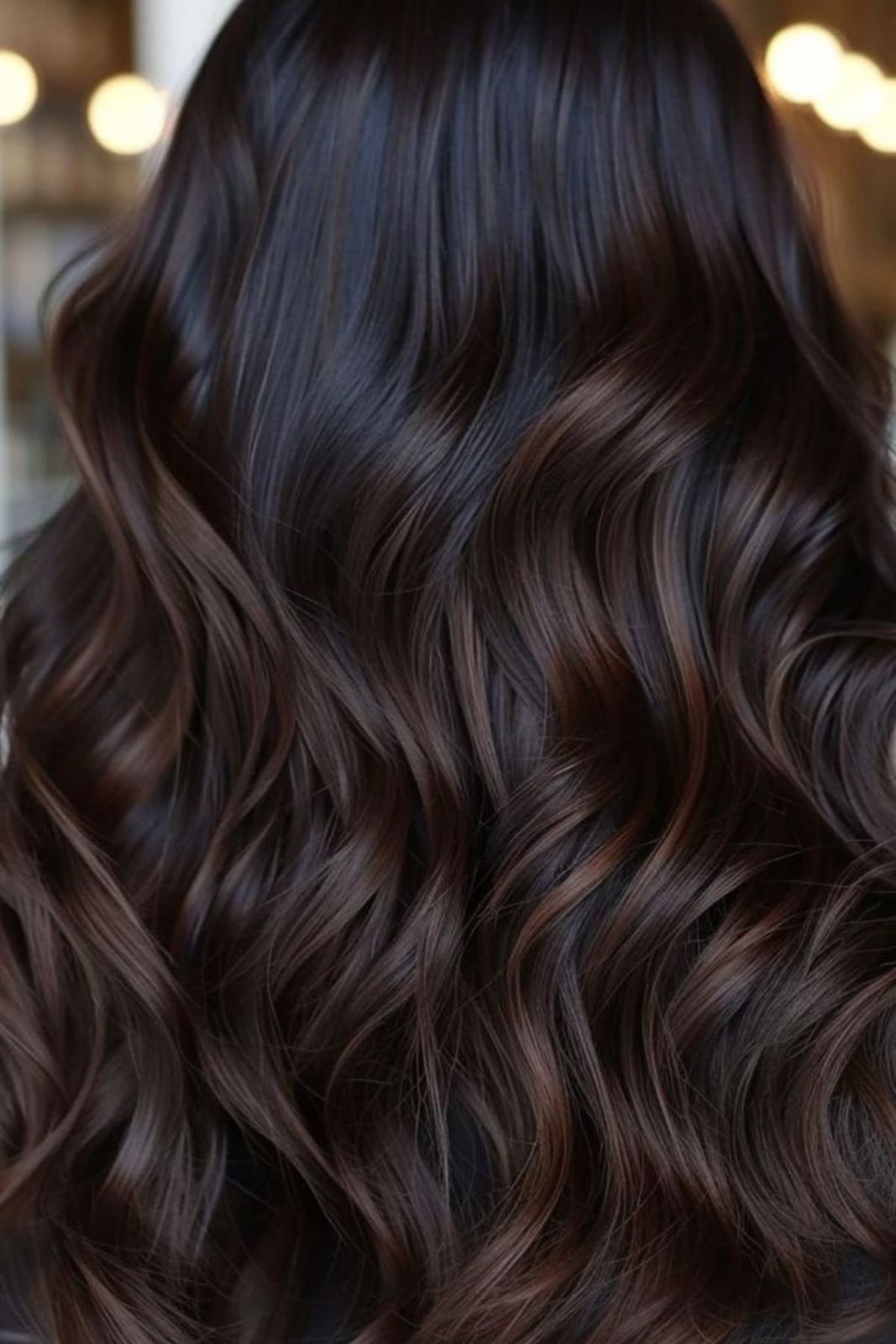
Auburn balayage on dark brown hair is a softer alternative to full red. The warm flicker suits thick, wavy mid-back lengths that already have plenty of movement. The subtlety means the color does not compete with your texture; it just adds a soft, dimensional glow that feels right for winter.
Ask your colorist for: dark brown base with subtle auburn balayage. The key is letting the auburn sit in the ends, so the roots stay deep and the warmth builds gradually. If you want more pronounced red, you are looking at a different appointment, one with a gloss or all-over color to commit to the tone. For this version, a color-safe shampoo keeps the auburn from fading into a brassy orange, and a trim every 10 to 12 weeks keeps the wavy ends looking deliberate.
Mid-Back Dark Brown To Caramel Balayage, Styled In Loose Waves
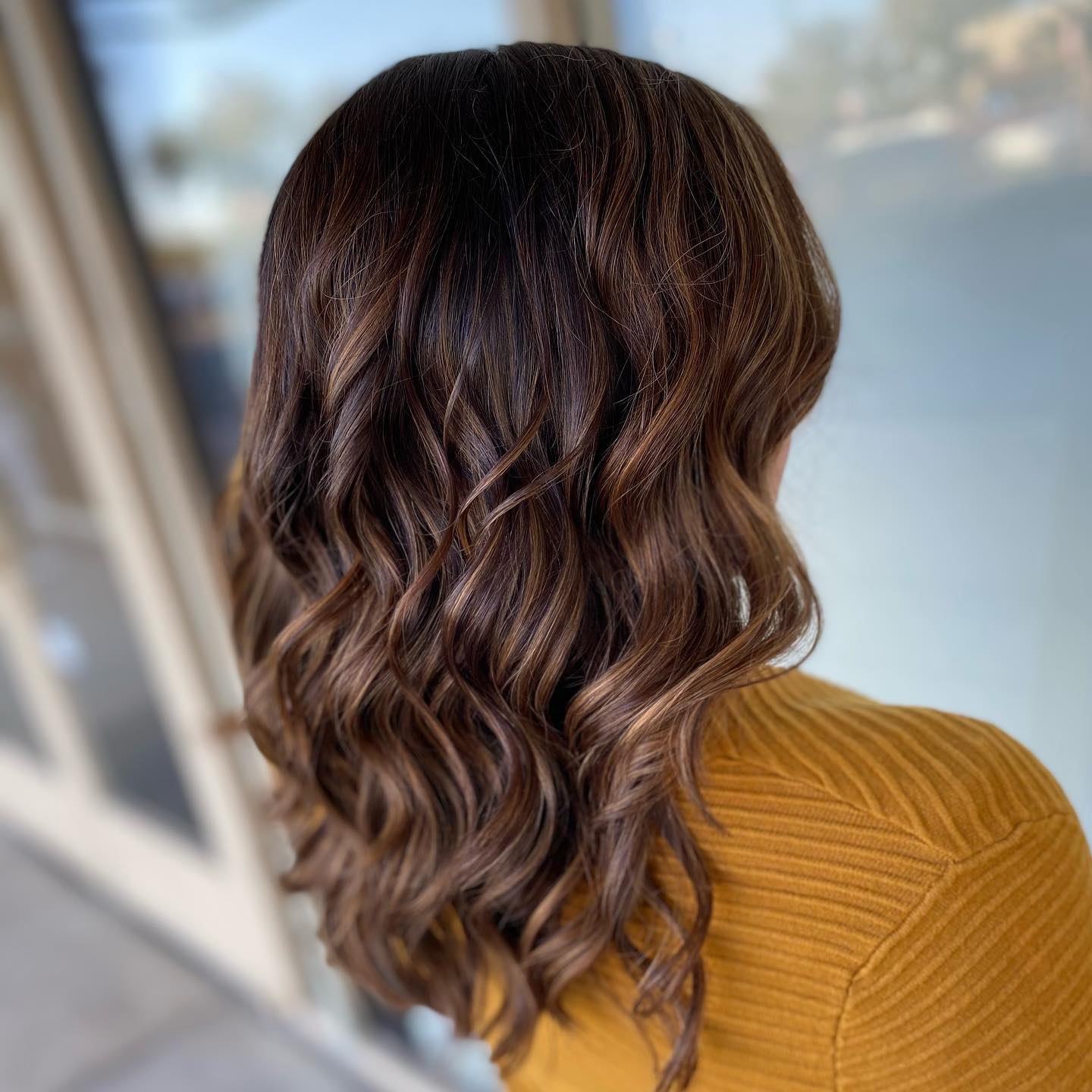
The caramel is painted on so the dark brown base does most of the talking. On thick, wavy mid-back hair, the blend lands between low-maintenance and quietly polished, which is a good place to be for daily wear. The middle parting and loose waves give the color room to catch light without looking like it is trying.
Ask your colorist for: dark brown base to caramel balayage. What makes this work is the transition: it starts deep at the roots and warms up gradually, so the grow-out line is soft and forgiving. You can stretch between appointments, but a gloss treatment every 6 to 8 weeks keeps the caramel from turning dull, and a trim every 10 to 12 weeks keeps the wavy ends from splitting. This color looks lived-in on purpose, not because you skipped the salon.
Mid-Back Dark Blonde Balayage With Curls, Wavy
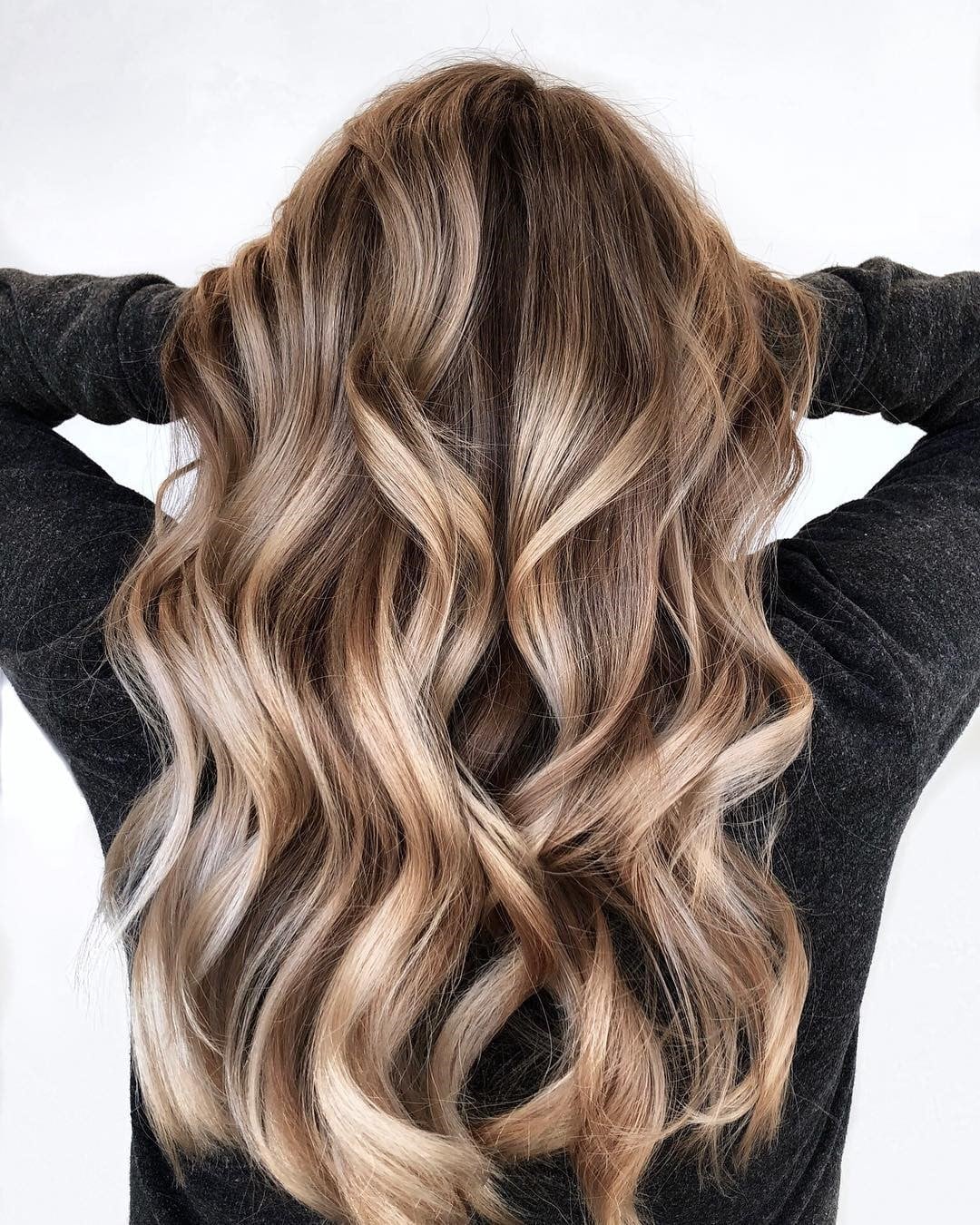
The general rule with balayage on thick, wavy hair is that the blending does the heavy lifting, and the curls show off the payoff. This dark blonde version, with lighter tones sweeping through mid-back length, needs a salon hand because the transition has to be seamless across so much texture. Ask your colorist for: mid-back length dark blonde balayage with loose curls. A home kit will give you stripes, not dimension, and on wavy hair those stripes read as mistakes. The salon appointment buys you a blend that moves with the curls instead of fighting them. Once it is done, a curl-defining cream keeps the waves soft, and a trim every 10 to 12 weeks keeps the ends healthy enough to hold the shape.
Mid-Back Dark Brown With Blonde Balayage, Close-Up Take
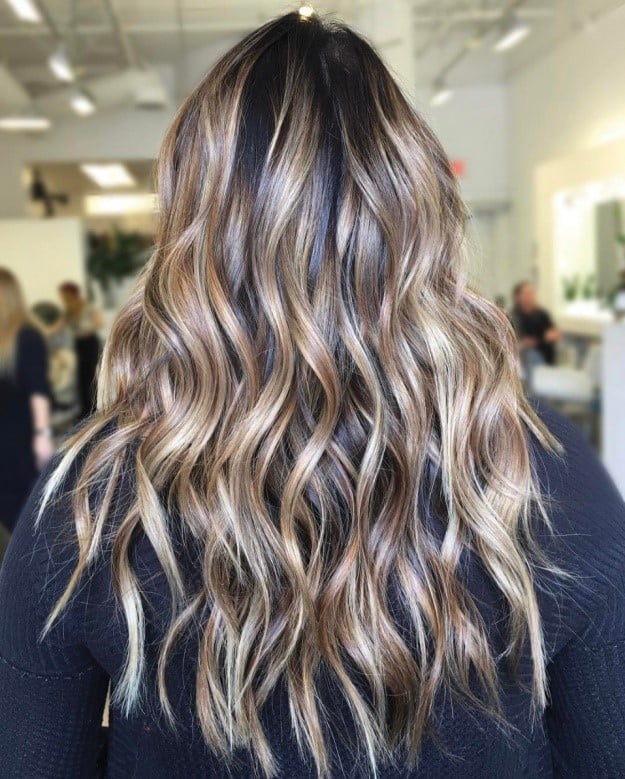
The striking part of this look is the contrast: a dark brown base with blonde balayage that does not blend into a safe middle ground. On thick, wavy mid-back hair with long layers, the blonde pieces land like highlights placed on purpose, not scattered by accident. The loose waves help the transition read as dimensional rather than harsh.
Ask your colorist for: mid-back dark brown with blonde balayage. The technique is what separates this from a standard highlight: the color is painted onto the surface of each section, so the roots stay dark and the blonde sits lower, creating that soft, graduated lift. It is a look that works best on hair with enough length to show the gradient, and the long layers give the color somewhere to travel. A color-safe shampoo and conditioner protect the contrast, and a trim every 10 to 12 weeks keeps the ends from making the blonde look muddy.
Mid-Back Dark Chocolate With Caramel Balayage
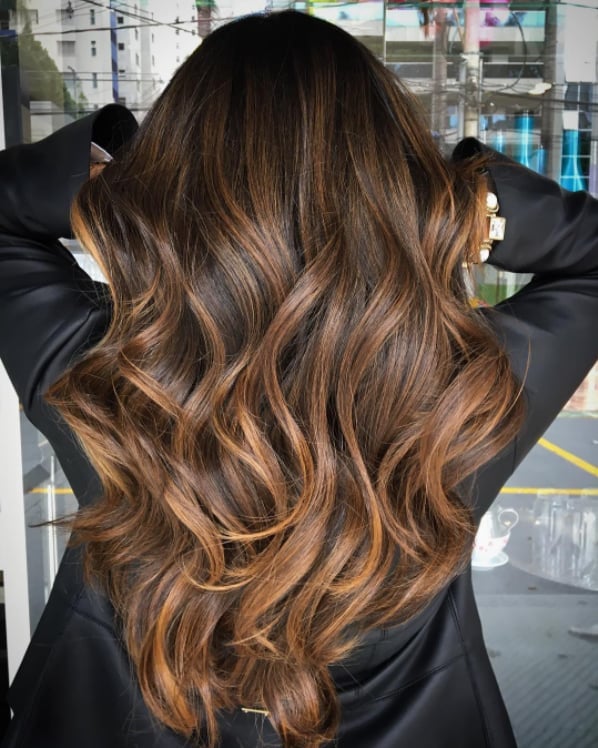
Warm caramel balayage on dark chocolate brown is a safe bet in the best way. On thick, wavy mid-back hair styled in loose curls, the warmth adds richness without turning the look into a costume. This is the color you pick when you want dimension but not drama, and it holds up across seasons.
Ask your colorist for: dark chocolate brown base with warm caramel balayage. The caramel is the kind of tone that flatters a range of complexions because it sits between gold and copper, never committing fully to either. It suits hair that can handle the warmth, meaning thick and wavy textures show it off best. A curl-defining cream brings out the shape, and a trim every 10 to 12 weeks keeps the curls bouncy. The upkeep is forgiving: the dark roots grow out cleanly, so you can stretch the salon visits without the line showing.
Mid-Back Dark Brown To Light Brown Balayage, Wavy
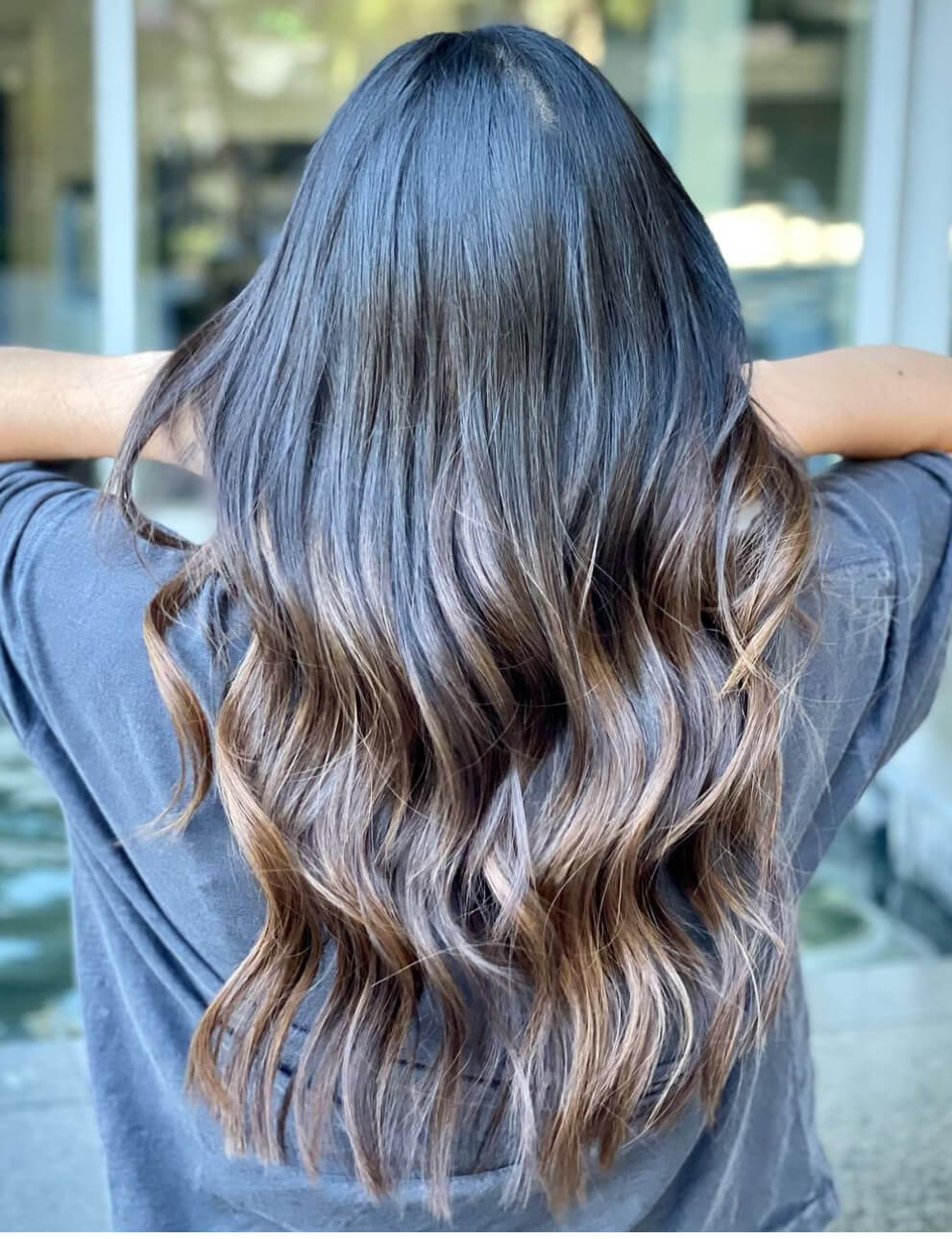
The transition from dark brown to light brown happens gradually here, so there’s no harsh line where the color stops. Thick, wavy hair at mid-back length carries that subtle blend well, since the movement helps the tones melt into each other. Ask your colorist for: dark brown base to light brown balayage. The grow-out is forgiving because the lighter pieces start below the roots, but a root shadow at the part keeps things tidy between appointments. Use a color-safe shampoo and conditioner to protect the dimension, and plan on a trim every 10 to 12 weeks to keep the ends healthy.
Dark Brown With Copper Rose Gold Balayage
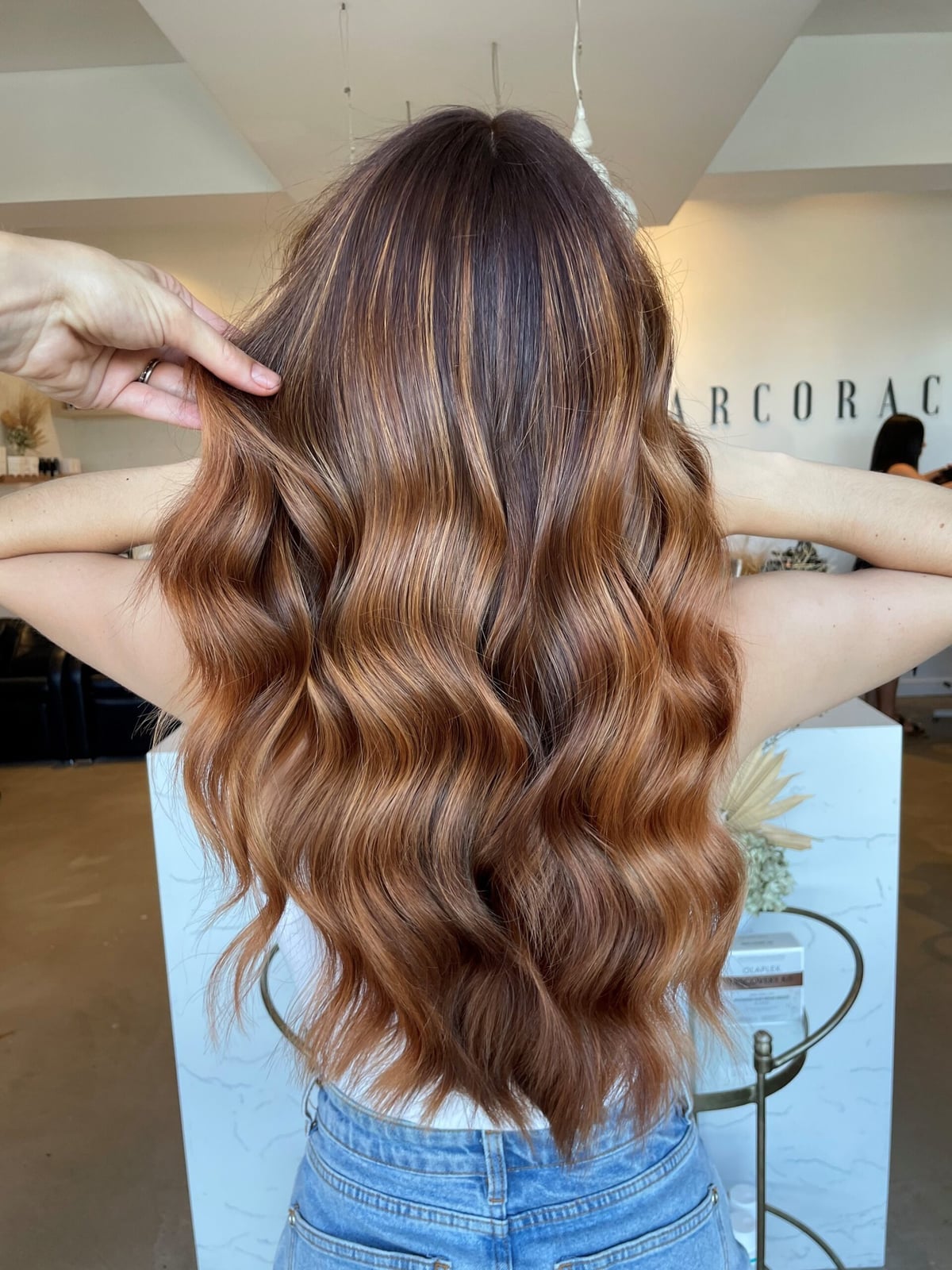
The mistake with copper and rose gold is assuming they’ll stay put. Those warm tones fade fastest, and on a dark brown base they can turn brassy within a few washes if you skip the upkeep. On thick, wavy hair at mid-back length, the balayage placement keeps the richness concentrated through the lengths, which helps, but it won’t save you from the fade.
Ask your colorist for: dark brown base with copper and rose gold balayage. A color-depositing mask used weekly refreshes the tone between salon visits, and a trim every 10 to 12 weeks keeps the ends from looking washed out. The real drawback is commitment: this color needs regular toning or it drifts orange.
Shoulder Dark Brown With Blonde Balayage, Wavy
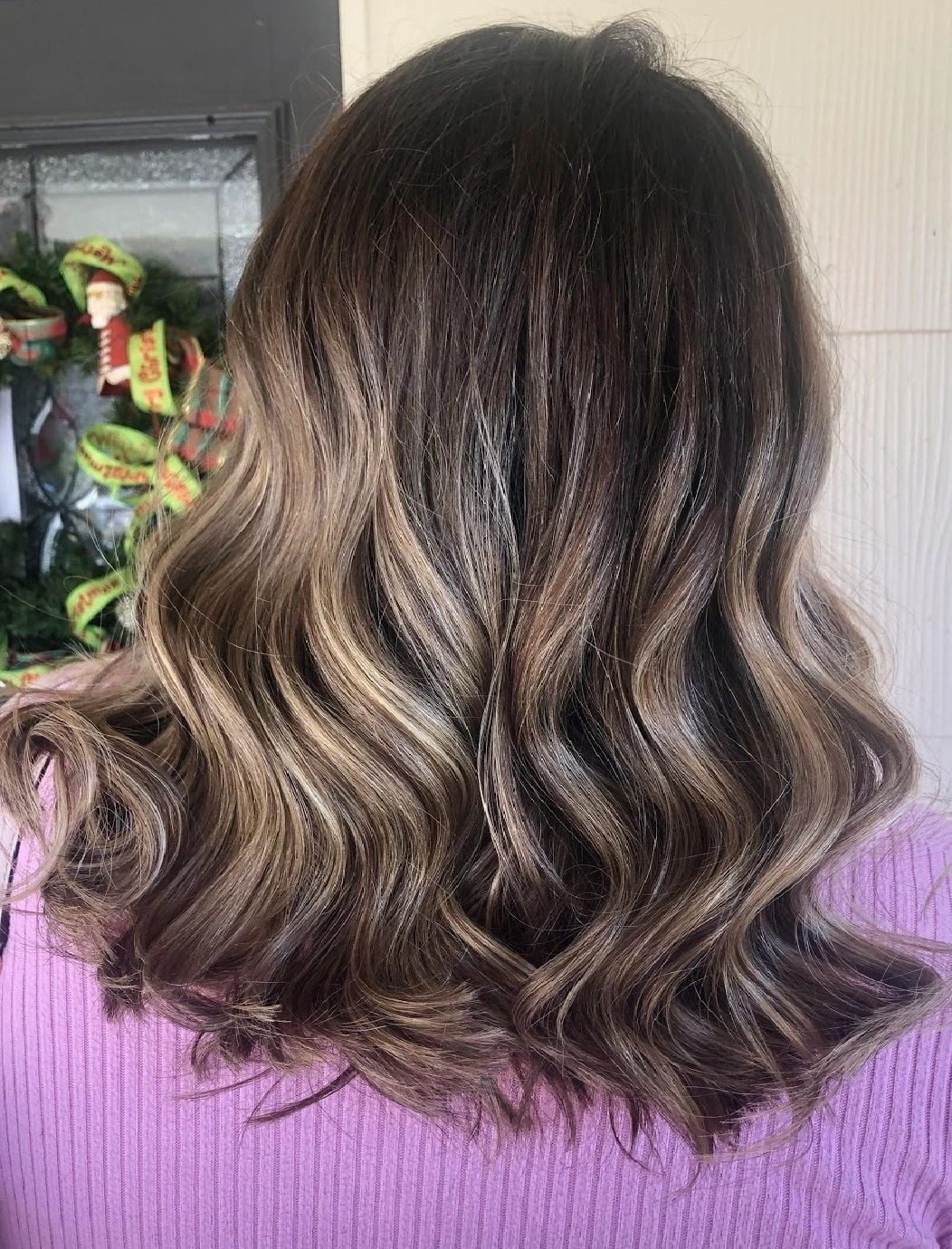
How do you get blonde highlights on dark brown hair without the stripe effect? It comes down to where the light pieces start and how they’re blended. On shoulder-length wavy hair with medium density, ask your colorist for: shoulder length dark brown with blonde balayage, requesting that the highlights begin a few inches from the roots and be painted in soft, face-framing sections. The layers help the color move naturally, and the loose waves show off the dimension without looking streaky.
Final Thoughts
For a low-maintenance winter balayage, choose caramel or copper tones on a dark brown base. They blend longer than ash or platinum shades, which need a toner every six weeks. Fine hair: keep one blunt baseline and skip heavy layers. Round face: let the length fall below the chin. Embrace the richness of winter balayage.
- Schedule toner touch-ups every 6-8 weeks to maintain cool tones.
- Use color-safe shampoo and conditioner to preserve vibrancy.
- Deep condition weekly to combat winter dryness.
- Allow 8-12 weeks between major balayage appointments for hair health.