
The wolf cut, a hybrid of a shag and a mullet, keeps its shape with heavy layering and a tapered nape. This season, the version landing on collarbones with soft curtain bangs is the most requested variation in salons.
These 26 wolf cuts show the range from a five-minute air-dry to a weekly blowout, and from chin-grazing to mid-back. The collection solves the problem of fine hair that falls flat, a grow-out line that shows too fast, or a fringe that won’t sit. Straight, wavy, curly, coily, and every density in between has a version here.
Dark Brown Wolf Cut No Bangs Collarbone Length
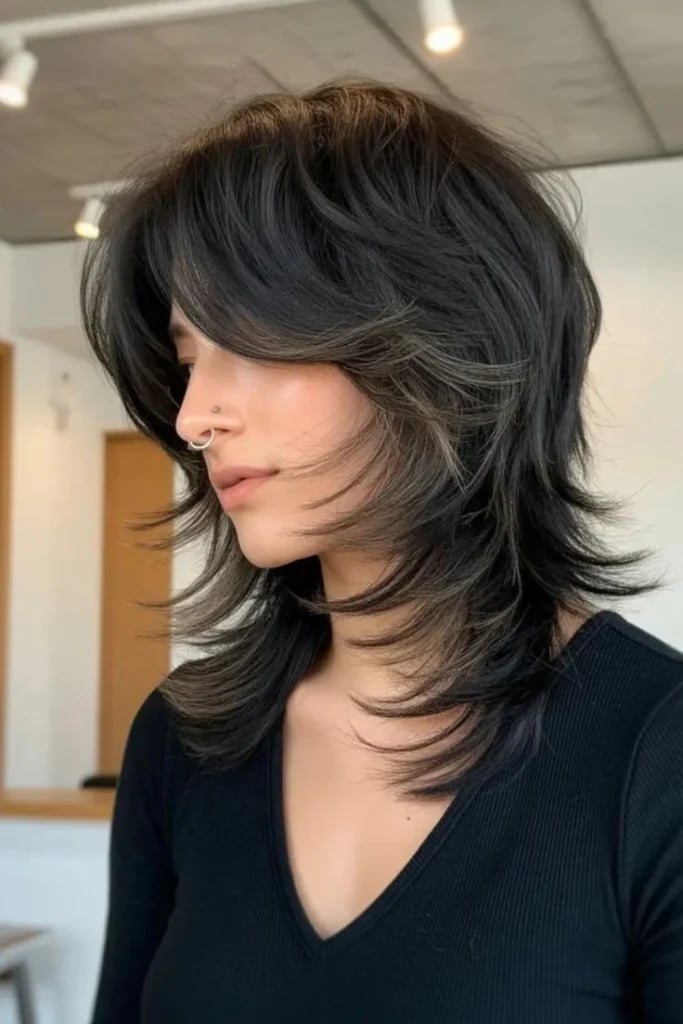
Heavy layers carry this wolf cut, and without bangs to soften the top, the eye goes straight to the stacked texture around the collarbone. The middle part and the absence of bangs work best on oval and longer face shapes, since the length below the chin adds a touch of elongation. For medium density wavy hair, the cut builds volume where you want it without turning into a triangle. Ask your stylist for: collarbone wolf cut, heavy layers, no bangs, subtle gray highlights. A texturizing spray at the roots and mid-lengths keeps the waves defined, and a trim every six to eight weeks preserves the shape.
Collarbone Wolf Cut With Curtain Bangs
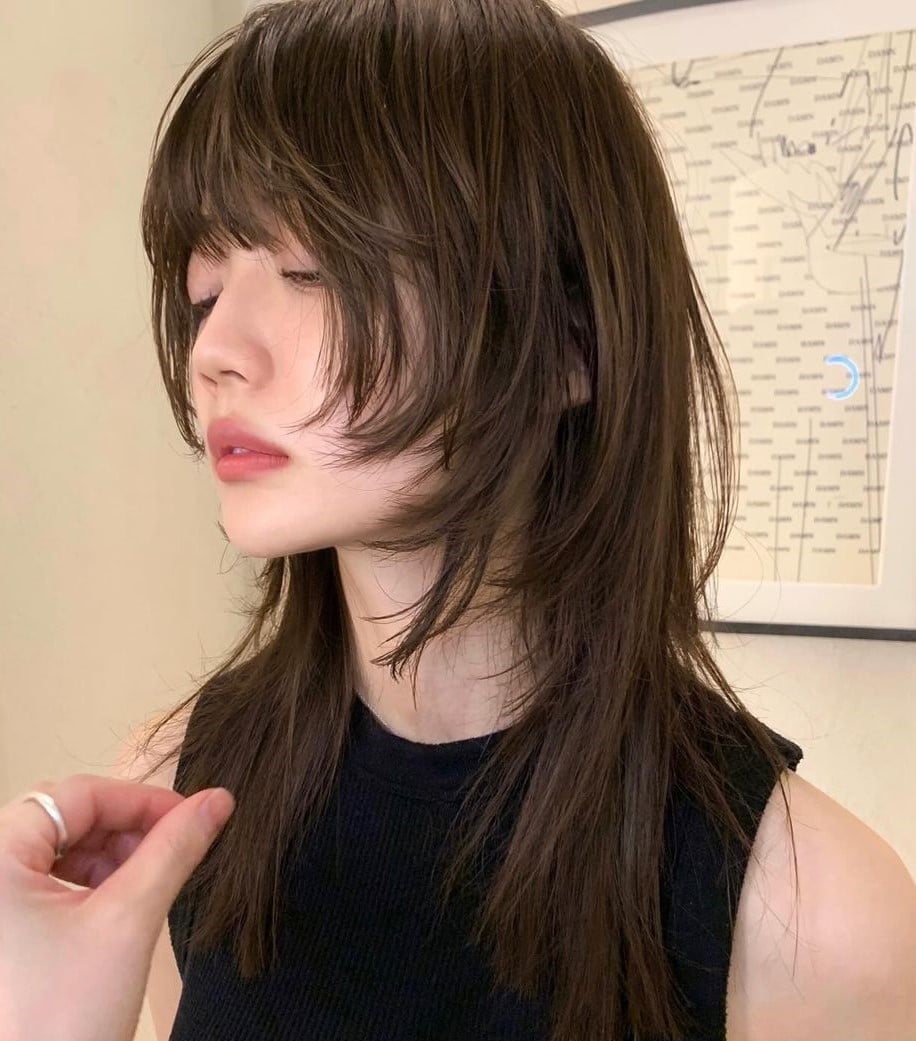
Wondering how to get those soft face-framing layers without losing the length? Start with a collarbone wolf cut, then let the curtain bangs do the work. The smooth blowout shows how the thick, wavy texture falls into place with a middle part. Curtain bangs and a center part soften square and round faces, drawing attention to the cheekbones. Ask your stylist for: collarbone wolf cut, curtain bangs, smooth blowout. For thick hair, ask for internal layers to remove weight so the bangs blend naturally. A round brush during blow-drying shapes the bangs, and a trim every six to eight weeks keeps them from turning into a fringe.
Auburn Wolf Cut With Wispy Bangs

The choppy layers in this wolf cut are what give it that textured, wispy finish, especially around the face. The wispy bangs are cut shorter than the rest, so they feather rather than sit heavy. Auburn with subtle highlights adds depth to the collarbone length, and the wavy, medium density texture holds the shape without extra styling. Ask your stylist for: collarbone wolf cut, wispy bangs, auburn with highlights. A sea salt spray and a quick scrunch brings out the wave, and a trim every six to eight weeks maintains the choppy ends. The layers are what make this cut work, so don’t let them grow out.
Dark Brown Wolf Cut With Curtain Bangs
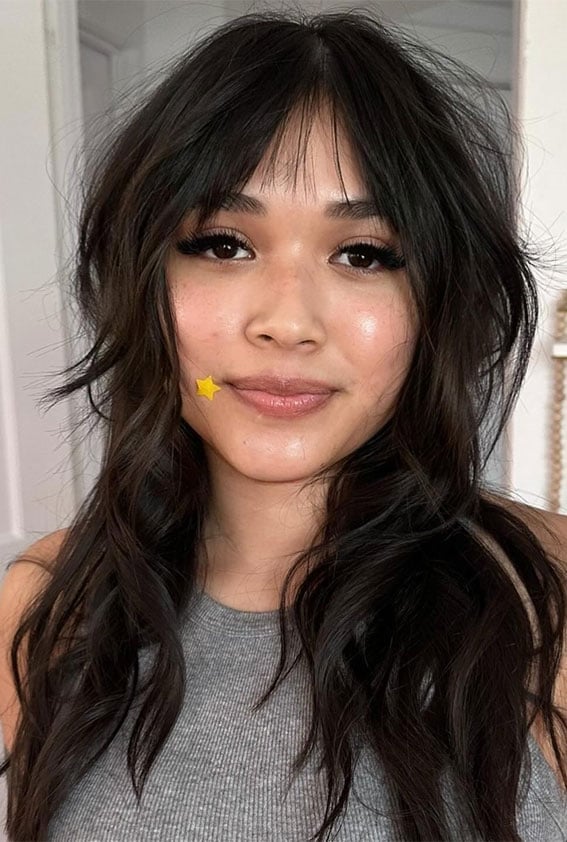
Compared to the no-bang version, this wolf cut with curtain bangs softens the whole face, especially around the jaw. The dark brown base with subtle highlights gives the wavy layers a lived-in look, and the middle part keeps the curtain bangs framing the cheekbones. For medium density hair, the layers add movement without making the ends look thin. Ask your stylist for: collarbone wolf cut, curtain bangs, subtle highlights. The curtain bangs are the standout, so ask for them to be cut slightly longer than the cheekbone to blend with the layers. A flat iron softly bends the ends of the bangs, and a trim every six to eight weeks keeps the shape.
Dark Blonde Wolf Cut With Curtain Bangs, Collarbone
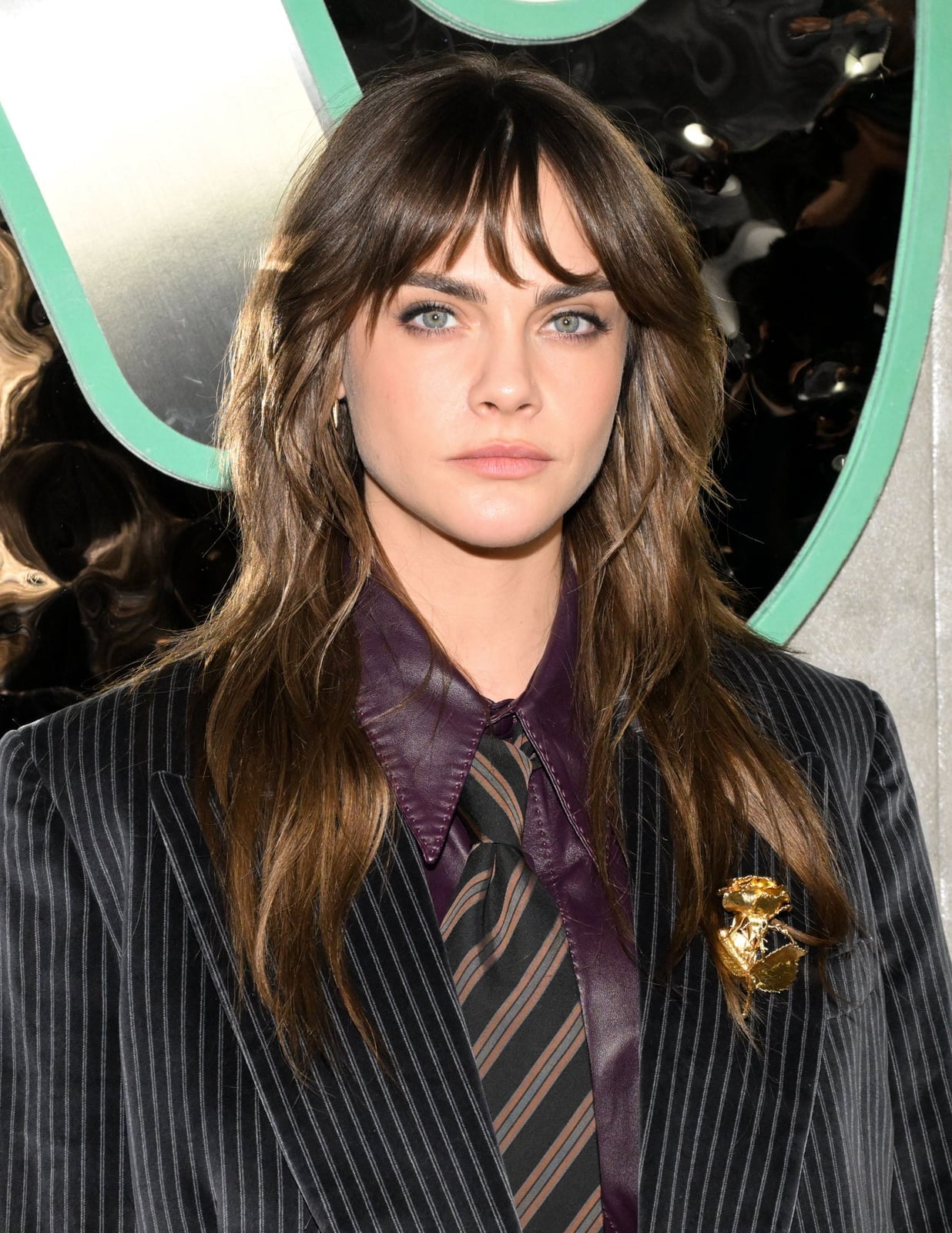
The blowout styling in this dark blonde wolf cut gives the thick, wavy texture a polished finish, but the curtain bangs keep it from looking too done. The lighter highlights around the face draw attention to the collarbone length, and the middle part adds symmetry. This cut needs a bit more daily styling than the lived-in versions, since the blowout is the defining feature. Ask your stylist for: collarbone wolf cut, curtain bangs, dark blonde with highlights. Use a round brush to direct the bangs forward to frame the face. A trim every six to eight weeks is the baseline, and the highlights may need a refresh every ten to twelve weeks to keep the face-framing brightness.
Ash Blonde Wolf Cut With Wispy Bangs

Choppy layers and wispy bangs define this wolf cut, but the fine wavy texture does the real work. The collarbone length keeps enough weight to stop the layers from reading as straggly, though volume on fine hair requires some coaxing. Ask your stylist for a collarbone wolf cut with wispy bangs in ash blonde, then accept that a texturizing spray and a diffuser are essential tools. Air-drying alone may not give you the lift the photo suggests, so plan on a quick rough-dry for that lived-in shape.
Ash Blonde Wolf Cut With Curtain Bangs, Wavy

A practical rule for this cut: the less you fight the texture, the better it behaves. Ask your stylist for a collarbone wolf cut with curtain bangs in ash blonde with subtle highlights. The medium density wavy hair takes well to air-drying when you apply a lightweight mousse at the roots. Rough-dry the layers with your hands for added texture, and let the curtain bangs fall naturally into place. This is a solid work-to-weekend style that relies on the cut rather than heat tools to hold its shape.
Dark Blonde Wolf Cut With Curtain Bangs, Wavy Blowout
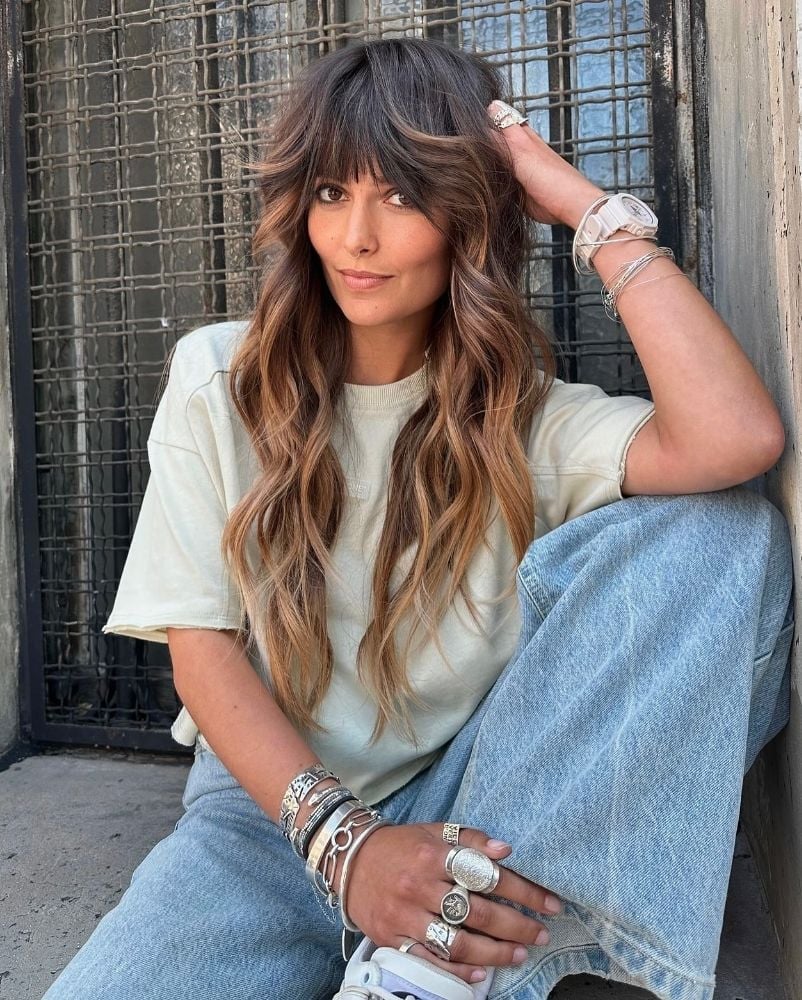
Want a wolf cut that looks intentionally styled without the wet-and-wait approach? Ask your stylist for a collarbone wolf cut with curtain bangs and a dark blonde balayage. The thick wavy texture holds a blowout well, so this is a salon-dependent style: a round brush shapes the face-framing layers and curtain bangs, while the balayage adds depth that keeps the ends from looking flat. The DIY version works if you are comfortable with a round brush, but expect a learning curve on the layers.
Copper Wolf Cut With Undercut Sides
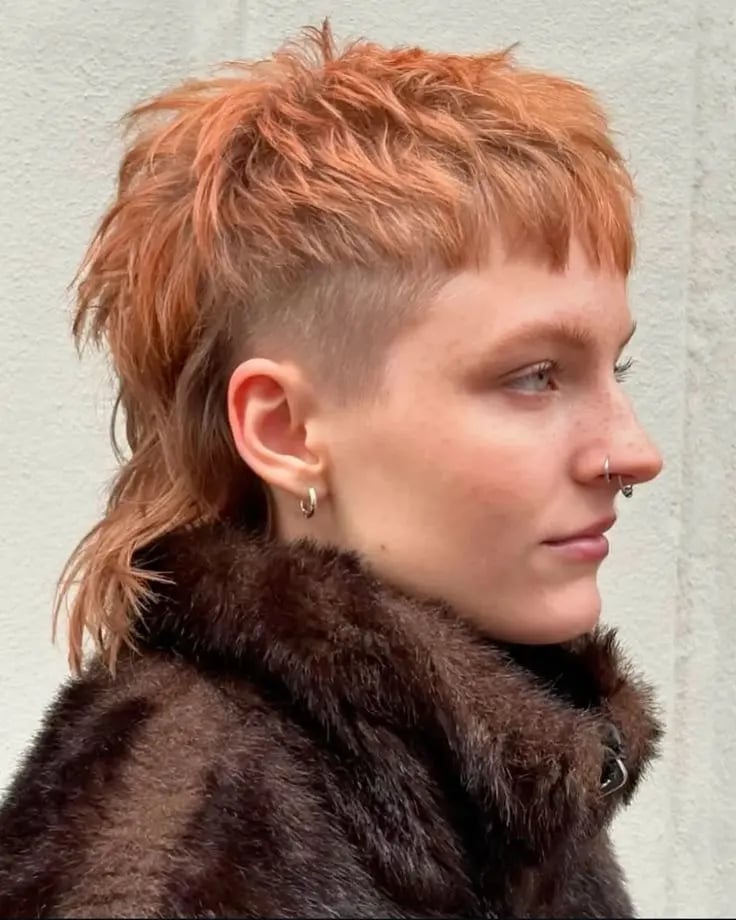
A wolf cut with undercut sides sounds like two different haircuts, and that is exactly the point. The copper color with lighter ends gives the shaggy layers a warm, sun-bleached look that works best in warmer months when you want less bulk. Ask your stylist for a collarbone wolf cut with short choppy bangs, undercut sides, and a copper color. The undercut requires frequent trims to stay sharp, but the style reads as creative and deliberate.
Chin Length Dark Brown Wolf Cut Choppy Bangs
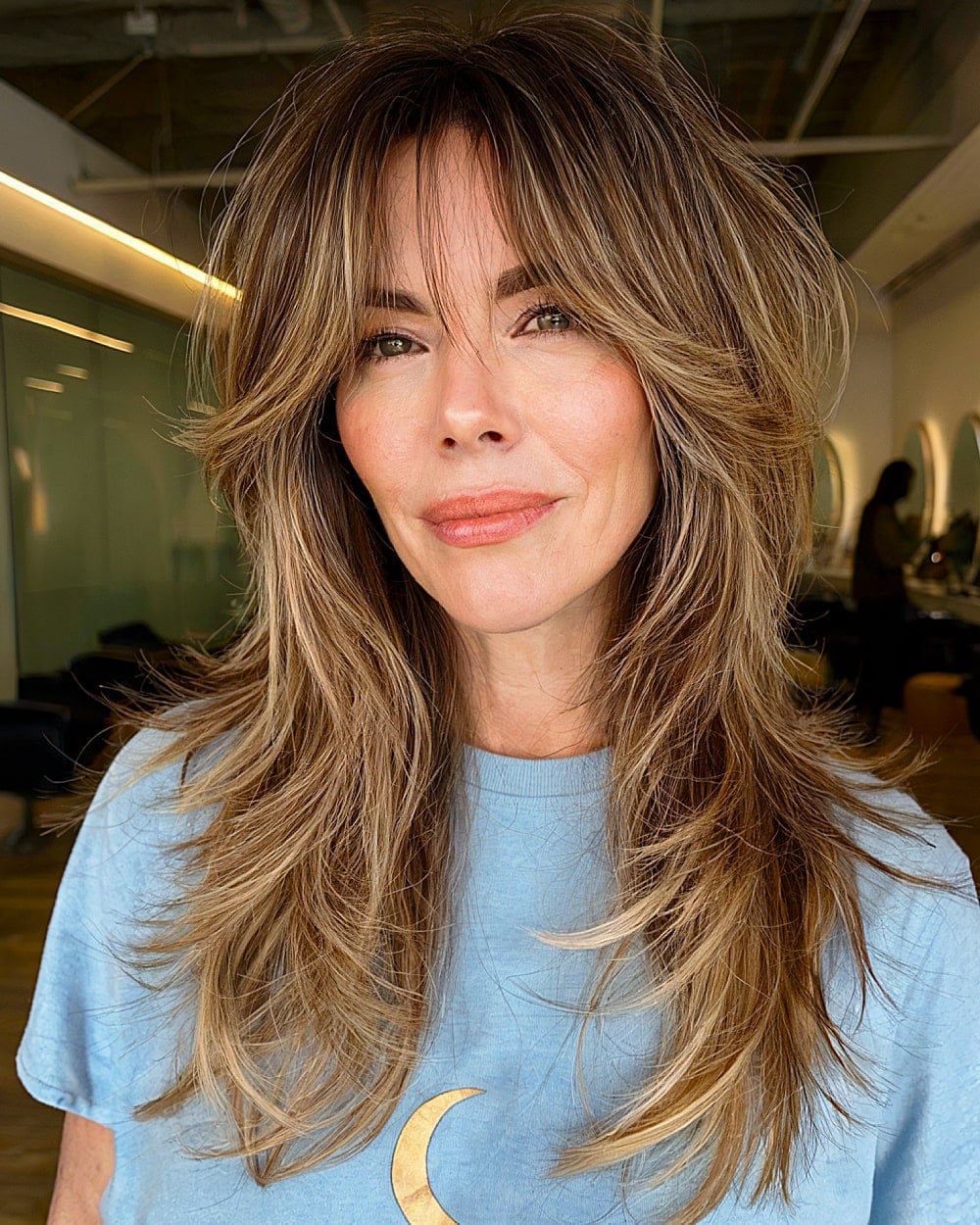
A chin length wolf cut with choppy bangs lands somewhere between a bob and a mullet, and the medium density wavy texture makes it work. The choppy layers create movement without the bulk that can weigh down shorter cuts. Ask your stylist for a chin length wolf cut with choppy bangs and choppy layers. The side part softens the overall shape, making it a good choice for round and oval faces that want the wolf cut attitude without the extra length.
Blonde Wolf Cut With Fiery Red Ends

A blonde base with fiery red ends creates a two-tone effect that is built into the wolf cut’s layered shape, not painted on afterward. The blunt bangs cut straight across the brow ground the messy, collarbone-length texture below. Medium density wavy hair holds the contrast best, and the blunt bangs suit a stronger jawline. Ask your stylist for: collarbone wolf cut, blunt bangs, blonde with red ends. A heat protectant before any styling preserves the color boundary; a trim every six to eight weeks keeps the points sharp.
Copper Red Wolf Cut With Choppy Bangs

A vibrant copper red with subtle highlights catches the eye, but the real work is in the shag layers and choppy bangs that give this shoulder-length wolf cut its shape. The side part and textured waves add movement, and that movement is what you maintain week to week. A curl cream applied and scrunched into damp hair revives the wave pattern without heat. Ask your stylist for: shoulder length wolf cut, choppy bangs, copper red. A trim every six to eight weeks keeps the layers from growing into a uniform block.
Honey Blonde Wolf Cut With Wispy Bangs, Collarbone

To get long, wispy bangs that feather across the forehead without looking heavy, ask your stylist for: collarbone wolf cut, long wispy bangs, honey blonde. The caramel highlights are woven through the mid-lengths and ends, so the color shows depth instead of a single flat honey tone. The layers are cut to fall slightly tousled, which means you can finger-style with a texturizing spray and be done. Medium density wavy hair at collarbone length takes this shape naturally; the wispy bangs soften angular faces.
Shoulder Length Dark Brown Wolf Cut
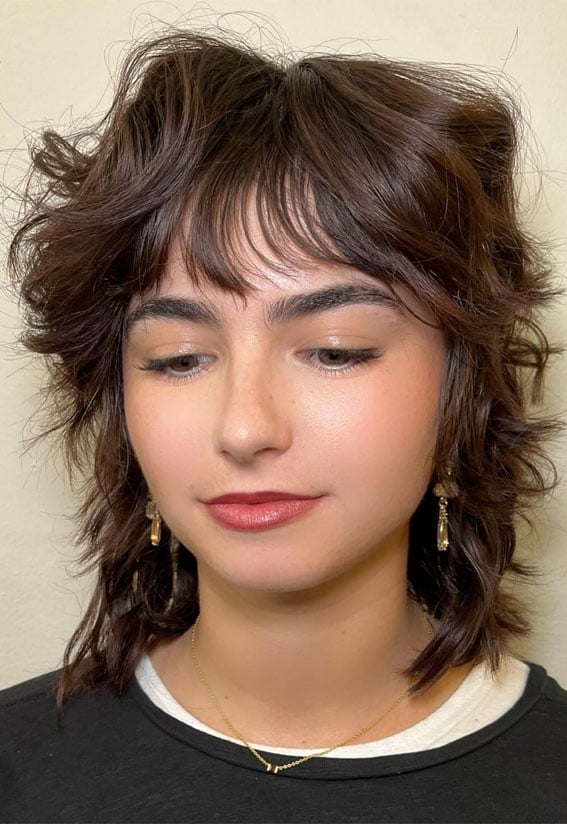
The thick, wavy texture gives this shoulder length dark brown wolf cut its shape. Prominent shaggy layers remove bulk while keeping density, so the hair moves and does not sit in a solid wedge. The wispy bangs are light enough to blend into the sides, and the middle part lets the layers fall evenly. Thick hair often resists shape, but the wolf cut’s graduated layering carves out the volume. Ask your stylist for: shoulder length wolf cut, wispy bangs, shaggy layers. A texturizing cream scrunched through damp lengths defines the wave without weighing it down.
Dark Brown Curly Wolf Cut Shoulder Length, Short
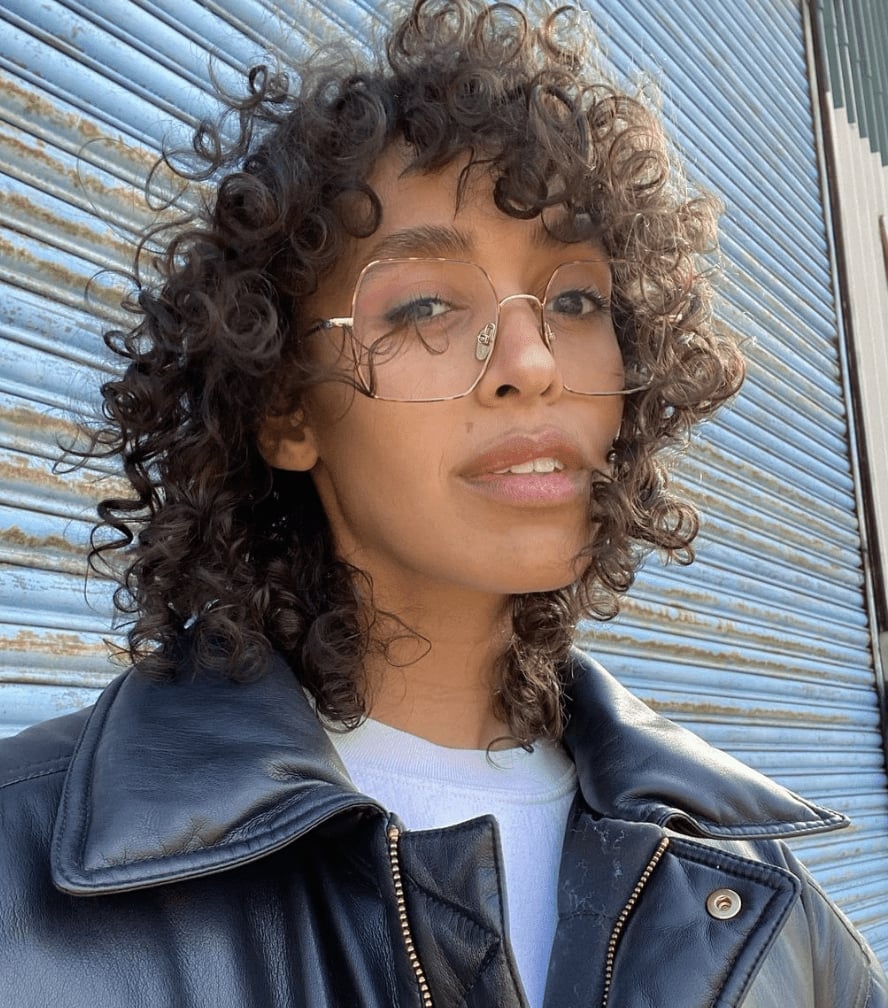
Natural curls and a wolf cut are a practical match for summer, when air-drying is the goal. This dark brown shoulder-length cut keeps the short, wispy bangs light enough to curl without drooping, and the layers throughout prevent the thick texture from forming a single heavy triangle. A curl-defining cream applied to wet hair, then left alone, is the whole routine. Ask your stylist for: shoulder length wolf cut, short wispy bangs, enhance curls. A salon visit is required for the initial shape, but the grow-out is forgiving for a season.
Dark Brown Wolf Cut Shoulder Length, Wispy Bangs
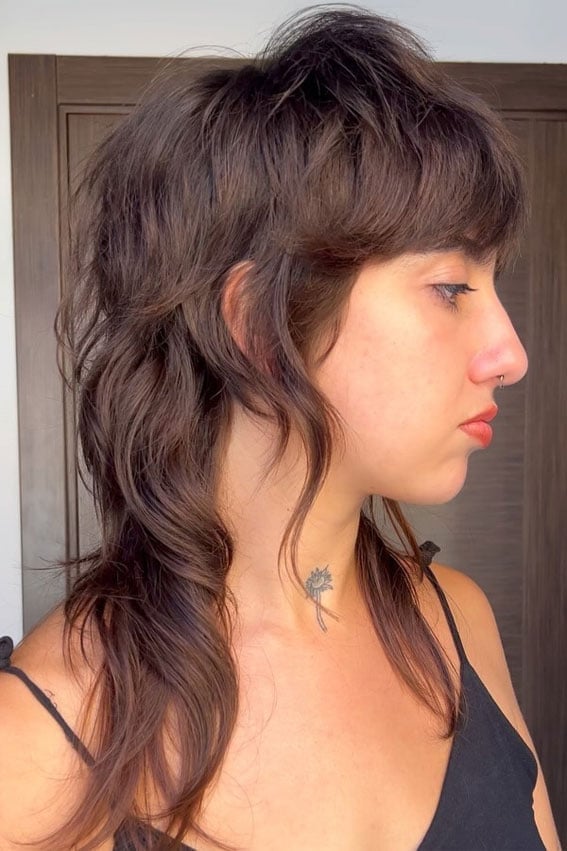
The dark brown wolf cut ends at the shoulder with shaggy layers that give thick, wavy hair its signature bedhead energy. The wispy bangs feather across the forehead, so they soften the face without demanding constant attention. A middle part keeps the whole look balanced.
Ask your stylist for: shoulder length wolf cut, wispy bangs, shaggy layers. On thick hair, the daily routine is a texturizing spray, a quick scrunch, and a few minutes of air-drying. The layers do the work, but they also grow out fast, so plan on a trim every six to eight weeks to keep the shape defined.
Black Wolf Cut With Wispy Bangs

Ask your stylist for: shoulder length wolf cut, wispy bangs, fine hair. The cut adds movement, but volume has to be coaxed out with a light volumizing spray and a diffuser. If your hair is very fine and you hate styling time, this may not be the variation for you. The wispy bangs and middle part do give the face soft framing, but the texture needs daily coaxing to stay visible.
Soft Black Wolf Cut With Wispy Bangs, Collarbone
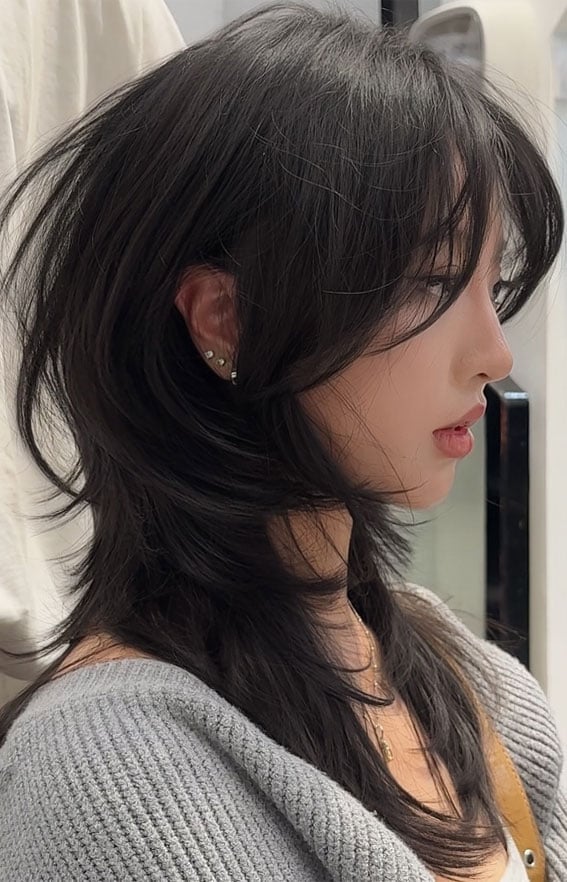
A soft black wolf cut with wispy bangs ends at the collarbone, and the soft layers keep fine, straight hair from looking harsh. The middle part and air-dried texture give it a lived-in feel, while the wispy bangs frame the face without committing to a heavy fringe. This length suits fine hair because it holds shape without weighing the strands down. Ask your stylist for: collarbone wolf cut, wispy bangs, fine hair. The cut is lower maintenance than a shorter wolf, since the collarbone length gives the layers room to move, and a trim every six to eight weeks keeps the ends from looking straggly.
Light Blonde Wolf Cut With Full Bangs

Want the wolf cut but with a bolder frame? The light blonde version at collarbone length pairs full bangs with thick, wavy texture, and the visible layers create that shaggy silhouette. The full bangs are the statement here: they are cut dense and blunt across the forehead, which gives the soft waves an edge. Ask your stylist for: collarbone wolf cut, full bangs, light blonde. This is a salon cut, not a DIY project, because the bangs need precise weight distribution to sit right. The air-dried finish keeps it casual, but the bangs will need a quick blow-dry most mornings to avoid a cowlick situation.
Black Wolf Cut With Red Streaks
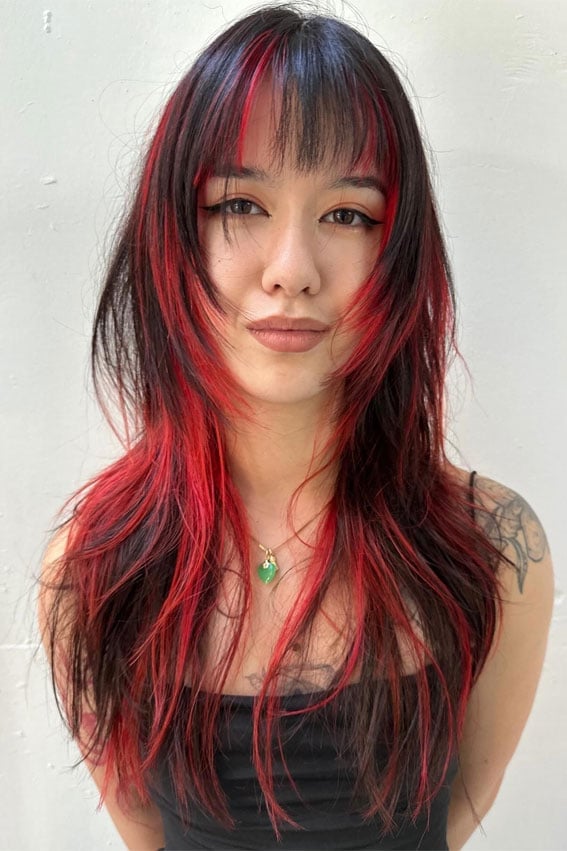
A black wolf cut with full bangs reaches mid-back, and the vibrant red streaks are woven through the straight, layered lengths. The technique starts with the cut: the wolf’s internal layers are shaped first, then the colorist places red pieces to create contrast as the hair moves. The full bangs stay black, which grounds the brightness. Ask your colorist for: mid-back wolf cut, full bangs, black with red streaks. The straight styling shows off the contrast, and the red streaks hold their intensity for about six to eight weeks before a gloss or toner refresh. The mid-back length keeps the wolf cut wearable, since the layers do the work without sacrificing length.
Mid-Back Wolf Cut With Curtain Bangs
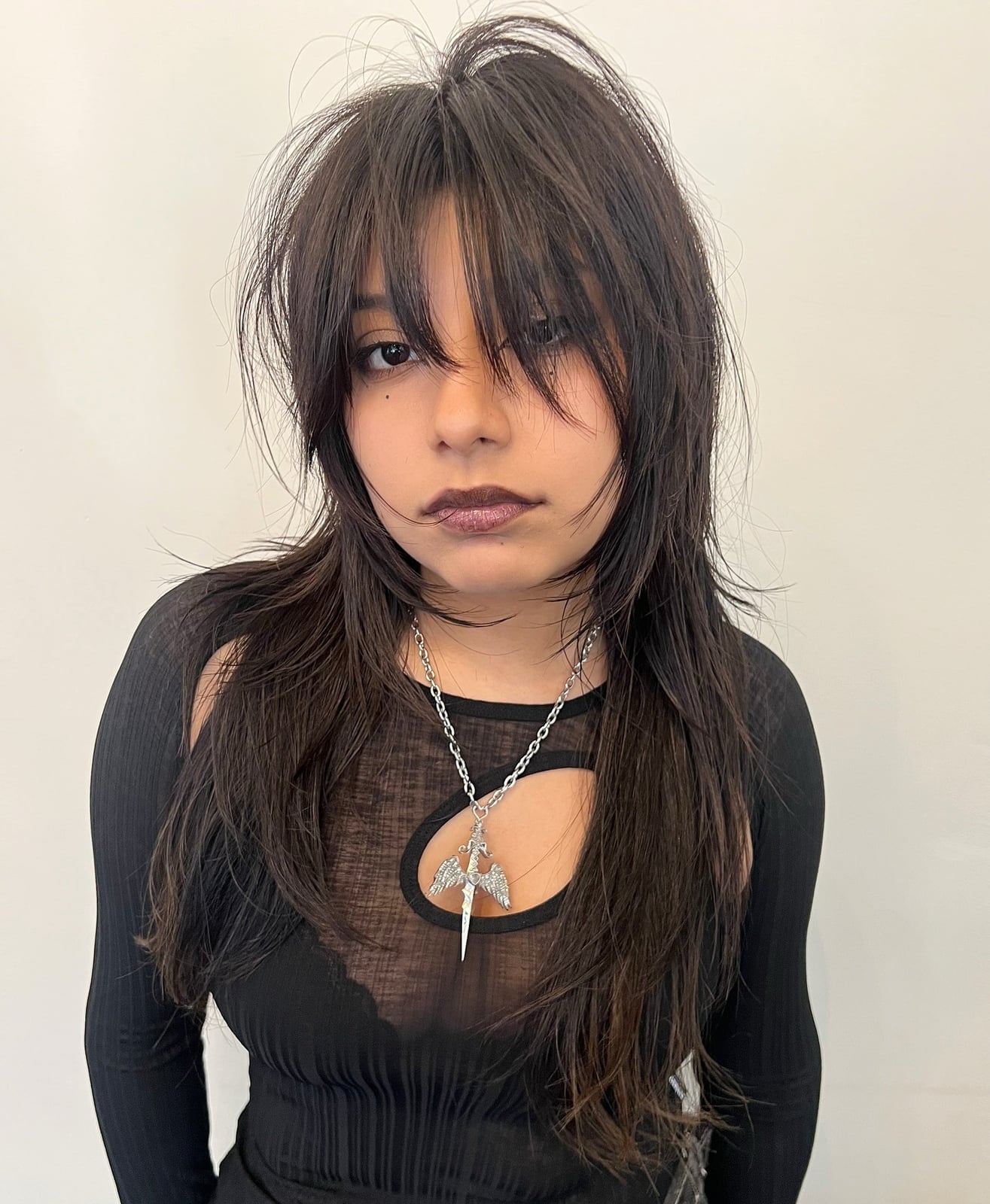
Heavy, choppy layers at mid-back length create a silhouette that is less shag and more wolf. The dark brown curtain bangs frame the face without overwhelming it, while the thick wavy texture provides the volume these layers need to actually register. Ask your stylist for: mid-back wolf cut, curtain bangs, heavy choppy layers.
The weight of longer hair means the layers have to be cut aggressively enough to move on their own. A texturizing spray applied to damp hair, then air-dried or diffused, keeps the shape from falling flat. Plan on a trim every eight to ten weeks; the curtain bangs will need a touch-up closer to six if they start grazing your lashes.
Mid-Back Dark Brown Wolf Cut No Bangs

Dropping the bangs from a wolf cut changes the whole equation. This version, at mid-back with long choppy layers and a middle parting, leans softer and more wearable for thick wavy hair that does not need extra bulk around the forehead. The blowout smooths the texture just enough to show the layer movement without fighting the natural wave. Ask your stylist for: mid-back wolf cut, no bangs, long choppy layers. It suits oval and heart-shaped faces best, where the open forehead keeps the proportions balanced.
Thick Curly Black Wolf Cut Mid-Back
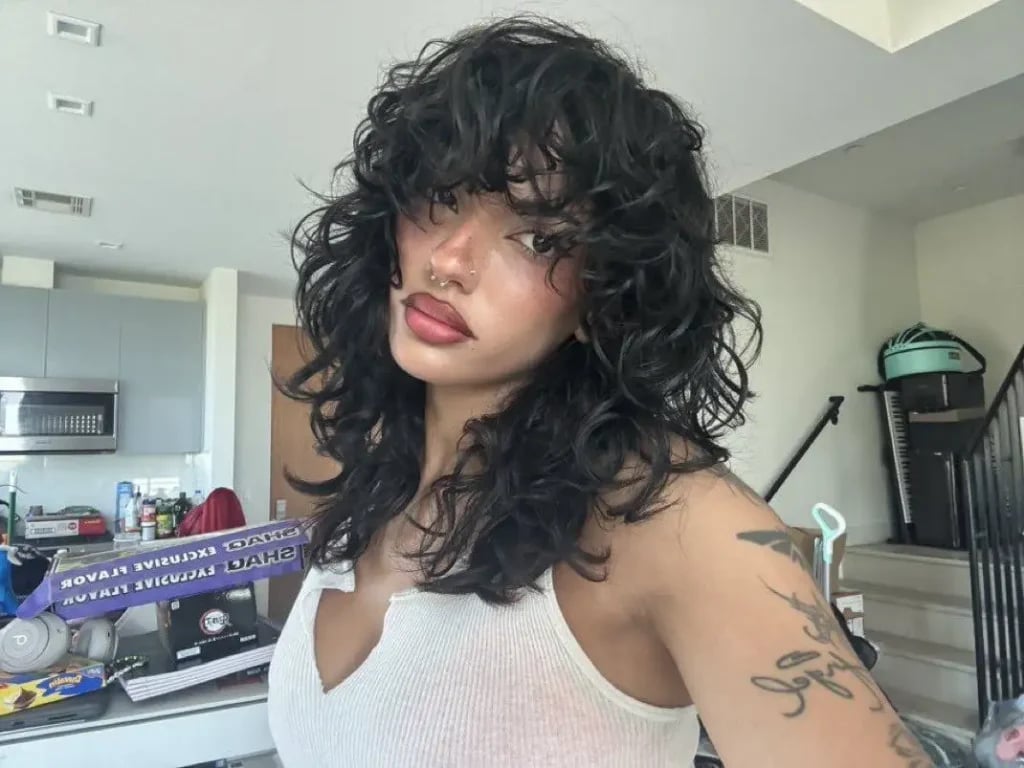
A wolf cut on thick curly hair is built differently than on straight textures. The cutting technique uses point-cutting into each curl clump, so the shaggy bangs and heavily textured layers land with separation instead of a blunt edge. The side view matters: it shows how the weight is distributed toward the back, letting the front layers frame without collapsing. Ask your stylist for: mid-back wolf cut, shaggy bangs, thick curly hair.
The goal is a shape that shrinks up evenly. A stylist who understands curl shrinkage will leave the layers longer than they look on dry hair, accounting for the spring factor. This is not a cut to attempt at home.
Mid-Back Wolf Cut With Balayage

How do you get subtle balayage to read on a wolf cut without losing the layer definition? Start with the cut first. The choppy layers and face-framing bangs need to be established before any color is placed, so the lighter pieces fall exactly where the texture breaks. Ask your colorist for: mid-back wolf cut, face-framing bangs, dark brown balayage. The balayage is painted freehand through the mid-lengths and ends, avoiding the root zone entirely.
This is a salon-only project. The cut alone takes skill to keep the wolf shape intact at mid-back length, and the balayage requires a second set of eyes to place the light pieces through the layers. Expect to be in the chair for a couple of hours.
Shoulder Length Wolf Cut With Shag Layers

An air-dried, textured finish versus a blown-out one: that is the real choice with a collarbone-length wolf cut. This version keeps the curtain bangs and face-framing layers loose, relying on medium-density wavy hair to hold the shape without heat. The subtle highlights add a bit of dimension but do not do the heavy lifting. Ask your stylist for: shoulder length wolf cut, shag layers, curtain bangs.
Styling steps are minimal: a texture spray on damp hair, a quick scrunch, then let it do its thing. The blowout route gives more polish but takes a round brush and about fifteen minutes. Pick based on where you are headed.
Mid-Back Black Wolf Cut With Shaggy Bangs
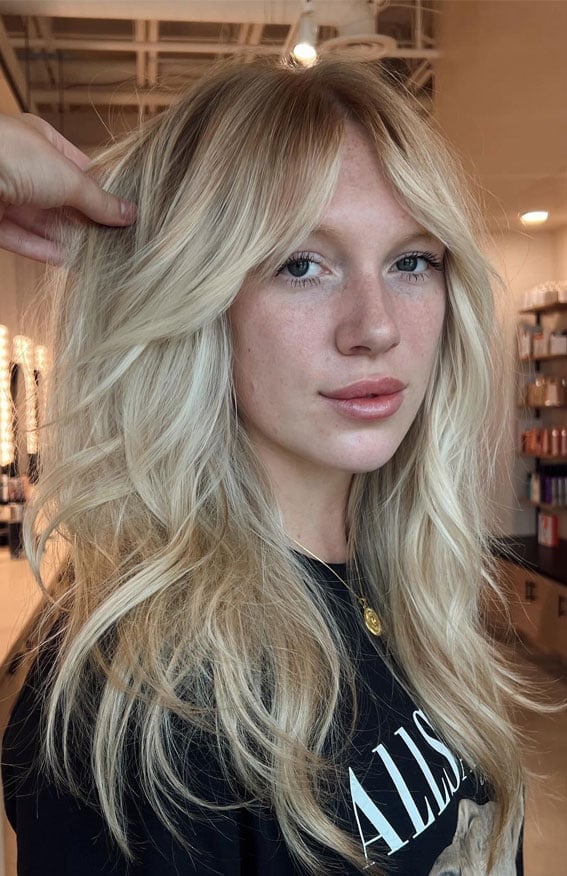
Thick, curly hair at mid-back length has the weight to hold a wolf cut’s heavily textured layers without collapsing, which is the entire design bet here. The shaggy bangs break up the density and keep the shape from reading as one solid curtain. Ask your stylist for: mid-back wolf cut, shaggy bangs. Apply curl cream and air-dry or diffuse to let the natural texture define the layers. A trim every eight to ten weeks prevents the ends from dragging the cut down. Blonde with highlights is not part of this version; the black color relies on shine and contrast, so fine hair types may find the volume insufficient without a volumizing spray at the roots.
Final Thoughts
For finer hair, keep the baseline blunt and the layers concentrated at the crown to avoid looking stringy. Thicker hair can carry the full shaggy length and density without losing the shape. The decision rule is simple: shorter and choppier for volume, longer and softer for movement.
- Trim the baseline every 6-10 weeks to maintain shape.
- Toning is typically needed every 8-12 weeks for color maintenance.
- Use a texturizing spray or sea salt spray for enhanced waves.
- Air-dry or rough-dry with a diffuser for natural texture.
- Refresh bangs every 4-6 weeks as needed.
Embrace the texture and layers of the wolf cut.