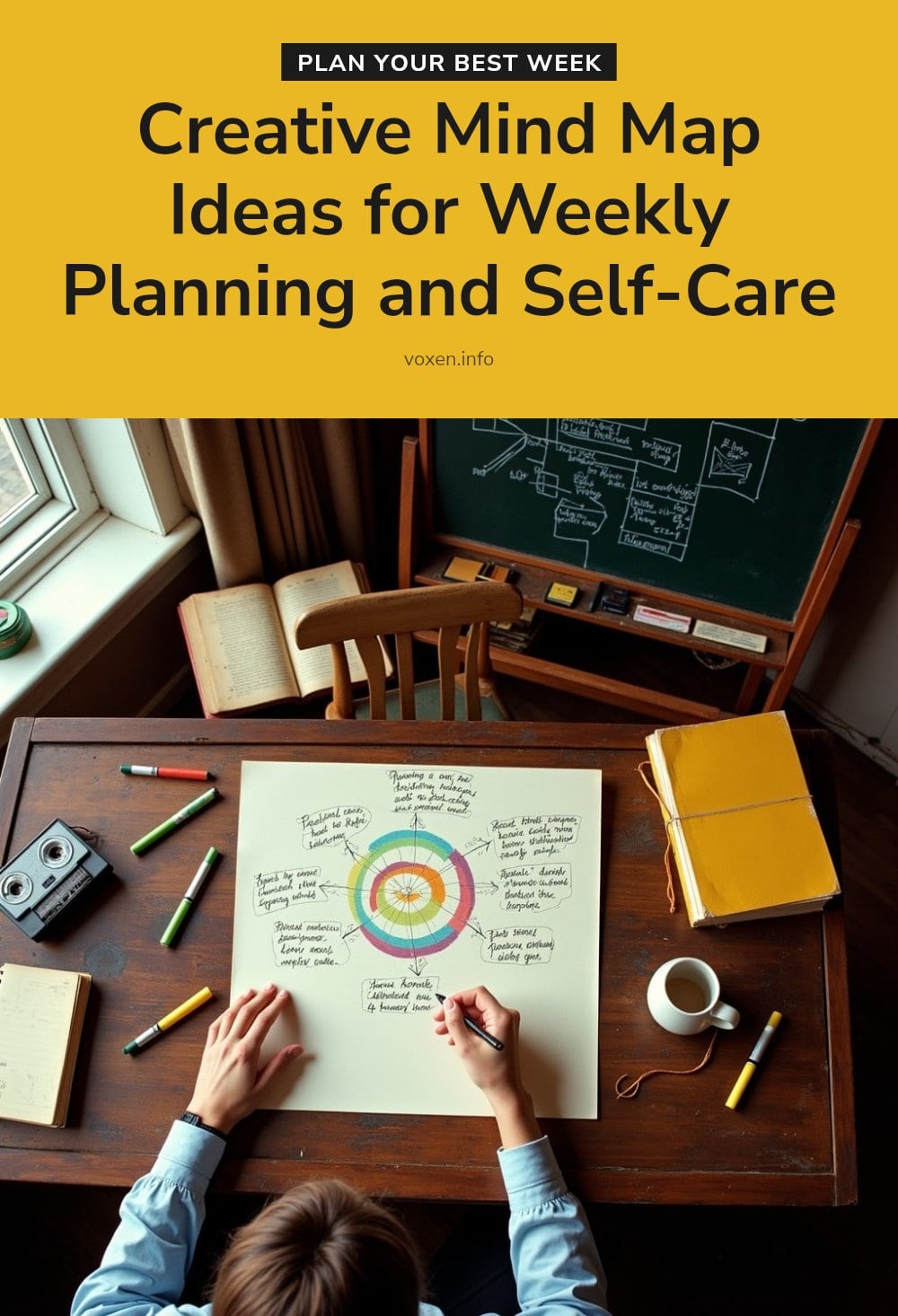
If your weekly to-do list feels overwhelming and self-care keeps getting pushed aside, a mind map can change that. It is a visual tool that helps you see all your tasks, appointments, and wellness activities in one interconnected view. This article walks you through how to create a weekly planning and self-care mind map, from gathering supplies to avoiding common mistakes.
Key Takeaways
- Start with a central image or keyword, like ‘Week 23’ or a calendar icon, to anchor your map.
- Use different colors for main branches such as Work, Home, and Self-Care to visually separate categories.
- Keep branches concise with keywords or short phrases, not full sentences, for faster scanning.
- Give self-care its own main branch and break it into Physical, Mental, Emotional, and Spiritual sub-branches.
- Review your mind map daily or weekly and expect to spend 15 to 30 minutes creating it.
What is a Mind Map and How Can It Help Your Week?
A mind map is a visual tool that organizes information non-linearly around a central concept, like a central image or keyword. For weekly planning and self-care, it helps you see all your commitments, tasks, and self-care activities in one interconnected view. This makes prioritization and balance much easier because you can spot overlaps and gaps at a glance. The non-linear structure mimics the brain’s natural thinking process, so it’s especially effective for brainstorming and planning your week.
Gather Your Mind Mapping Essentials
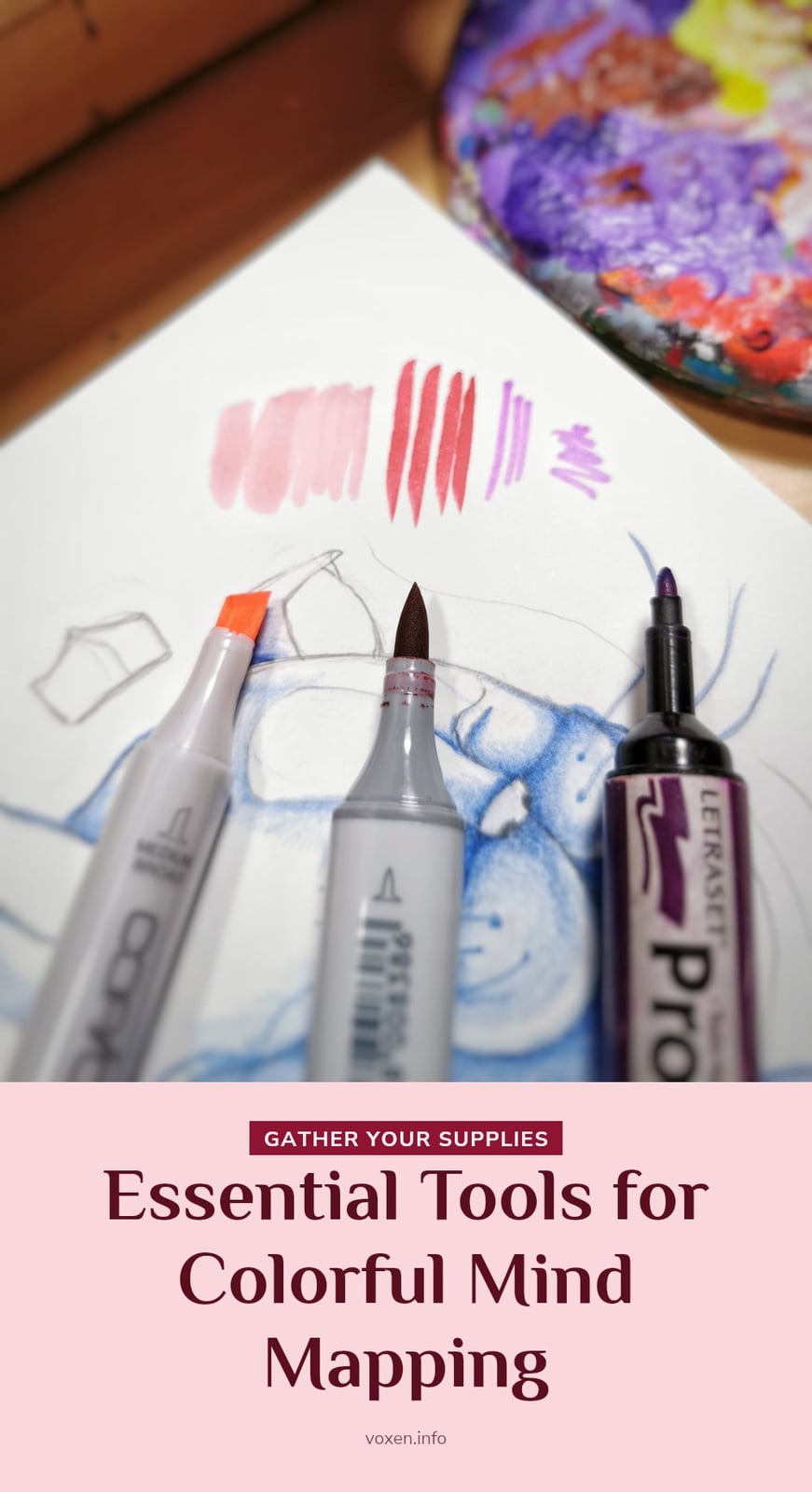
You don’t need much to get started. Here is what works best:
- A large sheet of paper or whiteboard: Gives you plenty of room to spread out ideas without feeling cramped.
- Colored pens, markers, or pencils: Different colors help you visually separate categories and stimulate creativity. I usually use at least five distinct colors.
- Digital mind mapping software or apps: Optional, but handy if you prefer to edit on the go or keep a clean digital copy.
Step-by-Step: Creating Your Weekly Planning Mind Map
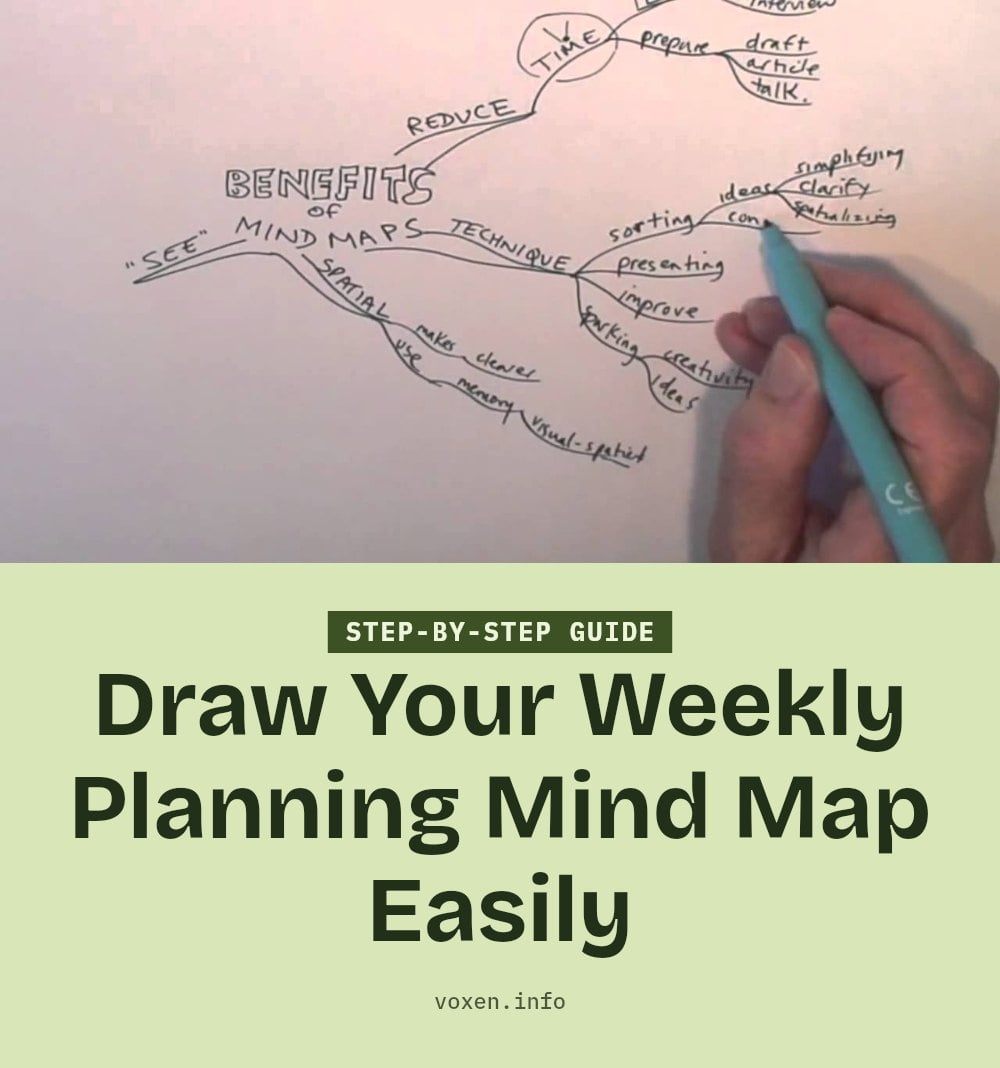
Follow these steps to build your weekly planning mind map.
- Start with a central image or keyword: Write your week’s focus or draw a simple symbol in the center of the page. For example, write “Week 23” or draw a calendar icon. This anchors the entire map.
- Branch out main themes: Draw thick lines radiating from the center for categories like ‘Work’, ‘Home’, ‘Appointments’, ‘Self-Care’, and ‘Social’. Use a different color for each theme to keep them distinct. Label each line with the category name.
- Add sub-branches for details: From each main branch, draw thinner lines for specific tasks or events. Use only keywords or short phrases. For ‘Work’, sub-branches might read “Project deadline”, “Team meeting”, “Review report”. For ‘Self-Care’, sub-branches could be “Yoga”, “Read 20 min”, “Call friend”.
- Incorporate images, symbols, and doodles: Draw a small clock next to appointments, a heart next to self-care activities, or a star for top priorities. These visuals make the map more memorable and engaging.
- Review your mind map regularly: Place it somewhere visible, like on your desk or fridge. Glance at it each morning and before bed to stay on track. Adjust sub-branches as tasks change throughout the week.
Integrating Self-Care into Your Mind Map
To make sure self-care doesn’t fall through the cracks, give it its own main branch on your mind map. From that branch, draw sub-branches for each self-care category: ‘Physical’, ‘Mental’, ‘Emotional’, and ‘Spiritual’. Under each, list specific activities. For example, under ‘Physical’ you might write “Walk 15 min” or “Stretch”. Under ‘Emotional’, “Journal” or “Call a friend”.
Use a consistent color for the entire self-care branch, or assign a different color to each sub-category. This visual system helps you quickly see if you are covering all areas. Tip: Include at least one activity from each category to keep your week balanced.
Common Mind Mapping Mistakes to Avoid
Even with the best intentions, a few common habits can turn your mind map into a cluttered list. Here is what to avoid and how to fix it.
- Using full sentences: Stick to keywords or short phrases. A single word like “gym” is faster to scan and keeps the map visually clean.
- Treating it like an outline: Mind maps are non-linear. Let branches curve and cross naturally instead of forcing a top-down structure.
- Skipping colors and visuals: Color stimulates creativity and helps you recall information later. Use at least five different colors for main branches.
- Aiming for perfection: Focus on free association of ideas first. Neatness can come after you have captured everything.
- Not connecting ideas: Ensure related thoughts are visually linked to maximize the associative benefit.
Top Tips for an Effective Mind Map
Once you have the basics down, these tips will make your mind map work harder for you.
- Start with a clear focus: Your central image or keyword should capture the essence of your week. “Week 42, Balance” is more specific than just “Week.”
- Embrace the flow: During the initial brainstorm, write down every idea that comes to mind without judging it. You can prune later.
- Make it visible: Tape your completed mind map to your fridge or desk. Seeing it daily reinforces your priorities and self-care commitments.
- Review and refresh: Check your map at the start of each day. Adjust sub-branches as tasks shift, or create a fresh map every Monday.
- Experiment with style: Try different layouts, color schemes, or digital tools. A radial layout works for some; a tree-like structure works for others.
How Long Does Mind Mapping Take and How Often Should You Do It?
A weekly planning and self-care mind map typically takes 15 to 30 minutes to create. That is a small investment for a clear overview of your commitments and balance.
- Review frequency: Check your map daily or weekly to stay on track. Minor adjustments take just a few minutes.
- Create new each week: Priorities and tasks change, so start a fresh mind map every week. This keeps the map relevant and prevents clutter.
- Cost: Minimal. A large sheet of paper and a set of colored pens cost a few dollars. Free digital tools like mind mapping apps are also available.
Frequently Asked Questions
How often should I update my mind map?
Review your mind map daily or weekly to stay on track. Minor adjustments take just a few minutes, and you can create a fresh map for each new week to reflect changing priorities.
Can I use a mind map for daily tasks?
Yes, you can adapt a mind map for daily tasks by narrowing your central focus to a single day. Use the same structure with branches for work, errands, and self-care, and keep keywords short for quick reference.
What if my mind map feels messy?
A messy mind map is normal, especially during the initial brainstorming phase. Don’t worry about neatness or perfection at first. Once your ideas are down, you can redraw it more cleanly or use different colors to improve clarity.
Are digital mind maps as effective as paper ones?
Yes, digital mind maps can be just as effective as paper ones. Both allow you to use colors, images, and keywords. Digital tools offer easy editing and sharing, while paper can feel more tactile and freeform. Choose what works best for you.
How do mind maps improve memory?
Mind maps improve memory by mimicking the brain’s natural thinking process with a non-linear, associative structure. Using colors, images, and keywords stimulates both sides of the brain, making information easier to recall than traditional linear notes.
Final Thoughts
My tip: start with a clear central focus like ‘Week 42, Balance’ to keep your map specific and actionable. Expect to spend 15 to 30 minutes creating it, then check it daily or weekly to stay on track. With a little practice, a mind map becomes a simple way to keep your week organized and your self-care front and center.

