You’re juggling deadlines, meetings, and a never-ending inbox, and your mind feels like it’s everywhere at once. Mindfulness at work is about hitting pause and bringing your attention back to the present moment, even for just a minute. This article covers simple, practical mindfulness practices you can do right at your desk, common mistakes to avoid, and tips for making it stick.
Key Takeaways
- Start with short 1-5 minute mindfulness practices and gradually increase duration as comfortable.
- Use your breath as an anchor whenever your mind wanders; gently redirect without judgment.
- Integrate mindfulness into routine tasks like drinking coffee or walking to a meeting.
- Expect gradual results over weeks; deeper benefits build over months and years.
- Mindfulness is complementary, not a replacement for professional treatment for anxiety or depression.
What is Mindfulness at Work and Why Does It Matter?
Mindfulness at work means intentionally bringing your attention to the present moment without judgment, even when your inbox is overflowing and the calendar is packed. It helps you cultivate awareness of your thoughts, feelings, and physical sensations during the workday, rather than getting swept away by distractions. Integrating short practices can improve focus, reduce stress, enhance emotional regulation, and boost overall well-being, which often leads to greater productivity. The goal is not to stop thinking but to observe your thoughts without getting carried away by them.
Essential Tools for Your Mindfulness Practice
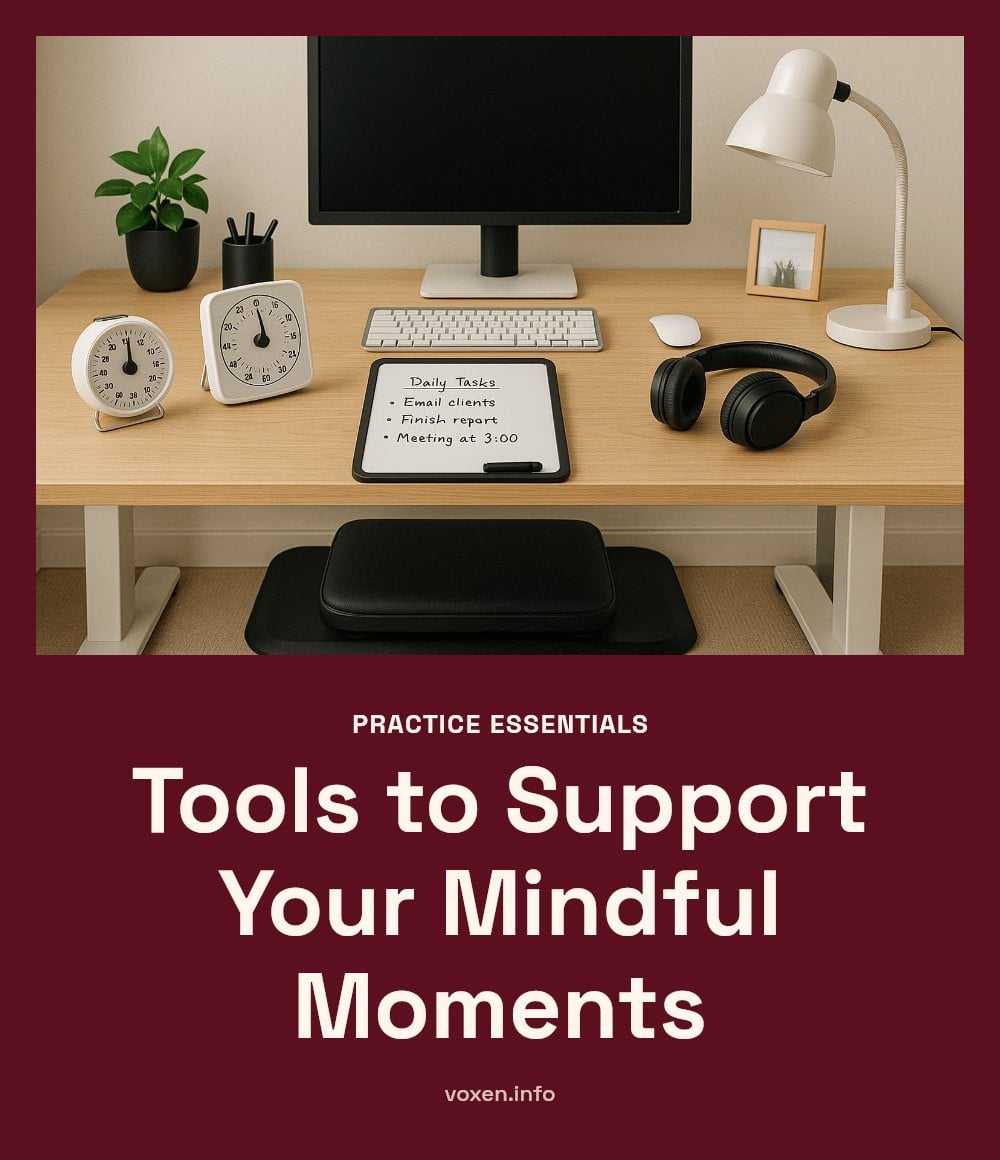
You don’t need much to start a mindfulness practice at work. A few basics can help, but none are essential.
- Timer: Use a phone app or a physical timer to keep track of short practice durations, like 2 or 5 minutes.
- Comfortable chair or cushion: Helpful for seated practices, but you can practice anywhere you can sit upright.
- Headphones (optional): Useful for guided meditations or to minimize office noise.
Simple Mindfulness Practices You Can Do at Your Desk
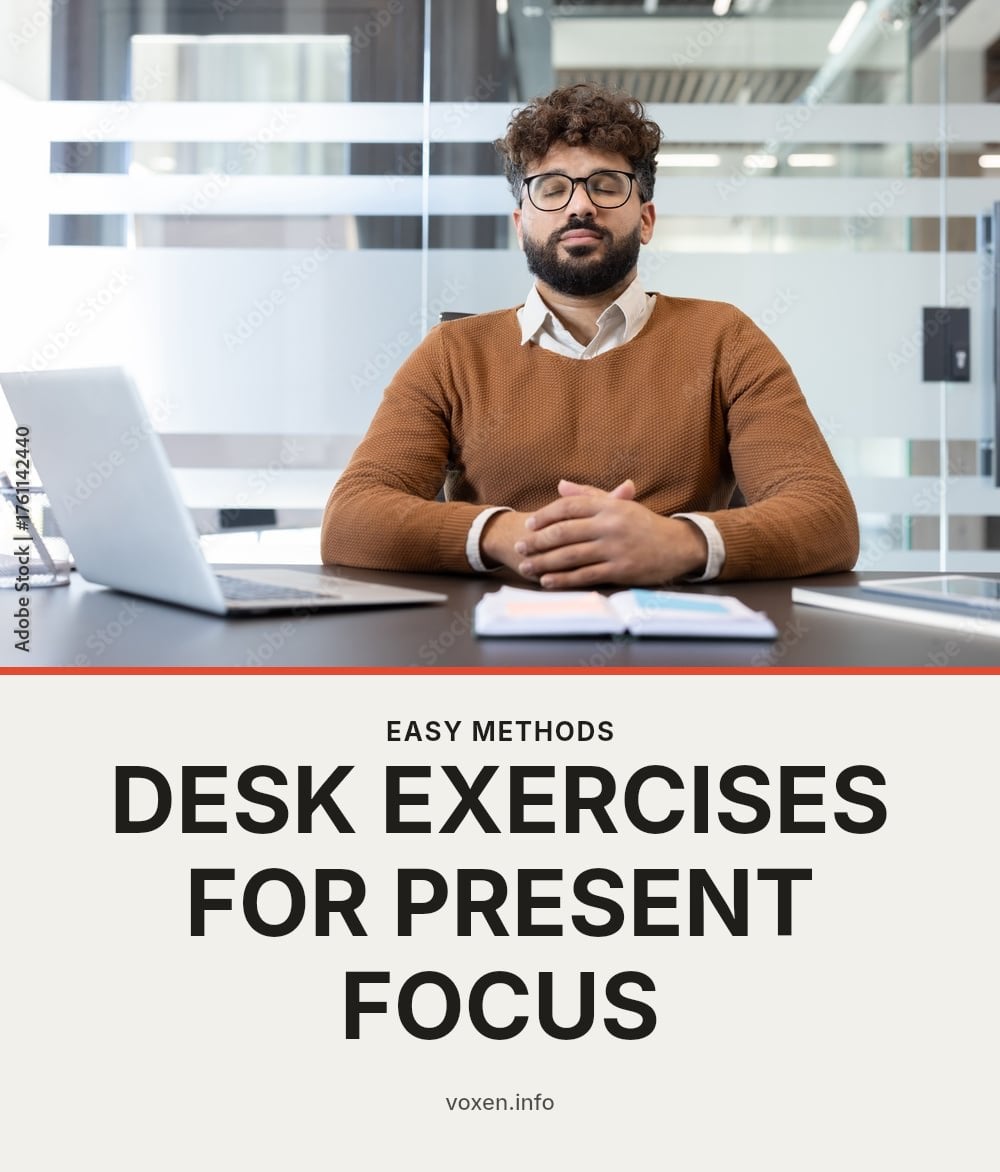
You can weave mindfulness into your workday without leaving your desk. Here are four simple methods to try.
Focused Breathing
Take three deep breaths, noticing the sensation of air entering and leaving your body. Feel your chest or abdomen rise and fall. My tip: Set a timer for one minute and just count each exhale, starting over when you lose count.
Mindful Minute
Pause for a minute and notice five things you can see, four things you can feel (like your feet on the floor), three things you can hear, two things you can smell, and one thing you can taste. For the taste, try a mint or a sip of water. This quick sensory scan pulls your attention into the present.
Mindful Movement
Take a short break to stretch or walk slowly, paying attention to your body’s sensations. Notice how your muscles feel as you move, the weight of your feet on the ground, or the air on your skin. Even a 2-minute stretch can reset your focus.
Mindful Listening
When someone is speaking to you directly, focus entirely on their words without planning your response. Notice their tone, pauses, and body language. This is for interpersonal communication, not background noise. My tip: If your mind wanders, gently bring it back to the speaker’s voice without judgment.
Common Mindfulness Mistakes and How to Avoid Them
Many people stumble with the same misconceptions when starting mindfulness. Here are the most common mistakes and how to avoid them.
- Mistake: Believing mindfulness means clearing your mind of all thoughts. Instead: Observe your thoughts without judgment, like clouds passing by.
- Mistake: Getting frustrated when your mind wanders. Instead: Gently redirect your attention back to your breath or anchor each time.
- Mistake: Expecting instant calm or a complete absence of stress. Instead: Recognize that mindfulness is a gradual practice; benefits build over time.
- Mistake: Treating mindfulness as another task to check off. Instead: Integrate it as a way of being, not a chore.
- Mistake: Only practicing when feeling overwhelmed. Instead: Aim for consistent, short daily practices, even when you feel fine.
Best Tips for Integrating Mindfulness into Your Workday

Start with just 1-5 minutes a day. A short practice is more sustainable than a long one you skip. Use your breath as an anchor; whenever your mind wanders, gently bring your attention back to the sensation of breathing in and out.
Turn routine moments into mindful transitions. Pay full attention to the taste and smell of your coffee or the feeling of your feet on the floor as you walk to a meeting. Be kind to yourself when your mind drifts, it is normal. Simply notice and redirect without judgment.
Tip: Experiment with different techniques. Try focused breathing one day and a mindful minute the next. Find what feels right for you and stick with it.
How Long Until You See Results and What’s the Cost?
You may notice benefits like improved focus and reduced stress within a few weeks of consistent daily practice. Deeper changes, such as measurable shifts in brain regions linked to attention and emotional regulation, build over months and years.
The cost can be zero. Basic mindfulness techniques like focused breathing or a body scan are completely free. If you prefer guidance, there are many free apps and online resources. Paid subscriptions vary widely, often offering free trials before you commit.
When to Seek Professional Guidance for Mindfulness
Mindfulness is a complementary practice and should not replace professional medical or psychological treatment for conditions like severe anxiety or depression. If you have a history of trauma, some practices may initially bring up difficult emotions. In that case, consult a mental health professional before continuing.
If you experience increased distress or discomfort during practice, stop and seek guidance from a mental health professional. Your well-being comes first.
Frequently Asked Questions
How long does it take to see results from mindfulness?
You may notice benefits like improved focus and reduced stress within a few weeks of consistent daily practice. Deeper changes, such as shifts in brain regions linked to attention and emotional regulation, build over months and years. The key is consistency, even if it’s just a few minutes each day.
Can mindfulness help with anxiety or depression?
Mindfulness can help many people manage everyday stress and improve emotional regulation, but it is not a treatment for clinical anxiety or depression. If you have a diagnosed condition or experience severe symptoms, mindfulness should complement, not replace, professional care. Consult a mental health professional for guidance.
Is it okay if my mind wanders during mindfulness?
Absolutely, and it’s actually a normal part of the practice. The goal is not to keep your mind blank, but to notice when it wanders and gently bring your attention back to your breath or chosen anchor. Each time you redirect, you’re strengthening your focus, so don’t judge yourself for getting distracted.
What if I don’t have a quiet space at work?
You can practice mindfulness anywhere, even in a noisy office. Instead of seeking silence, try accepting the ambient noise as part of your present-moment experience. Focus on your breath or the sensation of your feet on the floor, and let sounds come and go without attaching to them.
Are there apps that can help with mindfulness?
Yes, there are many free and paid apps and online resources that offer guided mindfulness practices. These can be helpful for beginners, providing structure and a timer. You can also use a simple phone timer for your own unguided practice. Explore a few options to find what suits you best.
Final Thoughts
My tip: pick one small practice, like a three-breath pause before you open your email, and commit to it for a week. You may notice improved focus and reduced stress within a few weeks of consistent daily practice, but don’t expect instant calm. Treat mindfulness as a gentle, ongoing habit, not a task to check off. Start small, be patient with yourself, and let the practice unfold naturally.
This article is for general informational purposes only and is not a substitute for professional medical or psychological advice. Mindfulness practices may not be suitable for everyone, especially those with a history of trauma. If you experience distress or have a persistent mental health condition, consult a qualified healthcare provider.

