Waking up with a puffy face is frustrating, especially when you have a busy day ahead. It usually happens after a salty meal, a late night, or maybe a few drinks, and it’s just temporary fluid retention. This article covers quick fixes that actually work, from cold compresses to gentle massage, plus the common mistakes that can make things worse.

Key Takeaways
- Apply a cold compress for 5 to 10 minutes to constrict blood vessels and reduce swelling.
- Gentle upward and outward facial massage helps encourage lymphatic drainage.
- Drink a glass of water right after waking to rehydrate and balance fluid retention.
- Limit salty foods and alcohol the night before to prevent morning puffiness.
- See a doctor if puffiness is sudden, severe, or accompanied by pain or breathing trouble.
How to Quickly Reduce a Puffy Face
To quickly reduce a puffy face, start with a cold compress like a chilled washcloth or an ice roller applied for 10 minutes. The cold helps constrict blood vessels and bring down swelling. Follow with a gentle facial massage using upward and outward motions to encourage lymphatic drainage. Finish by drinking a full glass of water to rehydrate and counteract fluid retention.
Why Your Face Gets Puffy After Salty Food or Poor Sleep
Why Your Face Gets Puffy After Salty Food or Poor Sleep
Facial puffiness is usually caused by temporary fluid retention in the tissues. Several everyday habits can trigger this.
- High sodium intake: Salty foods cause your body to hold onto extra water, leading to a puffy appearance.
- Dehydration: Not drinking enough water can paradoxically make your body retain fluid, worsening puffiness.
- Poor sleep: Lack of sleep impairs fluid regulation and circulation, allowing fluid to pool in your face.
- Alcohol: It acts as a diuretic, causing dehydration, which then leads to compensatory fluid retention.
- Allergies and sinus issues: These can cause temporary puffiness due to inflammation and fluid buildup.
- Inflammation: General inflammation from various sources also contributes to facial swelling.
Understanding these triggers helps you address the root cause.
Tools and Products for Depuffing Your Face
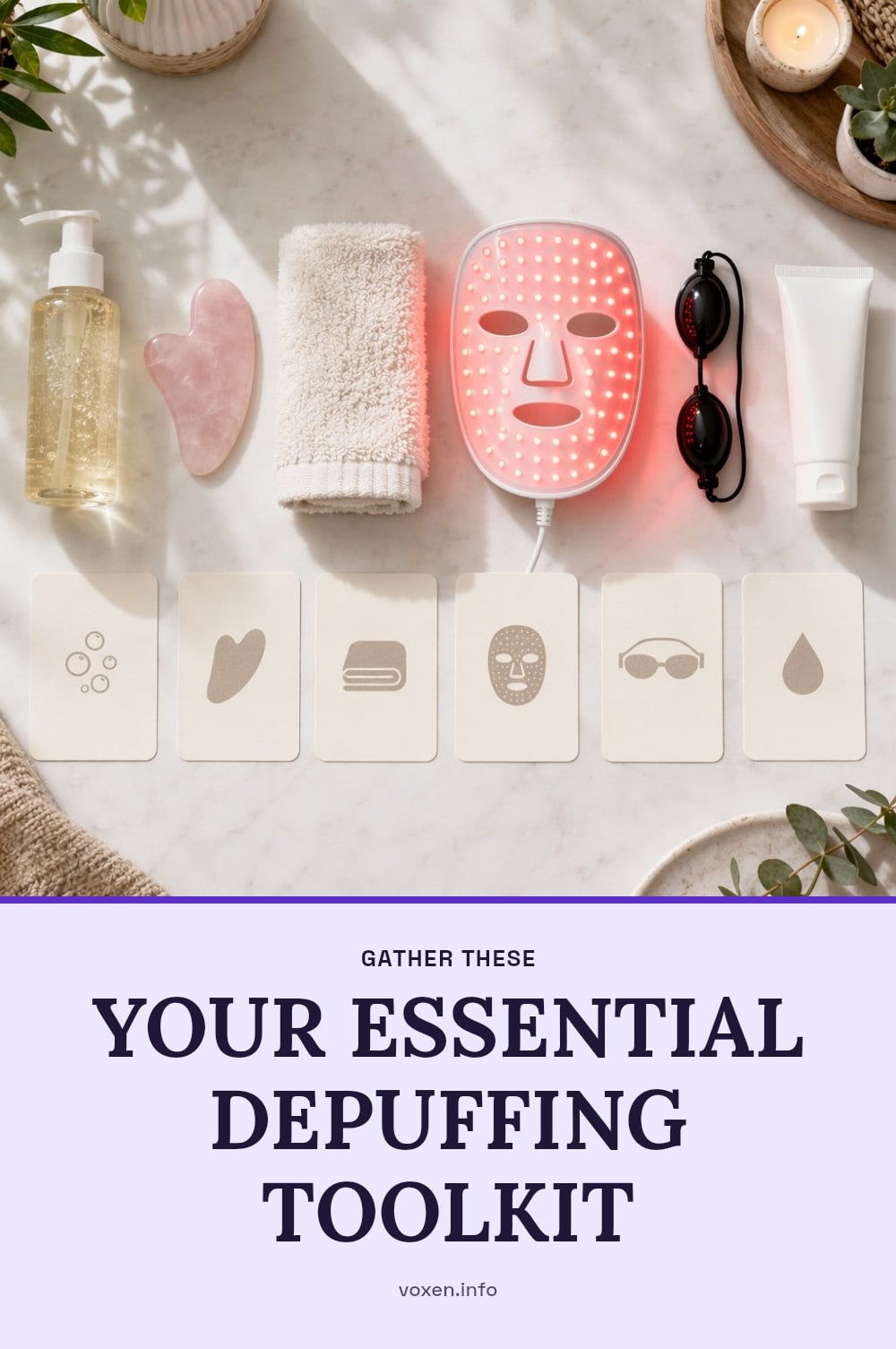
Having a few simple tools on hand makes depuffing quick and easy.
- Cold washcloth: The easiest option for an immediate cool compress.
- Ice roller or chilled facial roller: Provides sustained cold and gentle massage in one step.
- Gua sha tool: Helps manually encourage lymphatic drainage when used with light pressure.
- Cucumber slices or chilled green tea bags: Natural, soothing options that also deliver a cooling effect.
- Hydrating facial serum or oil: Aids glide for massage and prevents skin tugging.
- Water bottle: Consistent hydration throughout the day is key to preventing fluid retention.
Effective Methods to Reduce Facial Puffiness

Effective Methods to Reduce Facial Puffiness
Cold therapy: Apply a cold compress, like a chilled washcloth or an ice roller wrapped in a thin cloth, to your face for 10 minutes. The cold constricts blood vessels, which can reduce swelling quickly. Avoid applying ice directly to skin to prevent ice burn.
Lymphatic massage: Use gentle, upward and outward motions with your fingers or a gua sha tool. Start at the center of your face and move toward the ears and down the neck. This helps move accumulated fluid out of the facial tissues. My tip: Apply a hydrating serum or oil first so your fingers glide smoothly without tugging.
Internal hydration: Drink a glass of water immediately upon waking and continue sipping throughout the day. Proper hydration helps your body maintain fluid balance and reduce retention.
Topical caffeine: Some skincare products contain caffeine, which can temporarily constrict blood vessels when applied to the skin. This may offer a short-term depuffing effect. Caution: Always patch test new products before applying to your face.
Common Mistakes When Dealing With a Puffy Face
It’s easy to assume your puffy face is always from salty food or a bad night’s sleep, but that overlooks other triggers like allergies, sinus issues, or dehydration. Using hot water or a warm compress can actually increase blood flow and make swelling worse. When you massage, avoid harsh rubbing or pressing too hard. That irritates the skin and can lead to redness or bruising. Ignoring persistent puffiness that doesn’t go away with home remedies may delay catching an underlying issue. And don’t cut back on water hoping it will help: dehydration often causes your body to hold onto more fluid, making puffiness worse.
Preventing Future Facial Puffiness

To prevent facial puffiness from becoming a regular morning problem, start with your evening habits. Limit high-sodium foods, especially close to bedtime, and drink enough water throughout the day to keep your hydration balanced. Prioritize consistent, quality sleep, aim for 7 to 9 hours, and reduce alcohol consumption, which can dehydrate you and lead to fluid retention. Sleeping with your head slightly elevated, using an extra pillow, helps stop fluid from pooling in your face overnight. If you have known allergies or sinus issues, managing them can also cut down on puffiness.
When to Consult a Doctor About Facial Puffiness
Most facial puffiness is temporary and harmless, but some situations require medical attention. Seek immediate help if puffiness comes on suddenly and is severe, especially if it includes pain, redness, itching, or difficulty breathing. This could signal an allergic reaction or infection. See a doctor if the swelling is only on one side of your face. Also consult a professional if puffiness is chronic, keeps getting worse, or shows up with other symptoms like fatigue, weight gain, or changes in urination.
Frequently Asked Questions
How long does facial puffiness usually last?
For most people, temporary facial puffiness from salt, dehydration, or lack of sleep resolves within a few hours as your body rebalances fluids. With quick fixes like cold compresses and gentle massage, you may see improvement in 10 to 30 minutes, but the swelling typically fades completely by midday if you stay hydrated and avoid further triggers.
Can allergies cause a puffy face?
Yes, allergies can definitely cause facial puffiness. When you’re exposed to an allergen, your body releases histamine, which can lead to inflammation and fluid buildup in the tissues, particularly around the eyes and lips. If you suspect allergies, an antihistamine may help, but see a doctor if the swelling is severe or includes breathing difficulty.
Is it normal to have a puffy face every morning?
Occasional morning puffiness is normal and usually harmless, but if it happens every day, it’s worth looking at your nighttime habits. Persistent puffiness could be a sign of chronic dehydration, high sodium intake, poor sleep quality, or an underlying issue like allergies or sinus problems. If it doesn’t improve with lifestyle changes, consult a doctor.
Does drinking coffee help reduce puffiness?
Caffeine has a mild diuretic effect and can temporarily constrict blood vessels when applied topically, which may help reduce puffiness. However, drinking coffee alone is not a reliable fix. For better results, use a chilled green tea bag (which contains caffeine) as a compress, or stick with cold therapy and gentle massage as your primary methods.
Are there specific foods that help reduce puffiness?
Foods with natural diuretic properties, like cucumber, watermelon, celery, and asparagus, can help flush excess fluid and reduce puffiness. Staying hydrated with water and eating potassium-rich foods like bananas and avocados also helps balance sodium levels. Avoid salty snacks and processed foods, especially in the evening, to prevent morning swelling.
Final Thoughts
For a fast fix, reach for a chilled washcloth or an ice roller and spend 10 minutes on cold therapy and gentle massage. It’s not a permanent solution, but it can temporarily reduce puffiness within half an hour. If you find your face puffy most mornings, focus on evening habits like cutting back on sodium, staying hydrated, and getting consistent sleep. That’s where the real difference shows up.
This information is for general informational purposes only and does not constitute medical or professional advice. If you experience persistent, severe, or sudden facial puffiness, especially if accompanied by pain, redness, or difficulty breathing, consult a doctor or dermatologist for a proper evaluation.

