You’ve probably heard about scripting manifestation and wondered how to actually do it. The idea is simple: write down your desires as if they’ve already happened, in the past tense, to align your mindset with your goals. This article walks you through a step-by-step method from a popular TEDx talk, plus practical tips and prompts to start your scripting practice today.

Key Takeaways
- Write your scripts in past tense, as if your desire has already come true, with specific dates.
- Script daily, ideally before bed and first thing in the morning, to rewire your subconscious mind.
- Use pen and paper for scripting to better engage brain regions linked to behavior and emotion.
- Include vivid sensory details and genuine feelings in your scripts to make them feel real.
- Avoid writing about your current reality or focusing on what you don’t want in your journal.
What is Scripting Manifestation?
Scripting manifestation is a technique where you write about your desires as if they’ve already happened, engaging your emotions and senses. It’s a powerful tool within the Law of Attraction, aiming to align your mindset and energy with your goals. The core is to describe your ideal future in vivid detail, always in the past tense, making it feel real to your subconscious.
Your Essential Scripting Manifestation Toolkit

You don’t need much to get started. Here’s what I recommend:
- A dedicated journal or notebook for your scripting practice. Keep it separate from your daily to-do lists.
- A comfortable pen or pencil that feels good in your hand. Writing by hand is more effective than typing.
- Optional: A quiet space where you can focus without interruption for a few minutes.
Step-by-Step Guide to Scripting Manifestation
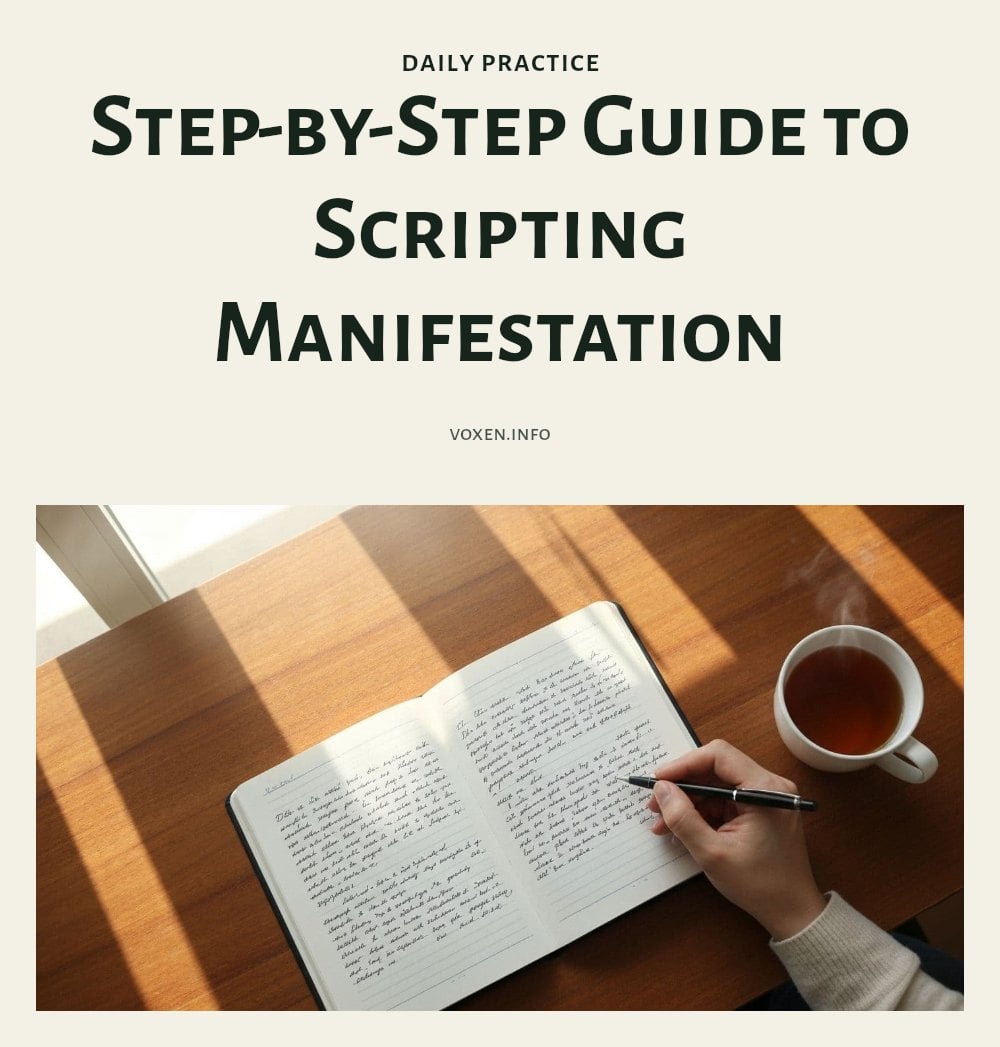
This step-by-step method comes from a TEDx talk on scripting manifestation. It walks you through defining your desires and rewriting your internal narrative.
- Define your desired self: Get clear on who you want to be and what you want to achieve. Be specific and make sure your vision comes from you, not from what others expect or what society pushes.
- Assess your current self-concept: Honestly look at where you are now. Notice the gap between your current reality and your goal without judging yourself for it.
- Address limiting beliefs: Identify the mental blocks that keep you stuck. These often come from past experiences. Acknowledge them, then consciously decide to let them go.
- Speak aloud to a friend: Imagine you are on the phone with a close friend, telling them about your achieved desires. Describe what happened, how you felt, and what changed. Speaking aloud adds emotion and makes the experience feel more real.
- Script your story: Write your story in a journal using a pen and paper. Write in the past tense, as if your desired future has already happened. Include specific dates for when you want to achieve these goals, for example, “Achieved by July 1st, 2025.” Be as detailed as possible about the sights, sounds, and feelings.
- Repeat daily: Do this scripting process every day, ideally before bed and first thing in the morning. Consistency helps rewire your subconscious mind and keeps your goals at the front of your awareness.
Tip: Writing with a pen and paper activates brain regions linked to behavior and emotional regulation, making the practice more effective than typing.
If you learn better by watching, this 15-minute video from TEDx Talks shows every step. The how-to part starts at 6:26.
Best Tips for Powerful Scripting

After practicing scripting for a while, I picked up a few tricks that make a real difference. Here are my favorites.
- Pen and Paper Power: Writing by hand activates different brain regions, making your scripting more effective than typing.
- Morning & Night Ritual: Scripting before bed makes your subconscious more receptive as you enter alpha and theta states. Doing it in the morning sets a motivated tone for your day.
- Detail Your Feelings: Don’t just list achievements. Describe exactly how you felt when you achieved them.
- Set Specific Dates: Give your goals a deadline to boost commitment and prevent procrastination.
- Cover All Areas: Script for love, career, personal impact, and even your desired legacy.
- Imagine Your Legacy: Write about what you want people to say about you on your deathbed, in the past tense, as if it has already happened.
Scripting Prompts to Get You Started
Sometimes the hardest part of scripting is knowing where to start. Here are five prompts I use when I need a little inspiration. Each one is written in the past tense with a specific date and feeling, just as your own scripts should be.
- Career Success: “It’s December 31st, 2025, and I successfully launched my dream business. I felt incredible satisfaction as I celebrated my first major client win.”
- Financial Abundance: “On May 1st, 2025, I joyfully received an unexpected financial windfall that allowed me to pay off all my debts and start my investment portfolio.”
- Loving Relationships: “By Valentine’s Day 2025, I had attracted a deep, loving, and supportive partnership that filled my life with joy and mutual respect.”
- Vibrant Health: “As of June 1st, 2025, I achieved my optimal health, feeling energized and vibrant every single day. My body felt strong and resilient.”
- Personal Growth: “By my birthday in 2025, I had mastered the art of self-compassion, confidently pursuing my passions and feeling completely at peace with myself.”
Common Scripting Mistakes to Avoid
I made most of these mistakes myself when I started scripting. Save yourself the frustration by avoiding them from the beginning.
- Writing About Your Current Reality: Your journal is for your future, not a venting session about today’s problems. Complaining about what’s going wrong only reinforces those negative patterns.
- Using the Wrong Tense: Never write in the present (‘I am…’) or future tense (‘I will have…’). Always script in the past tense, as if it’s already happened. The past tense tricks your subconscious into believing it’s real.
- Being Vague: ‘I’m rich’ isn’t enough. Detail how that wealth feels, what it allows you to do, and when it happened. Specificity creates a stronger emotional charge.
- Focusing on the ‘How’: Your job is to define the ‘what’ and ‘why.’ The ‘how’ is the universe’s job. Don’t limit possibilities by dictating the path.
- Giving Up Too Soon: Manifestation takes consistent practice, not just a one-time effort. Stick with it daily, like any new habit.
- Passive Expectation: Scripting is a powerful tool, but it’s not a magic wand. You still need to take inspired action in your life to support your desires.
What to Expect: Timeline and Consistency
If you’re wondering how long this takes, here’s what I’ve learned from my own practice and from others who script regularly.
- Individual Results: The timeline for manifestation is highly personal and varies greatly from person to person. Some see shifts in weeks, others in months.
- Consistency is Key: Rather than a one-time exercise, consistent practice over weeks or even months is often suggested for the best results. Think of it like building a muscle.
- No Monetary Cost: Scripting manifestation itself is free, requiring only a journal and pen, or a digital alternative. No apps or courses required.
- Time Investment: Dedicate 5-15 minutes daily, or several times a week, to your scripting practice. That’s short enough to fit into any routine.
Frequently Asked Questions
How long does it take for scripting manifestation to work?
Results vary widely from person to person. Some people notice shifts in a few weeks, while others take months. The key is consistent practice and aligning your actions with your goals, not just waiting for something to happen.
Can I script for multiple goals at once?
Yes, you can script for different areas of your life, such as career, relationships, health, and personal growth. Many practitioners dedicate separate journal entries or sessions to each goal to stay clear and focused.
What if I don’t feel emotional while scripting?
It’s okay if the emotion doesn’t come right away. Try reading your script aloud or imagining you’re telling a friend about your achieved desires. Over time, the emotional connection usually builds as you repeat the practice.
Is there a specific time of day that is best for scripting?
Scripting before bed and first thing in the morning is often recommended. Before sleep, your brain enters alpha and theta states, making your subconscious more receptive. Morning scripting can set a motivated tone for the day.
Can scripting help with specific problems like anxiety or stress?
Many people report that scripting reduces anxiety and boosts motivation by clarifying what they want and focusing on positive outcomes. It’s a psychological tool, not a substitute for professional help, but it can support your mental well-being.
Do I need special tools or a specific type of journal for scripting?
No special tools are required. A simple notebook and a pen or pencil work well. Writing by hand is more effective than typing because it activates brain regions linked to behavior and emotion, but you can also script digitally if you prefer.
Final Thoughts
To get started, pick one goal and script it in past tense for two weeks straight. Don’t worry if you don’t feel immediate shifts, consistency matters more than intensity. The real power of scripting is in how it clarifies your desires and keeps you motivated, not in magic. Just write, feel, and repeat.

