You probably know vitamin C is great for your health, but when it comes to your skin, the way you get it matters. Eating vitamin C-rich foods supports your whole body and helps build collagen from the inside, while applying a vitamin C serum delivers concentrated antioxidants directly to your skin for targeted results. This article breaks down what each approach does best, so you can decide how to use both for a brighter, healthier complexion.

Key Takeaways
- Dietary vitamin C supports collagen and overall skin health, but only a limited amount reaches your skin.
- Topical vitamin C serums directly brighten skin, reduce dark spots, and fight environmental damage.
- Use topical vitamin C in the morning under sunscreen for enhanced UV protection.
- Visible improvements from topical vitamin C typically take 4 to 12 weeks of consistent daily use.
- Store vitamin C serum in a cool, dark place and discard it if it turns dark yellow or brown.
The Core Difference Between Dietary and Topical Vitamin C for Skin
Vitamin C works for your skin in two distinct ways, and knowing the difference helps you get the most out of it. When you eat vitamin C-rich foods, it supports your overall health and collagen production from the inside out, but only a limited amount actually reaches your skin’s surface. Topical vitamin C, on the other hand, delivers a concentrated dose of antioxidants directly to your skin, making it far more effective for targeting specific concerns like hyperpigmentation and fine lines.
1. Dietary Vitamin C: Inner Glow
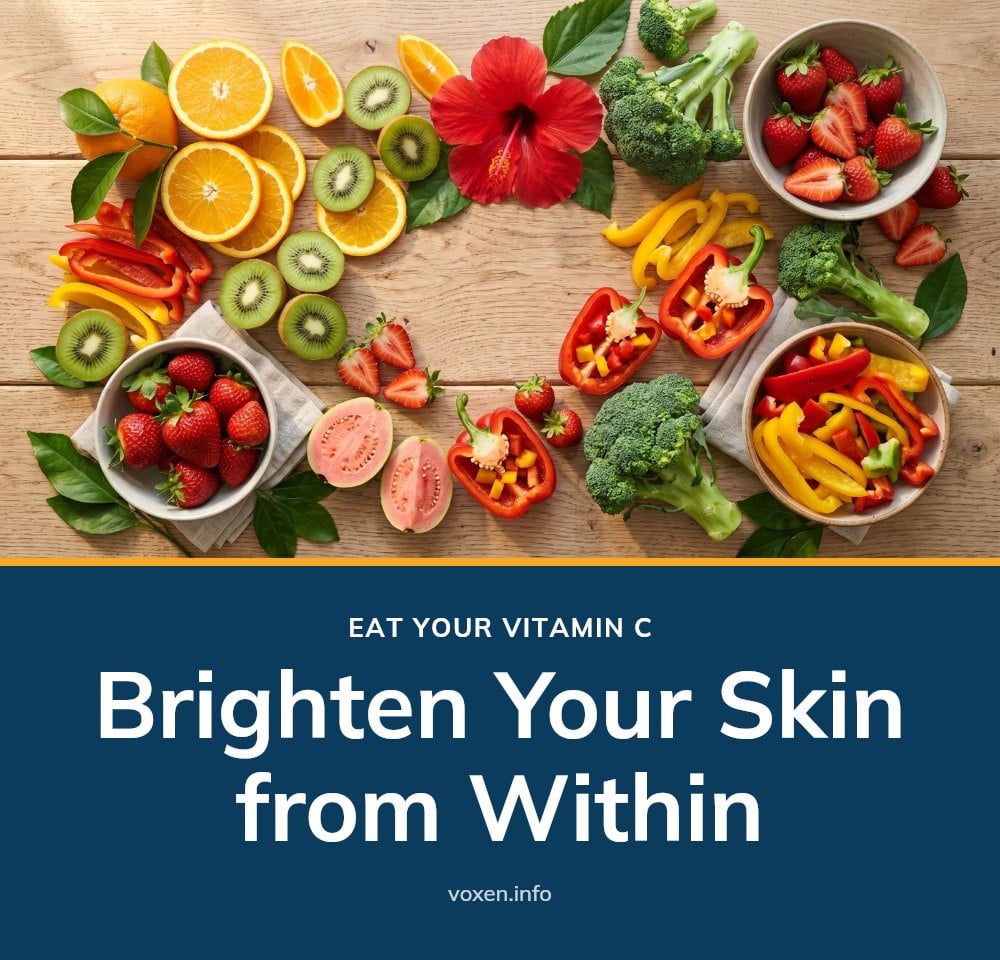
Eating vitamin C-rich foods is essential for whole-body health, and your skin benefits too. This nutrient supports collagen synthesis, which gives your skin its structure and elasticity. It also protects your cells from oxidative stress caused by free radicals, contributing to overall skin resilience.
- My tip: Include citrus fruits, berries, kiwi, bell peppers, broccoli, and leafy greens in your daily diet.
- Remember: Only a limited amount of the vitamin C you eat actually reaches your skin, so it’s not the most direct way to target surface concerns like dark spots.
2. Topical Vitamin C: Targeted Action
Topical vitamin C serums deliver powerful antioxidants directly to your skin, where they can combat damage from UV exposure and pollution. This makes them excellent for brightening your complexion, reducing dark spots, and evening out skin tone.
- Key benefit: Topical application stimulates collagen production directly in the skin’s deeper layers, helping to smooth fine lines and wrinkles.
- Pro move: Apply your vitamin C serum in the morning after cleansing and before sunscreen for maximum antioxidant protection throughout the day.
3. Essential for Collagen Production
Both dietary and topical vitamin C are vital for collagen synthesis, but they work through different pathways. Dietary vitamin C provides the building blocks for collagen throughout your entire body, including your skin. This supports overall skin structure and elasticity from within.
- Topical role: Vitamin C applied directly to the skin encourages collagen production in the dermal layers where it’s applied, targeting fine lines and wrinkles more directly.
- Good to know: Using both methods together gives you the best of both worlds for collagen support.
4. Antioxidant Powerhouse
Vitamin C neutralizes free radicals before they can damage skin cells and speed up visible aging. Dietary vitamin C provides systemic antioxidant protection throughout your body, supporting overall skin resilience. Topical vitamin C, applied directly to your skin, creates a concentrated shield against environmental aggressors like UV rays and pollution on the surface.
5. Brightening and Even Skin Tone
For reducing dark spots and achieving a brighter, more even complexion, topical vitamin C is exceptionally effective. It directly targets hyperpigmentation by inhibiting melanin production in the skin. Dietary vitamin C supports overall skin health, but its impact on specific pigmentation concerns is minimal compared to what a good serum can do.
6. Choosing Your Vitamin C Foods
Aim for at least 75 mg of vitamin C daily from a variety of whole foods. My tip: Include citrus fruits, berries, kiwi, bell peppers, broccoli, and leafy greens in your daily diet. These foods support not just your skin, but your entire immune system and overall health, so you get benefits beyond your complexion.
7. Selecting a Topical Vitamin C Serum
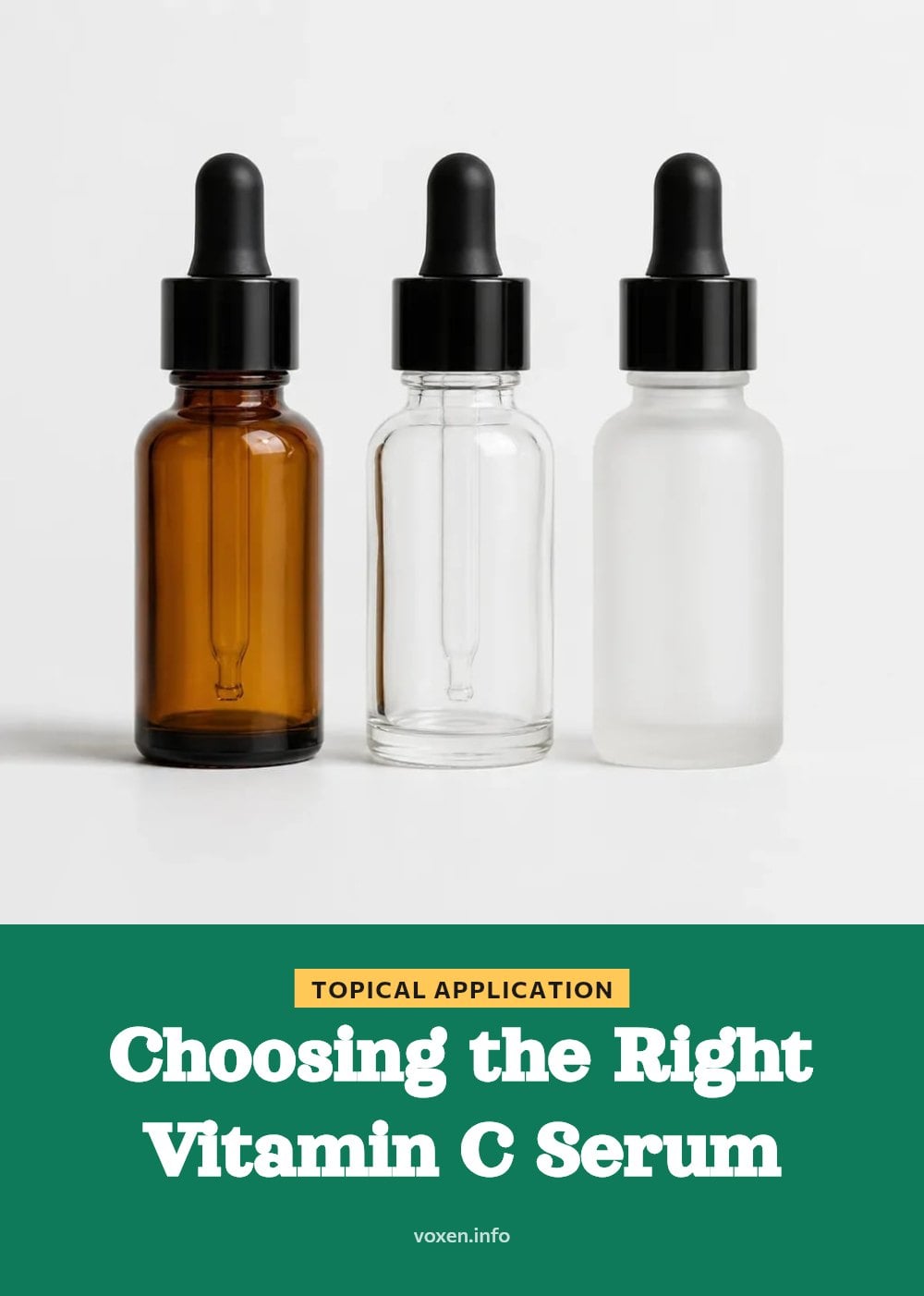
Look for serums containing L-ascorbic acid, the most potent form of vitamin C, or stable derivatives like ascorbyl glucoside. Tip: Choose formulations in dark or opaque bottles with air-tight pumps to protect against oxidation. Consider serums combined with vitamin E and ferulic acid, as they can enhance stability and effectiveness.
8. How to Use Topical Vitamin C
Apply your vitamin C serum in the morning after cleansing and toning, before moisturizer and sunscreen. This timing lets the antioxidant work as an extra shield against daily environmental aggressors. Good to know: Always patch test new serums on a small area of skin first, especially if you have sensitive skin, to check for any reaction before applying it to your whole face.
9. Storing Your Vitamin C Products
Vitamin C is highly unstable and degrades quickly when exposed to light, air, and heat. Store your serum in a cool, dark place like a cabinet or drawer to keep it effective. Tip: If the serum turns dark yellow or brown, it has oxidized and lost most of its potency, so replace it with a fresh bottle.
10. Patience is Key for Results
Visible results from topical vitamin C take time, usually 4 to 12 weeks of consistent daily use. Stick with your morning routine and you should start to see improvements in skin tone and texture. Dietary vitamin C works cumulatively, supporting your skin’s long-term health without a quick fix.
11. When to Consult a Professional
If you experience severe irritation, a rash, or an allergic reaction after using topical vitamin C, stop using it and consult a dermatologist. Before starting high-dose oral vitamin C supplements, talk to a healthcare professional, especially if you have underlying health conditions or take other medications. This ensures the supplement is safe and appropriate for you.
Frequently Asked Questions
Can I use Vitamin C serum every day?
Yes, you can use vitamin C serum daily. Most people apply it once in the morning after cleansing. If you have sensitive skin, start with a lower concentration a few times a week and gradually increase to daily use to avoid irritation.
Can I get too much Vitamin C from food?
It is very difficult to get too much vitamin C from food alone. Your body excretes excess water-soluble vitamin C through urine. However, high-dose supplements can cause digestive upset in some people. Stick to whole foods for a safe and effective intake.
What are the best food sources of Vitamin C for skin?
Excellent food sources include citrus fruits like oranges and grapefruits, berries, kiwi, bell peppers, broccoli, and leafy greens. Aim for at least 75 mg daily from a variety of these foods to support collagen production and overall skin health.
Is it okay to combine Vitamin C with retinol?
Yes, you can use both, but not at the same time. Apply vitamin C serum in the morning for antioxidant protection and retinol at night to avoid destabilization. This way, you get the benefits of each without compromising their effectiveness.
What is the difference between vitamin C in food and vitamin C serum?
Dietary vitamin C supports your entire body, including collagen synthesis, but only a limited amount reaches your skin. Topical vitamin C serum delivers a concentrated dose directly to your skin, making it more effective for brightening, reducing dark spots, and fighting surface damage from UV and pollution.
Final Thoughts
For the best skin results, pair a vitamin C-rich diet with a stable topical serum. Eat at least 75 mg of vitamin C daily from foods like citrus, berries, and bell peppers, and apply a serum each morning under sunscreen. Expect to see visible improvements in tone and texture within 4 to 12 weeks, while dietary benefits build gradually over time. Consistency is key, and your skin will thank you for covering both angles.
This article is for general informational purposes only and does not constitute medical or dermatological advice. Individual skin types and health conditions vary. Consult a dermatologist or healthcare professional before starting new skincare products or supplements, especially if you have sensitive skin or underlying health issues.

