If you’ve noticed small white or flesh-colored bumps on your chin and forehead, you’re not alone. These are whiteheads, a common type of acne that forms when pores get completely blocked by oil and dead skin cells. This article covers what causes whiteheads, how to treat them gently, and what to avoid so you can manage them without irritation.
I’ve spent time researching and testing skincare routines, and my tip is to focus on consistency and gentleness rather than harsh scrubbing. Let’s get into the details.
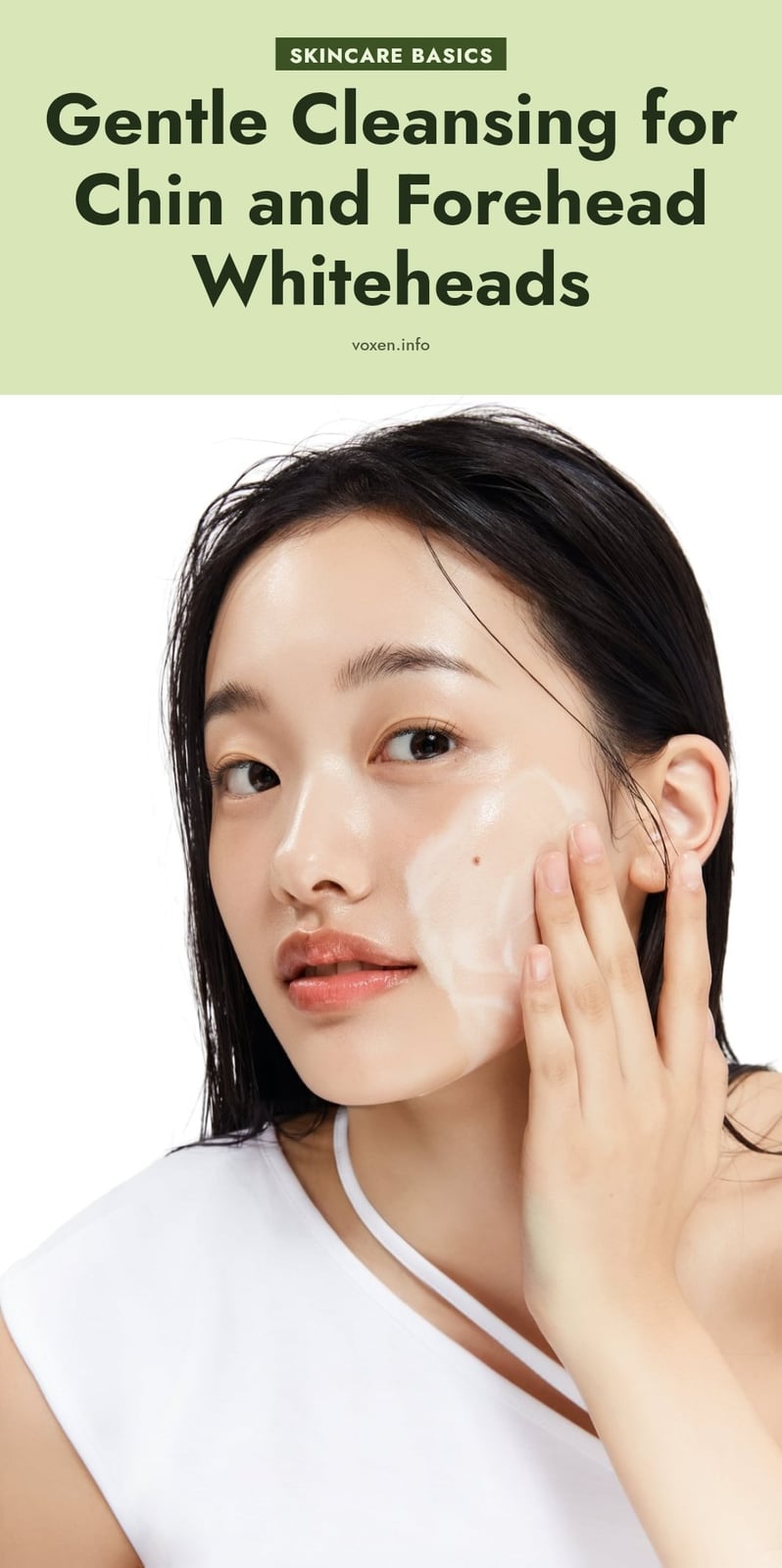
Key Takeaways
- Whiteheads are closed comedones that form when pores are fully blocked by oil and dead skin cells.
- Use a gentle cleanser twice daily and avoid harsh scrubbing to prevent irritation and more oil production.
- Products with salicylic acid, benzoyl peroxide, or retinoids can help, but introduce them one at a time.
- Consistent treatment shows visible improvement in 4 to 6 weeks, with full clearing taking several months.
- See a dermatologist if whiteheads become inflamed, painful, or spread extensively.
What Exactly Are Whiteheads?
Whiteheads are small, closed bumps on the skin that form when a pore becomes completely blocked by oil and dead skin cells. Medically, they are called closed comedones. Unlike blackheads, which have an open surface that allows the contents to oxidize and darken, whiteheads are covered by a thin layer of skin, keeping the material inside white or flesh-colored.
Why Whiteheads Appear on Your Skin
Whiteheads develop when a hair follicle gets clogged with sebum (your skin’s natural oil) and dead skin cells. The pore opening stays covered by a thin layer of skin, trapping everything inside. This is why they appear as small white or flesh-colored bumps rather than dark like blackheads.
Common triggers
- Hormonal fluctuations: Puberty, menstruation, and pregnancy can ramp up oil production, making clogs more likely.
- Cosmetic products: Oil-based or comedogenic (pore-clogging) ingredients in makeup, moisturizers, or sunscreens can directly contribute to blockages.
- Over-washing: Washing your face too often or using harsh scrubs strips away natural oils. Your skin may respond by producing even more oil, which can worsen whiteheads.
Hormones and product choices are often the biggest factors, but simple habits like how you cleanse matter too.
Essential Skincare Tools for Managing Whiteheads
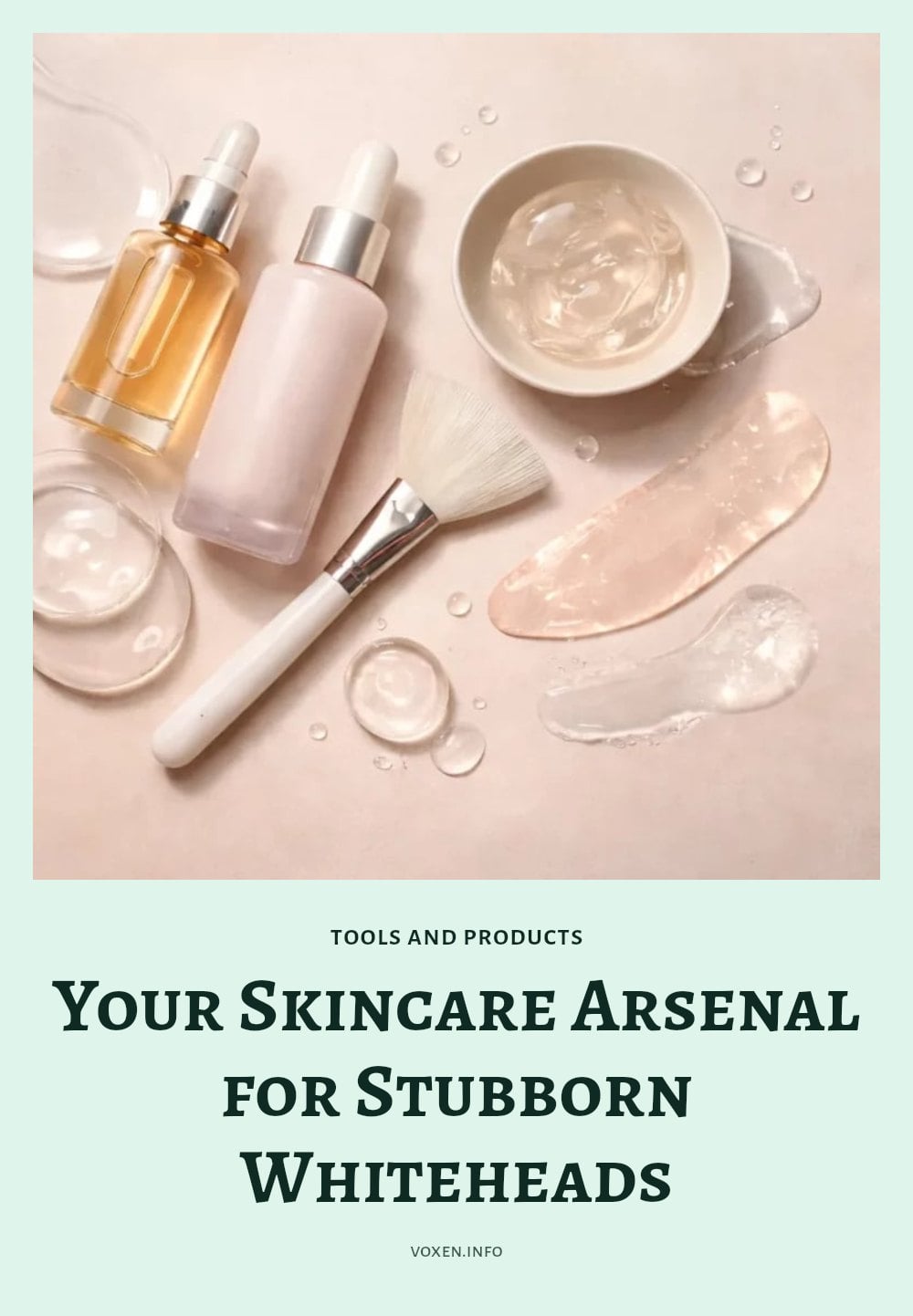
Stock your routine with these essentials to tackle whiteheads without irritating your skin.
- Gentle facial cleanser: Use a non-comedogenic, sulfate-free formula twice daily to remove excess oil and debris without stripping.
- Salicylic acid (BHA) product: This beta hydroxy acid exfoliates inside the pore, helping to unclog blockages. Look for a serum or cleanser with 0.5% to 2% concentration.
- Benzoyl peroxide spot treatment: Apply a small amount directly to individual whiteheads to kill bacteria and reduce inflammation.
- Non-comedogenic moisturizer: Hydration keeps your skin barrier healthy and prevents it from overproducing oil.
- Broad-spectrum sunscreen (SPF 30+): Many active ingredients increase sun sensitivity, so daily sun protection is non-negotiable.
- Topical retinoid (optional): For persistent whiteheads, a dermatologist may recommend adapalene or a prescription retinoid to speed up cell turnover. Use only under professional guidance.
Gentle and Effective Ways to Treat Whiteheads

Treating whiteheads requires consistency and a gentle touch. Here is a step-by-step approach that works.
Step 1: Cleanse twice daily
Wash your face morning and night with a gentle, non-comedogenic cleanser. Use lukewarm water and your fingertips, no rough washcloths or scrubbing. Pat dry with a clean towel.
Step 2: Apply salicylic acid
After cleansing, use a salicylic acid serum or toner. Apply a thin layer over areas prone to whiteheads (chin, forehead, nose). Start with every other day if your skin is sensitive, then build up to daily use.
Step 3: Use benzoyl peroxide as a short-contact spot treatment
Dab a pea-sized amount of benzoyl peroxide directly onto individual whiteheads. Keep it away from the eye area and only on the bumps. Use it once daily, preferably in the morning, as a short-contact therapy: leave it on for 5-10 minutes, then rinse off with lukewarm water. This reduces irritation while still killing acne-causing bacteria.
Step 4: Incorporate a retinoid (if advised by your dermatologist)
If your dermatologist recommends it, add a topical retinoid like adapalene to your evening routine. Apply a pea-sized amount to clean, dry skin, avoiding the eye and mouth areas. Start twice a week, then increase frequency as tolerated. Caution: Retinoids can cause dryness and sun sensitivity; always use sunscreen the next day.
Step 5: Moisturize
Every time you cleanse or apply an active ingredient, follow up with a non-comedogenic moisturizer. This prevents your skin from overcompensating with extra oil.
Step 6: Never pick or squeeze
Picking at whiteheads can push bacteria deeper, cause inflammation, and lead to scarring. Leave them alone and let the treatments do the work.
Common Whitehead Treatment Mistakes to Avoid
Many people make whiteheads worse without realizing it. Aggressively scrubbing your face does not clear pores; it irritates the skin and can stimulate more oil production, making breakouts worse. Using too many active ingredients, like salicylic acid, benzoyl peroxide, and retinoids all at once, causes redness, peeling, and dryness that damages your skin barrier.
Expecting immediate results sets you up for frustration. Whiteheads take time to clear; you may see initial improvement within 4-6 weeks of consistent use, but full clearing can take several months. Another common error is ignoring the ingredient list on your makeup and moisturizer. Products labeled as comedogenic can clog pores and undo your treatment efforts.
Myth: Whiteheads only happen to people with poor hygiene. That is not true. They form from clogged pores, not dirt. And trying to dry out your skin completely backfires: stripped skin produces even more oil to compensate.
Keeping Whiteheads Away: Your Prevention Checklist
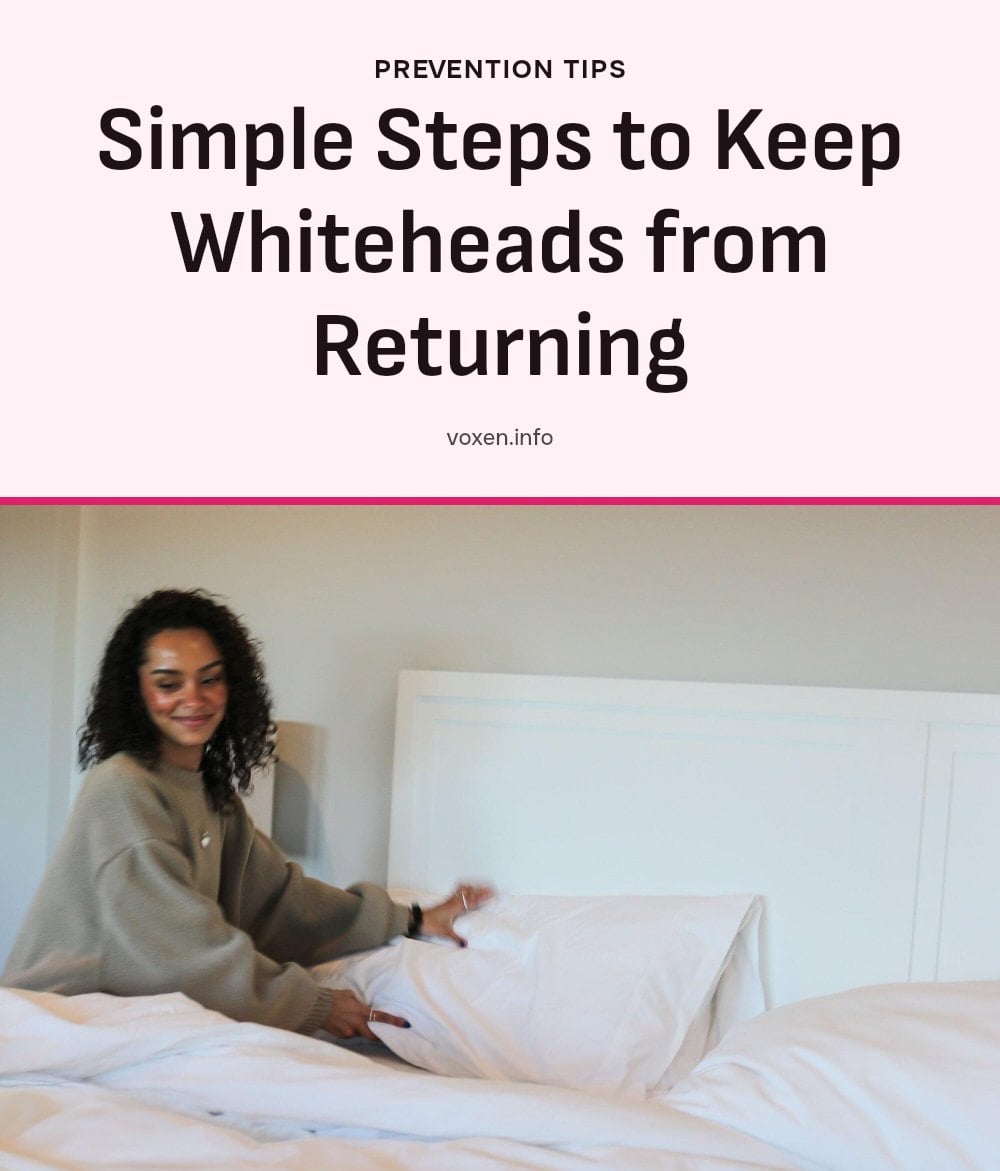
Preventing whiteheads is easier than treating them once they form. Start with these daily habits.
- Cleanse after sweating: Sweat mixes with oil and dead skin cells on your face. Rinse with a gentle cleanser after workouts or hot days.
- Choose non-comedogenic products: Check labels on makeup, sunscreen, and moisturizer. Look for “non-comedogenic” or “oil-free” to avoid pore-clogging ingredients.
- Swap pillowcases weekly: Your pillowcase collects oil, bacteria, and product residue. A clean one each week reduces transfer to your skin.
- Keep hands off your face: Touching your face transfers dirt and bacteria. Rest your chin on your hand? That can trigger whiteheads on that spot.
- Stay hydrated: Drinking enough water supports overall skin health and helps maintain a balanced moisture level.
- Manage stress: Stress hormones can increase oil production. Even short daily walks or deep breathing can help keep your skin calmer.
What to Expect: Treatment Timeline and Costs
Whiteheads do not disappear overnight. With consistent use of over-the-counter treatments like salicylic acid or benzoyl peroxide, most people notice visible improvement within 4 to 6 weeks. Full clearing of stubborn whiteheads may take several months.
Ongoing maintenance is usually required to keep pores clear. Over-the-counter products are generally affordable, often ranging from $10 to $30 each. Prescription treatments, such as topical retinoids, can be more costly depending on your insurance coverage. A dermatologist can help you choose the most effective option for your budget.
When to Consult a Dermatologist for Whiteheads
Most whiteheads can be managed at home, but some situations call for a dermatologist. Make an appointment if your whiteheads become inflamed, painful, or spread extensively across your face or body. Also see a professional if you have used over-the-counter treatments consistently for 8 to 12 weeks without improvement.
A dermatologist can provide personalized advice and prescription-strength options, such as higher-concentration retinoids or oral medications. They can also rule out other skin conditions that might look like whiteheads, such as milia or folliculitis. Getting an accurate diagnosis ensures you use the right treatment from the start.
Frequently Asked Questions
Can diet impact whitehead formation?
Some people report a link between high glycemic index foods or dairy and acne breakouts, but this is debated and not proven for everyone. If you suspect a connection, try keeping a food diary and see if cutting back on those foods helps your skin.
How long does it take for whitehead treatments to work?
With consistent use of over-the-counter treatments like salicylic acid or benzoyl peroxide, most people notice visible improvement within 4 to 6 weeks. Full clearing of stubborn whiteheads may take several months, and ongoing maintenance is usually needed.
Is it okay to use makeup if I have whiteheads?
Yes, but choose non-comedogenic, oil-free products that won’t clog your pores. Always remove makeup before bed with a gentle cleanser, and avoid heavy or creamy formulas that can trap oil and dead skin cells.
Can stress cause whiteheads?
Stress can influence hormone levels, which may increase sebum production and contribute to breakouts, including whiteheads. While it’s not a direct cause, managing stress through relaxation techniques or exercise may help support clearer skin.
What’s the difference between whiteheads and blackheads?
Both are clogged pores, but whiteheads are closed comedones with a thin layer of skin covering the opening, keeping the contents white. Blackheads are open comedones where the pore surface is exposed, allowing the oil and dead skin to oxidize and turn dark.
Final Thoughts
For most people, a consistent routine with gentle cleansing and one or two targeted active ingredients is enough to manage whiteheads. Expect to see improvement within 4 to 6 weeks, but be patient, full clearing can take several months. Stick with it and your skin will thank you.
This article is for general informational purposes only and is not a substitute for professional medical or dermatological advice. If you have persistent, inflamed, or painful whiteheads, or if your condition worsens, consult a dermatologist or healthcare provider for personalized guidance.

